
More
    Home Blog Page 19

    Squid Game Isn’t Just About Money — It’s About Addiction, Too

    Squid Game hits like a slap. On the surface, it’s grotesque, thrilling TV: desperate people play deadly kids’ games for a giant cash prize. But the show is more than violence dressed in pink tracksuits. It’s a moral mirror. And behind the obvious critique of late-stage capitalism sits another, quieter accusation: addiction. Not just to drugs or alcohol, but to risk, to consumption, to the next fix of feeling good. Read it that way and the series turns into a concise parable: consumerism and addiction are the same beast with different skins.

    TL;DR

    • Squid Game uses deadly games as a powerful allegory for the addictive nature of late-stage capitalism.
    • The show draws direct parallels between gambling addiction and consumerism, showing how both systems promise a “fix” and profit from repetition.
    • Character arcs, particularly Gi-hun’s, represent the progression of addiction from small, manageable risks to an all-or-nothing spiral.
    • The series highlights the hypocrisy of the system: the poor gamble to survive, while the rich gamble for sport.
    • The author critiques the show’s own commercialization, noting the irony of an anti-consumerist story becoming a consumer product.

    First, the obvious: money. Squid Game shows how cash reshapes people. It corrodes choices. It makes people betray their friends. It makes the poor play a game where winning costs a thousand things you can’t get back. But look closer. The mechanics of the show—betting, highs, comedowns, craving—mirror addiction. The competitors are not just poor; they are hooked. The VIPs aren’t just rich; they’re players in a beguiling gamble.


    Gambling is the clearest addiction Squid Game uses. Early on, we meet Seong Gi-hun (call him Gi-hun). He’s a small-stakes gambler. He bets on horses. He misses his daughter’s birthday. He wins, then loses it to pay an old debt. He steals money from his mother. He’s not some caricature; he’s average, grimy, and quietly unraveling. That makes him relatable. Most gambling problems don’t explode overnight. They creep up.

    Then the games arrive, and Gi-hun moves to the big table. The show stages this as the next stage of addiction: the all-or-nothing move. If you’re familiar with addiction, you recognize that feeling — the idea that one insane risk will reset everything. For Gi-hun, the stakes are literal. He risks life and limb for a chance to fix everything. That’s the pivot where gambling becomes a life-defining compulsion.

    But Squid Game refuses to pretend this is a level playing field. The VIPs watch contestants like they’d watch horses. They bet on flesh. The message is blunt: the poor gamble to survive; the rich gamble for sport. Both groups are chasing a rush. Both are hooked. Only the consequences differ. The poor lose lives. The rich lose… dignity, maybe. Or they lose the cheap thrill of watching someone else’s collapse.

    That contrast is deliberate. The show equates the structure of capitalism with a casino. Everyone is technically free to leave, but the system pulls you back. The poor are kept desperate. The rich are insulated. The house always wins. And the industry that profits off risk? It’s funded disproportionately by those who can’t afford it. That’s not accidental social commentary. That’s the point.


    The subplot with Il-nam (Old Man) and Sang-woo and Young-hee and others layers the addiction metaphor with family drama. Maybe the most painful example is Young-sik and his mother. He’s in deep. She enables him, in a way that almost looks like love. But the show makes us ask the brutal question: when do attempts to protect someone become part of the problem? In the end, the mother commits the final act to stop the spiral. Symbolic or horrifying, it dramatizes a real question families of addicts face: when does protecting hurt more than it helps?

    Gi-hun’s arc also says something about recovery, or the lack of it. He “wins.” Yet the win isn’t cleansing. He’s hollow, haunted, numb. The prize doesn’t fix what’s broken. If anything, winning confirms the sickness: the system is rigged, and to play is to consent. He realizes that winning means becoming complicit in the ugliness. So he chooses a type of death — figurative — to refuse the cycle. That’s the show’s moral knot: some escapes require ruin. Or a rebirth. Either way, it’s messy and costly.


    Drugs show up later in the series and they’re kept intentionally vague. That’s smart. Squid Game doesn’t want viewers to debate chemical specifics. Instead, it uses drugs as shorthand for any quick fix promising power or escape. The pills reward you with focus, courage, even grace. The low is brutal. The withdrawal is violent, messy, and humiliating. Players crash, panic, and hallucinate.

    That arc — hit, high, comedown, craving — is textbook addiction. But the show ties it to consumerism. The drug is a supercharged product. You buy. You feel better for a minute. You want more. When supply is limited, people become desperate. When it’s free and rampant, the social cost piles up. Squid Game compresses this into a fast timeline so we can see the pattern clearly. In real life, it takes years. On screen, it takes scenes.


    Here’s the thesis: consumerism behaves like addiction. Think about it. A shiny device gives you a dopamine spike. Then it ages. The next device promises the same spike. You buy again. You never quite replicate the first high. So you chase a stronger or newer stimulus. That’s not a metaphor; it’s a pattern. Squid Game dramatizes this pattern by turning “buying” into “betting your life.” The stakes are higher, but the psychology is the same.

    The show also shows how the system encourages repeat play. Advertising, product launches, “limited” releases — all of that creates a loop. You crave, you spend, you crash, you crave again. Squid Game’s masked guards and corporate overlords are just a cartoonish version of the algorithms and marketplaces that nudge us to consume. Both models rely on keeping people insecure and hungry.


    Alcohol is everywhere in Squid Game, though it’s mostly symbolic. The VIPs sip whiskey while watching carnage. For them, alcohol is decadence. For the players, it’s an escape or a sign of failure. The show uses booze to draw a line between two kinds of consumption. One is a lifestyle choice with taste. The other is rough, used to dull pain. Yet either way, alcohol here signals decline. It’s another tool the show uses to highlight how pleasure and self-destruction can look indistinguishable from the outside.


    One of the more frustrating ironies is that a show that skewers consumerism has itself become a smash consumer product. Merch, brand tie-ins, and collaborations crop up. That’s not the show’s fault alone; it’s the world. But it matters. There’s a kind of cognitive dissonance when an anti-consumerist story becomes its own mini economy. It’s like reading a scathing article about social media addiction on your phone while an app pings you with “buy now.” The signal and the noise are tangled.

    Still, the show’s parable works even under commercialization. The fact that we can monetize outrage doesn’t erase the truth the story is telling. It just proves how effective the system is at absorbing critique and turning it into profit.


    Squid Game is not subtle. The metaphors are smacked across your face. Sometimes that bluntness irritates. But it also makes the point stick. The series compresses complex social critique into visceral scenes. It forces us to watch what happens when systems predicated on scarcity and spectacle meet human desperation. It forces us to ask uncomfortable questions about responsibility, family, and how much we’ll risk for a little bit of relief.

    Are the depictions of addiction realistic? Not really. They’re exaggerated. That’s fine. This is an allegory. The point isn’t to be clinical. The point is to make you feel the trajectory: desire, engagement, escalation, crash. The show succeeds there.


    I love the show for how it refuses to be neutral. It nails the basic truth that capitalism and addiction are cousins: both promise escape, both profit from repetition, and both punish those with the least buffer. That said, I’m irritated by the performative contradictions around the series: the merch, the brand tie-ins, the way we have to consume a critique of consumption. It’s exactly the loop the show rails against.

    Also, I wish the series had paused longer on recovery. We get trauma and aftermath, but we don’t get slow, boring rehab. Maybe that’s deliberate. Healing is messy and slow. It’s not cinematic. But it’s real. I’d like to see more attention given to how people rebuild after a system chewed them up.

    Finally, Squid Game shines when it resists easy answers. There’s no neat moral. There’s only consequences. Sometimes the only humane choice is to stop playing. But stopping can ruin you anyway. That ambiguity is the show’s best gift.


    If you walk away from Squid Game thinking only about the games, you missed half the point. The other half is about how everyday habits can be addiction in disguise. Want to check yourself? Ask: what do I reach for when I’m bored, lonely, or scared? Is it a product, a bet, a drink, or a scroll? Does it comfort or hollow you out? If the answer is the latter, you might be playing a different kind of game.

    We are not horses. We are messy, complicated people who sometimes make terrible choices. The show is harsh, but it’s also an invitation. It asks us to be honest about what we chase. It asks us to choose — even when the choice is costly.
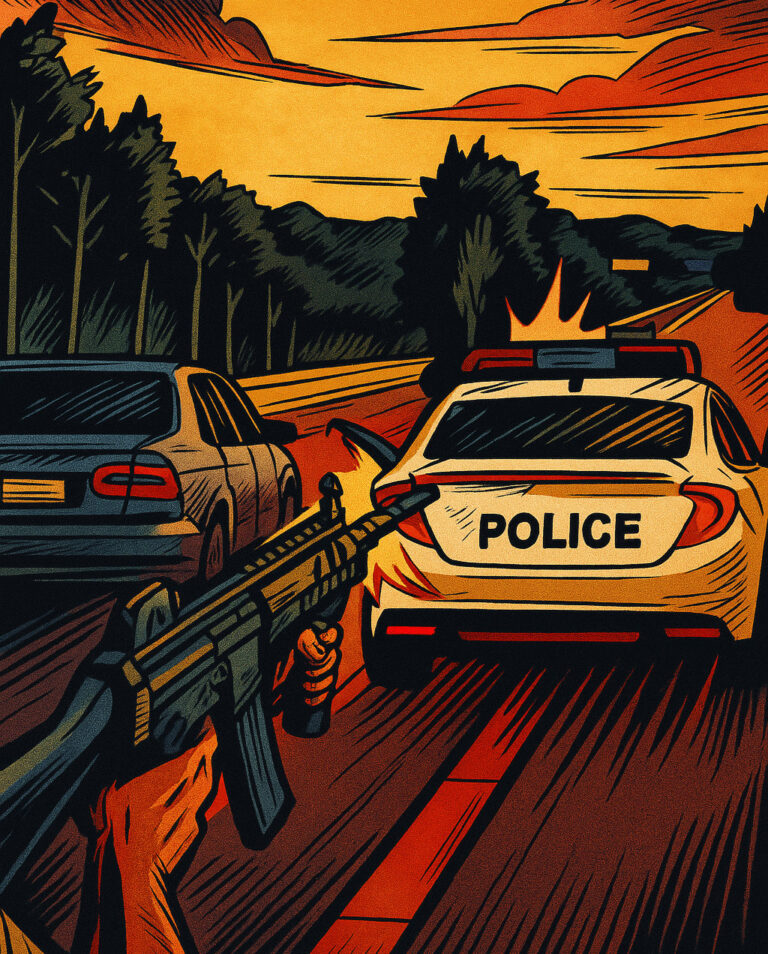

    Teen Stopped Only After Officer Points MP5

    0

    Kuala Nerus, Terengganu — A routine patrol turned chaotic one evening when a 16-year-old sped off after being asked to stop. Instead of parking and taking the lecture, he led police on a dangerous chase that ended only when an officer leaned out of the squad car and pointed an MP5 submachine gun at him. Yes, an MP5. Yes, a teenager. No, it didn’t end well for his road sense.

    Here’s everything that happened, why it matters, and what I think we should actually do about this.

    TL;DR

    • A 16-year-old driving his brother’s car fled from police during a routine patrol in Kuala Nerus, Terengganu.
    • The chase ended only when an officer leaned out of the patrol car and pointed an MP5 submachine gun at the teen.
    • The teen was not found with any illegal items and was given a summons for driving without a license.
    • The incident highlights the dangers of unlicensed driving, the importance of parental responsibility, and the debate over police use of force.

    What went down — short version

    Two patrol officers in Kuala Nerus spotted a grey Proton Wira being driven in a suspicious way. They signaled for the driver to pull over. The car bolted. So a chase began.

    The teen ignored repeated loudspeaker orders to stop. He drove recklessly. At one point, footage shows him swerving toward the patrol car and ramming it. The officers kept trying to get him to stop. Finally, one officer drew a Heckler & Koch MP5 and pointed it at the driver. After that, the teenager pulled over. He was later revealed to be a 16-year-old student driving his brother’s car without permission. No banned items were found, and he was handed over to his parents with a summons for driving without a licence.

    The chase, in slightly less dramatic detail

    It was around 6:30 p.m. on a Monday. Two officers were on routine patrol — the sort of shift where, most days, the biggest problem is traffic jams and someone parking badly. That changed fast.

    They caught sight of the Proton Wira. Something about the way it moved caught their attention. They did the normal thing: signaled the driver to stop. Instead, the driver treated the signal like a polite suggestion.

    Then the car sped away. The officers followed. Over the patrol radio and the loudspeaker, they called for the driver to halt. He didn’t. Instead, he drove dangerously. He didn’t just try to outrun the police; he drove aggressively. The patrol car later received a hit — he rammed it.

    Footage that circulated on social media shows an officer leaning out of the patrol car and pointing the MP5 at the fleeing vehicle. The officer gestured with the weapon several times like a warning. The teen finally stopped. Officers checked the car and found no illegal items. They then identified the driver as a 16-year-old student, driving a relative’s car without permission. The family arrived. The teen received a summons for driving without a licence and was released to his parents with a stern warning.

    Why the MP5 matters (and why social media went wild)

    Pointing a military-style submachine gun at a driver is dramatic. It’s the sort of image made for clips and hot takes. The officer’s use of an MP5 became the focal point of the video that spread online. People reacted strongly — some applauded the decisive move, others worried about escalation.

    Here’s the important bit: the weapon was used as a warning, not to fire. That matters legally and ethically. Police are trained to de-escalate. Sometimes that includes showing force to stop an immediate threat. In this case, a teen was driving dangerously and had already rammed a patrol car. The officer used a show of force to get a driver who’d refused repeated orders to stop to finally comply. Whether you find that reassuring or unsettling depends on your taste for drama and your trust in the system.

    Legal fallout and the immediate outcome

    The teen was issued a summons for driving without a licence. He was released into his parents’ care. No further arrests were reported in connection with prohibited items or other crimes after the car and the teen were searched.

    That’s the official outcome on paper: a traffic offence ticket and a family pickup. In practice, there can be more consequences. A reckless driving incident like this could lead to other legal complications if any injuries or serious damage occurred. It could also influence future interactions between the teen and the law — and possibly the family dynamics at home.

    Bigger picture: this wasn’t just “kids being kids”

    Let’s be blunt. Teens take risks. That’s built into the developmental script: independence, testing limits, and the occasional dumb stunt to impress friends. But there’s a difference between sneaking out after curfew and nearly causing a multi-vehicle crash while refusing to stop for police.

    Driving without a licence shows a few worrying things at once. First: lack of legal permission. Second: lack of adequate training. Third: poor judgment. And when those three things collide at high speed, you get scenarios that put other people in danger — other drivers, pedestrians, and the officers trying to enforce the law.

    Parents and guardians often hear “he’s a kid” as an excuse to minimize these incidents. That’s not a great look when we consider the real-world risk. The teen didn’t just break a rule; he endangered lives.

    Safety lessons we can take from this

    First, never let an unlicensed driver take the wheel. Simple. Your car is not a tutorial. Your garage is not a driving school. If you’re caught letting someone underage or unlicensed drive, you could be liable.

    Second, teach kids the real consequences — not just “you’ll get a ticket.” Talk about injuries, permanent scars, funeral visits, and the court system. Those are sobering realities that don’t always register with adrenaline-fueled teens.

    Third, if you’re a driver and you’re signaled to stop by police, stop. Do it safely, of course. But don’t assume you can outrun or outsmart the system. The longer you run, the more dangerous the situation becomes for everyone.

    Fourth, police procedures and the optics of force need careful balance. Officers have to protect the public and themselves. Sometimes a show of force is used to prevent worse outcomes. But each incident should be reviewed to ensure that the force used was proportional and necessary.

    Social-media culture made it louder — but not better

    If you watched the clip online, you likely saw a compressed, dramatic version of events. Clips cut for shock value rarely show the full context. They give you adrenaline, not nuance. That’s how trends get started and facts get lost.

    A video of an officer pointing an MP5 will get more clicks than a calm explanation of legal consequences. But clicks don’t solve problems. Clear rules and honest conversations do.

    My point of view

    Okay, here’s my take — blunt, because sugarcoating won’t fix bad decisions.

    The teen made reckless choices. He drove without a licence. He refused to stop. He rammed a police car. Those are serious mistakes. Teenagers are going to push boundaries. But boundaries matter when metal and speed are involved.

    At the same time, I get why the officer showed the weapon. Once a vehicle becomes a potential weapon and refuses lawful orders, the officer has to act to prevent greater harm. The MP5 was dramatic, sure. But given that the teen already rammed the patrol car, the officer’s show of force likely prevented a worse outcome.

    This is a teachable moment for everyone involved. For parents: lock the keys, actually enforce rules, and talk to kids about real consequences. For schools and community groups: provide safe ways to teach driving responsibility. For police: transparency matters. After any use-of-force moment, clear explanations reduce mistrust.

    Most importantly, stop romanticizing risk. “He’s just a kid” isn’t a defense when people get hurt. If we want fewer viral police chases and fewer near-misses, we need fewer unlicensed drivers and better conversations about responsibility.

    Charlie Kirk: What happened?

    0

    This is messy. It’s raw. It’s tragic. And it’s not the kind of thing anyone wanted on a sunny campus afternoon. Charlie Kirk — the polarizing conservative activist and Turning Point USA co-founder — was shot while speaking at Utah Valley University. He died after the attack. The campus erupted into chaos. Law enforcement launched a manhunt. People across the political spectrum called it an assassination and begged for answers.

    Below I’ll walk through what we know, what we don’t, and what this all means. I’ll also give my take — a frank, no-fluff view — on how a single act of violence can ripple through politics and society. Read this like a conversation with someone who’s seen the headlines and wants to make sense of them, not to feed you pundit-speak.

    TL;DR Pointers

    • Charlie Kirk was shot while speaking at Utah Valley University, later confirmed dead.
    • Authorities believe the fatal shot came from a rooftop sniper; suspect still at large.
    • Trump and leaders across the political spectrum condemned the attack.
    • Political violence in the U.S. is sharply rising, with experts warning of a dangerous trend.
    • Kirk, founder of Turning Point USA, was a powerful yet polarizing conservative voice.
    • The attack has reignited debates about campus security and free speech.
    • America faces a choice: escalate rhetoric or work toward solutions.

    The basics — what happened, when, and where

    Kirk was at Utah Valley University in Orem, Utah, for what officials and his group called part of his “American Comeback”/campus tour. He was seated under a white tent in a crowded quad. Eyewitness video and campus officials say a single shot rang out at about midday during a Q&A — a moment when the conversation itself touched on gun violence. Witnesses say the shot hit Kirk in the neck. He fell. People screamed. Students and attendees scattered. He was taken from the scene, later pronounced dead. The university evacuated the campus as investigators swarmed the area.

    That’s the short version. It’s clean in the telling but anything but clean in reality. Video circulating online shows the exact instant panic set in — the sudden bang, the slow collapse, the stampede of people. Those clips, as disturbing as they are, have become pieces of the investigation and the public record.


    Who might have done this (and how sure are we)?

    Right now, law enforcement describes the killing as a targeted attack. Officials say the fatal shot likely came from a rooftop of a nearby building — the Losee Center on the UVU campus is being investigated as the likely origin — which suggests planning rather than random chaos. Police say they’ve carried out detentions for questioning, but at least a couple of people initially held were later released and are not currently tied to the case. The suspect who fired the shot has not been publicly identified or captured at the time of these updates.

    This is worth repeating: a rooftop sniper implies premeditation. That changes the tone from “tragic incident” to “assassination.” It raises more questions than it answers — where did the weapon come from, was this an ideological hit, and who else knew about it? Those are the very questions investigators are racing to answer.


    How officials and leaders reacted

    Responses poured in fast. Utah’s governor called it a “political assassination.” The White House issued an order: flags were to be flown at half-staff in honor of Kirk. Political figures from both sides offered condemnation and condolences. Former and current leaders used the moment to denounce political violence — while some framed the attack in partisan terms. President Trump publicly called him a “legendary” figure and ordered the flags to half-staff. Other national leaders urged calm and urged Americans to avoid retaliatory rhetoric.

    That mix of grief and political framing is predictable. It’s human nature to put events into your existing lens. But immediate politicization of a violent crime complicates investigations and the national mood. It shortens the public’s patience for nuance and stretches the airwaves into blame territory before all the facts are in.


    The timeline of the immediate response

    1. Shot fired; crowd flees.
    2. First responders and campus police secure the scene.
    3. Students and staff shelter, then evacuate.
    4. Suspect believed to have fired from a rooftop; surveillance footage is collected.
    5. A person of interest is briefly detained and questioned; later released.
    6. Federal agencies (FBI, ATF) and local law enforcement coordinate the manhunt.

    Investigations are messy. They need time. But the pressure to produce answers is intense — politically, socially, and in the press.


    A not-small context: political violence in the U.S. is rising

    If you read this and feel a queasy déjà vu, you’re not wrong. Experts tracking politically motivated attacks say the U.S. has seen a marked rise in such incidents this year — hundreds of politically tinged violent acts since 2021, and a sharp increase in the first half of the current year compared to last. Researchers warn that high-profile assassinations can create a “vicious spiral,” inspiring copycats or revenge attacks, especially in an environment where online echo chambers amplify anger and conspiracy. This isn’t just about one rooftop or one bullet; it’s about a broader trend that keeps nudging norms toward violence.

    That fact should make everyone pause. Not to score political points, but to recognize a national public-safety problem. When politics becomes a script for violence, democracy doesn’t just lose civility — it becomes dangerous.


    Who was Charlie Kirk — quick profile

    Kirk launched Turning Point USA when he was a teenager and built it into a major conservative youth organ. He was loud, targeted, and skilled at energizing young voters — especially for MAGA-style causes. To supporters he was a firebrand who cut through liberal campus orthodoxy. To critics he was a provocateur who trafficked in controversial claims. He had millions of followers on social platforms, a daily podcast, and an outsized role in shaping right-wing campus energy. Whether you admired him or loathed him, he was a force who moved people.

    That profile helps explain why this killing landed the way it did — both in terms of shock and immediate political heat. High-profile figures attract violent opposition and sometimes inspire extreme admirers. It’s a paradox of public life.


    Campus free speech and security — the thorny trade-off

    Universities are, by design, marketplaces for ideas. That’s why campuses allow guest speakers even if students disagree. But campuses are also public places that have to weigh security, protests, and the safety of students. UVU permitted Kirk to speak as part of free-speech commitments. Critics of that decision argued beforehand that bringing polarizing figures to campus can inflame tense situations. Supporters argued that censorship is a worse outcome.

    This event rediscovered a stress point: how do universities protect free expression while also protecting people from real physical threats? There’s no single answer — but it’s clear events like this will force campuses and law enforcement to rethink protocols, from perimeter checks to rooftop sweeps to better surveillance and preventive planning.


    The information you should treat cautiously

    • Social media footage is useful but unreliable for context; clips can be edited or misinterpreted.
    • Early arrests and detentions do not equal guilt; law enforcement often briefly detains people during chaotic events, then releases them when evidence doesn’t connect them.
    • Politicians’ immediate takes are often rhetorical — designed for messaging — not investigations. Treat those statements like campaign speeches, not evidence.

    In other words: don’t leap to conclusions based on a single clip or a politician’s tweet. The investigation needs time, forensic work, and careful corroboration.


    What this might mean politically (my unvarnished take)

    Brace for two waves. One will be emotional — grief, fury, and pleas for justice. The other will be political — narratives, blame, and possibly legislative posturing.

    1. Short term: Expect intense media cycles. Expect partisan leaders to frame the event to their advantage. Expect calls for “accountability” and for “calmer rhetoric” to collide. The manhunt and any arrests will dominate the news for days.
    2. Medium term: This could harden political attitudes. If the shooter is linked to a political ideology, one side will feel justified in framing a narrative of existential threat — and the other side will argue they warned about violent rhetoric for years. Either way, it’s toxic for bipartisan cooperation.
    3. Long term: If this event becomes a tipping point, we could see policy responses — perhaps more resources for domestic terrorism investigations, or changes to campus security law, or renewed debates about social-media moderation. Or we could see more polarization without much policy change. Both are plausible.

    Here’s the thing most people don’t say out loud: violence begets fear, and fear narrows our political imagination. When that happens, everyone loses. The challenge is to respond with rigorous policing and criminal justice, not just loud finger-pointing.


    How we should respond as a public

    If you’re worried, you should be. But moral panic is its own hazard. Productive responses look like this:

    • Demand a thorough, transparent investigation. Not soundbites — facts.
    • Resist the urge to weaponize grief immediately. Wait for evidence before you assign ideological blame.
    • Support campus safety reforms that don’t shred civil liberties. Security improvements should be sensible and proportionate.
    • Foster local dialogues. Communities that actually talk to one another are less likely to spiral into revenge cycles.

    If you’re an influencer, turn down the volume on incendiary rhetoric. If you’re a campus leader, audit your security and your event policies. If you’re a citizen, push for facts over fury.


    Final thoughts — my point of view

    This killing is horrific and destabilizing, and it demands a measured, unsentimental response. Political violence is not a partisan problem. It’s a civic rot. Whether the shooter comes from left, right, or nowhere-nice at all, the consequences are almost always the same: lives destroyed, families shattered, politics poisoned.

    We need accountability and real solutions — not only arrests. We need to address the social media circuits that amplify rage. We need to fund community interventions that catch people before they spiral into violence. And yes, we need to remember that while words matter, so do systems: policing, gun policy, mental-health resources, and community resilience.

    Above all, don’t let this moment be swallowed by our worst instincts. Let it be the moment we ask harder questions and insist on better answers.

    Bon Appétit, Your Majesty Episodes 5–6: What we learned so far…

    0

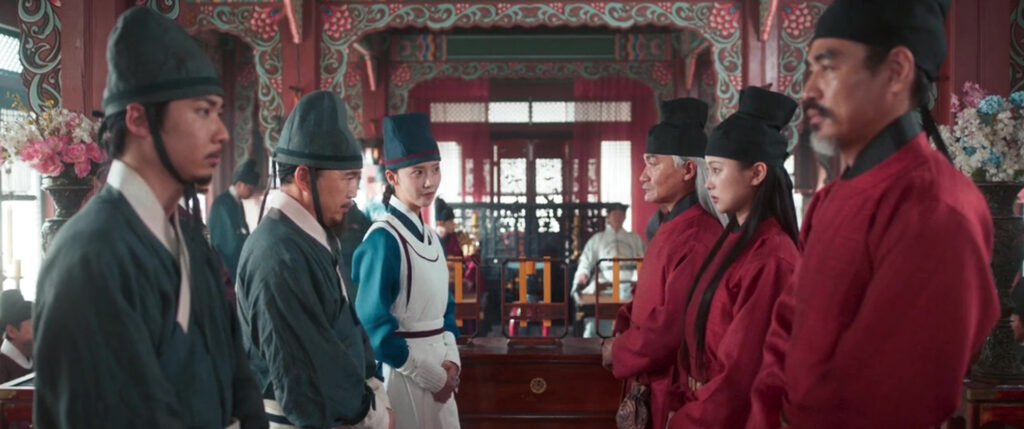
    Alright, listen up. If you thought palace intrigue meant only whispered plots and poisoned tea, think again. Bon Appétit, Your Majesty just taught us that one good bite can swing a diplomacy meeting. Episodes 5 and 6 double down on food-as-power and make our time-traveling chef the most dangerous person in Joseon — because she cooks like she’s arguing with fate, and honestly, I’m here for it.

    Below: a tight recap, what works, what’s a little silly, plus some nerdy food-politics thoughts and my unfiltered take. Also: spoilers for episodes 5–6, obviously. If you haven’t watched, bail now.


    TL;DR

    • Food as a Weapon: The show makes food a central driver of the plot, using a cooking competition to decide national fate.
    • Characters in Motion: The main characters are evolving, with the king’s grief and the heroine’s practicality being key to their arcs.
    • Balanced Tones: It effectively juggles comedic moments (like the “poisonous chili” sign) with serious political intrigue.
    • The Power of Subplots: A side story about a court jester’s personal loss adds emotional weight to the political corruption.
    • Smart and Satisfying: The show is praised for its clever concept and strong execution, even with a few classic K-drama tropes.

    Quick recap (short, snackable)

    After last week’s accidental (and very drunk) kiss, Ji-young wakes with new eye bags and a bruised ego. Heon doesn’t remember the kiss. Naturally. He’s the type who’d misplace his emotions but never his appetite. Still, his actions start to change. He returns Ji-young’s missing handbag (yes, the one that travels through time), and he apologizes. If you’ve spent any time in K-drama land, you know apologies are the butterfly that transforms a stoic rectangle of a man into a flustered cloud. Cue soft glances.

    Then diplomacy shows up at the gate: a Ming envoy, Yu Kun, arrives with top cooks in tow and a chip on his shoulder. He can’t eat Joseon food, he claims. So naturally, the solution is a cooking duel. Because threats to national sovereignty? Solve them with a cook-off. And, because this is a plot, the rival side is rigging the game to make Ming win. Stakes: ginseng harvesting rights, tribute women, and political coups. Chill.

    Ji-young, of course, gets conscripted as the kingdom’s culinary champion. Heon wagers the country’s dignity on her pans. The ministers panic. The queen dowager writes letters. Prince Jesan quietly hopes Joseon loses because chaos = opportunity. Meanwhile, our palace jester, Gong-gil, is doing sleuth work with a moral compass and a mysterious past. He’s more than comic relief. He’s haunted. His sister died in the palace. He wants answers. His path collides with court politics and Mok-ju’s schemes. Also: chili grinding dates. Yes, a chili grinding date happens. Iconic again.

    Why episodes 5–6 work (and why you should keep watching)

    1. Food is the plot driver, not a garnish.
      Most shows toss a cake into a scene to look pretty. This one builds entire power plays around recipes. The cooking competition literally decides tribute terms. That’s bold. It keeps the plot coherent and focused. Plus, the food scenes look delicious without being OTT. Credits to the production team: the food styling slaps.
    2. Character arcs move, even if slowly.
      Heon’s hunger strike — and his subsequent breaking of it with Ji-young’s dish — is a nice, quiet beat that humanizes him. He’s not just a villain. He’s grieving and awkward about it. Ji-young is brave and pragmatic. She didn’t come to Joseon for romance. But she’s not immune. The small changes in how she carries herself — a smile here, a softer tone there — feel earned.
    3. Political stakes are clear and interesting.
      The tribute negotiation setup isn’t vague. We understand what’s at risk: ginseng, national pride, and political leverage. The Coup Squad’s willingness to sell out the country (and women) to save their ambition is a dark but sharp cut. It frames Heon’s stubbornness as a leadership trait rather than mere petulance.
    4. Gong-gil’s subplot adds depth.
      He’s not only spy-jester material. His family wound gives the palace layers. The show subtly ties personal loss to systemic corruption. It’s effective and gives the revenge/mystery thread real weight.
    5. Tone balance.
      The writers juggle comedy, romance, and intrigue without imploding. One moment you’re belly-laughing at a “poisonous chili” sign. The next, you’re outraged at ministers bargaining away people like objects. That emotional flip keeps the episodes engaging.

    What’s a bit clunky (but forgivable)

    • Convenient memory loss tropes. Heon conveniently forgets the kiss. Fine. It’s a classic. But don’t act surprised when everyone starts pairing this with trope fatigue. The show handles it well, but it’s still a well-worn path.
    • Timing of stakes vs. character readiness. Forcing Ji-young into a competition that decides the nation’s fate is dramatic. But the emotional logic of “she must do it, or treason!” feels a hair rushed. It’s tense and entertaining, sure. But it stretches plausibility. Still, she’s a strong lead, and that saves the scene.
    • Some villains are a touch cartoonish. Prince Jesan’s smugness and the Coup Squad’s greed are blunt instruments. However, because the show balances this with nuanced threats, the simple villainy reads as deliberate — a satire of court corruption.

    Scenes that deserve a standing ovation

    • Heon’s first proper bite of Ji-young’s food. Cinematic. The way he eats says more than a dozen speeches. Food as character development? 10/10.
    • Greenhouse date and chili mill montage. Cheesy? Absolutely. Charming? Also yes. The makeover moment — Joseon black-card flex included — nails the rom-com beats without undermining the stakes.
    • The announcement of the Culinary Nation Wars. The rules are clever: mix of new meat dish, swap-cuisine round, and ginseng soup finale. It’s a setup that tests versatility, politics, and national pride. I want to taste the ginseng soup.

    Themes bubbling under the surface

    1. Food as diplomacy.
      This show is making a point: culture and cuisine are soft power. If a nation can’t feed a guest properly, it loses face. The cooking competition becomes a metaphor for sovereignty. In a world where trade deals happen over dinners, that’s neat and relevant.
    2. Women and agency.
      Ji-young is modern. Yet the court keeps trying to use women as bargaining chips. The show contrasts her agency with how women are treated as tokens by power players. That contrast is sharp and intentional.
    3. Memory, grief, and duty.
      Heon’s arc is about grief masquerading as tyranny. He’s brandishing control to manage loss. That’s a humanizing read. It explains, not excuses, his cruelty.
    4. Tradition vs. innovation.
      Ji-young’s modern techniques clash with Joseon norms. But shows that innovation can uplift tradition, not erase it. That’s a tidy message for a drama that’s part time travel, part culinary manifesto.

    My point of view (no fluff — just mine)

    I love when a show commits to a clever central conceit. Bon Appétit, Your Majesty does that. It treats food like a language and a weapon. Episodes 5–6 are where the series stops teasing and starts flexing: romance, politics, and mystery all converge. Ji-young is the kind of heroine who wins by skill and stubbornness, not by succumbing to love at first sighy glance. That’s refreshing.

    Yes, the show leans on classic K-drama tropes — memory lapses, dramatic looks, last-minute reveals. But the difference here is intention. Those tropes are not lazy filler; they’re tools. The writers use them to build tension while letting the food scenes carry the emotional load. You don’t have to love every plot convenience to be invested. The main question is: do you want to watch the dishes? Because if your answer is yes, this show will give you tablefuls of joy.

    Also, a note on representation: Ji-young’s 21st-century attitude in a Joseon body risks being a “modern woman saves history” fantasy. Fine. It’s a wish-fulfillment angle. But the script often gives her believable constraints. She’s clever, not invincible. That keeps her grounded.

    Predictions (because we’re hungry for what’s next)

    • The Culinary Nation Wars will expose the Coup Squad. Once Ji-young eats, she’ll speak louder than knives. Expect alliances to shift fast.
    • Prince Jesan will escalate. He’s betting on chaos. When his plan starts to crack, he’ll either go all in or get messy.
    • Gong-gil’s investigation will intersect with the cooking plot in a way that reveals palace rot. My money: the hairpin clue ties back to a minister who’s pretending to be loyal.
    • Romance: Heon’s slow melt is the main event. It won’t be instant. It’ll be awkward, then raw, then strangely tender. Ji-young will push back. That will make it nicer when he finally stops being a ruler and starts being a person.

    Why this matters beyond the drama

    This show teaches something sneaky: culture can be a country’s frontline defense. A plate can say more than a speech. In a world where soft power matters (trade, tourism, cultural exchange), telling a story that elevates cooking to a diplomatic tool is timely and smart. Also, it’s a reminder that ordinary skills — feeding someone well — can become heroic in the right context. That’s wholesome and satisfying.

    Final verdict

    Would I recommend it? Yes. If you like food, political tension, and slow-burn romance with sharp female leads, this is your jam. The pacing dips here and there, and the trope use is noticeable, but the charm, cinematography, and solid character work more than make up for it.

    Rating: ★★★★☆ (4 out of 5 stars)

    Why four and not five? Because a perfect score would mean flawless plotting and zero trope fatigue. That’s unrealistic. Still, this is close. It’s fun, thoughtful, and it keeps the food at the heart of the story — which, let’s be honest, is the whole point.

    The Four Relationship Killers — How to Spot Them, Stop Them, and (Maybe) Save Your Love

    Okay, listen up. Relationships don’t die of boredom. They usually get slowly poisoned. Psychologists who study couples long-term call four behaviors the big red flags. They’re dramatic enough to earn the nickname “the Four Killers.” And yes — they’re that serious. If you see them, don’t freak out. But do pay attention. Because the earlier you act, the better your odds.

    Below I’ll walk you through what the four behaviors actually look like. I’ll explain why they’re so dangerous. Then I’ll give real, usable steps you can take to change the pattern. Finally, I’ll tell you what I honestly think — blunt and practical. No fluff. Just usable stuff.

    TL;DR:

    • Relationships fail due to a cycle of toxic behaviors, not a single event.
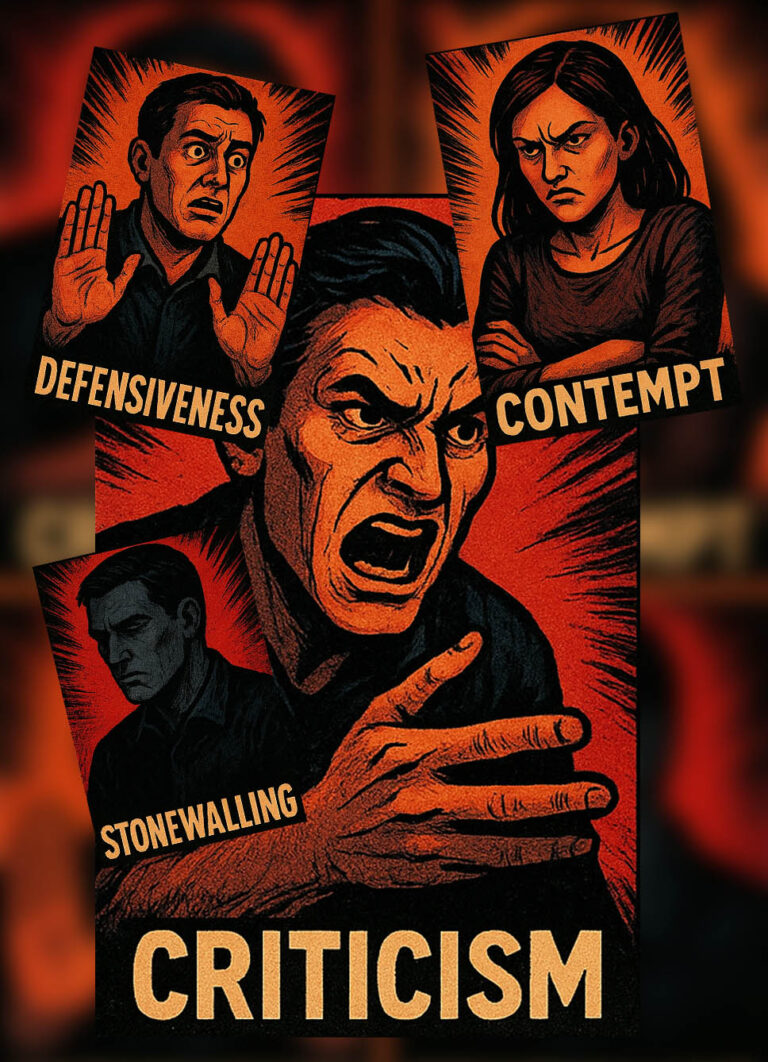
    • The four “Killers” are criticism, contempt, defensiveness, and stonewalling. Contempt is the most destructive.
    • You can break the cycle by using tools like “soft start-ups,” active listening, and simple apologies.
    • Repairing a relationship requires consistent, small actions and, often, professional help.

    The four dangerous behaviors (and what they mean)

    Therapists use a simple label for these four toxic patterns. They are:

    1. Criticism — attacking the person, not the problem.
    2. Contempt — mockery, eye-rolling, mean jokes, or outright disgust.
    3. Defensiveness — answering attack with attack or excuses instead of listening.
    4. Stonewalling (emotional shutdown) — checking out, giving the silent treatment, or withdrawing.

    If you recognize two or more of these showing up a lot in your relationship, that’s a problem. A big one.


    Criticism: the tiny cuts that add up

    There’s a big difference between saying “I’m worried about the money” and saying “You’re irresponsible with money and always ruin everything.” The first targets a behavior. The second targets a person.

    Criticism looks like:

    • “You never help around the house.”
    • “You’re selfish.”
    • “You always do this.”

    All of those push your partner to feel blamed. When someone feels blamed, they usually react by defending themselves or pushing back. That leads to… yep — defensiveness. Over time, criticism wears people down. It turns small arguments into huge fights. It makes intimacy harder. It also makes partners stop trying to please one another. Why bother, right?


    Contempt: the most dangerous one

    Contempt is nastier than criticism. It’s not just “you did a thing.” It’s “you are a loser” or “you’re pathetic.” It can be sarcasm, eye rolls, cruel jokes, or deliberate humiliation.

    Contempt is poisonous because it communicates superiority and disgust. That feeling can sink a relationship fast. Studies by relationship researchers find contempt predicts divorce at very high rates. In plain language: contempt is the loudest warning alarm.

    If you catch yourself mocking, sneering, or making your partner the butt of the joke in a way that hurts, stop. Right now. That’s not playful banter — it’s corrosive.


    Defensiveness: the default escape hatch

    When someone attacks you, your body and brain go into self-defense mode. Fine — that’s natural. But in relationships this often becomes a habit. Instead of answering a complaint, the defensive partner replies with:

    • “It’s not my fault.”
    • “You always overreact.”
    • “Well, what about when you…?”

    The problem? Defensiveness blocks communication. It’s a closed loop. The person raising the issue feels unheard, and the defensive person feels attacked — so both dig in. This cycle makes real problem-solving impossible.

    To break it, people must stop proving themselves right and start trying to be understood.


    Stonewalling: the quiet end-game

    Stonewalling means shutting down. No more arguing. No more talking. No more eye contact. It often shows up when one partner is overwhelmed and just quits emotionally.

    At first it seems like peace. But that peace is a fake. Stonewalling kills connection. It tells the other person: “I don’t want to engage with you anymore.” That’s cold. And repeated stonewalling is often the final stage before complete emotional separation.

    If your partner goes quiet mid-argument for long stretches, or you find yourself leaving conversations to “cool off” for hours and then avoiding them forever — that’s a huge red flag.


    How these four work together (the vicious circle)

    These behaviors don’t appear in isolation. They feed each other.

    • Criticism leads to defensiveness.
    • Defensiveness leads to contempt (we become resentful).
    • Contempt leads to stonewalling (people give up trying).
    • Stonewalling leads to emotional distance — and distance is the slow death of intimacy.

    So what looks like separate problems is really one cycle. And cycles are habits. Habits can be changed — but you need intention and consistent practice.


    If you spot them: three immediate things to do

    Don’t panic. Do this instead.

    1. Name it calmly. Say, “I notice we keep getting stuck in blame and shutdown. I don’t want that.” Simple, non-accusing language helps. Do not say “You’re always…” or “You never…”.
    2. Call a time-out before it’s too late. If you feel heat rising, say, “I need a break for 20 minutes. Can we return to this then?” Then actually take that break. Breathe. Walk. Hydrate. Then come back.
    3. Use repair attempts. These are tiny gestures meant to de-escalate. An apology. A touch. “I’m sorry I said that.” Or “I didn’t mean to shut down.” Repair attempts don’t solve everything, but they stop the spiral.

    Communication tools that actually work (real, usable scripts)

    Words matter. But how you say them matters more.

    Soft Start-Up

    • Instead of: “You never spend time with me.”
    • Try: “I miss you. Can we plan one evening this week for us?”

    Complaint without blame

    • Instead of: “You always leave a mess.”
    • Try: “When dishes are left, I feel overwhelmed. Can we agree on a system?”

    Active Listening

    • Say: “Tell me what I’m hearing.”
    • Then repeat back: “So you feel X because Y. Is that right?”
    • This shows you’re trying to understand.

    Short apology script

    • “I’m sorry I said that. I was hurt and I took it out on you. That wasn’t fair.”

    Request, not demand

    • “Would you be willing to…?” instead of “You must…”

    These are not magic. But practiced regularly, they change interactions.


    Daily habits that repair distance (do these for a month and see shifts)

    • Weekly check-in (15–30 minutes). No multitasking. Ask: “What went well? What felt off?” Keep it curious, not critical.
    • One small kindness every day. A message, a coffee, a quick thank-you. These bank positive experiences.
    • Set boundaries on fight times. No problem-solving when tired. No fights right before bed.
    • Practice gratitude aloud. Two things daily: “I appreciate you because…”
    • Get help early. If the four behaviors are regular, a skilled couple’s therapist can change the pattern faster.

    When to get professional help (and why it’s not weak to ask)

    Therapy is not for relationships that are failing only when tragedy strikes. It’s for couples who want to learn tools to stop patterns before they become permanent. Get help if:

    • Contempt is common. That’s urgent.
    • Stonewalling happens more than twice a week.
    • You feel hopeless or checked out.
    • One partner wants the relationship saved and the other treats it as optional.

    Therapists teach repair skills and keep you accountable. They’re like a personal trainer for your relationship muscles.


    If you’re wondering whether it’s already “too late”

    Relationships can recover. But there are hard truths:

    • Repeated contempt is the worst indicator. If someone consistently belittles, it’s hard to reverse the damage.
    • The longer stonewalling goes on, the more entrenched the distance. Months of emotional absence creates new lives, inside the same home.
    • That said, intention beats despair. A couple who both commit to changing patterns, show humility, and get help has a real shot.

    If one partner refuses to change and the other keeps trying, that’s painful. You can’t drag someone into repair. At some point, you protect your own heart.


    My point of view (straight talk)

    Alright, here’s the honest part. People fall into these behaviors for normal reasons: stress, fatigue, unmet needs, childhood patterns, or simply not knowing better. That doesn’t excuse harmful behavior. But it explains it.

    I think most relationships that end do so not because of one dramatic event, but because of repeated small corrosions — sarcasm, slammed doors, comments tossed like insults disguised as jokes. That slow drip of negativity adds up.

    Also, the “romantic rescue” fantasy — where one dramatic act saves the day — is mostly Hollywood. Real rescue is awkward. It’s therapy sessions. It’s practicing “soft start-ups” when you’d rather lash out. It’s doing boring daily work that rebuilds trust.

    So my view: don’t wait for a miracle. Treat your relationship like a living thing that needs attention. If you do the small, consistent things — better listening, fewer digs, more curiosity — you’ll stack enough good to outnumber the bad. And yes, you’ll probably have to swallow your pride a few times. That’s okay. The goal is connection, not being right.

    If you decide the relationship isn’t healthy anymore, that’s valid too. Leaving can be an act of self-care. But if you want to stay, do not confuse “I tried once” with actually trying. Real trying means learning new skills and practicing them until they feel natural. That takes time. It’s worth it.


    Practical next steps — a 30-day mini-plan

    If you want something compact and practical, here’s a plan:

    Week 1 — Awareness

    • Track interactions that felt bad. Write one sentence about each.
    • No contempt. If you catch yourself, pause and apologize.

    Week 2 — Small changes

    • Start each conflict with a soft start-up.
    • Practice one repair attempt a day.

    Week 3 — Build connection

    • Daily gratitude: one sentence each morning.
    • One 20-minute undistracted check-in each week.

    Week 4 — Test your progress

    • Revisit your notes from Week 1. Any improvements?
    • If yes, keep going. If not, consider couple’s therapy.

    Example scripts you can copy-paste to your mouth

    • “I want to talk about something that’s been on my mind. Can we set aside 20 minutes tonight?”
    • “When X happens, I feel Y. I’d like Z. Is that something we can try?”
    • “I’m sorry I reacted that way. I don’t want to make you feel small.”
    • “Help me understand. What did you mean when you said that?”

    Short. Simple. Effective.


    Final note: hope with boundaries

    This article isn’t meant to be a lecture. It’s a map. The bad news: contempt, criticism, defensiveness, and stonewalling are real and dangerous. The good news: most couples who want to change can change. It requires honesty, humility, and practice. And yes — sometimes help from a trained professional.

    If you see these behaviors in your relationship, name them. Then act. Small steps matter. One kind sentence can undo a mean hour. One repair attempt can stop a spiral. Doable choices add up.

    You don’t need perfection. You need steadiness. Start there.

    Queen Mantis: What we learned so far…

    0

    Right away: if you like your crime shows messy, clever, and the sort that makes you squirm in your seat while yelling at the TV, Queen Mantis is coming for your chill. Episodes 1 and 2 set a grim, precise tone. There’s blood, brains (literally), and a mother–son dynamic that’s both hypnotic and deeply uncomfortable. Yet somehow, the show still finds room for smart plotting and small human beats that keep you invested.

    Below: a tight but full breakdown, what’s working, where the story might trip, a few theories, and my blunt take on why you should (or shouldn’t) keep watching.

    Screengrab from Netflix

    TL;DR Pointers

    • Grim Start: The show opens with a gruesome copycat murder mirroring a notorious serial killer, “The Mantis.”
    • Dysfunctional Duo: The original Mantis offers to help the police, but only if she can work with her estranged son, a detective.
    • Strong Points: The series is praised for its tense atmosphere, deliberate pacing, magnetic performances, and its willingness to explore moral ambiguity.
    • Key Themes: It delves into themes of control, vengeance, and the complex, damaging nature of family ties.
    • Warning: It’s a psychological slow-burn with graphic violence, not a light watch.

    Quick snapshot — what happens in Episodes 1–2

    Screengrab from Netflix

    The series opens on a riverbank crime scene that’s gruesome and specific. Detective Kim Na-hee finds a body marked by strangulation, injection wounds, and a horrific mutilation: a severed tongue shoved into the victim’s backside. Charming. The method matches the old casefile for a notorious serial killer called the Mantis — a woman who targeted abusers. That’s where things get sticky.

    Meanwhile, the original Mantis — Jung Yi-shin — is alive and very much a presence. She’s been in prison for years, crafting letters and drawing in the quiet of her cell. In an almost theatrical voice, she watches news reports and, naturally, enjoys the attention. Soon, the police realize this new killing may be a copycat. Consequently, Yi-shin offers to help. However, she’ll only cooperate if her son, Cha Soo-yeol, joins the investigation. Drama ensues.

    Soo-yeol grew up abandoned, but he became a cop. He’s competent, sharp, and emotionally sticky around anything that smells like his past. He also doesn’t love his mother on sight. Predictably, reuniting them is tense. Yet Yi-shin is magnetic. She toys with investigators. She gives clues. She critiques technique. And she delights in pointing out the macabre details others miss.

    The team chases leads to Seo Gu-wan, a disturbed man who idolizes Yi-shin. He’s a loose thread that unravels into a family hostage scenario, a hospital discovery, and a desperate CPR scene that shows Soo-yeol’s fierce drive to save people — or perhaps to redeem his past. Yi-shin, meanwhile, is calmly theatrical: feeding bugs with leaves hidden in her mouth. Yes, that image will stay with you.


    Characters you need to know (fast)

    Screengrab from Netflix
    • Jung Yi-shin (the Mantis) — Charismatic, unsettling, and impossibly composed. She’s played like a force of nature who relishes control.
    • Cha Soo-yeol — The son who grew into a detective. Tough, scarred, and driven. He hates being weak. He also has a moral code, however messy it is.
    • Kim Na-hee — A hard-working detective who’s been elbowed out of the leadership slot. Cool under pressure and quietly principled.
    • Choi Joong-ho — The superintendent who knows how to push buttons and is willing to use Yi-shin’s brilliance for the case.
    • Seo Gu-wan — A tragic, dangerous admirer who blurs the line between fan and criminal.

    Why the show grabs you (what’s working)

    Screengrab from Netflix

    First, the atmosphere. The series paints every scene with a cold precision. The visuals and sound design amplify the creep factor without going for cheap jump scares. Instead, the show relies on the discomfort of detail: how Yi-shin smiles while describing a kill, how Soo-yeol stiffens at something that reminds him of his childhood.

    Second, the pacing. The early episodes give you enough information to be curious, but not so much that everything is spelled out. As a result, the mystery feels dense and satisfying. Small discoveries — like the flipped photo in a newspaper or the moved mirror in a crime scene — deliver real detective satisfaction.

    Third, the performances. Yi-shin is magnetic. She takes over the frame even when she’s sitting in a cell. Soo-yeol is sympathetic and tense. Na-hee provides a steady, human counterpoint to their intensity. The chemistry between these three anchors the series.

    Fourth, moral complexity. The Mantis targeted abusers. That motive muddies the moral waters. You don’t automatically hate her. Yet her methods are monstrous. The show forces us to sit with that contradiction. Good dramas make you think twice about heroes and monsters; Queen Mantis does this with skill.


    Where the show could trip (small flags)

    • Tone risks: The mix of gruesome violence and contemplative reflection can feel jarring at times. If the series leans too long into spectacle without emotional payoff, the shock value could grow hollow.
    • Mother–son manipulation: The dynamic is fascinating. But there’s a thin line between “complicated character study” and “exploitation for showy drama.” The writers must keep emotional truth front and center, otherwise Yi-shin risks becoming a caricature.
    • Team politics: Soo-yeol’s placement as leader instead of Na-hee gives the show ready-made tension. That’s great. But if the series overplays workplace jealousy without advancing the plot or character, it could become filler.

    Themes the first two episodes explore

    Screengrab from Netflix
    • Control vs. surrender — Yi-shin embodies control. Her son learned to survive by surrendering to others’ definitions of him. The series asks: who deserves agency after trauma, and at what moral cost?
    • Justice and vengeance — The Mantis killed people accused of abusing others. Were those killings justice, revenge, or something else? The show complicates the idea that “punishment” is ever purely moral.
    • Identity and myth — Yi-shin becomes an archetype: the Mantis. People project onto her. That myth-making blurs truth and feeds dangerous copycats.
    • Family as wound and weapon — Blood ties are both a refuge and a trap here. The show excavates how parental trauma seeps into a child’s choices.

    The mystery — clues and red herrings

    Screengrab from Netflix

    Good mysteries litter their world with things that might mean something. Queen Mantis does this deliberately. For instance:

    • The moved mirror at the crime scene suggests the killer wanted the victim to face his death. That’s intimate, ritualistic.
    • The reversed newspaper photo implies official documents were referenced, not just media — someone with access to files or detailed knowledge.
    • Yi-shin’s talk about feeling the saw cut through bone is less about how and more about savoring pain. That obsession matters. It might explain motive; or it might distract us.

    Some lines feel like potential Chekhov’s guns. The show drops little details — a friend who only drinks black coffee now; Jung-yeon’s suspicious behaviors — that may pay off later. For now, they hover as possible red herrings or crucial threads. Good. Keep your eyes peeled.


    Predictive brain dump (my theories)

    • The copycat isn’t exactly a copycat. Instead, someone is deliberately re-creating the Mantis narrative to manipulate investigators — either to free Yi-shin’s influence or to frame someone else.
    • Yi-shin’s original killings might not be as simple as punishing abusers. There could be a personal logic, or even a larger network. Remember the letters she supposedly sent. Who forged them? Who reads them?
    • Jung-yeon (Soo-yeol’s wife) may be hiding trauma-related secrets. Small domestic details hint at underlying tension.
    • The hospital subplot (the father in the laundry machine) suggests a pattern: perpetrators hidden in plain sight. Watch public institutions and family structures — answers may lie there.

    What I love (and what I’m wary of)

    I love the show’s patience. It doesn’t rush to spectacle. It allows Yi-shin to be unnerving in the small moments. I also like that Soo-yeol is not a simple antihero — he’s complex, flawed, and competent. Plus the supporting team gives the show a human center that counters the lurid details.

    However, I’m wary that the show will fetishize violence at the expense of emotional truth. If Yi-shin keeps getting staged as “the genius killer” without having her humanity (or lack thereof) probed, she risks turning into an empty icon. Also, the workplace tension must evolve beyond jealousy into meaningful character growth.


    Viewer guide — who will like this

    • If you enjoyed slow-burn thrillers that focus on psychology over nonstop action, watch.
    • If you like gritty, morally grey true-crime-esque stories, watch.
    • If graphic violence is a hard no for you, give this a pass. The show doesn’t shy away from ugliness.

    My point of view (yes, bluntly)

    Screengrab from Netflix

    This show is doing the hard work of being morally ambiguous and visually brave. It trusts viewers to sit with discomfort and to resist easy answers. Moreover, the mother–son tension is emotionally resonant in a way most thrillers forget about. Soo-yeol’s desire to save seems to be as much about himself as it is about others. That hook is brilliant—because it blurs heroism and self-redemption. If Queen Mantis continues to balance character study with procedural momentum, it will be one of those shows you keep recommending at awkward hours.

    Also, a side note: the cameo photo gag (blink and you’ll miss Byun Yo-han’s picture) is a nice wink. It’s tiny, but it reminds you that the creators enjoy layering in little treats for attentive viewers. That kind of detail makes re-watching rewarding.


    How the show can stay sharp

    1. Maintain character-driven stakes. Let us feel why Soo-yeol does what he does, not just watch him act.
    2. Avoid turning Yi-shin into an untouchable genius. Probe her past honestly. Show consequences.

    3. Expand the team’s roles beyond friction. Let Na-hee lead in competence if she’s not given the title. Reward merit with real narrative weight.
    4. Keep clues meaningful. Don’t litter the set with detail that never pays off.

    Final verdict — should you binge?

    Yes — but don’t expect catharsis in the early episodes. Expect to be intrigued, unsettled, and invested. If the series continues to thread moral complexity through its murders and keeps deepening character relationships, it can be a standout.

    Rating: 4 out of 5 stars ⭐⭐⭐⭐☆

    Why not five? Because the show still has to prove it can sustain its balance between shock and soul. So far, it’s more than promising. It’s dangerous in the best way.

    Confidence Queen: What we learned so far…

    0

    If you like capers that feel like they were storyboarded by someone who loves board games and chaos, Confidence Queen starts off loud, bright, and shamelessly entertaining. Episodes 1–2 introduce us to a trio of con artists who treat crooked rich people like rotten fruit: squeeze ’em, toss ’em, and enjoy the juice. The show is impossible to take seriously — and that’s very much the point.

    Below is a spoiler-friendly recap, a deep-dive into the characters and tone, a few clever observations the writers probably didn’t mean to make, and my blunt, unashamedly honest verdict at the end.

    TL;DR

    • Confidence Queen is a fun, loud K-drama about three con artists who treat their targets like a game.
    • The trio—a mastermind, a disguise expert, and an emotional heart—have great chemistry and target cartoonishly evil rich people.
    • The show’s biggest strength is its creative, absurd cons, which include a fake police raid and a staged money drop from a plane.
    • It prioritizes spectacle and entertainment over realism, and hints at a deeper revenge plot tied to the lead characters’ pasts.
    • Overall, it’s a fast-paced, imaginative guilty pleasure that gets a 4 out of 5-star rating.

    Quick recap (so you don’t have to rewatch the whole thing)

    • Yoon Yi-rang (Park Min-young) is the mastermind. She plans everything like a gambler who loves math. She’s confident, theatrical, and excellent at making people believe the impossible.
    • James (Park Hee-soon) is the disguise genius. He becomes whoever the con needs him to be. He’s calm, sharp, and theatrically competent.
    • Myung Gu-ho (Joo Jong-hyuk) is the heart. He’s the youngest, the most naïve, and the team’s emotional safety valve. He fakes sincerity so well it becomes real.

    Episode 1 opens with a gleaming, staged con on a corrupt shaman (special cameo). The scammers trick her into an illegal gambling den, then pull a layered, theatrical sting where every ally the shaman thinks she has is actually working for Yi-rang. The police raid, the violent flash, the champagne: all of it is staged theater. By the time the shaman discovers she’s been paid in blank paper, our trio are already in the back booth, toasting to their own audacity.

    One month later, Gu-ho is trying a normal life by the sea. Naturally, Yi-rang interrupts his peace by dropping in — literally. News travels fast in K-drama universes, and she tells him James was hurt. Gu-ho expands his loyalty quota and vows vengeance. Spoiler: the “injury” was part of the show. Classic move.
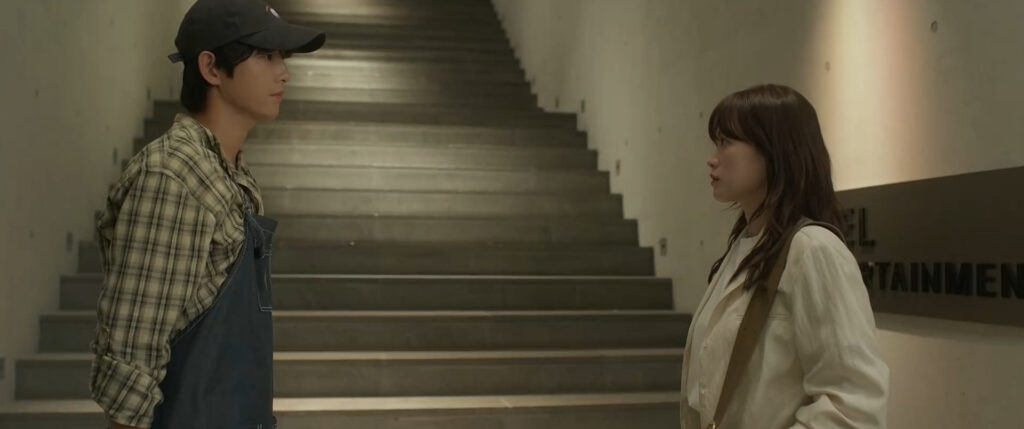
    Next target: Jeon Tae-soo (special appearance), a vicious loan shark masquerading as a respectable benefactor — the kind of man who gives to orphanages with one hand while breaking bones with the other. To dodge an audit, Tae-soo needs to move fifty billion won out of the country. Yi-rang initially tries a sea plan that explodes spectacularly. Then she becomes a flight attendant in an improbable montage (yes, you read that right) and Gu-ho becomes a fake heir. Onboard, the scams escalate — fake kidnappings, false threats, a staged “money-sniffing” dog — but the best move is when they turn a full plane into a theatrical dump of blank bills from the cargo door. Tae-soo, drenched in humiliation, discovers his money is fake and screams into the sky. Cut to our heroes flying off, literal winners.
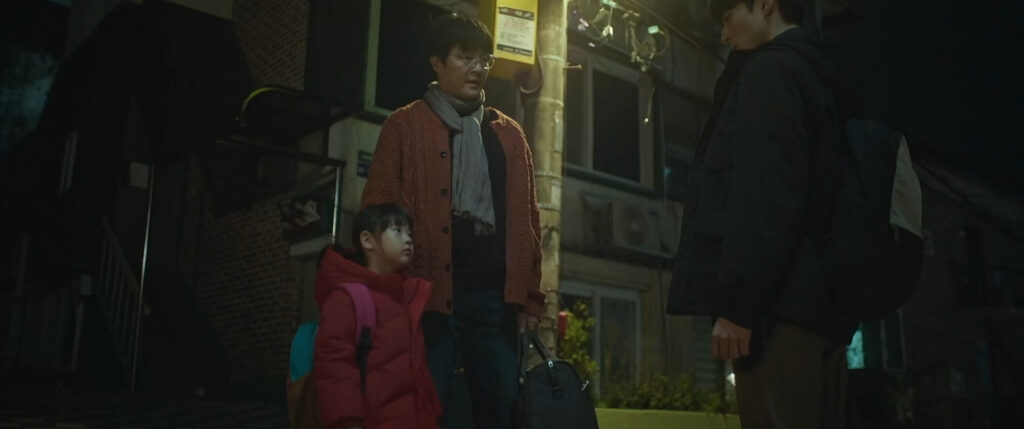
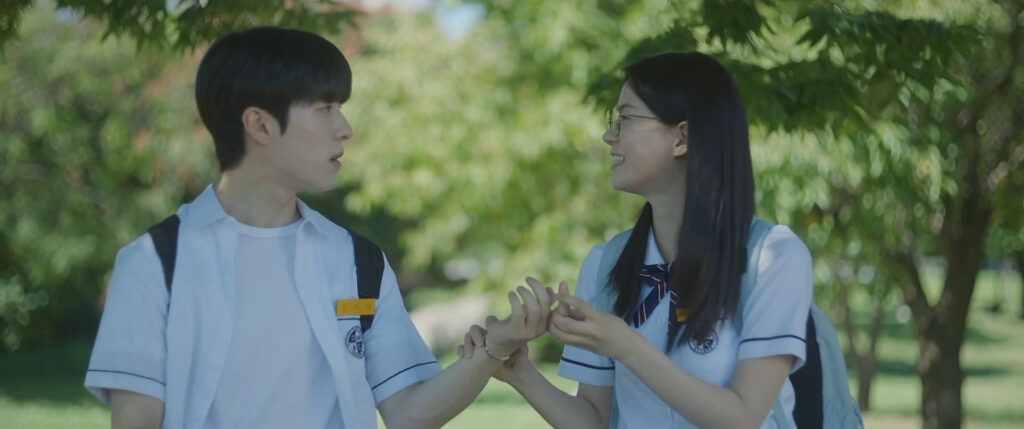
    Finally, they donate most of the takings to an orphanage Tae-soo wanted closed. Justice is done. The bad guy is arrested after the authorities discover other crimes. Everyone cheers. Except Yi-rang, who goes to her room, plays chess with an imaginary opponent, and studies a conspiracy board with Gu-ho’s name at the center. The show hints there’s a deeper secret tying Yi-rang and Gu-ho together. Childhood memories, masked figures, veiled links — it’s all set up for something bigger.


    What the show does well

    1. It commits to the tone.
    This series knows exactly what it is: a flashy, absurd caper. It leans into theatrical cons, and it never apologizes for staged violence or cartoonish villains. That commitment lets the audience accept the silliness rather than fight it. If you expect gritty realism, move along. If you want fun, buckle up.

    2. The trio has great chemistry.
    Park Min-young anchors the show with charisma. Park Hee-soon covers the cool, clever moves. Joo Jong-hyuk supplies the emotional honesty that makes the capers feel human. Together, they form a believable team: one brain, one body, one big heart.

    3. Creative cons with visual flair.
    From a fake police raid to a plane full of volunteers who double as accomplices, the show creates grand theatrical moments. The staging is clever. The reveals are timed. The props are silly but satisfying — especially the dramatic parachute handoff.

    4. Cartoon villains make moral choices easy.
    The bad guys are exaggerated, which clears moral fog. That makes cheering for the scammers feel clean. There is no moral wringing about whether stealing is wrong. These villains deserve some degree of creative judgment.


    Where it trips (but usually recovers)

    1. Logic takes a vacation.
    The show treats plausibility like a light snack. Need fake audit papers, a plane full of actors, and a perfectly timed storm? Done. Some viewers will roll their eyes. If you can forgive that, the payoff is bigger spectacle.

    2. Drama-as-prop can feel staged.
    Scenes sometimes feel arranged to show off a twist rather than grow naturally from character. It’s a deliberate style choice (like watching a stage play), but it can be jarring if you crave organic emotion.

    3. Jokes hit and miss.
    The humor ranges from clever to corny. Some lines land like a wink; others land like confetti on wet pavement. Still, the show rarely becomes unbearable — mostly because the cast sells the silliness with total commitment.


    Characters: who we root for and why

    • Yi-rang is the engine. She’s confident and slightly theatrical. But underneath the showmanship you feel a scarred person. She is precise and ruthless in planning. Yet she keeps to a moral code: prey on the rich abusers. I want to find out what made her into a chess-playing con queen.
    • James is versatile and cool. Every disguise is a new small performance. He’s the hand to Yi-rang’s brain.
    • Gu-ho is the moral compass — so golden it almost feels like a prop. He’s sincere, clueless at times, and completely devoted. He sells the cons with pure emotion, and that innocence makes the team likable.
    • Tae-soo is cartoon-level evil. He’s the kind of villain who forces us to pick a side without guilt. Fun to hate.

    Themes and subtext (yes, it has them)

    On the surface, the show is a bright heist comedy. But it borrows old K-drama tropes and twists them. A few deeper threads are worth watching for:

    • Performance vs. Truth: Everyone is acting, even the victims. The series plays with layers of role-play — people present themselves as who they want others to see. The con artists simply weaponize this social theater.
    • Justice by spectacle: The show suggests that sometimes the system fails. So spectacle steps in. The trio’s justice is theatrical but effective. That raises ethical questions, but the show keeps the moral ledger clean by targeting truly corrupt people.
    • Hidden pasts: Yi-rang’s conspiracy board and the childhood hints suggest trauma and manipulation in the past. The simple heists mask a slow-building revenge arc. Expect more emotional reveals down the line.

    Production notes (for the picky viewers)

    • Pacing: Fast. The show wastes no time. Scenes move quickly and transitions are energetic. If you like momentum, this is for you.
    • Direction: Stylized. There’s a stagey quality that matches the plot about acting and deception. It can be theatrical, but that’s intentional.
    • Soundtrack: Playful and punchy. It matches the comic timing well and doesn’t overstay its welcome.
    • Cameos: The special appearances (including a shaman and a loan shark actor) add flavor and a sense the world is both dangerous and absurd.

    Predictions (yes, I’ll speculate — and I’ll be shameless about it)

    • Yi-rang is connected to a bigger trauma. Possibly a kidnapped heiress plot or a family conspiracy.
    • Gu-ho’s childhood scenes will become central. He’s either an unwitting clue-holder or the key to Yi-rang’s emotional center.
    • James might have a secret past tied to power players. He’s too professional to be just “other half of the team.”
    • Expect the moral line to blur later. The show may tease redemption arcs and then push back with darker costs.

    My point of view (direct, plain, a bit snarky)

    This series is a guilty pleasure in the best way. It’s aware of its own silliness and embraces it. If you watch for realism, you’ll get annoyed. If you watch for cathartic, cinematic comeuppance, you’ll grin like a kid who just found out rules are optional.

    I appreciate a show that dares to stage justice as spectacle. In a world where “proper” justice is often bogged down, it’s delicious to watch charismatic anti-heroes pull off elaborate stings on hateful, wealthy targets. The donation to the orphanage at the end? That’s not just clever plotting — it’s smart moral theatre. It cements Yi-rang’s team as something like vigilantes with manners.

    Also, Park Min-young carries this with the kind of mischief that makes morally grey heroes sympathetic. She doesn’t play Yi-rang as a monster. Instead, she’s a strategist who loves the game. That energy makes the show fun to watch. The writing gets creative points for imagination, even if it sacrifices realism for flair.

    Finally, I like that the show doesn’t get bogged down by regret. It’s a fast candy bar of a drama — crunchy, sweet, and not pretending to be a salad. I mean that as praise.


    Who will like this show?

    • Fans of heist comedies and caper movies.
    • Viewers who enjoy stylized acting and theatrical staging.
    • People who prefer moral clarity: bad guys are bad, con artists are charming, and justice is theatrical.
    • Anyone who enjoys Park Min-young’s charismatic lead energy.

    If you prefer slow-burn realism or grounded courtroom drama, this is not your vibe. But if you love clever staging, big set pieces, and an emotional center that hides in plain sight — yes, you should watch.


    Final verdict — star rating

    Overall: ★★★★☆ (4 out of 5 stars)

    Why four stars? Because the show is thrilling, fun, and wildly imaginative. It nails tone, pace, and charm. It loses a point for convenience-based plotting and occasionally cheesy humor. Still, the cast sells it, the set pieces pop, and the hinted mystery gives the show emotional glue.

    If you like bold, stylish capers that lean hard into spectacle and don’t apologize for being a little silly, Confidence Queen starts strong. Episodes 1–2 deliver a tasty mix of laughs, thrills, and feel-bad rich people getting taken down a peg. I’m curious to see whether the show will keep its heart under the hood or let the deeper story explode into full melodrama. Either way, I’ll be watching — mostly because it’s fun, and also a little because I suspect the chessboard will get messy in the best possible way.

    Nepal’s PM Quits After Deadly Protests

    0

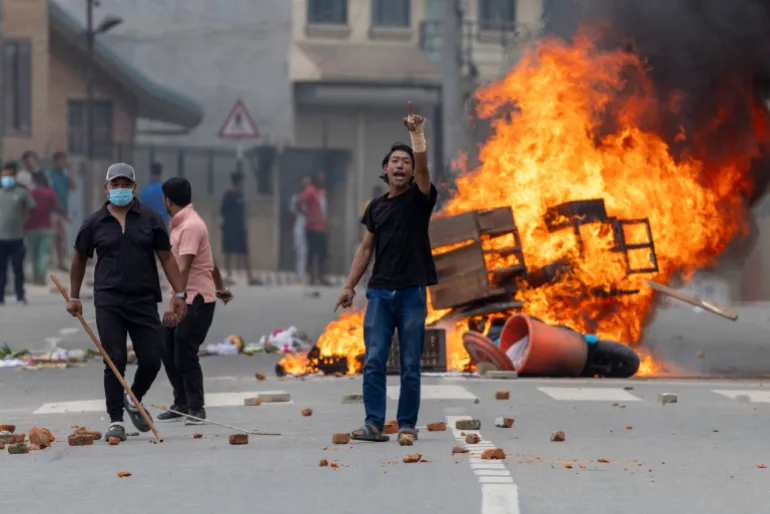
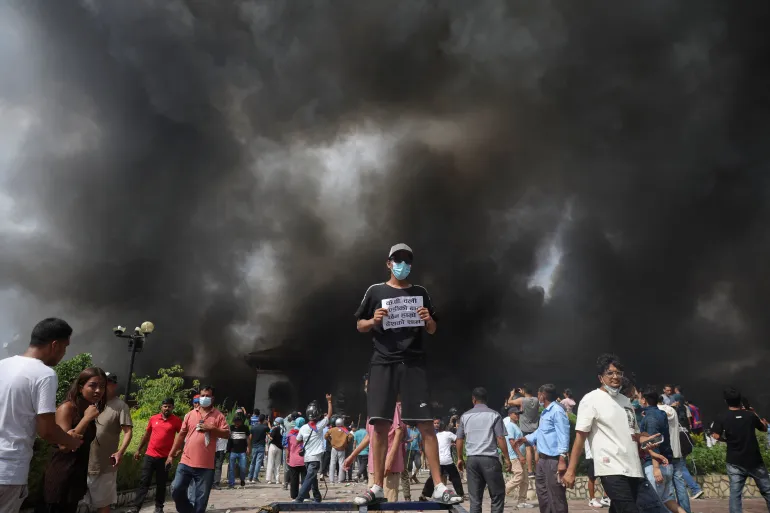
    Khadga Prasad Sharma Oli has resigned as Nepal’s prime minister after mass protests erupted in Kathmandu. What began as a backlash to an online gag soon exploded into full-blown unrest. At least 19 people died in clashes with security forces. Homes were attacked. A private residence of the prime minister was set on fire. People are now calling for an interim government — one led by young representatives — and fresh elections. In short: chaos, grief, and a nation asking for change.

    TL;DR

    • Nepal PM Khadga Prasad Sharma Oli resigns after deadly protests in Kathmandu.
    • Social-media ban sparked initial outrage, escalating into clashes with security forces.
    • At least 19 protesters killed; properties of political leaders vandalized and set on fire.
    • Protesters demand an interim government led by youth and fresh elections.
    • Calls for accountability, institutional reform, and transparent investigations are rising.
    • Nepal becomes the third South Asian country in recent years to oust a government through street protests.
    • The country faces short-term instability and long-term pressure for political reform.

    How we got here — the short version

    First, the trigger. The government rolled out a social-media ban. That move didn’t sit well with a lot of people — especially younger Nepalis who live on their phones. Protesters called it censorship. They saw it as the government muzzling speech during a tense time. So people took to the streets.

    Source: Reuters

    Then it escalated fast. On Monday, demonstrations surged in Kathmandu. Authorities tried to control crowds. Clashes followed. By Tuesday, violence had worsened. Security forces and protesters fought in the streets. Dozens were injured. At least 19 protesters were killed in clashes. On Tuesday night, after angry crowds attacked political leaders’ homes and set fire to properties, the prime minister announced his resignation.

    So yes, what started online turned into one of the most significant street uprisings Nepal has seen in years.


    What protesters want

    • Immediate resignation of the current government.
    • An interim government — activists say it should be led by younger people, not the old guard.
    • Fresh elections.
    • Accountability for the deaths and for alleged corruption and poor governance.

    A protest leader summed it up: their “first demand” is resignation — because, in their words, the government “lost all moral ground” after the deaths.


    Violence, symbols, and real anger

    Source: Reuters

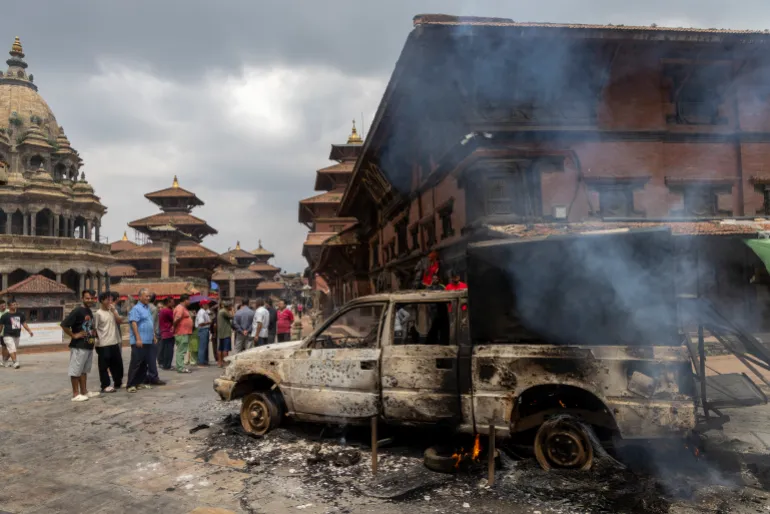
    The scenes in Kathmandu were ugly. Curfews were ignored. People jumped fences. Politicians’ houses and property were vandalized. The prime minister’s private residence was set on fire. That’s not just vandalism; it’s symbolic. It says: “We’re done.” It says people don’t trust the institutions that should protect them.

    And make no mistake: burning a home is not the same as lighting a candle. It’s an expression of raw rage. People are grieving, and grief often turns into something combustible when it meets frustration.


    The political context — why this matters beyond one ban

    This isn’t just about a social-media ban. It’s about long-standing complaints: corruption, mismanagement, and a sense that the political class is out of touch. For many Nepalis, this government symbolized those failures. The ban was the match, but the fuel had been building up for years.

    Also, Nepal is not isolated. It’s the third South Asian country in recent years where street uprisings forced out a government — after Bangladesh and Sri Lanka. When people lose faith in the usual channels — courts, parliament, elections — they sometimes turn to the street. That’s risky. It can be powerful. It can also be chaotic.


    The human toll

    Source: Reuters

    Police and security forces clashed with demonstrators. Hospitals reported scores of injured. At least 19 protesters died in the most violent clashes. Those numbers mount fast during street uprisings: accused, disputed, and sometimes revised. Deaths are irrefutable. Families are left grieving. Communities are shaken.

    When a government uses force and people get killed, trust erodes quickly. The question isn’t only who started the violence. The question is what will be done to find justice for those lives and to prevent more bloodshed.


    Regional ripple effects

    Nepal’s unrest matters to its neighbors. Instability spills across borders. Investors get nervous. Diplomats take urgent calls. And when a government falls amid violence, neighboring powers watch closely. In South Asia, where political nerves are often raw, sudden changes in one country can affect trade, travel, and diplomacy in others.

    Plus, when protests force a government out, it becomes a precedent. It tells people in other countries: mass street action can work. That’s not inherently good or bad. It just raises the stakes across the region.


    Government response — what they did and what that means

    The government initially tried to clamp down. It imposed a social-media ban, claiming platforms weren’t following regulations. That move backfired. Rather than defusing anger, it sparked more protests. The ban was lifted late Monday after demonstrations began.

    But the damage had been done. The lifting of the ban looked reactive, not proactive. Protesters had already mobilized. They were no longer just mad about the policy. They were mad about everything it represented: a pattern of governance they see as heavy-handed and incompetent.

    Then the resignation. That is a big step, and it shows the power of sustained mass protest. However, a resignation alone won’t fix underlying issues. It may clear the stage, but the hard work — truth, accountability, rebuilding public trust — begins now.


    What comes next? Short-term and medium-term scenarios

    Short-term

    • A caretaker or interim administration is likely to be formed, whether led by youth or a coalition.
    • Security measures will be tightened.
    • There will be investigations into the killings and who ordered what.
    • International actors may push for calm and a transparent process.

    Medium-term

    • Pressure for early elections will rise.
    • Political parties might scramble to reorganize and distance from unpopular figures.
    • Social tensions could remain high unless justice and meaningful reforms follow.

    Long story short: the next few weeks will determine whether this was a moment of catharsis or the start of a prolonged crisis.


    Why this matters to ordinary people (and why they should care even if they live far away)

    Political instability isn’t just a headline. It affects daily life. Gas, food supplies, and public services can be disrupted. Jobs can be affected. Foreign investment slows, which hits the economy. For Nepalis abroad, remittances — a crucial lifeline — may be disrupted. For the region, it can mean higher prices and shaken markets.

    And politically, it sets a tone: either a move toward accountability and renewal, or a slide into more mistrust and instability. The difference matters for decades.


    My take — what I think should happen next

    Okay, here’s the blunt version (because sugar-coating doesn’t help): a resignation is not a miracle cure. It’s a reset button. What follows the reset will determine whether Nepal heads toward meaningful reform or just swaps one set of elites for another.

    1. Transparent investigations. The deaths must be investigated by an independent body. No partisan whitewash. Families deserve the truth.
    2. A credible interim government. If protesters want youth leadership, fine. But put structures in place. Vet leaders, create clear timelines, and ensure national representation.
    3. An immediate plan for elections. Not endless delays. Concrete dates. Clear rules. International observers if needed.
    4. Institutional reform. Real change should target the institutions that allowed corruption and poor governance to fester. That means courts, oversight bodies, and electoral systems.
    5. Space for peaceful protest. Governments should not respond to dissent with bans or brute force. Dialogue channels are messy but necessary.

    If Nepal does these things, this painful moment could become a turning point. If not, it may be a painful cycle that repeats.


    A few closing thoughts — because context helps

    People’s anger was real and justified. The social-media ban was a proximate cause, but the deeper cause was a long build-up of resentment. That’s what made the protests so volatile. When people feel voiceless, they find voice in the streets. That voice can be powerful. It can also be dangerous.

    So this is a crossroads. Will Nepal rebuild trust? Will it give younger people a real shot at leadership? Or will old habits reassert themselves, and the same problems return?

    The right answer is obvious: justice, accountability, fresh leadership, and institutional reform. The harder part is actually getting there. For a country as young, proud, and geopolitically important as Nepal, how it moves forward will matter — not just for Nepalis, but for the region too.

    My Youth Episodes 1–2: What happened so far…

    0

    Quick take: A gentle, grown-up rom-com that knows how to keep its feelings measured. It doesn’t rush. It lets awkwardness breathe. And when two people who used to be everything to each other meet again, the sparks are small, real, and oddly satisfying.

    My Youth premiered on September 5, 2025, on JTBC and streams on platforms like Viki and Viu. It stars Song Joong-ki as Sunwoo Hae and Chun Woo-hee as Sung Je-yeon. The show opens with adult Je-yeon finding Hae at his flower shop within the first 15 minutes, and then lets the past trickle out in flashbacks. It’s already clear this will be a slow unpeeling of history and feelings.

    TL;DR

    • My Youth is a gentle, mature K-drama rom-com about two childhood sweethearts reconnecting years later.
    • The show avoids melodrama, opting for a realistic, slow-burn pace that lets awkwardness and quiet tension build.
    • It stars Song Joong-ki as a reclusive novelist/florist and Chun Woo-hee as a pragmatic entertainment agency team leader.
    • The chemistry is subtle and lived-in, focusing on small gestures and emotional realism rather than grand romance.

    Why this isn’t your typical first-love reunion

    Lots of K-dramas like to do the whole “start in the past, cut to the present, then dramatic reunion” thing. My Youth takes that, flips it, and adds a slower tempo. Instead of dragging us through every heartbreak moment right away, it drops us in the middle of adult life. Je-yeon tracks Hae down not because she’s melodramatic, but because of work. She’s a team leader at an entertainment agency. The meet-cute is practical. She wants Hae to take a job for a project. That’s the hook. Not fate. Not destiny. Work.

    That matters. Because when the reunion actually happens, both characters are guarded. They know each other’s faces. They don’t know each other’s present. So the emotional friction is quieter. It’s not fireworks. It’s two people who used to be close feeling their way around each other like strangers in an old house. And that, honestly, is such a satisfying choice.


    Episodes 1–2: The bones of the setup (no spoilers beyond what you’d expect)

    • Je-yeon finds Hae at a flower shop and confirms it with a wrist-bracelet detail. She’s got reasons beyond nostalgia: she needs Hae for casting. He’s reluctant. He’s a former child star turned novelist and florist who clearly wants a quieter life.
    • Their first conversation is painfully awkward. They play dumb. Then they don’t. Je-yeon partially lies by omission. Hae feels used. Understandable. The script gives them room to fumble, and both actors sell that quiet tension very well.
    • We get flashbacks that explain how they met: Hae, a poor boy who once shone on screen; Je-yeon, a model student with practical family hopes. He took care of a little sister. She wanted a career so badly she’d kiss college dreams goodbye for a scholarship. Their past is tender and a little tragic. The show doesn’t overplay the sorrow. It simply drops the facts and lets them land.
    • By the end of episode two, they are back in orbit. There’s an offer on the table that nudges Hae back into the public eye. He resists, then hesitates, and then… well, you’ll see. But the seed is planted: past + present = messy feelings.

    What the show does really well

    1. Tone control.
    The show knows the emotion it wants: warm, nostalgic, slightly melancholy. It doesn’t swing for big, tear-jerking moments every five minutes. That restraint makes the quieter scenes land harder. Instead of a constant crescendo, we get peaks that feel earned.

    2. The slow burn of awkwardness.
    Adult reunions shouldn’t feel like teenage declarations. Comedy and tension both come from the little things: a half-smile, a pause too long, a handshake that lingers. Those micro-moments are the show’s currency.

    3. Realistic motivations.
    Both leads have reasons to behave the way they do. Je-yeon’s job pushes her into morally grey territory (she’s not evil; she’s pressured). Hae’s responsibility toward his sister explains his guardedness. The drama avoids dumb motivations like “I forgot who you were.” Their choices feel believable.

    4. Flashbacks that preserve mystery.
    Instead of dumping the full backstory at once, the series teases details. That builds curiosity without stretching credibility. You want to see the whole picture, but you don’t feel cheated.

    5. The supporting cast adds texture.
    Small roles — a meddling PD, Je-yeon’s boss who’s oddly entangled with Hae’s family, a sibling who brings emotional stakes — give the world depth. The chaotic family stuff is both frustrating and oddly compelling. The show doesn’t shy away from making you dislike someone, then quietly reveal why they’re complicated.


    Where it trips — just a little

    1. A weird wealthy-woman-marriage subplot.
    There’s a plot beat where a rich woman marries Hae’s absentee, debt-dodging dad. That relationship is odd. It’s hard to buy why a successful CEO would marry someone with that track record. The show hints at reasons, but it’s still a sticky, slightly unbelievable beat. You’ll raise your eyebrows. So did I.

    2. Clues left hanging.
    A couple of small hints feel like dangling threads. The second wish bracelet that later breaks? We know it’s important. But the show’s gentle rhythm means it will take its time revealing why. That patience is fine, but some viewers will want answers faster.

    3. A tiny pacing wobble.
    Because the show values slow emotional reveals, episodes sometimes linger in domestic scenes. If you prefer fast plots and big twists, this isn’t for you. If you like atmosphere and character work, buckle up.


    Acting and chemistry: the real sell

    Song Joong-ki plays Hae with soft restraint. He’s not trying to dazzle. He’s trying to vanish. That quiet is compelling. Chun Woo-hee is sharp, practical, and emotionally present. When they’re together, the chemistry is subtle — a look, a shortened breath, a tiny smile. It never screams “plot device.” Instead, it feels lived-in.

    The show leans on small physical beats. A pulled shirt. A piggy-back ride. A tearful confession across a taxi stand. These aren’t big gestures. They’re details. And those details build the emotional architecture of their relationship.

    Support actors also add credibility. The sibling dynamics and the agency politics make the world feel lived in. You can see how two grown people would orbit back toward each other in this setting.


    Themes worth paying attention to

    Responsibility vs. Desire.
    Hae is constantly balancing duty and dream. He gave up certain things to protect others. That tradeoff shapes his choices. The drama asks whether that kind of self-sacrifice costs you the chance at happiness.

    Identity after fame.
    Hae’s child-star past haunts him. But the show smartly avoids making fame the only thing that defines him. Instead, it explores what remains when the spotlight leaves you.

    The awkwardness of reunion.
    Coming back to someone is weird. People change. Memory is selective. The show captures that handful of seconds when you decide whether to step toward someone or walk away.

    Money and class.
    Je-yeon’s family bankruptcy and Hae’s poverty background are not just plot devices. They color choices and language. The drama is interested in how class shapes opportunities and decisions—not in a preachy way, but in a quietly observant one.


    Favorite scene (spoilers): the bookstore + pen moment

    A simple, human scene: they buy a book. She wants him to sign it. He pulls out a pen. The camera lingers. It’s an ordinary moment that suddenly feels huge. That tiny gift — a pen, a signed page — becomes a symbol for what they lost and what might still be. It’s small, but it sticks.


    What I think will matter going forward (my POV)

    A few things will make or break this show:

    1. How they handle Hae’s return to the public eye.
      If the show uses that as a lazy plot device for manufactured drama, it’ll lose nuance. If it treats it as a complicated, personal choice, the show will stay interesting.
    2. Whether Je-yeon grows beyond her “practical achiever” label.
      She’s driven because she had to be. But growth happens when she stops living for “what’s expected” and starts deciding for herself. I want to see that arc.
    3. The Pil-do/Chan subplot.
      That marriage needs explanation. If it’s just a dramatic shortcut, it will feel cheap. But if the writers use it to explore class, guilt, or loneliness, it could be unexpectedly rich.
    4. Pacing balance.
      Keep the atmosphere, but give us payoff. Tiny reveals are great. But the audience needs enough answers to stay hooked.

    If the show leans into these, it could be quietly great. If it plays too safe, it will be pleasant but forgettable.


    Who will love this show — and who won’t

    You’ll probably like My Youth if you enjoy:

    • Slow, character-driven romances.
    • Quiet, mature chemistry instead of flames-out passion.
    • Emotional realism over melodrama.
    • Flashes of nostalgia and bittersweet memories.

    You might not like it if you want:

    • Fast plotting and constant twists.
    • Big dramatic finales every episode.
    • Soap-opera style confrontations and overblown villainy.

    Little details viewers will appreciate

    • Production design leans into cozy: bookstores, small cafes, and the flower shop feel lived in.
    • Soundtrack is understated. It picks the right notes without trying too hard.
    • Cinematography often frames characters in private moments — a good fit for a show about quiet reunions.
    • Writing gives the actors room to express with silence. That’s rarer than you think.

    Final verdict — My Youth (Episodes 1–2)

    This premiere sets a calm, steady pace. It trusts its actors. It trusts silence. It doesn’t promise fireworks. Instead, it builds a real, slow burn. If you’re tired of loud heartbreak and prefer intimacy served in small doses, this will sit nicely with you.

    Score: ★★★★☆ (4 out of 5 stars)
    Reason: Superb performances and tone. A few narrative choices feel odd or under-explained, but the emotional core is strong. I’m invested enough to keep watching.

    What Happened to Tiara Angelina Saraswati

    0

    This is hard to read. It’s hard to write. Still, it matters that we get the facts straight, and that we treat the people involved — the victim, her family, and even a small-town community — with careful language. Below I lay out what is known, what’s unclear, and why this case has touched a nerve across Indonesia.


    Quick summary (so you don’t have to skim a dozen posts)

    • A 25-year-old woman, Tiara Angelina Saraswati, was identified as the victim after human body parts were found scattered near the Pacet–Cangar road in Mojokerto, East Java.
    • Her boyfriend, Alvi Maulana (24), has been arrested and named as the main suspect. Police say the killing happened in a boarding house in Surabaya, and body parts were then dumped in the Pacet area.
    • Media reports conflict on the number of body fragments recovered. Early reporting mentioned about 65–66 pieces, while forensic reports and later police statements say hundreds — with one outlet reporting around 310 fragments. Authorities are still compiling forensic results.
    • Police say tools found at the scene include knives, garden shears, a hammer and related instruments they believe were used to dismember the body. Investigators have seized these items as evidence.

    The discovery and the identification

    The first public sign that something terrible had happened was a routine, tragic find. On September 6, a grass cutter reported seeing human remains near a roadside ravine in Pacet, Mojokerto. That discovery triggered a police sweep of the area. Investigators recovered human tissue and body parts from the roadside and surrounding scrub. Initial local reports counted dozens of pieces — figures like 65 or 66 were circulated quickly by regional outlets covering the on-site search.

    Forensic teams later worked to identify the victim. Fingerprints, DNA, and other methods were used to confirm identity. By the time police spoke publicly, the dead woman had been identified as Tiara Angelina Saraswati, a 25-year-old from Lamongan, who had been living in Surabaya. Friends and family described her as ambitious and lively. The confirmation allowed police to move from field recovery to a focused criminal inquiry.


    The suspect, the arrest, and the alleged crime scene

    Police arrested Alvi Maulana, a 24-year-old man from North Sumatra, after investigations linked him to the crime. Authorities say the killing occurred in a boarding house in the Lidah Wetan area of Surabaya. The arrest reportedly happened on September 7 at the suspect’s rented room. At the property, officers found clothing stained with blood and several tools that investigators say were used in the attack and subsequent dismemberment.

    According to statements attributed to law enforcement, the alleged sequence is chilling: a confrontation in the room, an initial lethal assault, and then a prolonged process of dismembering the body — reportedly done in the bathroom — before the suspect left the pieces in plastic bags or a red backpack and walked to the Pacet area to dispose of them along the roadside. Police say items such as large knives, garden shears or steel cutters, a hammer, and other tools were recovered and documented during the forensic sweep of the boarding house.


    Why the numbers don’t match (65 vs “ratusan / 310”)

    One thing readers should be cautious about: numbers changed as the story developed. That’s not unusual in big crime stories. Early field searches found dozens of visible fragments and reported figures like 65 or 66 pieces left at several spots along the road near Pacet. Those figures came from the first sweep teams and reporters on the scene.

    Later, forensic teams working at hospitals and police labs catalogued recovered tissues, bone fragments, and skull parts in much greater detail. One national outlet reported that the forensic tally reached around 310 fragments, after the body material had been processed and counted by specialists. Police also told reporters that some parts had been partly destroyed or further processed, which complicated early counting. In other words: the initial field count and the later forensic inventory measure different things. Both may be technically correct in their own contexts.


    What police say about motive and relationship

    Police statements quoted in multiple reports describe a long, fraught relationship between the victim and suspect. The couple reportedly had been together for several years and had lived together without formal marriage. Investigators say the relationship had financial tensions, frequent arguments, and unresolved conflicts that reportedly escalated. Authorities quoted the suspect as saying his emotions had “built up” over time — a phrase used in press briefings to summarize his account.

    We must be careful with motive language. Police have made preliminary statements; a suspect’s own words and media summaries are not the same as proven motive in court. Investigators are treating the case under criminal statutes for murder and are pursuing forensic and witness evidence to build a formal case.


    Forensic and legal steps now underway

    • Autopsy and forensic cataloguing: Medical examiners are processing remains and making formal identifications. That work is slow and methodical. Expect updates from police when the forensic picture is complete.
    • Evidence processing: Items seized from the boarding house — knives, cutters, a hammer, clothing, and a backpack — are being logged and tested. Forensics will match blood traces, tissue, and fingerprints as part of the chain of evidence.
    • Charges and detention: The suspect has been detained and faces serious criminal charges. Indonesian law treats premeditated murder and aggravated homicide severely; prosecutors will rely on forensic and circumstantial evidence in court.

    Community reaction and the media whirlwind

    This case has triggered wide shock. Local residents in Pacet and in Lamongan (the victim’s birthplace) are grieving and stunned. Social media exploded with speculation and anger. Many public figures and everyday people expressed horror and grief. Local news outlets ran multiple pieces with graphic details; some national outlets issued cautionary notes about graphic content. Police appealed for the public not to spread unverified details that could compromise the investigation.

    There’s an extra, messy layer here: the internet spreads partial information fast. Early counts, blurry photos, and rumors traveled through WhatsApp, Facebook groups, and short-form platforms before forensic teams completed their work. That feeds confusion. It also makes it harder for investigators and harder on the victim’s family. So please think twice before forwarding sensational posts or unverified images.


    What this case points to — bigger themes

    This case is an extreme and tragic example. But extreme incidents don’t exist in a vacuum. A few broader themes stand out:

    1. Domestic conflict can escalate. Most quarrels do not end like this. But unresolved anger, financial stress, and cohabitation without clear boundaries can create dangerous dynamics. Early police descriptions suggest years of tension that suddenly exploded.
    2. Substance, mental health, and anger management matter. Reports mention “pent-up emotion” and repeated fights. Whether mental health services, counseling, or community supports were available — or sought — is a question for investigators and for society to consider. This is not blaming anyone who suffered; it’s about prevention going forward.
    3. Forensics matters — and so does cautious reporting. The jump from “65 parts” to “310 parts” shows how early reporting and later forensic accounting can diverge. The public needs to let specialists do their work and allow the evidence to tell the story.
    4. Trauma to families and communities is long-lasting. This kind of violence reshapes lives, livelihoods, and trust. Local communities will need resources to process grief and fear. That might mean counseling, community conversations, or even practical support for the victim’s family.

    My perspective — bluntly and humanly

    Okay, here’s a direct take: reading about a young life ended so violently makes all the platitudes ring hollow. It’s natural to want a simple explanation — jealousy, money, rage. But real life is messy. There are layers: personal history, social expectations, economic stress, and possible mental health gaps. Those build up. Many people survive the pressure, and many don’t. That difference can come down to one crisis, one unchecked impulse, or one failed support network.

    We also need to be honest about how we respond as a society. Sensational headlines and gruesome images don’t help the family heal. They make trauma into a spectacle. Instead, call for facts. Call for proper investigation. Call for support for those left behind. Demand better mental health access. Demand violence prevention programs where they can matter — in schools, in neighborhoods, and within primary healthcare.

    Finally: holding an individual accountable is necessary. But prevention should be bigger than punishment. It should aim to stop the next case from ever happening.