
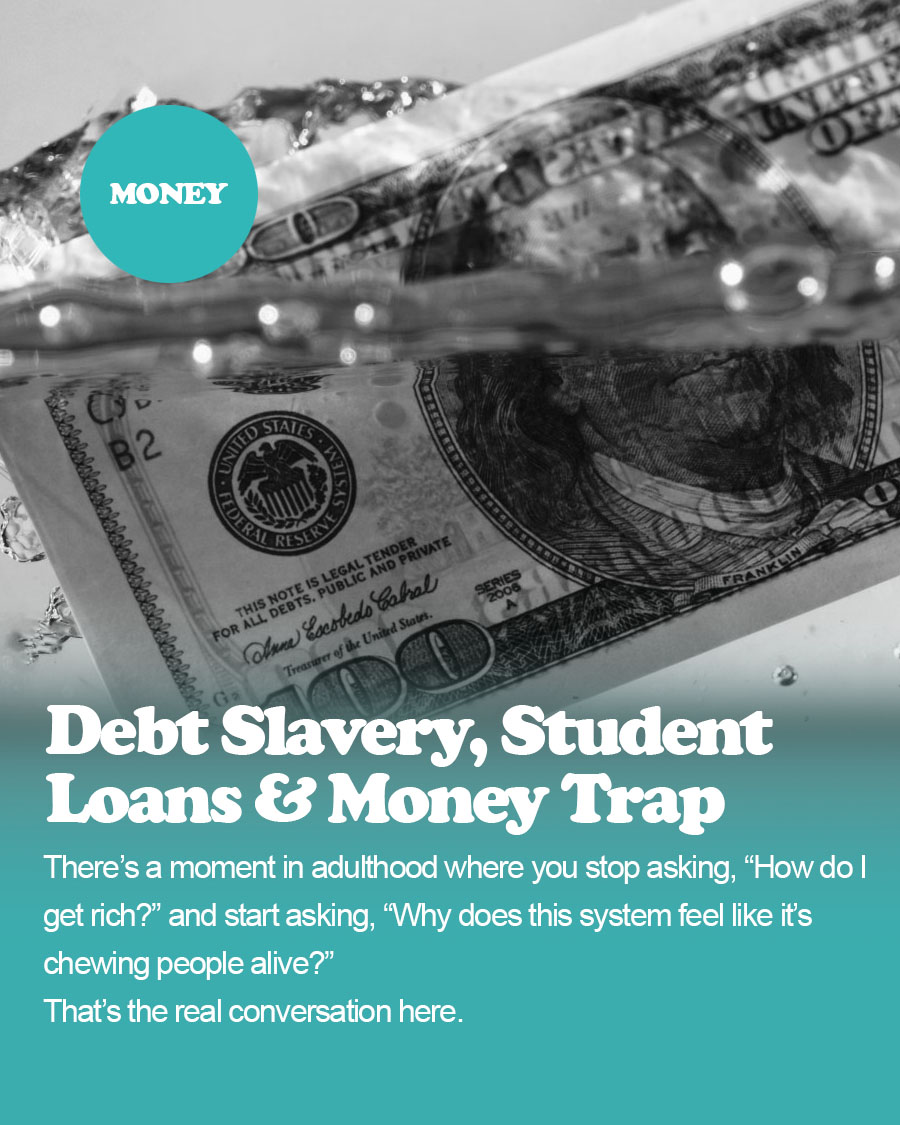

There’s a moment in adulthood where you stop asking, “How do I get rich?” and start asking, “Why does this system feel like it’s chewing people alive?”
That’s the real conversation here.
Not Lamborghinis. Not fake “rise and grind” gurus filming motivational speeches in front of rented yachts. Not crypto bros screaming about freedom while refreshing charts every 12 seconds like caffeinated meerkats.
This is about something way deeper.
It started with a quiet conversation between a chiropractor and an older patient. One of those older guys who barely talks, but when he finally says something, it lands harder than your monthly credit card statement.
The chiropractor joked about wanting to be rich. Mansion. Cars. Generosity. The whole “I’ve tried being broke already” package.
Then the old man finally responded.
“Money is the root of all evil.”
Classic line, right?
Most people hear that and immediately roll their eyes. Sounds dramatic. Sounds bitter. Sounds like something people say after losing money in a pyramid scheme started by their cousin Darren.
But then the old man added something important:
“You can also use money for good.”
And honestly? That second sentence changes everything.
Because money itself isn’t evil like some haunted object from a horror movie. It’s not sitting there whispering, “Buy another unnecessary subscription, Derrick…”
Money is power.
And power reveals people.
The Real Problem Isn’t Money. It’s Dependency.
Here’s where the story gets heavy.
The chiropractor starts talking about student loans coming back into his life. Interest stacking up again. Payments restarting. Debt growing quietly in the background like mold behind a wall.
And suddenly it hits him:
“This doesn’t feel like ownership. This feels like slavery.”
Now before people start throwing chairs around the internet, let’s be clear.
Modern debt is obviously not the same as historical slavery. They are not equal experiences. But emotionally? Mentally? Spiritually? A lot of people understand the feeling of being trapped.
That’s the point.
You wake up owing money.
You work because you owe money.
You stay in jobs you hate because you owe money.
You delay dreams because you owe money.
And every month feels like feeding a machine that never gets full.
Student loans.
Mortgages.
Credit cards.
Car payments.
Medical bills.
The modern world basically said:
“Congrats on becoming an adult. Here’s your lifetime subscription to stress.”
Amazing deal. Love that for us.
The Student Loan Scam Nobody Talks About Properly
Let’s be brutally honest for a second.
A lot of young people were sold education like it was a guaranteed golden ticket.
“Just take the loan.”
“You’ll make it back easily.”
“Future you will handle it.”
Future you is now eating instant noodles while calculating interest rates at 2am.
In the chiropractor’s case, school cost around $150,000 after interest. And that interest started growing immediately.
That’s the nasty part.
Debt grows while you sleep.
Meanwhile, your mental health declines for free.
And what makes people angry isn’t just the money itself. It’s the feeling that the system profits from keeping people permanently behind.
You’re not just paying for education anymore.
You’re paying for time.
Freedom.
Choices.
Peace of mind.
That’s why so many millennials and Gen Z adults feel exhausted all the time.
Not lazy.
Exhausted.
Different thing entirely.
Rich People Are Also Trapped. Just With Better Furniture.
This part is uncomfortable.
We love pretending rich people are completely free. But a lot of them are trapped too.
Just differently.
The article argues that wealthy people often use massive amounts of debt as leverage. They borrow to buy assets. They borrow to grow businesses. They borrow to increase wealth.
And technically, yes, it works.
But here’s the catch:
If your entire life depends on keeping the machine running, are you actually free?
Some rich people own mansions but can’t stop working.
They own jets but sleep terribly.
They have influence but zero peace.
That’s not freedom.
That’s premium anxiety.
Like slavery with granite countertops.
And honestly, society rewards this behavior.
The system loves people who stay inside the game.
Consume more.
Borrow more.
Scale more.
Hustle more.
The economy basically runs on people never feeling “enough.”
Because if everyone suddenly felt content tomorrow, half the industries on Earth would collapse by lunchtime.
The Weird Truth About Modern Life
Here’s where the conversation becomes less financial and more philosophical.
Most people today are tied to some kind of invisible leash.
Even people with no debt still need income to survive inside the system.
Taxes.
Insurance.
Bills.
Inflation.
Housing costs.
Retirement fears.
There’s always something reaching into your pocket like a raccoon in a dumpster.
And this creates a strange kind of collective stress.
People become reactive instead of intentional.
That’s why everyone’s nervous all the time online.
One bad month and suddenly:
“Hey guys, quick update, I’m launching a podcast.”
Between You & Me
I think the biggest scam wasn’t money.
It was convincing people that endless consumption equals success.
Some people genuinely don’t want yachts.
They want peace.
Time.
A healthy nervous system.
A weekend without checking bank balances like they’re decoding military intelligence.
And honestly? That’s valid.
There’s also something deeply weird about modern culture treating burnout like a personality trait.
People brag about being busy the same way kids brag about Pokémon cards.
“I slept 3 hours.”
“I haven’t taken a holiday in 4 years.”
“I answer emails during weddings.”
Bro… that’s not ambition anymore. That’s Stockholm syndrome with WiFi.
The older I get, the more I think real wealth is flexibility.
Can you breathe?
Can you rest?
Can you walk away from toxic situations?
Can you survive without pretending to be successful for strangers online?
That’s freedom.
Not fake luxury motivational quotes posted by people renting sports cars for Instagram reels.
So Is Money Evil?
Not exactly.
Money is a tool.
But tools become dangerous when entire societies worship them.
And right now? A lot of people don’t own money.
Money owns them.
That’s the uncomfortable truth hiding underneath this whole discussion.
The old patient actually got it right.
Money can absolutely be used for good.
It can help families.
Build homes.
Create art.
Support charities.
Fund dreams.
Buy freedom from survival stress.
But when debt becomes the foundation of everyday life, people stop living intentionally. They start surviving mechanically.
And that changes society in ways we don’t even fully notice anymore.
The Part Nobody Wants to Hear
You probably won’t escape the system completely.
Most people won’t move into the forest and start trading potatoes for firewood like a medieval NPC.
But you can become more conscious.
Spend less trying to impress people.
Borrow less emotionally.
Stop confusing luxury with happiness.
Stop assuming wealthy automatically means fulfilled.
And maybe most importantly:
Stop measuring your value by your productivity.
Because the machine loves that.
The machine absolutely eats that up.
You were not born just to pay bills until your back hurts.
That cannot be the entire plot.