



Kuala Nerus, Terengganu — A routine patrol turned chaotic one evening when a 16-year-old sped off after being asked to stop. Instead of parking and taking the lecture, he led police on a dangerous chase that ended only when an officer leaned out of the squad car and pointed an MP5 submachine gun at him. Yes, an MP5. Yes, a teenager. No, it didn’t end well for his road sense.
Here’s everything that happened, why it matters, and what I think we should actually do about this.
TL;DR
- A 16-year-old driving his brother’s car fled from police during a routine patrol in Kuala Nerus, Terengganu.
- The chase ended only when an officer leaned out of the patrol car and pointed an MP5 submachine gun at the teen.
- The teen was not found with any illegal items and was given a summons for driving without a license.
- The incident highlights the dangers of unlicensed driving, the importance of parental responsibility, and the debate over police use of force.
What went down — short version
Two patrol officers in Kuala Nerus spotted a grey Proton Wira being driven in a suspicious way. They signaled for the driver to pull over. The car bolted. So a chase began.
The teen ignored repeated loudspeaker orders to stop. He drove recklessly. At one point, footage shows him swerving toward the patrol car and ramming it. The officers kept trying to get him to stop. Finally, one officer drew a Heckler & Koch MP5 and pointed it at the driver. After that, the teenager pulled over. He was later revealed to be a 16-year-old student driving his brother’s car without permission. No banned items were found, and he was handed over to his parents with a summons for driving without a licence.
The chase, in slightly less dramatic detail
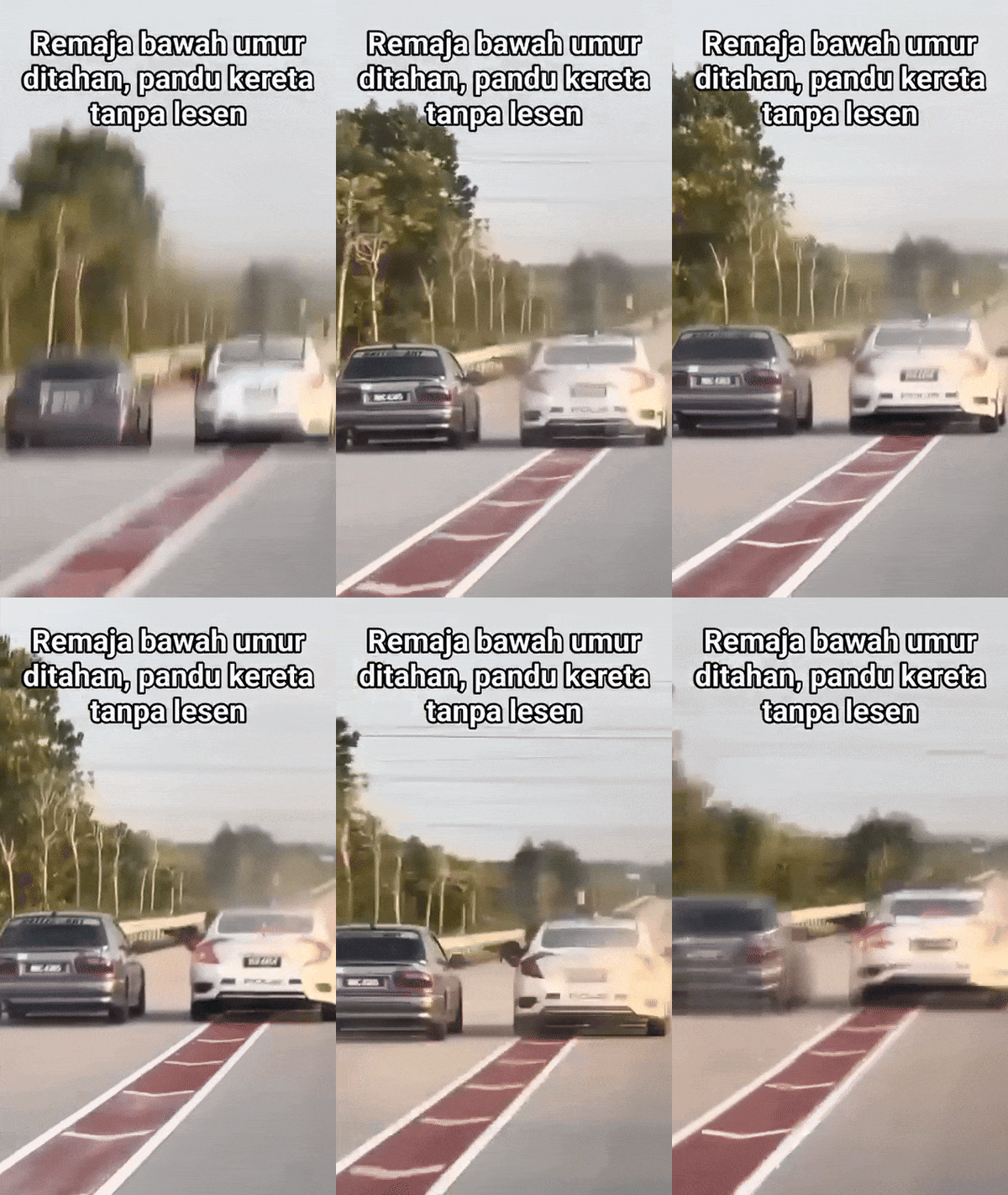
It was around 6:30 p.m. on a Monday. Two officers were on routine patrol — the sort of shift where, most days, the biggest problem is traffic jams and someone parking badly. That changed fast.
They caught sight of the Proton Wira. Something about the way it moved caught their attention. They did the normal thing: signaled the driver to stop. Instead, the driver treated the signal like a polite suggestion.
Then the car sped away. The officers followed. Over the patrol radio and the loudspeaker, they called for the driver to halt. He didn’t. Instead, he drove dangerously. He didn’t just try to outrun the police; he drove aggressively. The patrol car later received a hit — he rammed it.
Footage that circulated on social media shows an officer leaning out of the patrol car and pointing the MP5 at the fleeing vehicle. The officer gestured with the weapon several times like a warning. The teen finally stopped. Officers checked the car and found no illegal items. They then identified the driver as a 16-year-old student, driving a relative’s car without permission. The family arrived. The teen received a summons for driving without a licence and was released to his parents with a stern warning.
Why the MP5 matters (and why social media went wild)
Pointing a military-style submachine gun at a driver is dramatic. It’s the sort of image made for clips and hot takes. The officer’s use of an MP5 became the focal point of the video that spread online. People reacted strongly — some applauded the decisive move, others worried about escalation.
Here’s the important bit: the weapon was used as a warning, not to fire. That matters legally and ethically. Police are trained to de-escalate. Sometimes that includes showing force to stop an immediate threat. In this case, a teen was driving dangerously and had already rammed a patrol car. The officer used a show of force to get a driver who’d refused repeated orders to stop to finally comply. Whether you find that reassuring or unsettling depends on your taste for drama and your trust in the system.
Legal fallout and the immediate outcome
The teen was issued a summons for driving without a licence. He was released into his parents’ care. No further arrests were reported in connection with prohibited items or other crimes after the car and the teen were searched.
That’s the official outcome on paper: a traffic offence ticket and a family pickup. In practice, there can be more consequences. A reckless driving incident like this could lead to other legal complications if any injuries or serious damage occurred. It could also influence future interactions between the teen and the law — and possibly the family dynamics at home.
Bigger picture: this wasn’t just “kids being kids”
Let’s be blunt. Teens take risks. That’s built into the developmental script: independence, testing limits, and the occasional dumb stunt to impress friends. But there’s a difference between sneaking out after curfew and nearly causing a multi-vehicle crash while refusing to stop for police.
Driving without a licence shows a few worrying things at once. First: lack of legal permission. Second: lack of adequate training. Third: poor judgment. And when those three things collide at high speed, you get scenarios that put other people in danger — other drivers, pedestrians, and the officers trying to enforce the law.
Parents and guardians often hear “he’s a kid” as an excuse to minimize these incidents. That’s not a great look when we consider the real-world risk. The teen didn’t just break a rule; he endangered lives.
Safety lessons we can take from this
First, never let an unlicensed driver take the wheel. Simple. Your car is not a tutorial. Your garage is not a driving school. If you’re caught letting someone underage or unlicensed drive, you could be liable.
Second, teach kids the real consequences — not just “you’ll get a ticket.” Talk about injuries, permanent scars, funeral visits, and the court system. Those are sobering realities that don’t always register with adrenaline-fueled teens.
Third, if you’re a driver and you’re signaled to stop by police, stop. Do it safely, of course. But don’t assume you can outrun or outsmart the system. The longer you run, the more dangerous the situation becomes for everyone.
Fourth, police procedures and the optics of force need careful balance. Officers have to protect the public and themselves. Sometimes a show of force is used to prevent worse outcomes. But each incident should be reviewed to ensure that the force used was proportional and necessary.
Social-media culture made it louder — but not better
If you watched the clip online, you likely saw a compressed, dramatic version of events. Clips cut for shock value rarely show the full context. They give you adrenaline, not nuance. That’s how trends get started and facts get lost.
A video of an officer pointing an MP5 will get more clicks than a calm explanation of legal consequences. But clicks don’t solve problems. Clear rules and honest conversations do.
My point of view
Okay, here’s my take — blunt, because sugarcoating won’t fix bad decisions.
The teen made reckless choices. He drove without a licence. He refused to stop. He rammed a police car. Those are serious mistakes. Teenagers are going to push boundaries. But boundaries matter when metal and speed are involved.
At the same time, I get why the officer showed the weapon. Once a vehicle becomes a potential weapon and refuses lawful orders, the officer has to act to prevent greater harm. The MP5 was dramatic, sure. But given that the teen already rammed the patrol car, the officer’s show of force likely prevented a worse outcome.
This is a teachable moment for everyone involved. For parents: lock the keys, actually enforce rules, and talk to kids about real consequences. For schools and community groups: provide safe ways to teach driving responsibility. For police: transparency matters. After any use-of-force moment, clear explanations reduce mistrust.
Most importantly, stop romanticizing risk. “He’s just a kid” isn’t a defense when people get hurt. If we want fewer viral police chases and fewer near-misses, we need fewer unlicensed drivers and better conversations about responsibility.