



Alright, listen up. If you thought palace intrigue meant only whispered plots and poisoned tea, think again. Bon Appétit, Your Majesty just taught us that one good bite can swing a diplomacy meeting. Episodes 5 and 6 double down on food-as-power and make our time-traveling chef the most dangerous person in Joseon — because she cooks like she’s arguing with fate, and honestly, I’m here for it.
Below: a tight recap, what works, what’s a little silly, plus some nerdy food-politics thoughts and my unfiltered take. Also: spoilers for episodes 5–6, obviously. If you haven’t watched, bail now.
TL;DR
- Food as a Weapon: The show makes food a central driver of the plot, using a cooking competition to decide national fate.
- Characters in Motion: The main characters are evolving, with the king’s grief and the heroine’s practicality being key to their arcs.
- Balanced Tones: It effectively juggles comedic moments (like the “poisonous chili” sign) with serious political intrigue.
- The Power of Subplots: A side story about a court jester’s personal loss adds emotional weight to the political corruption.
- Smart and Satisfying: The show is praised for its clever concept and strong execution, even with a few classic K-drama tropes.
Quick recap (short, snackable)

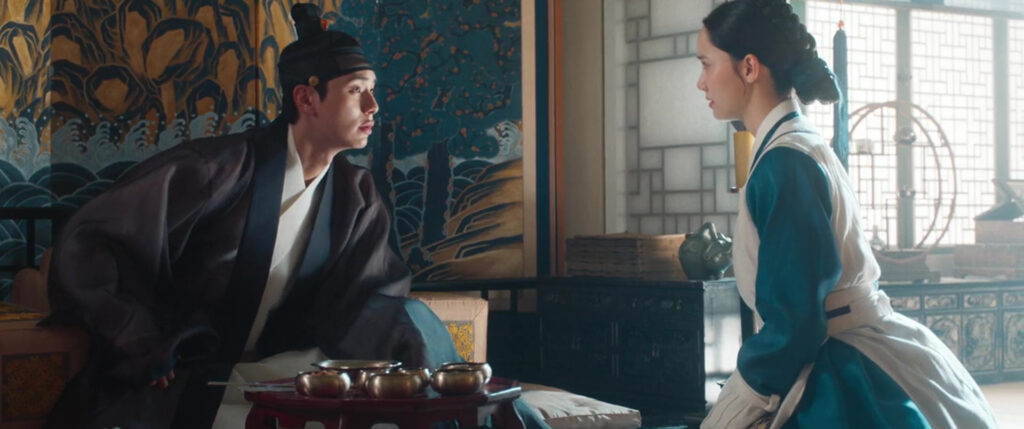
After last week’s accidental (and very drunk) kiss, Ji-young wakes with new eye bags and a bruised ego. Heon doesn’t remember the kiss. Naturally. He’s the type who’d misplace his emotions but never his appetite. Still, his actions start to change. He returns Ji-young’s missing handbag (yes, the one that travels through time), and he apologizes. If you’ve spent any time in K-drama land, you know apologies are the butterfly that transforms a stoic rectangle of a man into a flustered cloud. Cue soft glances.
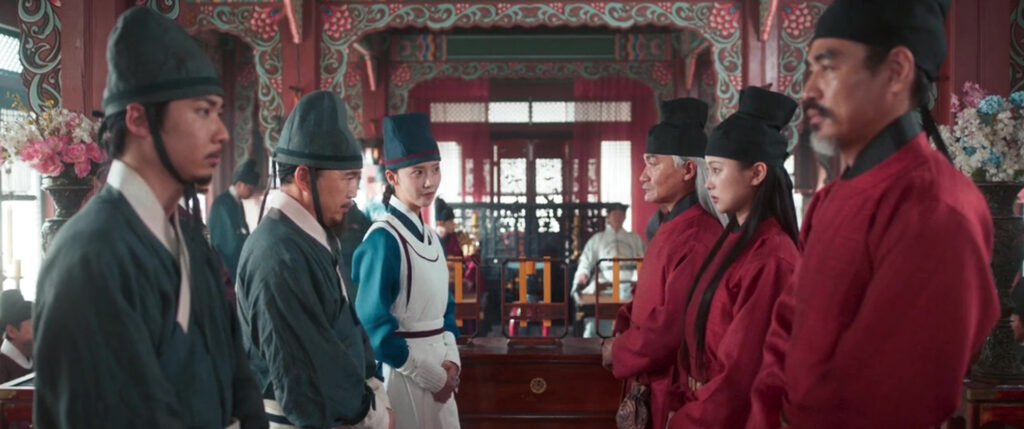
Then diplomacy shows up at the gate: a Ming envoy, Yu Kun, arrives with top cooks in tow and a chip on his shoulder. He can’t eat Joseon food, he claims. So naturally, the solution is a cooking duel. Because threats to national sovereignty? Solve them with a cook-off. And, because this is a plot, the rival side is rigging the game to make Ming win. Stakes: ginseng harvesting rights, tribute women, and political coups. Chill.
Ji-young, of course, gets conscripted as the kingdom’s culinary champion. Heon wagers the country’s dignity on her pans. The ministers panic. The queen dowager writes letters. Prince Jesan quietly hopes Joseon loses because chaos = opportunity. Meanwhile, our palace jester, Gong-gil, is doing sleuth work with a moral compass and a mysterious past. He’s more than comic relief. He’s haunted. His sister died in the palace. He wants answers. His path collides with court politics and Mok-ju’s schemes. Also: chili grinding dates. Yes, a chili grinding date happens. Iconic again.
Why episodes 5–6 work (and why you should keep watching)
- Food is the plot driver, not a garnish.
Most shows toss a cake into a scene to look pretty. This one builds entire power plays around recipes. The cooking competition literally decides tribute terms. That’s bold. It keeps the plot coherent and focused. Plus, the food scenes look delicious without being OTT. Credits to the production team: the food styling slaps. - Character arcs move, even if slowly.
Heon’s hunger strike — and his subsequent breaking of it with Ji-young’s dish — is a nice, quiet beat that humanizes him. He’s not just a villain. He’s grieving and awkward about it. Ji-young is brave and pragmatic. She didn’t come to Joseon for romance. But she’s not immune. The small changes in how she carries herself — a smile here, a softer tone there — feel earned. - Political stakes are clear and interesting.
The tribute negotiation setup isn’t vague. We understand what’s at risk: ginseng, national pride, and political leverage. The Coup Squad’s willingness to sell out the country (and women) to save their ambition is a dark but sharp cut. It frames Heon’s stubbornness as a leadership trait rather than mere petulance. - Gong-gil’s subplot adds depth.
He’s not only spy-jester material. His family wound gives the palace layers. The show subtly ties personal loss to systemic corruption. It’s effective and gives the revenge/mystery thread real weight. - Tone balance.
The writers juggle comedy, romance, and intrigue without imploding. One moment you’re belly-laughing at a “poisonous chili” sign. The next, you’re outraged at ministers bargaining away people like objects. That emotional flip keeps the episodes engaging.
What’s a bit clunky (but forgivable)

- Convenient memory loss tropes. Heon conveniently forgets the kiss. Fine. It’s a classic. But don’t act surprised when everyone starts pairing this with trope fatigue. The show handles it well, but it’s still a well-worn path.
- Timing of stakes vs. character readiness. Forcing Ji-young into a competition that decides the nation’s fate is dramatic. But the emotional logic of “she must do it, or treason!” feels a hair rushed. It’s tense and entertaining, sure. But it stretches plausibility. Still, she’s a strong lead, and that saves the scene.
- Some villains are a touch cartoonish. Prince Jesan’s smugness and the Coup Squad’s greed are blunt instruments. However, because the show balances this with nuanced threats, the simple villainy reads as deliberate — a satire of court corruption.
Scenes that deserve a standing ovation
- Heon’s first proper bite of Ji-young’s food. Cinematic. The way he eats says more than a dozen speeches. Food as character development? 10/10.
- Greenhouse date and chili mill montage. Cheesy? Absolutely. Charming? Also yes. The makeover moment — Joseon black-card flex included — nails the rom-com beats without undermining the stakes.
- The announcement of the Culinary Nation Wars. The rules are clever: mix of new meat dish, swap-cuisine round, and ginseng soup finale. It’s a setup that tests versatility, politics, and national pride. I want to taste the ginseng soup.
Themes bubbling under the surface
- Food as diplomacy.
This show is making a point: culture and cuisine are soft power. If a nation can’t feed a guest properly, it loses face. The cooking competition becomes a metaphor for sovereignty. In a world where trade deals happen over dinners, that’s neat and relevant. - Women and agency.
Ji-young is modern. Yet the court keeps trying to use women as bargaining chips. The show contrasts her agency with how women are treated as tokens by power players. That contrast is sharp and intentional. - Memory, grief, and duty.
Heon’s arc is about grief masquerading as tyranny. He’s brandishing control to manage loss. That’s a humanizing read. It explains, not excuses, his cruelty. - Tradition vs. innovation.
Ji-young’s modern techniques clash with Joseon norms. But shows that innovation can uplift tradition, not erase it. That’s a tidy message for a drama that’s part time travel, part culinary manifesto.
My point of view (no fluff — just mine)

I love when a show commits to a clever central conceit. Bon Appétit, Your Majesty does that. It treats food like a language and a weapon. Episodes 5–6 are where the series stops teasing and starts flexing: romance, politics, and mystery all converge. Ji-young is the kind of heroine who wins by skill and stubbornness, not by succumbing to love at first sighy glance. That’s refreshing.
Yes, the show leans on classic K-drama tropes — memory lapses, dramatic looks, last-minute reveals. But the difference here is intention. Those tropes are not lazy filler; they’re tools. The writers use them to build tension while letting the food scenes carry the emotional load. You don’t have to love every plot convenience to be invested. The main question is: do you want to watch the dishes? Because if your answer is yes, this show will give you tablefuls of joy.
Also, a note on representation: Ji-young’s 21st-century attitude in a Joseon body risks being a “modern woman saves history” fantasy. Fine. It’s a wish-fulfillment angle. But the script often gives her believable constraints. She’s clever, not invincible. That keeps her grounded.
Predictions (because we’re hungry for what’s next)
- The Culinary Nation Wars will expose the Coup Squad. Once Ji-young eats, she’ll speak louder than knives. Expect alliances to shift fast.
- Prince Jesan will escalate. He’s betting on chaos. When his plan starts to crack, he’ll either go all in or get messy.
- Gong-gil’s investigation will intersect with the cooking plot in a way that reveals palace rot. My money: the hairpin clue ties back to a minister who’s pretending to be loyal.
- Romance: Heon’s slow melt is the main event. It won’t be instant. It’ll be awkward, then raw, then strangely tender. Ji-young will push back. That will make it nicer when he finally stops being a ruler and starts being a person.
Why this matters beyond the drama
This show teaches something sneaky: culture can be a country’s frontline defense. A plate can say more than a speech. In a world where soft power matters (trade, tourism, cultural exchange), telling a story that elevates cooking to a diplomatic tool is timely and smart. Also, it’s a reminder that ordinary skills — feeding someone well — can become heroic in the right context. That’s wholesome and satisfying.
Final verdict
Would I recommend it? Yes. If you like food, political tension, and slow-burn romance with sharp female leads, this is your jam. The pacing dips here and there, and the trope use is noticeable, but the charm, cinematography, and solid character work more than make up for it.
Rating: ★★★★☆ (4 out of 5 stars)
Why four and not five? Because a perfect score would mean flawless plotting and zero trope fatigue. That’s unrealistic. Still, this is close. It’s fun, thoughtful, and it keeps the food at the heart of the story — which, let’s be honest, is the whole point.