

More
    Home Blog Page 37

    Sabrina Duran, Chile’s “Narco Queen”: From TikTok Stardom to Deadly Underworld

    0

    Meet Sabrina Duran. You might know her as “Narco Queen” or just another beauty guru on TikTok. Yet, behind those flawless makeup tutorials and viral dance challenges, she ran a small but fierce drug-trafficking operation in Santiago, Chile. It’s the story of an influencer who juggled highlighter and handguns. And believe me, you’re not ready for this one.

    TL;DR

    • TikTok influencer led a secret life as a drug trafficker.
    • Her criminal operation involved family and cartel connections.
    • Anonymous tips online led to her arrest and imprisonment.
    • She continued posting on TikTok from prison, even finding romance.
    • After early release, she returned to social media but was soon murdered.
    • Her story highlights the dark side of influencer culture and real-world consequences.
    • It raises questions about the price of online fame and the nature of authenticity.

    Certainly! Here’s a comprehensive table summarizing key information about Sabrina Durán Montero, also known as the “Narco Queen” of Chile:


    📘 Profile Summary: Sabrina Durán Montero

    CategoryDetails
    Full NameSabrina Durán Montero
    Nicknames / Aliases“La Ina”, “Narco Queen”, “Joakina Gusman” (a nod to Joaquín “El Chapo” Guzmán)
    Date of Birth1999
    Place of BirthRecoleta, Chile
    Date of DeathOctober 23, 2023
    Age at Death24 years old
    OccupationTikTok influencer and convicted drug trafficker
    Social Media PresenceOver 610,000 followers on TikTok (@katrinagusman); known for beauty tutorials and dance videos
    Criminal ActivitiesLeader of a local drug trafficking gang in Peñaflor, Chile; convicted of drug trafficking in 2022 and sentenced to three years in prison
    Incarceration DetailsServed over a year in prison; released in May 2023; continued to post TikTok videos from prison
    Personal LifeMother of one child; had a romantic relationship with fellow inmate Antonella Marchant during incarceration
    Circumstances of DeathShot multiple times in broad daylight by masked assailants while en route to a nail salon in Padre Hurtado, Santiago; attackers stole and later burned her car
    Funeral DetailsHeld on October 27, 2023; considered a “high-risk” event by authorities due to potential disturbances; required special police presence
    Cultural ImpactSymbol of the intersection between social media fame and narcoculture in Chile; sparked discussions on the influence of drug trade on youth

    From Makeup Brushes to Bullet Casings

    Sabrina’s TikTok Beginnings
    Initially, Sabrina posted the usual beauty content: primer hacks, smoky-eyes tutorials, and “get ready with me” montages. She touted skincare tips and shared trending sounds. Before long, she amassed a few thousand followers. Then she vanished. Overnight.

    A Three‑Month Digital Disappearance
    Naturally, fans speculated. Some thought she moved to Instagram. Others assumed she was taking a break. Still others joked about burnout. Yet the truth was darker. While her feed lay dormant, Sabrina transformed from influencer to underworld operator.


    Birth of the “Narco Queen”

    A Family Business
    It wasn’t just Sabrina. Her brothers spearheaded a local crew with ties to larger cartels in the region. Though small, the gang had reach. They controlled a few neighborhoods. They ran turf wars. And they did it all with brutal efficiency.

    Cartel Connections & Territorial Battles
    Moreover, they weren’t amateurs. Cartel mentors supplied weapons, training, and logistics. Consequently, rival factions clashed often. Gunfire erupted at odd hours. Residents recorded the shootouts on cell phones. Yet they dared not dial 133—the local emergency number. Fear reigned supreme.


    Whispers, Websites, and Warrant Squads

    Anonymous Alerts
    As shootings increased, frustration grew. Fortunately, Chilean authorities launched an anonymous tip portal. Civilians could report crime without fear of retribution. Within weeks, thousands of digital complaints poured in—and most pointed to Sabrina’s crew.

    PDI Counter‑Narcotics Mobilizes
    Subsequently, the Investigative Police of Chile (PDI), specifically their Counter‑Narcotics Division, took notice. They compiled informant testimonies, geolocated gunfire videos, and subpoenaed phone records. In short, they built a watertight case.


    The SWAT‑Style Raid

    Circle of Steel
    On a crisp, overcast morning, uniformed officers surrounded multiple properties simultaneously. In one upscale apartment, Sabrina—still rocking streetwear—sat scrolling through TikTok. Before she could react, breach charges shattered the door.

    Desperate Escape
    With adrenaline pumping, she bolted for the window. Below, a three‑story drop awaited. Meanwhile, her brothers dove into the courtyard. Chaos ensued. Yet the PDI had anticipated this. Within minutes, officers apprehended all three, weapons included.


    Gavel, Guilt, and Lockup

    A 36‑Month Sentence
    At trial, prosecutors unveiled chilling details: dozens of kilos trafficked, dozens more sold on Santiago street corners. The judge delivered a firm three‑year prison sentence. No mercy. Sabrina’s TikTok went dark. Her beauty tutorials froze at thirteen million views.

    Social Media Exodus
    However, word spread fast. Her followers panicked. Some cried “fake news.” Others mourned. But within three months, Sabrina reappeared—behind bars.


    Beauty Tutorials from a Cell

    Prison Access—Really?
    Surprisingly, she posted again. In each video, she wore civilian clothes. Behind her, a metal bunk and cinder‑block walls. Many viewers wondered: How did she get that phone? Where did the Wi‑Fi come from? Nobody knows.

    Content Shift
    Admittedly, her tone changed. Gone were the flawless filters. Instead, she panned the camera over prison corridors. She lamented missing her glam squad. Yet she still showed lip‑liner tricks—only now they came with a wink of irony.


    An Unlikely Love Story

    Cellmate Chemistry
    Enter Antonella. Coincidentally—or perhaps by fate—she led another trafficking outfit. They bonded over cartel lore and contraband logistics. Soon, their shared world blurred the line between friendship and romance.

    Snapshots of Romance
    On TikTok, Sabrina posted photos: the two hugging near a barred window. They captioned posts with heart emojis. Fans were enthralled. Even in lockdown, it was love that conquered all.


    Early Release & Uncertain Freedom

    Six Months Later
    Through plea deals, commendations for good behavior, and perhaps a dash of PR, Sabrina walked free. Suddenly, she returned to street level—and to her makeup desk.

    Back to Beauty—and Beyond?
    Her first freed‑woman video: a “get‑ready-with-me” from an apartment that wasn’t cell-block gray anymore. She basked in sunlight. She blended foundation. It seemed like classic Sabrina. Yet questions lingered:

    • Had she truly left the drugs behind?
    • Would her cartel contacts respect a “retired queen”?
    • Could her newfound fame serve as protection—or paint a target?

    A Bloody Roadblock

    Routine Errand Turns Deadly
    Approximately six months into freedom, she went for a nail appointment. It was mid‑afternoon. Traffic moved slowly on the boulevard. Without warning, masked men lunged at her car.

    Ambush and Execution
    She stopped. They shot. First volley: she fell. They retreated. Then they returned. They fired again. And again. It all happened in broad daylight. Neighbors filmed while ducking behind parked vans.

    A Charred Getaway
    After ensuring she wouldn’t rise, the attackers stole her vehicle. They drove it miles away. Then they incinerated it. The charred shells of her beauty bag and purse melted inside.


    Police Theories & Motives

    Gangland Retribution
    Detectives suspect this was settling old scores. Perhaps a rival crew seized opportunity. Or maybe a betrayal within Sabrina’s network. Either way, the message was clear: no one leaves the narco game unscathed.

    Collateral or Contract?
    Alternatively, some experts believe it might have been a contract hit. Someone willing to pay for Sabrina’s silence—or her elimination. After all, she knew too much about higher‑ups.


    My Point of View

    This saga reveals more than sensational headlines. It exposes the dark underbelly of influencer culture. After all, when followers double as suppliers, the lines blur between fame and infamy. Furthermore, it shows how “likes” can fast‑track you into danger. In my opinion, we must rethink the platforms we elevate. We celebrate authenticity—but what if that authenticity harbors ammunition?

    Moreover, Sabrina’s downfall underscores one harsh truth: social media can’t rewrite real‑world consequences. No filter will shield you from gunfire. No viral soundbite will spare you from prison bars. And no number of followers will resurrect you after an ambush.

    Yet, there’s another lesson here. Even within concrete walls, human connections blossom. Sabrina and Antonella found love amid metal bunks and razor wire. It’s a testament to resilience—and perhaps to the absurdity of romanticizing criminals. We root for love stories but cringe when they bloom in criminal soil.

    Ultimately, this story asks: What price are we willing to pay for online fame? Are we ready to trade authenticity for safety? And can a “queen” truly abdicate a throne built on violence?


    Conclusion

    Sabrina Duran’s journey from TikTok darling to Narco Queen and, ultimately, a murder victim, reads like a dark fairy tale. Yet it’s all too real. It forces us to confront uncomfortable truths about digital celebrity and real‑world crime. Her life and death stand as both cautionary tale and tragic spectacle.

    Above all, remember this: a viral clip may reach millions in seconds. But it takes years—and often blood—to build an empire. And once built, it can fall even faster. So the next time you double‑tap a beauty tutorial, ask yourself: what’s the story behind the screen?
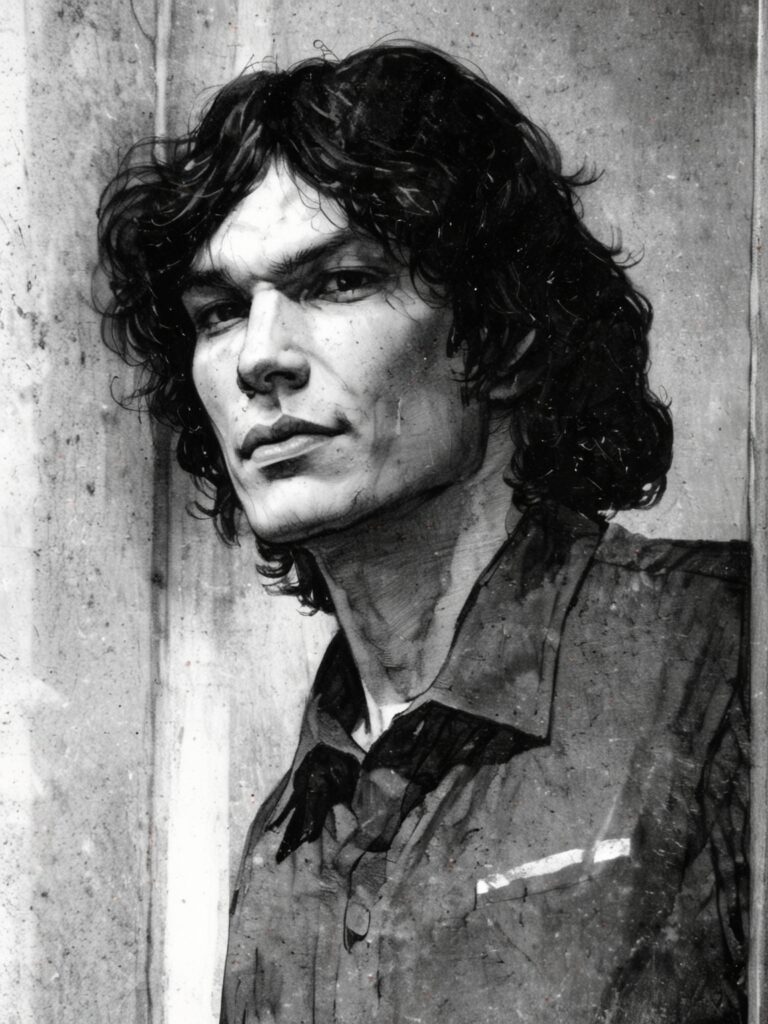
    Who is Richard Ramirez, the Night Stalker

    0

    On a damp summer evening in 1985, a shadow slipped through the backyards of Southern California. Lights flickered off. Doors clicked locked. And yet someone—or something—remained inside. Over the next thirteen months, neighborhoods trembled under an unseen terror. Locking your doors became the least of your worries. This wasn’t your run-of-the-mill burglar. This was Richard Ramirez: the Night Stalker.

    In this write-up, we’ll chronicle Ramirez’s chilling descent from disturbed youth to infamous serial predator.

    TL;DR

    • Richard Ramirez experienced a troubled childhood marked by abuse and exposure to violence.
    • His teenage years involved drug use and escalating criminal activity.
    • Moving to California, his crimes escalated from theft to brutal sexual assaults and murders.
    • Distinctive clues like fingerprints and rare shoe prints were crucial to the investigation.
    • Public recognition led to his capture by vigilant citizens.
    • His trial was a media sensation, resulting in a guilty verdict.
    • Ramirez’s case raises questions about trauma, evil, and society’s fascination with true crime.

    Early Life: Seeds of Violence and Trauma

    Ricardo Leyva Muñoz Ramirez—or just “Ramirez” to those who feared him—didn’t start out as a menacing figure stalking Los Angeles. Born on February 29, 1960, in El Paso, Texas, his childhood exposed him to two critical influences.

    First was an abusive father whose fits of rage echoed through the Ramirez home. Second was Ramirez’s older cousin, Miguel, who returned from Vietnam with Polaroid snapshots of mutilated bodies and women in unspeakable distress. For a twelve-year-old Ricardo, these grisly photos became an unsettling guidebook to human suffering.

    By age thirteen, Ramirez had endured enough trauma to warp any developing psyche. Yet this twisted fascination would later fuel the Night Stalker’s brutality.


    Adolescence: Crime, Drugs, and Dropping Out

    As Ramirez navigated his teenage years, horror followed him like a persistent shadow. He experimented with hallucinogens—LSD, angel dust—and petty crime became his thrill. Shoplifting turned into car theft. Car theft morphed into joyriding with loaded guns.

    Why it matters: Early brushes with law enforcement can sometimes snap a troubled youth back on track. Not Ramirez. Instead, he doubled down. After dropping out of high school in 1978, he tangled with local authorities more than once—for burglary, auto theft, even assault.

    DetailInformation
    Full NameRicardo Leyva Muñoz Ramirez
    AliasThe Night Stalker
    Date of BirthFebruary 29, 1960
    Place of BirthEl Paso, Texas, USA
    Crimes CommittedMurder, attempted murder, sexual assault, burglary
    Victims13+ murders, 5+ attempted murders, 11+ sexual assaults
    Active Years1984 – 1985
    Signature Modus OperandiNighttime home invasions, use of weapons, satanic symbols
    ApprehendedAugust 31, 1985
    Trial OutcomeConvicted on 43 charges; sentenced to death
    DeathJune 7, 2013 (from complications related to B-cell lymphoma)
    Known ForExtreme brutality, satanic references, lack of remorse
    Cultural ImpactInspired books, documentaries, and the Netflix series Night Stalker

    The Move to California: From Petty Thief to Cold-Blooded Predator

    San Francisco Stint

    In 1983, Ramirez packed his bags for San Francisco. He sought anonymity but found decline. Abandoning personal hygiene and subsisting on junk food and soda, he drifted through SRO hotels in crime-ridden neighborhoods like the Tenderloin. Visits to remote rooms at night taught him that vulnerability existed everywhere.

    With each theft, his confidence grew. Yet so did his appetite for cruelty.

    From snatching wallets to snatching lives.

    The First Kill

    On April 10, 1984, Ramirez’s shackled innocence shattered. A nine-year-old girl searching for her lost dollar wandered into his room in the Geneva Hotel. He offered help. She followed. Darkness swallowed her screams. He brutalized her, leaving behind Polaroids—souvenirs of his crime.


    Los Angeles Rampage: A Serial Killer Easel

    After a brief lull, Ramirez resurfaced in Los Angeles. From June 1984 to August 1985, he penned a morbid gallery of crime scenes:

    • Victim #2: A 79-year-old widow in Granada Hills, sexually assaulted and stabbed to death. Ramirez took her money and jewelry.
    • Victim #3 & #4: A murderer’s duet in a South LA garage. First the homeowner, then his roommate fell to Ramirez’s bullets.
    • Victim #5: A woman attacked in a parked car at East LA’s Montebello Park. He shot, stabbed, and mutilated.
    • Victims #6 & #7: A married couple in Cypress Park. Ramirez shot the husband, stabbed the wife, then carved occult symbols into their bedroom wall.

    Behind the Scenes: The killer’s trademark—Pentagram scrawls and inverted crosses—implied a dark spiritual fixation. This earned him not just terror but a morbid reputation in tabloids.


    Investigation: Clues, CSI, and Shoe Prints

    As victims piled up, LAPD detectives faced a labyrinth of leads. They cataloged:

    1. Fingerprints: Lifted from a stolen car—finally a match.
    2. Footprints: A rare pair of Avia sneakers, model number X90, size 8. Only one pair sold in LA in that range.
    3. Polaroids: Seized from Ramirez’s San Francisco hideouts.

    Forensic Turning Point: Those Avias. Uncovered at multiple crime scenes, they provided a unique identifier. In May 1985, SF Police Chief Dianne Feinstein revealed these prints at a press conference, unveiling a composite sketch that brought the nightmare into sharper focus.


    Flight and Capture: When the Net Closed In

    Under pressure, Ramirez fled south—but the shadows trailed him. He torched his shoes into the San Francisco Bay from the Golden Gate Bridge. Yet, sneakers or no sneakers, fingerprints endure.

    Final Crimes and Mistakes

    Back in LA, Ramirez botched a break-in. A bullet grazed a woman who survived and identified him. His stolen Chevrolet Town Car, abandoned nearby, held a full palm print. Authorities seized it and ran it through the system. Ramirez’s juvenile arrest for auto theft in Texas provided the match.

    D-Day: August 31, 1985. Richard Ramirez’s mugshot hit the newsstands. Bystanders recognized his face at a gas station. Citizens tackled him as he tried hijacking a car. Beaten and bloodied, he was handed to LAPD.


    Trial and Conviction: A Nation on Edge

    The trial of Richard Ramirez in State of California v. Ramirez was a spectacle:

    • Length: 156 hearing days.
    • Media Circus: Newspapers splashed grisly Polaroids.
    • Jury Intimidation: Ramirez smirked confidently, wore pentagram necklaces, and flashed the “victory” gesture from the defense table.

    Verdict: Eighty-one charges, including thirteen counts of murder, five counts of attempted murder, eleven counts of sexual assault, and fourteen counts of burglary. The jury deliberated for just four hours before returning a guilty verdict on all counts.

    Sentence: Death by gas chamber—a sentence never carried out in California before Ramirez’s appeal drags on for years.


    Aftermath and Legacy: The Ongoing Horror

    Living and breathing in a small death row cell, Ramirez gained an eerie following. Admirers—mostly women—flooded him with fan mail. One even visited, and he married his groupie in 1996. From behind bars, he gave interviews and reveled in the infamy.

    Reflection: How does a society process such darkness? Ramirez’s case inspired TV documentaries, true crime podcasts, and academic papers exploring the minds of serial predators

    New Insights: Beyond the Headlines

    1. Trauma Loop Hypothesis: Ramirez’s cousin’s war souvenirs could have catalyzed a cycle of dehumanization. Viewing human suffering as entertainment might have eroded Ramirez’s empathy over time.
    2. Occult Fascination: The pentagrams and inverted crosses might not indicate true satanism but rather an identity performance. He weaponized religious imagery to amplify fear.
    3. Media Amplification: Tabloid sensationalism likely fueled Ramirez’s ego. By flaunting his crimes, he fed public fascination—a feedback loop between killer and press.
    4. Community Vigilance: His capture showed the power of civilian action. In an era before cellphones, bystanders played a crucial role in halting his spree.

    My Point of View

    Let’s get personal for a moment. It’s easy to demonize Ramirez, to chalk him up as pure evil. But that black-and-white view neglects the complexity of human nature.

    • Nature vs. Nurture: Ramirez’s violent upbringing and early drug use likely primed his mind for atrocity. However, countless others endure trauma without ever picking up a weapon.
    • The Victims’ Stories: We often fixate on the killer, yet each victim had dreams, families, and futures stolen. Remembering them restores some dignity stolen by Ramirez.
    • Cultural Reflection: Our obsession with true crime raises ethical questions. Are we learning lessons, or are we too enthralled by darkness, risking desensitization?

    In the end, Ramirez’s reign of terror reminds us that evil isn’t always born—it can be made. And it’s on society to break that cycle.


    Conclusion

    Richard Ramirez, the Night Stalker, left an indelible mark on California’s history. His crimes redefined law enforcement tactics, media coverage standards, and public consciousness around serial violence. Yet, beyond the gore and the headlines, his story offers crucial lessons about trauma, community, and the human psyche.

    Stay vigilant. Cherish your loved ones. And never underestimate the power of unity in the face of darkness.

    For further reading, explore documentaries like “Night Stalker: The Hunt for a Serial Killer” and academic works on criminal psychology. And above all, let the victims’ memories guide our efforts to build safer communities.

    Did President Biden’s Secret Cancer Diagnosis Compromise His Leadership? A Deep Dive

    0

    When news broke on Sunday that President Joe Biden has been diagnosed with aggressive prostate cancer, the world reacted with equal parts shock and concern. However, the political theater didn’t pause for heartfelt sympathy. On Monday, former President Donald Trump seized upon the diagnosis to question Biden’s capacity to lead. What began as a moment of unity transformed into a fierce debate over presidential fitness, medical transparency, and age-related cognition.

    In this article, we unpack every twist and turn in this saga, from the medical details to the political jabs. We also explore the broader implications for how Americans assess the health and capability of their leaders. Finally, you’ll get my own take on what it all means for democracy and public trust.


    1. The Timeline: From Announcement to Outcry

    First, let’s set the record straight on key dates and events:

    • Friday, May 16, 2025: President Biden undergoes his routine physical exam. Doctors discover a small nodule on his prostate.
    • Sunday, May 18, 2025: The White House confirms Biden has stage 4 prostate cancer with a Gleason score of 9. The cancer has spread to his bones.
    • Sunday evening: Donald Trump posts a message on Truth Social expressing condolences and well-wishes for Biden and First Lady Jill Biden.
    • Monday, May 19, 2025: At a White House law enforcement event, Trump shifts tone and uses the cancer diagnosis to question Biden’s past physical exams and mental fitness.

    This quick succession of events triggered a firestorm of media coverage and political debate.


    2. Understanding Aggressive Prostate Cancer

    Before diving into the politics, it’s crucial to grasp the medical background.

    1. Prostate Cancer Staging: Cancer staging ranges from 1 to 4. Stage 4 indicates the cancer has spread beyond the prostate, often to bones or lymph nodes. For a leader, that sounds ominous.
    2. Gleason Score Explained: The Gleason system scores prostate cancer from 6 to 10. A score of 9 denotes a highly aggressive form.
    3. Hormone-Sensitive vs. Hormone-Resistant: Despite its aggressiveness, hormone-sensitive prostate cancer can respond well to treatments like hormone therapy, offering a path to effective management.

    Key Insight: Many men—especially those over 70—are not routinely screened for prostate cancer via PSA (prostate-specific antigen) tests. That means a sudden stage 4 diagnosis can happen without warning symptoms.


    3. Trump’s Two-Tone Reaction

    Donald Trump’s reactions to Biden’s health news came in two very different flavors.

    3.1. The Compassionate Post

    On Sunday night, Trump wrote on Truth Social:

    “Melania and I are saddened to hear about Joe Biden’s recent medical diagnosis. We extend our warmest and best wishes to Jill and the family, and we wish Joe a fast and successful recovery.”

    On the surface, it was a textbook moment of dignity and respect. Yet, given the decades-long feud between the two men, it left many wondering if this was just optics.

    3.2. The Fitness-for-Office Ravings

    Fast forward to Monday afternoon at the White House. In a meandering response to a reporter’s question, Trump alleged:

    • Biden hid his cancer while in office.
    • The public should have been notified earlier, given the progression to stage 4.
    • Biden’s past physical exam did not include cognitive tests.
    • Presidential candidates should be required to undergo annual cognitive evaluations.
    • “Somebody is not telling the facts,” Trump insisted. “That’s a big problem.”

    These assertions played into unfounded conspiracy theories and raised fresh concerns about medical privacy versus the public’s right to know.


    4. The Politics of Age and Health

    In American politics, age is never just a number.

    • Age 82: Biden became the oldest president in U.S. history upon inauguration.
    • Age 79: Trump trailed closely behind as the second-oldest.

    Both men faced questions over stamina, cognitive sharpness, and resilience. Yet, the uproar over Biden’s cancer diagnosis reignited a debate that predates this news cycle:

    Should presidential candidates undergo mandatory medical and cognitive testing?

    4.1. The Case for Transparency

    • Public Trust: Voters deserve to know if their candidate can physically and mentally withstand the rigors of office.
    • National Security: A decline in a president’s faculties could pose security risks.
    • Historical Precedent: Franklin D. Roosevelt concealed the severity of his polio, while Woodrow Wilson’s stroke left him incapacitated behind closed doors.

    4.2. The Case for Privacy

    • Medical Ethics: Health records are private. Mandating cognitive tests could stigmatize mental illness.
    • Discrimination Risk: Ageism could disqualify capable leaders unfairly.
    • Slippery Slope: Where do you draw the line between reasonable disclosure and invasive scrutiny?

    5. Medical Experts Weigh In

    Several oncologists and medical ethicists have offered their perspectives:

    ExpertKey Point
    Dr. Elaine Matthews, Oncologist“Hormone-sensitive prostate cancer, even at stage 4, can be managed effectively with modern treatments.”
    Dr. Robert Lee, Medical Ethicist“Candidates should disclose major diagnoses, but mandating full records opens ethical pitfalls.”
    Dr. Susan Park, Geriatric Specialist“Cognitive assessments can detect early dementia, but they are not foolproof.”

    Note: These testimonials illustrate the nuanced landscape between medical care and public service.


    6. The Role of PSA Screenings

    PSA screenings remain controversial:

    • Age 55–69: Most guidelines recommend regular PSA checks.
    • Above 70: Routine screenings often cease due to false positives and harms from overdiagnosis.

    Given these norms, Biden’s lack of earlier diagnosis may simply reflect standard medical practice rather than negligence.


    7. Cyberroots: Conspiracies and Misinformation

    No political controversy is complete without online lore:

    • “Hidden Diagnosis” Theories: Social media theorists claimed Biden’s health team intentionally suppressed results.
    • Deepfake Videos: AI-generated clips circulated, purporting to show Biden unwell.

    Yet, independent fact-checkers have debunked most rumors as baseless.


    8. Impact on Voter Sentiment

    A recent poll reveals mixed reactions:

    1. Sympathy Surge: 47% feel more empathetic toward Biden.
    2. Skepticism Rise: 38% now doubt his fitness for office.
    3. Neutral Stance: 15% remain undecided.

    Whether this translates to votes remains to be seen. However, history shows health scares can sway elections—just ask Woodrow Wilson or John F. Kennedy.


    9. Lessons from History

    Throughout American history, leaders have grappled with health secrets:

    • Franklin D. Roosevelt (FDR) hid the severity of his disability.
    • Woodrow Wilson suffered a disabling stroke in 1919.
    • Dwight D. Eisenhower had heart attacks in the 1950s but remained in office.

    Each case triggered debates on transparency, capacity, and the public’s right to know.


    10. Treatment Options and Prognosis

    Biden’s diagnosis includes:

    • Hormone Therapy: To slow cancer growth.
    • Targeted Radiation: To address bone metastases.
    • Regular Monitoring: To catch any progression early.

    Prognosis: With modern therapies, many patients live years with good quality of life.


    12. My Point of View

    Here’s where I get a bit personal:

    Frankly, we’re balancing on a tightrope. On one side, voters deserve honesty about a leader’s capacity. On the other, privacy rights and medical ethics matter. If Biden’s team hid crucial details, that’s a breach of trust. Yet, blaming him for standard medical guidelines seems unfair. Men over 70 face screening gray zones. Furthermore, cognitive tests have margins for error.

    So, what’s the solution? Introduce a transparent but dignified process:

    1. Annual Health Briefings: Presidents outline high-level health updates without raw data dumps.
    2. Independent Review Board: A bipartisan panel vets serious diagnoses.
    3. Voluntary Cognitive Checks: Encouraged but not mandated—balanced by expert interpretation.

    This hybrid model respects both the public’s right to know and the individual’s right to privacy.


    Conclusion

    President Biden’s cancer diagnosis has prompted sympathy, speculation, and political posturing. While Donald Trump’s shifting tone highlighted deep partisan divides, the core issue remains: how do we ensure our leaders are fit for office without sacrificing their dignity? By learning from history and adopting balanced transparency policies, we might just chart a better course for democracy’s health and vitality.

    Heavenly Ever After Episodes 9–10 Recap & Analysis: Reincarnation, Karma, and Afterlife Revelations

    Heavenly Ever After continues to thrill with its blend of reincarnation drama, karmic relationships, and afterlife narrative. In episodes 9 and 10, the show dives deeper into the mysterious ties that bind its characters. Moreover, it asks whether destiny or choice truly governs our connections beyond the grave. As our protagonists confront shocking truths, the stakes rise—and so do the tears. Ultimately, this review will unpack every twist, explore the characters’ journeys, and offer fresh insights on life, death, and what may lie beyond.

    TL;DR

    • Detective’s death impacts Nak-jun’s search for his son.
    • Hae-sook’s jealousy creates conflict in the afterlife.
    • Young-ae confronts her past and discovers surprising connections.
    • Forgiveness transcends karmic rules in a mother-daughter reunion.
    • Unlikely spiritual bonds emerge, like the pastor and Hae-sook.
    • Som-yi’s recovered memories reveal a troubled past with Nak-jun.
    • Heavenly lottery highlights satire and the power of deception.

    1. Fate’s Dark Joke: The Detective’s Sudden Demise

    First, Nak‑jun tracks down the detective who holds clues to his missing son, Eun‑ho. However, karma intervenes—literally. When the detective darts away, he’s struck by a speeding truck. Then, just as Nak‑jun tries to help, the dying man lashes out in anger. Suddenly, a red‑eyed Som‑yi—our enigmatic reaper in training—snatches him by the throat. Moments later, a proper Reaper arrives to claim the body. Yet Som‑yi won’t release her grip. Consequently, she nearly vanishes from existence.

    Despite Nak‑jun’s calming presence, they realize they’ve missed the train back to the afterlife. Therefore, Nak‑jun faces the ultimate bureaucratic punishment: demotion. In other words, he loses his job, his access to the human world, and his side mission to uncover Eun‑ho’s fate. Sadly, the detective’s death severs the one thread linking Nak‑jun to his son.

    Additionally, this scene highlights one of the show’s core themes: in a world driven by reincarnation and karma, no event is random. Every life—and death—feeds a greater tapestry. Meanwhile, Som‑yi’s impulsive rescue underscores her growing attachment to Nak‑jun and the human realm. Could this be the beginning of her greatest sin?


    2. Hae‑sook’s Delight: Jealousy in Heaven

    When Nak‑jun breaks the news of his unemployment, his wife, Hae‑sook, can scarcely contain her glee. Initially, one might expect sympathy. Instead, she cheers. Why? She discovered flower rings in Nak‑jun’s pockets. Suspicious of a budding romance between Som‑yi and her husband, Hae‑sook seizes this as proof that they must be kept apart.

    Consequently, she celebrates Nak‑jun’s demotion. However, her triumph is tempered by guilt. After all, she should be the supportive spouse—even in heaven. Yet her victory dance reveals a darker truth: she’s begun to view Som‑yi as a rival. Meanwhile, Som‑yi’s subtle glances toward Nak‑jun only fuel Hae‑sook’s paranoia. Ultimately, this tension promises fireworks in upcoming episodes.


    3. Young‑ae’s Confrontation: Facing Paternal Demons

    Next, we turn to Young‑ae. She’s long believed that she and the center president share an unbreakable bond. At least until this episode. During a final visit, she instead encounters her abusive father—now condemned to experience “paternal love” as punishment. Just hearing his voice sends her spiraling into panic.

    Suddenly, the tough adult we know reverts to the frightened child who once hid in closets. In a moment of desperate courage, she confronts her father alongside the center president. She demands to know why she, the victim, must forgive her abuser. Her question hangs in the air.

    Surprisingly, the answer isn’t what she expects. The president reveals that her tie to her father extends far beyond this lifetime. Back in a past incarnation, Young‑ae was Hae‑sook’s mother. And Hae‑sook’s birth parents. This revelation shatters Young‑ae’s world. Greed once drove her actions. At the time, she longed to be a mother. Yet her change of heart came too late. With this ironic twist, she now realizes that she failed the very person who once saved her life.


    4. A Bittersweet Reunion: Young‑ae and Hae‑sook

    Following the shock, Young‑ae and Hae‑sook share a quiet picnic in heaven. Here, Hae‑sook urges Young‑ae to embrace life fully and promises to meet again in another incarnation. At first, resentment lingered between them. After all, the mother who should have protected her never did. Yet Hae‑sook’s tears and confession heal old wounds. In a fleeting moment, they exist as mother and daughter simultaneously. Then, Young‑ae’s spirit glows—and vanishes. Miraculously, she awakens from a three‑month coma in the living world.

    This reunion ranks among the series’ most emotionally resonant scenes. Not only does it reveal past‑life ties, but it also shows forgiveness’s power to transcend even the strictest rules of karma. Above all, it reminds us that healing can begin when we confront the past head‑on.


    5. The Pastor’s Awakening: From Silence to Revelation

    Meanwhile, the church pastor has his own epiphany. After conversing with the center president, he discovers the power of silence. In fact, he realizes that his prayers have been answered all along. In a tearful moment, he addresses Hae‑sook as “mom.” Understandably, she’s stunned—she’s never had children in this life. The pastor laughs it off as a prank. Yet the sincerity in his eyes suggests something deeper at play.

    Here, the show cleverly explores another parent‑child dynamic—one born, perhaps, of spiritual rebirth rather than blood. Moreover, it underscores the motif of unlikely connections. After all, in a drama about reincarnation, even a simple “mom” can carry worlds of meaning.


    6. Som‑yi’s Memories: A Marriage of Misfortune

    Back at the Nak‑jun household, Som‑yi’s suppressed memories resurface. Firstly, she recalls a son named Eun‑ho. Then, piecing together fragmented visions, she accuses Nak‑jun of selling their child for illegal adoption. She remembers him meeting the detective and, worst of all, drowning her during a past life.

    True to form, Nak‑jun reacts with confusion and anger. Som‑yi retreats, smashing a cup against his head before fleeing. Left alone, Nak‑jun mourns her absence. He mutters to the center president: “You knew all along.” This line confirms what fans have long suspected—the president has been pulling strings from the shadows.

    This arc raises essential questions about Som‑yi’s identity, her bond with Nak‑jun, and the true fate of Eun‑ho. Additionally, it underscores how the past can seep into the present—even when memories are buried in another lifetime.


    7. Heaven’s Lottery Festival: Drama Meets Competition

    Onward to the festival everyone’s been buzzing about. Heaven’s lottery festival lets dwellers drop into human dreams to reveal winning numbers. For Hae‑sook, this is a chance to leave a legacy for Young‑ae. The rules sound straightforward: find a hidden key, claim a participation ticket, then convince onlookers your sob story deserves the most votes.

    Unfortunately, Hae‑sook’s key hunt yields nothing. Even her attempts to bribe the center president fail. Yet prayer works where money doesn’t. The pastor’s earnest appeal summons a key from the sky—proof that faith can outperform schemes.

    Finally, Hae‑sook enters the contest as the last participant. On live broadcast, she mercilessly critiques her competitors’ tragedies, and one entrant folds in defeat. Still, the fifth participant—a wife pleading for reunion with her hell‑bound husband—earns 99 votes. At this point, even Hae‑sook’s own hardships elicit only yawns.


    8. The Final Pitch: When Lies Win Hearts

    As hope dims, Hae‑sook unveils her trump card: the pastor. He recounts a childhood memory—a lonely five‑year‑old shivering on a cold street. Then Hae‑sook delivers the shocker: she was that mother. The audience gasps. The pastor sheds crocodile tears. In one swift move, Hae‑sook claims victory.

    However, heaven’s rules prohibit lies. A PD calls for her disqualification. Yet the center president intervenes. “Lies are not permitted in heaven,” he says, “but truths can be stranger than fiction.” Consequently, Hae‑sook remains the winner. Ironically, a fabricated sob story triumphs over genuine sorrow.

    This sequence underlines the show’s satirical edge. Even in a realm governed by karma, spin and showmanship can triumph over authenticity. Moreover, it offers commentary on reality‑TV culture and the human craving for spectacle.


    9. Themes & Worldbuilding: Buddhism, Christianity, and the Burden of Logic

    Despite the Christian iconography—crosses, churches—the show’s core philosophy skews Buddhist. Reincarnation, karma, and enlightenment drive the narrative. Yet the writers sprinkle in Christian elements, creating an uncanny spiritual cocktail. This blend sometimes muddles the show’s intentions. For instance, characters preach individual agency, but the omnipresent weight of fate undermines free will.

    Furthermore, discussions about systemic injustice are absent. The focus remains on personal redemption. While this approach empowers the protagonists, it sidesteps broader questions about societal suffering. Still, worldbuilding excels in smaller details: the heavenly bureaucracy, the afterlife’s architecture, and the rules governing ghostly interventions. These touches keep the internal logic consistent—until it isn’t.


    10. Character Dynamics: The Heart of the Story

    Above all else, Heavenly Ever After thrives on relationships. The complex triangle between Nak‑jun, Hae‑sook, and Som‑yi drives every twist. Each harbors secrets, longings, and regrets. Their interactions brim with tension and tenderness in equal measure.

    Young‑ae’s subplot offers a powerful counterpoint. Her transformation from victim to empowered survivor highlights the show’s message: facing pain can free us from its chains. The pastor’s quiet evolution, from devout supplicant to spiritual guide, provides a gentle foil to the high‑stakes drama.

    Moreover, the performances elevate the script. Kim Hye‑ja and Lee Jung‑eun deliver heart‑shattering portrayals of mothers and daughters entangled across lifetimes. Their final picnic scene—two souls reconciling through tears—stands as the show’s emotional peak.


    12. Personal Point of View

    Personally, I’m torn. On one hand, the destined encounters are brilliantly orchestrated. Each reunion carries emotional weight. Yet on the other hand, the sheer number of fated ties risks stretching credibility. When every major relationship traces back to a past life, it undermines the idea of fresh starts.

    Still, I remain captivated. The show excels at weaving humor into tragedy—take Hae‑sook’s gleeful sabotage of Nak‑jun’s career, or the absurdity of praying for a dropped key. These moments balance the heavier themes of child loss, abuse, and betrayal. Plus, the actors bring enough nuance to sell even the most far‑fetched twists.

    Looking ahead, I’m most curious about Som‑yi’s true identity. If she really is Hae‑sook in disguise, that revelation could reframe the entire narrative. Moreover, it raises uneasy questions about memory, guilt, and forgiveness. I hope the writers resist the urge to tie everything neatly with a bow. Instead, let the characters grapple with the fallout of their choices—both past and present.


    13. Conclusion & Anticipation

    Episodes 9 and 10 of Heavenly Ever After deliver high‑stakes drama, emotional catharsis, and plenty of cosmic intrigue. We’ve witnessed detective deaths, heavenly demotions, past‑life confessions, and a cutthroat lottery festival. Along the way, the series has explored themes of destiny, redemption, and the blurred line between truth and fiction.

    In the final two episodes, the show faces its greatest challenge: wrapping up these complex threads without sacrificing emotional sincerity. Can Nak‑jun reclaim his purpose? Will Som‑yi uncover the full truth about Eun‑ho? And, ultimately, will Hae‑sook find peace in both love and motherhood?

    Whatever happens, one thing’s certain: Heavenly Ever After remains a must‑watch for anyone fascinated by reincarnation drama, karmic relationships, and inventive afterlife storytelling. So buckle up for the finale, and prepare to have your heartstrings—and perhaps your very beliefs—twisted one last time.

    Crushology 101 Episodes 11–12 Review: Misunderstandings and Hot Air Balloons


    Who knew that a Korean drama could turn the simple act of registering for an elective into an Olympic-level sport of miscommunication? Crushology 101 wraps up its campus romance saga in episodes 11 and 12 with a final lap full of heart‑skipping misunderstandings, adorably clumsy heroics, and just enough sincerity to make you forgive every eye‑rolling assumption. If you’re craving a detailed breakdown of how Hee‑jin and Jae‑yeol finally break through the wall of unspoken feelings—and maybe grab a box of tissues—stick around. I’ll share fresh observations on their character arcs, my own two cents on the plot twists, and why this series, despite its flaws, remains a binge‑worthy distraction.

    TL;DR

    • A year of silence after a long-distance move creates initial separation.
    • Accidental enrollment in the same class leads to comical avoidance and misinterpretations.
    • A former rival becomes an unexpected ally and friend.
    • A childhood connection resurfaces, creating temporary confusion.
    • Public declarations and heartfelt confessions finally break through the communication barriers.
    • The finale provides updates on all the main characters’ futures.
    • Despite some pacing issues, the drama succeeds with relatable characters and emotional moments.

    1. From Airport Goodbyes to a Year of Silence

    Right off the bat, episode 11 throws us into the aftermath of Hee‑jin’s departure for the U.S.—a pivotal moment that feels both cliché and strangely relatable. Jae‑yeol stands at the airport looking bewildered (as any campus heartthrob would when their crush hops on a plane). Meanwhile, Hee‑jin flies off, probably Googling “how to date a guy who won’t text back.”

    Key Moments:

    • Ghosting Level: Expert
      Neither party sends a single text, email, postcard—zip, zero, zilch. If silence was gold, these two would be millionaires.
    • One-Year Fast-Forward
      Hee‑jin returns home twelve months later, emotionally braced for awkward reunion. Her friends immediately assume romance is dead. After all, a year without contact in the age of smartphones practically writes the epitaph for any relationship.

    Fresh Insight:
    This year‑long radio silence isn’t just lazy writing; it mirrors real‑world anxieties about long‑distance relationships. The drama highlights how easy it is to let pride win—and end up in the “friend zone” of regret.


    2. Elective Roulette: When “Same Class” Feels Like a Trap

    Plot Point: Hee‑jin and Jae‑yeol accidentally enroll in the same elective. Cue the internal screaming.

    1. First Glance: Jae‑yeol pretends she’s invisible. Hee‑jin thinks he’s moved on.
    2. Second Move: She plans to drop the class—he panics and drops it himself to “spare” her.
    3. Third Falsity: Eavesdropping leads Hee‑jin to learn he’s “not interested in dating on campus”—major bruise to her already fragile ego.

    Why It Works:

    • Misunderstanding Montage: Every time these two nearly speak, they retreat into assumption echo chambers. It’s painful… and oh so satisfying to watch when it eventually unravels.
    • Relatable Angst: We’ve all been there—overthinking a text, ignoring a call, and accidentally sending ourselves spiraling into drama.

    3. Ji‑won’s Return and the Unlikely Bromance

    Enter Ji‑won: the guy who once stood between our leads.

    • Purpose: He confesses he’s “totally over” Hee‑jin, effectively green‑lighting Jae‑yeol’s claim on her heart.
    • Effect: Instead of stirring jealousy, this twist deepens the budding bromance between Jae‑yeol and Ji‑won—an end‑of‑series friendship curveball that unexpectedly clicks.

    My Take:
    I never signed up for bromantic subplot redemption, but it works. Ji‑won’s shift from rival to wingman underscores a neat lesson: sometimes your biggest obstacle becomes your best ally.


    4. The Hyun‑oh Flashback: First Love or Faux Pas?

    When Hyun‑oh re‑enters the scene, it’s a nostalgia rush for Hee‑jin—and a poster‑boy misdirection for us.

    • Childhood Next‑Door Neighbor: He’s the one who penned that sweet Christmas note on the confession tree.
    • Platonic Vibes… or Are They? While they share warm memories, you can’t help but sense the writers are toying with a love triangle that only exists on paper.

    Why It Matters:

    • False Hope: Hyun‑oh distracts Hee‑jin (and us) just long enough to heighten the stakes for Jae‑yeol.
    • Character Depth: We glimpse Hee‑jin’s longing beyond campus life—she craves stability, familiarity, and the comfort of home, all embodied in Hyun‑oh’s gentle demeanor.

    5. Photoshoot Face‑Off: The Peacock Parade

    In a university magazine feature, Hee‑jin, Jae‑yeol, and Hyun‑oh converge. Imagine two peacocks competing for prime screen time under a professional lens.

    • Jae‑yeol’s Move: Blood‑pumping moment—he tells the interviewer he’s single to “focus on work.”
    • Hyun‑oh’s Counter: He too claims to be single, yet apologizes that his heart belongs to someone not looking in his direction.

    Popcorn‑Worthy Moments:

    • Both guys make awkward quips that sting as much as they amuse.
    • Hee‑jin’s face swings between flattery and facepalming—her reaction is meme material.

    Deeper Look:
    The photoshoot isn’t just fan service; it highlights each guy’s approach to love. Jae‑yeol with his guarded professionalism, Hyun‑oh with his wistful sincerity. Together, they frame the ultimate question: Is love worth distracting us from our goals?


    6. Hot Air Balloons and Wingmen: Romance on the Han River

    When Hyun‑oh invites Hee‑jin on a balloon ride, Jae‑yeol devolves into classic “jealous lovesick hero.”

    • Plot Twist: He books a ticket… but for Ji‑won. Cue the ultimate “Bro, why am I your plus one?” moment.
    • Airport Wrist‑Grab: Jae‑yeol stops Hee‑jin just in time, finally verbalizing the things we’ve been screaming at the screen:

    “I got busy after you left. I realized how you felt about the scholarship. You made the right call to go abroad… and I’d redo it all if I could.”

    Alas, poor Hee‑jin only hears “past,” and immediately thinks he means “leave it there.”

    Real‑Life Lesson:
    We rush to conclusions before hearing the whole story. These two need communication lessons—stat.


    7. Lost Hard Drive, Found Feelings

    In an episode twist that blends romantic comedy with slight thriller vibes, Jae‑yeol realizes his external hard drive—packed with precious commercial project footage—was left in the cab. He and Hee‑jin trek out of Seoul, complete with countryside ferry rides, ahjumma‑style wardrobe changes, and a moment of splashed‑water heroism.

    • Turning Point: While searching, Jae‑yeol blurts out that he missed Hee‑jin every day she was away.
    • Climax: Cab driver shows up, bag is retrieved, and they share a triumphant ride back to Seoul.

    Insight:
    The hard drive subplot isn’t filler—it symbolizes the risks we take for love. Jae‑yeol’s panic over lost work parallels his agony over letting Hee‑jin slip away.


    8. Clearing the Air with Hyun‑oh

    Post‑rescue, Hee‑jin must “break up” with her childhood first love. Predictably, Hyun‑oh is entirely unruffled—he’s known all along that her heart belonged to Jae‑yeol. When she admits Jae‑yeol is her true first love, it’s equal parts sweet and exasperating.

    Thought Bubble:
    “Dear Casting Directors, Hong Min‑ki deserves a leading role, not a glorified cameo!”


    9. The Magazine Revelation and Grand Reunion

    When the university magazine hits newsstands, Hee‑jin reads Jae‑yeol’s unedited comments:

    “I’m not single because I want to focus on work… I’m single because I’m still waiting for the girlfriend who left a year ago. I lost her because I wasn’t good enough. Now I know I like her more than anything.”

    Cue the grand romantic reunion: a flurry of confessions, cheeky competition over who loves whom more, culminating in an earnest, rain‑kissed smooch.

    Why It Soars:

    • Authenticity: The public confession in print rings genuine—no more hidden texts, only open declarations.
    • Crowd‑Pleaser: This payoff rewards viewers who endured every cringe-worthy assumption.

    10. Epilogue: Futures Bright, Hearts Content

    With the finale winding down, we get a montage of “where are they now” updates:

    • Jae‑yeol & Mom: He finally makes peace with her, showcasing growth beyond romance.
    • Meet the Parents: Classic sitcom moment—both families unite, sealing the happy ending.
    • Ji‑won’s Internship: New office romance blossoms; I didn’t see that coming, but I approve.
    • Bo‑bae & Dong‑ha: Still going strong; her acting debut hints at bigger things ahead.
    • Career Launches: Jae‑yeol and Dong‑ha land jobs; Hee‑jin charts her path in commercial art direction.

    It wraps on a sweet, contented note—everyone’s found their place, save perhaps Hyun‑oh, who fades into warm memory.


    Point of View: What Worked and What Didn’t

    1. Strength in Simplicity:
      Crushology 101 doesn’t try to reinvent the teen romance wheel. Instead, it leans into universal feelings—miscommunication, jealousy, self‑doubt. Sometimes that’s all you need.
    2. Misfires in Pacing:
      • The year‑long silence felt forced. In today’s world, ignoring someone for 365 days strains credibility.
      • The Hyun‑oh subplot, while charming, felt tacked on to manufacture tension.
    3. Character Chemistry:
      The real magic lies in the awkward beats: Jae‑yeol’s face when he forgets his bag but not his pride, Hee‑jin’s batting eyelashes when she’s uncertain, Ji‑won’s transformation from rival to best friend. Those moments shine brightest.
    4. Bromance Bonus:
      Unexpected friendships often outlast fleeting crushes, and Ji‑won’s arc proves it. More screen time for these two would have deepened emotional payoff.
    5. Emotional Authenticity:
      The finale sticks the landing by giving both leads room to grow: Hee‑jin’s fierce independence balanced by vulnerability; Jae‑yeol’s ambition tempered by heartfelt regret.

    New Insights to Ponder

    • Technology as Double-Edged Sword: The drama ironically highlights how technology—or lack thereof—can either connect us or leave us stranded in our own assumptions.
    • The Importance of Timing: Every failed moment between our leads underscores that love isn’t just about feelings—it’s about choosing to show up, speak up, and sometimes apologize for taking too long.
    • Supporting Cast Matters: Secondary characters like Ji‑won and Bo‑bae are more than side notes; they amplify the leads’ journeys by reflecting alternative paths: friendship over rivalry, artistic passion over romantic fixation.
    • Nostalgia vs. Growth: Hyun‑oh represents the comfort of the past, whereas Jae‑yeol embodies the promise of the future. Crushology 101 asks: Which matters more—the safety of what we know or the uncertainty of what we could become?

    Final Thoughts: Keep It Real, Keep It Fun

    If Crushology 101 had been trimmed to eight episodes, it might’ve left us wanting more depth—but it also could have cut some of the fluff. As it stands, this finale delivers on the core promise: a rom‑com that’s easy to watch, sprinkled with genuine laughs and just enough heartache to feel real.

    Will it go down as a modern classic? Probably not. But as background noise for a lazy weekend, or as a gentle reminder that sometimes we make ourselves the biggest obstacles in love’s path, it hits the spot. After all, life—and romance—is messy, a little ridiculous, and infinitely more interesting when we’re willing to leap before we look.

    So here’s to Hee‑jin and Jae‑yeol: may we learn from their missteps, forgive our own assumptions, and maybe—just maybe—send that text before we assume the worst.

    Crushology 101 isn’t perfect, but neither are we. And sometimes, imperfect love stories are the ones worth watching.

    The Haunted Palace Episodes 9–10 Recap & Analysis: Colossal Shadow Secrets & Shaman’s Forbidden Bond

    Episode 9–10 of The Haunted Palace deliver explosive revelations, heart‑pounding rescues, and a tender bond that could change the fate of the kingdom. Strap in as we dive deep into every twist, theory, and emotional beat.

    TL;DR

    • A secret deal from the past fuels the current curse.
    • The king confesses his responsibility and seeks Yeo-ri’s help.
    • Love and comfort emerge as powerful forces.
    • Kidnapping and rescue attempts heighten the stakes.
    • A kiss signifies a deepening bond between Yeo-ri and Kang-cheol.
    • The Colossal Shadow’s origin is revealed, linking it to Kang-cheol’s past.
    • The episodes explore themes of power, punishment, and transformation.

    Unmasking a Decade‑Old Bargain

    First things first: we finally get the scoop on what happened thirteen years ago. Back then, the blind shaman was infamous for snatching children and turning them into cursed spirits. Secretly, though, he’d cut a deal with Minister Kim—grandfather to the current king. In exchange for a royal pardon, the shaman vowed to break the Colossal Shadow’s grip on the royal bloodline.

    However, Minister Kim rewrote the bargain. Instead of freeing his family, he demanded absolute control over that malevolent spirit. Predictably, that backfired. The Colossal Shadow kept coming back, each time stronger. It warped the original king—our hero’s father—from a wise ruler into a ruthless madman.

    Only one person ever managed to drive the Shadow away, albeit temporarily: Yeo‑ri’s grandmother. Yet even her magic couldn’t hold the Curse for good. Every so often, it resurfaced, and eventually—it claimed her son.

    Key Takeaway: Hidden deals never truly vanish. They haunt the present until someone has the courage to confront them head‑on.


    The King’s Confession: A Moment of Vulnerability

    Right after dropping this bombshell, the king pulls Yeo‑ri aside. He tells her everything: about her grandmother’s failed attempts, about the Shadow’s cyclical vengeance. Then he delivers a speech so heartfelt it gives you goosebumps.

    “I am responsible,” he says. “I must set things right. But I can’t do it without you.”

    The confession carries weight. It shows that a monarch, worn down by grief, is still willing to admit vulnerability. Yet Yeo‑ri, reeling from centuries‑old secrets, can’t muster an answer. She flees—heart pounding and mind spinning.

    This scene does three crucial things:

    1. It cements the king’s role as more than a figurehead.
    2. It raises the stakes for Yeo‑ri, who must choose between duty and fear.
    3. It sets up the emotional tug‑of‑war that drives episodes 9–10.

    Kang‑cheol’s Awkward Comfort Attempt

    Yeo‑ri’s escape leads straight to Kang‑cheol. He owns up to lying back when it mattered most. His motive? He didn’t want her running off to her doom.

    Her anger erupts into tears. He stands there like a deer in headlights, utterly clueless how to help. Later, he complains to the king. The king—unfazed by macho pride—recommends a simple remedy: a warm hug and a listening ear.

    It’s comical. Two supernatural beings, centuries old, debating human comfort techniques. But it also shows how love can be the strongest magic of all.


    Kidnapping, Ransom, and Pumpkin Taffy

    Just when you think the emotional stakes can’t get any higher, the plot jolts into action. Minister Kim and Minister Kwak—still bitter about a past rebellion—snatch Yeo‑ri and Gab’s mother. Their aim? Undermine the king’s proposed slave system reforms.

    A ransom arrow crashes through the palace walls. Kang‑cheol hesitates for the most relatable reason ever: he debates if he should save Gab’s mom based on her cooking skills. (Spoiler: he does.) Then he tosses In‑sun aside—ending her dramatic interruption—and charges off to rescue the hostages.

    But Minister Kwak has an ace up his sleeve: a talisman that weakens Kang‑cheol’s power. To make matters worse, Kang‑cheol can’t expose his true form in front of Gab’s mother. He’s forced to fight defensively while trying to keep his secrets.

    Enter Bi‑bi: the tiny wind spirit who, at the first whiff of danger, whips up a gale strong enough to free Yeo‑ri and send Kwak’s men packing. But Yeo‑ri’s freedom is short‑lived. The king arrives just in time to save her again—graciously bleeding for the cause.


    Healing Wounds & Unspoken Confessions

    Back at home, Kang‑cheol retrieves Yeo‑ri’s dropped toolkit to tend her scraped knee. At first, she welcomes his care. Then guilt and shame overwhelm her. She admits her relief that Kang‑cheol wasn’t the one who nearly killed her. It’s a raw moment.

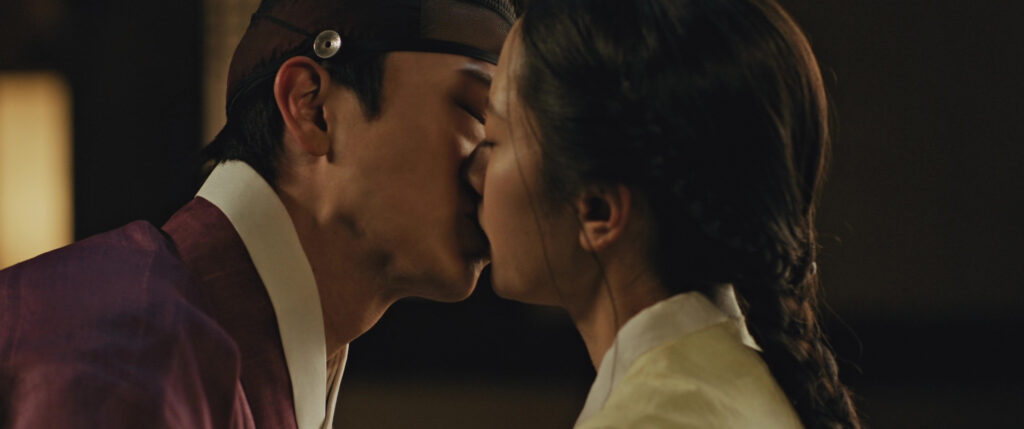
    He wipes her tears away…and kisses her.

    Short, simple. But those two actions speak louder than any elaborate exorcism. They show that love can soar even amid centuries‑old grudges.


    Blooming Flowers & Formal Speech

    Morning light brings a sweeter scene. Kang‑cheol makes flowers bloom with a single gesture—just to see Yeo‑ri smile again. It’s a far cry from the imoogi who once withered entire fields.

    Surprisingly, the king—grateful for his daughter’s rescue—starts talking to Kang‑cheol in formal speech. It feels almost comical to watch the rough‑and‑tumble imoogi stumble over honorifics. Yet it also underlines his growing respect.

    Eventually, Kang‑cheol slips back into casual banmal. The moment passes. But it cements a mutual admiration that will matter soon.


    Midnight Retribution

    While everyone sleeps, Kang‑cheol borrows Yeo‑ri’s mirror that neutralizes talismans. He confronts Minister Kwak in his own home. After forcing the minister to beg for mercy, he hands him over to Bi‑bi—who devours him in classic fairy‑tale style.

    The king learns of the death at dawn. He wonders if Kang‑cheol is to blame. But more than that, he’s upset that he can’t deliver personal justice. Still, he holds back from accusing Minister Kim—his beloved grandfather.

    Nobility often demands that you swallow your rage, especially when it’s pointed at family.


    Wages, Pumpkin Taffy & Heartfelt Gifts

    Episodes 9–10 also treat us to a slice‑of‑life interlude. Kang‑cheol finally gets paid—for the first time in three months. His budget? Enough to buy…five pieces of pumpkin taffy.

    Instead, he splurges on shoes for Yeo‑ri and a hairpin for her mother. His noodle‑length wallet only has room left for those five candies. When Mom fumes at his extravagance, the monks arrive and hand back Yeo‑ri’s ward stone—discovered inside a fish.

    It’s silly. It’s sweet. And it reminds us that even immortal beings crave small comforts.


    A Promise in the Moonlight

    That night, Yeo‑ri realizes the depth of Kang‑cheol’s care. He’s watched her, guarded her—and yes, cost a small fortune doing so. She vows that, once the Colossal Shadow is vanquished, she’ll continue to serve him—driven by both gratitude and affection.

    They almost kiss again, but the ward stone repels him—breaking the spell. It’s the perfect blend of romance and fantasy.


    The Blind Shaman’s Shrine & A Terrifying Revelation

    The next day, Yeo‑ri is kidnapped again—this time by the blind shaman himself and his creepy assistant. However, she leaves a trail. Kang‑cheol follows it straight to a hidden shrine where the shaman communes with the Colossal Shadow.

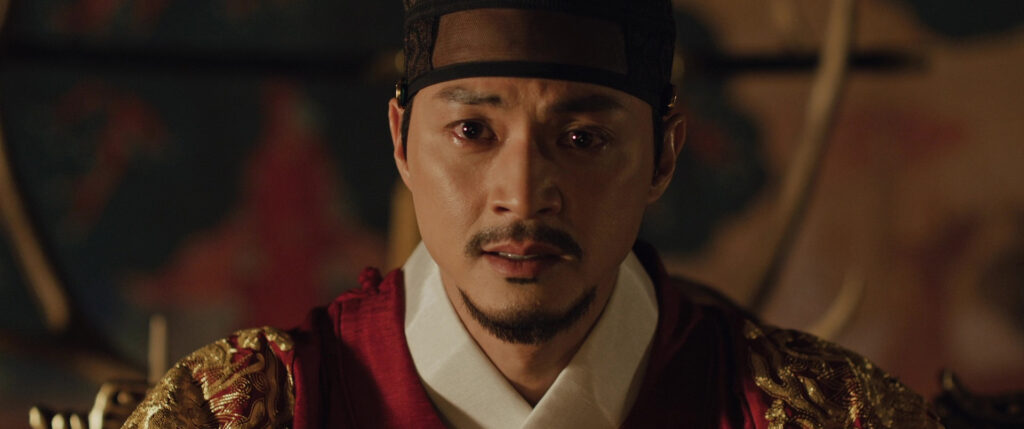
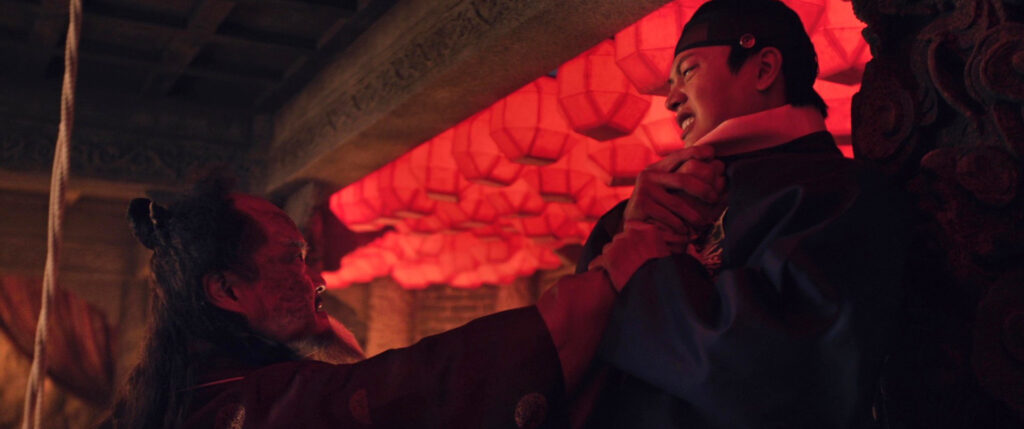
    Inside, something supernatural happens: the Shadow possesses the shaman and restores his sight. He grabs Kang‑cheol by the throat, hissing, “I was the baby you cursed a century ago.”

    His logic is chilling. The royal family—he claims—are the true enemies. All their relatives, past and present, have felt the Shadow’s wrath. It targeted innocents. It broke families.


    Clues to the Colossal Shadow’s Origin

    At long last, we circle back to the real question: Who is the Colossal Shadow?

    • Grudge Theory: Evil spirits in this universe don’t act randomly. They attach to those they believe have wronged them.
    • Target Pattern: Notice that not every branch of the royal lineage was cursed—only most of them.
    • Baby’s Role: The infant witness thwarted Kang‑cheol’s ascension a century ago. His life was taken as retribution, and his spirit evolved into the Shadow.

    This rich mythology hints at a tragic cycle: a mighty imoogi’s ambition spawning a generational curse.


    My Take: Why This Matters

    Here’s where I jump off the summary train and offer some hot takes:

    1. Love as True Magic. In a show brimming with spells and curses, the real power lies in human connection. That simple kiss and warm embrace push back darkness more than any talisman ever could.
    2. Cycles of Power and Punishment. Minister Kim’s hubris unleashed the Colossal Shadow. It’s a classic case of “power corrupts.” The series warns us: shortcuts in politics come with cruel interest rates.
    3. Identity Beyond Roles. Kang‑cheol started as an imoogi bent on revenge. Now he’s a protector who blossoms flowers for love. It speaks to the possibility of transformation—even for creatures of legend.
    4. The Cost of Secrets. Every buried truth in this kingdom bled someone dry. Yeo‑ri’s grandmother, the original king, countless innocents. The message: hiding the past only invites more suffering.

    Predictions & Theories

    • Final Exorcism Requires Sacrifice. Releasing the Shadow’s grudge may not be enough. Kang‑cheol might have to offer his own life force to seal the deal.
    • Minister Kim’s Redemption Arc? He’s family, after all. Could he choose loyalty over ambition at the climax?
    • Yeo‑ri’s Destiny. As the last in her line to wield grandmother’s magic, she may hold the key to banish the Shadow—without anyone dying.

    Looking Ahead: What to Watch For

    • Shaman vs. Shadow Showdown. The restored shaman now knows the full story. Will he switch sides or deepen his vengeance?
    • King’s Reform Movement. The abolition of the slave system faces internal sabotage. That plotline might collide with the supernatural one in surprising ways.
    • Love vs. Duty. Yeo‑ri still hasn’t chosen between her heart and her mission. Expect some delicious tension—and maybe a love triangle or two.

    Final Thoughts

    Episodes 9–10 of The Haunted Palace blend gothic horror, political intrigue, and fairy‑tale romance into a seamless tapestry. The Colossal Shadow’s origin story adds depth to every character’s pain and purpose. Meanwhile, the tentative love between shaman and princess reminds us that light persists—even in the darkest of palaces.

    If these episodes teach us anything, it’s this: confronting the past takes courage, but only then can you rewrite your future. And if you happen to have a centuries‑old monster on your trail, a well‑timed hug and a blooming flower can go a long way.

    Breaking the Bond: Transforming Your Dog’s Loneliness into Confidence

    0

    When your dog gazes at you with pleading eyes as you head out the door, it can feel like watching your heart walk away. Yet, what many pet parents overlook is that what appears like simple clinginess might actually be a storm of anxiety brewing inside. Dogs evolved as pack animals; our living rooms have become their entire world when we’re not home. Left alone, they can spiral into destructive behavior, nonstop barking, or worse—hurting themselves in desperate attempts to reunite with you.

    In this deep dive, we’ll explore:

    • The silent signals of separation anxiety.
    • Why even the most stoic breeds can crumble when left solo.
    • Proven training techniques and comfort tools to reshape your dog’s alone-time experience.
    • My no-nonsense perspective on what truly heals the heart of a dog struggling with separation anxiety.

    Get ready to shift from frantic dashes home to a calm, confident canine greeting you at the door.


    Understanding the Roots of Separation Anxiety in Dogs

    Think of separation anxiety as an unspoken dialogue between you and your dog. When that line goes dead, confusion and fear rush in. But what exactly triggers this internal alarm?

    1. Evolutionary Pack Instincts

    Every dog, from the tiniest Chihuahua to the largest Mastiff, carries a history of pack living. In the wild, isolation meant vulnerability. Today, your living room might feel safe, but your dog’s instincts tell it otherwise when you’re gone.

    2. Early Life Experiences

    Rescue dogs or pups rehomed multiple times have extra reason to worry. Just like children who move schools often, dogs remember abrupt changes. Each new home can leave an imprint of instability, making them hypersensitive when owners step out.

    3. Changes in Routine

    From switching to a home office to unexpected schedule shifts, dogs thrive on predictable patterns. Suddenly swapping morning walks for evening strolls might open the door to separation anxiety as your dog scrambles to make sense of its world.

    4. Genetics and Breed Tendencies

    Some breeds, like Border Collies and Australian Shepherds, are bred for high-intensity jobs and constant mental engagement. Drop them solo for hours, and their pent-up energy can manifest as anxiety-fueled destruction.


    Spotting the Warning Signs Before the Storm Unfolds

    Identifying separation anxiety early can save your furniture—and your sanity. Look out for these behaviors whenever you leave home:

    1. Excessive Vocalization: Neither a bark nor two—think marathon sessions of howling or whining.
    2. Destructive Chewing: Doors, couches, shoes—nothing is safe when the pressure builds.
    3. House Soiling: Indoor accidents, even in fully house-trained pups, signal panic rather than potty mistakes.
    4. Pacing and Restlessness: Repeated routes, circles, or frantic roaming near exit points.
    5. Self-Injury: Raw paws or scratched walls from frantic digging and clawing.

    If your dog matches two or more of these, it’s time to act.


    A Multifaceted Approach to Rebuilding Confidence

    There’s no magic pill for separation anxiety. Instead, think of it as constructing a sturdy bridge between independence and companionship. Here’s your blueprint:

    Step 1: Desensitization Through Mini-Departures

    Start small. Grab your keys, slip on your coat—or just walk into the hallway. Pause, then return. Reward calm behavior with a treat. Gradually extend these mini-excursions until minutes feel effortless.

    Step 2: Crate Training as a Safe Haven

    A properly introduced crate becomes a den rather than a jail cell. Encourage exploration with cozy bedding and favorite toys inside. Never force your dog in; let curiosity lead, pairing each step with praise.

    Step 3: Counterconditioning with Positive Associations

    Link your departure cues (like jingling keys) to something delightful. Reserve a special chew toy or treat only for alone time. Over weeks, your dog will start anticipating rewards instead of your exit.

    Step 4: Exercise and Mental Stimulation

    A tired dog is a happy dog. Morning hikes, puzzle feeders, or basic obedience drills before you leave can drain surplus energy that would otherwise fuel anxiety.

    Step 5: Technology and Comfort Aids

    • Interactive Cameras: Talk to your dog or dispense treats when you spot signs of stress.
    • Soothing Soundscapes: White noise or classical music can mask unsettling external sounds.
    • Thundershirt or Anxiety Wrap: Gentle, constant pressure mimics the security of a pack cuddle.

    Step 6: Professional Support When Needed

    If progress stalls or behaviors intensify, certified trainers and veterinary behaviorists can tailor advanced behavior modification plans. Medication may also be advised as a temporary support during training.


    My Perspective: Why Empathy Beats Guilt-Driven Fixes

    Here’s the deal: guilt won’t calm a racing heart. Cowering over a chewed shoe says, “You’re bad for missing me.” Instead, flip the script. Celebrate every small step your dog takes toward independence. When your dog basks in solo success, it builds a new internal narrative: “Being alone can be rewarding.”

    Look, we all want the perfect bond: cuddles, fetch… repeat. But true companionship means fostering strength, not dependency. Imagine teaching a toddler to cling to you forever—chaos ensues. Likewise, your dog deserves the confidence to thrive, crate doors open and tails wagging, whether you’re in the next room or down the block.

    What really works is kindness combined with structure. No scolding. No dramatic exits. Just calm, consistent coaching, sprinkled with treats and plenty of praise. That’s the recipe for a dog who waves you goodbye with a wag, not a wail.


    Real-Life Success Stories: From Panic to Peace of Mind

    • Case Study: Luna the Labrador
      Luna would shred cushions within minutes of her owner leaving. After implementing mini-departures and crate conditioning over six weeks, she now settles calmly with her puzzle feeder—and naps until her owner’s return.
    • Case Study: Baxter the Border Collie
      Baxter’s intelligence made him a challenge; he unlatched doors by lunchtime. Adding daily herding ball exercises and interactive camera check-ins slashed his anxiety-induced escapes by 80% in two months.

    These stories prove: dedication plus the right tactics rewrites even the most anxious scripts.


    Action Plan: Turning Theory into Practice Today

    1. Audit Your Home for Triggers: Identify high-anxiety zones—doors, windows, or dark corners—and make them inviting with treats or toys.
    2. Schedule Departure Drills: Carve out five minutes twice a day for key jingles and hallway walks. Build up to longer solo times.
    3. Invest in Engagement Tools: A snuffle mat, lick pad, or treat dispenser can become your dog’s best friend.
    4. Map a Pre-Departure Routine: A quick game or 10-minute walk signals: “We’ll be back later, and it’s okay.”
    5. Log Progress: Keep a journal of behaviors before, during, and after alone time. Celebrate improvements and tweak strategies as needed.

    Bonus Tips: Small Tweaks, Big Impact

    • Rotate Toys: Novelty keeps boredom—and anxiety—at bay.
    • Keep It Low-Key: Underplaying departures reduces drama.
    • Counter Surprise Departures: Randomly practice leaving without your usual cues.
    • Build a Support Network: Dog walkers, pet sitters, or trusted neighbors can break up alone time on long days.
    • Consult Nutrition Experts: Some diets and supplements (like L-theanine or CBD) can have calming effects when overseen by your vet.

    In Closing

    Separation anxiety in dogs isn’t a fixed trait—it’s a behavior shaped by environment, training, and patience. While the journey from panic to poise takes time, every moment of investment pays dividends in peace of mind—for you and your furry family member.

    By combining compassion with consistency, you’ll transform farewells from tearful goodbyes into confident wags. Your dog will learn: solitude isn’t scary, and your return is always certain.

    Ready to rewrite your dog’s story? The bonds you strengthen today will echo in joyful, independent tails tomorrow.

    Nuclear Fusion vs. Fission: Why the Future Belongs to the Power of the Sun

    0

    Let’s get one thing straight from the jump: fusion is not just some nerdy cousin of fission. It’s the better-looking, stronger, and much more promising sibling. While fission rudely tears apart atoms like a wrecking ball at a demolition site, fusion takes the high road—bringing atoms together to create harmony and massive amounts of energy.

    Fusion, at its core, is how our sun—and every star in the sky—stays lit and fabulous. It’s nature’s ultimate energy generator. And now, scientists are working overtime to bring that same glowing magic down to Earth. The payoff? Clean, safe, and nearly limitless energy.

    TL;DR

    • Fusion combines light atoms to create energy, like the sun.
    • It’s much cleaner and safer than splitting atoms (fission).
    • Fusion fuel (from seawater and lithium) is abundant.
    • It produces no greenhouse gases and minimal radioactive waste.
    • Significant scientific progress is being made towards viable fusion power.
    • Both public and private sectors are heavily invested in fusion.
    • Fusion offers a high-reward solution for future energy needs.

    Fusion vs. Fission: A Tale of Two Nuclears

    So what actually separates fusion from fission? It’s not just semantics. Fission splits heavy atoms like uranium or plutonium into smaller pieces. It works, but it comes with some serious baggage—radioactive waste, risk of meltdowns, and geopolitical tensions over who has what.

    Fusion, however, is a unifier. It fuses lightweight atoms (usually hydrogen isotopes like deuterium and tritium) into heavier ones, like helium. That process releases a gargantuan amount of energy—without all the nuclear drama.

    Why Should You Care? Because Energy = Power

    Picture this: a few grams of fusion fuel could power an entire city. Not a village. A city. And it does this while being far safer and greener than most existing energy sources.

    • No greenhouse gases
    • No long-lived radioactive waste
    • No risk of catastrophic meltdowns

    This isn’t just the next big thing. It’s the big thing.

    Abundance in the Oceans: Your Power Bill’s Best Friend

    Deuterium, a key ingredient in fusion, can be extracted from seawater. And not in some crazy expensive way—just good old-fashioned chemistry. Tritium, while a bit trickier, can be bred from lithium, which is still widely available.

    Let this sink in: One liter of seawater holds enough deuterium to generate as much energy as 300 liters of oil. And there’s a lot of seawater out there, last time we checked.

    This abundance solves one of humanity’s biggest headaches—fuel supply. No more blood-for-oil, no more frantic scrambling for finite resources. Just waves, sunshine, and innovation.

    The Eco-Friendly MVP

    Let’s not kid ourselves—our planet is in trouble. We’re still flirting with fossil fuels like it’s 1950. But fusion energy? It’s clean, efficient, and just about as environmentally conscious as you can get without hugging a tree.

    When fusion reactions occur, the main byproduct is helium. That’s right, the same stuff that fills your party balloons. Not radioactive sludge. Not CO2. Just helium. So not only is it non-toxic, it’s practically party-ready.

    Imagine slashing carbon emissions, avoiding nuclear waste issues, and never having to say, “Oops, we melted the reactor core.” That’s the power of fusion.

    The Numbers Don’t Lie: Energy Output of Fusion

    Fusion isn’t just a nice idea with a pretty face. It’s a beast when it comes to energy production.

    We’re talking up to 4 million times more energy per reaction than your typical chemical reaction. That’s not a typo. That’s the future.

    If we could crack the fusion code, we’d enter a new era where electricity is affordable, plentiful, and free from the environmental toll of traditional power generation. That’s not science fiction—it’s a science deadline.

    Built-In Safety: Fusion Doesn’t Do Drama

    Remember Chernobyl? Fukushima? Yeah, fusion wants none of that mess.

    Fusion reactors require such extreme and delicate conditions that if something goes wrong, the reaction just… stops. It’s not like a runaway train. It’s more like an overdramatic diva that storms off stage if things aren’t perfect.

    No chain reactions. No explosions. Just lights out, and the techs go back to the drawing board. That kind of built-in safety makes fusion leagues ahead in terms of public trust and long-term viability.

    The Heat Is Real: Technical Challenges

    Now for the uncomfortable truth: fusion is hard. Like, really hard.

    To make atoms fuse, you need temperatures hotter than the sun’s core—over 100 million degrees Celsius. That’s a lot of zeroes. And you can’t just shove that kind of heat into a kettle.

    That’s why scientists have built magnetic confinement devices like tokamaks, which use powerful magnetic fields to hold superheated plasma in place. Others are trying inertial confinement, using high-powered lasers to kickstart fusion.

    The analogy? Imagine trying to squeeze Jell-O into a balloon using only magnets. Now heat the Jell-O to a temperature where metal melts. That’s the kind of challenge we’re dealing with.

    But Here’s the Good News: We’re Getting There

    Progress in fusion tech is accelerating faster than your WiFi when you finally upgrade your router. Major breakthroughs are rolling in:

    • 2022: Lawrence Livermore National Laboratory achieved the holy grail—fusion ignition, meaning the energy output exceeded the energy input.
    • Superconducting magnets have gotten stronger and more compact.
    • AI is helping optimize plasma control, reducing instabilities.

    The momentum is real. We’re no longer asking “if.” We’re asking “when.”

    The Fusion Gold Rush

    Private companies like Helion Energy, Commonwealth Fusion Systems, and TAE Technologies aren’t just playing in the lab—they’re raising billions in funding and racing to build commercially viable fusion plants by the 2030s.

    Meanwhile, the International Thermonuclear Experimental Reactor (ITER) in France is the largest science experiment of our time. It’s slow. It’s massive. But it’s moving the needle.

    The Economic Angle: Fusion Pays You Back

    Yes, building a fusion reactor is expensive. Think billions of dollars and decades of R&D. But the ROI? Unbelievable.

    Once operational, a fusion power plant could:

    • Run for decades
    • Produce minimal waste
    • Operate on cheap, abundant fuel

    That’s the kind of math even your most skeptical accountant would respect.

    My Take: Why Fusion Is Worth the Wait

    Let’s be honest—fusion isn’t perfect yet. It’s still under development, and there’s a ton of work to be done. But let me be clear: waiting for fusion is smarter than doubling down on outdated tech.

    We already know fossil fuels are dirty and dangerous. We’ve seen the limits of solar and wind—they’re good, but not always consistent. We need a third option. And fusion? It’s more than just the backup plan. It’s the ace in the hole.

    The key is patience, investment, and innovation. Governments need to commit. Private companies need room to take risks. And we—regular people—need to stop rolling our eyes when someone says “nuclear.”

    Because this version of nuclear could literally save the planet.


    Key Takeaways

    • Fusion combines light atoms into heavier ones, releasing tremendous energy.
    • It’s cleaner, safer, and more sustainable than fission.
    • The fuel sources—deuterium and lithium—are abundant and globally accessible.
    • Fusion produces no greenhouse gases and minimal waste.
    • Major breakthroughs have pushed fusion closer to commercial reality.
    • Commercial fusion could become viable by the 2030s.
    • It’s a high-investment, high-reward energy solution.

    Final Word

    Fusion isn’t just science—it’s destiny. As our energy needs explode and the planet groans under the weight of climate change, we need more than band-aids. We need transformation.

    That transformation is blazing at 100 million degrees Celsius in labs around the world. And if we get it right, the power of the sun won’t just light up the skies. It’ll light up our homes, our cities, and our future.

    So yes, fusion is the opposite of fission. But more importantly, it’s the opposite of everything that’s been holding us back.

    The Power of a Cat’s Nose: Why Felines Sniff Out Secrets

    0

    Have you ever watched your whiskered roommate pause dramatically, nostrils flaring, as if deciphering the mysteries of the universe? It’s no accident. A cat’s sense of smell isn’t just good; it’s borderline supernatural. While we humans fumble along with about five million olfactory receptors, our feline friends boast roughly 200 million. That staggering difference makes every sniff for them a deep dive into a scented encyclopedia. In this article, I’ll unpack why kitty noses are the unsung heroes of the animal kingdom—complete with scientific tidbits, playful insights, and my candid take on what all that sniffing really means. Buckle up; we’re diving nose-first into feline olfaction!

    TL;DR

    • Cats smell way better than people.
    • Their nose helps them find food and stay safe.
    • Smells tell cats about other cats.
    • Cats can even smell how you feel.
    • Good smells can make cats happy and less bored.

    1. The Anatomy of a Super Sniffer
    First off, let’s talk hardware. A cat’s nasal cavity is no mere olfactory corridor. It features a complex network of turbinates—thin, scroll-like bones—that dramatically increase the surface area for scent detection. More surface means more receptor cells and, naturally, more intel gathered per sniff. Meanwhile, humans sport a relatively modest nasal architecture designed more for air passage than detective work.

    Next, meet the vomeronasal organ (aka Jacobson’s organ). Tucked in the roof of a cat’s mouth, this hidden structure picks up pheromones—the chemical whispers of other cats. Is your cat rubbing its cheek against your leg? That’s scent-marking, a way to claim you in feline terms. Thanks to this secret organ, cats can decode complex pheromone messages about reproductive status, territorial boundaries, and individual identity.

    2. Ranking the Receptors: Cats vs. Humans
    Odds and ends aside, the headline here is receptor count. When you consider that a bloodhound—a hunting dog famous for its nose—manages around 300 million receptors, the cat’s 200 million still looks impressive. In comparison, our mere five million receptors barely register in the grand sniffing Olympics.

    This numerical chasm explains why cats can detect invisible shifts: someone new in the house, that sneaky mouse behind the couch, or even the subtle edge of smoke from a half-forgotten candle. Meanwhile, we’re left asking, “Do I smell dinner?”

    3. Scent as a Social Currency
    Think cats are independent loners? Think again. They’re actually social creatures that trade scented messages daily. Every rub, scratch, and cheek nuzzle deposits a tiny signature in the form of scent. These messages aren’t just about ownership; they communicate emotional states. A cat feeling secure might leave broad, confident scent marks. A nervous cat? Their pheromones might hint at anxiety.

    When two cats meet, the ritual often starts with a nose-to-nose greeting—like shaking paws with the neighbor. This polite sniffing session lets them size each other up without bloodshed. They can glean age, sex, and reproductive health—all before deciding whether to play nice or puff up in a hissy standoff.

    4. Smell and Survival Instincts
    In the wild, snooping around by smell equates to dinner—or danger. Hunting cats lock onto prey scents, driving pinpoint strikes. Even domestic cats retain this instinct. Have you noticed your housecat stalking dust motes or pouncing on invisible intruders? It’s a throwback to the scent-led hunts of their ancestors.

    Beyond hunting, smell alerts cats to threats. They can detect smoke from fires at tiny concentrations. Before humans register alarm, cats may bolt for safety. Similarly, changes in the air pressure and humidity before rain carry distinct ionic signatures. Those same whiskered noses pick up on them, too.

    5. Aromas, Emotions, and Health
    As if it weren’t enough to chase mice, cats can also read human emotions through scent. Stress hormones like cortisol have a unique odor. When you’re frazzled, your cat might approach with cautious concern—or keep its distance if it senses anger.

    Interestingly, veterinarians are exploring how olfactory changes in cats could signal illness. Diseases like feline leukemia or respiratory infections can alter body odor. Early detection through scent-based screenings could revolutionize feline healthcare.

    6. Aroma Enrichment: Why It Matters
    Now for some practical wisdom. Scent enrichment can jazz up your cat’s indoor life. Essential oils? Proceed with caution—cats metabolize substances differently, and some plant compounds can be toxic. Safer alternatives include catnip, silver vine, and valerian root. These natural wonders can stimulate play, relieve stress, and satisfy your cat’s sniffing itch.

    Another tip: introduce new textures and items with lingering scents. A used T-shirt from your laundry or a cardboard box from the recycling bin can spark curious investigations. Every new smell enriches your cat’s environment. Boredom? It stands no chance.

    7. Myth-Busting Time
    Let’s clear the air on a few feline sniffing myths:

    • Myth: Cats can smell fear directly.
      Reality: They pick up on sweat and pheromones associated with stress—more a reaction than mind-reading.
    • Myth: All essential oils are cat-safe.
      Reality: Many are toxic. Stick to vet-approved options like lavender (in moderation) or commercial cat-safe sprays.
    • Myth: Declawing ruins scent-marking.
      Reality: Declawed cats lose part of their primary scent glands, located in the paws. This can indeed dull their marking behaviors.

    8. My Two Cents: The Nose Knows Best
    Here’s my take: understating a cat’s nose is like ignoring HD for black-and-white tube TV. It’s a full sensory upgrade. Their world is a tapestry of aromas we can’t fathom. Respect that power. Use it wisely for enrichment and bonding.

    When your cat greets you with a face rub, know that it’s not just affection. It’s trust. A high-five in pheromones. Handle that privilege with care.

    9. Practical Tips for Cat Guardians

    • Rotate scent stimulants weekly to keep life interesting.
    • Offer hidden treats in scented boxes to gamify mealtime.
    • Clean litter boxes regularly to avoid overpowering your cat’s environment.
    • Provide multiple scent-height platforms: floor level to window perches.
    • Introduce visiting friends by having them leave an item of clothing near your cat’s safe spot.

    Conclusion
    If you ever doubt that your feline friend rules the world with its nose, think again. Each sniff is a data point, a ping on an invisible radar that tells your cat everything from dinner prospects to your emotional state. By tapping into that super-scent, you give your cat a richer life. Plus, you deepen the bond between two species separated by millions of years of evolution but united by a simple act of sniffing.

    So next time Mr. Whiskers stops, mid-stride, to inhale the air, don’t sigh impatiently. Instead, marvel at that nasal masterpiece. For in that fleeting pause, your cat isn’t just smelling—it’s reading the world.

    Why Giant Pandas Swapped Steak for Bamboo: Evolutionary Secrets Revealed

    0

    Ever wondered how a creature built to tear flesh apart with razor-sharp teeth ended up snacking on nothing but woody stalks? Meet the giant panda—nature’s most bewildering diet rebel. With the digestive system of a predator and the appetite of, well, a perpetual herbivore, pandas subsist almost entirely on bamboo. And yet, somehow, they thrive.

    Below, we unpack the panda paradox. From the ancient carnivorous lineage to jaw adaptations and bamboo’s hidden perks, you’ll discover why these black-and-white bears went vegan—and what it means for their future. Plus, stick around for my own two cents on this curious case of evolutionary bargain-shopping.

    TL;DR

    • Pandas are related to meat-eating animals but mostly eat bamboo.
    • They have body parts that help them eat bamboo, even though their insides are built for meat.
    • They switched to bamboo because of food competition, lots of bamboo, and climate changes long ago.
    • Bamboo is low in nutrients, so pandas eat a lot and rest to save energy.
    • Their eating habits make it hard for them to have many babies.
    • People are working hard to save pandas and their homes.
    • Protecting pandas also helps other animals and the environment.

    1. The Carnivore Ancestor You Didn’t Expect

    First, a quick biology refresher. Pandas belong to the order Carnivora. In other words, they’re classified alongside lions, wolves, and wolverines. Their closest living relatives include weasels and raccoons rather than other bears. Shockingly, DNA evidence shows pandas diverged from true meat-eaters around 20 million years ago.

    Yet today? Bamboo rules their world. Adult giant pandas consume up to 38 kilograms (84 pounds) of it every day. No chicken, no fish, not even a beluga if you offered.


    2. Anatomy vs. Appetite: A Tale of Two Histories

    2.1. Predator’s Toolkit

    • Teeth and Jaws
      • Sharp canines for slicing flesh.
      • Strong jaw muscles for crushing bone.
    • Digestive Tract
      • A short, simple intestine optimized for protein digestion.

    2.2. Herbivore’s Habit

    • Pseudo-Thumb
      • An enlarged wrist bone that acts like a thumb.
      • Helps strip bamboo leaves with surprising dexterity.
    • Robust Molars
      • Flat, broad surfaces for grinding tough plant fibers.

    Ultimately, pandas possess a carnivore’s body but behave like a specialist herbivore. This mismatch creates both opportunity and challenge.


    3. From Carnivory to Bamboo-Only: How Did It Happen?

    Researchers propose multiple drivers behind this dramatic shift:

    1. Food Competition:
      In mixed forest habitats of ancient China, ancestral bears faced fierce competition for meat. Meanwhile, bamboo forests were vast and underexploited.
    2. Energy Trade-Offs:
      Bamboo may be low in calories, but it’s abundant. Constant grazing beats sporadic hunts when prey is scarce.
    3. Climate Shifts:
      Cooling and drying trends 5–10 million years ago likely expanded bamboo groves. Pandas adapted to capitalize on this resource.

    Through gradual genetic tweaks, they increased bamboo-digesting enzymes and developed the pseudo-thumb. Voilà—an evolutionary pivot.


    4. Bamboo: Nutrition Under the Microscope

    At first glance, bamboo offers little:

    • Protein Content: ~7%
    • Fat Content: ~2%
    • Fiber Content: Up to 60%

    To put that in context, a cow’s diet is nearly three times richer in protein. So how do pandas meet basic requirements?

    • High Intake Volume: Eating 12–15 hours daily.
    • Selective Feeding: Preferring the most nutritious bamboo shoots when in season.
    • Microbial Helpers: Gut bacteria that break down cellulose, albeit less efficiently than in true herbivores.

    Even so, pandas receive barely enough energy to maintain low-intensity lifestyles. That’s why they nap a lot—conservation of calories.


    5. Behavioral Hacks: Surviving on a Bamboo Budget

    Pandas showcase ingenious behaviors to stretch their meager resources:

    • Seasonal Migration: Moving to lower elevations in winter where shoots emerge earlier.
    • Energy-Saving Postures: Squatting or leaning against tree trunks to feed with minimal effort.
    • Social Seclusion: Except during mating season, pandas are solitary—reducing competition.

    Each tactic helps them eke out survival on a diet that would starve most carnivores.


    6. Reproduction: The Bamboo Bottleneck

    Here’s where the bamboo-only gamble gets risky:

    • Short Mating Window: Female pandas are fertile just 2–3 days per year.
    • Energy Limits: Underfed females often skip breeding to conserve strength.
    • Low Infant Survival: Cubs weigh less than 150 grams at birth and require intensive maternal care.

    In wild populations, these factors combine to slow reproductive rates—one key reason why pandas teeter on the endangered list.


    7. Conservation Efforts: Turning the Tide

    Fueled by panda charisma, conservationists have launched multi-pronged strategies:

    1. Habitat Protection:
      • Expanding and connecting bamboo forests.
      • Establishing wildlife corridors.
    2. Captive Breeding:
      • Special diets with bamboo shoots and supplements.
      • Artificial insemination to boost birth rates.
    3. Community Engagement:
      • Eco-tourism that funds local livelihoods.
      • Anti-poaching patrols that deter illegal hunting.

    These efforts helped raise wild panda numbers from roughly 1,100 in the 1980s to over 1,800 today. Yet bamboo die-offs due to climate change pose fresh threats.


    8. Climate Change: An Emerging Menace

    Sadly, warmer temperatures stress bamboo growth:

    • Shifted Shoot Seasons: Misaligned with panda breeding cycles.
    • Forest Die-Offs: Massive patches of bamboo can perish simultaneously.

    If pandas can’t find new groves quickly, starvation waves could sweep through populations. In that scenario, we’d need even more aggressive conservation tactics—maybe relocation or lab-grown bamboo crops.


    9. Human–Panda Coexistence: Lessons Learned

    We’ve learned that protecting pandas also safeguards entire ecosystems:

    • Biodiversity Benefits: Bamboo forests harbor countless species from red pandas to pheasants.
    • Water Regulation: These forests improve watersheds and reduce erosion.
    • Carbon Sequestration: Dense groves absorb significant CO₂.

    Thus, panda conservation doubles as climate action and biodiversity preservation—a win–win.


    10. Additional Insights: Evolution’s Wild Card

    Beyond the obvious, pandas offer startling evolutionary lessons:

    • Genetic Plasticity: Even “specialist” species can pivot radically under pressure.
    • Trade-Off Dynamics: Survival sometimes favors abundance over nutritional quality.
    • Convergent Patterns: Other carnivores, like foxes, have adopted unexpected diets when niches opened up.

    Their story challenges the notion that evolutionary paths are linear or predetermined.


    12. My Point of View: Why We Can’t Give Up on Pandas

    Honestly? Pandas are the ultimate underdog of the animal kingdom. Here’s why they deserve our full-throttle support:

    1. Iconic Appeal: No creature commands attention like a chubby bear nibbling bamboo. That attention translates into funding and awareness.
    2. Ecosystem Cornerstone: As bamboo’s biggest predator, pandas regulate forest regrowth and health. Lose pandas, and bamboo may overgrow then crash—impacting countless species.
    3. Symbol of Hope: Their survival against dietary odds inspires us to tackle our own challenges—be they ecological, personal, or societal.
    4. Research Goldmine: Studying pandas sharpens our understanding of evolutionary flexibility, microbial symbiosis, and conservation science.

    Giving up on pandas feels like surrendering before the final round—a loss we can’t afford.


    13. Taking Action: How You Can Help

    You don’t need to be a zoologist or billionaire to make a difference:

    • Adopt a Panda Program: Symbolic adoptions fund vital research and habitat protection.
    • Support Sustainable Forestry: Companies certified by the Forest Stewardship Council (FSC) help ensure bamboo and timber harvesting protect panda homes.
    • Spread the Word: Share articles, videos, and images to amplify public support. Every click counts.

    Small steps, big impact.


    14. Final Thoughts: Evolution Loves Plot Twists

    At its core, the panda saga reminds us that life rarely follows a straight line. A creature geared up to eat meat can surprise us by embracing a bamboo-only diet. But that doesn’t mean it thrives without help.

    As we face global environmental upheavals, learning from pandas’ adaptability—and fragility—offers a playbook for resilience. Just as pandas balanced the scales between predator heritage and herbivore necessity, we too can pivot toward sustainable choices without sacrificing our core strengths.

    So next time you see a panda video—whether it’s a cub somersaulting or an adult dozing on a bamboo stump—remember: there’s more to that gentle giant than meets the eye. And thanks to conservationists, scientists, and an engaged global community, pandas may continue surprising us for millennia to come.