

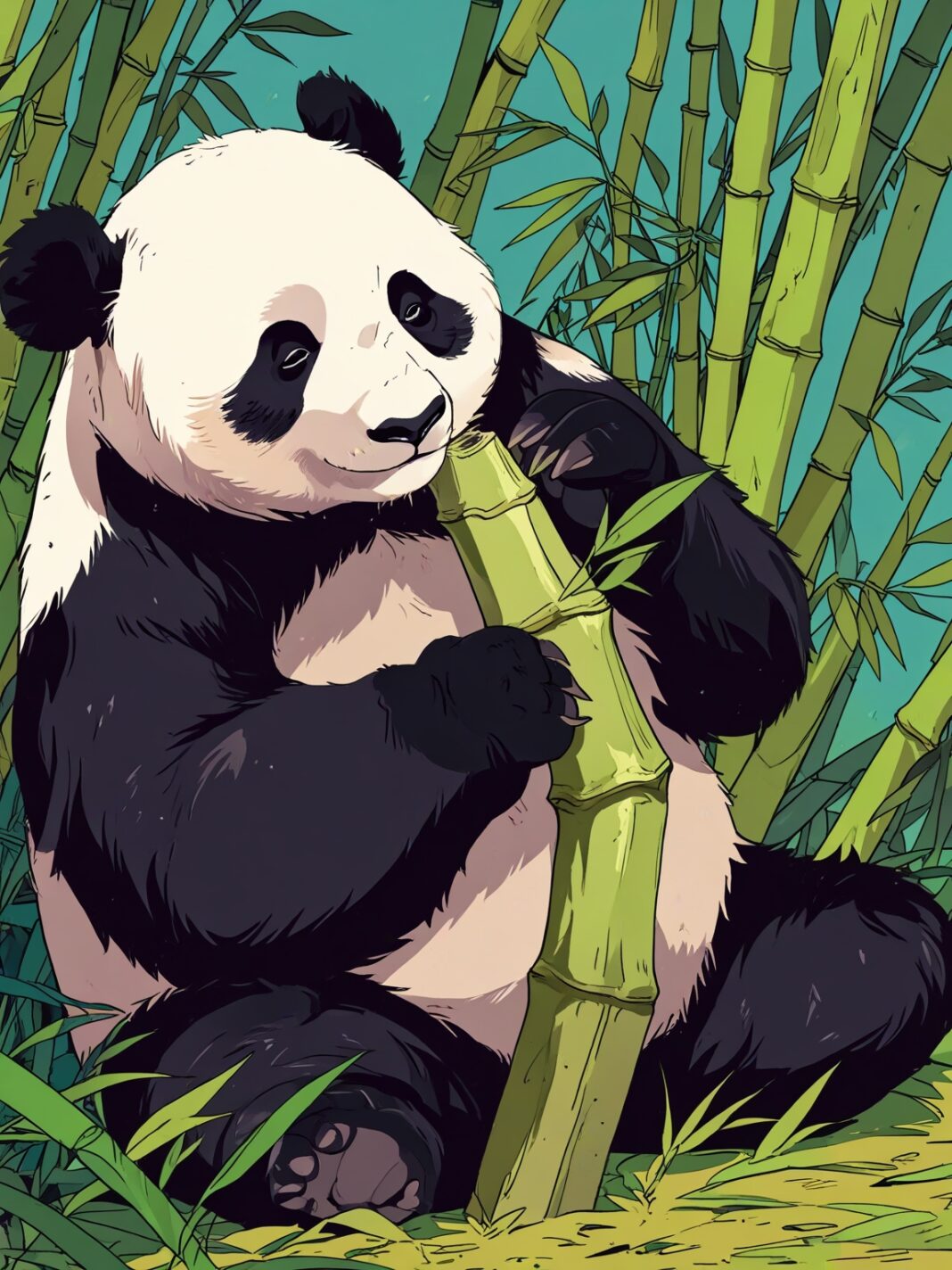

Ever wondered how a creature built to tear flesh apart with razor-sharp teeth ended up snacking on nothing but woody stalks? Meet the giant panda—nature’s most bewildering diet rebel. With the digestive system of a predator and the appetite of, well, a perpetual herbivore, pandas subsist almost entirely on bamboo. And yet, somehow, they thrive.
Below, we unpack the panda paradox. From the ancient carnivorous lineage to jaw adaptations and bamboo’s hidden perks, you’ll discover why these black-and-white bears went vegan—and what it means for their future. Plus, stick around for my own two cents on this curious case of evolutionary bargain-shopping.
TL;DR
- Pandas are related to meat-eating animals but mostly eat bamboo.
- They have body parts that help them eat bamboo, even though their insides are built for meat.
- They switched to bamboo because of food competition, lots of bamboo, and climate changes long ago.
- Bamboo is low in nutrients, so pandas eat a lot and rest to save energy.
- Their eating habits make it hard for them to have many babies.
- People are working hard to save pandas and their homes.
- Protecting pandas also helps other animals and the environment.
1. The Carnivore Ancestor You Didn’t Expect
First, a quick biology refresher. Pandas belong to the order Carnivora. In other words, they’re classified alongside lions, wolves, and wolverines. Their closest living relatives include weasels and raccoons rather than other bears. Shockingly, DNA evidence shows pandas diverged from true meat-eaters around 20 million years ago.
Yet today? Bamboo rules their world. Adult giant pandas consume up to 38 kilograms (84 pounds) of it every day. No chicken, no fish, not even a beluga if you offered.
2. Anatomy vs. Appetite: A Tale of Two Histories
2.1. Predator’s Toolkit
- Teeth and Jaws
- Sharp canines for slicing flesh.
- Strong jaw muscles for crushing bone.
- Digestive Tract
- A short, simple intestine optimized for protein digestion.
2.2. Herbivore’s Habit
- Pseudo-Thumb
- An enlarged wrist bone that acts like a thumb.
- Helps strip bamboo leaves with surprising dexterity.
- Robust Molars
- Flat, broad surfaces for grinding tough plant fibers.
Ultimately, pandas possess a carnivore’s body but behave like a specialist herbivore. This mismatch creates both opportunity and challenge.
3. From Carnivory to Bamboo-Only: How Did It Happen?
Researchers propose multiple drivers behind this dramatic shift:
- Food Competition:
In mixed forest habitats of ancient China, ancestral bears faced fierce competition for meat. Meanwhile, bamboo forests were vast and underexploited. - Energy Trade-Offs:
Bamboo may be low in calories, but it’s abundant. Constant grazing beats sporadic hunts when prey is scarce. - Climate Shifts:
Cooling and drying trends 5–10 million years ago likely expanded bamboo groves. Pandas adapted to capitalize on this resource.
Through gradual genetic tweaks, they increased bamboo-digesting enzymes and developed the pseudo-thumb. Voilà—an evolutionary pivot.
4. Bamboo: Nutrition Under the Microscope
At first glance, bamboo offers little:
- Protein Content: ~7%
- Fat Content: ~2%
- Fiber Content: Up to 60%
To put that in context, a cow’s diet is nearly three times richer in protein. So how do pandas meet basic requirements?
- High Intake Volume: Eating 12–15 hours daily.
- Selective Feeding: Preferring the most nutritious bamboo shoots when in season.
- Microbial Helpers: Gut bacteria that break down cellulose, albeit less efficiently than in true herbivores.
Even so, pandas receive barely enough energy to maintain low-intensity lifestyles. That’s why they nap a lot—conservation of calories.
5. Behavioral Hacks: Surviving on a Bamboo Budget
Pandas showcase ingenious behaviors to stretch their meager resources:
- Seasonal Migration: Moving to lower elevations in winter where shoots emerge earlier.
- Energy-Saving Postures: Squatting or leaning against tree trunks to feed with minimal effort.
- Social Seclusion: Except during mating season, pandas are solitary—reducing competition.
Each tactic helps them eke out survival on a diet that would starve most carnivores.
6. Reproduction: The Bamboo Bottleneck
Here’s where the bamboo-only gamble gets risky:
- Short Mating Window: Female pandas are fertile just 2–3 days per year.
- Energy Limits: Underfed females often skip breeding to conserve strength.
- Low Infant Survival: Cubs weigh less than 150 grams at birth and require intensive maternal care.
In wild populations, these factors combine to slow reproductive rates—one key reason why pandas teeter on the endangered list.
7. Conservation Efforts: Turning the Tide
Fueled by panda charisma, conservationists have launched multi-pronged strategies:
- Habitat Protection:
- Expanding and connecting bamboo forests.
- Establishing wildlife corridors.
- Captive Breeding:
- Special diets with bamboo shoots and supplements.
- Artificial insemination to boost birth rates.
- Community Engagement:
- Eco-tourism that funds local livelihoods.
- Anti-poaching patrols that deter illegal hunting.
These efforts helped raise wild panda numbers from roughly 1,100 in the 1980s to over 1,800 today. Yet bamboo die-offs due to climate change pose fresh threats.
8. Climate Change: An Emerging Menace
Sadly, warmer temperatures stress bamboo growth:
- Shifted Shoot Seasons: Misaligned with panda breeding cycles.
- Forest Die-Offs: Massive patches of bamboo can perish simultaneously.
If pandas can’t find new groves quickly, starvation waves could sweep through populations. In that scenario, we’d need even more aggressive conservation tactics—maybe relocation or lab-grown bamboo crops.
9. Human–Panda Coexistence: Lessons Learned
We’ve learned that protecting pandas also safeguards entire ecosystems:
- Biodiversity Benefits: Bamboo forests harbor countless species from red pandas to pheasants.
- Water Regulation: These forests improve watersheds and reduce erosion.
- Carbon Sequestration: Dense groves absorb significant CO₂.
Thus, panda conservation doubles as climate action and biodiversity preservation—a win–win.
10. Additional Insights: Evolution’s Wild Card
Beyond the obvious, pandas offer startling evolutionary lessons:
- Genetic Plasticity: Even “specialist” species can pivot radically under pressure.
- Trade-Off Dynamics: Survival sometimes favors abundance over nutritional quality.
- Convergent Patterns: Other carnivores, like foxes, have adopted unexpected diets when niches opened up.
Their story challenges the notion that evolutionary paths are linear or predetermined.
12. My Point of View: Why We Can’t Give Up on Pandas
Honestly? Pandas are the ultimate underdog of the animal kingdom. Here’s why they deserve our full-throttle support:
- Iconic Appeal: No creature commands attention like a chubby bear nibbling bamboo. That attention translates into funding and awareness.
- Ecosystem Cornerstone: As bamboo’s biggest predator, pandas regulate forest regrowth and health. Lose pandas, and bamboo may overgrow then crash—impacting countless species.
- Symbol of Hope: Their survival against dietary odds inspires us to tackle our own challenges—be they ecological, personal, or societal.
- Research Goldmine: Studying pandas sharpens our understanding of evolutionary flexibility, microbial symbiosis, and conservation science.
Giving up on pandas feels like surrendering before the final round—a loss we can’t afford.
13. Taking Action: How You Can Help
You don’t need to be a zoologist or billionaire to make a difference:
- Adopt a Panda Program: Symbolic adoptions fund vital research and habitat protection.
- Support Sustainable Forestry: Companies certified by the Forest Stewardship Council (FSC) help ensure bamboo and timber harvesting protect panda homes.
- Spread the Word: Share articles, videos, and images to amplify public support. Every click counts.
Small steps, big impact.
14. Final Thoughts: Evolution Loves Plot Twists
At its core, the panda saga reminds us that life rarely follows a straight line. A creature geared up to eat meat can surprise us by embracing a bamboo-only diet. But that doesn’t mean it thrives without help.
As we face global environmental upheavals, learning from pandas’ adaptability—and fragility—offers a playbook for resilience. Just as pandas balanced the scales between predator heritage and herbivore necessity, we too can pivot toward sustainable choices without sacrificing our core strengths.
So next time you see a panda video—whether it’s a cub somersaulting or an adult dozing on a bamboo stump—remember: there’s more to that gentle giant than meets the eye. And thanks to conservationists, scientists, and an engaged global community, pandas may continue surprising us for millennia to come.