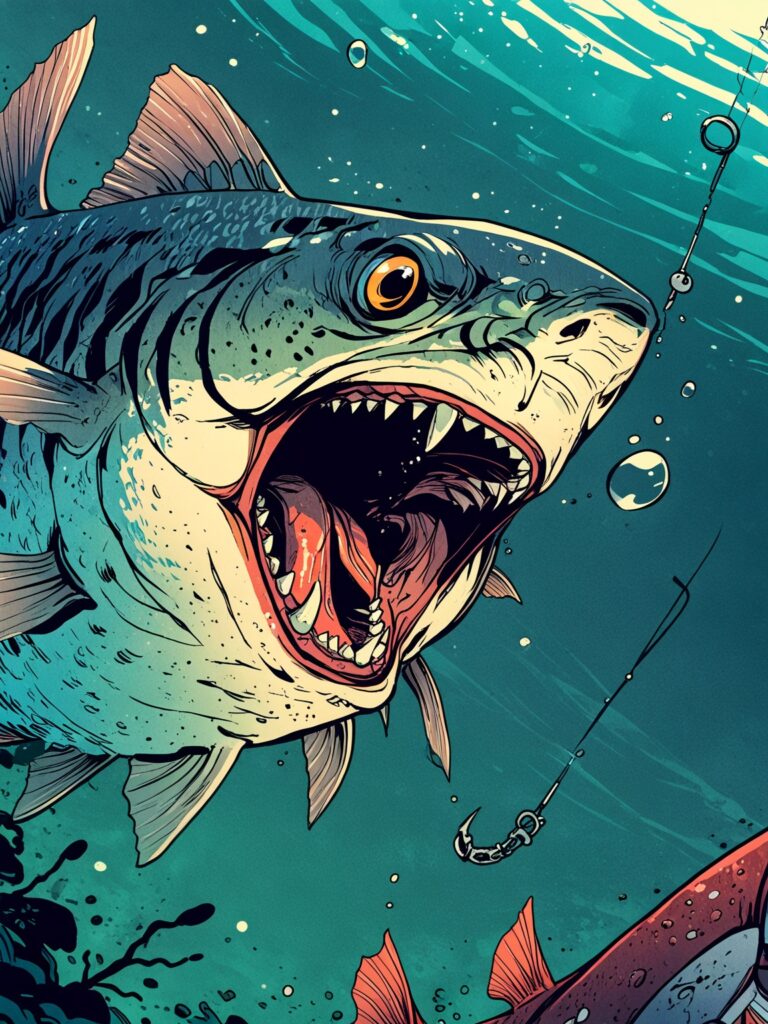
For centuries, humans have pondered the question: Do fish feel pain? This inquiry isn’t just a philosophical musing; it has significant implications for our treatment of aquatic life. Recent scientific studies have provided compelling evidence that fish do, in fact, experience pain, challenging long-held beliefs and practices in fishing and aquaculture.
TL;DR
Fish feel pain like us, not just a reflex.
Their brains show signs of discomfort.
Our ways of catching and farming fish often hurt them.
We can choose kinder ways to treat fish.
Understanding Pain: Nociception vs. Conscious Experience
Pain, in biological terms, involves nociception—the nervous system’s response to harmful stimuli—and the conscious experience of discomfort. While nociception is a reflexive response, the conscious experience of pain involves emotional and cognitive processing. In humans, this process is well-understood, but in fish, the mechanisms have been less clear.
Scientific Evidence: Fish and Pain Perception
Recent research has demonstrated that fish possess nociceptors, the sensory receptors that detect harmful stimuli. Studies have shown that fish exhibit behavioral and physiological changes in response to noxious stimuli, similar to those observed in mammals. For instance, fish have been observed rubbing affected areas, showing signs of distress, and altering their behavior when exposed to painful conditions. (PubMed)
Moreover, the administration of analgesics to fish has been found to reduce these pain-related behaviors, further supporting the conclusion that fish experience pain in a manner akin to other vertebrates.
The Neurological Basis: Fish Brains and Pain Processing
While fish lack a neocortex—the part of the human brain associated with higher-order processing—they possess analogous structures that perform similar functions. Research indicates that fish have brain regions capable of processing pain signals, leading to conscious experiences of discomfort. (ScienceDaily)
Functional imaging studies have revealed that fish brains show increased activity in response to painful stimuli, suggesting a level of consciousness and emotional processing previously unrecognized in these animals.
Ethical Implications: Rethinking Human Practices
The recognition that fish feel pain necessitates reevaluating human activities involving fish. Commercial fishing practices, aquaculture, and recreational angling often subject fish to conditions that can cause significant pain and distress. For example, methods such as live gutting, prolonged asphyxiation, and high-density farming can lead to suffering.(Wikipedia)
Some countries have begun to implement regulations to mitigate fish suffering. Germany, for instance, has banned certain fishing practices deemed inhumane. However, global standards remain inconsistent, and many practices continue without adequate consideration of fish welfare.
My Perspective: Embracing Compassionate Practices
Recognizing that fish experience pain challenges us to adopt more humane practices in our interactions with aquatic life. This includes:
Implementing Humane Slaughter Methods: Utilizing techniques that minimize suffering during the harvesting of fish.
Improving Aquaculture Conditions: Ensuring that farmed fish are kept in environments that reduce stress and injury.
Educating the Public: Raising awareness about fish sentience to foster more compassionate attitudes and behaviors.
By integrating these practices, we not only improve the welfare of fish but also align our actions with ethical standards that respect the intrinsic value of all sentient beings.
Conclusion: A Call to Action
The scientific consensus is clear: fish are sentient creatures capable of experiencing pain. This revelation compels us to reconsider our treatment of fish across various industries and practices. By embracing compassionate and ethical approaches, we can ensure that our interactions with aquatic life are both humane and sustainable.
A jaw-dropping video from Malaysia recently made its rounds on social media. In it, a young woman trembles uncontrollably before collapsing, her face landing squarely in a laundry basket. Viewers were left stunned—and rightly concerned—after hearing her labored breaths and seeing her eyes roll back. Allegedly, what sparked this terrifying episode was nothing more than prolonged vaping.
Yet, beyond the shock factor lies a deeper, urgent conversation: How safe is vaping, really? What happens when a habit once marketed as a “healthier” nicotine fix takes a sinister turn? And finally, what can we learn from this harrowing incident to protect ourselves and those we care about?
First, let’s set the scene. In the viral clip—originally shared on Facebook by a man identified as the woman’s then-boyfriend—the footage opens on the edge of normalcy. The young woman stands by a doorway, apparently fine. Moments later, her body seizes.
Convulsions begin: She grips the doorframe for support.
Audible distress: Her breathing quickens; her eyes roll skyward.
Collapse: In seconds, she pitches forward into a laundry basket.
Aftermath: She lies on the floor, continuing to convulse as her caretaker calls her name.
At first glance, you might assume a medical emergency unrelated to vaping. Yet the man behind the lens insists this was no accident; he blames her long-term e-cigarette habit.
Eyewitness Account: A Taste of Domestic Drama
According to the ex-boyfriend’s caption, he only learned of her e-cigarette use after they started dating. Over time, he says, the habit consumed her.
Hidden at first: He discovered her stash of vape pens in a drawer one evening.
Attempts to quit: He claims he “tried every method” to wean her off nicotine.
Recurrent episodes: The seizure caught on camera wasn’t a one-off; he alleges she’d convulsed at least twice before.
He filmed this particular incident not to humiliate her, he insists, but to underscore its seriousness. Critics, however, might wonder whether recording a loved one in distress crosses a line. Nevertheless, he maintains that only a visceral shock could jolt her into realizing the stakes.
Vaping’s Meteoric Rise—and Rising Alarm
Since its debut in the early 2000s, vaping has exploded in popularity worldwide. Marketed as a cleaner, smoke-free alternative to traditional cigarettes, it attracted everyone from quitters seeking a safer nicotine fix to trend-chasing teens.
Global reach: An estimated 82 million people vaped in 2023 alone.
Flavor craze: Candy-flavored e-liquids and sleek pod devices fueled youth uptake.
Regulatory patchwork: Some countries embraced e-cigarettes; others banned them outright.
Yet as the number of vapers climbed, so did reports of lung injuries (EVALI), unexplained seizures, and other rare—but serious—health events. In mid-2024, the U.S. Centers for Disease Control and Prevention confirmed at least 35 reported cases of seizures linked to vaping devices, especially among younger users. While causation remains under investigation, the trend is unsettling.
Medical Perspective: How Could Vaping Trigger Seizures?
Convulsions occur when the brain’s electrical activity surges uncontrollably. In most cases, they’re tied to epilepsy, brain injury, or metabolic imbalances. So what role might vaping play?
Nicotine overload
E-liquids can contain up to 60 mg/mL of nicotine—far higher than a typical cigarette.
High doses can cross the blood–brain barrier quickly, potentially overstimulating neurons.
Chemical additives
Some flavoring agents (e.g., diacetyl) have known neurotoxic effects in animal studies.
Heavy metals like nickel or lead, leached from heating coils, could accumulate in the bloodstream.
User behavior
“Chain vaping” (taking puffs back-to-back) can spike nicotine levels.
DIY modifications—like cranking wattage—may produce more harmful byproducts.
Although researchers haven’t drawn definitive lines between vaping and seizures, the correlation is strong enough to warrant caution, particularly among vulnerable individuals (youth, pregnant people, and those with pre-existing neurological conditions).
Psychological Factors: Addiction Beyond the Physical
Vaping isn’t just a biological phenomenon; it’s also a psychological trap. Nicotine acts on reward pathways in the brain, reinforcing cravings and habit loops. Consequently:
Mood swings: Withdrawals can trigger irritability, anxiety, and depression.
Social reinforcement: Vaping often occurs in groups, normalizing heavy use.
Coping mechanism: Stress, boredom, or peer pressure can drive chains of puffs.
Thus, when someone tries—and fails—to quit, they endure not only physical tolls but emotional turmoil. That may explain why the woman in Malaysia allegedly refused her ex-boyfriend’s pleas to stop, even after witnessing frightening convulsions.
Malaysia’s Regulatory Landscape
In Southeast Asia, e-cigarette policies range from permissive to draconian. Malaysia’s stance:
Sales legal: Adults can buy e-liquids and devices in shops and online.
Age limit: You must be 18 or older.
Flavor restrictions: No official bans—yet unflavored cartridges dominate to avoid youth appeal.
Advertising: Regulated under the Control of Tobacco Product Regulations, but loopholes persist.
Despite these rules, enforcement is spotty. Vape lounges operate openly in urban centers. Meanwhile, black-market products—often unregulated—circulate freely. This uneven oversight may heighten users’ risk, especially if they unknowingly consume adulterated e-liquids.
The Social Media Amplifier
In today’s click-driven environment, one sickening clip can spark outrage in minutes. The Malaysia video:
Garnered millions of views within 48 hours.
Fueled debates: Some blamed careless vaping companies; others called out “callous” filming.
Spawned memes: Tasteless, perhaps, but a sign of how viral content mutates.
On one hand, the digital uproar raises awareness of vaping’s dangers. On the other, it can trivialize a serious health crisis, reducing a real person’s agony to fodder for “likes” and “shares.” We must ask ourselves: When does public interest cross the line into exploitation?
New Insights: What This Incident Teaches Us
Never underestimate nicotine Short-term euphoria can hide long-term neurotoxic risks.
Transparency is vital Loved ones need honest conversations about usage habits and health.
Data gaps remain Scientists are still piecing together how device type, coil material, and liquid composition interact.
Regulation lags innovation The vaping industry evolves faster than legislation can keep up.
By spotlighting these takeaways, we move beyond mere sensationalism toward a constructive dialogue—and that’s precisely what we need.
My Take
If you ask me, this video illustrates two fundamental truths:
Health risks often hide in plain sight. We embraced vaping as the “safe” option. Yet here we are, witnessing someone convulse like it’s epileptic fit—allegedly from what started as a harmless trend.
Stigma impedes help. Whether it’s shame around nicotine addiction or fear of tough love, many vapers hesitate to seek support. Recording someone in crisis may shock them into action, but it also risks pushing them further away.
So, here’s my suggestion: Let’s flip the script. Replace judgment with curiosity. Instead of filming a loved one at their worst, sit down with them over tea. Ask open-ended questions: “How are you really feeling?” “What scares you about quitting?” From there, connect them to resources—counseling, nicotine replacement therapies, or peer support groups. Compassion, not condemnation, drives lasting change.
Practical Steps for Concerned Vapers and Families
Track usage: Keep a simple log of daily puffs. Awareness precedes action.
Seek medical advice: If you experience dizziness, nausea, or twitching, consult a doctor.
Explore alternatives: Nicotine patches, gum, or prescription medications can ease withdrawal.
Build community: Online forums and local support groups offer solidarity.
Stay informed: Follow reputable health agencies for the latest on e-cigarette research.
Each small step chips away at a powerful addiction. And remember: setbacks happen. Slip-ups aren’t failures—they’re signals to reassess strategies.
Looking Ahead: Toward Safer Horizons
Ultimately, the Malaysia video is a wake-up call. It reminds us that no trend is bulletproof and no habit risk-free. As the vaping market continues to innovate—introducing nicotine salts, new delivery systems, and even cannabis cartridges—we must remain vigilant. Policymakers, health professionals, and everyday consumers share responsibility:
Policymakers should tighten quality controls, close loopholes, and fund independent studies.
Researchers must accelerate work on the neurological impacts of chronic vaping.
Consumers owe it to themselves—and those they love—to stay educated and practice harm reduction.
Only through collaboration can we transform vaping from a potential public-health crisis into a well-regulated alternative for adult smokers, minus the dramatic emergency-room episodes.
Conclusion
What began as a viral spectacle in Malaysia exposes a wider truth: Vaping, for all its marketing hype, carries genuine perils. Convulsions—once relegated to epilepsy textbooks—have become linked, at least anecdotally, to our collective nicotine habit. Yet amidst the fear and finger-pointing lies opportunity: a chance to rethink addiction, amplify compassion, and prioritize evidence over enthusiasm.
If you vape, pause and reflect. And if someone you care about vapes, reach out—not with a camera, but with an open heart. Only then can we turn viral horror into preventive wisdom.
From routine patrols to raucous rendezvous, the Lavergne Police Department found itself in the headlines for all the wrong reasons. Enter Maegan Hall—a rookie officer whose ambition led her into forbidden territory and ignited a firestorm that engulfed an entire department. What began as whispered gossip turned into formal investigations, firings, and a lawsuit that netted half a million dollars. How did a career-minded rookie morph into the center of a sex-and-scandal saga? Buckle up: this wild ride takes you behind the badge, through the locker rooms and hot tubs, and into a courtroom showdown nobody saw coming.
TL;DR
A rookie police officer’s relationships with superiors led to a department-wide scandal.
Explicit photos and videos were shared without consent, causing significant harm.
An internal investigation resulted in multiple firings and suspensions, including the police chief.
The scandal went viral, drawing national attention and public criticism.
The officer sued the city, alleging a hostile work environment and invasion of privacy, and won a large settlement.
The incident highlights the dangers of blurred lines, power imbalances, and lack of accountability in the workplace.
Maegan Hall: Key Facts & Timeline
Category
Details
Full Name
Maegan Hall
Date of Birth
1996 (Age 29 as of 2025)
Occupation
Former Police Officer; currently working as a Pharmacy Technician
Marital Status
Married to Jedidiah Hall; current relationship status unclear
Employment History
Joined La Vergne Police Department in 2021; fired in January 2023 following internal investigation
Scandal Overview
Engaged in sexual relationships with multiple male officers, some occurring on duty and on city property; explicit photos and videos were shared among officers
Legal Action
Filed a federal civil rights lawsuit in February 2023 alleging sexual harassment and grooming by superiors; settled in March 2024 for $500,000, paid by the city’s insurance provider
Aftermath
Five officers, including Hall, were fired; three others were suspended; Police Chief Burrel Davis was also terminated
Current Status
Working as a pharmacy technician; residing in Manchester, Tennessee
The Spark: From Academy Grad to Office Eye Candy Maegan Hall wasn’t just another face in the police academy; she had grit, focus, and a burning desire to serve. Yet before she even donned the uniform, she made a choice that sent her career off the rails. Sergeant Tai, a well-respected trainer, took Maegan under his wing—and into his bedroom. They hooked up twice: once during training, and again after she graduated. Tai thought it was a private fling. Hall saw it as a stepping-stone. By the time she pinned on her badge, she was already eyeing bigger prey.
Moving Up—And Into the Supervisor’s Bed Once Maegan became Officer Hall, a new opportunity presented itself: her on-duty supervisor. He made an offer she couldn’t refuse. Help your career. Keep me happy. The guideline was clear—and it wasn’t in the training manual. Hall obliged. Texts and photos flew back and forth during graveyard shifts. On-duty hookups followed. By then, rumors buzzed through the department like a broken siren.
The Underground Network: Sharing Photos and Fantasies Behind Tai’s back, Hall’s supervisor quietly collected explicit videos—some filmed without consent—then shared these graphic souvenirs with other officers. Among the recipients: Sergeant Tai himself, the chief of police, and several rank-and-file. Suddenly Hong sisters and locker-room gossip morphed into digital breadcrumbs tracing Hall’s every move.
The Calendar of Carnal Cop Capers The timeline gets blurry—official records skipped over this part. But whispers painted a vivid picture:
Putt-Putt Pit Stop: A department outing at the local go-kart track ended with Hall and Officer Juan Lugo Perez checking into a nearby hotel.
Gym Jeopardy: Next, a sweaty liaison with Sergeant Shields during deadlift circuits.
Text Tease: Sexting marathons with Officer Shurl, peppered with ‘come hither’ emojis.
Late-Night Link-Up: A rendezvous with Officer Larry Kine near the K-9 kennels—no canine witnesses confirmed.
Hot Tub Hijinks: And then the infamous pool party: naked dances, shots poured into eager mouths, and a bathroom hookup with Officer Maggle Oo. By the end, Hall’s name was synonymous with every officer’s wildest fantasy.
Married? Yes. Faithful? Clearly Not. Amidst the chaos, Hall remained legally wed. Her spouse stayed on the outside—unaware, blindsided, and soon the punching bag for Internet trolls. After all, what’s a scandal without a bit of public shaming?
Jealousy, Betrayal, and the Whistleblower Emerges Sergeant Tai had every right to feel slighted. His first fling with Hall was only two brief encounters. Watching her itinerary read like a smorgasbord of department hookups must have stung. So Tai donned the whistleblower cape. He alerted the mayor: “Officer Hall is sleeping with half the force—often on duty.” Conveniently omitted: his own involvement.
Investigation and Fallout The city launched an investigation. Interviews spanned weeks. Phone records, messages, and hotel receipts supplied a roadmap of infidelity. The results were swift:
Maegan Hall: Fired immediately.
Supervisor: Terminated for abuse of power and non-consensual recordings.
Sergeant Tai: Suspended, then fired once his own rendezvous surfaced.
Police Chief: Let go for wilful ignorance and complicity.
Other Officers (three suspended, two more canned): Punished according to their role in the scandal.
In total: eight officers faced serious disciplinary action. Morale plummeted. Public trust? Nonexistent.
The Storm Goes Viral Within 48 hours, memes exploded across social media. “The Police” playlist soared on streaming platforms. TikTokers reenacted hallways humping partners. The story dominated local news and bled into national outlets. One headline read: “Lavergne PD: From Blue to Boo-Hoo.” Another: “Cop Buns: Community Ties.”
The Lawsuit: Maegan’s Last Move Just when you thought the department had made its point, Hall’s next move blindsided everyone. She hired an attorney and filed suit against the city and her three former superiors. Her claims:
Hostile Work Environment: Coercion disguised as career advice.
Invasion of Privacy: Secret recordings and unauthorized photo distribution.
Emotional Distress: Public humiliation and marital strain.
Legal experts whispered: “She’s got them on tape—literally.” A year later, the city board voted nearly unanimously to settle. The price tag: $500,000 to Hall, her lawyer fees, and a confidentiality clause sealing further details.
My Take: Beyond the Headlines Part of me marvels at how grown adults let hormones hijack an entire police station. Another part asks: Why did Maegan’s supervisors wield their authority like a pick-up line? Power dynamics in law enforcement demand accountability. Yet, this saga reveals systemic flaws—lack of clear ethics training, failure of leadership, and a culture that let misconduct simmer until it boiled over.
Was Hall reckless? Absolutely. Did she exploit her superiors? On some level, yes. But coercion isn’t a two-way street paved with consent when one side holds your career in their palm. Hall’s lawsuit exposed the darker corners of workplace romance: when vulnerability meets hierarchy, lines blur.
Key Takeaways for Every Office (Blue or Otherwise)
Clear Boundaries: Leadership must set and enforce ethical standards.
Ethics Training: Regular refreshers on consent, power, and privacy.
Reporting Channels: Whistleblowers need safe, anonymous avenues.
Technology Policies: No secret recordings. Ever.
Support Systems: Counselors or ombudsman should be accessible for anyone feeling pressured.
Conclusion Maegan Hall’s saga reads like a cautionary noir. A career dream turned to scandal, scandal to lawsuit, and lawsuit to half a million reasons to hush up. Lavergne PD lost trust, talent, and one might argue, its claim to moral high ground. Yet if there’s hope for redemption, it lies in lessons learned: respect, consent, and accountability aren’t just buzzwords—they’re lifelines. After all, a badge demands integrity, and without integrity, even the sharpest shield cracks.
Harvard University just found itself in a political hurricane, and this time it’s not about grade inflation or legacy admissions. The Trump administration has pulled Harvard’s authorization to enroll international students, dealing a stunning blow to one of the world’s most prestigious institutions. Beyond the ivory towers and ivy-draped buildings, this move has massive implications—not just for Harvard, but for the landscape of U.S. higher education as a whole.
TL;DR
The Trump administration revoked Harvard’s authority to enroll international students.
The decision follows months of political tension and accusations against the university.
International students face immediate uncertainty and potential deportation.
The move threatens academic freedom, financial stability, and America’s global reputation.
A pending lawsuit could set a precedent for future education policy.
The Numbers Speak Volumes
Let’s start with the basics: Harvard has about 7,000 international students. That’s over a quarter of its student population. These aren’t just bodies in classrooms—they’re minds, future leaders, and yes, revenue streams. International students often pay full tuition, helping to fund not only their own education but also support programs that benefit everyone.
Losing them? That’s like cutting off a financial artery.
Feature
Details
Name
Harvard University
Founded
October 28, 1636
Founder
Established by the Massachusetts Bay Colony; named after benefactor John Harvard
Location
Cambridge, Massachusetts, USA
Type
Private Ivy League Research University
Endowment
Approximately $53.2 billion as of 2024
Total Enrollment
Approximately 25,000 students
Undergraduate Enrollment
7,110 (Fall 2023)
International Students
Approximately 6,800 (about 27% of student body)
Acceptance Rate
Around 4%
Tuition & Fees
$56,550 for the 2024–2025 academic year; total cost with room, board, and other fees is $82,866
Financial Aid
Need-blind admissions; over 50% of students receive financial aid
Academic Divisions
13 schools, including Harvard College, Graduate School of Arts and Sciences, Business School, Law School, Medical School, and others
Library System
Harvard Library is the largest academic library in the world, with over 20 million volumes and extensive special collections
Campus Size
Main campus spans over 5,000 acres across Cambridge, Allston, and Boston
Notable Alumni
8 U.S. Presidents (e.g., John Adams, Franklin D. Roosevelt, John F. Kennedy, Barack Obama), numerous Nobel Laureates, and Pulitzer Prize winners
Recent Developments
In 2025, the Trump administration revoked Harvard’s authorization to enroll international students, citing concerns over campus safety and alleged antisemitism
What’s Behind the Curtain?
The Trump administration didn’t just wake up one morning and decide to pick a fight with Harvard. This has been brewing. First, the government yanked billions in federal research funding from the university. Then, it threatened to pull Harvard’s tax-exempt status. Now, they’ve dropped the hammer by revoking the school’s authority to admit international students.
So what’s the reason? According to Homeland Security Secretary Kristi Noem, universities should consider enrolling international students a privilege—not a right. Her announcement cited concerns about antisemitism and a supposed failure to provide a safe campus, particularly for Jewish students. Moreover, Noem alleged that several international students were “anti-American, pro-terrorist agitators.”
Talk about setting a diplomatic fire.
Harvard’s Pushback
Harvard, unsurprisingly, isn’t taking this quietly. A university spokesperson called the move “unlawful” and emphasized that the school remains committed to hosting international students. Harvard has already filed a federal lawsuit claiming the administration is violating constitutional rights and due process.
In plain English? Harvard’s lawyered up.
Students Left in Limbo
Now imagine you’re a student from Shanghai or Mumbai who’s packed their bags, secured housing, and paid hefty tuition fees. Then—bam!—you’re told your enrollment status is suddenly invalid.
Cue panic.
These students aren’t just academic tourists. Many have invested years in preparing for a Harvard education. Their futures are now clouded with uncertainty. And let’s not forget how this ripple could extend to visa renewals, internships, and job prospects post-graduation.
A Larger Pattern of Retaliation
The government’s decision didn’t drop from a vacuum. Since late March, the Trump administration has placed Harvard under a microscope, supposedly reviewing nearly $9 billion in federal funding over antisemitism concerns. In April, the heat intensified. Harvard refused demands to allow federal audits of students’ and faculty’s viewpoints—an Orwellian twist if ever there was one.
The response? The government threatened to bar international students. Fast forward to today: threat made, threat kept.
What’s at Stake?
This goes way beyond Harvard.
More than 1.1 million international students were enrolled in U.S. universities during the 2023-2024 academic year. The lion’s share comes from India and China. These students bring intellectual diversity, cultural enrichment, and yes—billions of dollars. They help fund research, support underfunded departments, and often become global ambassadors for American values and education.
Cutting them out isn’t just short-sighted—it’s self-sabotage.
A Chilling Effect
If the government can strong-arm Harvard, what’s stopping it from going after smaller institutions? This move sets a precedent that universities are pawns in a larger ideological chess game. Today it’s Harvard. Tomorrow, who knows? Stanford? Yale? Your neighborhood community college?
The danger isn’t just about who gets to study here. It’s about academic freedom, institutional autonomy, and the role of higher education in a free society.
Let’s Talk Money
Let’s not kid ourselves: this has financial undertones. International students are tuition gold mines. They rarely receive scholarships and often pay full price. That cash helps fund need-based aid for domestic students, build state-of-the-art labs, and attract world-class faculty.
In economic terms? Harvard losing international students could cost the university—and the surrounding economy—millions.
My Take: It’s a Lose-Lose
Here’s the thing: nobody wins in this scenario. The Trump administration scores short-term political points, sure. But America’s image as an educational superpower takes a hit. Harvard loses funding, talent, and global prestige. International students lose opportunities and security.
Worst of all? The educational system becomes another battlefield in America’s culture wars.
Is This Even Legal?
Harvard argues no. And they’ve taken that belief to court. If universities are subjected to viewpoint audits and federal oversight of their enrollment policies, we’re venturing into constitutionally murky waters. Academic freedom isn’t just a buzzword; it’s a legal principle.
If this move stands, expect a wave of lawsuits and public backlash—not just from academics, but from business leaders and even international governments.
The Bigger Picture
This battle signals a pivot in how education policy is being used as a lever of control. Higher education is no longer just about learning—it’s being used as a political tool. That’s dangerous. Because once you politicize education, you compromise its ability to enlighten and evolve.
Universities are where future leaders are molded, ideas are tested, and progress begins. We should be protecting these spaces, not turning them into ideological battlegrounds.
What’s Next?
Harvard’s lawsuit is pending, and many eyes are watching. If the courts side with the university, it could reaffirm the independence of academic institutions. If not, the door opens wide for future interventions.
Will other universities stand with Harvard? Will international applications to U.S. schools plummet? Will students seek degrees in friendlier nations like Canada, the UK, or Australia?
Stay tuned. The ramifications of this decision are just beginning to unfold.
Final Thoughts
Higher education is more than a business—it’s a cornerstone of society. Targeting universities over political grievances chips away at the foundation of American innovation and global influence.
Harvard may be the headline today, but the story affects us all.
When you’re scrolling through the endless sea of new Korean dramas, Shark – The Storm might just be the tidal wave you didn’t know you needed. Picking up the narrative from Shark – The Beginning, this sequel ditches sugar-coating for raw intensity, fleshed-out characters, and fight scenes that make “edge-of-your-seat” feel like a mild suggestion. In the world of MMA, underground crime syndicates, and the burdens of a violent past, Shark – The Storm surges ahead with its “never-stop-moving” ethos—an irresistible hook if you like your storytelling served with a side of broken bones and brotherly loyalty.
TL;DR
Sequel Essential: Watch Shark – The Beginning first for full understanding.
Core Group: Focuses on an ex-con family’s bond and struggles.
Escalating Conflict: Protagonist Woo-sol faces a dangerous crime syndicate after a gym encounter.
High Stakes: A friend’s death pushes the group towards a dangerous heist for justice.
Theme of Mercy: Explores vengeance versus forgiveness in a powerful final showdown.
Strong Performances: Kim Min-seok shines; action choreography is standout.
Emotional Punch: Delivers both adrenaline and heartfelt moments.
A Quick Dive into the Setup
First things first: if you haven’t seen Shark – The Beginning, you’ll want to catch up. Otherwise, the backstory might feel like a punch you didn’t see coming. Our protagonist, Cha Woo-sol (Kim Min-seok), was the classic bullied kid who snapped—stabbing his tormentor in the eye with a pen—and landed in prison. There, he learned to fight for his life from Jung Do-hyun (Wie Ha-joon), the one friend who taught him not just how to throw a punch, but how to keep swimming when the currents are strongest. Now free, Woo-sol clings to one guiding rule: be like a shark—never stop moving forward.
Outside the cell walls, his “prison family” remains his anchor. Han Sung-yong (Han Jung-hyun) keeps the crew fed with his gourmet food truck, Jung Sang-hyub (Park Jin) sees to business at a local gym, and Lee Won-joon (Bae Myung-jin) juggles odd jobs while studying for his GED under the watchful eye of Yoon Ji-hee (Jo Yoon-seo). These friendships drive the heart of the series. They’re the oxygen in an episode that otherwise feels suffocating with violence and betrayal.
When Chance Encounters Become Death Traps
Soon enough, the build-up of tension bursts. At Sang-hyub’s gym, a cocky blonde MMA fighter—let’s call him “Blondie”—taunts Woo-sol into a sparring match. Predictably, he underestimates our hero, walks away with a busted hand, and sets off a brutal chain reaction. Enter Hyun Woo-yong (Lee Hyun-wook), a crime syndicate chairman with all the subtlety of a sledgehammer. When Blondie can’t fight his scheduled bout, Woo-yong kills him on the spot—no questions asked. Then he fixates on Woo-sol, offering him a sinister “job” as a club fighter. Of course, Woo-sol declines.
Well, you know what happens when you tell a mob boss “no.” He escalates. He kidnaps Ji-hee—using a pregnant-woman disguise and gangster muscle—then forces Woo-sol to play a sadistic game: choose which friend dies. Under the high-stakes glare of surveillance cameras, Won-joon falls, bleeding, in a scene that shatters the blood-vessel in your eye. This is when Shark – The Storm stops being “just another action drama” and turns into a visceral lesson on loyalty, guilt, and the price of defiance.
The Fight for Survival (and Revenge)
Freed from his straightjacket thanks to his own stabbing wound, Won-joon bails out Woo-sol and Ji-hee—but not without a cost. With every thug in the building closing in, Woo-sol and company launch an all-out rescue. Bones crunch audibly. Grit flies. And yet, despite their camaraderie, tragedy strikes: Won-joon succumbs to his injuries on the way to the hospital.
At his funeral, his sister Lee Yeon-jin (Jung Da-eun) mourns at the graveside but lashes out at Woo-sol. He falls to his knees, apologizing through tears—though he’s done nothing wrong. Then, in a gut-punch flashback, we learn of Won-joon’s dying wish: to apologize to everyone he once bullied before prison. Woo-sol now carries not only his friend’s death but also his redemption quest. The weight is crushing.
Meanwhile, Woo-yong uses connections to bury the case. No police progress. No justice. And so the circle—the ex-cons bonded by hardship and hope—opts for their own brand of accountability: a heist within Woo-yong’s heavily fortified headquarters to steal back the recorded footage of Won-joon’s murder. Yeon-jin, fueled by righteous fury, proves she can fight as ferociously as any man, and soon all five are plotting an assault that’s half Mission: Impossible, half bare-knuckle brawl.
The Final Showdown: Brutal, Emotional, and Satisfyingly Unforgiving
They blow up Sung-yong’s food truck as a diversion. They storm the building in shifts. Woo-sol fights through layer after layer of henchmen to reach the broadcasting room, only to find the tape gone—totally foiled. With cold precision, Woo-yong’s voice booms over the PA, demanding a one-on-one duel with Woo-sol.
What follows is a symphony of violence. Yeon-jin faces the woman who ordered her brother’s murder. Sung-yong and Sang-hyub square off against the syndicate’s top muscle. But the main event? Woo-sol versus Woo-yong. Every punch echoes with emotion. Every stumble whispers regret. You see Woo-sol’s mercy when he chooses to save Woo-yong’s life as he dangles from a window—while Woo-yong, true to villain form, hisses that Woo-sol will regret it.
Yet Woo-sol walks away holding the recovered footage and delivers the series’ emotional mic-drop: “I’m different to you.” It’s a moment that cements the theme of the entire saga: vengeance can be righteous, but mercy—true mercy—is stronger.
Epilogue: Redemption, Consequence, and Questions Unanswered
We glimpse the aftermath. Woo-sol fulfills his promise, seeking out those Won-joon wronged to offer apologies on his behalf. Yeon-jin finds closure. Woo-yong, stripped of power, lands in jail—ironically with Do-hyun as his cellmate. It’s a delicious twist that hints the cycle of violence could start anew. Does Woo-yong recognize Do-hyun as the man who trained Woo-sol? Will he figure out that the very network he once commanded brought about his downfall? Those questions linger, setting the stage for a potential third chapter.
My Two Cents (Unfiltered Point of View)
Look, I’ll admit it: I’m the kind of viewer who fast-forwards through long monologues. But here’s the twist—Shark – The Storm held me tight during every slow burn. Why? Because the beats land hard. Every character choice feels earned. The fight choreography isn’t just background noise; it propels the story and digs into the characters’ psyches. When Woo-sol hesitates with Woo-yong at the window, you feel the gears turning in his head: Do I kill him or save him? That hesitation shouts volumes about who he’s become.
Also, credit where it’s due: Kim Min-seok is magnetic. He carries the grim past and the weight of his friends’ expectations like a second skin. And I’m still mad we didn’t get more of Wie Ha-joon post-flashback—his mentorship scenes with Woo-sol were pure gold. If there’s a follow-up, I want those two sharing the ring again.
Finally, can we talk about the production design? The neon-lit back alleys, the claustrophobic corridors of Woo-yong’s hideout, and the blood-slicked floors all serve the mood. The camera lingers just long enough to let you feel the tension but cuts away before it becomes exploitative. It’s a delicate balance, and the directors pull it off.
Bottom line: if your watchlist needs a dose of raw loyalty, gut-punch action, and moral dilemmas, Shark – The Storm should be at the top. It proves that when a series focuses on strong bonds, relentless forward momentum, and the question of whether revenge or mercy reigns supreme, you don’t just get entertainment—you get an emotional knockout.
Final Verdict: ★★★★☆ A relentless, well-choreographed drama that blends MMA thrills with heartfelt brotherhood. It stumbles only in occasionally obvious set-ups, but the payoff—both in adrenaline and in tears—is undeniably worth it. If you’ve ever rooted for the underdog, if you believe in moving forward no matter how many times life tries to drag you under, then prepare to embrace the storm.
An insidious worry has been creeping into the minds of today’s youth. Few outside mental health circles know its name—peniaphobia, the fear of becoming poor. Yet this anxiety is spreading fast among teens and twenty-somethings. In this article, we dig into why peniaphobia is on the rise, what it looks like in daily life, and, most importantly, how to wrest back control and build a future without fear.
A Generation on High Alert
First, let’s set the stage. Young people today face a barrage of financial, social, and psychological stressors. The aftermath of the pandemic hit them hard. Then came skyrocketing living costs, stagnant wages, and an unforgiving job market. Throw in social comparison through Instagram feeds, and constant messages about “grinding” and “leveling up,” and you have a recipe for chronic unease.
At its core, peniaphobia is fuelled by uncertainty. It thrives where safety nets are frayed or nonexistent. It lurks behind every news headline about recession risks, every barista forced to juggle two part-time jobs, and every millennial or Gen Z’er who wonders if they’ll ever escape their parent’s couch.
The Pandemic Shockwave: Economic Scars That Won’t Heal
The COVID-19 pandemic was a brutal wake-up call. Dorms closed, student internships vanished, and side hustles dried up overnight. Young adults scrambled to cover rent. They slept rough or turned to food banks. For many, the experience left emotional scars and a gnawing belief that safety is a myth.
These money scares aren’t just one-off setbacks. They linger as a baseline fear. Every bill feels like a potential avalanche. Every unexpected expense triggers a flood of catastrophic thoughts. Because of that, peniaphobia isn’t just about being broke today—it’s about an unshakable dread of future debt and deprivation.
Cultural Pressure: Success at All Costs
Next, consider the pressure cooker of modern achievement culture. From career fairs to motivational podcasts, the message is clear: keep hustling, or you’re falling behind. When success is defined by salary, status, and social media metrics, failure feels existential.
Many teens hear echoes of childhood warnings: “Don’t waste money,” or “Be practical.” Such advice, while well-intentioned, can twist into perfectionism. Suddenly, any budget slip-up feels like a moral failing rather than a normal part of life.
Child psychiatrist Dr. Marie-Rose Moro once said, “It’s this race for success that conditions everything. As if not being first calls their entire life into question.” That sums it up: if you’re not winning, you’re losing it all.
Scrolling into Anxiety: The Role of Social Media
Scrolling through Instagram or TikTok can feel like peeking into someone else’s dream life.. just like Madison CEO, which we had a deep dive at. These curated snapshots breed two toxic beliefs: that everyone else is thriving, and that you’re failing if you aren’t matching the highlight reel.
This constant comparison intensifies peniaphobia. It’s not enough to earn a stable income. You have to look successful. You have to flex. When you don’t, you feel defective. Worse, you fear that your small missteps—missing rent, eating ramen three nights straight, turning down plans because you can’t afford a night out—will brand you “a loser.” And that, in turn, feeds the phobia.
Hidden Symptoms: How Peniaphobia Slips into Daily Life
Peniaphobia doesn’t always come roaring in panic attacks. It often seeps into routines, shaping habits and worldviews. Look for these signals:
Extreme frugality. Skipping meals, refusing social invitations, even hoarding unopened coupons.
Chronic worry. Obsessing over account balances, replaying worst-case scenarios.
Avoidance. Dodging financial discussions. Pushing away friends who ask about your job status.
Somatic signs. Headaches, racing heart, insomnia. Anxiety isn’t just mental; it becomes physical.
When the fear turns into obsession, it can hijack joy. You might turn down a promotion that requires a slightly higher rent, or shut off holiday plans because you’re “saving for a rainy day.” Ironically, that saving can become the very raincloud you fear, since it isolates you and magnifies the fixation on financial scarcity.
The Domino Effect: Mental Health Consequences
Unchecked, peniaphobia can spiral into deeper issues. Anxiety disorders often follow. Eating challenges may emerge—from under-eating to binge patterns. Depression can set in when hope feels futile. And, in extreme cases, you might withdraw from relationships, envisioning yourself as unworthy or anxious to spend on loved ones.
The stakes are high. If left untreated, this fear can derail careers, strain friendships, and erode self-esteem. It’s a silent epidemic that demands attention.
Beyond Mantras: Practical Strategies to Fight Peniaphobia
There’s no quick fix. But you can cultivate tools to shrink the fear, brick by brick.
Start with numbers.
Track every dollar for a month. Use simple apps or a spreadsheet.
Seeing your spending habits demystifies money. It transforms amorphous worry into actionable data.
Build a small safety net.
Aim for $500–$1,000 in an emergency fund.
Yes, it takes time. But even a modest cushion eases the feeling of teetering on the brink.
Practice mindful spending.
Pause before you buy. Ask: “Will this bring me lasting value?”
Then decide. It’s okay to say no. And it’s okay to treat yourself sometimes.
Limit the scroll.
Carve out daily tech breaks.
Replace social media time with hobbies that spark joy.
Reframe failure.
Adopt a growth mindset.
Money mishaps aren’t moral failures. They’re stepping stones to learning.
Talk it out.
Confide in friends or mentors.
Often, hearing someone else’s story reveals that you’re not alone—and not a freak for worrying.
Seek professional support.
If anxiety overwhelms you, therapy can help.
Cognitive-behavioral approaches teach you to challenge catastrophizing thoughts.
Fresh Insights: Rewiring Your Financial Story
Here are some forward-thinking angles that few financial guides mention:
Lean on community. Instead of going it alone, form a money circle with peers. Meet monthly to share tips, celebrate wins, and troubleshoot setbacks. Collective wisdom beats lone anxiety every time.
Invest in self-education.
Podcasts, blogs, and free online courses can bolster your financial literacy.
Knowledge sparks confidence. With each concept you master, the phobia loses a bit of power.
Cultivate “micro-wealth.”
This means celebrating small financial wins—paying off a $200 debt, saving for a short trip, or hitting a budgeting streak.
Micro-wealth fuels momentum. It reminds you that progress is possible.
Unlearn scarcity mindset.
Scarcity tells you to hoard, hide, and avoid. Abundance thinks: “How can I share, grow, and create value?”
Practice generosity. Even donating $5 or volunteering your skills can rewire your sense of worth.
Design your future self.
Write a letter from your 50-year-old self. Describe the legacy you hope to build.
This exercise places short-term sacrifices into a grander narrative. It bridges the gap between “I can’t afford it” and “I’m investing in my vision.”
My Take: Why Peniaphobia Deserves More Attention
From where I stand, this fear is more than just a teenage quirk. It’s a mirror reflecting our societal blind spots. We celebrate entrepreneurship and hustle. Yet we rarely teach the skills that underpin sustainable financial health.
I’m convinced that we need a cultural pivot—one that values slow growth over fast fame. One that regards budgeting as a skill, not a punishment. One that normalizes talking about money in the same way we discuss physical fitness.
Moreover, our mental health infrastructure needs bolstering. Colleges and community centers must offer financial wellness workshops alongside counseling services. Employers could incorporate money coaching into employee benefits. After all, anxiety about rent and bills seeps into productivity. Addressing it pays dividends for everyone.
Finally, let’s reevaluate the stories we tell on social media. Influencers who showcase real budgets, tight months, and creative side hustles do more for mental health than any luxury brand endorsement. Authenticity can undercut the perfectionist narratives that feed peniaphobia.
Moving Forward: Building a Fearless Financial Future
Peniaphobia doesn’t need to be a life sentence. With the right mindset and tools, you can flip the script:
Replace terror with curiosity. Ask questions instead of panicking.
Swap isolation for community. Lean on friends, forums, and classes.
Exchange comparison for compassion. Your journey is yours—no one else’s.
It won’t happen overnight. But each mindful choice chips away at the phobia. Over time, you’ll feel a shift. Bills will become tasks rather than threats. Paydays will feel empowering. And worst-case scenarios will look like hurdles you’re ready to tackle.
So, if you’ve felt the clawing fear of poverty creeping into your thoughts, know this: you’re not broken. You’re human. And with a few strategic moves, you can reclaim your peace of mind, your ambitions, and your life.
Key Takeaways:
Peniaphobia is the growing fear of poverty among young people.
It’s fueled by economic shocks, social comparison, and achievement culture.
Symptoms range from frugality to anxiety disorders.
Strategies include budgeting, community support, and mindset shifts.
Long-term wins come from financial literacy, micro-wealth, and reframed narratives.
Embrace the journey. Confront the fear. And remember: your financial story is yours to write.
If you thought the “city slicker chef” trope had been done to death, think again. In Episodes 3 and 4 of Tastefully Yours, Beom-woo’s journey from Seoul’s high rises to Jeonju’s humble streets takes some surprising—and delicious—twists. Between sabotaged kitchens, petty rumors, and food truck showdowns, our mismatched duo—Beom-woo and Yeon-joo—prove that sometimes the best recipes emerge from a perfect blend of opposites. Buckle up, because this recap is about to serve up all the spicy drama, savory insights, and heartwarming beats you didn’t know you needed.
TL;DR
Beom-woo’s past in Seoul still affects him, creating personal challenges.
Misunderstandings between Beom-woo and Yeon-joo lead to funny moments and show their growing connection.
Jungjae restaurant faces tough challenges from rivals, including rumors and a kitchen fire.
Working together on traditional sauces brings Beom-woo and Yeon-joo closer.
A big food festival reveals both clever cooking and tricky tactics.
The show highlights how simple, honest cooking can beat flashy tricks.
Key characters like Yeon-joo, Choon-seung, and Sun-woo have more to them than meets the eye.
Episode 3: Rumors, Regrets, and a Recipe for Disaster
Breadcrumbs of Backstory
Right out of the gate, we get hints that Beom-woo’s past life in Seoul wasn’t all Michelin stars and designer aprons. He’s got skeletons in his closet—chiefly, a family business dispute with brother Sun-woo at La Lecel. Although our “not-so-chaebol” protagonist has physically left the capital, the emotional baggage tags along for the ride. Fortunately, Episode 3 sprinkles in flashback fragments that show why Beom-woo bailed on his corporate-ran eatery.
Misunderstandings: When Overhearing Goes Wrong
Meanwhile, Yeon-joo overhears Beom-woo’s furious cellphone rant about someone named Young-hye “stealing” from Motto to La Lecel. Naturally, she assumes it’s Beom-woo’s girlfriend jumping ship for his own brother. Cue the classic rom-com misunderstanding: Yeon-joo doles out sympathy, Beom-woo denies it, and you can practically hear the exasperated sighs from both sides. Their banter here, though comedic gold, also sets the stage for the unintentional chemistry that will bloom later on.
Potholes on the Road to Redemption
Not ones to let a chef get comfortable, fate—and a petty rival named Choon-seung—team up to rain on Jungjae’s parade. First, Choon-seung spreads a nasty rumor that Jungjae is about to shutter. Then he floods health inspectors with complaints about every. single. thing. Yeon-joo tries to put out the PR fire, but Beom-woo, in true competitive style, retaliates by reporting Choon-seung’s own restaurant. Before you know it, both sides are slinging mud and inspection notices. Spoiler alert: Jungjae loses its first health skirmish, and Yeon-joo is none too pleased with Beom-woo’s “tit for tat” tactics.
Episode 4: Fires, Fusion, and Flourishing Feelings
Arson and Allergies (to Dishonesty)
Just when you think things can’t get worse, Jungjae’s kitchen goes up in flames. With no CCTV footage and an unfolding police probe, suspicion lands squarely on Choon-seung—who cheerfully admits to playing with lighters but vehemently denies actual arson. Yeon-joo, ever the optimist, offers him three days to rebuild the kitchen rather than call the cops. Somehow, despite his fumbling DIY skills, Choon-seung rises to the challenge and even quits smoking to prove he’s serious. But the real twist? The true arsonist is still at large.
Sauce School: Flavor Meets Flirtation
With their usual sauce supplier sidelined by a back injury, Yeon-joo drags a grumbling Beom-woo to the farmhouse where the magic happens. In between teaching him the delicate art of fermenting gochujang and soy-based serums, she reveals her passion for flavor profiles—and her genuine delight lights up the screen. Beom-woo, normally stoic and slightly snarky, can’t help but be drawn to her enthusiasm. This excursion isn’t just about sauces; it’s a masterclass in how shared experiences can stir up feelings faster than kimchi in a jar.
Festival Face-Off: Food Truck Frenemies
With five million won needed to repair their kitchen, the team eyes a two-day Jeonju food festival offering exactly that as prize money. But then Sun-woo swoops in, doubling the reward to ten million and sponsoring the event via Hansang Foods—classic big-brother sabotage. To make matters worse, Young-hye shows up with her own La Lecel food truck, determined to prove she’s the better chef.
Day One: Jungjae plays it safe with classic gimbap—rice, veggies, seaweed. Sales are crickets. Enter Beom-woo’s marketing brain: premium beef, luxe laver, and fusion fillings. Suddenly, the line down the block is undeniable. Jungjae leads 1–0.
Day Two: Young-hye brings in a trot singer for a celebrity meet-and-greet (low blow). She steals Sun-woo’s trust back by mimicking Jungjae’s menu—only to see that authenticity trumps gimmick. Meanwhile, Choon-seung debuts his homemade non-alcoholic liquor pairing. The team grumbles at first (who trusts a bar made by the local rumor-monger?), then concedes it’s surprisingly good. Sales rebound until La Lecel ekes out a win by… well, still-mysterious vote manipulation.
Despite finishing second, Jungjae pockets four million won plus festival profits—enough to rebuild. Naturally, Beom-woo accuses Sun-woo of rigging the contest and arson, but Sun-woo casually denies both. Cue musical sting.
Character Highlights & New Insights
Yeon-joo’s Hidden Depths: Her sauce trip hints that she once had a fancy restaurant gig abroad. Why would someone with international chops anchor themselves in a small Jeonju eatery? Is she running from something—or searching for authenticity that fine-dining lost?
Beom-woo’s Moral Crossroads: He’s still scheming—suspected of recipe theft and hacking brotherly reputations. Yet his loyalty to Jungjae grows by the minute. This internal tug-of-war between ambition and belonging raises the question: Can he outgrow his old habits?
Choon-seung’s Secret Talent: After a shaky start, his non-alcoholic brew steals the show. Perhaps there’s more to him than rumor-mongering—maybe a genuine gift for flavor experimentation. Could he become Jungjae’s next sous-chef?
Sun-woo’s Calculated Cruelty: Whether staging PR stunts or inflating prizes, he’s not above manipulation. That ruthless drive suggests he’s the true antagonist, willing to gaslight and bluff until he wins.
My Point of View
I’ll be honest: I didn’t expect to root for Beom-woo. The guy’s a confessed chef-swiper with a shady history in Seoul’s rat race. Yet watching him roll up his sleeves alongside Yeon-joo—arguing over gimbap fillings one minute, exchanging shy smiles the next—has been oddly endearing. His transformation feels organic.
Moreover, Tastefully Yours nails the balance between witty banter and genuine food-geek moments. The show’s emphasis on traditional sauces isn’t just foodie fan service; it underscores a larger theme: in life, as in cooking, the best results come from patience, precision, and a willingness to embrace complexity. When Beom-woo lectures Yeon-joo on “flavor psychology,” you see two worlds colliding—branding brains meets palate passion. That collision sparks something sweeter than any fusion gimbap.
Granted, some plot threads still need tightening. The arson mystery feels conveniently unresolved, and Sun-woo’s mastermind status could use deeper exploration. But these loose ends also keep us guessing—after all, a recipe that’s too neat can leave you craving more.
Looking Ahead: Questions to Ponder
Who Really Set the Fire? If Choon-seung’s innocence is genuine, then who benefits most from crippling Jungjae?
Yeon-joo’s Past: What made her swap fine-dining glamour for a gritty provincial kitchen?
The Brothers’ Showdown: How far will Sun-woo go to outshine Beom-woo? And can family loyalty ever triumph over corporate ambition?
Romance or Reputation?: Now that Beom-woo has admitted his feelings, will their budding relationship strengthen—or jeopardize—the restaurant’s future?
Final Thoughts
Episodes 3 and 4 of Tastefully Yours deliver the perfect blend of food drama, heartfelt growth, and cheeky humor. The show is cooking on all burners—marrying the slow-burn romance with competitive stakes that keep us glued to the screen. Whether you’re a hardcore K-drama stan or just someone who appreciates a good gimbap pun, these episodes serve up something to savor.
And if you’re ever in Jeonju, take a page from Beom-woo’s playbook: be bold with your fillings, fiercely defend your kitchen, and never underestimate the power of a perfectly fermented sauce. Because in life—and in cooking—the secret ingredient is always the passion you bring to the table.
Stay tuned for Episodes 5 and 6, where the gimbap gets even more flavorful and the hearts even more entangled. Your taste buds—and emotions—are in for a treat.
When you hear “print your own money,” most of us imagine Monopoly night gone rogue. Yet for Frank Bourassa—an unassuming Quebec brake-pad factory owner—it wasn’t a board game joke. It was a blueprint for a half‑billion‑dollar heist. Here’s how a bored entrepreneur nearly flooded the globe with $250 million in fake U.S. bills, how he almost got away with it, and what finally brought his paper empire crashing down.
TL;DR
Even the most elaborate plans can be undone by a single mistake.
Legal loopholes can sometimes delay justice, but rarely prevent it entirely.
Authorities have extensive resources to track down illegal activities.
The desire for quick riches can lead to significant consequences.
🧾 Frank Bourassa: Profile of a Master Counterfeiter
Category
Details
Full Name
Frank Bourassa
Birthplace
Trois-Rivières, Quebec, Canada
Early Life
Began illicit activities at age 12 by selling stolen clothes; expelled from school at 15; worked as a mechanic while fencing stolen cars.
Legitimate Business
Owned a brake pad manufacturing company; sold it in 2004 due to burnout.
Counterfeiting Start
Initiated counterfeiting operation around 2008 after extensive research into U.S. currency production.
Amount Counterfeited
Approximately $250 million in fake U.S. $20 bills; recognized by Guinness World Records for the largest counterfeiting operation by an individual.
Production Details
Set up an illicit print shop on a farm; sourced specialized paper from a European mill; invested around CAD $325,000 in equipment and materials.
Distribution Strategy
Sold counterfeit bills at 30% of face value; targeted international buyers to distribute the fake currency.
Arrest
Apprehended on May 23, 2012, by Canadian authorities with assistance from the U.S. Secret Service; found with nearly $1 million in counterfeit bills.
Legal Outcome
Negotiated a deal by surrendering $200 million in counterfeit notes; served six weeks in prison and paid a fine of approximately CAD $1,350.
Post-Arrest Activities
Established a security company; collaborates with law enforcement to combat counterfeiting; offers consulting services on fraud prevention.
From Brake Pads to Blank Bills
For years, Frank’s life revolved around brake pads. He owned a modest factory in Quebec making them. Day in and day out, the hum of machines and the smell of rubber defined his routine. Yet beneath that steady grind was a growing restlessness. Frank craved an easier route to riches—one that didn’t require elbow grease or overtime.
Then, one afternoon, it hit him: why not skip the manufacturing middleman altogether and become the money-maker himself? Literally.
The Break‑Pad Exit: He sold the factory. Cash in hand, he imagined a life of leisure—until that nagging question returned: What’s the fastest way to make serious cash?
A Wild Plan Takes Shape: Instead of stocks or real estate, Frank devoured manuals, government publications, even security‑printer white papers. He settled on U.S. dollars for two reasons: they’re top tier in global trade, and they come with cutting‑edge anti‑counterfeit features ripe for study.
Over the next 18 months, Frank went full Sherlock Holmes on dollar bills. He memorized watermarks, ink formulas, paper weight—down to the anti‑glare strips and raised printing texture. He logged into government procurement portals and scoured security‑printer suppliers, all under a series of burner emails.
Sourcing the Right Paper (Without Raising Eyebrows)
Counterfeiters get tripped up by one detail: the paper. U.S. currency uses a unique cotton‑linen blend, with red and blue fibers embedded. Most standard mills won’t touch it.
Fake Email, Real Story: Frank spun a plausible tale about a “European textile research” project.
Cold Calls Across Europe: He approached multiple paper mills in France, Italy, Belgium—always turned down.
Victory in Germany: Finally, a medium‑sized mill in Bavaria bit. They agreed to supply him enough specialty paper for $250 million in $20 bills.
Once the paper arrived in discreet crates, Frank had the physical canvas for his illicit masterpiece.
Building the Print Shop
A garage wouldn’t cut it. Frank needed industrial‑grade presses, high‑precision offset plates, intaglio simulation rollers, and specialty inks. So he:
Leased an Outskirts Warehouse: Secluded, quiet, far from prying neighbors.
Imported the Gear: Under the guise of “precision printing equipment,” he wired tens of thousands to shell companies in Asia.
Installed a Mini‑Mint: Within weeks, Frank’s clandestine shop buzzed with activity—from plate‑making to quality‑control checks.
By the fifth month, he was rolling out perfect twenty‑dollar bills, one after another. Every bill smelled faintly of the same chemicals as the real deal. The tactile feel? Spot on. You’d need a microscope to catch the difference.
The Grand Plan: Sell at 30 Percent Discount
Here’s where Frank’s math made him grin: selling $250 million face‑value bills at 70 percent of their worth nets $80 million profit. He never intended to break his own stash. Instead, he’d moonlight as a black‑market bank.
Buyer Vetting: He lined up four overseas clients—small‑time syndicates hungry for “cheap” cash.
Incremental Shipments: Bundles of $100,000, $200,000 moved via courier drops and dead‑drop hotel lobbies.
Clean Records: Every transaction looked like an “investment in physical assets”—no obvious red flags on paper trails.
By year two, he’d offloaded roughly $50 million face value. That left about $200 million in crisp, counterfeit twenties still waiting for a home.
The Undercover Sting
Powerful though Frank’s operation was, one misstep undid it all: trusting a new buyer network. Unbeknownst to him, one middleman was an undercover agent.
Surveillance in the Sky: A Royal Canadian Mounted Police (RCMP) chopper trailed Frank’s car on a routine “delivery” run.
The 5 AM Raid: One morning at his girlfriend’s place, RCMP and U.S. Secret Service officers banged the door at dawn. Frank barely had time to blink.
They found:
A clandestine printing press, half‑disassembled.
$949,000 in fake bills—bundled, banded, ready to deploy.
Frank thought he’d walk free on a technicality. After all, he was in Canada, right?
Legal Jiu‑Jitsu: Beating the Extradition
Frank’s brilliant Canadian attorney skewered the U.S. case on procedural grounds:
No Direct Evidence: Surveillance footage captured Frank’s car but never him physically handing over cash.
Warrant Flaw: Because the agent didn’t see the “exchange,” the warrant to search his girlfriend’s home was, the court agreed, invalid.
In a jaw‑dropping move, Canada’s courts suspended extradition to the U.S. Frank exchanged a week in custody for bail—talk about a score. But he wasn’t home free. Canadian prosecutors needed more evidence before they’d feel comfortable dropping charges.
The Leverage Play: $200 Million in the Back of a Truck
With the trial looming, Frank and his lawyer cooked up a last‑ditch strategy: use the hidden stash as bargaining chips.
Negotiation Tactics: “Let us go,” they said, “and we’ll lead you to every single bill that hasn’t seen daylight since 2019.”
The Reveal: Frank drove police to a nondescript hotel parking lot. There, parked behind a beige box truck? The remaining $200 million in counterfeit twenties, buried under old luggage and cardboard boxes.
Canadian and U.S. authorities swooned. They collected the cash, which literally never entered circulation. In exchange, Frank negotiated a deal that vaulted him out of jail.
How Does One Walk Away?
Unbelievably, Frank Bonnefides—or Bourassa, if you prefer—spent a grand total of six weeks behind bars. After printing a quarter‑billion dollars, evading extradition, and selling tens of millions in bogus cash, he strolled free.
Conditions of Freedom: Strict supervision, no travel outside Quebec, mandatory check‑ins.
Pending Charges: Canadian prosecutors still reserve the right to retry him, but the clock’s ticking on public interest and resource constraints.
Lessons from Frank’s Faux Fortune
Expertise Isn’t a Crime—Until It Is. Frank’s technical mastery was undeniable. Yet weaponizing that know‑how crossed every legal and moral line.
Overconfidence Kills Schemes. He sold to overseas networks without full vetting—classic.
Technicalities Can Delay Justice. A flawed warrant bought him time.
Cash Can’t Hide Forever. Stashing hundreds of millions in a truck might work in movies, but in real life, investigators persist.
My Two Cents (No Counterfeit Allowed)
You’ve got to admire the sheer audacity. Frank was neither a mastermind with Oscar‑level theatrics nor a shady mobster in a trench coat. Just a mid‑level manufacturer who said, “Why not me?” and nearly made it stick. Yet the story also underscores a truth: crime is a gamble, and eventually, the house always wins.
On Human Creativity: We celebrate innovation in business. But Frank’s innovation? It was innovation run amok.
On Greed’s Gravity: Enough money can warp even the most ordinary moral compass.
On Law Enforcement’s Reach: Whether RCMP in a chopper or U.S. agents overseas, determined investigators connect dots you didn’t know existed.
Would I sympathize? A little. Frank was tired of the 9‑to‑5 grind—who hasn’t been there? But most of us grind on, paycheck to paycheck, without flirting with international conspiracy. His scheme reads like a thriller, but real lives and real economies were at stake.
Final Thoughts
Frank Bourassa’s saga isn’t just a quirky footnote; it’s a case study in risk, hubris, and unintended consequences. He aimed to be the world’s most profitable paper printer. Instead, he became a cautionary tale: no secret warehouse, no underground printing press, and no technical loophole can outrun the long arm of the law forever.
So next time you’re frustrated at your day job, remember: there’s always an easier way to make money—but it might land you six weeks in jail, or worse. And for most of us, that “worse” isn’t worth the price of admission.
When you see a puppy tumbling across the floor, your heart might do a little somersault. Yet, someone next to you could be unmoved or even uneasy. In fact, the spectrum of human reactions to animals spans from utter devotion to absolute indifference. How is it that some of us treat our pets like family, while others would rather have a cactus? It turns out, science has plenty to say.
Below, we explore eight pillars—ranging from genetics to culture—that shape our feelings toward animals. Furthermore, we’ll dive into fresh insights and end with a candid take on where I stand. Along the way, you’ll find clear, snackable sentences, plenty of signposts, and a few surprises.
TL;DR
Our feelings about animals are shaped by how we grew up and what our brains do.
Genes play a part in if we like animals or not.
What happens to us as kids, good or bad, really matters.
Our culture and where we live change how we see animals.
Some people are scared of animals, while others just don’t care much.
Even our gut bugs might link us to our pets!
1. Evolutionary Roots of Our Animal Affinity
Firstly, humans and animals have coexisted for millennia. Early on, our ancestors depended on animals for food, clothing, and protection. Over time, a partnership formed. Dogs, in particular, were among the first to be domesticated about 15,000 years ago. In turn, they helped hunters track prey and guarded campsites.
Mutual benefits: People provided food scraps. Dogs offered safety.
Selection for friendliness: Wolves that tolerated humans fared better.
Consequently, we inherited an instinctual attraction to certain animal traits—think big eyes and floppy ears. Those cues trigger a “cute response” in our brains. Similarly, other species that coevolved with us developed signals that humans find appealing.
Nevertheless, evolutionary history alone cannot explain why some remain unmoved by wagging tails or purring cats. For that, we need to peek under the hood—into our brain chemistry.
2. Brain Chemistry and the “Cuddle Hormone”
Moreover, when you stroke a cat or cradle a puppy, your brain releases oxytocin. Often dubbed the “love hormone,” oxytocin plays a big role in social bonding:
Oxytocin surge: Studies show levels spike during petting sessions, just as they do between new parents and infants.
Dopamine boost: Meanwhile, dopamine—the pleasure molecule—gives you that buzz of happiness.
In contrast, individuals who don’t experience the same hormonal surge simply feel less attached. For them, snuggling a rabbit or parrot offers no extra jolt of feel-good chemicals.
On top of that, cortisol—our stress hormone—drops when we’re with calm animals. As a result, time with pets can lower blood pressure and reduce anxiety. Yet, if you startle easily or suffer from animal-related phobias, the benefit never kicks in.
3. Personality Traits and the Genetics Factor
At this point, you might wonder: “Is it nature or nurture?” The answer is both. Personality traits have a genetic component. Researchers estimate that about 40–60% of our basic temperament comes from our genes. Some key personality factors linked to pet affinity include:
Openness to experience: Adventurous folks often embrace the unpredictability of living with animals.
Agreeableness: Highly empathetic people tend to connect deeply with creatures.
Neuroticism: Those prone to anxiety might avoid animals if they view them as a source of unpredictability.
Twin studies reinforce these links. Identical twins, even when raised apart, show similar levels of pet love. Consequently, if your DNA inclines you toward caution, you may keep your distance—literally and emotionally—from furry friends.
4. Early Experiences Shape Later Feelings
However, genetics isn’t destiny. Childhood experiences matter greatly. For instance:
Positive encounters: Kids who grow up with pets often develop lasting bonds.
Negative incidents: A bite, scratch, or traumatic event can instill fear that lingers into adulthood.
Parents and caregivers play a role, too. If mom and dad gush over the family dog, children learn to view pets as lovable. Conversely, if authority figures shoo away animals, growth of affection stalls.
Importantly, animal-assisted therapy relies on this developmental window. Hospitals and schools introduce therapy animals to shape children’s social and emotional skills. Yet, for some kids, those same visits exacerbate fears. The discrepancy often hinges on individual sensitivity—another nod to our genetic wiring.
5. Cultural and Societal Influences
Beyond the personal realm, broader culture steers our preferences. In many Western societies, pets are family members. People buy gourmet treats, celebrate “gotcha days,” and take dogs on social media outings. Meanwhile, other cultures view animals primarily as working partners or food sources.
Urban vs. rural: City dwellers might prize companion animals for emotional support. Farmers rely on animals for labor.
Religious views: Certain faiths hold animals in high esteem; others discourage close contact.
Media representation: From viral cat videos to blockbuster pet movies, exposure matters.
At the same time, socioeconomic factors come into play. Owning a dog or cat requires time, space, and money. Therefore, financial constraints can dampen one’s ability to bond with animals, regardless of personal inclination.
6. Fear, Disgust, and Phobias
Conversely, let’s talk about those who actively dislike or fear animals. Phobias such as cynophobia (fear of dogs) or musophobia (fear of rodents) affect roughly 3–9% of the population. These fears often stem from:
Classical conditioning: Experiencing or witnessing trauma involving an animal.
Preparedness theory: Evolutionarily, we’re biased to fear creatures that once posed real threats—snakes, spiders, large carnivores.
Disgust sensitivity: Some individuals have an elevated “yuck factor,” particularly toward animals associated with dirt or disease.
Interestingly, people with high disgust sensitivity often avoid not only live animals but also pictures or sounds. Even reading a story about a rat infestation can evoke nausea. On the flip side, those low in disgust find it easy to cuddle reptiles or insects.
7. Why Indifference Happens
Still, indifference is less dramatic than phobia. It’s more like “meh.” Indifference can result from a lack of:
Emotional reward: If interacting with animals doesn’t feel particularly pleasant, there’s no incentive to pursue it.
Exposure: Limited contact early on means no strong neural pathways form.
Cultural encouragement: When society doesn’t romanticize pets, you might see them as optional.
Moreover, certain conditions—autism spectrum disorders, for instance—can induce neutrality. Some people on the spectrum appreciate animals but don’t seek the same emotional closeness typical in neurotypical pet owners. For them, animals can even serve as neutral, predictable companions without the complexity of human relationships.
8. New Insights: Beyond the Basics
At this stage, you might think we’ve covered it all. Yet, recent research uncovers surprising twists:
Microbiome mirroring: A study found that pet owners share more gut bacteria with their dogs than with human family members. In other words, your dog might literally be a part of you on a microbial level.
Virtual pets and digital therapy: Even robotic or virtual animals can trigger oxytocin release. For people allergic to dander or too busy for real pets, a digital dog could still hit the bonding circuit.
Animal personality matching: Emerging apps match owners to pets based on both personalities. Imagine Tinder for tails: you could swipe right on a calm, couch-loving cat or a high-energy puppy, depending on your own vibe.
Additionally, environmental benefits surface. Dog-walkers get more exercise. Gardeners with chickens enjoy organic pest control. Consequently, animal affinity may stem partly from practical health incentives folded into affection.
My Point of View
Honestly? I fall firmly in the “pets as rescue therapists” camp. Nothing beats the sight of a wagging tail after a rough day. Yet, I also recognize the privilege embedded in pet ownership. It takes time, money, and emotional bandwidth. So when someone admits they don’t care for animals, the knee-jerk judgment doesn’t help. On the contrary, it’s better to respect boundaries.
Furthermore, I suspect our society sometimes over-romanticizes pets. While dog memes and cat videos fuel an entire economy, we forget that some animals aren’t meant for cuddling. They exist for ecological balance, not Instagram likes. Therefore, part of mature affinity is understanding where each species belongs—and where we do, too.
In sum, love or loathing—both reactions deserve nuance. We each walk a unique path, shaped by genes, stories, and culture. Recognizing that complexity makes room for empathy. And if we can empathize with fellow humans, why not do the same for our fellow creatures?
Conclusion
To recap, our diverse reactions to animals spring from:
Evolutionary partnerships that shaped our instincts.
Brain chemistry—oxytocin, dopamine, cortisol.
Personality and genetics, wiring our openness and agreeableness.
Childhood experiences, positive or traumatic.
Cultural norms, economic realities, and religious views.
Fears and phobias, rooted in survival bias.
Neutral grounds, featuring mere indifference.
Cutting-edge findings, from microbiomes to microchips.
Above all, our animal affinity (or lack thereof) reflects the beautiful messiness of being human. It’s okay to adore every paw and whisker. It’s okay to keep your distance. Both stances emerge from a tapestry of influences.
So next time you meet someone who’s allergic, fearful, or simply ambivalent, remember: these differences run deep. Rather than judging, consider asking: “What’s your animal story?” You might discover their perspective is just as fascinating as any wagging tail.
The curtain falls on Resident Playbook with Episodes 11 and 12, delivering a finale that blends heartfelt moments, laugh-out-loud antics, and career-defining breakthroughs. Over the course of their first year at Yulje Hospital, the Playbook Quartet—Yi-young, Do-won, Jae-il, and Nam-kyung—have evolved from wide-eyed interns into confident residents. Now, as their journeys converge in these last two episodes, we witness how love, friendship, and professional growth intertwine.
TL;DR
Love can bloom even in busy hospitals.
Friendship helps you grow in tough times.
Hard work and learning lead to success.
It’s okay to make mistakes and learn from them.
Everyone has a story that shapes who they are.
1. Secret Love Blossoms into Public Heroics
First up, Yi-young and Do-won continue their lovey-dovey courtship beneath the hospital’s radar. They sneak around the outpatient ward, hearts aflutter, hoping that cousin Jae-il keeps mum. Yet, their co-workers’ sharp eyes soon catch more than just whispered banter.
Apartment Hunt Adventure Next, Do-won decides it’s time to upgrade from dorm-style living. Accordingly, he drags Yi-young on a realtor date. There, Do Jae-hak—played with sly charm by Jung Moon-Sung—pushes an off-market flat that feels fishy. Still, Do-won’s green-flag behavior (did someone count them yet?) wins Yi-young over. Short sentence. Pure sweetness.
Sneakers Over Rings Meanwhile, over a fancy dinner, Do-won tries to covertly guess Yi-young’s ring size. Of course, he bungles it. And so she gifts him matching sneakers instead. Cue collective “awww.” Then, disaster strikes when a diner begins choking. Without hesitation, the duo launches into hands-only CPR. Their quick thinking scores life points and lands them on CCTV. Which, you know, might go viral.
2. Jae-il’s Theatrics and His Crush on Sa-bi
Then there’s our drama king, Jae-il. Ostensibly, he’s focused on medicine—yet when it comes to romance, he’s a master procrastinator.
Wheelchair Melodrama One evening, Jae-il feigns a leg injury so severe he needs a wheelchair and nursing maid Sa-bi on call. In truth, his leg only went numb from a weird stirrup mishap. Of course, when coffee spills, he leaps up, revealing his ruse. Classic.
Cancer Patient Compassion However, Jae-il’s award-worthy bedside manner shows when he tends to an elderly cancer patient. Together with her anxious younger sister, he navigates palliative care rumors and mistaken end-of-life cues. He even stages a gentle photo session in the garden, capturing their laughter amid uncertainty. Short sentence. Bittersweet brilliance.
3. OB-GYN Recruitment and Gi-on’s Surprise
Meanwhile, senior residents Nam-kyung and Da-hye panic over losing first-year help. Therefore, they woo uncommitted intern Gi-on. At first, their overenthusiastic pitches flop. Yet, disaster turns into delight when Gi-on thrives under chaos during an emergency delivery. In the aftermath, he shakes Nam-kyung’s hand—and, unexpectedly, holds it longer. Sparks fly. Medical keyphrase alert: “first-year OB-GYN recruitment.”
4. Yi-young’s Inner Battle and Redemption
By contrast, Yi-young wrestles with burnout. She plans to quit once her debts clear. Ironically, Professor Geum Sae-byeok—pregnant and pragmatic—insists Yi-young master sonograms on her own body. When labor hits, Yi-young stitches incisions and delivers babies under midnight fireworks. Each successful procedure chips away her self-doubt. Eventually, Professor Seo rewards her with a cherished whiskey bottle. Transformation complete.
Backstory Reveal Crucially, Yi-young’s past resurfaces: she was fired from her former hospital for biting a sexually harassing doctor. No wonder she earned the new Yulje nurse’s loyalty. No wonder she fights for patient dignity.
5. The Great Secret Unraveling
Naturally, secrets in a hospital don’t stay buried. Breadcrumbs dropped through Episode 11 lead Sa-bi, Nam-kyung, and Jae-il to the truth. First, billing records and shared addresses. Then a dinner guest recognizes Do-won’s sister-in-law. Finally, CCTV rescue footage seals their romance’s viral fate.
Reactions and Rumors Suddenly, everyone knows. Yet they vow silence. Of course, within hours: Nam-kyung mentions it in passing. Sa-bi blurts Yi-young’s name to Professor Ryu. Jae-il gleefully gossips with Dong-ho—only to learn Dong-ho already knows. Meanwhile, oblivious Joo-young and Seung-won mistake cuddling for combat. Cue collective face-palm.
6. Culmination of Character Arcs
At this point, each resident’s growth arcs intersect beautifully.
Nam-kyung steps from tearful DNR sessions to solo emergency deliveries. She learns that OB-GYN delivers both life and death.
Jae-il moves from eager approval-seeker to research-driven innovator, proposing non-opioid pain relief. His professor even offers co-authorship on a paper.
Sa-bi shifts mentors when she admits that empathy matters more than admiration. With Professor Ryu’s awkward dad jokes, she discovers humor heals.
Do-won and Yi-young ride the roller coaster of secret love, then land in a sweet finale kiss—rings on fingers and hearts on sleeves.
7. Point of View: Honest Reflections
Here’s my two cents. This finale nails the emotional quotient. Short sentence. It balances heavy hospital stakes with lightweight romance. More importantly, it respects real growth. Careers advance. Relationships deepen. And no one gets an out-of-left-field miracle pregnancy just for shock value. Real life isn’t always tidy. Yet here, it’s exactly that: relatable chaos.
Plus, I’m thrilled that the writers didn’t sideline Dong-ho after teasing him as second lead. His fate in anesthesia promises fresh drama—and maybe even an entire new season’s perspective on the “best seat” in the OR. Injecting anesthesiology into the Yulje universe? Count me in.
8. Final Thoughts and What’s Next
Overall, Resident Playbook delivered a heart-pounding, heartwarming finale. It tied up the Playbook Quartet’s arcs with professionalism and poignancy. Yet it left room for more. Therefore, here’s hoping for Season 2—whether that follows our favorite four or shifts to fresh faces in another department. After all, Yulje’s universe is vast. And I, for one, want endless replays.
Resident Playbook Episodes 11–12 wrapped up more than just a year in the life of first-year residents. They celebrated resilience in the ER, love in the wards, and the bittersweet beauty of growth. And if that doesn’t make you squee and tear up in equal measure, then you might be a robot. Short sentence. Thank goodness we’re human.