
More
    Home Blog Page 35

    Tastefully Yours Episodes 5–6 Recap: Sizzling Romance, Culinary Comebacks, and High-Stakes Rivalry at Jungjae

    A Fresh Start… with a Side of Drama

    Halfway through Tastefully Yours, our screens have transformed into a bubbling stew of emotions, mouthwatering dishes, and enough romantic tension to set your heart—and your kitchen—on fire. Episodes 5 and 6 deliver a potent blend of heartfelt character growth, sly humor, and that irresistible question: Can you truly escape your past… especially when it waltzes into your present wearing a chef’s toque?

    TL;DR:

    • Beom-woo & Yeon-joo’s messy, heartfelt kiss.
    • Jungjae restaurant and Choon-seung get a glow-up.
    • Yeon-joo’s ex, Chef Jeon Min, returns to stir trouble.
    • A cross-cultural dinner showcases Yeon-joo’s culinary genius.
    • Yeon-joo goes to Japan for her ailing mentor; Jungjae flounders.
    • Beom-woo confronts Min in Tokyo.
    • Corporate schemes threaten Jungjae.
    • The Jungjae team’s “found family” is the show’s heart.

    The Uninvited Love Triangle

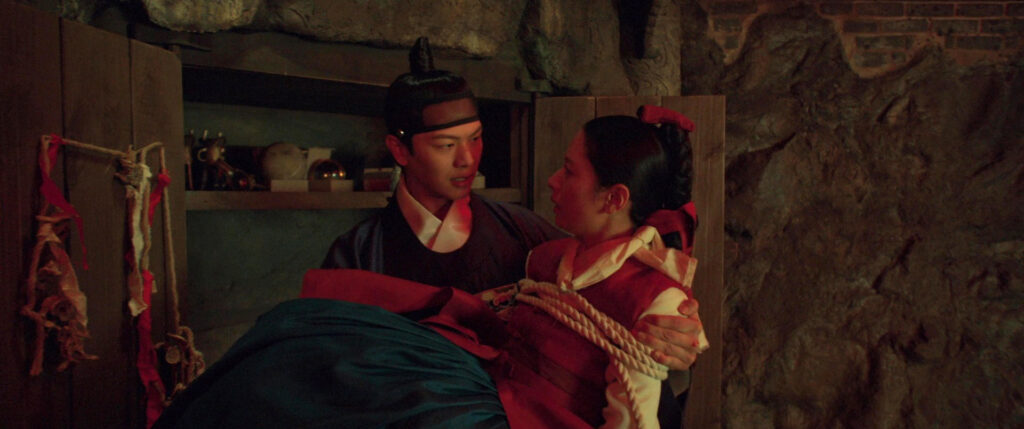
    It begins with our earnest chef Beom-woo and the talented sous-chef Yeon-joo sharing a kiss that feels more like a grenade than a sweet moment. Just as their lips meet, Choon-seung and Myung-sook burst in. Cue the classic rom-com headbutt as Yeon-joo’s elbow finds Beom-woo’s nose—hard.

    • Yeon-joo insists it was a “mistake.”
    • Beom-woo refuses to buy the “mistake” line. He fires back, “I want to get madly involved with you!”
    • Yeon-joo’s counter? “We’re both horrible people. We can’t.”

    Instead of retreating, Beom-woo leans in. His stubborn hope feels adorably pathetic—but also kind of heroic. After all, real love often looks like stumbling through your own insecurities.

    New Insight: This scene cleverly uses physical comedy (the headbutt!) to mask the vulnerability both characters feel. They’re terrified of rejection, yet can’t help baring their souls.


    Jungjae’s Glow-Up
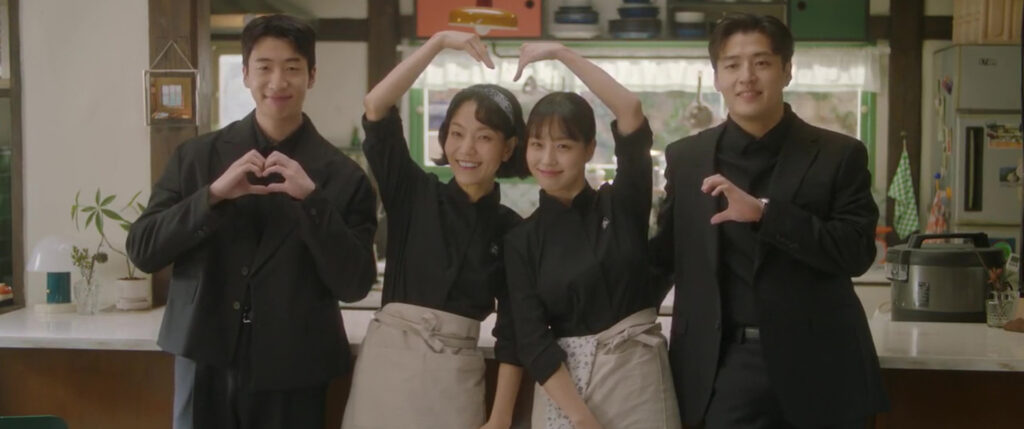
    Meanwhile, Jungjae restaurant has been reborn. The scaffolding is down, the paint is fresh, and everything sparkles. To mark the occasion, Beom-woo orders custom uniforms—everyone’s uniform… except poor Choon-seung.

    1. The Exclusion: Choon-seung was only supposed to work the renovation stint.
    2. The Rebellion: He protests: “Once you’re Jungjae, you’re forever Jungjae.”
    3. The Surprise: Beom-woo grudgingly hands him a tailor-made jacket.

    Why it matters: Choon-seung’s evolution from bratty troublemaker to family stalwart mirrors Jungjae’s revival. Food isn’t the only thing being transformed; so are hearts.


    Proof of Character Growth

    Even the local butcher notices. He grins at Beom-woo: “You’re not that obnoxious city boy anymore.” Yeon-joo echoes the sentiment: she sees sincerity in him now—and she likes it. Beom-woo, of course, fixates on “likes.”

    • Beom-woo’s Obsession: He pounces on the word like it’s a rare truffle.
    • Yeon-joo’s Pragmatism: She’s more interested in actions than adjectives.

    New Insight: Their dynamic is a dance of self-discovery. Beom-woo learns humility, and Yeon-joo rediscovers trust.


    Enter the Ex: Chef Jeon Min

    Just when you think the kitchen’s heat can’t rise further, in strolls Jeon Min (Yoo Yeon-seok), Yeon-joo’s ex from Le Murir—a three-star Tokyo hotspot. Cue dramatic music.

    • Backstory Flash: Yeon-joo took the fall for Min’s mistake during a Michelin review.
    • Sudden Silence: He ghosted her for five years.
    • Present Apology: Min claims he stayed away to preserve her legacy.

    Reality Check: That excuse is thinner than rice paper. It’s a selfish dodge, wrapped in faux-sincerity. Yeon-joo smells the BS from a mile away.

    New Insight: Min’s return isn’t about apologies; it’s about control. He wants to reclaim what he lost—her talent, her career, maybe her heart.


    A Dinner to Remember (or Forget)

    To celebrate Jungjae’s rebirth, a French-Korean couple arrives for a “meeting of the parents” dinner.

    • Mom from France: Prefers gentle flavors—comme toujours.
    • Dad from Korea: Demands bold, spicy kimchi and bulgogi.

    Yeon-joo blends both cuisines into a harmonious feast. It’s a masterclass in diplomacy via dumplings and daredevil sauces.

    • Korean Dad’s Change of Heart: At first, he side-eyes the “foie gras kimchi.”
    • Mom’s Delight: She praises Yeon-joo as a “culinary angel.”

    New Insight: Food here isn’t just sustenance; it’s the ultimate peace treaty. By integrating tradition and innovation, Yeon-joo brokers understanding between two families and two worlds.


    An Evening of Confessions

    After serving Min his final “let’s never reunite” dinner, Yeon-joo steps out for a date with Beom-woo. It’s sweet. It’s simple. It’s… revealing.

    • Her Backstory: Orphaned, she clung to cooking as her family.
    • His Support: He listens. He cares. He doesn’t pry into Min.

    But then the bomb drops: Min invited her back to Japan. Yeon-joo assures Beom-woo she’s staying.

    • Next Morning: Beom-woo arrives to find a note: “I’m going to Japan for urgent business.”

    New Insight: Yeon-joo’s torn. Duty to her mentor versus her blossoming love. The note is her silent scream that she’s trapped between past loyalties and present possibilities.


    Journey to Japan: Loyalty on the Line

    Yeon-joo reaches Le Murir just in time. Her mentor, who once shaped her knife skills, now battles dementia. And Min—ever the manipulator—plays the caring champion, urging her to keep quiet about old kitchen scandals.

    • Yeon-joo’s Mission: Reignite her mentor’s appetite with a secret dish that only he remembers.
    • Min’s Cunning: He fears the truth will unravel his legacy—and his relationship with Yeon-joo.

    New Insight: This subplot amplifies the theme of memory—both of dishes and of hearts. What we choose to remember (or forget) defines our paths.


    Jungjae in Chaos
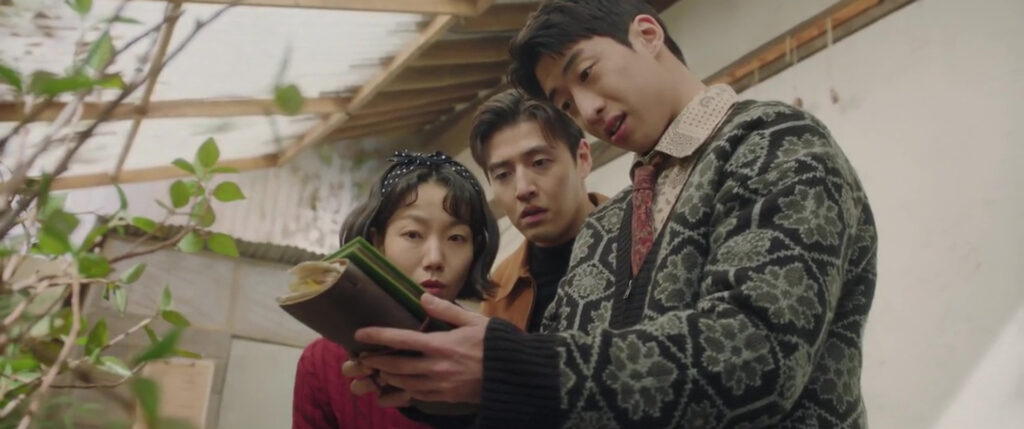
    Back in Seoul, without Yeon-joo’s steady hand, Jungjae teeters. The kitchen brigade battles over missing recipes; the service line snakes longer.

    • Left Behind: Yeon-joo’s recipe book becomes a coveted artifact.
    • Beom-woo’s Integrity: He doesn’t steal it; he protects it by getting his right-hand man, Lee Yoo-jin, tipsy on Choon-seung’s homemade liquor so he can’t snoop.

    New Insight: This is Beom-woo’s moment of true leadership. He’s no longer the self-absorbed chef of Episode 1. He prioritizes team over ego.


    Confrontation in Tokyo

    Beom-woo flies to Japan—drama demand met—and arrives just as Min is wooing Yeon-joo with empty promises. Naturally, our hero photobombs their moment.

    • Min’s Pitch: He’s achieved head-chef status at Le Murir. He wants her back—in kitchen and in life.
    • Beom-woo’s Retort: He reminds Min that their history is past tense.

    Min counters with a grand vision: a branch of Jungjae outside Seoul—one they built together.

    • Beom-woo’s Fury: He’s neither naïve nor second-fiddle.

    New Insight: The dream of opening a branch is symbolic. Min’s vision appropriates Yeon-joo’s success. Beom-woo defends not just her, but her autonomy.


    Corporate Plot Twists

    Back in Korea, the corporate gears grind. Sun-woo sacks Young-hye from La Lecel.

    • Young-hye’s Next Move: She considers Motto, then learns her replacement at La Lecel is… Min.
    • Hansang Foods’ Plan: Acquire Le Murir and install Min.

    New Insight: This merger of family-style cooking and corporate ambition raises the stakes. Cooking shows are fun, but boardroom battles? That’s next-level collapse or comeback material.


    Why Our Found Family Matters Most

    Through all the high-stakes maneuvers—ex-lovers, mergers, dementia—the beating heart of Tastefully Yours is the Jungjae squad. They:

    1. Squabble like siblings.
    2. Support each other without hesitation.
    3. Inspire Beom-woo to evolve.

    The show’s magic lies in these found-family dynamics. When the boardroom calls and old flames smolder, what anchors our heroes is the collection of mismatched hearts that make up Jungjae.


    My Two Cents: Why Tastefully Yours Works

    1. Character Growth Feels Earned. Beom-woo’s transformation from brash chef to compassionate leader happens through failures and little victories—just like real life.
    2. Romance with a Kick. The show balances swoony moments with genuine obstacles; it never lets love feel too perfect.
    3. Food as Storytelling. Each dish serves a narrative purpose—whether mending family ties or asserting independence.
    4. Humor That Lands. From nose-headbutts to drunken recipe-book heists, the comedy feels organic, not forced.
    5. Social Commentary. Cross-cultural dinners and corporate maneuvers remind us that kitchens reflect society’s larger struggles.

    Looking Ahead: What to Expect in Episodes 7–8

    • Will Yeon-joo’s mentor ever taste his secret dish?
    • Can Beom-woo and the Jungjae team fight back against Hansang Foods’ takeover?
    • Will Min’s corporate ambition crush the spark between him and Yeon-joo—or blow up in his face?

    Hang onto your aprons; the next half of Tastefully Yours promises even more emotional stovetop drama.


    Final Verdict

    Tastefully Yours Episodes 5–6 deliver a robust mix of heart, humor, and high-stakes cooking drama. With standout performances, clever writing, and dishes you can almost taste through the screen, this mid-season stretch cements the series as a must-watch for anyone who loves food, family, and heartfelt romance.

    Rating: ★★★★☆

    (Four out of five stars—because even the best soufflé can sink if you’re not careful.)

    Our Unwritten Seoul: What we learned so far…

    When your life feels like a hamster wheel—spinning at full tilt, but getting nowhere—you might fantasize about swapping roles with someone who seems to have it all figured out. In Our Unwritten Seoul, identical twin sisters Yoo Mi-ji and Yoo Mi-rae do exactly that. In episodes 1 and 2, the pair trade lives to press pause, rethink their choices, and maybe even find a happier path forward. Consequently, what seems like an over-the-top premise transforms into a grounded, heartwarming exploration of sisterhood, burnout, and second chances. If only we could all pull off a twin swap to gain fresh perspective.

    TL;DR:

    • Identical twins Mi-ji and Mi-rae swap lives to escape personal and professional burnout.
    • Mi-rae (the “golden child”) is overworked; Mi-ji (the “black sheep”) sacrifices for family.
    • The swap forces them to confront their weaknesses and gain fresh perspectives.
    • The drama explores themes of authenticity, privilege, empathy, and family.
    • Features compelling performances and a heartwarming, humorous narrative.

    Setting the Stage for a Sisterly Swap

    Firstly, we meet our protagonists in their thirties, on very different trajectories. On one side, there’s Mi-rae: studious, responsible, and career-driven. On the other, Mi-ji: free-spirited, kindhearted, yet chronically underemployed. While Mi-rae climbed the ladder at a top Seoul corporation, Mi-ji bounced between temp gigs—until life circumstances forced her to forgo college and care for their ailing grandmother (halmoni). Both sisters love each other, but family pressure paints them as “the golden child” and “the black sheep.” As a result, Mi-ji bears the brunt of their mother’s disdain, even though she’s the one sacrificing personal ambition for family welfare.

    Meanwhile, Mi-rae silently struggles. Despite enviable success, she’s overworked to the brink of burnout. One afternoon, she casually mentions jumping off a building—not to die, but to get hurt enough to escape work. That offhand remark lands Mi-ji sprinting across town after Ho-soo, their childhood friend-turned-lawyer, drops the hint that Mi-rae seems “off.” A rooftop confrontation follows. Mi-ji catches Mi-rae mid-leap, and they tumble together—yet walk away without serious injury. In that heart-pounding moment, the twins realize they need a radical change.


    Trading Places, Testing Limits

    Consequently, Mi-ji convinces Mi-rae to revisit their childhood trick: swapping lives. As ten-year-olds, they used this tactic to cover each other’s weaknesses in school. Now, at thirty-plus, the stakes are higher.

    • Shadowing Mi-rae’s World:
      Mi-ji dons Mi-rae’s polished suits and steps into the corporate arena—complete with boardroom power plays and cutthroat colleagues. Predictably, her impulsive honesty backfires. Tasked with convincing a stubborn restaurant owner to sell land for redevelopment, she bungles the negotiation, nearly burning a professional bridge.
    • Navigating Mi-ji’s Chaos:
      Simultaneously, Mi-rae trades skyscrapers for strawberry fields. Under Han Se-jin, a laid-back farm owner with a penchant for unorthodox methods, she learns that farming demands patience and intuition—two qualities foreign to her rigid, task-oriented mind. Her first day ends with her storming off, furious at being set up to fail.

    However, these initial missteps only scratch the surface of what’s at stake. No matter how identical they look, Mi-ji and Mi-rae carry decades of unspoken feelings and regrets. Consequently, every misstep illuminates a blind spot: Mi-ji’s lack of direction, Mi-rae’s inability to let go.


    Character Deep Dive: What Drives the Twins?

    Yoo Mi-ji: The Heart on Her Sleeve

    • Strengths: Warmth, loyalty, adaptability.
    • Weaknesses: Lack of long-term goals, family guilt, overempathetic.
    • Backstory: Once a promising high school track star, a knee injury sidelined her dreams. Since then, she’s juggled part-time work to support halmoni.
    • Internal Conflict: She’s tired of living in Mi-rae’s shadow but afraid of failing on her own.

    Yoo Mi-rae: The Powerhouse Performer

    • Strengths: Intelligence, discipline, moral courage.
    • Weaknesses: Perfectionism, workaholism, social isolation.
    • Backstory: Scholarship student turned whistleblower. Her support for a bullied coworker led to professional backlash and deep depression.
    • Internal Conflict: She wants to unwind but fears losing control—both at work and in her identity.

    Side Characters Who Steal Scenes

    • Lee Ho-soo (Jinyoung):
      A lawyer bearing scars—literally and figuratively—from a past car accident. Reserved yet compassionate, he grew up alongside the twins. He connects deeply with Mi-ji’s exuberance and Mi-rae’s integrity. Now, he invests emotionally in the switch, curious how “Mi-rae” seems inexplicably more vivacious.
    • Kang Wol-soon (Halmoni):
      The one person who can always tell the twins apart. Wise and perceptive, her approval means the world. When “Mi-rae” arrives on the farm in place of Mi-ji, Halmoni’s knowing look pierces the ruse.
    • Han Se-jin:
      The eccentric farm owner who treats agriculture as an art form. Patient but demanding, he provides the perfect foil for Mi-rae’s corporate mindset. His offbeat mentorship challenges her to embrace failure—and learn from it.

    Themes and Takeaways

    Moreover, Our Unwritten Seoul hits several compelling notes:

    1. Burnout vs. Authenticity:
      In Seoul’s hyper-competitive environment, burnout lurks behind every deadline. Both sisters grapple with how to reclaim authenticity in lives dictated by expectations.
    2. Privilege and Sacrifice:
      Mi-rae’s scholarship and white-collar status contrast sharply with Mi-ji’s unpaid emotional labor. Yet each privilege carries its own burdens.
    3. Healing Through Empathy:
      By walking in each other’s shoes, the twins learn empathy—recognizing that success isn’t a cure-all, and that kindness is a skill requiring practice.
    4. Family Dynamics:
      A single mother’s high standards and a grandmother’s unconditional love paint a rich portrait of familial influence. Generation gaps and gender roles simmer just beneath the surface.

    Subsequently, we see that switching identities isn’t just a plot device; it’s a catalyst for long-overdue growth. Each sister brings fresh eyes to the other’s world. Mi-ji offers Mi-rae permission to rest. Mi-rae provides Mi-ji a blueprint for setting goals.


    My Perspective: Why I’m Hooked

    Personally, I’m all in for this drama’s blend of humor, heart, and soul-searching:

    • Authenticity Above All: Too often, K-dramaland fixes on glamor. Here, the messiness of real life takes center stage. That rooftop scene felt like an echo of real desperation—rendered with just enough levity to remind us that even the darkest moments can lead to fresh starts.
    • Park Bo-young’s Dual Masterclass: Watching her seamlessly embody two distinct women is pure acting wizardry. She conveys Mi-ji’s effervescent optimism with the same nuance she uses to portray Mi-rae’s controlled composure.
    • Jinyoung’s Subtle Strength: Ho-soo’s quiet resilience anchors the chaos. His willingness to question corporate ethics adds a thought-provoking subplot about moral compromise.
    • Promise of Growth: By episode 2’s end, it’s clear the twins aren’t playing dress-up—they’re rewriting their unwritten futures. I’m invested in every misstep, every triumph, and every awkward family dinner that follows.

    Key Insights for Viewers and Self-Discovery Seekers

    1. Try a “Swap Day” in Your Own Life:
      Not literally with a twin—unless you have one. Rather, borrow a habit from someone you admire. Spend one day using their routines as a test drive. You might learn more than you expect.
    2. Redefine Success:
      Corporate accolades are fine. Yet personal well-being, community care, and creative fulfillment matter just as much. Ask yourself: What metric would you use to describe a “good day”?
    3. Embrace Small Failures:
      Mi-rae’s robotic approach shields her from risk, but hinders creativity. Mi-ji’s fearless spirit leads to stumbles—but also serendipity. Find your balance by setting low-stakes challenges.
    4. Lean on Your “Halmoni”:
      We all have a trusted confidant. Let them see the “real you,” not just the highlight reel. Honest feedback can save you from a corporate cliff—or a strawberry-farm faux pas.

    Looking Ahead: What to Expect in Episodes 3 and Beyond

    • Corporate Repercussions: Will the redevelopment deal collapse under Mi-ji’s unorthodox tactics?
    • Farmhouse Friendships: Can Mi-rae survive a second day on the farm? Perhaps Se-jin’s peculiar mentorship holds unexpected lessons.
    • Emotional Showdowns: The twins’ mother remains oblivious—until she isn’t. A breakfast table reckoning looms.
    • Romantic Sparks: Chemistry simmers between each sister and their respective love interest. Will sparks turn to flames, or fizzle under deception?

    Final Verdict

    Our Unwritten Seoul kicks off with wit, warmth, and genuine emotional stakes. It’s a rare drama that balances laugh-out-loud moments with real talk on mental health and family dynamics. By episode 2, you’ll be rooting for both twins—separately and together—to find their way back to themselves.

    Rating: ★★★★☆ (4.5/5)

    This twin-swap therapy session is exactly the prescription for anyone craving laughter, tears, and a reminder that it’s never too late to rewrite your own story.

    Inside the $22M NFT Rug Pull: How a 23-Year-Old TikToker Duped Crypto Investors

    You’ve heard the tales of crypto bros turning lunch money into Lambos, but this one tops them all. Meet Gavin Mayo: 23, TikTok famous, self-proclaimed billionaire, and—allegedly—the mastermind behind a $22 million NFT rug pull that’s shaking blockchain investors to their core. If you thought NFT scams were niche corner cases, think again. This saga combines glossy promo videos, digital art “drops,” anonymous sock-puppet personas, and even alleged threats to a whistleblower’s family. Buckle up, because we’re diving deep into the rise and fall (and potential felony charges) of one of the biggest digital art cons of all time.

    TL;DR:

    • TikTok influencer Gavin Mayo, 23, allegedly masterminded a $22M NFT rug pull with partner Gabriel Hay.
    • Mayo used his “billionaire” image and flashy lifestyle to lure investors into multiple NFT projects.
    • The duo repeatedly raised funds, then abandoned projects, leaving investors with worthless tokens.
    • They used pseudonyms and hired actors to maintain anonymity, but a Discord mod blew the whistle.
    • Mayo and Hay allegedly threatened the whistleblower’s family with personal information and vile slurs.
    • Both face federal charges including wire fraud and stalking, potentially leading to decades in prison.
    • The case highlights the dangers of unchecked crypto hype, influencer culture, and the need for greater accountability in Web3.

    🧾 Gavin Mayo: Quick Facts

    FieldDetails
    NameGavin Mayo
    Age23 (as of 2025)
    HometownThousand Oaks, California
    EducationBriefly attended University of North Carolina
    Started TradingAt age 13
    Famous ForFinance tips on TikTok
    Followers250,000+ on TikTok
    CompaniesCo-founded Luxury Equities; ran finance Discord
    Big ClaimCalled himself “youngest billionaire”
    LifestyleShows off luxury cars, watches, and cash
    Legal TroubleCharged with NFT scams and stalking
    Amount DefraudedAllegedly over $22 million
    Fake ProjectsFaceless, Vault of Gems, Squiggles, Roost Coin & more
    ArrestIndicted Dec 2024; released on $200,000 bail
    Possible SentenceUp to 20 years per fraud count, 5 years for stalking
    Trial DateFebruary 11, 2025

    From Humble TikTok Tutorials to “Billionaire” Brags

    Initially, Mayo wasn’t hawking JPEGs; he was your average millennial crypto coach. With about 250,000 TikTok followers, he created bite-sized videos teaching basic crypto concepts—blockchain 101, why “diamond hands” matter, that sort of thing. His followers ate it up. Smooth transitions between green-screen graphs and mansion shots convinced people that crypto investing was a cakewalk: just listen to Mayo, follow his hot takes, and you too could snag six figures overnight.

    Then came the brags. “I bought a village,” Mayo proclaimed in one TikTok, casually tossing aside the idea that people might question where the funds came from. “Part of it has hot springs.” Another video? “I spent $7,000 on a lighter today. We are not the same.” And yes, there were the tiger-cub flexes and private-jet snapshots. It sounded like parody—until investors started handing him cash to back his very own NFT projects.


    The NFT Launchpad: Mayo + Gabe = Digital Gold?

    Enter Gabriel “Gabe” Hay, Mayo’s business partner and fellow crypto enthusiast. Together, they dreamt up the “ultimate” NFT drop. They registered slick domains, set up Twitter accounts, and teased promo trailers that looked more like Hollywood teasers than blockchain pitches. People saw artful pixel avatars and heard Mayo’s confident voiceover: “Exclusive. Limited. Life-changing.” And with that, pre-sales began.

    Investors were lured by a classic FOMO cocktail: shiny graphics, scarcity messaging, and Mayo’s personal brand. Money poured in. After raising roughly $1 million on the first drop, the duo allegedly cashed out overnight. Floor prices crashed. Investors woke up to empty wallets and digital PNGs that couldn’t even buy a latte—let alone recoup their entry fees.


    Round Two: The $420K Encore

    One million down, millions to go? The plan was working. Mayo and Gabe launched project number two—same playbook, different art. They hyped it harder, posted meme-style teasers, and even hired a stand-in “face” for anonymity’s sake (more on that later). This time, they netted about $420,000. Again, exit stage left. Investors were left holding what the crypto world terms a “rug pull”: when creators raise capital, then vanish, leaving buyers with worthless tokens.

    By drop three, drop four, and so on, the pattern was painfully clear. Each launch followed a tight timeline: teaser days, minting window, cash-out, ghost town. To the casual observer it looked like entrepreneurial hustle. To victims, it felt like coordinated fraud.


    Anonymity and Sock-Puppet Personas

    If Mayo and Gabe had plastered their faces on every marketing asset, they’d have been unmasked immediately. Instead, they deployed a rotating cast of pseudonyms. Sometimes it was “CryptoClark,” other times “DigitalDuchess.” They even paid actors to livestream AMAs (“Ask Me Anything”) as the project’s “braintrust.” This fog of identities made it nearly impossible for early victims to trace the money trail back to the real culprits.

    But deep down, investors sensed something was off. Why would a “billionaire” need a rando to represent his own project? Why hide your face if you’re living it up in Lambos and luxe resorts? At the time, many shrugged it off—because in the NFT world, weirdness is practically a requirement. Yet it also enabled Mayo and Gabe to bounce from one scheme to the next, leaving each project’s investors in the lurch.


    A Discord Moderator’s Slippery Slope

    Every good scam needs an insider to crack it wide open. Enter “Project” (not his real name), a volunteer Discord moderator hired to keep the peace in the community channels. One day, fed up investors started calling it what it was: a rug pull. “This feels like exit fraud,” they typed. “We got conned.” Project, possibly motivated by guilt—or a shred of integrity—decided to spill the beans. He publicly revealed that Mayo and Gabe were the puppet masters behind multiple NFT ventures.

    Cue dramatic music. The duo allegedly lost it. They couldn’t risk that connection going public. So they did what any digital-age scam artists might: threaten the whistleblower’s family. Emails arrived at Project’s home, posing as high-powered law firm letters. They contained his parents’ addresses and ages—classic intimidation tactics, essentially saying, “We know where you live.” Then came anonymous texts from a fake “angry investor” promising lawsuits if the Discord post wasn’t purged within an hour.


    Threats, Familia, and Federal Attention

    It didn’t end with scary emails. A week later, another “lawyer” letter threatened to expose Project’s parents as “p3do.” A vile slur—clear harassment. Reportedly, Project didn’t cave. He kept quiet. Nobody knows if his parents experienced any fallout. But fast forward a couple of years, and Gavin Mayo and Gabriel Hay were looking at federal indictments. Wire fraud. Conspiracy. Stalking.

    The Department of Justice alleges they defrauded investors of over $22 million—making this the largest NFT fraud case ever brought to court. Suddenly, those TikTok boasts and flashy Instagram posts read less like entrepreneurial swagger and more like breadcrumbs in a criminal investigation. And while the trial hasn’t begun, the 17-page indictment paints a damning portrait of digital deceit.


    Anatomy of a Rug Pull: How It Works

    Let’s peel back the curtain on why NFT rug pulls are so devastating:

    1. Scarcity Hype: Limited-edition digital art creates artificial demand.
    2. Influencer Backing: A charismatic figure (hello, Gavin Mayo) lends credibility.
    3. Pre-Sale Frenzy: Early minting phases promise “early adopter” rewards.
    4. Exit Liquidity: Creators offload their tokens for hard crypto, tanking secondary-market prices.
    5. Disappearing Act: Websites go dark, social media accounts vanish, and support channels go silent.

    In plain English: It’s a financial one-two punch. You buy at the top, they sell at the top, and you’re stuck with a digital file that no one will pay $5 for.


    Why Smart Investors Fell For It

    By now you’re thinking, “Who in their right mind invests in that?” But consider the context:

    • FOMO Noir: Nobody wants to miss “the next Bored Ape.”
    • Tech Mirage: Blockchains and smart contracts sound so futuristic, it tricks people into thinking they’re infallible.
    • Social Proof: When 250,000 TikTok followers see green-screen success stories, even skeptics lean in.
    • Complexity Overload: The average person can’t vet a smart contract’s code. If it looks official, they assume it is official.

    And let’s not forget, early crypto adopters did make fortunes out of thin air. Why wouldn’t they believe the same playbook could work for NFTs, especially with a “billionaire” spokesperson?


    The Human Cost of Digital Art Scams

    Beyond lost capital, these scams erode trust in the entire Web3 ecosystem. Victims often:

    • Suffer anxiety over financial ruin.
    • Feel embarrassed for falling for the hype.
    • Lose faith in legitimate creators who play by the rules.

    Plus, the ripple effect hits honest NFT artists. They now battle increased scrutiny and skepticism from collectors burned by bad actors.


    Lessons Learned (Too Late for Some)

    If you’re still tempted by NFT golden promises, here are a few hard-earned takeaways:

    1. Do Your Own Research (DYOR): Don’t trust flashy marketing. Read the whitepaper. Check the smart contract code.
    2. Verify Identities: Anonymous teams are a red flag, not cool crypto mystique.
    3. Start Small: Never invest more than you can afford to lose.
    4. Watch Withdrawal Patterns: If creators offload their tokens en masse, run.
    5. Seek Third-Party Audits: Legit projects often pay security firms to audit their smart contracts.

    At the end of the day, decentralization sounds empowering—but it can also empower scammers.


    My Two Cents: Opinions From the Sidelines

    Alright, let me get off the bleachers and into the ring. Here’s what I really think:

    • Crypto Needs Accountability
      The “wild west” charm of blockchain is wearing thin. If we want mainstream adoption, we need stronger oversight and transparent leadership. Otherwise, reputable platforms will continue hemorrhaging users.
    • Influencer Culture Is Toxic
      Why are we so quick to elevate internet personalities to guru status? Whether it’s TikTok, YouTube, or Substack, the allure of “follow me to riches” needs a reality check. Influence should come with responsibility, not just reach.
    • Victims Deserve Better
      Whenever there’s a major rug pull, the calls for restitution echo into the void. We need industry-wide funds or insurance mechanisms to reimburse defrauded investors. Otherwise, bad actors get away scot-free.
    • Blockchain Literacy Is Key
      Education can’t just be TikTok shorts. We need accessible courses, community workshops, even mandatory disclaimers on NFT marketplaces: “Warning: You could lose everything.”

    What’s Next for Mayo, Gabe, and the NFT World?

    With federal charges looming, Mayo and Hay’s fate rests in the courtroom. If convicted, they could face serious prison time—and their case could set a landmark precedent for NFT regulation. Imagine a world where minting a fraudulent NFT carries tangible legal consequences. Investors might finally breathe easier.

    For the blockchain community, this trial is a crucible. Will it usher in an era of credibility and consumer protection? Or will regulators double-down on skepticism and hamper innovation? Personally, I’m betting on a middle ground: more checks and balances without stifling the creativity that makes NFTs exciting.


    Closing Thoughts

    The $22 million NFT scam is a cautionary tale writ large in code and JPEGs. Gavin Mayo’s rise and alleged fall underscore the pitfalls of unchecked hype, online anonymity, and influencer worship. If you learned anything here, let it be this: digital art may be “stored forever” on the blockchain, but your investment isn’t. Stay curious, stay skeptical, and for heaven’s sake, don’t hand your life savings to the next “youngest billionaire” who promises to buy you a village.

    Because in the end, the only thing more volatile than crypto prices is the integrity of the people trading it. And alas, not everyone is here for the art. Some are just here for the exit.

    From Tweets to Time: The Rise and Fall of PlugwalkJoe, Twitter’s Most Notorious Hacker

    Joseph James O’Connor, better known in the chaotic corners of the internet as “PlugwalkJoe,” wasn’t just your average hacker with a keyboard and a Wi-Fi connection. Oh no. He made headlines, stirred up online drama, and played a real-life game of Grand Theft Auto in cyberspace. His antics spanned continents, snatched the attention of tech giants, and ultimately led him to a prison sentence in the U.S. But let’s rewind and unpack how a teenager with an appetite for digital chaos spiraled into one of the most notorious cybercriminals of our time.

    TL;DR:

    • “PlugwalkJoe” (Joseph O’Connor) was a British hacker who started with influencer hacks for clout and cash.
    • He escalated to major crypto theft via SIM swapping and hacked high-profile accounts like Jack Dorsey’s.
    • His actions turned dangerous with blackmail attempts (Bella Thorne) and “swatting” a teenage girl who rejected him.
    • He was a key player in the massive 2020 Twitter hack, compromising celebrity and political accounts for a Bitcoin scam.
    • Despite trying to feign innocence, his confession to the FBI led to his arrest in Spain, extradition, and a five-year U.S. prison sentence.
    CategoryDetails
    Full NameJoseph James O’Connor
    AliasPlugwalkJoe
    NationalityBritish
    Born1999
    Famous ForHacking Twitter in 2020
    VictimsElon Musk, Obama, Biden, Kanye, Apple, and others
    Scam TypeBitcoin scam using hacked Twitter accounts
    Crypto TheftAround $118,000 from Twitter scam $794,000 from SIM-swapping
    Other CrimesSIM-swapping, cyberstalking, hacking TikTok/Snapchat
    ArrestedJuly 2021 in Spain
    ExtraditedApril 2023 to the U.S.
    PleaGuilty in May 2023
    Sentence5 years in U.S. federal prison
    FinesForfeited $794,012.64 Must pay restitution
    ImpactTwitter froze verified accounts for hours Raised alarms about platform security
    Current StatusIn prison in the U.S.

    It All Started With a Click (and Logan Paul)

    Rewind to 2018. PlugwalkJoe was a 19-year-old British hacker craving two things: cash and clout. Apparently, hacking influencers was his version of a get-rich-quick scheme. His first major hit? Logan Paul. Yep, the YouTube bro himself. Joe didn’t just settle for cracking into his YouTube—he dove into Logan’s Twitter, tweeting out that followers could find a sex tape by following his own account. Subtle? Not exactly. Effective in grabbing attention? Definitely.

    From Clout to Crypto: A Dangerous Upgrade

    By 2019, PlugwalkJoe leveled up. He and his hacker crew took on a cryptocurrency firm in Manhattan using a SIM swapping attack—essentially convincing mobile carriers to hand over control of someone else’s phone number. This allowed them to intercept two-factor authentication texts and waltz right into secure accounts. The haul? A juicy $794,000 in stolen crypto.

    You’d think that would be enough to disappear into some cozy little villa in Europe. But no. This isn’t the end—it’s barely the intermission.

    Hackers on Tour: Spain Edition

    After padding his digital wallet, Joe relocated from England to sunny Spain. There, he kept the hacks rolling. Influencers like King Bach, James Charles, and Chloë Grace Moretz found themselves unwilling hosts of bizarre and troll-worthy tweets. Most posts were random shoutouts—some bordering on absurd, others laced with cringe. But at this point, it was all still mostly mischief.

    Until, of course, he went for a far bigger fish.

    Twitter Royalty: Jack Dorsey Gets Hit

    Enter Jack Dorsey—Twitter’s co-founder and then-CEO. Hacking Dorsey wasn’t just ballsy—it was practically an act of digital blasphemy. But Joe pulled it off, using the same SIM swapping technique. Dorsey’s account became a megaphone for racial slurs and more shoutouts to PlugwalkJoe and his hacker buddies. It was a disaster for Twitter’s PR team, but for Joe? Just another Tuesday.

    Bella Thorne, Blackmail, and Backfire

    Somewhere along the road to infamy, PlugwalkJoe crossed a line so hard it left skid marks. Actress Bella Thorne fell victim to his hacks, and Joe snagged her private Snapchat content—including nude photos. Rather than keep them as creepy trophies (which is already awful), he tried to blackmail her into publicly thanking and tagging him.

    But Bella Thorne wasn’t having it. In a power move, she released the photos herself, essentially robbing Joe of his leverage. That’s one way to deal with a hacker: turn the tables and burn them.

    Dixie D’Amelio and Addison Rae Join the Victim List

    In 2020, with Joe now 21 and still operating from Spain, his crew turned their attention to TikTok stars. Dixie D’Amelio’s account was hijacked, and strange videos popped up. One of Joe’s hacker pals even went live from her profile, promoting random Instagram accounts. Not long after, Addison Rae’s profile met the same fate.

    Again, the goal seemed less about theft and more about digital graffiti. But Joe’s playful facade was cracking.

    Enter the Discord Disaster: A Disturbing Turn

    Behind the trolling and chaos, a darker side of Joe surfaced. He met a 16-year-old girl—let’s just call her “Sixteen”—in a Discord hacker forum. Things went from flirtation to full-blown creep mode fast. Despite her disinterest, Joe sent her explicit messages and unsolicited photos. Gross doesn’t even begin to cover it.

    When Sixteen rejected him and exposed him by sharing one of those images in the server, Joe went nuclear. He attempted to “swat” her by sending fake emergency calls to her local authorities. Bomb threats, school shooting warnings, fake terror reports—he did all this in a single day, turning his creepy obsession into something deeply dangerous.

    The Epic Hack Heard Around the World

    Then came the summer of 2020. Joe, along with other hackers, pulled off the biggest Twitter hack in history. Over 130 high-profile accounts—including Barack Obama, Joe Biden, Jeff Bezos, Bill Gates, Apple, Elon Musk, Kanye West, and more—were hijacked.

    Each account tweeted out a Bitcoin scam promising to double any amount sent to a specific wallet. Some people fell for it (because of course they did), and the hackers walked away with around $118,000 in crypto. Not exactly a billion-dollar heist, but enough to draw global attention.

    The hack caused Twitter to temporarily shut down verified accounts, and suddenly cybersecurity wasn’t just a buzzword—it was international news.

    Damage Control? Too Late

    Realizing the mess he’d made, PlugwalkJoe tried damage control. From his new Spanish residence, he dialed up the feds and pulled a “It wasn’t me!” routine, naming other hackers and admitting to prior hacks. Bold move.

    But instead of clearing his name, Joe dug his own digital grave. Now the feds had a voice confession tying him to the crimes. Investigations ramped up. Evidence piled on. The Spanish national police raided his apartment, arrested him, and kept him locked up for two years before extraditing him to the U.S.

    The Legal Showdown and Its Consequences

    By the time he faced U.S. prosecutors, PlugwalkJoe’s portfolio of digital misdeeds looked more like a rap sheet from a cyberpunk thriller. He was sentenced to five years in prison, and honestly, he’s lucky it wasn’t longer given the swatting and extortion charges.

    The Bigger Picture: Digital Fame Has a Price

    Let’s face it—PlugwalkJoe wasn’t just chasing money. He craved the rush of digital power and internet fame. But clout is a terrible currency. It evaporates fast and often leaves destruction in its wake.

    He could’ve walked away rich after the crypto heist. Instead, he spiraled further into cyber crime, unable to resist the spotlight. And in a tragic twist of irony, the fame he so desperately wanted became the very thing that destroyed him.

    My Two Cents: PlugwalkJoe Was a Warning Shot

    Here’s the real talk: PlugwalkJoe isn’t just some villain in a hoodie. He’s a cautionary tale about what happens when digital talent meets zero accountability. There’s a world of gifted coders out there who, given better mentors and outlets, might be building the next generation of secure tech. But instead, many fall down the rabbit hole of Discord chats, black hats, and illegal glory.

    His story also exposes how easily systems—even at giant tech firms—can be manipulated with social engineering. It’s not always about high-end code. Sometimes it’s just smooth-talking your way past support agents.

    Also? The line between trolling and terrorism isn’t as thick as you think. One moment you’re cracking jokes on an influencer’s Twitter; the next you’re filing false bomb threats to silence a teenage girl who bruised your ego.

    Final Thoughts: Fame is Fleeting, Felonies are Forever

    PlugwalkJoe thought he was invincible. With a few hacks, he became infamous. But in the end, that keyboard became his downfall. For all the giggles and clout, what did he really earn? Five years behind bars, a criminal record, and a digital footprint that screams, “Don’t hire me.”

    In today’s hyperconnected world, playing cyber god might win you a few moments of glory. But when the FBI gets involved, you better believe those moments come with an expiration date.

    So next time you think that online fame is just a few hacks away, remember PlugwalkJoe. And maybe, just maybe, consider using your genius for something that doesn’t end in orange jumpsuits and federal indictments.

    Haliey Welch: The Hawk Tuah Girl Crypto Fiasco

    Haliey Welch—better known as the “Hawk Tuah Girl”—went from small-town Tennessee factory worker to overnight internet sensation. Yet before long, her fifteen minutes of fame spiraled into a full-blown crypto catastrophe. What began as a drunken street interview in Nashville mushroomed into a multi-million-dollar meme-coin launch that left countless fans holding the bag. Pull up a chair. You’re about to get the full, unfiltered story.

    Who is The Hawk Tuah Girl

    AttributeDetail
    Full NameHaliey Welch
    Born2002 or 2003
    HometownBelfast, Tennessee
    Pre-fame JobBedspring factory worker
    Viral MomentStreet-interview TikTok catchphrase “hawk tuah” (mid-2024)
    Social Following~2.5 million followers (as of Mar 16, 2025)
    PodcastTalk Tuah
    $HAWK Launch DateDecember 4, 2024
    Peak Market Cap~$491 million
    Crash―90% in 20 minutes (to ≈$60 million)
    Legal OutcomeCleared by FBI & SEC; no penalties
    Current StatusPodcast relaunched Apr 8, 2025; working with attorneys; subject of upcoming documentary

    A Spring Factory to Center Stage

    First things first: Haliey, age 21, spent her weekdays on an assembly line, crafting the springs that keep vending machines humming. Life in Franklin, Tennessee, was tranquil, predictable, and—let’s face it—kind of dull. But one Saturday night in Music City, everything changed.

    Haliey and a friend stumbled into a crew filming street interviews for a YouTube series. “What’s one move in bed that makes a man go crazy every time?” the interviewer asked, camera rolling. With her tipsy bravado, Haliey delivered the punchline: “You’ve got to give him that…” Well, you’ve seen the clip yourself, so no need to spell it out. Within hours, TikTok picked it up. Within days, it snowballed into a viral meme. Suddenly, “Hawk Tuah Girl” was trending on every social platform.

    Smart Pivot or Opportunistic Play?

    Here’s where most of us would hang our heads. But not Haliey. Instead, she leaned into the chaos. Consequently, her follower count exploded. Suddenly, she had management. Podcast invites rolled in. She even threw out the first pitch at a New York Mets game and made a cameo onstage at a Zach Bryan concert.

    Fast forward to early 2025. Teaming up with Jake Paul’s media network, she launched “Talk Tua,” her own podcast. With listeners tuning in by the thousands, her likability factor was off the charts. However, as anyone familiar with internet stardom knows, fame is as fickle as a crypto market in December.

    Enter the Crypto Bros—and the Hawk Token

    Just when it seemed Haliey had mastered the art of viral stardom, she met some self-styled “crypto bros.” They touted her as the face of their next big thing: a meme coin named “Hawk.” Promised to be the sexiest token since Dogecoin, Hawk was billed as a community-driven token sure to make early adopters millionaires. And, because Haliey was generous, she gave away free Hawk tokens to select fans. Genius marketing move, right?

    In reality, meme coins carry a notorious reputation. By design, they’re volatile, easily manipulated, and—as history has shown—ripe for pump-and-dump schemes. Still, Haliey assured her followers that her coin was different. “This is not a cash grab,” she insisted in an interview with Fortune magazine. Nevertheless, thousands of fans dumped their hard-earned dollars into the project.

    D-Day: Launch, Pump, Then Dump

    Launch day arrived with all the fanfare of a Super Bowl halftime show. Social feeds lit up. Tweets rocketed. The Hawk token minted a reported market cap of $490 million. Everyone felt like they’d struck gold.

    Then, less than twenty minutes later, the crypto equivalent of an asteroid strike hit. Over 90% of the token supply was sold off, crashing the price by 95%. In layman’s terms: if you threw a single dollar into Hawk, you were left with a whopping five cents. Meanwhile, Haliey and her bros walked away unscathed—pocketing the millions in trading fees and insider profits.

    Coffeezilla to the Rescue (or Roast)

    Unsurprisingly, fans were furious. Enter Stephen “Coffeezilla” Findeisen, a YouTuber dedicated to exposing crypto scams. He had been tracking the on-chain transactions and noticed patterns pointing to insider trading. In his eyes, Hawk was textbook rug pull.

    Not one to stay silent, Coffeezilla crashed the team’s Twitter Space. In classic form, he grilled them:

    “You generated over a million dollars in fees while your fans got scorched. What gives?”

    On the call, lead “crypto bro” Doc Hollywood first smirked, then blamed the audience’s “negativity” and even taunted those he suspected of being “mentally ill.” Haliey, sensing the storm, abruptly announced she had to go to bed. And with that, she ghosted. No follow-up, no apology, no nothing.

    The Ripple Effects

    By the next morning, the internet was ablaze. Fans demanded answers. Legal experts pointed out that the U.S. Securities and Exchange Commission (SEC) treats some tokens as unregistered securities. If proved, Haliey and her partners could face hefty fines or even jail time. Indeed, several investors filed complaints with the SEC, and whispers of class-action lawsuits began circulating.

    Yet, as of today (May 22, 2025), no criminal charges have been laid. Lawsuits move at a glacial pace. Regulators juggle more pressing matters. And Haliey? Social media showed she was nowhere to be found. Some say she’ll resurface once the heat dies down.

    Lessons for the Aspiring Influencer

    If there’s one takeaway here, it’s this: never mix your fans’ hopes with unregulated financial instruments. Moreover, celebrity endorsements don’t guarantee legitimacy. In fact, they often invite greater scrutiny. Transitioning from viral star to crypto mogul requires more than a slick marketing campaign. You need transparency, legal counsel, and, above all, genuine concern for your audience’s well-being.

    Key Red Flags in Meme-Coin Projects

    1. Lack of a Clear Whitepaper
      A legitimate token offers a detailed whitepaper explaining its purpose, tokenomics, and governance. When the plan is “get rich quick,” alarm bells should ring.
    2. Anonymous or Pseudonymous Team
      If you can’t verify the identities of the creators—especially when vast sums of money are involved—trust becomes a one-way street.
    3. Insider Selling Immediately After Launch
      Nothing says “pump and dump” louder than the people who hyped the coin selling their entire stake within minutes.
    4. Blaming Investors
      When things go south, pointing fingers at disappointed token holders signals a lack of accountability.

    Why This Isn’t Just Another Crypto Story

    At first glance, Haliey’s saga mirrors dozens of other meme-coin debacles. Yet, her case stands out for three reasons:

    1. Influencer Vulnerability
      Unlike tech-savvy crypto founders, Haliey lacked deep blockchain expertise. Her celebrity turned a lacking product into a perceived opportunity. That asymmetry—between influencer influence and crypto know-how—made her fans easy prey.
    2. Regulatory Gray Zone
      Meme coins often exploit loopholes in securities laws. By skirting clear definitions of a “security,” these tokens can operate in a murky legal landscape for years, draining victims’ funds before regulators catch up.
    3. Social Media Amplification
      The speed of virality matters. From TikTok to Twitter to Discord, hype cycles last hours, not days. In Haliey’s story, the entire scam played out in under 24 hours. No time for due diligence. No time for suspicion.

    Anatomy of a Rug Pull

    To truly grasp what happened, let’s break down the rug pull step by step:

    1. Pre-Launch Hype
      Social posts, influencer endorsements, free token airdrops—classic pre-pump routine.
    2. Launch & Peak
      Initial buyers drive demand; price soars. On-chain data shows rapid accumulation.
    3. Insider Sell-Off
      Whales and project insiders sell large volumes in one or two transactions.
    4. Panic and Dump
      Price collapses. Retail investors sell at the bottom, solidifying their losses.
    5. Disappear
      Founders vanish. Clients left with worthless tokens; project website shuts down.

    Understanding this blueprint helps future investors spot scams before they open their wallets.

    Mitigating Risk in the Crypto Jungle

    You might think, “I’ll never let this happen to me.” Yet the same marketing tactics that ensnared Haliey’s fans pursue every new wave of crypto enthusiasts. To protect yourself:

    • Do Your Homework
      Research token fundamentals and team backgrounds. Don’t rely solely on influencer hype.
    • Diversify
      Only allocate a small fraction of your portfolio to high-risk assets.
    • Use Reputable Exchanges
      Launchpads and vetted platforms often conduct their own due diligence.
    • Follow the Money
      On-chain explorers like Etherscan let you see token flows and wallet balances.
    • Know Your Legal Rights
      In many jurisdictions, victims of fraudulent token offerings can seek restitution through government agencies or the courts.

    The Human Cost

    Behind every headline about towering market caps and multi-million-dollar fees are real people who lost birthday money, wedding funds, and even rent checks. One young college graduate told me she had dreamed of buying her first house. Instead, she watched her token balance evaporate. A retiree liquidated part of his pension, convinced he could outpace inflation. That six-figure retirement cushion now sits at pocket change.

    These stories underscore a painful truth: scams aren’t victimless. They leave emotional scars and breed mistrust—both in the crypto industry and in the influencers who champion it.

    My Point of View

    I’ve spent years observing the intersection of fame, finance, and technology. Cases like Haliey’s frustrate me for one reason: a lack of accountability. When you leverage personal branding to hawk high-risk investments, you owe your audience more than a wink and a “good luck.” You owe them transparency and due diligence.

    Yes, influencers deserve to monetize their platforms. But they also carry moral and, increasingly, legal responsibilities. The line between promotion and manipulation is thin. Cross it, and you’re not just peddling tokens—you’re selling false hope.

    Moreover, regulators face a daunting challenge. Crypto’s borderless nature clashes with nation-state enforcement. As a result, the people who perpetrate these scams often operate with near impunity. Until lawmakers craft coherent, global standards for digital assets, the cycle will repeat: hype, rug pull, lawsuits, repeat.

    Ultimately, the Hawk Tuah Girl saga is a cautionary tale on two fronts. For investors, it’s a reminder that viral hype is no substitute for research. For influencers, it’s a stark warning: your audience trusts you. Betray that trust, and the fallout can last a lifetime.

    So what now?
    If you’re still itching to dabble in crypto, remember these parting thoughts:

    • Slow down. If a token “can’t wait,” that’s a red flag.
    • Ask tough questions. Demand audits, legal disclosures, and roadmaps.
    • Prioritize safety over FOMO. High returns come with high risks—often too high.

    By staying vigilant, you can enjoy the upside of innovation without becoming collateral damage. And if you spot the next “Hawk” about to take flight, remember this story. Because once the rug is pulled, there’s no reversing gravity.

    Ricard Siagian: A Fatal Sleep Disorder

    0

    Imagine lying awake for night after night, as days bleed into each other until your world erodes. YouTube tattoo artist Ricard Siagian endured this nightmare for over a year—and lived to document every excruciating moment. His story isn’t just another tale of insomnia. It’s a cautionary case study in chronic sleep deprivation, neurotoxic side effects, and a rare neurological breakdown known as fatal insomnia. Along the way, we’ll unpack how a simple urinary tract infection triggered a cascade of events that ultimately cost Ricard his life. Moreover, we’ll explore what science says about sleep’s vital role, and I’ll share my own take on why his struggle resonates far beyond his tattoo studio in Philadelphia.

    TL;DR

    • Humble Beginnings: A Philadelphia tattoo artist who self-treated a UTI in 2015 with leftover antibiotics due to lack of health insurance.
    • First Warning Signs: Developed internal trembling, fatigue, dizziness, brain fog, and muscular weakness after taking the antibiotics.
    • Descent into Pain and Paralysis: Experienced peripheral neuropathy (burning sensations, joint pain), followed by complete sleeplessness by early 2016.
    • Pilgrimage to Jakarta: Flew to Indonesia for treatment, but only received sedatives that offered minimal relief.
    • Bedridden and Desperate: Deteriorated to paralysis, became bedridden, and used YouTube to plead for help, documenting his worsening condition (twitches, blistering skin).
    • Chronicling the Breakdown: Uploaded dozens of videos from 2016 to late 2017, showing intensifying twitches, cognitive lapses, delusions, and increasing pain and isolation.
    • The Final Upload: Posted a final video in December 2017, looking gaunt and slurred, before succumbing to fatal insomnia.

    From Tattoo Guns to Sleepless Nights

    A Humble Beginning

    Ricard Siagian wasn’t born into fame. In fact, he spent his early adult years mastering tattoos at parlors in Philadelphia, juggling part-time gigs just to make ends meet. Around 2015, like many Americans without health insurance, Ricard faced an uphill battle when a urinary tract infection (UTI) knocked him off his feet. Unable to afford a doctor’s visit, he turned to a co-worker’s leftover antibiotics.

    The First Warning Signs

    • Day 1–2: Ricard popped the pills and, initially, felt normal. His UTI symptoms faded.
    • Night 3: He woke to trembling sensations—his head, spine, and feet shaking as if in an earthquake. No tremors outside; the quake was coming from within.

    Despite the bizarre onset, Ricard dragged himself to work. Yet, fatigue quickly turned into dizziness, brain fog, and muscular weakness. Alarmed, he called his sister, a nurse, who reassured him the medication was standard UTI treatment. Convinced, he continued the course—unaware of the ticking time bomb he’d just unleashed.


    The Descent into Pain and Paralysis

    Peripheral Neuropathy Takes Hold

    Soon after finishing the antibiotics, Ricard noticed burning sensations in his back, joint pain, and what he described as kidney “damage.” These were classic signs of peripheral neuropathy—nerve damage that can arise from neurotoxic drugs. In his videos, he grimaced as he traced the pins-and-needles agony in his limbs.

    When Sleep Vanishes

    By early 2016, the burning pain had a companion worse than any UTI symptom: complete sleeplessness. Ricard didn’t suffer “a few lost hours.” He lay awake every night, powerless to drift into even the slightest slumber.

    • Consequence: Immune function plummets.
    • Consequence: Cognitive clarity fades.
    • Consequence: Organ systems begin to malfunction.

    Science tells us that even moderate sleep loss heightens infection risk, impairs learning, and accelerates metabolic disorders. Yet Ricard’s condition reached an extreme few ever witness.


    A Son’s Pilgrimage: From Philadelphia to Jakarta

    Racing Against Time

    When his mother in Indonesia fell ill, Ricard had no choice but to fly halfway around the world—still entirely awake. He hoped that proper medical care in his birth country could reverse the nightmare. Unfortunately, his treatment consisted of generic sedatives, which provided at best two hours’ rest if he swallowed excessive doses.

    Bound to a Bed

    Within weeks, Ricard’s body deteriorated further. Weakness turned to paralysis; he became bedridden. With no viable therapy, he redirected his fight online—begging for solutions via his YouTube channels.

    “Use me as a guinea pig,” he pleaded in one video. “Experiment. I’ll die soon anyway.”

    His desperation was raw, each plea punctuated by visible twitches—sometimes fifty jolts in a single day. Even the skin on his face blistered and flaked, a gruesome side effect of extreme neuropathy.


    The Internet’s Witness: Documenting Death by Insomnia

    Chronicling the Breakdown

    Ricard uploaded dozens of videos from his Indonesian bedroom between 2016 and late 2017. They charted a slow unraveling:

    1. Months 1–4: Sedatives lose efficacy. Body twitches intensify.
    2. Months 5–8: Cognitive lapses emerge—ramblings about conspiracies and delusions creep into his speech.
    3. Months 9–12: Physical pain peaks. Isolation becomes total. He confesses mid-video: “I want to die.”

    The Final Upload

    In December 2017, Ricard posted a dimly lit clip that now serves as a morbid timestamp. He looked gaunt, his speech slurred, reality blurred. Days later, his channel fell silent. He had succumbed to fatal insomnia.


    Understanding Fatal Insomnia

    What Is Fatal Familial Insomnia (FFI)?

    Genetically inherited FFI is an ultra-rare prion disease that progressively erases sleep until death—typically within 18 months of symptom onset. Yet Ricard had no family history. Instead, his case is classified as sporadic fatal insomnia—a form triggered by environmental factors like neurotoxic drugs.

    Neurotoxic Antibiotic Reaction

    • Mechanism: Certain antibiotics can cross the blood-brain barrier, inducing toxic build-up in the thalamus—the brain’s sleep-regulation hub.
    • Result: Thalamic degeneration; loss of natural sleep rhythms.

    Ricard’s initial antibiotic course likely set this process in motion. Subsequent organ failures, immune collapse, and cognitive decline followed a predictable path observed in FFI patients, despite his atypical trigger.


    Why Ricard’s Story Matters

    The Sleepless Majority

    In 2025, chronic insomnia affects up to 15% of adults worldwide. While most cases stem from stress or mild neurological issues, Ricard’s tragedy underscores the unseen escalation risks:

    • Key Insight: Even standard medications can provoke catastrophic side effects in rare instances.
    • Key Insight: Early intervention and sleep hygiene alone may not suffice for neurotoxic insomnia.
    • Key Insight: Access to healthcare should not hinge on insurance status—his plight began with an avoidable self-medication choice.

    A Wake-Up Call for Regulators

    Pharmaceutical oversight must account for outlier reactions. Ricard’s experience reveals gaps in post-marketing drug surveillance, especially among marginalized patients who self-prescribe to dodge medical costs.


    Breaking Down the Sleep Deprivation Spiral

    Sleep Loss StageDurationConsequences
    Acute1–3 daysMood swings; impaired concentration
    Subacute4–14 daysHallucinations; vulnerability to infection
    Chronic (weeks–months)1–12 monthsOrgan dysfunction; cognitive decline
    Fatal Insomnia12+ monthsSystemic failure; death

    Source: Compiled from neurology journals on sleep deprivation consequences


    Ricard’s Point of View vs. The Medical Reality

    “I feel every cell screaming. My body refuses rest. Why won’t the night just let me breathe?”

    His raw testimony illustrates a mind trapped in perpetual twilight. Videos show him draped over his mattress, whispering objectives: “I’ll trade my legs for three hours of sleep.”

    The Clinical Lens

    Doctors warn that prolonged insomnia can:

    1. Cripple the Immune System: White-blood cell counts drop, infection risk soars.
    2. Trigger Autonomic Failure: Blood pressure and heart-rate regulation go haywire.
    3. Invade the Mental Realm: Psychosis, dementia-like symptoms, and suicidal ideation emerge.

    Ricard’s ordeal was not poetic suffering; it was a biological siege. No amount of willpower can override neurodegeneration.


    My Take: Beyond Sympathy

    It’s tempting to view Ricard as an unfortunate outlier—an exotic footnote in medical lore. But that perspective misses the forest for the trees. His saga probes deeper questions:

    • Healthcare Inequity: Would early professional guidance have altered his fate? Likely, yes.
    • Digital Medicine: Ricard turned to YouTube as a last resort. Online communities become de facto care networks—both blessing and curse.
    • Pharma Transparency: How many others endure similar side effects without media attention?

    Furthermore, his case invites reflection on the value we place on sleep itself. In an era glorifying hustle culture, we dismiss insomnia as a minor inconvenience. Ricard’s last videos remind us sleep is not a luxury; it’s a biological imperative.


    Lessons and Recommendations

    1. Prioritize Professional Care: Self-medication can mask underlying threats.
    2. Advocate for Universal Coverage: No one should forgo treatment over cost.
    3. Report Adverse Reactions: Patients and providers must log rare drug side effects to central databases.
    4. Champion Sleep Research: Funding for neurobiology of sleep could yield life-saving therapies.

    Conclusion

    Ricard Siagian’s chronicle is more than a horror story. It’s a mirror held up to our collective blind spots—healthcare access, drug safety, and the unassailable necessity of sleep. His videos endure as a testament to human endurance and a final plea: guard your slumber, question medical norms, and support those whose nights never end.

    The Haunted Palace Episodes 11-12 Recap: Twists, Traps, and Tragedies that Cut Deep

    Things are heating up in The Haunted Palace, and not just because there’s fire magic draining the life out of our favorite characters. Episodes 11 and 12 step into full throttle, tossing our main players into an emotional blender where loyalty, grief, and betrayal become weapons deadlier than any sword. Buckle in — this one’s a rollercoaster with no seatbelts.

    TL;DR:

    • Bi-bi makes the ultimate sacrifice to save Kang-cheol.
    • Kang-cheol experiences raw, human grief for the first time.
    • The king confronts and exiles Minister Kim for betrayal.
    • Heroes uncover historical secrets connecting the Colossal Shadow to Yeo-ri’s village and Lord Choi.
    • Colossal Shadow prepares a new, terrifying trap.

    The Trap is Set — Again and Again

    Our episode opens with Kang-cheol nearly being throttled by the Colossal Shadow — but instead of finishing the job, the shadowy menace bolts. Why? That’s the million-bead question. As it turns out, this whole encounter was just the opening act in a carefully orchestrated play where Yeo-ri, trapped inside a cabinet, is used as human bait. Seriously, is anyone in this drama not setting a trap?

    Meanwhile, the king steps into the fray like a true sovereign, declaring to the lurking shadows that he will not waver until the Colossal Shadow is defeated. He can’t even see the monster, but that doesn’t stop him from squaring up like a boss. Unfortunately, his bravery doesn’t quite help them crack the curse.


    Betrayals That Sting and Sacrifices That Scar

    The big revelation this week? Yeo-ri discovers that Kang-cheol has been collaborating with Bi-bi in secret. Let’s just say she doesn’t exactly react with open arms. While Kang-cheol grapples with the moral weight of using mortal means for imoogi agendas, Bi-bi is having a meltdown of his own. Once he hears that Kang-cheol may have to sacrifice himself to defeat the Colossal Shadow, he panics. Understandably.

    Desperation drives Bi-bi into the blind shaman’s manipulative claws. When the shaman offers a shortcut to safety, Bi-bi caves and helps lure Yeo-ri into another shrine-shaped trap. And even though he’s riddled with guilt, he still believes he’s saving his friend.

    In a heart-wrenching turn, Bi-bi ends up sacrificing himself — literally — to protect Kang-cheol. As the flames burn and energy drains, he throws himself in front of a blade meant for his friend. Moments later, his magical bead is ripped from him by the Colossal Shadow, and he dies in Kang-cheol’s arms by the river. Gone. Just like that.


    Grief Unfolding in Real Time

    For the first time, Kang-cheol is hit with the full brunt of human sorrow. His reaction isn’t explosive — it’s deeply raw and painfully real. He swings between rage and silence, unable to process the depth of his loss. Yeo-ri, who feels responsible, stands by him. She apologizes. He listens. And slowly, the community — the king, the chief eunuch, Gab’s mom — gathers to lift him up with food, comfort, and quiet compassion.

    If Bi-bi’s death was a gut-punch, this grief journey was the slow ache that follows. The writing here doesn’t rush it. Instead, it lets Kang-cheol linger in that pain long enough for us to feel every second.


    The King’s Own Personal Fallout

    And then there’s the king, who’s battling his own emotional maelstrom. He doesn’t want to believe Minister Kim is siding with the blind shaman, but the evidence is impossible to ignore. The queen dowager confirms it. Even worse? Minister Kim isn’t just a power-hungry aristocrat — he’s family. He practically raised the king after his father’s death. The betrayal? Monumental.

    Minister Kim’s defense? That it’s the king’s fault for trying to reform the system instead of coddling the elites. Cold. Calculated. Shameless. But the king’s response is pitch perfect. He invites the court in to hear Minister Kim’s smug little confession, and then — with all the regal grace in the world — exiles him on the spot. Minister Kim tries to send the Colossal Shadow after the king in a fit of rage but ends up dead himself.

    One evil down. Several more to go.


    Clues, Legends, and the Ghosts of History

    Now that the fog of immediate grief is lifting, our heroes dive headfirst into some good old-fashioned historical detective work. Clues lead them back to Yeo-ri’s village — a battleground during a border war a century ago. The Colossal Shadow’s origin? Born and buried in that same village. Lord Choi’s ancestor? Posted there during the same era. Coincidence? Definitely not.

    In town, whispers of a long-buried legend emerge. The king’s ancestor supposedly sought refuge in this village. This tidbit isn’t in any official record, which means someone’s been hiding secrets for generations. And not everyone is excited about the truth coming to light.

    Lord Choi, for one, is sweating bullets. Why? Because the vengeful spirit tormenting his daughter isn’t some random angry ghost. It’s the soul of a book peddler that Choi accidentally beat to death while trying to silence a blackmail attempt. The book peddler had stumbled upon damning family secrets. Choi tried to bury the truth — and the man — but karma doesn’t forget.

    He tries to burn the evidence. Kang-cheol swoops in and delivers the incriminating book straight to the king. Who says good guys don’t know how to set a trap or two?


    A New Trap, A New Victim?

    While our main trio makes strides toward the truth, the Colossal Shadow is busy cooking up its next horror show. Using dark liquid and a terrifying ritual, it creates a humanoid figure that looks suspiciously like Gab. Yep. Another trap, another sacrifice in the making. Because clearly, nobody is safe.

    This setup implies one thing: The stakes are only getting higher. And with Bi-bi gone, the emotional shield for our trio has cracked. Everyone’s a little more vulnerable. A little more desperate. And that’s exactly when drama hits the hardest.


    Humanity in the Midst of Horror

    Despite its supernatural leanings, The Haunted Palace excels at injecting deeply human emotions into a fantasy world. The chief eunuch’s quiet conversation with Kang-cheol about loss? It’s tender and wise. Bi-bi’s doomed effort to save his friend? Heart-shattering. Even Yeo-ri, who’s constantly caught in the middle, stands firm, determined not to let her pain cloud her purpose.

    She calls Kang-cheol her “ward stone” — a subtle but powerful moment that shifts the dynamic between them. Their connection, long teased, finally surfaces as something more. Emotional honesty takes center stage, and it’s refreshing.


    My Take: The Haunted Palace Is Finding Its Soul

    Here’s the thing: This show isn’t perfect. Sometimes the exposition is thick. Sometimes the mystical mumbo jumbo gets a little too…mumbo-jumbo. But what it does do right is weave in emotional realism when it matters most.

    The show shines when it allows its characters to break. To bleed. To feel.

    Kang-cheol’s grief isn’t sanitized. The king’s heartbreak over familial betrayal isn’t overplayed. Yeo-ri’s regret isn’t brushed aside. These moments give The Haunted Palace its depth. And in a genre where spectacle often overshadows story, that’s saying something.

    I do wish the Colossal Shadow felt a bit more dangerous on screen. Yes, it kills. Yes, it manipulates. But there’s a certain video game boss vibe to it that takes the teeth out of its terror. However, that final image of Gab being morphed into a pawn? That landed. Hard.


    Final Verdict

    Episodes 11 and 12 are where The Haunted Palace stops playing around. Major losses, shocking confessions, and a few expertly placed emotional punches make this installment a standout.

    Rating: ⭐⭐⭐⭐✮ (4.5/5 Stars)

    With only a few episodes left, one thing’s for sure: no one’s making it out of this palace without a few emotional scars.

    Inside DC Solar’s $1 Billion Fraud: How Jeff Carpoff’s Mobile Solar Empire Collapsed

    0

    Back in 2008, a onetime grease-stained auto mechanic from California dreamed up what sounded like a stroke of green-energy genius: bolt solar panels onto trailers and rent them out as portable generators. Fast-forward a decade, and that brainwave morphed into one of the most audacious Ponzi schemes in recent U.S. history. By the time the FBI raided DC Solar’s headquarters in 2018, Jeff Carpoff and his associates had siphoned nearly a billion dollars from unsuspecting investors, corporate giants and even the U.S. government. Here’s how it all went down.

    TL;DR

    • From Mechanic to Mogul (and Fraudster): Jeff Carpoff, a struggling mechanic, founded DC Solar with an idea for portable solar generators, but quickly pivoted to a massive fraud.
    • The Tax Credit Bait: He exploited federal green energy tax credits, selling “leases” for solar generators that largely didn’t exist or work, luring in corporations and even the government.
    • Billion-Dollar Deception: The scheme grew into a nearly $1 billion Ponzi, where new investor money paid off old ones, all while Carpoff amassed a lavish lifestyle.
    • Unmasking the Lie: A brave whistleblower exposed the elaborate fraud, leading to FBI raids and the eventual conviction of Carpoff and his wife.
    • Lessons for All: The DC Solar scandal highlights the dangers of prioritizing quick financial gains over due diligence, the importance of honest reporting, and the need for genuine integrity in all ventures, especially “green” ones.
    AttributeDetails
    Full NameJeffrey “Jeff” Carpoff
    OccupationFounder & CEO, DC Solar Solutions Inc.
    Company FoundedDC Solar (2008) in Concord/Benicia, California
    Scheme Period2011–2018: solicited investments for mobile solar generators while fabricating lease revenues and over-stating production
    Amount DefraudedApproximately $1 billion from investors, corporations and government entities
    ConvictionPleaded guilty January 24, 2020 to conspiracy to commit wire fraud and money laundering
    Sentence30 years in federal prison (sentenced November 9, 2021)
    SpousePaulette Carpoff: COO of DC Solar, pleaded guilty; sentenced to 11 years and 3 months (June 28, 2022)

    From Wrench to Wheel of Fortune

    Early Struggles
    Jeff Carpoff wasn’t always the suave tycoon in tailored suits. Before the solar saga, he’d bounced through failed start-ups, missed mortgage payments and—yes—an ill-fated stint dealing drugs. At 36, he was behind on bills and taunted by creditors. Then, in a neighborly chat about rooftop panels, a light bulb went off: “What if these panels weren’t stuck to houses? What if they could move?”

    Mobile Solar Generators (MSGs)
    Within weeks, Carpoff cobbled together a prototype. It looked like a standard utility trailer—only topped with photovoltaic panels. In theory, you could tow it to a cellphone tower in Nevada, a music festival in Austin or a disaster zone in Florida and plug in for emergency juice. He slapped in a patent application and gave the gizmo a fancy name: Mobile Solar Generator, or MSG.


    The Green-Energy Gold Rush

    Fueling the Boom with Tax Credits
    Here’s where Carpoff’s business brain revved up. Remember when the Bush administration launched generous federal tax credits for green investments? Corporations gobbled them up. Carpoff pitched MSGs not as standalone products but as tax-advantaged assets. Big companies could “lease” these trailers, claim a 30% federal solar credit and write off lease payments. They didn’t even need to crank them up.

    Early Contracts
    In 2011, Sherwin-Williams signed on for $29 million worth of MSG leases. Did they care if the trailers actually ran? Nope. They wanted the tax rebate. Carpoff’s profit margin soared overnight—and he still hadn’t fixed the reliability issues that left units conking out in the desert heat.


    Smoke, Mirrors, and Broken Generators

    Quality Control by Illusion
    When Sherwin-Williams sent inspectors, DC Solar staged a showcase. The few working MSGs were parked front and center; the rest rotted in back. Inspectors nodded approvingly at the polished units. No one bothered to tow them to the field to see if they’d even power a single light bulb.

    The Janky Truth
    Behind closed doors, mechanics grappled with faulty inverters, poor wiring and leaky seals. A parade of prototypes ground to a halt. Even Carpoff’s engineers scratched their heads. Yet by then, the money was rolling in. So long as the IRS saw proof of leased assets, no one cared if the assets existed in full—or at all.


    Building a Billion-Dollar House of Cards

    Turning to New Investors
    As revenues swelled, so did Carpoff’s appetite. He needed fresh cash to honor the “lease returns” promised to earlier investors. Enter the classic Ponzi playbook: use money from newcomers to pay off old timers, all under the guise of legitimate solar leases.

    Explosive Growth
    Between 2011 and 2018, DC Solar claimed to have manufactured 17,000 MSGs and leased them for hundreds of thousands each. In reality, fewer than half existed—and many of those hardly worked. Still, Carpoff’s pitch was irresistible: “Plug in green energy, pocket huge tax incentives.” Corporate America, ever on the hunt for rebates, signed contracts with Sherman-Williams, Geico, the International Speedway Corporation and others to the tune of billions.


    The Champagne Lifestyle

    Real Estate Spree
    With cash flooding in, Carpoff spruced up his image. He snapped up 32 properties: a $1.4 million ranch house, a $2.5 million beachfront villa, two $2 million condos—plus an entire apartment building for $3.5 million. By mid-2010s, he was a walking Zillow wishlist.

    Auto Obsession
    Collecting cars became a national pastime; for Carpoff, it was an obsession. He amassed a fleet of 150 classics and exotics—Lamborghinis, Ferraris, Rolls-Royces—you name it. Rumor has it he never drove most of them out of the showroom.

    Sports and Celebrity Glitz
    He even bought a semi-pro baseball team and sponsored a NASCAR vehicle. Then came the pièce de résistance: headlining his company’s Christmas gala with none other than Pitbull—Mr. Worldwide himself, gyrating under solar-powered spotlights. Attendance was free, of course, to any employee who didn’t mind their bonus being taxed in mysterious ways.


    When Even Uncle Sam Gets Burned

    Government Contracts
    Believe it or not, by 2016 Carpoff had convinced the U.S. Department of Transportation to lease MSGs for highway emergency backup. How does one supply emergency power that doesn’t work? No one asked. The government just saw a green-energy project with slick branding and signed the dotted line.

    Phantom Inventory
    By 2017, Carpoff faced a glaring problem: he’d sold more generators than he actually had. Warehouses teemed with rusting steel frames and unlabeled solar panels, not finished MSGs. Yet his sales team claimed 17,000 leased units. The gap between paper records and physical stock became a chasm—one Carpoff papered over with falsified invoices and backdated contracts.


    Cracks in the Facade

    Employee Whistleblower
    Inside DC Solar’s Silicon Valley nerve center, engineers and accountants watched Carpoff’s empire teeter. Production lines had halted months before. Leasing agreements outnumbered trailers in existence by thousands. In early 2018, a senior operations manager walked into the SEC’s San Francisco office, filing a tip that would trigger a federal firestorm.

    SEC and FBI Raid
    Within days, scores of agents converged. SWAT teams burst into Carpoff’s mansion at dawn. Computers, spreadsheets and luxury cars all became crime-scene exhibits. By the time blue lights swept through the boardroom, DC Solar’s decade-long ruse lay in tatters.


    The Aftermath

    Legal Reckoning
    In September 2018, Carpoff and his wife, Jennifer, pleaded guilty to multiple fraud charges. Court documents tallied nearly $1 billion scammed across 34 deals. Jeff Carpoff faced up to 30 years behind bars; Jennifer drew an 11-year sentence for her role in bookkeeping and wire fraud.

    Investor Fallout
    Large corporations that once touted DC Solar as their green-energy partner scrambled to explain tax filings and lease obligations. The IRS launched audits. Shareholders in the financing banks took heavy losses. Even the Department of Transportation quietly shelved similar solar trailers, opting instead for diesel generators—even if they lacked Carpoff’s Instagrammable shine.


    Why Nobody Saw It Coming

    1. Tax-Incentive Tunnel Vision
      Corporations and government agencies chased guaranteed rebates, not reliable equipment. When your chief criterion is “Will this get me 30% back?” you stop caring if it powers more than a Christmas tree.
    2. Slick Sales Over Substance
      Carpoff’s pitch deck looked like an Apple keynote. Glossy photos of trailers in sunlit fields. Testimonials from “satisfied” CEOs. Few buyers bothered to dispatch a technician to a dusty lot in Northern California to see an MSG in actual operation.
    3. Regulatory Blind Spots
      Federal programs emphasize outcomes over audits. If a project ticks boxes on paper, it sails through. Carpoff exploited this by feeding regulators and auditors doctored schedules, fake inspection reports and back-dated lease agreements.
    4. Culture of Silence
      DC Solar staffers noticed the discrepancies early on. Yet a mixture of intimidation, lucrative bonuses and fear of being “team players” kept them quiet—until that whistleblower finally broke cover.

    Lessons Learned

    • Demand Due Diligence. Always inspect physical assets. A photo can’t confirm photovoltaic panels aren’t covered in dust or wired haphazardly.
    • Vet Incentive Programs. Tax credits are tempting. But ensure compliance checks are baked into every stage of procurement—even mid-contract.
    • Foster Safe Reporting. Whistleblowers are your best fraud-detection tool. Offer anonymous hotlines and legal protections.
    • Diversify Vendors. Don’t let a single supplier account for 90% of your green-energy kickbacks. Spread your bets to avoid collateral damage.

    My Perspective

    When I look at the DC Solar debacle, I see more than just greed and gullibility. I see a cautionary tale about what happens when incentives overshadow integrity. Carpoff didn’t invent solar power; he weaponized tax policy and corporate avarice to build a fantasy. Meanwhile, the real beneficiaries were the auditors who never audited and executives who never asked questions.

    More broadly, this saga underscores the need for ethical leadership. Technology alone won’t save the planet—and flashy CEOs alone won’t transform it. True sustainability demands transparency, accountability and a willingness to challenge the status quo—even when that means postponing a 30% tax credit for a few extra months of real-world testing.

    So next time someone pitches you the next “solar revolution,” remember DC Solar. Peek behind the marketing veneer. Ask to see the generator hooked up to something more ambitious than Instagram filters. And above all, never let a tax incentive blind you to inconvenient truths.


    Conclusion

    Jeff Carpoff’s rise and fall reads like a Hollywood script: the scrappy underdog, the meteoric rise, the mansion, the exotic cars—and the inevitable crash. Yet unlike fiction, this story left real victims in its wake: investors, taxpayers and an industry striving for genuine green innovation.

    In the end, DC Solar’s legacy may be its greatest gift: a red-flag checklist for corporate buyers, regulators and citizens who demand that “green” mean more than a marketing slogan. Because if we learn anything from this saga, it’s that clean energy must also be honest energy. Otherwise, the only thing we’ll be generating is another scandal.

    Heavenly Ever After Episodes 11–12: What we learned in the end

    When a drama manages to blend romance, mystery, and metaphysics without tripping over its own premise, you know you’re in for something special. Heavenly Ever After wraps up its 12-episode run with a finale that answers its biggest questions, asks a few new ones, and reminds us why love stories never get old—even when one of the lovers is literally dead. Ready to dive into every tear-jerking beat, shocking reveal, and metaphysical detour?

    TL;DR

    • Love can heal old wounds and reveal hidden truths.
    • Forgiving yourself is a powerful step towards peace.
    • Sometimes, what seems like a curse is actually a blessing.
    • Growth comes from facing your past, not erasing it.
    • True love appreciates imperfections, it doesn’t try to change them.

    1. Wrapping Up the Core Mystery: Who Is Som-yi?

    From episode one, Som-yi’s presence was more than a supernatural side quest. By the finale, she’s established as the personification of Hae-sook’s repressed self—every lost memory, every suppressed tear. Although Nak-jun initially appears to be a suspect in her strange existence (after all, the flashbacks hint at corruption, near-death drownings, and a detective taking bribes), the truth is far more tender. He’s not a villain. He’s a husband who caught her hand in a moment of crisis and refused to ever let go.

    • Memory fragments: A missing son.
    • Emotional triggers: A drowning accident.
    • Corrupt authority: A detective who ran off with their adoption money.

    Each clue points to Nak-jun as guilty. Yet, in the best plot twist, guilt gives way to devotion. Som-yi realizes that if she stays, either she or Hae-sook must vanish. She begs Nak-jun to end her—ironically, the one favor she thinks he owes her. Instead, he confesses that the same heart that saved her will never harm her. Because Som-yi is Hae-sook. And every fractured piece of her holds Nak-jun’s love.


    2. Flashbacks in Heaven: The Pastor’s Reincarnation Class

    Meanwhile, high above Earth, the pastor prepares to board the reincarnation train. Hae-sook tags along—officially to mentor him, unofficially to spend precious hours with a dear friend. Their banter is sweet, peppered with nostalgic references to earlier episodes and gentle reminders that no matter how many times you start over, the first goodbye always hurts the most.

    • His application: Filed correctly, but emotions are a wild card.
    • Her guidance: Equal parts wisdom and teasing.
    • Final stroll: He refuses her farewell hug at the gate—classic misdirection.

    But when the pastor misses his departure, Hae-sook panics. It kicks off a chain of memories so powerful they break through centuries of gated repression.


    3. Hae-sook’s Worst Regret: The Lost Son

    On a crowded market street years ago, Hae-sook’s young son Eun-ho runs off when she turns her back. Within seconds, he vanishes. What follows is the slow unravelling of the world’s kindest woman:

    1. Obsessive search: She scrambles through alleys, screams his name.
    2. Paralysis by grief: Her spirit literally fractures—cue Som-yi.
    3. Nak-jun’s gamble: He chases leads on a detective selling stolen children.

    That chase ends in the car crash that leaves Nak-jun wheelchair-bound. When he wakes up, Hae-sook’s relief is replaced by blank horror at any mention of Eun-ho. Sometimes saving your partner breaks them in ways you can’t predict.


    4. Confrontation and Catharsis: The Reunion with Eun-ho

    Once her memories flood back, Hae-sook reverts to cold detachment— and Som-yi is furious. Just as she attempts to delete the tormentor within, Nak-jun holds her tight, offering himself as the scapegoat for every heartbreak. Then, in a glow of pure drama, grown-up Eun-ho steps forward—no longer lost, but reincarnated as the pastor himself. He reveals:

    • He knew Hae-sook was his mother all along.
    • He forgives her.
    • He needs her to let him go.

    Som-yi dissolves. Eun-ho’s final act of mercy liberates Hae-sook. Pain becomes a memory. Heartache becomes peace.


    5. Side Plot: Young-ae’s Dream Lottery and the Debtor

    In a lighter beat, our friend Young-ae gets Hae-sook’s lottery numbers—straight from a dream. Just as she races to buy the ticket, she bumps into the money-chasing debtor introduced in episode one. She’s distracted, misses the draw, and…the big win eludes her. Yet destiny blesses her with a stranger’s charm. Sometimes the jackpot isn’t cash. It’s a meet-cute on a rainy street.


    6. Nak-jun’s New Gig: Memory Eraser for the Living

    Back in the mortal realm, Nak-jun finds work erasing memories of past lives. During his orientation:

    • Boss cameo: The president of the afterlife is bossing Earthside.
    • Life-debt speech: “Choose progression over reincarnation,” he urges.
    • Nak-jun’s confession: He’ll never leave Hae-sook.

    In a rare display of power, the president shows Nak-jun their twenty-three past marriages. Twenty-three. Now, Nak-jun has plenty of data to mull over.


    7. The On-Camera Farewell: A Beachside Interview

    Selected for a TV special, Hae-sook and Nak-jun recount their time in heaven—from near-instant depression to sky-high redemption. Cameras roll; tears fall. They tighten up at first. By the last question, they’re laughing at inside jokes no one else gets. Cue the sunset shot—waves kissing their feet, a perfect metaphor for beginnings and endings converging.


    8. Final Goodbyes: Crossing the Reincarnation Bridge

    The big moment arrives. Hae-sook and Nak-jun pass through the pearly gate together—only for Nak-jun to pause at the final bridge. He gently lays her down and says, “Go on without me.” It’s a gut-punch. After a thousand lifetimes together, he asks her to live a fresh story—one untainted by his regrets. She trembles, confesses she loved every second. Then—Poof. He’s gone.

    She steps forward alone. Her silhouette shrinks, then disappears.


    9. Epilogue: A Lifetime More Beautiful Than Heaven

    Back on Earth, we see Nak-jun, alone in their old home, tears flowing as he watches her speak on TV. The house feels empty, yet filled with every laugh and sigh they shared. Years later, an elderly Hae-sook draws her last breath in a hospital bed. At her side? Nak-jun appears, just as she wished. They hold each other one more time before drifting apart.

    In narration, the president muses:

    “God is not in temples, nor in icons, but in the connections that forge life and death.”

    On the street below, two strangers lock eyes and smile. Could they be Hae-sook and Nak-jun, reincarnated or just fated to meet? Either way, love finds a way.


    10. Themes and Insights

    • Unconditional love: Nak-jun’s devotion transcends physical form and memory.
    • Forgiveness: Hae-sook learns to forgive herself first.
    • Reincarnation vs. progression: The real choice isn’t where you go next, but who you become.
    • Memory and identity: Erasing pain doesn’t erase love.

    Beyond surface magic, Heavenly Ever After asks: If you could live a thousand lives, would you repeat the same mistakes or evolve into someone new?


    11. My Point of View

    I often wonder: Do we chase perfect unions or learn to cherish imperfect ones? This show argues for the latter. It’s tempting to wish away pain. Yet, without it, we’d never appreciate joy. Nak-jun doesn’t want another chance at life without Hae-sook’s suffering. He values her scars as proof of her humanity. And isn’t that what true love does? It doesn’t smooth your edges. It admires them.

    Moreover, the series cleverly flips the “reincarnation reset” trope on its head. Rather than offering a do-over, it forces its characters to confront their past. In doing so, it elevates forgiveness above endless beginnings. It suggests that growth stems from acceptance, not from a fresh start.

    Ultimately, Heavenly Ever After is not just a romance. It’s a meditation on time, memory, and the ties that bind us—to each other and to ourselves.


    12. Final Verdict ⭐️⭐️⭐️⭐️☆

    Heavenly Ever After concludes with grace, heart, and just enough twist to keep you up debating love’s true form. Four stars—because perfection would be boring, and even heaven’s not flawless. But it sure feels a lot like home.

    Surprise! I’m Still Alive: The Astonishing Tale of Noela Rukundo’s Survival and Justice

    0

    A Funeral Like No Other

    Imagine attending a funeral where the guest of honor isn’t in a casket but walks through the front door, very much alive. Sounds like a plot twist from a thriller, right? Well, for Noela Rukundo, this was her reality. Her story is not just about survival but also about confronting betrayal head-on and seeking justice in the most dramatic way possible.

    TL;DR

    • Even in the darkest times, you can find the strength to survive.
    • Facing betrayal takes immense courage, but it’s essential for healing.
    • Seeking justice, even when difficult, can bring closure and accountability.
    • Don’t let others’ negativity define your path forward.
    • You have the power to start anew, no matter your past.
    FieldInformation
    NameNoela Rukundo
    BirthplaceBurundi
    NationalityBurundian-Australian
    Migration to Australia2004, as a refugee with her five children
    SpouseBalenga Kalala (Congolese refugee; met in Australia)
    ChildrenEight (five from a previous relationship, three with Kalala)
    OccupationNot publicly disclosed
    Notable EventSurvived a murder-for-hire plot orchestrated by her husband; confronted him by appearing at her own funeral
    Date of IncidentJanuary 2015 (abduction in Burundi); February 2015 (confrontation in Melbourne)
    Location of IncidentBujumbura, Burundi (abduction); Melbourne, Australia (confrontation)
    Legal OutcomeBalenga Kalala pleaded guilty to incitement to murder; sentenced to nine years in prison with eligibility for parole after six years
    AftermathFaced backlash from some community members for reporting her husband; received threats and had her home vandalized; remains determined to start a new life
    Media CoverageFeatured in various news outlets including The Washington Post, BBC, and The Guardian; inspired the 2021 Lifetime film “Death Saved My Life”
    Current StatusContinues to live in Australia, focusing on rebuilding her life and caring for her children

    A Journey Home Turns Into a Nightmare

    In January 2015, Noela Rukundo, a Burundian-Australian woman residing in Melbourne, traveled to her native Burundi to attend her stepmother’s funeral. What should have been a somber family gathering turned into a harrowing ordeal. After the funeral, while resting in her hotel room, she received a call from her husband, Balenga Kalala, who suggested she step outside for some fresh air. Trusting his advice, Noela stepped out, only to be confronted by a man pointing a gun at her.

    Forced into a car by the gunman and two accomplices, she was blindfolded and driven to an unknown location. There, tied to a chair, she faced a chilling revelation: her husband had paid these men to kill her. Initially in disbelief, her world shattered when the kidnappers called Kalala on speakerphone, and she heard his voice ordering them to “kill her.”

    The Hitmen’s Change of Heart

    In a twist of fate, the kidnappers decided not to go through with the murder. They claimed they didn’t kill women and children and, coincidentally, knew Noela’s brother. Instead, they told Kalala the job was done, collected the payment, and released Noela after two days. Before letting her go, they provided her with evidence: recorded phone conversations with Kalala and receipts of the money he sent.

    The Ultimate Confrontation

    Armed with evidence and a resolve for justice, Noela returned to Melbourne. Meanwhile, Kalala had informed their community that Noela had died in a tragic accident, even organizing a funeral at their home. As mourners paid their respects, Noela made her entrance. Stepping out of a car, she approached Kalala, who was in shock, reportedly exclaiming, “Is it a ghost?” To which Noela replied, “Surprise! I’m still alive!”

    Legal Proceedings and Sentencing

    Following the confrontation, Noela contacted the police. Kalala initially denied any wrongdoing, but when presented with the recorded evidence, he confessed. In December 2015, he was sentenced to nine years in prison for incitement to murder, with a minimum of six years before eligibility for parole.

    Community Backlash and Resilience

    Despite being the victim, Noela faced backlash from some members of the Congolese community in Melbourne, who believed she should have handled the matter privately. She received threats, and her home was vandalized. Nonetheless, Noela remained steadfast, stating, “I will stand up like a strong woman. My situation, my past life? That is gone. I’m starting a new life now.”

    Personal Reflection

    Noela’s story is a testament to resilience and the pursuit of justice. It’s a stark reminder that sometimes, the people closest to us can harbor the darkest intentions. Her courage in confronting her would-be killer and ensuring he faced the consequences is commendable. It’s a narrative that underscores the importance of listening to one’s instincts and the strength found in standing up against betrayal.

    Conclusion: A Story of Survival and Justice

    Noela Rukundo’s experience is more than just a sensational tale; it’s a powerful narrative about survival, confronting betrayal, and seeking justice. Her story serves as an inspiration, reminding us of the strength of the human spirit and the importance of standing up for oneself, even in the face of overwhelming adversity.


    Note: This article is based on real events and aims to highlight the resilience and courage of Noela Rukundo. For those interested in learning more about her story, various news outlets have covered her journey in detail.