Welcome to Insung, Where Dreams and Jaws Get Broken
Insung city isn’t your run-of-the-mill metropolis. It’s the place where dreams get crushed harder than your morning coffee beans and fists fly faster than rush hour. Into this crime-ridden chaos comes a new breed of justice warriors: ex-athletes turned police officers. No, they’re not here to win medals anymore. They’re here to clean up the streets — preferably with a punch, a discus, or a broomstick.
TL;DR:
Ex-athletes form a new police unit in a chaotic city.
They battle corruption, crime, and past scandals.
Features a hot-headed boxer, sharp shooter, and strategic fencer.
Their unconventional methods lead to viral heroics.
Uncovers a mole within the police force and a sinister coaching plot.
A blend of action, humor, and emotional depth.
Meet the Medalists with a Badge
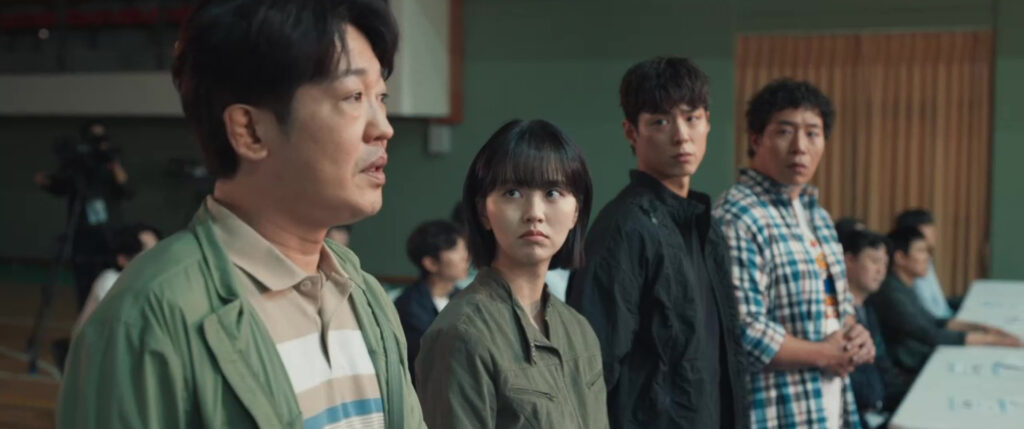
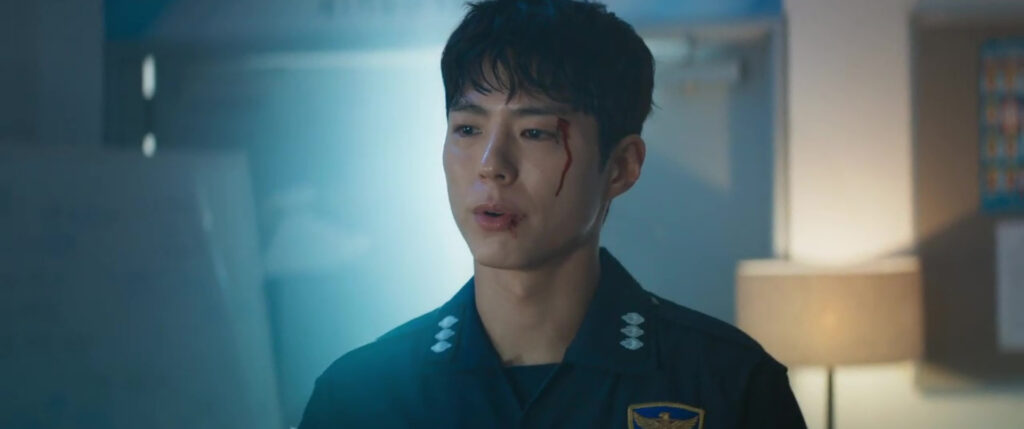
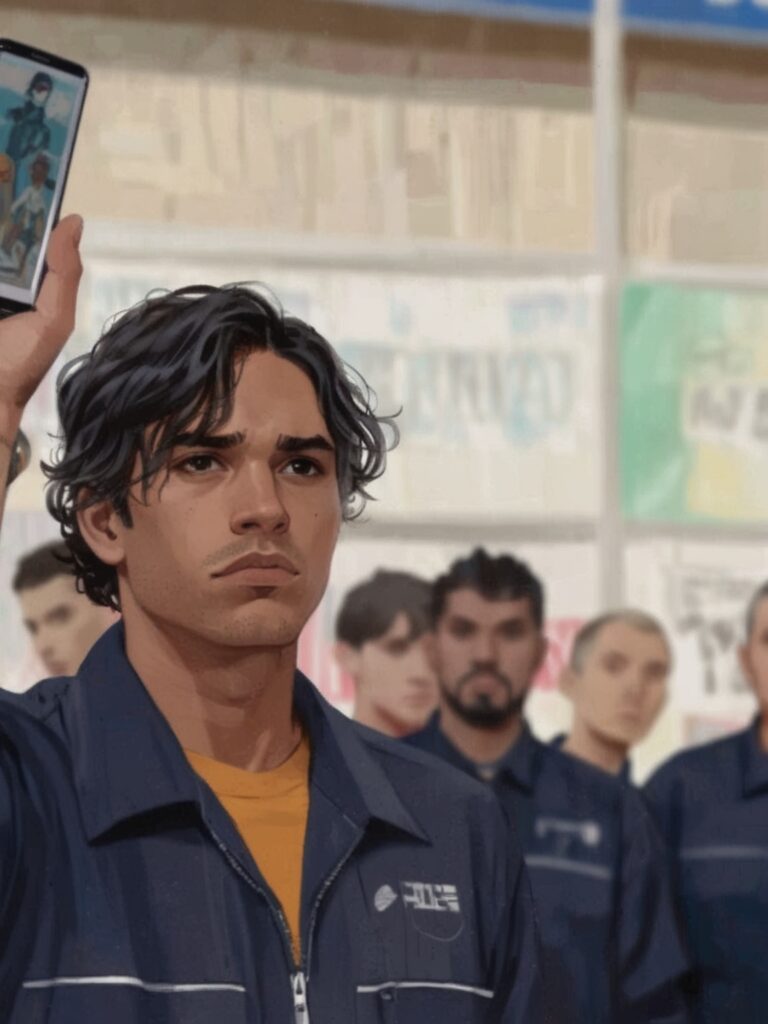
Leading this ragtag group of righteous bruisers is YOON DONG-JOO, played with peak charisma by Park Bo-gum. Dong-joo is your classic hot-headed ex-boxer with a heart the size of his biceps. After landing himself in hot water (read: demoted) for smashing corrupt colleagues, he’s back in Insung. Oh, and did we mention the doping scandal that tainted his gold medal? He was cleared, sure. But the court of public opinion isn’t exactly handing out apologies.
Then there’s JI HANNA (Kim So-hyun), a.k.a. the “Shooting Fairy.” She could probably take out a pigeon mid-flight with her air rifle, but instead, she’s stuck pushing paperwork and being the agency’s walking PR campaign. Hanna wants field action, not fans.
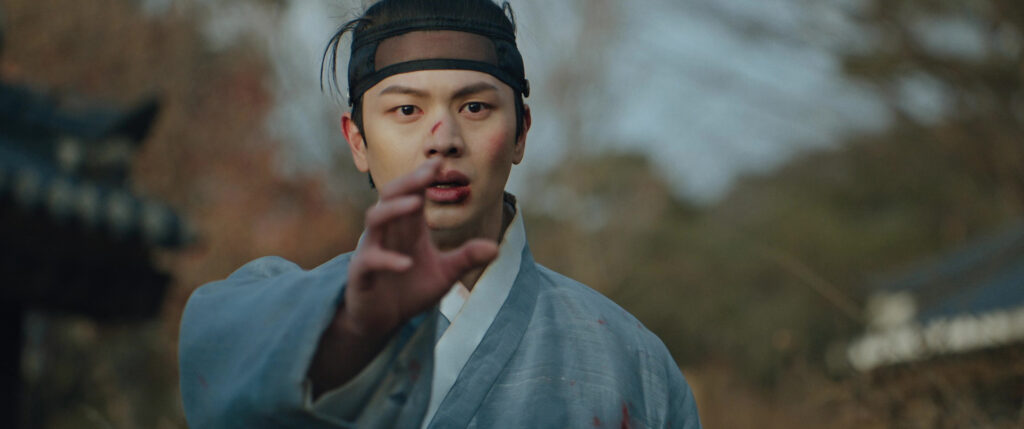
Also entering stage left is KIM JONG-HYEON (Lee Sang-yi), an ex-fencer and current clean-up guy for corruption. He got a special promotion after exposing dirty cops, but unsurprisingly, he’s not on anyone’s Christmas card list at the precinct. Oh, and he used to date Hanna, which totally rubs Dong-joo the wrong way. You can feel the bromantic tension boiling over.
Let’s not forget SHIN JAE-HONG (Tae Won-seok), the human discus cannon. His promotion was sabotaged, possibly by the very crusade Jong-hyeon launched. Now he’s stuck managing traffic, but don’t be fooled — this man’s got the strength of ten office chairs.
Finally, we have GO MAN-SHIK (Heo Sung-tae), the Greco-Roman gentle giant. With 14 years in the force and nothing to show for it, he’s the butt of every joke in the office. But he’s about to change that. Maybe. Hopefully.
Case One: Gold Bunny and the Boom Boom Betrayal
Things start off with a literal bang when Dong-joo and Man-shik botch the arrest of a smuggling gang leader known as Golden Bunny. It wasn’t exactly their fault — someone set off an explosion mid-operation. Bunny hops away, and guess who gets the blame? Yup.
But wait, there’s more! A hit-and-run happens under Dong-joo’s watch, and the getaway vehicle looks suspiciously familiar. He suspects it’s tied to Bunny, but nobody listens. Classic rookie move: having common sense.
Jong-hyeon, being Mr. Analytical, digs through footage and discovers that the explosion was orchestrated, reported early, and — plot twist — there’s a mole in the force. It’s giving Mission: Improbable. The dead hit-and-run victim? A customs agent who tipped off Man-shik. Oh snap.
And if things weren’t messy enough, Dong-joo gets lured into a trap by a fake tip. Bunny gang, one. Dong-joo, zip.
Break-Ins, Snake Gangs, and Seriously Bad Timing
Hanna’s subplot gets darker. She delivers the agent’s belongings to the grieving family, only to keep them when she suspects something’s off. That night, goons break into her place hunting for a document. Jong-hyeon hears the struggle over the phone but gets ambushed by a snake gang on his way over. Timing, people. Ever heard of a calendar?
It all erupts into synchronized chaos. Hanna shoots her way out. Dong-joo lands punches like it’s a championship match. Jong-hyeon fights with a broom. Jae-hong? Oh, he hurls a manhole cover like it’s a frisbee. Even Man-shik gets his moment, wrestling another officer just to secure backup. Because apparently, bureaucracy is solved with suplexes now.
Birth of the Misfit Avengers
Their heroics go viral. Suddenly, they’re media darlings. Man-shik seizes the opportunity to pitch a new Special Criminal Investigation Team. Surprisingly, it gets approved — though only for PR stunts.
Everyone joins: Hanna for field work, Dong-joo to tail Hanna like a lovesick Labrador, Jae-hong for that long-overdue promotion. Jong-hyeon? He stays officially solo but remains the secret sauce of competence.
Hanna’s PR rage reaches a boiling point when she “accidentally” shoots the commissioner to demonstrate a faulty vest. What was he expecting, flowers? She resigns. Dong-joo confesses. She shuts him down. All in a day’s heartbreak.
Mole-Hunting With a Side of Hallucinations
The team receives a tip that two of the home invaders are hiding out. En route, Man-shik eats candy laced with hallucinogens — from an evidence box, no less. This results in a safe house bust that looks like an improv sketch gone wrong.
During the chaos, Jong-hyeon freezes from trauma. He nearly gets stabbed but Man-shik takes the blow (with flair). Dong-joo rushes him to the hospital in a shopping cart. That’s right. They carted a bleeding man through city traffic like it was a grocery run.
Truth Comes Crawling Out
Just when things seem hopeless, the hit-and-run culprit turns himself in. Surprise: it’s Dong-joo’s old boxing buddy, LEE GYEONG-IL. He’s clearly being manipulated. Guess who’s pulling the strings? Coach OH JONG-GU, Dong-joo’s shady ex-mentor.
This guy has dirt under every fingernail. He doped Dong-joo, ruined Gyeong-il with painkillers, and runs a shady security firm. Dong-joo puts the puzzle together: Gyeong-il is covering for someone. Likely under duress.
Personal Opinions: Let’s Talk About the Grit, Guts, and Glorious Chaos
There’s a lot going on in these first two episodes. On the surface, it’s a buddy cop drama with a side of sports nostalgia. But underneath? It’s a biting critique of institutional rot, PR over substance, and how society handles fall-from-grace athletes.
Park Bo-gum brings Dong-joo’s rage and vulnerability to life with surprising nuance. Kim So-hyun is equally compelling, flipping between frustration and resolve. The supporting cast? Unmatched in comedic timing and raw emotion.
The pacing is relentless, yet the storytelling doesn’t trip over itself. Each character gets a piece of the spotlight without cluttering the narrative. And the action scenes? Absolutely bonkers in the best way. You haven’t lived until you’ve seen a manhole cover stop a car.
What works best is the emotional backbone. These aren’t just ex-athletes; they’re discarded heroes trying to matter again. Their pain isn’t just physical; it’s deeply tied to a broken system. You want them to win, not just because they’re charming but because they’ve earned it.
Final Verdict: 4.5/5 Stars ✭✭✭✭✮
Good Boy starts off swinging — literally. It packs charm, chaos, and just enough emotional grit to keep you locked in. If the first two episodes are any indication, we’re in for a wild, heartfelt ride. Let’s just hope the next villain isn’t allergic to manhole covers.
You’ve probably scrolled past headlines blasting Chris Brown’s name more times than you care to count. But why, exactly, has this Grammy-winning artist faced such relentless backlash for over a decade? On one hand, he’s undeniably gifted: vocals that could melt hearts, choreography that commands stadiums, and chart-topping hits that dominate playlists. On the other hand, he’s built a résumé filled with headline-grabbing assault allegations—many of which paint a very different picture than the pop icon on stage.
In this in-depth timeline, we’ll unpack every major incident from the moment Chris Brown first broke into the mainstream to his most recent legal entanglements abroad. Along the way, we’ll explore how each episode impacted his career trajectory, public image, and—ultimately—how fans and critics alike have come to view him. We’ll dig into court outcomes, probation details, rehab stays, and more. By the end, you’ll see a pattern of repeated confrontations and the ways in which one of music’s biggest stars has both stumbled and tried to climb back from every fall.
After covering every major public incident, I’ve also included a section with my personal perspective—what these events might mean for celebrity accountability, the music industry’s responsibility, and how society processes talent intersecting with violence. So, buckle up: this is going to be a long ride.
TL;DR:
Chris Brown’s career has been plagued by a pattern of violent incidents since 2009.
Despite legal consequences and rehab, his anger issues have persisted.
The music industry’s profit motive often overrides accountability for artists like Brown.
Public opinion is split, fueling debates on “cancel culture” versus genuine redemption.
His recent UK arrest highlights the ongoing legal challenges and potential career-ending repercussions.
2 wins: Best R&B Album for F.A.M.E. (2012) and 11:11 (Deluxe) (2025)
Children
Royalty, Aeko, and Lovely
Major Controversies
2009: Assaulted then-girlfriend Rihanna; 2013: Altercation with Frank Ocean; 2016: Alleged assault on ex-manager; 2023: Alleged assault on music producer in London nightclub
Legal Issues
Multiple arrests and lawsuits related to assault allegations; ongoing legal proceedings as of 2025
Recent Developments
2025: Arrested in the UK for alleged 2023 nightclub assault; awaiting court proceedings
1. From Gifted Teen to Rising Star (Pre-2009 Context)
Before diving into the controversies, it’s important to note that Chris Brown wasn’t always synonymous with headlines about violence. Born on May 5, 1989, in Tappahannock, Virginia, he displayed musical talent early on. By age 16, he’d signed with Jive Records, and in 2005, his debut single “Run It!” catapulted him to pop stardom. His first album topped charts, and critics lauded him as the next big thing in R&B.
At just 19 years old, he was already a household name—headlining stadiums, collaborating with Rihanna (then one of music’s hottest acts), and accumulating accolades. No one could have predicted that within months, a single night would change public perception of Chris Brown forever.
2. The 2009 Rihanna Incident: When Fame Collides with Violence
On the evening of February 8, 2009, Chris Brown (then 19) and Rihanna (then 20)—already a high-profile couple—were riding in a rented Lamborghini after attending a Grammy Awards party. Reports indicate that Rihanna saw a suspicious text message on Chris’s phone. Feeling betrayed, she began yelling accusations about infidelity. She allegedly kicked at him while he was driving.
What happened next is infamous. Instead of pulling over to discuss or calm the situation, Brown reportedly slapped Rihanna’s head and face multiple times while still driving—even as she spat blood from her mouth. Witnesses say Rihanna tried to stave him off, but he allegedly continued striking her. He’s said to have responded to her pleas by threatening, “When we get home, I’m going to beat the [scrub] out of you.”
Terrified, Rihanna feigned dialing someone and said into the phone, “Make sure the cops are there when I get home.” Brown, however, didn’t appear to back down. He wrestled her head, began choking her, and at some point, Rihanna fell from the car. She shouted out the window, “Help! He’s trying to kill me!” Neighbors heard her screams and called the police.
2.1 Immediate Aftermath and Legal Outcome
Within hours, police arrived at the scene. By 2:35 a.m. on February 8, 2009, Chris Brown was arrested and booked for felony assault. Photographs of Rihanna’s battered face were leaked to the press—eyes swollen shut, a broken lip, and bruised cheeks—creating one of the most shocking tabloid images of the year.
Brown released a public apology stating, “I am very sad and very ashamed of what I’ve done. I have told Rihanna countless times, and I’m telling you today that I am truly, truly sorry, and that I wasn’t able to handle the situation both differently and better.” In June 2009, he took a plea deal: no jail time, but five years probation, a year of domestic violence counseling, and a hefty fine.
Despite this “rehabilitation,” many fans and critics wondered if such a young talent could genuinely learn from an incident so violent. Looking back, it marked the first major black mark on what had been a sky-rocketing career.
3. A Probationary Period Marred by Repeat Incidents (2010–2013)
Although Chris Brown’s plea deal technically mandated that he stay clean, public incidents began cropping up again almost immediately. He was barred from leaving the U.S. without court permission until his probation ended in 2015. Yet by 2013, a pattern of altercations emerged—some even while he was actively undergoing mandated therapy.
3.1 The 2013 Frank Ocean Dispute (May 2012 / March 2013)
It’s unclear exactly when Chris Brown and Frank Ocean’s feud began, but by March 2013, reports circulated that the two R&B singers had a heated altercation in a West Hollywood parking lot, allegedly over a parking space. According to various eyewitness accounts, things escalated quickly: words were exchanged, and Brown supposedly swung a punch that struck Ocean in the face. A brawl ensued, with multiple people getting involved.
Remarkably, Frank Ocean chose not to press charges. Even so, the mere fact that Brown would engage in a physical fight over something as mundane as a parking spot—especially while still on probation—was seen as further evidence that his anger issues weren’t resolved. Whether buzzkill or not, this episode isn’t always included in mainstream recaps of his legal history.
Later that same year—just weeks after the Ocean dispute—Brown was in Washington, D.C., staying at a luxury hotel. Two female fans spotted him in the lobby and asked for a selfie. Brown, agreeing initially, posed for the photo. At that moment, a random bystander decided to photobomb. He hopped into the frame, saying, “Hey.”
What happened next is downright unsettling:
Brown erupted, accusing the guy of “trying to embarrass” him.
He allegedly yelled, “I’m not down with that gay shit,” then swung a right hook, shattering the man’s nose.
Police were called; Brown was arrested on misdemeanor assault charges. Although he was released shortly afterward on bail, this incident underscored a troubling pattern: even when not dealing with a romantic partner, Brown’s reactions tinted towards violence.
4. Attempts at Rehabilitation—And the Slide to 2014 Jail Time
After the D.C. episode, a judge ordered Brown to complete an anger management program as part of his probation. Unfortunately, his track record at rehab facilities would prove short-lived.
4.1 Confronting Mom: The 2013 Rockstar Rehab Episode (November 2013)
By November 2013, Brown was enrolled in a Los Angeles-based anger management rehab facility—reportedly on a private campus. He checked in with his mother, who wanted him to complete the program. However, reports say that Brown grew impatient, insisted on leaving, and got into an argument with his mom during a group family session.
Instead of taking a breath and reflecting, Brown stormed out. Once outside, he allegedly lifted a large rock and threw it through his mother’s car window. Picture that: you’re trying to help your child, and they channel aggression toward you. Authorities revoked his rehab privileges, and he was ordered back to court.
4.2 The “Weapons” Comment and 108 Days in Lockup (Early 2014)
In early 2014, Brown was transferred to another facility—this time a more secure center. During a group-therapy icebreaker, participants were asked to share what they felt they excelled at. Brown, in a mood that day, reportedly announced, “I’m good at using guns and knives.”
This ominous proclamation led to his expulsion from the facility. Judges determined that, since he violated the terms of his court-ordered rehab, he needed to spend time behind bars. He ultimately served 108 days in Los Angeles County Jail. Considering the initial Rihanna plea deal had specifically avoided jail time, this marked a major reversal.
Although Brown completed his sentence by mid-2014, his public image continued to suffer—now defined by recurring violence instead of musical genius.
5. Further Legal Tumbles: 2015–2016
Even after his release from jail, Brown’s legal woes didn’t cease. Within the next two years, he faced at least two more high-profile assault allegations—each reinforcing that his violent outbursts weren’t isolated.
5.1 Las Vegas Hotel Brawl (New Year’s Day, 2015)
On January 1, 2015, Chris Brown celebrated New Year’s Eve at a Las Vegas hotel. Videos and eyewitness reports suggest that a woman in his party snapped a photo without his permission. When Brown discovered it, he allegedly flew into a rage. Security footage and witness statements claim he punched her in the face, causing significant injury.
The victim filed a lawsuit, reportedly demanding $2.5 million in damages for assault and battery. Brown took to social media, dismissing the accusation as an “attempt to get a check.” He wrote: “Obviously someone’s looking to get paid. This old [scrub] is dusty … blah blah blah.”
Rather than drag the case through a lengthy trial, Brown eventually settled out of court. Though settlement terms weren’t officially disclosed, the mere fact of another assault allegation further tarnished both his reputation and ability to tour internationally.
5.2 Manager Assault Lawsuit (June 2016)
In mid-2016, Brown’s then-manager, Denola Adepeju, alleged that Brown had physically assaulted him during a meeting. According to Adepeju’s complaint, the two argued over management fees when Brown punched him in the face. Bruised and incensed, Adepeju filed a lawsuit seeking damages for assault and emotional distress.
Once again, Brown opted to settle outside court. While settlements sometimes have “no admission of wrongdoing” clauses, the repeated pattern of lawsuits amplified how he’d become entangled in a near-constant stream of legal troubles—unlike other artists whose trouble stemmed from a single scandal.
6. Ongoing Accusations: 2017–2020
By this point, Brown’s public image was tightly woven into rumors of violence. Though he continued releasing charting albums and winning accolades—like 2017’s Heartbreak on a Full Moon—the specter of his past loomed large.
6.1 Yacht Altercation on Diddy’s Vessel (June 2020)
In June 2020, rumors surfaced that Brown attended a party on Diddy’s yacht off the Malibu coast. According to a dancer on board, Brown became agitated after a disagreement and physically assaulted her. Media outlets reported that the victim claimed Brown “grabbed her by the throat” and hit her repeatedly. While Brown’s team denied the severity—insisting any contact was “play fighting”—the story circulated widely, especially since Diddy was hosting a star-studded Fourth of July weekend bash.
This time, the victim didn’t file a police report (or at least none has surfaced publicly), so no formal charges ensued. Yet for many fans, the notion that Chris Brown’s violent streak extended to non-fatal incidents—away from his domestic-violence-specific probation—served as confirmation that his anger was a pervasive issue.
7. The 2023 London Nightclub Assault and 2025 Arrest
Even a decade and a half into his career, Brown’s pattern of altercations persisted. His most recent high-profile incident took place overseas.
7.1 The 2023 UK Nightclub Incident (September 2023)
While on tour in the United Kingdom in late 2023, Brown attended a nightclub in London after a concert. Sources say that a music producer attempted to approach Brown—perhaps for a handshake or photo request. For reasons that remain murky, Brown allegedly grabbed a bottle of tequila and smashed it across the producer’s head. By the time club security intervened, the victim was bleeding and unconscious.
Local police issued a warrant for Brown’s arrest. However, he’d already left the U.K. to continue his tour—where no extradition order could be immediately enforced. Photos of the victim’s injuries circulated on social media. Although Brown’s camp released a statement claiming self-defense, no evidence supported that reframed narrative.
7.2 Return to the U.K. and 2025 Arrest
Fast forward to May 2025: Brown’s team scheduled a London concert, implying that they believed his legal issues had either been resolved or that no formal charges would arise. But as soon as he landed at Heathrow Airport, British authorities arrested him on the outstanding warrant dating back to September 2023.
Bail was set at £500,000—reportedly posted within 24 hours—allowing Brown to keep touring Europe as he awaited trial. If found guilty of “grievous bodily harm with intent,” he could face up to 16 years behind bars under U.K. law. Naturally, fans and industry insiders are watching closely: should Brown be convicted, it would not only derail his current tour but could end his career entirely.
As of June 3, 2025, he remains free on bail. His next court appearance is slated for late summer 2025, when prosecutors will present medical evidence and eyewitness testimony. Pending that hearing, he’s still performing—albeit under a cloud of uncertainty.
8. Ever-Present Public Reaction and Industry Impact
Over the span of his career, Chris Brown’s musical contributions have remained significant: multiple platinum albums, collaborations with Justin Bieber, Kendrick Lamar, and many others, not to mention sold-out stadium tours. Yet each headline about an alleged assault triggers fierce debate: is it possible to separate the artist’s creative output from the record of violence?
8.1 Radio Blackouts, Awards, and Collaborations
Radio and Streaming: After the 2009 Rihanna case, certain radio stations briefly pulled his music from rotation. However, consumer demand proved resilient: streaming numbers dipped for a time but then rebounded.
Brand Deals and Endorsements: Major sponsors (like Pepsi and Wrigley’s) distanced themselves in early 2009. Over time, some brands quietly returned—especially as his music continued to sell.
Awards and Collaborations: In 2009 and 2010, he was still nominated for and won multiple MTV VMAs and Billboard Awards. Yet by 2013, fewer top-tier artists were openly associating with him. He found it harder to land features with mainstream rappers who didn’t want to face backlash.
8.2 Fanbase Splits and Cultural Conversations
The Chris Brown saga has inspired polarized fan reactions. Some die-hard supporters argue he’s “paid his dues” and deserves forgiveness. Others—particularly domestic violence advocates—maintain that his repeated incidents prove a pattern of unchecked aggression. Conversation hubs like Twitter, Reddit, and various fan forums regularly light up whenever Brown teases a new album or announces a tour stop.
Beyond individual opinions, broader cultural conversations have emerged:
Domestic Violence Awareness: The brutal nature of the Rihanna beating became a talking point for journalists, activists, and educators. It prompted discussions about how young male stars are socialized to express anger.
“Cancel Culture” Debates: Should Brown be banned from awards shows, radio airplay, and endorsements indefinitely? His sporadic comebacks showcase how forgiveness—or at least tolerance—can be transactional. If an artist remains commercially viable, some gatekeepers will offer second (or third) chances.
Meanwhile, younger pop stars often cite Brown’s singing and dancing style as influences. His music persists in clubs and on dance floors worldwide, even as he tours under legal scrutiny. In a way, that duality—a multifaceted talent struggling with anger management—reflects a broader pattern in entertainment: shock-grabbing headlines can sometimes bolster record sales.
9. Dissecting the Pattern: Why It Matters
If you look at each incident in isolation, it’s possible to think, “Okay, so Chris had a moment of bad judgment here or there.” But link them together—from 2009 to 2025—and a clearer picture emerges: a talented performer repeatedly resorting to violence in moments of conflict. That repeated behavior has tangible consequences:
Legal Penalties: Multiple arrests, probation periods, court-ordered rehab, and jail time. The potential for future prison sentencing in the U.K. looms large if the 2023 assault conviction sticks.
Professional Setbacks: Loss of endorsements, reduced collaboration offers, and sporadic boycotts. Each new incident reduces his bankability, whether through lost sponsorship contracts or declining ticket sales in certain markets.
Personal Reputation: Time and again, public opinion polls show that a significant portion of the general population views Brown negatively. While his core fanbase remains fervent, the broader public’s trust has eroded.
9.1 The Music Industry’s Complicity
Record labels rarely sever ties with artists—even those convicted of violent crimes—because public consumption often outweighs moral decisions. In Brown’s case, RCA Records continued releasing his music, banking on sales figures. Meanwhile, streaming platforms still offer his entire discography.
In interviews, execs have admitted privately that they avoid public statements about his controversies, hoping fans will “move on” if a big single drops. That strategy underscores a larger industry issue: profit sometimes eclipses accountability.
9.2 Media and Tabloid Coverage
Tabloids have arguably kept Chris Brown’s name in the zeitgeist far more effectively than radio singles in recent years. Dramatic mugshots, leaked photos of bruised victims, and expletive-laden social media rants paint a sensationalist narrative that tabloids live for. In this feedback loop, every new rumor—whether substantiated or not—becomes fodder for headlines.
Unfortunately, that sensationalism can overshadow the human cost of violence. Rihanna’s life was irrevocably changed. The stories from Frank Ocean, the D.C. victim, and others rarely make front-page news with the same ferocity as photos of a bleeding celebrity. That imbalance raises questions: do we sensationalize celebrities to the point where we forget the real harm done?
10. My Perspective: Reflections on Talent, Accountability, and Violence
Having walked through this timeline, here’s how I see it: Chris Brown’s story is a cautionary tale about unaddressed anger, celebrity privilege, and the entertainment industry’s willingness to forgive—or at least look the other way—when big revenue streams are at stake.
Talent vs. Behavior: No one can deny his musical gifts. But extraordinary talent doesn’t exempt someone from the basic expectations of civil behavior. When a pattern of violence persists, society must decide if and when to withdraw that “talent pardon.” Context matters. If an individual repeatedly harms others with no meaningful change, the entitlement typically granted to “artists” starts to look like an excuse for brutality.
Rehabilitation Efforts vs. Results: Brown was sent to multiple rehab facilities and underwent court-ordered therapy. Yet despite these interventions, he continued violent outbursts. This indicates that superficial “check-the-box” rehab—especially when motivated by legal requirements rather than genuine personal growth—often fails. Real rehabilitation requires sustained accountability and reflection, which his record suggests was incomplete.
Industry Responsibility: Labels and promoters deserve scrutiny. By enabling Brown’s continued career—even after multiple arrests—they implicitly prioritize profits over ethics. That sends a message: if you’re famous enough, there are fewer consequences for violence. Meanwhile, non-celebrity survivors of abuse seldom receive the same level of attention or support.
Public Discourse: Fans who argue “it’s not our business” often ignore that public consumption equals endorsement. Each time someone streams “Loyal” or buys a ticket, they send a signal: “We’re okay with this.” If outrage doesn’t translate into tangible repercussions—like boycotts or sponsorship losses—it lacks bite. Granted, abstaining from his music might feel like missing out on pop culture, but refusing to reward violent behavior has moral weight.
Potential for Change: People can and do grow. It’s not that redemption is impossible—rather, it requires genuine ownership of wrongdoing. So far, Brown’s public apologies have often read like PR statements: they express regret but rarely acknowledge deep-seated issues or outline steps toward becoming a better person. Until he delivers that sincerity—and demonstrates it consistently—skepticism remains justified.
11. Broader Implications and Lessons Learned
Chris Brown’s tumultuous journey stands as a microcosm of larger cultural dynamics: how fame can shield wrongdoing, how men in entertainment learn (or fail to learn) healthier ways to handle anger, and how audiences decide whom to champion or condemn.
Domestic Violence Awareness: The photos of Rihanna’s injuries forced mainstream media to confront domestic abuse more directly than ever before. Schools, nonprofits, and community groups referenced this high-profile case in campaigns about intimate partner violence. By extension, it spurred conversations on how power imbalances—even in star-studded relationships—can culminate in tragedy.
Conversations About Toxic Masculinity: Brown’s repeated outbursts illustrate how societal norms sometimes groom men to display anger as a default response. Music videos featuring violent fantasies, lyrics glorifying aggression, and macho branding in hip-hop/R&B can normalize a stifled, explosive emotional range. In reaction, activists and cultural critics have argued that the industry must invest in mental health resources for its talent, not just chart performance.
Cancel Culture vs. Accountability: The push to “cancel” Brown after each incident often faced pushback: some claimed he’d served his punishment, others argued that in the digital age, mistakes follow you forever. Ultimately, the key distinction emerges between meaningful accountability (genuine remorse, reparations, behavior change) and superficial “cancellation” (social media outrage that fizzles out). Brown’s continued success suggests some fans believe he’s entitled to a second chance—or third, or fourth.
Victims’ Voices Getting Lost: While headlines magnify the perpetrator, victims often fade into the background. Rihanna’s own journey—channeling her experience into advocacy, art, and eventually speaking out about intimate partner violence—deserves more attention than simply labeling her “the ex-girlfriend of a star.” Similarly, lesser-known victims—like the hotel worker in D.C. or the man in London—rarely receive the same level of public empathy. Their stories slip through the cracks once Brown’s legal saga dominates.
12. The Road Ahead: What’s Next for Chris Brown?
As of June 3, 2025, the London assault case looms largest. If convicted of causing grievous bodily harm with intent, he could face up to 16 years in prison. Should he be found guilty, it would mark the first time Brown would see anything close to a multi-year sentence for violent acts. Given how legal outcomes ripple through public sentiment, a conviction could finally derail his career—or at least significantly hamper it.
However, should he be acquitted or strike a plea bargain, he may continue performing and releasing music—albeit with a tarnished legacy. Even if new collaborations dry up, die-hard fans might still stream old hits. Ultimately, his commercial viability will hinge on giving context to new audiences: will promoters in Europe or Asia still book him for arenas, knowing that a possible extradition hangs over his head?
From an industry standpoint, record labels probably have contingency plans: insurance policies that protect them if Brown can’t perform, or clauses that automatically terminate contracts upon felony convictions. Yet if he mounts a successful defense or if prosecutors fail to secure sufficient evidence, Brown could reemerge—as he has after past setbacks—with a renewed push for chart success.
14. My Point of View on the Chris Brown Saga
Okay, here’s where I unload some unfiltered thoughts. Let’s face it: celebrity culture tends to fixate on scandals like they’re the main event, even when those scandals involve real harm to vulnerable people. For Chris Brown, the headlines rarely delve into the long-term ripple effects on victims. Instead, we get clickbaity updates—“Chris Brown Arrested! What Now?”—while the narratives of injured parties get lost in the shuffle. That bothers me.
On one level, it’s undeniable that Brown’s raw talent catapulted him into superstardom. But talent alone doesn’t grant immunity from accountability. If you’re famous enough, the industry can paper over your wrongs with lip service: a quarter-million donation to a domestic violence charity, a canned apology video, a few months of probation, and poof—another album drops. I find it alarming how often fame becomes a get-out-of-jail-free card for violent behavior.
When Brown stormed out of rehab and smashed a rock through his own mother’s car window—like, how do we normalize that? If an ordinary citizen did that, they’d be labeled a danger to themselves and others, perhaps mandated to long-term counseling or inpatient mental health care. Yet for Brown, the cycle just kept spinning until society’s tolerance wore thin—and even then, it soared back once his streams started climbing again.
Moreover, it’s easy to place the blame squarely on Chris’s shoulders (and yes, he is responsible). Still, part of me thinks the industry should’ve intervened far more forcefully at the first sign of trouble. If RCA had said in 2009, “You’re done touring until you show genuine progress,” imagine how many subsequent brawls and lawsuits might’ve been prevented. Instead, the message became: “We’ll let you off the hook as long as the music sells.” That dynamic emboldens a sense of entitlement: young male artist commits violence, fans buy the music, labels keep pumping out the hits—it’s a vicious cycle.
But let me pivot: does that mean Brown’s art has zero value? Not exactly. His early albums still resonate with fans who grew up dancing to “Run It!” or crying to “With You.” For those people, the music is inseparable from personal memories—first kisses, road trips, heartbreak. You don’t necessarily have to abandon an entire discography because the creator made grave mistakes. The friction comes when current behavior directly contradicts the messages in the art (e.g., singing love songs while being accused of assaulting women). That hypocrisy stings.
So, what’s the “right” approach? I’d argue that fans should stay informed, avoid blind loyalty, and encourage genuine accountability. If—and it’s a big if—Brown genuinely addresses his anger issues and demonstrates long-term change, he might slowly rebuild a legacy that isn’t overshadowed by mugshots. But until then, the industry and the public should continue pressing for meaningful actions, not just perfunctory apologies.
At the end of the day, this saga transcends one man. It’s about how society responds to talented individuals who repeatedly hurt others. Do we allow success to rewrite the narrative, or do we hold people to a standard that aligns with basic human decency? History suggests that eventual accountability comes only when the cost of ignoring violence eclipses the profits. Let’s hope that, sometime in the near future, that cost outweighs the lingering allure of Chris Brown’s chart-topping persona.
15. Conclusion
From the horrific evening in February 2009 to the arrest in London in 2025, Chris Brown’s journey has been a roller coaster of chart-topping hits and alarming headlines. Each incident—from the Rihanna beating to the D.C. attack, from smashing a tequila bottle in a London club to rocking his mother’s car window—adds another layer to a pattern of violence that his talent alone can’t erase.
Clearly, the stakes for Brown’s future are higher than ever. Should a U.K. conviction befall him, he risks years behind bars and the culmination of a career that began with so much promise. Regardless of legal outcomes, his story forces us to grapple with the uncomfortable truth that immense talent often comes with immense flaws—and that, as a society, we still struggle to balance forgiveness with accountability.
If you’re looking for the latest updates on court dates or legal developments, keep an eye on reputable outlets—BBC News, The Guardian, Rolling Stone, and Billboard tend to cover U.K. music scene legal affairs carefully. Meanwhile, fans worldwide will continue debating whether Chris Brown deserves another chance or whether his track record has already spoken too loudly to ignore.
Until that next court appearance, one thing’s certain: Chris Brown’s name will keep dominating headlines, for better or worse. And as long as millions stream his music, the world will watch closely—curious to see if redemption is possible or if his album of controversies has reached its final track.
It sounds like the premise of a soap-opera script—an influential megachurch pastor, fiercely preaching against homosexuality, leading a double life of furtive encounters with a male escort. Only this time, the character is very real: Ted Haggard, once a headline-making evangelical leader, found himself ensnared in a scandal so juicy it made everyone—from devout congregants to outspoken critics—do a double take. How did a man who regularly conversed with President George W. Bush and topped Time Magazine’s list of most influential religious figures end up in this predicament?
Through the lens of short, punchy sentences and plenty of connective shifts, let’s dive headfirst into Ted’s journey—from the pulpit to pay phones, from national prominence to local radio confessions. Along the way, we’ll unpack how moral posturing can implode spectacularly, trace the dominoes that fell, and share some hard-earned insights about religious leadership, personal authenticity, and why nobody truly wins when hypocrisy takes center stage.
TL;DR:
Ted Haggard, a powerful anti-gay evangelical pastor, secretly hired a male escort for years.
His double life, including meth use, was exposed by the escort, Mike Jones.
Haggard denied it, then confessed, lost his church and national leadership role.
He attempted a comeback with an “inclusive” church, but faced new allegations of misconduct.
The scandal highlights the dangers of hypocrisy, the harm of “ex-gay” narratives, and the need for accountability in religious leadership.
Category
Details
Full Name
Ted Arthur Haggard
Born
June 27, 1956
Birthplace
Yorktown, Indiana, USA
Education
Studied at Oral Roberts University
Church Founder
Started New Life Church in Colorado Springs in 1984
Church Growth
Grew it to over 14,000 members
Leadership Role
President of the National Association of Evangelicals (2003–2006)
Scandal
In 2006, accused of sex with a male escort and using meth
Admission
Admitted to buying meth and having same-sex urges
Resignation
Resigned from church and evangelical leadership roles
Relocation
Moved to Phoenix, Arizona after the scandal
Return to Ministry
Founded St. James Church in 2010
More Allegations
Faced new accusations in 2022 involving young men
Church Closure
Closed St. James Church after allegations
New Church
Started a new church in his home
Family
Married to Gayle Haggard; has five children
Current Status
Continues preaching in a smaller home-based church
Who Is Ted Haggard? A Brief Background
Ted Haggard wasn’t just any pastor. He was, for all intents and purposes, a rock star of the evangelical world. By the early 2000s, he’d built New Life Church in Colorado Springs into a thriving megachurch, boasting thousands of parishioners, a multi-million-dollar budget, and a reputation for being on the cutting edge of evangelical outreach.
Meanwhile, at the national level, Haggard held the title of president of the National Association of Evangelicals (NAE). That meant he wasn’t just preaching from a pulpit—he was advising politicians, shaping policy, and making media rounds to represent conservative Christian viewpoints. In 2004 and 2005, his influence peaked. He sat across the table from President Bush, offered opinions on capitol hill, and even made a guest appearance as a “religious expert” on television specials dissecting theological debates.
Key Takeaway: Ted’s pulpits were more than church stages—they were soapboxes for conservative Christian politics. His voice carried weight in circles that influenced everything from school prayer debates to federal policies on marriage. Which makes what comes next all the more jaw-dropping.
The Secret Life Begins: A Payphone, a Mouse Click, and an Escort Named Mike Jones
At first glance, Ted seemed to have it all: a solid marriage to Gayle Haggard, children, an adoring congregation, and a platform second to none. Yet behind the scenes, a hidden desire was gnawing at him. He wanted to have sex with men.
One evening—let’s just say it was an unremarkable weekday—Ted found himself surfing the internet. He stumbled on a website where male escorts advertised their services. Among the glossy headshots and discreet profiles, one name caught his eye: Mike Jones. The ad billed Mike as a “beefcake,” a seemingly glamorous arrangement for a clandestine liaison.
But email wasn’t Ted’s jam; he preferred something more old-school. So, he walked to a nearby payphone. Think corded handset, literal quarters clinking into the machine. With measured caution, he dialed the number posted on Mike’s advertisement. The two agreed to meet. Ted paid for the rendezvous—two hundred dollars in cash, no questions asked.
Then, discreetly, he drove away to Mike’s place. Once inside, the two men—one a nationally recognized pastor, the other a paid escort—gave in to their physical urges behind closed doors. And just like that, Ted crossed a line he would spend years trying (and repeatedly failing) to keep hidden.
Transition: At this juncture, you might think, “Okay, so a married pastor slept with an escort. It happens, right?” Well, here’s where things get layered. Ted wasn’t merely a pastor—he was a vocal crusader against same-sex relationships. His sermons often painted homosexuality as a moral apocalypse. He compared same-sex intimacy to bestiality. He said, “If one person enjoys sex with a sheep and another with a man, is that where we want to be?” From the pulpit, he railed against LGBTQ rights, same-sex marriage, and anything short of heterosexual monogamy.
Yet behind closed doors, he was living a play-by-play contradiction of those fiery sermons.
Anti-Gay Rhetoric on Full Display
To understand the sheer scale of hypocrisy, consider a few of Ted’s public stances:
Sermons Against Same-Sex Marriage: In countless church services, Ted warned congregants that permitting same-sex couples to marry would “destroy the moral fiber” of America.
Media Appearances: On national talk shows, he argued that gay relationships were sinful and unnatural. His rhetoric made its way into the mainstream because he was seen as a “trusted” religious voice.
Policy Advocacy: As NAE president, Ted lobbied against local ordinances that protected LGBTQ individuals from discrimination. He equated those ordinances with “legalizing immorality.”
However, none of those thunderous condemnations halted his clandestine trips to Mike Jones’s apartment. You can picture the irony: every time he slammed the pulpit about “immorality,” he knew exactly where his next “sin” lay waiting. So, how did he reconcile it? Well, he didn’t—or at least, he tried not to think about it. Cognitive dissonance, meet your poster child.
Monthly Rendezvous: Three Years of Secrets
For approximately three years—yes, three whole revolutions around the sun—Ted drove himself once a month (sometimes more) to Mike’s place. There, he paid for sex, snorted meth with his escort, and then drove back to his life of moral certitude. Sometimes, people hide small skeletons in their closets. Ted’s closet? It was a mansion with vaulted ceilings.
Short Sentences, Long Consequences: Over and over, Ted came to terms with hiding this part of himself. He made phone calls from payphones or burner phones. He used cash. He refused any hint of exposure. He even fretted about leaving digital footprints. Here’s the kicker: Mike Jones, as far as he knew, was just providing a service. Mike had no inkling that his monthly client was one of the most recognizable faces in American evangelicals. To Mike, Ted was simply “a guy who pays well and wants discretion.”
Meanwhile, Ted continued to preach, politic, and assume that his public persona was bulletproof. Because if you’re a religious leader with megachurch influence, why wouldn’t you be invincible?
The Discovery: Mike Jones Sees Pastor Ted on TV
One lazy Sunday morning—instead of hustling to set up a clandestine cell-phone call—Mike Jones was lounging on the couch. History Channel was running a segment on end-times theology and the Antichrist. They brought on Ted Haggard as an expert witness, complete with graphics and captions listing him as “President, National Association of Evangelicals.” Mike nearly spat out his cereal.
“What in the name of everything holy?” he muttered as he recognized the voice, the face, the unmistakable sway of the preacher he’d seen only at close quarters for hours each month. It was the same man whose wallet had handed him $200 on repeat.
At first, Mike chalked it up to a coincidence. But then he noticed the pulpit, the confident delivery, that unmistakable Colorado accent. He flipped channels. Sure enough, another Christian network had footage of Ted leading a packed sanctuary in worship. Mike’s brain short-circuited for a moment.
Then the alarm bells rang: “Hold up—this guy hates us,” Mike realized. Ted’s sermons condemned the very orientation Mike lived through every sunrise and sunset. How could a man publicly denounce homosexuality when he quietly indulged in it? Betrayal doesn’t begin to describe it.
Transition to Reaction: Mike couldn’t shake the disgust. He felt used. Up until then, there was unspoken agreement: Mike made money, Ted got his quick fix, and they kept each other’s identities locked in a vault. But seeing the pulpit footage shattered that truce. Mike decided he wouldn’t be complicit in Ted’s charade any longer.
The Plan: Gathering Evidence Against a Pastor
Rather than confronting Ted directly, Mike went into detective mode. He started collecting voicemails Ted had left on the burner phone. He archived text messages—those brief, coded exchanges. He pulled up receipts showing the cash withdrawals on specific dates. The payphone calls, the phone records, the cryptic messages: everything went into a “Ted Haggard Dossier.”
Why did he bother? Mike wanted insurance. If anything went disastrously south—like, say, an irate pastor mailing him a cease-and-desist—he’d have the receipts to protect himself. But there was more brewing beneath the surface: Mike felt morally outraged. He told himself he was doing it for a cause: to reveal a man whose moralizing had real-world consequences for LGBTQ youth. He believed that exposing Ted’s duplicity would force the evangelical community to reckon with its own intolerance.
Key Point: Mike wasn’t just seeking revenge. He saw this as a mission to hold a powerful figure accountable. It wasn’t enough that Ted’s sermons cast judgment on gay people, refusing them full citizenship in his moral universe. Doing so without living authentically, Mike felt, was a betrayal to everyone, not least to the LGBTQ kids who internalized Ted’s hate speech.
The Radio Confession: When Mike Went Public
By September 2006, Mike felt the stage was set. He called into a local Colorado Springs radio show—one that often covered community news, politics, and church affairs. They welcomed “Mike” (an obvious pseudonym, albeit not closely held) to the airwaves under the guise of “an angry congregant” who had direct knowledge of the pastor’s secret life.
Within minutes, Mike dropped a bombshell. He described, in excruciating detail, the monthly rendezvous. He talked about paying cash, the location of the meetups, the intimate moments, and even the meth use. Then he played a voicemail recording—Ted’s urgent voice, hissing, “Don’t tell anyone.” He dropped receipts from cash withdrawals. He mentioned dates that lined up with church events. All the while, the host sputtered, “Is this for real?”
Sudden Infamy: That radio segment spread like wildfire. Phone calls pinged into local news stations. Blogs caught wind of the story. National outlets that usually covered politics and entertainment now had front-page material straight out of a tabloid. Within 24 hours, “Ted Haggard” was on the lips of every evangelical in America, every late-night comedian, and every talk-show host.
Meanwhile, Ted was freaking out. He’d left a trail. There was no way to spin it as a petty rumor. The pastor who’d scoffed at “gay lobbyists” now had incontrovertible proof that he’d been hiring a male escort for years. Everything he preached about divine morality was suddenly overshadowed by his own human mess.
The Denial: “Gay? What Gay?”
Very quickly, Ted realized he’d find no mercy in an evangelical culture that demanded moral perfection from its leaders. So, the first line of defense? Denial. He released a statement to the press—remember, this is a man who once spoke with President Bush—saying, “This is ridiculous. I’ve never engaged in any homosexual acts. I don’t even know ‘Mike Jones.’”
He went on television and repeated it. He talked to his church board, his closest allies, and painted Mike as a liar seeking money or fame. Church leaders publicly supported him, parroting lines like, “We believe in our pastor. This is a witch hunt.” Newspapers hungry for drama printed Ted’s denials as truth. To many, he was still the stalwart spiritual shepherd, wrongly accused by a disgruntled escort.
Short Sentences, Dramatic Turn: But Mike wasn’t done. He returned to that same radio host. This time, he dropped all the evidence: the phone logs. The voicemails—some of which featured Ted begging for discretion. Even handwritten notes from Ted’s side, apologizing for any inconvenience and promising discretion.
In one recording, Ted’s voice was scolding: “Don’t jeopardize my family, my church. Keep this quiet.” In another, he spoke of “needing to see you one more time,” as if the next monthly meetup was a necessity rather than an indulgence. Mike played the pieces one by one, cutting through Ted’s denials like a hot knife through butter.
Result? Overnight, Ted’s worldview shattered. There was no plausible way to wiggle out of the evidence. His congregation split. Some continued to believe him, begging forgiveness; others felt betrayed and abandoned their seats in the pews. Church attendance plummeted. Megachurch aura? Gone.
Public Admission: “Okay, Okay, I Did Something…”
Finally, pinned under a media avalanche and with his credibility in smoldering ruins, Ted Haggard issued an apology. It was less “I’m sorry I hurt you” and more “I am deeply embarrassed. Yes, I bought meth. But I didn’t actually use it.” He admitted he’d exchanged money for sex—but claimed it was a “one-time mistake.”
He also insisted he was still straight. He said the encounters didn’t signify actual homosexual attraction; instead, they were “moments of weakness,” “immature experimentation,” or “the work of the enemy.” To those on the outside, it sounded like a classic line of nonsense—like a chef who burned the kitchen insisting the smoke was “merely decorative.”
However, the more Ted insisted “I’m straight!” and “I only bought meth, didn’t do it,” the more people suspected that he was drowning in self-denial. For an evangelical pastor to publicly admit gay urges was almost unprecedented. Yet he tried—saying he fought against those urges. He begged for forgiveness from his family, his church, and the world at large. And now, the question became: would anyone believe him?
Consequences: Stepping Down and the Search for “Restoration”
Under tremendous pressure—from congregants, national evangelical leaders, and his own board—Ted resigned. He stepped down as lead pastor of New Life Church. He also relinquished his role as president of the NAE. The same man who once shook hands with politicians and was feted by Christian journalists now stood alone, facing a future he’d never imagined.
Short Sentences, Raw Emotion: His wife, Gayle, initially announced she’d stand by him. She went on local television kitsch shows to say, “We’re a family. We love each other. We’ll get through this.” But tears glistened in her eyes. His children looked confused and hurt. And hundreds of church staffers who once shipped out newsletters and directed worship teams now packed up their offices.
A few months later, the Haggards quietly relocated from Colorado Springs to Phoenix, Arizona. There, Ted enrolled in a so-called “spiritual restoration program.” The advertised goal? “Curing” gay urges—an approach that, viewed in 2025, reeks of outdated pseudoscience but that was all too common in certain evangelical circles back in 2006.
He believed that through prayer, accountability partners, one-on-one counseling, and “spiritual disciplines,” he could become “straight again.” Yet friends who checked in reported that Ted seemed off-balance: he oscillated between shame and anger, pride and remorse, as though his identity was on a whirling carousel he couldn’t exit.
A Fresh Start—or So It Seemed: Founding St. James
Four years after the scandal broke, in 2010, Ted re-emerged onto the public stage—this time under a different banner. He founded St. James Church, a small congregation in a rented space off a Phoenix strip mall. In promotional materials, he claimed the new church was open to “all sinners,” an apparent inclusive shift from the old New Life days.
On paper, St. James seemed progressive: openly welcoming LGBTQ members, vowing “no more hypocrisy,” and preaching “authentic living.” He even addressed his earlier scandal in a sermon series called “Broken Mirrors, Honest Reflections,” acknowledging how shame-saturated “gay cures” were harmful.
People were torn. Some critics accused him of PR stunts—declaring inclusive values merely as a way to rehabilitate his image. Others, including some brave LGBTQ Christians, felt hopeful that a former enemy-turned-ally might genuinely champion their cause.
Key Insight: For a pastor who once railed against gay rights to pivot and claim “we welcome all, love all”—that is potent stuff. It intimated growth, learning, and repentance. Yet cynics pointed out something important: could a man who once “renounced” his own urges be trusted not to revert?
New Trouble: Allegations of Improper Conduct at St. James
Unfortunately, the “fresh start” was short-lived. A handful of young male members stepped forward, accusing Ted of crossing ethical—and legal—boundaries. They alleged he touched them inappropriately during counseling sessions. Some claimed he pressured them to procure meth. But let’s be clear: these were not allegations of a single misstep. Rather, a pattern emerged: vulnerable youths drawn in by a pastor promising redemption, yet allegedly exploited for sexual or substance-related favors.
Transition to Fallout: St. James Church’s membership began to dwindle, fast. Churchgoers saw Ted’s handsome assurances of “we’ve changed” unravel within weeks. Local news outlets, once charmed by his redemption narrative, pounced on the new allegations. Evangelical bloggers—some of whom had defended Ted in 2006—felt betrayed again. A handful of former congregants demanding transparency filed complaints with law enforcement.
Ted responded in typical fashion: he claimed these were “false allegations” from disgruntled individuals who sought attention or vengeance. He said, “My heart breaks for anyone who’s been hurt, but these stories don’t match the truth.” Yet they did. Witnesses outside the church confirmed the victims’ accounts. Emails leaked. Anonymous phone calls disclosed allegations. Soon, St. James was hemorrhaging members and facing legal scrutiny.
Result? Ted sold the building—no press releases, no fanfare—and effectively shut St. James down. What started as “the church that welcomes everyone” ended in a whirlwind of accusations that made New Life’s scandal look tame by comparison.
Reinvention Yet Again: The House Church Era
As of 2025, Ted Haggard presides over a much smaller “house church,” convening in his own living room. He’s pared down his public persona: no national conventions, no microphones. Now, you’ll find about 20 people gathered on mismatched chairs around a coffee table, reciting verses and offering “grace circles” for shared confessions.
On the surface, this seems like humility. But some critics argue it’s yet another strategy: keep the spotlight small while maintaining leadership. After all, Ted’s followers—those who genuinely forgave him—still await clarity on almost every allegation. Previous legal cases either stalled or never saw trials. The house church avoids media coverage; it has no website, no YouTube sermons. It’s like ecclesiastical witness protection.
Long-Term Question: Is this the final chapter of Ted Haggard’s saga—a life devoted to pulpit theatrics behind closed doors? Or is it simply intermission before the next act? Given how his story has unfolded, cynics warn that wherever Ted goes, scandal might not be far behind.
Broader Implications: Hypocrisy, Faith, and LGBTQ Realities
When dissecting the Ted Haggard saga, several trends and takeaways emerge. Let’s unpack them one by one, because understanding this case sheds light on broader cultural—and spiritual—dynamics.
Hypocrisy Erodes Trust
Pastor as Moral Arbiter: Religious leaders often ascend to positions of moral authority. Congregants grant them trust and deference, believing they walk the talk. When leaders openly contradict their own teachings, congregational trust evaporates overnight.
Ripple Effects: Ted’s downfall damaged not just his church but impacted countless evangelical communities. Many doubted whether any leader could be “true” if the very ones preaching purity were secretly indulging impurity.
LGBTQ Youth and Ex-Gay Narratives
Suicide and Shame: In the mid-2000s, “ex-gay” movements—those who promoted so-called “gay cures”—were rampant. Ted’s restoration program exemplified the era’s emphasis on “overcoming” same-sex attraction. But data (from sources like the American Psychological Association) shows such programs often lead to depression, self-harm, and worse among LGBTQ youth.
Betrayal Complex: For queer individuals, seeing a high-profile pastor shift from condemnation to “inclusivity” can be a double-edged sword. On one hand, it validates queer people’s existence. On the other, it raises suspicion: “If someone once denied my identity so vehemently, are their gestures of acceptance genuine or opportunistic?”
The Price of Public Monuments
Megachurch Culture: Megachurches rose to prominence by offering entertainment-quality worship, slices of community, and messages that drove pews to overflow. But when those megachurch leaders falter, the downfall feels cataclysmic. It’s harder to hide a rock star than a small-town pastor. Ted’s platform magnified his mistakes, making his fall from grace equally spectacular.
Legacy of Shame: When big-name leaders fail, smaller pastors often feel collateral damage. They fill pews with messages like “If even Ted Haggard got caught, what chance do I have to stay pure?” The fallout affects countless, not just the one at the center.
Addiction and Mental Health
Behind the Scenes: Ted’s use of meth with Mike Jones wasn’t just a plot twist—it illustrates a struggle with mental health or self-medication. Substance abuse often intertwines with sexuality issues when someone is closeted or grappling with self-denial.
Lack of Support Structures: In many evangelical circles, mental health discussions are still stigmatized. So pastors, who are expected to be paragons of faith and “spiritual strength,” find it almost impossible to confess personal torment. Ted’s spiral shows the dire need for honest mental health support in religious communities.
Redemption vs. Accountability
Forgiveness Isn’t Blanket Immunity: Many Christians preached forgiveness for Ted. Yet forgiveness doesn’t erase accountability. Even if Ted genuinely repented, that doesn’t negate the harm done to those he hurt—Mike, the youths at St. James, his own family, and countless LGBTQ individuals.
Church Discipline: The Haggard saga raises questions about how the church disciplines its shepherds. When leaders fall, do churches engage in restorative processes? Do they hold them to the same biblical standards they preach? Or do they sweep it under the rug to avoid bad press?
My Point of View: Lessons, Rants, and a Dash of Hope
I’ll be frank: this story makes me cranky in exactly the way an imperfect world should. It’s a colossal showcase of moral theatrics—preaching fire and brimstone against same-sex love while moonlighting with a male escort. Yet there’s nuance worth spotlighting:
We’re All Human
Imperfect by Default: Every one of us wrestles with secrets, shame, and the temptation to present a “holy” front while hiding messy truths. Ted might occupy a unique position of influence, but the impulse to hide one’s “other life” is universal. Whether it’s a crush, an addiction, or a toxic habit, we all have our spiritual skeletons.
Don’t Build Altars from Stone: Many believers treat pastors like deities—untouchable and unflawed. But elevating humans to supernatural status sets them up for catastrophic falls. Perhaps a healthier paradigm is to see leaders as fellow travelers, each with a backpack of wounds and regrets.
Hypocrisy Hurts Real People
Mike Jones’s Story: He wasn’t just a villain in Ted’s saga. Mike had his own struggles—possibly financial need, perhaps emotional loneliness, yet he became a weapon against Ted’s hypocrisy. For Mike, revealing the truth might have felt like reclaiming dignity. But at what cost? After the exposure, society still stigmatized him as the “male escort who outed a pastor.” Meanwhile, countless LGBTQ individuals saw Ted’s hypocrisy as proof that the evangelical community’s “hate” wasn’t just rhetoric—it was a weapon turned inward, wounding even their own.
Youth Trauma at St. James: The allegations here cut deeper. Vulnerable teenagers seeking guidance allegedly got exploited. If that pattern holds true, those young men carry years of trauma. They didn’t choose to step into Ted’s orbit expecting predatory behavior. Many of them were told, “Father figure. Safe space. God’s love.” Instead, they found something far more toxic. That’s a betrayal that can leave scars.
Redemption Narratives Need Caution
Can One Truly Change? Ted insisted he was “cured” of gay urges. He “came out” only to disclaim his identity. That twisted feedback loop—declare you’re straight, act straight, then ask for trust—mirrors what ex-gay ministries peddled in the 2000s. We now know they did more harm than good. If repentance demands erasure of one’s identity, that’s not healthy transformation—it’s enforced erasure.
Real Change Shows Over Telling: If Ted truly moved from condemnation to acceptance, wouldn’t his actions persist under scrutiny? Maybe he’s a changed man in 2025—though judging purely from a self-hosted house church with zero transparency, it’s tough to trust. A record of accountability might help (like independent oversight or published testimonies from diverse voices), but he’s opted out. We’re left wondering if the cycle might spin again.
What About the Congregation?
Flock Dynamics: Imagine being a member of New Life Church when the scandal hit. One Sunday you’re praising Jesus; the next, your pastor’s phone records are all over the news. Some members stayed fiercely loyal, calling critics bigots. Others fled to rival churches, feeling profoundly betrayed. That kind of spiritual whiplash isn’t just a punchline; it wrecks faith, shatters trust, and can leave people spiritually adrift.
Where to Turn? Faith communities often lack clear pathways for people traumatized by leadership failures. Some churches form “survivor support groups”; others encourage counseling. Yet many congregations simply glue over the cracks, returning to business as usual, as if nothing happened. That’s a disservice to anyone who was wounded.
Hope Flickers, Even in the Darkest Corners
A Better Way Forward: For those of us who still value faith and community, Ted’s story is a cautionary tale, not a reason to bail on religion entirely. Genuine faith can coexist with transparency, humility, and restorative justice. Leaders need accountability partners—not just yes-men—who ask tough questions. People in pews need safe spaces to admit doubt, shame, or nonconforming desires without fear of ecclesiastical suicide.
Shift Toward Compassion: We can learn to hold leaders accountable without lapsing into vitriol. We can embrace LGBTQ siblings without allowing destructive “conversion” tactics. When churches prioritize love over judgment, they become sanctuaries instead of soapboxes.
Conclusion: A Cautionary Chronicle of Ambition and Authenticity
Ted Haggard’s saga is more than gossip fodder; it’s a multi-faceted case study on the perils of moral absolutism, the fallout of hypocrisy, and the urgent need for authenticity in leadership. Over three years, we watched a man ride the tops of the evangelical world, secretly fueling his own condemnation. We saw evidence weaponized, reputations dismantled, families strained, and vulnerable souls exploited.
At the same time, we glimpsed the possibility of redemption—or, at least, reinvention. Ted’s mere attempt to launch St. James as an inclusive space hinted at lessons learned. Yet subsequent allegations suggested that the cycle of secrecy and shame might continue if not sincerely addressed. In 2025, his life unfolds in a modest living room church, far from the cameras and microphones that once amplified his sermons. But that shift away from the spotlight doesn’t erase the broader implications for faith communities, LGBTQ individuals, and anyone who places trust in public figures.
Final Reflections:
Trust but Verify: If someone’s past is riddled with hypocrisy, demand transparency, not simply spectacle.
Humanity Over Perfection: We all stumble. But part of communal life is helping one another up—without fanaticism or fear.
Authenticity Wins Long-Game Battles: People smell inauthenticity a mile away. When leaders embody the values they preach—especially in private—it nurtures deeper, more resilient communities.
LGBTQ Lives Matter in Faith Spaces: Pastors who once condemned queer identities must reckon with harm done. If real transformation is possible, it should center the voices of those once excluded or denigrated.
In the end, Ted Haggard’s story reminds us that charisma, power, and zealous conviction are no substitutes for integrity, self-awareness, and genuine empathy. It challenges us to build faith communities that resist the temptation of altar-bound perfection and instead live out the messy, beautiful reality of shared brokenness and grace.
When you think you’ve seen it all in a Korean supernatural drama, The Haunted Palace proves you’re just scratching the surface. In episodes 13 and 14, familiar faces return, old wounds reopen, and our heroes race toward a tense, inevitable confrontation with a century-old evil. Between sacrifices, betrayals, and last-minute redemptions, these two episodes slam the door on subtleties and go full-throttle into high-stakes drama. Below, you’ll find a detailed, witty, and down-to-earth breakdown of everything you need to know—plus some fresh insights, juicy observations, and a brutally honest verdict at the end. Buckle up; it’s about to get spooky, emotional, and surprisingly thought-provoking.
TL;DR:
A 100-year-old massacre, orchestrated by a king, created the ultimate angry ghost: the Colossal Shadow.
Lord Choi atones for his ancestors’ sins, but the Queen Dowager gets a compassionate lie from Yeo-ri.
Gab returns from the dead, sharing Kang-cheol’s body, leading to a heartbreaking sacrifice for the kingdom.
The final ritual approaches with titanic stakes, as Kang-cheol hides a risky plan from Yeo-ri.
Themes explored: self-destructive loyalty, the ethics of lying for good, and the corrupting price of power.
Technical brilliance in cinematography, sound, and set design amplifies the emotional impact.
The drama critiques historical power structures and the legacy of trauma, offering hope through love.
First things first: if you haven’t watched The Haunted Palace (let’s be real, where have you been?), episodes 13 and 14 are when everything explodes in the best way possible. Love triangles reach a boiling point. Demonic spirits throw down. And by the time you think you’ve caught your breath, there’s another twist waiting to punch you in the gut. Still here? Cool. Let’s unpack it all, step by step—no skipping allowed. This recap doubles as an in-depth analysis, so whether you’re a casual viewer or an obsessive fan, there’s something new for you.
A Century of Darkness: The 100-Year-Old Massacre Explained
Long story short: one hundred years ago, the kingdom was a warzone. Our ancestors ran for their lives. The king thought he’d outsmart the enemy—poor guy. Instead, he used a village as bait. He hoisted banners, made it look like he was sheltering there, and then snuck away. Meanwhile, enemy soldiers stormed the village and slaughtered everyone. Terrible decision. But here’s the kicker: one man tried to warn the king about the ambush. The king (or his advisors) silenced him—kept him from saving his family. Gutsy move, right? That man’s soul fused with all the villagers’ souls into a single monstrous vengeance machine: the Colossal Shadow. Now, a hundred years later, it’s basically the ultimate angry ghost—complete with all the rage of everyone who died. So when we say “evil spirit,” we mean one that’s packing a century’s worth of pain.
Key insight: the massacre wasn’t just a random atrocity. It was a strategic (albeit unethical) ploy by the king’s forces. Their decision to sacrifice innocent lives underscores how power can warp priorities—something that echoes throughout the drama. In other words, this isn’t just “supernatural horror.” It’s a commentary on the cost of unchecked authority.
Episode 13: Wrapping Up Old Sins and New Sacrifices
1. Lord Choi’s Reckoning
Transition words to guide you: First, Lord Choi finally owns up to his ancestor’s sins. He takes responsibility for the book peddler’s murder (yes, that subplot from earlier) and, more importantly, for his family’s role in the massacre. You can almost hear the collective “About time!” from the kingdom’s council. Instead of sweeping things under the rug, Yeo-ri—the queen’s shaman—sets up an appeasement ceremony. Cue poetic justice: Lord Choi bows before the book peddler’s restless spirit, promises compensation, and begs forgiveness. Then he gets flogged and fined under the law. Harsh? Maybe. Satisfying? Absolutely.
But wait—there’s a twist. The peddler’s spirit is willing to move on. He forgives. He passes on in a cloud of white ash. Poof. That part’s wrapped. Meanwhile, Lord Choi’s guilt isn’t magically erased by this little ritual. He still has to live with the fallout of having sacrificed villagers for a tactical edge. Reward: public flogging. Curse: lifelong remorse.
2. Queen Dowager’s Grief
Shift gears: the queen dowager is a wreck. Why? Because her only son (the grand prince) got devoured by the Colossal Shadow. Not great for Sunday family dinners. Yeo-ri, ever the pragmatic shaman, lies to her: “If you pray to his favorite heirloom, his soul can be freed.” It’s a half-truth. The grand prince might not deserve closure, but does the queen dowager? Who knows. The lie isn’t pretty, but it’s emotionally pragmatic. Better to give her hope than let her spiral into palace-wide depression. Besides, if her grief festers, it could infect every noble house. No one wins that game.
Insight: lies can be kindness when the alternative is unbearable pain. Yeo-ri’s decision reminds us that, sometimes, emotional survival trumps brutal honesty.
3. Gab’s Vengeful Return
Just when you think things are wrapping up, Gab’s soul finally escapes the Colossal Shadow. Remember Gab? He’s the king’s loyal protector who died earlier—super tragic. Well, he’s back. But naturally, it’s complicated. Because Kang-cheol, our brash yet endearing hero, had borrowed Gab’s body. Yeo-ri and Kang-cheol? Cute. But everyone’s favorite undead warrior, Gab, is seething. He’s watching through Kang-cheol’s eyes. Seeing Kang-cheol cozy up to the queen. Hearing Yeo-ri’s quiet prayers. Every moment is a dagger to his heart. His spirit is so bitter you can practically see the steam rising from his ghostly ears.
Highlight: jealousy in the afterlife is real. Who knew?
The blind shaman (big villain energy) lays a trap. He plants some cursed magic in Kang-cheol’s ear. Literally. Next thing you know, Gab snaps back into his body—Hallelujah! Unicorns and rainbows! But Kang-cheol? Vanished. Everyone’s floored. Now they have to figure out how to deal with two souls in two bodies… or multiple souls in one.
Episode 14: Battle Lines Drawn as Loyalties Fray
1. Body Swap Drama
Transition: Once Gab’s back in his body, there’s a tense stand-off. Imagine two people arguing through the same lips. Hilarious? Yes. Creepy? Also yes. Yeo-ri sits there munching popcorn—okay, maybe not popcorn, but you get the vibe. Kang-cheol and Gab fight for control. It’s like watching siblings argue over the TV remote. Only the stakes are way higher: one wrong move and the Colossal Shadow erases the royal family for good.
Eventually, Kang-cheol regains consciousness—barely. Right at the moment when Gab is about to shatter the king’s protective ward stone. Fangirl moments? Neutralized. But Gab’s suffering extends beyond mere possession. The blind shaman is forcing unimaginable pain on him. He’s on the verge of becoming a full-on malevolent spirit—like, setting fire to the entire palace levels of rage. Yeo-ri tries to soothe him, but at some point, Gab says, “I’m done. Let me pass on.” And that’s… heartbreaking.
Insight: Gab’s sacrifice underlines a running theme: loyalty can be self-destructive. He already died once for his king. Now, he’s willing to die again so that the kingdom survives. The show is practically asking, “How much self-sacrifice is too much?” It’s a question that echoes in our own relationships—how much do we owe people before it costs us our own identity?
2. Gab’s Poignant Farewell
Clean your tissues. Gab says goodbye to Yeo-ri, to his mother (who’s understandably wrecked), and to Kang-cheol—who’s standing there with puppy-dog eyes. Gab’s final words to Kang-cheol? Something along the lines of, “Take care of her and the kingdom.” It’s the ultimate handoff. He walks into the afterlife with dignity. The man gave up everything. His arc is closed, and fans everywhere are sobbing. But here’s a contrarian take: some viewers might feel cheated. Gab’s return felt too short. We barely got to enjoy him back in “living” form.
Yet, maybe brevity was the point. By bringing Gab back just long enough to choose self-sacrifice, the drama cemented his legacy. He didn’t linger in limbo. He didn’t become a token for endless fan service. He got a heroic sendoff and left a mark on every character. That’s how you do a guest star right.
3. Preparing for the Final Ritual
While everyone’s wiping tears (seriously, get some tissues), the looming deadline arrives: the 100th anniversary of the massacre. They’ve chosen this very day to conduct a grand appeasement ritual. If it fails, Yeo-ri dies on the spot. If it succeeds, the Colossal Shadow finally disintegrates and stops haunting the palace. Stakes? Titanic.
Kang-cheol’s got a secret weapon: a mystical flower that can shield the ward stone long enough for him to drain his life force into subduing the Colossal Shadow. It’s basically the arcane equivalent of duct tape. The downside is obvious: he risks having his precious magical bead (think arc reactor but in a jade orb) stolen by the blind shaman. If that happens, it’s game over. Even Yeo-ri doesn’t know about the flower. He’s trying to protect her from guilt… and from panicking. Because if she finds out he might die, she’ll never focus on the ritual.
Their dynamic in these scenes is gold. Kang-cheol asks, “Yeo-ri, would you ever run away with me?” He literally means it. This is real talk. She hesitates. That hesitation is the answer. Family, duty, destiny—they all weigh heavier than romance. They can’t abandon the kingdom, even if they wanted to. I’m not crying; you are.
Themes and Symbolism: More than Just Ghosts
1. Betrayal vs. Loyalty
Look, loyalty is a double-edged sword in The Haunted Palace. On one side, you have characters like Gab who embody unwavering devotion—he would walk through fire for his king. On the other, you have betrayals so deep they reshape history. Lord Choi’s ancestors betrayed innocent villagers. Kang-cheol, at times, feels like he’s betraying Gab’s memory by stepping into his body. Even Yeo-ri betrays the queen dowager with a white lie. This drama is constantly asking: when does loyalty become toxic? When does keeping a promise become a curse? The lines blur. By Episode 14, it’s clear: everyone is dancing on that razor’s edge.
New insight: loyalty is treated less as an absolute virtue and more as a complex emotional currency. It can be “spent” for noble ends or “hoarded” until it poisons you.
2. Guilt, Atonement, and False Closure
A big chunk of these episodes revolve around closure—or the illusion of it. Lord Choi seeks legal and spiritual atonement. The queen dowager clings to false hope. Yeo-ri plays therapist with frank lies disguised as compassion. Let’s be real: false closure can be a lifeline. How many of us have told a lie to spare someone’s feelings? We justify it as “for their own good.” Here, Yeo-ri chooses panic-free survival over heartbreak. You could argue it’s unethical. Yet, if the queen dowager continued to believe her son was forever lost in darkness, she might become a liability to the entire kingdom’s morale. Sometimes, you lie to prevent widespread grief. It doesn’t feel great, but it’s practical.
3. The Price of Power
This is the backbone: those who hold power often wield it with a moral compromise. The king’s ancestors ordered the massacre. That decision ripples through time, birthing the Colossal Shadow. Now, the current king faces the consequences. Meanwhile, the blind shaman manipulates events from the shadows, fueling everyone’s desperation. He’s like that friend who always says, “I’ve got connections,” and then ruins your life. Ultimately, The Haunted Palace argues that power without conscience is a slow march toward self-destruction.
Character Deep-Dives: What Makes Them Tick?
Yeo-ri (The Compassionate Shaman)
Strengths: unwavering empathy, strategic mind, calm under pressure.
Weaknesses: her compassion sometimes crosses into manipulation. She lies to the queen dowager. She uses Kang-cheol as bait. Her belief that the ends justify the means could bite her later.
By Episode 14, Yeo-ri is the emotional anchor. She binds this ragtag team together. But her tactics are morally ambiguous. She’s a walking compromise: half therapist, half military strategist. When she’s not chanting incantations, she’s laying down cold, hard truths—like, “We need to sacrifice your daughter so the kingdom survives.” She doesn’t shy away from tough love. Love her or hate her, she gets results.
Weaknesses: overconfidence, lack of subtlety, unwillingness to ask for help.
Kang-cheol is that guy who jumps off the cliff and figures out the wings on the way down. He’s charismatic, he’s impulsive, and spine? Made of steel. Bottom line: he’s the kind of hero you root for even when you know he’s going to get himself into trouble. In episodes 13–14, he faces his mortality head-on. The secret flower reveals he’s not invincible. As the drama’s de facto action star, he still manages to be heartbreakingly vulnerable—especially when he asks Yeo-ri to run away with him. It’s a raw, human moment. One that reminds us: even the toughest warriors crave peace.
Weaknesses: overwhelming grief, susceptibility to manipulation, inability to find closure easily.
Gab’s story arc is a perfect microcosm of The Haunted Palace’s bigger themes. He dies as a hero. He returns as a tortured soul. He ultimately sacrifices himself again for a cause he believes in—protecting the kingdom and the woman he loves. By having Gab control Kang-cheol’s body, the writers create one of the most compelling “internal struggle” sequences in recent memory. His choice to give up the body is both tragic and transcendently noble. He’s the embodiment of “dying with honor.”
The Blind Shaman (Master Puppeteer)
Strengths: wide-ranging dark magic, cunning strategist, psychological manipulation.
Weaknesses: overconfidence, underestimation of Yeo-ri and Kang-cheol, obsession with vengeance.
The blind shaman is less a character and more a force of nature. He’s the wind that fans the flames, the wolf stalking from the shadows. In these episodes, he’s at his manipulative best: whispering lies into Gab’s ear, orchestrating betrayals, planting traps. He’s that villain who never shows his full hand until the last possible moment. Because he’s blind, his other senses are hyper-accurate—a metaphor for how vengeance blinds you. He can’t see his own downfall. That’s poetic, really.
Soul Fusion Sequences: The way Gab’s visage flickers over Kang-cheol’s face is chilling. Smooth CGI transitions make it feel eerily real—like you’re watching someone wrestle for their soul.
Appeasement Ritual Scenes: Candles flicker, mist swirls around altars, incense smoke blends with CGI animation of ethereal spirits. The juxtaposition of ancient rites with modern VFX is seamless.
Music and Sound Design
Tense Riffs: When the blind shaman’s manipulating Gab, low, droning strings vibrate through your bones. It’s not just background noise; it’s an emotional assault.
Emotional Crescendos: Gab’s goodbye to Yeo-ri is accompanied by a piano score so gentle you almost miss the sobs in the orchestra. It’s a textbook example of “less is more.”
Wardrobe and Set Design
Period Costumes Meets Fantasy Flair: Cleric robes that look functional for incantations, yet have intricate embroidery that hints at hidden symbolism. Those tiny runes embroidered on Yeo-ri’s sash? They glow faintly when she channels power.
Palace Interiors: Lavish but dark. Heavy wooden furnishings, silk drapes, flickering lanterns—It’s old-world elegance with a perpetual undertone of doom. A careful design choice: every room feels like a stage waiting for the next tragedy.
Fresh Theories and Predictions: What’s Next?
By the end of episode 14, the stage is set for an explosive finale. Here are some bold predictions—and yes, I’m rolling the dice a bit:
The Silver-Amulet Betrayal
My gut says the blind shaman has one more trick up his sleeve. Maybe he’s crafted a hidden curse in the ward stone itself. If Kang-cheol drains his life force into the bead, what if the bead’s energy reverses—blindsiding everyone? Could be. After all, he’s not above one final kick in the teeth.
Queen Dowager’s True Closure
Yeo-ri’s lie bought time. But eventually, someone will crack—maybe the queen dowager overhears a conversation. Instead of imploding, she might channel her grief into something unexpected. A new ally? Or a wildcard who jeopardizes the ritual?
Kang-cheol’s Secret Backlash
Using that protective flower wasn’t “free.” It might drain his life force faster than we think. If Kang-cheol’s powers flicker out mid-battle, Yeo-ri might have to improvise a new plan—maybe tapping into darker magic, which could leave her permanently changed. Drama incoming.
The Final Face-Off with the Colossal Shadow
This is the big one. If they succeed, everyone lives happily ever after. But if they fail, the Colossal Shadow absorbs every spirit in the palace and ascends to godlike power. And if that happens, season two will have a legitimately unstoppable villain. So, expect some heartbreak. Probably more than one major character won’t make it to the final credits. Sorry, not sorry.
Point of View: Why The Haunted Palace Resonates Beyond Ghost Story
Let me be real: at first glance, The Haunted Palace looks like another run-of-the-mill ghost drama. But dig deeper, and you see a narrative that grapples with timeless human dilemmas.
Trauma’s Legacy
The 100-year-old massacre is more than a plot device. It symbolizes how trauma can seep across generations. This is a story about what happens when the mistakes of ancestors become curses for descendants. It’s chillingly relevant. Think of real-world parallels: war crimes, colonization, systemic injustices. The show isn’t shy about saying, “You can’t outrun history.”
Ethics of Sacrifice
Everyone is forced to choose: sacrifice one to save many. Lord Choi, Kang-cheol, Yeo-ri—they all make impossible choices. It asks us: would you have the heart to let innocent people die if it meant saving tens of thousands later? Most of us don’t face that question. But the show pushes that moral dilemma front and center.
Love as Resistance
Amidst all the horror, love emerges as a defiant act. Yeo-ri’s compassion, Kang-cheol’s loyalty, and even Gab’s final peace—these moments feel like flickers of hope in a pitch-dark world. In a real sense, love between these characters isn’t naïve. It’s revolutionary. It’s the quiet power that undercuts fear.
Power Structures and Accountability
Historically, monarchs have often decided lives like chess pieces. The Haunted Palace critiques that. Even the current king must face his ancestors’ crimes. It’s a call for accountability—no matter how many years have passed. As we see in our world, leaders rarely face the full weight of their predecessors’ sins. This drama imagines a reality where they must.
Writing Style: Keeping It Human
I know some of you are thinking, “Okay, but why all the short sentences and punchy transitions?” Here’s the deal: brevity keeps you on the edge of your seat. A long description of every ritual step? Snooze. But a quick, sharply worded sentence? That’s like a drumbeat to your heart. It makes you lean in. Trust me, the balance between action and introspection is crucial. Also, peppering in rhetorical questions (“Would you lie to spare someone’s pain?”) turns you from a passive viewer into an active participant. The moment you start asking, “What would I do?” you’re locked in.
Behind the Magic: Production Notes (Speculative, Yet Educated Guesses)
Casting Choices
Kim Jae-min as Gab
Kim’s previous roles often skewed lighter—comedic relief, minor heroic sidekick. Seeing him inhabit a tortured spirit is a career redefining move. His ability to oscillate between stoic loyalty and raging fury is nothing short of breathtaking. Rumor has it the producers insisted on retakes until his eyes literally seemed to burn with anguish.
Park Hye-won as Yeo-ri
Park’s tranquil demeanor off-screen translated perfectly into Yeo-ri’s calm pragmatism. Early on, she read through her lines once and said, “Let’s emphasize emotional subtext over flashy exorcism scenes.” The director listened, and that choice elevated her performance from “just another shaman” to “kingdom’s emotional barometer.”
Directorial Flourishes
Use of Negative Space
Notice how many scenes have characters standing alone in vast corridors or empty courtyards. Those wide shots underscore their emotional isolation—like Yeo-ri, even surrounded by people, bears a loneliness no one else can see.
Color Palette
The palace drapes and robes are heavy on dark reds and muted crimson. Blood symbolism, of course. But it’s also a nod to the old world’s opulence. When Yeo-ri wears lighter colors, it’s a visual signal: she’s trying (sometimes unsuccessfully) to bring hope and healing.
My Takeaway: Why This Drama Matters
Here’s my two cents. The Haunted Palace isn’t just entertainment. It’s a cautionary tale about what happens when leaders dehumanize citizens for “the greater good.” In a world where political decisions often prioritize strategic gains over individual lives, these episodes are a mirror. They reveal how unchecked power can lead to atrocities—not once, but across generations.
Point of View: I believe that The Haunted Palace transcends its supernatural trappings. Yes, ghosts and curses are fun. But beneath the special effects is a critique of moral compromise. The drama asks: Are we willing to sacrifice our humanity for security? Are we ready to forgive those who’ve hurt us—or do we let vengeance consume us? In an era defined by ideological polarization, this show reminds us: history matters. Your ancestors’ sins can become your burdens. But you also have the power to break that cycle. Sacrifice, atonement, and love can heal—or they can tear you apart. It’s your choice.
Final Verdict: A Tightrope of Emotion, Action, and Philosophy
By the end of episode 14, The Haunted Palace has proven it can balance blockbuster supernatural showdowns with intimate character studies. You laugh at the body-swapping banter. You wince at the blind shaman’s cruelty. You cry through Gab’s farewell and cheer when Kang-cheol risks everything to protect Yeo-ri. And yet, you’re never just a passive consumer. You’re forced to ask uncomfortable questions about loyalty, sacrifice, and moral accountability.
Pros
Compelling Characters: Every major character has depth. Even the “villains” feel rooted in believable trauma.
Consistent Tension: From the 100-year-old massacre to the secret plot twists, these episodes keep you guessing.
Emotional Payoff: Gab’s sendoff is gut-wrenching. It’s the kind of moment that sticks with you long after the credits roll.
Cons
Pacing Hiccups: Some viewers might feel Gab’s return is too brief, as mentioned above. There’s a fleeting moment where you think the drama might pivot into something else, but it’s over as quickly as it begins.
Complex Mythology: If you haven’t been paying close attention since episode one, the lore can get muddled. You might need a “Previously on The Haunted Palace” refresher—preferably one that’s ripped straight from the fan forums.
Ultimately, The Haunted Palace nails it. Episodes 13 and 14 set the stage for a finale that will either break our hearts or restore our faith. By weaving together supernatural horror, political intrigue, and deep psychological themes, the show delivers something rare: a true genre-bending experience that resonates on multiple levels.
Final Verdict: ★★★★☆ (4/5 Stars)
We dock one star because Gab’s cameo return felt too fleeting. Other than that, this two-episode arc is a masterclass in tension, emotional nuance, and thematic richness. If you’re in for a roller-coaster ride through guilt, vengeance, and the power of love, you’ll be glued to the screen. Just don’t say I didn’t warn you when the tears start falling.
Whether you’re binging the finale or just catching up, let me know: which moment had you on the edge of your seat? And do you think our heroes really have a shot at ending the Colossal Shadow’s century-long reign of terror? Sound off in the comments below—because this conversation is far from over.
From the very first frame, Oh My Ghost Clients throws you straight into a whirlwind of slapstick humor, soul-stirring emotion, and hard-hitting social commentary. In these opening two episodes, you’ll laugh until your stomach aches and then pause, stunned by how deeply a seemingly lighthearted story can cut. Below, we unpack every juicy detail—scene by scene, joke by joke, tear by tear—while also digging into thematic layers, character arcs, production craftsmanship, and real-world resonance. Buckle up, because this ride will test your tear ducts and your funny bone in equal measure.
Screenshot
TL;DR:
Fictional K-drama blends supernatural elements with sharp social commentary on labor rights.
Stars Noh Mu-jin, a labor attorney who sees ghosts after near-death experiences.
Explores corporate greed, unsafe working conditions, and the plight of marginalized workers.
Features a quirky team: a beauty vlogger sister-in-law and a patriotic YouTuber.
Combines laugh-out-loud comedy with gut-wrenching emotional moments.
Highlights the power and pitfalls of social media activism.
Praised for strong acting, unique premise, and impactful themes.
A Quirky Premise with Searing Resonance
Screenshot
First things first: the premise is delightfully offbeat. Imagine a labor attorney who keeps stumbling into near-death experiences—only to end up seeing ghosts. On paper, that sounds like a musty Halloween special. In practice, however, it’s fresh, dynamic, and surprisingly poignant. The series hinges on the collision of genres: workplace dramedy, supernatural thriller, and social critique all mashed together. Even if you’ve seen a dozen K-dramas riffing on ghosts, few tackle labor issues with this much heart.
Moreover, the show’s writer is none other than the mind behind D.P. (both seasons), so you know right away that social commentary will be sharp. From the outset, the story doesn’t shy away from uncomfortable truths: unsafe working conditions, corporate greed, and the human toll of unchecked profit motives. At the same time, it serves up a generous helping of absurd humor. Consequently, you end up careening between fits of giggles and gut-wrenching empathy. It’s a delicate balance—one that these first two episodes manage with aplomb.
Episode 1 – Rescue Mission and an Unlucky Hero
Opening Animation and Heroic Entrance
The show opens with an adorable animated intro that sets a playful tone. Then comes NOH MU-JIN (Jung Kyung-ho), our bewildered hero. He bursts onto the screen like a ragtag action figure, single-handedly saving a warehouse worker from being pounded into the floor. He’s spouting fines, regulations, and legal jargon at the speed of light. You can’t help but admire his earnestness. Yet, just as you’re settling into his earnest monologue—BAM—steel beams come crashing down. Cue the chaos.
Right away, you see that “bad luck” is practically tattooed on Mu-jin’s forehead. One moment he’s lecturing a negligent manager, and the next, he’s flailing under a deluge of sheet metal. The camera cuts to him lying on the floor, blinking in disbelief. You laugh. You cringe. Most of all, you wonder: how will this guy ever catch a break?
Flashback: From Corporate Drone to Defrocked Lawyer
Moments later, the narrative rewinds two years. Back then, Mu-jin was stuck in a dull office job for ten straight years. Imagine a decade of sameness: fluorescent lights, droning coworkers, and endless paperwork. Fed up, he quits. His friend (a cameo from Hospital Playlist’s Kim Dae-myung) whisks him away in a flashy car. People who know Mu-jin know that his threshold for fun drops precipitously when a vehicle accelerates. He’s screaming like a cartoon character while his friend grins maniacally. Typical K-drama comic relief. Within minutes, the camera jumps ahead—to his friend’s funeral. In a gut-punch scene, Mu-jin is sobbing because he lost his entire savings to a crypto scheme based on that friend’s “expert” advice.
This whirlwind establishes two crucial facts: one, Mu-jin has zero tolerance for financial failure; two, his luck is about as stable as a wobbly three-legged stool. Moreover, his exasperated wife, NA MI-JOO (Kyung Su-jin), walks out on him. In short order, he’s broke, jobless, and alone. It’s a masterstroke of setup that instantly gets you rooting for him. After all, how many times can one guy be walloped by life?
The Birth of a Labor Attorney (Kinda)
Desperation breeds creativity. Or, in Mu-jin’s case, a flip toward labor law. His former manager insists, “Labor law specialists never starve.” The line is delivered with such deadpan confidence that you half-expect to hear a laugh track. Suddenly, Mu-jin is cramming for the bar exam. Night after night, he’s buried in dusty books, eyes going red. Inevitably, he cures his insomnia—only to find out that his ex-manager has been fired for harassment. That leaves Mu-jin with a certificate in hand but no one to hire him. Oops.
Next, his good friend (cameo by Jung Soon-won) suggests opening a one-man law office. They toast to that bright idea and quickly get wasted. In true sitcom fashion, Mu-jin, slurring his speech, hands his brand-new business card to… a bronze statue of Jeon Tae-il, the legendary labor activist who self-immolated in 1970. Cue massive facepalm. It’s funny, yet loaded: that statue represents the tragic history of labor rights in South Korea. The moment is a punchline, yes, but also a sign that Mu-jin’s journey will be about honoring sacrifices made by workers.
Episode 2 – Team Formation, First Client, and Ghostly Contracts
Assembling the Ragtag Team
Determined to make his practice work, Mu-jin partners up with his sister-in-law, NA HEE-JOO (Seol In-ah). Hee-joo’s a beauty content creator with precisely 532 subscribers—no more, no fewer. She insists her channel is on the verge of viral fame. The juxtaposition of legal paperwork and beauty vlogs makes for a hilarious dynamic. She quickly decides to scout for clients herself. They hit the streets handing out cards. Unfortunately, none of the cards stick—until Mu-jin has a stroke of genius. Hee-joo ropes in GO GYEON-WOO (Cha Hak-yeon), a patriot-obsessed YouTuber who’s itching to hit a million subscribers. He’s got 50,000 to go. His plan? Expose any company that breaks labor laws on his channel. Think of it as a gaudy “expose” mixed with a courtroom probe.
Initially, Mu-jin balks at the idea—it feels like blackmail. Gyeon-woo assures him it’s all above board. “This is called negotiation,” he declares with mock severity. Somehow, the math works. They target minor offenders first: a convenience store holding back wages, a restaurant refusing overtime pay. Each time, Gyeon-woo threatens to post incriminating footage if Mu-jin’s fees aren’t settled. It’s bold, it’s messy, but it works. Bills get paid. Office lights stay on. The trio high-five each other, dreaming of bigger fish.
Taehyeop Steel: The Big League
Flush with cash, they set their sights on Taehyeop Steel. It’s a massive factory in Pyeongtaek—nifty bit of real-world irony, given recent accidents at the SPC Group’s Pyeongtaek plant. The parallels are painful. Hee-joo meets with the factory’s nepotism-driven director (unapologetic and oily), while Mu-jin inspects the factory floor. In flashback, we see workers risking limbs just to keep machines humming. The scene is dark: belts whir, sparks fly, and managers purr about efficiency. Meanwhile, Mu-jin trips over his own feet, drawing loud jeers. Just as he’s about to deliver a speech on worker safety, those menacing steel beams from Episode 1 come hurtling toward him.
Ghostly Intervention: Bo-sal’s Offer You Can’t Refuse
Screenshot
In the split second before disaster, Mu-jin flashes back to childhood flashes of malnutrition and hardship. Yet, before the steel actually lands, a frantic knock rattles a nearby door. An anguished man on fire (a nod to Jeon Tae-il) begs for help. Mu-jin opens the door—and suddenly finds himself in a pristine, white limbo. Cue BO-SAL (Tang Joon-sang), a bubbly bodhisattva who holds up Mu-jin’s labor law card. Bo-sal complains that countless ghosts—workers who died under brutal conditions—are stuck in limbo. He proposes an employment contract: Mu-jin must help these spirits find justice. In exchange, he’ll be spared this near-death incident. There’s no time to read the fine print: Mu-jin signs.
Back in the factory realm, the scene that should have been smushed-to-a-pulp instead sees Mu-jin standing, soaking wet, but alive. He’s shell-shocked. It’s like those cartoons where characters briefly turn into outlines. He nearly wets his pants. Meanwhile, Hee-joo and Gyeon-woo watch in horror. They saw steel plummet. They think he’s toast. Yet, Mu-jin’s unscathed—even if his pants are damp. Immediately, he’s blessed (or cursed) with the ability to see ghosts.
The Min-wook Case: A Heartbreaking First Client
Lee Min-wook’s Haunting Presence
No sooner does Mu-jin adapt to his new spectral vision than his first phantom client appears: LEE MIN-WOOK (Park Su-oh), a timid high school student. He stands at Mu-jin’s desk with wide, sorrowful eyes. Think “sad puppy,” but, you know, ghost version. He’s stuck somewhere between life and death, and he’s desperate for closure. Through Min-wook’s eyes, we see the grim reality at Taehyeop Steel. Managers force him into an official work placement. They promise him a permanent position if he toils in dangerous conditions. In one bone-jarring scene, Min-wook is told to grease a machine belt while it’s churning. Why stop production for repairs when “profit” rules everything?
Screenshot
Exposé and Undercover Shenanigans
Cue Mu-jin, Hee-joo, and Gyeon-woo in full detective mode. They show clips to Min-wook’s devastated mother, who’s already been strong-armed into a hush money settlement. The trio vows to reverse the corporate cover-up and bring justice. Gyeon-woo goes undercover as a factory worker. He befriends NIMAL (Anupam Tripathi), Min-wook’s only friend. Nimal’s an immigrant afraid of deportation if he speaks up. His predicament echoes real cases where vulnerable workers fall through legal cracks. It’s stirring, to say the least.
At first, Nimal refuses to talk. Yet, when he sees Min-wook’s notebook—filled with sweet sketches of their friendship—he realizes what’s at stake. Tension mounts as Gyeon-woo’s undercover status is revealed. Suddenly, we have a warehouse chase scene. Forklifts beep. Boxes topple. Gyeon-woo stumbles in comedic fashion, robes askew. It’s classic slapstick. Yet, the joyride ends when police swarm in. A hidden camera video surfaces: it records Min-wook’s final moments—his face twisted in agony, pleas ignored by managers instructing subordinates to “keep going.”
Legal Reckoning
Fully exposed, Taehyeop Steel’s director can’t wiggle out. His corporate puppet-master father tried to falsify the accident date to dodge legal consequences. But the evidence is damning. Mu-jin, our accidental hero, steps in to announce that his clients are about to win hefty fines and years of jail time. His impassioned speech resonates. You can almost feel reputations and profit margins crumbling. The court scene is brisk—short speeches, quick verdict. It’s a catharsis for both Min-wook’s mother and Mu-jin himself.
Closure and Loss
After the trial, Min-wook’s mom finds solace in Nimal’s recordings: bedtime stories, boys teaching each other Korean phrases, and scraps of music. It’s bittersweet. She invites Mu-jin to share a meal—an act that’s been impossible since her son’s death. As they eat, the sadness in her eyes melds with gratitude. In a tender moment, Mu-jin mimics Min-wook’s signature finger-heart gesture. Hee-joo dabs her eyes. Even Gyeon-woo looks choked up. Then Min-wook fades away. Finally, he can rest. We bawl. We sniffle. We need a moment to breathe. It’s a gutting, gorgeous mix of sorrow and relief.
Characters and Performances: A Closer Look
Screenshot
Noh Mu-Jin (Jung Kyung-ho)
Jung Kyung-ho has earned a reputation for bringing vulnerability to roles that demand humor and grit. Here, he nails Mu-jin’s blend of haplessness and earnest zeal. His rookie attorney persona is charmingly awkward—his shoulders hunch, his voice cracks when delivering complex legal terms. Yet, there’s a quiet dignity beneath the bumbling exterior. You believe he genuinely cares about these dying ghosts. His comedic timing is impeccable, whether he’s drinking alone in a dingy bar or exclaiming, “I’m not paralyzed!” after dodging death. This role cements his status as a lead actor who can sell both laughs and tears.
Na Hee-Joo (Seol In-ah)
Seol In-ah brings a binge-watch-worthy energy as Hee-joo, the beauty vlogger-turned-legal sidekick. She’s bubbly, quick to shoot quips, and utterly unafraid of throwing herself into danger. Her bromance-style rapport with Mu-jin is a highlight. When she scolds him for misplacing name cards, you feel the playful sibling rivalry. Her journey—from someone who barely had 500 subscribers to a hands-on investigator—mirrors small-town dreamers hoping to break into big markets. She often breaks the tension by blurting, “So, do we have proof or nah?” Her rapid speech complements Mu-jin’s slower, heavier style.
Go Gyeon-Woo (Cha Hak-yeon)
Cha Hak-yeon—formerly a K-pop idol—plays Gyeon-woo, an overconfident patriot whose YouTube channel is a nationalistic crusade. At first, he seems borderline obnoxious: every other sentence contains “Daehanminguk” (Republic of Korea). But as he goes undercover, you glimpse a more nuanced side. He struggles with guilt over endangering immigrant workers. You’ll find yourself rooting for him, even as he plants cameras behind managers’ backs. His physical comedy—tripping over wires, squeaking when surprised—adds levity to grim moments. Yet when he finally records the incriminating footage, his face is a mask of righteous fury. It’s a nuanced, layered performance.
Lee Min-wook (Park Su-oh) & Nimal (Anupam Tripathi)
Park Su-oh’s Min-wook is heartbreak personified. In the real world, he’s a shy teen grappling with family expectations and a factory manager’s empty promises. His wide, scared eyes convey so much more than words could. As a ghost, he’s wordless but unmistakably urgent: his unfulfilled dreams and crushed innocence hang heavy in the air. Anupam Tripathi, who played Ali in Squid Game, delivers another powerful turn as Nimal. He captures a quiet desperation: a hardworking immigrant who’s one missed paycheck away from being deported. Tripathi’s subtle performance anchors the story in reality.
Bo-Sal (Tang Joon-sang)
Tang Joon-sang delights as Bo-sal, the bodhisattva in limbo. He’s somewhere between a spiritual guide and a contract lawyer—you can almost see dollar signs when he presents the fine print. Yet his compassion shines through. He doesn’t pander to Mu-jin’s insecurities; instead, he gently reminds him of his duty. His playful banter lightens the mood: “Sign here, and I promise you won’t get impaled by steel beams.” He’s the bridge between two worlds—life and death, law and karma. His presence ties the supernatural elements back to the show’s moral core.
Themes and Social Commentary
Screenshot
Labor Rights and Corporate Greed
At its core, Oh My Ghost Clients is a searing critique of workplace exploitation. Episode by episode, it showcases how corporations prioritize profit over human life. Taehyeop Steel—modeled after real factories implicated in workplace deaths—embodies this ruthless logic. Workers labor under hazardous conditions. Injuries happen. Instead of fixing problems, management buries incidents under piles of paperwork. This cycle repeats. The show doesn’t hold back. You see blood pumping from wounds, hear managers make crass jokes about “lost productivity,” and watch families forced into silence by settlements. Even in a comedy, these realities sting.
Moreover, the series tackles how marginalized workers—minors, immigrants—are most vulnerable. Min-wook’s tragic arc echoes real cases where students are conscripted into grueling internships. It exposes the dark side of unpaid labor disguised as “experience.” Similarly, Nimal’s plight as an undocumented worker shows how fear of deportation silences witnesses. These stories compel you to reflect: how many injustices occur behind closed factory doors? And yes, these themes are universal. They’ll resonate with anyone who’s ever felt powerless in the face of corporate behemoths.
The Power of Social Media
In a world where a single smartphone video can topple reputations, Oh My Ghost Clients shows both the promise and peril of digital activism. Gyeon-woo’s patriotic channel is the ultimate weapon. When he livestreams workers’ complaints, the backlash is swift. Corporate spokespeople scramble to spin narratives. Netizens express outrage. Headlines scream. Within hours, boards convene emergency meetings. Yet, the show also warns of mob mentality. Unverified rumors can spread like wildfire. One slip, and an innocent person can be canceled. By dramatizing these dynamics, the series underlines how social media can be a double-edged sword.
Comedy as Coping Mechanism
Make no mistake: this drama is packed with humor. The comedic beats arrive precisely when you least expect them. Picture Mu-jin fumbling with a decrepit fax machine. Hee-joo’s color commentary as she sprays hairspray in a dusty factory break room. Gyeon-woo prancing around in a workers’ uniform that’s two sizes too big. These moments offer relief from the grim realities of industrial accidents. They’re also a reminder that laughter can be an act of resistance. By poking fun at absurd corporate practices—like managers who actually own gold-plated staplers—the show disarms the audience. In effect, it makes you more receptive to the underlying message.
Production and Directorial Flourishes
Screenshot
Direction and Cinematography
Director Lee Byung-Ho crafts each episode with a keen eye for contrast. The factory scenes are shot with cold, metallic hues. Overhead shots reveal long assembly lines and ominous steel beams. When accidents happen, the camera zooms in on the victims’ eyes, capturing fear in mid-scream. In contrast, scenes in Mu-jin’s home office feel warm and cluttered. Papers are strewn everywhere. Hee-joo’s hair products line the shelves like trophies. This visual dichotomy underscores the gulf between safe domestic spaces and perilous industrial sites.
Moreover, the editor deserves kudos for seamless jumps between timeframes. Scenes frequently cut from Mu-jin’s childhood, where he’s scrounging for leftover rice, to steel-clad warehouses roaring with machinery. The pacing never drags. Short cuts and quick dissolves keep momentum high. Even dialogues are edited briskly. Characters finish each other’s sentences, and transitions occur mid-line. It’s a masterclass in modern K-drama editing.
Music and Sound Design
From the whimsical opening theme to tense underscore during ghostly encounters, the soundtrack is spot-on. Comedic scenes are punctuated by playful xylophone riffs, making every pratfall feel cartoonish. Conversely, when Min-wook’s ghost first appears, a low cello hum creeps in. You feel it in your chest. It’s subtle yet effective. Sound effects also heighten the atmosphere. The constant hum of factory machinery becomes almost character-like—ominous, relentless, and unforgiving. Even the simple ding of a phone receiving another damning text from Gyeon-woo sends a shiver down your spine.
Set and Costume Design
The production team nails authenticity in set design. Factories look exactly like the ones you’d see outside Seoul. Rusty vats, stained lockers, and overhead cranes create an oppressive environment. Mu-jin’s humble law office is a stark contrast: peeling wallpaper, squeaky floorboards, and a single desk lamp illuminating stacks of case files. Hee-joo’s room, by comparison, is a pastel wonderland—pink neon lights, makeup brushes everywhere, and ring lights ready for her next livestream. These spaces reveal characters’ personalities. You know Mu-jin’s down a few bucks just by glancing at his battered filing cabinet. You know Hee-joo’s chasing clout by spotting her tripod in the corner.
Costumes, too, convey meaning. Managers at Taehyeop Steel wear sharp suits and clean boots. When they step into the factory floor, they don oversize safety vests but never lace up real steel-toe boots. It’s a visual lie—that veneer of safety hides their true casual disregard for workers. Meanwhile, Min-wook’s worn sneakers and grimy overalls scream economic hardship. Bo-sal, in stark contrast, is draped in flowing white robes with gold trim—an ethereal reminder that he doesn’t belong in the mortal realm.
My Point of View
Now let me get real for a second. As someone who’s watched more K-dramas than is probably healthy, I rarely find shows that blend social critique with screwball comedy so effectively. Oh My Ghost Clients nails it.
On Mu-jin’s journey: He’s not your typical gallant hero. He trips, he stutters, and he cries. Yet, you want him to win. That’s a mark of strong writing. He’s flawed, but his heart’s in the right place.
On the supernatural angle: Ghosts often feel tacked on in dramas. Here, they’re integral. The spirits aren’t scary or campy—they’re victims with urgent needs. Bo-sal’s contract concept injects a dark humor that doesn’t undercut the tragedies behind each phantom. Honestly, I wish more shows would lean into moral complexity like this.
On the comedic troupe: Hee-joo and Gyeon-woo aren’t mere sidekicks. They’re equals in the fight. The trio’s chemistry rivals that of any buddy comedy. Their banter—like when Gyeon-woo brags about getting sued by a CEO—feels genuine. You can tell the actors genuinely enjoy sparring with each other.
On the social impact: K-dramas have a history of spotlighting social issues—bullying, mental health, inequality. Oh My Ghost Clients continues that tradition, this time focusing on labor rights. If even a fraction of viewers start asking factories to tighten safety protocols, this show will have done its job.
On potential pitfalls: Granted, the pacing dips when too many subplots converge. For instance, Gyeon-woo’s brotherly tension with Hee-joo could get messy. If the writers aren’t careful, it might veer into melodrama. However, given the track record of the D.P. writer, I trust they’ll keep it balanced.
Ultimately, this drama isn’t just entertainment. It’s a conversation starter. I anticipate it sparking debates on workplace reforms not only in Korea but across Asia. And if it inspires just one person to stand up for fair wages or demand safer conditions, it’s worth every tear.
Supporting Cast and Guest Appearances
While the core quartet steals the spotlight, several supporting roles elevate the narrative:
Min-wook’s Mother (Guest Role): The actress captures the essence of a grieving parent. In her brief screen time, her grief is both raw and restrained. She’s convincing without veering into melodrama.
Factory Director & Chairman: These two are textbook villains—slick, evasive, and utterly tone-deaf to human suffering. They remind you of suits you’ve loathed in real life.
Cameos by Hospital Playlist Crew: Watching Kim Dae-myung drop in to play Mu-jin’s disastrous friend was a delightful Easter egg. If you’ve binged Hospital Playlist, you’ll appreciate that wink to the audience.
These characters may appear briefly, but they leave a lasting impact. Their presence enriches the world, making every scene feel lived-in rather than staged.
Real-World Resonance and Broader Context
Recent Industrial Accidents
Just a week before Oh My Ghost Clients premiered, news broke about another workplace fatality at an SPC Group plant in Pyeongtaek. That accident, which killed a production line worker, underscored how slippery the concept of “progress” can be. Factories expanded. Demand soared. Safety protocols lagged. The real world and the drama’s fiction overlapped too closely. It felt less like entertainment and more like holding up a mirror to a fractured society.
In 2022, the SPC factory incident sparked boycotts and public outrage. Yet, little changed structurally. Companies issued perfunctory apologies but kept churning out profits. This drama dares to call out that hypocrisy. By setting Taehyeop Steel in Pyeongtaek, the series doesn’t obscure the resemblance. It practically screams: “Remember what happened here?” If nothing else, it’s a gut check for viewers who might’ve forgotten or dismissed these tragedies.
The Legal Landscape in South Korea
South Korea’s labor laws have evolved significantly over the decades. Worker protests in the 1970s and ’80s paved the way for reforms. Yet, implementation remains uneven. Many small-to-medium enterprises still operate in a legal gray zone. Internships, contractual loopholes, and subcontracts allow companies to skirt responsibility. The show highlights this messy reality. When managers tell Min-wook, “Just grease the belt and keep it moving,” they’re doing more than badgering a teen—they’re exposing systemic rot. By dramatizing a courtroom scene where corporations finally face consequences, the series offers a cathartic fantasy of justice.
Of course, real life rarely wraps up neatly in 60-minute episodes. Some cases drag on for years. Settlements might be so generous that families hush up to avoid publicity. Yet, drama has the luxury of delivering poetic justice. In that sense, Oh My Ghost Clients becomes a form of wish fulfillment. It’s a reminder that while the system may be flawed, individuals can still make a difference.
Episode 1 & 2 Recap: Key Takeaways
Introduction of Mu-jin’s Curse: From the first rescue to near-death by steel beams, the show makes it clear: you can’t blame crime-involved ghosts on those mishaps.
Backstory Dump That Works: Mu-jin’s rapid descent from privileged salaryman to broke, ghost-seeing lawyer is both comedic and tragic.
Formation of the “Lawyer-YouTuber Alliance”: Hee-joo and Gyeon-woo bring the muscle and digital clout to Mu-jin’s legal brains. Together, they become a formidable force.
Min-wook’s Tragedy: A poignant illustration of how underage workers and immigrants suffer in oppressive workplaces.
Spectacular Ghostly Contract: Bo-sal’s deal adds stakes. Miss these courtroom hearings, and Mu-jin could be toast—again.
Resolution & Emotional Closure: The courtroom triumph is cathartic. Min-wook’s ghost finally moves on. Yet, the wire-snapping cliffhanger suggests Mu-jin’s survival isn’t guaranteed.
Predictions and What to Watch For
Mu-jin’s Relationship Quandary Already, we see a gentle romance potential between Mu-jin and Hee-joo. He misses his ex-wife, sure. But judging by Hee-joo’s playful jabs and Mu-jin’s bashful smiles, sparks may fly. Expect subtle moments: shared glances over case files, Hee-joo’s hairpin-mess as she leans in to read ghostly messages. I predict a slow-burn will unfold, complete with a will-they/won’t-they dynamic.
Gyeon-woo’s Identity Crisis Gyeon-woo is a walking paradox: brimming with nationalism yet grappling with immigrant rights. Next week, he might be forced to choose between channel clicks and his conscience. Will he leak the factory’s financial records or delete the footage under pressure? Keep an eye on that morally gray arc.
More Phantom Cases Min-wook’s just the beginning. Bo-sal hinted at an entire roster of souls needing legal closure. Expect cases involving abuse at eldercare homes, subcontracted labor injuries, and perhaps a CEO’s negligence. Each story will likely illuminate a different dark corner of labor exploitation.
Corporate Backlash and Threats As their channel grows, so will the threats. We might see hacked social media accounts, lawfare attempts (cease-and-desist letters), or even physical intimidation. Trios like Hee-joo, Mu-jin, and Gyeon-woo make easy targets. The stakes will escalate.
Political Ramifications If Taehyeop Steel’s downfall causes industrial unrest, local politicians could step in. Will they spin the scandal to curry favor? This opens doors for cameo appearances by fictional lawmakers. Imagine a corrupt official trying to shield the company. Delicious.
Final Thoughts
By blending humor, pathos, and biting social critique, Oh My Ghost Clients is more than a ghost story. It’s a clarion call to examine how we value human life in the name of productivity. Underneath every punch line lies a sobering reality: countless workers suffer in silence. Ghosts in this show aren’t gimmicks—they’re casualties demanding justice. As the story unfolds, keep an eye on how these first two episodes lay a foundation for larger, scarier truths.
Stylistically, the drama excels. Direction is crisp, comedic timing is on point, and casting is superb. Jung Kyung-ho anchors the series with sincerity. Seol In-ah and Cha Hak-yeon add the right measure of chaos. Tang Joon-sang’s Bo-sal provides the supernatural gatekeeper we didn’t know we needed. Together, they remind us that laughter and tears can co-exist.
If you’re on the hunt for a Korean drama that shakes you awake, this is it. It’s not afraid to ask: what price do you put on life? And if you’re a K-drama junkie who craves originality, Oh My Ghost Clients serves a fresh angle on workplace justice. It’s part courtroom thriller, part ghost story, and part buddy comedy—all stitched together with unflinching compassion.
Verdict: 4.5/5 Stars
⭐⭐⭐⭐½
Storytelling (5/5): Each episode balances humor and heartbreak flawlessly.
Acting (4.5/5): Jung Kyung-ho and Park Su-oh steal the show, though some supporting roles feel slightly underwritten.
Social Impact (5/5): The show tackles critical labor issues with courage and nuance.
Production Quality (4/5): Cinematography and music are stellar, but a few pacing hiccups slow the momentum.
Rewatch Value (4/5): Definitely worth a second watch—especially to catch subtle Easter eggs and foreshadowing.
All told, Oh My Ghost Clients is a top-tier addition to the 2025 K-drama lineup. It has heart, humor, and enough social conscience to leave you pondering long after the credits roll. So grab your tissues (for tears and laughter), fire up your streaming device, and dive into these first two episodes. Trust me: you’ll emerge with a renewed appreciation for the phrase “ghost of justice.”
Picture this: You’re a seasoned YouTube veteran with millions of followers, and suddenly—out of nowhere—you’re slapped with an outrageous claim that you secretly fathered a child 23 years ago. Worse yet, this claim is backed by a bottom-of-the-barrel Photoshop job and a barrage of viral videos that push your name into headlines for all the wrong reasons. That, dear reader, is precisely the digital nightmare that befell Ray William Johnson—a guy who basically wrote the modern YouTube playbook—and it all started with one obsessed individual who goes by “Goldberg.” Strap in, because this saga is a wild ride through internet culture, online harassment, legal minefields, and the fragile state of digital reputation.
TL;DR:
A “wannabe influencer” named Goldberg fabricated a viral lie claiming YouTube star Ray William Johnson secretly fathered her child 23 years ago.
Goldberg’s “evidence” included laughably bad Photoshop, timeline errors, and a fake baby age.
Despite obvious falsehoods, millions believed the hoax, leading to severe online harassment for Ray.
Ray initially stayed silent, then debunked the claims, but viral drama often outpaces truth online.
The incident highlights the fragility of digital reputation, the dangers of viral misinformation, and the psychological tactics of online trolls.
The article discusses legal recourse, the stalker’s mindset (erotomania, Munchausen-by-proxy), and how algorithms favor sensationalism.
It offers strategies for digital reputation management and urges critical thinking, empathy, and responsible online behavior from all users.
From Rage-Bait to Manufactured Victimhood: The Birth of an Obsession
First things first, Vanessa’s Vibes aka Goldberg [https://www.tiktok.com/@vanessasvibezz] had a grand ambition: become an “influencer.” However, despite a fervor rivaling early TikTok stars, her skill set was, let’s be honest, questionable. Initially, she leaned into rage-bait content. Women shouldn’t lead, men are superior—that kind of tired, alt-right drivel aimed at grabbing clicks. Unfortunately for her, the views tanked. No traction. No audience. Crickets. So, instead of pivoting to something constructive—like, say, learning video editing or starting a niche cooking channel—she doubled down on deception. Suddenly, viewers were served up strange self-styled “confessions”:
“I lost my virginity to a homeless man.”
“I just discovered I’ve been dating my biological brother for six years.”
“I had the most traumatic experience of my life today: He pulled up in a Toyota Prius claiming it was a Mercedes.”
Next thing you know, she’s crying on camera, hoping to trigger sympathetic clicks: “I had the worst experience EVER today!” But as pathetic as this sounds, when imitation is flattery—or in this case, clickbait—she took it a step further: she began copying Ray’s style. Crime-story vlogs, deadpan delivery, punchline pauses. She was basically a budget Ray William Johnson, except her “crime” was crafting lies instead of telling true (mostly) crime tales.
Ironically, she even made a video devoted entirely to Ray’s life—an unofficial, unauthorized “biography” packed with her version of his origins, his early YouTube days, and everything in between. The kicker? She wasn’t interested in documentary accuracy. Her goal was simple: go viral by stealing his glory. And when that didn’t snag Ray’s attention directly? She went nuclear.
The Viral “Biography” That Captured Ray’s Name
Next, Goldberg’s “Ray William Johnson” biography hit the digital waves. Suddenly, viewers who never even knew Ray existed were feeding on her video, sharing it like it contained rare intel. Of course, it was built on half-truths, hearsay, and flat-out fabrications. But guess what? She got more views on that one clickbait video than on all her previous content combined. Numbers don’t lie—unless you’re a professional liar, which she was.
Now, let’s pause for a moment: why would Ray want to respond? After all, acknowledging someone can sometimes be the worst thing you can do, because it just gives them oxygen. Yet, Goldberg’s twisted logic banked on the idea that if Ray didn’t reply, he must be hiding something. “He didn’t deny it. He must be guilty.” That’s the weird calculus of internet smear campaigns. In her mind, Ray’s silence equaled guilt. So she decided to go bigger, bolder, and —brace yourself—filmmaking-level wild with her next move: a so-called “reveal” that Ray had fathered a secret child back in 2002. Drama? Check. Questionable evidence? Check. Massive potential audience? Check.
Breaking Down the “Secret Child” Hoax: Five Instant Red Flags
Let’s be crystal clear: Ray William Johnson did not father a child in 2002. But for anyone with half a brain—or who actually bothered to fact-check—this bogus claim falls apart at the seams. Here are five undeniable reasons why Goldberg’s “evidence” is laughable:
Timeline Mismatch
Ray’s own public record shows he started college around 2008–2010. In fact, Ray vlogged about college life openly during that time. Wikipedia, social posts, YouTube archives—all confirm his senior year was 2010. So how on earth could he have been knocking someone up in college in 2002, when YouTube barely existed?
Transition phrase? Clearly, the math doesn’t add up.
Physical Appearance Over 23 Years? Seriously?
The photos claimed to be from 2002 show Ray looking exactly. the. same as he does in 2025. Unless Ray discovered the Fountain of Youth and decided to bottle his DNA in 2010, this is simply impossible.
Moreover, let’s spare a thought: maybe he has a magical elixir we don’t know about? Probably not.
Baby’s Age Mismatch
If a child was born in 2002, that individual would be 23 years old today, not “about 15.” Yet, the woman making these claims has to fudge her own age repeatedly: “I’m 22. No, I’m 27.” Newsflash: If that baby existed, and if she were the baby, she’d be cruising into her mid-twenties.
Hence, her own age contradictions demolish her narrative.
Ray’s Vasectomy
This one’s public knowledge. Ray has openly stated he got a vasectomy. In other words, he cannot biologically father any child. He’s been transparent about it on multiple channels—interviews, social media posts, etc.
Furthermore, I don’t need to be a doctor to know a vasectomy is a hell of a contraceptive.
Photoshop Fail Level: Kindergarten
The “2002 photo” shows Ray’s head comically oversized. The hairline is oddly angled. Worst of all, there’s an anachronistic iPhone in that woman’s hand—iPhones weren’t a thing until 2007. So unless Ray’s alleged baby’s mom had access to a time machine, it’s a red flag of epic proportions.
Even more glaring? The original image is from Ray’s 2018 Instagram. She literally cropped out his wife, pasted some random woman’s face, and—gasp!—left half an iPhone bleeding into the table. Also, Mr. Kitty (Ray’s current cat) is lurking in the background, despite not joining Ray’s household until six years later. Let that sink in.
In short, those five points alone should derail any rational person. Yet, despite the glaring holes, millions of viewers swallowed it. Here’s why: the internet loves a controversy, especially when it involves a beloved figure being “exposed.” Add a dash of sensationalism, and boom—views explode.
When Lies Go Viral: The Domino Effect of Digital Defamation
Next, let’s explore the real casualty here: Ray’s digital reputation. When that false “I have a secret child” video launched, it didn’t just ruffle feathers—it detonated a bomb. Within days, the video amassed 6 million views on TikTok, then another 4 million on Facebook. Suddenly, Ray’s name was trending for all the wrong reasons. People who had never heard of him were suddenly convinced that he was a deadbeat dad.
Consequently, his DMs blew up. Fans, former fans—heck, even random internet trolls—flooded him with vile messages:
“You suck. Take care of your daughter, loser.”
“What the [expletive] is wrong with you? You’re a [expletive]. Take care of your kid.”
“You abandoned your baby girl, bro. Go see her or go [expletive] yourself.”
Transitioning to the bigger picture, these messages weren’t just a handful of keyboard warriors—they were thousands. Picture waking up to DMs telling you to kill yourself because some stranger convinced millions you’re a neglectful father. Ouch. That’s Internet-Level Cruelty 101. Meanwhile, Goldberg double- and triple-downed on her lies. In her live streams, she elaborated endlessly:
“I tried to get child support, but my mom didn’t have the dough for lawyers. I begged him for some clout—he owes me that at least. He’s a big shot YouTuber. If he doesn’t give me money, I might as well milk the fame off him.”
Nothing says “I need financial support” like concocting a fictitious father out of thin air. The brazenness here is staggering.
Ray’s Calm Amidst the Storm: Strategic Silence or Tactical Retreat?
Now, at this point, you might wonder: Where was Ray in all of this? Did he upload a tearful response video? Did he go on a social media spree to stonewall his stalker? Nope. He did something most influencers would never muster the restraint for: he largely stayed silent, hoping the falsehoods would fizzle out.
Initially, his silence was strategic. He figured that acknowledging the nonsense might give Goldberg the five minutes of fame she craved. Yet as the hate messages poured in, he realized that inaction wasn’t enough. Every day he stayed quiet, more people gravitated toward believing her. Thus he released a debunking statement—concise, factual, and peppered with a healthy dose of mockery toward the Photoshopped evidence. No temper tantrums. No profanity-laden tirades. Just medicine: truth in measured doses.
However, once his post went live, his wildest nightmare came true: the “debunk” video also went viral. Unfortunately, it wasn’t as widely shared as Goldberg’s propaganda. This is the digital double-edged sword: drama rides the algorithm, but rational explanations drift past in the online wind.
When Harassment Crosses a Line: Legal Recourse and Digital Defense
Okay, so let’s get serious. When someone deliberately fabricates a story that destroys another’s reputation, it’s more than just hurtful—it’s potentially illegal. Ray’s defamation lawsuit would be the “easiest one ever to win,” he quipped. And he’s not wrong. In most jurisdictions, to prove defamation, you need:
A false statement presented as fact.
Publication or communication of that statement to a third party.
Fault amounting to at least negligence.
Damages or harm to the plaintiff’s reputation.
In this case:
The false claim: Ray allegedly fathered a secret child (he did not).
It was broadcast to millions (verified through view counts).
Goldberg either knew it was false or was willfully blind.
Ray’s reputation took a nosedive—he received thousands of hate mail messages, fans turned against him, brand deals might’ve stalled.
Legally speaking, Ray’s on solid ground. If he sues, a court would likely hand him a victory lap. Damages? Depending on jurisdiction, they could include actual damages (lost business opportunities, emotional distress) and possibly punitive damages. Plus, a public retraction and apology. Nonetheless, lawsuits are expensive and time-consuming. Many celebrities balk at the idea because it drags them further into stinky public fights.
Yet: refraining from action can be seen as tacit acceptance, which might encourage further harassment. It’s a delicate balance. Ray’s choice to publicly debunk while exploring legal options behind the scenes seems smart. He’s addressing the lie but not sinking time and energy solely into filing papers.
Understanding the Stalker’s Mind: When Fanaticism Becomes Obsession
It’s tempting to chalk Goldberg up as “just another crazy person,” but there’s a broader pattern here. Often, individuals who fixate on public figures start from a place of admiration—“I want to be like them”—then morph into resentment when they fail to achieve similar results. They then believe their own manufactured drama is a ticket to the spotlight.
Psychologically speaking, Goldberg’s behavior exhibits classic traits of erotomania mixed with Munchausen-by-proxy. Let’s break that down:
Erotomania: A delusional belief that a famous person (Ray, in this case) is in love with you. She likely convinced herself that Ray noticed her—hence the claim that “he didn’t reply, so he must be hiding something.”
Munchausen-by-proxy (adapted): Typically involves fabricating medical conditions in someone else to gain attention. Here, she’s fabricating a baby and maternity details—blaming Ray for abandoning her—again to garner sympathy and clicks.
Moreover, the content style reveals a gaming-the-algorithm mindset. She uses emotional triggers—shame, betrayal, heartbreak—to lure in viewers. And when that fails, she transitions to extreme lies. Crying on camera, brandishing an iPhone that didn’t exist in the era of her alleged story—all of it is a tactic to manipulate pity and outrage.
Internet Culture 101: Why We Click, Share, and Believe the Unbelievable
Now, let’s zoom out and address why this happened in the first place. In the online ecosystem, outrage and sensationalism are like catnip. Here’s why:
Algorithms Favor Drama
Platforms like TikTok, Facebook, and YouTube prioritize content that sparks engagement—comments, shares, “OMG, did he really do that?”
As a result, even unverified claims can reach millions before fact-checkers intervene.
Confirmation Bias
Once a narrative gains traction, people seek evidence that reinforces it. “He’s not denying it—must be true.”
This self-perpetuating rabbit hole makes it harder for truth to surface.
Tribal Mentality
On the internet, communities form around common beliefs, whether they’re true or not.
If someone says “Ray is a deadbeat dad,” it attracts folks who already harbor doubts about influencers, celebrities, or just love to tear people down.
Decline of Critical Thinking
Rapid scrolling and short attention spans breed shallow information processing.
Few people bother to check Ray’s Wikipedia entry or his past videos. They see a catchy headline, click, and share.
Troll Culture and “Clout Chasing”
Trolls exist to sow discord. Clout chasers exist to ride trends for personal fame. Goldberg embodies both.
When a troll catches fire, they fan it for as long as possible. “It’s not enough that I got views. I need to extend the saga.”
Therefore, this episode is more than just Ray’s personal ordeal. It’s a case study in modern digital dysfunction. Content creators, take note: no matter how big you get, someone might decide to weaponize fake drama against you. That’s the new normal.
Digital Reputation Management: How Ray Can Rebuild (And How You Can Protect Yourself)
So, after the dust settles, how does Ray—or anyone in his shoes—repair the damage? Let’s talk strategy:
Proactive Transparency
Continue sharing unfiltered, behind-the-scenes content: Q&A sessions, what-a-vasectomy-feels-like videos, maybe a “Day in the Life (College Throwbacks)” post.
The goal: flood the digital space with irrefutable facts about his life timeline. This starves trolls of ammunition.
Engage Trusted Allies
Have fellow creators vouch for you. Collaboration videos where Ray appears alongside credible peers reaffirm his authenticity.
Group podcasts discussing the incident can also reinforce his side of the story.
Leverage Official Channels
Post a pinned announcement across all social profiles. Make it concise, factual, and linkable—e.g., “Here’s the scoop on my non-existent secret child.”
Engage in official fact-check requests on Facebook, TikTok, and YouTube.
Legal Notice (If Necessary)
A well-crafted cease-and-desist letter to Goldberg might scare her into pulling the false content.
If she persists, follow through with a defamation suit. The mere filing can deter copycats.
SEO-Savvy Content
Publish a blog post titled “Ray William Johnson Secret Child Investigation: Debunked” full of relevant keywords (e.g., “Ray William Johnson defamation,” “YouTube influencer false allegations,” “digital reputation YouTuber”).
Use internal links to past popular videos, timestamps, and bullet points that address each false claim.
Maintain Consistency
Over time, regularly post authentic content. The goal is to drown out the “secret baby” narrative with a constant stream of genuine Ray: funny commentary, family moments, creative skits.
Remember: consistency and authenticity eventually push the noise to the background.
In short, the best defense is an unwavering offense—keep producing content that reinforces who you are, what you do, and what you stand for.
Why This Story Matters: Lessons Beyond Ray William Johnson
Okay, before we get to my personal take on all this, let’s zoom out even further. Does Ray’s saga teach us anything beyond one man’s struggle? Absolutely. Here are a few broad strokes:
Online Harassment Isn’t “Just Part of the Job”
Too many influencers and creators normalize hate mail as a badge of honor. “Yeah, I get death threats all the time, that’s YouTube life.”
That’s a toxic mindset. Online harassment can cause real psychological harm—anxiety, depression, PTSD. It’s not just a screenshot for laughs.
The Danger of Viral Falsehoods
One baseless rumor can undo years of building trust.
Even if you fact-check and refute, the retraction often doesn’t reach as many eyeballs as the initial lie.
The Allure of Being “Saw the Teaser First”
People love being in-the-know before everyone else. So they share unverified gossip as if it’s a scoop.
It’s the digital version of telephone game gone horribly wrong.
Responsibility of Platforms
TikTok, Facebook, and YouTube’s algorithms boost engagement, not accuracy.
There’s a real ethical dilemma: chasing user engagement at the cost of spreading harmful misinformation.
Mental Health of Public Figures
Ray’s story underscores that even seasoned creators can be blindsided.
It’s a stark reminder to prioritize mental well-being—therapy, digital detoxes, setting healthy boundaries.
Empathy for All Sides
Goldberg? She’s clearly unwell or desperate. Her actions are abhorrent, but she’s also a symptom of a digital era where attention equals power.
Ray? He’s human. Even internet veterans deserve empathy when they’re dragged through unfounded rumors.
Let this be a wake-up call: In the wild west of social media, truth often takes a backseat to sensationalism. We all need to be more vigilant about what we consume and share.
My Two Cents: A Writer’s Perspective on Ray’s Ordeal
Alright, buckle up, because here’s where I share my unfiltered thoughts—no holding back.
First, I empathize with Ray William Johnson. He innovated YouTube comedy. He’s been through the peak and plateau of internet fame. To see his legacy battered by some rando’s elaborate lie must sting like hell. If I were in his shoes, I’d be furious. Not just about the defamation, but the wasted energy dealing with lunacy. Yet, he handled it with relative grace—no wild Instagram rants, no meltdown. He let facts do the talking. That’s a sign of maturity.
Second, let’s talk Goldberg. My immediate reaction? Wow, desperation is real. She’s so committed to becoming relevant that she’s willing to destroy another person’s life. That’s insane. But it’s also a mirror to a twisted corner of our culture: where virality is becomes more important than integrity. It makes me wonder: what happened to her? Did she once have genuine talent that got overshadowed by her hunger for fame? Or was she always a troll, just waiting for the right target? I don’t know, and honestly, I feel some pity. Behind that screen, there’s a person who clearly craves validation—but in the worst way possible.
Third, this blurred line between “fan” and “stalker” is terrifying. At what point does admiration morph into a weapon? When does “I want your attention” become “I’m willing to ruin your life for it”? The answer: when the internet gives you a megaphone and no one checks your facts. We’ve created an environment where the loudest liar can sometimes be the most successful.
Fourth, a quick note on legalities. Some folks say, “Why doesn’t Ray just sue and be done with it?” True, he could—and should. But a lawsuit can prolong the drama. Even when you win, you lose time, money, and mental bandwidth. Sometimes, ignoring and continuing to thrive is the silent, most powerful rebuttal. That said, he needs to keep the legal route open. It’s a deterrent, a message to future trolls: “Mess with me, and you’ll pay—both in court costs and public shame.”
Finally, speaking as a content creator myself—someone who’s (modestly) built an audience—I recognize the constant pressure to stand out. Every scroll, every share, every like feels like a heartbeat to keep you relevant. That’s a dangerous loop. Some creators burn out chasing clout. Others crumble when a troll throws gasoline on a rumor. If you’re reading this and you post online: pause before you post. Prioritize authenticity. And if a troll targets you, resist the urge to feed the fire. Instead, hold up a truth banner—one fact at a time. Because in the long run, authenticity wins. But brace yourself, because it might be a slow burn.
Social Media Defamation: A Growing Epidemic
Let’s not beat around the bush: Ray’s scenario is hardly unique anymore. Every month, there’s a new story of an influencer being smeared by a random user claiming they did something horrible. And it’s not just YouTubers—journalists, small business owners, even local politicians are getting hit. Why? Because social media defamation is cheap, easy, and often anonymous. You can hide behind a pseudonym, sling the most outlandish claim, and watch the platform’s algorithm transform your lie into viral gold.
Consider these recent headlines (note: hypothetical examples for illustration):
“Local Chef Accused of Restaurant Poisoning—Turns Out to Be Wrong Address”
“Journalist Fired After Fake Tweet Goes Viral—Employer Finds Tweet Was Photoshopped”
“Small Business Shuttered After One Anonymous Review Accuses Owner of Fraud—Review Later Proven False”
Sound familiar? Of course, because it’s happening everywhere. Consequently, victims face a maze of challenges:
Proving Falsity: The burden often falls on the victim to demonstrate the statement was false. Gathering evidence can be painful and time-consuming.
Platform Reluctance: Some social platforms drag their feet on fact-checking. They prefer engagement—and “outrage” content certainly delivers that.
Financial Strain: Legal action isn’t cheap. Even if you win, legal fees can be exorbitant, and damages awarded may never cover emotional or reputational costs.
Mental Health Fallout: Anxiety, depression, stress-related disorders—these are real effects of being targeted. It’s not “just online.”
In short, this crisis isn’t going away. We need systemic changes: better moderation, stronger legal frameworks addressing online defamation, and a cultural shift toward verifying before sharing.
Anatomy of a Troll’s Toolkit: Why We Should Care
Before we wrap up, let’s delve into the troll’s toolkit. Knowledge is power—once you know how they operate, you’re less likely to fall prey. Here’s what a typical troll like Goldberg relies on:
Emotional Manipulation
They craft headlines that tug at heartstrings or provoke anger.
Once emotions are triggered, rational thought takes a back seat.
Photoshop and AI Fakery
A few minutes with basic editing software and a bit of AI, and you have “evidence.”
Always check for anachronisms: the wrong phone model, a background object that didn’t exist then, odd lighting.
Selective Disclosure
Trolls will share just enough truth to seem plausible. “Yes, Ray vlogged in college. But I’m saying he’s from 2002. So you draw the conclusion.”
They mix partial truths with lies—this confuses the audience.
Algorithm Exploitation
They post sensational content at peak times. Hashtags, trending topics, bait titles.
They engage with every comment to boost engagement metrics.
Echo Chambers and Troll Farms
They recruit sockpuppet accounts to flood comments with “ratification”: “Yeah, I totally believe her.” “He’s a scumbag.” “She needs justice.”
This creates an illusion of consensus.
Extended Ego Tripping
After initial virality, they pivot the narrative to blame the platform or the victim. “Why isn’t YouTube banning him? He’s so powerful.”
They monetize drama: advertising revenue, Patreon supporters for “the real story,” or merch proclaiming “Justice for Goldberg.”
Knowing their arsenal arms you with skepticism. The next time you see some bombshell claim, pause, breathe, and ask: “Where’s the evidence? Who stands to gain?”
Beyond the Headlines: Building Resilience in the Digital Age
So, if you’re reading this and thinking, “Awesome, but I’m not famous,” don’t scroll away. Online smears aren’t reserved for the celebs. Anyone with a social presence can be targeted: activists, educators, local business owners, community leaders—even your neighbor with 200 followers can be smeared for fun.
Here’s how to fortify yourself:
Digital Diligence
Regularly Google yourself. Set up Google Alerts for your name. If someone whispers a rumor, you’ll catch it early.
Keep a secure archive of your digital footprint—old blog posts, social media archives, or legal documents if you ever need proof of your history.
Authenticate Your Identity
Verified accounts reduce the chance of impersonation. While not foolproof, they add a layer of trust for your audience.
Use unique profile photos and bios that are hard to copy.
Community Building
Cultivate a genuine, loyal audience that knows you. When a random troll fires bogus claims, your supporters will be more likely to check your content history rather than knee-jerk share a rumor.
Encourage open dialogue: “If you see something fishy, let me know directly.”
Legal Preparedness
Familiarize yourself with libel and defamation laws in your jurisdiction.
Keep contact info for a reliable attorney who understands digital media. Even a short consultation can provide invaluable pointers on how to handle potential smear campaigns.
Mental Health Check-Ins
Set boundaries: limit hours you engage with comments. Turn off DMs for a bit if things get toxic.
Consider therapy or counseling. Cultivating resilience is about more than just public relations; it’s about caring for your mental state.
Remember, it’s okay to step back from social media to recharge.
Fact-Checking as a Habit
Resist sharing unverified claims, even if they seem juicy. Pause, verify, and if it’s false, consider calling out the misinformation.
Encourage your circle—friends, family, colleagues—to adopt the same discipline.
Ultimately, the digital realm is a double-edged sword: the same platforms that elevate you can also drag you down. But with awareness and preparation, you can navigate the chaos.
The Final Word: What Ray’s Story Should Teach Us
In conclusion, Ray William Johnson’s stalker drama is more than a gossip fodder—it’s a cautionary tale for anyone who creates content, cultivates an audience, or even occasionally posts on social media. Let’s recap the takeaways:
Digital Reputation Is Fragile One false rumor can undo decades of goodwill.
Truth Often Trails Lies Sensational falsehoods explode faster than measured rebuttals.
Content Creators Need Defensive Strategies From transparent communication to legal readiness, you must be proactive.
Mental Health Matters Harassment isn’t “just part of the job.” It’s trauma. Seek help if you need it.
We All Share Responsibility Don’t be the person who clicks “share” on a rumor without verifying. Demand more from yourself and your network.
Most importantly, remember the human at the center of every viral storm. Goldberg—though morally bankrupt in her tactics—is a person craving attention. Ray—despite his fame—feels the sting of targeted lies. We live in an era where empathy and skepticism must coexist.
So: Next time you’re scrolling through trending YouTube clips or TikTok threads, ask yourself: “What’s missing here? Who benefits from this drama? Is there a piece of the puzzle I haven’t seen?” If we all do that—commit just a fraction more critical thinking—the next Ray William Johnson might avoid a similar ordeal. Because frankly, no one deserves to wake up to death threats over a Photoshop fail.
Ray’s saga reminds us: In our digital age, truth is a precious commodity—rare, vulnerable, and often overshadowed by noise. But when we champion facts, stand up to trolls, and remember the human costs of online defamation, we build a healthier internet. Ray may be scouring his DMs for death threats right now, but with transparency, legal savvy, and a supportive community, he will weather this storm. In the meantime, let’s be more careful with our clicks, kinder with our comments, and relentless in our quest for truth.
In the vast expanse of the internet, where avatars and usernames often mask our true identities, a chilling story unfolded—a tale that blurs the lines between virtual camaraderie and real-world consequences. This is the harrowing account of David Heiss, a German gamer whose obsession led to the brutal murder of British student Matthew Pyke.
TL;DR:
German gamer David Heiss became obsessed with a female online community member, Joanna Witton, despite her being in a relationship.
Heiss’s obsession escalated from online messages to uninvited real-world visits to Joanna and her boyfriend Matthew Pyke’s home.
Matthew Pyke publicly exposed Heiss’s disturbing behavior online.
Heiss traveled to Nottingham, confronted Matthew, and fatally stabbed him 86 times.
Matthew’s dying act, writing “DAV” in blood, helped identify Heiss.
Heiss was convicted of murder and sentenced to life imprisonment.
The case highlights the dangers of online obsession and the importance of digital boundaries.
David Heiss: Quick Facts
Detail
Info
Full Name
David Heiss
Nationality
German
Age at Crime
21 years old
Job
Office worker
Online Name
Eagle_the_Lightning (ETL)
Victim
Matthew Pyke
Victim’s Partner
Joanna Witton
How They Met
Through a gaming forum, “Wars Central”
Motive
He was obsessed with Joanna
Creepy Behavior
Sent love messages. Visited uninvited. Left notes.
Murder Date
19 September 2008
Crime Location
Nottingham, England
Weapon
Knife
Injuries
Stabbed Matthew 86 times
Last Clue
Matthew wrote “DAV” in blood on his screen
Arrest
Caught in Germany. Extradited to the UK.
Trial Outcome
Found guilty in 2009
Sentence
Life in prison, minimum 18 years
Current Status
Still in prison
The Genesis of an Obsession
David Heiss, a 21-year-old office worker from Limburg, Germany, found solace in the digital realm. His escape? WarsCentral.com, a fan site dedicated to the Nintendo game Advance Wars. Here, he adopted the moniker “Eagle_the_Lightning” and immersed himself in discussions, strategies, and interactions with fellow enthusiasts.
Among the site’s administrators were Matthew Pyke, known online as “Shade,” and his girlfriend, Joanna Witton, who went by “JoJo.” The couple, both 21, managed the site from their flat above the Orange Tree pub in Nottingham. Their shared passion for gaming and community building made them prominent figures on the platform.
Heiss’s interactions with the duo began innocuously. Engaging in forum discussions and sharing game strategies, he gradually became a regular presence. However, his interest soon shifted from the game to Joanna. What started as friendly exchanges evolved into incessant messages professing his love and admiration for her.
Boundaries Crossed
Despite Joanna’s clear indications that she was in a committed relationship with Matthew, Heiss’s infatuation intensified. His messages became more frequent and intrusive, prompting Joanna to block him from the site. But digital barriers couldn’t contain his obsession.
In June 2008, Heiss took a drastic step. Without prior notice, he traveled from Germany to Nottingham and appeared uninvited at Joanna and Matthew’s flat. Caught off guard, the couple, exhibiting remarkable kindness, allowed him to stay overnight. Joanna even contacted multiple hostels in an attempt to find him accommodation, but to no avail.
This unexpected visit was just the beginning. Over the next few months, Heiss made additional trips to Nottingham, each time unannounced. He left love notes at their doorstep and continued to express his feelings, disregarding Joanna’s discomfort and repeated rejections.
The Breaking Point
Matthew, growing increasingly concerned about Heiss’s behavior, took to the very platform they all once shared. He penned a detailed post titled “19 Reasons I Hate David Heiss,” outlining the unsettling encounters and warning others about Heiss’s actions. This public denouncement further enraged Heiss.
In September 2008, Heiss made his final journey to Nottingham. Armed with a knife and wearing thick gardening gloves, he waited outside the couple’s flat. After Joanna left for work, Heiss confronted Matthew. In a frenzied attack, he stabbed Matthew 86 times. Despite his grievous injuries, Matthew managed to write “DAV” in his own blood on his computer monitor—a desperate attempt to identify his attacker.
Heiss fled the scene and returned to Germany. However, the evidence left behind, combined with his prior behavior, led authorities straight to him. He was arrested in Limburg and extradited to the UK to stand trial.
The Aftermath
In May 2009, David Heiss was found guilty of Matthew Pyke’s murder and sentenced to life imprisonment, with a minimum term of 18 years. The judge described the attack as “savage and sustained,” emphasizing the premeditated nature of the crime.
Joanna and Matthew’s families were left devastated. In a joint statement, they expressed their profound grief, stating, “We will never truly come to terms with what happened to Matthew that morning.”
Reflections on Digital Interactions
This tragic incident underscores the potential dangers lurking within online communities. While the internet offers platforms for connection and shared interests, it also provides anonymity that can embolden harmful behaviors.
Heiss’s inability to distinguish between virtual interactions and real-life boundaries serves as a cautionary tale. His descent into obsession highlights the importance of recognizing and addressing unhealthy behaviors, both online and offline.
Personal Insights
Reflecting on this case, it’s evident that the digital age, while fostering global connections, also presents challenges in discerning genuine relationships from dangerous fixations. As we navigate online spaces, it’s crucial to remain vigilant, set clear boundaries, and seek support when faced with unsettling interactions.
Moreover, platforms and communities must prioritize the safety and well-being of their members. Implementing robust moderation systems, providing resources for those experiencing harassment, and fostering open dialogues about online conduct can help mitigate risks.
In memory of Matthew Pyke, let this story serve as a reminder of the profound impact our digital actions can have in the real world.
When you hear about someone walking away with $3 billion, you assume high-powered CEOs or tech moguls, right? Well, meet Jimmy Zhong. He was a 22-year-old computer science undergrad in Georgia who never quite fit in. Yet somehow, he stumbled onto one of the wildest opportunities in crypto history—a glitch on the Silk Road marketplace that doubled his Bitcoin withdrawals overnight. Before long, Jimmy wasn’t just attending frat parties; he was buying out entire bars. But as you’ll see, the higher he climbed, the harder he fell.
A Lonely Kid in a Digital Playground
Initially, Jimmy was just another awkward guy lost in the sea of college faces. He studied algorithms by day and scrolled through Reddit threads about Bitcoin by night. He’d heard whispers of Nakamoto’s invention back when BTC was still a novelty. At 22, he wasn’t rich, popular, or particularly daring. In fact, his social calendar was mostly empty. However, he had one asset few others did: early access to Bitcoin’s underbelly.
Location, location, location: Georgia, USA.
Field of study: Computer Science.
Social scene: Practically nonexistent.
Because he hung out in niche forums, he learned about Silk Road shortly after it launched around 2011. Silk Road was the Wild West of the Internet—an anonymous bazaar for everything from contraband books to, yes, more contraband. Bitcoin was the only currency accepted. To Jimmy, it felt like a coded playground. He dove in.
An Accidental Glitch—and an Unstoppable Double Withdrawal
By mid-2012, Jimmy had a modest stash of Bitcoin. He kept it on Silk Road’s wallet system, assuming the dark web’s best practices would protect him. One fateful evening, he decided to move his coins off the platform. He clicked “Withdraw.” Then he clicked it again—hard.
Suddenly, his balance doubled. Twice the coins. No error message. No alarm bells. Just cold, hard BTC.
First click: Requested withdrawal of X BTC.
Second click (millisecond later): Silk Road’s system failed to cancel or merge requests.
Result: 2 × X BTC credited back to Jimmy.
At first, he thought it was a fluke. But the next day, he tested it again. Then again. Within days, he had siphoned off 50,000 BTC. Back then, one Bitcoin was roughly $12—so his haul was about $600,000. For comparison, most students scrounged for ramen, not hundreds of thousands in digital gold.
From Ramen to Caviar: The Lavish Lifestyle
Suddenly flush, Jimmy began chasing the one thing he’d lacked: friends. Money, it turned out, was a pretty effective social lubricant.
Bar tabs: He’d buy rounds of shots for anyone nearby.
Hotel suites: He rented top-floor rooms with skyline views.
Designer splurges: Gucci here, Prada there.
Electric cars: A Tesla that purred like a kitten but accelerated like a rocket.
And then came the lake house. Nestled on a quiet waterfront, it had everything: a custom bar, shelves stocked with premium liquor, and—even— a stripper pole smack in the middle of the living room.
Pro tip: Nothing says “party here” like a stripper pole next to your leather couches.
Soon enough, Jimmy was the guy everyone wanted to know. Suddenly, the loner became the host with the most. Weekend bashes featured beer pong, private DJs, and girls who laughed at his jokes (or at least laughed around him). Photos showed Jimmy grinning next to two women. Then three. Then, well, too many to count.
The Crypto Boom That Kept the Party Going
Ordinarily, such reckless spending leads to a broken bank account by month’s end. Yet Bitcoin was on the rise. As 2013 rolled in, BTC climbed from $12 to over $200. By 2017, it flirted with $20,000. You do the math: 50,000 BTC in 2012 became an eye-watering fortune.
2012: 50,000 BTC ≈ $600,000
2017: 50,000 BTC ≈ $1 billion
Late 2021: Bitcoin peaked near $68,000 → 50,000 BTC ≈ $3.4 billion
Jimmy watched his net worth balloon from student-loan scale to “I’m-on-ayacht” scale—without lifting a finger.
Spending Spree: Proof That Money Buys Experiences (Not Loyalty)
By 2018, estimates pegged Jimmy’s fortune at around $200 million (thanks to a mid-crypto slump). But that still buys a lot of friends. One night, he chartered a private jet to fly buddies to a college football game in Alabama. He fronted every expense—tickets, catering, even chauffeur service. After landing, he handed each pal $10,000 for a Beverly Hills spree.
Cash is king—but in Jimmy’s world, it was downright imperial.
At parties, he’d flash a suitcase stuffed with greenbacks. Women gushed, friends nodded in approval, and Jimmy felt he’d finally secured the social foothold he’d craved. Yet loyalty bought with money can vanish faster than Bitcoin’s price on a bad day.
When Reality Returns: The Home Invasion and Betrayal
A few years of nonstop partying took their toll. Late one April evening, Jimmy left for a tech conference in San Francisco. He expected a routine trip. Instead, he set off a chain of events that unraveled everything.
Upon return, Jimmy found shattered glass in his foyer. Surveillance footage showed a masked figure rifling through drawers. Among the stolen loot:
$400,000 in cash (yes, still stashed around the house).
150 physical Bitcoin wallets (cold storage devices with private keys).
There went another small fortune. To the public, it looked like a run-of-the-mill burglary. But Jimmy smelled betrayal. After all, who knew about his stash? Who had access codes to the house?
Enter the Private Investigator—…and Jimmy’s Blind Spot
Frustrated by the police’s tepid response, Jimmy hired local PI Claire Deane. She dug into his circle. Her methods:
Social media sleuthing: Liked photos, cross-referenced check-ins.
Low-key surveillance: Followed suspects to bars, gyms, and late-night gatherings.
Within weeks, Claire zeroed in on one of Jimmy’s closest friends: a guy who mysteriously came into sudden, inexplicable cash. Claire presented her evidence. But Jimmy wouldn’t bite. He trusted his “circle” too much. He dismissed Claire’s findings and parted ways with her—leaving the case unsolved.
Lesson: Sometimes, blind loyalty is the most dangerous kind.
The IRS Stumble—…and the Sting Operation That Ended It All
While Jimmy was busy playing host, the U.S. IRS Criminal Investigations Unit (CIU) wasn’t snoozing. They’d been probing unrelated hacks on Silk Road. During the process, they uncovered the 2012 anomaly: 50,000 BTC vanished from Silk Road wallets. They traced the coins to various crypto exchanges but hit a wall—accounts were anonymous.
Then, in 2018, Jimmy tried to liquidate some BTC. He moved roughly 800 BTC to a regulated exchange. These platforms require Know Your Customer (KYC) info—name, address, ID. Boom: Jimmy Zhong’s identity linked to the stolen coins.
That’s all CIU needed. They pieced together:
Blockchain trails leading to his wallet.
KYC documents linking wallet to real identity.
Event timeline matching the 2012 glitch.
Suddenly, Jimmy was Person of Interest #1 for the biggest virtual heist ever.
Undercover Friends: When Feds Pretended to Be Buddies
In early 2019, a couple of CIU agents, posing as detectives investigating his burglary, knocked on his door. Jimmy, ever the social butterfly, welcomed them in. He showed them photos of his bar, demonstrated how the stripper pole worked (“For…uh, entertaining guests”), and even invited them to join his next party.
As drinks flowed, the agents played along:
“Man, this setup is wild. You must have some stories, huh?”
Jimmy grinned and pulled out his laptop. He logged into one of his crypto wallets. There it was—tens of millions in Bitcoin just sitting there. The agents’ eyes didn’t miss a thing.
Later that week, they returned with a search warrant. Flashing badges, they stormed the lake house. Computers, hardware wallets, and stacks of documents—all seized. Then, the inevitable:
🚨 Arrested: Jimmy Zhong, age 27. 💰 Alleged stolen BTC: 50,000 coins (worth $3.4 billion at peak). ⚖️ Charges: Wire fraud, money laundering, and conspiracy.
The Plea, the Sentence, and the Epic Collapse
Faced with overwhelming evidence, Jimmy struck a deal. He agreed to:
Forfeit all BTC holdings.
Fully cooperate with law enforcement.
Serve a prison term (reports suggest about one year).
In exchange, prosecutors dropped or reduced some charges. By December 2019, the saga was over—at least legally. Jimmy went from paradise-style parties to a cell 24/7. Public opinion swung hard. Internet forums buzzed:
“He stole Bitcoin from criminals. Is he even a bad guy?” “Does jail even exist in crypto?”
But the storyline wasn’t about morality. It was a cautionary tale of hubris, loneliness, and the illusion of loyalty.
Friends in High Places—Then Gone in a Flash
In the aftermath, you’d think that those pals who sipped free tequila and shared Jimmy’s stash would rally around him. Spoiler alert: they didn’t. Money had bought temporary friendships, not genuine bonds. To my knowledge, not a single one showed up during his legal battles or sent a care package in prison.
It’s the ultimate irony. Jimmy chased companionship by flaunting wealth. Yet when he needed support most, the pockets were empty.
Point of View: What We Can Learn from Jimmy’s Rise and Fall
Money isn’t a substitute for connection. Lavish gifts and grand parties may impress, but they rarely build authentic relationships. Loneliness can’t be cured with a credit card.
Short-term gains invite long-term risks. Exploiting a system glitch might feel like beating the house, but it places you squarely on law enforcement’s radar. Blockchain transparency ensures your moves leave digital breadcrumbs.
Blind trust is the real vulnerability. Jimmy’s refusal to believe his PI’s findings prolonged the betrayal. In any circle—be it friends, family, or colleagues—healthy skepticism pays dividends.
Wealth magnifies character. Often, it doesn’t change who you are; it reveals it. Jimmy’s penchant for presenting a glamorous facade masked deeper insecurities.
Regulations catch up. Crypto’s early days were akin to the frontier era: Unruly, anonymous, and full of loopholes. Today, KYC rules and government scrutiny have cracked down on shady exploits. If you think you can game the system, think again.
Final Thoughts
Jimmy Zhong’s Bitcoin caper reads like a myth—a college kid turns glitch into billions, only to lose everything. For some, he’s a folk hero. For others, a cautionary statistic. To me, he embodies two timeless truths:
You can’t buy genuine friendship.
Ill-gotten gains rarely lead to lasting happiness.
In the end, Jimmy got what he wanted—friends, fame, and fortune. But he couldn’t keep them. And when it all evaporated, he was left pondering one question: Was the party ever worth it?
Texas, the Lone Star State, is known for its wide-open plains, cowboy culture, and much more. Yet beneath its expansive skies lay a chilling saga that preyed on the most vulnerable among us. This is the story of Billy Chemirmir, the unassuming man who turned caregiving into a cover for terror.
TL;DR:
Billy Chemirmir posed as a caregiver/maintenance man to gain entry into elderly victims’ homes.
He suffocated victims with a pillow and stole their valuables, making deaths appear natural.
Systemic oversight issues led to many deaths initially being misclassified.
Survivors like Gertrude and Mary Henderson provided key details for his capture.
Chemirmir was convicted of multiple murders and later died in prison.
The case highlights critical needs for elder safety, vigilance, and improved death investigations.
Attribute
Details
Full Name
Billy Kipkorir Chemirmir
Born
December 8, 1972 in Eldama Ravine, Kenya
Nationality
Kenyan (permanent U.S. resident)
Crimes
Smothered elderly women and stole their jewelry
Victims
2 confirmed; 22–24+ suspected
Active Years
May 2016–March 2018
Modus Operandi
Posed as a caregiver or maintenance worker to gain access
Arrested
March 20, 2018 in Dallas County, Texas
Conviction
Two counts of capital murder
Sentence
Two life terms without parole
Death
Stabbed by a cellmate on September 19, 2023
A Quiet Life, A Sudden Turning Point
Billy Chemirmir was nobody special. He drifted between odd jobs. Sometimes he fixed plumbing. Other times, he tended to the elderly as a caregiver. He blended in. In fact, his unremarkable profile made him a perfect predator.
For years, he earned trust in retirement homes and assisted-living communities. He learned routines, floor plans, staff schedules, and—in every residence—he spotted something gleaming: jewelry, heirlooms, and heirloom watches resting casually on dressers.
One day, something snapped. Instead of punching a clock, he decided on a darker payday. His knowledge of care facilities and the possessions within them fueled a devious blueprint.
Crafting the Perfect Deception
First, Billy needed a way in. He borrowed a maintenance uniform from a local supplier. He studied how real handymen talked. Then, he practiced knocking on doors with an air of genuine concern.
Next, came the pitch. He’d approach a resident, gently ask if they needed plumbing or heating checks. Upon gaining permission, he’d slip inside, greet them with a reassuring smile, and then… violence.
His weapon of choice? A pillow. It might sound bizarre, but suffocation by pillow often mimics natural death in the elderly, with minimal visible trauma. More disturbingly, coroners, pressed by tight budgets and overwhelmed by aging populations, might skip detailed autopsies, especially in cases of presumed natural causes.
Finally, after the victim lay still, Billy would sweep up their jewelry and valuables. Objects ranged from gold bracelets to diamond brooches. Then he’d discreetly reposition the body on the bed, leaving no sign of forced entry. The scene whispered of a peaceful passing—until the missing heirloom whispered otherwise.
The First Strike
In early 2017, Billy’s plan went into action. He scoped out a retirement community in Dallas. He targeted an 87-year-old woman, Mrs. Louise Hall. One afternoon, he knocked. She opened the door, hopeful someone was there to help with a leaky faucet. Instead of turning a wrench, Billy pressed a pillow over her face. In minutes, the deed was done. He swept her jewelry into a bag.
Then, he pawned the loot the next day. Within weeks, he repeated the cycle on a 91-year-old resident in the same facility. Shortly thereafter, a 94-year-old woman suffered a similar fate. Billy’s spree was underway.
Interestingly, local law enforcement arrested him for trespassing after the third incident. He served a brief stint, only to reenter society and resume his atrocities in another nursing home.
The Spree Grows
Once free, Billy expanded his hunting grounds. Over a span of months:
He took the life of an 82-year-old resident in Fort Worth.
Soon after, another 82-year-old woman.
A subsequent victim, 83, also met the same tragic end.
Before long, 86-year-olds, 89-year-olds, even women in their early 90s fell prey.
Each time, Billy’s approach was methodical: dress the part, knock politely, strike swiftly, and vanish with the jewels.
Weeks passed. Then he returned—knife-sharp focus—and struck again. An 87-year-old. A 92-year-old. And again, the local medical examiners chalked these silent tragedies up to heart attacks or complications of old age. No autopsies. No foul play flagged.
They might have gotten away with even more murders if not for a few suspicious staff members who noted unusual patterns: the mysterious maintenance man who visited without work orders.
A Narrow Escape: Gertrude’s Story
In 2018, Billy struck at a quaint Conroe retirement community. He targeted “Gertrude,” a sharp-witted 93-year-old. He knocked on her door claiming to be there for a pipe check. Gertrude’s instincts flagged him.
She politely declined work, nearly shutting the door.
Billy shoved past. He pushed her to the floor. Pillow deployed. But Gertrude, braver than she looked, played dead. Her breath slowed but didn’t stop. Once Billy fled with her heirloom brooch, she crawled to her emergency alert button and summoned help.
Paramedics arrived and revived her. Barely able to speak, she rattled off what she knew: a vague build, a generic voice, a uniform that didn’t quite match the official mold.
Though her testimony was scant, authorities now had a partial sketch and a growing pile of suspicious deaths. Billy cheered his narrow getaway—until he set his sights on new communities farther afield.
The Growing Manhunt and Mary’s Survival
By mid-2019, Texas authorities were on high alert. Still, Billy moved freely. He targeted homes of elderly widows living independently. He “helped” an 84-year-old, a 79-year-old, a 93-year-old, an 81-year-old. Then, he ventured into private residences:
90-year-old Mrs. Dalton in her own home.
81-year-old Ms. Ramirez.
75-year-old Ms. Jenkins.
88-year-old Ms. Cho.
Each crime mirrored the last: guilty pillow strikes, stolen family treasures, bodies left to appear as peaceful sleepers.
Finally, a breakthrough. One evening in October 2019, he knocked on Ms. Mary Henderson’s door. She answered. Before she could close it, Billy forced his way in.
He ordered her to lie down. He pressed a pillow to her face. Mary lost consciousness. Believing she was dead, Billy gathered her jewelry box and fled.
Hours later, a neighbor checked on her and dialed 911. Mary regained consciousness in the hospital. Despite her grogginess, she described her attacker. She noted his car—an older maroon SUV parked down the road.
Police pinged security cameras. They traced the vehicle’s license plate. Finally, they had a solid lead.
The Final Slip and Arrest
Two days after Mary’s attack, Billy visited a local Walmart. There, he preyed on “L.T.,” an 80-year-old shopper. He struck up casual chatter, followed her vehicle to her nearby apartment, and executed his scheme.
Unbeknownst to him, police were staking out his residence, matching the description from Mary’s case. That night, Billy entered the building hauling L.T.’s jewelry box.
Moments later, he tossed the empty box into a dumpster. An officer, watching in the shadows, moved in. Billy was cuffed mid-flight. In the dumpster, detectives retrieved the box with L.T.’s name etched inside.
At L.T.’s home—ten miles away—they discovered her tragic end. Enough evidence linked Billy to the crimes. Finally, investigators began connecting the dots across hundreds of unexplained elderly deaths in northern Texas.
Unraveling the Toll
It’s hard to pin down the exact count. Many deaths had been written off as natural. Some families, unaware of foul play, buried loved ones without suspicion. Ultimately, prosecutors charged Chemirmir with 18 murders and multiple attempted murders.
During his trial, prosecutors outlined how Billy chose soft targets. They emphasized his familiarity with geriatric vulnerabilities. His conviction sent shockwaves across Texas—it underscored both the system’s blind spots and the fragility of our elderly.
In 2021, Chemirmir received life sentences without the possibility of parole. Yet the story didn’t end there. Inside prison walls, he faced new dangers. In 2023, a violent altercation with a cellmate led to Chemirmir’s death by stabbing.
Unpacking the Lessons
Billy Chemirmir’s reign of terror reveals grim insights:
Systemic Oversight Fails. When elderly deaths default to natural causes, we lose vital clues. Autopsies cost money. Staffing strains push examiners to expedite.
Vulnerable Populations. Isolation and physical frailty make seniors easy targets. Predators like Chemirmir exploit that alone.
Community Vigilance Matters. Gertrude’s quick thinking and Mary’s survival hinged on having an alert system.
Trust but Verify. Uniforms and cover stories can mask malice. Always question unexpected visitors—especially those asking for access to personal spaces.
Forensic Advances. Improved autopsy protocols and forensic pathology could catch soft-homicides sooner.
My Perspective: Where Do We Go from Here?
Watching this unfold, I felt a mixture of horror and frustration. How could so many silent deaths slip through the cracks? How do we balance dignity in death with the need for thorough investigation?
In my view, we need to revamp how we review senior fatalities. Maybe that means random autopsies for assisted-living residents. Maybe it’s better-funded death investigations. Or perhaps technology can help. Imagine AI-driven pattern detection flagging clusters of similar paramedic calls or medical examiner notes.
But it also boils down to human connection. If we built deeper ties with our aging neighbors, we might notice subtle absences or strange new faces in their hallways. Simple check-ins can save lives. A Sunday call, a midday text, a volunteer visit—those gestures put predators on notice.
Ultimately, Billy Chemirmir thrived on our assumptions. We assumed the old die quietly. We assumed the system would catch killers. He proved that wrong. He taught us a painful lesson: vigilance never sleeps.
From Tragedy to Transformation
Billy Chemirmir’s story is a wake-up call. He turned kindness into a weapon and preyed on loneliness. Yet in the aftermath, we have choices. We can mourn quietly, as families did for their lost loved ones. Or, we can channel that grief into reform.
Let Gertrude’s bravery inspire us. Let Mary’s survival remind us of resilience. Let L.T.’s tragedy urge us to demand better oversight. Only then can we ensure that no predator finds easy prey among those who once cared for us.
Remember: True care extends beyond handing out pills. It means preserving life, investigating death, and honoring every heartbeat—from the youngest child to the wisest elder.
From the outside, lottery offices seem built on pure luck and good faith: a roll of the digital dice, a handful of random numbers, and life-changing jackpots. Yet, behind the scenes of these multi-state drawings lay a vulnerability that one insider discovered and exploited. This is the wild story of Eddie Tipton, the lottery security director turned mastermind, and his decade-long bid to net some $24 million by hacking the system he helped protect.
Nobody sets out to rewrite history as a crook—after all, honesty is the best policy, right? But in Tipton’s case, a harmless workplace joke, a few lines of code, and a trusty baseball cap set the stage for the biggest lottery scam in U.S. history.
TL;DR Pointers:
Lottery security director Eddie Tipton used his access to rig Random Number Generators (RNGs) for over a decade.
He inserted a “backdoor” into the lottery software, predetermining winning numbers.
Tipton used proxies, including his brother, to claim millions from jackpots across multiple states.
His scheme unraveled when he personally bought a winning ticket, leading to a four-year investigation.
Tipton was sentenced to 25 years in prison, highlighting the dangers of insider threats and systemic vulnerabilities.
Category
Details
Full Name
Eddie Raymond Tipton
Born
1963
Job
IT Security Director at Multi-State Lottery Association (MUSL)
Crime
Rigged lottery draws
How
Installed malware in the lottery system
Years Active
2005 to 2011
States Affected
Iowa, Wisconsin, Colorado, Kansas, Oklahoma
Money Stolen
Over $24 million
Helpers
His brother Tommy and friend Robert Rhodes
Caught
Security video showed him buying a winning ticket
Conviction
Found guilty in 2017
Sentence
Up to 25 years in prison
Parole
Released in 2022 after 5 years
Repayment
Ordered to pay back $2.2 million
Now
On parole; can’t profit from the story
Early Days: From Programmer to Potential Pilot of a Perfect Crime
Before we dive into secret sticky notes and Bigfoot-hunting sheriffs, let’s rewind to Tipton’s early career. Eddie Tipton earned respect as a skilled computer programmer, eventually securing a prestigious role at the Multi-State Lottery Association (MUSL). He spent two years designing the Random Number Generators (RNG) powering jackpot draws across the nation.
But the more time he spent building those RNGs, the more he realized they weren’t as immune to human interference as they claimed—especially if you’re the one writing the software. Having that kind of inside information is like holding the winning ticket before the draw.
A Colleague’s Tease and the Spark of Temptation
The tipping point came during a coffee break banter with a coworker. With a smirk, she asked, “You didn’t sneak your own secret winning numbers into the code, did you?”
Her offhand joke hit Eddie like a lightning bolt: he could program the next jackpot numbers in advance. No one would suspect the guy who wrote the RNG code. After all, everyone trusted the randomness of the system.
In a heartbeat, temptation took root. Rather than dismiss it as idle chit-chat, Eddie chose to test the theory. Over the next few nights—while the office building was dark and empty—he opened the lottery terminal, dove into the code, and inserted a backdoor that would pepper the system with predetermined winning numbers on specified future dates.
Operation Sticky Note: Plotting the Perfect Rip-Off
Working off a dusty office desk in the dead of night, Tipton scrawled number combinations on yellow sticky notes. He duplicated those notes and stashed them away. The master plan was simple:
Encrypt: Hide a snippet of code that generates predictable numbers for a specific draw.
Recruit: Get a reliable proxy to buy the ticket.
Collect: Pocket the winnings through someone else.
Because lottery employees aren’t permitted to play, Eddie tapped his brother, Tommy—an earnest sheriff’s deputy with an obsession for Bigfoot lore. Tommy was planning a hunting trip to Colorado; it was the perfect excuse to drop by a gas station, buy the ticket, then fax or mail it back.
And so, one chilly night, deep in the Rockies, Tommy scratched his head, sighed at no Bigfoot sighting, and bought dozens of tickets using the secret numbers his brother provided.
First Big Payday: $570,000 and a Taste of Freedom
When draw day arrived, the Colorado lottery bomb exploded: the secret numbers came up. As expected, others had picked the same numbers, so the $4.8 million jackpot was parceled out. Tommy raked in roughly $570,000—taxes included—and wired half to Eddie.
It was the proof of concept. Tipton realized that if he perfected the digital hijack, his proxies could consistently collect substantial sums. It was thrilling, dangerous, and, above all, profitable. For Eddie, quitting was never an option.
A Decade of Jackpots: Kansas, Wisconsin, Oklahoma, and Beyond
Over the next ten years, Tipton’s backdoor worked like a charm. He cycled through proxies in various states—friends, acquaintances, and people he trusted. TikTok-worthy wins poured in:
Kansas: $222,000 split among winners.
Wisconsin: A cool $780,000 jackpot.
Oklahoma: Nearly $900,000.
Each time, Eddie tweaked his code, covering tracks and altering proxies. He treated the lottery system like his personal ATM, hitting it whenever the jackpot swelled.
Overconfidence and the Stumble That Blew It All Apart
Like any heist movie, Tipton’s saga was doomed by hubris. In 2010, he programmed the numbers for that treasure chest called the Hot Lotto, which had ballooned to $16.5 million. This time, he deviated from strict protocol and personally bought one of the tickets—in his hometown of Des Moines, Iowa.
Caught on grainy surveillance footage in a black hoodie, Eddie had no proxy. He thought a baseball cap would disguise his features, but between the store clerk’s testimony and the timestamp, investigators knew exactly where and when the ticket was purchased.
Meanwhile, as weeks turned to months, the Iowa Lottery Commission issued repeated bulletins for the missing Hot Lotto winner to step forward. No legitimate claimant emerged.
Shady Canadian Calls and Anonymous Lawyers
Desperate to claim the $16.5 million, Tipton and his cohorts concocted wild schemes:
Canadian Caller: A stranger called from Canada to claim the prize, citing illness. But surveillance video descriptions didn’t match, and the call fell through.
Anonymous Lawyers: A pair of attorneys arrived to assert their unnamed client’s rights. Yet Iowa laws require winners’ identities be public, and the commission balked.
All ploys crumbled, and suspicion turned toward the insider who knew the code better than anyone.
Unraveling the Plot: Four Years of Investigation
Over four painstaking years, sheriffs, the Iowa Lottery, and federal agents pieced together the puzzle. They retrieved surveillance footage from convenience stores, interviewed proxies, and scrutinized digital logs. Their breakthrough? A tip from an insider who recognized Eddie’s voice—remember those sticky notes?—and noted odd computer access patterns.
Finally, it all pointed to Tipton: the very man entrusted to safeguard the system he’d betrayed.
Arrests and Aftermath: Justice—or Something Like It
In 2017, authorities arrested Eddie Tipton, his brother Tommy, and accomplice Robert Rhodes. Mugshots captured their stunned faces:
Tommy Tipton: 75 days behind bars and community service.
Robert Rhodes: Six months of home confinement for aiding the scheme.
Eddie Tipton: Sentenced to 25 years in prison—a landmark sentence for lottery fraud. He ultimately served about five years and walked free on parole.
Cumulatively, investigators estimate their ill-gotten gains could have reached $24 million if every caper had succeeded.
My Take: Flawed System, Flawed Men
On the surface, this scandal feels like a crime thriller—complete with secret numbers, covert meetings, and clandestine phone calls. Yet it exposes deep vulnerabilities in institutions we take for granted. When the gatekeeper becomes the thief, loyalty and trust buckle.
Systemic Weaknesses
Lottery systems hinge on transparency and randomness. By centralizing RNG design under a single director, MUSL created a single point of failure. Today, any organization involving critical randomization—whether in gaming, elections, or cybersecurity—should mandate split roles, round-the-clock audits, and immutable logs.
The Human Element
Even the brightest minds can rationalize unethical choices, especially when they appear low-risk and high-reward. Tipton’s slide from respected programmer to convicted felon underscores how curiosity can morph into greed.
Lessons for Us All
Whether you’re coding financial systems, voting machines, or the next viral app, consider: who watches the watcher? And if you’re in a position of power, remember that transparency isn’t just a buzzword—it’s a shield against corruption.
Conclusion Eddie Tipton’s audacious plot to trick the lottery of nearly $24 million reads like fiction, yet it’s painfully real. His story reminds us that even the most random systems are only as secure as the people guarding them. Ultimately, institutional trust demands both robust technical safeguards and ethical stewardship—because when insiders break the rules, the house always wins in unexpected ways.
Feel free to ponder: in an age where algorithms shape everything from government subsidies to Gen Z influencer payouts, how safe do you feel? Secrets have a way of sticking around—just like those ghostly Bigfoot hunters on a Colorado ridge. And who knows, the next code crack might be closer than you think.