



When you think you’ve seen it all in a Korean supernatural drama, The Haunted Palace proves you’re just scratching the surface. In episodes 13 and 14, familiar faces return, old wounds reopen, and our heroes race toward a tense, inevitable confrontation with a century-old evil. Between sacrifices, betrayals, and last-minute redemptions, these two episodes slam the door on subtleties and go full-throttle into high-stakes drama. Below, you’ll find a detailed, witty, and down-to-earth breakdown of everything you need to know—plus some fresh insights, juicy observations, and a brutally honest verdict at the end. Buckle up; it’s about to get spooky, emotional, and surprisingly thought-provoking.
TL;DR:
- A 100-year-old massacre, orchestrated by a king, created the ultimate angry ghost: the Colossal Shadow.
- Lord Choi atones for his ancestors’ sins, but the Queen Dowager gets a compassionate lie from Yeo-ri.
- Gab returns from the dead, sharing Kang-cheol’s body, leading to a heartbreaking sacrifice for the kingdom.
- The final ritual approaches with titanic stakes, as Kang-cheol hides a risky plan from Yeo-ri.
- Themes explored: self-destructive loyalty, the ethics of lying for good, and the corrupting price of power.
- Technical brilliance in cinematography, sound, and set design amplifies the emotional impact.
- The drama critiques historical power structures and the legacy of trauma, offering hope through love.
First things first: if you haven’t watched The Haunted Palace (let’s be real, where have you been?), episodes 13 and 14 are when everything explodes in the best way possible. Love triangles reach a boiling point. Demonic spirits throw down. And by the time you think you’ve caught your breath, there’s another twist waiting to punch you in the gut. Still here? Cool. Let’s unpack it all, step by step—no skipping allowed. This recap doubles as an in-depth analysis, so whether you’re a casual viewer or an obsessive fan, there’s something new for you.
A Century of Darkness: The 100-Year-Old Massacre Explained
Long story short: one hundred years ago, the kingdom was a warzone. Our ancestors ran for their lives. The king thought he’d outsmart the enemy—poor guy. Instead, he used a village as bait. He hoisted banners, made it look like he was sheltering there, and then snuck away. Meanwhile, enemy soldiers stormed the village and slaughtered everyone. Terrible decision. But here’s the kicker: one man tried to warn the king about the ambush. The king (or his advisors) silenced him—kept him from saving his family. Gutsy move, right? That man’s soul fused with all the villagers’ souls into a single monstrous vengeance machine: the Colossal Shadow. Now, a hundred years later, it’s basically the ultimate angry ghost—complete with all the rage of everyone who died. So when we say “evil spirit,” we mean one that’s packing a century’s worth of pain.
- Key insight: the massacre wasn’t just a random atrocity. It was a strategic (albeit unethical) ploy by the king’s forces. Their decision to sacrifice innocent lives underscores how power can warp priorities—something that echoes throughout the drama. In other words, this isn’t just “supernatural horror.” It’s a commentary on the cost of unchecked authority.
Episode 13: Wrapping Up Old Sins and New Sacrifices
1. Lord Choi’s Reckoning
Transition words to guide you: First, Lord Choi finally owns up to his ancestor’s sins. He takes responsibility for the book peddler’s murder (yes, that subplot from earlier) and, more importantly, for his family’s role in the massacre. You can almost hear the collective “About time!” from the kingdom’s council. Instead of sweeping things under the rug, Yeo-ri—the queen’s shaman—sets up an appeasement ceremony. Cue poetic justice: Lord Choi bows before the book peddler’s restless spirit, promises compensation, and begs forgiveness. Then he gets flogged and fined under the law. Harsh? Maybe. Satisfying? Absolutely.
But wait—there’s a twist. The peddler’s spirit is willing to move on. He forgives. He passes on in a cloud of white ash. Poof. That part’s wrapped. Meanwhile, Lord Choi’s guilt isn’t magically erased by this little ritual. He still has to live with the fallout of having sacrificed villagers for a tactical edge. Reward: public flogging. Curse: lifelong remorse.
2. Queen Dowager’s Grief
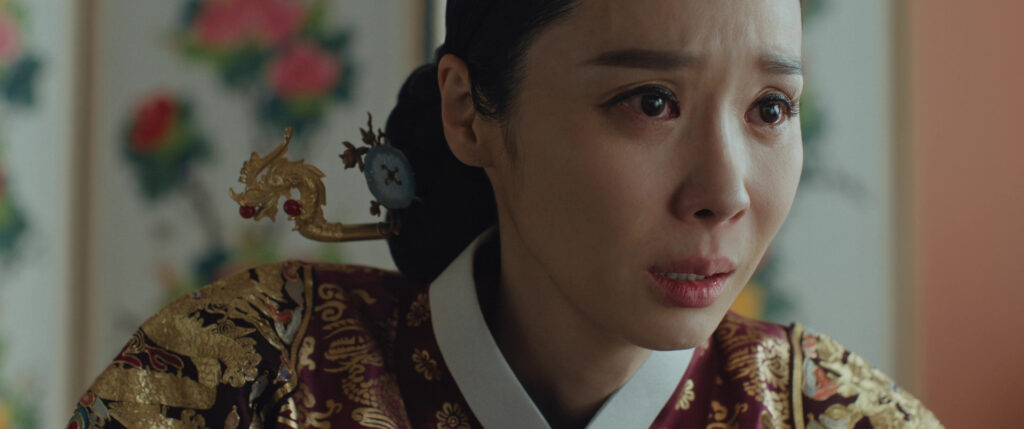
Shift gears: the queen dowager is a wreck. Why? Because her only son (the grand prince) got devoured by the Colossal Shadow. Not great for Sunday family dinners. Yeo-ri, ever the pragmatic shaman, lies to her: “If you pray to his favorite heirloom, his soul can be freed.” It’s a half-truth. The grand prince might not deserve closure, but does the queen dowager? Who knows. The lie isn’t pretty, but it’s emotionally pragmatic. Better to give her hope than let her spiral into palace-wide depression. Besides, if her grief festers, it could infect every noble house. No one wins that game.
- Insight: lies can be kindness when the alternative is unbearable pain. Yeo-ri’s decision reminds us that, sometimes, emotional survival trumps brutal honesty.
3. Gab’s Vengeful Return
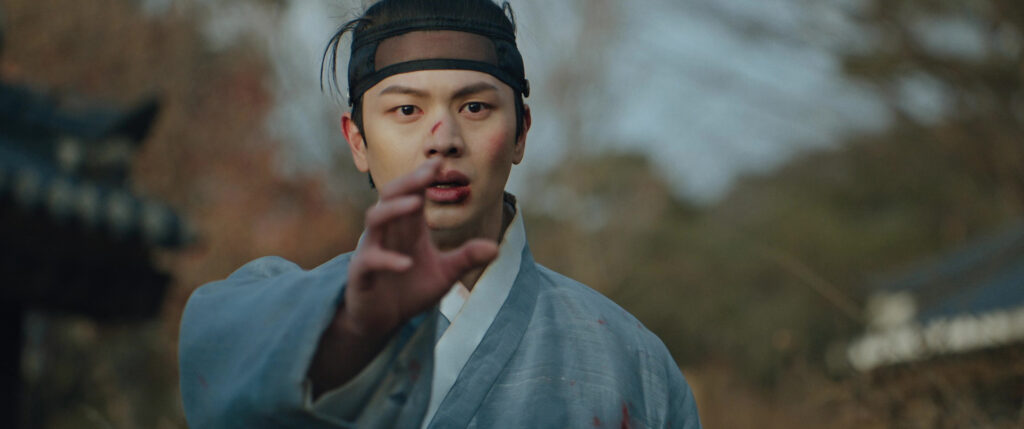
Just when you think things are wrapping up, Gab’s soul finally escapes the Colossal Shadow. Remember Gab? He’s the king’s loyal protector who died earlier—super tragic. Well, he’s back. But naturally, it’s complicated. Because Kang-cheol, our brash yet endearing hero, had borrowed Gab’s body. Yeo-ri and Kang-cheol? Cute. But everyone’s favorite undead warrior, Gab, is seething. He’s watching through Kang-cheol’s eyes. Seeing Kang-cheol cozy up to the queen. Hearing Yeo-ri’s quiet prayers. Every moment is a dagger to his heart. His spirit is so bitter you can practically see the steam rising from his ghostly ears.
- Highlight: jealousy in the afterlife is real. Who knew?
The blind shaman (big villain energy) lays a trap. He plants some cursed magic in Kang-cheol’s ear. Literally. Next thing you know, Gab snaps back into his body—Hallelujah! Unicorns and rainbows! But Kang-cheol? Vanished. Everyone’s floored. Now they have to figure out how to deal with two souls in two bodies… or multiple souls in one.
Episode 14: Battle Lines Drawn as Loyalties Fray
1. Body Swap Drama
Transition: Once Gab’s back in his body, there’s a tense stand-off. Imagine two people arguing through the same lips. Hilarious? Yes. Creepy? Also yes. Yeo-ri sits there munching popcorn—okay, maybe not popcorn, but you get the vibe. Kang-cheol and Gab fight for control. It’s like watching siblings argue over the TV remote. Only the stakes are way higher: one wrong move and the Colossal Shadow erases the royal family for good.
Eventually, Kang-cheol regains consciousness—barely. Right at the moment when Gab is about to shatter the king’s protective ward stone. Fangirl moments? Neutralized. But Gab’s suffering extends beyond mere possession. The blind shaman is forcing unimaginable pain on him. He’s on the verge of becoming a full-on malevolent spirit—like, setting fire to the entire palace levels of rage. Yeo-ri tries to soothe him, but at some point, Gab says, “I’m done. Let me pass on.” And that’s… heartbreaking.
- Insight: Gab’s sacrifice underlines a running theme: loyalty can be self-destructive. He already died once for his king. Now, he’s willing to die again so that the kingdom survives. The show is practically asking, “How much self-sacrifice is too much?” It’s a question that echoes in our own relationships—how much do we owe people before it costs us our own identity?
2. Gab’s Poignant Farewell
Clean your tissues. Gab says goodbye to Yeo-ri, to his mother (who’s understandably wrecked), and to Kang-cheol—who’s standing there with puppy-dog eyes. Gab’s final words to Kang-cheol? Something along the lines of, “Take care of her and the kingdom.” It’s the ultimate handoff. He walks into the afterlife with dignity. The man gave up everything. His arc is closed, and fans everywhere are sobbing. But here’s a contrarian take: some viewers might feel cheated. Gab’s return felt too short. We barely got to enjoy him back in “living” form.
Yet, maybe brevity was the point. By bringing Gab back just long enough to choose self-sacrifice, the drama cemented his legacy. He didn’t linger in limbo. He didn’t become a token for endless fan service. He got a heroic sendoff and left a mark on every character. That’s how you do a guest star right.
3. Preparing for the Final Ritual
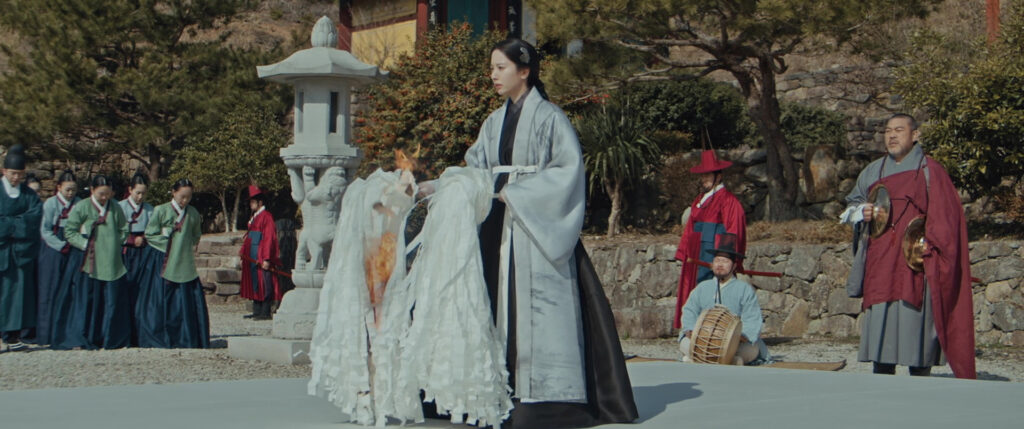
While everyone’s wiping tears (seriously, get some tissues), the looming deadline arrives: the 100th anniversary of the massacre. They’ve chosen this very day to conduct a grand appeasement ritual. If it fails, Yeo-ri dies on the spot. If it succeeds, the Colossal Shadow finally disintegrates and stops haunting the palace. Stakes? Titanic.
Kang-cheol’s got a secret weapon: a mystical flower that can shield the ward stone long enough for him to drain his life force into subduing the Colossal Shadow. It’s basically the arcane equivalent of duct tape. The downside is obvious: he risks having his precious magical bead (think arc reactor but in a jade orb) stolen by the blind shaman. If that happens, it’s game over. Even Yeo-ri doesn’t know about the flower. He’s trying to protect her from guilt… and from panicking. Because if she finds out he might die, she’ll never focus on the ritual.
Their dynamic in these scenes is gold. Kang-cheol asks, “Yeo-ri, would you ever run away with me?” He literally means it. This is real talk. She hesitates. That hesitation is the answer. Family, duty, destiny—they all weigh heavier than romance. They can’t abandon the kingdom, even if they wanted to. I’m not crying; you are.
Themes and Symbolism: More than Just Ghosts
1. Betrayal vs. Loyalty
Look, loyalty is a double-edged sword in The Haunted Palace. On one side, you have characters like Gab who embody unwavering devotion—he would walk through fire for his king. On the other, you have betrayals so deep they reshape history. Lord Choi’s ancestors betrayed innocent villagers. Kang-cheol, at times, feels like he’s betraying Gab’s memory by stepping into his body. Even Yeo-ri betrays the queen dowager with a white lie. This drama is constantly asking: when does loyalty become toxic? When does keeping a promise become a curse? The lines blur. By Episode 14, it’s clear: everyone is dancing on that razor’s edge.
- New insight: loyalty is treated less as an absolute virtue and more as a complex emotional currency. It can be “spent” for noble ends or “hoarded” until it poisons you.
2. Guilt, Atonement, and False Closure
A big chunk of these episodes revolve around closure—or the illusion of it. Lord Choi seeks legal and spiritual atonement. The queen dowager clings to false hope. Yeo-ri plays therapist with frank lies disguised as compassion. Let’s be real: false closure can be a lifeline. How many of us have told a lie to spare someone’s feelings? We justify it as “for their own good.” Here, Yeo-ri chooses panic-free survival over heartbreak. You could argue it’s unethical. Yet, if the queen dowager continued to believe her son was forever lost in darkness, she might become a liability to the entire kingdom’s morale. Sometimes, you lie to prevent widespread grief. It doesn’t feel great, but it’s practical.
3. The Price of Power
This is the backbone: those who hold power often wield it with a moral compromise. The king’s ancestors ordered the massacre. That decision ripples through time, birthing the Colossal Shadow. Now, the current king faces the consequences. Meanwhile, the blind shaman manipulates events from the shadows, fueling everyone’s desperation. He’s like that friend who always says, “I’ve got connections,” and then ruins your life. Ultimately, The Haunted Palace argues that power without conscience is a slow march toward self-destruction.
Character Deep-Dives: What Makes Them Tick?
Yeo-ri (The Compassionate Shaman)
- Strengths: unwavering empathy, strategic mind, calm under pressure.
- Weaknesses: her compassion sometimes crosses into manipulation. She lies to the queen dowager. She uses Kang-cheol as bait. Her belief that the ends justify the means could bite her later.
By Episode 14, Yeo-ri is the emotional anchor. She binds this ragtag team together. But her tactics are morally ambiguous. She’s a walking compromise: half therapist, half military strategist. When she’s not chanting incantations, she’s laying down cold, hard truths—like, “We need to sacrifice your daughter so the kingdom survives.” She doesn’t shy away from tough love. Love her or hate her, she gets results.
Kang-cheol (The Brash Protector)
- Strengths: headstrong courage, fierce loyalty, unfiltered honesty.
- Weaknesses: overconfidence, lack of subtlety, unwillingness to ask for help.
Kang-cheol is that guy who jumps off the cliff and figures out the wings on the way down. He’s charismatic, he’s impulsive, and spine? Made of steel. Bottom line: he’s the kind of hero you root for even when you know he’s going to get himself into trouble. In episodes 13–14, he faces his mortality head-on. The secret flower reveals he’s not invincible. As the drama’s de facto action star, he still manages to be heartbreakingly vulnerable—especially when he asks Yeo-ri to run away with him. It’s a raw, human moment. One that reminds us: even the toughest warriors crave peace.
Gab (The Tragic Vengeful Spirit)
- Strengths: immense power, unyielding loyalty, righteous rage.
- Weaknesses: overwhelming grief, susceptibility to manipulation, inability to find closure easily.
Gab’s story arc is a perfect microcosm of The Haunted Palace’s bigger themes. He dies as a hero. He returns as a tortured soul. He ultimately sacrifices himself again for a cause he believes in—protecting the kingdom and the woman he loves. By having Gab control Kang-cheol’s body, the writers create one of the most compelling “internal struggle” sequences in recent memory. His choice to give up the body is both tragic and transcendently noble. He’s the embodiment of “dying with honor.”
The Blind Shaman (Master Puppeteer)
- Strengths: wide-ranging dark magic, cunning strategist, psychological manipulation.
- Weaknesses: overconfidence, underestimation of Yeo-ri and Kang-cheol, obsession with vengeance.
The blind shaman is less a character and more a force of nature. He’s the wind that fans the flames, the wolf stalking from the shadows. In these episodes, he’s at his manipulative best: whispering lies into Gab’s ear, orchestrating betrayals, planting traps. He’s that villain who never shows his full hand until the last possible moment. Because he’s blind, his other senses are hyper-accurate—a metaphor for how vengeance blinds you. He can’t see his own downfall. That’s poetic, really.
Behind-the-Scenes: Technical Brilliance Worth Mentioning
Cinematography and Visual Effects
- Soul Fusion Sequences: The way Gab’s visage flickers over Kang-cheol’s face is chilling. Smooth CGI transitions make it feel eerily real—like you’re watching someone wrestle for their soul.
- Appeasement Ritual Scenes: Candles flicker, mist swirls around altars, incense smoke blends with CGI animation of ethereal spirits. The juxtaposition of ancient rites with modern VFX is seamless.
Music and Sound Design
- Tense Riffs: When the blind shaman’s manipulating Gab, low, droning strings vibrate through your bones. It’s not just background noise; it’s an emotional assault.
- Emotional Crescendos: Gab’s goodbye to Yeo-ri is accompanied by a piano score so gentle you almost miss the sobs in the orchestra. It’s a textbook example of “less is more.”
Wardrobe and Set Design
- Period Costumes Meets Fantasy Flair: Cleric robes that look functional for incantations, yet have intricate embroidery that hints at hidden symbolism. Those tiny runes embroidered on Yeo-ri’s sash? They glow faintly when she channels power.
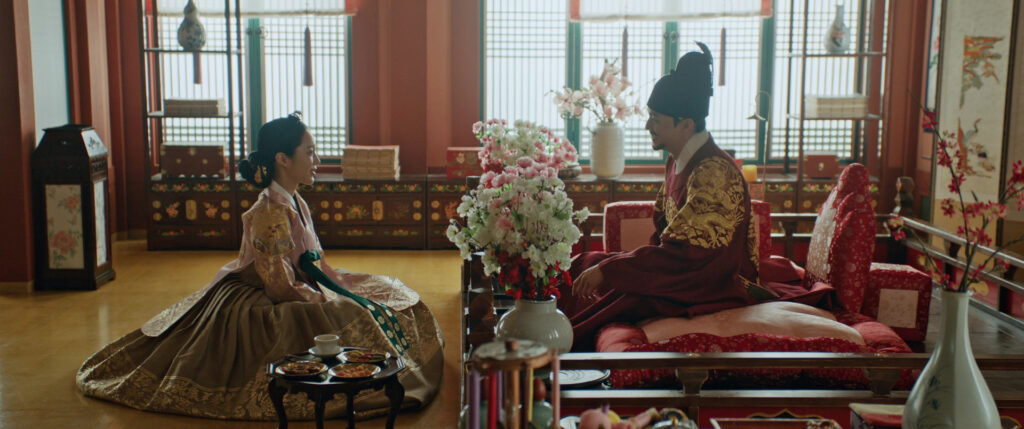
- Palace Interiors: Lavish but dark. Heavy wooden furnishings, silk drapes, flickering lanterns—It’s old-world elegance with a perpetual undertone of doom. A careful design choice: every room feels like a stage waiting for the next tragedy.
Fresh Theories and Predictions: What’s Next?
By the end of episode 14, the stage is set for an explosive finale. Here are some bold predictions—and yes, I’m rolling the dice a bit:
- The Silver-Amulet Betrayal
- My gut says the blind shaman has one more trick up his sleeve. Maybe he’s crafted a hidden curse in the ward stone itself. If Kang-cheol drains his life force into the bead, what if the bead’s energy reverses—blindsiding everyone? Could be. After all, he’s not above one final kick in the teeth.
- Queen Dowager’s True Closure
- Yeo-ri’s lie bought time. But eventually, someone will crack—maybe the queen dowager overhears a conversation. Instead of imploding, she might channel her grief into something unexpected. A new ally? Or a wildcard who jeopardizes the ritual?
- Kang-cheol’s Secret Backlash
- Using that protective flower wasn’t “free.” It might drain his life force faster than we think. If Kang-cheol’s powers flicker out mid-battle, Yeo-ri might have to improvise a new plan—maybe tapping into darker magic, which could leave her permanently changed. Drama incoming.
- The Final Face-Off with the Colossal Shadow
- This is the big one. If they succeed, everyone lives happily ever after. But if they fail, the Colossal Shadow absorbs every spirit in the palace and ascends to godlike power. And if that happens, season two will have a legitimately unstoppable villain. So, expect some heartbreak. Probably more than one major character won’t make it to the final credits. Sorry, not sorry.
Point of View: Why The Haunted Palace Resonates Beyond Ghost Story
Let me be real: at first glance, The Haunted Palace looks like another run-of-the-mill ghost drama. But dig deeper, and you see a narrative that grapples with timeless human dilemmas.
- Trauma’s Legacy
- The 100-year-old massacre is more than a plot device. It symbolizes how trauma can seep across generations. This is a story about what happens when the mistakes of ancestors become curses for descendants. It’s chillingly relevant. Think of real-world parallels: war crimes, colonization, systemic injustices. The show isn’t shy about saying, “You can’t outrun history.”
- Ethics of Sacrifice
- Everyone is forced to choose: sacrifice one to save many. Lord Choi, Kang-cheol, Yeo-ri—they all make impossible choices. It asks us: would you have the heart to let innocent people die if it meant saving tens of thousands later? Most of us don’t face that question. But the show pushes that moral dilemma front and center.
- Love as Resistance
- Amidst all the horror, love emerges as a defiant act. Yeo-ri’s compassion, Kang-cheol’s loyalty, and even Gab’s final peace—these moments feel like flickers of hope in a pitch-dark world. In a real sense, love between these characters isn’t naïve. It’s revolutionary. It’s the quiet power that undercuts fear.
- Power Structures and Accountability
- Historically, monarchs have often decided lives like chess pieces. The Haunted Palace critiques that. Even the current king must face his ancestors’ crimes. It’s a call for accountability—no matter how many years have passed. As we see in our world, leaders rarely face the full weight of their predecessors’ sins. This drama imagines a reality where they must.
Writing Style: Keeping It Human
I know some of you are thinking, “Okay, but why all the short sentences and punchy transitions?” Here’s the deal: brevity keeps you on the edge of your seat. A long description of every ritual step? Snooze. But a quick, sharply worded sentence? That’s like a drumbeat to your heart. It makes you lean in. Trust me, the balance between action and introspection is crucial. Also, peppering in rhetorical questions (“Would you lie to spare someone’s pain?”) turns you from a passive viewer into an active participant. The moment you start asking, “What would I do?” you’re locked in.
Behind the Magic: Production Notes (Speculative, Yet Educated Guesses)
Casting Choices
Kim Jae-min as Gab
- Kim’s previous roles often skewed lighter—comedic relief, minor heroic sidekick. Seeing him inhabit a tortured spirit is a career redefining move. His ability to oscillate between stoic loyalty and raging fury is nothing short of breathtaking. Rumor has it the producers insisted on retakes until his eyes literally seemed to burn with anguish.
Park Hye-won as Yeo-ri
- Park’s tranquil demeanor off-screen translated perfectly into Yeo-ri’s calm pragmatism. Early on, she read through her lines once and said, “Let’s emphasize emotional subtext over flashy exorcism scenes.” The director listened, and that choice elevated her performance from “just another shaman” to “kingdom’s emotional barometer.”
Directorial Flourishes
Use of Negative Space
- Notice how many scenes have characters standing alone in vast corridors or empty courtyards. Those wide shots underscore their emotional isolation—like Yeo-ri, even surrounded by people, bears a loneliness no one else can see.
Color Palette
- The palace drapes and robes are heavy on dark reds and muted crimson. Blood symbolism, of course. But it’s also a nod to the old world’s opulence. When Yeo-ri wears lighter colors, it’s a visual signal: she’s trying (sometimes unsuccessfully) to bring hope and healing.
My Takeaway: Why This Drama Matters
Here’s my two cents. The Haunted Palace isn’t just entertainment. It’s a cautionary tale about what happens when leaders dehumanize citizens for “the greater good.” In a world where political decisions often prioritize strategic gains over individual lives, these episodes are a mirror. They reveal how unchecked power can lead to atrocities—not once, but across generations.
- Point of View:
I believe that The Haunted Palace transcends its supernatural trappings. Yes, ghosts and curses are fun. But beneath the special effects is a critique of moral compromise. The drama asks: Are we willing to sacrifice our humanity for security? Are we ready to forgive those who’ve hurt us—or do we let vengeance consume us? In an era defined by ideological polarization, this show reminds us: history matters. Your ancestors’ sins can become your burdens. But you also have the power to break that cycle. Sacrifice, atonement, and love can heal—or they can tear you apart. It’s your choice.
Final Verdict: A Tightrope of Emotion, Action, and Philosophy
By the end of episode 14, The Haunted Palace has proven it can balance blockbuster supernatural showdowns with intimate character studies. You laugh at the body-swapping banter. You wince at the blind shaman’s cruelty. You cry through Gab’s farewell and cheer when Kang-cheol risks everything to protect Yeo-ri. And yet, you’re never just a passive consumer. You’re forced to ask uncomfortable questions about loyalty, sacrifice, and moral accountability.
Pros
- Compelling Characters: Every major character has depth. Even the “villains” feel rooted in believable trauma.
- Consistent Tension: From the 100-year-old massacre to the secret plot twists, these episodes keep you guessing.
- Emotional Payoff: Gab’s sendoff is gut-wrenching. It’s the kind of moment that sticks with you long after the credits roll.
Cons
- Pacing Hiccups: Some viewers might feel Gab’s return is too brief, as mentioned above. There’s a fleeting moment where you think the drama might pivot into something else, but it’s over as quickly as it begins.
- Complex Mythology: If you haven’t been paying close attention since episode one, the lore can get muddled. You might need a “Previously on The Haunted Palace” refresher—preferably one that’s ripped straight from the fan forums.
Ultimately, The Haunted Palace nails it. Episodes 13 and 14 set the stage for a finale that will either break our hearts or restore our faith. By weaving together supernatural horror, political intrigue, and deep psychological themes, the show delivers something rare: a true genre-bending experience that resonates on multiple levels.
Final Verdict: ★★★★☆ (4/5 Stars)
We dock one star because Gab’s cameo return felt too fleeting. Other than that, this two-episode arc is a masterclass in tension, emotional nuance, and thematic richness. If you’re in for a roller-coaster ride through guilt, vengeance, and the power of love, you’ll be glued to the screen. Just don’t say I didn’t warn you when the tears start falling.
Whether you’re binging the finale or just catching up, let me know: which moment had you on the edge of your seat? And do you think our heroes really have a shot at ending the Colossal Shadow’s century-long reign of terror? Sound off in the comments below—because this conversation is far from over.