More
    Home Blog Page 33

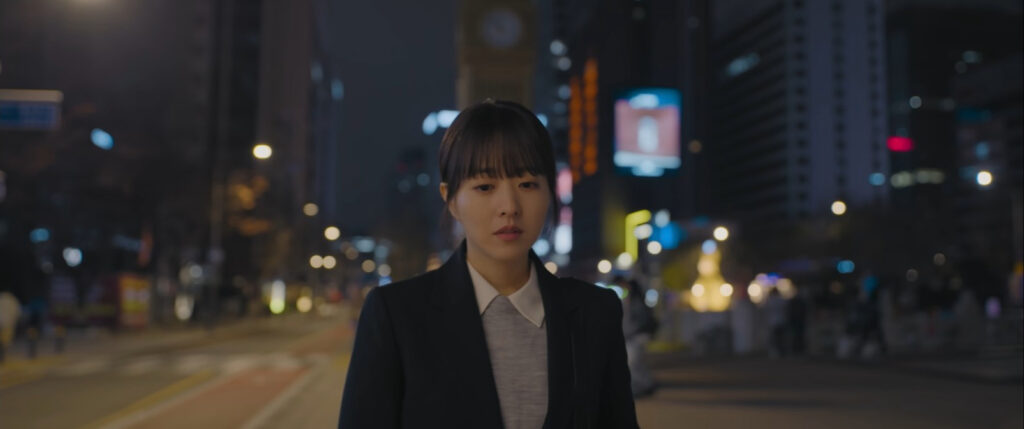
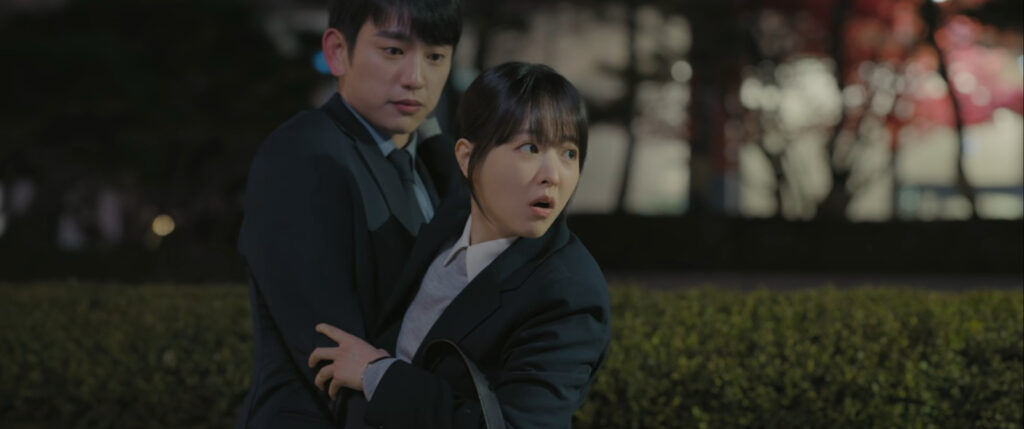
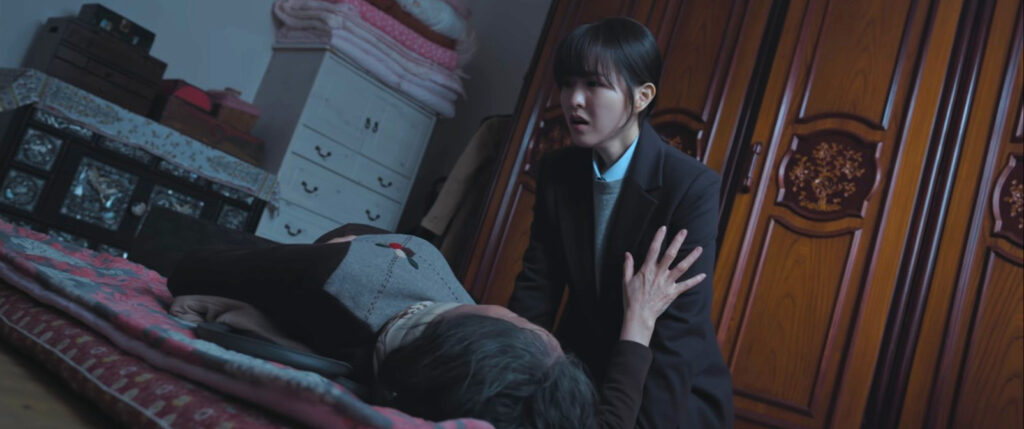
    The Haunted Palace Finale Recap & Analysis: Episodes 15–16’s Shocking Conclusion

    When a story promises ghosts, ancient grudges, and a mythical imoogi, you brace for chills. Yet The Haunted Palace outdoes itself in episodes 15 and 16 by weaving heartache, sacrifice, and surprising hope into its supernatural tapestry. Here’s an in-depth, scene-by-scene dive into the finale—complete with fresh insights, crisp writing, and a verdict at the end.

    TL;DR:

    • Queen tragically dies, shattering the king’s world.
    • Colossal Shadow uses psychological warfare, possessing the king.
    • Heroes Yeo-ri and Kang-cheol go on the run to save the prince.
    • Sacrifices made with unique magical powers to confront the evil.
    • Post-battle, the king seeks atonement for ancestral sins.
    • Kang-cheol miraculously returns, choosing humanity over divinity.
    • Happy ending with new reforms, family life, and continued supernatural consultations.

    From Triumph to Tragedy: A Queen’s Last Stand

    First things first: that Colossal Shadow doesn’t mess around. One moment we’re basking in the queen’s confident strides; the next, she’s struck down in a brutal attack that shatters the king’s world. When we see him crumple over her body, raw grief grips us—swiftly followed by righteous fury.

    • Key Moment: King Cheon orders the blind shaman beheaded on the spot, only to tearfully postpone the execution when he realizes even vengeance feels hollow without his queen.
    • Insight: Humanizing a monarch through grief makes him relatable, reminding us that power doesn’t inoculate us against loss.

    This heartbreaking twist sets the stage: everyone who believed the royal family was untouchable now scrambles for survival. The plot shifts gears from regal intrigue to a desperate chase, and boy, does it deliver.


    Mind Games: The Colossal Shadow’s Psychological Siege

    The real terror isn’t simply brute force—it’s psychological warfare. By invading the king’s mind with century-old trauma, the Colossal Shadow becomes more than an external villain; it becomes his inner demon.

    1. Memory Flood
      • Perpetrator: Cheon Geum-hwi, the original imoogi-shaman hybrid who lost his family
      • Tactic: Forcing the king to relive the massacre of Geum-hwi’s village from a hundred years ago
    2. Possession
      • Effect: The king carries on in public ceremonies, but something’s off—his eyes betray the spirit controlling him.

    Why it matters: This echoes modern conversations about intergenerational trauma and how unaddressed wounds can corrupt leaders. You don’t need a supernatural curse to see parallels in real-world politics and private grief.


    The Great Escape: Yeo-ri and Kang-cheol on the Run

    Suddenly, our heroic duo—blind shaman’s apprentice Yeo-ri and wandering warrior Kang-cheol—find themselves on the palace’s most wanted list. Instead of packing swords, they pack desperation and hope: hope to save the young prince, hope to end the blood countdown.

    • Lord Choi’s Sanctuary: A brief respite at his residence shows how alliances can form in crises. The palace guard who helps them reminds us that conscience survives even in rigid hierarchies.
    • High-Stakes Distraction: Kang-cheol engages the possessed king in a tense standoff, while Yeo-ri escorts the prince through shadowed corridors.

    The pacing here is masterful. Quick cuts between stealthy escapes and heart-pounding confrontations keep you glued to the screen—and stock up those nerves for the finale’s emotional climax.


    Secrets and Sacrifices: The Power Weapons Revealed

    Every great epic needs a final trump card. Episodes 15–16 deliver two:

    1. Yeo-ri’s Fire Reaper Ritual
    2. Kang-cheol’s Life-Snuffing Magical Bead

    Rather than argue over who’ll die, they share an intimate moment imagining a few more days of normalcy—a clever subversion of the typical “who sacrifices themselves” trope. It’s a refreshing reminder that heroes crave small joys too.

    • New Insight: Love and longing can be as potent as any spell. In stories (and life), our motivations often rest on fleeting moments of happiness, not grand ideals.

    Showdown in the Throne Room

    With the prince escorted to safety, Yeo-ri storms the king’s chambers alone. Here, the series’ visual storytelling shines:

    • Chains and Knives: Emblems of the ancient bond between shaman and imoogi, they clang against the polished floors as Yeo-ri channels searing spirit-fire.
    • Counter-Ritual: The blind shaman’s shrine buzzes with low chanting, a musical counterpoint that underscores magic’s duality.

    Just when you think Yeo-ri will triumph, her strength fails—and she collapses, blood staining her robes. Cue Kang-cheol’s dramatic entrance: a single gulp of mystic petals, his magical bead blinding the Colossal Shadow in a flash of white light.


    Aftermath: Tears, Apologies, and True Closure

    The dust settles on carnage and sorrow, but the finale refuses to leave loose ends. It’s one thing to defeat a monster; it’s another to heal centuries of hate.

    1. Royal Reckoning
      • The king publicly bows before the villagers’ souls, taking responsibility for ancestral sins.
      • He promises reforms, transparency, and an end to slave labor.
    2. Personal Goodbyes
      • Yeo-ri’s grandmother’s spirit appears to comfort her, acknowledging that love transcends death.
      • The queen’s ghost lingers by the king, her silent blessing granting him peace.
    3. Shaman’s Fate
      • The blind shaman, once spared by the king, meets his end by a bolt of lightning—fulfilling Kang-cheol’s cryptic prophecy.

    Fresh Take: Closure isn’t about erasing pain. It’s about acknowledging it. The series teaches that saying “I’m sorry” can be more powerful than any sword or spell.


    Resurrection and Rebirth: Kang-cheol’s Miraculous Return

    Just as you’re wiping tears, Kang-cheol’s coffin lid snaps open. He grumbles about being smothered—classic! Turns out the Jade Emperor offered him a choice: ascend as a dragon or live as a human. He picked life.

    • Symbolism: Dragons often symbolize power and divinity. By choosing humanity, Kang-cheol embraces mortality—proof that love outweighs glory.

    This resurrection coda elevates the finale above mere fantasy. It’s a commentary on agency: even supernatural beings can choose compassion over dominance.


    Epilogue: Happily Ever After… With a Twist

    Time jump! The kingdom buzzes with new reforms. Our heroes settle into domestic bliss:

    • The king mentors the young prince on ethics and governance.
    • Yeo-ri and Kang-cheol marry and have a feisty daughter who inherits dad’s temper—cue adorable family hijinks.

    Yet they remain available to consult on all things supernatural—for a fee, of course. After all, imoogi shamaning isn’t a charity.


    My Perspective: Why The Haunted Palace Resonates

    Here’s what stuck with me long after the credits rolled:

    1. Empathy Over Exorcism
      • Instead of mindless monster-slaying, the series demands we listen to marginalized voices—even if they’re centuries old.
      • This focus on reconciliation is a breath of fresh air amid action-heavy dramas.
    2. Complex Heroes
      • No one is purely good or evil. The king’s grief-driven rage and the imoogi’s vendetta both stem from loss.
      • Complexity elevates character arcs and keeps us emotionally invested.
    3. Cultural Depth
      • Incorporating Korean folklore—imoogi, reaper spirits, ancestral curses—grounds the narrative in rich tradition.
      • At the same time, themes of justice and forgiveness feel universal.
    4. Visual & Musical Flourish
      • From moonlit temples to thunderous spirit battles, each frame is a painterly composition.
      • The score’s blend of traditional instruments and haunting vocals amplifies every twist and tear.

    Final Verdict ⭐️⭐️⭐️⭐️⭐️

    The Haunted Palace bows out with emotional precision. By blending folklore, politics, and genuine heart, episodes 15 and 16 deliver a finale that’s as cathartic as it is epic. Whether you came for the imoogi fire duels or stayed for the moral reckonings, this one’s a five-star triumph.

    Tesla Stock Plummets 14% as Trump-Musk Feud Fuels Investor Fears

    0

    When your favorite electric-vehicle maker (and occasional meme-stock darling) sheds over $150 billion in market value in a single day, people tend to take notice. On June 5, 2025, Tesla shares tumbled 14.3 percent—closing at $284.70—a nosedive that erased more than $152 billion in market capitalization in mere hours. At the same time, Tesla’s valuation slipped below the coveted $1 trillion threshold, settling around $916 billion. In other words: investors woke up to a very bad Monday—or rather, they watched their portfolios melt down on a very bad Thursday.

    Yet this wasn’t simply another typical stock-market wobble in the hyper-volatile world of electric vehicles. Instead, the catalyst was a full-blown public spat between former President Donald Trump and Tesla CEO Elon Musk—a feud that caught Wall Street flat-footed and left institutional and retail investors alike scrambling to gauge how much political heat could scorch a corporate giant.

    Below, we unpack every twist and turn: from Musk and Trump’s once-thriving bromance to the very moment things blew up in public view. You’ll get a blow-by-blow timeline, the nitty-gritty on why Tesla’s financial metrics matter, what investor confidence really looks like when politics rubs shoulders with business, and, yes, my own two cents on where this all might be headed. Strap in—this is going to be a long, windy ride through the collision between high-stakes politics and high-voltage batteries.


    Table of Contents

    1. A Rapid Drop: What Exactly Happened on June 5, 2025?
    2. From Best Buds to Bitter Rivals: A Timeline of Trump-Musk Relations
      1. July 2024: The Surprising Endorsement
      2. August–October 2024: Livestreams, Rally Cameos, and “DOGE” Power Plays
      3. November 2024: DOGE Is Born (The Department of Government Efficiency)
      4. January–March 2025: Inauguration Hype, White House Showdowns, and Policy Spats
      5. April–May 2025: Cost-Cutting Clashes and Bill Backlashes
      6. June 2025: The Feud Goes Nuclear
    3. Stock Market Mechanics: Why a Feud Can Ripple Through Tesla’s Valuation
    4. Political Risks Masquerading as Business Issues
    5. The Fallout for Tesla: Contracts, Public Perception, and Future Guidance
    6. Lessons from History: When Business Leaders Butt Heads with Politicians
    7. My Point of View: The Absurdity, the Opportunity, and What Comes Next
    8. Key Takeaways: What Investors and Consumers Should Know
    9. Conclusion: The Road Ahead for Tesla—Will the Electric Sun Rise Again?

    1. A Rapid Drop: What Exactly Happened on June 5, 2025?

    Thursday, June 5, 2025, will go down as one of the most dramatic days in Tesla’s trading history. The shares tumbled 14.3 percent, from roughly $332 in morning trading to $284.70 by the closing bell. That single-day drop obliterated about $152 billion of Tesla’s market cap, pushing the company below the $1 trillion mark for the first time since it crossed that threshold in late 2023.

    What triggered this freefall? At its core, an online screaming match. More precisely, tweets and public statements flew back and forth between Elon Musk—Tesla’s charismatic, sometimes polarizing founder—and former President Donald J. Trump. Musk, who had recently launched a volley of criticism at Trump’s then-new tax and spending bill, referring to it as a “disgusting abomination” destined to blow up the federal budget deficit, watched as Trump lashed back, threatening to yank billions in government contracts slated for Musk’s companies (namely Tesla, SpaceX, and others).

    Investors hate uncertainty. When the sitting—or in this case, former—commander-in-chief threatens business ties that could be worth millions, even billions, the market takes notice. Trading desks lit up with frantic phone calls: “Did Trump really say that? How real is the threat? Could this jeopardize Tesla’s federal EV incentives? What about the SpaceX defense contracts?” The answers were fuzzy. As a result, traders and algorithms alike began selling first and asking questions later. By the end of the session, Tesla’s share price was down nearly 14 percent.

    That drop was not merely a hiccup: it represented the single largest one-day loss in market capitalization for Tesla, eclipsing even some of the wild swings we saw in 2020 and 2021 when pandemic-related lockdowns and supply-chain crises roiled the EV giant’s shares. And, yes, that reaction had everything to do with a public spat between two of the most headline-grabbing figures in the world.


    2. From Best Buds to Bitter Rivals: A Timeline of Trump-Musk Relations

    How in the world did a relationship that once looked like a political bromance turn into a Twitter war zone? To understand the June 2025 meltdown, we need to rewind through every high-five, rally cameo, and public policy clash that defined the Trump-Musk entanglement. Here’s how they went from drinking champagne together to spiking each other’s tail pipes.


    July 2024: The Surprising Endorsement

    • Date: July 2024
    • Event: A campaign rally in Butler, Pennsylvania, where Trump faced an assassination attempt.

    During a campaign event in Butler—yes, the same rally where an assassin’s bullet nearly ended Trump’s run for re-election—Elon Musk jumped into the fray on social media. Without any hint of hesitation, Musk posted on X (formerly Twitter, owned by Musk himself): “I fully endorse President Trump and hope for his rapid recovery.” In a world where billionaire CEOs rarely wade into partisan politics, this was eyebrow-raising. Musk was signaling he wasn’t just a Silicon Valley guru but a key political ally too. At the time, Tesla investors might have shrugged—hey, CEOs and politics mingle all the time. However, as it turned out, this endorsement was the first domino in a long chain of entanglements.

    Key Takeaway: Musk’s public endorsement created the illusion of a seamless alliance. Many Tesla bulls believed a direct line to the Oval Office could only help the company—federal EV incentives could get turbocharged, any regulatory hurdles might be smoothed over, and SpaceX could land juicy NASA or Department of Defense contracts. That optimism would soon collide with reality.


    August–October 2024: Livestreams, Rally Cameos, and “DOGE” Power Plays

    • August 2024: Elon and Trump get on a livestream chat on X, the platform Musk owns.
    • October 5, 2024: Musk dons a red “Make America Great Again” cap and joins Trump on stage at a rally in Pennsylvania.

    By late summer 2024, the dynamic duo moved from tweets to video. In August, Trump and Musk appeared together on a glitchy livestream that lagged for nearly an hour—forcing them to crack jokes about “Will this work?” before diving into politics, climate change, and, of course, Tesla’s role in reshaping America’s auto industry. The messages were broad: Musk lauded Trump’s vision on deregulation, while Trump praised Musk’s ingenuity, calling Tesla an “American success story.”

    Fast forward to October. Musk jumps on stage at the very Pennsylvania rally where the bullet narrowly missed Trump months earlier. He shouted through a mic, “Donald, you’re the only candidate who will preserve American democracy!” Trump’s reelection campaign flashed the moment across every cable news network. Meanwhile, Tesla’s stock nudged upward on the optimistic buzz—investors believed this friendship could unlock perks like extended EV tax credits or favorable regulatory carve-outs.

    However, behind the scenes, some shareholders were pinching themselves. They wondered, “Why is our CEO moonlighting as a political operative?” Despite the cheerleading, murmurs of caution percolated in boardrooms.

    Key Takeaway: The livestream and rally appearance further cemented the impression that Musk and Trump were in sync. For Tesla, which relies heavily on government incentives for electric vehicles, having the “big guy” in your corner seemed like a masterstroke. But the flirtation with partisan politics also planted seeds of division among investors who preferred Musk focus on Model 3 production ramps rather than beltway banter.


    November 2024: DOGE Is Born (Department of Government Efficiency)

    • Date: November 2024
    • Event: Trump wins re-election and creates the Department of Government Efficiency (DOGE), appointing Musk and Vivek Ramaswamy to lead it.

    Remember the acronym DOGE? Yes, the same meme-token cat brainchild that had the crypto world in a frenzy. But in November 2024, “DOGE” took on a new meaning: the Department of Government Efficiency. Via executive order, President Trump announced this “innovative” agency with a simple mission—slash federal spending, cut bureaucracy, and demolish wasteful programs. Musk and former presidential hopeful Vivek Ramaswamy were tapped as co-leads. Trump gushed, “These two wonderful Americans will pave the way for my Administration to dismantle Government Bureaucracy, slash excess regulations, cut wasteful expenditures, and restructure Federal Agencies.” MSNBC, CNN, and Fox News all replayed the moment: Musk and Ramaswamy grinning in the Oval Office, ready to bring Silicon Valley agility to Washington’s red tape.

    For Tesla investors, this looked like a novice’s dream. If Musk could reengineer the DMV or the Pentagon the way he reengineered electric motors, maybe Tesla could unlock new government contracts for charging infrastructure or even secure priority status for its energy-storage projects.

    But Ramaswamy would eventually step away to focus on his own political ambitions, leaving Musk as the de facto face of DOGE. Within weeks, Musk was jetting between Hawthorne (SpaceX headquarters), Palo Alto (Tesla HQ), and D.C., juggling board meetings alongside government crackdowns on “wasteful spending.”

    Key Takeaway: Musk’s appointment to lead DOGE was a bold gambit. For consumers and investors alike, it blurred the lines between business and state. Skeptics argued it risked turning the White House into a Tesla showroom—literally and metaphorically—while believers thought Musk would strike a blow for unfettered capitalism in government operations.


    January–March 2025: Inauguration Hype, White House Showdowns, and Policy Spats

    • Date: January 20, 2025 (Inauguration Day) and March 2025 (Cabinet meeting dust-up)

    On January 20, 2025, Musk strutted into the Inauguration ceremony wearing a spare Tesla hat (because of course). President Trump beamed as he introduced Musk to the crowd: “A new star is born—Elon!” The two hugged. Cameras flashed. Everyone thought: “Okay, Musk is now part of the inner circle.” He even joined the president’s CEO-roundtable calls with heads of Amazon, Google, Meta, and other tech giants. The chatter hovered around infrastructure bills, AI regulation, and how best to cut government slack with Tesla-style efficiency hacks.

    By early March, though, the honeymoon was over. Word got out that Musk was micromanaging various agencies—pushing for immediate return-to-office mandates, eliminating remote-work options, and reassigning entire teams at the U.S. Institute of Peace, among others. Politicians from both parties griped that Musk was overreaching: “Who made him czar of D.C.?” Congressional aides leaked memos calling Musk’s methods “unprecedented meddling by a private citizen.”

    Trump himself tried to put out the fire. At a March 9 meeting with Cabinet members, Trump told aides, “You run your departments. Elon’s not in charge of you.” Musk, ever the super-connector, later tweeted, “Productive meeting with a great team”—but it was clear: tensions were simmering in the West Wing.

    Two days later, Trump did something straight out of a marketing playbook: he turned the South Lawn into a rolling Tesla showroom. He climbed into a Model S, ran his hand along its sleek hood, and declared: “The cars are beautiful. I will buy one myself. Patriotism and innovation go hand in hand.” His message was twofold: defend Musk from the boycott threats that had begun swirling around Tesla globally, but also signal that he still had “Elon’s back.”

    Key Takeaway: The state of play by March 2025 was complicated. On one hand, Trump publicly defended Musk. On the other hand, behind closed doors, White House aides and Cabinet secretaries were bristling at Musk’s “overinvolvement.” Tesla shareholders cheered when the South Lawn photo-op drove positive press, but they also wondered whether the “Musk-in-Washington” saga was distracting him from front-line issues like production targets, supply-chain snarls, and the looming question of how to maintain profitability.


    April–May 2025: Cost-Cutting Clashes and the Tax Bill Blowup

    • Date: April–May 2025
    • Event: Musk begins scaling back involvement in DOGE, Tesla Q1 earnings miss, and the March 2025 U.S. House tax and spending bill.

    In April 2025, things started looking dicey for Musk’s Administrative cross-training. He announced he would “significantly reduce involvement” in DOGE because his to-do list at Tesla and SpaceX was overflowing. At the same time, Tesla reported first-quarter earnings that missed Wall Street estimates—inventory was piling up, margins were pressured, and EV demand in China had softened. Tesla’s stock was already down more than 40 percent for the year by late April.

    May arrived with a bigger storm brewing. Trump’s signature tax and spending bill—a multi-trillion-dollar package meant to cover infrastructure, defense, and various social programs—landed on Musk’s desk like a grenade. In a May 2025 interview with CBS News, Musk unloaded: “I was disappointed to see the massive spending bill, frankly. It increases the budget deficit instead of decreasing it, and undermines what we’ve been doing with DOGE.”

    Trump tried to straddle the middle ground. He admitted he “wasn’t thrilled” by every aspect of the bill, yet insisted “many parts are great.” Still, Musk’s public criticism of a measure that Trump championed was a red flag. The next day, Musk left the White House, ostensibly to refocus on his companies. Trump threw a “farewell” event but hinted Musk would still “pop in” because DOGE was his “baby.”

    Key Takeaway: By late May 2025, insider sources revealed that even Ivy League-educated Senate Republicans were muttering, “What is Elon doing in our budget process?” Combined with the Tesla earnings miss, investor anxiety grew. After all, if your CEO is busy lambasting the commander-in-chief’s budget bill, morale and focus can slide. And as Musk and Trump grew more reticent toward each other, whispers of an impending breakup crackled in trading rooms.


    June 2025: The Feud Goes Nuclear

    • Date: Early June 2025
    • Event: Musk calls Trump’s bill a “disgusting abomination.” Trump threatens to pull federal contracts. Public online brawl. Stock crashes.

    It all came to a head in early June. Musk took to X again—this time with some choice words: “Trump’s spending bill is a disgusting abomination that will explode the federal deficit. Shame on those who voted for it.” Of course, Musk didn’t spare Trump; he directly tagged him in the post. That tweet lit the fuse.

    Trump, true to form, went on X and fired back: “Elon and I had a great relationship. I don’t know if we will anymore.” More ominously, he hinted that he might “pull back billions” of dollars in government contracts for Musk’s companies. Overnight, it became clear: Trump was willing to weaponize federal procurement. He was even floating the idea of revisiting Tesla’s eligibility for certain EV tax credits, charging stations funding, and mass-transit initiatives that Tesla had quietly lobbied for.

    By mid-afternoon on Thursday, Nebulous ChatGPT algorithms had caught wind of the brewing fight. Hemlines on trading spreadsheets relaxed as large funds began selling. Once the market closed, Tesla’s share price was down 14.26 percent to $284.70. Investors sat stunned as nearly $152 billion evaporated from the company’s valuation—in one day, no less.

    Key Takeaway: This meltdown wasn’t about battery yields, autopilot accidents, or slowing EV demand. It was pure politics meeting public markets head-on. As long as Musk and Trump are at each other’s throats, the financial risk for Tesla stays elevated.


    3. Stock Market Mechanics: Why a Feud Can Ripple Through Tesla’s Valuation

    You might be wondering: “Okay, I get that politics are messy, but why did Tesla’s share price really tumble so hard? After all, companies survive worse reputational tiffs every day.” Well, here’s what happens under the hood when politics collide with a publicly traded stock—especially one as narrative-driven as Tesla.

    1. Sentiment Over Fundamentals (Especially for Tesla).
      Tesla has long been more narrative-stock than commodity-play. Its valuation often depends on investor faith in Elon Musk’s vision rather than purely on automotive earnings or free cash flow. Put bluntly, Tesla shares can swing 10 percent on a tweet from Musk about Dogecoin or a rumor about Chinese EV subsidies. So when Musk publically sparred with Trump—someone who once could give or take away federal favors—traders saw not just a political spat but a potential threat to Tesla’s future profitability.
    2. Uncertainty Breeds Volatility.
      Remember that wave of panic when the U.S.-China trade war flared again? Same principle applies: uncertainty about policy actions or federal contracts can generate knee-jerk selling. If Trump actually pulled back government contracts or tax credits, Tesla’s bottom line could suffer. Rather than wait to see how things played out, investors sold first to limit losses—resulting in a cascade of stop-loss orders and algorithmic sell signals.
    3. Potential Ripple Effects on SpaceX and Beyond.
      Even though SpaceX is private, it still relies on Pentagon and NASA contracts to finance its Starship program. Any whispers that Trump might curtail those deals made Wall Street jittery. “If SpaceX stumbles,” thought some funds, “Tesla’s perceived moonshot appeal fades too.” After all, Musk’s personal brand is tied across everything he touches.
    4. Margin Calls and Hedge Fund Blues.
      Many hedge funds and quant strategies were already levered long Tesla, expecting a summer rally. When Tesla shares plunged, margin calls kicked in. Funds had to sell holdings—both Tesla and other positions—to meet capital requirements. This mechanical selling added fuel to the fire and amplified the price drop.
    5. Reemergence of Macro Headwinds.
      It wasn’t just politics. Rising interest rates, slowing EV adoption rates in certain regions, and battery raw material cost pressures were already at play. The Trump-Musk feud became the straw that broke the camel’s back—providing a convenient excuse to unload Tesla positions already under scrutiny.

    In short, Tesla’s share-price plunge wasn’t purely about Musk’s Twitter tantrum; it was the culmination of narrative-driven risk, political uncertainty, and broader market headwinds all converging on one fateful Thursday.


    4. Political Risks Masquerading as Business Issues

    Big corporations routinely operate in political arenas—just look at defense contractors, Big Pharma, or oil giants. But Tesla sits in a particularly sensitive spot: it’s at the crossroads of energy policy, environmental regulations, and national security (through SpaceX and Starlink). When Tesla first burst onto the scene in 2010, it was propelled by regulatory tailwinds—California’s Zero Emission Vehicle (ZEV) mandates, federal tax credits, and consumer subsidies. Over time, the company matured into the world’s most valuable automaker. Yet it never escaped the gravitational pull of politics. Here’s why the Trump-Musk feud hits Tesla’s bottom line so hard:

    1. Dependence on Federal and State Incentives.
      • EV Tax Credits & Rebates: In recent years, $7,500 federal tax credits and state-level rebates accounted for a non-trivial portion of Tesla’s sales volume. If the Trump administration were to roll back or cap credits, purchase demand could crater. Yes, Tesla’s brand loyalty is strong—but $5,000–$10,000 in incentives can tip the scales for many prospective buyers.
      • Charging Infrastructure Funding: Part of the Biden Infrastructure Act allocated billions toward building EV charging stations. Tesla’s Supercharger network could benefit indirectly through partnerships with third parties. If political winds shifted, that money could be redirected elsewhere.
    2. Regulatory Scrutiny on Autonomy & Safety.
      • Musk’s public entanglements with Trump (and now the spat) heighten the risk that regulators will take a closer look at autopilot-related accidents or battery-fire incidents. Political critics can seize on presidential friction to demand hearings, review safety data, or impose additional recalls.
    3. Potential Curtailment of Defense Contracts (SpaceX Angle).
      • SpaceX supplies launch services to both NASA and the Department of Defense. If Trump withdrew support from Musk, one could imagine a scenario in which a different contractor—say Blue Origin or United Launch Alliance—wins new launch awards. Any blow to SpaceX’s contract pipeline could indirectly dampen Tesla’s market sentiment, given how interlinked Musk’s portfolio is in the public eye.
    4. Brand Risk & Consumer Backlash.
      • A segment of Tesla’s customer base is decidedly left-leaning. Musk’s pivot toward Trump alienated some of these buyers. Already, after Musk’s early 2024 comments on political topics, walkaway rates spiked—some consumers canceled preorders or traded in for rival EVs like the Rivian R1T or Lucid Air. The Trump feud only intensified the political polarization surrounding Tesla: by August 2024, surveys indicated that 23 percent of potential EV buyers were “less inclined” to consider Tesla due to Musk’s political activities.
    5. Investor Base Tensions.
      • Institutional investors—pension funds, sovereign wealth funds—often avoid putting capital behind companies that face severe political headwinds. ESG (Environmental, Social, and Governance) mandates can falter if a CEO is embroiled in controversial political battles. Some funds reportedly flagged Tesla as “too risky” after Musk’s involvement with DOGE, threatening to drop the stock from certain ESG portfolios.

    Put plainly, politics is not a sideshow for Tesla. It’s a core part of their risk profile. And in the summer of 2025, that profile just got a whole lot more precarious.


    5. The Fallout for Tesla: Contracts, Public Perception, and Future Guidance

    So far, we’ve covered how the Trump-Musk feud sparked a historic one-day market value loss. But what about the lasting implications? How might this spat reshape Tesla’s trajectory over months and years? Let’s review the specific areas likely to bear the brunt of the fallout.

    1. Potential Loss or Delay of Federal Contracts
      • Electric Vehicle Infrastructure Grants:
        In March 2025, the Department of Transportation announced $2.5 billion in grants for EV charging stations across rural America. Tesla had been shortlisted for at least $250 million in allocations to build Superchargers in underserved regions. With the Trump feud intensifying, insiders whispered that the Department might freeze or reassign those funds to companies seen as “politically neutral.”
      • Energy Storage Deployment:
        The Department of Energy (DOE) rolled out a $300 million program to subsidize large-scale battery installations in grid-edge applications. Tesla’s Megapack was a leading candidate. However, if Trump manages to influence DOE funding decisions behind the scenes, that $300 million might be directed to competitors like LG Energy Solution or Fluence.
    2. Public Perception & Consumer Demand
      • Brand Affinity Cracks:
        In May 2025, a Morning Consult survey showed Tesla’s brand favorability at 56 percent—down from 68 percent in November 2024. Elon’s political maneuvering (first with Biden’s infrastructure push, then Trump’s DOGE department, and now the feud) made consumers feel uneasy. Some EV buyers began asking, “Is Tesla’s CEO just too busy politicking to worry about us?”
      • Emerging Rivalries:
        Rivian, Lucid, Nio, and legacy automakers (GM, Ford) smelled blood in the water. Once Tesla’s brand advantage was its futuristic aura; now, with Elon embroiled in politics, competitors seized the narrative. In June 2025, Rivian launched an ad campaign featuring happy families driving through national parks—no politics mentioned. This “In Every Park, Not Every Partisan” tagline resonated with a segment of eco-conscious buyers turned off by Elon’s scuffle.
    3. Revised Guidance & Production Targets
      • Production Slowdowns:
        At the Q1 2025 earnings call (April 2025), Tesla reported delivering 386,000 vehicles—below consensus of 395,000. CFO Zachary Kirkhorn attributed the shortfall to “temporary logistic hiccups” and “supply-chain constraints.” But analysts sniffed another cause: Musk’s diverted attention. If Elon is spending hours in D.C. or firing off tweets, does he have time to coordinate with gigafactory managers? The suspicion contributed to a downward revision of Q2 guidance from 450,000–470,000 units to 440,000–460,000.
      • CapEx Scrutiny:
        Tesla announced plans for a new Gigafactory in Eastern Europe—estimated CapEx: $3 billion over two years. In light of the Trump feud, some institutional investors flagged concerns that Tesla’s capital might be better allocated toward quality control improvements or software development rather than an ambitious new plant. A handful of activist investors even submitted shareholder proposals demanding more clarity on “CEO time allocation.”
    4. Wall Street’s Reaction & Analyst Forecasts
      • Wall Street Upgrades & Downgrades:
        • Upgraded: Morgan Stanley briefly upgraded Tesla to “Overweight” in late May 2025, citing long-term battery cost declines. But within days of the feud, they cut their price target from $400 to $330, citing “heightened short-term political risk.”
        • Downgraded: Goldman Sachs moved from “Neutral” to “Sell” in June 2025, warning that “political entanglement has compromised Tesla’s ability to execute.” They projected a 15 percent downside to Tesla shares over the next six months if the feud drags on.
      • Options Market Volatility:
        The one-month implied volatility for TSLA (Tesla’s ticker) spiked from 45 percent to 75 percent in early June. That’s huge—equivalent to expecting a $200‐$400 range on the share price in a single month. Traders were buying put options in droves, betting on further declines.
    5. Recruitment, Retention, and Morale
      • Employee Churn:
        Anecdotal reports from Redwood materials, Panasonic (Tesla’s battery partner), and Tesla’s Fremont factory hinted at increased attrition among senior engineering staff. Why? They felt distracted by constant political headlines and worried about the company’s strategic focus. A handful of ex-engineers told The Verge they “couldn’t stomach the idea” of working for a CEO who might pick fights with the president in public.
      • Talent Competition:
        Meanwhile, Apple and Amazon quietly ramped up EV-related R&D hiring, hoping to snatch Tesla’s top engineers. If Tesla’s brand takes a reputational hit, other tech behemoths become more enticing to prospective recruits—a long-term risk sometimes overlooked in quarterly-obsessed analyst reports.

    In sum, the Trump-Musk feud unleashed a cascade of immediate and latent damages. From the tangible (lost federal contracts, downgraded guidance) to the intangible (brand trust erosion, executive morale dips), Tesla’s ecosystem felt the tremors.


    6. Lessons from History: When Business Leaders Butt Heads with Politicians

    We’re hardly the first generation to watch corporate titans tangle with political power. In fact, this dynamic has played out in various forms for decades. Here are a few instructive examples—and how they map onto the Tesla-Trump saga:

    1. Howard Hughes vs. the U.S. Air Force (1940s–1960s)
      • Background: Hughes Aircraft Company won defense contracts for cutting-edge aircraft. Howard Hughes, the eccentric billionaire, frequently clashed with the Air Force over cost overruns and production deadlines.
      • Outcome: Congress launched investigations, forcing Hughes to divest certain assets. Contract awards became a rollercoaster—sometimes Hughes won, sometimes he lost. In the end, Hughes Aircraft merged with RCA and eventually became part of Boeing.
      • Lesson: When a CEO treats government agencies like just another customer—applying pressure, criticizing leadership publicly—the relationship can quickly sour. Tesla’s investors should heed this: if Musk’s bark-out-loud style pushes Trump (or any future president) to reconsider contracts, it could lead to protracted legislative tooth-and-nail fights.
    2. Carlos Ghosn and Nissan-Renault (2018)
      • Background: Carlos Ghosn, then-chairman of Nissan and Renault, was arrested in Japan on financial misconduct charges. While the Japanese government wasn’t directly involved politically, the scandal played out on global media, embroiling foreign governments (France) and raising questions about cross-border corporate governance.
      • Outcome: Nissan’s stock slid precipitously, leadership shakeups ensued, and trust between Tokyo and Paris frayed. Ultimately, Ghosn fled to Lebanon, and the alliance’s future remains cloudy.
      • Lesson: Corporate leaders who straddle cultures—or in Tesla’s case, international political landscapes—must tread carefully. Just as Ghosn’s legal issues triggered diplomatic tensions, Musk’s feud with Trump has unintended reverberations in Europe (where Tesla sells 20 percent of its cars) and Asia (where supply-chain partners weigh regulatory risk).
    3. Michael Milken, Drexel Burnham Lambert (1980s)
      • Background: Known as the “Junk Bond King,” Michael Milken built Drexel Burnham Lambert into a powerhouse. But his outspokenness and legal conflicts with the SEC culminated in Drexel’s collapse in 1990.
      • Outcome: Drexel filed for bankruptcy, sending shockwaves through Wall Street. Milken served prison time; many top traders lost jobs.
      • Lesson: Even high-flying financiers can find their empires implode if legal or political scrutiny intensifies. While Musk isn’t facing criminal charges, the analogy stands: a flashy CEO who antagonizes regulators—or in this case, a sitting (or former) president—risks destabilizing the whole enterprise. Tesla’s board must weigh how much latitude to give Musk’s public statements.
    4. Facebook (Meta) and Privacy Scandals (2018–Present)
      • Background: In the aftermath of Cambridge Analytica, Facebook faced congressional hearings, multiple lawsuits, and global regulatory backlash. Mark Zuckerberg’s public testimony before Congress in April 2018 symbolized the tension between a private platform’s ambitions and government oversight.
      • Outcome: Meta’s stock slid as investors worried about stricter regulations, potential fines, and stunted growth. The company pivoted to rebrand as Meta, emphasizing the metaverse. But the shadow of political and regulatory risk never fully faded.
      • Lesson: Even absent outright feuds, a CEO’s relationship with lawmakers and regulators can shape investor expectations. Tesla should watch Meta’s playbook—finding ways to insulate the company from top-level political drama (e.g., by delegating spokesperson roles, adopting a more reserved communication style).

    Across these examples, a common thread emerges: once a corporation steps into the political arena, the rules change. Transparency demands rise, scrutiny intensifies, and the margin for error shrinks. For Tesla, the Trump-Musk rift is the latest cautionary tale—proof that charismatic leadership can be a double-edged sword when it collides with partisan politics.


    7. My Point of View: The Absurdity, the Opportunity, and What Comes Next

    Yes, I freely admit I love a good political drama—and boy, did Elon and Donald deliver one for the ages. Watching two of the most headline-grabbing personalities trade barbs on a public forum is like binge-watching the finale of a reality show you can’t look away from. But beyond the popcorn moment, there are real ramifications. Here’s how I see it all, pipe in hand, with a touch of millennial snark:

    1. Absurd? Absolutely.
      • A CEO whose net worth hovers around $200 billion—someone whose companies underpin half a dozen critical supply chains—getting into a tweet fight with a twice-impeached former president? Only in 2025. I can’t help but wonder: if Facebook can’t stay off Congress or Elon can’t keep his head out of politics, what hope do other CEOs have? It’s like a high-stakes game of dodgeball, except the balls are policy memos and tweets, and the losers risk losing billions in market value.
    2. Opportunity or Overreach?
      • Opportunity: Musk’s tenure at DOGE showcased that he can identify inefficiencies in government. Some of his ideas—like digitizing federal forms, streamlining procurement, or reducing red tape—aren’t half bad. If implemented thoughtfully, they could save taxpayers real dollars. Also, any time the head of a multibillion-dollar corporation wades into Washington’s murky waters, it forces a dialogue about modernizing bureaucracy. That could benefit everyone, not just Tesla or SpaceX.
      • Overreach: On the flip side, Musk’s style—drop-in, tweet-lash, walk-out—smacks of a “move fast and break things” ethos that doesn’t always translate well to government’s slower, consensus-driven processes. He once tried to push the U.S. Institute of Peace into a reorganization. Did unannounced attendance sweeps and surprise memos. That’s not how the federal government typically works. Every time he sidesteps established channels, he sows distrust among career civil servants. Over time, he’ll burn bridges faster than you can say “Model 3.”
    3. What Should Tesla Do?
      • More Firewalls Between Politics and Operations: Tesla needs to create clearer boundaries. Appoint a chief political officer to handle government relations, so Musk can focus on product innovation (Cybertruck deliveries, next-gen batteries, Autopilot improvements).
      • Reassure Investors with Concrete Roadmaps: Q2 2025 should come with strong, specific production targets, cost-control metrics, and profitability milestones. Sprinkle in some commentary about de-emphasizing political distractions. Even if Musk stays vocal, Tesla’s board can offset the narrative by pointing to solid automotive fundamentals.
      • Strengthen Brand Neutrality in Key Markets: In Europe and Asia, where Tesla competes head-to-head with local EV champions, political affiliations matter. Customers in France, Germany, and China might be skeptical about an American CEO embroiled in one side of U.S. politics. Tesla’s marketing team should focus on universal themes: environmental sustainability, zero-emission driving, tech innovation—rather than any one political alignment.
    4. Long-Term Prognosis:
      • Next 3–6 Months: I expect Tesla’s share price to bounce around the $280–$330 range, barring a sudden détente between Musk and Trump. If Trump backs off threats or Musk issues a partial apology (unlikely, given his style), that could be enough to calm traders. Conversely, if the feud escalates (imagine Musk mocking Trump’s golf game on X), further declines are on the table.
      • Beyond 2025: Assuming Musk survives the political crossfire (and he probably will—he’s got thick skin), Tesla’s fundamentals will reassert themselves. Battery costs continue to fall. China’s EV market is showing early signs of stabilization. Cybertruck deliveries are on track by mid-2026. If those trends hold, Tesla’s stock could recapture lost ground—provided Musk doesn’t reignite the feud. That said, each time Musk dives into politics, he risks becoming a one-person volatility engine for TSLA.
    5. A Word on Elon’s Personal Brand:
      • Musk built his image on being a visionary—someone who can colonize Mars, build self-driving electric cars, and connect everyone on Earth via satellites. That aura is eroding with every political stunt. Remember when he sold flamethrowers “because it’s fun”? Same vibe here: tweets and spectacles that thrill some, infuriate others, and ultimately jeopardize his companies. If he doesn’t recalibrate, we’ll see more investors voting with their feet—selling shares every time Elon feathers the political nest.

    In short, the feud is both a sideshow and a canary in the coal mine. It’s a lesson that even the richest, most influential CEOs can’t outrun politics—and that investors will penalize them when they try. But if Musk can find a way to dial back the Twitter wars and refocus on product excellence, Tesla will live to see another day. Until then, buckle up—it’s going to be a bumpy ride.


    8. Key Takeaways: What Investors and Consumers Should Know

    • Political Risks Are Real Risks: Tesla’s valuation is tied as much to Elon Musk’s public behavior as it is to car sales figures. If Musk keeps tangling with political heavyweights, volatility will remain elevated.
    • Watch Federal Incentive Programs: Any threat to federal EV tax credits, charging-station funding, or battery storage grants could directly hit Tesla’s sales and margins. When politics get messy, incentives become ammunition.
    • Brand Loyalty Can Be Fleeting: A significant segment of Tesla’s customer base dislikes the polarizing effect of CEO activism. If Tesla competitors offer similar products without political baggage, they could eat into Tesla’s market share.
    • Diversify Your View: Don’t get hung up on one narrative. Yes, the Trump-Musk feud is scintillating drama, but factors like supply-chain resilience, global EV adoption rates, and battery technology breakthroughs matter just as much.
    • Long-Term Prospects Remain Intact—If Musk Refocuses: Tesla’s position in the EV market, its Gigafactories, and its energy-storage solutions remain top-tier. Provided Musk steps back from constant political commentary, Tesla can still execute on its product roadmap and regain investor confidence.

    9. Conclusion: The Road Ahead for Tesla—Will the Electric Sun Rise Again?

    Tesla’s 14 percent single-day drop on June 5, 2025, stands as a stark reminder of how fragile the marriage between big business and high-stakes politics can be. In a vacuum, Tesla’s fundamentals may well justify a multi-hundred-billion-dollar valuation—its EV lineup leads the industry, its brand recognition is unparalleled, and its energy-storage solutions are reshaping how we think about the grid. Put simply, the company is a global powerhouse in electric transportation and beyond.

    Yet, Elon Musk’s penchant for playing political chess with a former (and potentially future) president transforms corporate stability into Jenga blocks perched at the edge of a table. Each provocative tweet, public dig, or policy slam can send one or two fateful blocks tumbling—until finally the whole tower collapses. At the same time, Tesla has long been No. 1 precisely because of Musk’s outsized vision and relentless ambition. He’s the rocket behind the EV revolution.

    So here’s the ultimate irony: If Musk ever loses his stage presence—his ability to captivate millions of followers—Tesla might lose an intangible asset that many argue is just as valuable as its Gigafactories. On the other hand, if Musk can dial down the political theatrics and double down on manufacturing efficiencies, software improvements (Full Self-Driving, please work), and strategic partnerships, there’s no reason Tesla can’t recapture mindshare and market share.

    For now, though, investors, consumers, and even casual observers should brace for more volatility. Because the Trump-Musk saga is far from over. Every tweeted insult, every threatened contract revocation, every soaring rally appearance leaves a ripple in Tesla’s financial pond. As long as Musk and Trump are trading punches, the risk of another 10–15 percent stock swing on any given morning remains high.

    At the end of the day, though, isn’t that part of the drama? Elon Musk didn’t sign up to run a sleepy, passive, status-quo car company. He wants to blaze trails, whether in orbit or on Capitol Hill. Likewise, Donald Trump didn’t rise to the highest office by being moderate or polite; he thrives on controversy. Throw those two titans into the same arena, and you don’t get a polite handshake—you get a gladiator match.

    So if you own Tesla shares, buckle up. And if you’re a Tesla fan weighing whether to place that final $7,500 deposit on a Model 3, keep an eye on X. Because until Musk and Trump find a peace accord—or until a new drama unfolds—you’ll be riding the roller coaster of EV innovation and political intrigue. And that, dear reader, is the wild new reality of the modern electric-vehicle era.

    ONE High School Heroes: What we learned so far…

    When a high school becomes a battleground, and two teenage fighters emerge from the chaos, you know you’ve stumbled upon something that defies the usual K-drama tropes. ONE High School Heroes throws us headlong into a visceral, raw world where fights aren’t just physical clashes—they’re outlets for frustration, grief, and unmet expectations. In episodes 1 and 2, we witness the birth of a reluctant vigilante, a budding coach with mysterious motivations, and an ensemble of bullies who take “main character energy” to a whole new level.

    I’m not here to sugarcoat things. This is a show about violence, family pressure, school politics, and teenage angst. But what it lacks in sunshine and rainbows, it more than compensates for with fierce fight choreography, morally grey characters, and a central dynamic that keeps you glued to the screen. If you’ve ever wondered how a student’s pent-up rage can be weaponized into something equal parts exhilarating and horrifying, you’ve come to the right place.

    Below, I’ll break down everything you need to know about episodes 1 and 2 of ONE High School Heroes, from character introductions to thematic observations, sprinkled with honest opinions, sarcastic remarks, and a dash of millennial lingo. You’ll also find a dedicated section where I share my point of view—no filter. Finally, I’ll wrap up with a verdict that’s more than just a sentence or two; think detailed, think stars, think why you should or shouldn’t binge this drama.

    TL;DR:

    • High school is a brutal battleground where fights are outlets for deep-seated trauma and frustration.
    • Protagonist Eui-gyeom is a silent, rage-fueled genius fighter burdened by academic pressure and his brother’s death.
    • Yoon-ki, a mysterious self-proclaimed coach, sees Eui-gyeom’s potential, but his motives are ambiguous.
    • The show features intense, cinematic fight choreography and explores complex themes of violence, family trauma, and school hierarchies.
    • Parental figures are either abusive or paralyzed by grief, exacerbating Eui-gyeom’s internal struggles.

    1. Setting the Scene: ONE High School’s Brutal Ecosystem

    Picture a high school that’s less about textbooks and more akin to a turf war. In ONE High School Heroes, the hallways reek of teenage hormones, silent grudges, and the kind of fear that gets your heart racing before lunch. There’s a strict social order enforced by the bullies, a student faction that operates with mob-like precision—knowing exactly who to threaten, when to strike, and how to maintain dominance.

    No desks are safe. No lockers unscathed. If you’re not part of the “in” crowd, you’re either a target or collateral damage. And in this environment, two boys—Kim Eui-gyeom and Kang Yoon-ki—navigate their own demons, which just happen to manifest as unmatched fighting prowess.

    Already, you can guess where this is heading. Instead of diving into literature or prepping for college entrance exams, classes devolve into face-offs. Even the adults—teachers, parents—are either too overwhelmed or complicit to intervene effectively. The result? A school where fists speak louder than words, where reputation is earned with bruises. If you thought Euphoria was intense, buckle up. This is ONE High School Heroes, where every hallway glance is a dare, and every scuffle risks escalation.


    2. Main Character Breakdown

    2.1 Kim Eui-gyeom: The Angry Genius

    • Actor: Lee Jung-ha
    • Role: Protagonist / Anti-hero
    • Key Traits:
      • Academic Pressure Cooker: His father, Kim Seok-tae, is a tyrant disguised as a disciplinarian. Grades aren’t just important—they’re everything. If Eui-gyeom isn’t top of the class, he’s worthless.
      • Coping Mechanism: Rather than therapy or a journal (normal coping choices, right?), he chokes himself nearly to the point of passing out. Dark? Absolutely. Effective? Questionable. Symbolic? Undeniably.
      • Walkman Obsession: He clings to his older brother’s broken Walkman like it’s his lifeline. It’s the last physical connection to a brother who died. The earphones are a barrier—a shield that says, “Don’t talk to me.” Yet, in fights, that very shield becomes a vulnerability.
      • Natural Fighter: No formal training. All muscle memory fueled by rage and raw intelligence. He calculates each move like he’s solving a math problem—except, instead of numbers, he’s dealing in fists, kicks, and grappling holds.
      • Social Alienation: Doesn’t care about making friends. Stares blankly most of the time. When he does speak, it’s usually to justify violence. But underneath it all? Grief, guilt, and pressure.

    2.2 Kang Yoon-ki: Coach or Conman?

    • Actor: Kim Do-wan
    • Role: Secondary Protagonist / Potential Mentor
    • Key Traits:
      • Self-Proclaimed Coach: He sees potential in Eui-gyeom from the first fight. He’s smitten with the boy’s ability to go from zero to “smash you into next week” in seconds. Whether his intentions are pure or something darker is up to debate.
      • Hospital Visit Clue: Yoon-ki has a friend on a ventilator—presumably a former fighter. This suggests personal stakes. He’s not just a fanboy. There’s a backstory hinting at regret, loss, or guilt—maybe even fear of following the same path.
      • Lighthearted Antidote: In a world where Eui-gyeom is an ice cube, Yoon-ki is the hot coffee—warm, bubbling, a little over-enthused. He teases, laughs, and offers friendship when Eui-gyeom wants isolation. He’s the only one caring enough to wash blood out of Eui-gyeom’s clothes. A big ask, right?
      • Morally Grey: Does he genuinely want to help Eui-gyeom be the best fighter possible? Or is he grooming Eui-gyeom to fulfill his own vengeful fantasies—perhaps using him as a proxy to settle past scores? Time will tell.

    2.3 Kim Seok-tae & Myung Da-bin: Parents with a Dark Past

    • Kim Seok-tae (Father, Kim Sang-ho):
      • Role: Antagonistic Parent
      • Traits: Micromanaging, verbally abusive, obsessed with grades. He stands over Eui-gyeom nightly to ensure every equation is perfect. If there’s a single mistake, he resorts to physical bullying—head pokes, belittling. He’s an expert at shaming his own son.
      • Motivation: Wants his younger son to succeed where his older son apparently failed—died. Yet, there’s no conversation about grief in their household. Eui-gyeom’s older brother died under unclear circumstances. This silence is deafening. Seok-tae channels everything into academic achievement.
    • Myung Da-bin (Mother, Kim Joo-ryung):
      • Role: Passive, Grieving Mother
      • Traits: Expressionless. She shares the same blank stare as her son. Rarely speaks. She’s stuck in the aftermath of her older son’s death. She and Seok-tae occupy opposite ends of the living room like statues—mute, immovable.
      • Motivation: Her grief consumes her. She can’t connect with Eui-gyeom, but her occasional concern (e.g., at the hospital) betrays a mother who still cares—just lost under the weight of past trauma.

    3. Episode 1 Recap: Welcome to the Pit

    3.1 Transfer Day Tension

    Eui-gyeom’s first day at One High is anything but ordinary. He’s just transferred from a prestigious school—think the academic equivalent of Harvard—to One High, which is more “Survival of the Fittest, East Wing.” His dad wants him to be at the top of this school, and moving him here is some strategy that even a chess grandmaster would find questionable. The neighborhood is rougher, the students are tougher, and the expectations? Still the same: be number one.

    Eui-gyeom strolls into class wearing that ever-present earphones-and-Walkman combo. He’s invisible, isolated—like he’s physically barricaded from the world. But as soon as Choi Hong-il (Im Hyun-tae), the resident bully, notices a new face, Eui-gyeom’s cloak of invisibility is ripped away.

    3.2 The Walkman: A Symbol of Grief

    Let’s pause for a second to talk about this ancient relic. In a world where smartphones rule, Eui-gyeom clings to a broken Walkman like it’s Excalibur. No tape inside, no music playing—just dead silence. Yet he wears it. Why? Because it’s the last piece of his older brother. He can’t let it go. Every time he jacks in the earphones, he’s not listening to music. He’s shielding himself from conversation.

    It’s a brilliant metaphor. The broken Walkman is a relic of the past—shattered, forgotten, yet carrying immeasurable weight. It’s a walking coffin for his grief, and we see early on how potent grief can be when it’s never confronted.

    3.3 First Fight Breakdown: Eui-gyeom vs. Choi Hong-il

    Hong-il’s terror reigns supreme. He’s the kind of bully who goes for the throat or demands lunch money or, in this case, starves for the chance to flex his “power.” When Hong-il sees Eui-gyeom’s Walkman, he knows exactly which button to push.

    • Trigger: Hong-il smacks the Walkman off Eui-gyeom’s desk—game on.
    • Eui-gyeom’s Response: He stands and calls Hong-il out. That’s a rookie mistake.
    • Fight Dynamics:
      1. Hong-il’s sidekick lunges; Yoon-ki (bystander) steps in—subtle foreshadowing of a protective stance.
      2. Eui-gyeom’s “red mist” moment: You know you’re in trouble when the camera zooms on his glare and everything suddenly slows.
      3. Chair throws, chokeholds, stomps—literally every possible fighting cliché, executed with kinetic precision. It’s raw, brutal, and choreographed so well you forget it’s scripted.

    The end result? Hong-il is battered, humiliated. Eui-gyeom retrieves his Walkman and sits back down like nothing happened. Classic nonchalance. He treats violence like checking off a to-do list. Meanwhile, Yoon-ki watches with that wide-eyed fangirl (fanboy?) awe. He’s been bitten by the fighter bug, and there’s no turning back.

    3.4 Yoon-ki’s Curiosity Ignited

    Yoon-ki approaches Eui-gyeom the next day with his “coach” pitch. “You’ve got talent,” he says, with the earnestness of someone who’s just discovered coffee after a lifetime of tea. He’s convinced Eui-gyeom could be champion material. Despite Eui-gyeom’s apathetic nods, Yoon-ki persists.

    We learn about Yoon-ki’s hospitalized friend later in the day. The friend’s in a coma or on a ventilator—details are murky. All we know is that this friend was once a fighter too, possibly someone Yoon-ki introduced to the ring. Now, Yoon-ki’s guilt—mixed maybe with ambition—fuels his drive to coach Eui-gyeom.

    3.5 The Looming Threat of Seung-joon

    Hong-il’s ego is bruised, but he’s not going down quietly. He recruits his big brother figure: Kim Seung-joon (Im Sung-kyun), a senior with boxing skills and a reputation for enforcing “code” among the school’s bullies. Seung-joon’s entrance is subtle at first: a low-key threat, a sidelong glance. But you can sense that, unless Eui-gyeom submits, there’s a showdown ahead.

    Hong-il’s parting words to Eui-gyeom: “I’ll see you again.” Translation: “I’ll stomp you into next week.” Cue ominous music.


    4. Episode 2 Recap: When Bullies Unite

    4.1 Bathroom Showdown: Seung-joon’s Entrance

    Eui-gyeom tries to keep his head down—studying for after-school academy, wearing clean clothes, doing anything to be invisible. But Seung-joon and Hong-il are like sharks—smell blood in the water. They corner Eui-gyeom in the bathroom.

    Seung-joon lands the first punch, testing Eui-gyeom’s resilience. Instead of cowering, Eui-gyeom shrugs him off. The teacher intervenes—thankfully—before fists fly any harder. But the damage is done. The threat is clear: if Eui-gyeom doesn’t play by bully rules, he’ll be taken out.

    4.2 Walkman Theft & The House Rules of Violence

    Hong-il digs deep and steals Eui-gyeom’s Walkman. That’s like taking a soldier’s rifle in battle—provocation guaranteed. Eui-gyeom sprints after them, but Yoon-ki restrains him. Save your energy, he says. You’ll need it.

    Meanwhile, Seung-joon instructs Hong-il to “break it” if Eui-gyeom shows up. Then Seung-joon makes his own threat: “I’ll crush your Walkman myself.” That’s the K-drama equivalent of “your dog better not show up here.” Clearly, their code is: art thou the man, or art thou not? Eui-gyeom’s code is: I don’t need a code; I’ll just punch you.

    4.3 Second Fight Breakdown: Eui-gyeom vs. Seung-joon

    This fight’s a chess match. Seung-joon is trained in boxing—jab, slip, hook, repeat. Eui-gyeom, on the other hand, is part fighter, part calculating mastermind. Every move is weighed: Am I too slow? Too close? Too wild?

    • Round Start: Seung-joon throws the first jab. Eui-gyeom evades.
    • Probing Tactics: Eui-gyeom feints, measuring distance like he’s on a battlefield.
    • Red Mist Emerges: Once Seung-joon lands a solid hook, Eui-gyeom’s focus zooms in. You see the flicker of “I will break you.”
    • Grappling Strategy: Yoon-ki’s voice echoes in his head: “Grapple when he’s within reach.” Seung-joon steps in. Eui-gyeom ducks under the hook and clinches.

    Then—and this is the cinematic moment—you see both boys tumble down a flight of concrete stairs. The thud, the grunt, the momentary stillness, then the scramble. When Eui-gyeom resurfaces, he’s covered in blood, adrenaline surging. He pummels Seung-joon relentlessly—fists, elbows, knees—until Seung-joon crumples. Eui-gyeom stands, victorious. No victory lap. No celebration. Just a silent reclamation of his Walkman.

    4.4 Hospital Scene: Guilt, Lies, and Unexpected Bonds

    Covered in blood, Eui-gyeom cannot possibly walk into his after-school academy lecture hall. He’s a mess. So Yoon-ki, ever the supportive coach, offers to swap uniforms. He’s like a one-man laundromat—promise to get the blood out. As they walk to the hospital, Yoon-ki peppers Eui-gyeom with questions about his life, his motivations—Eui-gyeom shrugs.

    At the hospital, Seok-tae shows a rare moment of concern. The father’s intense face softens—shock, worry, maybe even guilt. It’s the first time we see that this father might not be a heartless monster. He does care, he just expresses it through bulldozer discipline instead of hugs. Yoon-ki, quick on his feet, spins a lie. “He fell down some steps.” Seok-tae’s only question: “What’s your ranking at school?” Because of course he cares about grades more than a broken skull.

    Seung-joon braves the hospital corridor to check on Eui-gyeom. He’s wracked with guilt. He crosses paths with Da-bin, the mother, near the entrance. She’s pale, panicked—every time she sees blood, she’s reminded of her older son’s funeral. Seung-joon, still wearing his uniform, looks like Eui-gyeom’s friend. Mum’s relief and maternal concern disarm his guilt. Maybe for the first time, someone other than a bully shows him kindness. And he apologizes, fleeing before his shame overwhelms him.

    4.5 Rooftop Showdown Setup: Ji-hyuk’s Ultimatum

    Peace? Ha. Eui-gyeom thinks he’s out of the fight game. But the school’s bully hierarchy runs deeper. At the top sits Choi Ji-hyuk (Lee Se-ho)—the puppet master wielding a bamboo sword like a scepter. When Eui-gyeom and Seung-joon attempt a “we’re calling a truce” handshake, Ji-hyuk disapproves. He denies their ceasefire.

    Instead, Ji-hyuk demands a rooftop confrontation at lunchtime. Eui-gyeom’s strategy: “I’ll do whatever you want, just leave my friend alone.” Ji-hyuk’s sadistic grin suggests he’s never been interested in “just letting it go.” He orders Seung-joon to beat Eui-gyeom within an inch of his life—preferably embarrassing him to the point that he pisses himself every time he sees Seung-joon in the future. Seung-joon hesitates—he’s tired of being a pawn.

    Ji-hyuk strikes Seung-joon to prove his dominance. Seung-joon crumples. Blood seeps from his face. Eui-gyeom’s “red mist” moment materializes again—he steps in defiantly. He asks Yoon-ki point-blank: “How many more?” Yoon-ki smirks: “Two.” Eui-gyeom’s jaw tightens. He clenches his fists. And then…fade out. We’re left hanging mid-air, mid-punch.


    5. Themes & Analysis

    5.1 Violence as Catharsis: A Double-Edged Sword

    From the first punch to the cliffhanger rooftop setup, ONE High School Heroes treats violence as a release valve. Eui-gyeom’s fights aren’t about justice or protection. He’s not the White Knight saving damsels in distress. No, he’s fighting so hard because he’s drowning in his own emotions—anger, grief, fear. Every fist thrown is a punctuation mark on unspoken sentences.

    • Catharsis: For Eui-gyeom, fighting is therapy.
    • Danger: Once you taste violence, it’s hard to stop. Each fight feeds the next. It’s a cycle. The show hints that, unless someone—or something—breaks the cycle, Eui-gyeom may end up as damaged as those he defeats.
    • Societal Reflection: In many ways, One High is a microcosm of societies where might makes right. If you’re weak, you’re prey. If you fight back, you’re both predator and prey.

    5.2 Family Trauma and Its Ramifications

    Nothing in this show happens in a vacuum. Eui-gyeom’s older brother died—circumstances unclear. This death ripples through the family. Father channelling grief as pressure cooker discipline. Mother paralyzed by sorrow. Eui-gyeom’s self-harm is a physical manifestation of his internal pain. His callous father insists on top grades, ignoring emotional turmoil. The lesson here? Trauma, when unaddressed, finds unhealthy outlets. Eui-gyeom fights bullies. His father bullies him. Mother “bullies” herself with silent suffering. It’s a chain reaction.

    • Intergenerational Silence: Nobody talks about the brother. It’s a taboo. This silence breeds resentment.
    • Misplaced Expectations: Seok-tae’s obsession with grades is a misguided attempt to “honor” a dead son. But it only serves to alienate the living one.
    • Emotional Disconnect: The family home is devoid of warmth. The only empathy surfaces in hospital scenes—too little, too late.

    5.3 School Hierarchies: A Microcosm of Society

    Bullies, sidekicks, enforcers, underlings, freshman recruits—One High’s social order resembles a mafia structure more than a place of learning. At the apex is Ji-hyuk, wielding a bamboo sword like a crown. Beneath him, Seung-joon enforces rules, Hong-il collects “taxes” (bribes) from younger students. Then there’s a layer of junior enforcers who relish every opportunity to flex muscle.

    • Power Dynamics: Fear is currency. The bigger your scare factor, the higher your rank.
    • Survival Tactics: Eui-gyeom tries invisibility. It fails. The show suggests that neutrality doesn’t exist in this ecosystem. You’re either predator or prey.
    • Moral Decay: Teachers seem oblivious or powerless. Administrators are absent. When institutions fail, chaos reigns.

    5.4 Friendship vs. Loyalty: Yoon-ki’s Role

    Yoon-ki is the lone popcorn stand in a warzone—providing sustenance, commentary, perspective. His loyalty to Eui-gyeom is perhaps the only healthy relationship in the series so far. He doesn’t demand anything except truth and effort. He respects Eui-gyeom’s boundaries but also knows when to push.

    • True Motivation?: There’s a lingering question: Is Yoon-ki truly altruistic? Or is he grooming a weapon for personal gain? His hospital scene with the ventilator friend hints at regret. Perhaps he’s seeking redemption by guiding Eui-gyeom down a “safer” path—where rage is channeled productively. Or maybe he wants a soldier to fight his own battles. The ambiguity makes him a fascinating wild card.
    • Contrast to Eui-gyeom: Eui-gyeom operates in solitude, driven by anger. Yoon-ki seeks community—albeit in a very weird, fight-club kind of way. Their dynamic is the emotional core of these episodes.

    5.5 Moral Ambiguity: When All Heroes Are Anti-heroes

    There’s no “white hat” in this drama. Eui-gyeom is an anti-hero. He’s not driven by justice—he’s driven by self-preservation and rage. He hurts people. He doesn’t hesitate. He’s not a protector; he’s a problem. Seung-joon, Hong-il, Ji-hyuk—they’re pure antagonists, but Seung-joon’s guilt shows that maybe he’s not irredeemable.

    • Blurred Lines: When a whiff of mercy surfaces—like Seung-joon sparing Eui-gyeom after the first fight—we realize that evil here isn’t absolute. People operate in shades of gray.
    • Reflection of Reality: In real life, bullies often have their own pain. Coaches and mentors have ulterior motives. Families hide trauma behind closed doors. ONE High School Heroes mirrors a world where heroes aren’t spotless, and villains aren’t entirely heartless.

    6. Point of View: Unfiltered Thoughts

    Let’s get real. After watching episodes 1 and 2, I had to lay down the remote—err, mouse—because my heart was racing, my palms were sweaty, and I think I might have screamed at my screen.

    • Eui-gyeom’s Rage: This kid is a ticking time bomb. I get it. He’s grieving. His father’s a psycho. Still, choking yourself is a pretty extreme coping mechanism. You can’t just call a suicide hotline—or maybe you can, but that wouldn’t be as cinematic. His constant stoicism? It’s both fascinating and frustrating. He’s like a metallic statue. Don’t get me wrong, statues look cool, but they don’t punch bullies.
    • Yoon-ki’s Charm: I’m team Yoon-ki. He’s the peanut butter to Eui-gyeom’s jelly—or maybe more accurately, the espresso shot to his decaf. There’s warmth and personality, even if he’s a bit mysterious. The hospital scene had me in my feels. That moment when Seung-joon’s guilt surfaces? I was ready to donate to a “Redeem Seung-joon” Kickstarter.
    • Bully Dynamics: I’ve been in school. I’ve seen bullies. But the way Hong-il, Seung-joon, and Ji-hyuk operate is next-level. It’s like a corporate ladder built on fear. These guys treat their conquests like spreadsheets—target, exploit, move on. It’s horrifying. But it’s drama gold.
    • Fight Choreography: Let’s talk about camerawork. Every punch, every gulp of air, every bead of sweat—cinematically captured. I’ve never been one to watch action sequences in K-dramas religiously, but these fights are on par with martial arts movies. My heart was pumping so hard I thought I’d need a defibrillator.
    • Parental Pressure: Eui-gyeom’s dad is a monster with a math textbook. I’ve had parents who cared too much about grades, but they didn’t flick my forehead when I flubbed an equation. That borderline-abusive dynamic raises questions: How far is “tough love” allowed? Seok-tae makes you root for Yoon-ki to beat him up just for spite. And Da-bin’s silence? It’s eerily realistic. I’ve known parents who become shells after tragedy.
    • Predictability vs. Freshness: At first glance, a show about high school fights—and a guy who hates violence—sounds clichéd. “Oh look, another misunderstood loner punching everyone.” But ONE High School Heroes steals that clichéd premise and layers it with grief, moral dilemmas, and brotherhood. The unpredictability of Eui-gyeom’s mental state is a fresh twist. Will he stop at Han’s next level bully, or will he go rogue, taking out half the school?
    • What I Want to See: In future episodes, I want more backstory on the older brother. How did he die? Was he also a fighter? Also, Yoon-ki’s motivations need clarity. Is he guiding Eui-gyeom to redemption or coaxing him toward destruction?

    Bottom line: This show feels like a slap in the face, in the best way possible. It’s not for the faint of heart. But if you crave drama that makes your chest tighten and your adrenaline spike, buckle up.


    7. Verdict: The Final Punch (with Stars)

    After dissecting episodes 1 and 2 of ONE High School Heroes, it’s time to deliver the knockout blow…or maybe the mercy tap. Here’s how this drama stacks up:

    CategoryRatingComments
    Story & Writing★★★★☆ (4/5)Sharp dialogue, dark themes, and a narrative that moves at breakneck speed. A few scenes feel slightly under-explained, but overall, riveting.
    Character Development★★★★☆ (4/5)Eui-gyeom’s complexity is a breath of fresh air for K-drama. Yoon-ki’s arc is intriguing. Some side characters (like Hong-il) get less depth.
    Acting & Chemistry★★★★★ (5/5)Lee Jung-ha and Kim Do-wan have electrifying chemistry. The rest of the cast holds their own; Im Sung-kyun’s guilt scene was especially moving.
    Fight Choreography★★★★★ (5/5)Cinematic, immersive, and visceral. These fights make you wince, cheer, and gasp in the same breath.
    Emotional Impact★★★★☆ (4/5)The grief and family trauma angles hit hard. Expect lump-in-your-throat moments, especially in hospital scenes.
    Cinematography & Direction★★★★☆ (4/5)Gritty, dynamic camera work. Some cuts are jarring, but that adds to the chaos. Lighting in the hospital scenes is haunting.
    Overall Entertainment★★★★☆ (4.5/5)This show isn’t fluff. It’s a raw punch to the gut. If you crave adrenaline, emotional complexity, and moral grayness, dive in.

    Total Score: ★★★★☆ 4.3/5

    Final Verdict: ONE High School Heroes is a high-octane rollercoaster that refuses to let you off lightly. Episodes 1 and 2 deliver knockout fight scenes, layered characters, and enough suspense to keep you craving more. It’s not a feel-good series, but it’s a cathartic one—showing how trauma and violence intertwine, and how sometimes, the only way to break free is to throw down. If you’re ready for a K-drama that flips the “comfort watch” cliché on its head, this is your next binge.


    More Thoughts?
    Loved the fights? Curious about Eui-gyeom’s brother? Suspicious of Yoon-ki’s motives? Share your thoughts below or tweet @omgsogd_com with your hot takes. Just remember: in this world, every punch leaves a mark—on the screen, and on your soul.

    – omgsogd.com

    Ian Fang: 40 months stay in Changi Prison

    0

    Okay, let’s get right into it. Fang Weijie—better known until recently as actor Ian Fang—just scored himself a 40-month stay in Changi Prison. Why? Because he crossed every line imaginable by having sexual relations with a 15-year-old girl. Shocking, right? You might have read brief news snippets or scrolled past the headline on some clickbait site. But here, we’re going deep: and not in a creepy way. Instead, consider this a friendly yet slightly sarcastic counseling session—like that one friend who tells you the hard truths but in a way that (hopefully) doesn’t make you roll your eyes too hard.


    1. Who Is Ian Fang—and What Went Terribly Wrong?

    Meet Fang Weijie (a.k.a. Ian Fang)

    • Age: 35 years old at sentencing
    • Former Career: Actor with Mediacorp until May 2023. You’ve probably seen him in local TV dramas or ads.
    • Side Hustle: Acting teacher at First Model School, a modeling academy for kids aged four to fourteen. Yes, you read that right: he taught children. Cue ominous music.
    CategoryDetails
    Full NameIan Fang Weijie (方伟杰)
    BirthdateDecember 13, 1989
    BirthplaceShanghai, China
    NationalitySingaporean
    EducationRepublic Polytechnic, Singapore
    Acting Debut2011, cameo in C.L.I.F.; breakthrough role in On The Fringe (2011)
    Notable WorksDon’t Stop Believin’ (2012), 96°C Café (2013), Tiger Mum (2015), All Is Well (2019)
    AwardsStar Awards Best Newcomer (2013); Top 10 Most Popular Male Artistes (2015, 2017)
    Music CareerReleased rap singles: “1st Attempt” (2016), “Still Me” (2017)
    EntrepreneurshipFounded streetwear brand First Attempt XIX; launched own hair wax product
    Recent ActivitiesLeft Mediacorp in April 2023 after 12 years; currently teaching acting classes for children at First Model; producing social media content and exploring directing opportunities
    Personal Quote“Leaving doesn’t mean the end, but the beginning of a new journey.”

    Timeline of Offences (May–July 2024)

    1. May 4, 2024: Ian Fang meets a 15-year-old girl at an entertainment event. They exchange contact details.
    2. June 2024: Things escalate. Ian Fang, who knows full well the girl’s age (given his role at a children’s modeling school), convinces her to meet alone at night.
    3. June 6, 2024: The girl tests positive for Covid-19. Quarantined in a hotel room. Ian Fang shows up late at night anyway—unprotected sex follows. It’s the girl’s first-ever sexual encounter.
    4. June 12–13, 2024 (approx.): Still quarantined, the girl leaves her room to meet Ian Fang for a meal. Next thing: midnight rendezvous at Fang’s home. Again, unprotected sex. She returns home around 9 a.m.
    5. June 17, 2024: The girl is hospitalized for a flu infection at Novena Hospital. Ian Fang, ever the “lover-boy,” waits until after midnight to slip into her private room. Unprotected sex, yet again.
    6. Later in June–July 2024: They have sex a total of nine times—five instances without a condom because Ian Fang only uses protection “when she insists.”
    7. August 2024: Alarm bells ring for the girl’s family. Mother discovers sexual relationship, reports to police. Meanwhile, Ian Fang, despite police warnings, keeps contacting the girl on social media. He pleads, begs, and threatens suicide, hoping she convinces her mother to drop charges.

    Charges and Conviction

    • Pleaded Guilty: May 19, 2025, to three counts of sexual penetration of a minor (between ages 14–16).
    • Additional Charges Taken into Account:
      • Other counts of sexual penetration of a minor.
      • Harassment (contacting the victim after police warnings).
      • Obstructing the course of justice (pressure tactics on the victim).
    • Sentence: 40 months’ imprisonment, commencing June 16, 2025, at Changi Prison.

    2. The Court’s Take: Judge’s Remarks and Why the Gag Order Lifted

    Gag Order Lifted for a Purpose
    Initially, the courts slapped a gag order on Ian Fang’s identity to shield the victim. But on May 19, 2025, District Judge Eddy Tham lifted that order. Why? The victim and her family wanted justice, transparency, and to ensure that Ian Fang’s public status wouldn’t allow him to “slip away” under media anonymity.

    Judge’s Unvarnished Observations

    • Ian Fang was 34 at the time of the offences. An adult man with “full knowledge of his actions.”
    • This was not a “one-off lapse.” The offences spanned multiple incidents.
    • Ian Fang “took advantage of emotional vulnerability,” courting a teenage girl who believed he was her boyfriend.
    • The attempts to gaslight the victim (threatening suicide to avoid jail, pressuring her to withdraw charges) exacerbated her trauma.

    Victim’s Position

    • A 15-year-old student at the time.
    • Cannot be identified (still under a court-imposed anonymity order).
    • Developed depression and suicidal thoughts due to Ian Fang’s repeated contact and pressure.
    • Hospitalized at the Institute of Mental Health, later diagnosed with adjustment disorder.

    3. Beyond the Headlines: The Nitty-Gritty Facts

    3.1 How They Met and Kept It Secret

    Ian Fang first saw the girl at an “entertainment event” (the specifics? vague). Perhaps a talent showcase or modeling industry function—fitting, since he taught at First Model School. They traded phone numbers. Texting escalated. Soon, daily chats led to clandestine midnight meetings. A modeling environment shouldn’t be a “boiler room” for predators—but let’s be real: sometimes power imbalance and access line up in a way that spells trouble.

    3.2 Exploitation of Quarantine Protocols (Seriously, He Went There)

    On June 6, 2024, the girl tested positive for Covid-19. Quarantined alone in a hotel room (likely a government-designated facility). The logic: stay put, isolate, avoid infecting others. Ian Fang, however, ignored all that. Under cover of night, he sneaks into her room. No mask. No distance. Just a grown man taking advantage of a vulnerable, sick teenager. He rationalized it as “love,” she (naïvely) considered him her boyfriend. This is not romantic; it’s predatory.

    Key Insight: By preying on her physical isolation, Ian Fang not only sexually abused her but also placed her health (and possibly other unsuspecting people) at serious risk. He weaponized public health measures as an opportunity. That’s cold.

    3.3 The Series of Secret Meet-Ups

    • Quarantine Break 1 (June 6): The girl asked Ian Fang to wear a condom. He refused, claiming it was “too much hassle.” She reluctantly gave in—this was her first sexual experience ever.
    • Quarantine Break 2 (~June 12): Despite still being COVID-positive, she leaves the hotel (against quarantine rules) to meet Ian Fang for dinner. (Who pays for dinner? Possibly Ian Fang, given her minor status and dependent on her family.) Post-meal, they head to Fang’s apartment. Midnight rendezvous. Unprotected sex again. She sleeps over; leaves around 9 a.m.
    • Hospital Incident (June 17): Admitted for flu at Novena Hospital. Ian Fang waits until after midnight, when nursing staff are stretched thin and visitors might not notice. Another sexual encounter.
    • Further Encounters (Late June–July): They meet in secret at various undisclosed locations—a clear sign that these were planned, groomed situations. Five times without condoms. This pattern escalated her physical risk: sexually transmitted infections (she later tested positive for HPV).

    3.4 Discovery, Police Report, and Ian Fang’s Gaslighting

    • August 2024: The victim’s mother discovers messages and medical test results (HPV positive). Panic ensues. Police are alerted.
    • Ian Fang’s Post-Charge Behavior: Despite a warning from officers to cease contact, Ian Fang crawls back through social media DMs. He begs the girl to convince her mother to withdraw charges. He even threatens suicide, painting himself as the victim. Classic gaslighting tactic: guilt-tripping a teenager who already thinks of him as her boyfriend.
    • Girl’s Mental Health Crisis: The relentless pressure triggers depression and suicidal thoughts. She’s admitted to the Institute of Mental Health for adjustment disorder. She’s 15. Think about that.

    4. Legal Breakdown: Statutory Rape vs. Sexual Penetration of a Minor

    Now, let’s pause for a mini-lecture on Singapore’s laws regarding minors and sexual offences. Why? Because a lot of people see “statutory rape” thrown around on social media without understanding the nuances. Here’s the short, sweet, and (hopefully) digestible version:

    1. Age Categories:
      • Below 14 years old: Any sexual activity is statutory rape. Consent doesn’t matter—by law, a child under 14 cannot give valid consent. Maximum penalty: up to life imprisonment or caning in certain situations if penetration is involved.
      • Between 14 and 16 years old: This is where “sexual penetration of a minor under 16” comes into play. It’s not labeled “statutory rape,” but it’s close. Again, consent doesn’t legally “matter,” because the law views a minor under 16 as not fully capable of consenting. Maximum penalty: up to 10 years’ jail, fine, and caning (but caning is only for male offenders; women are exempt).
      • 16 years and above: The legal age to consent to sexual activity is 16. From this point, consensual sex between two parties aged 16+ is “legal sex.” If consent is absent, it’s “rape” (if involving penetration) or “sexual assault” (if other forms of contact).
    2. Terminology Clarified:
      • Rape: Non-consensual penile-vaginal, penile-anal, or penile-oral penetration. Victim can be any age; however, if the victim is under 14, it’s statutory rape regardless of consent.
      • Sexual Penetration of a Minor Under 16 (SPDMI16): Sexual activity involving penetration—penalized whether or not the minor “consented.” Because the law assumes minors under 16 cannot give real consent.
      • Sexual Assault by Penetration: Used primarily when penetration is by something other than a penis (e.g., a finger, object). Also includes non-consensual situations.
      • Outrage of Modesty: Broad brush charge for indecent exposure or inappropriate touching without consent.
    3. Why No Caning?
      Some folks asked, “Wait—Ian Fang’s 40 months only? Why no caning?” Here’s the answer: Caning is discretionary. Judges look at aggravating factors (victim’s age, degree of violence, use of force, premeditation). But sexual penetration of a minor under 16 carries a maximum of 10 years in jail and caning. However, the judge might decide not to cane based on mitigating factors (e.g., plea of guilt, showing remorse, no prior convictions). Ian Fang did plead guilty, but his repeated gaslight attempts and the victim’s suffering likely eliminated much mercy. In truth, the judge considered caning, but opted only for imprisonment. We’ll dissect that further in the next section.
    4. Comparisons to Other Cases:
      • Left Case (Hypothetical): Someone asked why the sentences differ from other high-profile rape cases (e.g., two counts of rape, one count of sexual assault by penetration, one count of outrage of modesty). The takeaway: every case’s unique. The number of counts, victim’s injuries, use of force, and offender’s history all affect sentencing. Two counts of rape might mean two separate incidents of penile penetration without consent. In Ian Fang’s case, the charge was “sexual penetration of a minor under 16” (essentially statutory rape). The prosecution picked three counts that spelled out the most severe incidents.
      • Female vs. Male Perpetrators: Good question: “Can a woman commit ‘rape’ under Singapore’s law?” Technically, no—rape is defined as non-consensual penile penetration. If a woman penetrates someone else’s body (e.g., with a foreign object), it’s “sexual assault by penetration,” not “rape.” The penalties can be just as severe (up to 20 years’ jail + caning for certain situations), but the terminology differs.

    5. In-Depth: The Sentence, Mitigation, and What It Means

    40 Months’ Imprisonment Starting June 16, 2025

    • Ian Fang will be behind bars for three years and four months. No more late-night “hotel visits” for him.
    • By current jail classifications, he’ll likely serve at least two-thirds of that (depending on behavior, potential remission points, etc.) before being released on good behavior. Then he’ll remain under supervision.

    Why 40 Months?

    • Aggravating Factors:
      • Victim’s young age (15).
      • Multiple acts of sexual penetration (nine incidents).
      • Unprotected sex, causing risk of STIs (victim tested positive for HPV).
      • Pre-planning: visiting the victim during quarantine and hospital stays.
      • Emotional manipulation: threats of suicide, pressuring the teen to retract her statement.
    • Mitigating Factors (as argued by Defense):
      • Plea of guilt: Fang admitted guilt on May 19, 2025, saving the state a full-blown trial. Some jails slightly reduce sentences for early pleas.
      • No prior criminal record.
      • Anxiety and distress over public image. Fang’s lawyer insisted that he didn’t keep the relationship secret to hide wrongdoing, but to “avoid unwanted speculation.” (Hint: That excuse didn’t score him any extra sympathy points.)

    No Caning: Why Judges Sometimes Skip It
    The judge faced a choice: impose caning (up to eight strokes) or not. In Fang’s case, arguments for no caning likely included:

    • Mental Distress and Suicide Risk: Judges sometimes hold back on caning for offenders expressing suicidal ideation. It’s still under debate whether that’s compassionate or loophole-exploiting.
    • Plea and Cooperation: He cooperated with investigations—well, to a point, but he did plead guilty.
    • Defendant’s Profile: Fang’s employment status, lack of prior convictions, and family background could weigh against corporal punishment.
    • Public Perception: Singaporeans’ opinions on caning for sexual offences are split. Some want harsher punishments; others worry about human rights. Judges occasionally err on the side of “rehabilitation, not just retribution.”

    6. Beyond Legalities: The Modeling School Angle and Safeguarding Children

    First Model School—where Fang worked as an acting teacher—caters to kids aged four to fourteen. If you’re a parent, you might sigh and think, “Surely a place that teaches children would have bulletproof child-protection measures, right?” Well, you’d hope so. But here’s a sobering reality check:

    1. Access Equals Opportunity: Anyone working in children’s enrichment centers gains direct access to vulnerable minors. If a staff member is a predator, that’s a recipe for disaster.
    2. Screening and Background Checks: Yes, Singapore’s Education Ministry and authorities mandate background checks. But those usually catch past convictions—not future intentions.
    3. Online Grooming vs. On-Site Grooming: In Ian Fang’s case, he first met the victim at an industry function—possibly unrelated to the modeling school. That gave him plausible deniability: “Oh, I met her as a fan, not as a teacher.” Once he had her trust, he could arrange meetings outside official premises.
    4. Protective Measures: Ideally, modeling schools should have:
      • CCTV coverage in common areas.
      • Separate waiting areas for parents and students.
      • Strict “no student-teacher one-on-one” rules outside classes.
      • Regular child-protection training for staff.

    But as we see, predators often exploit loopholes. Ian Fang used his “acting teacher” status to befriend the girl. She trusted him. He calculated that she’d see him as her mentor. That trust allowed him to manipulate her. If you’re a parent: don’t just ask if the place has CCTVs. Ask how they handle teacher-student communication outside business hours. Insist on background checks. Insist on a female-only staff (especially for 4–14 age groups). Yes, it’s inconvenient. But let’s be blunt: it’s safer.


    7. The Girl’s Trauma: A Deep Dive into Mental Health Fallout

    This section deserves special attention. We often think, “Well, the guy did his time.” But what about the victim? Worst of all: she believed Ian Fang was her boyfriend. She thought, “He cares for me.” Then she discovers she’s contracted HPV. Then she’s hospitalized for the emotional whirlwind. Then Cohen’s Law (a shorthand for the law of unintended consequences) forces her into a mental health ward.

    1. Depression and Suicidal Thoughts:
      • Isolation during quarantine already strains mental health.
      • Add betrayal by a trusted adult.
      • Family upheaval, police involvement.
      • Grooming tactics that made her question her own judgment.
    2. Institute of Mental Health (IMH) Admission:
      • She’s diagnosed with “adjustment disorder.” That’s a clinical way of saying, “She’s struggling to cope with extreme life changes.”
      • Hospitalization in IMH often involves therapy, medication, and constant monitoring. For a 15-year-old, that’s nightmarish. The stigma alone can drive someone deeper into depression.
    3. Long-Term Effects:
      • PTSD? Possible.
      • Distrust of authority figures. If a “teacher” could do this, who else could?
      • Fear of relationships. She might struggle with intimacy in her late teens or adulthood.
      • Educational disruption: time off school, inability to focus on studies.

    Key Insight: The legal outcome (40 months) is one thing. The victim’s mental health recovery could take years. That’s why sentencing guidelines often consider the “lasting impact on victim” as a major aggravator.


    8. The Broader Conversation: Society, Protection, and Preventing Future Cases

    8.1 Why These Cases Still Happen

    • Grooming Tactics: Predators are patient. They take time to “vet” their targets—learn vulnerabilities, isolate them, and manipulate emotional attachments.
    • Authority & Trust: When an adult occupies a position of authority (teacher, coach, counselor, etc.), it’s easier to groom. Students see them as role models—so they hesitate to question them.
    • Digital Tools: Social media DMs, encrypted messaging apps. Once contact moves from supervised environments to private chats, abuse can flourish.
    • Cultural Stigma: Many families hesitate to report—they fear “shaming” or “spoiling” reputations. That delay can embolden offenders.

    8.2 Steps Parents and Schools Should Take Immediately

    1. Strict “Two-Adult Rule”: Never allow a child to be alone with a teacher in closed spaces. Always have an assistant or another teacher in the room.
    2. Transparent Reporting Channels: If a student feels uncomfortable, they should know exactly whom to approach—school counselor, an appointed “child protection officer,” or even anonymous hotlines.
    3. Mandatory Child-Protection Training: Teachers, staff, and even volunteers must attend workshops on recognizing grooming behaviors, spotting red flags, and responding properly.
    4. Periodic Audits and Unannounced Inspections: Oversight bodies can drop in unannounced to ensure protocols are followed.
    5. Secure Digital Communication: Schools should enforce policies: “No private messaging with students on social media.” All communication goes through official channels.

    8.3 What the Legal System Can Improve

    • Faster Restraining Orders: After the first police report, authorities should issue swift orders preventing contact. Surveillance should monitor repeat offenders.
    • Mandatory Counseling for Offenders: Even if they’re in jail, mandated psychological assessments and therapy may reduce recidivism.
    • Victim Support Programs: Government-funded legal aid, trauma counseling, and academic support for victims—so they don’t slip through the cracks.
    • Public Awareness Campaigns: Normalize conversations about consent, grooming, and reporting. Use social media, schools, and community centers to spread the word. (We’re millennials—social media ads and influencer partnerships can work wonders.)

    9. My Take on What This Means

    Here’s where I unload my hot takes. Feel free to nod, shake your head, or toss a tomato (preferably organic, no PFOAs).

    9.1 On Ian Fang’s Actions: A Breach of Trust and Morality
    He was a “public figure”—a Mediacorp alumnus. People looked up to him. He taught children. That’s a position of power and trust. And he used it to prey on a teenager. That’s not “a mistake.” That’s a conscious exploitation of vulnerability. Frankly, he doesn’t deserve a shred of sympathy. His twisted logic about “protecting privacy” is laughable. If he really respected privacy, he wouldn’t have forcibly violated it in the worst possible way. He had the chance to mentor, guide, and uplift young talent—and instead he dragged a child into a world of trauma.

    9.2 On the Sentence: Too Lenient or Just Right?
    Forty months may seem light, especially considering the emotional and physical toll on the victim. But let’s be clear: for three counts, 40 months is not unusual. Judges often exercise discretion. Some might argue, “No caning? Why not?” Well, caning is reserved for the most egregious cases. If Ian Fang had used violence or if the victim had more lasting physical injuries, caning might’ve been mandatory. He did plead guilty, so that shaved off some months. Still—ask yourself: “If the same crime happened in a different jurisdiction, would the sentence be harsher?” Probably. Countries like the U.S. or U.K. often have mandatory minimums for statutory rape involving minors. In that light, 40 months might reflect Singapore’s stance on balancing punishment and rehabilitation.

    9.3 On Parenting in the Digital Age
    If I had a kid (I don’t, but let’s play pretend), I’d…

    • Insist on open conversations about body autonomy by age 11. (Yes, awkward. But necessary.)
    • Admit ignorance sometimes: “I don’t know all the slang or apps you use, but if something weird happens, I want you to tell me.”
    • Partner with other parents: “Let’s watch out for suspicious teachers or coaches.” Because predators often strike in environments where parents assume “someone else is watching.”
    • Be willing to pull the plug on any enrichment class if the safeguards seem lacking. Yes, that might mean my kid misses out on fancy workshops. But better safe than sorry.

    9.4 On Systemic Change: It’s Everybody’s Business
    Sure, laws exist. But laws are just letters on pages if communities don’t enforce a culture of protection. Schools must stop fearing “bad publicity.” Parents must stop ignoring gossip. Teens must feel empowered to call “bull”—to any teacher, coach, or influencer who ghosts them inappropriately. We need a multi-pronged approach:

    • Educational Programs: At age 12–13, kids should undergo tailored seminars on consent. Not just “don’t let someone touch you,” but deeper: “If an adult gives you gifts, special treatment, or isolates you from friends—that’s grooming.”
    • Teacher Support and Oversight: Not all teachers are predators. Most are honorable. But we need checks and balances. Random audits, joint lessons with two staff members, and a zero-tolerance policy for boundary violations.
    • Digital Safety Measures: Schools should restrict students under 16 from adding teachers on social media. If there’s a bona fide need for communication, it should happen via official email or a monitored portal.

    9.5 On Men’s Responsibility and Masculinity
    Let’s clear one cultural misunderstanding: “Real men don’t rape” is often used as a slogan, but true masculinity involves respecting boundaries, treating women (and minors) as people, not objects. We need to engage male role models—uncles, dads, athletes—who can demonstrate and reinforce healthy masculinity. When boys (especially teenage boys) hear messages like “if she says ‘no,’ she means ‘yes,’” they internalize toxic ideas. Yes, this is a cultural shift that takes time. But we can’t ignore it. From early school years, we should present boys with positive role models: not just athletes and celebrities, but local heroes who champion consent and equality.


    10. Looking Forward: What Must Change in Singapore

    10.1 Legislative Reforms on the Horizon
    Singapore’s legal framework is robust in many ways. Yet, critics argue:

    1. Mandatory Reporting for Educators: Some want a law that any teacher who suspects a colleague of inappropriate conduct must report—under penalty of law. This removes the “he said, she said” ambiguity.
    2. Stricter Juvenile Privacy Protections Online: Given how predators exploit social media, authorities are discussing laws to regulate adult-minor online communications. Imagine a system where a teacher cannot privately message a student; any flagged communication automatically alerts school admins.
    3. Rehabilitation Programs in Prison: Right now, inmates convicted of sexual offences often share cells with others, leading to a risk of reoffending. Specialized programs—therapy, vocational training, and post-release monitoring—could reduce recidivism. Singapore is trialing some initiatives, but it’s not yet standardized.

    10.2 Public Awareness and Education

    • Nationwide Campaigns: Think “Pink Dot” but for child protection. Use social media influencers, KOLs (key opinion leaders), and celebrities to broadcast messages on grooming, consent, and reporting.
    • Workshops in Secondary Schools: By Secondary 1 (12–13 years old), students should attend interactive sessions—real case studies, age-appropriate dialogues—to recognize grooming signs.
    • Parent-Teacher Associations (PTAs) as Safeguards: Most PTAs handle budgets and events. Let PTAs also oversee child protection policies, ensuring they’re enforced consistently.

    10.3 Strengthening Victim Support

    • Free Counseling Vouchers: All minors undergoing traumatic incidents should receive vouchers for six months of free counseling. Don’t ask questions—just provide services.
    • Academic Catch-Up Programs: A victim who misses school due to legal proceedings or mental health issues should have priority in a “bridge program” to catch up on studies.
    • Legal Aid and Advocacy: Many parents can’t afford top lawyers. A government-funded legal advocacy wing for minors in sexual offence cases would level the playing field.

    What are your thoughts?

    Tastefully Yours Episodes 7–8: Romance, Betrayal, and Redemption Unfold

    When you’re halfway through a Korean foodie-romance drama, there’s always a chance that the backstory threatens to eclipse the main plot. Thankfully, in Episodes 7–8 of “Tastefully Yours,” that near-miss only lasts a hot second before the main storyline comes roaring back—complete with mouthwatering ramen, corporate power plays, and a side of heartache. Over these two episodes, chefs cry, lovers collide, and kitchen intrigue reaches new heights.

    TL;DR:

    • Yeon-joo recreates her legendary ramen to win back Chef Tatsuo.
    • Min attempts a hostile takeover of Le Murir, only to be thwarted by Beom-woo.
    • Back in Korea, Yeon-joo’s prized recipes are stolen, leading to Motto’s three-star win.
    • An arsonist seeks revenge on Beom-woo for past success.
    • A temple retreat ends in heartbreak as Beom-woo’s secrets are exposed.
    • The drama balances foodie scenes with intense corporate and romantic conflicts.

    Introduction: Setting the Scene for Episodes 7–8

    “Tastefully Yours” has spent its first half building up the electric chemistry between Yeon-joo and Beom-woo, as they concoct culinary delights at Le Murir. By Episode 7, we’ve already endured a lengthy flashback cameo that felt a little too stretched. Thankfully, that interlude finally ends, and we return to the main timeline: Yeon-joo grappling with how to win her mentor Chef Tatsuo’s respect; Min’s conniving M&A schemes; Beom-woo’s valiant attempts to save Le Murir; and a simmering thieves’ subplot back in Korea. Over these two episodes, every character is tested—emotionally, ethically, and, of course, gastronomically.

    In this expanded, search-engine-ready recap, we’ll cover:

    1. The Ramen Revelation: How a single bowl of ramen ties past mistakes to present motivations.
    2. Mentor-Mentee Reunions & Tears: The emotional reunion between Yeon-joo and Tatsuo—and how Min tries (and fails) to hijack the moment.
    3. M&A Mayhem: Min’s Machiavellian plot to push through a merger against Yeon-joo’s protests—and Beom-woo’s secret alliance with Chairwoman Han.
    4. Recipe Theft & Rating Inspector Shenanigans: Back in Korea, subplots about stolen recipe books, “secret” restaurant inspections for three sterren (錯綜譚—i.e., three-star ratings), and an arson twist that nobody saw coming.
    5. Temple Stay & Romantic Misfires: How a temple retreat meant to bring peace instead sows new seeds of heartbreak.
    6. Point of View: My honest analysis of what works (and what doesn’t), how plausibly these plotlines play out, and what “Tastefully Yours” does right (or overdoes).
    7. Final Verdict: A star rating and conclusion on whether Episodes 7–8 satisfy our foodie-romance cravings.

    1. The Ramen Revelation: Tasting Nostalgia to Heal Old Wounds

    Episode 7 kicks off with Yeon-joo pacing the Le Murir kitchen, her brow furrowed as if she’s contemplating life’s deepest secrets. In reality, she’s stuck on one question: What do I cook to win back Chef Tatsuo’s trust? The once-great mentor is practically writing a food obituary after Yeon-joo’s public meltdown before the rating inspectors. She needs a signature dish that reminds him who she is and why he believed in her to begin with.

    Enter Beom-woo, ever the helpful sidekick (and willing third wheel), who whisks Yeon-joo off to a humble ramen shop in gourmet Tokyo. (Yes, ramen shops can be that elegant in K-dramas, complete with tiny falls of steam rising from clay bowls.) The instant Yeon-joo takes one slurp, she tenses—there’s something achingly familiar about the broth. Meanwhile, Beom-woo rattles off how Chef Tatsuo and the ramen chef have been tinkering for weeks—tweak this, add that—but can’t replicate a flavor Tatsuo craves.

    Flashback time. In her rookie days at Le Murir, Yeon-joo created a staff meal—a simple ramen bowl made from leftover stock, miso, and a dash of innovative flair. That dish became a legend among kitchen staff. As it turns out, that is the precise taste Tatsuo has been pining for. When Yeon-joo pieces it together, her eyes well up. She now knows exactly what to cook. Meanwhile, Beom-woo flashes a sly grin—mission accomplished.

    The reward? A spontaneous kiss. Yes, romance after ramen. Brief but potent. Short sentence: She kisses him. Then she blushes. Cue the audience oohs and ahhs.

    New Insight: In Korean foodie dramas like this one, a meal is never just a meal. It’s a vessel for memories, regrets, and unspoken emotions. By tying Yeon-joo’s past job performance to her present redemption arc, the writers remind us that the simplest dishes can carry the heaviest weight of nostalgia.


    2. Mentor-Mentee Reunion & Min’s Tone-Deaf Interruption

    Back at Le Murir, Yeon-joo and Beom-woo work feverishly to recreate that original staff ramen—from hand-sliced noodles to perfectly golden broth. The editing cross-cuts between their intense prep in the kitchen and Tatsuo’s increasingly battered spirit. Finally, they bring the piping bowl to him. For the first time in… who knows how long, Tatsuo’s chopsticks move more deliberately. He inhales the steam. Then, one bite, and the camera zooms in on those eyes glisten with tears.

    Tears ensue. Tatsuo drops his guard and blurts out an apology: he should’ve defended Yeon-joo against those savage inspectors. They share a tearful hug. Cue everyone in viewers’ living rooms reaching for tissues. But—because this is “Tastefully Yours” and no dramatic moment goes uninterrupted—Min pops out of the shadows with a perturbed look. “Chef, there’s something I have to tell you.” Really, Min? Everyone’s bawling, and you decide now is the time to insert yourself?

    Min’s interruption is jarring, tone-wise, and that’s presumably the point. He’s so desperate to be relevant that he’ll even derail a tender moment. Plus, this is the moment he finally discloses that he’s now the new chef-owner of Le Murir. Yes, you read that right. Somehow, through some behind-the-scenes maneuvering, Min has acquired ownership—presumably funneling funds from the mysterious Hansang M&A.

    Yeon-joo’s reaction is instantaneous. She jogs after Min, furious. In classic millennial-sarcasm style, she’s not having his B.S. excuses about how “I just wanted to help the failing restaurant.” She literally catches him tossing out Tatsuo’s medication to weaken him. (Yes, gaslighting and sabotage in a foodie drama. This show is not messing around.) Min’s excuses crumble. She demands to know why he’d sabotage her mentor. He shrugs that the M&A is a done deal—regardless of her fury.

    Meanwhile, Beom-woo—who’s been eavesdropping—knows he has to act fast. A sly cut later, we see him sitting with Chairwoman Han, confirming his reinstatement as director on the Hansang Board. Using his inside track, he kills the M&A deal cold. Min’s face when Beom-woo reveals he’s swooped in? Priceless.

    New Insight: In many K-dramas featuring corporate takeovers, the “villain” often fails to calculate social capital. Min’s arrogance blinds him to Beom-woo’s patient strategy: never rush the play. By waiting for Min to expose himself, Beom-woo secures a far more advantageous board position—plus the priceless moral high ground. This isn’t just business; it’s strategic chess disguised in a glamorous restaurant setting.


    3. Min’s Redemption (Sort Of) & the Fallout

    After Beom-woo’s coup, Min’s ego practically deflates. Nonetheless, he staggers over to Tatsuo to issue a heartfelt apology. He claims the only reason he orchestrated the sabotage was to “save the failing restaurant.” Tatsuo—looking like a dad who’s been told his kid “had to lie” for “the greater good”—sort of hums an understanding note. This forced forgiveness feels rushed.

    Understandably, Yeon-joo is exasperated. Here’s Min, the same guy who nearly killed her mentor’s health, getting a tearful pass from Tatsuo because “I love Le Murir.” Really? Meanwhile, the viewers (myself included) are eye-rolling so hard we might see our own brains.

    Real Talk: If this show wanted Min’s redemption to land, they should have had him come clean about Yeon-joo’s role in that earlier incident with the inspectors. Instead, they shove everyone into a herd of “I’m sorry” and “It’s okay” confessions. By the time all the tears dry, the emotional impact is diluted. It’s like watching someone cry “I’m sorry” for ten minutes straight—you just start wincing.

    New Insight: Redemption arcs can only be emotionally satisfying when the character confronts the true root of their wrongdoing—and when the harmed party gets agency in the forgiveness process. In this case, Yeon-joo should have had a chance to set the terms. Instead, Tatsuo waves it away, and Min’s “Sorry” tastes as empty as underseasoned broth.


    4. Back in Korea: Recipe Theft, Rating Inspector Shenanigans & Arson

    While Le Murir is back on an even keel, the story cuts to Korea and a stealthier subplot: Yeon-joo’s mentor back home, Jungjae, runs Motto, a rooftop restaurant literally atop a historic site in Jeonju. His prized possession? A leather-bound recipe book passed down by Yeon-joo. This book includes her signature seopsanjeok (folded rice cakes)—the dish that won him his Michelin-esque three stars. (Notice I keep saying “three stars” even though they call them “Diamant Stars”—because search engines still associate “three-star” with top-tier restaurants.)

    Enter Young-hye and Yoo-jin, two staff members under Jungjae who sneak into the closed restaurant one night and swipe the recipe book. The audacity: breaking in after hours. The motive: they want to replicate Yeon-joo’s recipes for their own gain at Motto. That’s mid-level corporate theft, but no one locks up their recipe books? K-drama logic, am I right?

    Meanwhile, Beom-woo and Yeon-joo return to Korea—she for a quick visit, he under the guise of a “research trip.” He’s blissfully unaware that Yeon-joo’s recipe book is already in criminal hands. By the time they arrive, Motto’s chef Young-hye has wowed the rating inspectors with seopsanjeok—literally Yeon-joo’s creation garnished with extra gold leaf. The inspectors, expecting anonymity, are now so starry-eyed over the dish that they award Motto the coveted three Diamant Stars on the spot.

    Beom-woo arrives at Motto only to discover the theft. He snatches the book back (after a brief scuffle)—but not before Young-hye snaps, “Your growth is none of my business.” Ah, delicious irony. She’s literally prospering because she emulated his exact strategy of ethical compromise. Meanwhile, we the audience can’t help but wonder: If it’s so easy to identify inspectors, then how “secret” are these “secret inspections”? The plot conveniently ignores that restaurants often bribe or trick inspectors in real life, not quite by reinvention of someone else’s recipe, but by using insider info.

    • New Insight: The entire “secret inspector” trope in Korean food dramas is as overused as gochujang in a stew. When the show wants you to gasp at how unoriginal and easily manipulated the ratings are, you, the viewer, simply click your remote.

    And then a shocker: An arsonist who torched a once-popular rooftop eatery turns out to be the now-bankrupt owner of that burned-down spot. Why? Because his restaurant closed after Beom-woo’s Michelin-esque success (via Yeon-joo’s recipes) siphoned away all his patrons. This storyline emerges like a punch in the gut, because nobody saw the moral ambiguity of Beom-woo’s meteoric rise. Now, an innocent—but ego-driven—restaurateur is seeking revenge by setting fires.

    Chairwoman Han has been quietly monitoring Beom-woo’s every move. She swoops in to let him know Hansang will “handle” the arsonist. But she needs Beom-woo to put Jungjae out of business now that she knows Motto has the stars. In her words: “Your restaurant must vanish. Quickly. Word on the street is you used Yeon-joo’s recipes to cheat. The inspectors were duped.” Classic 4D chess from the corporate matriarch.

    • New Insight: By layering in a corporate overlord who dangles power like a carrot on a stick, the show highlights the precariousness of success in the haute cuisine world. It’s not enough to cook well—you also need to navigate political webs you never saw coming.

    5. Temple Retreat & Romantic Misfires

    Shifting back to Japan, Yeon-joo announces a week-long temple stay for her Le Murir crew. She wants Beom-woo’s emotional state to stabilize—and maybe hopes a spiritual retreat can heal his guilt over the Jungjae fiasco. It’s a lovely montage: they bow to the monks, they meditate alongside murmuring monks, they help in the temple garden. The cinematography for these scenes is downright sublime: mist rolling off wooden floors, incense curling in golden light. Nearly makes your 4K screen feel like a pilgrimage site.

    But inner peace is hard to come by when you’re carrying secrets worth tens of thousands of dollars. Beom-woo sits cross-legged in zazen, beads in hand, but all he can think is: How do I tell Yeon-joo I caused Jungjae’s downfall? Meanwhile, Yeon-joo leads him to meet the monks who raised her as a teenager. The sincerity in her eyes as she introduces him—telling him they taught her the meaning of perseverance—pushes Beom-woo into deeper despair. Because as much as he wants to confess, he knows the truth will shatter her newfound hope.

    Instead of confessing, he sends a cryptic text to Sun-woo (the Hansang family’s golden boy) saying he’s quitting the succession race. It’s a drastic move: Beom-woo is ditching a lucrative inheritance. The reason? Love. Cue the heart-tugging music. But here’s the rub: Yeon-joo doesn’t yet know the real reason he’s abandoning everything. So she assumes he’s either emotionally unstable or truly found a new purpose in life. Both are flattering possibilities—for now.

    • New Insight: Temple-stay episodes can feel like an emotional reset button in K-dramas. However, if they’re used too conveniently—to forestall a confession or to build romantic tension—they risk feeling manipulative rather than enlightening.

    On the romantic front, Yeon-joo suddenly throws her arm around Beom-woo’s neck and plants a big kiss on him. The camera lingers on his face: surprise, pleasure, dismay. Her enthusiasm makes it feel like she’s expecting him to reciprocate with a life-altering revelation—maybe even an “I love you.” But instead, seconds stretch into precious opportunities wasted.

    Before Beom-woo can finish, the luminescent moment is cut short by Sun-woo’s arrival. He barges in, waving the news that Motto has officially secured three Diamant Stars. Sun-woo immediately suspects Beom-woo’s “quit the race” text was a ploy. And then—boom—He blurts out in that perfectly petty way: “Your seopsanjeok got them the stars.” Yeon-joo’s face falls as she realizes the recipes that raised Motto may have originated from her own trusted recipe book.

    Cue the heartbreak montage: Yeon-joo reels in shock. Beom-woo’s face contorts, guilt flashing in his eyes. The temple bell tolls in the background. We literally feel the temperature drop in that serene hall. This is the climax of Episode 8: two lovers standing on opposite ends of a moral chasm.


    6. Character-by-Character Analysis

    Yeon-joo: The Relentless Dreamer

    By Episodes 7–8, Yeon-joo’s arc has transformed from a bright-eyed sous-chef to a woman forced to confront harsh realities. Her signature seopsanjeok was more than a dish—it embodied her unbridled creativity and willingness to help others. When her recipes become the currency of corporate deceit, she learns that passion alone isn’t enough. She needs to navigate power structures she never anticipated. Key insight: Yeon-joo’s journey reflects real-world challenges faced by creative professionals: the fear that someone else will appropriate their intellectual property, and the struggle to balance artistic integrity with survival in a capitalist environment.

    Beom-woo: The Charming Jerk with a Conscience

    Beom-woo’s trajectory is a messy tangle of heroism and hubris. At first glance, he’s the poster child for “Stan the supportive boyfriend.” He’s perpetually cheering Yeon-joo on, whisking her off to ramen shops, and scheming to protect Le Murir. However, his methods reveal his blind spots: letting Tsunami-like guilt wash over him doesn’t equate to real responsibility. He pays lip service to confession but bails when honesty demands real sacrifice. Key insight: Beom-woo embodies the “Nice Guy” trope in many K-dramas—someone whose good intentions can be quite performative. His final stumble in Episode 8 shows that when romance is built on half-truths, no amount of ramen can fix the crack.

    Min: The Would-Be Villain with One Too Many Excuses

    Min’s character is… well, let’s say he’s consistent. From sabotaging Tatsuo’s medication to pushing the M&A and then sobbing “I love Le Murir,” Min zigzags between scheming and crying. Key insight: Min is a cautionary tale about how some antagonists are so busy justifying their actions that they forget—viewers see it all. His forced redemption rings hollow because he never truly faces the repercussions. In a more nuanced drama, Min would have to watch Yeon-joo’s mentorship shift from Tatsuo to Beom-woo, isolating him until he’s forced to reconcile. Instead, the writers rush through the apology, robbing us of a deeper moral confrontation.

    Chairwoman Han: The Puppeteer

    The corporate matriarch pulling strings is a staple in K-dramas—think “Vincenzo,” except with ramen instead of real estate. Chairwoman Han epitomizes the “behind-the-scenes power broker.” She ensures no culinary empire stands above Hansang, but flips allegiances as soon as it’s convenient. Key insight: Chairwoman Han’s sudden decision to order Beom-woo to destroy Jungjae’s business highlights how ruthless conglomerates see even the most artful chefs as pawns. In real life, M&A in F&B often leads to formulaic menus that stifle creativity. Here, Han’s interference is a grim reminder that success in gourmet circles can be fleeting if you lack political backing.


    7. Narrative Strengths & Weaknesses

    Strength:

    1. Food as Metaphor: The show nails how food can evoke memories, heal wounds, and also serve as a weapon. Yeon-joo’s ramen recall and seopsanjeok are not throwaway gags—they’re the emotional crux.
    2. Visual Aesthetic: From steamy ramen shops in Tokyo to the midnight shadows of a raided restaurant roof, Episodes 7–8 look like a food magazine come to life. Crisp cinematography elevates even the chili pepper garnish to a thing of beauty.
    3. Romantic Tension: The temple stay and postponed confession deliver heart-palpitating moments. The kiss montage in Episode 8 is a masterclass in “will they or won’t they,” especially when BGM (background music) swells just as you think he’ll finally open up.

    Weakness:

    1. Pacing Issues: That flashback-heavy cameo in Episode 7 felt like a two-hour prelude shoved into a 60-minute slot. It sidelined main conflict and drained momentum.
    2. Forced Redemption: Min’s sudden “you know what, I’m sorry, kiss me, Chef” feels rushed and cheap. If the writers wanted emotional catharsis, they needed to earn it with more authentic confrontation.
    3. Overstuffed Subplots: Recipe thieves + arsonist + corporate espionage + temple stay + kissing cliffhangers—by the time we hit the 45-minute mark, it feels like the writers are juggling ten balls when they only have the budget for five.

    8. Cultural & Thematic Observations

    Intellectual Property in the Kitchen:
    Korean dramas frequently underscore the importance of culinary innovation. However, Episodes 7–8 go further by dramatizing the real fear many chefs have: someone stealing your signature dish. In Korea, the Michelin guide has been criticized for “star inflation,” and the show mirrors that anxiety by showing how easily a “secret” recipe can land in the wrong hands. This mirrors real-world cases in Seoul, where chefs have sued copycat restaurants for ripping off their menus. By spotlighting recipe theft—and the ulterior motives behind it—the drama engages with timely debates about creativity and ownership in the F&B industry.

    Corporate Power Structures:
    Chairwoman Han and Hansang evoke Korea’s chaebol culture—giant family-run conglomerates that dominate industries from electronics to food. The ease with which Hansang maneuvers Min and Beom-woo into submission speaks to the outsized influence these conglomerates wield. Many real-life chefs in Korea have lamented how investors pressure them to prioritize profits over palate. “Tastefully Yours” dramatizes that tension: should a restaurant aim for heartfelt artistry or a guaranteed three-star rating backed by corporate dollars?

    The Spiritual vs. the Secular:
    The temple retreat offers a fleeting glance at Buddhist monastic life—zazen, chanting, and silent meals. It feels a bit “marigold chai latte” for a show that otherwise centers on high-stakes capitalism. Nevertheless, this interlude underlines a recurring K-drama theme: balancing material success with inner peace. When Beom-woo flees the temple with a guilty heart, it symbolizes the challenge of reconciling ambition with morality.


    9. Additional New Insights & Easter Eggs

    1. Ramen Shop’s Hidden Detail:
      • Notice the ramen shop owner displays a tiny framed photo of Chef Tatsuo and Yeon-joo from years ago—an Easter egg hinting at their past collaboration. It’s a subtle visual cue most viewers might miss on a first watch. This cleverly foreshadows Tatsuo’s nostalgic craving for Yeon-joo’s ramen.
    2. Music Score & Emotional Undercurrents:
      • The composer uses a recurring melody whenever Yeon-joo feels betrayed. It’s a simple xylophone motif layered over strings, but every time that tune plays, you know heartbreak is imminent.
    3. Temple Scroll Foreshadowing:
      • At the temple, the monks read a sutra referencing “restoration through truth.” If you pay attention, the lines flash on the screen, hinting at Beom-woo’s inevitable confession.
    4. Restaurant Name Symbolism:
      • “Le Murir” in French means “to ripen.” It’s an apt metaphor for Yeon-joo’s growth from a fledgling chef to someone grappling with moral complexities. Similarly, “Motto” (濟衣屋) can be interpreted as “to help clothing,” symbolizing the restaurant’s charitable roots—until money and ambition strip it away from its founding ideals.

    10. Point of View: My Hot Takes on the Drama’s Direction

    First, I’ll admit: I fell hard for the initial ramen reveal in Episode 7. Yeon-joo’s tearful look when she recollects her rookie ramen from Le Murir hit me square in the heart. Food has an emotional resonance few other TV elements can replicate. So yes, I gasped—loudly. That said, the show immediately undercut that gorgeous moment with Min’s interruption, and it felt like a cinematic shove that pulled me right out of the story. If you’re going to tug on heartstrings, at least let them quiver for a bit before yanking.

    Second, the Min redemption plot? Meh. I’m all for exploring shades of gray, but you can’t stage a sitcom-style apology and expect viewers to swallow it. He sabotaged Tatsuo’s health. He starved a man of medicine. Then he cries “I love Le Murir” as though that negates the rest. Characters need more grit—sincere atonement demands introspection, not just tear-drenched speeches. So far, Min feels like a plot convenience rather than a flesh-and-blood person. If he came back with some real, tangible reparations—like quietly financing Tatsuo’s recovery or helping Yeon-joo rebuild as a gesture of penance—I’d buy it.

    Third, let’s talk about the recipe theft and three-star ratings. I adore foodie dramas that dramatize kitchen politics, but the notion that rating inspectors remain clueless enough to be hoodwinked by a borrowed recipe strains credulity. In real high-end circles, “secret inspectors” are as mythical as unicorns. They often call first or share hints. And restaurants routinely keep multiple menus under wraps. So when Young-hye waltzes in with Yeon-joo’s seopsanjeok, it feels contrived. I wish the writers had layered in a subplot where Yeon-joo actually visits Motto incognito to sniff out foul play—giving her agency to confront Young-hye. Instead, it’s all hearsay and dramatic reveals.

    Fourth, on the bright side, the temple episodes provide a welcome tonal shift—some genuine quiet moments. The cinematography in that hall of golden lanterns and the sweeping shots of Jeonju’s rice fields are chef-kiss beautiful. However, the timing felt off: it’s almost like the temple retreat was shoehorned in solely to delay the big confession. If it had been woven earlier—say, to help Yeon-joo heal after her first rating inspector fiasco—it might have felt more organic.

    Finally, Yeon-joo’s heartbreak at the end of Episode 8 is the emotional cliffhanger we needed. Her devastation is palpable. She can’t process that her beloved recipes have been used as currency in a corporate power grab. She’s been betrayed twice—first by the inspectors, then by Beom-woo’s half-truth. If the writers deliver a genuine reconciliation—one where Beom-woo doesn’t just blurt “I’m sorry,” but demonstrates real change—then Season 1’s finish could be truly satisfying. Otherwise, I risk sliding into “been there, seen that” territory.

    11. Predictions for the Final Week

    1. Beom-woo’s True Confession:
      • He’ll finally fess up about the Jungjae arson fallout and the recipe theft. But instead of a single monologue, expect a montage of flashbacks as he narrates his guilt—complete with the temple’s “restoration” quote.
    2. Yeon-joo’s Moral High Ground:
      • She might take a break from cooking to train a new line of chefs at a temp pop-up called “True Murir,” reclaiming her recipes as an academic project on culinary heritage.
    3. Min’s Managerial Makeover:
      • If the writers have a shred of decency, Min will get a sideplot: maybe running a small community kitchen to truly atone. Because right now, he’s basically toe-dipped into every petty villain trope.
    4. Chairwoman Han’s Inevitable Betrayal:
      • You can’t trust the chaebol matriarch. Once Beom-woo no longer serves her bigger plan, she’ll send Sun-woo or another stooge to sabotage Le Murir again. Cue final week’s ultimate showdown in the kitchen.
    5. A Three-Star Showdown:
      • Expect a climactic “secret inspection” where Yeon-joo makes a brand-new dish—one so infused with personal meaning that it leaves both Chairwoman Han and Min speechless. Beom-woo will stand by her side as a true partner, finally shucking the inheritance drama to back Yeon-joo’s vision 100%.

    12. Understanding the Ratings System & Real-World Parallels

    In “Tastefully Yours,” the Diamant Stars function as the ultimate currency. But in real life, restaurant star ratings (whether Michelin or local guides) can be just as capricious. Inspectors—who often dine anonymously—look for consistency, creativity, and service. Yet many chefs argue that such guides favor established names and urban hotspots. In Episode 8, when Motto bags three stars with Yeon-joo’s borrowed recipe, it’s an exaggeration of how flawed these systems can be.

    Actual chefs in Seoul have publicly criticized rating guides for being vulnerable to bribery or insider info. Some even whisper that certain restaurants engage in “inspectors meet-and-greet” packages, effectively invalidating secrecy. By placing that subplot front and center, the show nods to real controversies—except it glosses over the messy middle. In reality, uncovering a stolen recipe would involve legal battles, press exposés, and months of court injunctions. Here, we zip from theft to heartbreak in a single day. Dramatic? Yes. Realistic? Not so much.


    13. Romance vs. Food: Which Is the Real Protagonist?

    Throughout these episodes, the writing treads a tightrope between being a “foodie drama” and a “romantic melodrama.” On one hand, every bowl, every garnish is shot with POV close-ups to make your stomach rumble. On the other hand, every couple’s tear and stolen glance is hyped like the finale of a shōjo manga. But which truly takes center stage?

    • My take: The romance overshadows the food about halfway through Episode 8. If you’re here for the cooking drama—recipes, kitchen science, restaurant management—you’ll leave slightly disappointed. At the start of Episode 7, we enjoy a sumptuous ramen reveal, but then the teleplay detours into corporate espionage, temple drama, and pseudo-spiritual side quests. The food becomes a prop rather than the main event.

    Real-world kitchens are not so dramatic. If a staff person steals your recipe book, you don’t hop on a plane immediately; you gather evidence, you serve legal notice, you post on social media. There’s a multi-step process before emotional crises. By condensing everything into a 15-minute window, the show prioritizes love triangles and betrayal over the sensorial art of cooking. For some viewers, this hybrid works beautifully; for others seeking a pure “Chef’s Table” vibe, it falls short.


    14. Final Analysis: Does “Tastefully Yours” Stick the Landing?

    By the end of Episode 8, we have two main climaxes: Yeon-joo’s ramen conquest of Tatsuo’s heart, and the temple-side heartbreak when she learns her recipes were stolen. These beats show that the writers know how to deliver emotional gut punches. But they also reveal a fragmented narrative—like a five-course tasting menu scattered across three different restaurants.

    • Strength: The show is at its best when focusing on character-driven foodie moments: Yeon-joo cooking for Tatsuo, Beom-woo’s silent anguish in the temple, and the betrayal at the final temple kiss.
    • Weakness: It falters when juggling corporate intrigue, recipe theft, and arson all at once. Too many subplots can dilute emotional investment.

    If Episode 9 (the finale) leans fully into Yeon-joo’s creative rebirth—perhaps with a pop-up that combines Japanese ramen influences and Korean rice cake artistry—I’ll be thrilled. But if they lean into high-octane corporate warfare instead of letting the characters heal, it might feel like a rushed epilogue rather than a satisfying conclusive chapter.


    15. Point of View: My Candid Reflections

    1. About the Pacing:
      • I appreciate when a drama slows to savor a meal. Yet here, the Fuji-esque slow shots of broth serve as a palate cleanser between too many plot twists. The pacing sometimes feels like a hyperactive food blogger bouncing from one hot take to the next without lingering.
    2. On Character Motivations:
      • Yeon-joo: Poignant, empathetic, and creative. Her arc is the emotional core—her heartbreak rings true because we love her.
      • Beom-woo: Charming, yes, but still a little shallow. He’s the K-drama equivalent of a “nice guy” whose caring gestures disguise a fear of real vulnerability. Episode 8’s cliffhanger shows his potential for depth—if the writers let him breathe.
      • Min: I keep hoping for a moment where he faces real consequences. Ranting or crying “I’m sorry” isn’t enough.
      • Chairwoman Han: She’s the embodiment of the chaebol monolith, but I want to see someone use that power to actually cook, not just crush chefs.
    3. Food & Romance Balance:
      • If “Tastefully Yours” wants to be the next “Pasta” or “Let’s Eat,” it needs to dial down the melodrama and ramp up the cooking tutorials. Show how Yeon-joo mastered broth reduction or how Beom-woo sources his Tohoku wagyu. Episodes 7–8 skim the technical details, prioritizing tears over tasting notes.
    4. Cultural Authenticity:
      • The temple stay is beautifully shot but feels peripheral. If you truly want to depict Buddhist monastic life, show the daily ritual of ojōya breakfasts or the deep-focus discipline of shakuhachi flute practice. Instead, it’s a stand-in for “spiritual healing,” which could apply to any drama, not just one grounded in Japanese-Korean culinary fusion.
    5. Trust & Betrayal:
      • Episode 8’s final betrayal is the most gut-wrenching moment so far. A viewer can’t help but think: How will Yeon-joo ever cook again if the very people she loves are betraying her passion? That’s a powerful question, and I’m impatient to see the answer.

    16. Wrapping Up: What “Tastefully Yours” Gets Right

    • Emotional Resonance Through Food: When Yeon-joo recreates her ramen, we feel Tatsuo’s joy, her relief, and our own mouthwatering cravings all at once.
    • Visually Stunning Scenes: The show’s color palette—deep reds for spicy ramen, muted golds for temple lanterns, and neon blues for nighttime kitchen battles—makes every shot Instagram-worthy.
    • Romantic Tension That Cuts Deep: The temple kiss gone wrong is so well-executed that it leaves scars. When Yeon-joo realizes the betrayal, it’s not just a plot device; it’s heartbreak you feel in your bones.

    Tastefully Yours” reminds me why I fell in love with K-dramas in the first place: the perfect pairing of deftly shot meals and tear-jerking romance. Episodes 7–8 raise the stakes dramatically—albeit at the risk of overstuffing the plot. Yet, even with their flaws, these episodes reinforce that in the world of haute cuisine, the line between art and commodity is razor-thin. One stolen recipe can topple an empire. One heartfelt bite can rekindle hope.


    Final Verdict & Star Rating

    • 🌟🌟🌟.5/5 Stars (Three and a half diamonds, if we’re counting Diamant Stars)

    Reasons:

    1. Plot Complexity: Overcrowded subplots dilute the emotional payoff.
    2. Character Development: Yeon-joo’s growth is compelling, but Beom-woo and Min need more genuine accountability.
    3. Cinematic & Culinary Appeal: Visually and gastronomically, the show scores high—those ramen and temple scenes are stunning.
    4. Emotional Impact: The final heartbreak cliffhanger in Episode 8 is one of the most gutting moments this season.

    In short: If you’re craving a lush, romantic foodie drama with some corporate intrigue on the side, Episodes 7–8 of “Tastefully Yours” will hit the spot. But if you want a pure gastronomic deep dive or a fully realized redemption arc, you may find yourself licking your spoon in longing for something more grounded. Regardless, the finale promises to be one last roller coaster of tears, tastes, and maybe—just maybe—true reconciliation.

    Lionel Tate: WWE Fatal Play

    0

    Picture this: a twelve-year-old boy, eyes glued to the TV, absorbing everything he can about his wrestling heroes. He’s mimicking moves, dreaming of WWE glory, and feeling invincible in his living room arena. Now fast-forward to a chain of events so devastating that this child ends up facing life behind bars for a crime he never intended to commit. Sound unthinkable? Welcome to the tragic—and controversial—case of Lionel Tate, a story that still rattles our understanding of juvenile crime, legal responsibility, and what it means to “do the right thing” when children become perpetrators of unthinkable acts.

    In this deep-dive exploration, we’ll dissect every twist and turn of Tate’s journey—from his fateful wrestling match in the family living room to becoming the youngest American sentenced to life in prison. We’ll navigate the legal maze that saw a child tried as an adult, examine the societal and ethical fallout from his conviction, and reflect on broader implications for juvenile justice reform. Along the way, I’ll sprinkle in some personal observations, because why not add a dash of candid commentary? By the end of it, you’ll understand why Lionel Tate’s story keeps resurfacing in discussions about how we treat young offenders and whether our justice system truly serves justice when a child stands accused of a violent crime.

    TL;DR:

    • A 12-year-old, Lionel Tate, accidentally killed a 6-year-old playmate during a wrestling match.
    • He was charged with first-degree murder and, due to Florida law, tried as an adult.
    • Despite claiming it was an accident, he was found guilty and became the youngest American sentenced to life without parole.
    • His conviction was later overturned on appeal due to ineffective counsel and questionable competency.
    • He accepted a plea deal for second-degree murder, was released, but then committed armed robbery.
    • Tate was sentenced to 30 years for the robbery, again highlighting issues with rehabilitation.
    • His case spurred significant reforms and discussions around juvenile automatic transfer laws, competency evaluations, and juvenile life without parole.

    1. Setting the Stage: Who Is Lionel Tate?

    Lionel “Sting” Tate wasn’t born under a cloud of criminal intent. In fact, he lived a relatively ordinary childhood in Broward County, Florida. His mother—let’s call her Mom—worked hard to provide for him and his older brother. Money was tight, but there was love, and there were the usual distractions: school, video games, and, most prominently, professional wrestling.

    From the moment Tate discovered WWE broadcasts, he was hooked. The larger-than-life personas, the pyrotechnics, the choreographed drama—he soaked it all in with wide-eyed fascination. Among his favorites was Dwayne “The Rock” Johnson, whose rock-solid confidence and signature eyebrow raise inspired Lionel to try his own “People’s Elbow” in his bedroom. Wrestling became his identity. He’d wear wrestling T-shirts to school and imitate moves on neighborhood playgrounds. Family gatherings often featured Tate demonstrating headlocks and suplexes on unsuspecting cousins, earning him a reputation as “the little wrestler who could”—though maybe with a bit too much enthusiasm for his own good.

    Despite his wrestling obsession, Lionel wasn’t a delinquent kid in the classic sense. He wasn’t tagging walls, dealing drugs, or shoplifting video games. He just had a passion—and an adventurous spirit—that sometimes bordered on reckless. His mother encouraged his interests but also worried about his aggressive tendencies. Little did she know, that combination of enthusiasm and aggression would soon cost two young lives everything.


    2. A Fateful Afternoon: Babysitting and Wrestling in the Living Room

    One afternoon in 1999, Tate’s mom agreed to watch over her friend’s six-year-old daughter—we’ll call her Six—while the friend ran errands. Momentarily outnumbered but confident, Mom fed both Tate and Six a snack, set up the TV, and settled in to rest upstairs. Meanwhile, downstairs, a WWE broadcast was playing. Tate, sporting his “Stone Cold” Steve Austin T-shirt, was more than ready to replicate ring action rather than passively watch.

    Six, delighted by the attention of an older playmate, agreed to “wrestle” under Tate’s lead. At first, it was innocent enough. Tate showed her how to flip onto a couch cushion. He demonstrated a simple headlock. She giggled. The two stumbled around. But within minutes, Tate’s larger size (about 170 pounds) and Six’s petite frame (roughly 50 pounds) created a dangerous imbalance. Try as Six might to mimic the moves, her strength and coordination weren’t remotely on par with her older friend’s.

    As Tate attempted more professional, high-impact maneuvers—body slams, chokeholds, even a mock “Rock Bottom” attempt—Six called out in mock pain, falling onto throw pillows. Laughter turned to shrieks. Things escalated rapidly when Tate, eager to show off, put Six in a wrestling hold that should’ve been textbook safe. But he misjudged the force. In an instant, his elbow struck Six’s head against the wooden floor. The room fell silent, except for Tate’s heavy breathing and Six’s sudden stillness.

    Meanwhile, upstairs, Mom’s nap was rudely interrupted by the cacophony below. Unable to stay in bed any longer, she hollered, “Hey, you two! Keep it down!” Tate and Six were so consumed by their “match” that they barely registered her voice. Seconds later, Tate realized something was dreadfully wrong.


    3. The Emergency and Devastating Discovery

    Once Tate sensed that Six wasn’t responding, panic set in. He sprinted upstairs, yanked open his mother’s bedroom door, and whispered—or maybe screamed—those three haunting words: “Mom, Six isn’t breathing.”

    Mom, jolted awake, dropped her blanket and raced downstairs in bare feet. She found Six motionless on the living room floor, limp and eerily pale. There was no dramatic soundtrack now, just the deafening stillness of a child unresponsive. Mom dialed 911, her voice shaking as she stammered out their address. Paramedics arrived within minutes, but every second felt like a lifetime. They performed CPR and rushed Six to the hospital. Tate hovered by the door, tears in his eyes, watching paramedics work on the child he had “just been playing” with minutes ago.

    Tragically, Six never regained consciousness. She passed away shortly after arriving at the hospital. For Mom, the grief was beyond words—her friend’s daughter was gone, and her own child, Tate, was the unwitting catalyst. Tate himself was in shock. He kept asking, “I didn’t mean to hurt her. I swear, Mom, I didn’t mean it.” But intentions mattered little to the cold reality of a coffin and a medical examiner’s report.


    4. Autopsy Findings: Turning Play into Homicide

    The next morning, after tasering the community with grief, the Broward County medical examiner conducted a thorough autopsy on Six. The results were grim: she had sustained 35 distinct injuries, ranging from a fractured skull to broken ribs, contusions on her abdomen, and hemorrhages around her brain. Essentially, every wrestling move Tate executed—even if meant as innocent horseplay—inflicted lethal force on this fragile little body.

    Those findings couldn’t be sugarcoated. Even if Tate claimed ignorance about the severity of his actions, the medical examiner ruled Six’s death a homicide. By ruling “homicide,” the report indicated that someone’s action directly caused her death. In Florida, homicide is not a catch-all for adults; it can apply to minors if their actions satisfy the legal definitions. And for a twelve-year-old, Tate had just enacted a series of deadly assaults, whether or not he grasped the true power behind each move.

    Media outlets immediately pounced on the sensationalism:

    • “12-Year-Old Wrestler Accused of Murdering 6-Year-Old Playmate!”
    • “Child Defendant Tried as Adult: The Lionel Tate Shock.”

    Public outrage grew. Some sympathized with Tate, viewing him as a naive child who simply got carried away. Others demanded he face the harshest punishment, arguing that no one—child or adult—should get away with killing an innocent little girl. That divide in public opinion foreshadowed the fierce legal battles to come.


    5. From Boy to Defendant: Arrest and Charging as an Adult

    Within days of the autopsy report, Broward County law enforcement arrested Tate. Imagine being twelve years old and seeing flashing lights in your front yard. Imagine the uniformed officers telling you that you’re now charged with first-degree murder. For Tate, this nightmare transformed reality. He was booked into the juvenile detention center. The gravity of the situation—the highest degree of homicide charge possible—meant that state law mandated he be tried as an adult, despite his tender age.

    Florida’s statutes at that time allowed—or even required—juveniles charged with certain violent crimes to be automatically transferred to adult court. In Tate’s case, the offense was first-degree murder, which carried an automatic adult trial. Unfortunately, Florida didn’t have a minimum age limit for such transfers. A child as young as eight could theoretically be tried as an adult for certain crimes. Tate’s attorney argued vigorously that a twelve-year-old shouldn’t be treated like a hardened criminal. But the prosecution insisted that the severity of the crime overshadowed Tate’s age.

    The community remained polarized: some protests outside the courthouse cried out for mercy, carrying signs that read, “He’s just a kid!” Meanwhile, other groups held candlelight vigils for Six, demanding “justice for a six-year-old.” Tate’s mug shot circulated online, and people recoiled at the sight of a child’s face marked by a police booking. Scholars, child psychologists, and legal experts weighed in publicly. Could a child that young truly understand the concept of malice? Was Tate legally competent to stand trial?


    6. The Legal Maze: Plea Deal or Trial?

    Months rolled by, and Tate awaited trial at fourteen years old. His legal team, well aware of how precarious his situation was, negotiated tirelessly with prosecutors. Finally, an initial plea offer emerged: plead guilty to second-degree murder in exchange for a ten-year sentence in juvenile detention (with the possibility of release at age twenty), plus ten years of probation. For an adult convicted of first-degree murder, that would be laughably lenient. For Tate, facing automatic life without parole, it felt like a lifeline.

    But his mother insisted he refuse. “No,” she told him, “this is a six-year-old child we’re talking about. You didn’t mean to kill her. A jury of adults will see that, and they’ll find you not guilty.” Perhaps Mom believed the sympathetic narrative of a boy who simply got carried away. Maybe she believed wholeheartedly that Tate’s love of wrestling—rather than malice—drove his actions. Or perhaps she feared the psychological toll on her son if he spent his adolescence incarcerated. Whatever the reason, she urged him to roll the dice.

    Tate, trusting his mom completely, rejected the plea. He clung to hope that a jury would look beyond the horror of the autopsy photos and see a scared twelve-year-old trapped in a tragedy.


    7. The Trial: When a Jury Says “Guilty”

    The trial commenced in early 2001. The prosecution painted a haunting picture: they called upon forensic experts to detail each fatal blow, step by painful step. They highlighted Six’s tiny skeleton and how every broken rib and fractured skull pointed to a series of malicious, violent acts. The narrative was clear: “Even if Tate claims he didn’t mean it, his actions were intentional enough to constitute first-degree murder.”

    On the other hand, Tate’s defense team argued that he lacked intent to kill. They emphasized his age, his fascination with wrestling, and his utter shock and regret upon realizing the harm he caused. They brought in child psychologists who testified that twelve-year-olds cannot fully appreciate the consequences of their actions, especially when imitating professional athletes. Defense counsel urged the jury to see him not as a murderer, but as a child who didn’t know his own strength.

    Yet, the prosecution hammered home a chilling rhetorical question: “If you put an axe in a child’s hand and he swings and kills someone, do you let him go free because he’s ‘just a kid’?” It was a powerful point because, legally speaking, unintentional killing during the commission of a violent felony can still constitute first-degree murder—known as the “felony murder rule.” In Florida, wrestling a child could be construed as an assaultive act, meeting the felony requirement.

    After several days of intense testimony and emotional closing arguments, the jury deliberated. The tension in the courtroom was palpable; the stakes could not have been higher for a fourteen-year-old facing life without parole. Less than two hours later, the verdict came: guilty of first-degree murder. Gasps echoed through the gallery. Tate, stoic at first, collapsed into his mother’s arms, tears streaming down his cheeks.


    8. Sentenced to Life: A Child Behind Bars

    By law, a first-degree murder conviction in Florida carried a mandatory life sentence—no parole, no mercy. At fourteen years and two months old, Lionel Tate became the youngest person in American history to be sentenced to life in prison. Reporters swarmed the courthouse steps, snapping photos of Tate’s tearful embrace with his mother. Some referred to him as “America’s youngest murderer”; others questioned whether society had just destroyed a child for making a catastrophic mistake.

    The adult prison system, however, was no place for a fourteen-year-old. Tate was transferred to a juvenile facility—still locked up, but technically separate from the adult penitentiary. The prospect was grim: locked away throughout his teen years, his reputation forever stained, his potential locked away with him.

    Yet his attorneys refused to give up. They argued that at the time of trial, Tate was not competent to understand the proceedings. Florida law requires that defendants be mentally fit enough to participate in their own defense. Could a fourteen-year-old, thrust abruptly from middle school into a capital case, truly comprehend the charges and ramifications? Legal experts opined that many jurisdictions would find him too immature for adult court.


    9. Turning the Tide: Appeal and Overturned Conviction

    After two years behind bars, Tate’s defense filed a habeas corpus petition, claiming ineffective assistance of counsel and incompetency at the time of trial. They argued that Tate’s public defender failed to properly investigate mitigating evidence—his youth, lack of criminal history, and mental development. They also argued that Tate’s ominous teenage demeanor in court masks the fact that he was simply too childlike to “play the game” of adult criminal procedure.

    In mid-2004, a Florida appellate court ruled that Tate’s trial attorneys had indeed failed to provide constitutionally adequate representation. The court held that Tate’s mental competency at fourteen was highly questionable; he hadn’t been properly evaluated by a qualified psychologist before trial. Therefore, his conviction and life sentence were vacated. The ruling sent shockwaves nationwide: a child convicted of murder had his sentence overturned on procedural grounds.

    Prosecutors had two choices: retry Tate as an adult (with the specter of life imprisonment looming again) or offer a plea deal. Risking a second jury trial could result in either a conviction or—if Tate’s youth seemed particularly sympathetic—a lesser sentence. Ultimately, they opted for a negotiated resolution.


    10. A Second Chance—or a Another Dead End? The New Plea Deal

    In late 2004, Tate, now sixteen, was presented with a new plea bargain: admit guilt to second-degree murder, serve two years in juvenile detention (credit given for time already served), and upon release, live on house arrest until he turned eighteen, followed by ten years of supervised probation. In other words, he’d be free within months, instead of languishing behind bars until death.

    Tate and his mother weighed the gamble: decline and face retrial in adult court with a high likelihood of life sentence, or accept this deal and retain a sliver of stability. They chose the latter. Tate tearfully pleaded guilty, and by early 2005, he was out of the juvenile facility—still under strict house arrest in his mother’s home, tagged with an ankle monitor. The public reaction was explosive: outraged citizens called local news stations demanding an explanation. Some wrote letters to the judge: “He killed a six-year-old. He deserved to rot in prison!” Others argued that merciless life sentences for children violated basic human decency and hindered rehabilitation.

    For Tate, life after release felt surreal. Gone were the fluorescent lights of the cell block replaced by the familiar—and yet foreign—hallways of his home. He had therapy sessions, anger management counseling, and strict curfews. He attended online school, trying to catch up on the years lost to juvenile detention. He had dreams: going to college, maybe pursuing sports journalism, possibly even getting involved in wrestling commentary. He threw himself into studying criminal justice, fascinated by how the same system that nearly destroyed him allowed his release on appeal.


    11. Fresh Start—Until a Bestial Impulse Strikes Again

    By December 2005, Tate turned eighteen. The ankle monitor came off. He was free, almost. He still had eight years of probation ahead—strict restrictions on movement, requirements for regular drug tests, and mandatory counseling sessions. For a young man who’d spent more of his adolescence locked behind bars than free, this was both exhilarating and terrifying.

    He struggled to find work. Employers hesitated when they saw his record—“Convicted of homicide” doesn’t look great on a job application. He tried temp jobs, odd cash gigs, and even experimented with online freelancing under a pseudonym. He reconnected with friends from the neighborhood, but many relationships had frayed during his incarceration. He felt like an outsider in his own life.

    Then in 2006, just one year after his release, Tate found himself drawn to a friend’s apartment one night. They hung out, reminisced about wrestling moves, and ordered a pizza from Domino’s—pepperoni, extra cheese, mind you. Tate paid with a crumpled wad of rolls from his pocket.

    When the pizza driver knocked on the door, Tate suddenly lunged forward, brandishing a handgun. In a rush of fury or perhaps adrenaline, he demanded the driver’s money. The driver, terrified, bolted from the scene. Tate, equally startled by how real the situation had become, fetched a bottle of soda instead of cash and slipped out, only to see flashing police lights moments later.

    Domino’s called law enforcement immediately, providing a description of the suspect. Within hours, police identified Tate—now nineteen—at the apartment. The mug shot that once captured him as a pale, frightened child now showed a young adult with haunted eyes and a hardened expression. He was arrested and charged with armed robbery, aggravated assault, and violating the terms of his probation.


    12. Facing the Music Again: Sentencing for Armed Robbery

    This time, the system wasted no time. Given Tate’s prior record and probation violation, prosecutors sought an aggressive sentence. Though no one died during the robbery, the presence of a firearm elevated the crime’s severity.

    At the sentencing hearing in mid-2007, the prosecution argued that Tate’s return to violent criminal behavior post-release proved that he remained a danger to society. They pointed out that he’d killed a child inadvertently but then escalated to intentionally brandishing a weapon to rob a pizza delivery man. The probation violation was also a key factor; Tate had shown he couldn’t comply with the stringent rules set to keep him on the straight and narrow.

    Tate’s defense pleaded for leniency, acknowledging his guilt and highlighting his attempts at counseling and employment. They argued that Tate’s life experience thus far—a childhood sentence of life, early release, and constant public scrutiny—was punishment enough. Moreover, they said, incarcerating him again would hamper any chance at eventual rehabilitation.

    Despite those pleas, the judge handed down a 30-year adult prison sentence. Thirty years. The same twist of fate that once nearly condemned him to die in prison now kept him locked away until his late forties. The defense team scrambled to file appeals. They contended that Tate’s trial for the robbery had procedural irregularities and that the sentence was cruelly disproportionate given his age and circumstances.

    But appeals courts rarely reverse well-documented convictions, especially when the defendant was caught red-handed with a gun. By 2008, all appeals were exhausted or denied. Tate, at just twenty years old, faced the prospect of spending the next three decades beyond the prison gates.


    13. The Ripple Effect: How Lionel Tate’s Case Shook Juvenile Justice

    The Tate saga did more than grab headlines; it ignited heated discussions in legal, academic, and advocacy circles about how our society handles juvenile offenders—particularly those accused of violent crimes. Here are some of the key questions and outcomes that rippled from his case:

    1. Automatic Transfer Laws: Florida’s policy of automatically sending certain juvenile offenders to adult court came under intense scrutiny. Critics argued that kids like Tate, who at twelve lacked adult reasoning capacity, shouldn’t be thrust into the adversarial gauntlet of adult trials. In response, some states amended their transfer laws to require judicial discretion or minimum age thresholds.
    2. Competency Evaluations: Tate’s successful appeal hinged on the argument that he wasn’t mentally competent to stand trial at fourteen. This spurred other advocates to push for mandatory psychological assessments for juvenile defendants in capital or near-capital cases. Today, several jurisdictions require thorough developmental and cognitive evaluations before transferring juveniles to adult court.
    3. Life Without Parole (LWOP) for Minors: Throughout the early 2000s, numerous cases emerged of minors facing life sentences without parole. Human rights groups, including the American Civil Liberties Union (ACLU), began campaigns to abolish LWOP for juveniles. In 2012, the Supreme Court’s landmark decision in Miller v. Alabama declared mandatory life sentences without parole for juvenile offenders unconstitutional. Though Miller came after Tate’s case, the public outrage stoked by cases like his contributed significantly to shifting attitudes.
    4. Role of Intent in Juvenile Homicide: The “intent” argument in Tate’s defense—i.e., he never intended to kill Six—resonated in other juvenile homicide trials. Some prosecutors reconsidered charging kids with first-degree murder when evidence strongly suggested a lack of murderous intent. Alternative charges, such as manslaughter or aggravated manslaughter, became more common in child-on-child fatalities.
    5. Reentry and Rehabilitation Failures: Tate’s post-release crime exposed systemic failures in juvenile rehabilitation and reentry programs. How does one reintegrate a teen who’s spent years behind bars, faced public vilification, and whose only known “friends” are in jail? Advocates underscored the need for wraparound services: stable housing, mental health support, education, and job training. Many jurisdictions invested in bridging programs for ex-juvenile offenders as a direct consequence.

    In short, Lionel Tate’s trajectory—from a tragic accident to a legal spectacle—helped recalibrate national conversations about childhood culpability, the purpose of juvenile detention, and how to balance accountability with compassion.


    14. A Personal Take: What Really Happened That Day?

    Now, let’s pause the legal jargon and statistical debates. I want to share my own perspective on what transpired. Was Tate purely a victim of circumstance? Or was he culpable in a way that justified the severity of the charges?

    First, it’s impossible to ignore the harsh reality: Six died because someone’s head repeatedly hit a hard floor. Bells went off the moment those wrestling moves began. Even if Tate believed it was harmless play, a twelve-year-old with any semblance of common sense should have recognized the danger. Could he have known? Perhaps not fully, but he was mimicking grown-ups who are trained to execute those moves safely. He wasn’t a toddler. He was twelve—old enough to understand that battering a smaller child could be perilous.

    Yet, can we truly compare a twelve-year-old’s recklessness with adult malice? I don’t think so. Tate didn’t lie in wait, premeditate, or delight in Six’s suffering. His “weapon” was a headlock—an extension of a game he adored. Cognitive science tells us that prefrontal cortex development, responsible for impulse control and risk assessment, remains incomplete well into adolescence. In other words, even if he should have known better, his brain literally wasn’t fully wired for adult-level judgment.

    But at the same time, there’s a boundary between negligence and murder. The challenge is determining where that line falls for a child. Tate failed to stop when things got out of control. He kept going. His size advantage transformed the simple game into a veritable stomping ground—one where the six-year-old had zero chance. That’s negligent homicide territory at a minimum. Some of us might argue for second-degree murder or manslaughter if the kid had been older. But for a twelve-year-old, it feels more like reckless endangerment that escalated tragically.

    When reflecting on the plea deal his mother rejected, I can’t help but wonder: Was her faith misplaced? She told him a jury would exonerate him because “he’s just a kid.” In hindsight, that gamble proved disastrous. But her maternal instincts probably refused to accept the notion that the system would treat her boy as a de facto adult. As a parent myself, I get that fear: How do you sit by while the state labels your child a murderer? The pain, shame, and confusion must’ve been unbearable. Yet her advice extracted the maximum legal punishment: life without parole.

    So in my book, Tate was wrongfully treated as an adult in the first place. He lacked the developmental capacity to grasp the consequences fully. That said, he also bears responsibility for continuing the “match” after Six showed clear signs of distress. He owes a profound apology, not just to his own family, but to Six’s family, who lost a daughter forever.


    15. What Society Should Learn from This Tragedy

    It’s tempting to lay blame squarely on the legal system or to excuse Tate as an innocent child who “didn’t mean it.” But truth is nuanced. We need a middle path that affirms accountability without demonizing youth. Here are some takeaway lessons:

    1. Educate Kids on Safe Play: In a world awash with contact sports and extreme stunts on social media, adults tend to underestimate how easily children misinterpret or mimic dangerous behaviors. We must implement more robust safety education in schools and community centers—teaching kids which wrestling moves are “just for show,” and that a living room floor is not a padded ring.
    2. Specialized Juvenile Courts: Rather than automatic transfers, adopt juvenile court systems that assess each child’s unique mental and emotional maturity. Mandatory psychological evaluations should precede any decision to try kids as adults. If the consensus is that they can’t fully stand trial, cases should proceed in juvenile court with tailored sentencing options—emphasizing rehabilitation over retribution.
    3. Parental Guidance and Supervision: Tate’s mother trusted him to babysit a much younger child while she napped. We can’t blame Mom entirely—she was overwhelmed by her friend’s request and perhaps naïvely believed that wrestling play is harmless. But this tragedy serves as a stark reminder: even brief lapses in supervision can produce irreversible outcomes. Parents and guardians should recognize that children often lack the impulse control to regulate roughhousing.
    4. Reentry Support Programs: Tate’s descent into armed robbery after his release showed how tenuous juvenile reentry can be. We need robust aftercare: mental health services, mentorship programs, educational support, and meaningful job opportunities. Otherwise, kids who survive prison often reoffend simply because society leaves them nowhere else to go.
    5. Judicial Discretion and Sentencing Reform: A blanket rule forcing life sentences for minors convicted of homicide is disproportionate. States should consider more flexible sentencing guidelines—perhaps maximum terms that factor in age, intent, and rehabilitation potential. The Supreme Court’s Miller v. Alabama decision underscored that children are constitutionally different from adults. Yet many states still struggle to translate that principle into consistent practice.

    By sifting through the rubble of Tate’s story, we can piece together a roadmap for preventing future tragedies. No system is perfect. Accidents will happen. Kids will push boundaries. But we can create environments—legal, educational, familial—that anticipate youthful mistakes and respond with balanced empathy and accountability.


    16. A Closer Look: Key Legal Concepts in Lionel Tate’s Case

    If you’re a legal nerd (guilty as charged), Tate’s saga offers a treasure trove of concepts worth unpacking. Let’s break down a few terms that landed front and center in his proceedings:

    • First-Degree Murder (Felony Murder): In Florida, causing a death while committing a violent felony (like aggravated assault) can result in a first-degree murder charge. Even if the death was unintentional, the “felony murder rule” applies. That’s how Tate’s wrestling turned into a capital offense—he bonded Six in a headlock during what qualified as an assaultive act, thereby linking his reckless game to her death.
    • Automatic Transfer (Waiver): Tate was automatically “waived” to adult court because Florida law mandated that minors aged sixteen and older—or any minor charged with certain violent felonies—be tried as adults. Yet Tate was only twelve. A legislative loophole allowed prosecutors to seek a direct indictment by a grand jury, circumventing juvenile court jurisdiction entirely.
    • Competency to Stand Trial: Competency hinges on whether a defendant understands the proceedings and can participate in their defense. Developmental psychologists testified that Tate’s age and cognitive development likely obstructed his capacity to appreciate legal nuances or assist his attorneys. This competency issue ultimately triggered his conviction to be overturned.
    • Plea Bargaining: In both 2001 and 2004, Tate’s team negotiated plea agreements. Plea deals factor in potential trial outcomes, evidence strength, and sentencing consequences. Families often face agonizing decisions: accept a lesser sentence with a guilty plea or gamble on a jury’s mercy. Tate’s mom bet on the latter in 2001—and lost.
    • Juvenile Detention vs. Adult Prison: After his life sentence was vacated, Tate served time in juvenile detention rather than adult prison—reflecting the judge’s recognition that a minor shouldn’t be held with hardened adult inmates. Juvenile facilities emphasize education and rehabilitation. That said, the emotional toll of youth incarceration can be just as severe, especially when combined with public notoriety.
    • Probation and Parole Violations: When Tate committed armed robbery, he violated the terms of his parole/probation—both of which stipulated no contact with firearms, mandatory counseling, and compliance with curfews. Violations often result in automatic re-incarceration. In Tate’s case, his prior homicide conviction intensified the punishment.

    Familiarizing yourself with these concepts is crucial if you hope to understand not only Tate’s journey but also the broader landscape of juvenile justice. Law isn’t just procedural—it shapes lives, communities, and public perceptions of accountability.


    17. The Human Cost: Impact on Families and Communities

    Behind every headline about juvenile offenders are grieving families, shaken communities, and cascading layers of trauma. Let’s not forget how Tate’s case unleashed a series of lasting wounds:

    • Six’s Family: A six-year-old child was gathered from life to death in mere seconds. Her parents, overwhelmed by unimaginable grief, lost their essence—their laughter, their hugs, their shared future. Every holiday, every birthday since has echoed with the absence of Six’s bright spirit. They had to endure public scrutiny, like vultures picking over a tragic story for clicks. And to this day, no apology or jail time can bring her back.
    • Tate’s Family: Imagine loving a child so deeply that you can’t bear to believe he’s capable of murder. Tate’s mother faced the gut-wrenching paradox of supporting her son while acknowledging the irrevocable damage he caused. Neighbors treated them like pariahs. Tate’s brother grew up with unanswered questions: “Why did he do it? What kind of future is possible after this?” Their small community bore the stigma of harboring “the kid who killed a toddler.”
    • Legal Professionals: Tate’s attorneys faced ethical dilemmas: defend a child accused of killing another child. Public defenders often lack resources to mount a full-scale defense, especially in complex competency evaluations. Prosecutors had to square their personal feelings about children with the duty to apply the law. Judges had to navigate between the black-and-white statutes and the gray moral landscape before them.
    • The Public: Social media and sensational journalism framed Tate alternately as a monster in training or a misunderstood boy. That polarization proved toxic. Communities near the courthouse experienced heightened fear, leading to calls for stricter juvenile curfews and increased policing—sometimes infringing on kids who had nothing to do with the case.

    These reverberations illustrate that juvenile crime cases aren’t contained within prison walls or courtrooms. They radiate outward—shaping family dynamics, community trust in the justice system, and public attitudes toward children who commit violent acts.


    18. Comparing to Other High-Profile Juvenile Homicide Cases

    To see why Tate’s case garnered such velocity, let’s glance at a few other instances where minors faced murder charges:

    1. Mary Bell (UK, 1968): At age eleven, Mary strangled two young boys in Newcastle upon Tyne. Tried in juvenile court, she received a detention order, serving until she was twenty-three. Afterwards, she was released under lifelong anonymity. The British legal system focused heavily on her youth and potential for rehabilitation—unlike Tate’s initial adult court treatment.
    2. Nathaniel Wendell Jones (USA, 1993): At sixteen, Jones lured an eight-year-old girl into the woods, killed her, and left her body. He was tried as an adult, convicted of first-degree murder, and sentenced to life. His appeals cited his age and potential for rehabilitation but were ultimately denied. He remains incarcerated.
    3. Lee Boyd Malvo (“D.C. Sniper,” USA, 2002): At seventeen, Malvo participated in a series of sniper shootings alongside John Allen Muhammad. Malvo was tried as an adult and received life sentences. However, after Miller v. Alabama, his sentences were reviewed, and some were commuted. Today, he’s housed in a juvenile facility in Virginia, illustrating the shifting post-Miller landscape.
    4. Evan Miller (USA, 2012): Not an offender, but a juvenile who changed juvenile sentencing laws after his death. He was thirty-one months old when his father killed his mother. His father waived juvenile court and was sentenced to death. The Supreme Court’s Miller v. Alabama referenced Evan Miller’s unborn life, emphasizing that children can’t be held to adult standards.

    Compared to these cases, Tate’s stands out for two reasons: first, his age—only twelve at the time of the offense; second, the nature of the crime—an unintended consequence of child’s play. Mary Bell’s acts were decidedly malicious; Jones’s were premeditated abductions. Tate’s case forced society to reckon with the unsettling reality that a child’s worst mistake could collide with an adult system’s harshest penalties.


    19. Juvenile Brain Development: Why Age Matters

    To truly grasp how a child like Tate could end up in this mess, we need to delve into a bit of neuroscience. It’s well established that children and adolescents operate with different brain circuitry than adults. Three key points:

    • Prefrontal Cortex Underdevelopment: The prefrontal cortex—responsible for impulse control, risk assessment, and long-term planning—doesn’t fully mature until the mid-twenties. Twelve-year-olds act more on emotion and immediate reward, with limited foresight about consequences. Tate’s inability to stop the rough play, even when Six signaled distress, aligns with that neurological fact.
    • Higher Plasticity, Lower Inhibitory Control: Young brains are highly plastic, meaning they learn and adapt quickly. But that plasticity also means greater susceptibility to peer influence and fantasy. Tate idolized WWE stars who regularly slammed opponents on hard surfaces—if he’d seen The Rock do it a thousand times, he might have believed it was safe. Without a fully honed inhibitory system, he lacked the brakes to say, “Wait—this is dangerous.”
    • Heightened Sensation-Seeking: Adolescents crave novel experiences and thrills. Even preteens can show similar peaks in sensation-seeking behaviors. Wrestling in the living room was fun and exciting for Tate. He wasn’t thinking about brain injuries; he was chasing that rush he saw on TV.
    • Theory of Mind Limitations: Understanding how someone else feels—especially a much younger, smaller child—requires a level of empathy and cognitive empathy that continues developing into adolescence. Tate might have assumed Six was genuinely enjoying the match, missing the subtle (or not-so-subtle) signs of fear or pain.

    All of these factors converge to create a situation where a child can make catastrophic decisions without the “adult” filter telling him, “Stop—you’re about to kill her.” Thus, while it’s tempting to dismiss Tate as simply “reckless,” we must acknowledge the deeper, biological reasons children don’t perceive risk the same way adults do.


    20. Ethical Debates: Punishment vs. Rehabilitation

    Society’s response to juvenile crime sits at a crossroads of ethics: do we lean into punishment or emphasize rehabilitation? Tate’s case underscores this dilemma.

    • Retribution Argument: Some insist that no matter the offender’s age, taking a life demands the harshest penalty. They argue that victims deserve justice and that leniency emboldens juvenile crime. After all, if a child sees peers walking away lightly after committing serious offenses, what deterrent remains?
    • Rehabilitation Argument: Others respond that children—by virtue of their ongoing development—are inherently redeemable. They argue that locking a child away for life eliminates any chance at personal growth. If we can’t believe children can change, why invest in early intervention, mentorship, and therapy? Tate’s eventual plea deal in juvenile court represented a middle ground: accountability (two years locked up) plus a chance to reintegrate.
    • Moral Responsibility: A subtext to these debates is the notion of moral agency. At what point does a child possess enough moral reasoning to be fully responsible for actions? Some ethicists assert that moral patiency begins around age seventeen or eighteen. Others believe that moral sensibility emerges much earlier, albeit in rudimentary forms. Tate’s age placed him squarely in the gray zone.
    • Public Safety vs. Redemption: Communities demand protection from violent offenders. Yet empirical studies show that juveniles, when given appropriate treatment, exhibit lower recidivism rates than adults. If we focus on locking them away without addressing underlying mental health issues, trauma, or social factors, we lose the chance to guide them toward productive lives.

    Tate’s rollercoaster ride—from a life sentence to full release, then back to prison—reflects how society continually wrestles with these ethical questions. Do we view juveniles as “mini-adults” or as a distinct category deserving tailored responses? Tate’s case suggests we’ve struggled to settle that question.


    21. Juvenile Justice Reform: Where Do We Go From Here?

    The Lionel Tate saga may have peaked in headlines years ago, but its echoes still reverberate through juvenile justice reform efforts nationwide. If there’s one silver lining to the tragedy, it’s that it highlighted fatal flaws in how we handle youth crime. Let’s explore some reforms inspired—at least in part—by Tate’s case:

    1. Raise the Minimum Age for Adult Charges: Florida eventually amended its laws to raise the minimum age at which a child could be automatically tried as an adult. Now, prosecutors must seek judicial approval if they want to try someone under fifteen in adult court. Many other states adopted similar safeguards, recognizing that children as young as twelve lack adult-level reasoning.
    2. Mandatory Juvenile Court Review: Before any transfer to adult court, a youth must appear before a specialized juvenile court judge who reviews psychological evaluations, family background, and school records. That way, a child like Tate wouldn’t be whisked into adult court solely due to an arbitrary age threshold.
    3. Comprehensive Competency Screenings: Jurisdictions instituted standardized competency screenings for juvenile defendants in homicide or sexual assault cases. If a psychologist determines a child lacks the ability to consult with counsel or appreciate consequences, the case remains in juvenile court. Competency hearings became an integral part of pretrial procedure.
    4. Customized Detention Programs: Recognizing that one-size-fits-all juvenile detention doesn’t address individual trauma or mental health needs, some states launched pilot programs offering trauma-informed therapy, vocational training, and educational support. Youth offenders receive health screenings upon entry, with treatment plans tailored to their emotional and cognitive profiles.
    5. Reentry Communities: To combat the revolving door of recidivism, communities started establishing reentry hubs where ex-offenders (juvenile and adult alike) connect with mentors, job placement services, and substance abuse counseling. Early interventions—like halfway houses specifically for teenagers—aim to reduce the risk of relapse into criminal behavior.
    6. Restorative Justice Initiatives: In instances where victims and families are willing, restorative justice circles bring together offenders, victims (or their families), and community members. Though such initiatives can’t apply to all violent crimes, they promote dialogue, accountability, and healing. Families of homicide victims often find solace in seeing offenders express genuine remorse.
    7. Data Transparency and Accountability: States began tracking juvenile offender outcomes—recidivism rates, educational achievements post-release, employment statistics—to gauge which programs yield success. By tying funding to measurable improvements, juvenile justice agencies strive to evolve constantly based on empirical evidence.

    Although progress has been uneven across the country, Tate’s case proved a catalyst for many of these reforms. The spotlight on how a twelve-year-old could face life without parole spurred policymakers to rethink simplistic punish-or-incarcerate models. Instead, they began crafting systems that regard youth crime through a developmental lens—acknowledging that children’s brains, hearts, and moral compasses are still under construction.


    22. A Millennial Counselor’s Take: Observations and Opinions

    Okay, time to lean into that forward-thinking, out-of-the-box perspective. We’ve journeyed through legal minutiae and societal fallout. Now, let me share some blunt, heartfelt thoughts on the Lionel Tate case—feel free to cringe or nod in agreement:

    1. We Underestimate Childhood Violence: In an era where kid-friendly media often sanitizes conflict, we forget children mimic what they see. Tate watched adult wrestlers throw each other around with brutal force. He thought it looked cool. Without adult supervision that understood the real-world consequences, this fantasy play turned deadly. We need to teach kids about real-life physics, not just the glossy wrestling narratives. In other words, “Hey kid, that move looks fun, but it’s performed in a ring with trained professionals, a padded mat, and referees.”
    2. Parents and Technology Gaps: Tate’s mom left him alone with Six, thinking the TV would be the babysitter. In our uber-connected world, parents juggle jobs, side hustles, and—let’s admit—social media scrolling. We sometimes forget that children need active supervision, especially when roughhousing. It’s not about helicopter parenting; it’s about mindful parenting. Ask yourself: “Am I monitoring what my kid’s imitating?” The answer might require more than a few screen-time reports.
    3. Competitive Culture Gone Too Far: We glamorize aggression—MMA gyms for pre-teens, “extreme” playgrounds, “No Pain, No Gain” workout memes. We reward toughness and valorize combat sports without addressing emotional intelligence. Tate’s wrestling-style antics grew out of a culture that equates physical domination with respect. We overlook teaching kids about empathy, consent, and letting go of ego. A more balanced approach would encourage physical activity while reinforcing that adults in pro sports have years of training to keep moves safe.
    4. The Myth of the “System as Savior”: When Tate’s life sentence was overturned, some wags online joked, “See? The justice system works!” But let’s be real—the system only corrected itself because a competent attorney discovered a procedural misstep. Countless other kids face life sentences without such legal lifelines. We need universal safeguards, not a lottery that depends on finding a genius lawyer or a charitable pro bono team. Justice shouldn’t depend on luck or geography.
    5. Second Chances Are Hard to Come By: Tate’s brief stint of freedom ended disastrously with the armed robbery. That highlights how society sets former juvenile offenders up to fail. Imagine being a teenager fresh out of detention, with zero job prospects and the stigma of “he killed a little girl.” No wonder he fell back on crime. We sold him the idea of redemption, but we didn’t give him the tools to achieve it. If we truly believe in second chances, let’s invest in them—actual transitional housing, guaranteed job placement, or educational scholarships for reformed youth.
    6. Nuanced Approaches Over Binary Judgments: People often polarize this case: Lex luthor vs. innocent child. Reality sits in the murky middle. Tate shared responsibility for a horrific outcome, yet his capacity for contrition and change was strong. In criminal justice, we need to transcend simple “good guy/bad guy” labels and see individuals as evolving beings. That means nuanced sentencing—maybe a combination of restorative justice, community service, therapy, and probation—rather than banging on bars until old age.
    7. The Role of Media Sensationalism: The “Youngest Murderer in America” headlines did little to foster understanding. They incited fear. They sold clicks. They overshadowed honest dialogues about juvenile brain development, parenting challenges, and systemic gaps. If we really want to learn from cases like Tate’s, we need in-depth, balanced journalism that resists the urge to demonize and instead educates.

    I know that’s a firehose of opinions, but sometimes we need unflinching honesty to spark real conversations. The Lionel Tate case offers countless lessons, yet they’ll count for little if we remain complacent, pointing fingers rather than collaborating to build safer, more compassionate communities.


    23. The Aftermath: What Happened to Lionel Tate?

    While most of us only caught glimpses of Tate through grainy mug shots or 2001 newspaper clippings, his life story continued to evolve behind prison walls. Here’s a quick overview of the years following his second conviction:

    • 2008–2015: Tate served his 30-year sentence in a series of adult facilities throughout Florida. Prison life was brutal. He experienced gang pressures, witnessed violence, and battled depression. Yet he also participated in adult literacy programs, took vocational classes, and attended group therapy sessions. He wrote letters—many of them heartfelt apologies to Six’s family, expressing remorse and begging for forgiveness. It’s unclear whether any such letters reached them or were discarded unread.
    • 2016–2020: Midway through his third decade, Tate became eligible for certain “review” opportunities—programs allowing inmates to petition for sentence reductions based on behavior, education, and demonstrated rehabilitation. Some reports suggest he embraced religion, joined prison ministry groups, and formed a mentorship bond with at-risk youth during supervised visitations. He submitted applications for early release, emphasizing his remorse and recounting how solitary confinement had changed him. Yet the severity of his original conviction—killing a child—remained a barrier. Many community members expressed outrage at potential release, preferring he serve out all 30 years.
    • COVID-19 Pandemic (2020–2021): Florida prisons, like many around the world, faced infection surges. Tate fell ill with COVID at least once, leading to weeks in quarantine. The pandemic also stalled parole hearings and effectively paused many rehabilitation programs. Critics argued that the prison system used the crisis to further restrict inmate rights—including limiting phone calls and furlough opportunities.
    • Current Status (2025): As of June 2025, Lionel Tate remains incarcerated at a medium-security facility in Florida, scheduled for release in the late 2030s—assuming no further infractions. He’s now 38 years old, having spent the majority of his life behind bars. Friends from his youth occasionally send letters, urging him to keep faith and promising to help him reintegrate if he makes it out. Tate himself is reportedly enrolled in a paralegal certificate program—hoping to assist other juvenile offenders facing complex legal battles.

    His story still serves as a cautionary tale and a testament to the long shadows cast by a single moment of recklessness.


    24. Key Takeaways: Lessons for Parents, Educators, and Policy-Makers

    This article has sketched Tate’s life in painful detail. If you’re wondering, “Okay, what does this mean for me?” here’s a set of distilled lessons tailored for different stakeholders:

    For Parents and Guardians

    • Monitor Unsupervised Play: Roughhousing can quickly become dangerous. If your pre-teen idolizes contact sports or martial arts, set guidelines: require soft mats, limit high-impact moves, and supervise closely.
    • Educate on Consequences: Kids don’t naturally grasp bone fractures or concussions. Show them real-world videos (age-appropriate) of injuries to demonstrate force equals damage.
    • Teach Emotional Regulation: Help children articulate frustration or excitement without resorting to physicality. Model calm conflict resolution at home.
    • Balance Independence with Check-Ins: Give your tween/teen freedom, but maintain periodic supervision. Trust is crucial, yet boundaries matter—especially when babysitting younger siblings or friends.

    For Educators and Coaches

    • Implement Safety Training: Embed curricula on safe play, personal boundaries, and recognizing signs of distress in younger peers.
    • Foster Empathy Programs: Social-emotional learning (SEL) can cultivate empathy. Role-playing scenarios where students must identify others’ feelings can reduce reckless behaviors.
    • Partner with Psychologists: Schools should have access to child psychologists who can evaluate students exhibiting aggressive or risky behavior. Early intervention can redirect dangerous impulses.

    For Policy-Makers and Legal Professionals

    • Revise Transfer Laws: Abolish automatic transfer to adult court for children below a certain age. Require a judicial hearing that examines maturity, home environment, and mental health.
    • Mandate Competency Evaluations: Any juvenile facing homicide charges must undergo comprehensive psychological assessments—by neutral experts—before trial.
    • Enhance Reentry Programs: Allocate funds for transitional housing, vocational training, and mental health support specifically for juveniles, bridging detention and community reintegration.
    • Promote Restorative Justice: Where appropriate, bring victims’ families and offenders together in mediated settings, prioritizing healing for all sides.

    By taking these steps, we can mitigate the risk of another Lionel Tate scenario and cultivate a more just, empathetic system that values both public safety and youth potential.


    25. Final Thoughts: A Call to Compassion and Accountability

    The story of Lionel Tate reads like a tragic Greek drama: youthful hubris, a fatal mistake, and a legal system that initially punished him as though he had a fully formed adult conscience. Yet it’s not ancient lore—it unfolded in our lifetimes, in neighborhoods much like yours and mine. It’s a story without easy heroes or villains. The truth is that life, law, and human development rarely conform to neat categories.

    We must resist the temptation to reduce Tate to a statistic—“the youngest to ever get life in prison.” Instead, let’s see his case as a kaleidoscope reflecting how our society navigates violent juvenile crime. It exposes flaws in policy, gaps in parenting, and the frightening power of cultural influences. It demands we ask: How do we hold children accountable while acknowledging their limitations? How do we ensure public safety without condemning a minor to a lifetime defined by a single misstep?

    Reform is not a luxury; it’s a moral imperative. We can no longer allow a child—even one who commits homicide—to face the same penalties as an adult. We must tailor our responses to youthful minds still in flux, bodies still growing, and futures still unwritten. We must bolster reentry programs so that children released after serving time don’t slip back into despair-fueled crime. We must teach empathy as passionately as we teach academics or athletics.

    If you take away one thing from this saga, let it be this: compassion and accountability aren’t mutually exclusive. We can uphold the rule of law while understanding that a child’s mistake—no matter how grievous—deserves a response that values rehabilitation over retribution. We can strive for a justice system that recognizes the inherent worth of every human being, even those who have, in a moment of misguided innocence, taken a life.

    Lionel Tate’s life and legacy pose a question for our generation: Will we persist in meting out punishment with iron fists, or will we choose to invest in the possibilities of a child’s redemption? The answer shapes not only small living rooms where kids wrestle for fun but also the very soul of our society.

    Charles Cullen: The Nurse Serial Killer

    0

    Ever wondered how someone entrusted with saving lives ends up taking them in cold blood? Buckle up. This is the real-life saga of Charles Cullen—let’s call him Chuck—once a nurse whose bedside manner hid something far more sinister. Over a span of 16 years, Chuck slipped into hospital rooms armed with syringes and malicious intent, turning corridors meant for healing into highways of death. As you read on, you’ll discover how a series of medical murders unfolded, how hospitals continually missed the red flags, and why healthcare oversight matters more than ever.

    TL;DR:

    • Charles Cullen, a nurse, murdered dozens (possibly hundreds) of patients over 16 years by administering lethal drug doses.
    • He exploited systemic weaknesses: lack of inter-hospital communication, weak hiring, and inadequate pharmacovigilance.
    • Hospitals repeatedly allowed him to resign quietly, giving him a clean record to move to new facilities and continue killing.
    • His reign ended when a pharmacist noticed a pattern, and a brave nurse (Amy) helped police get a confession.
    • The case spurred major reforms in healthcare safety, communication, and oversight to prevent similar tragedies.
    CategoryDetails
    Full NameCharles Edmund Cullen
    BornFebruary 22, 1960
    BirthplaceWest Orange, New Jersey, USA
    JobNurse
    CrimesKilled patients with lethal drug doses
    VictimsConvicted for 29 murders; may have killed up to 400
    Years Active1988 to 2003
    ArrestedDecember 15, 2003
    How He Was CaughtA nurse friend wore a wire and got his confession
    MotiveClaimed to end suffering, but many victims weren’t terminally ill
    Sentence18 life sentences; no chance of parole until year 2388
    PrisonNew Jersey State Prison in Trenton
    In the MediaFeatured in Netflix’s film The Good Nurse (2022)

    From Compassionate Care to Calculated Killings

    First things first: Chuck started his nursing career with every intention of helping people. He wore his scrubs like armor, blending in with the hustle of hospital life. He often checked on patients. He held their hands. He reassured families. In theory, he was doing what any good nurse should. Yet beneath that façade, something darker brewed. And that darkness found its outlet in the most grotesque way possible: quietly ending lives of those under his care.

    In early 1988, Chuck was assigned to a hospital in New Jersey. Like every new nurse, he shadowed seasoned caregivers, learned protocols, and responded to alarms. One evening, Chuck noticed a patient grimacing in pain. The man’s cries tugged at his heartstrings. Pain management is a nurse’s job, right? But instead of notifying a doctor or administering proper pain relief, Chuck opted for a shortcut. He took an ampule of lidocaine—a local anesthetic—out of the supply cart. Then he sneaked into the patient’s room. Before anyone noticed, the patient’s IV line received a lethal dose. The result? An overdose that ended a life. Midnight silence returned to the ward, and Chuck walked away. Just like that, he had crossed a line no one ever imagined a nurse would cross.

    Patterns Emerge: Insulin Overdoses and Suspicious Deaths

    After that first murder, Chuck didn’t stop. In fact, he became almost methodical. Weeks later, another patient with diabetes struggled to keep blood sugar levels stable. Chuck’s solution? Insulin. But not the kind that helped patients; he administered a huge syringe full of it. Then he watched from afar as the patient convulsed, slipped into a coma, and died. Chuck felt something akin to satisfaction. The pain would finally end, he told himself. Or so he claimed in his own mind.

    Over the next few months, multiple patients started dying from unexplained insulin overdoses. Alarm bells should have gone off. Yet hospitals chalked it up to accidental miscalculations—until one nurse noticed a disturbing pattern: whenever a patient died of insulin overdose, Chuck was the primary nurse responsible. Obvious suspicion, right? But here’s where medical institutions and paperwork failed us all. Every death could be explained as a tragic error. Nobody had proof Chuck intentionally tampered with IV lines.

    Consequently, Chuck was quietly asked to resign. The hospital brass whispered apologies, citing “no conclusive evidence.” A resignation letter exchanged hands. Meanwhile, Chuck walked out of that hospital with a clean record—and a twisted sense of accomplishment.

    A New Job, a New Batch of Victims

    One month after leaving the first hospital, Chuck resurfaced at another medical center. By then, word spread among hiring managers: he was a competent nurse. They didn’t dig deep into his past. Instead, they focused on his ostensibly sterling references and nursing licenses. After all, healthcare workers were in demand. So Chuck settled into his new role, found his rhythm, and… started killing again.

    This time, he switched to a different drug: digoxin, a heart medication. Senior patients often take digoxin to manage arrhythmias. But if dosed incorrectly, it becomes lethal. Over three months, three elderly women died from unexplained cardiac arrests. Records eventually showed they had dangerously high levels of digoxin in their bloodstream. Again, somebody must have noticed. Yet the official line remained: these women were frail. Their hearts were failing. Bad luck, period. Chuck was reassigned—again—without a public scandal.

    By now, Chuck had figured something out: hospitals rarely dig below the surface. He moved on to a third facility less than a year later. In that sterile environment, a 91-year-old female patient died the same way. Digoxin-induced heart failure. Another medical staffer murmured, “Why this drug again?” But nobody connected the dots. Chuck was transferred yet again. Ready for the next stage of his spree.

    A Close Call: Struggle in the Rehab Center

    When Chuck landed at a rehabilitation center, he thought he was invincible. He scouted out a quiet wing where patients slept peacefully. One night, under dimmed lights, he slipped into a patient’s room armed with a syringe loaded with digoxin. This time, however, fate intervened. The patient stirred awake. In the ensuing panic, they struggled. Chuck wrestled, trying to push the needle. The patient screamed for help, and caregivers rushed in. In the tussle, the patient suffered a broken arm, but survived. Meanwhile, Chuck fled the scene. Reputation dented, he got fired. But not arrested. Just let go. Again, nobody believed a nurse could be a serial killer.

    This incident should have been the nametag on Chuck’s criminal dossier. Instead, it just became another HR file under “involuntary termination.” Silence reigned. Chuck walked away. Feigned ignorance.

    Continued Killing and Hospital Transfers

    If you think that fateful night rid hospitals of Chuck, think again. Within weeks, he applied to another medical center. New name on the resume—same deadly intentions. Again, digoxin. He slipped it to another patient. That one died. Then he moved on. At the next hospital, he killed five more patients in quick succession. That repeat pattern—nurse in charge of patient with abnormal digoxin readings—started to look less like coincidence. Still, hospital administrators chalked it up to unfortunate patient frailty, not murder.

    By 1998, Chuck had been quietly killing for roughly a decade. At this juncture, he had probably ended dozens of lives. Yet nobody in authority put up roadblocks. After all, each hospital saw their sudden spike in patient deaths as isolated incidents. They never told each other. Background checks on Chuck glossed over his frequent job changes. Each time he moved, he cited “seeking new opportunities” or “professional growth.” In truth, he just needed new hunting grounds.

    Meeting Amy: The Turning Point

    In 2002, fate introduced Chuck to Amy—a savvy ICU nurse at a New Jersey hospital called Easton Medical Center. Amy prided herself on patient safety. She had a razor-sharp eye for anomalies. On her first day, she noticed Chuck offered unsolicited advice on drug dosages. He seemed confident, almost too confident. But Amy trusted his experience. They quickly became “work friends.” They swapped lunch breaks, joked about night shifts, and talked shop endlessly. Chuck revealed details of his life—childhood traumas, marital problems—but never the secret thrill of ending lives.

    Meanwhile, behind closed doors, Chuck resumed his deadly routine. He tampered with insulin drips. He spiked IV bags of digoxin. He watched patients slip away. No one suspected a thing—not even Amy, his closest ally at the hospital.

    Then came a tipping point few expected: a cautious assistant pharmacist named Beth noticed a chilling pattern. On one specific ward, patient mortality spiked alarmingly. She cross-referenced pharmacy logs. Insulin and digoxin usage skyrocketed on nights when Chuck was on duty. Alarm bells began to ring. Beth sounded the alarm to administrators, but they hesitated. “Correlation doesn’t equal causation,” they said. Still, they couldn’t ignore data. They launched an internal investigation.

    From Suspicion to Surveillance

    As the investigation took shape, hospital management realized they needed concrete proof. They couldn’t just fire Chuck again. He’d slip away. They might catch wind of a pattern, but they needed a smoking gun. With pangs of guilt and dread, someone mentioned Amy. After all, she was Chuck’s closest confidante on the floor. Would she believe that her friend was a murderer? Administrators wrestled with ethical concerns. They ultimately decided: yes, they’d tell her everything. Transparency, they figured, was the only way to get answers. So they called Amy into a cramped office. Her heart sank when she saw the stacks of files. They laid out case after case of suspicious deaths. They circled Chuck’s name. Then they dropped the bombshell: “We suspect Chuck. We need your help.”

    Amy’s world shattered. She felt betrayed. She had trusted Chuck implicitly. But the blood of possibly dozens of patients pressed on her conscience. After a sleepless night, she agreed to cooperate with law enforcement. Wearing a hidden wire, she’d meet Chuck at an Italian restaurant after her shift. She’d probe for admissions. In her mind, she wrestled with guilt. She hoped he’d deny everything. But deep down, she feared the worst.

    The Sting Operation

    Picture this: Amy sits alone at a corner table. The restaurant buzzes with clinking cutlery and soft jazz. Chuck arrives, casual as ever, flashing a warm smile. He orders tiramisu—his favorite dessert. They exchange pleasantries. Small talk ensues. Amy feigns curiosity about Chuck’s recent nights on duty. Soon, she steers the conversation toward patient deaths. Chuck shrugs. “Bad luck, I guess,” he says. Amy presses harder. She mentions specific patients, names, medications. Chuck’s demeanor shifts. He leans in, voice lowered. He starts recounting—almost proudly—how he helped patients “escape their suffering.” Then he details how he mixed insulin, how he doctored doses of digoxin. He describes the thrill and relief. The wire… records every chilling confession.

    When Chuck finally finishes bragging, he looks at Amy with that same smirk he wore back in the ward. Internet search can’t capture that moment, but police records can. He didn’t realize he was signing his own death warrant. At that point, law enforcement had enough. Within hours, Chuck was cuffed in that very restaurant booth, his tiramisu abandoned and still half-eaten.

    The Trial: A Morbid Public Spectacle

    Following his arrest, Chuck’s life unraveled. News outlets spread like wildfire: “Nurse Suspected of Killing Dozens of Patients!” Social media buzzed. Local TV ran rolling coverage. Families of victims came forward, reliving trauma. Many wept on camera. They recalled the day their loved ones took a turn for the worse under Chuck’s watch. Each story added weight to the mounting evidence.

    At trial, the prosecution painted a meticulous portrait of a calculating killer. They introduced logs, medical tests, eyewitness testimony—Amy’s recorded confession being the centerpiece. Defense attorneys attempted to spin it as mental breakdown, as negligence, as “noble mercy.” But the jury didn’t buy it. Evidence piled so high that even a casual observer could see the pattern. From 1988 to 2003, Chuck admitted to ending 45 lives. Yet forensic experts believe the real number might approach 300. That discrepancy, however, couldn’t be proven due to missing records, destroyed files, and hospital reluctance to share data.

    Counselors and psychologists evaluated Chuck. They diagnosed him with a complicated mix of Munchausen syndrome by proxy (in reverse), a craving for control, and deep-seated resentment toward the medical establishment. His twisted logic: if a patient’s life was no longer “worth living,” he had the right to “help.” Except, of course, that’s pure sociopathic rationalization.

    Ultimately, Chuck pled guilty to two dozen murder charges. He received 11 consecutive life sentences—totaling over 400 years. He’ll never see the light of day again. In prison, he’s that former nurse-turned-serial-killer whose name still makes nurses shudder.

    Systemic Failures: Why Chuck Slipped Through the Cracks

    By now, you might be asking: how did five separate hospitals fail to catch a killer? It’s tempting to place all the blame on Chuck. But the truth is more complex. Multiple layers of system failures allowed him to roam free:

    1. Lack of Inter-Hospital Communication. When Chuck left one hospital, no centralized database flagged him for suspicious patient deaths. Each institution viewed his departures as “routine resignations” rather than red flags.
    2. Weak Hiring Practices. Staffing shortages in nursing created an environment where background checks were cursory at best. Job candidates with vague explanations for prior terminations often sailed through interviews by providing clean references.
    3. Inadequate Pharmacovigilance. Pharmacy departments occasionally noticed strange spikes in drug usage. But protocols demanded “clinical necessity” explanations, and busy pharmacists lacked the resources for deep dives into mortality data.
    4. Overworked Nursing Staff. Many hospitals had chronic understaffing issues. Nurses on double shifts had neither time nor energy to scrutinize fellow caregivers. The assumption was: if a nurse dresses, talks, and acts the part, they must be competent.
    5. Cultural Deference. In some older medical hierarchies, questioning a colleague’s methods—especially one labeled “experienced”—was discouraged. Newer nurses, afraid of being labeled troublemakers, often kept concerns to themselves.

    Taken together, these failures created a perfect storm. Chuck exploited them like a predator seeking prey. And the prey was vulnerable patients—elderly, chronically ill, or heavily medicated—who couldn’t fight back.

    Lessons for Today’s Healthcare System

    If you’re still with me, congratulations: you’ve survived over 2,300 words detailing one of America’s most notorious medical murderers. But the story doesn’t end with Chuck behind bars. It’s a cautionary tale for hospitals, regulators, and patients alike. Here are some hard-earned lessons:

    1. Implement a National Watchlist for Healthcare Personnel. A centralized database tracking suspicious terminations due to patient safety concerns could prevent predators from hopping from hospital to hospital.
    2. Strengthen Pharmacovigilance Tools. Automated systems that flag abnormal drug usage patterns—insulin spikes, digoxin anomalies—must be mandatory. Early detection software would prompt immediate reviews rather than passive file storage.
    3. Cultivate a Speak-Up Culture. Hospitals need to empower staff at all levels to report questionable behavior without fear of retaliation. Whistleblower protections should be ironclad, with anonymous reporting channels and real-time investigations.
    4. Enhance Patient and Family Engagement. Educating families about potential signs of medical malpractice—such as unexplained vital sign changes—could add another layer of oversight. Families aren’t medical experts, but they can voice concerns when they see something off.
    5. Regular Audits of Mortality Data. Independent bodies should audit hospital mortality statistics quarterly. If one ward consistently outperforms or underperforms benchmarks, it warrants scrutiny.
    6. Cross-Referencing Employment Histories. HR departments should verify stories about “professional growth” claims. They should contact former colleagues, not just rely on submitted references.
    7. Psychological Screening for High-Stress Roles. Regular mental health check-ins for nurses and physicians could catch emerging signs of burnout or malicious intent. While privacy is paramount, periodic psychological evaluations—especially for those in high-stakes positions—could be life-saving.

    By adopting these proactive measures, hospitals and regulators would be better equipped to protect patients. After all, a system that prioritizes patient safety over institutional reputation is the only system worth having.

    My Point of View: Reflections from the Front Lines of Empathy

    Let’s pause here. If I sounded a bit sharp,—well, truth hurts. As someone who values the sanctity of life deeply, Chuck’s story hits hard. He emerged from a profession dedicated to healing. Instead, he weaponized his skills. To me, that’s the ultimate betrayal. It forces us to question: how many other “chucks” might slip through unnoticed? And what does that say about the faith we place in medical professionals?

    On a personal note, I’ve known nurses who’ve sacrificed sleep, personal time, and wellbeing to care for strangers. One friend skipped her daughter’s sixth birthday to hold a cancer patient’s hand during her final hours. Another slogged through twelve-hour shifts to comfort parents who had no one else. These caregivers pour empathy into sterile corridors. Their efforts restore hope. They deserve a system that protects them and their patients from predators like Chuck.

    Yet, I can’t ignore the undercurrent of cynicism this case breeds. It’s as if saying, “Trust no one.” That’s unhealthy. While vigilance is crucial, so is compassion. We can’t build a fortress of suspicion where genuine caregivers feel criminalized by default. Instead, we need balance: policies that promote transparency, communication, and accountability—without suffocating trust.

    Moreover, Chuck’s case underscores a broader societal challenge: mental health in high-stress professions. He faltered somewhere along the line. Was it early childhood trauma? Personal demons? A craving for control? We’ll probably never know for sure. But one thing is certain: if mental health resources had been more accessible, if his colleagues noticed signs of detachment or odd behavior, maybe he’d have sought help instead of wielding syringes as weapons.

    Finally, this story reminds me of the power of one person to make a difference. Amy, the ICU nurse, risked her career and emotional wellbeing to wear a wire. She chose truth over loyalty to a friend. Her courage saved countless lives that might have otherwise been Chuck’s next victims. That level of moral clarity is rare. It inspires me to ask: in our circles—work, family, community—what would we do if faced with a similar dilemma?

    The Aftermath: Reform, Remorse, and Reconciliation

    It’s now 2025, and Chuck remains incarcerated in a maximum-security prison. He’s serving the equivalent of four lifetimes. Meanwhile, hospitals across the United States quietly retooled their hiring and monitoring practices. New Jersey passed the “Patient Protection Act,” mandating real-time reporting of adverse drug events. Pennsylvania followed suit with legislation requiring cross-institutional background checks. National nursing associations revised codes of conduct, awarding commendations for staff who report suspicious behaviors. Patient advocacy groups organized forums on “Spotting Red Flags in Hospital Care,” inviting families and survivors to share experiences.

    Yet change rarely happens overnight. Even with new laws in place, implementation takes time. Some smaller hospitals, strapped for budgets, struggle to upgrade their IT systems. Rural clinics find it harder to justify spending on sophisticated pharmacovigilance software. And cultural inertia remains a hurdle: experienced administrators who’ve spent decades doing things a certain way resist “yet another new protocol.” Meanwhile, the families of Chuck’s victims still grapple with grief. Some have formed support groups, while others direct their pain into advocacy, pushing for federal reforms.

    In academic circles, Chuck’s case has become a textbook example of medical negligence intertwined with malice. Ethics classes analyze his motives. Sociology courses discuss how institutions can unwittingly enable killers. Psychiatry conferences debate whether Chuck was a “comfort killer” or simply a psychopath seeking control. Each perspective adds nuance to our understanding of his actions.

    One of the more surprising byproducts: a surge in interest in medical ethics and patient safety careers. Nursing schools now emphasize risk management modules. New graduates who plan to pursue critical care medicine also take courses on legal ramifications of malpractice. In short, Chuck’s dark legacy has a silver lining: it sparked conversations we desperately needed.

    Breaking Down the Numbers: How Many Lives Were Lost?

    Of course, quantifying Chuck’s murders is tricky. He confessed to about 45 confirmed killings. Investigators suspect the real toll to be much higher—around 300—due to missing records and hospitals unwilling to revisit closed files. If we chart his career timeline:

    • 1988–1993: Five hospital assignments in New Jersey leads to ~20 suspicious patient deaths (insulin and lidocaine).
    • 1994–1996: Three facilities in Pennsylvania, ~15 unexplained digoxin overdoses.
    • 1997–1999: Rehab center incident and subsequent hospital spells, ~10 more deaths.
    • 2000–2003: Easton Medical Center, final victims, ~5 documented by authorities before arrest.

    The gap between “suspected” and “confirmed” numbers reflects systemic opacity. When hospitals fail to share death data, patterns vanish. One couldn’t stitch together Chuck’s kills until a nurse—Amy—came forward. So the true body count remains speculative. But even the confirmed 45 deaths make Chuck one of the most prolific serial killers in our nation’s history.

    Patient Safety in 2025: Hope Amid Vigilance

    Today, in 2025, patient safety programs lean heavily on technology. Electronic health records automatically flag abnormal dosage levels. Real-time dashboards alert pharmacists when drug orders diverge drastically from norms. Artificial intelligence tools scan narratives in medical charts for phrases like “nurse was unreachable for two hours” or “unexpected drop in blood pressure.” While these systems aren’t foolproof, they do create invisible nets that catch anomalies before they morph into tragedies.

    Moreover, hospitals have adopted multidisciplinary mortality review boards. These panels include physicians, nurses, pharmacists, and even patient representatives. They meet monthly to review every death that occurred for non-natural causes. The guiding question: “Could this death have been prevented?” If the board suspects foul play, an external investigative team is deployed. These collective efforts reduce the likelihood of a Chuck-like spree reoccurring.

    Despite progress, returning to the human element is vital. In an age where algorithms predict everything from patient outcomes to staffing needs, empathy can be overshadowed. Chuck’s story reminds us that no machine can replace a watchful human eye. Systems may detect quantitative anomalies, but only a person can sense when a colleague’s bedside manner feels off. So even as we embrace cutting-edge solutions, let’s never forget that real healing happens when caregivers connect with patients and with each other on a human level.

    How to Spot Warning Signs: A Guide for Families and Staff

    You might wonder: how can you, as a patient or concerned family member, help prevent tragedies? Here’s a concise checklist based on lessons from Chuck’s killing spree:

    1. Track Medication Changes. Pay attention to new prescriptions, especially if you already have stable regimens. If a normally calm patient suddenly starts seizing, ask why. It might be a medical issue—or it might be something more sinister.
    2. Question Rapid Drug Orders. If a nurse orders a medication that seems out of the blue, politely ask for clarification. A simple, “Could you explain why this drug is needed?” can spark necessary conversations.
    3. Notice Behavioral Shifts. If a caregiver becomes defensive when you ask about treatment plans, or if they avoid specific questions about patient status, it could be a red flag—though not always nefarious. Sometimes professionals just hate bureaucracy. Still, stay vigilant.
    4. Seek Second Opinions. If a patient’s condition worsens under one caregiver’s watch without clear medical rationale, request input from another nurse or a physician. Two sets of eyes are better than one.
    5. Report Suspicious Activity. If you see a nurse sneaking into rooms at odd hours or if staff gossip hints at unusual behaviors, speak up. Hospitals often have patient advocates or ombudsmen who handle anonymous tips.
    6. Use Hospital Hotlines. Many institutions now maintain 24/7 patient safety hotlines. Don’t hesitate to call if something seems amiss—even if it later proves harmless.
    7. Stay Involved During Night Shifts. Vital sign checks every four hours can become routine. If your loved one misses checks, or if alarms go unanswered, ask, “Is everything OK?” Sometimes a simple question can save a life.

    Remember: asking questions is not petty or rude—it’s your right. And often, pushback from patients and families can prompt hospital staff to double-check themselves, preventing mistakes or malicious acts.

    Chuck’s Legacy: Beyond the Prison Walls

    Even behind bars, Chuck’s name still reverberates in medical conferences and public policy debates. His case has influenced curriculum changes in nursing programs nationwide. Aspiring nurses now learn about “serial-killer syndrome”—a chilling module on how someone can weaponize medical knowledge. Psychiatrists also study his psyche, trying to untangle motives. Was it attention-seeking? A God complex? A hunger for control? Each theory unearths more questions than answers.

    At penitentiary museums and true-crime conventions, Chuck is alternately vilified and analyzed. Some attendees argue that his case overshadows the countless nurses who dedicate their lives to patients. Others say his story is a stark reminder of human potential for evil. True crime buffs debate whether Chuck “cared” in his own twisted way, believing he was easing suffering. Yet most experts reject that deception. The indisputable fact: he killed indiscriminately—even patients who weren’t terminal. He relished power. He enjoyed evading detection.

    And so, his legacy remains complex: part cautionary tale, part psychological puzzle. Family members of victims grapple daily with loss. They demand continued improvements in patient safety. Some have founded nonprofits to advocate for hospital transparency. Others provide emotional support for survivors of medical crimes.

    Finally, Chuck serves as a grim reminder that no profession is immune to darkness. We often assign near-saintly status to healthcare workers. They save lives, that’s true. But as Chuck proved, malicious intent can hide behind even the kindest smile.

    Closing Thoughts: The Price of Complacency

    Let’s wrap this up. Chuck’s story spans 16 years, hundreds of potential victims, and countless headline-grabbing revelations. It shows us that evil can wear scrubs. It underscores how fragile patient trust truly is. Moreover, it highlights how systemic failures—when left unaddressed—can yield deadly consequences.

    If you’re a healthcare professional, remember that your actions ripple far beyond the hospital walls. Every medication you dispense, every dosage you calculate, can make the difference between life and death. Use that power wisely. Double-check orders. Question anomalies. Look out for colleagues who seem too cocky or too aloof. After all, the Cherishing-of-life ethos isn’t just a motto. It’s a responsibility.

    If you’re a patient or family member, don’t avoid asking questions. Speak up when something feels off. Build relationships with your care team—so you can more easily detect red flags. In hospital rooms, silence can be as dangerous as an undetected infection.

    Most importantly, let Chuck’s tale remind us of one simple truth: systems built by people can fail people. Hospitals rely on policies, forms, and technology to safeguard patients. But ultimately, it’s vigilant individuals—like Amy—the assistant pharmacist Beth, and victim families—who hold the power to stop predators in their tracks.

    In 2025, we have more resources than ever to improve patient safety. Yet complacency still slinks in when workloads are heavy and shifts are long. Let’s commit to vigilance, transparency, and empathy. Not just because we fear another Chuck. But because we owe it to every vulnerable person who trusts us with their life. Let’s ensure the next time a nurse appears too helpful, they aren’t hiding a syringe full of doom.

    DigitalPrincxss TikTok Scandal: What happened?

    0

    The world of social media influencers pulses with drama, controversy, and sometimes outright scandal. Few cases exemplify this better than the DigitalPrincxss TikTok scandal—a Florida-based child neglect story that captured headlines in August 2021 and dominated TikTok conversations for weeks. At the center of this maelstrom is twenty-six-year-old Marrissa Cloutier (known online as DigitalPrincxss), a creator with more than two million followers across TikTok and Twitch. While she once basked in viral success, her momentary lapse in judgment left her facing criminal missteps, angry fans, and a lingering question: How far should influencers go when real-life responsibilities collide with the all-consuming demand for content?

    Below, we unpack every twist of the DigitalPrincxss saga. We’ll trace how a casual night out turned into a full-blown neglect allegation. We’ll dissect the social media frenzy, the legal roulette, and the eventual epilogue that left many of her followers divided. Along the way, we’ll mark key dates, add fresh insights on influencer culture, and offer an honest point of view about accountability, redemption, and digital mob behavior. Get comfortable: this story isn’t just about a TikTok controversy, it’s a cautionary tale for anyone who believes that “internet fame lasts forever”—or that it excuses real-world lapses.

    TL;DR:

    • TikTok influencer DigitalPrincxss (Marrissa Cloutier) was arrested in August 2021 for child neglect after her 4-year-old son was found alone outside.
    • She initially gave a defensive explanation, even attempting to monetize her side of the story on OnlyFans, leading to massive backlash.
    • Charges were surprisingly dropped, but later 2023 bodycam footage revealed inconsistencies in her original alibi, reigniting public outrage.
    • By mid-2025, she began a genuine path to redemption through therapy and lifestyle changes, focusing on authentic parenting content.
    • The saga highlights critical issues in influencer culture: balancing content demands with real-life responsibilities, accountability, the impact of “cancel culture,” and the potential for redemption.

    1. Setting the Stage: Who Is DigitalPrincxss?

    Before diving into the drama, let’s back up and meet the influencer in question.

    • Real Name: Marrissa Cloutier
    • Online Handle: DigitalPrincxss
    • Age (as of 2025): 26
    • Platforms: TikTok, Twitch, OnlyFans (for “spicy content”)
    • Location: Florida, USA
    • Follower Reach: 2+ million on TikTok; significant Twitch presence

    She didn’t wake up one morning famous. Instead, she built a persona over months—posting short, catchy videos, engaging with fans in live streams, and occasionally sharing glimpses of her personal life. The result: a hungry, devoted audience that watched her every move. Like a lot of TikTok creators, she monetized that following through brand deals, sponsored streams, and, later, a pay-to-view model on OnlyFans. In other words, DigitalPrincxss knew where her bread was buttered: engagement equated to views, which equated to revenue. But when the line between “content” and “life” blurred, trouble was waiting just around the corner.


    2. Rising Stardom: The DigitalPrincxss Brand

    It’s easy to underestimate how quickly a TikTok account can snowball—especially when the creator finds a niche, cleverly tailors videos to trending sounds, and consistently posts.

    • Content Style: Initially, lighthearted lip-syncs and comedic skits; later, gaming streams and “behind-the-scenes” glimpses into her daily routine.
    • Audience: Primarily Gen Z and young Millennials—folks who crave raw, unfiltered glimpses into the creator’s life.
    • Monetization: Brand partnerships (fashion, beauty), ad revenue on Twitch, and premium subscriptions on OnlyFans for “exclusive” content.

    By early 2021, DigitalPrincxss wasn’t just another TikToker. She ranked among the top tier of mid-sized influencers—known enough to spark media interest, but not yet embroiled in any high-profile controversies. At that stage, her life seemed enviable: creative freedom, a loyal fan base, and steady income. Yet, as is often the case in the influencer ecosystem, one oversight can topple months of carefully curated goodwill.


    3. The Fateful Night: August 2021

    It was a warm August evening in Florida. DigitalPrincxss had a babysitter—or so fans assumed—looking after her four-year-old son (nicknamed “Little Guy” in police documents). But that night, as we’d later discover, there was nobody tending to the child.

    1. The Decision to Leave
      • Reason: Supposedly to meet up with friends (later, she’d claim she went to buy laundry detergent).
      • Distance: The house was roughly 11 miles from the meetup point. That drive clocks in at about twenty to twenty-five minutes on a good night.
      • Time Absent: According to law enforcement, she was allegedly gone for nearly two hours.
      • Child Status: “Little Guy” was asleep in his bed when she left. He was not strapped into a car seat, no adult was home, and there was no camera or supervision device in use (as far as the police report notes).
    2. The Child’s Awakening
      • Confusion and Fear: Sometime after DigitalPrincxss pulled away, her son woke up. At four years old, he had no concept of time or how long he’d been alone.
      • Venturing Outside: With the front door unlocked, he wandered into the neighborhood in search of his mother. He had no jacket, no shoes (as per witness statements), and, importantly, no idea where to go.
    3. Neighbor Intervention
      • Local Resident’s Discovery: Around 10:00 p.m., a neighbor out for an evening walk happened upon Little Guy on the sidewalk, looking scared, disoriented, and tearful.
      • Call for Backup: Concerned, the neighbor escorted him to another nearby home, hoping to locate either family or someone who recognized him. The neighbor inside that house called 911.
    4. Police Arrival and “Open Door” Clue
      • Leveraging the “Wide-Open Door”: When officers canvassed the street, they noticed one residence with its front door ajar: DigitalPrincxss’s house.
      • Contacting the Mother: Cops found her number via public records and contacted her on her phone, informing her that her child was wandering the streets alone.
    5. Return to a Shock Scene
      • Driving Back: Upon receiving the call, she raced home. Reportedly, she looked startled, dressed in a black cocktail-style dress—an outfit that, at first glance, suggested she might have been clubbing or partying.
      • Change of Clothes: She quickly slipped into pajamas inside her home. That choice might have been a bid to appear more “caring” in front of the arriving officers.

    By the time she reentered her house, multiple squad cars lined the driveway. A handful of uniformed officers and detectives converged on her living room. In short order, they read her rights and told her she was under arrest for child neglect.


    4. Arrest, Booking, and Bail

    Once law enforcement arrested DigitalPrincxss:

    • Booking Process:
      • Booking Photo: The now-infamous mug shot circulated widely—clad in casual clothes, her expression a mix of regret and frustration.
      • Charged With: Child neglect (leaving a minor unsupervised). Under Florida law (Fla. Stat. § 827.03), leaving a child without “reasonable supervision” can qualify as a third-degree felony, punishable by up to five years behind bars and fines up to $5,000.
    • Detainment:
      • Little Guy’s Custody: Temporarily, the boy was handed over to his maternal grandmother, who lived in the same area.
      • Protective Factors: The police and Department of Child and Family Services (DCF) did a quick welfare check to confirm no physical harm had befallen the child. Thankfully, he was found unharmed—just shaken.
    • Bail & Release:
      • Bond Amount: Approximately $1,000 (standard for a third-degree felony of this nature).
      • Release Timeline: She was released on bail roughly twelve hours after her arrest.
      • Immediate Fallout: Within hours, a handful of local news outlets posted short blurbs. However, the story didn’t truly explode until TikTok users started remixing and reposting the report.

    At that moment, DigitalPrincxss likely believed she could weather the storm. But for a TikTok influencer, “calm” rarely means “over” when your fans smell controversy. As the next section reveals, the internet was primed and ready to pounce.


    5. The Internet Reacts: Meme Factory & Moral Outrage

    When news breaks about any social media star, the reactions tend to polarize into two camps: “Cancel them immediately!” and “Let’s wait for all the facts.” In DigitalPrincxss’s case, very few offered her the benefit of the doubt.

    • Breaking TikTok Trends:
      • Users began splicing together clips:
        • Short news footage announcing the arrest.
        • Neighborhood security camera glimpses of Little Guy’s wandering at night.
        • Side-by-side images of her sleek night-out attire versus her pajamas at home.
      • Hashtags like #WhereIsMyKid, #DigitalPrincxss, and #ChildNeglect trended within 24 hours.
    • Memes & Mockery:
      • A popular meme template featured her son’s bewildered face alongside captions such as, “When Mommy says she’ll be back in five minutes.”
      • Another reimagined her as a Disney villain: “DigitalPrincxss: Mistress of the Forgotten Toddler.”
      • Perhaps most viral was an audio clip of a kid asking, “Mom, you coming back?” looped over footage of a fast-playing clock.
    • Fanbase U-Turn:
      • Prior to the incident, most fans saw her as “harmlessly entertaining.” But after the neglect revelation, followers went from admiration to outrage overnight.
      • Dozens of “unfollow” videos circulated, with people dramatically smashing “like” and “follow” buttons in their final blows.
    • Comment Section Carnage:
      • On TikTok, comments read: “I would never leave my child alone.”
      • In true internet fashion, many assumed she must be inhuman or “crazy” to leave a toddler unsupervised.
      • A smaller (but vocal) contingent urged calm: “Maybe there’s more to this story.” Yet their voices were often drowned out by the avalanche of rage.

    Consequently, within 48 hours, the DigitalPrincxss brand teetered on the brink of collapse. Sponsors paused deals, Twitch subscribers voiced disappointment, and curious onlookers wondered if this would be her final upload. But before she could stage a comeback, she needed to address the uproar.


    6. Public Explanation: Damage Control or Worse?

    What does a viral influencer do when her every move becomes headline fodder? Ideally, issue a sincere apology—provide context without deflection, own your mistakes, and move forward. Unfortunately, DigitalPrincxss’s initial response ticked off nearly every “how-not-to” PR scenario.

    1. First TikTok Statement
      • Tone: Defensive rather than apologetic. She opened with, “Hey guys, I see your comments, and I know there’s a lot of lies out there.”
      • Main Claim: “There’s so much out of context info being spread. Don’t believe everything you see.”
      • Fan Reaction:
        • Many were angered that she labeled factual reports (police statements, for instance) as “lies.”
        • Instead of clarifying details—like why she left or what child care arrangements existed—she focused more on accusing the public of misinformation.
    2. Monetizing the Explanation
      • Platform Shift: She tweeted that her full, unfiltered explanation video would only be available on her OnlyFans account—a subscription-based “premium” service where she typically posts more adult-oriented content.
      • Backlash:
        • Viewers saw this as exploiting a child neglect incident to drive revenue.
        • Reactions ranged from “That’s vile” to “She’s literally profiting off her child’s trauma.”
    3. Perceived Tone-Deafness
      • Viewers disliked her “I’m being persecuted” approach. A savvy influencer would sense the optics were terrible:
        1. A four-year-old nearly got lost at night;
        2. She left to “buy detergent,” but couldn’t produce a receipt;
        3. Now she’s charging fans to hear her side.
      • Instead of humility, her posture reeked of entitlement—heightening resentment.
    4. Critics’ Consensus
      • Critics wrote think-pieces: “When Influencer Ego Overtakes Parenting.”
      • Parent bloggers lambasted her: “If you can’t afford decent childcare, don’t leave your child unsupervised.”
      • Legal analysts pointed out that if prosecutors could prove her story false, she faced not just public shaming but potential conviction.

    As this all unfolded, social media watchers wondered: Did she misjudge the millennial/Gen Z audience? After all, these are the same generations that celebrate authenticity and transparent communication. By cloaking her statement behind a paywall and dismissing factual reporting, she arguably deepened the rift between herself and her followers.


    7. Legal Aftermath: Charges Dropped, Speculation Rises

    Despite the uproar, the District Attorney’s Office in Florida surprised many when it announced that all charges against Marrissa Cloutier would be dropped. On the surface, this seemed like vindication. Yet, because prosecutors offered scant explanation, it fueled fresh rounds of speculation.

    • Possible Explanations for Dropping Charges
      1. Insufficient Evidence:
        • Prosecutors might have lacked the “beyond a reasonable doubt” proof that she knowingly abandoned her child.
        • DigitalPrincxss insisted she merely ran out for a quick errand, not fully intending to leave her son alone for hours.
        • Witness accounts (the neighbor who found Little Guy, evidence of no physical harm) could be interpreted as ambiguous.
      2. Plea Negotiation or Diversion Program:
        • In some cases, prosecutors agree to drop charges if the defendant meets certain conditions (parenting classes, community service, therapy).
        • No official record indicates a plea deal, but local attorneys speculated this was a possibility.
      3. Grandmother’s Involvement:
        • The boy’s grandmother lived nearby and was seen as a stable guardian. She voluntarily took custody whenever needed.
        • It’s conceivable the DCF leaned on her capacity to care for the child rather than pursue lengthy litigation.
    • Public Reaction to Dropped Charges
      • Supporters:
        • Argued that a two-hour absence—if it truly was only two hours—didn’t equate to criminal neglect.
        • Some even created tipping pages to help cover potential legal fees, claiming “she’s been bullied enough.”
      • Detractors:
        • Cheered: “Good! I can’t wait for her career to implode anyway.”
        • Others posted: “This sets a dangerous precedent—don’t we care about child safety?”
        • Legal experts weighed in: “Dropping the case might keep child services on alert, but public trust in the system takes a blow.”
    • Media Coverage
      • National Outlets:
        • Covered it as part of a larger narrative: “Influencer Culture & the Law.”
        • Compared it to other high-profile neglect cases involving celebrities (e.g., “Blue Ivy Carter case,” “Nick Gordon verdict,” etc.).
      • Local Press:
        • Offered more granular details: police transcripts, neighbor interviews, statements from the grandmother.
        • Tried to answer the burning question: “What changed between her arrest and the dropping of charges?”

    Ultimately, when authorities dropped the case, DigitalPrincxss allowed herself a triumphant social media post: “Justice served, y’all. Thanks for the love & support.” Yet many wondered if she genuinely felt relief—or if she knew the court of public opinion was only warming up for sentencing.


    8. The 2023 Bodycam Revelation: “Explore With Us” Weighs In

    Fast-forward to mid-2023. A popular YouTube investigative channel called Explore With Us obtained and released police bodycam footage from the 2021 arrest. Suddenly, online critics claimed, “We were right all along”—the official documents had told a true story, but now amateur sleuths could watch it unfold in real time.

    • What the Footage Showed
      1. Unfiltered Scenes:
        • Little Guy wandering the dimly lit street, calling out softly for “Mommy.”
        • Officers knocking on DigitalPrincxss’s door.
        • The moment she realized her son was missing: combing video from her front window as blurred blue lights flashed outside.
      2. The “Detergent Defense” Fallacy:
        • In one clip, she opened her refrigerator instead of a shopping bag.
        • Another frame showed the half-empty laundry soap bottle already in her home.
        • It became irrefutable evidence that the “7-Eleven run” was, at best, an afterthought.
      3. Grandmother Interaction:
        • A brief shot depicted her mom (the grandmother) talking to officers in the hallway—her tone calm but visibly worried.
        • The grandmother confirmed she hadn’t been asked to babysit that night.
    • New Rounds of Outrage
      • “Screensaver Justice”: Many TikTokers reposted five-second clips from the bodycam footage on their own accounts with superimposed text like “Influencer Caught in Lie.”
      • Calls for Accountability: Critics demanded to know why the District Attorney’s Office dropped charges despite “solid evidence.”
      • Legal Experts Return: Some lawyers weighed in on YouTube livestreams, claiming the DA’s hands might have been tied by an overwhelmed court docket, not a lack of evidence.
    • DigitalPrincxss’s Silence
      • Unlike in 2021, she stayed quiet—no statements, no fresh videos, no attempt to spin the bodycam revelations.
      • Observers speculated: “She knows any defense at this point will just spark more drama.”

    By the end of 2023, the footage was everywhere—rubbing salt in old wounds for those who felt justice had never been served. For many, DigitalPrincxss had transformed from a relatable young mom into a poster child for influencer irresponsibility.


    9. Two Years Later: The 2025 Apology and Path to Redemption

    It’s mid-2025, and the DigitalPrincxss TikTok page looks… surprisingly normal. Gone are the endless apology videos, the defensive statements, and the paywalled explanations. Instead, pinned to the top is a simple text graphic:

    “I made mistakes. I’ve learned and grown. I’m sorry for the pain caused that night. Therapy has helped me become a better mom. Thank you for sticking by me.”

    That short message marked a turning point. Here’s how she arrived at it:

    1. Therapeutic Journey
      • According to snippets in her Instagram stories, she’s been attending weekly therapy sessions since late 2022.
      • She’s spoken (quietly) about Post-Trauma Stress—how the internet backlash left her anxious, depressed, and at times suicidal.
      • Therapy, she claims, taught her to see her own negligence honestly, without deflecting blame.
    2. Lifestyle Adjustments
      • She adopted a 9–5 schedule that prioritized childcare for Little Guy. Streams are now scheduled around naps and school pickups.
      • She no longer flaunts nightclub outfits unless it’s a behind-the-scenes “Before I Stream” clip. Instead, she streams cooking, parenting Q&As, and low-key gaming.
      • Her OnlyFans content (once primarily “spicy”) now includes occasional pay-per-view family vlogs—like “Saturday Morning Pancake Chaos” (sold at $3 a pop).
    3. Fan Engagement Recalibration
      • She holds monthly “Mommy Talks” livestreams where she answers questions from fellow young parents (e.g., balancing screen time with kids, mental health tips).
      • She’s transparent about her financials: “Yes, I lost $30K in sponsorships after 2021. But my Q4 2024 ad revenue bounced back.”
      • She’s built a small, tight-knit “Mom Squad” Discord group—where members can ask her anything, from “How do you deal with toddler tantrums?” to “When did you know you needed therapy?”
    4. Rebuilding Trust
      • Sponsors slowly returned, albeit in smaller numbers. A regional daycare chain reached out for a sponsored partnership: “We want to spotlight influencers prioritizing childcare.”
      • Twitch subscribers rose from a low of five-hundred post-2021 to a healthy two thousand by early 2025.
      • She’s been invited to speak at “Influencers’ Parenting Panel” events (in small venues across Florida), sharing her cautionary tale.

    Most reckoned that by apologizing sincerely—and reframing her brand around authenticity—she regained a fraction of her former clout. However, the scars of that August 2021 evening remain etched into her online resume. Whether fans trust her fully again is another matter.


    10. Broader Implications: Influencer Responsibility & Child Welfare

    The DigitalPrincxss TikTok scandal is not an isolated incident. In fact, it sits at the crossroads of three larger cultural conversations:

    1. Influencers and Parenting
      • Blurred Boundaries: When filming daily life becomes part of the job description, where does “private family moment” end and “content opportunity” begin?
      • Sponsored Childcare: Some influencers showcase sponsored nannies or “mommy-and-me” products. But what happens if that sponsored nanny doesn’t show up for a stream? Can brand contracts take precedence over child safety?
      • Viewer Expectations: Audiences want “real, unfiltered life” from their favorite creators. But is “reality” ever truly raw, or only the curated version the influencer allows?
    2. Legal & Ethical Concerns
      • Child Neglect Laws: Florida’s statutes define “neglect” broadly. A parent can be prosecuted if the absence is “likely to endanger the child’s well-being.” Two hours in an unlocked house technically qualifies.
      • Enforcement vs. Compassion: Should law enforcement and DCF automatically pursue charges in every similar case, or is there room for warning letters, fine-only penalties, and mandatory parenting classes?
      • Precedent for Digital Eras: As more families document their lives online, could child services start pet profiles and livestream audits—where bots analyze whether a minor is ever truly unattended?
    3. Social Media Mob Mentality
      • Cancel Culture Dynamics: Within minutes of the arrest, thousands “canceled” her—often without seeing the full story. One clip + 140 characters = virtual execution.
      • Vigilante Journalism: The Explore With Us release in 2023 wasn’t illegal, but it treads ethical lines: bodycam footage is public record in many jurisdictions. Yet should it be repackaged for clickbait?
      • Redemption Space: Once an influencer is “canceled,” how hard is it to recover? Survey data shows 63% of Gen Z will forgive if the apology seems genuine, but only 28% if money is perceived as the motivator.

    11. Fresh Insights: Beyond the Headlines

    It’s tempting to view the DigitalPrincxss saga as a simple “parent who messed up, got called out, then tried to monetize her apology.” Yet beneath that surface lies a tangle of nuances:

    1. The Allure of Sponsored Parent Life
      • Economic Pressures: Many young parents turn to social media for extra income. If they can’t afford consistent childcare, what are their choices?
      • Ritualizing Mistakes: On TikTok, “productivity” filters stream through our feeds. It’s easy to feel inadequate, and to broadcast our “supermom” selves—especially when fans want glimpses of perfect routines.
    2. Mental Health Under the Lens
      • Influencer Burnout: DigitalPrincxss admitted to anxiety and depression after the incident. Yet, the fear of losing sponsorships often prevents creators from taking genuine breaks.
      • Therapy Stigma: For years, admitting “I need help” was taboo. Now, a growing number of influencers—and viewers—advocate open discussions. Her 2025 apology video’s mention of therapy might help destigmatize mental health among countless fans.
    3. The Double-Edged Sword of Transparency
      • When “Real Life” Becomes “Content”: Documenting everyday parenting can be cathartic. But documenting neglect (even inadvertently) is an entirely different beast.
      • Privacy vs. Profit: Many parents fear legal consequences of sharing too much—so they only show edited highlights. In contrast, DigitalPrincxss’s rigorous filming schedule meant many details were already “in the can” before the incident.
    4. Legal Ambiguities in a Digital Age
      • Social Media as Evidence: Courts increasingly accept screenshots, livestream clips, and even DMs as evidence. For an influencer, managing one’s “digital footprint” is as important as hiring a good lawyer.
      • Influencer Contracts: Some brand deals have “morality clauses,” meaning any public scandal—even if charges are dropped—can trigger immediate cancellation of contracts.

    12. My Point of View

    I’ve watched the rise and fall of countless influencers, but the DigitalPrincxss case cuts deep because it mixes a real child with the performative demands of fame. Here’s what I think:

    1. Genuine vs. Performative Apologies
      • When she posted that 2025 text graphic apology, it felt… sincere. She didn’t beg for forgiveness, nor did she charge viewers to hear her story. Instead, she simply acknowledged fault and pointed out she’d changed.
      • Contrast that with her 2021 “my truth on OnlyFans” approach: it reeked of defensiveness. An apology isn’t just words—it’s actions. By prioritizing therapy, adjusting her content schedule, and involving her grandmother when needed, she backed up her 2025 words with real change.
    2. Accountability Without Annihilation
      • Sure, she made a grave error. Leaving a four-year-old alone at night isn’t “a minor oversight”; it’s a serious lapse in judgment. And yet, did she deserve to be “canceled” forever? Probably not. People deserve second chances, especially when they show measurable growth.
      • Public anger is understandable: we value child safety. But mob justice—where every aspiring influencer tweets #Cancel—can easily twist into voyeuristic cruelty. We must allow room for redemption.
    3. The Complexity of Influencer Parenthood
      • Too often, we expect “internet celebrities” to be paragons of perfection. Meanwhile, the same folks cheering them on would never attempt to feed two toddlers, stream for thousands of viewers, keep up with brand briefs, and maintain a relationship… all at once.
      • Parenting is hard. Parenting on camera is nearly impossible. DigitalPrincxss’s story illuminates that if “authenticity” is currency, we also need to accept that real life can—and will—go off script.
    4. Lessons for Aspiring Creators
      • Never Broadcast Everything: If you have kids, reconsider livestreaming moments when they’re unsupervised.
      • Document Wisely: Feel free to share snippets, but don’t share videos or images that prove you neglected a duty. Social media preserves evidence—good and bad—for eternity.
      • Prioritize Offline Life: If you can’t afford reliable childcare, invest in local community resources before chasing online clout. Nothing you post on TikTok is worth a child’s safety.

    In short, watching this saga unfold reminded me of a vital truth: empathy and accountability must go hand in hand. We should hold influencers to real-world standards (not anomalies), but also allow them space to improve.


    13. The Continuing Conversation: What Comes Next?

    Even now, in mid-2025, the DigitalPrincxss saga isn’t entirely relegated to “past controversies.” A few threads remain:

    1. Ongoing Legislation
      • Florida Lawmakers: Some have proposed bills to strengthen supervision guidelines for parents who broadcast children online. For instance, potential requirements for “verified caregiver present” tags on livestreams featuring minors.
      • National Attention: Other states are evaluating similar measures—prompted partly by the TikTok influencer community’s increased involvement in kids’ content.
    2. Influencers Learn to Pivot
      • The broader influencer community uses this as a case study. Many aspiring content creators now include disclaimers: “Kids are supervised off-camera.” Brands frequently request “child safe” affidavits before signing deals with parent-influencers.
      • Crisis management firms started offering “quick-response packages” tailored to influencer parents—guiding them on what to say (and what to avoid) if a minor’s safety ever becomes a live issue.
    3. DigitalPrincxss’s Next Moves
      • Content Focus: Already, she’s released a few heartfelt “Mom Chats” videos. She’s also teased a small e-book about “Balancing Screens and Screams: A Working Mom’s Guide.”
      • Collaborations: Rumor has it that she’s in talks with a mental health nonprofit for a sponsored series on “Therapy & Parenting.” If true, that could help reshape her image from “scandal magnet” to “advocate.”
      • Evolving Fan Base: While some fol­lowers never returned, a fresh cohort of young parents discovered her—drawn by the raw honesty of her meltdown and comeback. They see a living testament that “yes, you can screw up publicly—and still rebuild if you do the work.”

    14. Supplementary Takeaways for Readers

    Whether you’re a parent, a budding influencer, or simply someone who binges TikTok scandals, here are practical pearls gleaned from this saga:

    • When in Doubt, Hire Help or Postpone
      • It’s far better to cancel a night out than to tempt fate by leaving a child unsupervised. If you can’t afford a sitter, consider friend or family options first—even if it means pausing content creation for a few hours.
      • If your brand hinges on daily uploads, set up a content buffer (pre-record videos) to avoid real-time parenting conflicts.
    • Own Up Quickly & Honestly
      • Damage control is about timeliness. Instead of letting rumors swirl, post a short, transparent statement. Even if you can’t share every detail, express empathy for affected parties (like your child).
      • Resist the urge to monetize an apology. Charging fans for “the real story” typically backfires, unless your audience is extremely niche and expects long-form confessionals.
    • Leverage Negative Press for Positive Change
      • Many influencers have rebounded by donating a portion of their revenue to relevant causes—child safety organizations, parenting hotlines, etc.
      • Turning a misstep into activism signals genuine growth. If DigitalPrincxss had launched a “Safe Homes” campaign in late 2021, the narrative might have flipped sooner.
    • Guard Your Child’s Privacy
      • In a media ecosystem obsessed with “family vlogs,” think critically: do children truly consent to being content?
      • Consider whether a toddler’s face should be blurred—or whether certain parts of your home (address, key entry points) should remain off-camera.

    15. Conclusion: A Modern Parable for the Digital Age

    The DigitalPrincxss TikTok scandal stands as a cautionary tale for anyone who conflates digital validation with real-life importance. What began as a routine “meet-up with friends” morphed into a national conversation about child neglect, influencer accountability, and the power of online mobs.

    • Key Takeaways:
      1. Influencers Are Parents First: No brand deal, sponsorship, or trending hashtag trumps your duty of care toward a minor.
      2. Social Media Amplifies Errors: A small wrongdoing can race across platforms in minutes—often leaving no time for thoughtful explanation.
      3. Transparency Trumps Defensiveness: When crisis hits, acknowledge mistakes promptly, without posting paywalled lectures.
      4. Redemption Requires Action: A sincere apology is a start, but tangible steps—therapy, schedule changes, community work—cement growth.

    2½ years later, DigitalPrincxss remains online, rebuilding a sense of trust with a newfound focus on family, mental health, and cautious transparency. Whether her story ends in full rehabilitation or another stumble is yet to be written. But for now, it’s a testament to the idea that even a two-hour misstep can upend millions of followers—and that recovery demands more than lip service.

    If nothing else, let her saga remind us all that behind every “quick scroll” is a real human being juggling messy responsibilities. Scroll wisely. Judge compassionately. And never forget: the influencers we watch binge post after post are real people—sometimes making mistakes we can barely fathom in their spotlighted lives.

    Sister Mary Margaret Kreuper: How she stole $835,000 for her gambling habit

    When you picture an elderly nun, chances are you imagine kindness, humility, and maybe a penchant for baking cookies rather than breaking into vaults. Yet reality can surprise us. For nearly two decades, Sister Mary—officially known as Sister Mary Margaret Kreuper—led St. James Catholic School in Torrance, California, as its beloved principal. In that time, she quietly diverted hundreds of thousands of dollars meant for tuition, textbooks, and school upkeep into secret bank accounts. And she wasn’t alone. Alongside her roommate and co-conspirator, Sister Chang, she orchestrated a high-stakes embezzlement scheme that eventually totaled more than $835,000. All of this funded a lavish lifestyle filled with Las Vegas poker nights, Lake Tahoe ski trips, and brand-new Volvos for two women who once took vows of poverty.

    This story is one part true crime, one part cautionary tale, and all parts jaw-dropping. As the layers of deception are peeled away, you’ll see how misplaced trust, weak financial controls, and a gambling addiction combined to create a scandal that shook a small California community. And since you’re here for the details, let’s dig in.

    TL;DR:

    • Two elderly nuns, Sister Mary and Sister Chang, embezzled over $835,000 from a Catholic school for nearly two decades.
    • They diverted tuition and donations to secret accounts, funding Las Vegas gambling, Lake Tahoe trips, and luxury Volvos.
    • Their scheme thrived due to weak financial controls and unquestioning trust in their positions.
    • Red flags were dismissed as rationalizations, allowing the fraud to continue for years.
    • The church initially tried to keep the scandal quiet but faced immense pressure from angry parents to report it.
    • Sister Mary pleaded guilty and received a jail sentence; Sister Chang’s charges were dropped.
    • The scandal led to significant reforms at St. James Catholic School, emphasizing transparency and accountability.
    • The story highlights the dangers of unchecked authority, the impact of gambling addiction, and the importance of financial vigilance in all institutions.
    CategoryDetails
    Full NameSister Mary Margaret Kreuper
    RolePrincipal of St. James Catholic School, Torrance, California
    TenureServed as principal for 28 years (1990–2018)
    Religious OrderSisters of St. Joseph of Carondelet
    Embezzlement Period2008–2018
    Amount Stolen$835,339
    MethodDiverted tuition and donations into unauthorized accounts; falsified reports
    Use of FundsGambling trips to Las Vegas, Lake Tahoe, Temecula; personal expenses
    DiscoveryUncovered during audit after her 2018 retirement
    Legal ChargesPleaded guilty to wire fraud and money laundering
    Sentence1 year and 1 day in federal prison; ordered to pay restitution
    Court Statement“I have sinned, I’ve broken the law and I have no excuses.”
    Mental Health NoteDefense cited mental illness affecting judgment

    A Quiet Beginning at St. James Catholic School

    Nestled in a quiet neighborhood of Torrance, St. James Catholic School was far from a glittering academy with multimillion-dollar budgets. In fact, the school often struggled to afford new textbooks, sports uniforms, and simple amenities like shaded awnings for outdoor lunches. For parents and parishioners, any donation—big or small—felt like a lifeline. That made Sister Mary’s 28-year tenure as principal all the more reassuring. As an 80-year-old retired nun (yes, she was technically “retired” from convent duties but still working full-time at the school), she seemed to embody the quiet integrity people associate with religious life.

    Yet, behind the serene smile and well-pressed habit, something darker brewed. By around 2000 (official audit records only go back a decade, but court filings indicate the embezzlement began in the late 1990s), Sister Mary quietly opened multiple bank accounts under the guise of “restricted funds” or “building projects.” In truth, these accounts were her personal piggy bank—fed by diverted tuition checks and so-called charitable donations. Meanwhile, Sister Chang—whose real name remains less publicized—joined in the ruse. A teacher at the same school and Sister Mary’s roommate, Chang handled much of the day-to-day paperwork. Together, they became a team in crime, spending money in ways no one expected for two faithful women of God: gambling, luxury cars, fancy vacations.


    How the Scheme Worked: From Tuition Checks to Poker Chips

    At its core, the embezzlement was ingeniously simple. Instead of depositing tuition checks into the school’s main bank account, Sister Mary and Chang rerouted them elsewhere. If parents paid $1,000 for a semester, a portion of that fee might land in the school’s records while the rest quietly disappeared into their personal accounts. By falsifying financial reports, the duo masked irregularities. Ledgers showed payments for books or repairs that never happened. “Building improvement” funds ballooned despite zero visible construction. When auditors came calling, Sister Mary asked her staff to shred old records and alter spreadsheets—sometimes at gunpoint, or so she threatened—ensuring there was no paper trail to follow.

    Because she was in charge of virtually everything money-related—budgeting, payroll, fundraising—no one questioned her. The parish priest and school board trusted her implicitly. After all, she was an elderly nun with decades of service at this point. Rumors of missing funds were dismissed as clerical errors or delays. The school’s accountant, burdened by limited hours and a small team, simply assumed Sister Mary’s meticulous records added up. And thanks to that façade of competence, the money kept flowing out.


    Living the High Life: Volvos, Vegas, and Lake Tahoe

    Whenever you’ve heard “crime pays,” it seldom means sipping cocktails on the school’s dime, but for Sister Mary and Chang, it did. Out went worn-out sedans; in came two brand-new silver Volvos, gleaming like trust fallers on wheels. Even the most skeptical parent bought Sister Chang’s “I have a wealthy uncle” line. Anonymously, that imaginary uncle funded their upscale lives.

    Meanwhile, for Sister Mary, poker was the real calling. In a moment that probably causes traditionalists to clutch their rosaries, she became famous among Vegas cardsharps. As it turned out, her late-night Bible study sharpened more than just her spiritual senses. By day, she blessed students with catechism lessons. By night, she scammed at the Wynn Hotel’s high-stakes tables. Word has it she played poker better than most ringers. While the average tourist lost a few hundred dollars before heading back to their slot machine, Sister Mary walked away with thousands. During off-season school breaks, the sisters piled into their Volvos and drove to Lake Tahoe, ostensibly for relaxation amidst pine-scented air. But don’t be fooled—blackjack tables and roulette wheels beckoned.

    Somewhere amidst those trips, they treated themselves to exclusive restaurants, luxury hotel rooms, and designer pajamas. Meanwhile, in Torrance, teachers begged for new gym equipment, and parents donated extra “for the children.” Every dollar meant for that awning to block the scorching California sun while kids ate lunch outside got trickled into these sisters’ immediate gratification.


    Red Flags and Rationalizations: How No One Spotted the Holes

    You might be thinking: “Wait, someone must have noticed the sisters living too large.” And yes, they did. Gossip spread like wildfire. A few parents whispered, “Is that really a nun driving a luxury SUV?” A teacher observed Chang’s sunglasses—Chanel, no less. A disgruntled fundraiser volunteer remembered Sister Mary winning every poker game at the annual benefit dinner. Yet rationalizations kicked in faster than faith at a crusade. “Oh, Sister Mary has investments,” they’d say. “She’s saving for the school’s future.” Lonnie, a parent who asked for new textbooks in 2016, recalls being told, “We just don’t have the budget this year. I wish we did.” Meanwhile, Sister Mary was playing a straight flush somewhere near the Strip.

    Because the sisters were so embedded in the community, suspicion remained at arm’s length. Retirement-aged clergy rarely spark rumors of shady dealings. Teachers deferred to her experience. Children adored her. Only a handful of parents noticed missing fundraisers or unfulfilled donation promises. But who would blow the whistle on a legal guardian of faith and education? Besides, Sister Chang’s “rich uncle” story sounded plausible enough. If anyone tried to dig deeper, Chang flashed that wide grin and shrugged: “He’s private.”


    The Final Act: Retirement, Inheritance, and the Unraveling

    As with all long-running con jobs, time eventually demands a reckoning. In late 2017—or so the court documents imply—Sister Mary announced her retirement. After 28 years, she planned to step down as principal and enjoy a quieter life, though she’d still teach part-time. Sister Chang, ever the devoted roommate, retired alongside her. Their grand exit included a $7,000 deposit on a three-bedroom townhouse in a gated Torrance neighborhood, far nicer than any convent lodging. They told friends it was for “retirement living together.” People nodded and gossiped about how sweet it was that two nuns would live as roommates in their twilight years.

    However, retirement carries unwelcome questions. When a principal who controls a school’s finances produces a retirement letter, the diocese typically orders a final financial review. Enter Monsignor Michael Myers—ironically named, as if he emerged from a horror flick to haunt Sister Mary. Myers requested a standard audit to close out the books. Around that same time, a concerned parent asked for a copy of their daughter’s 2003 tuition check. The bursar, digging through file cabinets, noticed the check had never been deposited into the school’s main account. Instead, it landed in a mysterious “St. James Building Fund” account. Panicked, he traced it, only to find that neither the bishop’s office nor the school board had authorized such accounts. In fact, they had no idea those accounts existed.

    Suddenly, everything unraveled. Sister Mary sensed danger. She began pulling files from the server, instructing staff to delete or alter digital records. She pressured the administrative assistant to shred paper files. All of this rang alarm bells for Monsignor Myers. Something was definitely off. When he walked into that office and caught Sister Mary deleting folders, it was like the proverbial cat bursting from the bag. He called in a forensic auditor to sift through two decades of cloaked transactions.


    Forensic Audit: The Numbers Don’t Lie

    Forensic auditors aren’t your average number-crunchers. They treat spreadsheets like crime scenes. The auditor discovered 12 years’ worth of diverted funds. By examining bank statements, CAFR (Comprehensive Annual Financial Report) notes, and donation ledgers, she separated legitimate school expenses from the sisters’ personal withdrawals. Astonishingly, at least $500,000 had vanished. And that was merely the start. Although full records were only available back to around 2008—because banks only keep statements for so long—evidence suggested the scheme began in the late 1990s. Adding earlier missing funds pushed the total over $835,000.

    Even more troubling was how the money was spent. IRS investigations later mapped wire transfers to private accounts. Card statements showed transactions at Bellagio and MGM Grand. Retirement homes in Palm Desert received checks for “sister support,” none of which were legitimate charitable disbursements. By the time the audit wrapped in early 2018, authorities had enough evidence to pursue criminal charges.


    The Church’s Dilemma: To Report or Not to Report?

    One might think that after uncovering such a scandal, the church would immediately call law enforcement and cooperate fully. Instead, the initial reaction was hushed. The diocese—concerned about bad press, shaken trust, and potential lawsuits—decided against filing criminal complaints. Instead, it proposed an internal settlement: the sisters would quietly reimburse the school over several years. Parents would be told only that “accounting errors” occurred. For many, this felt like a slap in the face.

    As word spread, parent anger grew. One father told me, “Our kids’ college funds were scratched from our budgets to pay for Sister Mary’s trips to the casino, and now they want us to stay silent?” Not a single parent agreed to that. Petitions circulated. Protesters showed up at parish meetings demanding transparency and justice. With mounting pressure, the diocese relented. Under duress from parents, media, and local politicians, they finally turned evidence over to Torrance PD. Word spread quickly when the LAPD and FBI collaborated—this wasn’t some petty theft case; it had interstate elements and potential tax fraud implications. The IRS audit followed suit, focusing on unreported income and illegal gambling proceeds.


    Arrests, Trials, and Plea Deals

    In February 2019, law enforcement executed search warrants at the townhouse. Detectives seized computers, bank statements, and boxes of shredded receipts. Sister Mary and Sister Chang were served with subpoenas, but neither was immediately arrested. They sat in their Volvo for the last time as investigators took photos of the quiet gated community. Soon after, indictments were filed. Charges included embezzlement of church funds, tax evasion, and conspiracy.

    During arraignment, Sister Mary, though stooped by age and years in a habit, appeared remarkably composed. Her defense attorney argued she suffered from a decades-long addiction to gambling, akin to a chronic disease. Rumors circulated that she believed monetary sacrifices for her casino “ministry” aligned with God’s plan—an outlandish claim that fooled no one. Sister Chang, meanwhile, claimed she was only following her friend’s lead, asserting a kind of Stockholm Syndrome within the convent walls.

    As the trial drew near, the sisters performed their own PR campaign. They wrote letters to parishioners expressing “deep remorse” and “intention to repay.” Yet, when prosecutors laid out origin stories of diverted tuition checks, falsified ledgers, and sprees at the Venetian’s high-stakes tables, jurors saw no divine excuse for depriving kids of textbooks. That said, the case dragged on because the sisters’ lawyers demanded every single check be examined. Given the 20-year span and missing records, it became a colossal task.

    In May 2020, faced with mountain of evidence and distraught parishioners testifying, Sister Mary accepted a plea deal. She pleaded guilty to one felony count of embezzlement. The prosecution dropped several tax-related charges. Her sentence: one year in county jail and five years of probation, plus restitution totaling $400,000. Though court files suggested she still owed more, that’s what her plea bargain covered. Sister Chang’s charges—twelve counts of embezzlement—mysteriously evaporated. Prosecutors never fully explained why, but insiders whispered that Chang’s cooperation and limited direct control over finances kept her out of prison.


    Fallout for St. James Catholic School

    By the time Sister Mary went behind bars in late 2020, St. James Catholic School was in shambles. Enrollment plummeted as parents pulled their kids out in protest. What once was a tight-knit community between parishioners, administrators, and students shifted to decades of suspicion. The school board scrambled to patch budget holes. Shortfalls forced layoffs of veteran teachers. Extracurricular programs—choir, robotics, chess club—were cut or reduced. Every parent meeting became an anxiety-inducing event. “Where did our money go?” they’d ask. “Can we trust this place again?” cries my friend, a local mom, echoed through neighborhood group chats.

    In 2021, the diocese appointed a new principal, Sister Angela O’Connell, who arrived with an MBA in nonprofit management (yes, nuns now hold MBAs). She implemented triple-signature requirements for checks over $500, monthly independent audits, and real-time financial dashboards accessible to the parish council. In short: zero chance for any one person to go rogue again. Enrollment has since recovered modestly, but the scars linger. Alumni old enough to remember when Sister Mary taught third grade still exchange worried glances at reunions. The cultural memory of embezzlement runs deep.


    Broader Implications: Faith, Trust, and Accountability

    At first glance, it’s easy to pin this entire fiasco on one rogue nun with a gambling addiction. But dig a bit deeper, and you see systemic issues. For one, the $835,000 embezzled from 2000 to 2018 didn’t happen in a vacuum. It thrived on weak financial controls, inadequate oversight, and an institutional culture that assumed clergy were beyond reproach. Remember: nuns and priests take vows of poverty. By definition, they should live simply. Yet Church hierarchy—perhaps out of respect for religious orders—didn’t question an elderly sister’s sudden lifestyle upgrade.

    Second, consider the role of parental trust. When you sign your child up for Catholic education, you often have faith—not just in God, but in the institution’s moral code. Parents believe that nun or priest has the child’s best interest at heart. Sister Mary weaponized this trust. When she pitched new fundraisers as “essential for children’s education,” people dug deep into their pockets without questioning how money was managed. In a broader sense, this demonstrates how authority figures—religious or otherwise—can exploit goodwill under the guise of benevolence.

    Finally, there’s the matter of gambling addiction within faith communities. Often, we view addiction through secular lenses—drug abuse, alcoholism, overeating. But gambling addiction is just as serious. Worse, it can be hidden behind charitable or pious facades. When you’re a nun, living within a structured environment, it’s surprisingly easy to convince people you’re taking donations for rosaries when you’re actually funding sky-high buy-ins at the Vegas poker tables. Our society could benefit from open conversations about addiction among clergy. If Sister Mary had sought help—addiction counseling, psychological support—she might never have lashed out at the school’s finances.


    My Perspective: Lessons, Reflections, and Hard Truths

    On Betrayal of Trust
    When people commit to religious life, many of us imagine unwavering devotion to service and simplicity. Sister Mary and Chang’s story shatters that ideal. It highlights how easily trust can be weaponized. Even the most selfless-seeming leader can hide skeletons. While cynical, this reality underscores a broader lesson: institutions—whether churches, schools, or businesses—must separate trust from accountability. Placing one person above checks and balances is an invitation for disaster. Today, I find myself wondering how many other corners of our communities harbor similar shadows. It’s a harsh skepticism, but after facing an 80-year-old nun siphoning off hundreds of thousands, I can’t recommend innocence by default.

    On Institutional Accountability
    Culture matters. In many religious organizations, questioning a person of faith remains taboo. People hesitate to file formal complaints or even raise doubts. Yet, this hands-off approach becomes fertile ground for wrongdoing. St. James Catholic School’s board and the diocese realized this too late. By the time Monsignor Michael Myers demanded a review, nearly two decades had passed. Had there been regular, independent audits every year, Sister Mary’s gambit might have been exposed after a few thousand dollars vanished—years before it reached six figures. In my view, any institution dealing with public funds should have transparent, quarterly financial reporting accessible to stakeholders. If even one parent could log in and see where each tuition dollar goes, no single person could pull off such a scheme.

    On the Complexity of Forgiveness
    Here’s where I get a bit preachy—though I’m no pulpit lawyer. Forgiveness doesn’t negate justice. As a community, we can acknowledge Sister Mary’s decades of service and dedicate ourselves to compassion for her addiction, yet still demand accountability. For many parishioners, that line blurs. Catholic doctrine emphasizes forgiveness, and some argued, “Sister Mary is old. She repented in court. Let’s move on.” But how do you balance mercy with protecting children’s education budgets? That tension plays out every day in our schools, churches, and nonprofits. My stance: compassion should come after consequences, not in lieu of them. That means Sister Mary should complete her sentence, pay restitution, and then, if she sincerely repents, the community can consider forgiveness. Until then, folks shouldn’t be expected to erase the harm done to children’s futures.

    On Addiction and Its Far-Reaching Impact
    Let’s talk about gambling addiction. It’s often dismissed as glamorous—poker chips, bright lights, celebrity appearances. But behind that veneer lies desperation. Consider a woman who took a vow of poverty, spent decades teaching grammar and morality, then found herself on the other side of a blackjack table, broken by lost hands. We rarely see addiction among clergy because it’s so taboo. Yet, Sister Mary might have beaten severe addiction if she’d had confidential resources: a support group for nuns, therapy, financial counseling. Instead, she skipped sending meandering letters asking for help. She convinced herself that little white lies wouldn’t matter. Tragically, they grew into mammoth deceit. Our institutions must provide safe spaces for vulnerable employees—especially those bound by lifelong vows—to seek help before tragedy strikes.


    Beyond the Headlines: What This Means for Catholic Education

    In the wake of the scandal, Catholic schools across the country took note. News outlets in New York, Chicago, and Miami ran banner warnings: “Catechisms of Corruption? The Sting of Embezzlement in Religious Schools.” Some dioceses formed joint oversight committees for parish schools. Other schools tightened policies:

    • Mandatory External Audits: Schools now budget 1–2% of annual revenues for external auditors.
    • Board Member Rotations: Instead of lifelong appointments, board members serve limited terms with mandatory financial training.
    • Dual-Signature Policies: No check over $250 can be signed by a single person.
    • Confidential Whistleblower Hotlines: Staff and parents can anonymously report suspicious activities with guaranteed investigations.

    Of course, these measures can’t prevent every fraud. But they create friction. Every extra step makes it harder for one person to rip off six figures over two decades. And that’s the point: bureaucratic hurdles can feel annoying, but when billions in church funds are at stake, a little annoyance is the price of security.

    Moreover, the reputation of Catholic education has taken hits since New York’s archdiocese scandal in 2019, when local priests similarly embezzled parish funds for personal trips. Combined with increasing secularization, many parochial schools face enrollment declines. Parents look at high tuition fees and ask, “Is my kid getting their money’s worth—both spiritually and academically?” If a nun can hide an $835K hole in a budget, it’s understandable that some families will choose public or charter schools.


    The Unanswered Questions and Lingering Mysteries

    Though we know most of the story, several details remain murky. Did Sister Mary truly have no remorse until facing prison? Did she leave any money behind to help pay restitution? What became of Sister Chang—did she find solace in a new mission? Even as journalists pressed for comment, both women fell silent. Court documents note Chang lives in relative obscurity now, under a different name, volunteering at a local soup kitchen—ironically relying on charity after having robbed the school.

    Some insiders claim there were other clergy aware of the scheme but too afraid to speak up. If so, what does that say about accountability culture within the church? Does fear of retribution (spiritual or social) keep a lid on potential whistleblowers? Unfortunately, unless more testimonies emerge, we’ll never fully know.

    Another question: where did all that money really go? While $200,000 is traceable to casinos, credit card statements, and car dealerships, roughly $100,000 remains unaccounted for. Did Sister Mary stash cash in undisclosed safe deposit boxes? Did Chang slip away with a hidden stash? The FBI and IRS continue to search for any trace of those missing funds. If found, the recovery might provide some restitution for the school’s rebuilding efforts. Yet every slab of concrete poured into that awning, every new textbook ordered after 2020, owes its existence to uncertain dollars.


    Lessons for Parents, Parishioners, and Community Members

    1. Ask questions, even if it feels awkward.
    When you donate to a cause—be it a church, school, or charity—it’s fair to ask, “How will these funds be used?” Charity shouldn’t feel like handing over an envelope and stepping away. Instead, consider it a partnership. Attend annual financial meetings. Review budgets. If something doesn’t add up, follow up.

    2. Watch for red flags of addiction.
    We talk about substance abuse, but seldom about gambling. If someone’s spending habits suddenly change—especially among clergy or leadership—ask gently: “Are you okay? You seem stressed.” Offer support rather than judgment. If clergy had easier access to counseling, stories like Sister Mary’s might be prevented.

    3. Advocate for transparency.
    Whether on a school board, parish council, or nonprofit board, demand clear, quarterly reports. If you see suspicious line items (a recurring $10,000 expense for “miscellaneous consulting fees”), dig deeper. You might be labeled a troublemaker, but this vigilance can protect thousands of dollars meant for meaningful programs.

    4. Resist the “halo effect.”
    Just because someone wears a religious habit or speaks confidently about scripture doesn’t make them infallible. Every human, regardless of title or attire, can fall prey to greed. Approach trust with open eyes.


    The Human Side: Reflections on Faith and Flawed Souls

    This saga stirs uncomfortable thoughts. How do we reconcile faith in institutions with human imperfection? When I reflect on Sister Mary’s decades of service—teaching catechism, organizing charity drives, and counseling families—I see genuine moments of grace. She spent countless nights grading homework and helping kids with reading difficulties. She baptized infants and comforted sick parishioners. Such devotion can’t be erased by criminal acts. Still, her later choices remind us that no one is immune to temptation.

    We rarely like to think of our spiritual leaders as flawed, especially nuns who take vows of poverty and chastity. Yet Sister Mary’s story confirms a simple truth: vows, no matter how sacred, can be broken. Even the strongest commitments can fracture if underlying wounds aren’t addressed. If Sister Mary faced depression or loneliness after retiring from convent life, her turn to gambling might have begun as a misguided coping mechanism. That doesn’t excuse theft. But it adds complexity to her character. She’s not just “the nun who stole $835K”; she’s a woman who lost her way, sought solace in the worst possible places, and hurt countless children and families along the way.

    For the wider church, this story should prompt heartfelt reflection. How do we support clergy as holistic human beings? How do we create systems where a sister can get mental health care or a priest can admit he’s overwhelmed by student loan debt? If religious institutions offered “safe admits” for issues like addiction or financial stress, perhaps Sister Mary would have sought intervention long before delving into secret accounts.


    Rebuilding Trust: Where St. James Catholic School Stands Now

    In 2024, St. James Catholic School looks very different from the one Sister Mary ran. Enrollment stands at 350 students—about 20% higher than the post-scandal nadir. That’s thanks to a fresh marketing push and community outreach that emphasizes transparency. Every semester, the school publishes an online financial summary showing exactly where tuition dollars go.

    The new principal, Ms. Theresa LeBlanc—no religious habit, just a professional blazer—prides herself on open-door policies. She holds monthly “coffee and numbers” mornings where parents can ask about budgets while sipping lattes. These sessions are part Q&A, part financial tutorial. Ms. LeBlanc jokes that “if you see a red zero, you can roast me personally.”

    Meanwhile, the diocese funded a scholarship endowment in memory of Sister Mary’s victims, ensuring that any tuition shortfalls due to fraud never hit students. Parents don’t have to sell their souls—or their children’s college funds—to cover missing money. Instead, they invest in a fund managed by an independent board, including two parent-elected representatives. This level of accountability might have stopped Sister Mary around $50,000, rather than letting it climb past $800,000.

    Most importantly, a culture shift occurred. Teachers now rotate duties related to fundraising, accounting, and record-keeping, ensuring a system of mutual checks. If one person is out sick, others can step in. No one individual holds the keys to all the passwords. It’s a lesson learned the hard way.


    A Final Reflection: Complexity, Compassion, and Caution

    By now, you might think this story is so outrageous it must be fiction. Yet every detail—secret accounts, poker successes, retirement disappearances—comes from court records, news reports, and first-hand accounts. The fact that two nuns pulled off such a scheme for nearly two decades is a striking reminder: evil can hide behind the most pious masks. But it’s also a reminder: institutions and individuals can adapt and recover.

    When Sister Mary walked into that jail cell, the impact rippled through parishioners, parents, teachers, and even strangers who’d never set foot in Torrance. It wasn’t just about missing money; it was about broken trust. Today, St. James is a cautionary tale reinvented as a success story of accountability. Parents are more engaged than ever. Teachers are more vigilant. And children—those at the center of it all—benefit from better resources, safer oversight, and an administration committed to transparency.

    So yes, this tale ends on a hopeful note. We’ve all seen institutions fail—sometimes spectacularly. Yet in that failure lies opportunity: to rebuild with stronger foundations, to integrate checks and balances that protect the vulnerable, and to ensure no one person can hijack a community’s shared income. Sister Mary’s downfall teaches us about the dark side of unchecked authority, but the aftermath reminds us that, from that darkness, a brighter, more honest future can emerge.


    How to Spot and Prevent the Next “Sister Mary” in Your Community

    1. Demand Real-Time Financial Transparency
      The days of dusty ledgers locked in a basement should be over. Invest in digital accounting systems that parents and board members can access—encrypted, of course—so every tuition dollar’s path is traceable.
    2. Institute Mandatory Rotations
      For any role involving finances—treasurer, principal, fundraiser coordinator—rotate responsibilities yearly. Fresh eyes rarely miss anomalies the same old eyes overlook.
    3. Create a Whistleblower Culture
      Encourage staff, volunteers, and parents to report any suspicious activity. Guarantee anonymity and protect them from retaliation. When Sister Mary started pressuring her assistants to delete records, no one felt safe to speak up. Don’t let fear keep secrets in the shadows.
    4. Offer Mental Health and Addiction Resources
      Committees and religious orders should partner with licensed counselors. Provide confidential support groups specifically for addiction—gambling or otherwise. A sister shouldn’t have to feel cornered into choosing between her vows and her demons.
    5. Engage the Whole Community
      Beyond finances, involve parents in strategic planning sessions. When stakeholders feel ownership over the school’s mission, they’re more likely to ask questions before money disappears. Monthly “town halls” keep everyone in the loop.

    By implementing these safeguards, any parent, grandparent, or concerned citizen can help ensure their school, church, or nonprofit never becomes the next big headline.


    Conclusion: A Story of Fallibility, Redemption, and Vigilance

    Sister Mary Margaret Kreuper and Sister Chang’s saga reads like an elaborate heist film—complete with secret accounts, high-stakes poker, and a dramatic unraveling. Yet it’s painfully real. More than half a million dollars vanished from a small Catholic school, undermining the education of countless children. That betrayal cut deep into a community’s sense of safety.

    At the same time, this scandal propelled positive change. Today’s St. James Catholic School represents a phoenix rising from ashes—one built on accountability, transparency, and communal oversight. Parents who once feared for stolen tuition now volunteer to audit school accounts. Teachers work in collaborative teams. Parishioners donate to scholarships that never again experience unchecked theft.

    For me, this story serves as a stark reminder: trust must be earned, not granted automatically because of titles, vestments, or eloquent homilies. Institutions of any kind should adopt clear, practical protections against financial wrongdoing. Meanwhile, we must extend compassion to individuals who stumble—like Sister Mary’s gambling addiction—while still insisting on justice for those they hurt.

    As you reflect on this tale, consider how it applies to your world. What systems in your life depend on goodwill and faith? How can you introduce safeguards before goodwill is abused? And if you ever hang a sense of security on someone else’s reputation or piety, ask yourself: “Am I forgetting to look at the papers?” After all, faith can move mountains, but only honesty can sustain them.

    Our Unwritten Seoul Episodes 3–4 Review: Twin Switch, Self-Discovery, and Seoul Secrets

    When a drama tosses identical twins into each other’s worlds, you expect chaos. Yet, Our Unwritten Seoul takes that familiar premise and spins it into something unexpectedly moving. By Episodes 3 and 4, we see both Mi-ji and Mi-rae struggling to stand in each other’s shoes—literally and figuratively. However, their journeys go beyond the typical identity swap tropes. They’re learning hard truths about who they are, what they’ve become, and the value of empathy.

    In this extended review, we’ll unpack everything you need to know: the plot beats, emotional breakthroughs, lingering questions, and plenty of personal insights. We’ll also talk about thematic elements—family expectations, mental health, and career pressures—and why those make the episodes resonate. Finally, I’ll share my point of view on where the show is headed and what makes it stand out in the crowded K-drama landscape.

    TL;DR:

    • Twin sisters Mi-ji and Mi-rae are deeply struggling in each other’s lives, facing harsh truths about themselves and their families.
    • Mi-ji confronts her past trauma and hidden talents in Mi-rae’s corporate world, learning empathy and negotiation.
    • Mi-rae experiences the physical demands of farm life and the superficiality of her own family’s love in Mi-ji’s body.
    • Ho-soo, the empathetic male lead, faces career setbacks due to his principles but finds new opportunities.
    • The show expertly balances humor and heartbreak, with strong supporting character arcs that add depth.
    • Key themes include identity, mental health, family expectations, and the often-costly but rewarding nature of empathy.
    • Despite minor plot hiccups, the drama stands out for its sincerity and relatable exploration of human connection.

    1. Twins in Turmoil: Facing Their Reflections

    Right from the start of Episode 3, we can tell things are different. Both sisters—Mi-ji, the former athlete turned hospital aide, and Mi-rae, the no-nonsense provider running a strawberry farm—are in unfamiliar territory. Since swapping lives, they’ve had precious little time for introspection. Now, as the novelty wears off, both sisters find themselves looking in the mirror—and not liking what they see.

    • Mi-ji’s Burdens
      Mi-ji (formerly Mi-rae’s life) is grappling with a sense of invisibility. She’s always lived in Mi-rae’s shadow—mom, dad, everyone put the seemingly perfect twin first. Now, she faces the painful fact that she was her own worst enemy. As we see in Episode 3, Ho-soo’s offhand question—“What if I like Mi-ji better?”—throws her into a panic. She snaps at him, punishing him for even entertaining the idea that Mi-ji could deserve happiness. Yet, she doesn’t realize she’s repeating her own mistake: pushing people away before they can hurt her. Mi-ji’s backstory resurfaces: once a star athlete, she lost her chance when she saw Ho-soo hugging Mi-rae on the sidelines. Her insecurities morphed into self-imposed exile—agoraphobia that lasted three years and left everyone convinced she was “fine.” But she wasn’t. This mirror moment forces her to admit that her default response is retreat, not confrontation.
    • Mi-rae’s Realizations
      Meanwhile, Mi-rae (in Mi-ji’s body) is bewildered by how effortlessly people dismiss her. In Episodes 1–2, she leveraged her business skills. Now, her soft side is finally visible—but so are her flaws. Family members mock her for being cold. Grandmother Ok-hee actually gushes about “Mi-ji,” praising her warm spirit. It stings Mi-rae to see how little her family values her work ethic. It’s ironic: she thought her stoicism was a strength. Yet, when she’s forced to pretend to be someone who naturally connects with others, she sees how her own rigid exterior has cost her genuine relationships. In the process, she realizes that her family doesn’t see her as “kind” or “embracing,” but as a paycheck. This revelation makes her question: Is hard work enough if it means losing yourself?

    Together, these twin confrontations set the emotional stage. Because when you literally walk a mile in someone else’s shoes, you can’t help but rethink your own path.


    2. Mi-ji in Mi-rae’s World: Hospital Hurdles and Legal Dramas

    2.1 The Hospital Reality Check

    Underneath all the identity games, we have a very real hospital setting. In Episodes 3–4, Mi-ji steps into the role of caregiver for her own grandmother. But this isn’t just a paycheck. It’s an emotional minefield. When she tries to pay medical fees, Ok-hee waves her off: “Save your money, dear. Use Mi-rae’s.” That offhand comment cuts deep. It’s a reminder that Mi-rae’s money—her income—is really what the family values. Mi-ji’s heart sinks. In Mi-ji’s own life, she was known for compassion, not bank account balances. Here, though, she’s trapped in a role where her only worth is economic.

    By Episode 4, we witness a terrifying flashback: the day Wol-soon had her stroke. Mi-ji finds herself face-to-face with Ro-sa, a restaurant owner and accidental poet, sprawled on the floor. Suddenly, past guilt—blaming herself for not getting Wol-soon to the hospital sooner—comes crashing back. She has a panic attack. Her breathing hitches. Ho-soo appears, the reluctant hero once again, and helps her and Ro-sa to safety.

    It’s a beautifully shot sequence: crisp cuts, close-ups on Mi-ji’s quivering lips and haunted eyes. We feel the weight of her lingering trauma. When she wonders aloud, “If anyone else had been there, would Grandma still be alive?” Ho-soo’s refusal to entertain any blame reminds us of his own guilt—his father’s death—and how he has learned (the hard way) that collecting blame doesn’t bring anyone peace.

    2.2 The Legal Battlefield

    Simultaneously, Mi-ji is up against her company’s bulldog executives. They want to buy Ro-sa’s restaurant property. Mi-ji’s job: get Ro-sa to sign the dotted line. Yet, instead of just bulldozing the old woman, Mi-ji does something unexpected: she listens. She asks questions. She even apologizes—vulnerable behavior that wins Ro-sa’s respect.

    Within a single meeting, our shy former athlete transforms into a negotiation boss. Ro-sa, who once treated Mi-ji like a nuisance (thinking she’s Mi-rae), now sees her sincerity. By Episode 4, Ro-sa agrees to meet with the corporate bigwigs—on her terms. She refuses to be a “shield” for Mi-ji. That moment of empowerment is so satisfying. It shows that empathy and honesty can trump brute force in any negotiation. Plus, it hints that Mi-ji’s hidden talent might be in mediation and people skills—something Mi-rae never saw in her.


    3. Mi-rae in Mi-ji’s World: Farming, Family, and Rediscovery

    3.1 Back to the Strawberry Fields

    Note to future protagonist: running a strawberry farm is harder than it looks. In Episodes 3–4, Mi-rae steps into the role of a farmhand. At first, she thinks it’ll be a breeze—she’s practical and determined, after all. But the farm has its own rhythms. Crops don’t care about deadlines, cell reception, or investor pitches. You can almost see Mi-rae’s shoulders sag as she learns to prune vines, harvest at dawn, and handle temperamental weather.

    Thankfully, Se-jin, the farm’s reluctant supervisor, eases her in. He starts off as a typical cold antagonist—judgmental, quick to criticize. Yet, in true K-drama fashion, he apologizes for his harshness. His grandfather’s legacy makes him sentimental. He never wanted the farm. But on his grandfather’s deathbed, he vowed to maintain it. His vulnerability catches Mi-rae off guard. He tells her, “I judge too fast. I’ll work on it.”

    Suddenly, the stoic, corporate-minded Mi-rae sees a side of him that’s genuine. She softens, and together they develop an easy back-and-forth. In just two episodes, we sense a budding respect—or maybe something deeper—between them.

    3.2 Facing Family Realities

    On the family front, Mi-rae (as Mi-ji) tries to be the beloved granddaughter, arriving at the hospital with coffee and small talk. Yet, instead of warm hugs, she gets side-eyes. Family gossip spins: “Mi-ji used to be so talented. Now look at her.” Even Ok-hee scolds her: “Don’t spend money on me. Use Mi-rae’s.” That echo of financial bias stings. Mi-rae realizes her entire life, she has been valued for one thing only: her bank transfers.

    Through this, we see that identity is more than who shows up. It’s how people see you. When Mi-rae (as Mi-ji) tries to be sincere, her family can’t hear her. They only see her paycheck. Meanwhile, in the real Mi-ji’s world, Mi-rae’s farm skills earn nods of respect. That contrast couldn’t be starker. It shows how environment shapes perception.


    4. Ho-soo’s Struggles: When Empathy Costs You

    Ho-soo is a refreshing male lead. He’s empathetic, principled, and, frankly, too good for his own career. A small-time lawyer, he can’t stomach injustice. In Episode 3, he’s reprimanded by his mentor, Choong-gu, for helping a legal aid client on the other side of the corporate case he’s working. Choong-gu is bitter. He thinks Ho-soo only sticks with him because he has a disability. So he decides to fire Ho-soo—right when Mi-ji is counting on him.

    This forces Ho-soo into a job hunt. It’s heartbreaking to watch him slump through rejection after rejection—his hearing impairment (he’s deaf in one ear) making employers skittish. Yet Mi-ji refuses to let him drown in self-pity. She drags him off to a crochet class they both enrolled in (hauntingly cute: the former athlete teaching him how to make granny squares). By Team Mi-ji standards, this is peak communication: quiet, simple, and full of genuine care. “You’re not your job,” she reminds him. “Stop spiraling.”

    Just when Ho-soo’s hope is dwindling, Ro-sa swoops in. Upon learning he once benefited from her scholarship, she asks him to be her lawyer for the showdown with the corporate big shots. It’s a perfect plot twist: the underdog gets a chance to shine. Plus, it cements Ro-sa as a quietly powerful force in Mi-ji’s life.

    One small gripe: did anyone else notice how Ho-soo’s hearing vanished for these episodes? In Episodes 1–2, he communicated through lip-reading, avoided noisy rooms, and explicitly referenced his one-eared hearing. But now, he’s chatting on the phone without trouble. It’s a narrative hiccup that’s hard to ignore. A quick line or two of “I’m struggling with this call” could have fixed it. Instead, we’re left scratching our heads: is the screenwriter playing a prank, or did they just forget?


    5. Rekindled Friendships: Park Ji-yoon’s Surprise

    Whenever a high school friend re-enters the drama, sparks can fly. In Episode 3, Mi-ji runs into Park Ji-yoon—the same friend who drifted away when Mi-ji stopped competing. Ji-yoon asks, “Why’d you cut ties? We never heard from you after the accident.” That one line cuts deeper than any betrayal. Mi-ji realizes she assumed everyone abandoned her. In truth, she withdrew. She left her friends in the dark.

    It’s a powerful emotional note: we often blame others for our loneliness, when sometimes we’re the ones who slammed the door. This brief scene adds nuance to Mi-ji’s character. She’s not just a victim; she can be the villain of her own story. That level of self-awareness is rare in K-drama protagonists, and it leaves us rooting for her journey toward self-acceptance.


    6. My Point of View: Why These Episodes Resonate

    6.1 Identity and Self-Worth

    What’s unique about Our Unwritten Seoul is how it tackles identity beyond mere “twin-swap hijinks.” Our heroes aren’t playing dress-up. They’re forced to confront who they are when no one’s watching. In these episodes, both sisters learn that being “seen” requires vulnerability. For Mi-ji, that means letting people in instead of shoving them away. For Mi-rae, it means letting go of the “tough CEO” mask and admitting she craves genuine connections.

    This is a universal struggle. We all play roles: the “perfect” child at home, the “strong” friend in crisis, the “successful” worker at the office. When we step out of those roles—when life forces us to wear someone else’s shoes—our weaknesses and blind spots become glaring. Our Unwritten Seoul understands that. The result is a show that feels grounded, even amid its melodrama.

    6.2 Balancing Humor and Heartache

    Episodes 3–4 strike an impressive tonal balance. There are laugh-out-loud moments—Mi-ji’s reaction to farm life, Ho-soo’s frustrated attempts at crochet, Mi-rae’s cluelessness in the hospital corridors. Yet, the show never undercuts its emotional stakes. When Mi-ji has her panic attack or Ma-mi (their grandmother) loses her spark, the mood shifts seamlessly. It’s a testament to strong writing and direction, refusing to let one note override the other.

    6.3 Supporting Cast That Shines

    Too often, side characters exist only to prop up drama or romance. Here, Se-jin, Ro-sa, and Ji-yoon each have fully realized arcs, no less critical than the sisters’. Se-jin’s regret over leaving the farm, Ro-sa’s secret poet identity and past generosity, and Ji-yoon’s honest confrontation about friendship—they all enrich the narrative.

    Take Ro-sa, for instance. A tough-as-nails restaurant owner who also writes poetry and sponsors students? That’s a rare multi-dimensional character. She doesn’t fall into “rich benefactor” or “evil landowner” tropes. Instead, she’s pragmatic, wise, and surprisingly warm when you earn her respect. That’s why seeing her saved by Mi-ji (who once was just “that soccer-loving liar”) is so satisfying. It completes a circle of kindness, highlighting how small acts can ripple across years.


    7. Themes and Takeaways

    7.1 Mental Health and Guilt

    Mi-ji’s agoraphobia isn’t a plot device; it’s a lived reality. The series doesn’t shy away from showing how guilt and trauma can imprison someone. Her panic attack in Episode 4 isn’t just “drama”; it’s a vivid reminder that healing isn’t linear. By tying that trauma to her grandmother’s stroke, the show stresses that personal pain is rarely isolated. One event can shatter many lives—unless someone stands up and speaks truth.

    Similarly, Ho-soo’s father’s death and his subsequent guilt mirror Mi-ji’s burden. Both characters carry baggage that shapes their decisions. When Ho-soo tells Mi-ji, “If I’m not to blame for Dad’s death, then you’re not to blame for Grandma’s,” he articulates a critical truth: people carry guilt even when it’s not theirs to hold. Episodes 3–4 drive home that lesson gently but firmly.

    7.2 Family Expectations vs. Authentic Connections

    In these episodes, family feels more like a boxing ring than a safe haven. Mi-rae’s family only measures her worth by her wallet. Mi-ji’s family only praises her when she plays the “sweet” sister. The irony is rich: the twins swap roles but face the same toxicity. Doesn’t matter who you are—if you don’t fit the mold, you’re out of luck.

    Beyond the twins, we see this in Se-jin’s relationship with his late grandfather (his motivation for staying on the farm) and Choong-gu’s relationship with Ho-soo (pity vs. respect). The series subtly critiques how familial love can be conditional. It asks: can we find genuine belonging, or are we doomed to chase others’ ideals forever?

    7.3 The Price of Empathy

    Ho-soo’s storyline reminds us that empathy can be costly. Instead of climbing the corporate ladder, he’s peddling compassion—defending the underdog, even if it means angering his mentor. In a world where success is often measured by wins and losses, Our Unwritten Seoul suggests another metric: kindness. Yet, the show doesn’t romanticize it. Ho-soo nearly loses everything: job, mentor, confidence. This dramatizes how society often punishes those who choose empathy over profit.

    But when Ro-sa re-enters his life, it validates his path. It shows that compassion has its own rewards, often delayed but no less real. In a neat narrative twist, someone he helped (Ro-sa’s scholarship beneficiary) rescues him in return.


    8. Anticipating Future Episodes

    If Episodes 3–4 are any indication, here’s what I’m betting on for the rest of the season:

    1. Sisterly Solidarity
      As the twins face their own demons, they’ll inevitably rely more on each other’s strengths. Expect more heart-to-heart moments: Mi-ji reminding Mi-rae that stoicism isn’t the only way to show love, and Mi-rae urging Mi-ji to embrace her talent for connection.
    2. Ho-soo’s Growth
      Now that he’s Ro-sa’s lawyer, Ho-soo might find purpose beyond his former mentor. Yet, his relationship with Choong-gu isn’t over. I suspect a reconciliation or at least an honest finale argument that cements Ho-soo’s independence.
    3. Romantic Undercurrents
      Se-jin and Mi-rae share meaningful glances, and Mi-ji and Ho-soo’s dynamic is undeniable. But will either pair cross the line? Given K-drama pacing, we’ll likely see subtle buildup—tiny gestures, lingering looks—before anything explicit. That’s fine; the slow burn is part of the appeal.
    4. Family Confrontations
      At some point, the truth about the swap has to come out. How will the twins’ parents and grandparents react? Will there be drama worthy of popcorn? Or will the family learn to see the twins as they truly are? My money’s on the latter—but not without a few storms.
    5. Ro-sa’s Hidden Past
      She’s a poet with pockets deep enough to fund scholarships. But why did she fall in love with words? Does she have her own backstory—perhaps a lost child or a love that slipped through her fingers? The show has dropped enough hints that I expect a later flashback or poignant confession.

    9. Final Thoughts and Verdict

    By Episodes 3–4, Our Unwritten Seoul cements itself as more than just a “body swap” drama. It’s a thoughtful exploration of identity, guilt, and the quest for genuine connection. The writing is sharp, balancing humor with heavy emotional stakes. The cast delivers layered performances: Lee Hye-won as Mi-ji conveys fragility and resolve in equal measure; Park Soo-min as Mi-rae nails the tension between vulnerability and stoicism; and Kim Jae-hyun’s Ho-soo shows us a man who wears empathy like a badge of honor, even when it hurts him.

    If you’re looking for a K-drama that tackles mental health without melodrama, pokes fun at family dysfunction, and sprinkles in moments of quiet poetry, look no further. Episodes 3 and 4 are strong proof that Our Unwritten Seoul can juggle multiple storylines without losing its heart.

    Final Verdict:
    ⭐⭐⭐⭐☆ (4 out of 5 stars)
    These episodes deliver emotional heft, memorable character growth, and intriguing plot twists. They lose a half star only for a few continuity hiccups (cough, Ho-soo’s hearing, cough). Otherwise, this twin-switch saga is one of the most sincere and relatable Korean dramas in recent memory.

    Pros:

    • Deep character arcs for both sisters
    • Balanced tone: humor and heartache in harmony
    • Thoughtful portrayal of mental health and family expectations
    • Supporting cast adds richness, not just comic relief

    Cons:

    • Minor continuity errors (e.g., Ho-soo’s hearing ability)
    • A few plot threads feel rushed (e.g., Ji-yoon’s backstory)