



When you’re halfway through a Korean foodie-romance drama, there’s always a chance that the backstory threatens to eclipse the main plot. Thankfully, in Episodes 7–8 of “Tastefully Yours,” that near-miss only lasts a hot second before the main storyline comes roaring back—complete with mouthwatering ramen, corporate power plays, and a side of heartache. Over these two episodes, chefs cry, lovers collide, and kitchen intrigue reaches new heights.
TL;DR:
- Yeon-joo recreates her legendary ramen to win back Chef Tatsuo.
- Min attempts a hostile takeover of Le Murir, only to be thwarted by Beom-woo.
- Back in Korea, Yeon-joo’s prized recipes are stolen, leading to Motto’s three-star win.
- An arsonist seeks revenge on Beom-woo for past success.
- A temple retreat ends in heartbreak as Beom-woo’s secrets are exposed.
- The drama balances foodie scenes with intense corporate and romantic conflicts.
Introduction: Setting the Scene for Episodes 7–8

“Tastefully Yours” has spent its first half building up the electric chemistry between Yeon-joo and Beom-woo, as they concoct culinary delights at Le Murir. By Episode 7, we’ve already endured a lengthy flashback cameo that felt a little too stretched. Thankfully, that interlude finally ends, and we return to the main timeline: Yeon-joo grappling with how to win her mentor Chef Tatsuo’s respect; Min’s conniving M&A schemes; Beom-woo’s valiant attempts to save Le Murir; and a simmering thieves’ subplot back in Korea. Over these two episodes, every character is tested—emotionally, ethically, and, of course, gastronomically.
In this expanded, search-engine-ready recap, we’ll cover:
- The Ramen Revelation: How a single bowl of ramen ties past mistakes to present motivations.
- Mentor-Mentee Reunions & Tears: The emotional reunion between Yeon-joo and Tatsuo—and how Min tries (and fails) to hijack the moment.
- M&A Mayhem: Min’s Machiavellian plot to push through a merger against Yeon-joo’s protests—and Beom-woo’s secret alliance with Chairwoman Han.
- Recipe Theft & Rating Inspector Shenanigans: Back in Korea, subplots about stolen recipe books, “secret” restaurant inspections for three sterren (錯綜譚—i.e., three-star ratings), and an arson twist that nobody saw coming.
- Temple Stay & Romantic Misfires: How a temple retreat meant to bring peace instead sows new seeds of heartbreak.
- Point of View: My honest analysis of what works (and what doesn’t), how plausibly these plotlines play out, and what “Tastefully Yours” does right (or overdoes).
- Final Verdict: A star rating and conclusion on whether Episodes 7–8 satisfy our foodie-romance cravings.
1. The Ramen Revelation: Tasting Nostalgia to Heal Old Wounds
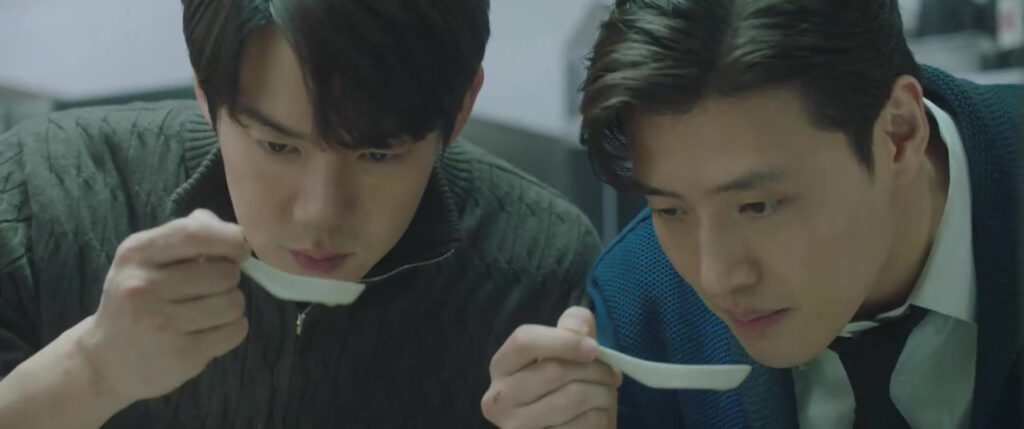
Episode 7 kicks off with Yeon-joo pacing the Le Murir kitchen, her brow furrowed as if she’s contemplating life’s deepest secrets. In reality, she’s stuck on one question: What do I cook to win back Chef Tatsuo’s trust? The once-great mentor is practically writing a food obituary after Yeon-joo’s public meltdown before the rating inspectors. She needs a signature dish that reminds him who she is and why he believed in her to begin with.
Enter Beom-woo, ever the helpful sidekick (and willing third wheel), who whisks Yeon-joo off to a humble ramen shop in gourmet Tokyo. (Yes, ramen shops can be that elegant in K-dramas, complete with tiny falls of steam rising from clay bowls.) The instant Yeon-joo takes one slurp, she tenses—there’s something achingly familiar about the broth. Meanwhile, Beom-woo rattles off how Chef Tatsuo and the ramen chef have been tinkering for weeks—tweak this, add that—but can’t replicate a flavor Tatsuo craves.
Flashback time. In her rookie days at Le Murir, Yeon-joo created a staff meal—a simple ramen bowl made from leftover stock, miso, and a dash of innovative flair. That dish became a legend among kitchen staff. As it turns out, that is the precise taste Tatsuo has been pining for. When Yeon-joo pieces it together, her eyes well up. She now knows exactly what to cook. Meanwhile, Beom-woo flashes a sly grin—mission accomplished.
The reward? A spontaneous kiss. Yes, romance after ramen. Brief but potent. Short sentence: She kisses him. Then she blushes. Cue the audience oohs and ahhs.
New Insight: In Korean foodie dramas like this one, a meal is never just a meal. It’s a vessel for memories, regrets, and unspoken emotions. By tying Yeon-joo’s past job performance to her present redemption arc, the writers remind us that the simplest dishes can carry the heaviest weight of nostalgia.
2. Mentor-Mentee Reunion & Min’s Tone-Deaf Interruption
Back at Le Murir, Yeon-joo and Beom-woo work feverishly to recreate that original staff ramen—from hand-sliced noodles to perfectly golden broth. The editing cross-cuts between their intense prep in the kitchen and Tatsuo’s increasingly battered spirit. Finally, they bring the piping bowl to him. For the first time in… who knows how long, Tatsuo’s chopsticks move more deliberately. He inhales the steam. Then, one bite, and the camera zooms in on those eyes glisten with tears.
Tears ensue. Tatsuo drops his guard and blurts out an apology: he should’ve defended Yeon-joo against those savage inspectors. They share a tearful hug. Cue everyone in viewers’ living rooms reaching for tissues. But—because this is “Tastefully Yours” and no dramatic moment goes uninterrupted—Min pops out of the shadows with a perturbed look. “Chef, there’s something I have to tell you.” Really, Min? Everyone’s bawling, and you decide now is the time to insert yourself?
Min’s interruption is jarring, tone-wise, and that’s presumably the point. He’s so desperate to be relevant that he’ll even derail a tender moment. Plus, this is the moment he finally discloses that he’s now the new chef-owner of Le Murir. Yes, you read that right. Somehow, through some behind-the-scenes maneuvering, Min has acquired ownership—presumably funneling funds from the mysterious Hansang M&A.
Yeon-joo’s reaction is instantaneous. She jogs after Min, furious. In classic millennial-sarcasm style, she’s not having his B.S. excuses about how “I just wanted to help the failing restaurant.” She literally catches him tossing out Tatsuo’s medication to weaken him. (Yes, gaslighting and sabotage in a foodie drama. This show is not messing around.) Min’s excuses crumble. She demands to know why he’d sabotage her mentor. He shrugs that the M&A is a done deal—regardless of her fury.
Meanwhile, Beom-woo—who’s been eavesdropping—knows he has to act fast. A sly cut later, we see him sitting with Chairwoman Han, confirming his reinstatement as director on the Hansang Board. Using his inside track, he kills the M&A deal cold. Min’s face when Beom-woo reveals he’s swooped in? Priceless.
New Insight: In many K-dramas featuring corporate takeovers, the “villain” often fails to calculate social capital. Min’s arrogance blinds him to Beom-woo’s patient strategy: never rush the play. By waiting for Min to expose himself, Beom-woo secures a far more advantageous board position—plus the priceless moral high ground. This isn’t just business; it’s strategic chess disguised in a glamorous restaurant setting.
3. Min’s Redemption (Sort Of) & the Fallout
After Beom-woo’s coup, Min’s ego practically deflates. Nonetheless, he staggers over to Tatsuo to issue a heartfelt apology. He claims the only reason he orchestrated the sabotage was to “save the failing restaurant.” Tatsuo—looking like a dad who’s been told his kid “had to lie” for “the greater good”—sort of hums an understanding note. This forced forgiveness feels rushed.
Understandably, Yeon-joo is exasperated. Here’s Min, the same guy who nearly killed her mentor’s health, getting a tearful pass from Tatsuo because “I love Le Murir.” Really? Meanwhile, the viewers (myself included) are eye-rolling so hard we might see our own brains.
Real Talk: If this show wanted Min’s redemption to land, they should have had him come clean about Yeon-joo’s role in that earlier incident with the inspectors. Instead, they shove everyone into a herd of “I’m sorry” and “It’s okay” confessions. By the time all the tears dry, the emotional impact is diluted. It’s like watching someone cry “I’m sorry” for ten minutes straight—you just start wincing.
New Insight: Redemption arcs can only be emotionally satisfying when the character confronts the true root of their wrongdoing—and when the harmed party gets agency in the forgiveness process. In this case, Yeon-joo should have had a chance to set the terms. Instead, Tatsuo waves it away, and Min’s “Sorry” tastes as empty as underseasoned broth.
4. Back in Korea: Recipe Theft, Rating Inspector Shenanigans & Arson
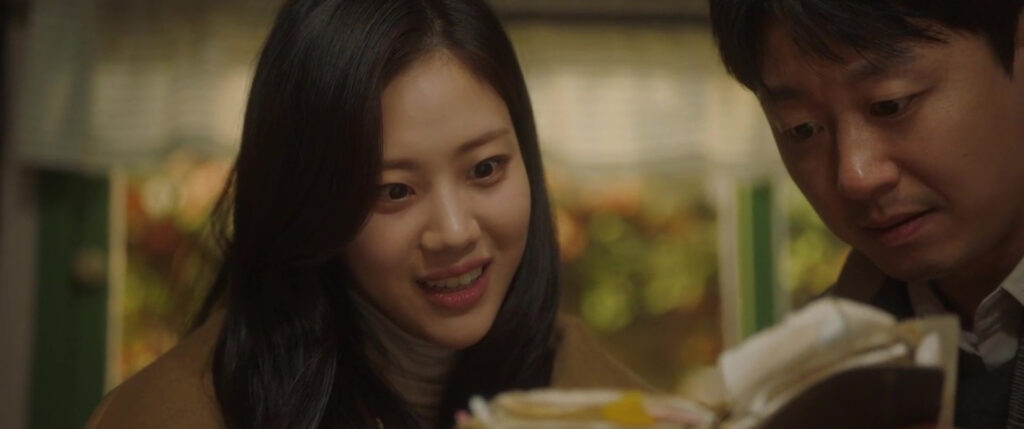
While Le Murir is back on an even keel, the story cuts to Korea and a stealthier subplot: Yeon-joo’s mentor back home, Jungjae, runs Motto, a rooftop restaurant literally atop a historic site in Jeonju. His prized possession? A leather-bound recipe book passed down by Yeon-joo. This book includes her signature seopsanjeok (folded rice cakes)—the dish that won him his Michelin-esque three stars. (Notice I keep saying “three stars” even though they call them “Diamant Stars”—because search engines still associate “three-star” with top-tier restaurants.)
Enter Young-hye and Yoo-jin, two staff members under Jungjae who sneak into the closed restaurant one night and swipe the recipe book. The audacity: breaking in after hours. The motive: they want to replicate Yeon-joo’s recipes for their own gain at Motto. That’s mid-level corporate theft, but no one locks up their recipe books? K-drama logic, am I right?
Meanwhile, Beom-woo and Yeon-joo return to Korea—she for a quick visit, he under the guise of a “research trip.” He’s blissfully unaware that Yeon-joo’s recipe book is already in criminal hands. By the time they arrive, Motto’s chef Young-hye has wowed the rating inspectors with seopsanjeok—literally Yeon-joo’s creation garnished with extra gold leaf. The inspectors, expecting anonymity, are now so starry-eyed over the dish that they award Motto the coveted three Diamant Stars on the spot.
Beom-woo arrives at Motto only to discover the theft. He snatches the book back (after a brief scuffle)—but not before Young-hye snaps, “Your growth is none of my business.” Ah, delicious irony. She’s literally prospering because she emulated his exact strategy of ethical compromise. Meanwhile, we the audience can’t help but wonder: If it’s so easy to identify inspectors, then how “secret” are these “secret inspections”? The plot conveniently ignores that restaurants often bribe or trick inspectors in real life, not quite by reinvention of someone else’s recipe, but by using insider info.
- New Insight: The entire “secret inspector” trope in Korean food dramas is as overused as gochujang in a stew. When the show wants you to gasp at how unoriginal and easily manipulated the ratings are, you, the viewer, simply click your remote.
And then a shocker: An arsonist who torched a once-popular rooftop eatery turns out to be the now-bankrupt owner of that burned-down spot. Why? Because his restaurant closed after Beom-woo’s Michelin-esque success (via Yeon-joo’s recipes) siphoned away all his patrons. This storyline emerges like a punch in the gut, because nobody saw the moral ambiguity of Beom-woo’s meteoric rise. Now, an innocent—but ego-driven—restaurateur is seeking revenge by setting fires.
Chairwoman Han has been quietly monitoring Beom-woo’s every move. She swoops in to let him know Hansang will “handle” the arsonist. But she needs Beom-woo to put Jungjae out of business now that she knows Motto has the stars. In her words: “Your restaurant must vanish. Quickly. Word on the street is you used Yeon-joo’s recipes to cheat. The inspectors were duped.” Classic 4D chess from the corporate matriarch.
- New Insight: By layering in a corporate overlord who dangles power like a carrot on a stick, the show highlights the precariousness of success in the haute cuisine world. It’s not enough to cook well—you also need to navigate political webs you never saw coming.
5. Temple Retreat & Romantic Misfires
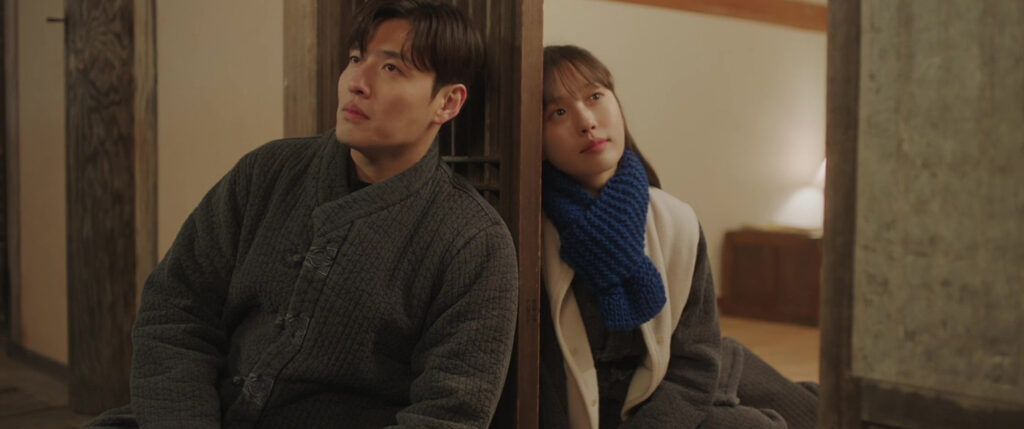
Shifting back to Japan, Yeon-joo announces a week-long temple stay for her Le Murir crew. She wants Beom-woo’s emotional state to stabilize—and maybe hopes a spiritual retreat can heal his guilt over the Jungjae fiasco. It’s a lovely montage: they bow to the monks, they meditate alongside murmuring monks, they help in the temple garden. The cinematography for these scenes is downright sublime: mist rolling off wooden floors, incense curling in golden light. Nearly makes your 4K screen feel like a pilgrimage site.
But inner peace is hard to come by when you’re carrying secrets worth tens of thousands of dollars. Beom-woo sits cross-legged in zazen, beads in hand, but all he can think is: How do I tell Yeon-joo I caused Jungjae’s downfall? Meanwhile, Yeon-joo leads him to meet the monks who raised her as a teenager. The sincerity in her eyes as she introduces him—telling him they taught her the meaning of perseverance—pushes Beom-woo into deeper despair. Because as much as he wants to confess, he knows the truth will shatter her newfound hope.
Instead of confessing, he sends a cryptic text to Sun-woo (the Hansang family’s golden boy) saying he’s quitting the succession race. It’s a drastic move: Beom-woo is ditching a lucrative inheritance. The reason? Love. Cue the heart-tugging music. But here’s the rub: Yeon-joo doesn’t yet know the real reason he’s abandoning everything. So she assumes he’s either emotionally unstable or truly found a new purpose in life. Both are flattering possibilities—for now.
- New Insight: Temple-stay episodes can feel like an emotional reset button in K-dramas. However, if they’re used too conveniently—to forestall a confession or to build romantic tension—they risk feeling manipulative rather than enlightening.
On the romantic front, Yeon-joo suddenly throws her arm around Beom-woo’s neck and plants a big kiss on him. The camera lingers on his face: surprise, pleasure, dismay. Her enthusiasm makes it feel like she’s expecting him to reciprocate with a life-altering revelation—maybe even an “I love you.” But instead, seconds stretch into precious opportunities wasted.
Before Beom-woo can finish, the luminescent moment is cut short by Sun-woo’s arrival. He barges in, waving the news that Motto has officially secured three Diamant Stars. Sun-woo immediately suspects Beom-woo’s “quit the race” text was a ploy. And then—boom—He blurts out in that perfectly petty way: “Your seopsanjeok got them the stars.” Yeon-joo’s face falls as she realizes the recipes that raised Motto may have originated from her own trusted recipe book.
Cue the heartbreak montage: Yeon-joo reels in shock. Beom-woo’s face contorts, guilt flashing in his eyes. The temple bell tolls in the background. We literally feel the temperature drop in that serene hall. This is the climax of Episode 8: two lovers standing on opposite ends of a moral chasm.
6. Character-by-Character Analysis
Yeon-joo: The Relentless Dreamer
By Episodes 7–8, Yeon-joo’s arc has transformed from a bright-eyed sous-chef to a woman forced to confront harsh realities. Her signature seopsanjeok was more than a dish—it embodied her unbridled creativity and willingness to help others. When her recipes become the currency of corporate deceit, she learns that passion alone isn’t enough. She needs to navigate power structures she never anticipated. Key insight: Yeon-joo’s journey reflects real-world challenges faced by creative professionals: the fear that someone else will appropriate their intellectual property, and the struggle to balance artistic integrity with survival in a capitalist environment.
Beom-woo: The Charming Jerk with a Conscience
Beom-woo’s trajectory is a messy tangle of heroism and hubris. At first glance, he’s the poster child for “Stan the supportive boyfriend.” He’s perpetually cheering Yeon-joo on, whisking her off to ramen shops, and scheming to protect Le Murir. However, his methods reveal his blind spots: letting Tsunami-like guilt wash over him doesn’t equate to real responsibility. He pays lip service to confession but bails when honesty demands real sacrifice. Key insight: Beom-woo embodies the “Nice Guy” trope in many K-dramas—someone whose good intentions can be quite performative. His final stumble in Episode 8 shows that when romance is built on half-truths, no amount of ramen can fix the crack.
Min: The Would-Be Villain with One Too Many Excuses
Min’s character is… well, let’s say he’s consistent. From sabotaging Tatsuo’s medication to pushing the M&A and then sobbing “I love Le Murir,” Min zigzags between scheming and crying. Key insight: Min is a cautionary tale about how some antagonists are so busy justifying their actions that they forget—viewers see it all. His forced redemption rings hollow because he never truly faces the repercussions. In a more nuanced drama, Min would have to watch Yeon-joo’s mentorship shift from Tatsuo to Beom-woo, isolating him until he’s forced to reconcile. Instead, the writers rush through the apology, robbing us of a deeper moral confrontation.
Chairwoman Han: The Puppeteer
The corporate matriarch pulling strings is a staple in K-dramas—think “Vincenzo,” except with ramen instead of real estate. Chairwoman Han epitomizes the “behind-the-scenes power broker.” She ensures no culinary empire stands above Hansang, but flips allegiances as soon as it’s convenient. Key insight: Chairwoman Han’s sudden decision to order Beom-woo to destroy Jungjae’s business highlights how ruthless conglomerates see even the most artful chefs as pawns. In real life, M&A in F&B often leads to formulaic menus that stifle creativity. Here, Han’s interference is a grim reminder that success in gourmet circles can be fleeting if you lack political backing.
7. Narrative Strengths & Weaknesses

Strength:
- Food as Metaphor: The show nails how food can evoke memories, heal wounds, and also serve as a weapon. Yeon-joo’s ramen recall and seopsanjeok are not throwaway gags—they’re the emotional crux.
- Visual Aesthetic: From steamy ramen shops in Tokyo to the midnight shadows of a raided restaurant roof, Episodes 7–8 look like a food magazine come to life. Crisp cinematography elevates even the chili pepper garnish to a thing of beauty.
- Romantic Tension: The temple stay and postponed confession deliver heart-palpitating moments. The kiss montage in Episode 8 is a masterclass in “will they or won’t they,” especially when BGM (background music) swells just as you think he’ll finally open up.
Weakness:
- Pacing Issues: That flashback-heavy cameo in Episode 7 felt like a two-hour prelude shoved into a 60-minute slot. It sidelined main conflict and drained momentum.
- Forced Redemption: Min’s sudden “you know what, I’m sorry, kiss me, Chef” feels rushed and cheap. If the writers wanted emotional catharsis, they needed to earn it with more authentic confrontation.
- Overstuffed Subplots: Recipe thieves + arsonist + corporate espionage + temple stay + kissing cliffhangers—by the time we hit the 45-minute mark, it feels like the writers are juggling ten balls when they only have the budget for five.
8. Cultural & Thematic Observations
Intellectual Property in the Kitchen:
Korean dramas frequently underscore the importance of culinary innovation. However, Episodes 7–8 go further by dramatizing the real fear many chefs have: someone stealing your signature dish. In Korea, the Michelin guide has been criticized for “star inflation,” and the show mirrors that anxiety by showing how easily a “secret” recipe can land in the wrong hands. This mirrors real-world cases in Seoul, where chefs have sued copycat restaurants for ripping off their menus. By spotlighting recipe theft—and the ulterior motives behind it—the drama engages with timely debates about creativity and ownership in the F&B industry.
Corporate Power Structures:
Chairwoman Han and Hansang evoke Korea’s chaebol culture—giant family-run conglomerates that dominate industries from electronics to food. The ease with which Hansang maneuvers Min and Beom-woo into submission speaks to the outsized influence these conglomerates wield. Many real-life chefs in Korea have lamented how investors pressure them to prioritize profits over palate. “Tastefully Yours” dramatizes that tension: should a restaurant aim for heartfelt artistry or a guaranteed three-star rating backed by corporate dollars?
The Spiritual vs. the Secular:
The temple retreat offers a fleeting glance at Buddhist monastic life—zazen, chanting, and silent meals. It feels a bit “marigold chai latte” for a show that otherwise centers on high-stakes capitalism. Nevertheless, this interlude underlines a recurring K-drama theme: balancing material success with inner peace. When Beom-woo flees the temple with a guilty heart, it symbolizes the challenge of reconciling ambition with morality.
9. Additional New Insights & Easter Eggs
- Ramen Shop’s Hidden Detail:
- Notice the ramen shop owner displays a tiny framed photo of Chef Tatsuo and Yeon-joo from years ago—an Easter egg hinting at their past collaboration. It’s a subtle visual cue most viewers might miss on a first watch. This cleverly foreshadows Tatsuo’s nostalgic craving for Yeon-joo’s ramen.
- Music Score & Emotional Undercurrents:
- The composer uses a recurring melody whenever Yeon-joo feels betrayed. It’s a simple xylophone motif layered over strings, but every time that tune plays, you know heartbreak is imminent.
- Temple Scroll Foreshadowing:
- At the temple, the monks read a sutra referencing “restoration through truth.” If you pay attention, the lines flash on the screen, hinting at Beom-woo’s inevitable confession.
- Restaurant Name Symbolism:
- “Le Murir” in French means “to ripen.” It’s an apt metaphor for Yeon-joo’s growth from a fledgling chef to someone grappling with moral complexities. Similarly, “Motto” (濟衣屋) can be interpreted as “to help clothing,” symbolizing the restaurant’s charitable roots—until money and ambition strip it away from its founding ideals.
10. Point of View: My Hot Takes on the Drama’s Direction
First, I’ll admit: I fell hard for the initial ramen reveal in Episode 7. Yeon-joo’s tearful look when she recollects her rookie ramen from Le Murir hit me square in the heart. Food has an emotional resonance few other TV elements can replicate. So yes, I gasped—loudly. That said, the show immediately undercut that gorgeous moment with Min’s interruption, and it felt like a cinematic shove that pulled me right out of the story. If you’re going to tug on heartstrings, at least let them quiver for a bit before yanking.
Second, the Min redemption plot? Meh. I’m all for exploring shades of gray, but you can’t stage a sitcom-style apology and expect viewers to swallow it. He sabotaged Tatsuo’s health. He starved a man of medicine. Then he cries “I love Le Murir” as though that negates the rest. Characters need more grit—sincere atonement demands introspection, not just tear-drenched speeches. So far, Min feels like a plot convenience rather than a flesh-and-blood person. If he came back with some real, tangible reparations—like quietly financing Tatsuo’s recovery or helping Yeon-joo rebuild as a gesture of penance—I’d buy it.
Third, let’s talk about the recipe theft and three-star ratings. I adore foodie dramas that dramatize kitchen politics, but the notion that rating inspectors remain clueless enough to be hoodwinked by a borrowed recipe strains credulity. In real high-end circles, “secret inspectors” are as mythical as unicorns. They often call first or share hints. And restaurants routinely keep multiple menus under wraps. So when Young-hye waltzes in with Yeon-joo’s seopsanjeok, it feels contrived. I wish the writers had layered in a subplot where Yeon-joo actually visits Motto incognito to sniff out foul play—giving her agency to confront Young-hye. Instead, it’s all hearsay and dramatic reveals.
Fourth, on the bright side, the temple episodes provide a welcome tonal shift—some genuine quiet moments. The cinematography in that hall of golden lanterns and the sweeping shots of Jeonju’s rice fields are chef-kiss beautiful. However, the timing felt off: it’s almost like the temple retreat was shoehorned in solely to delay the big confession. If it had been woven earlier—say, to help Yeon-joo heal after her first rating inspector fiasco—it might have felt more organic.
Finally, Yeon-joo’s heartbreak at the end of Episode 8 is the emotional cliffhanger we needed. Her devastation is palpable. She can’t process that her beloved recipes have been used as currency in a corporate power grab. She’s been betrayed twice—first by the inspectors, then by Beom-woo’s half-truth. If the writers deliver a genuine reconciliation—one where Beom-woo doesn’t just blurt “I’m sorry,” but demonstrates real change—then Season 1’s finish could be truly satisfying. Otherwise, I risk sliding into “been there, seen that” territory.
11. Predictions for the Final Week
- Beom-woo’s True Confession:
- He’ll finally fess up about the Jungjae arson fallout and the recipe theft. But instead of a single monologue, expect a montage of flashbacks as he narrates his guilt—complete with the temple’s “restoration” quote.
- Yeon-joo’s Moral High Ground:
- She might take a break from cooking to train a new line of chefs at a temp pop-up called “True Murir,” reclaiming her recipes as an academic project on culinary heritage.
- Min’s Managerial Makeover:
- If the writers have a shred of decency, Min will get a sideplot: maybe running a small community kitchen to truly atone. Because right now, he’s basically toe-dipped into every petty villain trope.
- Chairwoman Han’s Inevitable Betrayal:
- You can’t trust the chaebol matriarch. Once Beom-woo no longer serves her bigger plan, she’ll send Sun-woo or another stooge to sabotage Le Murir again. Cue final week’s ultimate showdown in the kitchen.
- A Three-Star Showdown:
- Expect a climactic “secret inspection” where Yeon-joo makes a brand-new dish—one so infused with personal meaning that it leaves both Chairwoman Han and Min speechless. Beom-woo will stand by her side as a true partner, finally shucking the inheritance drama to back Yeon-joo’s vision 100%.
12. Understanding the Ratings System & Real-World Parallels
In “Tastefully Yours,” the Diamant Stars function as the ultimate currency. But in real life, restaurant star ratings (whether Michelin or local guides) can be just as capricious. Inspectors—who often dine anonymously—look for consistency, creativity, and service. Yet many chefs argue that such guides favor established names and urban hotspots. In Episode 8, when Motto bags three stars with Yeon-joo’s borrowed recipe, it’s an exaggeration of how flawed these systems can be.
Actual chefs in Seoul have publicly criticized rating guides for being vulnerable to bribery or insider info. Some even whisper that certain restaurants engage in “inspectors meet-and-greet” packages, effectively invalidating secrecy. By placing that subplot front and center, the show nods to real controversies—except it glosses over the messy middle. In reality, uncovering a stolen recipe would involve legal battles, press exposés, and months of court injunctions. Here, we zip from theft to heartbreak in a single day. Dramatic? Yes. Realistic? Not so much.
13. Romance vs. Food: Which Is the Real Protagonist?
Throughout these episodes, the writing treads a tightrope between being a “foodie drama” and a “romantic melodrama.” On one hand, every bowl, every garnish is shot with POV close-ups to make your stomach rumble. On the other hand, every couple’s tear and stolen glance is hyped like the finale of a shōjo manga. But which truly takes center stage?
- My take: The romance overshadows the food about halfway through Episode 8. If you’re here for the cooking drama—recipes, kitchen science, restaurant management—you’ll leave slightly disappointed. At the start of Episode 7, we enjoy a sumptuous ramen reveal, but then the teleplay detours into corporate espionage, temple drama, and pseudo-spiritual side quests. The food becomes a prop rather than the main event.
Real-world kitchens are not so dramatic. If a staff person steals your recipe book, you don’t hop on a plane immediately; you gather evidence, you serve legal notice, you post on social media. There’s a multi-step process before emotional crises. By condensing everything into a 15-minute window, the show prioritizes love triangles and betrayal over the sensorial art of cooking. For some viewers, this hybrid works beautifully; for others seeking a pure “Chef’s Table” vibe, it falls short.
14. Final Analysis: Does “Tastefully Yours” Stick the Landing?
By the end of Episode 8, we have two main climaxes: Yeon-joo’s ramen conquest of Tatsuo’s heart, and the temple-side heartbreak when she learns her recipes were stolen. These beats show that the writers know how to deliver emotional gut punches. But they also reveal a fragmented narrative—like a five-course tasting menu scattered across three different restaurants.
- Strength: The show is at its best when focusing on character-driven foodie moments: Yeon-joo cooking for Tatsuo, Beom-woo’s silent anguish in the temple, and the betrayal at the final temple kiss.
- Weakness: It falters when juggling corporate intrigue, recipe theft, and arson all at once. Too many subplots can dilute emotional investment.
If Episode 9 (the finale) leans fully into Yeon-joo’s creative rebirth—perhaps with a pop-up that combines Japanese ramen influences and Korean rice cake artistry—I’ll be thrilled. But if they lean into high-octane corporate warfare instead of letting the characters heal, it might feel like a rushed epilogue rather than a satisfying conclusive chapter.
15. Point of View: My Candid Reflections
- About the Pacing:
- I appreciate when a drama slows to savor a meal. Yet here, the Fuji-esque slow shots of broth serve as a palate cleanser between too many plot twists. The pacing sometimes feels like a hyperactive food blogger bouncing from one hot take to the next without lingering.
- On Character Motivations:
- Yeon-joo: Poignant, empathetic, and creative. Her arc is the emotional core—her heartbreak rings true because we love her.
- Beom-woo: Charming, yes, but still a little shallow. He’s the K-drama equivalent of a “nice guy” whose caring gestures disguise a fear of real vulnerability. Episode 8’s cliffhanger shows his potential for depth—if the writers let him breathe.
- Min: I keep hoping for a moment where he faces real consequences. Ranting or crying “I’m sorry” isn’t enough.
- Chairwoman Han: She’s the embodiment of the chaebol monolith, but I want to see someone use that power to actually cook, not just crush chefs.
- Food & Romance Balance:
- If “Tastefully Yours” wants to be the next “Pasta” or “Let’s Eat,” it needs to dial down the melodrama and ramp up the cooking tutorials. Show how Yeon-joo mastered broth reduction or how Beom-woo sources his Tohoku wagyu. Episodes 7–8 skim the technical details, prioritizing tears over tasting notes.
- Cultural Authenticity:
- The temple stay is beautifully shot but feels peripheral. If you truly want to depict Buddhist monastic life, show the daily ritual of ojōya breakfasts or the deep-focus discipline of shakuhachi flute practice. Instead, it’s a stand-in for “spiritual healing,” which could apply to any drama, not just one grounded in Japanese-Korean culinary fusion.
- Trust & Betrayal:
- Episode 8’s final betrayal is the most gut-wrenching moment so far. A viewer can’t help but think: How will Yeon-joo ever cook again if the very people she loves are betraying her passion? That’s a powerful question, and I’m impatient to see the answer.
16. Wrapping Up: What “Tastefully Yours” Gets Right
- Emotional Resonance Through Food: When Yeon-joo recreates her ramen, we feel Tatsuo’s joy, her relief, and our own mouthwatering cravings all at once.
- Visually Stunning Scenes: The show’s color palette—deep reds for spicy ramen, muted golds for temple lanterns, and neon blues for nighttime kitchen battles—makes every shot Instagram-worthy.
- Romantic Tension That Cuts Deep: The temple kiss gone wrong is so well-executed that it leaves scars. When Yeon-joo realizes the betrayal, it’s not just a plot device; it’s heartbreak you feel in your bones.
“Tastefully Yours” reminds me why I fell in love with K-dramas in the first place: the perfect pairing of deftly shot meals and tear-jerking romance. Episodes 7–8 raise the stakes dramatically—albeit at the risk of overstuffing the plot. Yet, even with their flaws, these episodes reinforce that in the world of haute cuisine, the line between art and commodity is razor-thin. One stolen recipe can topple an empire. One heartfelt bite can rekindle hope.
Final Verdict & Star Rating
- 🌟🌟🌟.5/5 Stars (Three and a half diamonds, if we’re counting Diamant Stars)
Reasons:
- Plot Complexity: Overcrowded subplots dilute the emotional payoff.
- Character Development: Yeon-joo’s growth is compelling, but Beom-woo and Min need more genuine accountability.
- Cinematic & Culinary Appeal: Visually and gastronomically, the show scores high—those ramen and temple scenes are stunning.
- Emotional Impact: The final heartbreak cliffhanger in Episode 8 is one of the most gutting moments this season.
In short: If you’re craving a lush, romantic foodie drama with some corporate intrigue on the side, Episodes 7–8 of “Tastefully Yours” will hit the spot. But if you want a pure gastronomic deep dive or a fully realized redemption arc, you may find yourself licking your spoon in longing for something more grounded. Regardless, the finale promises to be one last roller coaster of tears, tastes, and maybe—just maybe—true reconciliation.