



What was meant to be a chill, scenic cycling trip across the Causeway turned into one of those “how did I end up here?” life moments. For Singaporean cyclist Joel Liu, known online as @injaee, Johor wasn’t just a pit stop. Instead, it became an unexpected lesson in humanity, generosity, and kampung-level kindness that honestly hits harder than any motivational quote on Instagram.
A Ride That Was Supposed to Be Easy
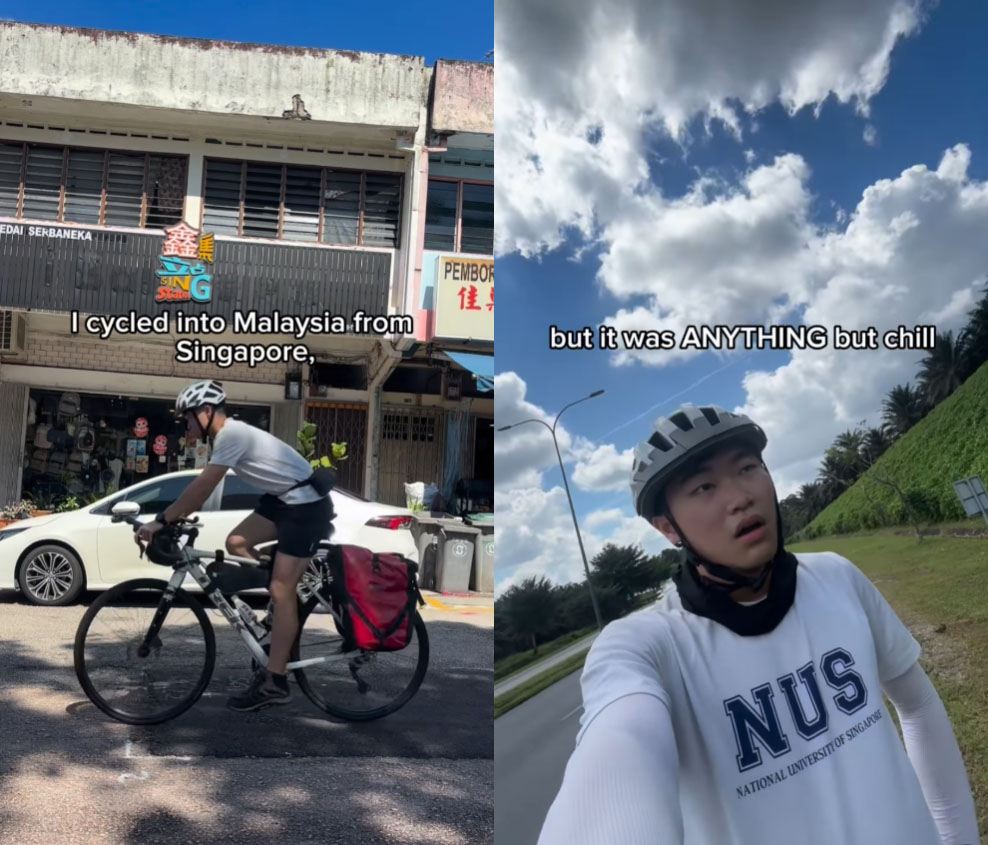
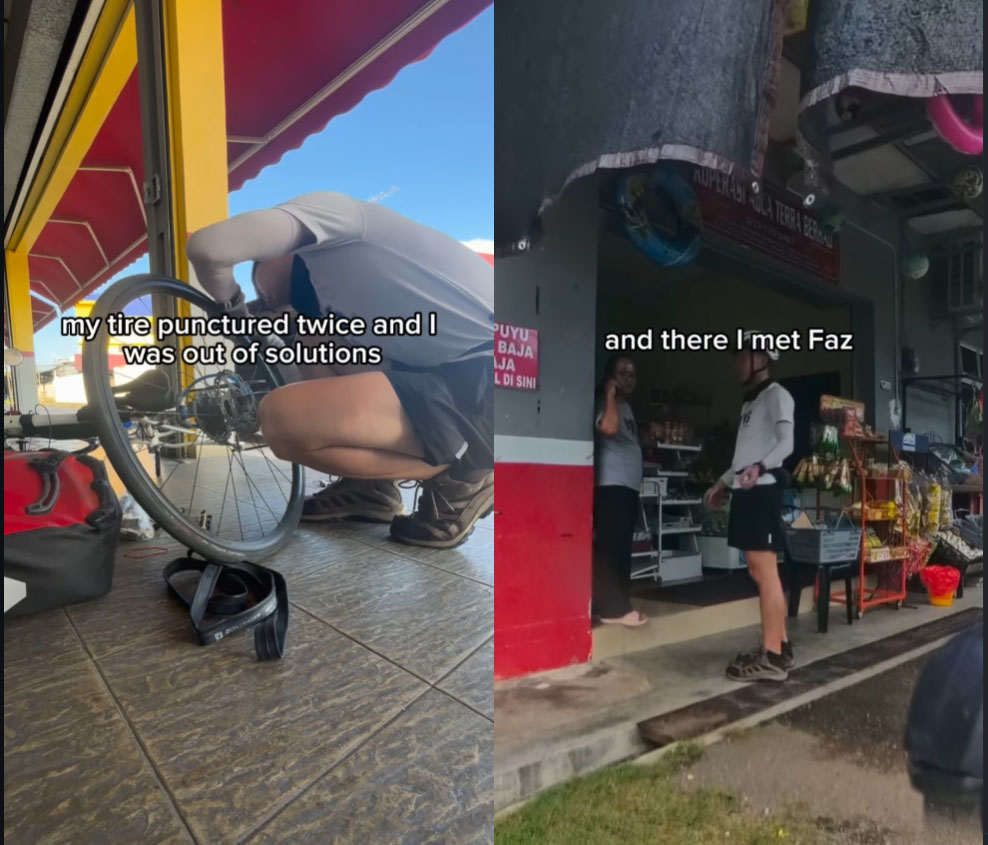
At first, everything felt manageable. Joel cycled from Singapore into Johor, expecting a smooth ride and some quiet road therapy. However, somewhere near Kota Tinggi, reality decided to show up uninvited. His bicycle tyre punctured. Not once, but twice. By then, all his repair options were used up.
To make things worse, the sun was already setting. No campsite booking. No Plan B. Just vibes… and not the good kind.
In a video later shared on Instagram, Joel summed up the moment perfectly: “This is kinda lame.” And honestly, relatable.
With no other choice, he pushed his bike for nearly three kilometres, walking toward what he jokingly called the “nearest human civilisation.” That civilisation turned out to be a small kampung.
Meeting Faz, the Guy Who Knows Everyone
That long, sweaty walk led Joel to Faz, a local who immediately offered him a seat and listened to his story. No rushing. No judgment. Just calm kampung energy.
What stood out was how connected Faz seemed to be. According to Joel, “He somehow knows everyone in the kampung.” And it wasn’t an exaggeration.
Faz started making calls. One to his mum’s friend. Another to a friend’s father. Slowly but surely, he managed to secure a vacant campsite spot for Joel that night. No drama. No “eh, troublesome leh.” Just help.
For someone Joel had literally just met, the effort felt unexpectedly comforting. Still, the night wasn’t done throwing challenges.
Two Hours, DIY Fixes, and Serious Patience
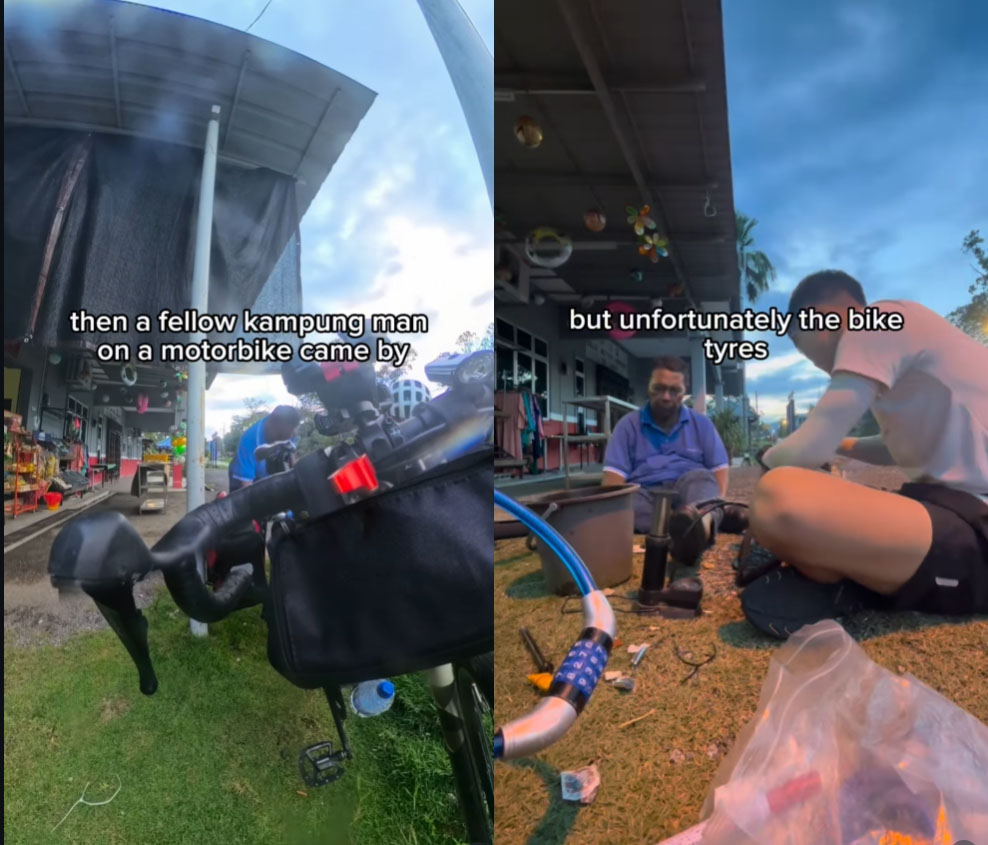
Soon after, another villager named Isa showed up. After hearing about the punctured tyre, Isa sat down and got to work like it was his own bike.
They tried everything they could with whatever tools were available. Isa even cycled back home multiple times to grab more equipment. No sighing. No complaints. Just problem-solving mode.
Joel later reflected that he had probably never spent two hours helping a stranger fix anything in his life. That thought alone says a lot.
In the end, despite their best efforts, the tyre couldn’t be saved. Joel accepted the reality. He would have to walk another seven kilometres to the campsite. Tough, but it is what it is.
Or so he thought.
A Van, a Burger, and a Missed Family Dinner
Isa suddenly disappeared. For a moment, it felt like, “Okay, that’s it. This is where I suffer quietly.” But nope.
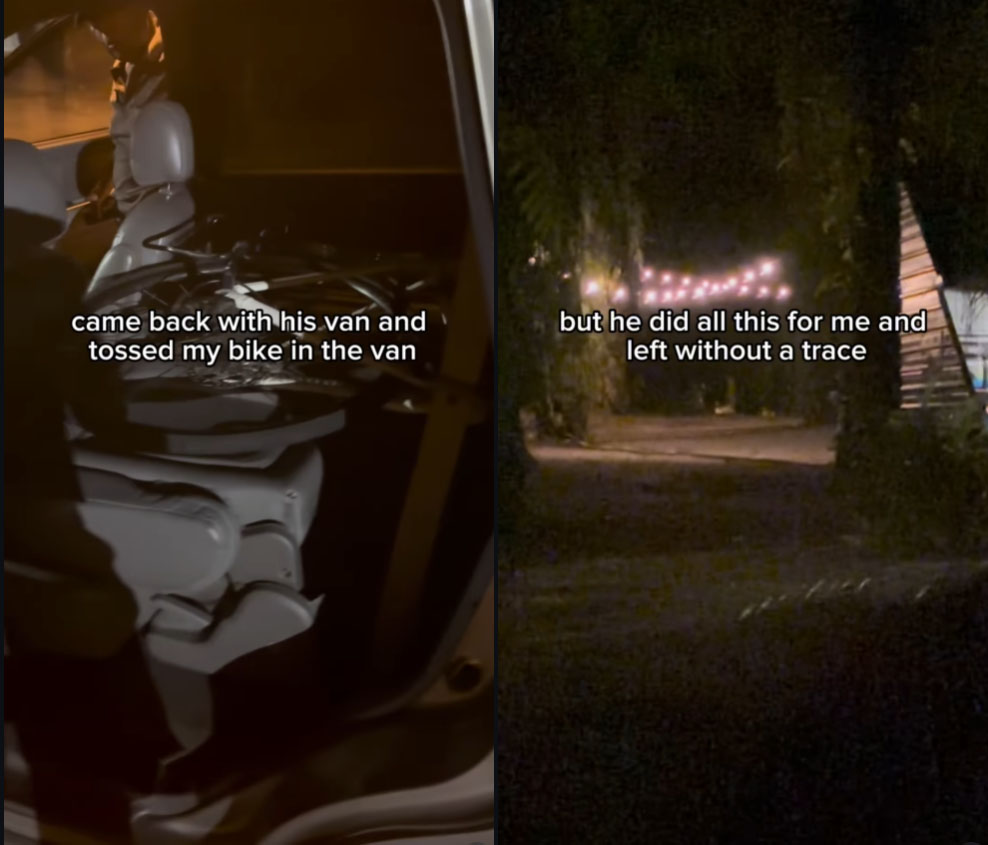
Isa came back — not on his bike, but in a van.
Without hesitation, he loaded Joel’s bike inside and drove him straight to the campsite. No negotiation. No awkwardness.
Before that, though, Isa made a quick stop at a local stall and bought Joel a hamburger. A small gesture, but somehow it hit harder than a fancy meal.
When Joel asked if Isa had already eaten or if his family was waiting, Isa brushed it off casually. He said he’d just eat the leftovers later.
Let that sink in for a second.
This man delayed his family dinner to help a complete stranger. Someone he’d likely never see again. And then, just like that, he left. Quietly. No expectations. No “you owe me.”
The Question That Stayed
Looking back, Joel didn’t dramatise the experience. He didn’t call it heroic. Instead, he turned the question inward.
We often assume people in developing or rural areas have less. Less money. Less comfort. Less opportunity. Yet in that moment, Joel felt like he was the one lacking something.
He asked a question that honestly made a lot of people pause:
“What does he have that I don’t?”
And yeah, that question stings a bit — in a good way.
Why This Story Hit Home
The video struck a chord online. Many viewers pointed out that this kind of kindness isn’t rare. It’s just often overlooked.
One commenter wrote that kampung folks are usually friendly and helpful, as long as you’re respectful. Another simply said, “That’s Malaysia for you.”
What started as a flat tyre and a fading sunset turned into a reminder that generosity doesn’t need hashtags. Sometimes, it just shows up quietly, with a van, a burger, and zero expectations.
My Take
Let’s be real for a second. We live fast. We plan everything. We optimise our time like it’s a productivity contest. Helping a stranger for two hours? That feels almost… inconvenient.
Yet this story proves something simple but uncomfortable: kindness often costs time, not money. And time is the one thing we guard the most.
Maybe we don’t need to move to a kampung to learn this. Maybe we just need to slow down, be less guarded, and show up when someone’s day goes sideways.
Because one day, it might be us pushing a bike toward “nearest human civilisation,” hoping someone cares.