

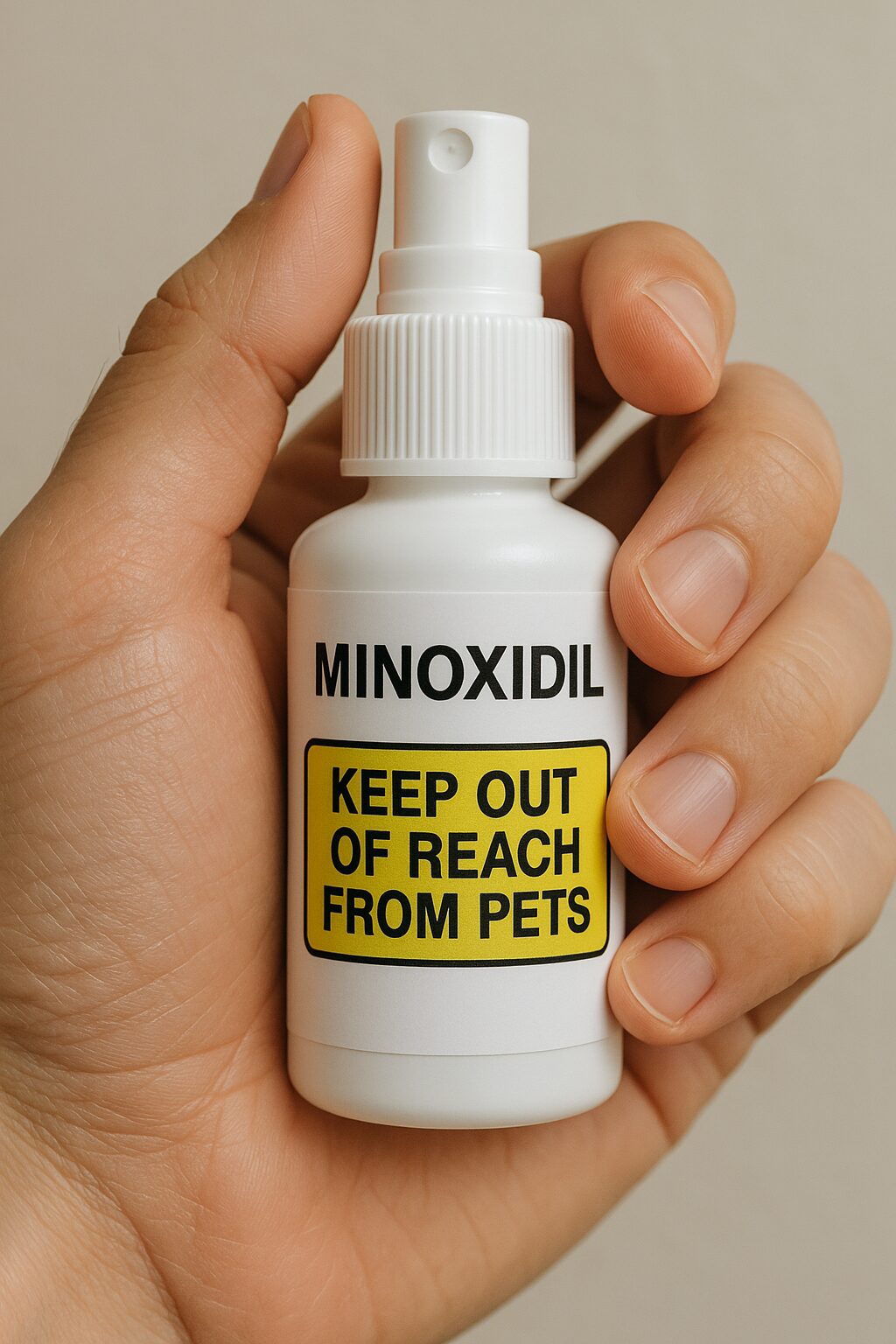

If you’re one of the millions battling thinning hair or androgenetic alopecia, you’ve probably considered—or even tried—minoxidil, better known by its trademarked name, Rogaine. After all, it’s the only topical treatment approved by the FDA to help regrow hair. Yet, while minoxidil is generally safe for humans, it poses a severe risk to our furry companions. Shockingly, a single drop of this miracle elixir can spell disaster for a curious cat or dog. In this comprehensive guide, you’ll learn why topical minoxidil products should come with bold warning labels, how to spot pet poisoning, real-life anecdotes that underscore the danger, and practical steps to keep your four-legged friends safe.
Understanding Minoxidil: A Quick Primer
First things first: what exactly is minoxidil? Originally developed as an oral medication for high blood pressure, researchers noticed an unexpected side effect—patients sprouted new hair. Capitalizing on this discovery, pharmaceutical companies reformulated minoxidil into a topical solution. By 1988, the U.S. Food and Drug Administration (FDA) had approved 2% minoxidil for androgenetic alopecia (male- and female-pattern hair loss) in both men and women.
- Mechanism of Action: When applied to the scalp, minoxidil widens blood vessels, improving blood flow to hair follicles. This enhanced circulation can extend the growth (anagen) phase of hair, encouraging thicker, fuller strands.
- Forms Available: Solutions (liquid), foams, and even combined with other active ingredients like tretinoin.
- Standard Dosage: Twice daily application for solutions; once daily for higher-concentration foams (5%).
However, despite its proven efficacy in humans, minoxidil’s safety margin plummets dramatically when it comes to pets.
Why Cats and Dogs Are at Risk
Unlike humans, many animals—especially cats—lack certain liver enzymes that help metabolize minoxidil. Consequently, the drug accumulates in their bloodstream, leading to toxic levels in a matter of minutes or hours. Compounding the problem, our pets’ inherent curiosity and grooming habits make them prime candidates for exposure:
- Direct Contact: A dog sniffs or rubs against wet hair.
- Ingestion: A cat or dog licks the scalp, pillowcase, or any fabric infused with residual solution.
- Absorption Through the Skin: Though rare, prolonged skin-to-skin contact can transfer trace amounts.
Why Cats Fare Worse Than Dogs
Cats are notoriously sensitive to a host of human medications. For minoxidil, even dermal contact can trigger acute toxicity. Reports indicate that cats may exhibit life-threatening reactions faster and at lower doses than dogs.
Recognizing the Warning Signs of Minoxidil Poisoning
Symptoms often manifest within 45 minutes to a few hours after exposure. Still, some signs—like low blood pressure—aren’t easily spotted at home. Always err on the side of caution and seek veterinary attention at the first hint of trouble. Key signs include:
- Lethargy & Weakness: Your pet seems unusually tired or reluctant to move.
- Breathing Difficulties: Rapid, shallow, or labored breaths.
- Hypotension (Low Blood Pressure): May appear as dizziness in pets, though subtle.
- Tachycardia (Rapid Heart Rate): A racing heartbeat; bounding pulses feel abnormally strong.
- Vomiting: With or without blood.
- Agitation & Restlessness: Pacing, whining, or an inability to settle.
- Neurological Signs: Tremors, convulsions, and seizures can occur in severe cases.
If you notice any of these, phone your veterinarian or pet poison hotline immediately.
Real-Life Case Studies: When Rogaine Turns Deadly
Case #1: Chihuahua Seizures and Rogaine (Report by “SpecificJunket8083”)
A Reddit user named “SpecificJunket8083” shared a chilling anecdote. After losing weight and experiencing hair thinning, she began using Rogaine twice. Twenty-four hours later, her six-year-old chihuahua suffered two seizures. The emergency vet found no underlying cause and diagnosed idiopathic epilepsy by default. Only later did the owner realize the timing: her dog’s seizures began the day after the first minoxidil application. Although the pup recovered on anti-seizure meds, the correlation was too strong to ignore. The solution was promptly trashed, and alternative hair-loss remedies—biotin supplements and nourishing shampoo—became the go-to.
Case #2: Eight Weeks on Minoxidil, Two Cats and a Nonchalant Dermatologist (Report by “Jemma6”)
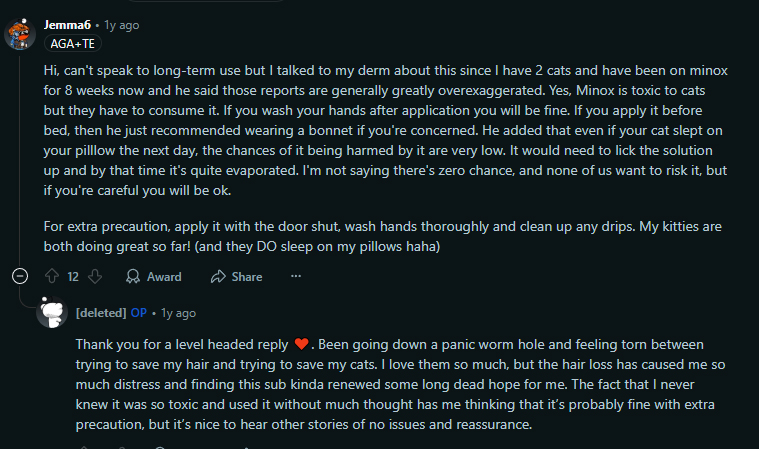
Another pet owner, Redditor “Jemma6,” reported being on minoxidil for eight weeks while owning two affectionate cats. Her dermatologist downplayed the risks, stating that cats must ingest the drug to face serious harm. By applying in a closed room, washing hands thoroughly, and wearing a hair bonnet, she managed to keep her cats unscathed—despite them sleeping on her pillow. While this tale ended well, it reinforces that precautionary measures are the only guarantee when using topical minoxidil around pets.
Prevention 101: Keeping Your Pet Safe
Even if you follow every veterinary recommendation, accidents happen. Here’s a step-by-step checklist to minimize risk:
- Designate a “Minoxidil Zone”
- Apply the solution in a room your pet doesn’t frequent.
- Keep the door closed for at least 30 minutes post-application.
- Clean Up Meticulously
- Wipe any drips or spills on countertops, sinks, and your hairline immediately.
- Launder pillowcases and towels regularly under hot water.
- Wash Your Hands—Thoroughly
- Use warm, soapy water and scrub for at least 20 seconds.
- Consider wearing disposable gloves if you’re particularly clumsy or have very playful pets.
- Time It Right
- Apply minoxidil before you head to bed—when your pet is likely tucked away in their crate or bed.
- Keep pets out of the bedroom until the solution has fully dried (roughly 30–60 minutes).
- Invest in Extra Barriers
- Use a satin bonnet or shower cap to trap any residual foam or liquid.
- Slip into a clean t-shirt post-application to prevent transfer to sheets or furniture.
- Educate Household Members
- Make sure everyone who uses the product knows the dangers.
- Post visible warning signs near application areas as reminders.
Packaging & Labeling: A Call for Stricter Warnings
At present, minoxidil packaging rarely highlights the imminent threat to pets. Compare this to household cleaners or certain insecticides—these products come with glaring danger icons. Why shouldn’t Rogaine carry a similar emblem?
- Bright Animal Hazard Icon: A universally recognizable silhouette of a cat and dog with a “skull and crossbones” overlay.
- Bold Text Warning: “Harmful or fatal if ingested by cats or dogs. For human use only.”
- Quick-Reference QR Code: Link to a pet-safety webpage with tips, veterinarian contacts, and first-aid steps.
- Color-Coded Application Zones: A detachable card that you can stick on your bathroom mirror or medicine cabinet.
By adopting these changes, manufacturers can significantly reduce accidental exposures. After all, when you buy bleach or ammonia, you don’t need a lecture on why it’s dangerous—you see a skull-shaped icon and step back. Why should Rogaine be any different?
Beyond the Label: What Veterinarians Want You to Know
Pharmacokinetics in Pets vs. Humans
Humans metabolize minoxidil primarily through the liver’s sulfotransferase enzymes. Once converted, the byproducts exit mainly via the kidneys. Cats, however, have underdeveloped sulfation pathways. Therefore, even tiny amounts of topical minoxidil can flood their system unchecked. Dogs have somewhat better metabolism but still far less capacity than humans.
The Evaporation Myth
Some people believe that if minoxidil dries before a pet comes near, it’s safe. In reality, the drug can remain active on fibers and skin for hours. Even fully “dried” foam deposits may still transfer an active dose upon contact. Relying solely on evaporation is a gamble no responsible pet owner should take.
First Aid for Suspected Exposure
- Do NOT induce vomiting unless explicitly instructed by a veterinarian.
- Rinse your pet’s mouth and fur with lukewarm water—gently blot, don’t scrub.
- Collect packaging and any remaining product to show your vet.
- Monitor vital signs: count breaths per minute, note any trembling or drooling.
- Call pet poison control (e.g., ASPCA Animal Poison Control Center at +1-888-426-4435) for immediate guidance.
Looking to the Future of Hair Loss & Pet Safety
- Alternative Topicals:
Research into natural extracts—like rosemary oil and pumpkin seed oil—shows promise in promoting hair growth without the toxicity concerns of minoxidil. In time, we may see over-the-counter blends that match Rogaine’s efficacy with a pet-safe profile. - Delivery Systems:
Imagine a minoxidil patch that adheres to the scalp and releases the drug slowly. Once removed, there’s zero residue on pillows or hands. Such “closed-system” delivery would drastically cut accidental pet exposures. - Bioengineering Solutions:
Advances in gene therapy might one day offer a long-term fix for androgenetic alopecia. If researchers can target hair follicle genes directly, you could kiss topical treatments—and their hazards—goodbye. - Smart Packaging:
RFID-enabled caps could detect when a bottle is opened near a pet microchip (if your dog or cat is chipped). An alarm or blinking LED would alert you to relocate or secure both bottle and pet.
My Point of View
I’ve seen too many pet owners unknowingly flirt with disaster. In one clinic, a golden retriever nearly succumbed to hypotensive shock after licking minimal amounts of dried foam off a sofa. It’s all too easy to underestimate minoxidil’s latent potency. Supermarket shelves overflow with warnings on bleach and batteries—but hair-regrowth products still slip by with a discreet “keep out of reach of children.” What about our pets? They can’t read.
In my view, pharmaceutical companies owe it to consumers—and to their beloved animals—to prioritize safety innovations now. Whether through more conspicuous labeling, revamped formulations, or entirely new delivery methods, the ball is in their court. Meanwhile, as responsible humans, we must err on the side of vigilance. If that means applying minoxidil at the hair salon instead of home, or burying it in a locked medicine cabinet, so be it. Because the price of negligence could literally be your pet’s life.
A Shared Responsibility
Minoxidil stands as a triumph in dermatology—no question. But with great power comes great responsibility. If you’re using Rogaine or any other minoxidil-based product, recognize that its benefits for you could translate into a medical emergency for your furry friend. By adopting robust safety measures—meticulous application, effective cleanup, and advocating for stronger packaging warnings—you can continue your hair-regrowth journey without sacrificing your pet’s well-being.
At the end of the day, every bottle of minoxidil should read like a cautionary tale: “This product is for human use only. Keep closed and out of reach of all pets. May cause severe toxicosis and death if ingested.” Until that day arrives, we must stay informed, stay cautious, and share these vital warnings with every dog lover and cat owner we know. After all, our pets rely on us to make the right choices—hair regrowth be damned.