Honestly, this feels like one of those “blink and 30 years gone” moments that hit you right in the feels.
A recent post on the Heritage SG Memories Facebook group has people pausing mid-scroll. Not for drama. Not for gossip. But for something way more human.
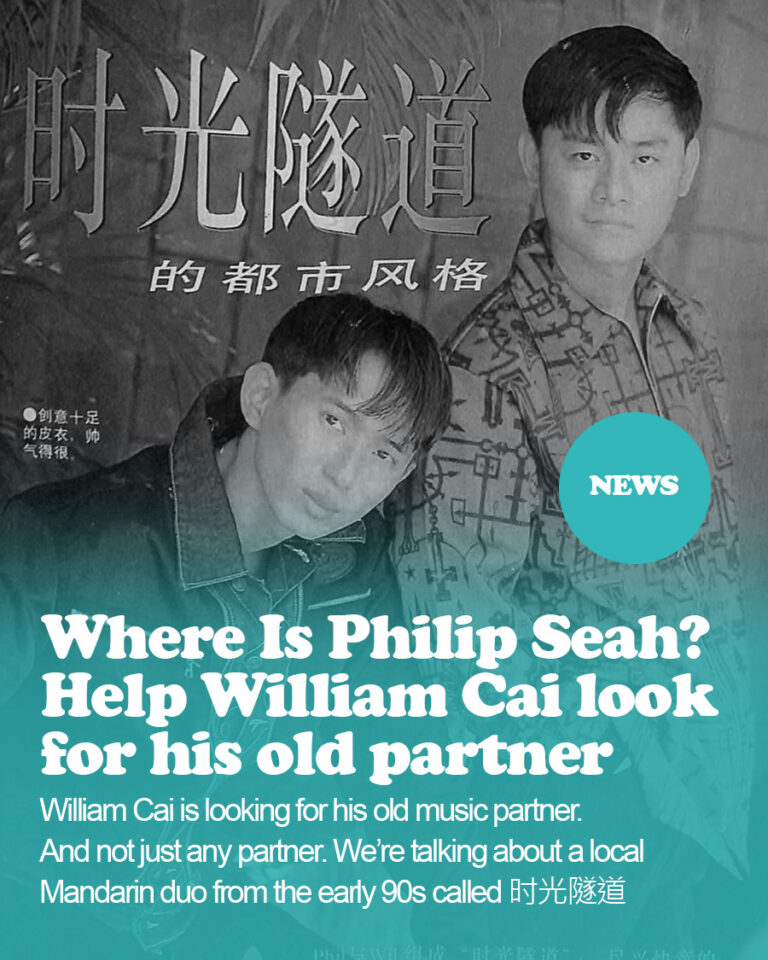
William Cai is looking for his old music partner.
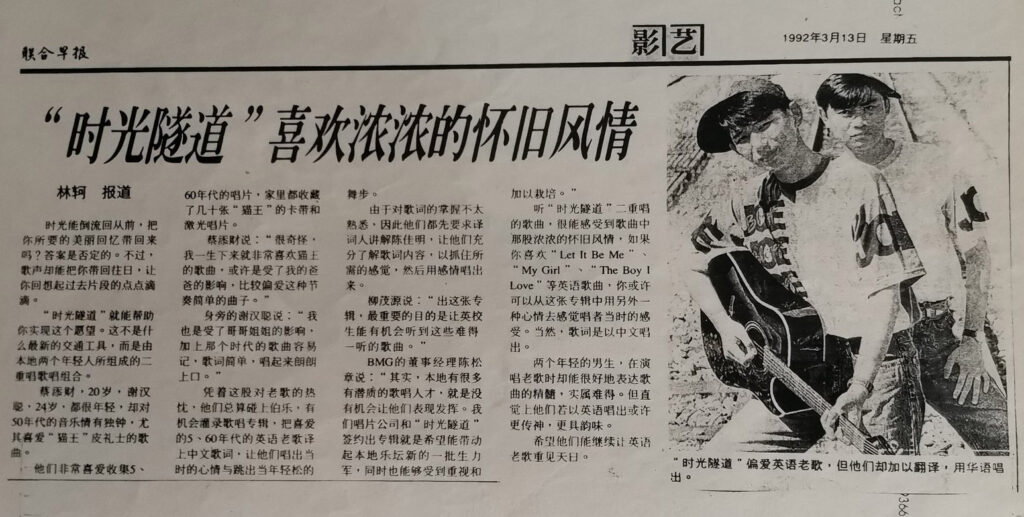
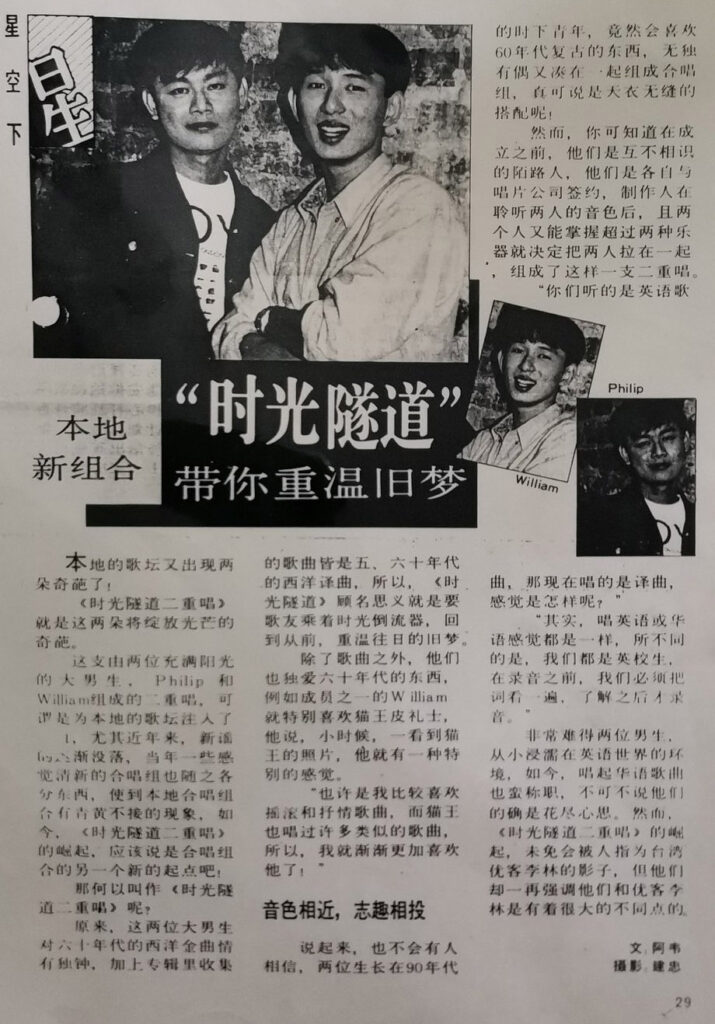
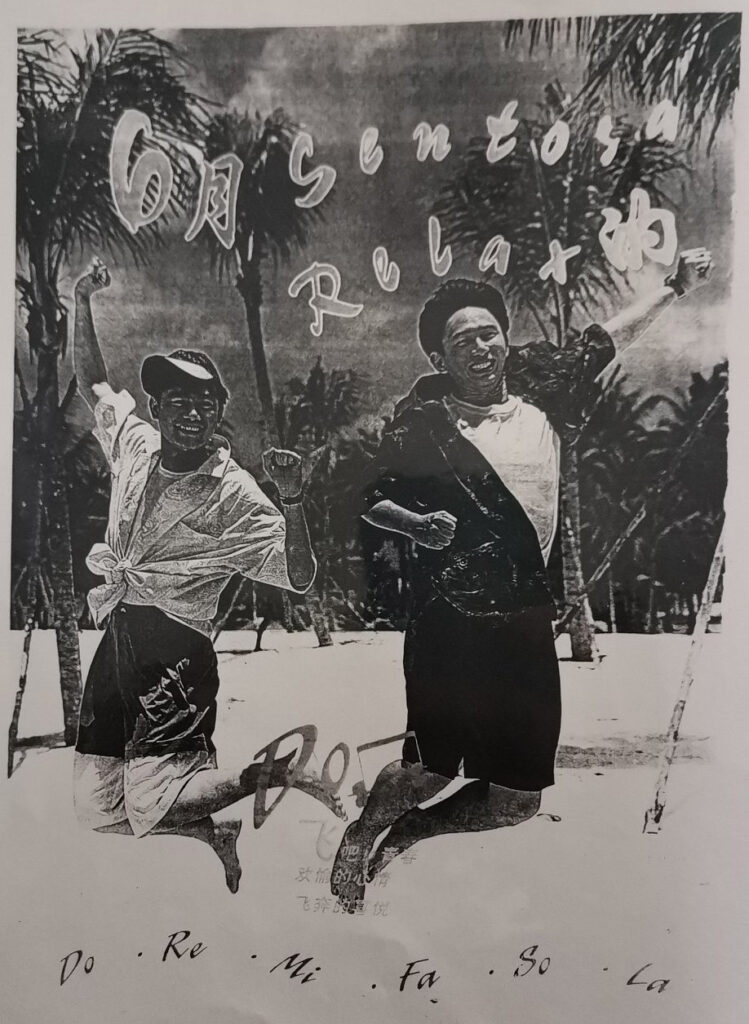
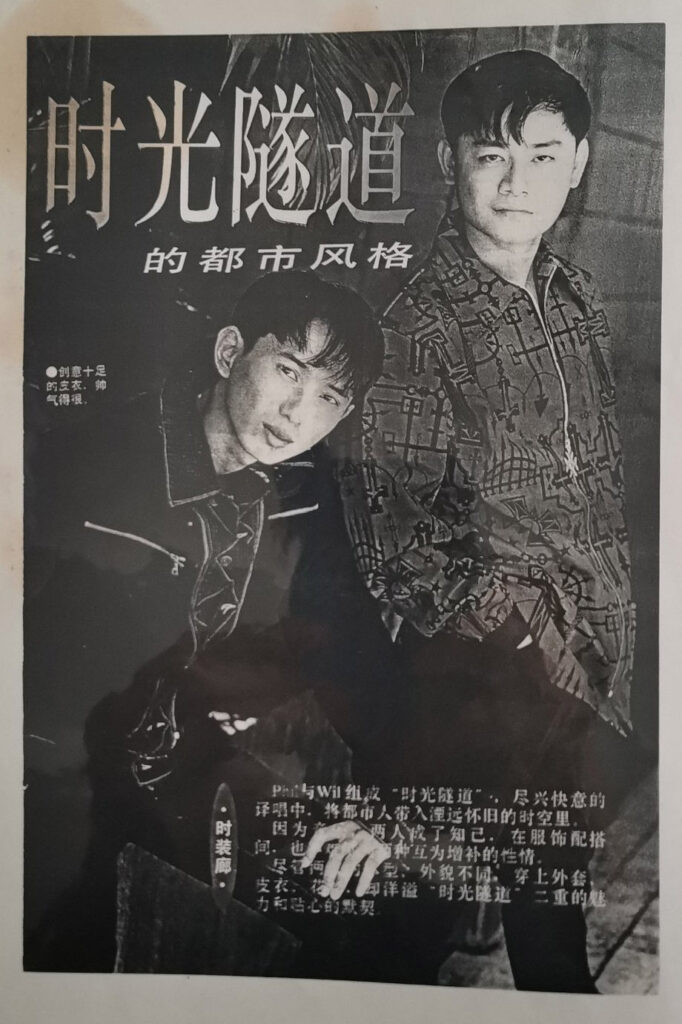
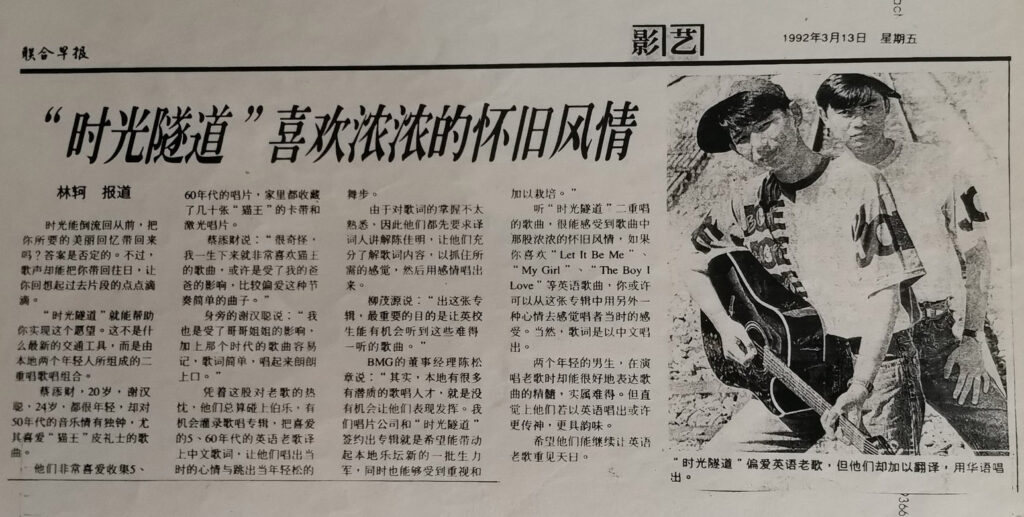
And not just any partner. We’re talking about a local Mandarin duo from the early 90s called 时光隧道 — literally “Time Tunnel.” Very on-brand, because time really did tunnel them apart.
So… who are they?
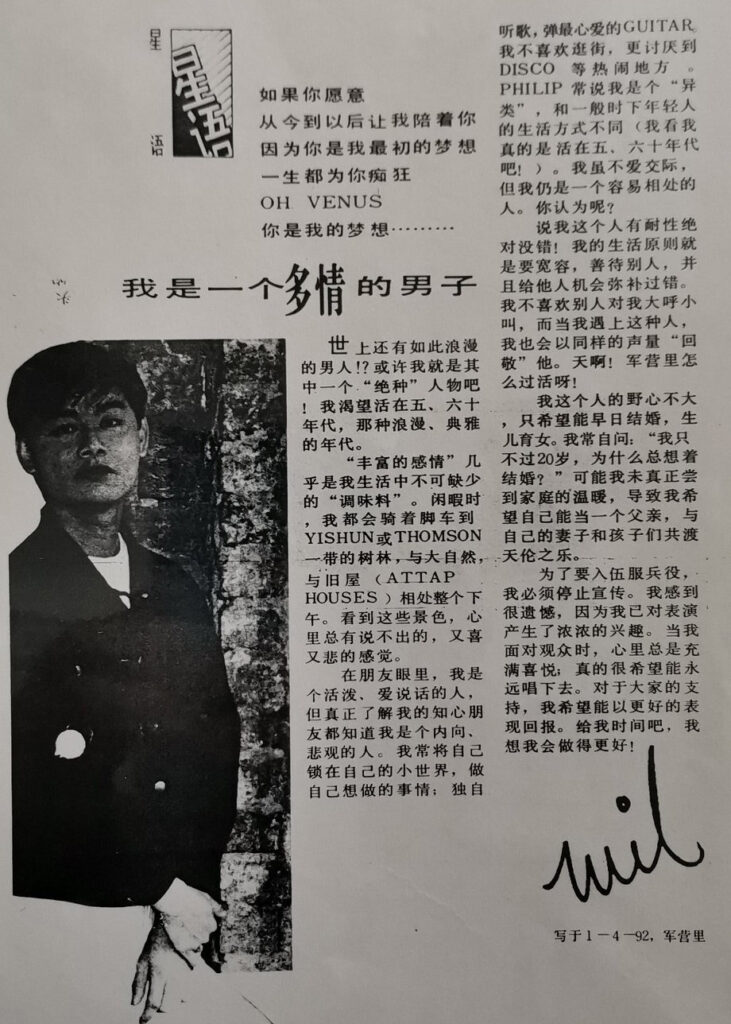
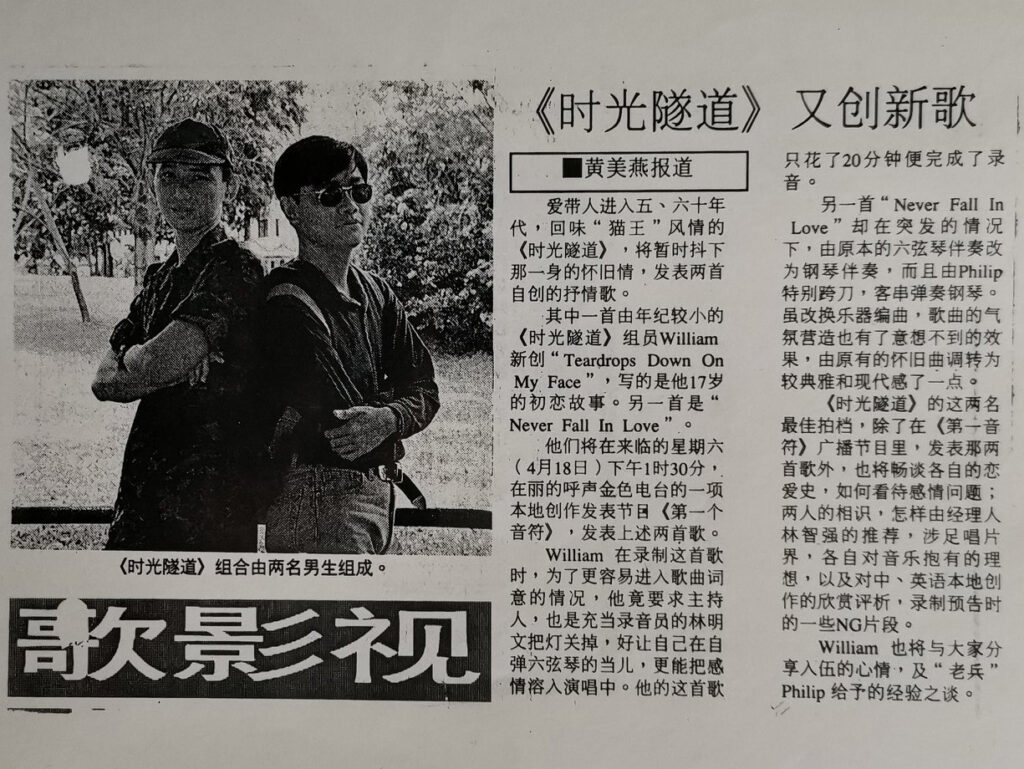
Back in the early 1990s, William Cai and Philip Seah (谢汉聪) were a local duo making music when Singapore’s Mandarin pop scene was still finding its voice.
Actually, here’s the flex most people forgot:
They sang the theme song for 再战封神榜, the Singapore-produced version.
Yes. That 封神榜. The one your parents probably watched religiously. The one with gods, demons, and dramatic staring into the distance.
If that tune sounds familiar but you can’t place it, congrats — you’re officially old like the rest of us.
What happened?
Life happened, lah.
According to William, the duo split ways sometime after the early 90s. Philip Seah was staying in Hougang back then. After that? Radio silence. No socials. No digital footprint. Like he Thanos-snapped himself out of the internet.
Fast forward more than 30 years.
William estimates Philip would be around 58 years old this year. And despite all the modern tools we have — Facebook, Google, mutuals — Philip is nowhere to be found online.
Which is wild, honestly. In 2026, even your kopi uncle has WhatsApp.
Why this hits different
Here’s the thing.
This isn’t about fame. It’s not about a comeback tour. It’s not even about money.
It’s about unfinished human threads.
Music partnerships are like old army buddies. You may not talk for decades, but once you reconnect, it’s like no time passed. Same jokes. Same memories. Same “eh remember that one time?” energy.
And when one half of that story goes missing, it feels… incomplete.
Between You & Me
Between you & me, this kind of post always messes me up a bit.
Because everyone thinks they’ll reconnect “one day.” After work slows down. After kids grow up. After life becomes less chaotic.
But suddenly, one day becomes 30 years.
Honestly, if you’re reading this and thinking of someone you lost touch with — an old bandmate, a classmate, even a friend you ghosted — maybe don’t wait until Facebook memories do the reminding for you.
Time doesn’t slow down. It just quietly walks off.
Can the internet do its thing?
William has asked for help. Plain and simple.
If you:
Recognise Philip Seah (谢汉聪)
Stayed in Hougang in the 80s or 90s
Were around the local Mandarin music scene back then
Or even remember the duo 时光隧道
Then yes, this is your cue.
Share it. Ask around. Forward to your parents’ WhatsApp groups. Those groups know everything, trust me.
Sometimes, the internet isn’t just noise. Sometimes, it’s a bridge.
There’s something poetic about a duo called Time Tunnel being separated by time — and possibly reunited by memory.
Life in Singapore is not cheap. One kopi already $2-plus, electricity bill like playing surprise box, and somehow everything keeps going up except your salary. So if you’re asking, “Eh, need extra income or not?” — the answer is usually yes, lah.
Honestly, making extra money from home is no longer some fancy dream. It’s very doable. But here’s the thing: not every “side hustle” is worth your time, your sanity, or your weekend naps. So let’s break this down properly, minus the nonsense.
Side Hustle
Time Needed
Reality Check
Sell Old Items
Low
One-time cash only
Online Store
Medium–High
Needs patience and marketing
Rent Out Room
Low
Privacy trade-off
Social Media Creator
High
Slow growth at start
Freelance Writing
Medium
Consistency matters
YouTube Channel
High
Not instant money
Online Surveys
Very Low
Coffee money only
Transcription Work
Medium
Boring but legit
Online Teaching
Medium
Scales well
Proofreading
Medium
Quiet and steady
Handmade Products
Medium
Don’t underprice
Remote HR/Admin
Medium
Competitive
App / Web Development
High
Skills pay well
Project Management
Medium
Stress comes free
Gaming Income
High
Discipline required
Video & Image Editing
Medium
Strong demand
Online Course
High (setup)
Long-term income
Start an Online Store (But Don’t Be Delulu)
Source: Shopee
Actually, running an online shop sounds sexy. Own brand. Own boss. Pajamas all day. But here’s the truth: selling online is not just “post and pray.”
You need a product people actually want. You need decent photos. You need patience for customers who ask 17 questions and still don’t buy.
That said, if you have a niche — skincare, snacks, crafts, pet stuff — this can be solid extra income. Start small. Test demand. Don’t dump your life savings on inventory. Please.
Sell Your Old Stuff (Yes, Even That One)
Source: Carousell
Moving on. Before you start chasing new income, look at what you already have.
Old clothes. Books. Furniture. Gadgets you swore you’d use but never did. Someone out there wants it, confirm-plus-guarantee.
It’s fast cash. No long-term commitment. Plus, your house becomes less cluttered. Win-win.
Rent Out a Room (If You Can Tahan)
Got extra space? Renting out a room can bring in steady money every month.
But here’s the thing. You’re also sharing your space. Your fridge. Your Wi-Fi. Your peace.
If you’re okay with that, it’s decent income. If you’re super particular about your home, maybe think twice. Money is nice, but sanity is nicer.
Social Media Isn’t Just for Scrolling
Honestly, social media is one of the biggest money-makers now. But not everyone needs to be an influencer dancing on camera.
Pick a niche. Food. Parenting. Finance. Faith. Fitness. Something you actually care about. Build trust. Build audience.
Brands pay for eyeballs. More trust equals more money. Simple math.
Photography: Talent + Patience Required
If you love taking photos, you can sell them online.
But don’t expect overnight riches. This is volume game. You upload a lot, earn small amounts per photo, and slowly it adds up.
Good for creatives who already enjoy the process. Bad for people who want fast money.
Event Planning (Weekends Gone, Wallet Happy)
Organising birthdays, weddings, or company events pays well. But say goodbye to your weekends.
You’ll deal with stressed clients, last-minute changes, and people who suddenly remember something at 11pm.
If you’re organised and calm under pressure, this can be very profitable.
Writing: Yes, Words Can Pay Bills
If you can write clearly, congratulations — that skill is underrated and valuable.
Blogging, freelance articles, guides, content writing. Businesses need words. People need answers.
Ads, freelance fees, sponsored content — it all adds up. But you need consistency. One article won’t change your life.
YouTube: Fame Is Optional, Effort Is Not
Being a YouTuber looks fun. And it can pay very well.
But here’s the truth bomb. Most channels take months or years to grow. You need ideas, editing skills, and thick skin.
If you enjoy talking, teaching, or entertaining, go for it. If you hate cameras, don’t force yourself.
Online Surveys: Easy, But Don’t Dream Big
Yes, surveys pay. Yes, it’s easy. No, it won’t replace your salary.
Think kopi money, not condo money. Good for spare time. Bad as a main plan.
Transcription Work: Boring But Pays
Transcribing audio is not exciting. But it’s real work with real pay.
If you type fast and don’t mind listening to recordings, this is legit extra income. Great for night owls.
Teach What You Know (Someone Needs It)
Actually, you don’t need to be a professor to teach online.
Good at Excel? Cooking? Language? Music? There’s always someone who wants to learn.
Teaching online scales well. One lesson can earn repeatedly. That’s powerful.
Proofreading & Editing: Quiet Money
If your English is solid, editing is a hidden gem.
Students, writers, businesses — all need clean writing. No spotlight. No drama. Just focused work and decent pay.
Sell Handmade or Sewn Items
If sewing or crafting is your thing, sell it.
Handmade items still have strong demand because people love “unique.” Just price properly. Don’t undersell yourself.
Remote HR & Admin Work
Some companies don’t want full-time staff. They want flexible help.
If you’re good with people, processes, and paperwork, this is steady, professional side income.
Travel Planning (Only If You Really Know Your Stuff)
If you love travel and actually know routes, visas, budgets, and hacks, this can work.
But don’t just sell dreams. People expect real value. Mess up once, and trust gone.
App Development & Tech Skills
People have ideas. They lack skills.
If you can build apps, websites, or systems, your skills are in demand. High effort, high reward.
Project Management From Home
Companies pay project managers to keep things on track.
If you’re organised and good with people, this is legit remote work with proper pay.
Gaming: Risky But Real
Yes, gaming can make money. Guides, virtual items, tournaments.
But addiction is real. Discipline is key. If you can’t control playtime, this is not for you.
Freelance Journalism & Media Work
If you can research, write, and meet deadlines, some companies pay freelancers per article.
It’s competitive. But good writers always find work.
Video & Image Editing
Editing skills are gold right now.
Brands need videos. Creators need editors. If you’re good, you won’t be jobless.
Create an Online Course
If you have deep knowledge in something, package it into a course.
One-time effort. Long-term income. That’s the dream, honestly.
Between You & Me
Let me be blunt. Most people don’t fail because of lack of opportunities. They fail because they jump around too much.
One month do this. Next month try that. Zero focus. Zero results.
Pick one thing. Commit for six months. Learn properly. Improve weekly. That’s how extra income becomes real income.
Side hustles are not magic. They are work. But done right, they buy freedom. And that’s worth the effort, lah.
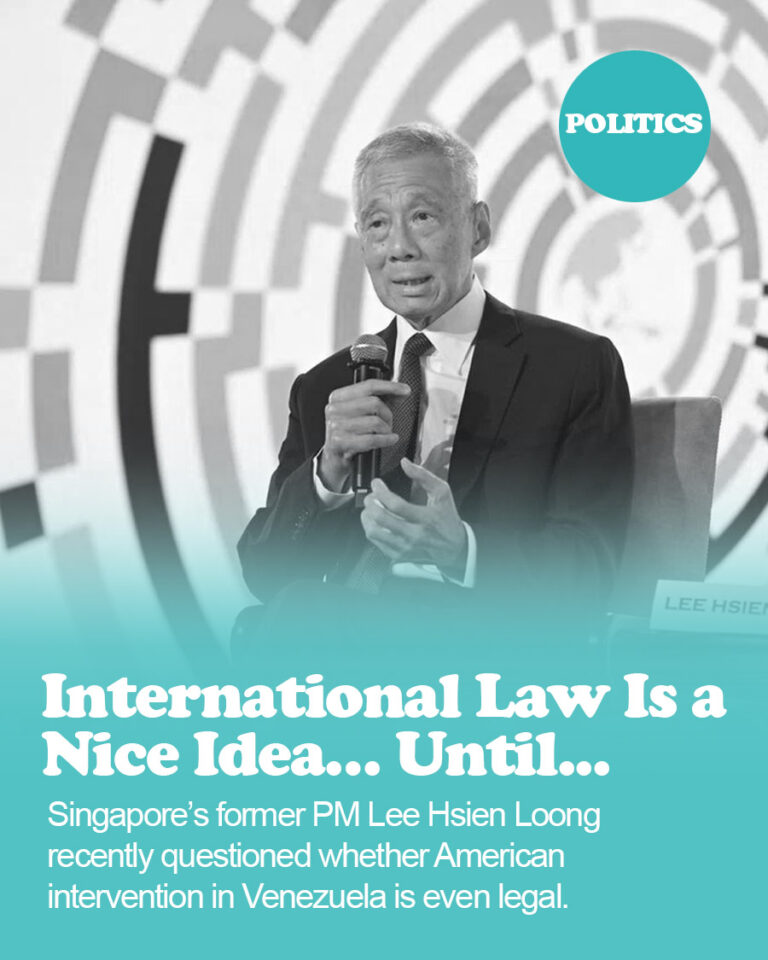
If you’re running a small, trade-dependent country like Singapore, you must believe in rules. Borders respected. Governments recognised. Nobody anyhow whack anybody. Otherwise, small states like us are the first to kena.
So yes, he said what he had to say. National interest, 101. No shock there.
But here’s the thing. Once you zoom out, the whole situation feels… gross.
The Dream We Were Sold
On paper, the international rule-based order sounds damn shiok.
Countries come together. Agree not to invade. Respect borders. Respect sovereignty. Let people decide their own future.
Clean. Logical. Very textbook.
Actually, it’s a beautiful dream.
But reality? Wah, different story already.
The Awkward Truth Nobody Likes to Say
Most countries are not run by saints. They’re run by strongmen, crooks, or clowns. Sometimes all-in-one bundle deal.
And because of this, something very weird happens.
Leaders who grab power through violence or fraud still get treated like legit heads of state. Their countries keep all the protections. Meanwhile, the people inside suffer quietly, while the world pretends everything is fine.
Even worse, countries affected by these regimes have almost zero legal options.
Why? Because international bodies move slower than MRT during signal fault.
Someone will veto. Someone will block. Someone’s “strategic partner” must be protected.
Confirm-plus-guarantee.
The Venezuela Example (Yes, This One)
Take Nicolas Maduro.
Ignore elections? Can. Jail opponents? Can. Thousands dead? Still can. Drugs, sanctions dodging, shady alliances? Also can.
International response? Strong words. Concerned statements. Zero consequences.
But the moment another country tries to remove him by force — suddenly he’s the victim. Suddenly everyone discovers international law.
You see the problem or not?
When Rules Protect the Wrong People
This is where the system becomes absurd.
Tyrants are protected because they are “sovereign.” Victims are ignored because they are inconvenient.
And countries like Singapore? They understandably want everyone to keep pretending the rules work. Because once rules collapse, small states suffer first.
But let’s be real for a second.
That also means accepting millions of people living in hell… just so the global system can look “stable” on PowerPoint slides.
That’s not stability. That’s denial.
The Uncomfortable Reality About International Law
Here’s the part people don’t like to admit.
International law doesn’t really exist.
Law needs enforcement. Simple.
In a country, you break the law → police come → court → prison. End of story.
Remove enforcement, and the law becomes suggestion only.
At the global level, who’s the police? The UN Security Council.
Sounds powerful, right? Until you remember every permanent member has veto power.
Translation: Big players can do whatever they want. Their friends also get immunity.
International courts can issue rulings, but nobody has to listen. UN resolutions get passed, but nothing happens.
It’s not law. It’s theatre.
So Why Do We Keep Playing Along?
Because the alternative is scary.
A world with no shared rules is chaotic. Small countries get crushed. Trade collapses. Security disappears.
So everyone keeps pretending the system works, even when it clearly doesn’t.
Honestly, it’s not absurd anymore.
It’s just messed up.
Between You & Me
If I’m being brutally honest, the global system today feels like a condo MCST run by bullies. Rules apply to residents, but the biggest unit owner can smash walls anytime and still complain about noise from others.
I get why Singapore clings to multilateralism. We need rules more than most. But sometimes, defending the system feels like defending a lie we all know is broken.
At some point, pretending stops helping. And the people paying the price are never the ones in power.
Singapore may not have an official national fruit, but everyone knows who’s running the show. Durian. Loud, divisive, impossible to ignore. You either love it like family or hate it like a bad ex. No middle ground, sia.
Honestly, every few years the same argument pops up. Is durian Singapore’s fruit or Malaysia’s pride? Sometimes Indonesia also want to join the chat. But here’s the thing: whoever “owns” it on paper doesn’t matter. Singaporeans have already emotionally adopted it. End of story.
The Smell vs The Magic
Newspaper Article: The Straits Times, 6 July 1968. Source: NLB
There’s an old saying about durian having “the taste of heaven and the smell of hell”. Dramatic? Yes. Accurate? Also yes.
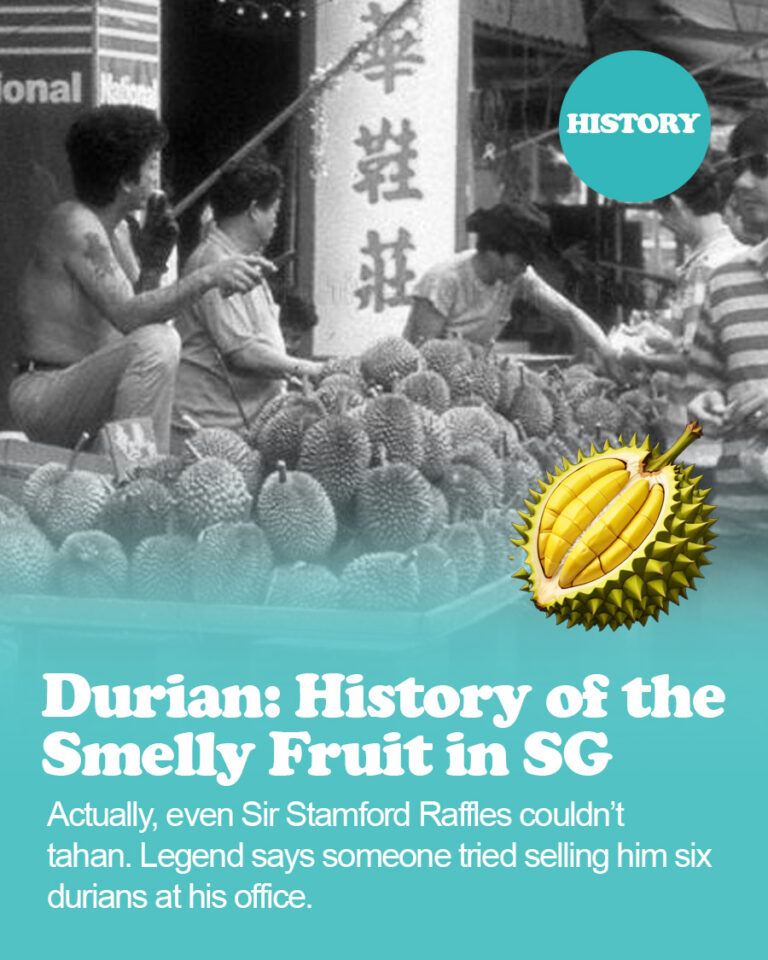
Actually, even Sir Stamford Raffles couldn’t tahan. Legend says someone tried selling him six durians at his office. The moment the smell hit his nose, he ran upstairs holding it like he saw a ghost. Later complained about headaches and nausea. Bro really said, “Nope.”
But wait. Plot twist.
Another Englishman, Alfred Russel Wallace, was fully obsessed. This guy didn’t just like durian. He romanticised it. He described the flesh as buttery, custard-like, smooth beyond words. Basically, Wallace ate durian and went, “This changes everything.” That’s why Wallace Way exists today. Legacy secured.
What’s in a Name? Quite a Lot, Actually
Source: Wikipedia
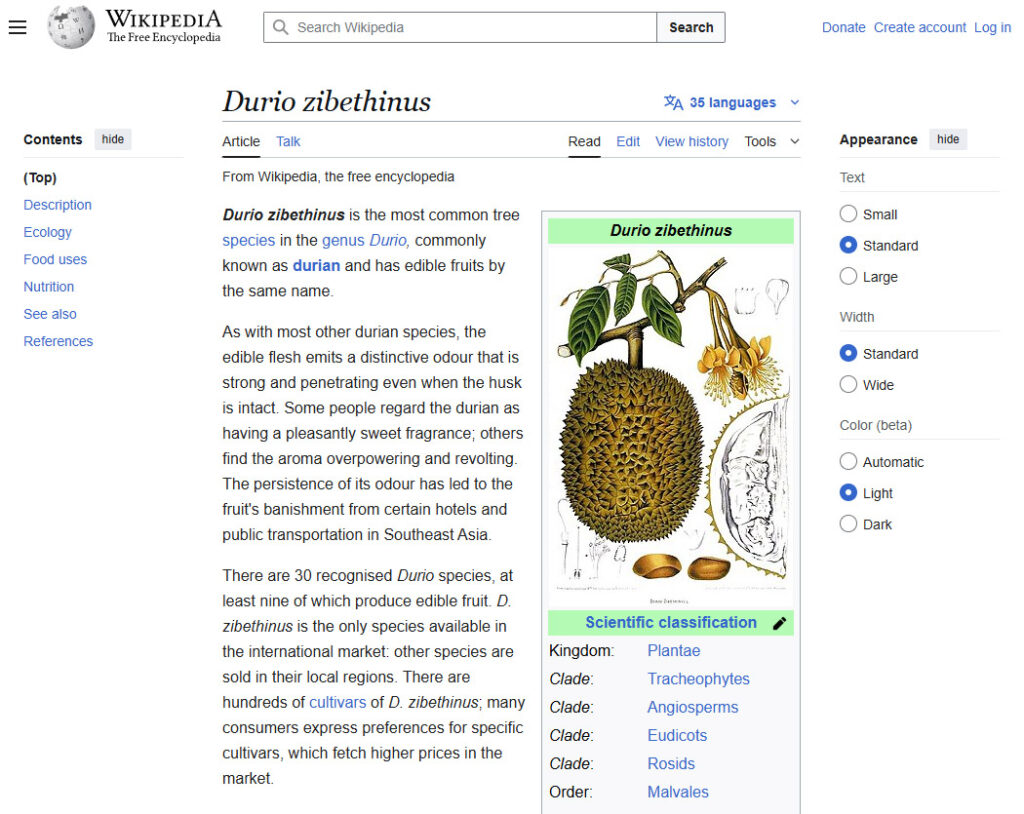
Scientifically, durian is called Durio zibethinus. Fancy, but it tells a story. “Durio” comes from the Malay word duri, meaning thorn. Fair enough. “Zibethinus” refers to its strong smell, linked to the civet cat, which… yeah, also smells intense. Nature really said, “No false advertising.”
Fun fact: Singapore even has its own wild durian species. Durio singaporensis. Exclusive, okay. You can find them in forested areas like Nee Soon, MacRitchie, and Upper Seletar. Not your neighbourhood fruit stall kind.
Singapore Used to Be a Durian Farm, No Joke
Before malls and condos took over, Singapore was full of durian plantations. Mandai. Bukit Timah. Upper Serangoon. Even Pulau Tekong and Pulau Ubin. Tens of thousands of trees, privately owned.
Road names today still snitch on our past. Lorong Lew Lian literally means “durian road” in Hokkien. Jalan Durian exists too, over at Pulau Ubin. These aren’t random names. They’re receipts.
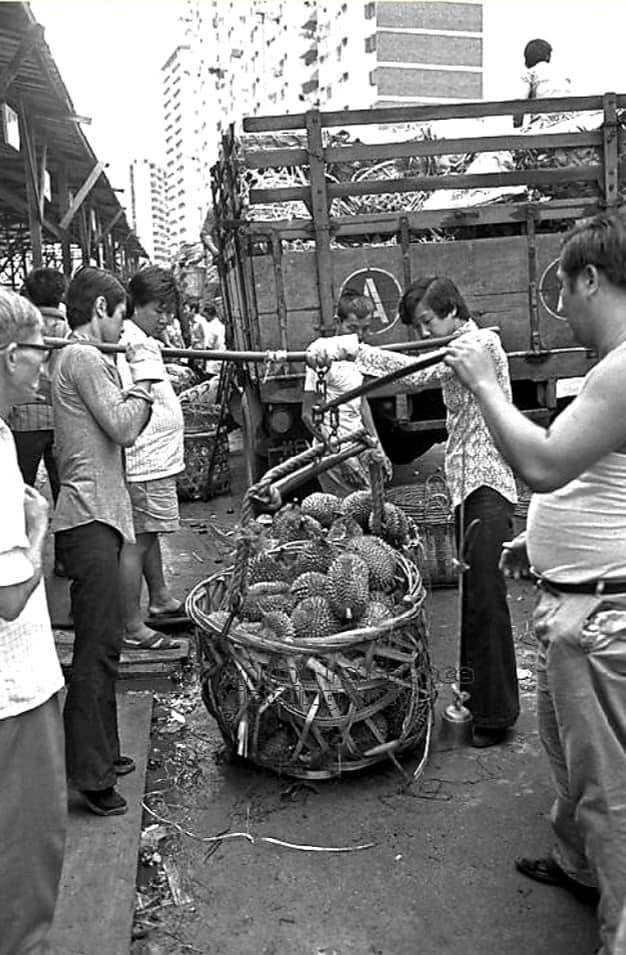
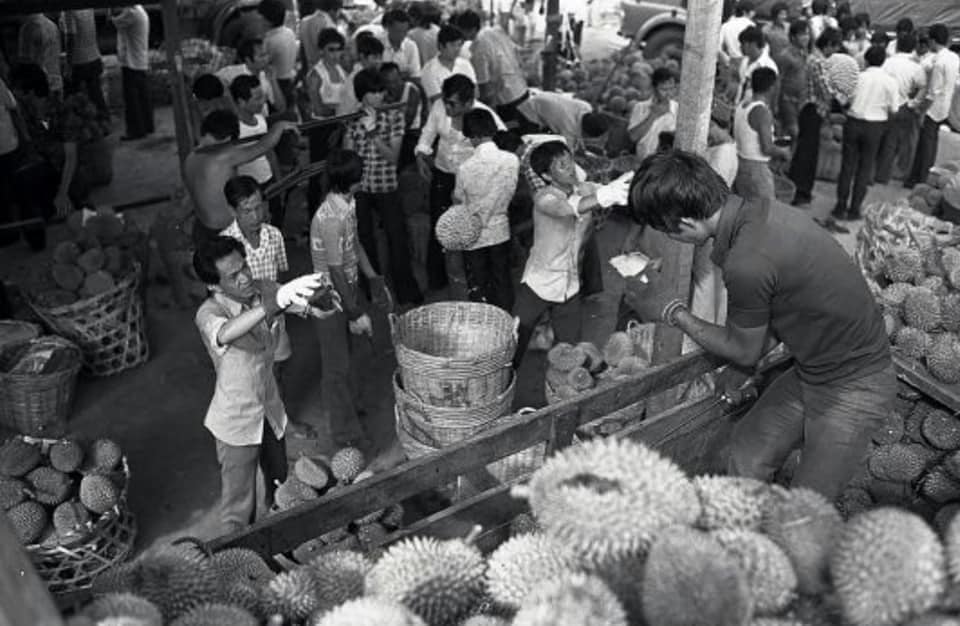
Back in the 60s and 70s, durian was too popular. Roadside stalls would jam traffic. People double-parked just to crack one open. Shells piled up everywhere. During peak season, rubbish levels jumped like mad.
Actually, during those months, Singapore produced an extra 200 tonnes of waste daily. Mostly durian shells. The government even considered taxing each imported durian one dollar. Can you imagine the riot? Thankfully, that idea died fast.
The Straits Times, 18 December 1972. Source: NLB
Not All Hawkers Were Angels
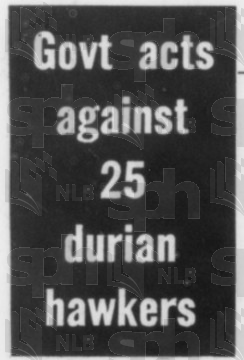
The Straits Times, 10 July 1974, Page 1. Source: NLB
Let’s not romanticise too much. In the 70s, some durian sellers were… shady. The authorities caught 25 hawkers using rigged weighing scales. They earned up to 50% more per basket by cheating customers. Confirm-plus-guarantee kena caught.
Under the law, they faced fines, but the damage was done. Some hawkers were also aggressive, pushy, even threatening. You just want to buy fruit, leh. Not enter WWE.
From Cheap Treat to Luxury Flex
By the 80s, Singapore was importing serious amounts of durian. Over 13,000 tonnes a year. Prices back then? Good Malaysian durians went for $6 to $8 per kg. Sounds cheap now, right?
The Straits Times, 17 June 1985, Page 8. Source: NLB
Then came premium branding. XO. Tiger Hill. Suddenly durian wasn’t just fruit. It was status. Some kings sold for $25 per kg. Wallet cried, but people still bought.
Over time, the variety list exploded. D10. D24. Musang King. Red Prawn. Black Thorn. Old Tree. Each with its own fanbase, price tag, and loud opinions.
The Lost Art of Being Surprised
Actually, this is the part nobody talks about enough.
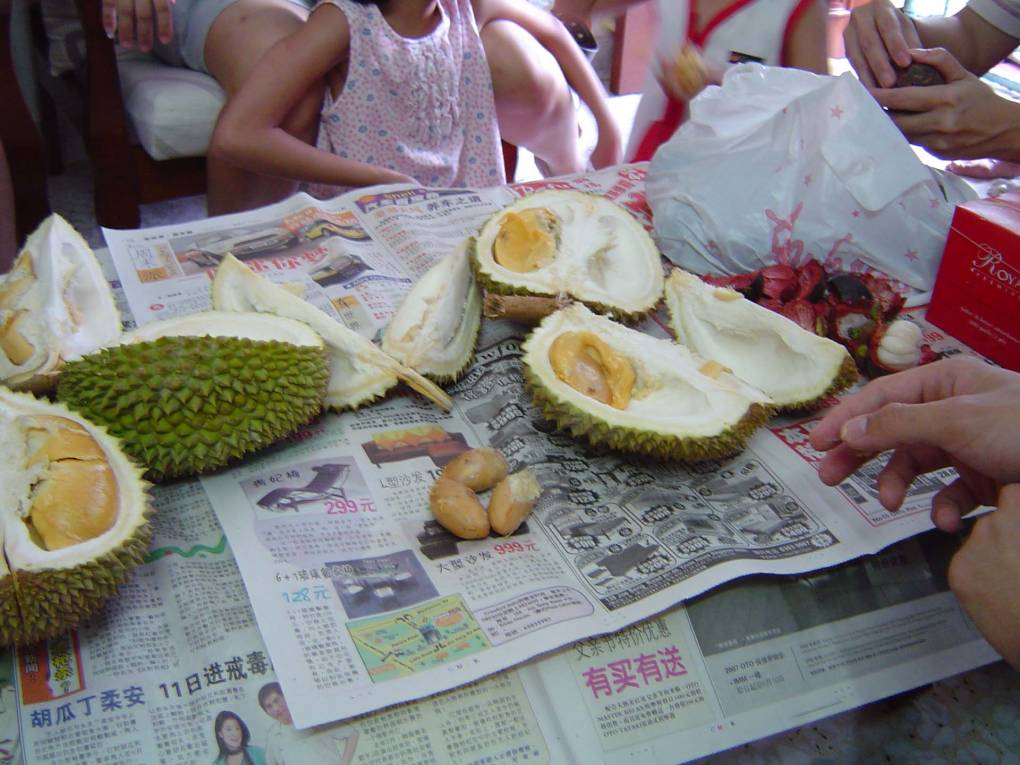
Old-school durian eating had suspense. Real suspense. You didn’t know what you were getting until the shell cracked open. One durian could be sweet and creamy. The next one could be bitter until your soul leave your body. And somehow, that was the fun.
Back then, every durian was its own character. Same pile. Same stall. Totally different taste. Parents, uncles, aunties all became instant food critics.
Eating durian during gatherings (Courtesy of Jennifer Wong)
“Wah this one bitter.” “Eh no leh, got sweet aftertaste.” “This one jialat.”
Buy ten kampung durians, you get eight surprises. Some good. Some bad. Some unforgettable. That unpredictability made people lean in. It made durian eating an experience, not just consumption.
But now? Modern varieties like Musang King changed the game.
Most Musang King trees come from the same origin stock. Propagated through stem cutting. Same DNA across the plantation. Which means the flavour is locked in. Consistent. Reliable. Safe.
When every durian tastes almost the same, the shock factor disappears. There’s no moment of “eh this one different sia.” No highs and lows. Just a smooth, predictable ride.
Good? Confirm. Exciting? Not really.
We didn’t lose good durian. We lost surprise.
And for a fruit that built its reputation on chaos, that’s kind of a big deal.
Durian Went Upscale
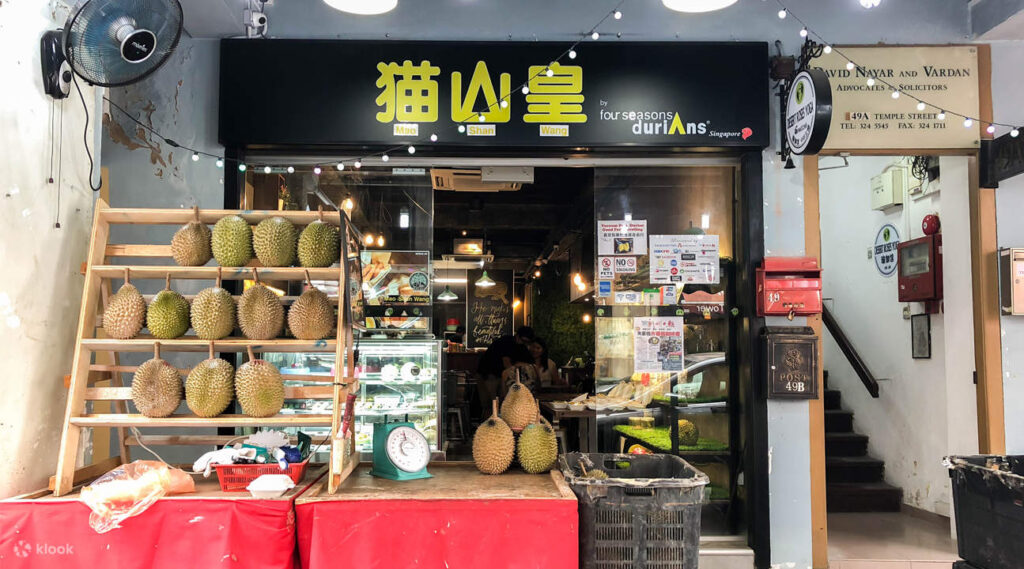
Mao Shan Wang Cafe
In 1983, Singapore opened its first durian restaurant. Air-conditioned. Fancy. No sweating at roadside stalls anymore. The 90s then went wild with durian desserts. Cakes, puffs, ice kacang, tarts. Even a durian café showed up at China Square.
Durian didn’t just survive modern Singapore. It adapted. Like a boss.
Loved by People, Hated by MRT
And yet, despite all the love, durian has one enemy: public transport.
In 1988, MRT straight-up banned it. Too smelly. Too disruptive. If you want to bring it onboard, vacuum seal it properly. Otherwise, hello $500 fine. Durian may be king, but MRT rules harder.
Between You & Me
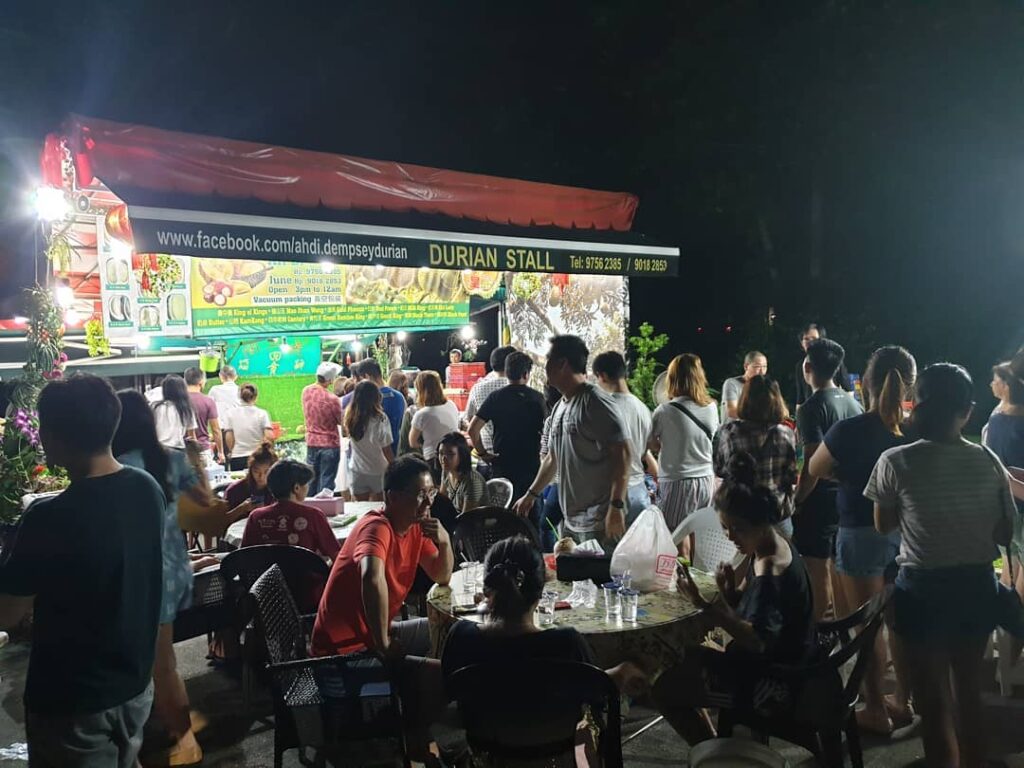
Long queue at Demsey Durian
I think durian perfectly represents Singapore. Strong. Polarising. Not trying to please everyone. You don’t ease into it. You commit or you walk away. And honestly? That’s refreshing.
Durian doesn’t care about your comfort zone. It challenges you. And somehow, once you get it, you really get it. That’s why no matter how modern we become, this spiky, smelly fruit still has a seat at the table. Even if it’s not allowed on the train.
Old School (1960s–80s)
Modern Era (2000s–Present)
Roadside stalls, sweat, and newspaper mats.
Air-con cafes, vacuum-sealed packs, and GrabDurian.
Mostly “Kampung” (Wild/Mixed).
D24, MSW, Black Thorn, Red Prawn.
The “Lotto”—could be heaven, could be watery.
Consistent, high-fat, high-sugar profiles.
$1–$8 per basket/kg.
$20–$50+ per kg (Premium status).
Wild West (watch out for rigged scales!).
Strictly regulated; banned on MRT/Buses ($500 fine).
Let’s be real for a second. Most bank logos? Boring until you want to cry. Eagles. Shields. Serif fonts screaming “trust me, bro” from 1890.
But Chase? Different story.
Actually, the Chase logo is one of those designs you see every day but never really look at. And that’s exactly why it’s genius.
So let’s rewind.
The Wild Idea That Started It All
Back in 1957, two design heavyweights—Ivan Chermayeff and Tom Geismar—set up shop in New York. No fluff, no trends chasing. Just ideas. Solid ones.
Fast forward to 1961. Chase Manhattan Bank had just merged and was suddenly massive. Second-largest bank in the world kind of massive. Chaos everywhere. Branches all over. No single face. No clear identity.
David Rockefeller steps in and says, “Fix this.”
No pressure.
The Logo That Looked Like… Nothing?
Instead of playing it safe, Chermayeff and Geismar went abstract. Very abstract.
They designed a blue octagon made of four rotating shapes around a square. No words. No symbols people were used to. Just geometry doing its thing.
Honestly, the first reaction was basically: “Eh… this is a bank or modern art exhibition?”
Executives were shook. No eagle. No shield. No building. Nothing that screamed “bank”.
But here’s the thing.
That shape quietly said everything.
A vault. Secure. Locked.
Movement. Modern. Forward-looking.
Even echoes of ancient coin symbols. Trust. Stability. Wealth.
No spoon-feeding. Just confidence.
When Fear Turned Into Flex
At first, the suits rejected it. Too risky. Too weird. Too not-banky.
But months later? Same people wearing logo ties and cufflinks like proud fanboys.
Moving on a few decades—mergers happen, names change, Chase becomes JPMorgan Chase. Guess what survives?
The logo.
No redesign drama. No “brand refresh” nonsense. It just stayed. Calm. Recognisable. Untouchable.
That’s rare, sia.
Why This Logo Aged Better Than Most Brands
Here’s the quiet power move: the logo doesn’t explain itself.
It doesn’t chase trends. It doesn’t shout. It doesn’t beg for attention.
It just exists—strong, balanced, and memorable.
Chermayeff once said a logo needs a bit of a barb. Something that sticks in your brain. This one? Confirm-plus-guarantee sticks.
Because abstract logos don’t age like literal ones. Buildings get old. Mascots get cringe. Fonts go out of fashion.
Geometry? Forever young.
What Brands Still Get Wrong Today
Let’s be honest. Too many brands still want logos that “tell the whole story”.
End up telling nothing.
They over-explain. Over-design. Over-think. Then six years later, rebrand again because “it feels dated”.
Chase didn’t do that. They trusted the audience to figure it out over time.
That’s respect.
Between You & Me
Between you & me, most brands today are scared. They want instant likes, instant clarity, instant validation.
But good branding isn’t TikTok content. It’s a long game.
The Chase logo worked because it had guts. It didn’t ask for permission. It didn’t need approval from a focus group that wanted “something safer”.
If your logo needs a paragraph to explain, that’s already a red flag.
Strong brands don’t shout. They show up. Again and again. Same face. Same confidence.
And honestly? That’s a lesson more valuable than any design trend forecast.
The Chase logo proves one thing very clearly: If your idea is strong enough, it doesn’t need to look like anything else.
Honestly, this is one of those stories that refuses to stay buried. You think you’ve heard all the dark chapters of Singapore history already. Then this one comes back and punches you in the gut.
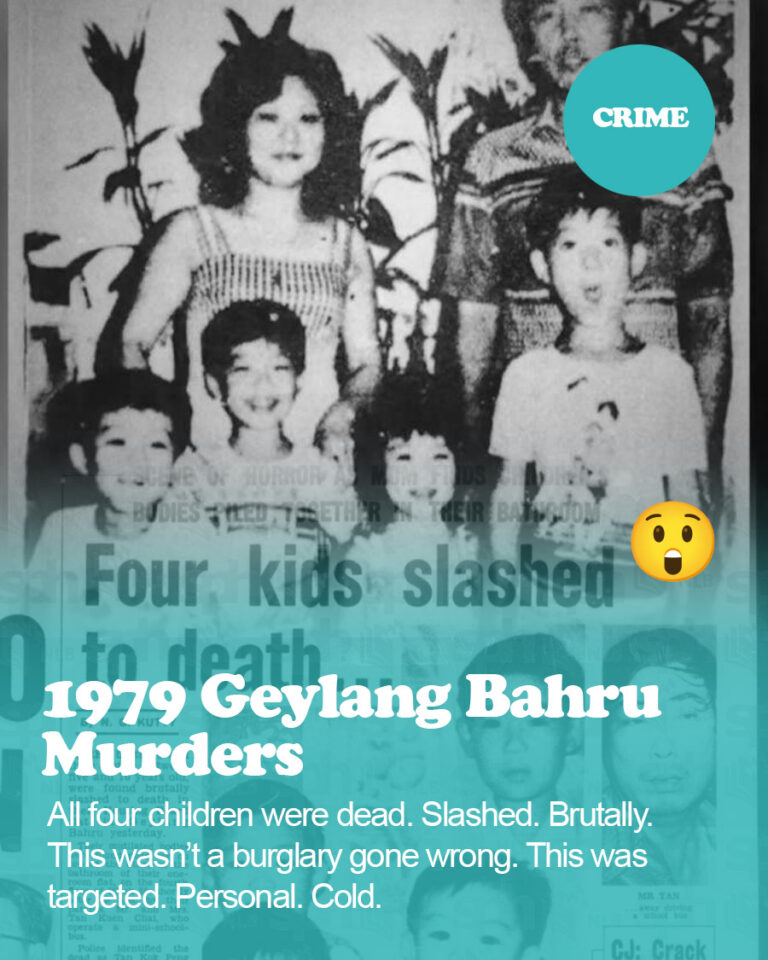
Let’s talk about the Geylang Bahru family murders. January 6, 1979. No sugarcoating. No dramatics. Just facts, context, and the uncomfortable questions nobody ever answered.
A Normal Morning That Turned Into a Nightmare
That morning started like any other. Mr and Mrs Tan Kuen Chai left their one-room HDB flat at Block 58 Geylang Bahru before sunrise. They ran a school bus service. Hustling, working hard, trying to give their kids a better life. Very Singapore, right?
Their four children were still asleep.
The plan was simple. Drive students to school. Call home later to wake the kids up. Same routine, every day.
But here’s where things go very wrong.
Mrs Tan called home at 7.10am. No answer. She tried again. And again. Still nothing. Uneasy already, she asked a neighbour to help knock on the door.
No response.
By the time the parents returned home after 10am, the worst fear imaginable was waiting for them.
What They Found Inside the Flat
All four children were dead. Slashed. Brutally.
They were found in the bathroom, wearing their usual T-shirts and pants. No signs of struggle outside. No forced entry. No ransacking. Nothing stolen.
This wasn’t a burglary gone wrong. This was targeted. Personal. Cold.
The injuries were horrifying. Each child had at least 20 slash wounds. One boy’s arm was almost severed. The youngest, just five years old, had deep wounds on her face.
Let that sink in for a second. This wasn’t quick. This wasn’t panic. This was rage.
The boys studied at Bendemeer Road Primary School. The girl attended a nearby kindergarten. Normal kids. Schoolbags. Homework. Toys.
The kind of kids you’d see running along the corridor, barefoot, laughing, annoying the neighbours. Gone in one morning.
No Forced Entry Means One Thing
Here’s the thing. The police found no signs of forced entry. The flat wasn’t broken into. That means the killer didn’t sneak in.
They were let in.
Or they already had access.
That alone narrowed things down. Whoever did this knew the family. Knew their routine. Knew the parents wouldn’t be home. Knew the kids would still be asleep.
Also, there were bloodstains in the kitchen sink. The killer cleaned up before leaving. Calm enough to wash up. Careful enough to avoid leaving evidence.
This wasn’t some random madman.
The Chilling Chinese New Year Letter
Two weeks later, things got even darker.
The Tans received a Chinese New Year card. Cute illustration. Happy children playing.
Inside was a message that still makes people uncomfortable decades later.
“Now you can have no more offspring ha-ha-ha.”
Signed: “The murderer.”
It was written in Mandarin. Worse, the sender addressed the parents using their nicknames, “Ah Chai” and “Ah Eng”. Names only people close to them would know.
And here’s the truly cruel part. Mrs Tan had been sterilised after giving birth to her daughter. The sender knew that.
This wasn’t just murder. This was psychological torture.
Investigation Hits a Wall
The police treated this as premeditated murder. Special Investigation Section got involved. Over 100 neighbours interviewed. Public appeals made.
Still, nothing solid.
Some residents claimed a witness saw the youngest child struggling with a man from another block. That witness vanished.
Another claimed to see a bloodstained couple leaving the area. Turned out to be fake.
One neighbour said she normally sat outside watching children play, but that morning she was washing her hair and saw nothing. Talk about the worst timing in human history.
A taxi driver later reported picking up a man with bloodstains, carrying a knife, near the area. He even identified a neighbour known to the family as “Uncle”. That man was detained, lined up, questioned.
Released. No evidence.
Just like that, another dead end.
The Rumours That Never Went Away
Now, this is where things get messy.
Over the years, whispers started circulating. Illegal gambling. Tontine schemes. Gang connections. Unpaid debts. Lottery winnings that went wrong.
One popular rumour claimed the parents bought lottery tickets on behalf of a gang member. The number came out. Dispute happened. Money was involved. Revenge followed.
After the murders, the parents sold their bus and allegedly returned the money.
Is it proven? No.
But does it explain the silence? Maybe.
Back then, Singapore was not the sterilised, safe bubble we know today. People carried parangs openly. Some kids bragged about robberies like it was a hobby. Fear ruled neighbourhoods.
If threats were real, silence made sense.
Aftermath: A House Full of Emptiness
The children were buried together the next day. Along with their schoolbags, books, and toys. Mrs Tan collapsed multiple times during the burial.
Their flat was later described as “four walls of emptiness”. Imagine going home every day knowing your entire world was wiped out in minutes.
They gave up their bus business. Took factory jobs. Tried to survive.
Eventually, they applied to adopt children. Mrs Tan even underwent a sterilisation reversal. Against all odds, she gave birth to a baby boy in 1983.
Life moved on. Justice didn’t.
This wasn’t just a crime. It shook the police. It horrified the public. It remains one of the most brutal murders in Singapore’s history.
And till today, nobody was held accountable.
No closure. No answers. Just speculation and silence.
Between You & Me
Between you and me, this case feels less like a mystery and more like a secret everyone decided to lock away. Too many people knew something. Too many stories lined up just enough to feel uncomfortable.
Back then, fear could shut mouths fast. And once time passes, memories blur, witnesses disappear, and truth becomes optional.
What scares me isn’t just the killer never being caught. It’s the idea that sometimes, everyone knows… but nobody dares to say.
And that, honestly, is scarier than any horror movie.
Free stuff has always been dangerous. Sales. Buffets. Telegram promos. And apparently, ancient warfare too.
So let’s rewind all the way to 67 BC. No TikTok. No Google Maps. Just dusty roads, tired feet, and a Roman army that was very, very hungry.
Pompey the Great was leading his troops through what’s now near Trabzon, Turkey. These guys had been marching forever. Morale low. Stomachs empty. Brains fried by the sun.
And then… jackpot.
Along the road were pots of honey. Just sitting there. No guards. No traps. No “pls don’t eat” sign. Honestly, if you were a Roman soldier, you’d think, Wah, today very blessed leh.
But here’s the thing. This was not a blessing. This was a setup.
The Sweetest Scam in War History
The locals knew something the Romans didn’t.
Rhododendron flowers
The honey came from bees feeding on rhododendron flowers. Sounds harmless, right? Nope. This nectar creates what’s now called mad honey.
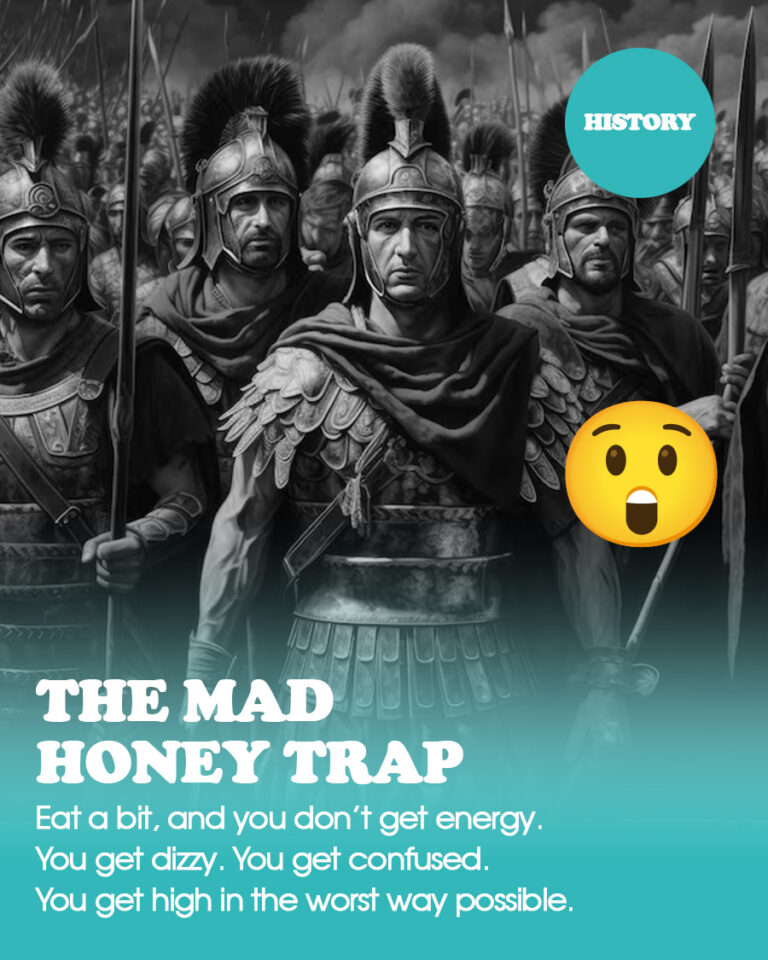
Eat a bit, and you don’t get energy. You get dizzy. You get confused. You get high in the worst way possible.
Think nausea, vomiting, blurred vision, weak legs. Basically, your body says, “Bro, lie down. Now.”
So the Romans did what hungry soldiers do. They ate. A lot.
Within hours, entire units were wobbling around like they just downed five bottles of cheap soju. Shields dropping. Formations gone. Command? What command?
An army that conquered half the known world was suddenly… useless.
And That’s When It Got Ugly
Once the Romans were fully out of it, the Persians moved in.
No epic battlefield speech. No dramatic charge. Just clean, efficient destruction.
Over a thousand Roman soldiers were taken out. The Persians? Barely any losses.
All because of honey.
Let that sink in. Not swords. Not arrows. Not strategy books.
Honey.
Actually, This Was Pure Genius
Let’s be real for a second. This wasn’t luck. This was psychological warfare before people even had a name for it.
The Persians understood three things perfectly:
Hungry soldiers make bad decisions.
Free food lowers guard faster than threats.
You don’t need to fight an enemy if you can disable them first.
Honestly, this is the OG version of a honeytrap. No flirting. No spies. Just carbs and chaos.
Moving on, this story also proves something uncomfortable: even the most powerful people can be taken down by something small, sweet, and underestimated.
Sound familiar or not?
Between You & Me
If this happened today, people would still fall for it. Confirm-plus-guarantee.
Free crypto link? Click. “Limited-time offer”? Add to cart. “Trust me bro”? Say less.
We like to think we’re smarter than ancient Romans. But give us free stuff when we’re tired, stressed, and hungry, and suddenly logic goes on leave.
Honestly, the real lesson here isn’t about war. It’s about self-control. Just because something looks good doesn’t mean it’s safe. And just because it’s free doesn’t mean it’s for you.
Sometimes the trap isn’t hidden. It’s just sweet enough to distract you.
Let’s slow down for one second. Because the internet is on fire again, and a lot of people are shouting very confidently… while missing the point entirely.
Honestly, if you’re sitting comfortably in a safe, rich country and suddenly clutching pearls over Nicolás Maduro being taken down, something doesn’t add up, leh.
I get it. “International law.” Very classy phrase. Sounds important. Feels moral. But here’s the thing — it’s often treated like a buffet. Powerful people take what they like and ignore the rest. And dictators? They’ve been skipping the bill for decades.
Actually, Who Is Maduro Protecting?
Let’s not pretend this is some innocent bystander caught in a Marvel crossover.
Maduro didn’t rule alone or accidentally. He inherited a broken system, then doubled down. Elections twisted. Opposition crushed. Economy burned to the ground. Millions fled. If this were a group project, everyone already rage-quit except him.
And Venezuela didn’t just mind its own business either. It ignored arbitration rulings. It picked fights with neighbours. It suddenly had strong opinions about Guyana’s territory right when oil money showed up. Wah, coincidence until so nice ah?
But Here’s the Thing About “International Law”
People keep acting like international law is some sacred shield that magically protects everyone equally.
It’s not.
In practice, it’s more like a fire extinguisher behind glass — labelled, framed, very nice — but when the building is actually burning, no one knows where the key is.
Dictators violate it all the time. They jail critics. They launder money. They fund violence. They starve their own people. Somehow, that doesn’t trigger outrage on Twitter. But once a strongman gets grabbed? Suddenly everyone becomes a law professor.
Funny how that works.
Moving On: “But Won’t This Encourage China?”
This argument pops up every time like a bad ad.
The idea that American action in Venezuela somehow gives China a free pass on Taiwan is… generous imagination, at best. These situations are not interchangeable Lego blocks. Different history. Different alliances. Different consequences.
If geopolitics were that simple, world peace would’ve been solved by PowerPoint already.
The Bipartisan Amnesia Is Wild
Here’s where it gets awkward.
Some people screaming now seem to forget that the push to arrest Maduro didn’t come from one side only. The bounty? It stayed. It grew. The policy continued across administrations.
So acting shocked now feels a bit like pretending you didn’t order dessert when the cake arrives.
If arresting foreign leaders for crimes affecting Americans is suddenly “illegal,” then someone needs to explain why it was openly encouraged not that long ago.
Between You & Me
Let me be real for a moment.
If you’ve never lived under an authoritarian system — never worried about what you say, who’s listening, or whether tomorrow’s money is suddenly worthless — then maybe don’t lecture people who have.
Comfort creates very loud opinions. Suffering creates silence.
People who escaped places like Venezuela, Cuba, Iran, or Eastern Europe don’t romanticise dictators. They celebrate when those men finally face consequences. That joy isn’t bloodlust. It’s relief.
And honestly? It’s very easy to defend “principles” when you’ve never paid the price for them.
Stable, developed countries didn’t appear out of vibes and good intentions. They exist because power was checked — sometimes politely, sometimes forcefully.
You can debate methods. You should question motives. But defending tyrants in the name of abstract purity while ignoring real victims? That’s not moral. That’s lazy.
And if your peace depends on millions of others staying miserable so you can sleep better at night… maybe it’s time to sit with that thought a bit longer.
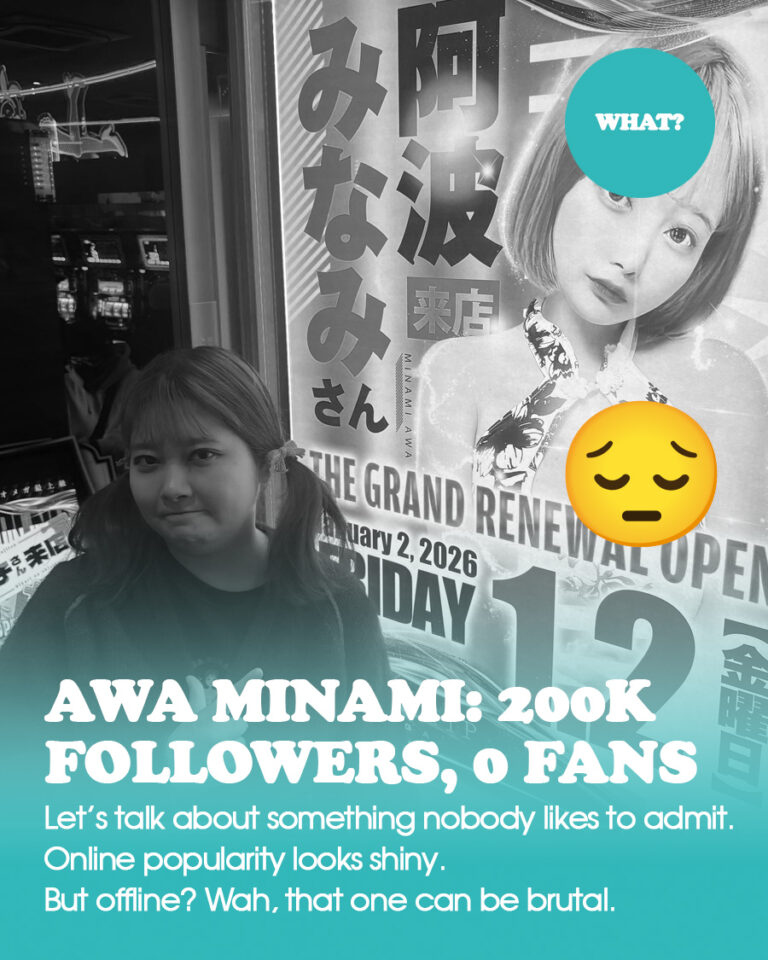
Let’s talk about something nobody likes to admit. Online popularity looks shiny. But offline? Wah, that one can be brutal.
A Japanese cosplayer just learned this the hard way. And honestly, it hit a nerve for a lot of people scrolling quietly on their phones.
The Day Nobody Showed Up
So here’s what happened.
Awa Minami, a Japanese cosplayer who calls herself “this era’s Doraemon,” planned a handshake event at a pachinko parlour in Chiba. Everything was ready.
Queue barriers? Set up nicely. Big LED screen? On standby. Venue? Clean, proper, ready to go.
But then… No one came.
Not one. Zero. Empty like a mall at 10am on a weekday.
Eventually, she had no choice but to cancel the event. She posted an apology online, keeping it short and calm, even though you could feel the pain through the screen.
Which proves something uncomfortable: Followers don’t automatically mean fans.
Actually, a lot of people follow casually. They scroll, they like, they forget. They don’t block their Saturday afternoon for you.
That gap between online clicks and real-life commitment? Yeah, it’s wider than people think.
Internet Came Running (After the Fact)
Ironically, the moment nobody showed up… Everybody showed up online.
Her post exploded. Millions of views. Tens of thousands of likes. Comments flooding in.
Many people said the same thing: “Honestly, this post is how I discovered you.”
Which is both comforting and painfully ironic.
Some commenters were kind. They encouraged her to stay positive and said the viral moment could help her grow.
Others? Less gentle.
One joker asked if she “ate” all her fans. She clapped back with humour, replying, “I’m not a ghoul!”
Respect. That response had spine.
The Weight Talk Nobody Asked For
Of course, the internet couldn’t resist going there.
Awa Minami has been open about her body before. She shared earlier that she lost over 20kg, then gained some weight back after binge eating.
So yes, people made jokes. Because the internet has zero chill.
Still, she didn’t lash out. She didn’t disappear. She kept engaging.
That alone takes guts.
The One Comment That Actually Helped
Amid the noise, one comment stood out.
Someone pointed out something very real: Handshake events work better when people already feel emotionally connected to you.
Fans don’t just come to shake hands. They come to hear you talk. To feel seen. To feel like they “know” you.
The advice was simple: Build recognition first. Then do the intimate stuff later.
Awa Minami took it well. She said she’d work harder to grow her profile.
No drama. No excuses. Just quiet determination.
The Bigger Lesson Everyone Is Ignoring
This story isn’t really about cosplay. Or pachinko parlours. Or even Japan.
It’s about modern fame.
You can have big numbers and still feel invisible. You can go viral and still feel alone. You can trend for the wrong reason and still have to pick yourself up the next day.
Honestly, that’s the part that hits hardest.
Between You & Me
Okay, real talk.
I don’t think this was a failure. I think it was bad timing mixed with misplaced expectations.
Handshake events are high-trust events. People need a reason to leave their house, travel, queue, and show their face.
Online fame is low effort. Offline support costs time, money, and emotional energy.
If anything, this moment stripped away the illusion early. That’s painful, yes. But also useful.
Because now she knows: What she has is attention. What she needs is connection.
And those are built very differently.
The internet will move on. It always does. But what she does next matters more than the empty room.
If she uses this moment to deepen her content, tell better stories, and show more of herself beyond cosplay? She’ll be fine.
If she lets the embarrassment define her? Then yeah, that’ll hurt long-term.
But judging by how she handled the jokes, the criticism, and the silence? She’s tougher than people think.
Two teenage girls went missing. Parents panicked. Social media exploded. And honestly? The internet did what the internet always does — amplify everything, feelings included.
Here’s what we know first.
Amber Lim En, 13, and Katelyn Lim Wen Xin, 14, ran away from home on December 30. Four days passed. No contact. No updates. Their parents, understandably shaken, turned to social media. Videos were posted. Tears were shed. Pleas were made.
From a parent’s point of view? Totally get it. When your kid disappears, logic flies out the window. You grab at anything that might work. Facebook, Instagram, WhatsApp groups, aunties, uncles — just blast and pray.
But here’s the thing. The internet doesn’t come with an “undo” button.
When Panic Goes Public
Let’s be real. Posting your child’s face everywhere feels like action. It feels like you’re doing something instead of sitting at home staring at the wall.
Actually, that instinct is very human.
But the moment those photos go viral, a quiet family crisis becomes a public spectacle. Everyone has an opinion. Everyone becomes CSI Singapore. Comments start flying — some helpful, some unhinged, some straight-up cruel.
And for teenagers? That hits different.
Try Seeing It From Their Side, Can or Not
Now imagine this.
You’re 13 or 14. You ran away for reasons adults may not fully understand yet. Maybe conflict. Maybe fear. Maybe confusion. Maybe just feeling unheard, sia.
Then you open your phone.
Boom. Your face everywhere. Strangers speculating. Schoolmates screenshotting. Group chats buzzing. Someone turning it into a meme. Confirm-plus-guarantee got people laughing behind screens.
Honestly? That kind of exposure doesn’t scream “safe to come home.” It screams “wah, I’m going to be judged forever.”
When school reopens, it’s not just whispers. It’s stares. It’s questions. It’s labels. Once that happens, shame kicks in hard. And shame doesn’t push people home — it pushes them further away.
The Parent’s Intent (Urgency)
The Teen’s Reality (Dignity)
Visibility: I need everyone to look for my child right now.
Exposure: I am now “that girl” who ran away. Everyone knows my business.
Connection: I want them to see how much I love and miss them.
Surveillance: I feel hunted and watched by strangers, not found by family.
Support: The community is rallying behind us to help.
Judgement: The comments section is dissecting my family life and my mental health.
The Internet Never Forgets, Leh
Adults forget this sometimes. Online posts feel temporary. But they’re not.
Screenshots live forever. Downloads live forever. Group chats live forever.
Even if the girls return safely — which everyone hopes — the digital trail stays. That’s the part that scares teens the most. Not punishment. Not scolding. Public humiliation.
And honestly, that fear is not irrational.
So What Actually Helps?
This part is uncomfortable, but important.
Public pleas may help locate someone fast. But they can also backfire emotionally.
A quieter approach sometimes works better — police involvement, trusted adults, school counsellors, relatives, friends who can reach them without broadcasting their faces to the whole island.
It’s not about blaming parents. Not at all. It’s about recognising that fear-driven decisions can have long shadows.
If I were one of those girls and I saw my face plastered all over social media, I’d feel exposed, embarrassed, and honestly… angry.
Not because my parents don’t care. But because my worst moment became public entertainment.
Coming home would feel harder, not easier. Facing friends would feel impossible. The shame would scream louder than any “please come back.”
Care isn’t just about urgency. It’s also about dignity.
If we truly want young people to come home safely, we need to ask a tough question: Are we helping them feel safe — or just helping ourselves feel less helpless?
Sometimes the loudest move isn’t the wisest one, lah.