A quiet Monday night in Ang Mo Kio turned tragic, and honestly, it shook a lot of people.
On 19 Jan, around 8.30pm, a car lost control at a T-junction along Ang Mo Kio Avenue 3 and Avenue 4. Instead of stopping at the road, it went full send — off the road, across a pedestrian footpath, and straight into an HDB courtyard. One pedestrian didn’t make it home that night.
Let that sink in for a second.
What Actually Happened
Source: Singapore Incidents
According to authorities, the car veered off the road and spun about 180 degrees. It didn’t just clip the curb. It crossed a pedestrian walkway — the one people use daily to get home, buy kopi, walk their dog, live their normal lives.
The vehicle finally stopped between Blocks 230 and 231.
Police quickly cordoned off the area. Multiple patrol cars were seen nearby. The scene? Messy. The car’s front was badly wrecked. Metal debris was scattered across the courtyard. Driver’s side door left open, like time just froze there.
And no, this wasn’t some ulu industrial area. This was right inside an HDB estate.
The Victim
The pedestrian, a 59-year-old man, was taken unconscious to Tan Tock Seng Hospital. He later passed away.
That’s someone’s father, uncle, neighbour. Someone who probably thought, “Just cross here only, very near already.”
But here’s the brutal truth — even when you’re on a footpath, you’re not always safe.
The Driver
The driver, a 50-year-old man, was arrested for dangerous driving causing death.
Investigations are still ongoing, so details are limited. But already, the charge itself says a lot. This wasn’t a minor misjudgement. Something went very wrong.
But Here’s the Thing
Singapore loves to talk about road safety. We fine fast. We enforce hard. We remind drivers every festive season.
Yet these accidents keep happening.
Why?
Speed? Distraction? Fatigue? Overconfidence? Maybe all of the above. Cars today are powerful. Roads feel familiar. People get complacent. And one moment of “aiyah, just a bit only” can end someone else’s entire life.
That’s the uncomfortable part no one likes to sit with.
Between You & Me
This one hits close, sia.
HDB courtyards are supposed to be the safest zones. Kids play there. Elderly stroll there. People let their guard down there — as they should.
When a car can fly into a space like that, it’s scary. Not dramatic-scary. Real, quiet, “this could’ve been anyone” scary.
If you drive, slow down — especially near estates. No destination is worth this kind of damage. And if you’re walking, stay alert even when you think you don’t need to. Sad, but true.
Road safety isn’t just about rules. It’s about mindset. And honestly, some people still don’t get it.
Moving On — But Not Forgetting
Police investigations are ongoing. More details will come out in time.
For now, one man is gone. One family is grieving. And a whole neighbourhood is reminded, once again, that accidents don’t need highways to turn deadly.
The AI space has been loud for years already. Every week got new model, new demo, new “this will change everything” headline. Most people just nod, scroll, and move on.
This one didn’t just impress engineers. It emotionally disturbed them.
So What’s the Big Deal, Actually?
Developers have used AI helpers for a while already. Autocomplete. Bug suggestions. Junior-dev vibes. Helpful, but still need babysitting.
Claude Code walked in and said, “Nah, I got this.”
People fired it up during their holidays “just to try,” and next thing you know, their vacation turned into a 10-hour daily coding marathon. Not because work forced them. Because it felt addictive.
One CTO finished a project in one week that would’ve taken one year. One. Week.
That’s not productivity. That’s time travel.
The Slot Machine Effect
Honestly, the wild part isn’t even the speed. It’s the feeling.
Users describe every run like pulling a Vegas slot lever. You press enter. Claude thinks. Boom—working code. Dopamine hits. Repeat.
You’re not fighting syntax. You’re not Googling errors. You’re just… building.
That’s new.
And Non-Tech Folks Are Like “Wait, I Can Do This?”
Here’s where things get spicy.
Claude Code escaped the nerd bubble. Non-coders started using it. And not for fun little demos.
They’re building apps. Analyzing health data. Sorting expenses. Recovering corrupted files. Even watching tomato plants grow through a webcam (don’t ask).
People who never wrote a single line of code are suddenly shipping stuff. That’s equal parts empowering and existentially rude to anyone who spent 15 years learning this craft.
The Emotional Whiplash Is Real
Let’s not sugarcoat it.
Some seasoned developers felt awe first. Then sadness. Then, low-key identity crisis.
One founder basically said, “I spent my whole life mastering this skill… and Claude one-shotted it.”
Ouch. But also… yeah.
This is what disruption actually feels like. Not hype. Not slides. That quiet moment when you realize the ground just moved under your feet.
Why Claude Feels Different From Other AIs
Most chatbots live in a box. You ask. They answer. End of story.
Claude Code? It acts.
It can access files. Use browsers. Run tools. Fix things without you holding its hand every step.
This is what people meant when they talked about “AI agents.” Not theory. Not roadmap. Real, usable, right now.
For many users, this was their first taste of an AI that doesn’t just talk smart—but actually does stuff.
Hiring Plans? Yeah… About That
Some founders quietly changed their plans.
Instead of hiring more engineers, they asked a harder question: “Do I really need five people… or just Claude and one very awake human?”
One CEO said Claude made him five times more productive. That’s not a small efficiency boost. That’s a structural change.
Multiply that across the industry and… yeah. Things are about to get weird.
Anthropic vs Everyone Else
Quick reality check.
OpenAI is everywhere. Massive consumer reach. Big name. Big numbers. Anthropic plays a different game. They’re laser-focused on businesses and serious workflows.
Right now, they’re winning where it counts for companies: enterprise adoption.
Even with Google flexing hard lately, the people actually building stuff are paying attention to Claude. Traffic numbers don’t lie. Usage is climbing fast.
Quietly. Relentlessly.
Cowork: Because Not Everyone Loves a Black Screen
One smart move? They realized the command-line interface scares people.
So they built Cowork. A friendlier, visual version of Claude Code. And get this—they built it in about 10 days. Using Claude Code itself.
That’s the part that messes with your head.
The tool is already helping build… itself.
Where This Is Headed (And Yeah, It’s Wild)
Let’s talk future, but without sci-fi nonsense.
In a few years, it’s very plausible that humans won’t be writing most code line by line. We’ll be directing. Reviewing. Steering.
The agents will handle the rest. Maybe 90%. Maybe 99%. Eventually? All of it.
And at some point, the code might not even make sense to us anymore. It’ll just… work.
That’s exciting. Also terrifying. Also unavoidable.
Between You & Me
Okay, real talk.
I think this is awesome.
Not because jobs disappear. That part is messy and painful, no doubt. But because barriers are collapsing. The gap between “idea” and “execution” is shrinking fast.
That’s good for small teams. Good for indie builders. Good for people who think big but don’t have massive resources.
The skill isn’t “can you code” anymore. It’s “can you think clearly and give good direction.”
And honestly? That’s a healthier world than one where only gatekeepers get to build.
Claude Code isn’t just a better tool. It’s a preview.
Of how work changes. Of how power shifts. Of how fast things can move when friction disappears.
We’re not watching the future arrive slowly. We’re watching it sprint.
And yeah—if you feel excited and slightly threatened at the same time?
You see the headlines. You read the court findings. And you think, “Eh, how can still got people defending him one?”
Actually, it’s not that complicated.
Here’s the truth: Pritam Singh still has strong support because his supporters see themselves in him. Same energy. Same mindset. Same coping style.
So… why still support?
Let’s not pretend this is about legal technicalities or deep constitutional debates. For most supporters, it’s emotional, not logical.
Look at the pattern.
For years already, this group has been known for two things:
First, blaming everything on someone else. Second, never admitting personal mistakes.
Job not doing well? Government fault. Salary stagnant? Government fault. Life never turn out as planned? Confirm-plus-guarantee someone else’s fault.
But here’s the thing. That mentality doesn’t disappear overnight. It becomes an identity.
Aspect
The Critic’s View
The Supporter’s Logic
The Conviction
Clear evidence of a lack of integrity.
A “political persecution” or a technicality.
Personal Failure
People blame the gahmen for their own bad choices.
Systemic issues make it harder for the average person to thrive.
Accountability
Leaders must be held to the highest standards.
Everyone makes mistakes; the “intent” was to protect the party.
The “Why”
Emotional denial and refusal to take responsibility.
Loyalty to the only credible check and balance in Parliament.
The opposition problem nobody wants to say out loud
Actually, Singapore’s opposition scene has a bigger issue than just one leader.
There’s no clear alternative vision.
Most of the time, it’s just anti-PAP content on repeat. Criticise, complain, accuse. Full stop. No solid replacement plan that makes people go, “Wah, okay, this one got future.”
And meanwhile, Singapore keeps ranking high globally for stability, safety, infrastructure, education, and healthcare. Like it or not, those rankings exist.
But to this crowd, none of that matters.
Because if the country is doing well, then the problem might be… them. And that’s a truth they really don’t want to sit with, leh.
The money complaint cycle (on loop)
Let’s talk about money, because this one always comes up.
Everybody wants higher pay. Fair. But nobody wants to pay more for anything. Also somehow fair?
But economics doesn’t work like Shopee vouchers, lah.
Wages are a cost. Everywhere. Higher pay means higher prices somewhere down the line. That’s not PAP magic. That’s reality.
Still, the story never changes.
Ministers earn too much. Immigrants taking jobs. Foreigners bringing entire kampung with them. Housing too expensive. Transport too crowded. Healthcare too costly. Education too stressful.
Different topic, same script.
And when someone else is doing well? Confirm crook. Confirm PAP kaki. Confirm got lobang.
“Real Singaporeans are suffering,” they say.
But here’s the part nobody likes to hear
No, not everyone is suffering because of the government.
Some people are suffering because of repeated bad choices. Career choices. Financial habits. Life decisions.
Painful? Yes. True? Also yes.
And that’s exactly why Pritam becomes symbolic.
Why Pritam is still their hero
Pritam Singh’s situation mirrors their inner story.
He insists he’s misunderstood. They insist they’re misunderstood.
He frames it as persecution. They frame their struggles as systemic oppression.
Remember the Raeesah Khan saga? Some people seriously believed she was planted to sabotage WP. Like some Netflix conspiracy series.
Because in their world, WP can do no wrong. And Pritam? Untouchable.
So when he denies. When he spins. When the explanations start sounding increasingly awkward…
They still swallow it whole.
Because rejecting his story means rejecting their own.
The lie is more comfortable than the truth
Here’s the brutal part.
If they accept that Pritam was rightly convicted, they must accept something worse.
That they supported a leader who lied. That their judgment was flawed. That their “us versus them” worldview collapsed.
That’s a very expensive emotional bill to pay, sia.
So instead, they choose denial. Conspiracy. Mental gymnastics worthy of Olympic gold.
One more lie? What difference does it make, right?
Between you and me, this whole thing isn’t really about Pritam.
It’s about pride.
Admitting you’re wrong is hard. Admitting you built your identity around the wrong person? Even harder.
Some people would rather double down on nonsense than take one honest look in the mirror.
And honestly? That’s the saddest part of all.
Not the conviction. Not the drama. But the refusal to grow up and own your own life.
A 23-year-old woman, “Khairun Nisya” from Palembang went viral for all the wrong reasons. On Jan 6, Indonesian authorities detained Khairun Nisya for pretending to be a Batik Air cabin crew member. Full uniform. Airport vibes. Main character energy — just that it wasn’t real.
Naturally, the internet went into full CSI mode.
Actually, the official story was pretty sad. Police said she wore the uniform because she felt paiseh in front of her family after failing to land a flight attendant job. No scam ring. No master plan. Just pressure, expectations, and a young woman trying to save face.
But here’s the thing. Social media didn’t like that simple explanation. So it upgraded the story.
The Internet Decides to “Help” (And Makes It Worse)
Soon after, posts started popping up claiming Nisya was actually a scam victim. Then it escalated again. Suddenly, she was “officially hired” by Garuda Indonesia. Congrats, right?
The so-called proof? A photo of her shaking hands with a Garuda executive. Big sign overhead. Staff clapping behind. Very corporate. Very inspiring. Very fake.
The fake image, in the office of Garuda Indonesia.
If you looked closer, though, things got weird fast. The sign looked pasted on. People overlapped like bad Photoshop layers. Faces didn’t quite match. Even her facial features looked different. Yes, makeup exists — but this was giving uncanny valley, leh.
Plot Twist: The Photo Was AI-Generated
The fake image, in front of Batik Air plane
We ran the images through Google Gemini’s AI image checker. Result? Either edited or straight-up generated by AI.
Confirm-plus-guarantee fake.
Garuda Indonesia didn’t mince words either. Their corporate communications head came out and said the image was “not true and misleading.” No job offer. No handshake. No recruitment happening at all.
They also reminded everyone that real recruitment info only comes from their official careers site. Anything else? Treat as noise.
Honestly, this part is scary. Because even legit news outlets got fooled. At least two published stories based on that fake claim. One even had to quietly change its headline later. Oops.
Now, moving on to the one genuinely positive thing.
An aviation training institute in Indonesia, Aeronef Academy, stepped in and offered Nisya a full scholarship for flight attendant training. Completely free. No strings. No AI photos required.
They said her desire to make her parents proud touched them. And instead of mocking her, they decided to give her a real shot — with real training and real certification.
That part? Respect.
More Than You Think
This isn’t just about one woman or one fake photo. This is about how fast nonsense spreads when emotions + AI + social media collide.
One fake image. One feel-good caption. Suddenly, everyone sharing without checking. Newsrooms included.
And people are watching all this like: “Wah, easy game.”
If something sounds too perfect, too emotional, too movie-like — pause first. Check twice. Share later.
Between You & Me
This whole thing screams pressure. Family pressure. Society pressure. “By 23 must be successful” pressure. Some people crack quietly. Some crack publicly.
I don’t think she wanted fame. I think she wanted validation. And the internet turned her into content.
What annoys me more is how easily people believe AI-generated nonsense just because it looks professional. A logo here, a handshake there, suddenly everyone forgets common sense.
We need to slow down, lah. Not everything viral is real. And not every sad story needs a hero arc created by fake images.
Gold is flexing right now. New highs. Headlines screaming. Group chats suddenly full of “eh should buy gold or not?” energy.
So the big question everyone is asking is simple: after running up so hard, is gold about to faceplant?
Short answer? Possible dips, yes. Full-on crash like history books love to scare you with? That one needs a reality check. Let’s break this down properly, no drama, no charts that make your eyes blur.
First, let’s set the stage
Actually, gold didn’t just do “okay.” It went full main character mode.
In 2025, gold jumped about 64%. Meanwhile, the S&P 500 gained roughly 16%.
So yeah, gold didn’t just win. It lap-ed everyone.
Zoom in on the one-year view and honestly, it looks calm. Steady climb. No crazy vertical candle that screams “bubble leh.”
But zoom out. Way, way out. Thirty years. Fifty years.
Suddenly the chart looks… intense. Like kopi that’s way too strong. And naturally, people start saying, “Confirm crash coming.”
But here’s the thing.
Gold doesn’t crash just because it’s expensive
This is where many people blur already.
Gold does not fall because it hits new highs. Gold falls when people trust money again.
That’s the real trigger. Always has been.
So let’s rewind to the famous moments everyone keeps quoting.
What really happened in 1980
Honestly, 1980 gets misunderstood all the time.
Back then, inflation was wild. Oil shocks. Global chaos. People had zero faith in the US dollar. Gold surged because cash was basically leaking value every day.
By January 1980, gold peaked near $850 per ounce, then dropped about 65%. Sounds terrifying, right?
But here’s why it fell.
The US Federal Reserve, under Paul Volcker, did something that today sounds unhinged. They pushed interest rates close to 20%.
Yes, twenty.
Mortgage rates were brutal. Businesses died. Recessions hit. People suffered. But inflation broke.
Most importantly, interest rates went higher than inflation. That meant holding cash finally made sense again. You got paid to save money instead of punished.
Once that happened, gold’s job as protection became unnecessary.
Gold didn’t fall because it was “too expensive.” Gold fell because trust in money came back.
Now let’s talk about 2011
Different story, same logic.
After the global financial crisis, central banks printed money like there was no tomorrow. Gold surged as insurance.
By 2011, gold hit around $1,920 per ounce.
Then… nothing exploded. No dramatic crash. Just a long, painful slide. By 2015, gold was down about 45% from the peak.
Why?
Because inflation never really showed up. Globalisation, weak wages, excess supply — all of it kept prices calm. The US dollar strengthened. Stocks recovered. Risk appetite returned.
Gold quietly lost its purpose.
Again, same lesson. Not price. Purpose.
The common thread behind every gold crash
Honestly, it’s always the same combo meal:
Real interest rates turn positive and stay there
The US dollar strengthens for a long time
People trust monetary policy again
When all three show up together, gold suffers.
Technical indicators? Overbought? RSI nonsense? Gold doesn’t care. It listens to real yields and credibility.
So what about today?
This is where comparisons to 1980 or 2011 start falling apart.
First, real interest rates are still negative. Yes, rates are higher than before. But inflation is still eating faster than savings can grow. Cash is still quietly losing value.
Second, US government debt is massive. Back in 1980, debt-to-GDP was about 30%. Today? Over 120%.
That matters because it limits how high rates can realistically go. Push rates too far and interest payments alone become a nightmare.
Third, deficits are still huge. Fiscal discipline? Don’t make me laugh. Trillions are still being spent like it’s normal.
Fourth, central banks are buying gold like crazy. This is new. They’re diversifying away from the US dollar, and that creates a strong base of demand that didn’t exist in previous peaks.
Fifth, the dollar isn’t the undisputed king anymore. De-dollarisation is slow, messy, but real. And that weakens the long-term case for blind faith in one currency.
So… can gold still fall?
Of course can. Don’t be delusional.
But let’s be realistic.
Here are the scenarios that actually make sense.
Scenario 1: Sideways movement Gold chills. Moves in a range. Tests patience. Bores everyone.
Scenario 2: Sharp pullbacks inside a bull market Gold drops 10–15%. People panic. Twitter explodes. Then it stabilises. Totally normal.
Scenario 3: Full bear market This one needs serious policy changes. Sustained positive real rates. Tight budgets. Strong dollar. Central banks selling gold. Political willingness to accept long-term pain.
Look around and ask yourself honestly… Does that sound likely?
Between You & Me
Gold isn’t some magical money tree. But it’s also not about to implode just because headlines say so.
What I see is this: trust in cash is shaky, debt is heavy, and policymakers love the easy way out. In that kind of environment, gold doesn’t need perfection. It just needs things to stay a bit messy.
And let’s be real — messy is kind of our default setting now.
If you’re expecting gold to go straight up forever, relax lah. If you’re scared it’s going to zero, also relax.
Volatility? Sure. Drama? Confirm. Total collapse? That one needs way more things to go right than history suggests.
Gold doesn’t crash because it hits new highs. It crashes when money earns trust again.
Until that happens — properly, painfully, and consistently — gold still has a seat at the table.
If your canned oolong drink run suddenly feels more expensive, you’re not imagining things. Honestly, this one isn’t just inflation doing inflation things. It’s also about recycling. Yep, that shiny new Beverage Container Return Scheme is coming, and while the idea is clean and green, the price tag? A bit messy, sia.
So let’s break it down properly. No fluff. No government-speak. Just the real talk.
What’s Actually Happening?
From April, most bottled and canned drinks in Singapore will come with a 10-cent refundable deposit. You pay first. You return the empty container. You get the money back. Simple, right?
But here’s the thing. That 10 cents is just the headline. Behind the scenes, businesses are dealing with a whole buffet of new fees. And businesses, as we all know, don’t absorb costs out of kindness. They pass it on. Straight to you. Confirm-plus-guarantee.
That’s why some drinks could end up costing 25 to 60 cents more,according to CNA. And no, that’s not a typo.
Why Importers Are Sweating Buckets
Actually, the biggest pain isn’t for the big brands. It’s the small guys and importers.
Right now, heartland shops sell imported canned drinks for as low as 70 cents. Local ones? Closer to a dollar. That gap made cheap drinks… well, cheap.
But under the new scheme, importers must:
Register their products
Replace overseas barcodes
Stick new BCRS-approved labels on every single can or bottle
Pay producer fees
Pay security deposits to prevent fraud
All this costs money. A lot of money.
One importer moving nearly a million cans a month basically said, “No choice, lah.” If costs go up, prices go up. End of story.
Meanwhile, big local producers can print the required codes directly during manufacturing. No stickering. No extra manpower. Less headache. You see where this is going.
Craft Beer Sellers: Double Confirm Stress
Now let’s talk about craft beer. The atas-but-chill crowd.
Craft beer importers bring in small batches. Seasonal designs. Different labels every time. That creativity? Suddenly a liability.
Every new design needs to be registered. Approval can take 12 to 16 weeks. That’s brutal when your beer only has a shelf life of about a year.
So by the time you’re allowed to sell it, the clock is already ticking loudly. Add extra manpower for labeling, and suddenly margins start crying quietly in the corner.
Honestly, it’s not that they hate recycling. They just don’t know what’s happening half the time. Information feels fragmented. Uncertainty is the real killer here.
The Fees Nobody Talks About Enough
Let’s zoom out. These are the costs businesses are dealing with:
One-time registration fee: S$500
Each product registered: S$5
Producer fee per unit:
Aluminium cans: ~3 cents
Plastic bottles: ~4 cents
Special barcode stickers for imports: 4 to 18 cents per unit
Security deposit for imports:
Up to S$28,000 upfront for 100,000 units
Possible penalties for mistakes or late declarations
So yeah. That “10-cent deposit” is just the tip of the iceberg.
Why Big Brands Aren’t Panicking (As Much)
Big players like Coca-Cola aren’t immune, but they’re better cushioned.
Their factories run at insane speed. Up to 1,000 bottles a minute. They can update packaging designs, adjust systems, and spread costs across massive volumes.
They also got more time to clear old stock thanks to a transition extension. Smaller players? Not so lucky.
Still, even the giants admit this isn’t a small change. It affects packaging, logistics, systems, and operations across the board.
What You’ll See as a Consumer
Moving on to your daily life.
Reverse-vending machines are coming. Over 1,000 machines islandwide. Supermarkets first. Then HDB estates and hawker centres.
You return your empty bottles there. Refund likely via PayNow or something similar. Details still being finalised.
If machines are easy to find, people will use them. If they’re hidden like rare Pokémon, then good luck.
The On-the-Ground Reality, I tried it
Let’s talk about the part nobody puts on slides.
Using a reverse-vending machine in Singapore is often more frustrating than rewarding. First, you bring two big bags of cans and bottles, feeling all responsible and eco-minded. Then you start hunting for the machine. When you finally find one, it’s either full or out of order. Strike one.
Say you get lucky and it’s working. Next problem: the queue. Progress is slow because the machine is extremely sensitive. You can’t just drop a can in. You must insert it slowly and carefully. Too fast, and the machine rejects it. The bottle gets spat back out, and you’re stuck retrying while the line behind you grows longer and more annoyed.
Barcode scanning is another gamble. Some drinks go through smoothly. Others don’t. New products or imported drinks are often not recognised at all. When that happens, there’s no workaround. After carrying everything there and waiting your turn, you’re left with no choice but to throw the drink into a nearby bin.
That’s the part that breaks the momentum. People don’t mind recycling. What they mind is effort without payoff. If returning containers feels like a chore, motivation disappears very quickly.
For the scheme to truly work, the machines must be reliable, fast, and everywhere people actually go. Otherwise, the system risks teaching people one thing only: that trying is more troublesome than giving up.
Recycling Reality Check
Here’s the uncomfortable truth. Singapore’s household recycling rate dropped to 11% in 2024. That’s… not great.
Plastic recycling? About 5%. Compare that to Taiwan, Germany, or Norway, where deposit systems push rates above 90%. Suddenly the scheme makes sense.
Economists say deposits work better than cash handouts. Because pain is immediate. You feel it at the checkout. You remember it when you’re about to throw the bottle away.
I get why people are annoyed. Prices going up always hurts, especially when you’re just trying to buy a cold drink after work. And yes, this scheme clearly hits small businesses harder than big corporations. That imbalance needs fixing, or at least more support.
But also? We’ve been terrible at recycling. Like, objectively bad. Blue bins everywhere, still wrong items inside. If a 10-cent “eh don’t waste lah” reminder is what finally wakes us up, maybe it’s worth the annoyance.
The key is execution. If machines are everywhere, refunds are fast, and education is clear, this could actually work. If not, it’ll just feel like another quiet price hike dressed up as sustainability.
And Singaporeans hate feeling played.
This scheme isn’t perfect. There will be loopholes. Some brands will try to dodge it. Enforcement only fully kicks in later.
But if done right, it could change habits for good. Less waste. More recycling. Fewer excuses.
Just don’t be shocked when your “cheap drink” isn’t so cheap anymore. Now you know why.
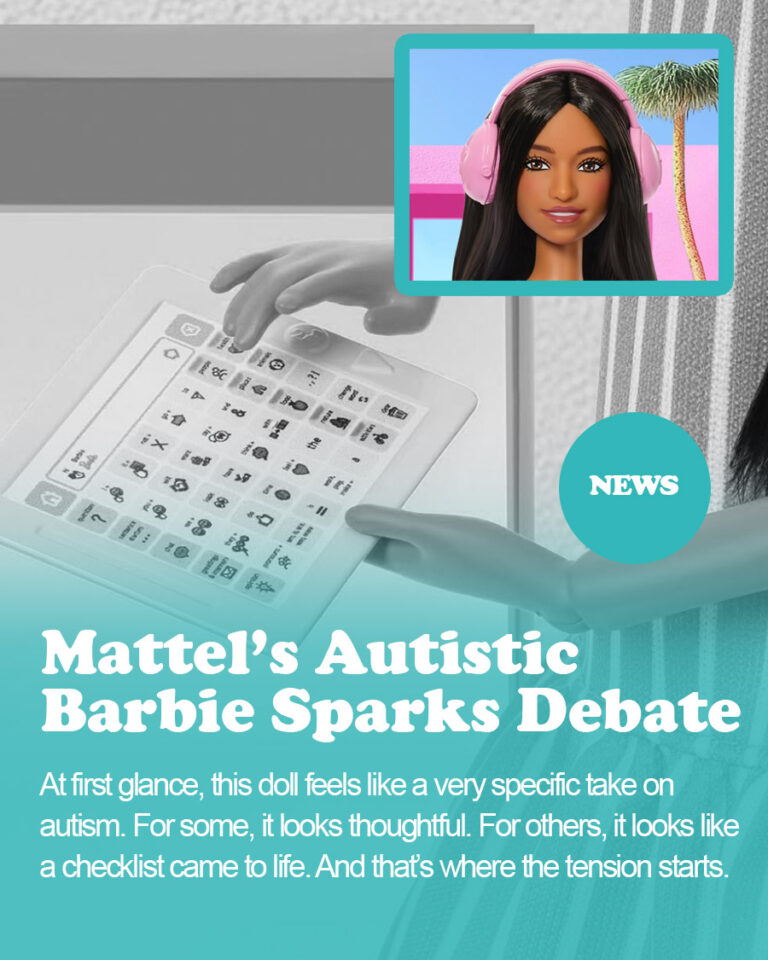
When news broke that Mattel was launching its first autistic Barbie, reactions were… mixed. Some people clapped. Others squinted at their screens and went, “Huh?” And honestly, both reactions make sense.
At first glance, this doll feels like a very specific take on autism. For some, it looks thoughtful. For others, it looks like a checklist came to life. And that’s where the tension starts.
When Inclusion Feels Personal
For many people who were diagnosed with autism later in life, this hits close to home. It can feel like a punch to the gut. Especially if you didn’t “look autistic” enough to be taken seriously growing up.
Back then, access to support often depended on how well you matched people’s expectations. If you didn’t fit the stereotype, you were ignored. Or worse, shut out of spaces meant to help you. So now, seeing a doll that visually signals autism so clearly can bring up old frustrations. Like, since when was neurodivergence something you could spot so easily?
And yeah, that discomfort is valid.
But Let’s Zoom Out a Bit
At the same time, not every shared trait is a stereotype. Sometimes, it’s just… reality. Autism is a spectrum, not a single personality type. Some autistic people avoid eye contact. Some stim. Some use noise-cancelling headphones daily. Some rely on AAC tools to communicate. Others don’t.
This Barbie isn’t trying to be every autistic person. She’s one character. One story. Not the Platonic ideal of autism, not the final boss of representation.
Think of her like a character in a show. She exists. She has traits. She doesn’t cancel out anyone else’s experience.
Designed With, Not Just For
Here’s an important detail that often gets skipped. This doll was created in collaboration with the Autistic Self Advocacy Network, a nonprofit founded and led by autistic people. That matters. A lot.
The accessories aren’t random props. They’re support tools many autistic kids actually use. Over-ear headphones to reduce sensory overload. A fidget spinner to manage stress. A tablet with symbol-based communication buttons for everyday interaction.
For kids who use these tools, seeing them reflected in toys can be powerful. There’s even real-life evidence that pretend play helps. One minimally verbal autistic child reportedly became more motivated to use her AAC device after her baby doll had one too. That’s not nothing.
Toys First, Feelings Second
Here’s the uncomfortable truth: toys are made for children first. Not for adults to unpack their identity or heal old wounds. That doesn’t mean adult feelings don’t matter. They do. But they’re not the main audience here.
For a child who uses headphones everywhere they go, this Barbie might feel seen. For a child without autism, she might quietly normalise difference. And that’s how culture shifts. Slowly. Casually. Through play.
What This Barbie Actually Looks Like
The design itself is very intentional. The doll’s eyes gaze slightly to the side, reflecting how some autistic people avoid direct eye contact. Her elbows and wrists are fully bendable, allowing for repetitive movements like stimming or hand-flapping.
She wears a loose-fitting purple A-line dress with short sleeves and a flowy skirt. The goal? Less fabric irritation. More comfort. Her shoes are flat, designed for stability and ease of movement.
And yes, many of the accessories are pink. Because… Barbie. That part is very on-brand.
Mattel’s Bigger Picture
This autistic Barbie didn’t appear out of nowhere. Since 2019, Mattel has been expanding its disability-inclusive lineup. We now have Barbies with vitiligo, Down syndrome, hearing aids, prosthetic limbs, and wheelchairs. There’s even a Ken with a prosthetic leg.
In 2025, this autistic Barbie joins the Fashionistas range, following closely after a Barbie with type 1 diabetes. With another animated Barbie film in development after the massive success of the 2023 movie, it’s clear Mattel is serious about reflecting a more diverse world.
Is it perfect? No. Is it progress? Probably yes.
Personally, I think this Barbie is both imperfect and necessary. She will resonate deeply with some kids. She will feel awkward to others. That’s kind of how inclusion works in real life too, right?
The real problem isn’t that this doll exists. The problem would be if this was the only version of autistic representation we ever got. One doll shouldn’t carry the weight of an entire spectrum. But as one step among many, it’s a start.
If nothing else, she sparks conversation. And conversations, messy as they are, usually mean we’re moving forward. Slowly. Sometimes clumsily. But still forward, lah.
Let’s talk toilets. Yes, that thing you sit on every day but only notice when it betrays you.
If your WC keeps backing up, bubbling, or doing that suspicious glug glug sound, relax first. It’s annoying, but it’s not magic, and it’s definitely not karma. There’s usually a very specific reason behind it.
Actually, one common cause in Singapore is way more ridiculous than people realise.
So… why your toilet suddenly like that?
Honestly, most people jump straight to “choke” or “pipe problem.” Sometimes true. But here’s the thing most homeowners never hear.
Toilet bowls are designed with a standard pit distance. That distance is usually 305mm. Very normal. Very standard. The rest of the world agrees on this.
But Singapore? We like to be special. 🙃
Some local developments use odd, non-standard pit distances. Distances that toilet manufacturers overseas never planned for. So what happens?
Plumbers have to use adapters to “make it fit.”
And that’s where drama starts.
Why adapters can mess things up
Adapters are not evil. But they’re not magic either.
When you add an adapter, you change how water and waste move through the bowl. For some toilets, no big deal. For others? Big problem.
Especially for siphoning toilets — the so-called tornado, power flush, vortex kind.
These toilets are very… sensitive. Like emotionally sensitive, but in plumbing form.
They rely on precise angles and pressure to create suction. Once you mess with the pit distance, the siphon effect can weaken. Result?
Weak flush
Slow drainage
Backflow after flushing
That gross water level rising moment that makes you freeze
Flush-down toilets usually tahan better. Siphon toilets? Wah, they can throw tantrum.
Is this definitely your problem?
Not saying confirm-plus-guarantee this is your issue. But if:
Your toilet is not new
Plumber already tried multiple fixes
No major blockage found
Still backing up like it’s haunted
Then honestly, pit distance mismatch becomes a very real suspect.
This is especially common in older flats or oddly renovated bathrooms where things were forced to fit.
What can you actually do?
First, don’t panic-renovate.
Ask your plumber directly:
What’s the pit distance?
Is an adapter being used?
What type of toilet bowl is this?
If the answers are vague, push a bit. You’re not being difficult. You’re protecting your bathroom sanity.
In some cases, the real fix isn’t more pipe cleaning. It’s changing the toilet model to one that’s more forgiving with non-standard distances.
Annoying? Yes. Cheaper than endless call-backs? Also yes.
I’ll be real with you. Singapore toilets shouldn’t be this complicated.
Developers cutting corners on plumbing standards is one of those things nobody talks about until your bathroom floods and ruins your day. Then suddenly everyone becomes a plumbing expert.
If your toilet keeps acting up and everyone keeps guessing, stop guessing. Measure. Check. Question. Toilets are boring, but bad toilets will slowly destroy your mental health, leh.
You deserve a WC that flushes and moves on with life. Not one that keeps revisiting its past.
A three-room HDB flat in Yishun didn’t just get messy. It quietly turned into a full-blown hazard zone. Floor to ceiling clutter. Doors that couldn’t open properly. Windows jammed. And yes, cockroaches everywhere, like they owned the place.
This wasn’t some viral hoarding show. This was real life. Right here in Singapore.
How Things Spiralled Out of Control
Screenshot
The flat belongs to a 75-year-old elderly woman living alone. Over the years, things piled up. Some items were hers. Many weren’t.
Relatives and friends stayed over, bought stuff, ran out of luggage space, and left their things behind. They promised to come back for them. Spoiler alert: they never did.
Five years passed. Then more. Before anyone realised, the flat became impossible to live in properly.
Actually, “live” is generous. She was sleeping on a small foldable mattress, tucked into a corner, because there was no space left. Doors and windows were blocked by clutter. Ventilation? Forget it.
The Wake-Up Call No One Wants
Then came the accident.
The elderly woman got knocked down by a bicycle and ended up in hospital. That’s when things unraveled.
Doctors discovered her home situation and basically said: she cannot go back like this. Too dangerous. Too unhygienic. Too risky.
Meanwhile, neighbours noticed she was missing. They got worried. They called the police. That’s kampung spirit right there, not just small talk at the lift lobby.
Because of legal procedures, permission had to be obtained through a lawyer before authorities could enter the flat. Once the door opened, the situation was clear.
This wasn’t just untidy. This was a fire risk. A health risk. A “someone could actually die” situation.
When Help Shows Up, Big Time
Here’s where the good stuff starts.
A call went out from the hospital to a volunteer group called AMKSS Social Move. Without drama, without excuses, they stepped up.
They rallied other community groups. Nee Soon East grassroots. Hougang temple volunteers. Different people, different backgrounds, same goal.
More than 50 volunteers turned up early in the morning. Covered shoes on. Sleeves rolled up. No complaining.
Town council brought in 10 to 15 massive rubbish bins. And even then, it was barely enough.
As items were cleared, cockroaches rushed out in waves. That alone tells you how bad it was.
Six hours. That’s how long it took.
Six hours of hauling, sorting, cleaning, scrubbing, disinfecting. After that? The flat looked human again.
Not fancy. Not Instagram-worthy. But safe. Clean. Livable.
Not Just Cleaning — Literally Saving Lives
Here’s the thing people often miss.
This wasn’t about making the house “nice.” This was about survival.
A cluttered flat like this is a fire hazard not just to one unit, but the entire block. One spark, one short circuit, and suddenly everyone’s life is at risk.
The volunteers knew that. They weren’t just clearing trash. They were preventing a disaster.
After cleaning, they even helped repaint the flat and buy basic furniture. The goal was simple: make sure she has a dignified place to return to after hospital.
No luxury. Just safety and peace.
The Elderly Woman Speaks
The elderly woman herself admitted most of the items weren’t even hers.
People told her they’d come back for their things. Years passed. Nobody came.
She didn’t complain. She didn’t blame. She just said thank you.
Sometimes gratitude says more than a long speech.
Between You & Me
Let me be very straight with you.
This story is uncomfortable because it’s closer to us than we think.
How many elderly people are quietly struggling behind closed doors? How many flats look “okay” from outside but are falling apart inside?
The biggest issue here isn’t clutter. It’s neglect.
Not malicious neglect. Just the slow, silent kind. The “later lah” kind. The “someone else will handle” kind.
Community saved this situation. Not policies. Not headlines. People.
If you have elderly neighbours, check in. If you’ve left things at someone’s place “temporarily,” go get it back. If something feels off, say something.
Because sometimes, one knock on the door is the difference between help arriving… or arriving too late.
The U.S. Justice Department is now looking into Federal Reserve Chair Jerome Powell. Not for insider trading. Not for some secret island getaway. But over what he said to Congress about a building renovation project.
Yes, a renovation.
Honestly, if this sounds small but smells big, you’re not wrong.
According to officials, federal prosecutors have opened a criminal investigation into Powell’s testimony about renovations at the Fed’s Washington buildings. Subpoenas have already landed. Grand jury level. Serious stuff.
And suddenly, a boring construction project has turned into a political grenade.
What Actually Happened?
Here’s the simple version.
The Federal Reserve renovated its historic buildings in Washington. The project cost a lot. Like, billions a lot.
Powell testified to Congress about it last year. Later, the Justice Department decided his testimony and the spending deserved a closer look. Hence, subpoenas.
So far, no charges. But the threat is very real.
Powell himself called this move “unprecedented.” And honestly, that’s not dramatic. Fed chairs don’t usually get dragged into criminal probes over building upgrades.
But Here’s the Thing…
Powell doesn’t think this is just about construction costs.
In a rare video statement, he basically said the quiet part out loud: this investigation feels like pressure. Political pressure.
Pressure to cut interest rates.
Pressure to fall in line.
Pressure to remind everyone who’s boss.
According to Powell, this isn’t about tiles, permits, or budgets. It’s about whether the Fed can still do its job without politicians breathing down its neck.
And that job? Setting interest rates based on data, not vibes.
Enter Trump (Of Course)
Donald Trump has never been shy about his feelings toward Powell. He’s complained for years that interest rates are too high. He’s insulted Powell publicly. He’s floated lawsuits. He’s even talked about firing him.
Now, suddenly, the Justice Department is investigating Powell.
Trump says he knew nothing about the subpoenas. He also says any investigation has nothing to do with interest rates.
At the same time, he keeps saying rates are “far too high.”
You decide lah.
Why This Is a Big Deal (Even If You Don’t Care About the Fed)
The Federal Reserve is supposed to be independent.
Not Democrat. Not Republican. Just… boring economists doing boring math.
Once politicians start using legal threats to influence monetary policy, markets get nervous. Investors hate uncertainty. Wall Street hates drama even more.
That’s why analysts are already warning about volatility. Not because Powell might be guilty, but because this sets a scary precedent.
Today it’s renovations. Tomorrow it’s rate decisions. After that? Who knows.
Powell Snaps (Politely)
Powell is usually Mr Calm. Measured. Neutral. Zero spice.
This time? Different energy.
He accused the administration of using the Justice Department as a weapon. He said he’ll continue doing his job with integrity. He made it clear he’s not stepping down just because things get uncomfortable.
That’s… bold. Especially with his term ending in May.
Still, he said it plainly: public service sometimes means standing firm, even when people try to scare you off.
Respect.
Congress Reacts, And It’s Messy
Republicans and Democrats are both mad. Just for different reasons.
Some Republican senators warned this could destroy trust in both the Fed and the Justice Department. One even said he’ll block any Fed nominations until this mess is resolved.
Democrats accused Trump of trying to install a “sock puppet” at the Fed.
Yes, that exact phrase.
So now nominations, court cases, and interest rate policy are all tangled together like messy earphones in your pocket.
And It’s Not Just Powell
At the same time, Trump is also trying to remove Fed Governor Lisa Cook. There’s another criminal investigation there too, tied to mortgage applications.
Cook denies wrongdoing and is fighting it in court. So far, she’s holding her ground.
Put together, this looks less like coincidence and more like a pattern.
Between You & Me
I’ll be straight with you.
You don’t need to love Jerome Powell to see the problem here.
Once the central bank stops being independent, everyone pays the price. Your loans. Your savings. Your investments. Even your CPF-equivalent vibes, if you think globally.
Interest rates are blunt tools. They affect jobs, inflation, housing, and debt. They should not be adjusted because someone feels annoyed or wants good headlines.
Today it’s Powell. Tomorrow it could be any official who refuses to “cooperate.”
That’s not strength. That’s insecurity wearing a suit.
Powell’s term ends soon. Trump is close to picking a successor. Markets are watching every move like it’s a slow-motion car crash.
The investigation continues. No charges yet. No resolution in sight.
But one thing is clear: this fight isn’t really about a building.