Honestly, I went to Our Tampines Hub for the 2026 countdown thinking, “Okay lah, fireworks, vibes, countdown, go home sleep.” Did not expect fireworks inside the stadium. Inside, leh.
And then—plot twist—a small fire broke out. Yes, I saw it with my own two eyes. Not TikTok rumour. Not WhatsApp auntie forward. Real life.
So yeah, happy new year… with bonus anxiety.
Fireworks + Roof + People = Can or Not?
Actually, let’s rewind a bit.
The fireworks went off at midnight. Everyone cheered. Phones up. Instagram stories loading. Then shortly after, people noticed sparks that were not part of the show.
Next thing you know, there was a fire on the roof of Our Tampines Hub.
Not dramatic, not inferno-level chaos. But still a fire. On a building. With people around. You don’t need to be an engineer to know that’s not ideal.
What Happened After That
Moving on to the official part.
The Singapore Civil Defence Force was alerted at about 12:05am on January 1. Location: 1 Tampines Walk.
Turns out, the fire involved a small patch of grass at the rooftop garden. SCDF came in, used a hose reel, and put it out. Situation handled. No injuries reported.
So yes, under control. But still… the question remains.
Haven’t We Seen This Movie Before?
Here’s the thing. This isn’t exactly a brand-new issue.
Back in 2024, National Day celebrations at Paya Lebar were held very close to buildings. People already raised eyebrows then.
Fast forward to 2025, the celebrations got moved to Eunos Industrial Park. Why? Space. Safety. Fewer buildings. Fewer things that can catch fire at 12am.
I even chatted with a security guard during the 2025 celebrations. He straight up said there were complaints about fire hazards because the previous setup was too near Wisma Geylang Serai.
So yeah, this Tampines situation feels a bit like déjà vu, but louder and with fireworks.
Fireworks Are Fun, But Context Matters
Look, fireworks are great. They make people feel something. But location matters. A lot.
Doing fireworks near or inside buildings is like saying, “Relax lah,” while lighting a match in a storeroom full of cardboard boxes.
Most of the time, nothing happens. Until one time, something happens.
And that one time is enough to make everyone go, “Eh… maybe don’t do this again.”
Between You & Me
Between you & me, I highly doubt the 2027 countdown will be back inside Our Tampines Hub stadium.
Not because people are dramatic. But because Singaporeans are practical.
Once something becomes a “potential hazard,” it’s confirm-plus-guarantee someone will say, “Okay, next year, different place.”
Nobody wants to start the new year with sirens, fire hoses, and that awkward feeling of “this could have been worse.”
Celebrate, yes. But maybe next time, give the fireworks a bit more breathing space, can?
End of the day, no one got hurt. That’s the most important thing.
But small incidents like this are reminders. Crowds, fireworks, buildings—they don’t always mix well.
So if future countdowns move to more open spaces, don’t be surprised. It’s not being kiasu. It’s just common sense, lah
Silver didn’t just have a good year. It went full main character mode. It crushed most assets, grabbed headlines, and somehow became the third most valuable asset on the planet. Then China stepped in and said, “Actually… we’re not selling.”
That’s when things got spicy.
So let’s zoom out. Because this isn’t just about silver prices going brrr 📈. This is about money, power, control, and a slow-moving chess game between China and the US that most people aren’t paying attention to yet.
First, gold and silver are not the same thing
Gold is about trust. Silver is about control.
Gold backs money. It signals stability. It whispers, “You can trust this system.” That’s why China has been hoarding gold for decades, building the Shanghai Gold Exchange, and expanding what people call the “gold corridor.”
The message is simple: If you want a money system outside the US dollar, here’s an option. Gold-backed. Basel III compliant. Use it as collateral. Build your economy. No Fed required.
Silver, on the other hand, doesn’t care about vibes or trust. Silver runs the modern world.
Solar panels. EVs. Data centres. Military tech. Satellites. AI. Robotics. Automation. Basically, if it needs electricity and precision, it needs silver.
And here’s the kicker. When silver gets expensive, industries don’t stop buying it. They can’t. They need it to function. That alone makes silver very different from gold.
So how do we even know what silver is “worth”?
Welcome to price discovery.
Globally, two markets matter:
COMEX (US-based, futures-heavy, paper-driven)
Shanghai (physical delivery, real metal, no funny business)
COMEX prices mostly reflect paper contracts. Most of them never result in actual silver delivery. They get rolled over or settled in cash. Easy, convenient, very Wall Street.
Shanghai prices reflect real silver. Stored. Delivered. Used by manufacturers.
Normally, these two prices stay close. If one gets too cheap, traders buy there and sell where it’s expensive. That’s arbitrage. Prices snap back together. Balance restored.
Except… recently, they didn’t.
The gap that shouldn’t exist (but does)
On December 24, physical silver in Shanghai closed around $78 an ounce. At the same time, COMEX silver closed around $72.
A $6 gap.
That’s huge. Historically weird. Almost unheard of.
Usually, the difference is less than $1. Rarely more than $2. When a $5–$6 gap sticks around, especially during a quiet holiday period, it’s a signal.
Something is off.
It suggests physical silver isn’t moving freely anymore. And when physical supply tightens, paper prices eventually get dragged higher whether they like it or not.
A quick problem with COMEX inventories
Inside COMEX-approved vaults, silver is split into two buckets:
Eligible silver: stored, not for sale
Registered silver: available for delivery
Here’s the issue. Registered silver sits around 120–130 million ounces.
Global annual demand? About 1.1 to 1.2 billion ounces.
Do the math. If everyone asked for physical delivery at the same time, COMEX wouldn’t even come close. But it works… as long as people don’t ask for the silver.
That’s fine. Until behaviour changes.
Why China understands silver better than anyone
Historically, silver wasn’t just a metal in China. It was money.
Taxes were paid in silver. Trade was settled in silver. Big deals were weighed, not priced. For centuries, silver stabilised China’s economy.
Then came 1934.
The US passed the Silver Purchase Act, forcing massive silver buying. Prices shot up. Silver flowed out of China. Money drained. Deflation kicked in. Spending stopped. Investment froze.
The economy slowly ate itself.
By 1935, China abandoned the silver standard. Not because silver failed. But because China learned a brutal lesson:
If your economy depends on something you don’t control, someone else will weaponise it.
China did not forget that.
What China just did (and why it’s clever)
China didn’t ban silver. That would cause drama. Headlines. Angry politicians.
Instead, they reclassified silver as a dual-use strategic material. Civilian + military.
That changes everything.
Now, silver exports require government approval. On paper, it looks harmless. In reality, almost nobody qualifies. Only big players. And even then, approvals are discretionary.
Translation? China didn’t close the door. They installed a gate. And they control the keys.
Why this matters even more than you think
Most silver isn’t mined directly. About 70–80% comes as a byproduct of mining copper, lead, or zinc.
So even if silver prices double, supply doesn’t magically increase. You’d need more base metal mining. That takes years.
Economists call this inelastic supply.
Think insulin, not coffee. People don’t just stop using it because the price goes up.
Now add this: A huge chunk of global silver refining happens in China. Even silver mined in Mexico or Australia often passes through Chinese processing before it’s usable.
From January 1, 2026, China decides if that silver leaves.
Sound familiar?
They did this before with rare earths. Same playbook. Same outcome. Panic first. Then a decade-long scramble to rebuild supply chains.
Silver is next. Except silver is everywhere.
So… where does silver go from here?
Honestly? Nobody knows.
Silver has a weird personality. It does nothing for years. Then it moves fast. Violently fast.
In the late 1970s, it went from around $6 to over $50 in just over a year. Then it crashed. Then it slept again.
That’s silver.
When supply tightens, prices spike. Then speculators rush in. Then they take profit. Then prices fall hard.
Are we early? Late? Somewhere in the messy middle? No idea.
What matters more is this: This isn’t really a silver story.
This is a power story.
China isn’t trying to win by shouting. They’re winning by controlling chokepoints.
Gold builds trust. Silver builds leverage.
Control refining. Control exports. Control who builds and who waits.
In a world drifting away from cooperation and into competition, leverage is currency. And we’re moving fast into a multipolar world where no single country makes all the rules anymore.
Silver might look like a small domino. But it’s connected to energy, tech, defence, AI, and money.
That’s not small. That’s structural.
So whether silver hits $100 or drops back to $50 isn’t the point. The point is this: the game has changed. And silver just showed us who’s been studying the board the longest.
Let’s get straight to it. Everyone keeps asking the same question, year after year, like it’s a ritual: “So… is the US housing market finally going to crash?”
Short answer? Nope. Long answer? Sit down, kopi in hand, because this mess needs unpacking.
A Quick Reality Check Before 2026
First things first, let’s rewind a bit. Look at the five-year chart of US home prices. Be honest with yourself. Does that line scream “crash incoming”? Or does it look more like a stubborn cat that refuses to come down from the cupboard?
Exactly.
Source: https://www.resiclubanalytics.com/
By the end of November 2025, national home prices were up about 0.7% compared to November 2024. That’s not fireworks, but it’s definitely not a collapse either. If prices are still going up, even slowly, calling it a “crash” feels… dramatic. Netflix-level dramatic.
Back in 2024, the prediction was simple: no housing crash in 2025. And guess what? That call aged pretty well. Meanwhile, the “this-is-it-the-sky-is-falling” crowd has been shouting crash for four straight years now. At some point, it stops being a prediction and starts sounding like background noise.
But Real Estate Is Local (Yes, This Part Matters)
Now, before anyone flips a table, let’s be fair. Housing isn’t one big blob. It’s local.
Source: https://www.resiclubanalytics.com/
Across the top 300 metro areas in the US, some places are hurting. Prices are clearly sliding in parts of the South, Florida, and sections of the West. Those deep red zones? Yeah, they’re not having a great time.
However, flip the map and you’ll see something else. Most metro areas are still seeing price growth, especially in the Midwest and along the East Coast.
Here’s the big picture:
98 metro areas saw prices decline
202 metro areas saw prices rise
Nationally, prices are still up 0.7%
So yes, pain exists. But no, this is not a nationwide free fall.
Are Homes Still Crazy Expensive? Obviously.
Let’s not pretend otherwise. Homes are still expensive. Very expensive. For many Americans, they’re straight-up unaffordable.
And honestly, it makes total sense why people want a crash. A crash feels like a reset button. A second chance. A “maybe I can finally buy something without selling a kidney” moment.
Unfortunately, hope and reality are not dating each other right now.
What Actually Worries Me About 2026
Here’s where things get spicy.
The Federal Reserve has already started cutting interest rates. That part is public knowledge. But there’s more coming. With a new Fed chair stepping in around May, there’s a strong chance rates get cut even more aggressively.
Lower rates mean cheaper borrowing. Cheaper borrowing means more demand. More demand, with limited supply, means… you guessed it… higher home prices.
That’s inflation knocking politely, then barging in.
And that’s not all.
Money Printing Is Back (Again)
On December 12, the Fed quietly restarted money printing. About $40 billion a month. That’s not pocket change. That’s inflation fuel.
When more money floods the system, prices don’t stay still. Food goes up. Utilities go up. Housing goes up. Life, in general, gets more expensive.
This wouldn’t be such a big issue if wages were rising properly. But they aren’t.
Wages vs Inflation: The Real Villain
Official numbers say wages are growing at about 2.7% a year. Sounds okay… until you look around and realise nothing feels 2.7% more expensive. Groceries alone feel like they’re running their own marathon.
Real inflation? Closer to 6%, 8%, maybe even 10%, depending on how fast money is being printed.
Over the last 25 years, the US money supply has exploded. More dollars. Same houses. Same food. Same power bills. That’s why asset prices keep climbing long term. Stocks. Homes. Everything.
Back in 2000, the median home price was about $119,000. Movie popcorn was $1. Vending machines accepted coins. Now you need a credit card just to buy water.
Progress, I guess.
So… Why Would Prices Crash in 2026?
Let’s connect the dots.
Interest rates are being cut
Money printing is back
Money supply is already at record highs
Demand is ready to jump the moment rates fall
Given all that, why would home prices suddenly collapse?
They wouldn’t. And they probably won’t.
In fact, the National Association of Realtors is predicting home prices could rise about 4% in 2026. They’re calling it a market of the “haves and have-nots”.
Translation? If you already own a home, congrats. If you’re trying to buy your first one… good luck, bro.
First-Time Buyers Are Getting Pushed Out
Here’s a stat that should make everyone uncomfortable.
First-time buyers now make up just 21% of the market. Historically, it’s closer to 40%. Even more worrying? The median age of a first-time buyer is now 40 years old.
That’s not a flex. That’s a warning sign.
Mortgage Rates: Lower, But Don’t Dream Too Big
Mortgage rates have come down from their highs. The average 30-year fixed is slightly above 6%, down from around 7% earlier and way off the near-8% levels from two years ago.
Yes, rates are drifting lower. But don’t expect a miracle. Those sweet 3% loans from 2022? Gone. Probably not coming back anytime soon.
Experts from Realtor.com, NAR, Fannie Mae, and Redfin are all saying the same thing: mortgage rates in 2026 will likely stay around 6%. Basically, stuck in a boring, frustrating range.
“Just Build More Homes” Isn’t That Simple
On paper, the solution looks easy. Build more houses.
In reality? Not so simple.
Construction costs are way up. Materials cost more. Labour costs more. Tariffs don’t help. Builders are squeezed from all sides. Even when they cut prices, homes still end up too expensive for most buyers.
And when profits shrink, builders slow down. That’s Economics 101.
So no, builders are not swimming in cash. They’re treading water.
My Take: This Is a Wage Problem, Not Just Housing
Here’s my honest view. The housing market isn’t broken in isolation. Wages are the real issue.
When inflation runs hot and wages crawl, people lose buying power. Period. You can tweak rates. You can print money. But if incomes don’t rise meaningfully, affordability stays dead.
And let’s not pretend inflation numbers always tell the full story. When data is missing, estimates get… creative. Setting housing inflation to zero because data is unavailable? That’s not reassuring. That’s concerning.
So, where does this leave us?
I don’t see a housing crash in 2026. What I do see is the same affordability crisis dragging on. Prices stay high. Rates ease slowly. Wages lag. First-time buyers struggle.
It’s not dramatic. It’s not sudden. It’s just… exhausting.
If you’re already in the market, you’ll probably keep building equity. If you’re trying to get in, it’s going to feel like playing musical chairs with fewer seats every year.
That’s the situation. Not pretty, but real.
What do you think? Agree? Disagree? Somewhere in between? Drop your thoughts below. And yeah, stay sane out there.
Sometimes, history feels like a Netflix plot twist. One moment, everyone expects seasoned politicians to run the show. Next moment, boom — a hermit walks in from the mountains and becomes Pope. Yes, that actually happened.
Back in 1294, the Catholic Church was stuck. Properly stuck. After the death of Pope Nicholas IV, the College of Cardinals spent two full years arguing, bickering, and playing factional politics. No pope. No progress. Just vibes… and not good ones.
Eventually, desperation kicked in. And when people panic, they do weird things.
That’s how Pietro del Morrone entered the chat.
A Hermit Enters the Vatican (Unexpectedly)
Pietro del Morrone was not your typical leadership candidate. In fact, he was the total opposite. He lived as a hermit. He fasted. He prayed. He avoided power like it was spam email. Politics? Nah. Admin work? Big nope.
However, he was deeply respected for his holiness. People saw him as a walking spiritual Wi-Fi hotspot. So when Pietro sent a fiery letter warning the cardinals that divine judgment might be coming for their endless delays, it hit hard.
Suddenly, the cardinals looked at each other and thought, “Eh… maybe this guy.”
At first, people were hopeful. A pure soul on the papal throne sounded refreshing. Less politics. More God. What could go wrong?
Well… everything administrative.
Celestine V had spent decades in isolation. He had no experience running a massive institution. No training in diplomacy. No instinct for power games. Meanwhile, the papacy was basically a medieval multinational corporation with kings breathing down its neck.
As a result, confusion ruled. Decisions were slow. Advisors pulled strings behind the scenes. Politically sharper clerics took advantage of his innocence. Celestine himself felt lost, overwhelmed, and frankly, quite done.
The glow faded fast.
The Most Honest Realisation a Pope Ever Had
Then came the moment that changed Church history.
Celestine V realised something many leaders never admit: he was not suited for the job.
Instead of clinging to power, he did something radical. First, he issued a formal decree stating that a pope could resign. At that point, this was unheard of. No precedent. No template. Just courage.
Days later, he used that same rule on himself.
In December 1294, Pope Celestine V stepped down voluntarily.
Mic drop.
The Aftermath: Power, Politics, and Regret
His resignation cleared the way for the election of Boniface VIII, a pope who was… let’s just say, very different. Boniface was politically aggressive and later clashed hard with King Philip IV of France. The Church returned to power struggles, ego battles, and dramatic showdowns.
Meanwhile, Celestine’s quiet exit didn’t bring him peace. Fearing that Celestine might be used as a rival figure, Boniface ordered him confined. The former pope spent his final years under harsh conditions.
Not exactly a happy ending.
Why Celestine V Still Matters Today
Here’s the thing though. Even with all the chaos, Celestine V left behind something massive.
His resignation shattered the idea that the papacy was an unbreakable, lifelong throne. He showed that stepping away could be an act of strength, not weakness. That humility belongs even at the highest level of authority.
Centuries later, when Pope Benedict XVI resigned in 2013, people immediately looked back to Celestine V. That lonely hermit from the 13th century suddenly mattered again.
Long game, sia.
My Take: Power Isn’t Always the Prize
Here’s my honest view. Celestine V didn’t fail because he resigned. He failed because the system expected one man to be both a saint and a CEO. That’s a crazy ask, even today.
In a world obsessed with holding on — titles, jobs, influence — Celestine chose to let go. That’s rare. Leaders today could learn from that. Not every promotion is a blessing. Not every role is your calling.
Sometimes, the bravest move is saying, “This one not for me.”
And honestly? Respect.
Celestine V never wanted power. Yet, he changed how power works. His short reign didn’t reshape politics, but it reshaped expectations. It reminded the world that authority without self-awareness is dangerous, and humility can quietly rewrite history.
Not bad for a hermit who just wanted some peace and quiet.
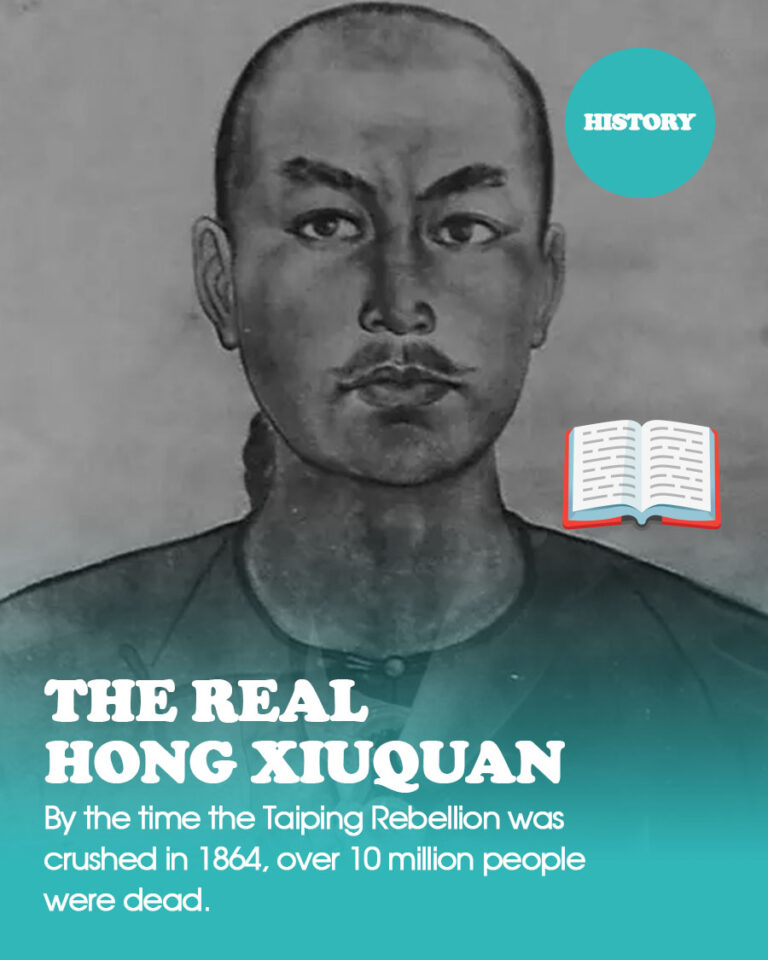
In mid-19th-century China, life came with a very clear instruction manual. Study hard. Pass the civil service exam. Secure a government post. Make your family proud. Miss that step, and well… good luck surviving.
For a poor Hakka villager named Hong Xiuquan, this exam was everything. It was not just a test. It was his only ladder out of poverty. His one shot at status, respect, and a future that did not involve scraping by forever.
So when Hong failed the exam again and again, it wasn’t just painful. It was life-shattering.
Eventually, after one final failure, his body and mind gave up together. He collapsed into a serious illness. Fever took over. Reality blurred. And during this fragile state, Hong revisited a Christian pamphlet he had once ignored. This time, however, it hit very differently.
In his delirium, the religious images stopped being metaphors. They became messages. Personal ones.
Hong became convinced that he was no ordinary man. He believed he was the younger brother of Jesus, chosen by God to cleanse China of corruption, false beliefs, and moral decay.
Yes. That escalated quickly.
When Personal Failure Becomes a Divine Mission
Here’s the thing. Hong did not wake up one day and decide to start a rebellion just for fun. His belief system grew out of deep disappointment, humiliation, and anger at a system that shut him out repeatedly.
Instead of accepting defeat, he reframed it.
In his mind, the exam system was not just unfair. It was evil. The Qing dynasty was not just incompetent. It was corrupt and godless. And suddenly, his failure was not failure anymore. It was rejection by a broken world that needed fixing.
From there, his ideas hardened into ideology.
Hong began preaching a new belief system that mixed Christianity with his own interpretations. He spoke about equality. He talked about shared wealth. He promised a world where the poor were no longer crushed and the powerful no longer untouchable.
Unsurprisingly, people listened.
Why the Message Worked (A Little Too Well)
Hong’s followers were not elites sipping tea in comfort. They were laborers. Farmers. Ethnic minorities. People who were already sidelined by society.
To them, Hong’s message sounded revolutionary.
No private property. Equal land distribution. Strict moral rules. A heavenly order where everyone mattered.
For people with nothing, this sounded like justice.
Slowly, the movement grew. Then it exploded.
What began as a religious group turned militant. Soon, Hong’s forces were fighting openly against the Qing dynasty. They marched. They conquered. They took cities.
Eventually, they captured Nanjing, renamed it the Heavenly Capital, and declared the birth of the Taiping Heavenly Kingdom.
Hong placed himself at the top. God’s chosen ruler. Untouchable. Final authority.
At that point, this was no longer just belief. It was power.
A Kingdom Built on Faith, Fear, and Control
The Taiping Heavenly Kingdom was radical. It banned traditional religious practices. It enforced strict moral laws. Men and women were separated. Social behaviour was tightly controlled.
At the same time, it pushed reforms that were shockingly modern for its era. Women gained more rights. Land was meant to be shared. Class distinctions were officially rejected.
On paper, it looked progressive.
In reality, it was harsh. Absolute. And deeply unstable.
Hong himself withdrew from daily governance. Decisions were often chaotic. Internal power struggles erupted. Meanwhile, the war dragged on.
And the cost was horrifying.
One of the Deadliest Conflicts You’ve Probably Never Been Taught Properly
The Qing government was already struggling. Corruption was everywhere. Foreign powers were pressuring China from the outside. The Taiping uprising hit them at their weakest point.
What followed was not a clean war. It was devastation.
Cities were wiped out. Farms were destroyed. Food supplies collapsed. Famine and disease spread faster than armies.
The fighting went on for more than a decade.
By the time the Taiping Rebellion was crushed in 1864, over 10 million people were dead. Some estimates go far higher. Entire regions were broken beyond recognition.
China survived, but barely.
The damage weakened the dynasty even more, paving the way for further rebellions, reforms, and eventually the fall of imperial rule altogether.
The Human Cost: A Statistical Overview
While the 19th century lacked modern census tracking, historians (such as Stephen Platt and Jonathan Spence) have used tax records and local gazetteers to estimate the toll.
Category
Estimated Figures
Total Death Toll
10 million to 70 million
Primary Causes of Death
Approx. 15% from direct combat; 85% from famine, plague (cholera), and scorched-earth tactics.
Duration of Conflict
14 years (1850–1864).
Displaced Persons
Tens of millions; the population of the lower Yangtze valley didn’t recover for decades.
Would China Have Become a Christian Country?
On paper, it sounds simple. Hong Xiuquan wins. Qing dynasty falls. Christianity takes over China. End of story, right?
Not quite.
If Hong had actually succeeded, China wouldn’t have become a Christian country in the way most people understand Christianity today. It wouldn’t look like Europe. It wouldn’t look like America. And it definitely wouldn’t look like your neighbourhood church with soft music and free coffee.
What Hong was pushing was his own version of Christianity. A heavily edited one. In his world, he wasn’t just a believer. He was Jesus’ younger brother. That detail alone changes everything. Once the leader claims divine family ties, belief stops being personal and starts becoming compulsory.
Under the Taiping Heavenly Kingdom, religion wasn’t a choice. It was policy. Worship was enforced. Traditional Chinese beliefs were banned outright. Confucianism, Buddhism, Daoism—all wiped clean. There was no “coexist lah”. You follow the system, or you’re out.
So yes, God would’ve been at the centre of the state. Jesus would’ve been honoured. But this wasn’t mainstream Christianity. It was a tightly controlled, state-run belief system designed to support Hong’s authority.
More importantly, it wasn’t built to last.
The entire structure depended on Hong being divinely chosen. Once he died—or once people started questioning his claims—the system would face a serious identity crisis. You can’t exactly appoint the next “brother of Jesus” through succession planning.
In the long run, China under Hong wouldn’t have become a Christian nation. It would’ve become a theocratic state with Christian language, strict control, and very little room for disagreement. Different god. Same pressure. Same risks.
In the end, Hong might’ve replaced one rigid system with another. Just new rules, new symbols, and a very heavenly coat of paint.
History has a funny way of doing that.
My Take: This Was Never Just About Religion
Here’s my honest view.
The Taiping Rebellion wasn’t really about Christianity. It was about desperation.
Hong Xiuquan was a man crushed by a rigid system that allowed no failure and no second chances. Instead of processing loss, he transformed it into destiny. His personal collapse became a national disaster.
That’s the scary part.
When broken systems meet broken people with big ideas and unchecked power, things can spiral very fast. Add religious certainty into the mix, and compromise disappears completely.
At the same time, it’s impossible to ignore why people followed him. Inequality was real. Corruption was real. The pain was real.
The tragedy is that a movement born from genuine suffering ended in mass death.
History here isn’t neat. There are no clean heroes. Just lessons that still hit uncomfortably close today.
The Taiping Rebellion shows how fragile societies can be when hope disappears. It also reminds us that ideology, once fused with absolute belief, can justify almost anything.
Big dreams can inspire change. But when they refuse reality, the price can be catastrophic.
Sometimes, the most dangerous revolutions don’t start with armies. They start with one person who feels deeply wronged and finally decides the whole world needs fixing.
Japanese police recently uncovered a case that is honestly hard to read without saying, “What did I just…”. And yet, here we are.
To begin with, authorities discovered more than 800 sex videos filmed without women’s consent inside the home of a so-called “polyamorous” family in Japan. The case centres on 39-year-old Yohei Ono, who was arrested on 16 December for uploading explicit footage online without permission.
However, it doesn’t stop there. During the investigation, police also arrested his 28-year-old wife and his 23-year-old adopted daughter. Both are now being investigated to determine whether they were forced or manipulated into helping him. At this point, nothing is confirmed. But the situation already feels deeply wrong.
It all started with one uploaded video
At first, this case looked like a single offence.
According to reports, police began probing Ono after one explicit video surfaced online on 8 December. Investigators found that Ono had met a woman in June 2024, paid her for sex, and met her again at a Tokyo hotel on 7 July 2024.
Here’s the issue. While the sex itself may have been transactional, the filming was not properly consented to. Worse still, Ono allegedly uploaded the video later.
That single upload opened a very dark door.
Police raid reveals a massive cache of videos
Once police raided Ono’s home, the scale of the operation became clear. Officers found over 860 videos, believed to involve around 100 different women.
Let that sink in.
This wasn’t impulsive behaviour. It was organised. Repeated. And clearly planned over a long period of time.
Investigators are still working out how many of these videos were uploaded online, and how many victims may still be unaware they were filmed.
Ono has reportedly admitted to the charges. Meanwhile, his wife and adopted daughter have remained silent.
Not his first run-in with the law
Unfortunately, this wasn’t Ono’s first arrest involving crimes against women.
Back in November, he was arrested for allegedly confining a woman for nearly two months. He had met her on X, and police said he threatened to expose her sex work to her family and the public to control her.
To make matters even more disturbing, he allegedly placed a dog collar on her and forced her to perform sexual acts.
The woman eventually escaped in late November and reported everything to the police. That report likely saved others.
Wife and adopted daughter allegedly helped set up hidden cameras
During questioning, investigators revealed some unsettling details about the household dynamics.
Ono reportedly referred to his wife as “penguin” and his adopted daughter as “rabbit”. He described himself as a polygamist and allegedly viewed his adopted daughter as a “common-law wife”.
Yes. That part is as disturbing as it sounds.
Footage allegedly shows both women helping to set up hidden cameras used to secretly record sexual encounters with other women. Police are now investigating whether they acted willingly or under coercion.
According to Ono, he earned around ¥2 million (about S$16,600) per month from uploading these videos. Over two years, police estimate he may have made more than ¥50 million (around S$414,700).
My take on this whole mess
Let’s call it what it is. This isn’t about “alternative lifestyles” or people being open-minded. This is about power, money, and control.
Slapping the word “polyamorous” on a situation doesn’t magically excuse exploitation. Consent isn’t a vibe. It’s not implied. It’s not optional. It’s clear, informed, and respected. Anything less is just abuse wearing a trendy label.
What also hits hard is how ordinary this started. A paid encounter. A hidden camera. An upload. One click. And suddenly, hundreds of women are violated without even knowing it.
In Singapore, we love to say, “Don’t play play with the law.” This case proves why. Technology makes it easier than ever to cross lines quietly. But the damage is loud, lasting, and very real.
If there’s one takeaway, it’s this: privacy and consent are non-negotiable. Once those are gone, everything else falls apart.
Authorities are still investigating the full scale of the offences. They are also trying to identify more victims and determine whether the wife and adopted daughter were coerced.
More arrests or charges could follow.
For now, this case serves as a grim reminder that behind closed doors, things aren’t always what they seem. And sometimes, the truth is far worse.
Buying a cheap house is usually a happy problem. You worry about renovations, leaking pipes, maybe bad feng shui. You do not expect a fridge to smell like death itself. Yet, in Kuala Lumpur’s upscale Mont Kiara, that’s exactly what happened. And till today, this case still refuses to rest in peace.
Let’s rewind.
A “Good Deal” That Was Too Good
In July 2007, a Chinese Malaysian man, Mr Wong, was on cloud nine. He had just scored a condominium unit in Mont Kiara at a bank auction. The price? RM400,000. That’s about one-third below market value. Wah, jackpot, right?
Mont Kiara isn’t some ulu place. It’s prime territory. Low density. Green views. International schools everywhere. Expats love it. Locals with money also love it. Basically, atas living.
The reason for the low price was simple. The previous owner defaulted on the mortgage. Bank took back. Auction time. Mr Wong won the bid fair and square.
Unfortunately, he also inherited a nightmare.
First Visits: Messy, But Nothing “Wrong”
On July 27, Mr Wong finally collected the keys. No electricity. No lights. The unit had been empty for over three months. Dust everywhere. Boxes in the living room. A mattress covered with bedsheets. And in the kitchen, a fridge sealed tightly with layers of tape.
Messy? Yes. Suspicious? Not really. At least, not yet.
He went back a couple more times. Still nothing unusual. No horror movie music playing. Life went on.
Until July 29.
The Smell That Changed Everything
That afternoon, Mr Wong returned with his Indonesian domestic helper to clean properly. The moment they opened the door, something felt off. A faint stench lingered in the air. Not rubbish-bin smell. Something… heavier.
Then the helper pulled off the bedsheet.
Underneath was a mattress soaked with dried blood. Slashed in multiple places. On the wall nearby, blood splatter. Not drip. Not smear. Spray.
At that moment, everything clicked.
The smell. The blood. The taped fridge.
With shaking hands, they started peeling off the tape. It took time. Too much tape. Whoever sealed it really meant business.
When the fridge door finally opened, the smell exploded. Thick. Rotten. Suffocating.
Inside were black plastic bags. Bulging. Leaking sticky fluid.
This was no spoiled chicken.
What the Police Found Inside the Fridge
Security was called. One guard arrived first. He didn’t dare touch the bags. He kicked one gently. The sound was wrong. Hard. Hollow.
Bones.
Police arrived shortly after. What they found was beyond disturbing. Five black bags containing 11 dismembered human body parts. One bag held a head. The remains were badly decomposed. Even the maggots had died.
Forensic tests confirmed the parts belonged to one adult male. The cuts were clean. Semi-professional. The internal organs were missing, likely discarded to reduce the smell.
Even worse, the victim had been skinned.
Death was estimated to have happened over a year earlier.
And suddenly, Mont Kiara wasn’t feeling very atas anymore.
The Former Owner Steps Forward
Left: Original, Right: AI reconstruction of Nora Jawi Spreen Jawi
Clues in the unit led police to photographs, English books, and a copy of a driving licence. The woman in the photos matched the licence.
Her name: Nora Jawi Spreen Jawi. She was also the previous owner of the condo.
On July 30, just one day after the discovery, Nora walked into police headquarters with her lawyer. Calm. Composed. Wearing red.
She was 33 then. From Sarawak. Well-educated. Former national bowler. NYU graduate. Ex-air stewardess. Worked in IT.
Her husband? A Singaporean businessman named Goh Yoke Seng, 39.
She claimed he had gone missing years earlier.
A Missing Husband Nobody Reported
Here’s where things start to smell funny again.
Nora said her husband disappeared shortly after they moved into the condo. She suggested he might have been murdered by someone else. Maybe even the body in the fridge was his. But she insisted she had nothing to do with it.
Problem is, she never reported him missing. Not in Malaysia. Not in Singapore. No police report. No public appeal.
That’s already weird.
Even more strange, a Singapore crime library later revealed that in 2005, a woman claiming to be Goh’s sister tried to seek help finding him. But she couldn’t provide official documents, so the case stalled.
Meanwhile, the condo sat empty. The fridge stayed taped. The mortgage went unpaid. The power got cut. Neighbours complained about smells months earlier. Nothing happened.
All this while, a body stayed inside.
Confessions, Then Take Back, Then Confess Again
After six hours of questioning, Nora changed her story. She admitted she knew her husband was dead. But blamed her lover. Said he killed Goh and ran away.
Police were sceptical. They searched. No lover found.
DNA results later confirmed the remains were indeed Goh Yoke Seng.
Confronted again, Nora broke down. This time, she confessed fully.
She said Goh abused her for years. One night, after a fight, she killed him while he slept. Alone. Then over three days, she used a saw to cut his body into 11 pieces. Organs went into a shared rubbish bin. The rest into the fridge.
She continued living there for months.
Let that sink in.
Then… She Took Everything Back
Despite the confession, police still had doubts. The cuts suggested skill. The strength required was questionable. They suspected drugs or a possible accomplice.
Before the case could be solidified, Nora changed her statement again. She claimed police pressured her into confessing. She denied killing her husband. She applied for bail.
Shockingly, she was granted oral bail. No passport seized. No money required. She was free to go shopping, meet friends, hug people, smile.
On September 19, 2007, prosecutors decided there was not enough evidence. Nora was released unconditionally.
Just like that.
The case went cold.
A Cold Case That Still Feels Warm
Years later, an inquest went nowhere. Key statements were thrown out. Nora exercised her right to remain silent. The court ruled her uncooperative, but still free.
Till today, no one has been convicted.
Officially, we don’t know who killed Goh Yoke Seng. Or how exactly he died. Or why justice never caught up.
And Mr Wong? The poor guy just wanted a cheap condo. Instead, he got lifelong trauma.
My Take: This Case Still Doesn’t Sit Right
Honestly ah, this case leaves a bad taste. Not just because of the fridge.
Too many gaps. Too many reversals. Too much leniency for something this brutal. Whether Nora acted alone or not, someone clearly got away with murder.
Domestic abuse is real. But so is responsibility. And chopping someone into 11 pieces, storing them for a year, then walking free? That’s hard to swallow.
This case also shows how evidence fades with time. Delay too long, and truth slips away. Justice becomes optional.
In the end, the scariest thing isn’t the fridge. It’s knowing that sometimes, even with blood, bodies, and confessions, the system can still shrug and move on.
Just when the controversy around Singapore content creator “Mermaid Girl” felt like it had peaked, a new wave of images and screenshots surfaced online by @factsgptea. And honestly, this time it hit differently. Not louder. Not messier. Just darker.
The newly circulated materials, shared widely across social platforms and chat groups, have reignited public anger. More importantly, they’ve shifted the conversation away from online drama and straight into uncomfortable territory: alleged animal cruelty, accountability, and the limits of “anything for content.”
Images that stopped people scrolling
Source: TikTok @factsgptea
One of the most widely shared images shows a small white dog lying on a bed. Nearby, a broken clothes hanger is visible. Overlaid text on the image reads, “I beat up my dog until the hanger break.”
Now, let’s slow down here. The authenticity of the image and caption has not been independently verified. However, the reaction was immediate. Many viewers described feeling shocked, sick, and angry. Even without confirmation, the language alone struck a nerve. Violence against animals is not a grey area for most people. It’s a hard no.
Source: TikTok @factsgptea
Another image, heavily cropped due to platform restrictions, came with claims that a video exists showing inappropriate and exploitative behaviour involving the dog. The image itself does not show explicit acts, but the accompanying text claims the original footage was real and recorded. Again, these claims remain unverified. Still, the allegations alone were enough to trigger widespread outrage.
From “shock value” to serious concern
Here’s the thing. The internet has seen shock content before. Plenty of it. People post wild stuff, edgy jokes, and questionable humour every day. But this? This feels different.
Once animals enter the picture, the tone changes. Fast. Animals cannot consent. They cannot speak up. They rely entirely on humans for safety. So when alleged abuse is wrapped in captions, jokes, or shock framing, it stops being edgy and starts being disturbing.
Many netizens pointed out that even if the content was meant to provoke or troll, posting it at all shows a worrying lack of judgment. At best, it’s reckless. At worst, it suggests something far more serious.
Public reaction: not cancel culture, just consequences
What’s interesting is how quickly the narrative shifted. Earlier discussions revolved around “cancel culture,” online pile-ons, and people being too quick to judge. This time, that argument barely lasted five minutes.
Instead, the dominant sentiment online was simple: this isn’t about cancelling someone for being annoying or controversial. This is about protecting an animal.
Singaporeans are usually quite chill. But animal welfare? Zero tolerance. Once that line is crossed, people don’t talk about algorithms or fame anymore. They talk about responsibility.
My perspective on all this
Source: TikTok @factsgptea
Let me be blunt. If you choose to live loudly online, you also choose scrutiny. That’s the deal. But there’s a massive difference between being judged for opinions and being questioned for alleged harm.
Posting captions that joke about beating a dog is not being misunderstood. It’s being irresponsible. Claiming later that people should “take things lightly online” doesn’t land when the content itself is this heavy.
And here’s the uncomfortable truth. Even if some of these materials turn out to be fake, edited, or taken out of context, the damage is already done. Because no one forced them into the digital world. Someone chose to hit upload.
Where this leaves things now
At this stage, investigations by authorities are ongoing. Online outrage, however, has already reached boiling point. People are calling for accountability, proper checks on animal welfare, and clearer consequences for creators who cross ethical lines.
This isn’t about fame anymore. It’s about whether someone who allegedly posts such content understands the basic responsibility that comes with owning a living being.
The internet loves drama. But it loves animals more. And once that balance tips, there’s no PR strategy in the world that can fix it.
Early Sunday morning (Dec 21), St Joseph’s Church in Bukit Timah went from peaceful prayers to full-on lockdown mode. Not exactly the kind of surprise anyone wants before breakfast.
At around 7.10am, police were called to the church along Upper Bukit Timah Road after a suspicious item was spotted within the compound. Naturally, things escalated fast. The church was evacuated. The area was secured. And yes, anti-terrorism laws were activated.
Now, before anyone jumps to conclusions or WhatsApp group panic mode, let’s slow it down and walk through what actually happened.
What triggered the alarm
When officers arrived, a 26-year-old man, later identified as a church volunteer, told police he had found a suspicious item inside a drain on church grounds. Instead of backing away like most of us would, he reportedly held onto the item and immobilised himself.
That detail alone raised red flags.
Because public safety always comes first, police immediately cordoned off the area. The Singapore Armed Forces’ Chemical, Biological, Radiological and Explosive (CBRE) Defence Group was also activated. This isn’t overkill. This is Singapore doing what Singapore does best — not taking chances.
The big reveal: what was the “device”?
After thorough checks, the item was assessed at about 10.40am. It looked scary at first glance. However, it turned out to be three cardboard rolls and wires wrapped in black tape. No explosives. No active threat.
In other words, it looked like trouble but wasn’t actually dangerous.
Still, appearances matter. Especially in a place of worship. Especially in today’s climate.
The item was removed. No injuries were reported. Police operations wrapped up later in the afternoon, and the cordon was lifted around 5.10pm.
Why an arrest still happened
Even though the item was harmless, the man was arrested under Regulation 8(2)(a) of the United Nations (Anti-terrorism Measures) Regulations. Investigations are ongoing.
This is the part some people might struggle with. “No bomb, why arrest?” Simple answer: intent, behaviour, and risk still count. You don’t need an explosion to create fear, disruption, or public danger.
Singapore doesn’t wait for things to go wrong. That’s kind of the whole point.
On the ground: confusion, patience, and calm vibes
Mass services for Sunday were cancelled. The church later confirmed that services would resume as usual from Monday.
By mid-morning, police and SCDF vehicles were visible inside the compound. Officers and church wardens stood guard at the entrance, redirecting the public away.
Some churchgoers were understandably confused. An elderly couple arrived early for the 7.30am mass, only to be evacuated before it began. They waited quietly, hoping to retrieve their car parked inside.
Others were turned away when they arrived for the 11.30am service.
His reaction? Not fear. Just surprise.
That’s Singaporeans for you. Calm first. Drama later. Maybe.
High-level attention and thorough checks
Foreign Affairs Minister Vivian Balakrishnan, the MP for Holland-Bukit Timah GRC, was seen entering the church compound around 10.47am. He later thanked the police, SAF CBRE Defence Group, SCDF, and church volunteers for their “quick, calm and resolute response”.
Meanwhile, officers were seen searching the grassy perimeter and nearby drains. An explosive ordnance disposal vehicle left the compound around 11am. Crime scene investigation vehicles stayed on until late afternoon.
Around 1.45pm, a handcuffed man in a blue shirt was led to the car park. A white car linked to the suspect was searched. Toolboxes and other items from the boot were examined. By 5pm, operations concluded and the gates closed.
My take: calm is strength, not complacency
Here’s my honest view. Some people will say this was overblown. Others will say the response was just right. I’m firmly in the second camp.
In Singapore, safety isn’t reactive. It’s proactive. We don’t wait for proof of danger before acting. We act first, then assess. That’s why serious incidents here remain rare.
Yes, the item turned out to be harmless. But fear spreads faster than facts. A suspicious object in a church is not a joke. It affects elderly worshippers, families, and public confidence.
Also, intent matters. Behaviour matters. Holding onto a suspicious item instead of reporting and backing away? That’s not normal. Asking questions later is fine. Securing the scene first is non-negotiable.
If anything, this incident shows why Singapore’s security approach works. Quiet efficiency. Minimal chaos. Maximum control.
No sirens-for-show. No media circus. Just professionals doing their job, then going home.
Places of worship should feel safe. Period. Incidents like this remind us that vigilance isn’t paranoia. It’s responsibility.
The good news? No one was hurt. The church is back to normal. And systems worked exactly as they should.
So yes, it was an unsettling Sunday morning. But it was also a reminder that calm, boring competence is actually a superpower.
A Singapore-based content creator known online as “Mermaid Girl” is now facing heavy backlash. And honestly, the internet is not in a forgiving mood this time. In early December, disturbing videos, screenshots, and claims began circulating online, all pointing to alleged animal abuse and illegal vape sales.
The creator, identified as Eunice Ng, was flagged by a TikTok account called @factsgpt. On 2 December, the account shared a screen recording allegedly taken from her Telegram channel. From there, things spiralled fast.
Videos spark outrage almost instantly
First of all, the clip was hard to watch. It allegedly showed a dog cowering while being struck multiple times. According to the account, the video was recorded earlier that same day. Soon after, it was reshared widely as netizens questioned the dog’s safety and overall welfare.
Even more worrying, the dog was described as “severely malnourished”. In the background, a voice was allegedly heard saying, “You’re nothing more than a rat,” as the animal recoiled. That line alone was enough to push many people from concerned to furious.
Meanwhile, @factsgpt claimed this was not a one-off incident. They alleged that the same dog had been kicked back in July. Those earlier incidents, however, were not recorded. Still, the pattern raised serious red flags.
Disturbing content goes beyond one video
As the story unfolded, more allegations surfaced. According to the account, the creator had shared other disturbing material on Telegram. This reportedly included a story involving a man engaging in sexual acts with a bird. That content allegedly expired in September.
Then came another layer. Screenshots and videos showed the creator posing in lingerie while her dog allegedly licked her private areas through the fabric. At least two such videos were said to have been posted in June 2025.
In one clip, the caption allegedly read: “Who wants to be my dog? Is this the luckiest dog in the world?” Unsurprisingly, this pushed public anger to a whole new level.
NParks steps in to investigate
Following the online uproar, the National Parks Board (NParks) confirmed that it is aware of the allegations. According to NParks, investigations are currently ongoing.
They also stressed an important point. Being a pet owner is not a trend, not content, and definitely not a joke. It is a lifelong commitment. Animals depend fully on their owners for care, safety, and dignity.
NParks reminded the public that animal welfare is a shared responsibility. Members of the public were encouraged to report suspected cases of animal cruelty through official channels. Visual evidence, such as photos and videos, can play a key role in supporting investigations.
Alleged vape sales and claims of dodging authorities
Just when things could not get messier, another issue surfaced. Screenshots shared by @factsgpt allegedly showed the creator promoting e-vaporisers on Telegram. This reportedly happened months ago, around the time enforcement against vaping was tightened.
One screenshot allegedly showed her claiming that the Health Sciences Authority (HSA) “didn’t manage to catch” her because she had “outsmarted” them. Another post appeared to invite followers to place pre-orders for vapes, with talk of setting up a Google Form if demand was strong.
Source: @factsgpt on TikTok
According to the account, such posts were made over several months. Some were later deleted. Readers also claimed that an email was sent to HSA in late September regarding the alleged sale and import of vaporisers. A reply reportedly came two days later, stating that the matter had been forwarded to the Ministry of Health (MOH).
Later, @factsgpt alleged that the creator claimed HSA had contacted her parents shortly before 2 December, but that “nothing happened” after that.
MOH later said that the enquiry had been forwarded to its media colleagues.
From viral fame to growing controversy
Source: TikTok
For those who remember, “Mermaid Girl” first went viral in 2022. She claimed she was “the reason why girlfriends are protective of their boyfriends”. Whether that was satire or pure provocation, it worked. She gained attention fast and collaborated with other creators and brands.
According to @factsgpt, many Singaporean girls were already familiar with her name. A simple search brings up multiple reaction videos from other content creators.
However, her online presence shifted over time. A look at her Telegram channel shows that by December 2023, she had begun promoting sexual services openly. By then, her “fame” had taken on a very different tone.
In a recent interview with Savour365.com, Mermaid Girl shared her thoughts on cancel culture, and well… it’s a little hard to ignore the irony here. She said, “Honestly, I think cancel culture is very very toxic. I feel like if you did just one mistake, people will want to cancel you completely, which is actually very, very toxic in itself. I think there’s always a different side to the story and that people should not be so quick to judge. Just take things lightly online.”
Now, hear me out. On one hand, she’s calling out the dangers of snap judgments online, which, sure, everyone agrees—keyboard warriors can be brutal. But on the other hand… her alleged actions with the dog and vape sales? Those aren’t “one little mistake.” Saying “just take things lightly” while allegedly facing multiple serious accusations is, well, a bit rich. It’s like trying to dodge a speeding ticket by lecturing about traffic safety.
Irony aside, it does highlight a recurring online tension: the fine line between genuine accountability and toxic cancel culture. And let’s be honest, in Singapore, the public tends to have zero patience when it comes to animal welfare or breaking the law. So the lesson here? You can talk about toxicity all you want—but actions speak louder than Instagram captions.
My take on this whole mess
Mermaid Girl’s last post on TikTok
Let’s be real for a moment. Internet fame is not a free pass to cross every line imaginable. Content creation does not cancel out basic human decency. And it definitely does not excuse harming an animal or joking about dodging the law.
If the allegations are proven true, this goes beyond “controversial content”. This becomes a serious issue of responsibility. Animals are not props. Laws are not dares. And online clout is not a shield.
Also, Singaporeans are usually chill, but there are two things that will instantly flip the switch: animal cruelty and blatant law-breaking. Combine both, and yeah, good luck surviving public opinion.
At the end of the day, investigations will decide what is fact and what is not. But one thing is clear already. The public is tired of creators pushing limits just to stay relevant. There is a difference between being edgy and being outright reckless.
Sometimes, the algorithm rewards shock. But real life does not.