
More
    Home Blog Page 30

    Boycott McDonald’s: Why Consumers Are Fighting Back

    0

    McDonald’s might have built its empire on golden arches and dollar menus, but a growing wave of consumer dissatisfaction is proving that brand glitter doesn’t always equal goodwill. Starting this week, a grassroots movement is calling for a week-long boycott of the fast food giant, alleging everything from price gouging and unfair labor practices to tax dodging. Spoiler alert: It isn’t just about skipping your morning Egg McMuffin—this is a struggle over corporate accountability and people power.

    TL;DR:

    • A week-long boycott of McDonald’s is underway, starting this week, June 24, 2025.
    • Reasons include alleged price gouging, unfair labor practices, tax avoidance, and “performative diversity.”
    • The boycott is part of a larger push for corporate accountability.
    • McDonald’s is also dealing with recent E. coli outbreak fallout and decreased sales.
    • Celebrity endorsements are amplifying the boycott’s reach.
    • The goal is to hit McDonald’s financially and force changes in their practices.

    The Call to Boycott: More Than Just a Quick Bite
    When The People’s Union USA announced the boycott on Instagram, their message was simple yet powerful: “This is about more than burgers and fries, this is about power.” And they aren’t messing around. Previous boycotts targeted heavyweights like Amazon, Nestlé, and Walmart. Now, McDonald’s is on the chopping block.

    Accusations on the Table
    Price Gouging
    Forget the dollar menu: critics argue that McDonald’s has been quietly inflating prices at a rate that outpaces inflation, all while promising affordability. According to boycott organizers, this stealthy upcharge has left consumers feeling squeezed at the register.

    Labor Practices Under Scrutiny
    McDonald’s has long touted its community-focused image, but whistleblowers claim a different story behind the kitchen doors. Reports of stifled union efforts, worker silencing, and inconsistent scheduling have painted a picture of a chain more interested in controlling labor costs than empowering its employees.

    Tax Strategies That Raise Eyebrows
    While families struggle to fill their freezers, McDonald’s allegedly employs sophisticated tax strategies that funnel profits through global supply chains and low-tax jurisdictions. Critics argue these tactics shift the burden onto everyday taxpayers, widening economic inequality.

    Performative Diversity
    Rolling out rainbow-colored fries on Pride month doesn’t absolve a corporation from meaningful action. Activists point out that while McDonald’s takes public stances on diversity, its political donations and lobbying efforts have supported legislation that some believe undermines labor rights and equity.

    Timing Isn’t Exactly Ideal
    Late last year, McDonald’s faced an E. coli outbreak linked to its iconic Quarter Pounders, causing a public relations nightmare. On top of that, same-store sales have dipped, and a recent decision to roll back some diversity programs ignited internal backlash—does it ring a bell? Many other major companies have made similar moves in the wake of 2024’s election cycle.

    McDonald’s Official Stance
    In response, McDonald’s has called the price gouging allegations “inaccurate” and reiterated that franchisees set menu prices independently. The company emphasizes its commitment to affordability and claims robust practices to ensure food safety and community engagement.

    Unionization: A Slow Burn
    California’s fast food workers made headlines last year by forming a union affiliated with SEIU—a significant milestone in an industry notorious for low union density. McDonald’s responded by boosting its messaging around career growth and education programs, but skeptics view these efforts as a public relations band-aid.

    Celebrity Endorsements and Public Reaction
    When luminaries like Stephen King, John Leguizamo, and Bette Midler back a cause, it grabs headlines. Their social media shout-outs have amplified the boycott’s reach, prompting questions like: If Hollywood’s tweeting about it, maybe there’s more to the story than Happy Meals.
    A Week-Long Boycott: What Does It Look Like?
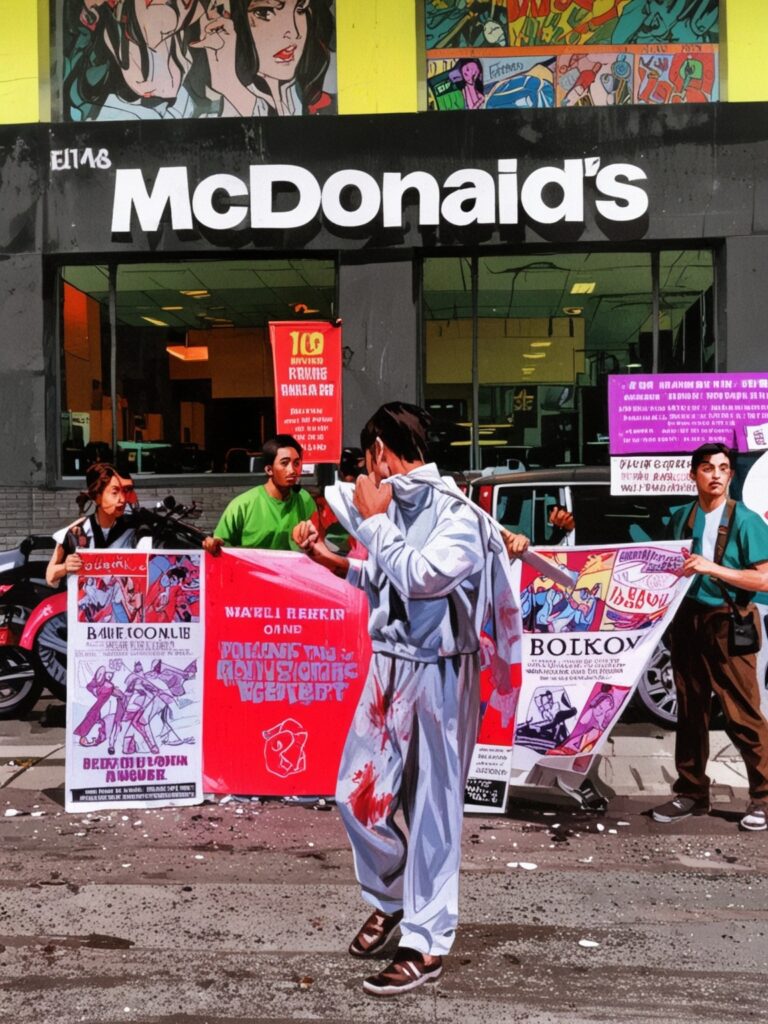
    Skipping one meal isn’t the same as committing to seven days without selling out. Participants are urged to avoid all McDonald’s transactions—dine-in, drive-thru, and delivery apps. Instead, they’re encouraged to support local eateries, cook at home, or try plant-based alternatives. The idea is simple: hit McDonald’s where it hurts—in the wallet.

    Potential Impact on McDonald’s and Consumers
    Economists warn that a single week-long strike won’t topple the Golden Arches, but small ripples can evolve into a tidal wave. A noticeable dip in sales could force franchisees and corporate executives to reconsider pricing, labor, and tax strategies.

    Real People, Real Stories
    Employee Voices: Jane, a former shift manager in Texas, says unpredictable schedules made it impossible to plan childcare. She left after five years, despite her love for the job.
    Consumer Frustration: Mike, a university student, laments the steady climb of combo meal prices that eat into his ramen budget.

    Why Now? The Perfect Storm
    Political polarization, economic anxiety, and heightened awareness of corporate malfeasance have primed consumers for collective action. Social media accelerates the spread of news, making boycotts viral in minutes, not months.

    Alternatives to the Golden Arches
    From local food trucks to meal-prep kits, there’s a world beyond McDonald’s. Many small businesses offer fresher ingredients, transparent sourcing, and fair wages. And hey, your wallet might thank you.

    Challenges for the Boycott
    Sustaining participation isn’t easy. Weekend cravings, busy schedules, and the lure of convenience could derail momentum. Plus, McDonald’s marketing machine is nothing if not persuasive.

    Metrics for Success
    How will we know if this boycott actually matters? Look for dips in same-store sales, social media engagement metrics, and statements from McDonald’s. Any concession—like renewed franchisee pricing autonomy or revamped labor policies—counts as a win.

    Expert Opinions
    Economist Dr. Laura Chen from Stanford notes that boycotts work best when sustained and widely publicized. She argues that hitting a company’s revenue for multiple quarters, not just a week, is key. Meanwhile, labor rights advocate Aaron Fields points out the importance of worker-centered demands, like fair scheduling and living wages.

    Your Role in Corporate Accountability
    Even if you don’t join the boycott, you can still make your voice heard. Sign petitions, follow boots-on-the-ground activists online, and tip generously when you dine local. Corporate power isn’t invincible—people power can shift the balance.

    My Take: Breaking Down the Golden Arches
    Full disclosure: I relish a Big Mac now and then. But let’s be honest: comfort food can’t mask systemic issues. The week-long slowdown won’t dismantle the fast food empire, but it’s a reminder that we have choices. If enough of us say “no thanks,” corporations might actually start listening.

    Conclusion: More Than a Meal
    A McDonald’s boycott isn’t just a protest against a menu. It’s a statement about fairness, power, and the kind of world we want. So, for one week, let the Golden Arches shine without your dollars—it might be the jolt this corporate giant needs.
    Remembering Michelle Goh (1989–2025)

    0

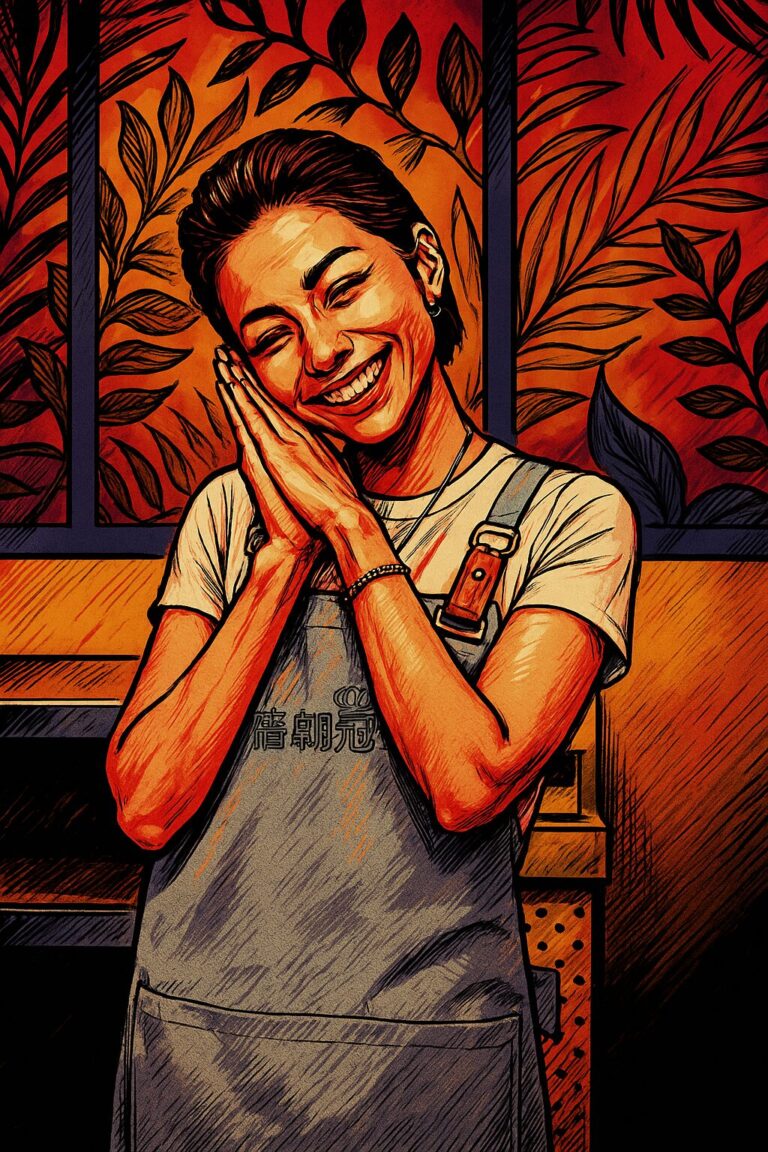
    Life is fleeting, and every moment counts. That lesson hit home this June when news broke of 35-year-old Michelle Goh’s sudden passing. Best known as the spirited contestant on Mediacorp’s second season of Crème De La Crème and the driving force behind 2112 Bakery, Michelle’s journey was anything but predictable. She was a mother, a wife, a fighter—someone who turned flour and sugar into a path out of despair. Today, we’ll walk through her story from nail technician to bakery owner, chart her battles with depression, celebrate her triumphs on TV, and reflect on the mark she left on Singapore’s food scene. Along the way, we’ll weave in fresh insights on entrepreneurship, mental-health care, and what it really means to chase your dreams.

    TL;DR:

    • Michelle Goh, founder of 2112 Bakery, passed away at 35, leaving a significant mark on Singapore’s food scene.
    • She transitioned from a nail technician to a baker, finding solace and healing in baking after a depression diagnosis.
    • 2112 Bakery started as an online business, then opened a physical outlet in Toa Payoh, known for unique local flavors and retro-futuristic vibes.
    • Michelle’s participation in Crème De La Crème gained her national recognition, though not an immediate sales boost.
    • She successfully reinvented her business by moving to OG Bugis and relaunching as 2112 Café, expanding its appeal.
    • Her husband, Ken, was a key partner, and her mother also ran a related hawker stall, 2112 Snack Delight.
    • Michelle was open about her mental health struggles and business challenges on social media, resonating with many.
    • Her story offers lessons in adaptability, balancing passion with profit, embracing vulnerability, and leveraging media wisely.
    • The community has rallied to support 2112 Bakery, with a GoFundMe campaign exceeding its target, honoring her legacy.

    From Manicure Tables to Mixing Bowls

    Michelle didn’t start life dreaming of croissants or soufflés. In fact, she spent her early career perfecting nail art and manicures. Yet, right around 2019, everything shifted. Having clocked countless hours as a nail technician, she found her world upended by depression—a diagnosis that shook her to the core. Looking for solace, she turned to baking. In her own words, no therapy felt as soothing as pulling warm Nutella cookies from the oven.

    First, she experimented in her HDB flat kitchen. Then, word spread among friends: “You’ve got to try Michelle’s brownies.” Before long, home-baked goods became home to an idea. Baking, she realized, was more than a hobby; it was a lifeline. By late 2019, 2112 Bakery officially opened—starting with online orders and small pop-ups at local markets.


    The Birth of 2112 Bakery: A Homegrown Success

    Standing beneath block 2112, unit #01-23 in Toa Payoh, Michelle’s first physical outlet felt cozy and promising. Bright signage, neat display cases, and the scent of freshly baked brioche greeted every passerby. Importantly, 2112 Bakery wasn’t just about pretty pastries. Michelle infused each creation with bold flavors: pandan choux puffs here, salted egg yolk tarts there.

    Moreover, the brand’s aesthetic tapped into retro-futuristic vibes—think vinyl records and neon highlights. She even named her bakery “2112” as a nod to her unit number and her love for the progressive rock album by Rush. In effect, every detail spoke to her creativity, bridging music, art, and food.


    Navigating Dark Clouds: Depression and Baking Therapy

    Yet success didn’t come without struggle. Michelle’s depression diagnosis arrived just as 2112 Bakery was getting off the ground. Consequently, half the battle involved her own mental health. She confided to 8days.sg that baking became her form of therapy. Mixing, kneading, and decorating cakes gave her a sense of control she’d been craving.

    However, the gloom didn’t fully lift. Long nights in the bakery tested her resilience. Doubts crept in: Was this sustainable? Would sales ever pick up? Nevertheless, every time she savored a bite of her own cookie, it reminded her that recovery wasn’t linear. Instead, it was about finding sparks of joy amid adversity.


    Rolling Cameras and Whisking Dreams: Crème De La Crème

    In mid-2021, Michelle took her passion to national TV. She auditioned for Mediacorp’s baking showdown, Crème De La Crème Season 2. Eight contestants would vie for top honors. Michelle, fueled by her vision for 2112 Bakery, joined the fray.

    On camera, she dazzled with innovative flavor combinations. Judges praised her “tropical mille-feuille” and a daring gula melaka-infused mousse cake. Yet, she ultimately placed sixth. Ratings soared, but the business boost she’d hoped for didn’t materialize. As she told 8days.sg, sales at her Toa Payoh outlet barely budged post-show.

    Still, the experience awarded her something priceless: nationwide recognition. For a moment, Michelle was no longer just a local baker—she was a household name. That credibility later helped when she negotiated her next lease.


    Reinvention: OG Bugis Café and Beyond

    By December 2024, it became clear that Toa Payoh’s foot traffic wasn’t enough to sustain 2112 Bakery. Michelle and her husband, Ken, thus decided on a bold move. They closed the original outlet and relaunched as 2112 Café at OG Bugis, complete with dine-in seating and a revamped menu.

    Here, customers could linger over avocado-pandan waffles or sip on artisanal kopi while topping toast with kaya-butter. The café’s sleek industrial décor—concrete tables, Edison bulbs, pastel tiles—reflected a leap into contemporary café culture. More importantly, the new location attracted tourists and office workers alike. Suddenly, 2112 Bakery was on Singapore’s café radar.


    Family Ties: Support and Sacrifice

    Behind every loaf and éclair stood Ken, Michelle’s husband of ten years. He managed finances, handled supplier negotiations, and looked after their two young children, aged six and four. Together, they formed a true partnership—she with her mad skills at frosting, he with spreadsheets and schedules.

    Unfortunately, Michelle’s departure on 17 June 2025 left a void that no amount of icing could fill. In a heartfelt Facebook post, Ken wrote, “It is with deep sorrow and heavy hearts that I share the passing of my beloved wife…” Through tears, he assured customers and friends they’d decide 2112 Bakery’s future soon.


    A Family Affair: 2112 Snack Delight

    Meanwhile, Michelle’s mother ran another venture under the 2112 umbrella. At Bukit Canberra Hawker Centre, 2112 Snack Delight served prawn fritters, you tiao, and curry puffs. It was a humble stall with big flavors, proving that the Goh family’s talent extended beyond refined pastries.

    With Michelle gone, the fate of that stall—and all her other eateries—remains unclear. Yet one thing is certain: the Goh name has become synonymous with resilience, creativity, and authentic taste.


    Sharing Struggles: Social Media and Real Talk

    In December 2024, Michelle posted a candid TikTok video. Dressed in her bakery apron, she confessed: “Having a business is a commitment, a passion. I want to make my kids proud. But there’s too much stress.” She paused, looked into the camera, then smiled ruefully. That clip went viral—not because it was perfect, but because it was real.

    Her followers saw a baker as human as they were. She wasn’t afraid to show anxiety, admit financial losses, or discuss mental health. In fact, she lost S$19,000 at the Toa Payoh outlet and nearly shuttered her dreams. Yet, she persisted. That honesty resonated with aspiring entrepreneurs and fans alike.


    Lessons in Resilience: From Collapse to Comeback

    Michelle’s trajectory offers key insights for any budding business owner:

    1. Adapt Quickly
      Markets shift. What worked in 2019 might flop in 2024. She proved that relocation and rebranding aren’t signs of failure, but courage.
    2. Balance Passion with Profit
      Pouring your heart into your brand is vital. Yet, spreadsheets matter too. Michelle leaned on Ken to analyze costs and margins before each menu update.
    3. Embrace Vulnerability
      When she spoke of depression on TikTok, she built trust. Customers value authenticity over polished facades.
    4. Leverage Media Wisely
      Reality TV gave her reach, but she learned that exposure alone won’t move revenue. Instead, she used it to secure a better lease at OG Bugis.

    Singapore’s Food Scene: Where Michelle Made Her Mark

    Singaporeans are spoiled for food choices. From Michelin-starred restaurants to hawker stalls, competition is fierce. In that landscape, Michelle carved a niche with her hybrid concept: bakery meets café meets hawker snack.

    Furthermore, her emphasis on local flavors—gula melaka, pandan, durian—set her apart from Western-style bakeries. As a result, she inspired other entrepreneurs to experiment. Many credit her for proving that heritage ingredients can thrive in modern patisserie.


    What Comes Next for 2112?

    In the wake of her passing, customers wonder: Will 2112 Bakery survive? Will OG Bugis Café still plate those signature kaya-butter toasts? Will 2112 Snack Delight continue serving crispy prawn fritters?

    Ken has pledged to honor Michelle’s vision. Yet he’s under no illusion: steering the business solo will be tough. Nevertheless, investors and loyal patrons have already reached out, offering support. A GoFundMe campaign to keep the bakery afloat exceeded its S$50,000 target within days. Clearly, Michelle’s legacy has galvanized a community.


    Reflections on Impermanence and Purpose

    Michelle’s story reminds us of life’s unpredictable turns. One day, you’re whisking cream; the next, you’re reading a tearful Facebook post. Still, her experience underscores the importance of finding meaning in work. Even amid setbacks and sorrow, she pursued what she loved.

    In a world fixated on growth at all costs, her emphasis on joy—baking, sipping kopi luwak, sharing laughter with customers—feels radical. It’s easy to forget that businesses are about people, not just profits.


    Personal Take: Why Michelle’s Journey Resonates

    In my view, Michelle Goh exemplified modern entrepreneurship’s true heart. Yes, she showcased precision in pastry. Yet more importantly, she wore her struggles openly. Her narrative can guide anyone wrestling with doubt:

    • Never equate setbacks with defeat.
      A poor sales month isn’t the end; it’s data. Use it to pivot.
    • Seek support relentlessly.
      Michelle leaned on family, friends, and her online community. Asking for help isn’t weakness—it’s resourcefulness.
    • Stay curious.
      From nail art to baking, she wasn’t afraid to reinvent herself. That willingness to learn fueled her growth.

    Above all, her life teaches that joy and sorrow can coexist. A boulanger patrolling her ovens can also battle inner demons. A celebrity baker can still worry about rent. A daughter can be a mother, a wife, and a nation’s inspiration all at once.


    Moving Forward: Honoring Her Legacy

    So how do we keep Michelle’s spirit alive? Here are a few thoughts:

    1. Support Small Businesses
      Drop by 2112 Café. Try that pandan choux. Share your experience on social media.
    2. Talk About Mental Health
      If you’re struggling, reach out. If you know someone who is, listen without judgment.
    3. Innovate with Heart
      Whether in food, fashion, or fintech, remember that consumers crave authenticity.
    4. Celebrate Imperfection
      Great ideas often start rough. Embrace the messy first draft—whether that’s a lopsided cake or an awkward TikTok.

    Conclusion: A Recipe for Remembering

    Michelle Goh’s life was a blend of bittersweet notes—much like her signature salted egg yolk tart. She rose from personal darkness, found healing in flour dust, and shared light through every pastry she crafted. Though her final curtain fell far too soon, her impact endures in the smiles of café patrons, the resilience of fellow bakers, and the ongoing hum of mixers at OG Bugis.

    Life is short. Yet in daring to pour her heart into each batter, she showed us how to make every moment count. For that, 2112 Bakery will stand as both her dream and her testament—proof that even the most vulnerable among us can leave a mark that’s as lasting as the sweetest sugar glaze.


    In memory of Michelle Goh (17 March 1989 – 17 June 2025). May her ovens rest, but her story rise again.

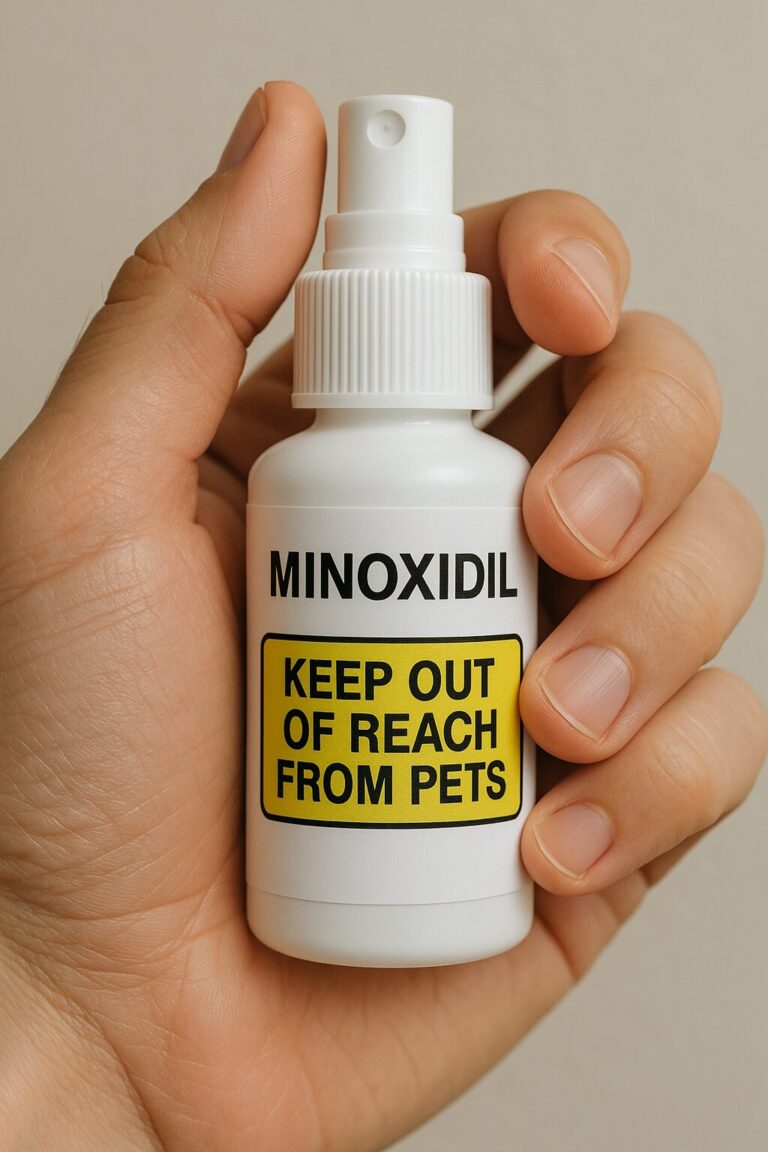
    Urgent: Keep Minoxidil out of reach from Pets

    0

    If you’re one of the millions battling thinning hair or androgenetic alopecia, you’ve probably considered—or even tried—minoxidil, better known by its trademarked name, Rogaine. After all, it’s the only topical treatment approved by the FDA to help regrow hair. Yet, while minoxidil is generally safe for humans, it poses a severe risk to our furry companions. Shockingly, a single drop of this miracle elixir can spell disaster for a curious cat or dog. In this comprehensive guide, you’ll learn why topical minoxidil products should come with bold warning labels, how to spot pet poisoning, real-life anecdotes that underscore the danger, and practical steps to keep your four-legged friends safe.


    Understanding Minoxidil: A Quick Primer

    First things first: what exactly is minoxidil? Originally developed as an oral medication for high blood pressure, researchers noticed an unexpected side effect—patients sprouted new hair. Capitalizing on this discovery, pharmaceutical companies reformulated minoxidil into a topical solution. By 1988, the U.S. Food and Drug Administration (FDA) had approved 2% minoxidil for androgenetic alopecia (male- and female-pattern hair loss) in both men and women.

    • Mechanism of Action: When applied to the scalp, minoxidil widens blood vessels, improving blood flow to hair follicles. This enhanced circulation can extend the growth (anagen) phase of hair, encouraging thicker, fuller strands.
    • Forms Available: Solutions (liquid), foams, and even combined with other active ingredients like tretinoin.
    • Standard Dosage: Twice daily application for solutions; once daily for higher-concentration foams (5%).

    However, despite its proven efficacy in humans, minoxidil’s safety margin plummets dramatically when it comes to pets.


    Why Cats and Dogs Are at Risk

    Unlike humans, many animals—especially cats—lack certain liver enzymes that help metabolize minoxidil. Consequently, the drug accumulates in their bloodstream, leading to toxic levels in a matter of minutes or hours. Compounding the problem, our pets’ inherent curiosity and grooming habits make them prime candidates for exposure:

    1. Direct Contact: A dog sniffs or rubs against wet hair.
    2. Ingestion: A cat or dog licks the scalp, pillowcase, or any fabric infused with residual solution.
    3. Absorption Through the Skin: Though rare, prolonged skin-to-skin contact can transfer trace amounts.

    Why Cats Fare Worse Than Dogs

    Cats are notoriously sensitive to a host of human medications. For minoxidil, even dermal contact can trigger acute toxicity. Reports indicate that cats may exhibit life-threatening reactions faster and at lower doses than dogs.


    Recognizing the Warning Signs of Minoxidil Poisoning

    Symptoms often manifest within 45 minutes to a few hours after exposure. Still, some signs—like low blood pressure—aren’t easily spotted at home. Always err on the side of caution and seek veterinary attention at the first hint of trouble. Key signs include:

    • Lethargy & Weakness: Your pet seems unusually tired or reluctant to move.
    • Breathing Difficulties: Rapid, shallow, or labored breaths.
    • Hypotension (Low Blood Pressure): May appear as dizziness in pets, though subtle.
    • Tachycardia (Rapid Heart Rate): A racing heartbeat; bounding pulses feel abnormally strong.
    • Vomiting: With or without blood.
    • Agitation & Restlessness: Pacing, whining, or an inability to settle.
    • Neurological Signs: Tremors, convulsions, and seizures can occur in severe cases.

    If you notice any of these, phone your veterinarian or pet poison hotline immediately.


    Real-Life Case Studies: When Rogaine Turns Deadly

    Case #1: Chihuahua Seizures and Rogaine (Report by “SpecificJunket8083”)

    A Reddit user named “SpecificJunket8083” shared a chilling anecdote. After losing weight and experiencing hair thinning, she began using Rogaine twice. Twenty-four hours later, her six-year-old chihuahua suffered two seizures. The emergency vet found no underlying cause and diagnosed idiopathic epilepsy by default. Only later did the owner realize the timing: her dog’s seizures began the day after the first minoxidil application. Although the pup recovered on anti-seizure meds, the correlation was too strong to ignore. The solution was promptly trashed, and alternative hair-loss remedies—biotin supplements and nourishing shampoo—became the go-to.

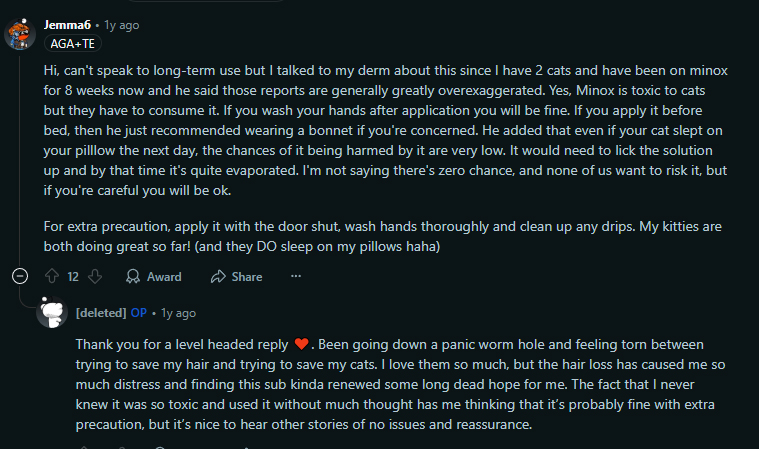
    Case #2: Eight Weeks on Minoxidil, Two Cats and a Nonchalant Dermatologist (Report by “Jemma6”)

    Another pet owner, Redditor “Jemma6,” reported being on minoxidil for eight weeks while owning two affectionate cats. Her dermatologist downplayed the risks, stating that cats must ingest the drug to face serious harm. By applying in a closed room, washing hands thoroughly, and wearing a hair bonnet, she managed to keep her cats unscathed—despite them sleeping on her pillow. While this tale ended well, it reinforces that precautionary measures are the only guarantee when using topical minoxidil around pets.


    Prevention 101: Keeping Your Pet Safe

    Even if you follow every veterinary recommendation, accidents happen. Here’s a step-by-step checklist to minimize risk:

    1. Designate a “Minoxidil Zone”
      • Apply the solution in a room your pet doesn’t frequent.
      • Keep the door closed for at least 30 minutes post-application.
    2. Clean Up Meticulously
      • Wipe any drips or spills on countertops, sinks, and your hairline immediately.
      • Launder pillowcases and towels regularly under hot water.
    3. Wash Your Hands—Thoroughly
      • Use warm, soapy water and scrub for at least 20 seconds.
      • Consider wearing disposable gloves if you’re particularly clumsy or have very playful pets.
    4. Time It Right
      • Apply minoxidil before you head to bed—when your pet is likely tucked away in their crate or bed.
      • Keep pets out of the bedroom until the solution has fully dried (roughly 30–60 minutes).
    5. Invest in Extra Barriers
      • Use a satin bonnet or shower cap to trap any residual foam or liquid.
      • Slip into a clean t-shirt post-application to prevent transfer to sheets or furniture.
    6. Educate Household Members
      • Make sure everyone who uses the product knows the dangers.
      • Post visible warning signs near application areas as reminders.

    Packaging & Labeling: A Call for Stricter Warnings

    At present, minoxidil packaging rarely highlights the imminent threat to pets. Compare this to household cleaners or certain insecticides—these products come with glaring danger icons. Why shouldn’t Rogaine carry a similar emblem?

    • Bright Animal Hazard Icon: A universally recognizable silhouette of a cat and dog with a “skull and crossbones” overlay.
    • Bold Text Warning: “Harmful or fatal if ingested by cats or dogs. For human use only.”
    • Quick-Reference QR Code: Link to a pet-safety webpage with tips, veterinarian contacts, and first-aid steps.
    • Color-Coded Application Zones: A detachable card that you can stick on your bathroom mirror or medicine cabinet.

    By adopting these changes, manufacturers can significantly reduce accidental exposures. After all, when you buy bleach or ammonia, you don’t need a lecture on why it’s dangerous—you see a skull-shaped icon and step back. Why should Rogaine be any different?


    Beyond the Label: What Veterinarians Want You to Know

    Pharmacokinetics in Pets vs. Humans

    Humans metabolize minoxidil primarily through the liver’s sulfotransferase enzymes. Once converted, the byproducts exit mainly via the kidneys. Cats, however, have underdeveloped sulfation pathways. Therefore, even tiny amounts of topical minoxidil can flood their system unchecked. Dogs have somewhat better metabolism but still far less capacity than humans.

    The Evaporation Myth

    Some people believe that if minoxidil dries before a pet comes near, it’s safe. In reality, the drug can remain active on fibers and skin for hours. Even fully “dried” foam deposits may still transfer an active dose upon contact. Relying solely on evaporation is a gamble no responsible pet owner should take.

    First Aid for Suspected Exposure

    • Do NOT induce vomiting unless explicitly instructed by a veterinarian.
    • Rinse your pet’s mouth and fur with lukewarm water—gently blot, don’t scrub.
    • Collect packaging and any remaining product to show your vet.
    • Monitor vital signs: count breaths per minute, note any trembling or drooling.
    • Call pet poison control (e.g., ASPCA Animal Poison Control Center at +1-888-426-4435) for immediate guidance.

    Looking to the Future of Hair Loss & Pet Safety

    1. Alternative Topicals:
      Research into natural extracts—like rosemary oil and pumpkin seed oil—shows promise in promoting hair growth without the toxicity concerns of minoxidil. In time, we may see over-the-counter blends that match Rogaine’s efficacy with a pet-safe profile.
    2. Delivery Systems:
      Imagine a minoxidil patch that adheres to the scalp and releases the drug slowly. Once removed, there’s zero residue on pillows or hands. Such “closed-system” delivery would drastically cut accidental pet exposures.
    3. Bioengineering Solutions:
      Advances in gene therapy might one day offer a long-term fix for androgenetic alopecia. If researchers can target hair follicle genes directly, you could kiss topical treatments—and their hazards—goodbye.
    4. Smart Packaging:
      RFID-enabled caps could detect when a bottle is opened near a pet microchip (if your dog or cat is chipped). An alarm or blinking LED would alert you to relocate or secure both bottle and pet.

    My Point of View

    I’ve seen too many pet owners unknowingly flirt with disaster. In one clinic, a golden retriever nearly succumbed to hypotensive shock after licking minimal amounts of dried foam off a sofa. It’s all too easy to underestimate minoxidil’s latent potency. Supermarket shelves overflow with warnings on bleach and batteries—but hair-regrowth products still slip by with a discreet “keep out of reach of children.” What about our pets? They can’t read.

    In my view, pharmaceutical companies owe it to consumers—and to their beloved animals—to prioritize safety innovations now. Whether through more conspicuous labeling, revamped formulations, or entirely new delivery methods, the ball is in their court. Meanwhile, as responsible humans, we must err on the side of vigilance. If that means applying minoxidil at the hair salon instead of home, or burying it in a locked medicine cabinet, so be it. Because the price of negligence could literally be your pet’s life.


    A Shared Responsibility

    Minoxidil stands as a triumph in dermatology—no question. But with great power comes great responsibility. If you’re using Rogaine or any other minoxidil-based product, recognize that its benefits for you could translate into a medical emergency for your furry friend. By adopting robust safety measures—meticulous application, effective cleanup, and advocating for stronger packaging warnings—you can continue your hair-regrowth journey without sacrificing your pet’s well-being.

    At the end of the day, every bottle of minoxidil should read like a cautionary tale: “This product is for human use only. Keep closed and out of reach of all pets. May cause severe toxicosis and death if ingested.” Until that day arrives, we must stay informed, stay cautious, and share these vital warnings with every dog lover and cat owner we know. After all, our pets rely on us to make the right choices—hair regrowth be damned.

    Ju Haknyeon Ousted from THE BOYZ After Scandal

    0

    When headlines dropped that Ju Haknyeon would part ways with THE BOYZ, fans collectively gasped. The 26-year-old main dancer and visual was more than a band member; he was a personality. Yet, a late‐night meeting in Tokyo triggered an abrupt departure. This isn’t just another idol exit. It’s a vivid reminder of how trust and image reign supreme in K-pop. Through exclusive details and fresh insight, we unpack every twist, weigh the fallout, and share why this shakeup matters for the genre.

    TL;DR:

    • Ju Haknyeon (THE BOYZ) dismissed after late-night Tokyo meeting with ex-AV star.
    • Agency cited “trust issues” for abrupt contract termination.
    • Prostitution allegations emerged but were denied by Haknyeon.
    • Scandal highlights K-pop’s strict rules vs. global cultural norms.
    • Raises questions about idol privacy, fan power, and industry adaptation.

    Late May Night in Roppongi: What Really Happened

    On 29 May, Ju Haknyeon stepped into a bar in Roppongi, Tokyo’s famed nightlife hub. Among the neon lights and pulsing music, he met Asuka Kirara, a former Japanese adult video (AV) star turned influencer. Reports detail warm embraces, whispered conversation, and departure in the early hours. Photos captured the duo looking more than friendly. Before sunrise, whispers swelled into a full‐blown scandal.

    Fans initially looked for context. Some argued it was a private meet‐up between old friends. Others saw a breach of the unwritten K-pop code: no risky social outings.

    However, once images spread online, chatter turned negative. The phrase “idol dating rules” trended. Comment sections brimmed with disappointment.


    The Agency’s Response: Rapid Retraction

    On 16 June, One Hundred Entertainment suspended Ju Haknyeon. The statement cited “personal circumstances.” No further details emerged—until two days later. On 18 June, the agency’s official social media confirmed his removal and contract termination. They explained: they couldn’t keep trusting him. The trust deficit was too wide.

    Key excerpt from One Hundred’s release:

    “After verifying the facts, we recognized it would be impossible to maintain trust as an artist. We finalized his departure and contract termination.”

    They added this choice aimed to shield the other THE BOYZ members. Rather blunt. Yet within K-pop, loyalty to the group often supersedes individual careers.


    Prostitution Allegations: Myth Versus Reality

    Scandal intensity rose when local outlets hinted at police probes into alleged prostitution. Headlines screamed: “Ju Haknyeon Faces Investigation.”

    Days later, the idol posted a handwritten letter on Instagram. In tidy script, he denied any wrongdoing:

    “I met an acquaintance for drinks. All rumors of illegal activity, including prostitution, are completely false.”

    He ended by thanking loyal supporters. But the damage lingered. In the public eye, myth often outpaces fact. Whether law enforcement zeroed in remains unconfirmed. Yet once doubt sticks, rehabilitation of image becomes an uphill battle.


    Industry Insider: Producer Under the Spotlight

    Adding fuel to the fire, whispers circulated that One Hundred suspended an in-house producer over similar charges. No formal statement clarified the producer’s situation. Still, within tight‐knit K-pop circles, the hint of internal scandal compounds reputational risk.

    Insiders speculate the producer’s fate could influence future artist contracts. Agencies may tighten social curfews. Or insist on chaperones at overseas events. Every policy tweak underscores fear of another viral controversy.


    Fan Backlash and Media Scrutiny

    K-pop fandoms thrive on devotion. They sacrifice sleep, purchase albums, flood streaming platforms. When one idol missteps, fans feel personally slighted. Online petitions called for reiterating the band’s image. Some demanded universal apologies from all members—an overreach, but a testament to fan power.

    Meanwhile, media outlets from Korea to Southeast Asia dissected every move. Headlines alternately labeled Haknyeon as a cautionary tale or a scapegoat. Analysis segments debated idol dating guidelines and privacy expectations.

    Amid this maelstrom, THE BOYZ members went silent. No group statement emerged, save for agency announcements. In the high‐stakes world of K-pop PR, silence can be strategic. It buys time. It contains potential slip‐ups.


    The Cultural Context: K-Pop’s Unwritten Rules

    Behind choreography and catchy hooks lies a strict moral contract. Idols are marketed as accessible yet idealized versions of perfection. Dating is taboo. Scandals scar reputations. Consequences often include forced hiatuses, public apologies, or, in extreme cases, expulsion.

    Compare: In Western music, off‐stage misadventures may boost publicity. In K-pop, they crush careers. For labels, maintaining squeaky‐clean images ensures high brand value. Product endorsements, variety show offers, and even government cultural grants hinge on perceived wholesomeness.

    Enter globalization. As THE BOYZ push into the US market, contrasting cultural norms collide. Western fans might shrug at late‐night socializing. Yet Korean consumers watch with traditional expectations.


    Impact on THE BOYZ: Lineup and Legacy

    THE BOYZ debuted in 2017. Since then, they’ve captured charts with dynamic singles and memorable reality shows. They grew from rookie hopefuls to industry heavyweights. Each member contributed to the group’s unique vibe. Removing the main dancer shifts the group’s chemistry.

    Practical question: Who fills his spot? Short‐term, managers may reassign dance lines. Long‐term, they could scout a new trainee for a comeback.

    Fans fear uneven choreography. Others worry about upcoming tours—will ticket sales dip? The agency reassured audiences, promising the remaining seven members remain committed. Yet when a central talent suddenly vanishes, echoes of Yeonjun’s early exit from TXT linger.


    Point of View: Why This Matters Beyond Gossip

    Some dismiss the saga as clickbait fodder. That’s shortsighted. This episode spotlights broader questions:

    1. Privacy versus Responsibility: Should public figures forfeit personal freedom? Or is there a middle ground that protects both image and autonomy?
    2. Global Standards Clash: As K-pop spreads, will agencies adapt? Or will they double‐down on domestic expectations? Future stars might demand greater personal agency.
    3. Fan Culture’s Double-Edged Sword: Devotion fuels success but can turn tyrannical. How much power should fandoms wield over artists’ lives?

    In a fast‐evolving entertainment landscape, these questions shape not just one band’s trajectory but the industry’s future.


    Insights for K-Pop Investors and Marketers

    For those tracking K-pop stocks and entertainment investments, this scandal signals potential policy shifts. Look for new clauses in artist contracts—particularly around overseas promotions. Sponsorship deals might carry tighter behavioral stipulations.

    Marketing teams could introduce reputation insurance for high-profile acts. Think travel support, PR crisis reserves, off‐duty chaperones. Such measures safeguard brand equity.

    Meanwhile, streaming platforms and social media agencies may adjust algorithms. Sudden spikes in scandal chatter could be flagged for moderation or monetization strategies. It’s a tech solution to an age-old PR challenge.


    Recovery Path: What Comes Next for Ju Haknyeon?

    Career rebounds in K-pop aren’t impossible. Several idols have returned after bans. They often undergo public apology tours, reality show appearances, or even military service hiatuses.

    Ju Haknyeon’s handwritten letter shows a willingness to engage fans. A structured comeback might include:

    • Charity Projects: Volunteer work softens public opinion.
    • Variety Show Features: Candid interviews display authenticity.
    • Solo Music Releases: A mini‐album can reclaim artistic identity.

    If handled well, redemption arcs can outshine initial missteps.


    A Turning Point for K-Pop Culture

    Ju Haknyeon’s departure from THE BOYZ reflects more than a single error in judgment. It underscores systemic tensions between image control and personal liberty. As K-pop penetrates global markets, the next chapters will determine whether the industry loosens its grip or tightens the leash.

    Ultimately, fans, agencies, and idols must negotiate new norms. In this evolving dialogue, every scandal becomes an opportunity for growth.

    Key Takeaways

    • A late‐night meeting in Roppongi led to Ju Haknyeon’s exit.
    • One Hundred Entertainment cited irreparable trust issues.
    • Unfounded police probes added complexity.
    • Scandal highlights contrast between Korean and global values.
    • Rebound strategies exist: charity work, reality TV, solo projects.

    By watching how agencies and artists adapt, we’ll see if K-pop’s cultural framework evolves. For now, the stage lights dim on one fallout—and wait for the next act to begin.

    Japan’s Rice Price Surged 200%

    0

    Just when you thought rice was as steady as sushi on a conveyor belt, Japan’s rice prices pulled a dramatic U‑turn. In the 12 months to May, the average cost of that humble grain doubled. Yes, you read that right—double. While politicians squabble over vote counts, households are squirming over grocery bills. With critical upper‑house elections looming next month, Prime Minister Shigeru Ishiba finds himself between a rock and a sushi roll. Here’s a deep dive into what’s driving this surge, how it’s reshaping daily life, and why the wider economy has suddenly started looking like a pot about to boil over.

    TL;DR:

    • Japan’s rice prices doubled in the last year due to supply chain issues, climate shocks, and panic buying.
    • Inflation is widespread, with energy costs also soaring and core inflation at multi-year highs.
    • Households are struggling with stagnant wages, forcing budget cuts and dietary shifts.
    • The government released emergency rice reserves and offered cash handouts to ease pressure.
    • The Bank of Japan is cautiously tightening policy amidst global uncertainties.
    • Global factors like climate change and geopolitical tensions exacerbate Japan’s economic woes.
    • The crisis highlights deeper structural challenges like an aging workforce and fragile supply chains.

    1. The Rice Rollercoaster: From Stable Staple to Price Pinata

    • Historic context:
      Rice isn’t just food in Japan. It’s culture, tradition, and—let’s face it—a daily necessity. Yet for decades, its price hovered in predictable patterns. That stability shattered when May data revealed a 101 percent year‑on‑year jump. A year earlier, the increase was “only” 50 percent; by March it hit 92.5 percent; April saw 98.4 percent. And then, boom—101 percent.
    • Why the sudden spike?
      1. Supply‑chain snarls. The pandemic taught us that complex supply networks can kink easily. Japan imports specialized fertilizers, machinery parts, even certain grains for feed. Disrupt one link, and the dominoes fall.
      2. Climate shocks. A scorching, dry summer two years ago wrecked rice paddies from Hokkaido to Kyushu. Yields plummeted. Quality rice became scarcer.
      3. Hoarding & panic buying. Traders smelled profit margins and quietly stockpiled. Then, a government “megaquake” warning last year sent consumers racing to grab every rice bag in sight. The result? A classic self‑fulfilling shortage.

    First, it was nature; next, it was human panic. Now, the result is you staring at double‑priced rice in the supermarket aisle.


    2. Inflation in Japan: More Than Just Rice

    While rice hogs the headlines, it’s only one piece of the inflation puzzle.

    • Energy costs climbing:
      • Electricity bills jumped 11.3 percent in May.
      • Gas fees rose 5.4 percent over the same period.
    • Core inflation surges:
      Excluding volatile fresh food, consumer prices climbed 3.7 percent in May—the highest since January 2023—up from 3.5 percent in April. Strip out energy costs and fresh produce, and inflation still sits at 3.3 percent, above April’s 3.0 percent.

    Meanwhile, wages for many remain stuck in neutral.


    3. How Households Are Coping

    • Stagnant salaries:
      “Since I’m a temp worker, my salary has been flat for years,” says Chika Ohara, 52, on a busy Tokyo street. “Prices keep climbing, but my paycheck doesn’t.”
    • Budget juggling:
      • Families are trading brand‑name snacks for generics.
      • Weekend dining out? Sometimes postponed indefinitely.
      • Utilities: Some households ration air‑con and heating, even in sweltering summers and freezing winters.
    • Diet shifts:
      Faced with soaring rice costs, some have turned to bread, pasta, or cheaper grains. Yet cultural preferences and dietary habits make such shifts harder than simply swapping out table salt.

    Consequently, the humble rice bowl—once a symbol of comfort—now feels like a luxury item for many.


    4. Government’s Emergency Measures

    Japan’s last resort? A rare release from its rice emergency stockpile. That’s something usually reserved for tsunamis or earthquakes.

    • Rice reserves unlocked:
      The government tapped reserves in February—its first non‑disaster release ever. The aim: temper the spike and reassure jittery consumers ahead of the polls.
    • Cash handouts:
      Prime Minister Ishiba pledged ¥20,000 ($139) per adult and ¥40,000 per child. “Direct relief,” he calls it. Whether this lifeline truly offsets grocery pain remains to be seen.
    • Political friction:
      Ishiba’s coalition lost its lower‑house majority last October, clocking its worst result in 15 years. Rising costs and scandals fueled voter anger. Now, he needs a turnaround story—fast.

    However, one‑off handouts feel like band‑aids on an economy hurdling toward structural headwinds.


    5. Bank of Japan’s Balancing Act

    While households fret, the Bank of Japan (BoJ) tip‑toes around policy shifts.

    • Previously ultra‑loose:
      For years, the BoJ poured money into government bonds and kept interest rates near zero.
    • Gradual tightening:
      Since last year, it has signaled a shift. Yet fear of U.S. tariffs and global trade uncertainties has forced caution.
    • Recent moves:
      • Kept interest rates unchanged earlier this week.
      • Announced a slower tapering of bond purchases.

    Stefan Angrick of Moody’s Analytics warns:

    “Policy flip‑flops and delayed pass‑through from producers to consumers mean inflation will slow only gradually… keeping real‑wage growth—and consumption—stuck in the mud.”

    In other words, monetary policy can’t sprint when the economy is slogging through molasses.


    6. Global & Environmental Ripple Effects

    Japan’s rice woes don’t exist in a vacuum.

    • International grain markets:
      • India and Thailand, major rice exporters, also face climate disruptions. When they raise export prices, Japan feels the squeeze.
      • Shipping costs remain volatile, thanks to geopolitical tensions in maritime chokepoints.
    • Energy geopolitics:
      • Heightened Iran‑Israel conflict is nudging up global oil and gas prices. Pipelines and LNG shipments become pricier when conflict zones heat up.
      • Higher energy input costs feed into manufacturing, transport, and even supermarket refrigeration.
    • Climate change realities:
      Japan’s aging farming population and fragmented land holdings make large‑scale climate resilience projects tougher. Small farms simply can’t invest in high‑tech irrigation or drought‑resistant strains like their corporate counterparts.

    Thus, a hot spell in Kansai or conflict in the Middle East can translate directly to a higher rice bill at your local grocery.


    7. Looking Ahead: Risks and Opportunities

    With elections on the horizon, policymakers must weigh quick fixes against long‑term strategy.

    1. Strengthen domestic production:
      • Consolidate farmland to allow mechanization.
      • Encourage younger farmers with subsidies and tech access.
    2. Diversify import sources:
      • Forge new trade partnerships with less‑disrupted exporters.
      • Invest in bulk purchasing agreements to hedge price swings.
    3. Boost consumer resilience:
      • Promote financial literacy: budgeting apps, community workshops.
      • Expand localized food banks and co‑ops.

    Meanwhile, businesses can pivot:

    • Supermarkets might bundle promotions—rice plus other staples—to maintain foot traffic.
    • Food‑tech startups could push rice alternatives, from quinoa to locally grown pseudo‑grains.

    Ultimately, structural adjustments will take time. Yet smart strategies now could soften future shocks.


    8. My Take: The Bigger Picture

    Here’s where I step on my soapbox. Japan’s rice crisis is more than a price headline; it’s a canary in the coal mine for structural challenges facing advanced economies:

    1. An aging workforce: As farmers retire without successors, domestic production shrinks. Labor shortages demand automation—easier said than done for fragmented, family‑owned plots.
    2. Supply‑chain fragility: COVID‑19 taught us that just‑in‑time logistics amplify shocks. Japan now needs “just‑in‑case” buffers—diverse suppliers, emergency reserves, smarter forecasting.
    3. Political accountability: Handouts and emergency releases buy time. But voters want sustainable solutions. Leaders must pivot from reactive band‑aids to proactive policies.
    4. Consumer empowerment: Yes, the government must act. But households can also adapt—exploring alternate grains, supporting local producers, and pressing for transparency in pricing.

    In the end, rice may be the symbol, but the story is about resilience. Inflation can knock on any door—food, energy, housing. Japan’s journey demonstrates that tackling one sector often means tackling them all. The key lies in holistic strategies, not piecemeal fixes.


    Final Thoughts
    The next few months will reveal whether cash handouts and stockpile releases are enough to secure votes—or merely postpone the reckoning. For everyday families, the rice bowl has become a lens on economic health. If Japan can turn this crisis into an opportunity for reform, other nations will be watching. Until then, keep calm, carry on…and maybe consider stocking up on that cheaper grain alternate before the next political surprise.

    Does Ian Fang has STI or not?

    0

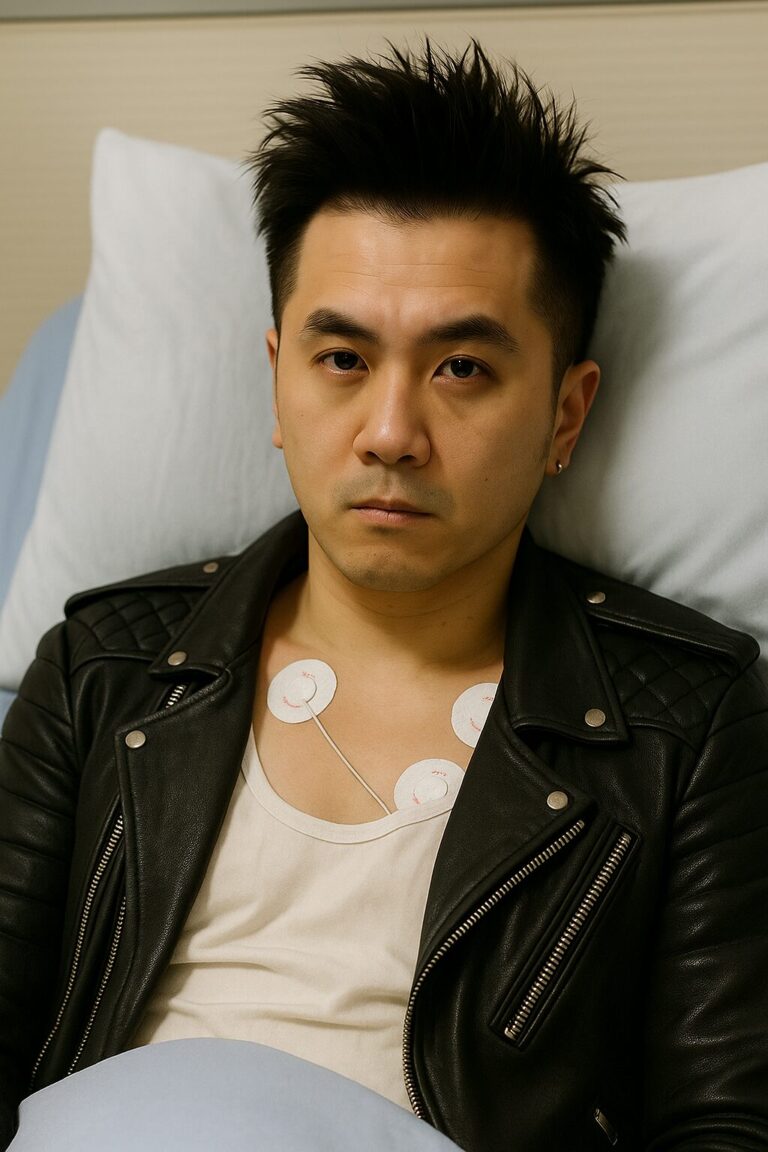
    In a case that has captured headlines across Singapore, former Mediacorp actor Ian Fang faces a 40-month jail sentence for sexual offences involving a minor. Beyond the court’s verdict, a swirl of allegations and counterclaims has further muddied the waters—most notably the question of whether Fang transmitted a sexually transmitted infection (STI) to his victim. Fang’s mother, Fang Peinian, has publicly insisted her son is innocent of this specific accusation and even claimed to possess evidence supporting his position. However, her statement raises more questions than it answers: if Fang didn’t pass on an STI, then how did the underage girl contract hers in the first place?

    Background of the Case
    Ian Fang, 35, a Singapore permanent resident and once a household name through Mediacorp dramas, surrendered himself at the State Courts on June 16, 2025. His impending incarceration follows his conviction on May 19 for sexual offences with a minor. The proceedings revealed that Fang first met the victim—then 15—in 2024 at an entertainment event. Over multiple encounters, he engaged in unprotected sexual activity with her, leading to a controversial and tragic fallout.

    Shortly after the conviction, 8world reported that the teenage victim tested positive for the human papillomavirus (HPV), a common STI. Consequently, the girl’s mother publicly condemned Fang, labeling him a “wolf in sheep’s clothing” and blaming him for her daughter’s physical and emotional trauma.

    Yet on the prison day, Fang Peinian stepped before the press with an entirely different narrative. She asserted that her son did not give the underage girl an STI, and that they had “proof” of his innocence—although she declined to specify what form that proof took. Her comments prompt a crucial inquiry: if Fang is not at fault, then the source of the girl’s infection remains unexplained.

    Source: https://www.facebook.com/reel/713570364938207

    Discrepancies in Reporting: Fact vs. Fiction
    Before delving into Fang Peinian’s claims, it’s vital to highlight the discrepancies in media coverage. Some reports have implied that Fang directly transmitted HPV to the minor. Others underscore that the presence of HPV is itself not definitive evidence of transmission by Fang, as the virus can lie dormant for years before manifesting.

    Furthermore, HPV is highly prevalent globally—CDC data suggests that nearly all sexually active individuals will acquire at least one type of HPV at some point in their lives. Yet, rampant misconceptions persist: many believe a recent positive test conclusively pinpoints the timing and source of infection.

    Against this backdrop, Fang Peinian’s assertion takes on nuanced significance. Her claim of having “proof” challenges the assumption that her son is the virus’s point of origin. If substantiated, the defense would expose a gap in the prosecution’s narrative. At the same time, her ambivalence—refusing to elaborate—creates a void of information.

    When “Proof” Is Just Smoke and Mirrors

    Fang Peinian’s declaration—“we have proof” that her son didn’t transmit HPV—never materialized beyond sound bites. That empty promise deserves its own spotlight:

    Why This Matters
    Allowing public figures to cloak their claims in secrecy sets a dangerous precedent. It turns every high‑profile case into a he‑said, she‑said nightmare. Victims lose trust in justice, and offenders walk free under a veil of doubt.

    Credibility Crisis
    Anyone can claim they hold the receipts. But in a courtroom that already found Fang guilty of statutory rape, vague assertions feel like hollow PR spin. It’s the classic “Trust me!” after you’ve been caught red‑handed.

    Legal Realities
    If genuine medical documents exist—dated lab results, credible chain‑of‑custody records—they belong in court filings, not whispered to reporters. Refusing to hand them over suggests they’re smoke, not substance.

    Public Trust and Accountability
    In an era of instant information, audiences demand transparency. Celebrities hiding data behind soundbites only deepen public skepticism. “Show us the proof,” netizens cry—yet Fang’s camp remains silent.

    What Should Happen Next?

    Formal Evidence Request: The victim’s legal team can petition the courts for any medical records Fang claims to have.

    Court Petition or Appeal: If Fang truly has exculpatory proof, his lawyers must file it immediately—either to introduce new evidence or to bolster an appeal.

    Independent Medical Testing: A neutral clinic could re‑test the teen, ensuring results aren’t tainted by familial bias.

    Insight from Medical Experts
    To shed more light on HPV’s behavior, Dr. Lim Yi Xin, an infectious disease specialist in Singapore, offers clarity:

    “HPV’s incubation period can vary widely. In some cases, it takes months or even years for symptoms or a positive test to emerge. Thus, a diagnosis in a teenager doesn’t automatically indicate a recent infection.”

    She also cautioned against simplistic interpretations:

    “While unprotected sex is the primary transmission route, the virus’s prevalence means it’s possible someone could test positive without any recent high-risk encounter. However, this does not excuse sexual activity outside the law, especially with minors.”

    Dr. Lim’s input underscores the complexity of STI diagnostics and demonstrates why Fang Peinian’s undisclosed evidence could, in theory, be medically significant.

    Public Reaction: Sympathy, Outrage, or Skepticism?
    News of Fang’s conviction and the subsequent STI debate ignited a firestorm online. Social media platforms brimmed with polarized views:

    • Sympathy for Fang? A vocal minority sympathises with the actor, arguing that his career and reputation are being unfairly destroyed. They point to the lack of concrete evidence tying him to the HPV transmission.
    • Outrage Over His Actions: Others remind critics that the primary crime is sexual misconduct with a minor. They argue that the STI controversy distracts from the core issue: a 34-year-old man exploiting a teenager’s vulnerability.
    • Skeptical Observers: A third group highlights the murkiness of media reports. They urge the public to withhold judgment until medical evidence is fully disclosed.

    This tripartite division illustrates how an additional layer—STI transmission—compounds an already charged scenario.

    The Role of Parents and Guardians
    In the midst of legal wrangling, it is vital to remember the victim’s family, particularly her mother, whose anguish is palpable. Expressing her devastation, she lamented:

    “My daughter’s first time should have been a loving, consensual experience with someone she truly trusted. Instead, she was manipulated by a wolf in sheep’s clothing.”

    Her pain is both real and profound. She voices a sentiment shared by many parents: the wish to shield their children from harm and to see justice served.

    From a broader perspective, this case spotlights the importance of sexual education and parental guidance. Whether through schools or community programs, empowering teens with knowledge about safe practices and self-advocacy can mitigate risks. Moreover, guardians must cultivate open dialogue, ensuring adolescents feel safe to discuss experiences without fear of judgment.

    Societal Implications and the Path Forward
    Looking beyond the courtroom, the Ian Fang saga raises pressing societal questions:

    • Accountability for Public Figures: Celebrities wield influence. When they breach public trust, their actions reverberate widely.
    • Media Responsibility: Sensational headlines drive clicks but can obscure nuance. Journalists must balance the public’s right to know with the imperative for factual accuracy.
    • Strengthening Protections for Minors: Legal reforms and stricter enforcement are essential. While laws against statutory rape exist, their deterrent effect hinges on vigilant implementation.

    Ultimately, society must reckon with the dual realities of consent and health. Preventing sexual exploitation is paramount. Simultaneously, dispelling myths about STIs can reduce stigma and encourage informed discussions.

    New Insights: Beyond the Headlines
    In light of this case, here are fresh perspectives to consider:

    1. HPV Vaccination as Prevention: Singapore’s HPV vaccination program, rolled out in schools for girls and extended to boys, significantly reduces infection rates. Widening vaccination coverage and public awareness can preempt future controversies.
    2. Digital Footprint of Celebrities: Social media posts and deleted messages may contain evidence. Better protocols for digital evidence preservation could strengthen both prosecution and defense.
    3. Trauma-Informed Support: Beyond legal remedies, victims need psychological care. Trauma-informed counseling should be universally accessible to minors involved in such cases.
    4. Educational Campaigns on STI Myths: A public health drive to clarify STI incubation and transmission could curb knee-jerk assumptions about disease origin.

    My Personal Take
    Here’s where I weigh in: no matter the outcome of the HPV question, Ian Fang’s actions remain indefensible. A minor cannot legally or ethically consent to sex with an adult. The law is crystal clear on this.

    Yet, the focus on the STI allegation risks overshadowing the core crime. It feels at times like a sideshow, a technicality that distracts from the real victim’s suffering.

    Moreover, the lack of transparency from Fang’s camp breeds suspicion. If they truly possess conclusive proof, why the veil of secrecy? In high-stakes trials, undisclosed evidence often backfires, fueling rumors and eroding credibility.

    At the same time, I empathise with the complexities of STI science. I’ve counseled many clients grappling with similar fears—afraid to ask questions, ashamed of misconceptions. Medical facts can be technical and counterintuitive. Yet hiding behind jargon or withholding evidence helps no one.

    To me, the path forward demands honesty. Fang’s team should present their proof—redacted if necessary—to the court and the public. Meanwhile, we should channel our energies into supporting the teenager: her healing, her education, her future.

    Conclusion
    The Ian Fang case strikes at the heart of multiple societal fault lines: sexual consent, celebrity accountability, and public understanding of STIs. While Fang Peinian’s claim of “proof” regarding HPV transmission raises intriguing questions, the central narrative remains focused on a minor’s victimization.

    Moving forward, Singapore can seize this moment to bolster sexual education, destigmatize STI discussions, and reinforce legal protections for young people. Only by tackling these issues holistically can we hope to prevent future tragedies.

    One thing is certain: this saga is far from over. As new evidence emerges and the public debate intensifies, every fact—viral, medical, or legal—deserves careful scrutiny. Above all, the voices of the most vulnerable must remain front and center.

    Good Boy Episodes 5–6: Villains, Explosions, and Unexpected Kisses

    0

    When you tune into Good Boy, you expect a cat‑and‑mouse chase. Yet Episodes 5 and 6 serve up more than just chase scenes. Indeed, we get explosions, shady back‑room deals, and a painfully adorable forced romance. In other words, this show is doubling down on its commitment to wild twists.

    After two explosive episodes, our trio of righteous cops—Dong‑joo, Hanna, and Jong‑hyeon—find themselves deeper in the mire. Although they’ve peeled back several layers of Joo‑young’s criminal empire, they still can’t quite grab the man pulling the strings. Meanwhile, a fresh wave of bad guys has slithered into Insung City, and the collateral damage threatens to land right in our heroes’ laps.

    TL;DR

    • Wilder Plot: “Good Boy” ups the ante with explosions, new villains, and deeper criminal conspiracies.
    • Joo-young’s Control: The unassuming civil servant pulls strings, even making powerful figures squirm.
    • New Threat: Candy: A dangerous hallucinogen and its psychopathic creator, Drugmon (Kim Yeon-ha), emerge.
    • Romance Blooms: Hanna and Dong-joo share an adorable, accidental kiss amidst the chaos.
    • Social Commentary: The show cleverly critiques unchecked power and corruption within society.

    Joo‑young’s Cool Denial and High‑Level Protection

    First, let’s talk about Joo‑young’s arrest. As he’s hauled away, he’s cooler than a Polar Bear in a snowstorm. He feigns ignorance about the crimes—no sweat—and even jokes that his stylish wristwatch comes courtesy of “a Russian friend.” Oddly enough, all his alleged partners happen to sport the same watch. Coincidence? Hatch this theory, Inspector.

    Soon afterward, the case is yanked from local control and dumped on the prosecution. That’s right: higher‑ups wrestle it away from our plucky investigators. Seok‑hyeon, clearly irritated, grumbles at being forced to escort what he calls a “petty criminal.” He even wonders aloud who Joo‑young really is and why he’s got the VIP cover‑your‑tail-wag privileges. But Joo‑young’s unassuming mask fools them all. Underneath that bland exterior, he’s The Brotherhood’s puppet master—a truth our good boys are only beginning to sniff out.


    New Villains and Candy’s Sweet Danger

    Meanwhile, a new threat emerges: Candy. No, not that childhood treat. This one’s a synthetic hallucinogenic that’s wreaked havoc across Korea. Its mysterious creator, the so‑called Drug Demon (affectionately nicknamed Drugmon), has everyone on edge. We first saw Candy when hapless Man‑shik accidentally got blitzed on it back in Episode 1. Now, the production pipeline needs tracing, and it leads straight into Joo‑young’s murky orbit.

    To crack the Candy case, our team reluctantly joins forces with rival unit captain Ahn Dae‑young. He’s as slick as they come, briefing them on the drug’s import route. From there, they hope to link every tainted packet back to its source—and to Joo‑young himself.


    Enter Drugmon: The Female “Demon” Who’s Anything But Cute

    Plot twist alert: Drugmon is actually a woman named Kim Yeon‑ha (Lee Ho‑jung). That rumor about some giant Russian guy? Total disinformation. In reality, she’s petite, but her psychopathic streak is skyscraper‑tall. After returning from the Philippines, she sets her sights on a gang mimicking her Candy recipe. Yet she warns them in advance, phoning in their lab’s GPS coordinates just before a massive explosion. Yep. She’s that extra.

    Our good boys and Dae‑young’s squad raid the lab, barely escaping the fiery blast. True to criminal mastermind form, Drugmon disappears like smoke. The police, buying her sob story, label her an amnesiac trafficking victim and stash her in protective custody. Convenient, right? Now, the only safe haven she really needs is Jong‑hyeon’s sprawling mansion—his vacation‑home–turned–police safe house. Remember, he’s rolling in cash, so he can afford the bougie digs.


    Romance Under Fire: Hanna and Dong‑joo’s Slow‑Burn

    While grenade blasts fill the air, Hanna and Dong‑joo get their own subplot. Flashing back to their athletic days, we see Hanna as the star shooter, with Dong‑joo cheering from the sidelines. She got the big applause; he was the supportive sidekick. Fast‑forward to today, and it’s the same. Hanna’s brilliance shines. Dong‑joo’s feelings? Blindingly obvious.

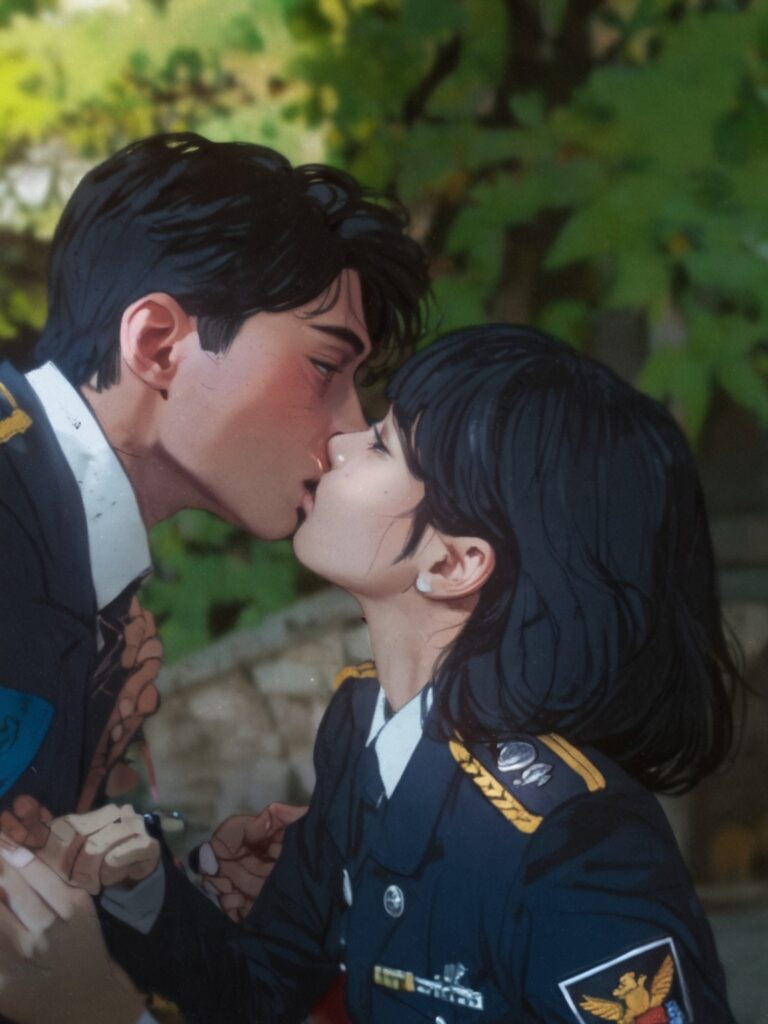
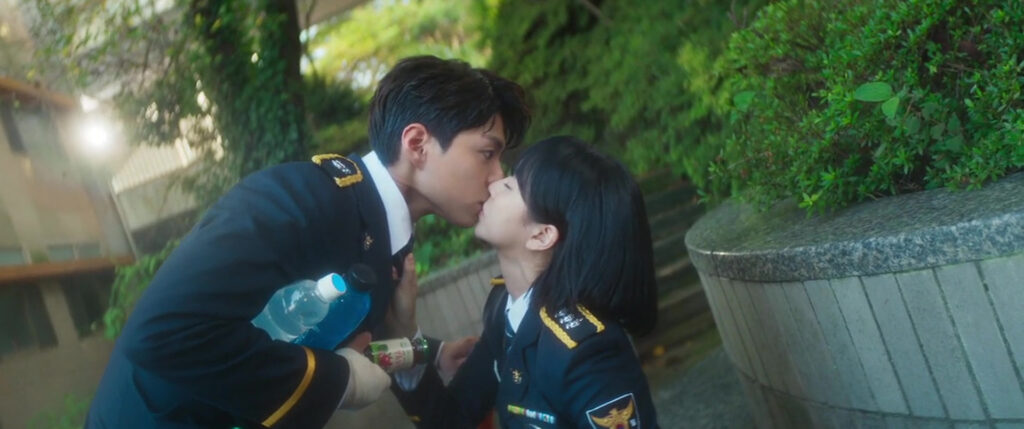
    When they’re assigned to guard Drugmon, Dong‑joo seizes every excuse to play bodyguard. He shades Hanna from the sun and fetches her iced coffee. Naturally, Hanna—pragmatic and studious—denies any spark. But when stress peaks during a sun‑baked police ceremony, she accidentally lets slip a kiss. Cue: Dong‑joo passing out. Literally. This is so high‑school rom‑com, but I’m here for it. The show nails that awkward sweetness: Hanna mortified; Dong‑joo floating on cloud nine.


    The TAE Corporation Tie‑In: From Frozen Fish to Frozen Assets

    Just when you think the plot can’t thicken, it does. Knockoff—the Candy rip‑off boss—gets arrested after Drugmon points him out. Investigation uncovers that TAE Corporation, owned by none other than the mayor’s son, imported the raw drug materials hidden in frozen Russian fish. Oh, and Cheong‑il Shipping (the bankrupt company Hanna dug up) is now a TAE subsidiary. Small world.

    Coach Oh, a logistics guru, is moonlighting by hiding the drug cargo inside frozen food. He arranges customs clearance via Joo‑young’s cozy relationship with the port. Meanwhile, the police commissioner and the mayor—both wristwatch cult members—keep a lid on things. Until they don’t. Knockoff’s bust goes public, leaving the commissioner red‑faced and Man‑shik in the hot seat at the press conference.


    Power Plays and Civil Servant Supremacy

    One of the most striking aspects of Good Boy is its skewering of hierarchical power. In most dramas, the top dogs—mayor, commissioner, tycoons—are Untouchable Villains. Not here. Joo‑young, a mere civil servant, laughs while making them squirm. After Knockoff’s arrest, the mayor literally crawls to Joo‑young, begging forgiveness. It’s delicious power reversal.

    Then there’s Joo‑young’s meltdown: reckless driving in an unregistered supercar, causing a three‑vehicle pileup. Later, he sends goons to beat up Man‑shik and steals his gun. He even fires it at random on city streets, terrorizing innocents. This calm, measured psychopath truly enjoys playing God.


    KO Jung‑ah’s Dangerous Curiosity

    Man‑shik’s daughter, Jung‑ah, adds another layer of peril. She sneaks back from the Philippines, only to wander into Yeon‑ha’s path at the safe house. The girl recognizes her as the woman on the flight—our Drugmon—by her boarding‑pass name. Bad news. Yeon‑ha disposes of evidence by microwaving Jung‑ah’s phone, triggering yet another explosion.

    The team races back, but the safe house is charred. Thankfully, Jong‑hyeon’s home insurance will cover repairs. More importantly, Jung‑ah is safe—found hanging out at a street stall like it’s casual Sunday brunch. But Yeon‑ha vanishes, sending Joo‑young a package: Man‑shik’s gun, minus the last bullet. The implication? Joo‑young used the bullet to silence Gyeong‑il’s mother. Talk about low blow.


    Social Commentary: Violence as Entertainment?

    With bodies piling up and drug wars ablaze, you might wonder: is this all too much? The show revels in its carnage. Yeon‑ha offing dealers in cold blood. Random pedestrians terrorized by stray bullets. Even the civilian mayor reduced to a beggar. It’s dark, yes, but it nudges viewers to question authority. When power is unchecked, even social “pillars” can be puppets. And who’s holding the strings? A man with a wristwatch.

    Perhaps the writers are critiquing real‑world corruption. Maybe every executive, politician, or cop complicit in shady deals wears an invisible watch. It’s a clever metaphor. While we cheer for the good boys, we also see how fragile justice can be.


    Character Deep Dive: Why Joo‑young Steals the Show

    It’s impossible to watch without fixating on Joo‑young. He’s the calm at the storm’s eye. No shouting. No caricatured evil laugh. Just a steady gaze that freezes everyone in place. Yet beneath that pleasant civil‑servant façade lies a ruthless strategist who plays with people like chess pieces.

    What’s his endgame? Is he driven by ego? A thirst for control? Or does he believe he’s delivering “justice” of his own twisted design? We don’t know yet—and that uncertainty is intoxicating. A villain who refuses to reveal his cards is far more compelling than one who monologues his motives.


    Episode Pacing & Production Notes

    Visually, Episodes 5 and 6 maintain Good Boy’s slick aesthetic. Nighttime cityscapes glow neon. Even the safe house’s scorch marks are detailed with painstaking realism. Action scenes, from the lab explosion to the car crash, are choreographed with tight editing. No filler shots here. Every angle serves the tension.

    The score deserves a shout‑out too. Sparse piano notes during interrogation. Thumping bass when Joo‑young makes a power move. And that rom‑com swirl when Hanna finally kisses Dong‑joo. It’s almost too on‑the‑nose—but I love it.


    Fresh Insights: What This Show Gets Right

    1. Moral Ambiguity
      Most dramas present binary good vs. evil. Good Boy thrives in gray. Characters operate ethically when convenient. They break rules for the “greater good.” That uncertainty keeps us guessing.
    2. Power Reversals
      The mayor begging at Joo‑young’s feet? Chef’s kiss. This role‑flip adds flavor. It reminds us: titles don’t guarantee dominance.
    3. Romance in the Trenches
      The Hanna‑Dong‑joo arc is the perfect palette cleanser between explosions. It’s realistic—slow burn, awkward confessions, genuine chemistry.
    4. Female Villain Complexity
      Kim Yeon‑ha isn’t a cardboard villain. She’s ruthless but methodical, with her own code. She’s scary precisely because she blends trauma’s vulnerability with cold calculation.

    My Takeaway: Why You Should Be Watching

    If missing your morning coffee wasn’t enough motivation, Good Boy offers more reasons: it’s a masterclass in genre‑blending. Crime thriller? Check. Action spectacle? Check. Heartwarming romance? Check. And sprinkled throughout is a biting social critique about who really holds power. It feels fresh—like someone shook up the typical police‑procedural tree and let the critiques fall where they may.

    Even after six episodes, we’re still guessing what Joo‑young’s true aims are. And that hook? It’s what makes me hit “Next Episode” faster than I can say, “Don’t blow up the set.”


    Final Verdict

    CategoryRating (out of 5)
    Plot Twists⭐⭐⭐⭐⭐
    Character Depth⭐⭐⭐⭐☆
    Action & Pacing⭐⭐⭐⭐⭐
    Romance Subplot⭐⭐⭐⭐☆
    Production & Style⭐⭐⭐⭐⭐
    Overall Enjoyment⭐⭐⭐⭐⭐

    Overall Rating: ★★★★½

    If you haven’t yet joined the Good Boy fandom, now’s the time. Episodes 5 and 6 show the series firing on all cylinders—literally and figuratively. Strap in, because this ride is only getting wilder.

    Our Unwritten Seoul Episodes 7-8: Secrets and Confessions

    0

    “Our Unwritten Seoul” episodes 7 and 8 brought emotional whiplash, awkward handshakes, and hair-pulling fights. Honestly, at this point, I’m ready to start passing out stress balls to the entire cast.

    TL;DR:

    • Mi-rae and Ho-soo take center stage, confronting their past traumas of pretending to be fine.
    • Se-jin sparks Mi-rae’s forgotten passion for finance and calls out her fear of failure.
    • Mi-ji’s storyline avoids cliché, bonding with a frenemy over shared disillusionment and their late father.
    • Hilarious public brawl between Boon-hong and Ok-hee leads to hospital chaos.
    • Se-jin uncovers the twin swap, leading to a vulnerable sisterly confession.
    • Ho-soo and Mi-ji’s awkward romance progresses, but communication issues surface.
    • Corporate sabotage looms with identity swaps and betrayal, putting Mi-rae’s job in jeopardy.

    Finally, we see Mi-ji stepping back and letting Mi-rae and Ho-soo take center stage. For a drama that has spent so much time through Mi-ji’s lens, this shift feels refreshing. And honestly? About time. Both Mi-rae and Ho-soo are, at their core, people who’ve spent years burying their true feelings to avoid being a burden. That’s their shared trauma. Mi-rae’s stems from a childhood of medical uncertainty; Ho-soo’s, from a disability acquired later in life. These two? Masters of pretending they’re fine while quietly crumbling inside.

    Mi-rae’s whole vibe screams control freak, and can you blame her? Chronic pain, endless hospital visits, everyone treating her like a fragile glass doll. Of course she’s going to double down on appearing strong. Ho-soo, meanwhile, has been trying to be so “low-maintenance” he basically ghosted his own hearing aid. Why? Because being disabled in a judgmental society is exhausting, and he didn’t want to add fuel to the stigma already circling his stepmom’s decision to raise him.

    The twist is that both Ho-soo and his stepmother Boon-hong are engaged in this weird, unspoken standoff of fake independence. He doesn’t want to burden her. She doesn’t want him to feel like a burden. Result? Emotional stalemate. Boon-hong literally disowned her judgmental family for this boy, and yet here they are—side-eying each other across a dinner table of unresolved trauma.

    But growth is happening. And not the Instagram-influencer type of growth—real, messy, awkward growth. Ho-soo is starting to admit that maybe it’s okay to need people. Mi-rae, too, is slowly unraveling those layers of perfectionism she’s been wearing like a bulletproof vest.

    Enter Se-jin, the finance world’s most charming chaos agent. His superpower? Making Mi-rae geek out over finance again. I mean, who knew hedge fund talk could get a girl’s heart racing? But it’s deeper than that. Se-jin calls her out—gently, but firmly—on her paralyzing fear of failure. And the reason he knows that particular demon so well? Been there. Done that. Missed his grandfather’s last phone call because he was too busy climbing a corporate ladder straight into misery.

    The contrast between Se-jin’s openness and Mi-rae’s caution is exactly what makes their scenes hum with tension. He’s loose, she’s rigid. He’s a dreamer, she’s pragmatic. He teases her about the dating rumors, and Mi-rae practically short-circuits. But that spark she thought she lost for her job? Yeah, it’s coming back online.

    Meanwhile, Mi-ji’s storyline takes a sharp left into K-drama cliché territory—but dodges it last minute. Instead of a screaming match over some man, we get Mi-ji and Ji-yoon—her high school frenemy—bonding over their shared disillusionment with Park Sang-young. And plot twist—Park Sang-young looks exactly like their late dad. That explains Mi-rae’s weird closeness to him and adds a layer of sadness to those nasty rumors.

    Finally, the twins can openly grieve the father they’ve been silently missing. K-dramas love generational trauma, and “Our Unwritten Seoul” just delivered it on a silver platter.

    Let’s talk about the comedic highlight next: the showdown between frenemies Boon-hong and Ok-hee. Picture this—two elegant older women full-on hair-pulling in public. Result? Hospital visit. Drama chaos levels: 100. Bonus awkwardness: Mi-ji, Se-jin, Mi-rae, and Ho-soo get caught in the crossfire during this impromptu double date at the hospital.

    Then comes the identity reveal that we’ve all been bracing for. Se-jin’s no fool. Between farm stories and slip-ups about knowing his grandfather, he figures out the twins have been switching places. His reaction? Mostly confusion, but also, “Why is everyone so weird around here?”

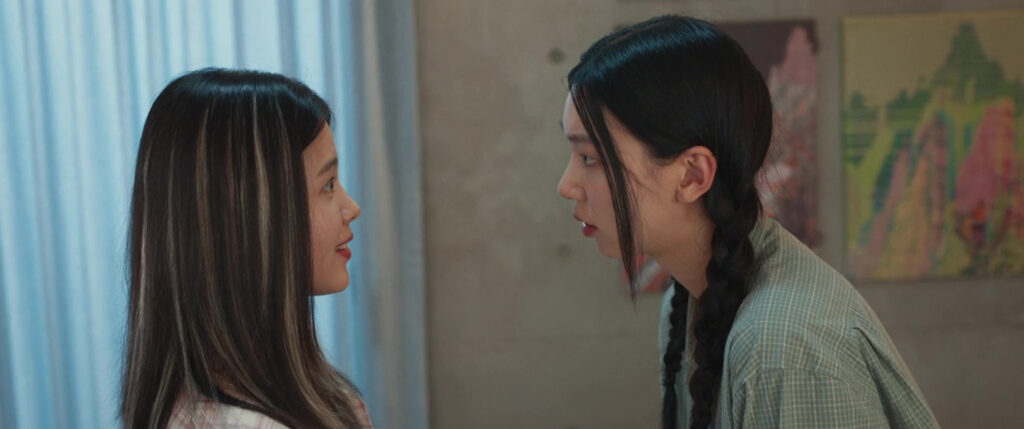
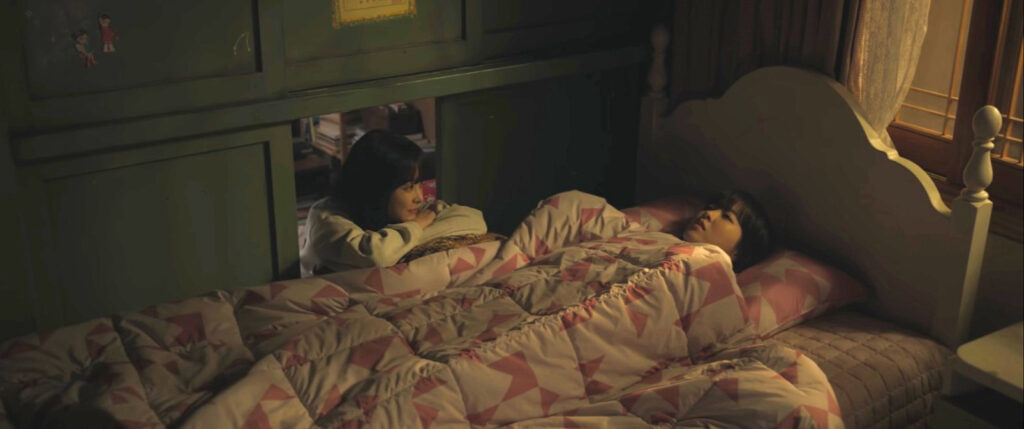
    And can we take a moment for the sibling bonding? Mi-rae and Mi-ji, face to face, not just over a phone call, sharing real feelings for once. Mi-rae finally confesses she’s not as put-together as everyone thinks. She’s terrified of quitting her job because the unknown feels scarier than her soul-crushing nine-to-five. And Mi-ji, bless her chaotic heart, reminds her that sometimes quitting is the bravest thing you can do.

    And then there’s Ho-soo and Mi-ji’s slow-burn disaster of a romance. Ho-soo’s confession? Sweet. Mi-ji’s response? Equally sweet. His follow-up handshake? Criminal. Is this a corporate merger or a love story? Sir, this is a K-drama—hug the girl!

    Luckily, fate intervenes, and Ho-soo publicly introduces Mi-ji as his girlfriend. Victory! Well…almost. Mi-ji panics, pretends to be Mi-rae, and the entire emotional house of cards teeters dangerously.

    Communication, kids. It’s not just for business meetings.

    Ho-soo finally starts cracking open that bottled-up shame about his disability. He’s been hiding a fever the whole day, which is peak “I’m fine” energy. Meanwhile, Mi-ji confesses that she’s scared her injury makes her less lovable. Watching them stumble through their insecurities together is the messy vulnerability we tune in for.

    But just when you think we’ve hit emotional saturation, here comes corporate sabotage! Choong-gu uncovers that Ro-sa isn’t Ro-sa at all. She’s actually Hyun Sang-wol, who seems to have taken on her dead best friend’s identity. Identity swap inception happening right under everyone’s noses.

    Add Tae-yi to the mix—the mysterious figure lurking in Mi-rae’s orbit. Turns out, he’s the younger brother of a former colleague who took the fall for office politics. Surprise! He’s been spying and reporting back. K-drama trust issues: activated.

    As the corporate intrigue bubbles over, Mi-rae prepares to bow out gracefully. Sang-young—AKA Dad Doppelgänger—is conspiring with Mi-rae’s toxic coworkers. Their genius plan? Use Mi-ji’s fingerprint to blow the twins’ cover. Because nothing says workplace professionalism like biometric betrayal.

    Cue Tae-yi, probably ready to hack his way into this drama with the assist we need. Hopefully, Mi-rae’s resignation drops before anyone can turn this into “Corporate Espionage: Seoul Edition.”

    Let’s get real: Mi-rae needs to quit that soul-eating job and rediscover what makes her come alive. Finance is her thing, sure—but that doesn’t mean she has to rot away under micromanagers and creepy higher-ups. Se-jin’s farm needs a business manager, and guess who fits that role perfectly? Mi-rae 2.0, that’s who.

    As for Mi-ji, her journey isn’t about finding the perfect job or partner—it’s about figuring out who she is without comparing herself to Mi-rae. Her insecurity is relatable; she feels like life left her behind when she injured her ankle, while Mi-rae was busy racking up degrees and promotions. But life isn’t a race—it’s a messy, spiraling dance with no choreography. Mi-ji just needs to start dancing her own steps.

    Final Verdict: 4.3 out of 5 Stars

    Why? Emotional development? Solid. Romantic tension? Delicious. Corporate espionage subplot? Slightly ridiculous but entertaining. More awkward handshakes, please.

    7 Feline Comfort Hacks: How Cats Melt Stress and Boost Your Mood

    0

    Life can feel like a relentless spin cycle sometimes. Deadlines loom, deadlines collide, and before you know it, you’re staring blankly at your screen, wondering how a Netflix binge turned into an existential crisis. Enter the humble house cat—a four‑legged guru of chill, armed with purrs and paw taps to reset your emotional meter. Below, you’ll discover seven surprising ways your cat acts as an emotional first responder when life’s curveballs come flying.

    Comfort MethodHow It Helps You
    PurringVibrations between 25–150 Hz promote healing and lower stress.
    Head Bumps (Bunting)Releases bonding scents, making you feel accepted and loved.
    CuddlingBoosts oxytocin (the love hormone), reduces loneliness and anxiety.
    PlayfulnessDistracts from negative thoughts; laughter releases endorphins.
    Silent CompanyTheir quiet presence brings calm and reduces feelings of isolation.
    Funny AnticsMakes you laugh, relieving tension and lowering cortisol levels.
    Daily RoutinesBrings stability and predictability to your day.
    Eye Contact & BlinkingSlow blinks signal trust; copying it builds a deeper bond.
    Soft Fur TexturePetting releases serotonin and dopamine, lifting your mood.
    Warm Body HeatProvides physical comfort, easing muscle tension and stress.

    1. Purr Therapy: Nature’s Sonic Stress Ball

    What’s happening? When your cat purrs, those low-frequency vibrations (25–150 Hz) do more than announce, “I’m fabulous.” Science shows they can actually promote healing, reduce stress, and lower blood pressure.

    • Healing harmonics. Researchers have found that purring frequencies help bone density and tissue regeneration. So while you’re zoning out to that rhythmic hum, your body might be quietly repairing itself.
    • Stress antidote. Next time you feel your shoulders creeping toward your ears, invite a purr machine onto your lap. Close your eyes. Let that gentle rumble whisper, “Chill out, human.”

    Why it works: The brain interprets purring like a lullaby, triggering the parasympathetic nervous system. In plain English: it tells your body, “Hey, no threats here—relax.”


    2. Bunting Rituals: Scent‑Marking with Love

    Ever been face‑butted by a cat? That adorable yet slightly startling head bump is called bunting—your cat’s way of saying, “You belong to me.”

    • Chemical bonding. Cats have scent glands on their cheeks. By rubbing you, they’re mixing your aroma with theirs, creating a “we” scent.
    • Emotional handshake. Beyond chemistry, it’s a gesture of trust. No cat would bunt a stranger. If they bunt you, consider it a feline pinky promise: “I’ve got your back.”

    Why it works: Feeling marked as “family” strengthens your bond. It’s like an emotional membership card, showing you belong to the most exclusive club on earth—Club Cat.


    3. Cuddle Chemistry: Warmth That Counts

    Picture this: You slump on the couch, everything feels grey, and then—plop!—your cat nestles against you. Suddenly, it’s like a warm, fuzzy blanket of calm envelops you.

    • Oxytocin surge. Those snuggles trigger oxytocin, the “bonding hormone” also released during hugs and high‑fives.
    • Physical comfort. A cat’s body heat hovers around 38–40 °C (100–104 °F). It’s like a built‑in heating pad.

    Why it works: Close contact wards off loneliness. Your cat isn’t just seeking warmth—they know you need it too. It’s mutual therapy.


    4. Play Therapy: Laughter as Medicine

    When you’re down in the dumps, nothing derails negative thoughts like witnessing your cat attack a rogue dust mote. Their unpredictable leaps, that dramatic mid-air twist—anticipating it gets your heart pumping in all the right ways.

    • Distraction factor. Observing your cat pounce on a crumpled receipt forces you into the moment. Worries? Temporarily evicted.
    • Endorphin boost. Laughing at feline bloopers releases endorphins, your brain’s natural feel‑good chemicals.

    Why it works: Play dissolves tension and invites joy. Your cat isn’t performing for you—they’re living in the moment, and you get a front-row seat to the cuteness.


    5. Witnessing Presence: The Power of Simply “Being There”

    Sometimes, you don’t need a full-on performance. A quiet companion by your side can speak volumes.

    • Silent solidarity. Cats excel at just… existing with you. No judgment, no agenda—just presence.
    • Mindful reminder. When your cat gazes into space, you’re reminded to pause and breathe.

    Why it works: Human beings crave connection. Your cat’s calm proximity can anchor you, nudging you back to the present and away from spiraling thoughts.


    6. Comic Relief: Feline Antics as Stand‑Up Comedy

    Think of your cat as a stand‑up comedian with fur. Whether it’s zoomies at 2 AM or slipping off a ledge in dramatic slo-mo, their antics break tension like nothing else.

    • Surprise factor. Unexpected bursts of energy keep you on your toes—and that’s hilarious when you’re already down.
    • Relief valve. Laughing at silly mishaps flushes out cortisol (the stress hormone) and refreshes your brain.

    Why it works: Humor rewires your brain. Amid cat juggling with a hair tie, your worries shrink to the size of that toy mouse.


    7. Routine Anchor: Stability in a Fickle World

    Cats are creatures of habit. That daily 6 PM dinner demand—or the insistence on morning cuddles—provides structure when everything else feels chaotic.

    • Consistent cues. Predictable mealtimes and play sessions create a comforting schedule.
    • Sense of control. In a world of uncertainties, fulfilling your cat’s routine needs restores a feeling of competence and order.

    Why it works: Humans thrive on routines. By keeping to your cat’s timetable, you carve out pockets of calm and predictability in your day.


    Bonus Comfort Hack: Unconditional Acceptance

    At the core of all these tricks lies the greatest gift cats offer: acceptance. They don’t care if you wore yesterday’s sweatpants all day or had a meltdown over a typo. You’re perfect to them—warts, quirks, and all.


    My Take: Why I’m Team Cat for Emotional Rescue

    If you asked me, “Why choose a cat over, say, meditation apps or scented candles?”—I’d say cats are the original mindfulness coaches. They teach us to live in the moment. They show that healing can come in vibrations, a fuzzy shoulder lean, or a goofy antler chase. Both pragmatic and mystical, they’re like tiny Zen masters wrapped in fur.

    Personally, I’ve found that after a stormy day (or week), curling up with my cat is cheaper than therapy and far more entertaining. Their ability to flick between serene sage and slapstick comedian in a heartbeat is unparalleled. Here’s what I’ve learned:

    1. Trust your cat’s cues. If they jump into your lap, pause your work.
    2. Observe their rituals. Mimicking their slow blinks back can foster connection faster than any self-help mantra.
    3. Laugh at the absurd. The more ridiculous the antic, the bigger the emotional release.

    In short: embrace the fur, the purr vibrations, and the head boops. You’ll find that comfort doesn’t have to be complicated. Sometimes, it simply comes on four paws.


    Conclusion
    In a nutshell, cats are low-key superheroes cloaked in fur. They wield purrs like sonic beams of calm. They employ bunting as a secret bonding ritual. They share warmth, play, and silent presence—all to lift you when you feel like a deflated balloon. So next time you’re overwhelmed, remember: you have a four‑legged companion ready to deploy seven comfort hacks at a moment’s notice. Now, go ahead—call your cat, and let the healing begin.