

More
    Home Blog Page 31

    Oh My Ghost Episodes 5–6: Janitor Rights and Family Bonds

    0

    When a supernatural rom‑com meets biting social commentary, you know you’re in for a ride. Episodes 5 and 6 of Oh My Ghost crank up the heat on workplace injustice—this time, within the ivory towers of an elite university. Our hapless yet endearing protagonist, Na Mu‑jin, suddenly trades exorcisms for labor rights activism, proving that sometimes the most significant hauntings are the ones you don’t see.

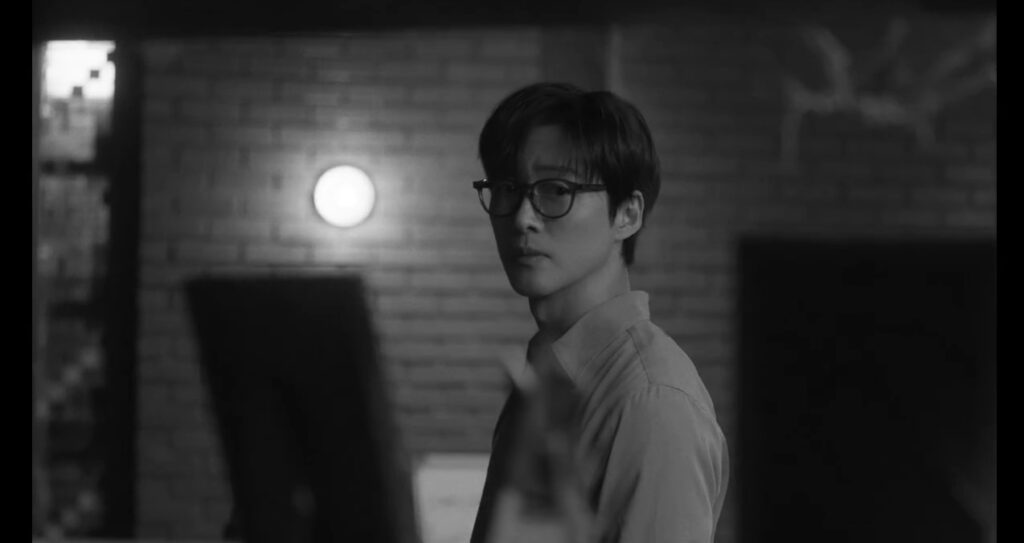
    Screenshot

    TL;DR:

    • Mu-jin shifts from ghost hunting to labor activism, fighting for university janitors.
    • Janitors face humiliating exams and exploitation, leading to tragedy.
    • Mu-jin’s mom is an undercover hero, exposing the injustice.
    • Protests, unionization, and a viral livestream expose the university.
    • The show highlights invisible labor and the power of collective action.

    Case Files: From Cafeteria Catastrophes to Campus Conspiracies

    Screenshot

    Up until now, Mu‑jin’s ghostly call‑outs usually involved hospital hijinks or culinary calamities. However, this week’s case lands smack in the middle of an administrative powerhouse. He and spirit sidekick Bo‑sal infiltrate a prestigious university’s corridors, not to chase poltergeists, but to defend overworked janitors. It’s a pivot so unexpected that Mu‑jin nearly considers a career in politics—and honestly, who could blame him after witnessing such flagrant inequality?

    The Setup

    • The Setting: A sprawling campus where manicured lawns and marble steps hide the real backbone of the institution—its cleaners.
    • The Victims: Invisible workers who now must pass arbitrary, humiliating exams just to keep their jobs.
    • The Villain: Park Won‑sang’s sneering administrative director, whose disdain for “uneducated help” bleeds through every condescending syllable.
    Screenshot

    Mu‑jin’s mother—Jeon Guk‑hyang’s character—has been studying on weekends. Her odd behavior raises red flags, but the truth is more sinister than any affair: she’s cramming for an exam designed to trip up the janitorial staff. When one of her colleagues, Kim Young‑sook (RIP sweet soul), collapses under the stress and dies, Mu‑jin realizes this is no mere plot device. It’s an all‑too‑real labor violation.


    Episode 5 Breakdown: From Homework to Handcuffs

    1. Domestic Distress: Mu‑jin rushes home after Dad admits suspicions of Mom’s “mid‑life crisis.” Instead, he finds his brother Woo‑jin leisurely flipping through comics—setting off ominous vibes.
    2. Ghostly Guidance: Ever‑calm Bo‑sal reminds Mu‑jin that the enemy isn’t Mom or co‑workers; it’s the system itself. Cue Mu‑jin’s crisis of purpose: “Maybe I should run for office?”
    3. Undercover Operation: Using Bo‑sal’s spectral stealth, Mu‑jin tails Mom to discover the cruel truth of mandatory janitor exams on her day off.
    4. Public Outing: After learning they dine hidden away in shoebox‑sized break rooms, Mu‑jin treats the janitors to lunch—chef Bo‑sal cameo included—and gently ignites their collective outrage.
    5. Protest and Prison: A peaceful picket devolves into a tug‑of‑war with campus security. Mu‑jin gets hauled off for “obstructing university operations.”

    Episode 6 Breakdown: Unionizing the Unseen

    Screenshot
    1. Arrest and Reunion: Released on bail (thank you, Mi‑joo), Mu‑jin finds romance and chili‑style banter still linger between them. Their dynamic—equal parts eye roll and genuine care—reminds us why we root for them.
    2. Union Formation: Under Oh Jang‑geun’s leadership, the janitors establish a formal labor union. Negotiations collapse faster than a rotten scaffold.
    3. Strike and Scorn: A week into the strike, trash piles up, annoyed students complain, and a trio of law pupils threaten lawsuits. Real‑world nod: Yonsei University students once sued janitors for “noisy protests”—and lost.
    4. Hearts and Post‑Its: A handwritten plea by Kim Young‑sook is swiftly defaced with snarky sticky notes. Defeat appears inevitable—until a handful of empathetic students bring food, solidarity, and moral reassurance.
    5. Digital Exposé: Enter Gyeon‑woo’s livestream wizardry. Armed with Mom’s “special glasses” footage, he broadcasts the sham exams live. The university’s forced apology and the reinstatement of the unfairly fired janitor follow in rapid succession.
    6. Final Farewells: Young‑sook’s spirit, at peace, thanks Mu‑jin. In a poignant counterpoint, Mu‑jin finally eats those spring onions his mother’s broth is famous for—symbolizing growth, humility, and acceptance.

    Character Dynamics and Development

    Screenshot

    Na Mu‑jin: Accidental Activist

    • Before: Clueless lawyer entangled in ghostly mayhem.
    • Now: Labor ally who learns empathy, action, and that passion sometimes arrives in a suit instead of a ballot box.

    Bo‑sal: The Stoic Sidekick

    Ever the calm in Mu‑jin’s storm, Bo‑sal channels righteous indignation into mentorship—plus, he relishes reminding Mu‑jin that the real hauntings are systemic.

    Jeon Guk‑hyang (Mom): The Hidden Hero

    Who knew a mild‑mannered cleaner could school an entire university’s boardroom? Her undercover bravery turns ordinary outrage into organized revolt.

    Mi‑joo: Love in the Time of Court Orders

    Their chemistry—equal parts toe‑curling and facepalm‑inducing—proves that romance can survive foot‑in‑mouth disease and jail visits.


    Real‑World Parallels: When Fiction Mirrors Reality

    Screenshot
    • Seoul National University (2021): Mandatory janitor exams and strict dress codes on days off—sound familiar? Reality outdid drama with arbitrary tests and cost‑cutting under the guise of “standards.”
    • Yonsei University Lawsuit: Students sued janitors over noise during demonstrations. The court sided with workers, highlighting how privilege often blinds people to the toil beneath their feet.

    By weaving these true incidents into its narrative, Oh My Ghost doesn’t just entertain; it educates. It dares viewers to question whose labor we ignore in our daily comforts—and who pays the price for our neat lecture halls.


    Thematic Insights: Beyond Laughs and Tears

    1. Privilege and Visibility: Luxury lectures and marble halls only exist because someone sweeps their crumbs. These episodes push us to confront how often we overlook the “invisible” workforce that sustains our lives.
    2. Intergenerational Bonds: Mu‑jin’s journey reveals how little he knew about his mother’s sacrifices, echoing a universal truth: parents have stories we rarely hear until it’s almost too late.
    3. Power of Collective Action: From a handful of students bearing snacks to a full‑blown livestream revolt, change blooms when solidarity trumps apathy.
    4. Humor as a Trojan Horse: By packaging social critique within ghostly gags and playful banter, the show reaches beyond shouting matches to spark genuine reflection.

    New Perspectives: What We Can Learn

    • Labor Rights Awareness: Next time you enter a pristine restroom, spare a thought—and maybe a smile—for the person who cleaned it.
    • Family Conversations: Ask more questions. Your parents’ lives before you might be stranger, tougher, and braver than you ever imagined.
    • Activism 101: Protests aren’t just picket signs; they’re stories broadcasted, friends rallied, voices amplified. A lone letter or livestream can topple bureaucratic giants.
    • Empathy in Action: Simple gestures—buying lunch, sharing student support—remind us that change often starts with kindness.

    Point of View: Why This Case Matters to Me

    Watching Mu‑jin evolve from career‑obsessed lawyer to impassioned advocate hit home. How many times have I been blissfully unaware of the struggles behind my morning coffee or office janitorial crew? These episodes challenge my bubble—urging me to listen, learn, and lend a hand. They remind me that heroism isn’t always dramatic; sometimes, it’s a bowl of soup shared with someone society has sidelined. In a world where headlines scream outrage, Oh My Ghost shows that genuine progress can begin with a single empathetic conversation.


    Conclusion

    Oh My Ghost Episodes 5 and 6 masterfully blend supernatural comedy with social conscience. They tackle systemic injustice without sacrificing laughs, romance, or tears. By centering janitors—those who literally clean up after us—the show redefines what heroism means in both the spirit and the material world.


    Final Verdict:
    ⭐ ⭐ ⭐ ⭐ ✩ (4/5 stars)

    While the pacing occasionally gallops through emotional beats, these episodes deliver a powerful message with heart, humor, and haunting authenticity. Highly recommended for anyone who believes that the strongest spirits are the ones fighting for the voiceless.

    The Secret Behind That Viral Dice Magic Trick

    Magic. Street performances. Slightly suspicious strangers flipping dice on sidewalks. You’ve probably seen those viral videos where someone takes a simple-looking box, drops a few dice in, gives it a shake—and bam—suddenly every single die shows the number six. Like it’s some kind of dark wizardry or secret government technology. Spoiler alert: it’s not.

    It’s just good, old-fashioned sleight of hand mixed with a clever little piece of plastic engineering. And today, we’re breaking it down properly—no mysterious hand waves, no fog machines, just the raw mechanics of the trick. Plus, I’ll give you a take or two about why we love falling for these tricks in the first place.

    Ready? Let’s ruin some magic (for educational purposes only).

    The Trick That Blows Minds on TikTok and YouTube

    You’ve probably seen this one before. The magician brings out what looks like a small, innocent plastic box. It’s nothing fancy—basically looks like something you’d find in the back of your junk drawer, next to old batteries and receipts you’re pretending don’t exist.

    Now, here’s how it usually goes:

    1. They pop the dice in. Shake-shake.
    2. Open it up—it’s magically all sixes. Cool, right?
    3. Close it again, give it another shake.
    4. Boom—now they’re all ones.

    If you’ve ever watched this in person or online, you’ve probably thought, “Alright, how? Witchcraft? Nanotech? Blackmailing the laws of physics?”

    Nope. It’s something much simpler—and honestly, pretty genius.

    The Real Secret: How the “Superpower Magic Trick” Works

    The big reveal is that the magician isn’t relying on supernatural powers or secret pacts with ancient sorcerers. They’re using a well-designed prop, usually sold in magic shops or online under names like “Super Dice Box,” “Magic Dice Trick,” or my personal favorite, “How to Make Friends Look Confused 101.”

    Let’s break down what’s actually happening here.

    The Box with Two Personalities

    The magic box used for this trick isn’t just a regular container. It’s basically the Clark Kent of boxes—looks ordinary, but hiding a secret identity underneath.

    Inside the box, there’s a subtle divider and two different surfaces. Think of it as a reversible t-shirt for dice. One side shows one number, and when you flip or shake it the right way, the other side shows a completely different number.

    This works using—drumroll, please—gravity. That’s right. Not even magnets. Just the same force that makes toast always fall butter-side down.

    When you shake the box gently, it flips the insert inside, and voilà! The number changes. It’s so simple that once you know the secret, you’ll either feel like a genius or mildly betrayed by your own gullibility.

    But What About the Dice?

    Good question. The dice themselves? Totally ordinary. You could borrow dice from your friend’s Monopoly set, and the trick would still work. The magic isn’t in the dice—it’s all about that sneaky little mechanism in the box.

    When the magician places the dice in and “lets” you choose a number (let’s say six), they’re actually just showing you the pre-arranged side of the insert that’s already been set to display sixes. The rest is performance flair, distractions, confident eye contact, and a bit of practiced misdirection.

    Want it to show all ones next? Shake it again—flip to the other side. Magic. Or, more accurately: very clever design exploiting the way your eyes want to believe cool stuff is happening.

    Performing the Trick Like a Pro

    If you want to impress your friends—or at least confuse your grandma during Christmas—here’s the basic rundown:

    1. Ask your audience to pick a number. Honestly, it doesn’t matter what number they pick. You’re not actually leaving this to chance.
    2. Place the dice into the box, showing the matching surface. It’s already set up on the side with that number facing out.
    3. Give the box a light shake. This activates the flip mechanism inside. Make sure you don’t overdo it, or you’ll look like you’re mixing paint instead of performing magic.
    4. Reveal the dice showing their “chosen” number. Smile smugly.
    5. Repeat, but this time show a totally different number. Congratulations, you’ve just made someone doubt the very fabric of reality—or at least question how much free time you have on your hands.

    Why Do We Love These Tricks So Much?

    Now, let’s get philosophical for a second. Why do these simple tricks go viral over and over again? Why do we love getting fooled by things we know are fake?

    Here’s my take: magic makes us feel like kids again. It gives us permission to believe, just for a second, that there’s something more going on in the world than taxes and email passwords. Even when we know it’s a trick, part of us doesn’t want to know how it’s done. That tiny piece of mystery? It’s like dessert for your brain.

    Plus, street magic works so well because it’s personal. It’s right in front of you. It’s not CGI or filters—it’s physical, tactile, real. And that makes your brain go, “Wait…what?”

    My Point of View on Street Magic

    Personally, I love this trick—not because I’m dazzled by it anymore, but because of the reactions it gets. Watching someone’s jaw drop over a flipping dice trick? Priceless. Especially when the trick itself is using a method so old, magicians in ancient Rome were probably rolling their eyes at it.

    That said, there’s something kind of wonderful about a simple trick beating out all the digital nonsense we get hit with daily. No algorithm here. Just you, a plastic box, some dice, and the satisfaction of mildly irritating your friends in the name of entertainment.

    Final Thoughts: Magic Is Just Clever Engineering

    So next time someone whips out that dice trick at a party, don’t roll your eyes too hard. Appreciate the craft behind it. Magic isn’t about fooling you—it’s about creating a little pocket of mystery in a world that explains everything.

    And hey, if you’re feeling bold, grab one of these magic boxes yourself. Learn it. Perform it. Enjoy the confusion on your friend’s face when they realize you’ve suddenly become the most interesting person in the room, all thanks to a trick you can buy online for the price of a decent sandwich.

    Magic isn’t dead. It’s just hiding in plastic boxes in your junk drawer.

    Trump Mobile: Gold Phones, Political Branding, and the Capitalist Circus Behind It All

    Trump Mobile is here, and it comes wrapped in gold, slogans, and a full dose of Trump-brand marketing. At $47.45 a month, you get unlimited talk, text, data, roadside assistance, and even telehealth perks. But beneath the shiny packaging is a fascinating (and slightly alarming) play in political capitalism, power dynamics, and America’s tech realities.

    TL;DR:

    • Trump Mobile offers unlimited talk/text/data for $47.45 (a nod to Trump’s presidential numbers).
    • The “American-made” gold smartphone is more symbolic than technologically feasible.
    • It’s another extension of the Trump brand, leveraging political loyalty for profit.
    • Questions are raised about potential regulatory influence and conflicts of interest.
    • The service is seen as weaponized brand loyalty, a political identity badge.

    The $47.45 Plan: What’s in It for You?

    So, what exactly is Trump Mobile offering? According to their official website, for $47.45 a month, you’ll get:

    • Unlimited talk, text, and data
    • Roadside assistance
    • “Telehealth and Pharmacy Benefit”
    • Discounted international calls for military families

    Why $47.45? It’s no coincidence. It’s a cheeky reference to Donald Trump’s aspirations to become the 47th president, after already being the 45th. It’s subtle branding disguised as patriotism—and honestly, it’s the kind of marketing stunt Trump Inc. thrives on.

    But is the service any good? No real details yet about network reliability, coverage, or whether Trump himself answers customer service calls.

    Spoiler: He doesn’t.


    The Gold Smartphone: Luxury or Gimmick?

    The star of the show isn’t just the phone plan—it’s the phone itself.

    The Trump Organization claims they’ll be licensing a “sleek, gold smartphone” proudly “designed and built in the United States.” That alone sparks raised eyebrows. Why?

    Because building a smartphone entirely in America is…well, practically science fiction right now.

    Tingling Dai, a respected business professor at Johns Hopkins University, hit the nail on the head. According to him, “there’s absolutely no way you could make the screen, get the same memory, camera and battery” here domestically—not without massive infrastructure changes. His estimate? It would take at least five years just to get started.

    Apple’s iPhone 16 Pro Max, assembled primarily in China, retails for $1,199. The only American-made competitor, Purism’s Liberty phones, go for $1,999. Is Trump’s phone really going to undercut that price? Don’t hold your breath.

    But let’s be honest. This phone isn’t about technology. It’s about symbolism. The etched American flag. The MAGA slogan on the screen. The vibe here is patriotic cosplay mixed with capitalist theater.


    Capitalizing on the Political Brand

    If you’ve been paying attention, this is just the latest chapter in the Trump-brand saga. Watches, sneakers, fragrances, Bibles—you name it, there’s likely a Trump logo on it somewhere. Now we’ve reached the telecommunications sector.

    Eric Trump framed the whole venture with a sprinkle of righteous indignation. “People deserve a phone that aligns with their values,” he said.

    Translation: Buy a Trump phone to prove your loyalty.

    Whether or not you can actually make clear calls or load Instagram on it seems…secondary.


    Money, Power, and Regulatory Drama

    Let’s zoom out for a moment.

    Trump’s financial disclosures reveal that he made over $600 million last year, much of it from Trump-branded merch. And Forbes recently boosted his net worth estimate to $5.1 billion, largely thanks to his social media company running Truth Social.

    But here’s the eyebrow-raiser: Just weeks before launching Trump Mobile, Trump reportedly met with the chairman of Boost Mobile/Echostar. Days later, the FCC threatened Boost Mobile’s wireless spectrum. Now, the Trump family suddenly launches its own mobile service.

    Coincidence? I’ll let you connect those dots.

    If that smells like conflict of interest mixed with regulatory muscle-flexing, that’s because it probably is.


    Building a Society on Consumerism—Is This It?

    Let’s get philosophical for a second.

    Of all the foundations on which to build a country, endless product promotion surely ranks near the bottom. Yet here we are—an ex-president, running again for office, launching telecom services, luxury phones, and branded Bibles.

    Is this late-stage capitalism or performance art? Maybe both.

    And honestly—it’s exhausting.


    My Take: What Does This All Mean?

    Here’s where I stand: This isn’t really about phones. It’s about brand loyalty being weaponized as political identity.

    The gold phone isn’t promising the best specs or sleek design for tech lovers. It’s promising belonging. It’s a mobile device as a political badge. Buying it says, “I’m on Team Trump,” as clearly as a MAGA hat ever could.

    And frankly, it’s clever. Disheartening, but clever.

    What bothers me most is the blurred line between governance and sales. This isn’t just capitalism—it’s politics wearing capitalism as a mask. When a former (and possibly future) president uses regulatory influence to help launch his business ventures, democracy gets shoved into the back seat.

    Will Trump Mobile succeed? Possibly, at least among his die-hard supporters. But as a phone service for the average person? The odds are slim unless you’re into phones that scream “campaign merchandise” every time you make a call.

    The irony? For a man so dedicated to “making America great again,” nothing about this mobile plan seems particularly… great.

    But hey, at least you’ll get roadside assistance.


    Final Thought:
    In the end, Trump Mobile is less about innovation and more about identity politics monetized to the extreme. And if that doesn’t sum up modern America, I don’t know what does.

    Our Movie: What we learned so far…

    0

    It’s official. SBS just dropped a drama that doesn’t just want your attention — it wants your heart, your tears, and that existential crisis you’ve been avoiding since 2020. Our Movie arrives with a purpose, and it’s not just to sell popcorn. It’s here to unpack grief, self-worth, healing, and that one terrifying question: what would you do if you knew you were running out of time?

    Directed with elegance, featuring visuals crisp enough to shame some indie films, Our Movie follows LEE JE-HA (Namgoong Min), a once-celebrated film director whose life has been one long creative dry spell ever since his big hit — The Lonely People — took over theaters five years ago. But here’s the thing: Je-ha isn’t your average washed-up genius. His demons come fully dressed with family betrayal, unresolved grief, and that lovely accessory known as imposter syndrome.

    Je-ha’s first film’s success wasn’t just questioned by critics; it’s been torn apart by industry sharks who attribute his fame to his father, a renowned movie director. Add to that the juicy scandal that Je-ha’s dad allegedly made his biggest movie, Love in White, with his mistress — soon after Je-ha’s mother died. If you’re thinking that’s enough family drama to last three Netflix seasons, you’re not wrong.

    But plot twist: after a tense confrontation with the now-aged star of Love in White, Je-ha discovers that the original script of the film was actually written by his mother. Yes — the movie that haunted him for years was not some love letter to his father’s mistress but a painfully beautiful, autobiographical work by his own mom. That’s not just emotional whiplash; that’s therapy in script form.

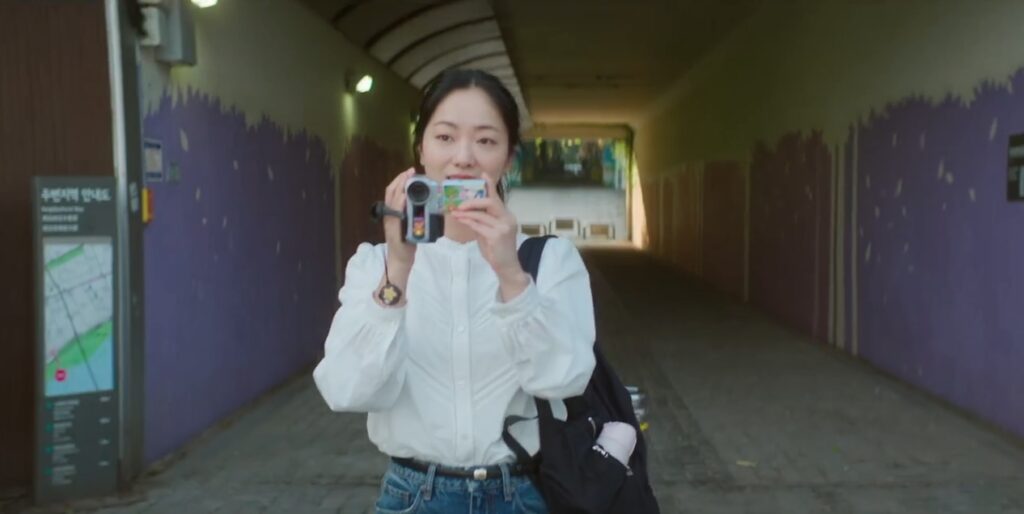
    Enter the leading lady of this emotional cinematic spiral: LEE DA-EUM (Jeon Yeo-bin). If Je-ha is bottled-up emotional damage with tailored shirts, Da-eum is all bright smiles, random camcorder recordings, and emotional honesty with a hint of chaos. She bikes through the city with carefree energy — but behind the cheerful facade, she’s battling a terminal illness inherited from her mother. And if that doesn’t punch you right in the feels, I don’t know what will.

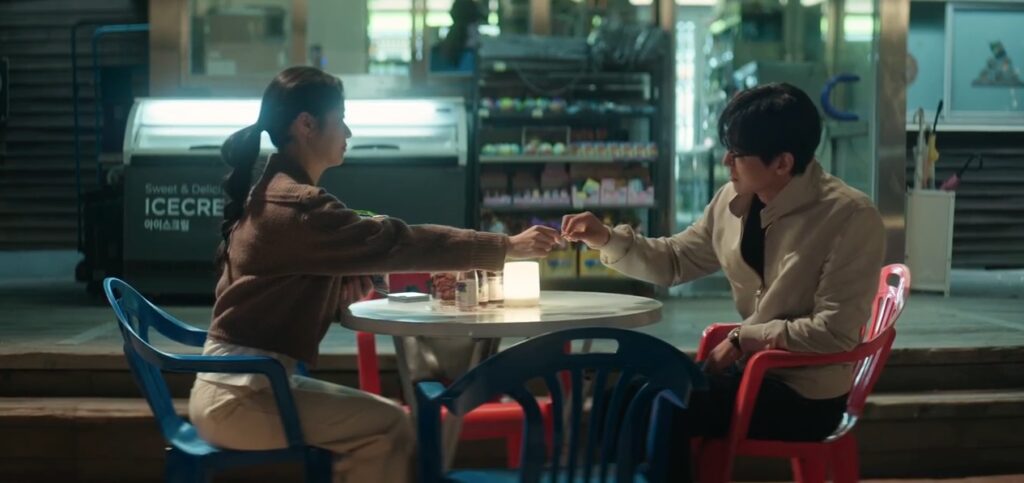
    Their first encounter? Classic awkward-meets-poetic. She offers him juice like a sitcom character, and he takes it with the energy of someone who’s eaten nothing but regret for five years. Their chemistry is immediate, not because it’s flirty, but because they represent complete opposites: one fading away slowly, the other refusing to live at all.

    As Da-eum and Je-ha orbit each other’s existence with accidental run-ins and reluctant conversations, more layers peel back. Da-eum’s diagnosis has kept her in a hospice since she was 20, while Je-ha has been creatively comatose in his grief and anger. When Da-eum learns Je-ha is remaking Love in White, she’s not just excited — she’s ready to embody the role. Why? Because she is that character: a woman on the brink of life and death, balancing hope and despair.

    Now, here’s the kicker. Je-ha doesn’t want her in his movie. Not because she’s not talented — in fact, her audition blows everyone away — but because she’s dying. And Je-ha’s enough of a realist (or coward) to know that casting a terminally ill actress could be a production disaster. Of course, Da-eum isn’t having any of that. She’s got one year left, maybe less. Why shouldn’t she go out doing what she loves, in a role written by a woman facing death — much like herself?

    In a subtle yet powerful turn of events, Je-ha begins rewriting the script. Lines spoken by Da-eum start making their way into his draft. Suddenly, this isn’t just a project to revive his career — it’s a story infused with the living breath of someone who understands its message more intimately than anyone else ever could.

    Naturally, there’s resistance. Da-eum’s father, a doctor, disapproves of her acting ambitions, believing it’s dangerous, even reckless. But what’s reckless to him is purposeful to her. Determined, she leaves the hospice, teams up with her best friend, and pushes forward. Life’s too short for permissions.

    The drama shines brightest when it explores this tension: the desire to protect versus the right to live freely. And yes, while the romance is budding, Our Movie is, at its core, a love story about life itself. It’s about embracing both its fragility and its beauty, no matter how fleeting.

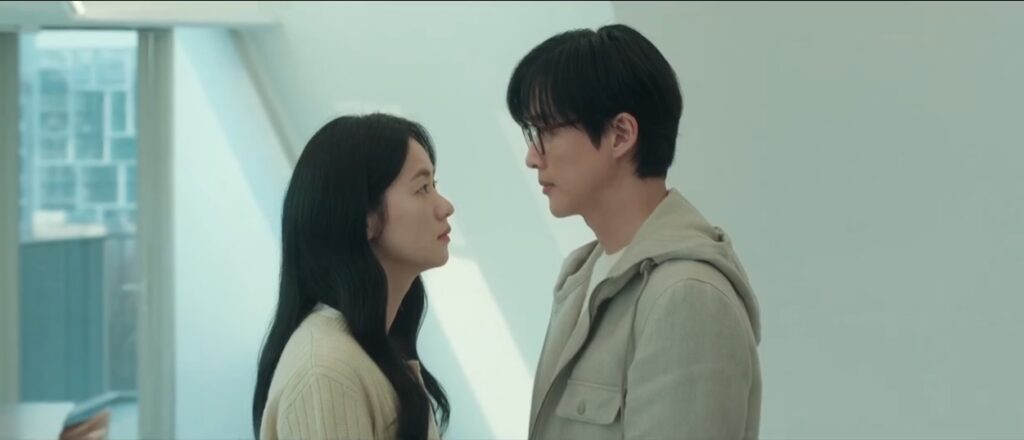
    As the episodes progress, the emotional weight builds. By the time Je-ha stands inches from Da-eum, locks eyes, and murmurs, “Don’t die,” the stakes are sky-high. We know what’s coming, and yet, we want to see these two broken people rebuild themselves together. Not in spite of their pain, but because of it.

    And yet — because I can’t just fangirl without thinking critically — we do have to talk about the elephant in the room: the age gap. Je-ha is older, weathered by his industry experiences, and, frankly, more jaded. Meanwhile, Da-eum, though 25, is written with a youthfulness that occasionally feels more 19 than mid-twenties. Combined with the mentor-mentee dynamic, things get dicey. That moment when he shifts from icy director to romantic lead? A little too sudden for my liking.

    Still, the show’s emotional intelligence balances out most of those awkward beats. This isn’t a one-sided story of an older man “saving” a younger woman. If anything, Da-eum is dragging Je-ha out of his emotional grave with her stubborn light. It’s her terms, her performance, and her life.

    Also, can we take a moment to appreciate Namgoong Min’s performance here? This man can express more agony with a single blink than some actors can with full monologues. And Jeon Yeo-bin — effortlessly charming, sharp, and radiating that brand of chaotic good energy that makes you want to protect her while simultaneously knowing she could beat you in chess blindfolded.

    What keeps Our Movie compelling isn’t just the romantic storyline — it’s the depth of grief, the exploration of parental relationships, and that delicious meta-commentary about who gets to tell whose story in filmmaking. It’s storytelling about storytelling, and honestly, it’s working overtime.

    My Take:

    Personally, I’m invested. I love a good “fix each other with reluctant healing” trope, and this drama is giving exactly that — but dressed in arthouse cinematography and gut-punch dialogue. The pacing is deliberate, and I don’t want them to rush it just for the sake of delivering kisses by Episode 4. Give me slow-burn, emotional wreckage, and then, maybe, catharsis.

    That said, I’m watching that age gap carefully. If the writers handle it with sensitivity and keep Da-eum’s autonomy at the forefront, this could go from “good drama” to “masterpiece.” But if it leans too heavily into savior tropes or weird power dynamics? I’m out.

    For now though? I’m in. Fully.

    Final Verdict:

    ⭐⭐⭐⭐☆ (4.5/5)

    Beautiful, slow-burning, emotionally rich — with a dash of awkward romantic pacing. Worth your time, your tears, and maybe even a tub of overpriced gelato.

    OneTaste’s Dark Side

    0

    Back in 2004, Nicole Daedone launched OneTaste in California, pitching “orgasmic meditation” (OM) as a revolutionary blend of mindfulness and sexual wellness. At first glance, it appeared harmless—even empowering: 15 minutes of strictly focused clitoral stimulation, with no eye contact, no romance, and no messy emotions. Yet, over time, this glossy veneer peeled away. Underneath, employees described a world of constant surveillance, emotional coercion, and outright forced labor—masked as “empowerment” and “healing.”

    By the time a U.S. federal jury delivered its verdict in June 2025, Nicole and her former head of sales, Rachel Cherwitz, had been unmasked not as pioneering wellness gurus, but as architects of a coercive system that preyed on vulnerable young recruits.

    TL;DR:

    • OneTaste, initially promoting “orgasmic meditation,” was exposed as a cult-like organization.
    • Leaders Nicole Daedone and Rachel Cherwitz were found guilty of forced labor after a federal trial.
    • The group used tactics like targeting trauma, debt, isolation, and coerced sex to control members.
    • Victims endured public shaming, financial ruin, and emotional manipulation under the guise of “healing.”
    • The case highlights critical issues in the unregulated wellness industry, urging for greater oversight and consumer awareness.

    A Five-Week Trial That Exposed It All

    After twelve years—stretching from alleged abuses beginning in 2006 until charges were filed in 2018—the federal trial finally shone a spotlight on OneTaste’s darkest practices. Testimonies painted a grim picture: women with past traumas were coaxed into communal homes, stripped of privacy, and monitored by peers who had been trained to spy and report.

    • Forced sex with investors and colleagues. Witnesses recounted being ordered to have sex—sometimes explicitly BDSM acts—with high-profile clients, including early investor Reese Jones, Daedone’s ex‑boyfriend. One recruit detailed whipping him and walking him on a leash, despite her desire for a normal, monogamous relationship.
    • Workaround “medical leave.” Employees were on call around the clock, discouraged from taking sick days, and even penalized if they failed to respond instantly during waking hours.
    • Public shaming as a control tactic. When sales slumped, Cherwitz would single out colleagues, blame them for “sexual tension,” and publicly command them to have intercourse mid‑meeting—an ultimate breach of personal boundaries.

    After five harrowing weeks, the jury needed just two days to find both Daedone and Cherwitz guilty of forced labor. Each now faces up to 20 years behind bars.


    The Cult Mechanism: How OneTaste Hooked Its Prey

    What began as a niche sex‑wellness workshop morphed into a full‑blown cult-like operation. Over time, OneTaste employees and participants became “members,” fully immersed in an ideology that demanded total commitment—and absolute silence about any doubts. Here’s how they did it:

    1. Targeting Trauma: Recruiters specifically searched for people with histories of abuse or loneliness. At events, “games” were designed to extract intimate details—divorces, addictions, childhood wounds—all used later to tailor coercive sales pitches.
    2. Debt Bondage: Members were encouraged to take on crippling course fees—lines of credit piled high—to access “deeper” OM levels. The most devoted could spend upwards of $60,000 a year on unlimited workshops, further entrenching their dependence.
    3. Isolation and Surveillance: Communal living spaces meant 24/7 oversight. Peers acted as watchdogs, reporting any hint of dissent to leadership. Outsiders—friends, family—were often portrayed as agents of “The Matrix,” unawakened to OneTaste’s truths.
    4. Religious Theater: Dashed in spiritual jargon, some gatherings featured occult symbols—snakes, ritualistic titles like “Master Stroker” or “Priestess of Orgasm”—deepening the sense of belonging to a higher purpose.
    5. Scientific Claims Without Evidence: Daedone touted peer‑reviewed research that didn’t exist. References cited articles “in review” or internal OneTaste publications to back claims of curing depression, boosting intimacy, or reducing substance abuse.

    Taken together, these elements met classic cult criteria: manipulation, indoctrination, authoritarian control, and isolation from external supports.


    A Timeline of Deception and Denial

    • 2004: Nicole Daedone founds OneTaste, positioning OM as a meditative practice separate from sex.
    • 2009: The New York Times front‑page feature propels OneTaste into the spotlight. Recruitment skyrockets.
    • 2011: Daedone appears at TEDx, further legitimizing her approach.
    • 2006–2018: According to the indictment, members are subjected to intimidation, surveillance, nonpayment of wages, and coerced sexual acts.
    • 2017–2018: Key insiders depart; federal investigators start digging.
    • November 2022: New ownership rebrands the company as the Institute of OM.
    • 2023–2025: Federal prosecutors indict Daedone and Cherwitz; trial takes place; guilty verdicts rendered.

    Inside the “Orgasmic Meditation” Experience

    At a typical OM session, two strangers—designated “stroker” and “strokee”—sit fully clothed, apart, no eye contact, focusing solely on sensation. For supporters, it was a gateway to deeper intimacy and self‑awareness. For critics, it was a thinly veiled recruitment tool, normalizing boundary‑breaking under the guise of “research.”

    • Phase One: Recruitment. Intriguing language—“research partner,” “energy expansion”—lured new members. Discounts for women, waived fees, and charismatic testimonials made the gateway seem irresistible.
    • Phase Two: Immersion. After initial workshops, more advanced courses encouraged communal living, 12‑hour days, and peer evaluations. “Feedback circles” masqueraded as learning opportunities but served as mechanisms of control.
    • Phase Three: Entrapment. Debt accumulated. Relationships outside the cult were discouraged. Personal autonomy was slowly eroded. By the time anxiety, fatigue, and confusion set in, members were too invested—financially and emotionally—to walk away.

    Financial Schemes: Turning Wellness into Profit

    While employees toiled—sometimes for weeks on end, with meager or no pay—the company thrived. Pricing structures grew increasingly exploitative:

    • Weekend Workshops: $500+
    • Retreats: $4,000+
    • Coaching Programs: $12,000+
    • Intensives: $16,000+
    • Annual “OM Run” Membership: $60,000

    Members who couldn’t afford these sums were encouraged to take multiple credit lines—stoking both psychological and financial dependence. When promised wages or commissions failed to materialize, dissenters found themselves ostracized or publicly humiliated.


    The Role of Religious and Occult Imagery

    Throughout OneTaste’s marketing, spiritual language abounded: chakras, energy fields, rituals. In reality, many gatherings blurred sexual practice with ceremonial theater:

    • Snake ceremonies signified “shedding past traumas.”
    • “Priest” and “Priestess” titles conferred status and obedience.
    • Matrix metaphors painted the outside world as asleep, reinforcing isolation.

    Such elements enhanced the cult-like atmosphere. They created an “us versus them” mindset and deepened the psychological grip on members.


    Victim Stories: More Than Headlines

    It’s easy to reduce this saga to sensational soundbites—forced labor, coerced sex, cult charges. But behind each claim sits a human life:

    • A woman who lost her job and savings after refusing to tithe her entire income to OneTaste.
    • A single mother trapped in communal housing, forbidden from contacting her child’s school.
    • Young graduates, desperate for purpose, who found themselves teaching children how to recruit peers in exchange for small stipends.

    These testimonies underscore the human cost: broken relationships, ruined finances, and lasting trauma. Even now, as Daedone and Cherwitz await sentencing, many survivors struggle to rebuild trust—in others and in themselves.


    Why It Mattered: Beyond a Single Scandal

    This case highlights critical issues in today’s wellness industry:

    1. The fine line between self‑help and exploitation. When charismatic leaders promise transformation, vulnerable individuals can become prime targets.
    2. Lack of oversight. Few regulations exist around sexual wellness practices marketed as therapy or mindfulness.
    3. The power of language. Framing sex as “meditation” or “research” can mask abuse and normalize dangerous power dynamics.
    4. Debt as a control tool. High‑ticket pricing and hidden costs can trap participants long after they realize something is wrong.

    As wellness startups proliferate—offering everything from sound baths to psychedelic retreats—this saga is a stark reminder: critical thinking and external checks are essential.


    My Perspective: Lessons Learned and Paths Forward

    Here’s where I break away from straight reporting to share some thoughts on meaning and implications:

    1. Charisma Isn’t Credibility. Daedone dazzled audiences at TEDx and New York Times profiles. But savvy marketing doesn’t substitute for ethical practice. In the wellness world, credentials matter—and so does transparency.
    2. Demand Evidence, Not Just Testimonials. Healing claims should be backed by legitimate studies. When a “reference list” includes your own blog posts or unpublished papers, alarm bells should ring.
    3. Watch Your Wallet. If a program insists you incur debt or locks you into costly annual memberships, step back. True empowerment doesn’t come with a 10‑figure price tag.
    4. Cult Warning Signs Are Universal. Isolation, pressure to conform, targeting of vulnerabilities—these are red flags in any group, whether called a church, a startup, or a meditation practice. Recognize them early and reach out to outside friends or family.
    5. Survivors Deserve Support. The brave individuals who testified deserve more than closure; they need resources for recovery. As a society, we must push for mental‑health services tailored to abuse survivors in unconventional settings.

    A Call for Accountability and Reform

    In the aftermath of the OneTaste convictions, regulators and consumers alike must ask tough questions:

    • Should sexual-wellness practices be regulated like therapy? If you’re guiding someone’s intimate acts under the banner of “healing,” you’re essentially offering a form of sex therapy. That field already has professional standards and licensure.
    • How can we enforce financial transparency? Wellness companies shouldn’t be allowed to hide fees in fine print or push multiple lines of credit on hopeful clients.
    • What safeguards protect recruits? From sales tactics to communal living, boundaries must be defined and enforced. Whistleblower channels and independent audits could deter abuse.

    Ultimately, consumer awareness remains the strongest deterrent. When you see grandiose promises—especially around sex or spirituality—do a little digging. Check for third‑party reviews, seek out former participants, and trust your gut.


    Conclusion: Turning Pain into Progress

    The OneTaste saga is more than a sensational headline—it’s a cautionary tale for the booming wellness industry. It shows how easily genuine longing for connection and healing can be twisted into something toxic.

    Yet, there’s hope. Survivors have spoken out, prosecutors have held leaders to account, and conversations about ethical boundaries in alternative wellness are gaining momentum. If we listen—and act—this painful chapter can spark reforms that protect the vulnerable and keep genuine practitioners honest.

    After all, true empowerment should never cost your dignity, your freedom, or your financial security.


    If you’ve had experiences with controversial wellness groups or therapies, feel free to share your thoughts below. Honest dialogue is the first step toward change.

    3-Year-Old Found a 3,800-Year-Old Biblical Artifact

    0

    During what was supposed to be a typical family hike at Tel Azekah, a well-known archaeological site in Israel, something extraordinary happened. Three-year-old Ziv Nitzan casually picked up what looked like just another stone. Little did anyone know, that “stone” was about to rewrite her family outing into an archaeological fairy tale.

    TL;DR:

    • A 3-year-old found a 3,800-year-old Canaanite scarab during a hike in Israel.
    • The discovery happened at Tel Azekah, the biblical site of David and Goliath.
    • The scarab confirms ancient ties between Canaan and Egypt.
    • The find highlights the region’s historical significance.
    • The toddler received an award from the Israel Antiquities Authority.

    Picture this: you’re three years old, your primary focus is usually snacks or nap time, and yet—boom—you stumble upon a 3,800-year-old artifact with a story straight out of the Bible.

    Tel Azekah Israel Antiquities Authority

    According to her older sister, Omer Nitzan, the toddler didn’t just pick any rock from the thousands scattered around. Out of all those dusty pebbles, Ziv’s little hand reached for the one with destiny written all over it.

    “She brushed off the sand and saw something different,” Omer recalled in a video interview, probably trying to stay calm while internally screaming, “IS THIS REAL LIFE?”

    After a little dusting, it became obvious—this wasn’t just a cool rock for show-and-tell. It was a legit archaeological find.

    Welcome to Tel Azekah: Where Bible History Meets Modern Discoveries

    Now, Tel Azekah isn’t your average picnic ground. Located in Israel’s Shephelah region, it’s been a treasure trove for archaeologists for over 15 years. If you’ve cracked open a Bible recently, that name might sound familiar. Yep, it’s the very spot mentioned in the story of David and Goliath, featured in the First Book of Samuel. You know, the one where a young shepherd takes down a giant with a rock? There’s poetry in Ziv’s find, isn’t there?

    The family immediately reported their discovery to the Israel Antiquities Authority (IAA), clearly understanding that when you find ancient relics, you don’t just chuck them in your pocket and move on.

    Soon after, the IAA confirmed that the tiny hands of Ziv had delivered a major archaeological win. Specialists were quickly looped in, including Daphna Ben-Tor, an expert on ancient amulets and seals.

    What Exactly Did Little Ziv Find?

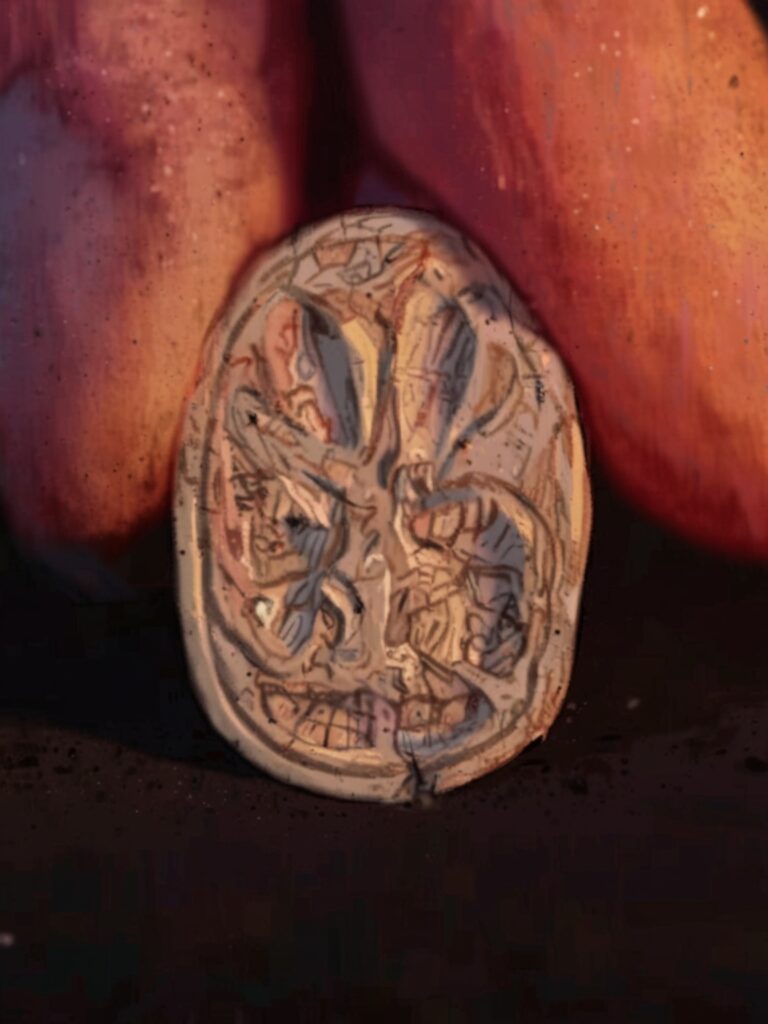
    Turns out, that “stone” is actually a Canaanite scarab, dating back to the Middle Bronze Age, roughly 3,800 years ago. Imagine that—a preschooler casually discovering something from an era when pyramids were fresh real estate.

    Ben-Tor explained that scarabs like these weren’t just pretty ornaments. These beetle-shaped amulets served as seals and talismans, used in graves, public buildings, and private homes across Canaanite culture. These weren’t mass-produced souvenirs either. Each scarab bore symbols and messages, reflecting religious beliefs, social status, or both.

    Here’s the twist: scarab beetles were considered sacred in ancient Egypt. They symbolized new life and transformation, largely because the Egyptian word for scarab comes from the verb meaning “to come into being.” Egyptians even viewed the scarab as representing the very incarnation of their gods.

    So yes—Ziv wasn’t just holding an old trinket. She was holding history, religion, and culture—all rolled into one tiny artifact.

    Tel Azekah’s Greatest Hits: Why This Place Matters

    Ziv’s discovery isn’t some isolated one-hit wonder. Tel Azekah has already revealed ancient city walls and agricultural structures tied to the Judahite Kingdom. Think of it like Israel’s version of an archaeological theme park—but instead of rollercoasters, you get city gates and ancient pottery.

    Tel Azekah Israel Antiquities Authority

    Oded Lipschits, the head honcho leading Tel Aviv University’s excavations, laid it out clearly: “Excavation findings show that during the Middle Bronze and Late Bronze Ages, here in Tel Azekah thrived one of the most important cities in the Judean lowlands.”

    Ziv’s scarab isn’t just another addition to the growing collection. It’s a confirmation of deep, complex ties between Canaan and ancient Egypt—both in trade and in culture. And it’s one more piece of evidence supporting what archaeologists have been saying for years: that the Shephelah region wasn’t just rural farmland. It was buzzing with life, interaction, and significance.

    Archaeology Meets the Bible: The Bigger Picture

    Finding an artifact in a place mentioned in the Bible always sparks heated discussions, especially among historians, archaeologists, and theologians. Tel Azekah plays a key role in these discussions. Its location fits the description of where the Israelites battled the Philistines—cue the David versus Goliath imagery. So, finding an Egyptian-Canaanite scarab there? That adds layers to the narrative.

    While the Bible doesn’t mention Egyptian scarabs specifically in relation to David’s epic showdown, the presence of Egyptian cultural artifacts in this context enriches our understanding of the world the biblical authors were writing about.

    Ancient Israel wasn’t some isolated community with only shepherds and flocks. It was deeply intertwined with the surrounding cultures. Egyptian influence, Canaanite civilization, Philistine neighbors—it was a melting pot of beliefs, practices, and conflicts.

    What Happens to the Artifact Now?

    Ziv didn’t just go home with a good story—she received a certificate for outstanding citizenship from the Israel Antiquities Authority. Which, let’s be honest, probably beats any participation ribbon from preschool art contests.

    The scarab itself will now be studied further by experts and possibly displayed in a museum. Meanwhile, Ziv’s story will be part of every Israeli elementary school curriculum in about five minutes.

    Adding New Layers: My Take on This Modern-Day Discovery

    Now, let’s zoom out for a second. What makes this story so captivating isn’t just the adorable image of a toddler uncovering history—it’s what that history represents.

    Finding an Egyptian-Canaanite artifact in biblical territory bridges gaps between archaeology, theology, and even pop culture. Think about it. We live in a world saturated with Marvel movies and TikTok trends, yet here we are, talking about ancient seals that tie into biblical heroes and Egyptian gods.

    It’s a stunning reminder that history isn’t trapped in dusty books or behind glass museum cases. Sometimes, it’s lying beneath your sneakers, waiting for a curious toddler to brush away the sand.

    Moreover, stories like these underscore the importance of protecting archaeological sites. Imagine how many other ancient relics are just waiting to be stumbled upon by future generations of adventurers armed with juice boxes and an uncanny sense for historical treasure.

    Final Thoughts: Why This Matters Beyond Israel

    The tale of Ziv and her ancient scarab isn’t just cute. It’s a conversation starter about cultural heritage, preservation, and education. For anyone thinking archaeology is just for academics or history buffs, this story proves otherwise.

    This discovery shines a light on the fragile threads that connect our modern lives with ancient civilizations. It bridges the ordinary—an afternoon family outing—with the extraordinary—a priceless historical find. And in doing so, it reminds us that history isn’t gone. It’s just beneath our feet, waiting to be rediscovered.

    Now that’s better than a family picnic any day.

    The First Night with the Duke: What we learned so far…

    0

    In a world teeming with overdone tropes, The First Night with the Duke breaks through the noise like a rebellious spark. Right from the opening scenes of episodes one and two, the series asked: what happens when a disillusioned fan gets thrown into the pages of her own favorite novel? The answer: utter chaos, scandalous romance, and enough witty banter to keep you glued to the screen.

    TL;DR:

    • Disillusioned fan transported into her favorite Joseon web novel.
    • Accidentally steals heroine’s moment and kisses the duke.
    • Forced engagement, hilariously tries to escape it.
    • Two attractive princes, one broody, one charming.
    • Clever twist on classic K-drama tropes with humor and sass.

    Setting the Stage: From Gloomy Dorm to Glittering Court

    At the story’s outset, we meet our heroine, Seohyun, a college student whose life revolves around one fantastical escape: her beloved web novel set in a fictional Joseon dynasty. Ironically, her own bedroom feels like a cave—bare walls, scattered laundry, and a single faint ray of hope shining from her phone screen. Then, the unimaginable happens. After ranting in the comments about the author’s decision to end the story, Seohyun takes a tumble, smacks her head, and wakes up as Cha Seon‑chaek, the unremarkable daughter of the Chief State Minister.

    Transitioning from miserable to majestic is rarely smooth, but Seon‑chaek cruises through it. Her new family brushes off her odd behavior as quirks. As a minor noble, she could’ve hidden behind wealth and watched drama unfold. Yet, her fangirl instincts refuse to remain dormant.

    Act One: A Social Disaster That Spills the Tea (Literally)

    At a high society gathering hosted by her favorite heroine, Jo Eun‑ae, Seon‑chaek faces a dilemma. Do nothing and let the mean noblewoman, Do Hwa‑seon, humiliate Eun‑ae—or step in and risk wrecking the plot? Loyalty wins. With unexpected skill, she takes over bartending duties, breaking spirits and barriers alike. Soon, the party’s more tipsy than a troupe of wild squirrels, and Seon‑chaek slips out for fresh air. Little does she expect to witness a near-drowning dramatic rescue by the dark prince Yi Beon.

    Act Two: Meet-Cute Mayhem

    This isn’t your average meet-cute. During crucial hero-rescues-her-moment, Seon‑chaek, still buoyant from fermented pears, steps in—stealing her heroine’s leading-lady moment. In one fell swoop, she kisses Yi Beon on a whim, compliments his brooding softness, and officially rewrites romance history. Suddenly, the brooding duke views Seon‑chaek as his one and only. Cue scandal, misunderstandings, and mortifying hangovers.

    Rather than let this one-night fiasco remain a cautionary tale, Yi Beon insists on a formal engagement—under threat of treason! So much for flying under the radar. To buy herself time, Seon‑chaek proposes a three-day grace period before announcing their betrothal. In reality, she’s scrambling to avoid matrimonial doom.

    Tactical Retreat: Romance or Runaway?

    Seon‑chaek’s playbook for escape is extensive. She tries everything. Poisoned tea? Predictable. Scare tactics? Amateur hour. Even a rustic attempt at repelling the duke by digging in the dirt (or so she claims) ends in disastrous defeat. Hint: nothing says “keep away” like admiring a duke’s washboard abs.

    Behind the scenes, politics lurk. Yi Beon dodges an envoy to China by clinging to marriage. Meanwhile, King Suljong’s suspicion grows. Is the duke genuinely smitten or just playing political chess? One thing’s clear: love or strategy, royal intentions are rarely pure.

    Enter the Second Lead: Whiskey, Wisdom, and Potential Love Rivalry

    When escape seems imminent, Seon‑chaek’s midnight forest dash ends in peril. Cue hero number two, Jung Soo‑gyeom—a potential dark-horse in the love race. Charming, light-hearted, and equally talented behind the bar, Soo‑gyeom extends an invitation to his secretive Seonmun Club. Suddenly, Seon‑chaek’s caught between two princes—one broody, one brilliant at mixology.

    Predictably, Yi Beon shows up, declares the engagement once more, and inadvertently reveals family secrets in front of Seon‑chaek’s three brothers. In the ensuing chaos, she faints—landing in the arms of her very determined fiancé.

    Tropes with a Twist

    Despite a familiar isekai setup, The First Night with the Duke feels self-aware rather than stale. Each trope is served with a mischievous grin: the damsel-turned-diplomat, the villainous noblewoman, and the dangerously handsome princes. Yet, the drama doesn’t drag. Instead, time flies—an unfortunate predicament when you’re watching on a lunch break you can’t extend.

    However, a glaring discrepancy nags. Our heroine’s personality flip—from depressed college recluse to confident socialite—arrives without warning. Perhaps that’s who she always was, buried beneath academic disillusionment. Flashbacks to her “before” life would help bridge this personality gap. Until then, it’s easier to chalk it up to narrative convenience and savor the ride.

    Why This Twist on Isekai Works

    1. Emotional Stakes Over Epic Battles: Rather than blade clashes, stakes hinge on relationships. One misstep at a ball can alter alliances and destinies.
    2. Humor as a Survival Skill: Seon‑chaek’s sarcasm becomes her shield in a rigid court. A well-timed joke can win allies faster than a royal decree.
    3. Mixology Meets Diplomacy: Bartending scenes double as social laboratories. Alcohol loosens tongues, revealing secrets and forging bonds.
    4. Gender Politics in Joseon Style: Though wrapped in romantic comedy, the show hints at the strictures placed on women—a noble daughter’s choices constantly scrutinized.

    My Two Cents

    Honestly, I love it. From the moment Seon‑chaek crashes that debut party to her absurd attempts at ruination, every twist kept me smirking. It’s refreshing to see a female lead with agency—imperfections, judgment lapses, and all. And Taecyeon’s brooding prince? A solid eight out of ten on the “Prince Your Parents Warned You About” scale.

    That said, I won’t lie: I’m craving more backstory. Why was Seon‑chaek so down-to-earth before? What makes her snark such a potent weapon? If future episodes deliver flashbacks alongside fast-paced antics, this series could redefine isekai romance for K-drama fans.

    Final Verdict: ★★★★☆

    The First Night with the Duke premieres with flair. It’s tropey, self-aware, and a riot of drama and comedy. While some personality shifts feel abrupt, the series’ charm and wit outweigh its flaws. In short, if you enjoy playful banter, romantic misfires, and royal politics served with a side of sass, this one’s for you.

    Malachi Love-Robinson’s Fake Doctor Empire: Florida’s Most Bizarre Medical Scam

    0

    Imagine walking into a clinic in sunny West Palm Beach, Florida, seeking treatment for a nagging headache. You’re greeted by a young man in a crisp white coat. He offers you a friendly smile and a firm handshake—then introduces himself as Dr. Love. You nod, trusting him as you would any medical professional.

    Except he isn’t a doctor. His real name is Malachi Love‑Robinson, and his entire medical practice is a lie.

    In 2016, this then-18‑year‑old teenager duped patients, investors, and even insurance companies by pretending to be a licensed naturopathic physician. Over the course of two years, he built a makeshift health clinic, bilked vulnerable seniors out of tens of thousands of dollars, and evaded the law with a combination of audacious nerve and juvenile charm.

    How did this plot unfold? Why did so many fall for the ruse? And what can we learn from Malachi’s story about trust, ambition, and the dark side of online verification? This is the tale of Florida’s most unbelievable medical impersonation.

    TL;DR:

    • Teenager Malachi Love-Robinson posed as “Dr. Love,” a naturopathic physician, with no medical training.
    • He opened a clinic, scammed elderly patients out of thousands, and billed insurance companies using fake credentials.
    • His confidence and online presence (fake website, NPI number) duped many, highlighting flaws in online verification.
    • He was eventually caught in an FBI sting and served multiple prison sentences for various frauds, including identity theft.
    • The story is a cautionary tale about verifying credentials, the vulnerability of trusting appearances, and how confidence isn’t competence.

    Chapter 1: A Teenage Scheme Takes Shape

    First things first: Malachi Love‑Robinson wasn’t your average high school student. At 17, he’d grown impatient with the idea of spending years in college or med school. He wanted to call the shots now. And so, with zero medical training, he decided to do what any enterprising teen might: he lied.

    He raided a costume shop (or maybe his parents’ garage) for a white lab coat and a stethoscope. He slapped the title “Anesthesiologist” on his coat, adopted the moniker “Dr. Love,” and set off for the nearest hospital. There, he wandered through corridors and slipped into exam rooms—chatting up patients as if he were doing routine rounds.

    Admittedly, it seems almost cartoonish: a lanky kid pretending to draw blood pressure and nodding seriously at patient charts. Yet, for nearly a month, nobody blinked. No one asked for ID, no one noticed the missing credentials. If there’s one thing we’ve learned, it’s that confidence can masquerade as competence.

    But every teenage story has its turning point. Malachi’s arrived when he blundered into a real anesthesiologist’s exam room—pregnant patient, genuine doctor, and a coat clearly reading “Anesthesiologist.” The real doctor stared him down and dialed 911. Cue entrance: Palm Beach County Sheriff’s Office.

    Within minutes, Malachi was in handcuffs. He swore on his fake medical degree that he’d been practicing for years—right up until he was whisked away and released into his mother’s custody. No charges were filed, but the seed of insurrection had been planted.


    Chapter 2: From Hospital Hallways to West Palm Beach Medical Center

    Most people, after a month in cuffs, might reconsider. Instead, Malachi doubled down. He made a new friend, a man named Perseus. Maybe it was the mythological ring to the name, or maybe Perseus was just gullible—either way, he handed over $10,000 to help Malachi open an alternative health clinic.

    Suddenly, Dr. Love wasn’t just a wandering impostor; he was CEO, founder, and president of a naturopathic practice. His slick website proclaimed a PhD, listed an NPI number for insurance billing, and showcased glowing patient testimonials. Add a Photoshopped headshot of the teenage mastermind himself, and you’ve got a legitimate-looking operation.

    Miraculously, the government’s National Provider Identifier system performed no background check. Within days, Malachi was billing insurers. HealthGrades and EasyDoctor directories indexed his profile. Patients poured in, including 86‑year‑old Anita, who made her way to his clinic hoping for relief from chronic stomach pain.

    Malachi’s brand: all-natural vitamins, herbal remedies, and positive affirmations. To clients, it was groundbreaking. To him, it was pure profit. During home visits, he pocketed checks intended for medical services—five visits netting him more than $34,000.

    Of course, losing thousands of dollars to a phony would send up red flags. Yet, week after week, Anita welcomed the fresh-faced Dr. Love into her home. She’d found him on Google, reviewed his website, and trusted his credentials. By that point, the lie had been reinforced by repetition and the illusion of social proof.


    Chapter 3: The FBI Sting and Arrest

    The charade continued until 2016. Someone noticed discrepancies: Malachi’s academic timeline didn’t add up. His PhD claim unraveled under scrutiny. A local news outlet ran an investigative piece, prompting law enforcement to take genuine interest.

    In a carefully orchestrated undercover sting, an officer disguised as a patient booked an appointment at Dr. Love’s clinic. She complained of vague symptoms: sinus issues, fatigue. Malachi dutifully took her vitals and scribbled notes—then recommended over‑the‑counter allergy pills.

    That single suggestion constituted a licensed medical act. Agents pounced, arresting Malachi on charges of practicing medicine without a license and insurance fraud. He maintained his innocence in mug shots and court appearances, even holding a press conference to claim he was the victim of misinformation.

    Still, the evidence was overwhelming. His clinic shut down, Perseus’s $10,000 investment vanished, and Malachi faced decades behind bars.


    Chapter 4: Continuing Conspiracies—and Consequences

    You’d think that two arrests would sober him up. Instead, six months after release, Malachi resurfaced in Virginia at a used‑car dealership. He strolled in with an elderly woman, pitching himself as a doctor earning $120,000 annually. He wanted to finance a car, using the senior’s identity as co‑signer.

    The dealership manager, however, recognized the story from news headlines. A quick internet search confirmed the scam. Police arrived. Malachi was detained yet again. A mug shot later, he was sentenced to 20 months in prison for the Florida case, followed by an additional 28 months for car dealership fraud and identity theft.

    Miraculously, upon release in 2020, he found employment at a shipping company. One might hope lessons were learned, but Malachi couldn’t resist the urge. Security footage caught him pocketing company funds. Federal charges followed, resulting in a two‑year, four‑month prison sentence.


    Section: Lessons and Takeaways

    1. Confidence Isn’t Competence: A convincing story and a white coat won’t substitute for years of medical training. Yet, confidence alone convinced dozens that Dr. Love was genuine.
    2. Online Verification Is Flawed: The NPI system and popular medical directories lack robust background checks. If you appear on those platforms, some will assume you’re legit.
    3. Elderly Individuals Are Vulnerable: Senior citizens like Anita rely on trust. Con artists exploit that reliance—so always verify credentials with official licensing boards.
    4. Due Diligence Matters: Checking a medical license is as easy as visiting your state’s health department website. If a doctor’s name doesn’t show up, it’s a red flag.
    5. Scams Evolve: Malachi’s story shows how a single lie can branch into medical fraud, insurance fraud, identity theft, and more. Stay vigilant.

    My Perspective: Why This Story Matters

    To me, Malachi’s saga underscores a broader challenge in our digital age: the illusion of expertise. With a few keystrokes, anyone can fabricate credentials, build a website, and project authority. And when we lack the time or know‑how to verify credentials, we often choose the path of least resistance—trusting what appears on screen.

    This isn’t just about medical scams. It’s about the countless areas—legal advice, financial planning, technical services—where impostors can thrive. The lesson here is simple but profound: in a world overflowing with information, the most valuable skill might be discerning truth from deception.

    Moreover, Malachi’s tale warns us about youthful arrogance. He prioritized shortcuts over education, betting that boldness would trump expertise. For some, it did, at least temporarily. But ultimately, deception unravels.


    Conclusion

    Malachi Love‑Robinson’s fake doctor empire seemed foolproof: a flashy website, rental office space, patient testimonials, insurance billing, and a custom lab coat. In the span of two short years, he defrauded patients, duped investors, and outran authorities—only to be tripped up by undercover agents and vigilant dealership managers.

    Today, his story remains a cautionary tale about trust in the digital era. It reminds us that credentials deserve verification, that confidence without competence is a house built on sand, and that, eventually, lies catch up with those who scheme.

    So next time you meet someone in a white coat, pause before you hand over your trust. Google their license. Check state databases. After all, it could save your health—and your wallet.

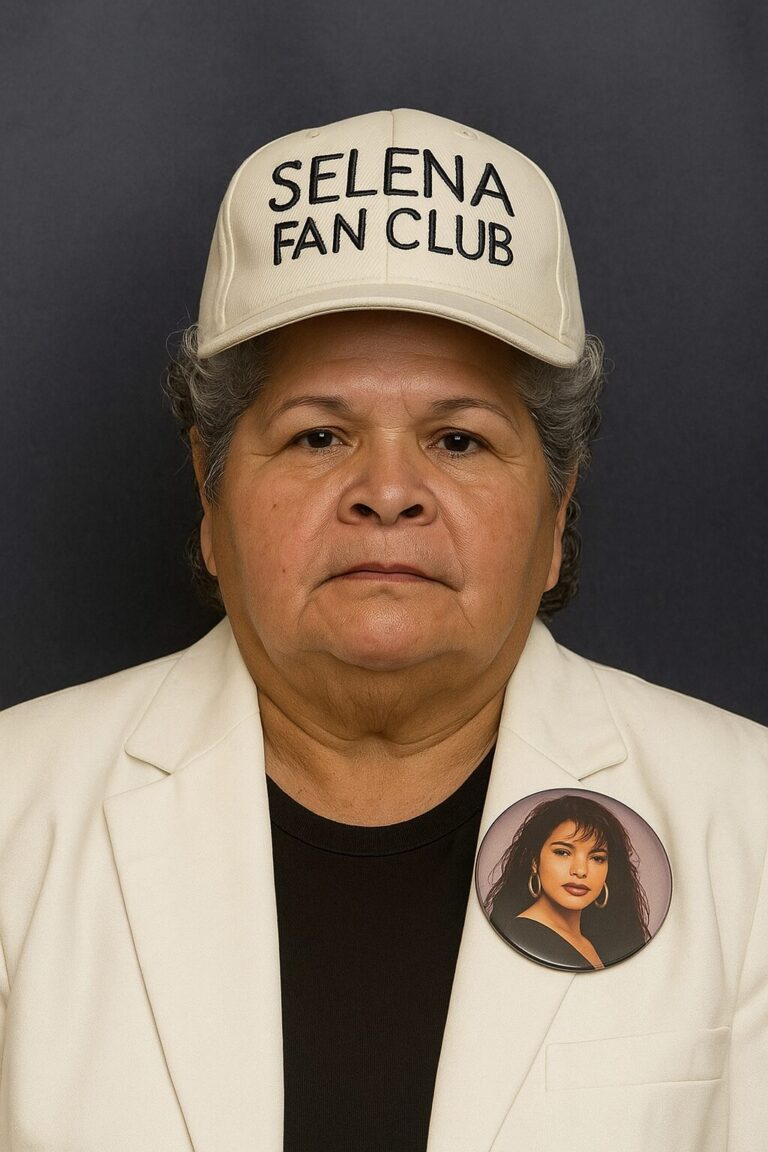
    How Yolanda Saldivar Betrayed Selena Quintanilla-Pérez’s Fatal Trust

    0

    At first glance, it sounds like a plot pulled straight from a binge-worthy true-crime series. A devoted fan climbs the ladder from cheerleader to confidante. Along the way, she snaps under the pressure of envy, entitlement, and greed. Eventually, she commits the unthinkable.

    Yes, I’m talking about the tragic saga that cost the world its beloved Latin pop sensation, Selena Quintanilla-Pérez. And yes, the woman at the eye of this storm—Yolanda Saldivar—once held the golden keys to Selena’s trust. Here’s how that key became a weapon of betrayal.

    TL;DR:

    • Selena Quintanilla, a Tejano music star, was murdered by her fan club president, Yolanda Saldivar.
    • Saldivar climbed from devoted fan to trusted assistant, managing Selena’s fan club and boutiques.
    • Greed and entitlement led Saldivar to embezzle money and betray Selena’s trust.
    • After being fired, Saldivar shot Selena during a confrontation over stolen documents.
    • Selena died at 23; Saldivar was convicted of murder and sentenced to life in prison.
    • The tragedy highlights the dangers of unchecked obsession and the importance of boundaries.

    A Star Is Born: Selena’s Meteoric Rise

    Selena Quintanilla-Pérez wasn’t just “another” emerging singer in the early ’90s; she was a force of nature. Hailing from Corpus Christi, Texas, she fused Tejano beats, pop sensibilities, and heartfelt lyrics into an electrifying package. Her voice? Smooth. Her style? Flawless. Her fan base? Explosive.

    As her fame skyrocketed, she clinched chart-toppers across Latin America and the U.S. Her albums went multi-platinum. Her concerts sold out before they even hit print on the tickets. It seemed like nothing could stop her ascent—until a fan club membership card laid the groundwork for disaster.


    Meet ‘Yo’: The Fan Club Crusader

    Imagine you’re in your early thirties in Texas—unremarkable life, nine-to-five—until one night you stumble upon a local concert. A singer takes the stage. You’re electrified. You exit the venue with more than just goosebumps; you exit on a mission: You will befriend this singer.

    Enter Yolanda (affectionately dubbed “Yo” by those who knew her). After that first show, she didn’t just chat about Selena over coffee. She launched an official fan club. Without permission. And she did it all for free—or so Dad (Selena’s manager and father, Abraham Quintanilla) was told at first.

    Yet, insistence has its price. Yolanda’s calls to Dad piled up until he reluctantly agreed: She could organize the fan club. From her garage. No budget. No staff. Just boundless enthusiasm.


    From Fan to Functionary: Climbing the Inner Circle

    Once she had the title “Fan Club President,” Yolanda set to work. Membership fees rolled in. Posters shipped. T-shirts pressed. She’d show up to every event, clipboard in hand, rallying fans like a coach hyping her team.

    Before long, the fan club’s professional sheen shone so brightly that the Quintanilla management team had to take notice. They invited Yolanda to meet Selena. With glittering eyes and notebook at the ready, she stepped backstage—and crossed an invisible threshold from adoring fan to trusted assistant.

    As Selena’s career took wing, Yolanda didn’t just keep pace; she attempted to set the tempo. She handled scheduling. Booked appointments. Juggled finances. When Selena branched out into clothing boutiques, Yolanda—ever the eager beaver—became store manager, too. Suddenly, she was no longer peripheral: She was indispensable—or at least that’s what she led everyone to believe.


    The First Cracks in the Foundation

    All was rosy on the surface. Yet underneath, Yolanda felt increasingly unpaid, overlooked, and—most dangerously—entitled. She started slicing a little off the top—small checks made out to herself, phantom invoices, skimming petty sums here and there. At first, it was nothing more than pocket change. But then it ballooned into thousands.

    Meanwhile, she craved Selena’s personal loyalty. So she theatrically collected $3,300 from boutique employees to buy Selena a dazzling Fabergé-inspired ring. Except the employees never heard of it again; Yolanda slipped the cash into her pocket, then charged the trio of diamonds to Selena’s company card. Selena adored the gift, convinced it was a solo gesture of gratitude, an emblem of their unbreakable bond.

    In that moment, Yolanda finally had what she’d chased for years: access to Selena’s inner circle, praise, and the promise of friendship forever.


    When Suspicion Becomes Reality

    Abraham Quintanilla had a knack for numbers. When sales reports from the boutiques and fan club didn’t match the cash flow, he smelled a rat. He dove into the ledgers. Within days, the trail of fraudulent checks and fake invoices led straight back to Yolanda.

    In a swift boardroom showdown, Yolanda was stripped of her duties. Security escorts replaced backstage passes. Payroll stopped. The employee appreciation ring? Its brilliance became a blinding reminder of her daddy’s wrath.

    For most people, losing a job isn’t life-or-death. For Yolanda, it was the first taste of outright rejection. She’d traded so much to be part of Selena’s world—and suddenly, she was locked out.


    A Gun, a Motel, and a Fatal Confrontation

    Reeling from disgrace and desperate to cling to whatever shred of closeness remained, Yolanda did something we’ll never fully comprehend—she bought a gun. She stored it in a red pickup truck, parked discreetly outside a Corpus Christi motel on the eve of tax filing season.

    Meanwhile, Selena faced a looming deadline: crucial tax documents held hostage by her former confidante. After repeated calls and broken promises, Selena confronted Yolanda at that motel room. With portable briefcase of papers in hand, Selena expected grudging cooperation.

    Instead, she found excuses: cervical bleeding, erratic travel, hospital visits. Selena, compassionate to a fault, whisked Yolanda to the nearest emergency ward. Yet doctors discovered her elaborate tales were fabrications—no hemorrhage, no recent trip.

    Anger took a jagged edge. Back at the motel, Selena demanded the paperwork. Yolanda turned pale. The ring came off. Words flew. Then a single gunshot.

    Selena stumbled from the room, clutching her shoulder. Eyewitnesses recall her screaming, “She shot me!” before collapsing in the lobby. Paramedics rushed her to the hospital.


    Aftermath: Chasing a Ghost in a Red Truck

    As Selena fought for her life, police surrounded the motel parking lot. Yolanda sat in her red truck, barrel pointed at her temple, threatening to end it all. Negotiators worked a tense nine-hour siege under starlit skies.

    Just before midnight, Yolanda surrendered. SWAT officers swarmed. In the back of a cruiser, she shrugged off tears as officers handcuffed her.

    Selena, however, never left the hospital. On March 31, 1995, at the tender age of 23, she succumbed to her wound. News of her passing rippled through the world like a seismic wave. Grief-stricken fans held vigils. Candlelight ceremonies burned bright from San Antonio to Seoul.


    Trial, Conviction, and Life Behind Bars

    Less than a year later, Yolanda Saldivar faced jurors in Corpus Christi. Prosecution painted her as a calculating fraudster whose jealousy metastasized into violence. Defense argued a momentary lapse by a troubled woman. But when the jury deliberated, facts won: In October 1995, she was convicted of first-degree murder and sentenced to life in prison without parole.

    Today, spectators can visit her behind Plexiglas in a Texas penitentiary. A convicted felon. A cautionary tale of how devotion, twisted by delusion, can unleash tragedy.


    Reflecting on Obsession, Loyalty, and Human Vulnerability

    My Point of View

    Looking at this tragedy, I’m struck by how easily admiration can mutate into entitlement. Yolanda once stood in the shadows of Selena’s stardom, awed by her brilliance. Yet instead of celebrating from afar, she forced her way into Selena’s life—and then couldn’t handle the boundaries that kept them safe.

    Boundaries exist for a reason. When we blur them, we risk not only our dignity but our very humanity. Yolanda’s story isn’t just about murder. It’s about the moment devotion tips into obsession, when love becomes a shackle rather than a gift.

    In our online age, this cautionary tale feels ever more relevant. We click ‘follow.’ We slide into DMs. We consume every tweet, every post. But we must remember: Celebrities aren’t brands on a screen; they’re people with lives, limits, and rights to safety.


    Beyond the Headlines: What Selena’s Legacy Teaches Us

    1. Authenticity over Access. It’s fine to dream of backstage passes and selfies. But real connection flows in both directions. Seek mutuality, not just proximity.
    2. Mental Health Matters. Yolanda’s downward spiral was fueled by denial, envy, and possibly deeper psychological wounds. Compassion is critical, but so is accountability.
    3. Secure the Books. In any organization—fan club, boutique, or multinational label—transparent finances protect dreams from derailing disasters.
    4. Guard Your Boundaries. Saying “no” or “enough” isn’t cruelty; it’s self-respect. It’s a line drawn in the sand that keeps relationships healthy.
    5. Remember the Music. Ultimately, Selena’s voice still resonates. Her songs are more than notes and lyrics; they’re testaments to perseverance, joy, and cultural pride. In honoring her memory, we keep that spirit alive.

    Conclusion

    Selena Quintanilla’s light burned bright—and, tragically, burned out too soon. Her story, and the shocking betrayal by someone she once trusted implicitly, remains a stark reminder of how fragile trust can be when laced with greed and obsession.

    Today, we celebrate Selena’s legacy by playing her music, sharing her story, and bearing in mind the lessons etched in her life and untimely death. As for Yolanda Saldivar? She remains locked away, serving as both villain and warning: Trust must be earned, boundaries must be respected, and sometimes, the darkest betrayals come from the ones we invite closest.

    Israel’s Bold Strike on Iran: Key Targets, Consequences, and What’s Next

    0

    Before dawn broke on an otherwise ordinary Friday, a dramatic shift rippled through the Middle East. Israel, with surgical precision, launched a sweeping aerial operation against Iran’s nuclear program and military leadership. In a move with ramifications still unfolding, the strike claimed the life of Islamic Revolutionary Guards Corps (IRGC) commander Hossein Salami and pummeled dozens of strategic sites across the country.

    From the cockpit to the war room, every facet of this operation underscored a single message: Israel is prepared to act decisively. Yet, beneath the jets’ roar lies a complex tapestry of history, diplomacy, and power politics. In this deep dive, we break down each element of the attack, assess regional ripple effects, and offer a few personal observations on what might come next.

    TL;DR:

    • Israel launched a major pre-dawn airstrike on Iran’s nuclear sites and military.
    • IRGC commander Hossein Salami was killed in the strike.
    • Key targets included the Natanz enrichment facility and ballistic missile sites.
    • The attack has heightened regional tensions and sparked fears of Iranian retaliation.
    • Diplomatic nuclear talks have collapsed in the wake of the strikes.
    • Cyber warfare played a silent but significant role alongside kinetic attacks.
    • The future of the region is uncertain, with calls for de-escalation amidst potential for wider conflict.
    AspectDetails
    Operation Name“Operation Rising Lion” – a large-scale preemptive strike launched early June 13, 2025 (apnews.com)
    TimingBegan around 3:00 AM local time, early Friday June 13, 2025
    Primary TargetsIran’s Natanz uranium facility; ballistic missile production sites; IRGC HQ and military complexes
    High-Value CasualtiesIRGC Commander Hossein Salami; top military leaders including Mohammad Bagheri; nuclear scientists Abbasi‑Davani and Tehranchi
    Scale of StrikeDozens of aircraft involved; multiple military and nuclear sites hit across Tehran, Isfahan, Natanz, Arak
    Israel’s JustificationTo neutralize an imminent nuclear threat; intelligence showed Iran could build up to 15 bombs soon
    Iran’s ResponseExplosions confirmed in Tehran; airspace closed; vowed “harsh and decisive” retaliation
    Israeli PreparednessState of emergency declared, sirens sounded domestically, airspace sealed, missiles/drones anticipated
    U.S. InvolvementExplicitly not involved; Israel notified U.S.; U.S. warned Iran against targeting American forces
    Global ImpactOil prices spiked 6–8 %; airlines rerouted flights; IAEA monitoring; world leaders expressed concern

    Nightfall to Sunrise: The Mechanics of the Pre-Dawn Assault

    Subsequently, just hours after credible warnings from U.S. and Israeli officials, the first wave of aircraft lifted off under the cover of darkness. Dozens of planes—comprising fighter jets, bombers, and unmanned drones—sliced through the early-morning sky. Their mission: degrade Iran’s capability to develop nuclear weapons and neutralize top military and scientific figures.

    Moreover, intelligence hubs in Tel Aviv and Washington coordinated in real time. Satellite feeds relayed target data. Electronic warfare suites jammed radar systems. As a result, Iran’s air defenses struggled to detect the incoming threat until it was nearly upon them.

    By the time morning light brushed the horizon, dozens of installations lay in smoldering ruin. Among them, the Natanz enrichment facility—an epicenter of Tehran’s uranium enrichment efforts—suffered heavy damage. Ballistic missile production sites also bore the brunt of Israel’s ordnance.

    A Decisive Blow: The Death of IRGC Commander Hossein Salami

    Most headlines seized on one development above all: the elimination of Hossein Salami. As IRGC commander, Salami oversaw Iran’s elite ground forces and wielded immense influence within the regime. His demise represents a seismic jolt to the Islamic Republic’s power structure.

    Indeed, state media in Tehran confirmed Salami’s death just hours after the first explosions rocked the capital. Footage broadcast on Iranian television showed smoke swirling above strategic ministries. Shock and grief rippled through official circles, illuminating the strike’s psychological impact.

    In response, Supreme Leader Ali Khamenei convened an emergency session. State TV reported nationalist slogans echoing through the corridors of power. Clearly, Iran intends to demonstrate resolve and retaliate in kind.

    Mapping the Targets: From Natanz to the Barracks

    Actually, the raid’s objectives extended far beyond a single facility. According to Israeli Prime Minister Benjamin Netanyahu, the operation struck at multiple nodes of Iran’s nuclear weaponization program:

    1. Natanz Enrichment Facility: The attack sought to cripple centrifuge cascades vital for producing fissile material.
    2. Fordow Underground Plant: Though less publicly discussed, analysts believe missile and enrichment components were damaged.
    3. Ballistic Missile Factories: Key production lines in central Iran were hit to disrupt Iran’s missile arsenal.
    4. Scientific Personnel: Leading physicists and nuclear scientists linked to covert bomb research were targeted.

    Furthermore, intelligence shared with Reuters suggests that clandestine convoys carrying missile parts were intercepted mid-route and destroyed at remote depots. By hitting both infrastructure and human capital, Israel aimed to deliver a knockout punch—one that might delay Tehran’s bomb ambitions by years.

    Regional Tension: Anticipating Iran’s Retaliation

    Notably, this strike amplifies the specter of a wider conflict. Iran’s leadership has vowed to respond by targeting Israeli territory and American bases in the Gulf. Already, Tehran’s state-affiliated media bristle with promises of retribution.

    Israel’s Defense Minister Israel Katz wasted no time declaring a national state of emergency. He warned citizens to brace for incoming missiles and drones. Furthermore, civilian shelters around major cities like Tel Aviv and Haifa have been put on high alert.

    Across the Persian Gulf, U.S. forces scrambled defensive assets. Patriot missile batteries, anchored warships, and F-35 jets in the region prepared for potential Iranian strikes. President Trump, posting on social media, stressed his preference for diplomacy—but cautioned that Iran must abandon its nuclear aspirations.

    Diplomatic Fallout: A Sixth Round of Talks Collapses

    Ironically, just days earlier, Washington had dispatched special envoy Steve Witkoff to negotiate a sixth round of nuclear talks in Tehran. His agenda: reinstate the 2015 Joint Comprehensive Plan of Action (JCPOA) or craft a successor deal that prevented uranium enrichment beyond civilian thresholds.

    However, Iran remained steadfast. It refused to curtail its uranium stockpiles or dismantle key centrifuge machines. When Israeli jets struck, the diplomatic table collapsed under the weight of renewed hostilities. Now, negotiations appear on indefinite hiatus.

    Meanwhile, the United Nations Security Council convened an emergency meeting. Member states remain divided: some condemn Israel’s use of force; others argue it was a legitimate act of self-defense. As a result, the global community watches, largely sidelined as regional powers flex their muscles.

    Historical Context: Decades of Covert Strikes and Shadow Wars

    Unsurprisingly, this confrontation is just the latest in a long pattern of tit-for-tat operations. Over the past two decades, Israel has conducted covert cyberattacks—like Stuxnet—that set back Iran’s centrifuge program. Meanwhile, Iran has funneled weapons to proxy groups in Lebanon, Syria, and Yemen.

    Indeed, the tug-of-war extends beyond military targets. Propaganda campaigns, cyber intrusions, and economic sanctions form a mosaic of conflict that rarely hits front-page news. In this sense, last night’s air raid fits into a larger strategy of persistent pressure.

    New Insights: Cyber Warfare’s Silent Role

    Less visible but equally significant is the cyber dimension. While jets roared overhead, Israeli hackers reportedly unleashed digital assaults on Iran’s nuclear command-and-control networks. According to cybersecurity firms tracking the incident, data corruption and artificial system shutdowns complemented the aerial bombardment.

    This fusion of kinetic and cyber tactics signals a new era in modern warfare. Instead of relying solely on bombs, nations can now leverage bytes to blind sensors, scramble communications, and sow panic behind enemy lines.

    My Perspective

    Frankly, this strike marks a turning point. On one hand, Israel has demonstrated its willingness to confront existential threats preemptively. On the other, it risks dragging the region into full-scale war. In my view, the calculus of deterrence now faces a stiff test: can a more vulnerable Iran be restrained without triggering a broader conflagration?

    Moreover, the sidelining of diplomacy only underscores a harsh truth: when talks fail, bombs emerge. That dynamic endangers not only soldiers and scientists but also countless civilians caught in the crossfire. History has shown that collateral damage in Middle Eastern skies often sparks cycles of revenge—ones that can span generations.

    Still, one can’t ignore the gravity of Iran’s nuclear ambitions. Were Tehran to produce a deliverable bomb, the entire strategic balance would shift. In that scenario, preemptive measures—however reckless—start to look almost prudent.

    Looking Ahead: Scenario Planning and Possible Outcomes

    So, what happens next? Here are a few scenarios to consider:

    1. Tit-for-Tat Retaliation: Iran fires missiles at Israeli targets. Israel responds in kind. Conflict edges toward open hostilities.
    2. Diplomatic Reset: Global powers step in to broker immediate ceasefire terms. Sanctions relief or new security guarantees are offered.
    3. Prolonged Low-Intensity War: Proxy groups expand attacks. Cyber skirmishes escalate. Neither side achieves a decisive victory.

    Each path carries its own perils. A rapid escalation could draw in external actors such as Hezbollah or even Russia and China. Conversely, a diplomatic workaround might buy time but leave the root dispute unresolved.

    Unexpected Angles: Economics and Oil Markets

    Beyond geopolitics, the strike also reverberates through global oil markets. Brent crude prices spiked over 5% in early trade as traders priced in supply disruptions. Major producers like Saudi Arabia and the UAE watched nervously, hoping to prevent a broader supply crunch.

    Furthermore, shipping firms began rerouting vessels away from the Strait of Hormuz—through which 20% of the world’s oil passes. These detours inflate insurance premiums and delivery times, ultimately driving up costs for consumers globally.

    Human Stories Amid the Smoke

    Behind the headlines, ordinary Iranians and Israelis grapple with uncertainty. In Tehran, families near the IRGC barracks frantically sought shelter as sirens wailed. In Tel Aviv, schoolchildren learned basic air-raid protocols in case drones breach the skies.

    It’s easy to lose these human moments in grand strategy debates. Yet, they remind us that geopolitics hinges on everyday lives—parents tucking in children, shopkeepers boarding up storefronts, neighbors consoling one another in bomb shelters.

    Concluding Thoughts: Uncertain Times Demand Clear Heads

    Ultimately, last night’s strike underscores the fragility of peace in the Middle East. It also highlights a sobering reality: when conventional diplomacy stalls, the next moves often involve military force.

    However, the path forward is not predetermined. Stakeholders can choose de-escalation and renewed dialogue. Or they can brace for a spiral of retaliation, perhaps tipping the region into uncharted territory.

    In the end, the outcomes hinge on a blend of willpower, strategy, and a genuine appetite for compromise. For now, all eyes remain fixed on Tehran and Jerusalem. The question that lingers: can cooler heads prevail before the next wave of planes roars overhead?