
More
    Home Blog Page 92

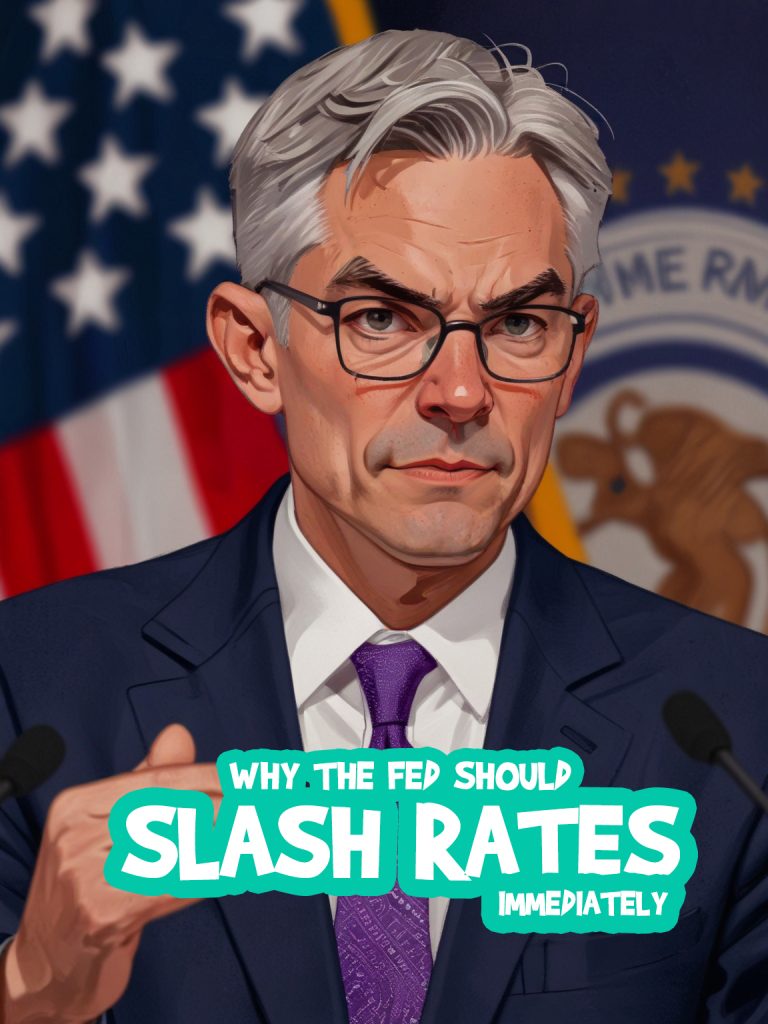
    Why the Fed Should Slash Rates Immediately

    The Federal Reserve is in a pickle. No, not the delicious, crunchy kind you crave at a deli. We’re talking a pickle of the economic variety, a situation so sour it could curdle your financial outlook. They raised interest rates to cool things down, but now they’re worried about over-refrigerating the economy and turning everything into a popsicle. Will they cut rates and risk a reheating of inflation? Or will they stay the course and risk a deep freeze? Buckle up, because this isn’t your grandma’s recipe for economic prosperity. We’re about to explore the Fed’s culinary conundrum, where the stakes are higher than a gourmet chef’s reputation – they hold the fate of the entire economic meal.

    TL;DR

    • The Fed raised interest rates to control inflation and cool the labor market.
    • Now they’re worried about slowing down the economy too much.
    • Data suggests a rate cut might be needed, but past mistakes make them cautious.
    • The Fed weighs the risks of inflation vs. recession.

    The Federal Reserve raised interest rates above 5% a year ago, with two main goals: taming inflation and cooling down the labor market.

    And guess what? They’ve done it. Inflation, by the Fed’s preferred gauge, has plummeted from 4.3% to an estimated 2.6%. That’s the steepest decline since 1984, nearly hitting the Fed’s 2% target. Meanwhile, unemployment has ticked up to 4.1% from 3.6%, an increase rarely seen outside of recessions.

    Yet, the Fed seems hesitant to celebrate. This week, Fed Chair Jerome Powell refused to commit to a timeline for cutting interest rates. New York Fed President John Williams claimed he needed more data, and Fed governor Chris Waller just hinted that a cut was “getting closer.” Markets expect a cut in September.

    The Fed’s hesitation is understandable. It prefers to signal its plans well in advance, especially after its previous inflation forecasts missed the mark. But if the Fed were genuinely data-dependent and confident in its forecast, it would be ready to cut interest rates now. At the very least, this option should be on the table at their upcoming meeting. While cutting rates has its risks, so does waiting. Here’s how the Fed should weigh those risks.

    Once Burned on Inflation, Twice Shy

    The Fed’s caution stems from its infamous 2021 prediction that inflation would be transitory. Back then, GDP was still below pre-pandemic levels, and unemployment was above its long-term “natural” level. According to models used by the Fed and private forecasters, this slack meant that even massive fiscal stimulus shouldn’t have pushed inflation up much, especially since public expectations of inflation were anchored at around 2%.

    However, forecasters missed how the pandemic had disrupted supply chains and work patterns, driving millions from the labor force. When stimulus-fueled demand hit these supply constraints, prices soared. Wages soon followed. As unemployment plunged below 4% and vacancies soared, the Fed feared a wage-price spiral and jacked up interest rates to 5.25% to 5.5%, where they stand today.

    Higher rates cooled demand, but inflation mainly fell due to recovering supply chains and receding fiscal stimulus. The shocks of recent years have left prices and wages higher, but their impact on ongoing inflation has proved mostly temporary.

    As a result, the interest rates that seemed appropriate a year ago now appear too high. Economists have devised several simple formulas, such as the “Taylor Rule,” to guide monetary policy, and they suggest rates ought to be lower.

    The Risks of Waiting

    Overall economic growth has decelerated gently to around 2% this year, which is still healthy. Unemployment at 4.1% suggests the labor market is balanced. The stock market is at a record high. On the surface, this doesn’t look like an economy in dire need of lower rates.

    But there are warning signs. Historically, when unemployment rises this much, it tends to keep climbing. The increase might reflect a rising supply of labor, likely from migrants lacking permanent legal status. Labor demand looks solid, with monthly job growth above 200,000 based on the Labor Department’s payroll survey. However, its separate household survey shows weak job growth, leaving the true picture unclear.

    High interest rates haven’t slowed growth much because many homeowners and businesses locked in low rates. But stress is building: credit card and auto loan delinquency rates are now above pre-pandemic levels.

    The Risks of Cutting

    The biggest risk of cutting rates now is that inflation might not be fully defeated. Yet, a reacceleration seems unlikely. With hindsight, the shocks of recent years triggered one-time price boosts. For instance, semiconductor shortages caused auto production to plunge in 2021, driving prices up. New-car inflation peaked in early 2022, followed by repairs and maintenance costs, and car insurance costs.

    These ripple effects have made inflation’s downward path bumpy and the underlying trend hard to discern. However, such shocks can’t sustain inflation without other conditions, particularly a tight labor market, which no longer exists.

    Vacancies have fallen from a record two per unemployed worker in early 2022 to a more normal 1.2 now. Unemployment is rising. Annual wage growth has dropped from 5.9% in March 2022 to 3.9% in June and is expected to fall further next year, according to a survey of companies’ pay plans by WTW, a consulting firm.

    While inflation might not reaccelerate, there’s a risk it will stall around 2.6% rather than falling to 2%. Indeed, the 12-month inflation rate might tick higher soon as low readings from a year ago drop out of the calculation.

    If that happens, the Fed can simply refrain from cutting rates again. That’s what being data-dependent means. Rates would still be at a restrictive level.

    No-Win Politics

    Fed officials insist the upcoming election doesn’t influence their decisions. Understandably, no matter what they do, one party will be upset. Republican candidate Donald Trump indicated in an interview with Bloomberg that the Fed shouldn’t cut at all between now and the election. Democrats will similarly lash out if the Fed doesn’t cut.

    Still, Goldman Sachs chief economist Jan Hatzius suggested that to the extent politics play a role, they argue for making the decision as far from the election as possible—i.e., now, not in September.

    Currently, the odds are the Fed won’t cut rates in two weeks but will signal readiness to do so in September. That should keep markets calm. But an actual cut and an expected cut aren’t the same thing. Economists surveyed by The Wall Street Journal put the probability of a recession in the coming year at 28%—not high, but higher than normal. If that risk materializes, even a few months’ delay will have mattered.

    Recent Events Supporting the Case for an Immediate Fed Rate Cut

    June 2024 Inflation Report:

      • Description: The Consumer Price Index (CPI) showed a year-over-year increase of just 2.6% in June 2024, continuing the trend of declining inflation rates.
      • Source: U.S. Bureau of Labor Statistics

      May 2024 Jobs Report:

        • Description: The U.S. economy added 209,000 jobs in May 2024, but the household survey indicated only modest gains, showing inconsistencies in labor market data.
        • Source: U.S. Bureau of Labor Statistics

        June 2024 Unemployment Rate:

          • Description: Unemployment rose to 4.1%, suggesting a cooling labor market. This increase in unemployment is rarely seen outside of recessions.
          • Source: U.S. Bureau of Labor Statistics

          Q2 2024 GDP Growth:

            • Description: The economy grew at an annual rate of 2% in the second quarter of 2024, a healthy pace but slower than previous quarters, indicating a gentle deceleration.
            • Source: U.S. Bureau of Economic Analysis

            Credit Card and Auto Loan Delinquency Rates:

              • Description: Delinquency rates for credit cards and auto loans have risen above pre-pandemic levels, indicating financial stress among consumers.
              • Source: Federal Reserve Bank of New York

              Federal Reserve’s June 2024 Meeting Minutes:

                • Description: The minutes highlighted the Fed’s concerns over waiting too long to adjust rates, as several members expressed the need to consider a rate cut sooner rather than later.
                • Source: Federal Reserve

                My take on the above points

                • Inflation Data: The June 2024 CPI report indicates that inflation is steadily declining, approaching the Fed’s target of 2%. This supports the argument that high-interest rates are no longer necessary to control inflation.
                • Jobs Report: The mixed signals from the May 2024 jobs report, with strong payroll numbers but weak household survey data, highlight uncertainties in the labor market. This inconsistency suggests that a more nuanced approach, such as a rate cut, might be warranted.
                • Unemployment Rate: The rise in unemployment to 4.1% is a significant indicator of a cooling labor market, typically not seen outside of recessionary periods. This uptick reinforces the need for a proactive rate cut to prevent further economic slowdown.
                • GDP Growth: The Q2 2024 GDP growth rate of 2% shows a healthy economy but also hints at a gentle deceleration. Maintaining economic momentum might require a rate cut to foster continued growth.
                • Delinquency Rates: Rising delinquency rates for credit cards and auto loans signal increasing financial stress among consumers. This trend underscores the potential risks of maintaining high-interest rates, which could exacerbate financial difficulties.
                • Fed Meeting Minutes: The June 2024 meeting minutes reveal internal Fed discussions about the potential benefits of cutting rates sooner rather than later. This internal debate aligns with the article’s argument for immediate action to avoid unnecessary economic risks.

                These recent events collectively support the argument that the Fed should consider cutting interest rates now rather than waiting until September. The data and discussions highlight the potential risks of inaction and the benefits of a proactive approach to monetary policy.

                My Perspective

                I think the Fed is caught between a rock and a hard place. On one hand, they’ve managed to bring inflation down and cool the labor market. On the other, they’re hesitant to declare victory and cut rates due to past forecasting blunders and the potential political fallout.

                From my point of view, the data suggests it’s time to cut rates. The risks of waiting—higher unemployment, slowing growth, and rising delinquencies—outweigh the potential for a slight uptick in inflation. Plus, if inflation does start to climb again, the Fed can always hit the brakes. It’s like trying to drive with one foot on the gas and the other on the brake—eventually, you have to pick a direction.

                The Fed should take a bold step and cut rates now. This move would signal confidence in their data and forecasts, provide a cushion against rising unemployment, and help sustain economic growth. After all, isn’t it better to be proactive rather than reactive?

                Will the Fed cut rates and risk a sprinkle of inflation, or remain firm and risk a full-blown economic soufflé collapsing? The answer, my friends, is as uncertain as the stock market itself. But one thing’s for sure: the Fed’s next move will be a recipe for conversation, debate, and maybe even a few financial heartburn medications. Want to stay ahead of the curve and avoid economic indigestion? Dive deeper into our “Finance” category for more insights (and maybe a few laughs) on the Fed’s culinary capers!

                Egyptian Man Sets Record for Fastest Tour of All Seven Wonders of the World

                0

                Do you dream about this: A world tour on fast forward, a travel montage where continents blur and landmarks whiz by like scenery on a bullet train. Now picture that itinerary fueled by nothing but buses, trains, and maybe a dash of sprinting. That’s the whirlwind adventure of Magdy Eissa, who wasn’t just checking off his bucket list, he was sprinting through it. This isn’t your typical “seven wonders in seven days” travel blog – this is a story about pushing limits, defying jet lag, and proving that sometimes, the best way to see the world is at breakneck speed. Buckle up, because we’re about to embark on a journey that’s both a race against time and a testament to the human spirit of wanderlust.

                TL;DR

                • Magdy Eissa smashed the world record for visiting the Seven Wonders of the World in just 6 days, 11 hours using public transport.
                • meticulous planning (almost 1.5 years!) and flexibility were key to his success.
                • The journey wasn’t without close calls and stressful moments, but Eissa persevered.
                • Eissa’s achievement highlights the growing trend of record-breaking travel adventures.

                Imagine racing against time, hopping from one iconic landmark to another across continents. That’s exactly what Magdy Eissa, a 45-year-old Egyptian, did. He broke the Guinness World Record (GWR) for the fastest visit to all seven wonders of the world. Completing this incredible feat in just 6 days, 11 hours, and 52 minutes, Eissa beat the previous record by a margin of 4.5 hours. Let’s dive into this whirlwind journey that took him from the Great Wall of China to Mexico’s Chichén Itzá.

                The Seven Wonders Sprint

                Magdy Eissa kicked off his ambitious adventure at the Great Wall of China. Not your typical morning jog, right? From there, he darted to India’s ivory-white marvel, the Taj Mahal. Next on the itinerary was the rose-red city of Petra in Jordan, followed by the majestic Colosseum in Rome. As if that wasn’t enough, he then flew to Brazil to be greeted by the outstretched arms of Christ the Redeemer. The ancient Inca city of Machu Picchu in Peru was next, and finally, he wrapped up his tour at the ancient Mayan metropolis of Chichén Itzá in Mexico. Just reading about it is exhausting!

                Credits: @magdy.eissa

                How Did He Do It?

                Now, you might wonder, how did Eissa manage this insane travel itinerary? He was only allowed to use public transport. So, think flights, buses, trains, subways, and a whole lot of walking. “Navigating a complex web of flights, trains, buses, subways, and walking between transportation hubs and the Wonders was a Herculean task,” Eissa told GWR. One tiny hiccup could have sent him back home, recordless and disappointed.

                Close Calls and Challenges

                Magdy’s journey wasn’t without its nail-biting moments. At one point, he overslept and missed the daily bus to Petra. Talk about a heart-stopper! He had to scramble to find another public bus, a tough task since Petra is primarily served by private tour operators and taxis. And almost missing his flight from Peru to Mexico? That was another close shave. Thankfully, some sympathetic airline staff reopened the check-in counter after he explained his record-breaking attempt. Imagine almost breaking a world record and then missing it by a whisker because of a snooze button!

                Reactions from the Public

                People were naturally amazed by Eissa’s accomplishment. Comments ranged from “So amazing” to “Jetlag is afraid of this guy.” Many congratulated him, while others, perhaps a bit enviously, asked for tips on planning such a trip.

                Planning the Ultimate Travel Marathon

                Planning this record-breaking trip took Eissa nearly a year and a half. That’s longer than some people plan their weddings! Each leg of his journey required meticulous research, from transit times to mapping out the best public transportation options. He had to account for immigration queues, layovers, and connections to the next destination. Some parts of the trip were straightforward, like the overnight transatlantic flight from Europe to Rio de Janeiro. However, reaching Machu Picchu was a logistical nightmare, involving over a day’s travel and several forms of public transport, not to mention a lot of walking.

                Credits: @magdy.eissa

                Eissa’s Highlights and Lows

                Despite the frantic pace, Eissa had some personal highlights. Seeing alpacas in Peru was a delight, and bumping into an old friend was a cherished moment. “Reconnecting with a familiar face amidst the whirlwind of the record attempt was special,” he said. On the flip side, the biggest issue came after completing his record attempt. It took him two whole days to get back home to Cairo due to flight cancellations.

                A Record-Breaking Achievement

                Magdy Eissa’s journey wasn’t just about breaking a record. It was a childhood dream come true. Visiting the New 7 Wonders of the World gave him an immense sense of personal accomplishment. “Beyond personal satisfaction, this challenge allowed me to momentarily let go of daily stresses and pressures,” he noted. The frenetic pace and problem-solving required throughout the attempt served as an effective outlet to vent and decompress.

                Travel Insights from a Record-Breaker

                Eissa’s whirlwind tour underscores the importance of travel. It opens minds, broadens perspectives, and allows people to discover new cultures, ideas, and ways of life. “Everyone should experience and invest in travel,” he advised. “It’s an enriching experience that everyone should have at some point in their lives.”

                Recent Events Related to Record-Breaking Travels

                • Adventurous Duo Sets Record for Fastest Trip to All U.S. National Parks
                • In 2023, an adventurous couple set the record for visiting all 63 U.S. National Parks in just under 45 days. Their journey highlights the growing trend of record-setting travel.
                • Source: National Geographic
                • Woman Breaks Record for Fastest Solo Trip Around the World
                • In 2023, Cassie De Pecol completed the fastest solo trip to every sovereign nation, clocking in at 18 months and 26 days, underscoring the allure of extreme travel challenges.
                • Source: CNN Travel
                • Guinness World Record for Most Countries Visited in 24 Hours
                • In 2023, Taylor Demonbreun set the record for the most countries visited in 24 hours, reaching 19 countries in one day. This event emphasizes the excitement around rapid travel records.
                • Source: Guinness World Records
                • Record for Fastest Cycling Around the World
                • In 2022, Mark Beaumont broke the record for the fastest circumnavigation by bicycle, completing his journey in 78 days. His achievement showcases the diversity of travel-related records.
                • Source: BBC News
                • Fastest Time to Visit All European Capitals
                • In 2022, Andrej Ciesielski visited all European capitals in just 14 days, illustrating the enduring appeal of speed travel challenges.
                • Source: The Guardian

                These recent events show a growing trend in setting travel-related records, similar to Magdy Eissa’s record-breaking journey to the Seven Wonders. Each of these achievements underscores the human spirit of adventure and the desire to push boundaries. From visiting national parks to cycling around the world, these feats reflect the determination and meticulous planning required to accomplish such extraordinary goals. They also highlight the increasing popularity of such challenges and the public’s fascination with travel records. Whether it’s exploring every corner of the globe or racing through multiple countries in a single day, these records continue to inspire and captivate audiences worldwide.

                My Take on This Adventure

                Let me give you my two cents on Eissa’s feat. First off, kudos to him for pulling off such an extraordinary journey! It’s a testament to meticulous planning, determination, and a dash of luck. But let’s be real, folks. Most of us struggle to plan a week-long vacation to one destination, let alone seven in under seven days.

                If you’re inspired by Eissa and thinking about embarking on your own grand tour, here are a few tips:

                1. Plan, Plan, Plan: Research is key. Know your transit times, book tickets in advance, and have contingency plans.
                2. Stay Flexible: Be prepared for hiccups. Missing a bus or a flight isn’t the end of the world.
                3. Enjoy the Journey: While the destination is important, don’t forget to soak in the experiences along the way.
                Credits: @magdy.eissa

                In the end, Magdy Eissa’s record-breaking journey is a reminder of what we can achieve with a dream, a plan, and a bit of perseverance. So, what are you waiting for? Pack your bags and start your own adventure. Just maybe set a few alarms if you’re prone to oversleeping!

                A whirlwind tour of the Seven Wonders and a masterclass in public transportation parkour. Eissa may have broken a record, but the real question is: did he break the cycle of “same place, same vacation, same you?”

                The world is a vast, magnificent museum, and sometimes, the most awe-inspiring exhibits aren’t even behind glass. Will you spend your travel time sprinting through life, or will you savor the journey and collect memories, not just souvenirs?

                If Eissa’s globetrotting adventure ignited your wanderlust, buckle up and explore more epic travel tales in the “Trends” category. Remember, the only limit is your imagination (and maybe a few well-placed alarms).

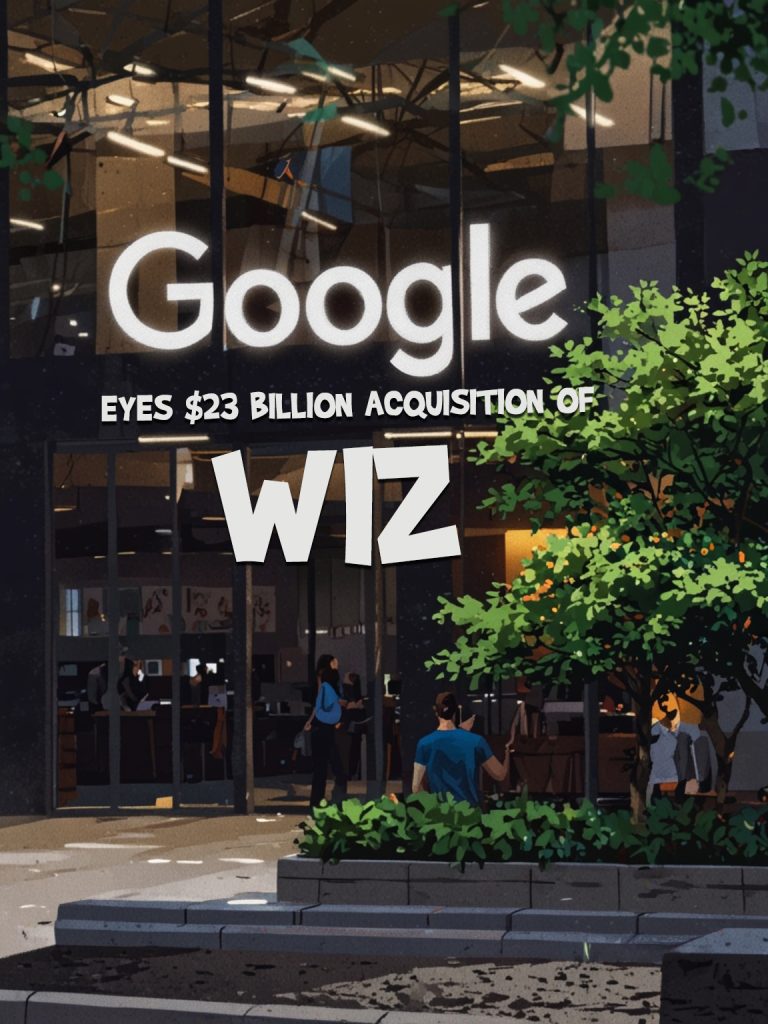
                Google Eyes $23 Billion Acquisition of Wiz

                Read up, tech enthusiasts, because we’re venturing into a landscape where giants clash, not by throwing pixels, but dollars. Google, the search behemoth with its own constellation of data centers, is making headlines for a potential acquisition so big, it might just cast a shadow over its own servers. We’re talking about Wiz, a cybersecurity startup that’s gone from a fledgling wizard to a formidable sorcerer in just a few years. This isn’t just about adding another shiny spell to Google’s arsenal, though. It’s a strategic chess move in the cloud computing game, where the stakes are as high as the storage capacity. But before we get lost in a maze of servers and regulatory hurdles, let’s delve into the deal and see if Google can cast a successful acquisition spell, or if this potential power play gets F5’d (refreshed) by the forces of antitrust scrutiny.

                TL;DR

                • Google in talks to acquire cybersecurity startup Wiz for a staggering $23 billion.
                • The move strengthens Google’s cloud security offerings in the battle against cloud giants like Amazon and Microsoft.
                • Wiz’s impressive growth and cloud-based solutions make it an attractive target.
                • Antitrust scrutiny and fierce competition pose challenges to the acquisition.
                • Google’s cloud business is on the rise, and Wiz could accelerate this growth.

                In the world of tech giants, Google is stirring up headlines once again. Reports suggest that Alphabet is in advanced negotiations to acquire cybersecurity startup Wiz for a staggering $23 billion, marking what could be its largest acquisition to date. If the deal materializes—a big “if” in today’s turbulent tech landscape—it would undoubtedly reshape the cybersecurity and cloud computing sectors.

                The talks, though promising, come at a precarious time for Google. The search behemoth, along with other tech giants, faces intense antitrust scrutiny, complicating its strategic moves. However, the potential acquisition of Wiz isn’t merely a bid to expand its portfolio; it’s a bold step into bolstering its foothold in cloud computing—a domain where Google has been playing catch-up against formidable rivals.

                Founded in 2020 by Chief Executive Assaf Rappaport and his team, Wiz has seen its valuation skyrocket, recently securing a $1 billion funding round that valued the company at $12 billion earlier this year. Such meteoric rise amidst a cautious investment climate underscores Wiz’s significance in the cybersecurity realm, particularly in cloud-based solutions—a segment poised for exponential growth.

                Google’s Billion Dollar Bet: Wiz Khalifa or Wizard of Cloud Security?

                Wiz boasts impressive financial metrics, achieving $100 million in annual recurring revenue within just 18 months of inception, a feat that skyrocketed to $350 million by 2023. Backed by Silicon Valley heavyweights like Sequoia Capital, Andreessen Horowitz, and Lightspeed Venture Partners, Wiz stands out as a rare success story amid a landscape of cautious IPOs and regulatory uncertainties.

                For Google, a successful acquisition of Wiz would not only mark a substantial financial investment but also a strategic pivot towards strengthening its cybersecurity infrastructure. This move aligns with Google’s broader ambitions in cloud computing, an arena where it aims to close the gap with industry leaders Amazon and Microsoft.

                The potential deal would dwarf Google’s previous landmark acquisitions, such as the $12.5 billion Motorola Mobility purchase in 2012 and more recent forays like the $2.1 billion Fitbit deal and $3.2 billion acquisition of Nest Labs. In cybersecurity alone, Google’s acquisition strategy has been deliberate, evidenced by its $5.4 billion purchase of Mandiant, underscoring its commitment to fortifying its cloud security offerings.

                However, amidst these ambitions looms significant regulatory challenges. Google faces ongoing antitrust lawsuits, including allegations of anti-competitive practices in its search and ad-tech businesses. These legal battles could potentially complicate and delay the Wiz acquisition, adding layers of uncertainty to an already complex negotiation process.

                Despite these hurdles, Google’s cloud business showed promising growth last year with a 26% revenue increase and reported its first operating profit. The acquisition of Wiz could further bolster this trajectory, positioning Google as a formidable player in cloud-based cybersecurity—a critical growth area amid evolving digital threats.

                Knight (Google) battling a dragon (cybersecurity threats) with a magic wand (Wiz) emerging from a cloud

                While Alphabet’s pursuit of Wiz represents a bold strategic move, the road ahead is fraught with regulatory hurdles and competitive pressures. Should the deal materialize, it would undoubtedly make waves in both the tech and cybersecurity sectors, setting a precedent for future consolidation amidst a landscape shaped by regulatory scrutiny and rapid technological advancement.

                Big moves come with big hurdles.

                Recent Events Related to Google’s Potential Acquisition of Wiz

                1. Antitrust Scrutiny on Tech Giants: Google faces ongoing antitrust lawsuits, including allegations of unfair practices in its search and ad-tech businesses, which could impact its acquisition strategy. Source: Wall Street Journal
                2. Rise in Cybersecurity Investments: The cybersecurity sector has seen increased investment activity, highlighted by Cisco’s $28 billion acquisition of Splunk, reflecting growing industry focus. Source: CNBC
                3. Google’s Cloud Computing Expansion: Google is aggressively expanding its cloud business, aiming to compete with Amazon and Microsoft, with recent acquisitions like Mandiant showcasing its strategic focus. Source: Bloomberg

                So, will Google’s pursuit of Wiz become a legendary “cloud cuckoo land” success story, or will it fizzle out like a buggy beta launch? Only time, and the watchful eyes of regulators, will tell. One thing’s for sure, this potential acquisition is sure to shake the foundations of the tech and cybersecurity worlds. But hey, that’s the nature of the game, isn’t it? Disruption is the currency of innovation.

                Intrigued by the ever-shifting landscape of tech? Dive deeper into our “Tech” category for more stories about the giants who reshape our digital realities, the upstarts who challenge the status quo, and the regulatory tremors that keep everyone on their toes. After all, in the world of tech, the only constant is change.

                Viral Video: Fitness Influencer Hayley Madigan Claps Back at Ring-Shaming Troll with Wit and Grace

                Not all diamonds are for cutting glass, some are for celebrating forever. But even the most brilliant sparklers can attract unwanted shadows. Enter Hayley Madigan, a fitness influencer who recently faced a social media troll determined to turn her engagement ring reveal into a critique session. Was it a case of bling envy, or a critique on outdated traditions? Perhaps both. Read this, because this story isn’t just about a ring (although it does involve a pretty sweet one). It’s about the price we put on love, the pressure of online perfection, and why sometimes, the best way to fight negativity is with a dose of real-world happiness. So, grab a metaphorical protein bar (or a glass of champagne, we’re not judging) and get ready to be inspired by Hayley’s story, which is sure to leave you reflecting on what truly makes your heart shine.

                TL;DR

                • Fitness influencer Hayley Madigan receives criticism on her engagement ring online.
                • The troll suggests the ring’s cost reflects poorly on her fiance.
                • Hayley claps back, defending the value of love over materialism.
                • Many people support Hayley’s message.
                • The article emphasizes focusing on what brings true happiness.

                Engagements are magical moments often shared on social media to spread joy. But, sometimes, these happy moments attract unwelcome attention. Trolls often emerge, turning what should be a celebration into a critique session. That’s precisely what happened to fitness influencer Hayley Madigan when she posted a picture of her engagement ring. A woman decided to shame her, even saying, “Your engagement ring must hurt a man financially.” Let’s dive into this drama and see how Madigan handled it like a champ.

                When Joy Turns Sour: The Troll’s Commentary

                Imagine sharing a momentous occasion like your engagement, only to have someone rain on your parade. Madigan, a popular fitness influencer, found herself in this situation. She shared a photo of her engagement ring, expecting love and congratulations. Instead, she got judgment. A woman commented, “One of the influencers who got half a million followers on social media just got engaged, and this is her ring. What do you think?”

                Not stopping there, the woman added, “An engagement ring must hurt a man financially to prove that he has long-term intentions.” Clearly, this troll has some interesting views on love and commitment. But Madigan was not about to let this negativity slide.

                Madigan’s Classy Clapback

                In a video response, Madigan didn’t hold back. “My ring isn’t good enough for you, but it is for me,” she said. Her tone was calm yet firm, showing that she was both angry and unbothered by the superficial comment. Madigan expressed her love for her fiancé and ended the video on a sweet note, kissing him and saying she’s marrying her best friend.

                Madigan also took to Instagram to further elaborate. “I wasn’t going to reply to this video BUT since this woman is out here trying to put a downer on people’s engagements, I feel she needs to be held accountable,” she wrote. She shared her perspective on the superficial nature of such comments, contrasting it with her own values of cherishing simple, meaningful moments.

                Life Lessons from a Fitness Influencer

                Madigan’s upbringing taught her to value experiences over material possessions. “My favourite moments in life are the simplest of things, like grabbing a coffee with friends or hiking up a mountain to see our world. I’d rather make lasting memories than waste $50k on a damn ring,” she stated. This sentiment resonated with many, proving that the value of an engagement ring isn’t about its price tag but the love and intention behind it.

                Support Pours In: Instagram Users React

                The video quickly went viral, and Instagram users flooded Madigan’s post with supportive comments. One person wrote, “Your ring is beautiful! The video pissed ME off too. The most important thing about the ring is that it is given with love and the best intentions. Imagine that some women don’t want diamonds at all. Some women want a different stone or no stone at all. Give me a good man and I’ll just take a band made out of soda cans.”

                Another user added, “I feel bad for this woman if she really believes an expensive ring equals a devoted, loving partner. Thank you for this response Hayley, nobody needs to hear this, especially young girls.” This comment highlights a critical point: the idea that a ring’s value determines the worth of a relationship is outdated and harmful.

                A third person shared a personal anecdote: “My husband gave me the most beautiful ring and it didn’t cost a lot, we put our savings into a down payment for our first home. Way better than spending that on an expensive ring.” This practical approach emphasizes that financial priorities should align with personal values and future goals.

                The Proposal: A Memorable Moment

                Madigan got engaged in March during a trip to Norway. Her now-fiancé proposed in a picturesque setting, adding a romantic backdrop to their love story. This detail adds depth to the narrative, reminding us that the setting and moment of a proposal are far more memorable than the cost of the ring involved.

                Why This Matters

                Let me give my two cents. This situation is a textbook example of why it’s crucial to focus on what truly matters in life. Transition words, like “however” and “but,” help us navigate through life’s complexities. In this case, the “however” is that despite the negativity, Madigan found overwhelming support.

                From a psychological perspective, Madigan’s response is empowering. It teaches us to stand up for ourselves and our choices. It also encourages us to reject societal pressures and embrace our personal values. So, if you ever find yourself in a similar situation, remember Madigan’s words: it’s not about the price tag; it’s about the love and commitment behind the ring.

                More Than Just a Ring

                In the end, Hayley’s story proves that true love, like a well-executed squat, requires strength, balance, and the ability to rise above negativity.

                So, the next time a troll tries to dim your sparkle, remember: it’s not the size of the rock, but the foundation of the relationship that matters most. Ready to see more social media wins (and maybe a few epic workout routines)? Dive deeper into the “Trends” category and discover how everyday heroes are taking back their online narratives, one witty clapback at a time.

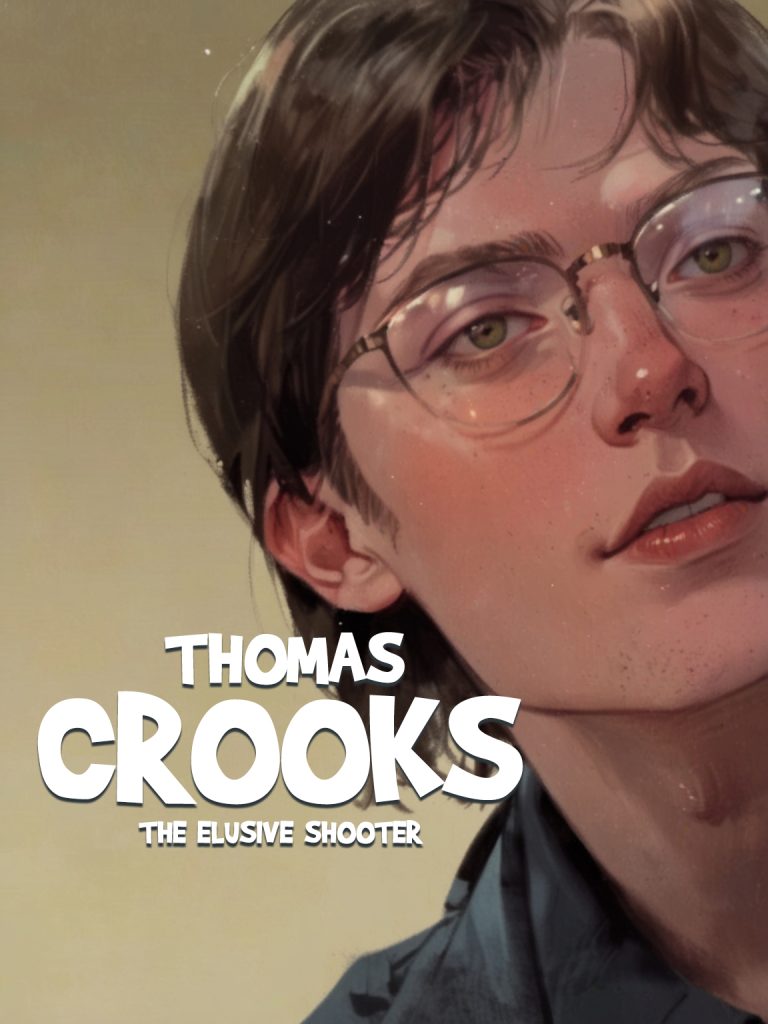
                Thomas M Crooks: The Elusive Shooter

                0

                In a world where reality often blurs with satire, the line between fact and fiction can be as thin as a bullet’s trajectory. On July 13, a day that will live in infamy, former President Donald Trump narrowly escaped a fatal encounter during a rally in Butler, Pennsylvania. The spectacle, captured in unforgettable images of blood streaking his face, has become a symbol of our tumultuous times. But as the dust settled, it wasn’t just the attempt on Trump’s life that grabbed headlines. The shooter, Thomas Matthew Crooks, a seemingly ordinary young man from Bethel Park, morphed into a digital phantom, sparking a frenzy of trolling accounts and wild speculation.

                Was Crooks a lone wolf driven by personal demons, or the puppet of a larger, shadowy plot? As the FBI digs deeper, social media erupts with theories, each more bizarre than the last. And here we stand, at the crossroads of truth and conspiracy, wondering if the man who pulled the trigger was a tragic figure or a symbol of something far more sinister. Welcome to a story where the bullet that grazed history leaves us questioning the very fabric of reality itself.

                TL;DR

                1. Former President Donald Trump survived a near-fatal incident at a rally in Butler, Pennsylvania.
                2. The shooter, Thomas Matthew Crooks, was a 20-year-old from Bethel Park, Pennsylvania.
                3. Crooks faced bullying and social isolation, raising questions about his motives.
                4. Social media erupted with fake profiles and trolling after the incident.
                5. The FBI continues to investigate Crooks’ background and motives, but many questions remain unanswered.
                6. Crooks’ limited digital footprint and mysterious actions leave the public speculating.
                7. The incident highlights broader issues of mental health and the impact of social isolation.

                In what could be described as a scene straight out of a thriller movie, former President Donald Trump found himself in a harrowing situation on July 13 during his rally in Butler, Pennsylvania. As the crowd roared, an unexpected and nearly fatal incident unfolded, leaving the Republican presidential nominee with a grazed ear and a face streaked with blood. The FBI later identified the shooter as Thomas Matthew Crooks, a 20-year-old whose motives remain shrouded in mystery.

                Unmasking the enigma: The shooter’s past and his puzzling motives.

                A Closer Look at Thomas Matthew Crooks

                Thomas Matthew Crooks, a name now infamous, has a life story that traces back to Pennsylvania. He graduated from Bethel Park High School in 2022 and spent most of his life in the Pittsburgh suburb of Bethel Park. Crooks, who is now deceased, has become a central figure in ongoing discussions and investigations. The FBI, working tirelessly, aims to uncover the reasons behind his drastic actions.

                But let’s not forget the digital chaos that followed. Social media platforms, especially Reddit, have been buzzing with trolling accounts all bearing the name “Thomas Crooks” or “Thomas M Crooks.” These accounts only add to the confusion, making it harder to pinpoint Crooks’ real digital footprint.

                Does Being an Outcast Make Someone a Killer?

                Let’s acknowledge that human behavior is incredibly complex. No single factor can explain why someone might commit a violent act. However, it’s important to understand the potential impact of chronic bullying and social isolation. Research has shown that prolonged bullying can lead to severe psychological distress, including depression, anxiety, and feelings of hopelessness. These mental health issues can sometimes drive individuals to extreme actions.

                Classmates described Crooks as an “outcast” who faced daily bullying. This paints a picture of a young man who likely felt alienated and marginalized. Such experiences can contribute to a person’s sense of worthlessness and anger, potentially leading them to seek out ways to assert control or gain recognition. However, it’s crucial to emphasize that most people who are bullied do not become violent. There are many factors at play, including personal resilience, support systems, and underlying mental health conditions.

                Crooks’ story is a reminder of how environmental and personal factors intersect. His background, combined with his experiences of bullying, might have created a volatile mix. But it’s not just about being bullied. Many people experience bullying and do not resort to violence. The key difference often lies in the presence of other mitigating factors, such as access to mental health support, strong family connections, and healthy coping mechanisms.

                Mental health plays a significant role in how individuals respond to stress and trauma. If Crooks was suffering from untreated mental health issues, his ability to cope with bullying would have been further compromised. This is why mental health support is crucial, especially for those who feel marginalized. Early intervention can help individuals develop healthier ways to handle stress and conflict.

                Crooks’ actions also highlight a broader societal issue. Bullying and social isolation are pervasive problems that need to be addressed comprehensively. Schools, communities, and policymakers must work together to create environments where all individuals feel valued and supported. Anti-bullying programs, mental health resources, and inclusive communities can make a significant difference in preventing future tragedies.

                It’s clear that we must look beyond the surface. It’s easy to label someone as a “monster” and move on, but that doesn’t solve the underlying issues. Crooks’ actions were horrific, but understanding the factors that led to them is essential for prevention. We must foster environments where people feel connected and supported, and where mental health resources are accessible to everyone.

                While being an outcast and facing daily bullying can contribute to a person’s distress, it does not automatically make someone a killer. Thomas Matthew Crooks’ case is a tragic example of how multiple factors can converge, leading to devastating outcomes. As a society, we need to address these factors holistically, ensuring that those who are struggling receive the support they need before it’s too late.

                Did being bullied push Thomas Crooks to the edge?

                The Mysterious Motive

                The lack of a clear motive only deepens the mystery. As the FBI continues its exhaustive investigation, the public is left speculating. Crooks’ background offers no obvious answers. He was registered as a Republican in Pennsylvania, but federal campaign finance reports show he donated $15 to a Democrat-aligned political action committee on the day of President Joe Biden’s inauguration.

                Classmates described Crooks as an “outcast” who faced daily bullying. He later attended the Community College of Allegheny County, where he earned an associate’s degree in engineering science with honors. He also worked at a nursing home as a dietary aide. Despite these details, his reasons for attempting to shoot Trump remain elusive.

                The Online Frenzy

                Reddit users quickly unearthed what they believed to be Crooks’ gaming profile on Steam. The account, “Thomas M Crooks,” ominously listed its origins as Pennsylvania and included a bio that read, “July 13th, watch this space. Lee Harvey Oswald is my hero fr.” This chilling reference to the man who assassinated President John F. Kennedy in 1963 only added to the speculation.

                However, the profile picture on the account wasn’t Crooks. Instead, it was the mugshot of Maxwell Yearick, a left-wing extremist who was arrested outside a Trump rally in 2016. This mix-up further muddled the waters, leading to more questions than answers.

                The Games People Play

                The gaming profile also revealed that the account owner spent a significant amount of time playing games like AimLabs, Mr. President!, and Chained Together. Notably, Mr. President! is a simulation game that parodies Donald Trump through the character “Ronald Rump.” The game tasks players with protecting the presidential candidate, adding a layer of dark irony to the situation.

                Redditors quickly noted the satire, with one user commenting, “Pretty sure it’s a fake account. Was apparently created the day of, so highly doubtful it’s legit.” This sentiment was echoed across the platform, as numerous trolling accounts popped up, each trying to muddy the investigative waters.

                The Elusive Shooter

                Despite the FBI’s best efforts, Crooks remains an enigma. His limited online footprint and the abundance of fake accounts make it difficult to uncover the truth. What we do know is that an AR-15 semi-automatic rifle, a common firearm in the US, was found near Crooks at the scene.

                His father, Matthew Crooks, also adds a layer of complexity to the story. USA Today reported that Matthew Crooks purchased an item from Botach, a retailer for law enforcement and military gear, in 2020. However, the specifics of the purchase remain unknown, leaving us to speculate on its relevance to the case.

                My Take on the Situation

                Alright, let’s break it down. In today’s world, where social media can turn any event into a circus, it’s no surprise that the aftermath of the attempted shooting became a digital frenzy. The online reaction, filled with fake profiles and misinformation, shows just how quickly facts can get distorted. This incident highlights the challenges law enforcement faces in the digital age, where every lead must be carefully vetted.

                The story of Thomas Crooks is tragic. A young man bullied in school, described as an outcast, somehow finds himself in a position to commit an act of violence. It speaks to the broader issues of mental health and the impact of social isolation. Crooks’ story is a reminder of the importance of addressing these issues before they escalate into something more dangerous.

                The Ongoing Investigation

                As the FBI continues its investigation, one thing is clear: the truth behind Thomas Matthew Crooks and his actions on July 13 remains out of reach. His political leanings, digital footprint, and personal history only add layers to an already complex case.

                The attempted assassination of Donald Trump on July 13 in Butler, Pennsylvania, remains a puzzle. The involvement of Thomas Matthew Crooks, with his enigmatic background and digital footprint, only deepens the mystery. As we wait for more answers, the story serves as a stark reminder of the unpredictable nature of life and the lengths to which some will go to make a statement, however misguided it may be.

                The Final Shot of Uncertainty

                As we unravel the tale of Thomas Matthew Crooks, we’re left with more questions than answers. Was he a product of his environment, a bullied outcast pushed to the brink, or the mastermind behind a cryptic and malevolent plot? The lines blur, leaving us in a murky reality where fact and fiction dance a perilous tango. Crooks’ story, filled with digital phantoms and sinister hints, challenges our perception of truth in an age dominated by misinformation and viral narratives.

                This saga isn’t just about a near-fatal brush with history. It’s a reflection of our collective psyche, a mirror held up to a society grappling with the consequences of alienation, mental health neglect, and the chaotic power of social media. As the FBI continues its search for answers, we are reminded of the delicate balance between order and chaos, sanity and madness.

                So, dear reader, as you ponder the enigma of Thomas Crooks, ask yourself: How many more are teetering on the edge, unseen and unheard? What stories lie hidden behind the screens we so casually scroll? Dive deeper into the shadows and join us in exploring more tales of intrigue and mystery. Check out other articles in True Crime and become part of the conversation that seeks to uncover the truths lurking beneath the surface.

                How Much Alcohol is Too Much? Drinking and Your Health

                We all raise a glass to celebrate life’s victories, big and small. But have you ever stopped to consider if the drink in your hand is truly toasting your well-being, or perhaps toasting… your insides? Buckle up, because we’re about to dive headfirst (or should we say “liver first”?) into the murky depths of alcohol consumption. It’s a topic with more layers than a perfectly aged onion, and just as likely to bring a tear to your eye.

                This isn’t your typical party foul lecture. We’ll explore the science behind the social swirl, the whispers of “one more won’t hurt” battling the roar of potential health risks. So, grab a (non-alcoholic, for now) beverage, and let’s get to the bottom of this… shall we say, “spirited” discussion?

                TL;DR

                • Less is more: One drink a day is generally considered safe, but exceeding that increases health risks.
                • Alcohol & Cancer: Studies link alcohol to various cancers, including breast, esophageal, and liver cancer.
                • Binge Beware: Binge drinking is particularly dangerous, leading to immediate and long-term health issues.
                • Women at Higher Risk: Women are more susceptible to alcohol’s harms due to biological differences.
                • Drink Smart: Alternate alcoholic drinks with water, pace yourself, and eat food while drinking.

                Alright, let’s talk about alcohol. We all know it’s a staple in many social settings. Whether it’s a toast with champagne at a celebration, a cocktail after a stressful day, or a cold beer during a game, drinking is part of life for many. But here’s the kicker: scientists keep warning us about the health risks of alcohol. So, how much is too much? Let’s dive into this murky glass of facts and myths, shall we?

                The Lowdown on Drinking Limits

                You’ve probably heard conflicting advice about drinking. One drink a day is fine, but two might be pushing it. And binge drinking? That’s a whole other ballgame. According to alcohol researchers, averaging no more than one drink a day is relatively low risk. Yes, you heard that right—one drink. Go beyond that, and you might be inviting trouble, particularly the kind that wears a cancer cell costume.

                Uncorking the truth: How much alcohol is too much for your health?

                The Grim Reaper’s Drinking Buddies: Cancer and More

                So, what’s the big deal about a little alcohol? Well, alcohol has a sinister side. Studies show it’s linked to various cancers, heart disease, and liver disease. Let’s break down the cancer risks, shall we?

                Head and Neck Cancer: Moderate drinkers have a 1.8 times higher risk of oral cavity and throat cancers, and a 1.4 times higher risk of larynx cancer compared to non-drinkers. Heavy drinkers? They face a fivefold risk for oral and voice-box cancers, and a 2.6 times higher risk for larynx cancer.

                Esophageal Cancer: Any level of drinking ups the risk of esophageal cancer. Light drinkers face a 1.3 times higher risk, while heavy drinkers face a fivefold risk.

                Breast Cancer: Light drinkers have a slightly increased risk, about 1.1 times higher. Moderate drinkers face a 1.23 times higher risk, and heavy drinkers a 1.6 times higher risk.

                Liver Cancer: Heavy drinking doubles the risk of liver cancer.

                Cut the Booze, Cut the Risk

                The only surefire way to avoid these health issues is to cut out alcohol entirely. Sounds easy, right? Well, not really. For many, giving up alcohol is like giving up their best friend. But consider this: a U.S. federal dietary committee is re-evaluating alcohol consumption guidelines. They suggest men should limit themselves to two drinks a day and women to one. And guess what? Some experts think even that might be too much.

                Canada’s Strict Take on Alcohol

                Canada has taken a tougher stance. Canadian researchers found that drinking two or fewer drinks per week is low risk. Three to six drinks? That’s moderate. Seven or more drinks? Now you’re in the danger zone, where risks rise exponentially. They define a standard drink as 12 ounces of beer, 5 ounces of wine, or 1.5 ounces of spirits. Sound familiar? It should—it’s the same as the U.S. definition.

                Cheers to good times, but beware the hangover of bad habits.

                Cancer Risks: Alcohol’s Dark Secret

                A study in the American Cancer Society’s journal highlighted modifiable cancer risks. Alcohol ranked third for women and fourth for men. The study linked alcohol to 24,400 cancer deaths and nearly 97,000 cases in the U.S. alone. Around 13% of colorectal cancer cases and 16% of female breast cancer cases were alcohol-related. So, if you’re serious about lowering your cancer risk, cutting back on alcohol is a big step.

                Alcohol’s Assault on Your Body

                When you drink, your body metabolizes alcohol into acetaldehyde, a toxic chemical that can damage DNA and proteins. Alcohol also produces reactive oxygen molecules that damage proteins, fats, and DNA. Plus, it can boost estrogen levels, which is linked to breast cancer.

                An April study from the CDC suggested that 16,800 deaths could be prevented yearly if heavy drinkers cut back to recommended levels. For men, cutting from two drinks to one a day could prevent around 650 deaths.

                The Binge Drinking Dilemma

                Binge drinking, defined as four to five drinks in one sitting, is particularly dangerous. Besides the immediate risks of accidents and injuries, heavy drinking can lead to Type 2 diabetes and other serious conditions. William Kerr, a senior scientist at the Public Health Institute’s Alcohol Research Group, warns that binge drinking triggers harmful biological processes.

                Interestingly, Kerr’s research also shows that hard liquor is more harmful than beer or wine, especially when consumed straight. So, think twice before you down that shot of whiskey.

                Women vs. Men: The Drinking Divide

                Ladies, listen up. Women are more vulnerable to alcohol’s harms than men. Why? Women have lower levels of the enzyme that breaks down alcohol, less water in their bodies, and they generally weigh less. This makes alcohol’s effects more potent and harmful.

                Dr. Tim Stockwell from the Canadian Institute for Substance Use Research notes that women face higher risks above six drinks per week, primarily due to breast cancer. Meanwhile, cancers linked to alcohol are more common in men.

                The case of the curious cocktail: Cracking the code on alcohol consumption and its impact on your health.

                Stay Smart: Drinking Tips

                If you’re heading to happy hour, here are some tips to stay healthier:

                • Alternate Drinks: Swap between alcoholic and non-alcoholic beverages. This slows your intake and keeps you fuller.
                • Pace Yourself: Don’t guzzle your drinks. Sip slowly to reduce the impact.
                • Eat Up: Never drink on an empty stomach. Food helps slow alcohol absorption.

                Recent Developments in Alcohol Consumption Guidelines and Health Impacts

                New Canadian Alcohol Guidance

                  • In January 2023, Canada introduced new guidelines stating that no amount of alcohol consumption is safe and recommending that people limit themselves to just two drinks per week. This significant shift aims to reduce the risk of various health issues associated with alcohol consumption, including cancer and heart disease. Read more on CBC.

                  US Dietary Guidelines Review

                    • The US Dietary Guidelines are undergoing a review that may result in stricter limits on alcohol and sugar intake. The new guidelines could reduce the recommended daily alcohol intake for men to one drink per day, aligning it with the existing recommendation for women. This change reflects growing evidence linking even moderate alcohol consumption to health risks. Learn more on The Washington Post.

                    American Cancer Society’s Stance on Alcohol and Cancer

                      • The American Cancer Society emphasizes the link between alcohol consumption and cancer risk. Their statement highlights that alcohol is a known carcinogen, contributing to cancers of the mouth, throat, esophagus, liver, breast, colon, and rectum. They recommend that people who drink alcohol should do so in moderation to reduce their cancer risk. Visit the American Cancer Society for more information.

                      These events underscore the evolving understanding of alcohol’s impact on health and the movement towards more conservative consumption guidelines to mitigate associated risks.

                      My Two Cents

                      Alright, here’s where I get a bit personal. I get it—alcohol is fun. It’s social, it’s relaxing, and it can even be tasty. But it’s also a sneaky little devil. It tempts you with good times and then stabs you in the back with health risks. Cutting back or quitting might seem impossible, but it’s worth considering. Maybe start with reducing your intake, trying alcohol-free alternatives, or even seeking support if you find it tough. Your future self might thank you.

                      The Bottom Line

                      How much drinking is bad for you? The answer is complicated, but the gist is simple: less is more. One drink a day is relatively safe, but more than that, and you’re playing with fire. Alcohol can be a silent killer, lurking behind your favorite cocktail or beer. Stay informed, drink smart, and take care of yourself. Cheers to a healthier you!

                      Now, before you clink your glass in disagreement (or maybe that’s the ice cubes?), remember, knowledge is always the best chaser. We can’t tell you to ditch the drinks entirely, but we can equip you with the facts to make informed choices. So, why not explore the “Health and Addiction” of this topic further? Dive deeper into this category and see if you can handle your information neat, on the rocks, or with a twist! After all, a healthy you is a happy you, and that’s definitely something worth celebrating (with or without a glass in hand).

                      The Real Lamine Yamal: Who Is He?

                      Imagine a world where teenage prodigies weren’t just promising, they were rewriting the very definition of potential. Enter Lamine Yamal, a name that’ll be tattooed on your memory by the time you finish this article (or plastered across every trophy cabinet in Europe).

                      This isn’t your average rags-to-riches story. Yamal’s journey is more like rags-to-riches-to-international-superstar-in-the-blink-of-an-eye. We’re talking about a player who skipped adolescence entirely, hurtling from academy prospect to national hero faster than you can say “wonderkid.”

                      Prepare to have your mind bent by the tale of a footballer who seems to defy the laws of time (and physics, if his footwork is anything to go by). Is he the next Messi? Maybe, maybe not. But one thing’s for sure: Lamine Yamal is a phenomenon unlike any other, and his story is just beginning.

                      TL;DR

                      • Lamine Yamal is a 17-year-old Spanish footballer with incredible talent.
                      • He started young, playing for local clubs and impressing scouts at a young age.
                      • Yamal rose through the ranks of Barcelona’s La Masia academy.
                      • He broke numerous records in his debut season with Barcelona’s senior team.
                      • Yamal became the youngest player to feature, score, and assist at Euro 2024.
                      • With his unique talent and dedication, Yamal has a bright future in football.

                      A Star is Born: Early Life and Footballing Beginnings

                      Lamine Yamal Nasraoui Ebana isn’t your typical 17-year-old. This Spanish footballer of Catalan descent, born in Esplugues de Llobregat near Barcelona, has already taken the world by storm with his dazzling footwork and incredible talent. His story begins with a unique blend of heritage – a waitress mother from Equatorial Guinea and a building painter father from Morocco. Despite his parents’ separation at a young age, both remained actively involved in his upbringing.

                      Yamal’s footballing journey started early, kicking off at the age of four in Granollers with the local club La Torreta. He juggled his time between his parents in Mataró and Granollers, showcasing his passion for the beautiful game from a young age. At six, his talent caught the attention of the mighty FC Barcelona scouts, and by 2014, he was officially signed by the club.

                      Fast-Track to Greatness: La Masia Prodigy

                      La Masia, Barcelona’s famed youth academy, became Yamal’s new home. Here, he quickly established himself as one of the academy’s brightest prospects. His exceptional skills saw him progress rapidly, even playing above his age group with the Juvenil A team in the 2022-23 season. By early September 2022, whispers of his talent reached the first team, and he was called up to train with the likes of Xavi, the legendary Barcelona midfielder turned coach.

                      Breaking Records and Hearts: A Dream Debut Season

                      Yamal’s official debut for the senior team came in April 2023, making him not only the fifth youngest player in La Liga history at just 15 years old, but also the youngest ever to appear for Barcelona’s first team, surpassing a century-old record. He went on to win his first title with the club that same season, the 2022-23 La Liga championship, although he missed the celebrations due to international duty with Spain.

                      The 2023-24 season was a true breakout year for Yamal. He earned his first start for the club in August, receiving a standing ovation from the opposing fans despite being on the away team – a testament to the sheer respect his talent commanded, even from rivals. His performances continued to impress, with a string of Man of the Match awards and a goal against Granada. He even signed a contract extension with Barcelona, solidifying his future with the club until 2026.

                      Yamal’s Record-Breaking Rampage

                      Yamal’s record-breaking season didn’t stop there. He became the youngest player to score for Barcelona, the youngest player to feature in El Clásico, and the youngest player to score a brace in La Liga history – all before turning 17! His talent transcended age, and he was awarded the inaugural Golden Boy The Youngest trophy, a recognition of his exceptional potential that set him apart from even the most talented youngsters in Europe.

                      International Glory: Spain’s Youngest Hero

                      Yamal’s brilliance wasn’t limited to club football. He represented Catalonia at the youth level, even captaining his teams throughout his younger years. On the international stage with Spain, he made his senior debut at the young age of 16, becoming the youngest player and goalscorer for the national team. He continued to break records at the 2023 European U17 Championship, scoring four goals and helping Spain reach the semifinals.

                      Euro 2024: A Tournament Etched in History

                      Yamal’s defining moment came at Euro 2024. At just 16, he was selected for the Spanish national team and went on to become the youngest player to feature, score, and assist in the tournament’s history. He wasn’t just a participant; he was a catalyst for Spain’s success. His vision and skill on the right flank created numerous opportunities for his teammates, and his composure under pressure saw him deliver inch-perfect crosses and score crucial goals. He played a pivotal role in Spain’s journey to the championship, providing crucial assists and scoring a magnificent goal against France in the semi-finals that left commentators speechless. His performance earned him the Young Player of the Tournament award, a fitting tribute to his outstanding contribution on the biggest stage in European football.

                      The Future is Bright: A Superstar in the Making

                      His dedication, talent, and ability to perform under pressure have propelled him to superstardom. With comparisons to Lionel Messi already swirling, the weight of expectation is immense. However, Yamal seems to handle it all in stride, balancing his burgeoning football career with the demands of being a teenager. His recent public appearance with his girlfriend, a social media influencer, offered a glimpse into his personal life and suggests a grounded young man navigating the complexities of fame.

                      A Point of View: Beyond the Records

                      While Yamal’s record-breaking achievements are undeniable, it’s important to remember he’s still a young player. His development will be crucial in the coming years. Can he maintain his current level of performance? Will he develop a well-rounded skillset to complement his natural talent? These are questions only time can answer.

                      One thing’s for sure: Lamine Yamal is a breath of fresh air in the world of football. His electrifying style of play and infectious enthusiasm for the game have captivated fans worldwide. He represents a new generation of footballers – technically gifted, tactically astute, and comfortable expressing themselves on the pitch.

                      Lamine Yamal’s background, career highlights, and achievements

                      AttributeDetails
                      Full NameLamine Yamal Nasraoui Ebana
                      Date of Birth13 July 2007
                      Place of BirthEsplugues de Llobregat, near Barcelona, Spain
                      NationalitySpanish-Catalan descent
                      ParentsMother from Equatorial Guinea, Father from Morocco
                      Football ClubFC Barcelona
                      Position(Position not specified in the provided information)
                      Youth AcademyLa Masia, FC Barcelona’s youth academy
                      Debut Season2022-23 season
                      AchievementsYoungest player to debut for FC Barcelona
                      Youngest goal-scorer for FC Barcelona
                      Winner of the 2022-23 La Liga championship
                      International CareerRepresented Spain at various youth levels
                      Made senior debut for Spain at 16
                      Euro 2024Youngest player to feature, score, and assist in the tournament’s history
                      AwardsInaugural Golden Boy The Youngest trophy
                      Social Media PresenceActive presence with notable public appearances

                      Looking Ahead: What’s Next for Lamine Yamal?

                      With the 2026 World Cup looming on the horizon, Yamal will undoubtedly be a key figure for Spain. His development at Barcelona will be closely watched, and it will be interesting to see how he adapts to the ever-increasing demands of playing for one of the biggest clubs in the world.

                      Recent Accolades and Accomplishments: Yamal Continues to Shine

                      Lamine Yamal’s meteoric rise shows no signs of slowing down. Here are some recent events that highlight his continued success:

                      • Youngest Player to Win a Major Tournament Final: Following Spain’s victory at Euro 2024, Yamal became the youngest player ever to win a major international tournament final at the age of 17, surpassing the previous record held by Renato Sanches who won Euro 2016 with Portugal at 18 (https://en.wikipedia.org/wiki/Renato_Sanches).
                      • Social Media Buzz: Yamal’s public appearance with his girlfriend garnered significant attention online. This event, while seemingly personal, provides a glimpse into his life beyond football and highlights his growing public profile (https://www.thesun.co.uk/sport/22214783/meet-lamine-yamal-barcelona-wonderkid/).
                      • Record-Breaking Season at Barcelona: The article mentions Yamal’s achievements during the 2023-24 season, but it’s worth noting that the season is still ongoing as of July 17th, 2024. It will be interesting to see if he can add to his already impressive tally of goals and assists before the season concludes. You can find updates on his performance by following reputable sports news websites like https://www.bbc.com/sport or https://www.espn.com/.

                      These recent events solidify Yamal’s position as one of the most exciting young talents in world football. His on-field achievements coupled with his growing public profile make him a player to watch for in the years to come.

                      The Final Whistle: A Star is Born

                      Lamine Yamal’s story is more than just a meteoric rise – it’s a supernova waiting to explode. He’s left pundits speechless, defenses in shambles, and fans wondering if they’re witnessing a glitch in the football matrix. Is he the real deal, or just a flash in the pan? Only time will tell. But one thing’s for certain: taking your eyes off Lamine Yamal is like taking your eyes off the future of football. So, keep your social media feeds peeled, your match tickets handy, and prepare to be amazed. In the meantime, delve deeper into our archive trending people – you never know who might be the next Yamal waiting to be discovered!

                      Did the Universe Have a Beginning?

                      0

                      Hello, space cadets and theologians alike, because we’re about to embark on a mind-bending journey that’ll have you questioning the very fabric of reality (or maybe just your next wardrobe choice – depends on how deep you fall in the rabbit hole). Today, we’re tackling a cosmic whodunit: did the universe have a dramatic “big bang” entrance, or has it been waltzing through an endless cosmic disco? We’ll dissect the Big Bang theory, explore the mind-warping notion of infinity, and delve into the fascinating (and sometimes frustrating) interplay of science and faith. So, whether you’re a firm believer in the almighty algorithm or a card-carrying member of the Church of the Eternal Everything, prepare to have your preconceptions gently nudged (or maybe thrown into a cosmic centrifuge).

                      TL;DR

                      • Big Bang theory proposes a finite beginning for the universe.
                      • Eternal universe concept suggests time stretches infinitely into the past (or cycles).
                      • Our experience of time is unique compared to spatial dimensions.
                      • The concept of infinity presents challenges.
                      • Beliefs can shape our views on the universe’s origin.

                      Alright, let’s tackle this cosmic conundrum. The statement, “The universe had a beginning because if not, then we would never have gotten here,” sounds intriguing, right? But does it hold water? Let’s break it down and see if this argument against an eternal universe makes sense.

                      Time: Just Another Dimension?

                      Initially, you might think time is simply another dimension, akin to our familiar three dimensions of space. But here’s the twist: we experience time differently. We’re all stuck moving in one direction through time, which isn’t the case with spatial dimensions. So, does this mean time must have a beginning? Let’s explore.

                      Assuming the Big Bang theory is correct, the universe (including time) began with this colossal event. Time, as we know it, started ticking then. From a creationist standpoint, if God created time and space, they too had a beginning. But what about other perspectives?

                      Is time running out for the eternal universe theory?

                      Infinite Universes and Circular Time

                      Some beliefs suggest the universe extends infinitely into the past or operates in a cyclical manner, repeating over and over. This viewpoint challenges the idea that time must have a distinct starting point. It seems our views on the universe’s origin are deeply tied to our beliefs or religion. This intertwining of cosmology and theology is fascinating.

                      The Infinite Argument: Why It’s Puzzling

                      This argument often hinges on two key points: the impossibility of an actual infinite and the impossibility of reaching infinity through sequential steps.

                      Actual Infinite: A Recipe for Absurdities

                      An actual infinite is complete and unending. Imagine Hilbert’s Grand Hotel, a thought experiment highlighting the absurdities of actual infinities. Picture a hotel with an infinite number of rooms, all occupied. When a new guest arrives, the hotel owner can always find a room by shifting each guest one room up, freeing room one. This paradox shows the strange nature of actual infinities.

                      Sequential Steps to Infinity: The Journey Problem

                      Even if we accept an actual infinite, reaching it through sequential steps is problematic. How does one move from an infinite past to the present? Consider an immortal man writing his autobiography, one day at a time, each year. Completing it an infinite number of years in the future is perplexing—why not 100 years earlier or later? This illustrates the absurdity of counting down from infinity.

                      Applying These Ideas to the Universe

                      Think of the universe as counting down from infinity, one moment at a time, until reaching the present. Why stop at this moment and not 100 years ago or in the future? It’s another oddity of infinity.

                      Peering back in time: Can we find clues to the universe’s origin?

                      My Take on This Cosmic Puzzle

                      Personally, I find these arguments both fascinating and mind-boggling. On one hand, the idea that the universe had a beginning aligns with the Big Bang theory and many religious views. On the other hand, the concept of an infinite universe or cyclical time is equally intriguing. Both perspectives challenge our understanding of time and existence.

                      For a more comprehensive introduction to these arguments, check out “The Existence of God” by Yujin Nagasawa. He covers major objections raised by philosophers like J.L. Mackie and Graham Oppy. William Lane Craig’s “The Kalam Cosmological Argument” is another essential read. If you really want to stretch your brain, dive into Alexander Pruss’ “Infinity, Causation, and Paradox,” which discusses causal finitism and the Grim Reaper Paradox. Andrew Loke’s free book on the Kalam Cosmological Argument also offers insights without relying on the dynamic theory of time.

                      The mind-boggling concept of infinity: Does it apply to the universe?

                      Recent Events and Perspectives

                      Here are some recent events and perspectives related to the debate on whether the universe had a beginning, supported by credible sources:

                      1. Discoveries in Cosmology: Recent advancements in cosmology, such as observations by the Hubble Space Telescope and the Planck satellite, continue to provide insights into the early universe and its origins. These observations support theories like the Big Bang, suggesting a finite beginning to our universe. (Source: NASA – Hubble Space Telescope and Planck Mission)
                      2. Philosophical Debates: Ongoing discussions among philosophers and theologians about the nature of time and infinity contribute to the understanding of whether time had a beginning or if it extends infinitely into the past. Key works by philosophers like J.L. Mackie and Graham Oppy critique arguments for and against an eternal universe. (Source: Stanford Encyclopedia of Philosophy – J.L. Mackie and Graham Oppy)
                      3. Scientific Literature: Recent peer-reviewed studies and publications in scientific journals delve into theories of time and cosmology, exploring concepts of an infinite universe or cyclical time models. These studies provide empirical and theoretical frameworks that challenge traditional notions of a linear, finite beginning to the universe. (Source: Nature, Science, Astrophysical Journal)
                      4. Public Discourse and Education: Increased public interest in cosmology, fueled by popular science books and documentaries, has sparked widespread debate and interest in understanding the origins of the universe. This engagement highlights diverse perspectives and interpretations of scientific and religious viewpoints on cosmological origins. (Source: National Geographic, BBC Science Focus)

                      Final Thoughts: Belief Shapes Perception

                      Ultimately, our views on whether the universe had a beginning are influenced by our beliefs. Whether you lean towards the scientific, the theological, or the philosophical, this cosmic debate is a profound one. And remember, as we ponder these grand questions, it’s essential to keep an open mind and enjoy the journey of discovery.

                      Now, let’s wrap up with a friendly note: these musings are my own, and while they offer a window into different perspectives, they aren’t definitive answers. Keep questioning, exploring, and seeking your own understanding of the universe. After all, isn’t that what makes the quest for knowledge so exciting?

                      In the end, the question of the universe’s origin might be the ultimate cliffhanger – a story with no ending, or perhaps, one that just hasn’t reached its next chapter yet. The good news? This is just the beginning of your exploration in our “Philosophy” category. We’ve got a whole universe of mind-blowing mysteries waiting to be unraveled. So, grab your metaphorical spacesuit, and join us on a quest to understand the grand narrative of existence. Who knows, maybe you’ll even stumble upon the missing piece that unlocks the greatest plot twist of all time.

                      The Unlikely Assassin: Inside the Failed Plot Against Donald Trump

                      0

                      Few threads in the fabric of contemporary American history weave as fascinatingly as the unanticipated player’s attempt to assassinate a former president. Imagine a stage where political zeal, ambition, and seclusion come together; each performer playing a part in a thought-provoking and eerie drama. An ordinary young man from suburban Pennsylvania named Thomas Crooks ended up at the center of this sinister story. Was he a misread genius, a misplaced recluse, or just a piece in a bigger, darker scheme of things?

                      We will examine the odd combination of circumstances that resulted in this near-tragedy as we unravel this story. Through his seemingly normal upbringing and infatuation with notoriety, Crooks’s story compels us to face hard realities about mental health, security, and the combustible intersection of politics and personal grudges. Is this a story that should serve as a warning about the perils that lurk in our society, or is it just an oddity in a world that seems to be in order? You might be surprised by the answers.

                      So grab a seat, sweet reader, and join us as we unravel the layers of this sinister story and discover the unspoken intentions and overlooked details that combine to make this a tragedy as well as a lesson. Who would have thought that the seeds of such a momentous event could so quietly sprout in the sleepy suburbs of Pennsylvania?

                      TL;DR

                      • Thomas Crooks attempted to assassinate Donald Trump at a rally.
                      • Crooks was an ordinary young man with no criminal record or military training.
                      • He was isolated, bullied, and interested in political events.
                      • Security failures allowed Crooks to get close enough to take a shot.
                      • The incident highlights issues in political security, mental health awareness, and societal impacts of political rhetoric.

                      Alright, folks, let’s dive into one of the most bizarre and chilling events of recent times—the attempted assassination of former President Donald Trump by Thomas Crooks. Before we start, a little housekeeping: remember, I’m not diagnosing anyone here, just giving my two cents on the situation. If you enjoy this analysis, don’t forget to like, subscribe, and consider supporting the channel. Now, let’s break down this case, starting with some background info, moving to the crime timeline, and then my analysis.

                      The Curious Case of Thomas Crooks

                      Thomas Matthew Crooks, born on September 20, 2003, hailed from Bethel Park, Pennsylvania. This suburban community, just south of Pittsburgh, is known for its upper-middle-class status, with a median household income of $112,000—quite the jump from Pittsburgh’s $60,000 in 2022.

                      Thomas lived with his parents, Matthew and Mary, both licensed professional counselors. The family resided in a cozy three-bedroom house on Milford Drive. Thomas graduated from Bethel Park High School and attended the Community College of Allegheny County, where he earned an associate’s degree in Engineering Science in May 2024. He worked as a dietary aide at a local skilled nursing and rehabilitation facility, probably making around $16 an hour. So far, he sounds like your average young adult, right? Well, things took a dark turn.

                      Timeline of the Crime

                      On July 13, 2024, Donald Trump, the presumptive Republican nominee for the 2024 presidential election, was at a rally at the Butler Farm Show grounds in Butler, Pennsylvania. Thomas Crooks made his way to this venue but stayed outside the secure area, bypassing security checks. Carrying an AR-15-style rifle, Thomas climbed onto the roof of AGR International, a business located about 450 feet from where Trump was speaking.

                      At 6:03 p.m., Trump began his speech. Just minutes later, witnesses saw Thomas aiming his rifle. A police officer, investigating the scene, was met with Thomas pointing the weapon at him, causing the officer to retreat. At 6:11 p.m., Thomas opened fire, aiming at Trump. Eight shots rang out, tragically killing a 50-year-old attendee and injuring two others. Trump himself was grazed on his right ear, prompting him to drop to the floor. Secret Service agents quickly surrounded him, and in true Trump fashion, he rose, fist-pumping to the crowd and mouthing “Fight, fight, fight.”

                      Despite the chaos, Trump was swiftly taken off the stage, and Thomas was neutralized by a Secret Service sniper. A rudimentary explosive device was later found in Thomas’s vehicle. The investigation into this incident continues, but let’s delve into some intriguing aspects of Thomas’s background.

                      A Deep Dive into Thomas Crooks

                      Thomas Crooks was an enigma. He loved video games, computer programming, and chess, and often wore camouflage hunting gear to school. He was a member of a shooting club but had no social media presence hinting at violence. Thomas had no criminal record, no documented history of mental illness, and no military service. Described as a good student and respectful, he was quiet and somewhat of an outcast, often eating lunch alone.

                      Interestingly, Thomas was registered as a Republican but had once donated $15 to a liberal voter turnout group. His interest in the assassination of John F. Kennedy, studied in his American history class, might have sparked his dark fascination.

                      My Analysis

                      So, what’s my take on this whole situation? Let’s break it down.

                      Item 1: The Enigma of Thomas Crooks

                      Thomas wasn’t your typical criminal mastermind. He wasn’t a highly trained operative with elite combat skills. Think more Mr. Bean than Mr. Bond. The rifle he used was nothing special—an AR-15 style, commonly available. His background as a dietary aide with no combat experience makes it even more baffling how he got so close to a presidential candidate. The Secret Service definitely has some explaining to do here. Was it a case of gross incompetence, or was there something more sinister at play? Theories abound, but one thing’s clear: Thomas just drove to the rally, climbed a roof, and started shooting—a chillingly simple plan that should never have succeeded.

                      Item 2: The Political Angle

                      Thomas’s political leanings were murky at best. Registered as a Republican, he also supported a liberal organization. It’s like he was politically ambidextrous. His final school project on JFK’s assassination might have planted the seed of infamy in his mind. Was he driven by a desire to be remembered, to stand out from the crowd? Perhaps the media frenzy around Trump provided the perfect storm for Thomas’s delusions of grandeur. He wasn’t promoting an ideology; he was promoting himself. It’s a grim reminder of how personal vendettas can intertwine with political narratives.

                      Item 3: The Perfect Storm

                      Thomas was isolated, intelligent, and socially awkward. He didn’t understand political nuances but craved attention. Killing a controversial figure like Trump would guarantee him a spot in the history books, albeit as a villain. The class project on JFK’s assassination might have highlighted the notoriety an assassin can achieve. Thomas’s attack wasn’t about politics; it was about ego and a twisted desire for fame. The media coverage of Trump’s campaign likely fed into his delusions, making him believe that his actions would have a significant impact.

                      Item 4: Lessons Learned

                      This case teaches us a few crucial lessons. Firstly, political rhetoric can have dangerous consequences. Vilifying opponents and spreading fear can push unstable individuals over the edge. We need to tone down the vitriol and focus on constructive discourse. Secondly, the Secret Service needs to tighten security protocols. Thomas’s attack was a wake-up call—a glaring example of how easily someone can slip through the cracks. Finally, we must recognize the role of mental health in preventing such tragedies. Thomas’s behavior suggests underlying issues that went unnoticed. Addressing mental health concerns early on could prevent future incidents.

                      Recent Events Related to the Attempted Assassination of Donald Trump

                      Increased Political Violence in the U.S.

                      Security Breaches at Political Rallies

                      Mental Health and Violence

                      The Role of Social Media in Radicalization

                      Secret Service Failures and Reforms

                      This section provides an overview of recent events that are relevant to the attempted assassination of Donald Trump by Thomas Crooks. The rise in political violence, security breaches at political rallies, the connection between mental health and violence, the role of social media in radicalization, and failures within the Secret Service are all critical factors that intersect with this incident. These events highlight broader societal issues and underscore the importance of addressing security, mental health, and online radicalization to prevent future tragedies.

                      My Point of View

                      From my perspective, Thomas Crooks represents a dangerous blend of intelligence, isolation, and delusion. He wasn’t a political activist; he was a lost soul searching for significance. His attack on Trump was a misguided attempt to make his mark on the world. It’s a sobering reminder of how fragile our security systems can be and how political fervor can fuel dangerous actions.

                      In conclusion, the Thomas Crooks case is a stark example of how personal and political motivations can intertwine in deadly ways. As we move forward, let’s strive for a more balanced, less incendiary political climate and ensure our security measures are robust enough to prevent such tragedies. And remember, folks, violence is never the answer.

                      That’s my update on the attempted assassination of Donald Trump. Feel free to share your thoughts in the comments—let’s keep the conversation going. As always, I hope you found this analysis informative. Thanks for watching, and stay safe out there.

                      A Closing Note on Shadows and Reflections

                      As we close the chapter on this unnerving saga, we find ourselves reflecting on more than just the chilling facts. Thomas Crooks’s attempt on Donald Trump’s life is a mirror held up to society, revealing our fears, flaws, and perhaps our follies. It’s a stark reminder that beneath the surface of normalcy, shadows lurk—shadows of unaddressed mental health issues, unchecked political vitriol, and gaps in the very systems designed to protect us.

                      But what do we take away from this tale? Is it a story of a lost soul seeking notoriety, or a cautionary tale about the vulnerabilities we all share? Maybe it’s both. As we ponder the what-ifs and could-have-beens, we are left with a sense of urgency—a call to action. We must look deeper into the structures that shape our society, question the narratives that fuel our actions, and seek to understand the hidden motives that drive us.

                      If this account has sparked your curiosity, I invite you to dive deeper. Explore more stories in our “Politics” category. Each tale offers a piece of the puzzle, shedding light on the intricate dance of power, ambition, and human frailty. Let’s not just be passive observers of history; let’s engage, question, and perhaps, find a path to a more secure and understanding world. Check out our other articles and join the conversation. The shadows are there, but so are the answers—waiting to be uncovered.

                      Elon Musk Says Goodbye to California: Moving X Corp and SpaceX to Texas

                      0

                      We’re blasting off on a journey that’s both out-of-this-world and down-to-earth. We’re headed for a land of stars and stripes, where rockets launch and political firecrackers go off. Our intrepid billionaire captain has decided California’s no longer the final frontier, and Texas is beckoning with its wide-open spaces and, shall we say, less restrictive regulations.

                      This isn’t just about a company moving its HQ, folks. This is a social commentary disguised as a business headline. We’ll unpack the hidden messages, the shifting political winds, and the impact on the tech talent pool, all while pondering if it’s a stroke of genius or a billionaire’s tantrum. So, grab your spacesuit (or your cowboy hat, depending on your preferred metaphor) and get ready for a wild ride through the saga of Elon Musk’s Texas two-step.

                      TL;DR

                      • Elon Musk is relocating SpaceX and X headquarters from California to Texas.
                      • This decision stems from disagreements with California’s policies and a preference for Texas’s business climate.
                      • The move has significant implications for employees, talent pool access, and the future of Silicon Valley.
                      • Environmental concerns surround SpaceX’s expansion in Texas.

                      Elon Musk has had enough of California. On Tuesday, the billionaire entrepreneur announced he is relocating the headquarters of two of his companies, X Corp. and SpaceX, to Texas. This decision came just days after Musk endorsed Donald Trump for president, highlighting Musk’s growing alignment with conservative views on social issues.

                      So, why the sudden move? Let’s unpack this!

                      The Straw that Broke the Billionaire’s Back

                      In dramatic fashion, Musk declared, “This is the final straw,” on his social-media platform, X. He pointed to a new law signed by California Governor Gavin Newsom, which prevents schools from informing families if their children identify as gay or transgender. According to Musk, this law, along with many others, attacks both families and companies. Talk about a dramatic exit!

                      The California law prohibits school districts from requiring employees to disclose a student’s sexual orientation or gender identity without the student’s consent. Supporters say it protects children from being forcibly outed, creating a safe school environment. Critics argue it infringes on parents’ rights to be informed about their children’s lives. Musk clearly falls into the latter camp.

                      “I warned Governor Newsom about a year ago that laws like this would drive families and companies away from California,” Musk said. Well, it seems he’s making good on that warning.

                      A War of Words

                      Governor Newsom didn’t take Musk’s announcement lying down. He fired back with a reference to a post by Trump two years ago, claiming Musk would have begged for government subsidies if Trump had asked him to. “You bent the knee,” Newsom retorted. Ouch.

                      The governor’s press office also joined the fray, pointing out that Tesla, Musk’s electric-vehicle company, has expanded in California despite previous threats to move. “The last time Elon Musk ‘moved’ an HQ, Tesla ended up expanding in California—even relocating their Global Engineering & AI headquarters to California because of our diverse, world-leading talent,” the press office posted on X.

                      Musk’s Move to Texas: What’s the Big Deal?

                      Musk’s decision to move SpaceX’s headquarters from Hawthorne, California, to Texas isn’t entirely surprising. SpaceX has been expanding its Starbase manufacturing and launch site near Brownsville, Texas, for some time. X, the social-media platform formerly known as Twitter, is also relocating from San Francisco to Austin, Texas.

                      Musk cited safety concerns as a major reason for moving X. “Have had enough of dodging gangs of violent drug addicts just to get in and out of the building,” he quipped about X’s current location in San Francisco.

                      Texas Governor Greg Abbott welcomed Musk with open arms, saying the SpaceX move “cements Texas as the leader in space exploration.”

                      A Shift in the Tech Landscape

                      Musk’s move is significant for the tech industry. X has been based in San Francisco for over a decade, long before Musk acquired it in 2022. However, Musk has frequently criticized San Francisco’s handling of crime. “Many Twitter employees feel unsafe coming to work in downtown SF and have had their car windows smashed,” Musk posted last year.

                      Despite these criticisms, Musk pledged last year that X would remain in San Francisco. “Many have offered rich incentives for X (fka Twitter) to move its HQ out of San Francisco,” Musk posted in July 2023. “The city is in a doom spiral with one company after another leaving. Therefore, they expect X will move too. We will not.” Well, so much for that promise!

                      X has been expanding in Texas, hiring employees for a team based in Austin to focus on content safety issues. The future of X’s headquarters in San Francisco remains uncertain. It might keep a presence there, similar to Tesla’s “engineering headquarters” in Palo Alto, California.

                      The Bigger Picture: SpaceX’s Texas Expansion

                      SpaceX’s move to Texas isn’t entirely new. The company has had a presence in Texas for years. In McGregor, Texas, near Waco, SpaceX tests engines and other hardware. Outside Austin, the company opened a factory to produce Starlink user terminals. Near Brownsville, SpaceX has been developing its Starbase site.

                      Starbase is set to become SpaceX’s new headquarters. The site includes a launchpad for the Starship rocket, a factory, housing, and other facilities. SpaceX has also been working to expand Starbase, planning a five-story office addition to its factory and asking federal aviation officials for permission to launch Starship up to 25 times a year from the site.

                      While SpaceX has garnered support from many local community members, it has also faced pushback. Residents of Bastrop County have raised concerns about SpaceX’s Starlink factory and expansion plans from Musk’s Boring Co. Additionally, environmentalists and residents have criticized the company for its impact on land and wildlife near Starbase.

                      My Take: A Move Driven by More Than Just Laws

                      Here’s the thing—Musk’s move to Texas isn’t just about a single law. It’s about a broader shift in his political and social stance. Musk has increasingly aligned himself with conservative values, and Texas, with its business-friendly environment and lower taxes, is a better fit for his vision.

                      But let’s not ignore the irony here. Musk criticizes California’s laws and governance, yet his companies have thrived in the state. Tesla’s expansion in California is a testament to the state’s talent pool and innovation ecosystem. So, while Musk packs his bags for Texas, he leaves behind a legacy in California that’s hard to overlook.

                      In the end, Musk’s move is a reflection of his complex persona—a tech titan who isn’t afraid to ruffle feathers and make bold moves. Whether you agree with his decisions or not, one thing is certain: Musk’s departure marks a significant shift in the tech landscape. And knowing Musk, he’ll make sure it’s anything but boring.

                      Conclusion: The Billionaire’s Bold Move

                      Elon Musk’s decision to move X Corp. and SpaceX to Texas underscores his growing alignment with conservative values and dissatisfaction with California’s governance. While the move is significant, it’s also a reminder of Musk’s complex and often contradictory nature. As he bids farewell to California, the tech industry watches closely, waiting to see what this next chapter holds.

                      And there you have it—a story of a billionaire, a state, and a whole lot of drama. What’s your take on Musk’s move? Do you think it’s a smart business decision or a reactionary move? Either way, it’s a fascinating chapter in the ongoing saga of Elon Musk.

                      More Details on the Move

                      To understand the full scope of this move, let’s dive into some additional details and ramifications.

                      The Impact on Employees

                      Moving headquarters isn’t just a logistical challenge; it has profound implications for employees. Many workers at X and SpaceX might face the tough decision of relocating to Texas or finding new jobs. While Texas offers a lower cost of living compared to California, the cultural and lifestyle changes can be significant. Not everyone is thrilled about leaving the vibrant, tech-centric environment of Silicon Valley for Texas.

                      Business Implications

                      Relocating headquarters can also have significant business implications. For SpaceX, moving closer to its primary launch site makes operational sense. It allows for more streamlined operations and potentially lower costs. For X, the move could help the company cut down on overhead costs and escape the increasingly challenging business environment in San Francisco.

                      However, it’s worth noting that California has a deep pool of tech talent. Relocating might make it harder for these companies to attract and retain top talent, especially those who prefer living in California. While Texas has been growing as a tech hub, it still doesn’t match the sheer density of tech talent found in Silicon Valley.

                      Political Ramifications

                      Musk’s move is also a political statement. By aligning himself more closely with conservative values and moving his companies to a state that aligns more with those values, Musk is making his political stance clear. This could influence other business leaders who share similar views to consider relocating as well.

                      On the flip side, it might also create a rift between Musk and stakeholders who disagree with his political stance. This move could alienate employees, investors, and customers who hold different political beliefs.

                      Environmental Concerns

                      SpaceX’s expansion in Texas, particularly at Starbase, has raised environmental concerns. The site is near sensitive ecosystems, and increased activity could have significant impacts on the local environment. Environmentalists and some local residents have already expressed concerns about the company’s operations and the adequacy of regulatory oversight.

                      SpaceX has touted its efforts to be a good community member and minimize its environmental footprint. However, balancing rapid expansion with environmental stewardship will be a critical challenge for the company moving forward.

                      Musk’s Broader Vision

                      Musk’s move is also part of his broader vision for the future. Texas offers the space and regulatory environment that allows for ambitious projects like SpaceX’s Mars colonization plans. The state’s business-friendly policies and support for innovation align well with Musk’s goals.

                      By consolidating operations in Texas, Musk can create a more integrated and efficient ecosystem for his various ventures. This move could accelerate the development of technologies that are crucial for his long-term vision, including space travel and sustainable energy.

                      What’s Next?

                      As Musk relocates his headquarters, the tech world will be watching closely. Will other tech giants follow suit and move out of California? How will this impact the future of Silicon Valley? These are questions that only time will answer.

                      One thing is clear: Musk’s move is a bold statement that could reshape the tech landscape. Whether it’s a smart business move or a reactionary decision driven by political and social factors, it’s sure to have far-reaching implications.

                      Recent Events Related to Musk’s Decision to Move to Texas

                      Elon Musk’s Support for Trump and Conservative Policies Elon Musk recently endorsed Donald Trump for the 2024 presidential election. He also hinted at possibly serving as a policy adviser if Trump wins​ (KSL News)​. This aligns with Musk’s recent trend towards conservative stances on various social issues, including his public criticisms of California’s policies.

                      California’s New Law on Student Gender Identity A new California law, signed by Governor Gavin Newsom, prohibits schools from informing parents about their child’s gender identity without consent. This legislation aims to protect student privacy but has faced criticism for excluding parents from critical information​ (KSL News)​.

                      Tesla’s Continued Presence in California Despite threats to move operations, Tesla has continued to expand in California. This includes relocating its Global Engineering and AI headquarters back to California, demonstrating the state’s ongoing appeal for Musk’s ventures​ (KSL News)​.

                      Criticisms of San Francisco’s Crime Situation Musk has been vocal about the crime issues in San Francisco, stating that it affects the safety of his employees. He criticized the local government’s handling of these issues and highlighted the challenges faced by his companies in the city​ (KSL News)​.

                      Useful References

                      1. Elon Musk’s Trump Endorsement:
                      2. California’s Student Gender Identity Law:
                      3. Tesla’s Expansion in California:
                      4. Musk’s Criticism of San Francisco:

                      This list includes links to credible sources that detail Elon Musk’s endorsement of Donald Trump, California’s new law regarding student gender identity, Tesla’s ongoing expansion in California despite Musk’s relocation threats, and Musk’s criticisms of crime in San Francisco.

                      A final blast-off

                      Leaning back from the metaphorical blast-off, we’re left wondering: is Elon Musk a visionary leading the charge to a new technological promised land, or a restless gunslinger seeking greener pastures (and lower taxes)? Perhaps the answer, like the ever-expanding universe, is both.

                      One thing’s for sure: this Texas two-step is just the first dance in a much larger tech waltz. Will other tech titans follow suit? Will Silicon Valley become a ghost town, or will it rise like a phoenix from the ashes? The answer, my friends, is written in the code. So, dive deeper into our Tech & Business category for continued analysis and speculations on this unfolding drama. After all, in the ever-evolving landscape of innovation, the only constant is change.