

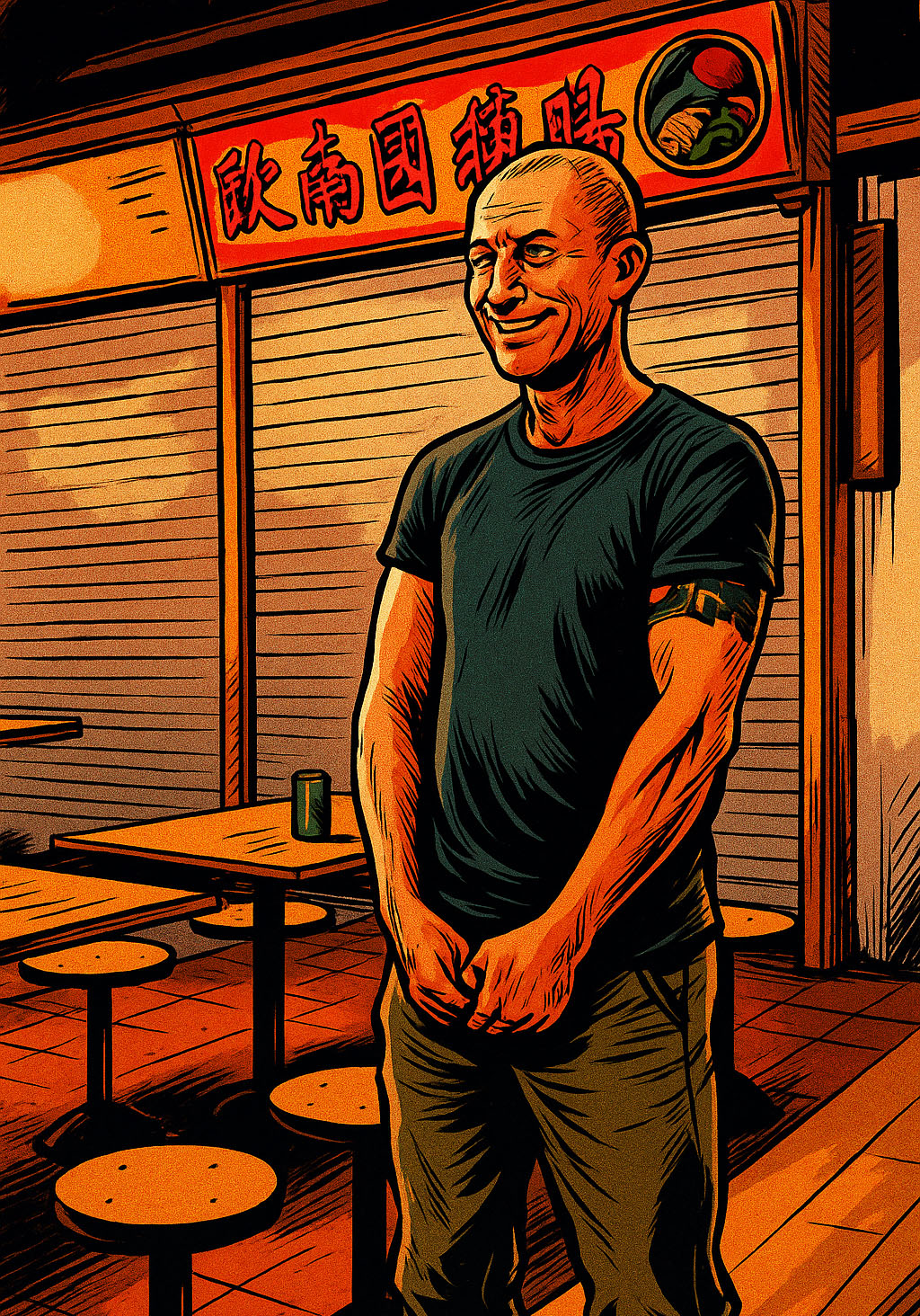

Chinatown Complex is the kind of place that smells like chilli, history, and twenty different types of comfort food. It’s loud, crowded, and very much public. So when someone decides to unzip their dignity and pee in plain view on Level 2, people notice. A short, shocking video of a man standing in front of a stall with his trousers down — and apparently unbothered about it — made its rounds online. Passersby filmed. Some recoiled. Some swore. Police arrived and the man was arrested.
If you were at the hawker centre that day, you got more than a plate of noodles. You got a reminder: public spaces are meant for eating, chatting, and sometimes awkward small talk — not exhibitionism or bodily functions turned performance art. Below, we unpack the incident, the laws it touches in Singapore, the public-health angle, how bystanders should react, and why this isn’t just “gross” but also legally serious. I’ll finish by offering a frank point of view on the social and psychological underpinnings that often get ignored.
TL;DR
- A man was arrested for public indecency and urinating at Chinatown Complex Food Centre, with the incident captured on video and shared online.
- The behavior is a violation of Singaporean laws, including the Penal Code, the Miscellaneous Offences Act, and the Environmental Public Health Act.
- The laws are in place to maintain public order, hygiene, and social safety.
- Authorities responded quickly, and penalties could include fines, imprisonment, or both.
- The public is advised to prioritize safety, report incidents promptly, and responsibly handle any footage.
- The incident highlights deeper issues like mental health, and the importance of supporting hawkers and the community against reputational damage.
The Short Version (for the TL;DR crowd)
A man exposed himself and urinated at Chinatown Complex Food Centre on Level 2. The episode was filmed and shared. Police responded quickly and made an arrest. The individual may face charges related to indecent exposure and public urination under Singapore law.
What actually happened (the scene)

The clip circulating online shows a man standing in front of a food stall. His trousers were down. He appeared unashamed, even content — at least according to witnesses. People nearby recorded the act on their phones. Stallholders and customers were left stunned and uncomfortable. Police were alerted and arrived at the scene; they arrested the man and took control of the situation. The video’s spread on social platforms amplified the incident almost instantly.
This wasn’t a private lapse in judgment. This happened in a public, busy space where families, tourists, and stallholders intersect. The psychological effect of watching someone perform an obscene act in a communal dining area ranges from disgust to fear. That reaction is exactly why authorities treat this seriously.
Which laws might apply?
Singapore’s legal framework has clear provisions that cover both the indecent and the hygienic sides of the behaviour:
- Obscene or Indecent Acts (Penal Code — “Obscene acts”)
The Penal Code criminalises doing obscene acts in public that are to the annoyance of others. Conviction can yield up to three months’ imprisonment, a fine, or both. This is the typical route when someone intentionally exposes themselves in a public place and causes public annoyance. - Appearing Nude in Public (Miscellaneous Offences (Public Order and Nuisance) Act — Section 27A)
Separately, the Miscellaneous Offences Act makes appearing nude in public — or in a private place that is exposed to public view — an offence. Penalties can include a fine of up to $2,000, imprisonment of up to three months, or both. This section also covers clothing “that offends against public decency,” so flashing or partial nudity can still fall within this law. - Public Urination (Environmental Public Health Act and related regulations)
Urinating in public is an offence under environmental and public-health laws. The Environmental Public Health Act and its regulations prohibit urinating or defecating in public areas not designated for that purpose. Fines are routinely applied; first-time penalties are typically modest but can escalate on repeat offences or if the act creates larger health or sanitation risks. The National Environment Agency (NEA) and courts have consistently treated public urination as a hygiene and nuisance violation.
So: the behaviour can trigger both indecency-related criminal charges and public-health / environmental offences. In practice, prosecutors may pursue multiple counts or choose the most applicable charges based on context, intent, and prior conduct.
Why authorities take this seriously
First, law and order: Singapore’s public spaces are shared and heavily regulated to ensure they remain usable by everyone. Acts that upset that balance — especially those that sexualise or invade public spaces — are met with enforcement to deter repetition.
Second, health and hygiene: Hawker centres are food spaces. Urine is a biohazard if left unattended. It contaminates surfaces, draws flies, and creates an unpleasant environment for vendors and customers. The Environmental Public Health Act exists to keep these areas safe and clean.
Third, social norms and safety: Public indecency is not just “embarrassing.” It can alarm vulnerable people and disturb the sense of safety in communal spaces. Quick intervention matters. That’s why many members of the public reported the incident and why police acted promptly.
How the public usually reacts — and how they should
People’s reactions vary. Some people instinctively film. Others step in to stop the behaviour. Some call the police right away. All of these reactions are understandable. Yet, recording can complicate matters when it crosses into harassment or public shaming; at the same time, footage often becomes useful evidence for investigations.
Recommendation for bystanders:
- Prioritise safety. Avoid confrontations that could escalate. Do not physically block someone unless you’re trained and it’s safe to do so.
- Record responsibly. If you capture footage, avoid posting identifying personal details where it could lead to harassment or vigilante behaviour. Hand footage to police.
- Report quickly. Use emergency lines or the SGSecure/NEA/Police reporting channels. Prompt reporting helps enforcement and protects public order.
What penalties might actually look like?

Penalties vary depending on which charge sticks and whether the offender has prior convictions. Here’s a rough sense of possible outcomes:
- Obscene acts in public (Penal Code): Up to 3 months’ jail, a fine, or both.
- Appearing nude in public (Section 27A MOPONA): Fine up to $2,000, imprisonment up to 3 months, or both.
- Public urination (Environmental Public Health Act / regulations): Fines (first-time penalties commonly in the hundreds; can increase up to $1,000 or more on conviction; repeat offenders face stiffer fines). For serious or repeated breaches, court fines and even jail time are possible under broader EPHA provisions.
In short, the law combines public-order and public-health tools. That makes sense: one prevents indecent exposure, the other preserves hygiene. When both apply, expect the courts to consider all aggravating factors: location, audience (were children present?), intent, and history.
Businesses, stalls and the community — collateral effects
Hawker stall owners don’t sign up for this. Their livelihoods depend on a pleasant dining environment. An incident like this can hit foot traffic, create fear, and prompt negative online chatter. It can also create operational headaches: cleaning, stray media attention, and possible health-code checks. For a hawker whose stall is suddenly the backdrop of a viral video, the fallout can feel unfair.
Community-level fallout includes reputational damage to popular spots like Chinatown Complex. Which is precisely why authorities emphasise swift handling. They want people to keep coming back for char kway teow, not to be tested by strangers performing “public stunts.”
The bigger picture: Why people do this (and why it’s not just “bad manners”)
Sometimes, these incidents are the result of intoxication, mental-health crises, or deliberate provocations. Context matters. A person who’s drunk and out of control is not the same as someone intentionally seeking attention or testing boundaries. Recognising that difference matters for legal outcomes and public responses.
Mental health: Some exhibitionistic acts stem from untreated psychiatric issues. When that’s the case, the courts and social services have options beyond punishment: medical assessment, mandated counselling, or supervision. That said, courts still expect a standard of public decency. A mental-health defence may explain behaviour but does not automatically erase consequences.
Recidivism: Repeat offenders often face stiffer consequences. The law escalates responses for repeated public-hygiene or nuisance breaches. That’s both punitive and preventive: the aim is to stop ongoing harm to the community.
What happens next (procedural outline)
After an arrest:
- Police investigations typically check the footage, interview witnesses, and ascertain whether any additional offences (assault, trespass, or aggravated behaviour) occurred.
- Charges may be filed depending on evidence and intent. Prosecutors choose the most fitting charges; sometimes multiple counts are applied.
- Court outcomes will reflect both the facts and the offender’s history. Fines, short jail terms, or mandatory supervision/counselling are all possible.
My take — blunt, honest opinion
Public indecency in a food hub is disgusting, yes. But let’s not make this only about moral outrage. Two things deserve attention.
First, prevention beats spectacle. If the man was intoxicated or mentally unwell, we need better safety nets — outreach programs, quicker intervention by social services, and humane but firm pathways to treatment. Criminalising behaviour without addressing root causes will funnel people between jail and street, without solving anything.
Second, we should be smarter about evidence and reaction. Filming is useful. So is reporting. But social media trials are not justice. A viral clip can ruin a life before courts even see the evidence. That’s not to defend the act. It’s to caution the bystanders: capture, report, then hand the footage to the police. Let the legal system do its job. Vigilantism helps no one and distracts from structural fixes.
Finally, hawker centres like Chinatown are fragile ecosystems. They need protection — from literal contamination and from the reputational damage of a single viral misdeed. The public’s role is simple: call it in, don’t amplify the humiliation, and support the vendors who get dragged into the mess.
Closing thought
Chinatown Complex is about food, history, and everyday human messiness — the good kind, like spilled chilli oil. The sort of public behaviour that crosses into indecency and hygiene risks isn’t just socially offensive; it’s legally actionable and often avoidable with the right supports. When people behave badly in public, we shrug, we film, and sometimes we laugh nervously. But we should also do better: protect the vendors, report responsibly, and push for the social services that stop repeat incidents before they become viral content.