



When the last of a certain kind leaves the stage, it feels like more than the end of one life. It feels like a chapter of history actually closing a heavy, leather-bound book. Donald McPherson’s passing on August 14, 2025, at the age of 103 is exactly that kind of moment. He wasn’t just another name on a list of veterans. He was believed to be the last surviving American fighter “ace” from World War II — a designation that meant he had at least five confirmed aerial victories. In other words: five times he and his little Grumman F6F Hellcat stared danger in the face and told it, politely but firmly, to leave the skies.
That fact — the “last ace” tag — is what grabs headlines. But the truth is, McPherson’s life reads like two stories braided into one: a wild, hair-on-fire young aviator thrown into a brutal, modern war; and then a decades-long civilian life that prioritized faith, family, and ordinary service over medals and publicity. Both halves are worth telling because together they sketch the kind of complicated, human life that history tends to flatten into dates and decorations.
TL;DR:
- Donald McPherson, a WWII fighter ace, died at 103, marking the end of an era.
- He shot down five Japanese planes but rarely spoke of his combat heroics.
- After the war, he returned to Nebraska and lived a quiet life of service.
- He chose to prioritize faith and family over military fame, serving as a mail carrier and community leader.
- His life shows the contrast between wartime violence and the importance of peaceful, everyday service.
The kid from Nebraska who volunteered to fly
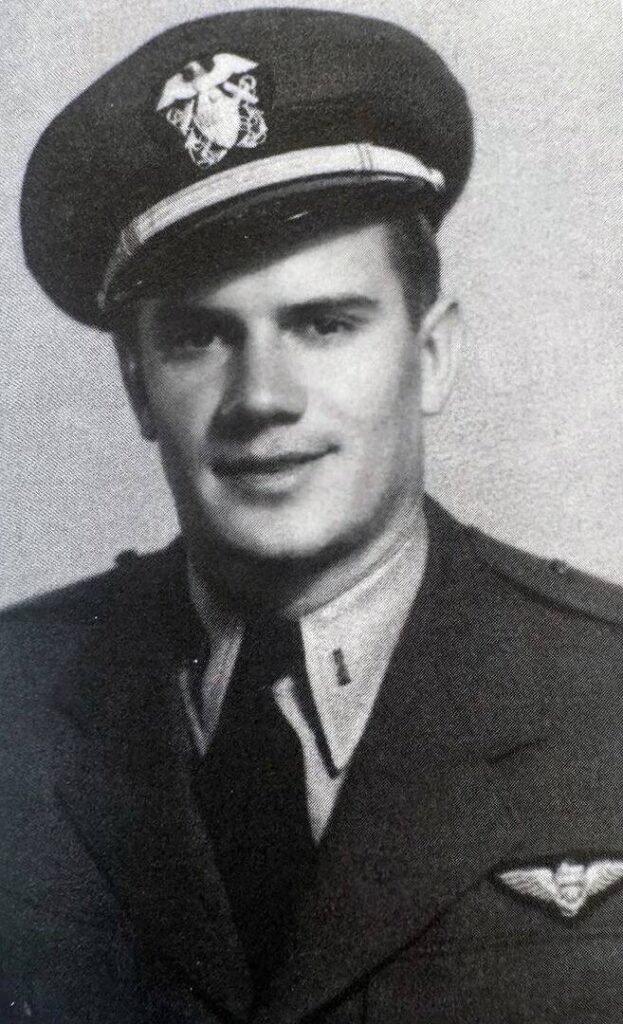
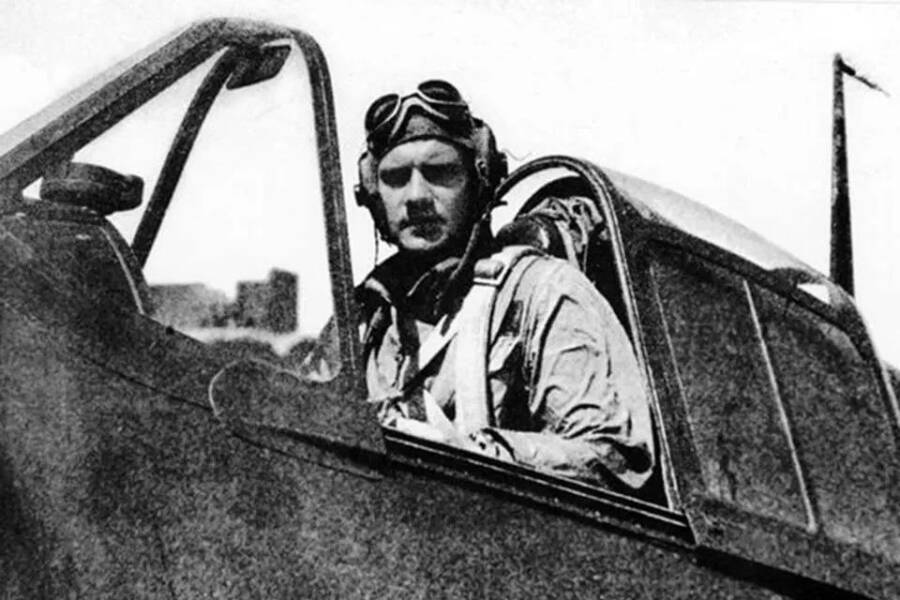
Donald Melvin McPherson was born in 1922 in Nebraska. In early 1943 — when the world was something like a runaway train and the United States was still learning to be a global power — the Navy recruited him into its aviation program. Records show he enlisted on January 5, 1943, and the Navy waived a usual two-year college requirement for aviation cadets because the war needed pilots fast. He later earned his wings at Corpus Christi, Texas in 1944 and was assigned to fly the Grumman F6F Hellcat with Fighter Squadron 83, known as VF-83. That plane — a rugged single-seat fighter — would become the machine that carried him through the Pacific’s vast, violent blue.
If you want to picture it: imagine a young man roughly two decades old, stepping into a cockpit that felt both cramped and holy, trusting the metal, the instrument gauges, his training, and each other. No social media, no instant contact with home, just the pilot’s manual, the carrier deck, the horizon. He shipped out with his squadron to the USS Essex in 1945, arriving in time for the blood-soaked operations around Okinawa. That campaign was one of the Pacific’s fiercest, and it introduced McPherson to the terrifying reality of kamikaze attacks within days of his arrival. On his second evening aboard, a kamikaze clipped the Essex’s radar tower — a matter-of-fact moment that, for anyone not hardened to it, would make you second-guess every plan you’d ever made.
A few minutes that felt like forever
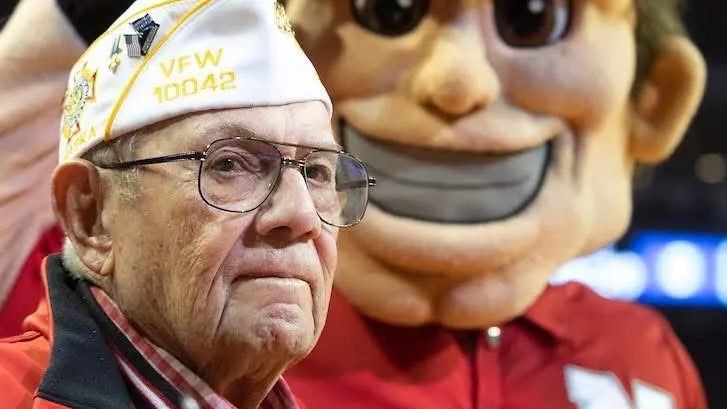
McPherson’s combat record includes the kind of small acts that end up counted in history as “kills.” He shot down five Japanese planes in the spring of 1945, which qualified him as an “ace.” One combat episode sticks because of its cinematic simplicity: McPherson saw two enemy planes skimming low over the water, fired at the first, then executed a stiff climbing turn — a “wingover” — to line up on the second. He squeezed the trigger and watched the second airplane explode. Then, because the world rarely offers a clean exit, he spent the next minutes doing “a lot of violent maneuvering” to escape being shredded in turn. When he landed back on the carrier, he discovered “a hole about a foot behind [his] back” in the plane — a literal reminder that bravery is sometimes a matter of inches.
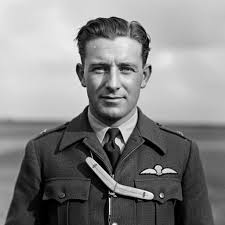
During those final months of the war, VF-83 — his squadron — and the carrier air groups were on the offensive. McPherson’s fighter division destroyed dozens of enemy fighters and bombers in airborne combat and smashed more planes on the ground during strikes. The tally for his squadron alone was impressive: perhaps hundreds of enemy planes neutralized either in the air or on the tarmac. Those aren’t just numbers; they are stories of pilots who didn’t return, of tight formations that held and those that broke, of decisions made in a second that decided lives.
Honors with a quiet man behind them
For his actions McPherson received significant recognition: multiple Distinguished Flying Crosses and, later, recognition tied to the Congressional Gold Medal that honored American fighter aces collectively. These awards are weighty, not merely decorative. The Distinguished Flying Cross is for heroism or extraordinary achievement in aerial flight. The Congressional Gold Medal — awarded to groups like World War II veterans or, in some notable cases, to groups of distinguished Americans — marks national-level gratitude. Yet friends and family say McPherson didn’t ask for attention about these medals. He preferred the church pew, the barn, and the ballfield to the trophy case.
Coming home: the quieter half of a loud life
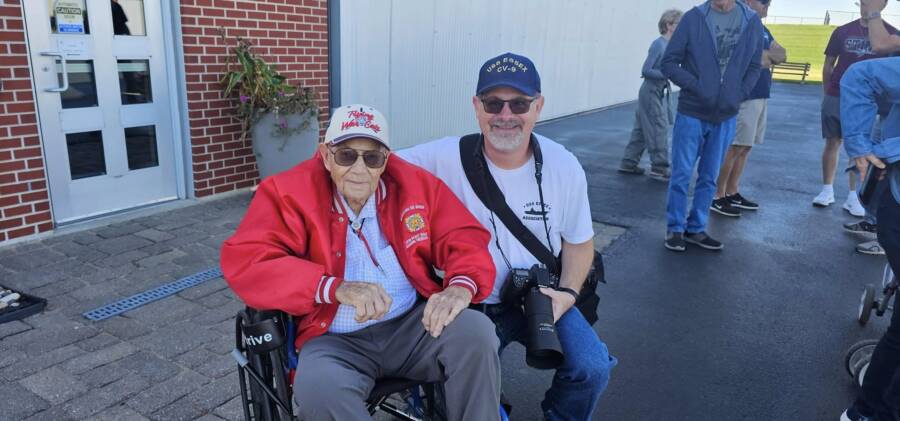
After the war, McPherson didn’t chase a career in the military or aviation halls of fame. He came home to Nebraska. He married Thelma Johnston, his high school sweetheart — yes, the kind of relationship that sounds like it belongs in a movie — and settled into a life that, on paper, looks ordinary: farming, delivering the mail (a letter carrier), woodworking, welding, hunting, fishing, and raising four children. But those “ordinary” things were how he lived his values. He built baseball and softball leagues. He served as a Scoutmaster. He led local chapters of the American Legion and Veterans of Foreign Wars and was active in Adams United Methodist Church. The community’s ballfield even carries the family name: McPherson Field. These are the quieter, human details that tend to outlive headlines.
It’s worth pausing over the contrast between the chaos of combat and the small, steady rhythms of sending letters, fixing fences, and coaching kids. The person who said, years later, that he loved his church and family first — and his military service third — was asserting a hierarchy of meaning we don’t often see in wartime memoirs. Most people expect veterans to live in the reverence of past deeds. McPherson seemed to prefer today’s chores. That choice is, in its own way, heroic.
Memory, humility, and a life’s priorities
When reporters asked family members what Donald wanted to be remembered for, they gave a clear list. First: faith. Then family. Lastly: service. His daughter, Beth Delabar, and others described a man who would politely deflect praise and emphasize the things that made him feel useful: church activities, raising kids, helping run local sports. He didn’t define himself by his kills; he defined himself by the people he loved and the small institutions he tended. In the long run, that’s a more durable legacy than a photograph of a medal.
That humility makes McPherson’s wartime record more complicated, and more human. He was trained to do a horrible job well. He took lives in the theater of war. He then took up the much harder job of being an ordinary neighbor and a steady father. The gap between those two roles says as much about the American mid-20th-century moment as it does about one man: a generation that moved from global conflict back into small-town life and tried to stitch itself together.
A symbol of an era — for better and worse
The label “last surviving ace” carries symbolic weight. It literally closes a ledger where names, dates, and feats sit side-by-side: the roster of those who did the particular work of air combat in World War II. But labels can also flatten human complexity. McPherson stands for an era of aircraft-dominant warfare, for the last boisterous generation that remembers the war firsthand. His death signals the closing of living memory for a very specific kind of American wartime experience.
There’s a cultural effect, too. We grew up with stories that romanticize the fighter ace: the James Dean-in-a-flight-jacket vibe, the lone hero, the dogfights with cinematic swoops. Those stories are seductive. Yet the reality was seldom glamorous. It was bureaucratic and bloody and small: maintenance crews patching a hole in a plane, long waits, the smell of diesel and cordite, the grief when a buddy didn’t come home. McPherson’s own reminiscences — the stunned “this sure made us wonder what we had gotten ourselves in for” after a kamikaze strike — cut through the glamour and reveal the rawness underneath.
Why his story matters now
Beyond nostalgia or honor, McPherson’s story matters for a few practical reasons.
First, it’s a reminder of how quickly human memory shifts from eyewitness to history. Once-living witnesses lend texture and contradiction to our national stories. Without them, narratives compress. We lose the small, odd facts that resist tidy summaries.
Second, McPherson’s life forces a question: how do societies integrate those who did violence in one chapter of life into the peaceful chores of the next? The transition from war to home is messy. Veterans return with skillsets made for survival and violence; society asks them to give those skills back. McPherson apparently managed that with a kind of steady humility. Not all did. Studying lives like his is a way of learning how communities can offer meaningful roles to returning soldiers — work, purpose, rituals, and responsibilities that re-make identity without erasing experience.
Third, his story is a lens into how ordinary civic institutions — church, scouts, local sports leagues — can be the scaffolding for a stable life after upheaval. McPherson didn’t become famous for creating huge policy or writing books. He built little things: leagues, teams, spaces for kids. Those are the quiet infrastructure of civic life. They’re small, but they are what hold towns together.
The human contradictions that stay with you
Here’s the thing history textbooks often skip: heroism and ordinary life coexist awkwardly. A man can be both an ace pilot and a slow-handed woodworker. He can have medals and also be someone who shows up to coach ninth-grade baseball. Those are the contradictions that make biography interesting rather than a museum plaque. They also complicate how we memorialize people. Erecting statues and handing out medals is one thing. Helping veterans find community and purpose — not as a headline, but as a matter of habit — is another. McPherson seems to have found that; many others do not.
It’s also worth noting that the end of a generation’s living memory changes how we ask questions about history. The last time someone who actually fought in those air battles is alive, we can ask: “What did it feel like to pull a trigger that decided another life?” After they’re gone, our answers will be secondhand. That’s not the end of understanding, but it is the end of direct testimony. So the window to listen closes. We should treat those moments as opportunities to sit down and actually hear the stories, warts and all.
My point of view (yes, here’s where I get a little opinionated)
Okay, you asked for my take, so here it is without ceremony: labeling someone as “the last ace” is historically interesting, but emotionally shallow unless we use it as an excuse to examine more. The headline gives us a crisp number — five aerial victories — but the main story is about how we reconcile violence and virtue in one life. McPherson’s example suggests a healthier pattern than the movies sell. Instead of glorifying combat as a path to celebrity, we ought to learn how to channel the discipline, courage, and trauma veterans return with into constructive community roles. That means real investment in veteran services, yes, but also a cultural shift away from performative gratitude (a parade, a soundbite) and toward long-term, mundane support: jobs, mental health care, community engagement.
Second, I think we owe a bit of skepticism to romantic narratives about war. The fighter ace has a certain mythos around him, and while bravery and skill are real, the myth often erases the cost. We need to tell both sides: the technical feats and the human aftermath. McPherson’s choice to emphasize faith and family first is revealing; the medals were a footnote to the life he preferred.
Finally: let’s not treat this moment as just sentimental nostalgia. The passing of such a figure asks us to consider the structures that allowed many veterans to come home and live stable lives — and ask where those structures are fraying today. Rural communities still have resilience, yes, but they also have gaps. If we learn anything from McPherson, it’s that public honor should be matched by private investment.
Small moments, big meaning
If you want one image to hold, imagine McPherson decades after the war, standing at a local ballfield — a place he helped create — watching kids chase fly balls. Imagine the ease of that small pleasure after a life that once required entirely different reflexes. That ballfield is a kind of portable peace. It says: here is a place where we teach discipline, where we cheer, where mistakes are okay because you get more chances. It’s the opposite of the carrier deck and the dogfight. Yet both shaped him. Both mattered.
Donald McPherson’s death is more than the loss of the last ace. It’s the closing of a living link to the past, yes, but also an invitation to think about how we remember. Will we reduce him to a stoic wartime silhouette and move on? Or will we use the moment to ask better questions about veterans, community, and the messy work of stitching a life back together? If memory still means anything, it means someone has to do the quieter work of remembering well.