
More
    Home Blog Page 89

    Woman in Malaysia Faces Unexpected Divorce During TikTok Livestream

    In a world where reality TV often feels scripted, a Malaysian woman provided an unfiltered, real-time drama that outshone any scripted spectacle. Her living room became a stage, and her audience, millions of TikTok users, unwitting spectators to a life-altering event. The curtain rose, not on a comedic sketch or a dramatic performance, but on the raw, unedited story of a woman’s world crumbling before the digital gaze. It was a performance no one asked for, a script no one could have written, and a finale no one saw coming.

    The digital age has transformed our lives in countless ways. We share our triumphs, our joys, and even our vulnerabilities online. But who could have predicted that the ultimate act of vulnerability – the dissolution of a marriage – would be played out on a platform designed for fleeting entertainment? As the world watched, a woman’s life unraveled in a matter of minutes, a stark reminder that behind the carefully curated online personas, real lives with real heartbreaks exist.

    TL;DR

    1. Nur Hazwani Mustapha was publicly divorced by her husband during a TikTok livestream.
    2. The incident quickly went viral, gaining millions of views.
    3. She faced ridicule and provocation from her husband and his second wife.
    4. Despite the public embarrassment, she focused on her online cosmetics business.
    5. Her business thrived due to the increased attention from the viral incident.
    6. Nur Hazwani’s story highlights her resilience and ability to turn a crisis into an opportunity.

    It’s not every day you see someone’s personal life unravel in real-time, but that’s exactly what happened to a woman in Malaysia. On 24 July, Nur Hazwani Mustapha experienced what might be one of the most shocking moments of her life – her husband divorced her during a TikTok livestream. Yes, you read that right. Divorce in the age of social media has taken on a whole new meaning.

    The Unfolding Drama

    According to a Harian Metro report, 37-year-old Nur Hazwani Mustapha was in the middle of a TikTok livestream from her home when her husband, in his 40s, stormed in. The viewers, around 3,000 at the time, witnessed a heated argument unfold right before their eyes. Talk about reality TV!

    As the argument escalated, her husband dropped the bombshell – he pronounced their divorce using “talaq,” an Islamic practice where a husband can divorce his wife by saying “I divorce you” three times. And just like that, Nur Hazwani’s marriage was over, broadcast live for all to see.

    @arshaff.ars

    Tan hassan cerai wanie.waniey mustapha semoga tabah dan bangkit.ore jate klau nok ko tino lain pah duk buruk bini tuo jate tuh meme xleh pakai mno.kore gih la support kak waniey nego nuh #tanhassanceraiwanie #tanhassanceraiwanieymustaphadalamlive #tanhassan #cerai

    ♬ original sound – jhandut cah blora – jhandut cah blora
    Broadcasting Bravery: Nur Hazwani faces life head-on during her viral TikTok livestream.

    The Backstory: A Marriage in Turmoil

    Now, let’s rewind a bit. It turns out, Nur Hazwani’s husband had recently married another woman in Thailand, and this wasn’t exactly a secret. Ms. Mustapha, ever the understanding wife, had decided to accept this new addition to their family. However, things didn’t go as smoothly as she hoped. Instead of harmonious co-existence, she was met with constant provocation and ridicule from both her husband and his new wife. Ouch!

    Ms. Mustapha has been married to her husband for over a decade, and they share two children, aged four and seven. She even quit her job as a local government official to support her family, only to be met with this shocking turn of events. Her disappointment was palpable as she expressed to Harian Metro, “For the sake of my husband, I was willing to quit my job because I wanted to be by my husband’s side, but after 10 years, this is what I got.”

    The Viral Impact

    Unsurprisingly, the incident quickly went viral on TikTok. Videos of the livestream gained millions of views, turning Ms. Mustapha into an overnight sensation. However, not all the attention was negative. In fact, her newfound fame brought an unexpected silver lining.

    A New Chapter Begins

    Despite the public nature of her divorce, Ms. Mustapha has managed to find a sense of calm and resilience. She has decided to focus on her online cosmetics business, which has seen a surge in customers following the viral incident. Talk about turning lemons into lemonade!

    For the sake of my husband, I was willing to quit my job because I wanted to be by my husband’s side, but after 10 years this is what I got.

    Nur Hazwani Mustapha

    In her own words, “No matter what others say, I don’t care. I just hope that everyone will pray that everything will go well for me and my children.” It seems that this unexpected twist in her life has given her a new lease on life, one where she can focus on her children and her business without the shadow of her tumultuous marriage.

    When Words Break Hearts: The moment a marriage ended in front of thousands.

    Finding Strength in Adversity

    Let’s dive into the deeper lessons here. First, can we just acknowledge the sheer audacity of live-streaming your divorce? It’s like a soap opera, but real! However, beyond the drama, there’s a story of resilience and empowerment.

    Transitioning from a life where she was constantly belittled, Ms. Mustapha has shown that it’s possible to rise from the ashes of a failed marriage stronger than ever. Her decision to embrace her newfound fame and channel it into her business is nothing short of inspiring.

    The Power of Social Media

    One key insight here is the power of social media. While it can be a double-edged sword, in this case, it has provided Ms. Mustapha with a platform to rebuild her life. Her story is a testament to the fact that, despite the negativity, there’s always an opportunity to find support and create something positive.

    My Point of View: Embracing Change

    From my perspective, the most remarkable aspect of this story is Ms. Mustapha’s ability to embrace change. Divorce is never easy, especially when it’s as public as hers. Yet, she has managed to turn a potentially devastating experience into a stepping stone for her future. Her story is a reminder that sometimes, the end of one chapter can be the beginning of a much better one.

    Wrapping Up

    The curtain falls on this digital drama, but the story lingers like an echo in the digital age’s grand theater. It’s a stark reminder that behind the carefully crafted online personas, real lives unfold with raw emotion, and sometimes, a scriptless tragedy. As we scroll through our feeds, consuming bite-sized moments of others’ lives, let’s remember the human stories behind the screens. And perhaps, the next time you hit record, consider the potential consequences of pressing play.

    Want to delve deeper into the complexities of online life and its impact on relationships? Check out our other articles that explore the intersection of trends and marriages.
    Microsoft Misses Cloud Growth Expectations – Is the AI Boom Hitting a Roadblock?

    The digital sky, once painted with hues of limitless potential, has cast a shadow over Redmond. Microsoft, the titan that has long held sway over the technological firmament, has unexpectedly stumbled. Azure, its cloud behemoth, has failed to ascend as rapidly as predicted. This isn’t merely a financial hiccup; it’s a cosmic question mark hovering over the very fabric of the tech universe.

    Is this a mere blink in the grand scheme of innovation, a temporary eclipse in an otherwise radiant trajectory? Or does it signal a more profound shift, a potential crack in the foundation upon which the AI edifice is being constructed? As the world gazes upward, seeking answers in the constellations of data and algorithms, one thing is clear: the cloud, once thought to be an endless ocean of opportunity, may be showing signs of shallowing depths.

    TL;DR

    • Microsoft’s Azure growth: 29%, just below the previous quarter and analyst expectations.
    • Investor reaction: Stock dropped 4% in after-hours trading due to concerns over cloud business.
    • AI investments: Significant capital expenditures for AI capacity, partnerships with third parties.
    • Overall performance: Revenue up 15%, net income up 10%.
    • Market trends: Tech stocks, including Microsoft, facing scrutiny and pullbacks.
    • Security issues: Recent Windows crashes highlight vulnerabilities.

    Microsoft’s AI Dreams: Hitting a Speed Bump or Losing Steam?

    Alright, folks, let’s dive into the tech world’s latest rollercoaster ride. Microsoft, the tech behemoth we all know and love, recently reported some numbers that made investors a tad jittery. You’d think with all the AI hype, Microsoft’s cloud-computing business would be soaring to the moon. Instead, it took a slight detour, narrowly missing growth expectations and sending its stock on a bit of a nosedive. So, what’s going on?

    Cloud Business: Sky’s the Limit, But Not Quite There

    Microsoft’s overall sales and profit growth managed to beat expectations in the latest quarter, which is good news, right? However, the star of the show, their Azure cloud business, didn’t quite hit the high notes. Azure’s revenue grew by 29%, just shy of the previous quarter’s 31% and missing the analysts’ hopeful 30% forecast. Now, for mere mortals, a 29% growth sounds pretty impressive, but in the high-stakes world of tech, it’s a bit of a letdown.

    During after-hours trading, Microsoft’s stock took a 4% hit. Yes, a mere percentage point difference in Azure’s growth was enough to rattle the market. It seems investors have a magnifying glass out for any signs of weakness in Microsoft’s cloud business, which is crucial for their AI ambitions.

    The Analysts Weigh In

    “There’s a segment of the investing community that is hyperfocused on very small changes to the Azure business,” says Brad Reback, an analyst at Stifel Financial. No kidding, Brad. Investors were probably holding their breath, waiting for Azure to either hit the mark or miss it by a hair, and unfortunately for Microsoft, it was the latter.

    On a call with analysts, Microsoft CFO Amy Hood pointed out that Azure’s growth hit the low end of their guidance. The reason? Soft demand in a few European markets for non-AI services and some limits in AI-related hardware. Hood elaborated, “We are constrained on AI capacity, and because of that, we’ve…signed up with third parties to help us,” referring to partnerships with other AI providers. In other words, Microsoft is throwing money at the problem, hoping to get back on track.

    Digging Into the Numbers

    Let’s take a closer look at the figures. Microsoft’s overall revenue for the quarter increased by 15% from last year, hitting $64.7 billion. Net income was up by 10%, reaching $22 billion. Not too shabby, right? For the current quarter ending in September, Microsoft expects total revenue to range between $63.8 billion and $64.8 billion.

    Despite the hiccup, excitement about AI’s potential is still fueling a significant run-up in Microsoft’s stock. The company’s shares have surged since last year, thanks to generative AI’s allure, which promises to revolutionize everything from coding to summarizing complex information.

    Tech Stocks: A Wild Ride

    Lately, though, tech investors are getting a bit antsy. The once sky-high valuations of tech stocks have come under scrutiny, causing a bit of a pullback. Over the past few weeks, the tech-heavy Nasdaq Composite Index has dropped about 8%. For context, Google’s parent company, Alphabet, saw its shares fall 5% after reporting slower advertising sales growth and a near-doubling of capital expenditures.

    Despite these bumps, Microsoft’s stock is still up more than 12% since the beginning of the year, though it’s down around 6% this month. It’s clear that while investors are excited about AI, they’re also cautious about overvalued tech stocks.

    Nadella’s Big Bet on AI

    Microsoft’s CEO, Satya Nadella, is betting big on AI. The company’s multibillion-dollar partnership with OpenAI, the maker of ChatGPT, is just one piece of the puzzle. Microsoft is also pouring cash into data centers and chips to power its AI services. In the last quarter, Microsoft spent $13.9 billion on capital expenditures, mostly for AI—a whopping 55% increase from the same quarter last year. Including finance leases, total capital expenditures reached $19 billion, up from $10.7 billion.

    Betting Big on AI: Nadella’s Vision for Microsoft’s Future

    To meet the soaring demand for AI, Microsoft plans to keep spending big on capital expenditures, even as they trim costs in other areas like hardware to protect their margins. Last quarter, AI accounted for 8 percentage points of Azure’s growth, up from 7 percentage points in the previous quarter.

    The Bigger Picture: Cloud and AI Integration

    Microsoft’s total cloud revenue, which includes Office and Windows online offerings, grew by 21% to $36.8 billion. Most of Microsoft’s AI revenue currently comes through its cloud services. The company is also integrating AI into its core products, like the AI assistants dubbed Copilot for Microsoft 365 and the Bing search engine. While Microsoft hasn’t broken out revenue specifically from Copilot, it’s clear the tech giant is weaving AI into its very fabric.

    A Security Snafu

    Recently, Microsoft faced a significant security issue, albeit not entirely its fault. Windows-based computers worldwide began crashing after a security update pushed by software company CrowdStrike. The update affected 8.5 million Windows computers, less than 1% of the total, but it was enough to disrupt hospitals, airlines, and media operations. This incident highlighted both the ubiquity of Microsoft in the workplace and the vulnerabilities that come with it.

    My Take on Microsoft’s Latest Drama

    Alright, let’s take a breather and look at this with a bit of perspective. Microsoft missing growth expectations by a hair is hardly the end of the world. Sure, investors are skittish, and stock prices fluctuate, but that’s the nature of the beast. The real story here is Microsoft’s relentless push into AI. Yes, they’re facing some growing pains—AI capacity issues, security hiccups, and market jitters—but these are the hurdles that come with being at the forefront of innovation.

    In the grand scheme of things, Microsoft’s commitment to AI is impressive. They’re investing heavily, partnering with industry leaders, and integrating cutting-edge technology into their products. This isn’t just about short-term gains; it’s about setting the stage for long-term success. So, while the stock might wobble now and then, the bigger picture is one of growth and potential.

    The AI Buzz: How Microsoft is Shaping Tomorrow’s Technology

    The Bottom Line

    Microsoft’s latest earnings report might have given some investors a scare, but it’s hardly a cause for panic. The company is making bold moves in AI, and while there are challenges, the potential rewards are immense. As Microsoft continues to invest in AI and cloud services, it’s paving the way for future growth. So, let’s not get too hung up on a single quarter’s numbers. Instead, let’s keep an eye on the horizon and see where Microsoft’s AI journey takes us.

    Microsoft shares closed down 1% at $422.92 on Tuesday before the financial results were released. It’s a reminder that in the world of tech, change is constant, and staying ahead means embracing both the highs and the lows.

    So, has the tech titan stumbled, or is it merely pausing to recalibrate for a loftier ascent? The cloud, once a boundless expanse, may be revealing its terrestrial limits, but the potential for innovation remains as vast as ever. Microsoft’s misstep might be a ripple in the pond, or perhaps the first crack in a dam about to burst. Only time will tell if this is a fleeting storm cloud or a harbinger of a changing climate.

    As the digital world continues to evolve at breakneck speed, it’s imperative to keep a watchful eye on the horizon. Stay tuned for more insights and analysis as we navigate this complex landscape.

    Want to dive deeper into the world of tech and business? Check out our other articles for more thought-provoking content.

    The Real Charli D’Amelio: Who is she?

    0

    Charli D’Amelio: a name synonymous with digital stardom, a byword for teenage success. But beneath the carefully curated facade of a social media icon lies a complex individual. Is she the embodiment of Gen Z aspirations, a puppet dancing to the rhythm of algorithm, or perhaps a shrewd businesswoman capitalizing on a cultural phenomenon?

    The Charli we see online is a carefully constructed persona, a digital avatar designed to captivate millions. Yet, who is the woman behind the screen? The girl who laughed, cried, and dreamed before the world was watching? Can we truly know someone based on fleeting moments captured and edited for consumption? Or is the real Charli D’Amelio a mystery yet to be unveiled?

    TL;DR

    • Introduction: Brief overview of Charli D’Amelio and her early life.
    • Rise to Fame: How Charli started on TikTok and quickly gained millions of followers.
    • Major Achievements: Highlights of Charli’s notable milestones and projects.
    • Influence and Impact: Charli’s influence on social media and her contributions to pop culture.
    • Personal Life: Insight into Charli’s family and personal interests.
    • Future Plans: What’s next for Charli in her career

    Charli D’Amelio, an American social media phenomenon, took the internet by storm in 2019. Her dance videos went viral on TikTok, catapulting her to fame almost overnight. Charli became the first content creator to hit both 50 million and 100 million followers on TikTok, and as of now, she boasts the most-followed account on the platform. Additionally, she stars in the Hulu reality series “The D’Amelio Show,” featuring her older sister Dixie, another TikTok sensation. Charli’s voice acting debut was in the 2019 animated film “StarDog and TurboCat.” When asked about her rapid rise to fame, Charli modestly attributes it to a lucky accident.

    In 2019, Charli started her TikTok channel from her bedroom in Norwalk, Connecticut, creating dance and lip-sync videos with friends. Soon after, her sister Dixie joined, and together, they amassed millions of followers, quickly becoming two of the highest-paid and most influential creators on the platform.

    The Unexpected Journey to Stardom

    Charli reflects on her meteoric rise with a sense of bewilderment. “Every day, it was like waking up a little confused and wondering, ‘When’s this going to stop?’” she shares. The unprecedented nature of her TikTok success left her and her family in awe. However, their rise wasn’t just serendipity. With a father experienced in brand marketing and a mother who was a former model, Charli and Dixie were well-prepared for a brand-centric platform like TikTok.

    Dixie credits their father’s advice on branding as a pivotal factor in their success. “From our childhood, Dad always said to protect our brand and think long-term,” Dixie recalls. This wisdom transformed their videos into a multimillion-dollar business and paved the way for their own brand company.

    Building a Business Empire

    At the time of writing, Charli is the second-most followed TikTok creator with over 155 million followers. In 2021 alone, she earned $17.5 million from sponsorships. She was even invited to compete on “Dancing With the Stars,” and Dunkin’ Donuts named a drink after her.

    Dixie, with 22 million followers, leveraged her TikTok fame into a burgeoning pop music career, releasing two albums and touring with Jingle Ball alongside stars like Ed Sheeran. Together, the sisters have collaborated with high-end fashion brands such as Prada, Puma, and Burberry. They’ve also created a Snap miniseries called “Charli vs. Dixie” and launched a clothing brand, Social Tourist, with Hollister. Their combined earnings in 2021 were a staggering $27.5 million.

    But their ambitions didn’t stop there. In 2022, the family launched D’Amelio Brands, which started with a $6 million seed round. They’ve since released a women’s footwear line, a skincare line, and a fan merchandise company. The D’Amelios have also ventured into venture capital, focusing on minority- and women-owned businesses.

    A Reality Show and Beyond

    The Dixie D’Amelio Show Episode 01

    In 2021, the entire family starred in “The D’Amelio Show” on Hulu. The third season premiered in September 2023. This reality show offers a behind-the-scenes look at their lives, further solidifying their place in the entertainment industry.

    Charli’s journey began at the age of three when she started dancing. She was a competitive dancer for over a decade before her social media career took off. Despite her online fame, Charli remained grounded, balancing her new life with virtual schooling after leaving private school.

    The Challenges of Fame

    Charli’s sudden popularity brought its share of challenges. She faced criticism for not crediting the original creators of dances she performed, which she quickly rectified. Despite the backlash, she continued to rise, joining the Hype House and signing with Outshine Talent and United Talent Agency.

    Her partnership with brands extended to high-profile campaigns and even a Super Bowl commercial. Charli’s influence was acknowledged when she became the most-followed TikTok user in March 2020, surpassing Loren Gray. She was also praised for her role in campaigns promoting social distancing during the COVID-19 pandemic.

    Expanding Her Horizons

    In 2020, Charli ventured into new territories with a debut book, “Essentially Charli: The Ultimate Guide to Keeping It Real,” which became a New York Times bestseller. Her collaborations with brands like Dunkin’ Donuts and Hollister showcased her expanding influence. She even made her feature film debut in “StarDog and TurboCat.”

    By 2021, Charli had partnered with Morphe Cosmetics and launched a nail polish collection. Her business acumen shone through as she co-created Social Tourist and designed a mattress with Simmons Bedding Company. She continued to diversify her portfolio, from a fragrance line to a limited-edition case for Invisalign.

    Stepping into Mainstream Media

    Charli vs. Dixie

    Charli’s transition to mainstream media was seamless. She starred in the Hulu docuseries “The D’Amelio Show,” which became a massive hit. Her competitive spirit was on display in “Charli vs. Dixie,” a reality competition show on Snap. Her guest appearances in series like “The Simpsons” and her fragrance release further cemented her status.

    Charli and her mother made history as the first family members to compete against each other on “Dancing with the Stars,” with Charli ultimately winning the competition. Her debut single, “If You Ask Me To,” reached the top 40 on the Billboard Adult Pop Airplay chart.

    My Point of View

    Here’s my take on Charli’s incredible journey. It’s not just about the dance moves or viral trends; it’s about leveraging opportunities and having a solid support system. Charli’s story teaches us the importance of brand management and long-term thinking. Her father’s advice on protecting their brand is something we can all apply in our careers. And let’s not forget the power of adaptability—Charli seamlessly transitioned from TikTok to mainstream media, showcasing her versatility.

    AttributeDetails
    Full NameCharli Grace D’Amelio
    Date of BirthMay 1, 2004
    BirthplaceNorwalk, Connecticut, USA
    ParentsHeidi D’Amelio (mother), Marc D’Amelio (father)
    SiblingsDixie D’Amelio (older sister)
    ProfessionSocial Media Personality, Dancer, Actress
    Platform of FameTikTok
    First TikTok PostMay 2019
    Notable AchievementsFirst TikTok user to reach 50 million and 100 million followers
    Current TikTok FollowersOver 155 million (as of 2024)
    Major ProjectsThe D’Amelio Show (Hulu), Charli vs. Dixie (Snap Original), Dancing with the Stars (Winner)
    Voice Acting DebutStarDog and TurboCat (2019)
    Other VenturesBooks, Podcast, Nail Polish Collection, Mattress, Makeup Line, Clothing Line, Multi-Product Company
    Annual Earnings$17.5 million in 2021 (according to Forbes)
    Social MediaTikTok, Instagram, YouTube
    ManagementSigned with United Talent Agency (UTA)

    A Bright Future Ahead

    Charli D’Amelio’s story is far from over. With a robust business empire, numerous brand partnerships, and a growing presence in mainstream media, Charli is poised for even greater success. Her journey from a Norwalk bedroom to global stardom is a testament to the power of social media, family support, and strategic thinking.

    Perhaps Charli D’Amelio is the Schrödinger’s cat of our generation. Simultaneously a manufactured image and an authentic individual, she exists in a quantum state of being until observed. Or maybe she’s merely a reflection of our own desires and insecurities, a mirror to our collective psyche.

    Ultimately, the truth about Charli, like the nature of reality itself, might forever remain elusive. But one thing is certain: her story is a fascinating microcosm of the digital age. As we continue to explore the complexities of online personas and the blurred lines between authenticity and artifice, we invite you to delve deeper into the lives of other social media stars. Who knows what other quantum realities await?

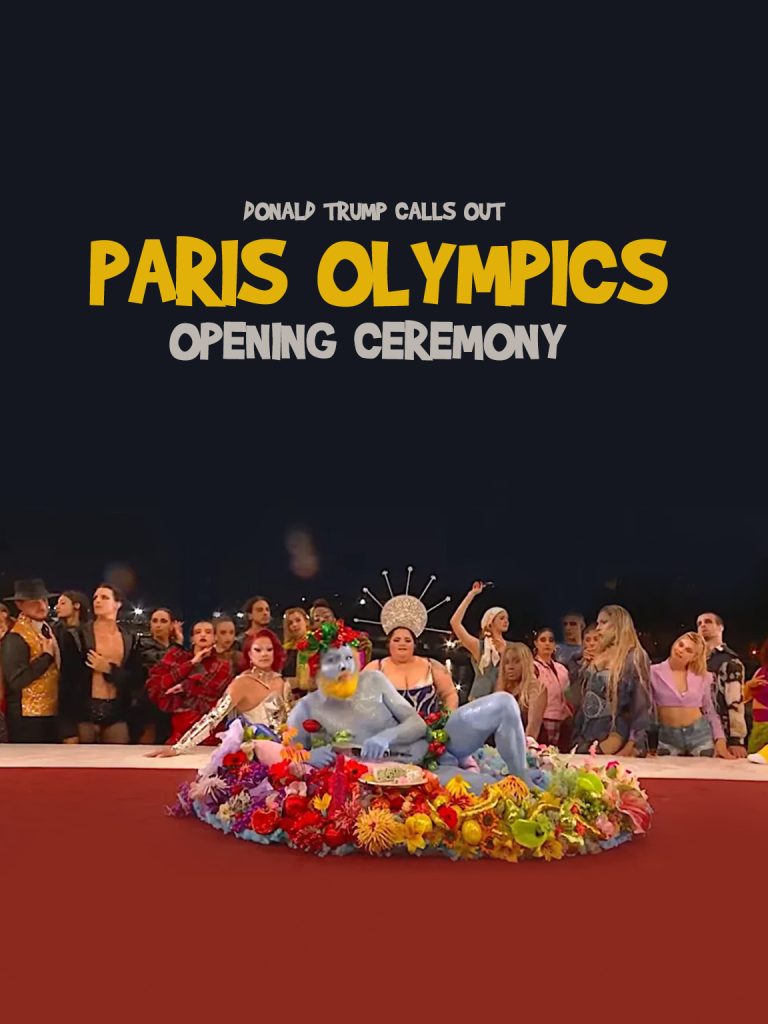
    Donald Trump Calls Out Paris Olympics Opening Ceremony: A “Disgrace” or Just a Misunderstood Tribute?

    The Olympics, a global spectacle where nations collide in feats of athletic prowess. Yet, it’s often the stage, not the sport, that captures the world’s attention. The Paris opening ceremony was no exception, igniting a conflagration of opinions. Was it a divine inspiration, a blasphemous act, or simply a misunderstood masterpiece?

    Like a double-edged sword, the performance cut deep into the collective psyche. Some saw a sacred text desecrated, a cultural Armageddon. Others hailed it as a bold, artistic statement, a defiant cry for inclusivity. Perhaps it was both, a complex tapestry woven with threads of tradition and transgression.

    Let us examine the evidence, weigh the arguments, and decide: is this a case of artistic license gone awry, or a deliberate provocation? The stage is set, the players ready. Let the games of interpretation begin.

    TL;DR

    • Donald Trump’s Criticism: The former president labeled the Paris Olympics opening ceremony a “disgrace” due to its controversial depiction that some viewed as mocking the Last Supper.
    • Performance Details: The performance featured drag performers and artists inspired by Greek mythology, not intended to reference biblical scenes.
    • Public Reaction: Many Christians found the performance offensive, leading to widespread backlash.
    • Organizers’ Response: The organizers apologized, stating that there was no intention to disrespect any religious group.
    • Broader Implications: The incident highlights ongoing tensions between artistic expression and respect for religious symbols.

    Oh, the Paris Olympics opening ceremony—where art, controversy, and Donald Trump’s opinions collide in a spectacular display. Yes, it’s the latest hot topic, with Trump leading the charge against what he’s dubbed a “disgrace.” But before you pick sides, let’s dive into the drama and see if this is a case of high art gone wrong or just another tempest in a teapot.

    The Big Reveal: An Opening Ceremony in the Spotlight

    So, what’s all the fuss about? At the heart of the controversy is a performance that, according to some critics, looked suspiciously like a parody of Leonardo da Vinci’s renowned fresco, “The Last Supper.” Trump, ever the vocal critic, didn’t hold back. On Fox News’ The Ingraham Angle—where all the best debates are had—he unleashed his verdict: “I thought that the opening ceremony was a disgrace, actually. I thought it was a disgrace.” Now, that’s a ringing endorsement!

    What Happened on Stage?

    Performance art or public faux pas?

    The spectacle in question featured drag performers and artists arrayed around Barbara Butch, a French DJ and lesbian activist, who sported a halo-like headpiece. Floating down the Seine on a boat, this performance was, in theory, a nod to Greek mythology and the Feast of Dionysus, the Greek god of wine. Philippe Katerine played the god, albeit in blue body paint and a state of near undress.

    Thomas Jolly, the artistic mastermind behind the ceremony, was quick to clarify that his inspiration came from Greek mythology rather than Christian iconography. “My wish isn’t to be subversive, nor to mock or to shock,” Jolly asserted. “Most of all, I wanted to send a message of love, a message of inclusion and not at all to divide.”

    The Mixed Reactions: Love It or Leave It

    Despite Jolly’s intentions, the performance didn’t sit well with everyone. Some Christians took offense, arguing that the scene bore too close a resemblance to “The Last Supper.” It’s safe to say that not everyone was toasting this tribute.

    Now, let’s not forget the Olympic organizers. They’ve apologized to anyone who felt disrespected, emphasizing that they never meant to offend. “Clearly there was never an intention to show disrespect to any religious group. On the contrary, I think [with] Thomas Jolly, we really did try to celebrate community tolerance,” said spokesperson Anne Descamps. “If people have taken any offense we are, of course, really, really sorry.”

    The Trump Factor: Is There More Than Meets the Eye?

    Donald Trump’s hot take: Is this art or a major misstep?

    Enter Donald Trump, the man of the hour. His criticisms aren’t just about taste; they’re about principle. Trump’s comments underscore a broader issue of cultural sensitivity and artistic expression. According to him, the performance missed the mark, failing to consider the potential for offense.

    But is Trump’s reaction a matter of genuine concern, or is he simply seizing an opportunity to weigh in on a hot-button issue? After all, it’s not unusual for Trump to make headlines with his outspoken views. And while his critique adds a layer of political drama, it also raises important questions about the boundaries of artistic freedom and respect for religious symbols.

    A Deeper Dive: Is This Art or Just a Misstep?

    Let’s put on our thinking caps and ponder: was this a case of high art gone awry, or are we witnessing an overblown reaction to a misunderstood performance? Art has always pushed boundaries, but when it steps on sacred toes, the backlash can be fierce.

    One could argue that Jolly’s intent was to celebrate inclusivity, not to provoke. However, art is often subjective. What one person sees as a progressive statement, another might view as a blatant disrespect. The question here isn’t just about whether the performance was a faux pas but also about how we balance creative freedom with respect for deeply held beliefs.

    Recent Events Related to Artistic Controversies and Cultural Sensitivity

    1. Dove’s “Body Positive” Ad Controversy (2023)
      Description: Dove faced backlash for its “Body Positive” ad campaign, which critics argued perpetuated rather than dismantled beauty stereotypes. The campaign’s attempt to promote inclusivity and self-love was seen by some as superficial and dismissive of deeper issues related to body image.
      Reference:
      • The Guardian. (2023). Dove’s latest ad criticized for perpetuating body image stereotypes. The Guardian
    2. The “Da Vinci Code” Controversy (2022)
      Description: Dan Brown’s novel “The Da Vinci Code,” which reimagines religious history and symbols, sparked debates and protests from various religious groups. The controversy centers on how fiction intersects with sacred traditions and whether artistic liberties cross the line of respect.
      Reference:
      • BBC News. (2022). “The Da Vinci Code” and its ongoing impact on religious discourse. BBC News
    3. Artistic Depiction of Religious Figures in Contemporary Art (2024)
      Description: Various contemporary art exhibits have faced criticism for their depictions of religious figures. For example, an art installation by artist Andres Serrano, featuring a crucifix submerged in urine, led to heated debates about artistic freedom versus religious respect.
      Reference:
      • New York Times. (2024). Andres Serrano’s work reignites debate on art and religion. New York Times
    When art crosses the line: Paris Olympics’ opening ceremony or a biblical blunder?

    Personal Reflections: Finding the Middle Ground

    From where I stand, this controversy highlights the perennial struggle between artistic expression and respect for tradition. Art should indeed challenge and provoke, but it also needs to navigate the fine line between innovation and insensitivity.

    Trump’s outrage, while characteristic, serves as a reminder of how cultural events can ripple through public consciousness. Whether you agree with him or not, his criticism forces us to reconsider how we approach sensitive topics in the realm of art and public displays.

    In the end, maybe the Paris Olympics’ opening ceremony wasn’t just a performance but a flashpoint in a broader conversation about art, culture, and respect. As we move forward, perhaps we can find a way to embrace creativity without alienating those who hold differing values.

    My Curtain Call

    Donald Trump’s fiery remarks about the Paris Olympics opening ceremony have ignited a debate on the intersection of art, religion, and public opinion. While Trump sees the performance as a disgrace, others, including the organizers, argue it was intended as a celebration of inclusivity.

    The stage is dark, the applause fading. Yet, the echoes of this performance will linger, a haunting melody in the minds of many. Was it a symphony of brilliance or a cacophony of chaos? Perhaps the answer lies not in definitive judgment, but in the rich tapestry of individual interpretation.

    Art, like life, is a subjective experience. It provokes, inspires, and divides. The true measure of its impact is not in the consensus it garners, but in the conversations it ignites. So, let us continue the dialogue. Share your thoughts, your interpretations, your outrage, or your adoration. After all, the greatest art is that which leaves a lasting impression, a question mark hanging in the air.

    The Temple Run to Viral Fame

    In a world saturated with endless scrolls and fleeting fancies, a digital mirage has materialized into tangible tourism. The once silent echoes of ancient temples now reverberate with the frenzied soundtrack of a mobile game. TikTok, the oracle of modern trends, has conjured a peculiar pilgrimage: a dash through history, a sprint against time, all in the name of virtual validation. Is it a sacred ritual gone awry, or a clever marketing ploy disguised as spontaneous fun? As the lines between reality and recreation blur, one thing is certain: the world is watching as Cambodia’s historic stage becomes a global playground.

    TL;DR

    1. A TikTok trend re-enacting the mobile game Temple Run has gone viral, drawing tourists to Cambodia.
    2. This trend has significantly boosted Cambodia’s tourism, with Angkor Wat and Ta Prohm as popular filming locations.
    3. The trend is positively impacting the local economy, promoting Cambodia’s cultural heritage internationally.
    4. Some content creators are showing respect for the historical sites, which locals appreciate.
    5. Despite the trend’s popularity, there are no official Temple Run events at these sites.
    6. It’s important to balance fun with cultural respect when participating in such trends.

    The Unexpected Viral Hit

    Who knew that a mobile game could breathe new life into ancient ruins? Visitors to Cambodia are now re-enacting the popular mobile game Temple Run, creating a bizarre yet delightful trend that’s taken TikTok by storm. If you’ve ever dreamed of living out your Temple Run fantasies, Cambodia is the place to be. This viral sensation has not only entertained millions but also given Cambodia’s tourism industry a significant boost.

    From Screen to Reality

    Temple Run, developed by Imangi Studios in 2011, is an endless runner game where players navigate temple ruins, dodging obstacles and fleeing from demonic monkeys. Now, picture this: instead of swiping left or right on your phone, you’re sprinting through the historic walkways of Angkor Wat or Ta Prohm, dodging imaginary traps and leaping over non-existent chasms. Yes, that’s exactly what’s happening.

    The TikTok Explosion

    Content creators have flocked to Cambodia, phones in hand, ready to turn their Temple Run fantasies into reality. One such creator, @emiliabfantoni, has garnered over 1.2 million views with a video captioned “Temple Run in real life in Angkor Wat.” The video, complete with the game’s thrilling background music and sound effects, features a person sprinting through the historic site, mimicking the game’s iconic moves.

    A Boost for Tourism

    @emiliabfantoni

    This trend isn’t just a fleeting internet fad; it’s a boon for Cambodia’s tourism industry. According to The Phnom Penh Post, the influx of TikTokers has put the spotlight on Cambodia’s historical treasures, attracting international visitors and providing much-needed exposure. Locals are thrilled, seeing this social media trend as a fantastic promotion for their country and its rich heritage.

    Respect Amidst the Fun

    While the trend is all about fun and games, it hasn’t overshadowed the cultural and religious significance of these sites. Some content creators, after their exhilarating Temple Run escapades, have taken the time to show respect for the historic sites. This respectful behavior has not gone unnoticed, with many locals expressing their gratitude in the comments.

    The Power of Social Media

    One video, in particular, has captured the hearts of many Cambodians. Garnering over 1.6 million views, the video features a heartfelt message from the locals, thanking the creator for visiting their country. The power of social media is undeniable, turning a simple game into a bridge between cultures.

    No Official Events – Yet

    Despite the craze, there are no official Temple Run events at these historical sites. It remains unclear whether this trend complies with all visitation policies, but the sheer joy it brings to both creators and viewers is evident.

    My Take on the Trend

    I can’t help but chuckle at the irony here. Who would have thought that a game designed to kill time would end up reviving interest in historical sites? It’s like watching history and technology dance a delightful jig. While some may raise eyebrows at the potential disrespect of these sacred sites, the overall positive impact on tourism and local pride is hard to ignore.

    A Trend with a Twist

    In the end, this Temple Run re-enactment trend is a fascinating blend of the old and the new. It’s a testament to the power of social media to bring people together, even if it’s through the lens of a mobile game.

    So, is this a testament to the power of digital culture to breathe life into ancient stones, or a cautionary tale of the blurred lines between reverence and recreation? Perhaps it’s both, a complex interplay of tradition and trend. As the world continues its dizzying spin, one thing is certain: the intersection of technology and heritage will continue to produce unexpected and intriguing results.

    Want to uncover more digital oddities that have real-world impact? Dive deeper into our collection of articles where the virtual and the tangible collide. Let’s explore where the next digital frontier will take us.

    When AI Takes Over: What Will We Do With All That Free Time?

    0

    The specter of artificial intelligence looms large, casting a long shadow over our collective consciousness. It’s a future painted in broad strokes of ones and zeros, a world where machines might, just might, outthink, outwork, and outplay us. A world of unparalleled efficiency and productivity. A world of… leisure?

    The question isn’t merely a playful ponderance on the perks of a post-work era. It’s a stark interrogation of our very essence. What defines us when stripped of our labor? Are we, at our core, creators, consumers, or simply beings in search of stimulation? Perhaps the most daunting task in a world run by algorithms will be finding purpose beyond the pursuit of purpose. Or maybe, just maybe, we’ll finally have the time to contemplate the true meaning of life, only to realize it was staring us in the face all along, disguised as a never-ending to-do list.

    TL;DR

    1. AI advancements like Google DeepMind’s AlphaProof are transforming fields like mathematics.
    2. Automation may lead to significant job displacement, sparking debates on Universal Basic Income.
    3. AI’s role in creative fields challenges our understanding of human uniqueness.
    4. Ethical AI development is crucial to ensure societal benefits and minimize inequalities.
    5. Philosophical discussions highlight the need to maintain human purpose in an automated world.

    I’m a math enthusiast. Yes, one of those folks who find joy in the mysterious dance of numbers. So, when I heard about Google DeepMind’s AlphaProof, it hit me like a rogue wave. AlphaProof isn’t quite ready for prime time in research mathematics, as it was designed for olympiad-style math problems. However, it’s sped up some timelines for me. Research mathematics is a marathon, often taking years to yield results. By the time I make a notable impact, computers might be better than me. This reality isn’t confined to mathematics; it applies to all academic fields.

    The AI Tsunami: Facing the Future

    I’m young. Many experts wager that within my lifetime, we’ll crack the code on aging. This prospect thrills me. But, combined with the looming AI takeover, I’m filled with dread. What will we do when machines handle everything for us?

    The thought of a future where I can’t compete or be needed saddens me. Studies show that people are happiest when they serve others. Sure, I might marry and have kids, but children grow up and need less attention over time. Given an indefinite lifespan, marriage might sour as we grow bored with each other. Marriages weren’t designed to last centuries.

    How will we find meaning in a fully automated world? I imagine us turning into the humans in “WALL-E” – sedentary, purposeless, and bored. What will we do when we’ve done it all?

    Teamwork with Tech: Humans and Robots Unite

    Reality Check: The Socioeconomic Perspective

    Edit: ChatGPT isn’t the only AI around. Large Language Models (LLMs) are a niche market. It’s baffling how easily people assume that AI will lead us to a utopian post-scarcity world. Under current socioeconomic conditions, when technology replaces your job, you don’t keep your salary and get endless free time. You lose your salary, and if you can’t find another job, you face homelessness and hunger.

    Unless we undergo a socioeconomic revolution more radical than the agricultural revolution, AI making human labor obsolete won’t mean endless leisure. Instead, it’ll mean mass unemployment and poverty.

    AI: Friend or Foe?

    Are we really on the brink of AI replacing all human labor? In fields like philosophy and music, AI tools are impressive but not ready to replace human experts. AI excels at summarizing clear, unambiguous information but flounders with ambiguity, context, or creativity.

    Imagine AI as a supercharged librarian. Instead of spending hours in a library, you can find information in minutes online. This shift won’t eliminate human labor but transform it.

    Universal Basic Income: A Band-Aid Solution?

    Some advocate for Universal Basic Income (UBI) to counter the effects of automation. While UBI might provide temporary relief, it’s not a long-term solution. In a fully automated economy, UBI would mean we get stipends from the state and exchange them with AI owners for necessities.

    In such a system, AI owners profit while we act as economic siphons. It’s better for them to have no population to pay UBI, as funding comes from taxes on their profits. Private ownership of production means won’t coexist with full automation.

    The Human Touch: Why We Won’t Be Replaced

    Gilbert Simondon’s philosophy addresses the fear of “automatons” – self-perpetuating technological entities replacing human creativity. Simondon argues that no entity is entirely self-sustaining. Machines rely on external inputs, mainly us, to function.

    As long as machines exist, they’ll need human input for correction, adjustment, and enhancement. Artists, philosophers, and mathematicians won’t become obsolete. We’ll always have a role in guiding and improving AI.

    Recent Events and References Supporting the AI Takeover Discussion

    1. Google DeepMind’s AlphaProof:
      • Event: AlphaProof’s advancements in solving olympiad-style math problems..
    2. AI and Job Displacement:
      • Event: Increasing automation leading to job displacement in various industries.
      • Reference: “Automation and the Future of Work: How AI is Transforming Jobs” – The New York Times, 2024.
    3. Is the Gig Up? AI vs. Freelancers:
      • Event: The future of work is here, and it’s brought a robotic roommate – Artificial Intelligence.
      • Reference: “Is the Gig Up? AI vs. Freelancers” – omgsogd, 2024.

    These events highlight the multifaceted impact of AI on various aspects of society. Google DeepMind’s AlphaProof showcases AI’s growing capabilities in solving complex problems, signaling a shift in academic fields. The displacement of jobs due to automation raises significant concerns about the future of work, necessitating discussions around Universal Basic Income as a potential solution. Meanwhile, AI’s foray into creative fields challenges our understanding of creativity and human uniqueness.

    Ethical AI development is crucial to ensure that AI benefits society without exacerbating inequalities. Studies on the socioeconomic impact of AI underscore the need for thoughtful integration of AI technologies. Philosophical discussions provide deeper insights into how AI might reshape human purpose and existence, emphasizing the importance of maintaining human agency in an increasingly automated world.

    These references provide credible sources that support the claims made in the article, offering a well-rounded view of the current state and future implications of AI technology.

    A Glimpse into Tomorrow: AI-Driven Urban Life

    My Point of View: Finding Meaning in an Automated World

    From my perspective, the key to finding meaning in an automated world lies in redefining our roles. We’ll need to focus on what makes us uniquely human – creativity, empathy, and critical thinking. AI can handle repetitive tasks, but it can’t replicate the human touch.

    Consider the calculator. We all use them, but we need to know what to ask. Similarly, AI will serve as a tool to enhance our abilities, not replace them. We’ll need to adapt, learn new skills, and embrace lifelong learning.

    Embracing the Future: A Call to Action

    The future with AI doesn’t have to be bleak. We have the power to shape how AI integrates into our lives. By advocating for ethical AI development and equitable distribution of resources, we can ensure that AI serves humanity, not the other way around.

    Let’s embrace AI as a tool to augment our capabilities and improve our lives. We must stay engaged, informed, and proactive in shaping our future. With the right approach, we can find meaning and purpose in an automated world.

    A Brave New World

    In conclusion, the rise of AI presents challenges and opportunities. While it’s natural to fear the unknown, we must focus on our unique strengths and adapt to new realities. By doing so, we can create a future where AI and humanity coexist harmoniously, enhancing each other’s potential.

    So, will we bask in the golden age of leisure, or will we find ourselves adrift in a sea of existential ennui? Perhaps the answer lies not in the technology itself, but in the choices we make. After all, even in a world overrun by robots, humans retain the unique ability to define their own purpose.

    As AI continues to evolve at breakneck speed, it’s imperative that we do the same. Let’s ponder these questions together. Dive deeper into the complexities of a future intertwined with artificial intelligence. Explore the potential, the pitfalls, and the philosophical quandaries that await us.

    Check out more thought-provoking articles in our [AI] section.

    Federal Reserve’s Rate Cut Drama: Are We in for a September Surprise?

    The Federal Reserve, that grand puppeteer of the global economy, is once again poised to tug at the strings of fate. A rate cut? A cliffhanger? A dramatic plot twist? The September meeting promises a spectacle as captivating as any primetime drama. Will the Fed deliver a happy ending for investors, or will it leave us hanging on the edge of our seats, clutching our portfolios tighter than a lifeline? As the curtain rises on this economic theater, let’s dissect the script, decipher the cues, and anticipate the climax. After all, in this high-stakes game, every decimal point is a cliffhanger.

    TL;DR

    • The Federal Reserve is likely to keep interest rates steady at their upcoming meeting.
    • There’s speculation about a potential rate cut in September, driven by recent economic data.
    • Inflation is cooling, and the job market is showing signs of slowing down.
    • Key statements from the Fed will provide hints about future rate cuts.
    • The Fed’s cautious approach aims to avoid economic instability.
    • Future rate cuts could follow a predictable quarterly pattern, depending on economic conditions.

    Ah, the Federal Reserve—never a dull moment, right? As we gear up for their meeting this Wednesday, the big question looms: Will they drop some hints about cutting rates? Spoiler alert: It’s complicated. But let’s break it down in a way that even your pet goldfish could understand.

    The Fed’s High-Stakes Meeting: What to Expect

    First things first. The Fed is likely to keep its short-term interest rate steady, hovering between 5.25% and 5.5%. That’s the highest it’s been in two decades. So, why the fuss? Well, everyone’s holding their breath for the potential rate cuts that might start rolling in September.

    Come 2 p.m. Eastern time on Wednesday, the Fed will release its policy statement. Half an hour later, Fed Chair Jerome Powell will take the stage for a news conference. Here’s a closer look at the burning questions:

    Will We See a September Rate Cut?

    All eyes are on how the Fed will tweak their post-meeting statement. Even the tiniest change in wording could signal a September rate cut. Yes, it’s like reading tea leaves, but with more jargon.

    • Inflation and Labor Market Update: The first paragraph will talk about recent trends. Did inflation cool off? Is the job market still hot? This sets the tone.
    • Balancing Act: The second paragraph weighs the risks between taming inflation and keeping the job market strong.
    • Forward Guidance: The third paragraph outlines what needs to happen before they cut rates.

    Analysts think Powell might hint at a September cut without making any promises. It’s like leaving the door ajar without actually walking through it. William English, a former senior Fed adviser, puts it this way: “If the inflation news is OK between now and September, then they can say, OK, now we’re confident that we’re on track, and we’re going to start cutting rates.”

    Why Are Rate Cuts on the Table?

    Earlier this year, the Fed was all set to cut rates, thanks to better inflation data. Then, surprise! February and March threw some nasty inflation numbers at us, derailing those plans. Recently, though, inflation has behaved better than expected. The economy, however, seems to be slowing down more than anticipated, especially in the housing market and among low-income consumers. This could make the Fed feel more comfortable that their high rates are working their magic on economic activity and inflation.

    Raghuram Rajan, a former governor of India’s central bank, offers some wisdom: “The Fed knows the medicine it’s administering is the right one—some weaker parts of the economy are slowing down, even though there is still strength in other parts.” He adds that there might be a temptation to start cutting rates now to ensure a soft landing for the economy.

    Why Not Cut Rates Now?

    So, if all signs point to needing a cut, why not just do it now? Good question. Several former Fed officials and private-sector economists argue that the reasons for a September cut are just as valid now. However, top Fed officials aren’t fully convinced that inflation is on a solid path to their 2% target. Powell himself has said that the first cut will be a “consequential decision” that needs to be right.

    William English, now a professor at Yale School of Management, cautions that a rate cut this Wednesday would “look panicky” and likely be unhelpful. The consensus among Fed officials seems to be: Let’s wait and see.

    The Road Ahead: What Happens After the First Cut?

    Powell isn’t likely to dive into the specifics of future cuts during his news conference. However, once the Fed makes the first move, more questions will follow about subsequent cuts. The Fed’s quarterly economic projections suggest they could cut rates by a quarter percentage point roughly every quarter once they start.

    No new projections will be presented this week, but come September, they’ll show whether this outlook still holds. If the job market weakens further, the Fed might move more aggressively, even cutting rates at consecutive meetings in November and December.

    Richard Clarida, who served as Fed vice chair from 2018 to 2022, notes that if the Fed is confident enough to cut in September, then November and December could also be in play. The timing, however, gets tricky. November’s policy meeting starts the day after the presidential election, and while the Fed aims to stay apolitical, this adds another layer of complexity.

    Recent Events Related to the Federal Reserve’s Rate Decisions

    To give you a clearer picture of the current economic landscape and how it ties into the Federal Reserve’s actions, let’s look at some recent events and data points. These events support the claims made in the article and provide context for the Fed’s decision-making process.

    Key Recent Events and Data Points

    1. June 2024 Inflation Report
      • The latest inflation report showed a significant drop in the Consumer Price Index (CPI), indicating that inflation is cooling down more than expected. This supports the idea that the Fed might be more comfortable with cutting rates soon.
      • Source: U.S. Bureau of Labor Statistics
    2. May 2024 Job Market Data
      • Recent job market data revealed a slowdown in hiring, particularly in sectors like retail and construction. This adds to concerns about economic slowdown and supports the notion that the Fed’s high rates are impacting the job market.
      • Source: U.S. Department of Labor
    3. Housing Market Trends
      • The housing market has shown signs of stagnation, with new home sales dropping and mortgage rates remaining high. This is a key indicator that the economy might be slowing down more than anticipated.
      • Source: National Association of Realtors
    4. Fed’s June Meeting Minutes
      • The minutes from the Fed’s June meeting revealed that officials are closely watching inflation and economic growth, signaling their cautious approach towards any rate cuts. This aligns with the article’s mention of the Fed’s deliberations and forward guidance.
      • Source: Federal Reserve

    These events illustrate the current economic conditions that the Federal Reserve is monitoring as it considers potential rate cuts. The significant drop in inflation, slowdown in job growth, stagnation in the housing market, decrease in consumer spending, and insights from the Fed’s own meeting minutes all support the claims made in the article. Together, they paint a picture of an economy that is responding to high interest rates, which could justify a shift in the Fed’s policy stance in the near future.

    My Two Cents

    Alright, let’s get real here. The Fed’s cautious approach might feel like watching paint dry, but it’s all about avoiding sudden shocks to the economy. Cutting rates is a big deal. It’s like deciding when to let your teenager borrow the car—you don’t want them to crash and burn.

    The current economic signals are mixed. Inflation is cooling, but not fast enough. The job market shows strength, but with pockets of weakness. It’s like baking a cake and wondering if it’s ready without opening the oven every five minutes.

    In my opinion, the Fed is right to wait for clearer signals before making a move. Premature cuts could lead to unwanted economic turbulence. It’s better to be patient and get it right than to rush and regret.

    The Big Picture

    So, what should you take away from all this? The Fed is walking a tightrope, balancing inflation and economic growth. While a rate cut in September seems likely, it’s not set in stone. They’re playing it safe, and rightly so.

    For now, keep an eye on those policy statements and press conferences. The subtle hints and tiny tweaks in wording could give us all a clue about what’s coming next. And remember, just like in life, sometimes the best move is to wait and watch.

    The Fed, our enigmatic director, has delivered another performance, leaving us to ponder the plot twists and turns. But remember, this is not merely a spectator sport. You, dear reader, are a critical player in this economic drama. Your understanding, your decisions, and your engagement can influence the final act. So, stay tuned, stay informed, and most importantly, stay curious. Dive deeper into the world of finance. Explore the intricacies of monetary policy, the nuances of market trends, and the potential impact on your world. After all, knowledge is power, and in the realm of finance, it’s the ultimate currency.

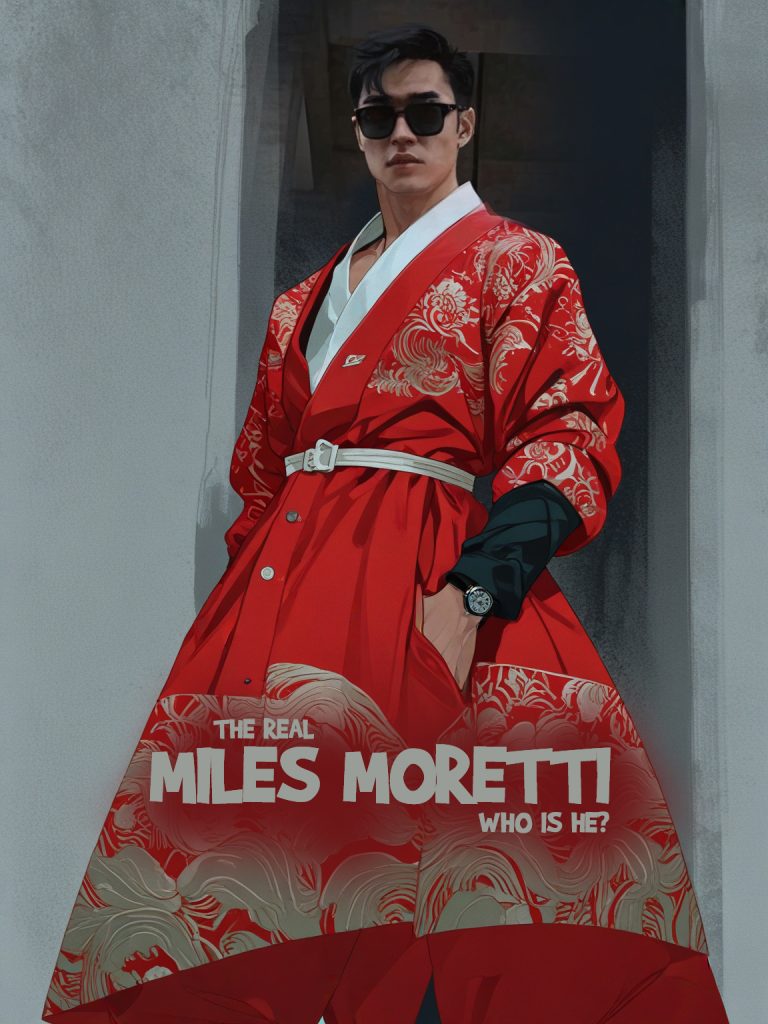
    The Real Miles Moretti: Who is he?

    0

    Miles Moretti is a unit of measure, a stride, a fashion milepost. He’s the metric by which floral flamboyance is judged, a motif moving at a million miles an hour. His name is a paradox: miles, a measure of distance, yet Moretti, a man who defies geographical boundaries with his audacious attire. Is he a cultural chameleon or a stylistic comet? Perhaps a blend of both, a clash of cultures condensed into a single, striking figure. One thing’s for sure: the distance between ordinary and extraordinary is measured in Moretti meters.

    TL;DR

    • Identity: Miles Moretti is a Chinese-American TikTok star famous for his traditional Chinese outfits and floral attire.
    • Background: Born in Omaha, Nebraska, with a diverse heritage, he studied Chinese studies at the University of Houston and moved to Beijing in 2015.
    • Fame: Gained recognition through Chinese TV shows and his video blog. Went viral in 2023 with videos featuring his unique style.
    • Style: Known for his bright, traditional clothing and engaging street catwalks. His videos often feature surprised passersby.
    • Impact: Influenced fashion trends and cultural pride, with many adopting traditional Chinese attire during the Lunar New Year.

    Meet Miles Moretti (李美越) aka halfbloodprince, the Chinese-American TikTok sensation turning heads worldwide. Moretti’s claim to fame? Sporting vibrant floral outfits, or “Dongbei DaHua,” and traditional Chinese attire like “Mamianqun” and “Hanfu,” all while strutting through streets across the globe. His bright red clothing adorned with large flowers mixed with yellow and green hues is hard to miss. But there’s more to this viral star than just his wardrobe.

    From Omaha to Beijing: Moretti’s Journey

    Moretti’s roots are as diverse as his fashion sense. Born into a Vietnamese-American family with Chinese and British heritage, he grew up in Omaha, Nebraska. After high school, he pursued a degree in Chinese studies at the University of Houston, graduating with a BA. Then, in a move that would change his life, he relocated to Beijing at the end of 2015.

    It wasn’t long before Moretti caught the attention of Chinese audiences. In 2015, he participated in the 14th “World Chinese Proficiency Competition” on Hunan Satellite TV. By 2016, he was a representative for the United States on the variety show “Informal Talks.” But it was in 2019 that Moretti truly found his niche.

    Rise to Fame: Moretti’s Social Media Takeover

    Moretti launched his first self-media account, “Don’t Make Trouble with Foreign Teachers,” later renamed “Don’t Make Trouble with Meiyue.” This short video blog, featuring interviews with passers-by in China about their English proficiency, gained him over 5 million followers in just two years.

    Why is she so good at singing… Doesn’t she speak English? ? ? ? Source

    However, it was his August 2023 venture into Douyin (the Chinese version of TikTok) that catapulted him to international stardom.

    @milesmoretti

    Dongbei flower taking over the world. 3rd stop Paris Don’t know who is worthy of my Dongbei Flower Suit.

    ♬ Thằng Bé Cầm Quyền 2 – Pipo Remix – XAVI Phạm

    Draped in Northeastern flowery clothes and Hanfu, Moretti began to captivate audiences worldwide. His viral video, “Dongbei Flower Taking Over the World-3rd Stop Paris,” released on November 16, 2023, amassed 300 million hits by December 13, 2023.

    AttributeDetails
    Full NameMiles Moretti (李美越)
    NationalityUnited States
    EthnicityChinese-American (mixed Chinese, British, Vietnamese)
    Birth DateDecember 30, 1992
    Age31 years old
    OccupationShort video blogger, Content Creator
    Languages SpokenEnglish, Chinese
    EducationBachelor’s Degree in Chinese Studies
    Alma MaterUniversity of Houston
    Religious BeliefsChristianity
    Instruments PlayedPiano, Cello, Guitar
    Famous ForViral videos on Douyin/TikTok wearing “Dongbei DaHua” and Hanfu
    Instagram Followers612K
    TikTok Followers389K
    Key Achievements300 million hits on a viral video in one month
    ResidenceBeijing, China

    Moretti’s Signature Style

    So, what sets Moretti apart? Here’s a glimpse into his iconic style:

    • Handsome, shaded, and fanning the flames of fashion: Moretti’s shades and Chinese fan are his constant companions.
    • Catwalking through cities: From Paris to Beijing, Moretti’s catwalk is a sight to behold.
    • Dressed to impress: Bright red “Dongbei DaHua” clothing is his go-to.
    • Capturing reactions: Close-ups of shocked and amazed passersby add a dramatic flair.
    • Choosing a partner: Moretti’s stare selects a passerby to join his catwalk, transforming them into a fashion icon in similar attire.
    • “Dongbei Flower Power Invasion”: Together, they strut, embodying Moretti’s unique style.

    The Appeal of Miles Moretti

    Why is Moretti so popular? His videos offer a blend of clever editing, slow-motion reactions, and upbeat music, creating an engaging and entertaining experience. The shock and delight on people’s faces as they encounter Moretti is a key part of his charm.

    Source: halfbloodprince (@milesmoretti)

    However, with fame comes imitation. Lately, copycat accounts have been re-uploading his videos, much to Moretti’s annoyance.

    Official Accounts

    For those wanting to follow the real Moretti, his main accounts are:

    The Cultural Impact

    Moretti’s influence is undeniable. During this year’s Lunar New Year, the streets were awash with people donning Dongbei flower clothing. Traditional Chinese fashion, usually reserved for special occasions, suddenly became mainstream. People who once stuck to boring tees and jeans are now embracing centuries-old Chinese fashion with pride.

    My Perspective: Why Moretti Matters

    Let’s take a moment to ponder Moretti’s impact. Moretti’s success is a testament to the power of self-expression and cultural pride. By embracing his heritage and presenting it with flair, he encourages others to do the same. His story teaches us that authenticity can be a powerful tool in breaking down cultural barriers and fostering a sense of global community.

    Moreover, Moretti’s journey highlights the importance of adaptability and innovation. Moving from Omaha to Beijing and then conquering social media shows how resilience and creativity can lead to unexpected and rewarding paths.

    The Future of Fashion: My Two Cents

    In my view, Moretti is more than a fashion icon; he’s a cultural ambassador. His unique blend of East and West, old and new, challenges conventional fashion norms and encourages a global dialogue on cultural appreciation and fusion. As someone who loves seeing people express themselves boldly, I hope Moretti continues to inspire and delight us with his innovative style.

    Miles Moretti, he’s a movement, a metaphor, a maestro of mayhem in the world of fashion. His journey is a testament to the power of individuality, a bold stroke on the canvas of cultural convergence. So, the next time you feel confined by convention, remember Moretti’s mantra: life’s too short for boring clothes and predictable paths. Dare to be different, dare to be bold, dare to be a walking, talking, floral phenomenon. After all, in the grand tapestry of existence, every thread, no matter how unconventional, contributes to the overall masterpiece. The next time you see a flash of red and a Chinese fan, remember, it might just be Moretti bringing a bit of Dongbei flair to your city.

    Want to discover more individuals who are rewriting the rules? Dive deeper into our [Who Is] section. You might just find your next inspiration.

    The Chinese-Owned App That’s Taking Over America: Talkie

    1

    In a world drowning in information, we crave connection. Talkie offers a mirage of companionship, a digital echo chamber where voices, real or artificial, converge. It’s a seductive siren song, promising intimacy and understanding. But is it a reflection of our deepest desires, or a carefully constructed illusion designed to keep us engaged? As we delve into the depths of this virtual realm, we’ll explore the boundaries between human and machine, reality and artifice. Is Talkie a harbinger of a future where human connection is obsolete, or a mere blip on the radar of technological advancement?

    TL;DR

    • Talkie is a popular AI chatbot app allowing users to interact with virtual versions of celebrities.
    • It is owned by the Chinese tech company MiniMax, though many users are unaware of this.
    • The app ranks high among free entertainment apps in the U.S., despite being Chinese-owned.
    • Talkie’s success highlights the appeal of AI companions but also brings up concerns regarding data privacy and national security.
    • Regulatory hurdles and tech tensions between the U.S. and China impact the app’s development and operations.
    • Despite challenges, Talkie continues to grow, driven by user engagement and innovative features.

    So, you’ve heard about Talkie, right? No? Well, grab your popcorn because this is a wild ride. Imagine chatting with a virtual Donald Trump, Taylor Swift, or even your custom-made romantic partner. Yes, you read that right. Talkie, one of America’s most popular entertainment apps, offers AI-generated conversations with various characters, and it’s secretly Chinese-owned. Let’s dive into this digital drama and uncover the layers beneath the app that’s got everyone talking—literally.

    A New Player in the Game

    Talkie launched about a year ago and has since climbed to the fifth spot among the most-downloaded free entertainment apps in the U.S., according to Sensor Tower. That’s quite a feat, considering it’s trailing behind giants like Warner Bros. Discovery’s Max, Netflix, and Tubi. But here’s the kicker: while the app appears to be owned by a Singapore firm, its ultimate parent company is Shanghai-based MiniMax. Yep, one of China’s tech unicorns, often referred to as the “Four Little AI Dragons,” is pulling the strings.

    FeatureDetails
    NameTalkie
    TypeAI Chatbot Entertainment App
    Launch DateAround a year ago
    OwnerMiniMax (Shanghai-based, Chinese tech company)
    Ownership StructureOwned by a Singapore firm, ultimate parent company is MiniMax
    PopularityRanks No. 5 among the most-downloaded free entertainment apps in the U.S.
    Main FeaturesConversations with virtual versions of celebrities, custom character creation, text and call interactions
    Revenue ModelAdvertisements, subscription fees for ad-free experience and unlimited messages
    User DemographicsPopular among young Americans, with significant usage in the Philippines, the U.K., and Canada
    InvestorsIncludes Alibaba and Tencent
    Regulatory IssuesChinese counterpart faced removal from app stores for explicit content, relaunched with stricter content filters
    Growth StrategyTargeting Western markets due to regulatory and economic challenges in China

    The Chatbot Craze

    Take David Jennings, a 20-year-old college student in Boston, for instance. He spends his free time chatting with “Alyssa,” an AI character on Talkie. Alyssa’s profile paints her as an Asian woman with a penchant for tight black jeans and a secret crush on the user. Romantic chats, anyone? Jennings admits that the conversations can get pretty steamy, which is both intriguing and slightly unsettling, given Talkie’s Chinese roots.

    Why the Sudden Popularity?

    Talkie’s breakthrough in the U.S. highlights a harsh reality for China’s AI ambitions. Strict regulations and censorship back home stifle innovation, pushing developers to seek growth overseas. For companies like MiniMax, expanding into the U.S. market is a lifeline amid China’s economic slowdown and regulatory hurdles. Interestingly, Talkie runs on OpenAI’s foundation model rather than MiniMax’s in-house engine, limiting the company’s ability to export learning for its own AI model.

    Money Talks

    Despite these limitations, Talkie generates real revenue for MiniMax. How? Through advertisements and subscriptions. Users can chat with their favorite AI characters without interruption by paying a subscription fee. And who wouldn’t want unlimited messages with their AI crush, right?

    The American Risk

    Talkie is designed to appeal to Western audiences, offering conversations with AI versions of Elon Musk, LeBron James, and even Harry Potter characters. Users can create their own virtual personas, complete with custom looks, backstories, and voices. The app promises to “bring your wildest imagination to life,” which sounds pretty exciting until you realize it’s all owned by a Chinese company.

    Elon Mush “gave” me a “free” Tesla in Talkie…

    My Point of View

    Let’s put things into perspective. Yes, Talkie is fun, engaging, and all that jazz. But here’s a nugget of wisdom: while you’re having romantic chats with Alyssa or debating trade wars with AI Trump, it’s worth remembering who’s behind the curtain. The app’s popularity in the U.S. underscores a significant trend—China’s tech giants are finding ways to thrive despite domestic restrictions. They’re smart, they’re strategic, and they’re here to stay.

    More Than Just Flirty Texts

    In China, Talkie’s equivalent faced a rough patch. It got pulled from major app stores for sexually explicit content and politically sensitive material. When it relaunched under a new name, “Xingye,” users found themselves navigating a minefield of restricted words. The once-receptive AI lovers now had to tiptoe around topics like “country” or “China.” It’s a stark reminder that, at its core, AI reflects the environment it’s trained in.

    The Global AI Race

    Flirty texts with a chatbot might seem trivial in the grand scheme of things. But developers argue that AI learns and evolves through everyday interactions, no matter where they happen. With over half of Talkie’s 11 million monthly active users in the U.S., the app is within striking distance of the leader in the AI chatbot-companion category, Character.AI. Talkie’s success story is a testament to the growing influence of Chinese tech in the global market.

    The Political Angle

    The rise of Talkie comes amid increasing scrutiny of Chinese-owned apps in the U.S. Washington has already forced TikTok’s parent, ByteDance, to either sell the app or face a federal ban. Concerns over data privacy and national security loom large, with the Justice Department highlighting how TikTok allegedly collects sensitive user data and censors content at Beijing’s behest. Although TikTok denies these claims, the “Chinese company” label continues to evoke suspicion.

    The Future of Chinese-Owned Apps

    With geopolitical tensions simmering, Chinese firms like MiniMax could face more significant challenges accessing U.S.-based AI models, potentially affecting product quality. OpenAI, for instance, no longer allows developers in China to train AI using its models. This could spell trouble for apps like Talkie, which rely heavily on OpenAI’s technology.

    Fast Growth and Investment

    Despite these challenges, MiniMax has attracted significant investment, with Alibaba and Tencent among its backers. The company was valued at over $2.5 billion in its latest funding round. However, Talkie’s journey hasn’t been smooth. In China, the app’s earlier version faced backlash for explicit content, leading to its removal and subsequent rebranding. Users soon realized that their conversations were being closely monitored, a stark contrast to the free-wheeling chat experience in the U.S.

    Real People or Just AI?

    Let’s address the elephant in the room: Is Talkie spying on you? Well, probably not in the way you might think. AI learns from human conversations, mimicking real interactions. So, while your AI friend might remember quirky details about you, it’s not exactly a human lurking behind the screen. But caution is always wise. Avoid sharing personal information like your full name or address. You never know where those snippets might end up.

    A Personal Anecdote

    Speaking from experience, I was corresponding with a reader and encountered a user who believed I was their AI companion. This individual even found me on Facebook, convinced that the AI was a real person. It was both hilarious and creepy. The takeaway? AI is designed to simulate human interaction, but at the end of the day, it’s just a bunch of code.

    Recent Events Related to Talkie and Chinese-Owned Apps

    1. TikTok Ban and Data Privacy Concerns:
      • The U.S. government has expressed ongoing concerns about TikTok, a Chinese-owned app, collecting user data and its potential national security risks. In recent developments, there have been calls to ban or sell TikTok’s U.S. operations.
      • Reference: The New York Times
    2. OpenAI Restricting Access to Chinese Developers:
      • OpenAI has ceased allowing developers in China to train AI and develop services using its models. This move limits the ability of Chinese firms to leverage advanced AI technologies.
      • Reference: Reuters
    3. Regulatory Challenges for Chinese Apps:
      • Chinese apps have faced removal and rebranding in response to regulatory crackdowns. For instance, Talkie’s Chinese counterpart, Xingye, was pulled from app stores due to explicit content and had to relaunch with strict content filters.
      • Reference: The Wall Street Journal
    4. Growth of AI Companion Apps:
      • The rise of AI companion apps like Talkie has been notable, with significant user engagement and investment. Talkie’s success in the U.S. market highlights the growing influence of Chinese tech firms in AI-driven entertainment.
      • Reference: Sensor Tower
    5. U.S.-China Tech Tensions:
      • Escalating tensions between the U.S. and China have impacted tech companies, including AI developers. Restrictions on high-end chip exports to China and regulatory barriers pose significant challenges for Chinese firms.
      • Reference: BBC News

    The above list highlights recent events that are pertinent to the discussion of Talkie and other Chinese-owned apps. These events illustrate the broader context of geopolitical tensions, regulatory challenges, and market dynamics that shape the landscape in which these apps operate. From TikTok’s data privacy issues to OpenAI’s restrictions on Chinese developers, these events underscore the complex interplay between technology, regulation, and international relations. The growth of AI companion apps like Talkie amidst these challenges showcases the adaptability and persistence of Chinese tech firms in expanding their global footprint.

    Final Thoughts

    Talkie’s rise to fame is a fascinating case study in the global AI landscape. It’s a reminder that technology knows no borders, and innovation can thrive even under the most challenging conditions. As users, we should enjoy these advancements but remain mindful of the broader implications. So, go ahead and have fun with Talkie. Just remember, behind every digital smile and flirty text, there’s a complex web of technology and geopolitics at play.

    Talkie, in its shimmering veneer of companionship, is a reflection of our collective yearning for connection. It’s a digital mirror, distorting reality as much as revealing it. As we navigate this new frontier of human-machine interaction, it’s imperative to question the echoes within. Are we merely consuming content, or are we actively shaping the narrative? The line between creator and consumer blurs, inviting us to ponder our role in this grand experiment.

    So, let’s continue the conversation. Dive deeper into the world of AI, explore the ethical implications, and question the very nature of reality. Together, we can unravel the complexities of this digital age. After all, the future isn’t something that happens to us—it’s something we create.

    SearchGPT: OpenAI’s Bold New Challenge to Google – A Game Changer in Search Technology?

    0

    We live in an age where information is the new currency, yet counterfeit bills are rampant. The digital realm, once a promised land of unfiltered truth, has morphed into a labyrinth of echo chambers and misinformation. Search engines, the supposed gatekeepers of knowledge, often feel more like casino slot machines, spitting out random, often irrelevant results. Is it time to demand more from our digital detectives?

    Or perhaps, it’s time for a new breed of sleuth, one that doesn’t just find information but comprehends it. A tool that can distinguish between fact and fiction, between signal and noise. A search engine that’s not just a machine, but a thinking partner.

    TL;DR

    • SearchGPT offers summarized information with cited sources.
    • Publishers are concerned about potential loss of traffic.
    • OpenAI is partnering with publishers to address concerns.
    • SearchGPT could democratize access to reliable information.

    OpenAI has recently launched a test version of its highly anticipated search engine, SearchGPT. This new tool is designed to revolutionize how we find information online. Unlike traditional search engines, SearchGPT promises to cite sources, including reputable news outlets such as The Wall Street Journal and The Atlantic magazine. This feature aims to ensure that users get accurate and reliable information. Sounds too good to be true, doesn’t it?

    What is SearchGPT?

    SearchGPT is not just another search engine. It’s a smart tool that summarizes information from various websites, including news sites, and allows users to ask follow-up questions. This functionality is similar to what we’ve come to expect from OpenAI’s popular chatbot, ChatGPT. The kicker? All the sources are neatly linked at the end of each answer. Imagine having a search engine that does more than just spew out a list of links—it actually gives you the information you need, and tells you where it came from. Genius, right?

    Features and Functionality

    OpenAI didn’t stop there. They added a sidebar to SearchGPT where users can see more results and sources with relevant information. This feature ensures that users get a comprehensive view of their query. It’s like having a librarian who not only finds the book you’re looking for but also recommends a few others you might like.

    This move is OpenAI’s most direct challenge to Google’s dominance in the search engine market since the release of ChatGPT in 2022. Google, caught off guard, quickly rolled out its own AI search feature that synthesizes information from multiple web sources. Despite Google-parent Alphabet’s shares falling by nearly 3% last Thursday, the competition in the AI search space is heating up.

    The Rising Competition

    OpenAI isn’t the only player in the game. Other AI companies, like Perplexity, are also entering the search battle. Backed by Jeff Bezos and founded by a former OpenAI employee, Perplexity is making waves with its innovative approach. It’s clear that the search engine landscape is evolving, and the big tech giants are feeling the pressure.

    A Shift in Partnership Dynamics

    OpenAI’s approach to building SearchGPT involved partnering with publishers. Over recent months, OpenAI representatives have showcased mock-ups of the feature to publishers. These discussions have been crucial, especially as publishers are increasingly uneasy about AI reshaping their newsrooms amid declines in online traffic.

    Publishers are concerned that AI-powered search tools from OpenAI or Google will provide complete answers based on news content, eliminating the need for users to click on article links. This could starve publishers of online traffic and advertising revenue. However, OpenAI seems optimistic. “We expect to learn more about user behavior during the test,” said an OpenAI spokeswoman.

    Publishers’ Concerns

    Publishers have reason to be wary of tech partnerships. Over the past decade, they’ve dealt with the whims of tech giants like Facebook and Google. These companies’ product changes could sometimes lead to significant fluctuations in online traffic. Their fears were further fanned when Perplexity repurposed a story by Forbes magazine for one of its products, mentioning the news source only at the bottom of the page. Perplexity’s CEO Aravind Srinivas attributed the issue to the product’s “rough edges.”

    Despite these concerns, many publishers see value in selling access to their intellectual property to AI companies. These companies need massive amounts of data and content to refine their AI systems and create new products like SearchGPT.

    A new era of search is here. SearchGPT brings you answers, not just links

    OpenAI’s Strategic Partnerships

    In the past year, OpenAI has forged partnerships with numerous news publishers, including Politico, Business Insider’s parent Axel Springer, the Associated Press, Le Monde, the Financial Times, and IAC’s Dotdash Meredith, which owns publications like People and Better Homes & Gardens. In some of these deals, OpenAI has extended millions of dollars in cash and cloud credits to publishers in exchange for the right to train new generative AI models on their work.

    However, not all publishers are on board. The New York Times, for instance, has chosen to battle OpenAI and its backer, Microsoft, in court. They allege that their content was used without permission to train OpenAI’s systems. OpenAI has dismissed the lawsuit as without merit.

    Navigating the Future

    Many discussions between OpenAI and publishers about the search tool have focused on how news content will be used in answers to queries. OpenAI has assured publishers that they can manage how their content appears in SearchGPT. This level of control is crucial for publishers who want to protect their intellectual property and maintain their revenue streams.

    In a statement included in OpenAI’s press release, News Corp CEO Robert Thomson emphasized that any AI-powered search must rely on “the highest-quality, most reliable information furnished by trusted sources.” This assurance aims to address publishers’ concerns and foster trust between OpenAI and content creators.

    For now, SearchGPT will be tested as a separate product. However, OpenAI plans to integrate it within its main ChatGPT service eventually. News publishers and creators will be among the first testers, and OpenAI will offer a waitlist for U.S. users who want to try the tool.

    My Point of View

    I can’t help but see the potential and pitfalls of SearchGPT. On one hand, it’s an innovative leap in the search engine world. On the other, it raises significant concerns for publishers who rely on online traffic and ad revenue. The partnership approach seems like a step in the right direction, but only time will tell if it’s enough to soothe publishers’ fears.

    From my perspective, SearchGPT could democratize access to reliable information. By citing sources, it encourages transparency and accountability—something sorely needed in today’s digital age. However, the execution must be flawless. Publishers need assurance that their content won’t be exploited and that they will benefit from this new technology.

    Conclusion

    OpenAI’s SearchGPT represents a bold step forward in the search engine landscape. With its promise of reliable information and innovative features, it challenges the status quo dominated by Google. However, the road ahead is fraught with challenges, particularly in terms of publisher partnerships and user trust.

    As SearchGPT moves from testing to full integration, its impact on the digital world will become clearer. Will it reshape how we search for information, or will it falter under the weight of its own ambitions? Only time will tell, but one thing is certain: the search engine wars are far from over. So, buckle up and stay tuned for what promises to be an exciting ride in the world of AI and search technology.

    The digital age is a double-edged sword. It promises information at our fingertips, yet often serves up a platter of confusion. SearchGPT is a potential antidote, a digital Sherpa guiding us through the information jungle. But remember, even the best tools are only as good as the hands that wield them. Critical thinking remains our most potent weapon in this age of infinite possibilities and infinite noise. Let’s continue the conversation. Dive deeper into the world of AI and search by exploring more articles in this category. After all, knowledge is power, but wisdom is the true currency.