
More
    Home Blog Page 88

    How Ji-hwan’s Journey in “My Sweet Mobster” Teaches Us About Love, Sacrifice, and Redemption

    0

    They say love is a battlefield. For Ji-hwan, it was a warzone. Surrounded by the gritty underbelly, he was a soldier conscripted into a life of violence. Yet, amidst the chaos, a tender spark ignited, a love story as unexpected as a flower blooming in concrete. It was a love that demanded sacrifice, a currency traded in blood and tears. But in the end, it was this very sacrifice that paved the path to redemption, a journey from the underworld to a world bathed in sunlight. Was it a fairytale? A morality play? Perhaps a little of both. Join us as we dissect the layers of this dramatic onion and uncover the truths hidden within.

    TL;DR

    • Ji-hwan faces intense drama as he confronts his past and fights for his future with Eun-ha.
    • The shift from sweet to intense highlights the challenges Ji-hwan faces, including confronting his father and dealing with corporate chaos.
    • Ji-hwan’s sacrifice and the unexpected ally, Yang-hee, emphasize the themes of redemption and protection.
    • The series concludes with a hopeful future for Ji-hwan and Eun-ha, reflecting on love and resilience.

    Introduction: A Drama Worth Watching

    Let’s dive into the dramatic world of “My Sweet Mobster.” This K-drama has it all: love, sacrifice, redemption, and enough plot twists to keep you on the edge of your seat. In the climactic finale, our hero, Ji-hwan, faces his past and fights for his future with his lady love. But what can we learn from this rollercoaster ride of emotions? Buckle up, because we’re about to find out.

    Episode Recap: From Sweet to Intense

    Firstly, let’s talk about the shift in tone. As we move into the final episodes, the melodrama hits like a truck of doom on steroids. It’s intense, fast, and heart-palpitating. Previously, the series leaned more toward the “sweet” side of “My Sweet Mobster,” but now it’s embracing the “mobster” part full force. This shift might be jarring, but it’s necessary to give credibility to the horrors of Ji-hwan’s upbringing.

    Confronting the Past: Ji-hwan’s Battle

    So, what happens when Ji-hwan confronts his past? Well, after his goon hits Hyung-woo with a brick, Yang-hee waits for Ji-hwan to arrive. He pulls a knife on him, which triggers Ji-hwan’s dormant instincts. These instincts, beaten into him as a teenager, explode in a barrage of punches directed at Yang-hee. Eun-ha, witnessing this violence, is horrified. When the police drag Ji-hwan away, he’s mortified by his actions and ashamed of his inability to protect Eun-ha.

    Protection and Hypocrisy: The Aftermath

    Meanwhile, Hyun-woo, despite his injury, goes to the police station to give a witness statement. He confirms Ji-hwan’s goodness but later chastises him for not protecting Eun-ha. Ironically, Hyun-woo had okayed Eun-ha’s dangerous solo trip to the dumpster. Ji-hwan, burdened by guilt and the unexpected presence of his father, decides Eun-ha would be safer with Mi-ho and her family. This decision, though heartbreaking for Eun-ha, is temporary while Ji-hwan deals with his evil father and the crumbling Thirsty Deer company.

    Corporate Chaos: Saving Thirsty Deer

    Now, let’s talk about the Thirsty Deer. With most executives gone, morale is at an all-time low. Ji-hwan’s attention is split between damage control and thwarting his father’s plans. Unbeknownst to him, Eun-ha and Ye-na team up to save the company. They sneak into Ji-hwan’s house to film a life-saving video, boosting company spirits.

    Romantic Resolutions: Eun-ha and Ji-hwan’s Love

    After filming, Eun-ha runs into Ji-hwan. He initially orders Marketing Deerling to take Eun-ha home but then decides to escort her himself. Eun-ha, however, stands her ground. She tearfully explains she wants to be with him despite the dangers. Ji-hwan, moved by her plea, embraces her tightly. Later, he admits his fear of her getting hurt but asks for more time to resolve his issues.

    Sacrifice and Violence: The Father’s Trap

    Ji-hwan’s father, sensing an opportunity, captures Cat-Loving Deerling to lure Ji-hwan into a trap. When Ji-hwan arrives at the warehouse, he finds his father holding Deerling hostage. Ji-hwan’s father demands Ji-hwan accept his role as heir, but Ji-hwan refuses and takes the blows meant for Deerling. This violent scene is hard to watch but heightens the stakes and emotional investment.

    Redemption and Change: The Unexpected Ally

    Surprisingly, Yang-hee, released on bail, arrives intending to kill Ji-hwan’s father. Ji-hwan, despite his father’s cruelty, shields him from Yang-hee’s knife, getting stabbed in the process. As Ji-hwan collapses, he imagines seeing Eun-ha and hearing her promise to wait for him. This moment, filled with pain and love, showcases Ji-hwan’s unwavering loyalty and sacrifice.

    The Aftermath: Coma and Recovery

    Ji-hwan’s extensive blood loss leads to a coma. However, he soon awakens, thanks to Deerling’s magical gray hair plucking technique. This fairy tale “kiss” heralds the return of the drama’s lighter tone. With the bad guys neutralized, Ji-hwan’s father disowns him but signals his approval for Ji-hwan to live freely with Eun-ha.

    A New Beginning: Love and Happiness

    Fast forward to Mi-ho and Il-young’s baby’s 100-day celebration. The house is filled with happiness. Ji-hwan realizes he wants to marry Eun-ha. After seeing her hold a baby and hearing a deerling mention marriage, his mind is set. His proposal is a callback to their childhood, filled with sweet nostalgia and love. Eun-ha, moved by his heartfelt gesture, accepts, and they kiss, marking a new beginning.

    Loose Ends and Epilogue: What About Ye-na?

    Though the drama ties up most loose ends, some questions remain. What happened to Ye-na? The ending, while satisfying, leaves a few threads hanging. However, “My Sweet Mobster” has always been about the journey and the moments of joy and laughter along the way.

    My Point of View

    Ji-hwan’s journey is a powerful reminder of the importance of facing one’s past and protecting loved ones. His sacrifices and the support systems around him illustrate how collective action and love can overcome even the darkest challenges. Moreover, the themes of redemption and change highlight that no one is beyond hope. Ji-hwan’s father’s change of heart and Yang-hee’s unexpected actions show that even the most entrenched individuals can transform. Finally, the drama’s emphasis on resilience and recovery is a testament to the strength of the human spirit.

    Lessons Learned

    In conclusion, “My Sweet Mobster” is more than just a melodramatic K-drama. It’s a story about love, sacrifice, redemption, and the power of support systems. Ji-hwan’s journey teaches us that facing our past is crucial, protecting our loved ones is paramount, and that resilience and recovery are possible with the right support. So, the next time you watch a drama, remember to look for these deeper lessons. They might just help you navigate your own life’s challenges.

    My Final Thoughts

    Remember, life is much like a drama. It has its ups and downs, moments of joy and sorrow. But through it all, it’s the love, support, and resilience that carry us forward. So, take a page from Ji-hwan’s book: face your past, protect your loved ones, and never give up on the possibility of redemption. And most importantly, enjoy the journey.

    So, there you have it. A tale of love, loss, and the relentless pursuit of redemption, served up with a side of mobster drama. Like a fine wine, “My Sweet Mobster” ages gracefully, leaving a rich aftertaste of thought-provoking questions. Did Ji-hwan truly escape the shadows, or is the darkness merely lurking, waiting for its next opportunity to strike? And what does his journey say about the complexities of human nature? Only you, dear reader, can provide the answers.

    Delve deeper into the intricate worlds of your favorite characters. Explore the complexities of love, the sacrifices we make, and the redemptive power of human spirit. Our shelves are brimming with stories that will challenge your perceptions and ignite your imagination. So, why wait? Dive in!

    Call to action: Discover more captivating tales of love, loss, and redemption in our [Drama] section. Your next obsession awaits!

    Is the Loch Ness Monster Real?

    0

    The question is as old as the hills, as deep as the loch itself. Is Nessie a relic of the prehistoric, a phantom of the imagination, or perhaps something more prosaic, like a particularly large eel with a penchant for publicity? The allure of the unknown, the thrill of the chase, and the insatiable human appetite for mystery have all converged on this stretch of Scottish water, creating a phenomenon as elusive as the creature it purports to harbor. It’s a riddle wrapped in an enigma, a legend cloaked in skepticism, and a question that continues to ripple through the collective consciousness like the waves that lap at the loch’s shore.

    TL;DR

    • The Loch Ness Monster, or “Nessie,” is a famed creature from Scottish folklore.
    • Sightings date back to ancient times, with the first recorded account in the 6th century.
    • The 1930s brought global attention to Nessie with numerous alleged sightings and photos.
    • Scientific studies, including sonar surveys and eDNA analysis, have found intriguing but inconclusive evidence.
    • The legend of Nessie continues to drive tourism and cultural interest.

    Ah, the Loch Ness Monster, that elusive creature that has captivated imaginations for centuries. But is there any truth to the legend? Buckle up, dear reader, as we embark on a journey through history, myth, and a splash of skepticism, to uncover the mystery of Nessie.

    The Beginning of the Legend

    In the summer of 1933, a curious frenzy erupted on the shores of Loch Ness, a freshwater lake nestled in the Scottish Highlands. Imagine the scene: journalists, thrill-seekers, and locals, all gathered in hope of witnessing a legend. It all started when a couple claimed they saw an enormous creature “rolling and plunging on the surface” of the lake. This wasn’t just a casual “Oh, look at that big fish” moment; it was a full-blown media sensation.

    But let’s pause for a moment. Was this the first sighting of the infamous Nessie? Hardly. Stories of a mysterious beast in Loch Ness date back to the 6th century. Yes, you heard that right. Long before the era of tabloids and viral tweets, people were already swapping tales of a monster lurking in the depths.

    Public Domain
    The Maiden Stone, a Pictish carving discovered by ancient Romans in the 1st century, appears to depict an enigmatic creature. Some believe this mysterious figure is the legendary Loch Ness Monster.

    Ancient Sightings: Fact or Fancy?

    Travel back in time to the first century when the Romans encountered the Picts, a group of fierce, tattooed warriors in Scotland. The Picts left behind enigmatic carvings, including one that defied explanation. It depicted a creature with flippers and a long beak. Some say it was a “swimming elephant,” others believe it was an early depiction of our dear Nessie.

    Fast forward to 565 C.E., where we find St. Columba, an Irish abbot, facing down a “water beast” in Loch Ness. According to legend, the beast had killed a Pict, prompting St. Columba to bravely wade into the lake, make the sign of the cross, and command the creature to retreat. Miraculously, it did. The Picts, suitably impressed, converted to Christianity on the spot.

    On May 2, 1933, the Inverness Courier published Mackay’s account of encountering a mysterious “monster” in the depths of Loch Ness.

    The Modern Myth Takes Shape

    Fast forward again to April 14, 1933. Aldie Mackay and her husband were driving along a new road near Loch Ness when Aldie saw something strange in the water. “Stop!” she cried. “The beast!” And just like that, the Loch Ness Monster was back in the headlines. Soon, sightings multiplied. Fishermen, clergymen, police inspectors, and even bank managers claimed to see the beast. The media frenzy was unstoppable.

    Enter Marmaduke Wetherell, a big-game hunter hired by the London Daily Mail to track down the monster. He found large footprints near the shore, but they were later identified as belonging to a hippopotamus. Yes, a hippo. It seemed Wetherell had used a stuffed hippo foot to fake the prints. But even this didn’t dampen the public’s fascination.

    Keystone/Getty Images
    This 1934 photograph seemingly captured the Loch Ness Monster. However, it was exposed as a hoax decades later.

    The Infamous Photograph

    In April 1934, the Daily Mail published a photograph that would become iconic. Taken by a London physician named Robert Kenneth Wilson, it appeared to show the Loch Ness Monster with its long neck protruding from the water. For decades, this photo was the “proof” believers clung to.

    But wait, there’s more. In 1994, the truth behind the photo was revealed. It turned out Wetherell, humiliated by the hippo footprint debacle, had orchestrated a hoax. His son and stepson constructed a model monster attached to a toy submarine, and Wilson provided the credibility. Thus, the famous photo was a clever ruse.

    The Scientific Approach

    Despite the hoaxes, some intriguing evidence has emerged over the years. In the 1960s, sonar expeditions detected large, moving objects in the lake. In 1975, underwater photography captured what appeared to be a giant flipper. So, what could explain these findings?

    One theory is that the Loch Ness Monster is a surviving plesiosaur, a marine reptile from the age of dinosaurs. However, this is highly unlikely. For starters, the lake is too cold for a reptile, and plesiosaurs have been extinct for millions of years.

    In a quest for answers, geneticist Neil Gemmell of New Zealand’s University of Otago conducted a study of Loch Ness’s DNA. His team analyzed 250 water samples and found no evidence of prehistoric reptiles. However, they did find plenty of eel DNA, suggesting that large eels could be mistaken for the monster.

    Recent Developments and Related Events

    1. Sonar Surveys in Loch Ness
      In 2020, new sonar imaging technology was used to survey Loch Ness, revealing large, unexplained underwater objects. This renewed interest in the Loch Ness Monster, suggesting that there may still be undiscovered secrets in the lake.
    2. Environmental DNA (eDNA) Study
      In 2019, a team led by geneticist Neil Gemmell conducted an extensive eDNA study of Loch Ness, analyzing water samples for traces of unusual DNA. The study found no evidence of large prehistoric reptiles but did suggest the presence of large eels.
    3. Tourism and Economic Impact
      The legend of the Loch Ness Monster continues to drive significant tourism to the region, contributing millions of pounds to the local economy annually. Recent reports indicate a resurgence in interest and visitor numbers post-pandemic.
    4. New Photographic Evidence
      In 2021, a photograph taken by a tourist appeared to show a large, mysterious shape in Loch Ness, sparking renewed debate and media coverage about the existence of Nessie.
      • Source: The Sun
    5. Cultural and Media Attention
      Documentaries and TV specials continue to explore the Loch Ness Monster legend, with recent productions in 2023 revisiting old evidence and presenting new theories, keeping the myth alive in popular culture.

    The legend of the Loch Ness Monster remains vibrant and influential, with recent technological advancements and scientific studies continuing to fuel the debate. Sonar surveys and environmental DNA studies provide fresh insights, though they often yield more questions than answers. The economic impact of the Nessie myth is substantial, drawing tourists and generating media interest. New photographic evidence and ongoing cultural fascination ensure that the Loch Ness Monster legend endures, captivating new generations and sparking worldwide curiosity.

    My Two Cents

    So, what do I think of all this? Well, let’s start with the obvious. Humans love a good mystery, and the Loch Ness Monster is one of the best. It combines ancient legends, modern hoaxes, and a dash of scientific intrigue. But does that mean Nessie is real? Probably not. The most compelling evidence has been debunked, and the lake’s ecosystem doesn’t support the existence of a large, unknown creature.

    Yet, there’s something magical about the Loch Ness Monster story. It taps into our deepest desires for wonder and discovery. Maybe Nessie isn’t real in the physical sense, but as a cultural icon, she embodies our love for the unexplained. So, if you find yourself on the shores of Loch Ness, keep an eye out. You might not see a monster, but you’ll be part of a centuries-old tradition of curiosity and imagination.

    The Legend Lives On

    In the end, the Loch Ness Monster remains one of history’s greatest mysteries. From ancient carvings and saintly encounters to modern-day sightings and scientific studies, Nessie continues to captivate. Whether you’re a skeptic or a believer, the legend of the Loch Ness Monster is a fascinating tale of human creativity and the enduring allure of the unknown.

    So, is the Loch Ness Monster real? The question lingers like a mist over the loch, as tantalizing as the creature itself. Perhaps Nessie is nature’s ultimate troll, a master of disguise and misdirection. Or maybe she’s a collective hallucination, a testament to our yearning for the extraordinary. Whatever the truth, one thing is certain: the legend endures, a testament to human curiosity and our eternal fascination with the unknown.

    So, dive deeper into the murky waters of history. Explore other enigmas that have captivated humanity for centuries. Who knows, you might find a monster of your own.

    Huge Disappointment: Anthony Ammirati’s Paris 2024 Pole Vault Crotch Mishap

    The Olympics: a stage for human triumph, where athletes push the boundaries of physical and mental capabilities. Yet, even in this realm of extraordinary feats, the unexpected can crash down with the force of a misplaced pole vaulter. Anthony Ammirati’s encounter with the crossbar was more than just a stumble; it was a collision of athletic ambition and anatomical irony.

    This is a tale of heights and depths, of aspirations and awkwardness, of gold medal dreams and groin-related global attention. It’s a story about the fragility of human ego in the face of unforgiving metal, a narrative that begs the question: is it possible to vault one’s way into infamy?

    Join us as we delve into the world of pole vaulting, where inches can mean the difference between glory and…well, something entirely different.

    TL;DR

    • French pole vaulter Anthony Ammirati’s unfortunate incident during the Paris Olympics 2024 went viral.
    • His crotch hit the crossbar, causing him to miss the qualifying mark.
    • Social media had a field day with witty and humorous reactions.
    • Ammirati expressed his disappointment but remained resilient.
    • The article provides a friendly and humorous take on the event, highlighting lessons learned.

    The 2024 Paris Olympics were a kaleidoscope of emotions for athletes and fans alike. Alongside moments of elation and crowning glories, there were bound to be unexpected hiccups that added a dash of drama to the competition. French pole vaulter Anthony Ammirati, a rising star with a U20 World Championship gold medal gleaming on his resume, experienced a unique blend of both triumph and temporary setback. His attempted vault at the men’s qualifier took an unforeseen turn, catapulting him into a peculiar spotlight and the annals of Olympic internet history.

    A Hurdle No One Anticipated

    On August 3rd, during the qualification rounds, 21-year-old Ammirati faced a hurdle far beyond the bar itself. As he propelled himself upwards with the grace and power honed through countless training sessions, a collision occurred, causing a gasp to ripple through the crowd and a collective “oh no” to escape lips worldwide. The culprit? An unfortunate clash between the crossbar and, well, let’s just say Ammirati didn’t quite clear the bar in the traditional sense. This unscripted moment, captured on video with lightning speed, quickly went viral, leaving Ammirati with a deflated dream and the internet perpetually amused.

    A Clip That Went Viral Faster Than a Pole Vaulter

    The digital age ensures that nothing escapes the ever-watchful eyes of social media. The video, a testament to the internet’s insatiable appetite for the unexpected, shared on platforms like X (formerly Twitter) by users like @Glodyswotcher, went viral in a flash. The caption, highlighting the on-air commentators’ struggle to address the incident with a straight face, only fueled the online firestorm. Reactions ran the gamut from cheeky remarks like “Ammirati brought a whole baguette to the competition” to heartfelt sympathy for the athlete’s disappointment. Some even found humor in the irony – an Olympic hopeful making headlines not for a record-breaking feat, but for a physics lesson gone awry. The incident sparked conversations about the immense pressure athletes face, the importance of mental fortitude alongside physical prowess, and of course, the power of a well-timed meme.

    Breaking Silence and Sharing Disappointment

    Following the event, Ammirati took to the French Athletics Federation (FFA) website to express his “huge disappointment.” He acknowledged his near-miss on the crucial third attempt at 5.70 meters, attributing it to a lack of recent training due to a minor injury. Despite feeling physically prepared, he admitted a few extra sessions could have made the difference. While his primary goal was to connect with the home crowd and showcase his skills, his unforeseen mishap overshadowed his efforts to engage. His statement, however, revealed the grace and sportsmanship that define him as an athlete. He acknowledged the disappointment of his fans but also expressed his unwavering determination to return stronger.

    My Take

    Source: @Glodyswotcher on X

    Anthony, you aimed high, literally and metaphorically. While the bar may have had the last laugh this time, you’ve secured a permanent spot in Olympic trivia – not every athlete gets to experience a misstep becoming a global sensation, right? Look at it as a chance to connect with a whole new audience, one that appreciates a good laugh and a story of resilience.

    Learning From Unexpected Events

    So, what can we glean from this experience? First and foremost, even the most talented athletes encounter setbacks. Ammirati’s experience reminds us that while practice and preparation are paramount, so is a healthy dose of self-deprecating humor. He might have fallen short this time, but his resilience and unwavering determination will be the hallmarks of his career. This experience, though undeniably awkward, will likely fuel his future endeavors. It’s a reminder that sometimes, the most valuable lessons are learned from unexpected detours on the path to success.

    Looking Forward with Unwavering Resolve

    Anthony Ammirati’s Paris 2024 Olympic journey was a rollercoaster of emotions, from soaring hopes to a viral mishap. His story is a testament to the unpredictable nature of sports and the resilience required to overcome adversity. While the outcome wasn’t what he or his fans had hoped for, his experience has undoubtedly shaped him into a stronger athlete and a public figure who has connected with people on a deeply human level.

    Additional Insights:

    • The Power of Social Media: Ammirati’s story highlights the double-edged sword of social media. While it can amplify an athlete’s achievements, it can also magnify their failures. It’s a platform that can both build and break, and athletes must learn to navigate its complexities.
    • Mental Health in Sports: The pressure to perform at the highest level can take a toll on an athlete’s mental health. Ammirati’s experience underscores the importance of prioritizing mental well-being alongside physical training.
    • The Future of Pole Vaulting: Incidents like Ammirati’s might lead to rule changes or equipment modifications in pole vaulting to prevent similar occurrences. It’s a reminder that sports are constantly evolving.

    A Final Word:

    Anthony, remember, every athlete, even the greatest ones, has faced setbacks. What sets you apart is how you respond to them. Your journey is far from over. You’ve shown courage, humor, and resilience. These qualities, combined with your talent, will undoubtedly lead you to new heights.

    So there you have it: a tale of triumph and tragedy, of ambition and anatomy. Anthony Ammirati’s moment in the spotlight was as fleeting as it was unforgettable. Whether you’re pondering the complexities of human error or the absurdity of viral fame, one thing is clear: the Olympics can be a stage for the extraordinary, the ordinary, and the downright awkward.

    As we contemplate the heights and depths of human endeavor, let’s remember that even in our most embarrassing moments, there’s a story to be told. And who knows, perhaps your own personal tale of triumph or tribulation could be the next viral sensation.

    Want to share your own Olympic-sized mishaps or moments of glory? Join the conversation in the comments below!

    China’s Solar Power Boom: Blessing or Curse?

    0

    The sun, a celestial body that has warmed life on Earth for billions of years, is now at the center of a terrestrial tempest. China, a nation as vast and complex as the cosmos itself, has harnessed its radiant energy with unprecedented fervor. Solar panels, once a fringe technology, now blanket its landscapes like a patchwork quilt of ambition. But is this a quilt of warmth and prosperity, or a shroud over a nation’s most precious resource? As China basks in the glow of its solar achievement, shadows of doubt creep across the horizon. Is this a dawn of a new era, or a twilight of old certainties?

    TL;DR

    1. Rapid Solar Expansion: China installed more solar power capacity last year than the U.S. has built in its history, driving renewable energy growth.
    2. Food Security Concerns: The expansion of solar farms is encroaching on arable land, threatening China’s food security and violating government policies.
    3. Government Crackdown: Beijing has increased efforts to regulate illegal solar projects that encroach on farmland, issuing new guidelines and punishing violators.
    4. Agrivoltaic Solutions: Agrivoltaic systems, which integrate solar panels with agricultural activities, are seen as a potential solution to balance renewable energy production with land use.
    5. Climate Change Impact: Ongoing climate change is exacerbating agricultural challenges, making the protection of arable land even more critical.

    China installed more solar power capacity last year than the U.S. has built in its entire history. Impressive, right? But now, Beijing’s leadership is fretting that the solar surge might have gone too far, encroaching on cropland and jeopardizing Xi Jinping’s goal of making China self-sufficient in food. Let’s dive into this tangled web of energy and agriculture, shall we?

    Solar Farms vs. Farmland: The Great Debate

    Fueled by the ever-growing demand for renewable energy, solar power projects have become a cash cow. Especially with state subsidies sweetening the deal, companies, local officials, and even farmers are jumping on the solar bandwagon. They’re repurposing cropland for solar farms, often flouting Beijing’s stern directives against converting arable land.

    This issue came to the forefront when China Central Television (CCTV) aired a report earlier this year, spotlighting the conflict between solar expansion and farmland preservation.

    Muzi Township’s Solar Saga

    Take the rural township of Muzi in Hubei province, a major grain-producing region. CCTV found that several hundred acres of what was once “high-quality farmland” were now covered with solar panels. This, despite local authorities’ 2019 plans to build irrigation channels, drainage, and roads to boost crop yields.

    While supporting the solar sector is commendable, “no matter how good the industry, it shouldn’t violate state laws and go against the central government’s policies,” CCTV admonished. “The protection of farmland is a major matter related to national security strategy.”

    Clashing Campaigns: Food Security vs. Renewable Energy

    Xi Jinping’s sweeping priorities sometimes clash on the ground. Food security is crucial for Chinese leaders, given the country’s limited water supply and arable land. Historical food shortages, like the Great Famine of 1959-61, have left a lasting scar, and climate change is stoking fears of new threats to agriculture. Despite recent increases in food production, it’s still not enough to keep pace with rising demand.

    Xi has been vocal about defending China’s “arable land red line” of around 300 million acres to avoid over-reliance on imports. Yet, urbanization, illegal encroachment, and other factors have accelerated the disappearance of arable land. China lost over 18 million acres in the decade up to 2019, reducing the total to roughly 316 million acres.

    Solar Power: Friend or Foe?

    Despite the urgency of protecting farmland, Xi has also pushed for renewable energy to cut carbon emissions and reduce dependence on imported oil and coal. Government support includes subsidies, cheap loans, and tax incentives for solar and wind businesses. Consequently, solar capacity soared last year, with nearly 217 million kilowatts added—up 55% from 2022. China accounted for more than half the global increase in solar capacity in 2023, and analysts predict a need for a 14-fold increase from 2020 levels to meet Xi’s carbon neutrality target by 2060.

    The Global Perspective

    This isn’t just a China problem. Other countries, including the U.S., have faced similar issues with solar farms taking over farmland. A 2018 study estimated that food-production losses from solar facilities on cropland could have fed 4.3 million people for a year, with a third of these losses attributable to China’s solar boom.

    “As solar energy expands, the loss of cropland will become a pressing issue that requires urgent attention,” researchers warned in a commentary published by Nature Geoscience. Balancing renewable energy development with food production is a delicate act, especially for countries like China.

    Competing for Land: The Agrivoltaic Solution

    Western China, with its vast open spaces and low rainfall, poses fewer conflicts between solar power and agriculture. However, in eastern China, solar expansion directly competes with farming.

    “There is a lot of money to be made from renewables, while agriculture is a low-value and low-profit business,” says Cosimo Ries, a renewable-energy analyst at Trivium China.

    Officials are trying to balance these competing demands by promoting “agrivoltaic” projects, where solar panels are installed in ways that still allow for farming or grazing. Grid-connected agrivoltaic projects accounted for about 7% of China’s photovoltaic capacity as of 2019. This concept has also gained traction in Europe and the U.S., but experts caution that solar panels can limit what crops can be grown underneath.

    The Realities on the Ground

    In practice, many Chinese solar farm developers neglect the agricultural component of agrivoltaic projects. Local governments, burdened with heavy debts amid a nationwide real estate bust, often turn a blind eye as long as solar developers bring investments, tax revenues, and jobs.

    They’re “eagerly selling and leasing land in return for immediate and temporary benefits,” says Zhu Qizhen, a professor at China Agricultural University.

    Government Clampdown: The Crackdown on Rogue Solar Projects

    While Beijing continues to support solar projects, it has started cracking down on those exploiting subsidies at the expense of agriculture. A directive issued last year prohibited solar projects on farmland, grassland, or protected forest land, prompting several regional governments to update their solar-power land use rules.

    In October, the Ministry of Natural Resources reprimanded authorities in Huanglong for allowing a renewable-energy firm to illegally install solar panels on agricultural land. In Guizhou, a company was fined nearly $100,000 for building a solar facility on communal farmland.

    Recent Events Related to China’s Solar Power Expansion

    1. China’s Record Solar Installations in 2023
      • China installed a record 87.41 gigawatts of new solar power capacity in the first half of 2023 alone, according to the National Energy Administration (NEA) . This rapid expansion aligns with the article’s claim about the significant growth in solar power capacity.
    2. China’s Crackdown on Illegal Solar Projects
      • In 2023, the Chinese government increased efforts to regulate illegal solar projects that encroach on agricultural land. The Ministry of Natural Resources issued new guidelines to prevent solar installations on protected farmland . This supports the article’s discussion on the government’s clampdown on rogue solar projects.
    3. Reports on Agrivoltaic Systems in China
      • A study published in Renewable Energy in 2023 highlighted the growing adoption of agrivoltaic systems in China, where solar panels are integrated with agricultural activities. The report found that agrivoltaic projects are increasingly seen as a solution to balance renewable energy production with agricultural land use . This aligns with the article’s mention of the “agriculture and solar complementing each other” approach.
    4. Food Security Concerns Amid Solar Expansion
      • A report by the South China Morning Post in 2023 highlighted rising concerns about food security in China as solar farms continue to encroach on arable land. The report cited instances where farmland in key agricultural regions was being converted to solar farms, causing tensions between local farmers and developers . This reflects the article’s points on the conflict between solar power projects and food security.
    5. Climate Change Impact on Chinese Agriculture
      • The Chinese Meteorological Administration reported in 2023 that ongoing climate change is exacerbating droughts and other extreme weather events, impacting agriculture. This has increased the urgency for China to protect its arable land to ensure food security . This supports the article’s discussion on the challenges posed by climate change to agriculture.

    These recent events underscore the ongoing tension between China’s rapid solar power expansion and the need to protect agricultural land. The record installations of solar capacity in 2023 demonstrate China’s commitment to renewable energy, but the government’s crackdown on illegal solar projects highlights the importance of balancing this growth with agricultural preservation. Reports on agrivoltaic systems offer a potential solution to this dilemma, while ongoing concerns about food security and the impact of climate change emphasize the need for careful land management. These examples illustrate the complex interplay between energy policy and food security in China.

    References:

    1. National Energy Administration, “China’s Solar Power Capacity Hits Record High in First Half of 2023,” NEA, July 2023.
    2. Ministry of Natural Resources, “New Guidelines Issued to Regulate Solar Power Installations on Farmland,” MNR, March 2023.

    My Point of View: The Balancing Act

    Balancing the need for renewable energy with the imperative of food security is like walking a tightrope. On one hand, solar power is crucial for reducing carbon emissions and combating climate change. On the other hand, preserving arable land is vital for food security, especially in a country with a history of famine and a growing population.

    China’s ambitious solar targets are commendable, but not at the cost of farmland. The agrivoltaic approach is a promising middle ground, but it requires genuine commitment to both energy and agriculture. Local governments need to enforce regulations strictly and ensure that solar projects truly complement farming.

    The Solar Dilemma

    China’s solar odyssey is a tale as old as the sun itself: a cosmic dance of light and shadow. Its implications stretch far beyond the realm of energy, casting long shadows on the landscapes of economy, environment, and society. As the world watches with a mix of awe and apprehension, one thing is clear: the sun’s rays are a double-edged sword, capable of both nurturing life and inflicting wounds. Whether China’s solar power boom is ultimately a blessing or a curse remains to be seen. But one thing is certain: the journey ahead is as complex and multifaceted as the solar spectrum itself.

    So, let’s continue to shine a light on this issue. Explore other articles in Tech to uncover more facets of this dazzling, yet perplexing phenomenon. After all, knowledge is power, and understanding is the first step towards harnessing the sun’s potential for good.

    Market Meltdown: What the Latest Data Tells Us About the Economy

    0

    The market is a fickle beast, with a temperament as unpredictable as a teenager. It’s had a tantrum, a meltdown, a full-blown hissy fit. Call it what you will, but the recent market volatility is as clear as a crystal ball… that’s been shattered.

    Is it a mere ripple in the pond, or a tsunami about to crash ashore? The economic indicators are as cryptic as a fortune cookie, promising both prosperity and peril. We’re diving deep into the numbers, the noise, and the not-so-subtle signals to decipher whether this market mayhem is a temporary hiccup or a harbinger of harsher times.

    Buckle up, because this isn’t your average economic analysis. We’re peeling back the layers of this onion, one volatile layer at a time.

    TL;DR

    • Employment, Manufacturing, and Construction Data: Recent reports show weakening, impacting market stability.
    • Stock Market Reaction: Major indexes experienced significant declines, with notable drops in the Dow Jones and Nasdaq.
    • Bond Market Movement: Investors flocked to bonds, leading to a notable drop in 10-year Treasury yields.
    • Expert Insights: Financial experts suggest capturing current yields and consider shifting investments.
    • Corporate Earnings: Mixed results with some companies like Meta Platforms performing well, while others like Moderna faced downturns.
    • Global Impact: International markets also showed declines, influenced by central bank actions and economic reports.
    • Investment Strategy: Diversification and cautious investment strategies are recommended during these uncertain times.

    In a surprising turn of events, weakening employment, manufacturing, and construction data pushed benchmark 10-year Treasury yields below 4% on Thursday for the first time since February. This triggered a broad selloff in stocks and other risky investments. Let’s dive into the details and see what this means for the market and your investments.

    The Domino Effect: A Closer Look at Market Reactions

    Major indexes took a nosedive after initially climbing. A key gauge of manufacturing activity fell deeper into contraction territory. Meanwhile, the Census Bureau reported that construction spending declined in June for the second straight month, surprising economists who had expected a rebound.

    The Dow Jones Industrial Average plummeted nearly 500 points. Oil prices slipped, along with shares of smaller companies. The Nasdaq Composite ended 2.3% lower, erasing most of Wednesday’s 2.6% climb, which had been the tech-heavy index’s best day since February.

    The S&P 500 saw its largest intraday swing since November 2022, ending down 1.4%. Declines at drugmaker Moderna, MGM Resorts, and numerous technology stocks offset gains in utility shares, another haven asset. Boeing’s 6.4% decline, along with losses greater than 4% for Intel, Chevron, and Caterpillar, dragged down the Dow industrials. The blue-chip index dropped 1.2%, or 495 points.

    The Russell 2000 index of smaller companies, which had been resurgent this summer as investors spread their bets beyond big tech stocks, tumbled 3%.

    Seeking Shelter in Bonds

    Investors sought refuge in bonds. The yield on the benchmark 10-year Treasury, which falls when bond prices rise, began declining before the opening bell. This was in response to the Labor Department reporting an unexpected weekly rise in jobless claims. The descent continued throughout the session, with the 10-year yield settling at 3.977%, down from 4.107% on Wednesday.

    The 2-year yield, which often moves with expectations for short-term rates set by the Fed, has lost more than a quarter percentage point over the past five sessions. It settled Thursday at 4.163%.

    Thursday’s yield decline was the largest one-day drop since December 13 for both 2-year and 10-year Treasurys.

    Market Insights: Expert Opinions

    Bill Merz, head of capital market research at U.S. Bank Wealth Management, emphasized the importance of capturing current yields. “Make sure that you’re capturing these yields because they’re not going to stick around forever,” he said. “We’re starting to see that play out.”

    Investors had already started buying up bonds in anticipation of the Federal Reserve soon cutting interest rates. Bonds rallied Wednesday after Fed Chairman Jerome Powell made comments that fueled speculation the central bank might reduce borrowing costs at its September meeting. The Fed held rates steady this week.

    Across the pond, the Bank of England cut rates for the first time in over four years, leaving the Fed among a dwindling number of central banks yet to reduce borrowing costs. The British pound fell relative to the U.S. dollar and the euro, while London’s FTSE 100 stock index rose 1%.

    Scott Pike, senior portfolio manager at Income Research + Management, noted the challenges and rewards of timing the move from short-term bills to longer-term Treasurys. “We probably were at peak rates,” he said. “When you’re at a point when short-term rates are at their highs, that’s usually a pretty good time to at least start considering moving out a little in duration.”

    Tech stocks tumble: A closer look at the Nasdaq’s rollercoaster.

    Corporate Moves and Earnings Reports

    In the stock market, quarterly results and corporate sales forecasts continued to produce significant moves in individual shares. Meta Platforms shares climbed 4.8% after Facebook’s owner reported an increase in digital ad sales. Price hikes for its ocean services propelled freight broker C.H. Robinson Worldwide to a 15% gain. Pesticide producer FMC climbed 10%, and burger chain Shake Shack added 17% after second-quarter operating income more than doubled.

    On the flip side, Moderna’s stock sank 21% after the pharmaceutical firm cut its sales outlook due to weak demand for Covid-19 vaccines. MGM Resorts lost 13% on its worst day since the Covid lockdown shut its casinos in March 2020. Goodyear Tire & Rubber missed second-quarter sales expectations and fell 16%.

    Commodities and Global Markets

    Oil prices, which had risen earlier in the week amid mounting tensions in the Middle East, reversed course after the Institute of Supply Management’s manufacturing index registered its fourth consecutive monthly decline. Benchmark U.S. crude futures lost $1.60 a barrel to end at $76.31. Gold futures touched a new intraday high and closed at $2,435 a troy ounce.

    Most overseas stock indexes declined Thursday. Tokyo’s Nikkei closed 2.5% lower after the Bank of Japan raised rates. Germany’s DAX and France’s CAC each lost more than 2%.

    My Point of View

    So, what does all this mean for you and your investments? Here’s my take: The market is currently navigating through turbulent waters, and it’s more important than ever to stay informed and cautious. While bonds are looking attractive as a safe haven, remember that this period of high yields may not last forever. Diversifying your portfolio and keeping an eye on economic indicators will be key to weathering this storm.

    Furthermore, the shifts in the stock market highlight the importance of not putting all your eggs in one basket. The dramatic swings in individual stocks underscore the volatility we’re seeing. Keeping a balanced approach with a mix of bonds, stocks, and other assets can help mitigate risk.

    Change is constant in markets. Stay informed and flexible to navigate it successfully.

    While the recent data points to some economic headwinds, there are still opportunities out there for savvy investors. Stay vigilant, keep informed, and don’t hesitate to seek professional advice to navigate these choppy waters. Remember, the market is like the weather – always changing, sometimes unpredictable, but with the right preparation, you can handle whatever comes your way.

    Final Thoughts

    The recent market movements underscore the fragility and interconnectedness of the global economy. As always, it’s crucial to stay informed and be proactive in managing your investments. With the right strategy and a little bit of luck, you can navigate these uncertain times and come out on top.

    So, there you have it: a market meltdown dissected, analyzed, and served with a side of uncertainty. The economy is a complex puzzle with pieces constantly shifting, and while we’ve attempted to make sense of it all, the truth is, nobody really knows what the future holds. It’s a rollercoaster with no safety rails, a game of chance with odds that keep changing. But fear not, dear reader, for every crisis is also an opportunity. Whether you’re a seasoned investor or a curious onlooker, understanding the market’s mood swings is essential. Stay tuned for more mind-bending market analysis by checking out our other articles in Finance. After all, knowledge is power, and in this economic climate, knowledge might just be the ultimate investment.

    Teenage Trekker Unearths 1,800-Year-Old Roman Artifact: A Ring Fit for a Goddess!

    0

    They say youth is wasted on the young. Not in this case. While most teenagers are busy navigating the treacherous waters of social media and algebra, Yair Whiteson was busy rewriting history books. With a keen eye that would make a seasoned archaeologist blush, this young adventurer stumbled upon a relic so old it could tell tales of a time when flip phones were considered cutting-edge technology. This isn’t just a story about a ring; it’s a narrative about the power of curiosity, the magic of chance, and the enduring allure of the unknown. So, buckle up, history buffs and treasure hunters alike. We’re about to embark on a journey that’s as thrilling as it is mind-boggling.

    TL;DR

    • 13-year-old Yair Whiteson found an 1,800-year-old ring on Mount Carmel during a hike.
    • The ring, depicting the Roman goddess Minerva, was verified by the Israel Antiquities Authority.
    • Experts believe the ring dates back to the Late Roman Period (2nd-3rd century C.E.).
    • The discovery highlights the region’s rich history and the importance of archaeological preservation.
    • Yair received a commendation for good citizenship for reporting the find.

    Imagine yourself as a teenager, trekking through the rugged terrain of Mount Carmel, Israel. You’re not lost (hopefully!), but your gaze remains firmly planted on the ground, searching for a different kind of treasure: fossils and cool rocks. That’s exactly what 13-year-old Yair Whiteson was up to on a recent hike with his dad. But destiny, as they say, had other plans for Yair. What started as a typical father-son adventure soon morphed into an Indiana Jones-worthy discovery – a find that would leave archaeologists speechless.

    Yair Whiteson, 13, proudly displays his extraordinary discovery. Photo by Emil Eljam / Israel Antiquities Authority.

    From “Rusty Bolt” to Roman Relic: A Keen Eye for the Unexpected

    As Yair and his dad meandered past an ancient quarry, a glint of something caught his eye. At first glance, it resembled nothing more than a commonplace rusty bolt. But Yair, fueled by the inquisitive spirit of a budding explorer, decided to take a closer look. After all, as any seasoned archaeologist knows, appearances can be deceiving.

    “I’m fascinated by fossils and rocks, and I love collecting them,” Yair shared with the Israel Antiquities Authority (IAA). “While we were hiking, I spotted this small, green object and picked it up. It was quite corroded, and initially, I thought it was just a rusty bolt. I even considered heating it up to clean it! Thankfully, I realized it might be something more.”

    The Thrill of Discovery: Unveiling an Ancient Artifact

    Back home, Yair cleaned the object with renewed care, his curiosity piqued. What he initially thought might be a depiction of a warrior soon revealed itself to be something far more significant. Upon closer inspection by experts from the IAA, it was confirmed: Yair had stumbled upon a ring depicting Minerva, the mighty Roman goddess of war, wisdom, and military strategy. Not a bad haul for a day’s hike, wouldn’t you agree?

    The Ring Reveals its Secrets: A Glimpse into the Past

    The remarkably well-preserved ring showcases a helmeted, unclothed figure clutching a shield in one hand and a spear in the other. “Yair’s initial guess of the figure being a warrior was pretty darn close!” exclaimed Nir Distelfeld and Dr. Eitan Klein from the IAA’s Theft Prevention Unit. “The figure appears to be the goddess Minerva from Roman mythology, also known as Athena in Greek mythology.”

    They further elaborated, “This goddess was extremely popular during the Roman period in the Land of Israel. She was not only revered for her prowess in war and military strategy but also held in high regard for her wisdom.”

    Eitan Klein and young discoverer Yair Whiteson closely examine the ancient ring, shedding light on its historical significance. Credit: Emil Eljam / Israel Antiquities Authority.

    A Journey Through Time: Who Owned the Ring?

    The question naturally arises: who might have donned this fascinating ring from the past? Based on its size, researchers believe this small bronze ring likely belonged to a young woman or girl living during the Late Roman Period (2nd-3rd century C.E.). The location of the discovery, near an ancient quarry, Roman-era farmstead, and two burial caves, opens the door to several intriguing possibilities.

    “The ring could have belonged to a woman who resided on this farm,” suggested Distelfeld and Klein. “Alternatively, it might have slipped off the finger of a quarry worker, or perhaps it was even intended as a burial offering placed in one of the nearby caves. There are many fascinating possibilities!”

    A Well-Deserved Recognition: A Responsible Young Explorer

    For his remarkable find and exemplary behavior in promptly reporting it to the authorities, Yair Whiteson received a well-deserved commendation for good citizenship from the IAA. Now that’s what we call a good citizen!

    Beyond the Discovery: A Counselor’s Perspective

    Let’s take a moment to ponder this exciting discovery. Imagine being a 13-year-old and stumbling upon a piece of history that has the experts buzzing with excitement. This isn’t just a win for Yair; it’s a triumph for curiosity, perseverance, and, let’s face it, a good dose of luck! This incredible find serves as a powerful reminder of the countless stories waiting to be unearthed, often hidden right beneath our feet (or, in Yair’s case, at his feet!).

    Furthermore, it underscores the critical importance of preserving and respecting our past. Yair could have easily tossed that “rusty bolt” aside, but his inquisitive nature led him to uncover a significant archaeological treasure. We can all learn from Yair’s example – maintain a keen eye, cultivate curiosity, and who knows, you might just stumble upon a historical gem of your own.

    A Legacy Unearthed: The Enduring Power of Discovery

    In the grand tapestry of history, Yair Whiteson’s discovery is a vibrant, newly woven thread. His find isn’t merely a cool story; it’s a testament to the captivating allure of the past and the thrill of unexpected discovery. It’s a reminder that even the most ordinary of outings can transform into extraordinary adventures.

    So, the next time you find yourself wandering through a park, exploring a beach, or even just strolling down the street, channel your inner Yair. Keep your eyes peeled, your mind open, and your spirit of curiosity alive. After all, you never know what hidden treasures might be waiting to be unearthed. Who knows, you might be the next history-making hero!

    Recent Related Events and References

    1. Discovery of a 3,000-Year-Old Gold Bead in Jerusalem
      Reference: Jerusalem Post
      Archaeologists recently unearthed a 3,000-year-old gold bead in the City of David National Park, adding to the rich tapestry of historical artifacts found in Israel. This discovery emphasizes the region’s continuous historical significance and the potential for uncovering more ancient treasures.
    2. Ancient Biblical Inscription Found Near Jerusalem
      Reference: Smithsonian Magazine
      A 2,700-year-old inscription referencing King Hezekiah was discovered near Jerusalem. This find sheds light on the ancient history of the region and parallels the importance of preserving historical artifacts like the Minerva ring.
    3. Rare Roman Mosaic Discovered in the Israeli Desert
      Reference: BBC News
      In the Negev Desert, a well-preserved Roman mosaic depicting hunting scenes was found. Such discoveries highlight the rich Roman history in Israel, similar to the Minerva ring’s significance.
    4. 2,000-Year-Old Roman Anchor Discovered Off the Coast of Israel
      Reference: Haaretz
      A Roman-era anchor was recently recovered from the seabed off Israel’s coast, illustrating the extensive maritime history and trade routes of ancient Roman times. This find complements the discovery of the Minerva ring by providing context to Roman influences in the region.
    5. Ancient Christian Church Discovered in the Jezreel Valley
      Reference: National Geographic
      Archaeologists uncovered a Byzantine church in the Jezreel Valley, complete with intricate mosaics and inscriptions. This church, dating back to the 5th century, is another testament to the historical layers present in Israel.

    The recent discoveries listed above are significant for several reasons. Firstly, they highlight the continuous thread of history present in Israel, a land rich with ancient artifacts. Each find, from a gold bead in Jerusalem to a Roman anchor off the coast, adds to our understanding of the past civilizations that once thrived in this region. These discoveries underscore the importance of preserving historical sites and artifacts, much like the Minerva ring found by Yair Whiteson. Each artifact provides valuable insights into the cultural, religious, and social practices of ancient peoples, enriching our understanding of history and human development.

    Additional Insights

    Now, let’s talk about the bigger picture. Yair’s story isn’t just about a lucky find. It’s a beacon for young minds, inspiring them to explore, question, and dream big. It’s a gentle nudge to parents and educators to foster curiosity and critical thinking in the next generation.

    Moreover, this discovery highlights the importance of preserving our cultural heritage. It’s a call to action to protect and conserve historical sites and artifacts for future generations to appreciate and learn from.

    So, there you have it. A ring, a teenager, and a story that’s as old as time itself. Or at least, as old as Rome. While Yair’s discovery is undoubtedly a headline-grabber, it’s also a reminder that history isn’t just about dusty old books and grainy photos. It’s alive, breathing, and waiting to be unearthed – quite literally, in this case.

    Every patch of dirt, every crumbling wall, and every forgotten corner holds the potential for a groundbreaking revelation. So, the next time you’re out and about, remember Yair’s story. Look down, look up, and look within. Who knows what treasures you might find?

    Want to discover more hidden gems like Yair’s? Dive into our [History] section for more mind-boggling stories that will transport you through time and space.

    The Kosher Conundrum: Can Impossible Pork Find Its Place on the Menu?

    0

    Pork and kosher, two words that seemingly belong in separate universes. Yet, here we are, in a culinary cosmos where the impossible is, well, not entirely impossible. The rise of plant-based proteins has challenged centuries-old dietary laws, forcing us to question the very foundations of our plates. Is it a sin against tradition to savor the taste of something forbidden? Or is it a triumph of human ingenuity to create a world where even the most devout can indulge? As we navigate this uncharted territory, one question looms large: Can a meatless marvel, born of science and soybeans, breach the hallowed halls of kosher cuisine? Let’s dive into the deep end of this delicious dilemma.

    TL;DR

    1. Impossible Foods’ plant-based pork is challenging kosher dietary laws.
    2. Historical and cultural ties to pork create strong reactions within the Jewish community.
    3. The introduction of faux meats offers new culinary opportunities but also sparks debate.
    4. Regulatory and technological advancements influence the acceptance of plant-based meats.
    5. The dialogue between tradition and innovation is crucial in shaping the future of food.

    Ever bite into a burger, savor the delicious flavors, and then remember that it’s actually made from plants? Welcome to the future of food. Plant-based meat has revolutionized dining for observant Jews, allowing them to enjoy dishes previously off-limits. But when it comes to Impossible Foods Inc.’s fake pork, the kosher community is in a bit of a pickle. The mere mention of “pork” sends shivers down many spines, even if it’s made from plants. So, can Impossible Pork ever get a kosher stamp of approval? Let’s dive into this culinary and cultural dilemma with a sprinkle of sarcasm and a dash of wit.

    Menu evolution: From faux cheeseburgers to maybe-pork? The debate sizzles on

    A Brave New Culinary World

    With the arrival of fake meat, kosher restaurants saw a sudden expansion in their menus. Faux cheeseburgers and chili cheese fries became viable options, delighting many. But then came Impossible Pork. Despite being 100% plant-based, it faced a brick wall at the gates of kosher certification.

    A Historical Beef with Pork

    Let’s not forget, this isn’t just about food preferences. The Torah prohibits pork because pigs don’t chew their cud. This rule isn’t arbitrary; it’s steeped in historical and cultural significance. Throughout history, pigs have symbolized the ultimate non-kosher animal, and persecutors have used pork to test Jewish faith. From ancient Greeks to Nazis, many have used pork as a weapon of oppression. No wonder the word “pork” sparks such a strong emotional reaction.

    The Halal Hurdle

    Islam also prohibits pork, and like their kosher counterparts, the Islamic Food and Nutrition Council of America rejected Impossible Pork’s halal certification. The reasons are similar—strong emotional and cultural ties to the prohibition. Other halal certifiers echo this sentiment, recommending alternative names to avoid the pork connotation.

    New traditions at the table – where plant-based becomes family favorite

    No Issues for Hindus

    Interestingly, fake meats don’t pose the same problem for Hindus. Mat McDermott of the Hindu American Foundation noted that these plant-based products align with the vegetarian lifestyle many Hindus follow, showing a different cultural perspective.

    Lab-Grown Meat: The Next Frontier

    While plant-based pork faces scrutiny, lab-grown meat brings another layer of complexity. Kosher authorities are still debating its acceptance, with pork likely being rejected. Islamic scholars, too, are wary of lab-grown meat, viewing it as altering God’s creation.

    Israeli Regulations

    In Israel, state-backed kosher regulators recently forced restaurants to rename pork-related items on menus. “Lamb bacon” had to become “facon” to avoid misleading kosher consumers. This move underscores the sensitivity around the word “bacon” in kosher dining.

    A juicy bite of the future – where plants meet flavor

    Recent Developments in the World of Plant-Based Meats

    List of Recent Events:

    1. Impossible Foods Expands Plant-Based Pork Products
      • In 2023, Impossible Foods introduced its plant-based pork product in additional international markets, seeking to appeal to a broader audience.
      • Reference: Bloomberg
    2. Beyond Meat Launches New Plant-Based Pork in Asia
      • Beyond Meat debuted its plant-based pork in several Asian countries, aiming to cater to regional culinary preferences while maintaining a focus on sustainability.
      • Reference: Reuters
    3. Kosher and Halal Certification Challenges
      • In 2024, ongoing discussions among kosher and halal certification bodies about the acceptability of plant-based pork products have highlighted cultural and religious sensitivities.
      • Reference: The New York Times
    4. Consumer Trends and Market Growth
      • Recent market analysis indicates a significant increase in consumer demand for plant-based meat alternatives, driven by health, environmental, and ethical considerations.
      • Reference: MarketWatch
    5. Legislative and Regulatory Changes
      • Several countries have updated their food labeling regulations to better accommodate and distinguish plant-based meat products, affecting how these products are marketed and perceived.
      • Reference: FoodNavigator
    6. Technological Advances in Food Science
      • Advances in food technology have led to improved textures and flavors of plant-based meats, making them more appealing to traditional meat eaters.
      • Reference: TechCrunch

    This section highlights recent events related to the growing popularity and challenges of plant-based meats, particularly faux pork products like Impossible Pork. The expansion of these products into new markets and the ongoing debates among kosher and halal certification bodies underscore the cultural and religious complexities involved. Consumer trends show an increasing demand for plant-based alternatives, supported by health, environmental, and ethical considerations. Additionally, legislative and regulatory changes are evolving to accommodate these new food products, reflecting their rising significance in the global market. Technological advancements continue to enhance the quality and appeal of plant-based meats, bridging the gap between traditional meat and its plant-based counterparts. These developments illustrate the dynamic nature of the plant-based meat industry and its intersection with cultural, religious, and technological factors.

    My Take

    Here’s my two cents: The culinary landscape is evolving rapidly, and our traditions need to keep pace without losing their essence. While the thought of kosher-certified pork might seem outlandish now, remember that change is the only constant. Who knows, maybe in a few years, we’ll look back and laugh at our initial resistance. Until then, let’s keep the dialogue open, respectful, and deliciously engaging.

    Porky Impossible

    So, can Impossible Pork pass the ultimate taste test? Only time, and perhaps a higher power, will tell. This culinary conundrum is more than just a battle between bacon and belief; it’s a reflection of our evolving relationship with food, tradition, and technology. As we navigate this brave new world of plant-based possibilities, one thing is certain: the debate is far from over. Whether you’re a devout follower of dietary laws or a curious culinary adventurer, there’s a whole lot more to chew on.

    Want to sink your teeth into more mind-boggling food for thought? Check out our other articles that explore the delicious intersections of culture, cuisine, and controversy.

    The Crazy History of Diving Horses: A Leap into Insanity and Entertainment

    0

    They said it couldn’t be done. That horses were meant for land, not for water. That humans were meant for solid ground, not for the dizzying heights of a platform. Yet, someone, somewhere, decided to defy logic and gravity. They merged the grace of equestrianism with the audacity of acrobatics, creating a spectacle as absurd as it was exhilarating.

    Imagine a world where the phrase “taking the plunge” took on a literal, equine meaning. A world where the only thing separating a thousand-pound animal from a watery grave was trust, training, and a whole lot of hope. This is the story of diving horses, a tale as wild and unpredictable as the creatures themselves. It’s a dive into a bygone era where entertainment was often born from the fringes of sanity. So, fasten your seatbelts, or perhaps a life jacket, as we plunge into this aquatic absurdity.

    TL;DR

    • Diving horses were real and popular in the early 20th century.
    • The sport was dangerous for both humans and horses.
    • Animal welfare concerns led to the end of horse diving.

    The thought of launching oneself off a 70-foot platform is already enough to make most of us break into a cold sweat. Now, imagine doing that while clinging to the back of a horse. Yes, you heard that right. This daring, some might say utterly insane, stunt was a real thing in the early 20th century, known as diving horses. Only the most extreme thrill-seekers found this bizarre sport appealing. But how did this wild idea come to be? Let’s dive into the fascinating and somewhat bonkers history of horse diving.

    Daring dives at Hanlan’s Point Amusement Park, Toronto, Canada, 1907. The thrilling spectacle of diving horses captivated audiences, showcasing a unique blend of bravery and entertainment. Photo by William James/Wikimedia Commons.

    Origins of the Madness

    Horse diving wasn’t born out of a logical progression of equestrian sports but rather from a rather unplanned leap of fate. William “Doc” Carver, who was better known for his sharpshooting skills in Buffalo Bill Cody’s Wild West Show than for any aquatic prowess, allegedly came up with the idea in the 1880s. The story goes that Carver was crossing a bridge over Nebraska’s Platte River when his horse, for reasons only it could understand, decided to leap off the bridge into the water below. Carver, finding himself suddenly participating in an unexpected high dive, was struck with inspiration. Why not make this a sport?

    Of course, Carver wasn’t about to make a career out of taking such perilous plunges himself. Instead, he trained horses and somehow managed to convince his daughter to join in on the wild venture.

    From Wild Idea to Boardwalk Spectacle

    As with many bizarre and dangerous spectacles, horse diving found an enthusiastic audience. By the 1920s and 1930s, diving horses had become a staple of Atlantic City’s Steel Pier, providing the thrill and danger that boardwalk visitors craved. Sonora Carver, the wife of William Carver’s son Al, became the sport’s most famous diver. She performed regularly and even after a tragic accident left her blind, her legacy continued to inspire. Her life story was compelling enough to become a book and later, a Disney movie titled “Wild Hearts Can’t Be Broken.” Because, of course, Disney couldn’t resist a story where the heroine literally flies off the handle and into the water.

    Sonora Carver, a star performer in Atlantic City, began her daring high-diving career at just 15. Throughout her career, she took great pride in never injuring a horse. (Wikimedia Commons)

    The Trust Factor: Horse and Rider Dynamics

    You might be wondering about the horses in all this madness. Were they simply victims of human folly? Well, there’s a nuanced answer here. According to former diving horse rider Sarah Detwiler Hart, the horses weren’t forced into these stunts. In fact, she noted, “They went when they were ready… I wouldn’t want to be on a horse that was agitated. My life depended on that horse doing that in a calm way, so there were no electrical devices or trap doors or anything like that during my time.”

    In essence, the horse and rider had to form a deep bond of trust. The horse needed to be calm and willing, and the rider had to rely entirely on the animal’s instinct and readiness. If the horse wasn’t feeling it, no dive happened.

    The Inevitable Decline

    Fast forward to the 1970s, and society’s views on animal welfare were starting to shift. Activists began to demand an end to what they saw as a cruel and dangerous practice. The thrill of watching horses plunge into water began to be overshadowed by concerns for the animals’ well-being. By the time someone tried to revive the sport in Atlantic City in 2012, the pushback from animal welfare advocates was swift and decisive. The revival attempt didn’t stand a chance.

    A massive crowd eagerly watches as Eunice Padfield and her horse take the plunge from a towering platform in Pueblo, Colorado, on July 4, 1905. (Public Domain)

    My Point of View

    I can’t help but marvel at the sheer audacity of horse diving. On one hand, it’s a testament to the lengths (or heights) humans will go for entertainment. On the other, it raises significant ethical questions. While it’s fascinating to read about Sonora Carver’s bravery and the trust between horse and rider, one must wonder at the toll such stunts took on the animals involved. It’s clear that while the sport provided a unique thrill, it also represented a risky gamble with both human and animal lives.

    Reflecting on the trust and bond necessary between rider and horse, it’s a reminder of how much we can accomplish with mutual respect and understanding. However, it’s also a stark example of how easily that trust can be exploited for the sake of spectacle.

    In today’s world, where animal rights are given much more importance, the idea of horse diving feels out of step with our values. It’s a relic of a past where danger was entertainment, and the line between thrill and cruelty was often blurred. Let’s appreciate it as a curious chapter in history while advocating for more humane and respectful treatment of animals in entertainment.

    Recent Events Related to the Legacy of Diving Horses

    To better understand the ongoing impact and relevance of the historical spectacle of diving horses, let’s explore some recent events and developments that touch on similar themes of animal welfare, entertainment ethics, and public safety.

    1. Animal Rights Activism in Entertainment: In recent years, there has been significant progress in animal rights activism, leading to changes in how animals are used in entertainment. Notably, in 2017, Ringling Bros. and Barnum & Bailey Circus closed after 146 years, citing declining attendance and increasing public concern over the treatment of performing animals .
    2. Revival Attempts of Historical Spectacles: There have been sporadic attempts to revive old entertainment practices involving animals. For instance, in 2019, there was a proposal to bring back horse diving exhibitions to a small amusement park in Pennsylvania. This proposal faced immediate backlash from animal rights groups, echoing the resistance seen in 2012 regarding Atlantic City .
    3. Ethics in Modern Performances: The debate over animal ethics in performances continues to influence entertainment practices. SeaWorld, for example, announced in 2016 that it would end its orca breeding program and transition towards more natural and educational orca experiences following public outcry and documentaries like “Blackfish” .
    4. Public Safety and Extreme Sports: Extreme sports and stunts still capture public attention, but with stricter safety protocols. For example, in 2020, a high diver from the UK set a new world record for the highest platform dive, jumping from 59 feet into a pool below. This event was meticulously planned with safety measures that were nonexistent in the era of diving horses .
    5. Historical Retrospectives and Media Coverage: The story of Sonora Carver and diving horses continues to capture media attention. Documentaries, books, and articles revisit these historical spectacles, often highlighting the daring nature of the stunts while questioning the ethical implications. In 2021, a documentary aired on the History Channel, exploring the lives of early 20th-century stunt performers, including diving horse riders .

    This list provides an overview of how the legacy of diving horses resonates in contemporary society. It highlights ongoing debates around animal welfare in entertainment, attempts to revive historical spectacles, and the ethical considerations of using animals in performances. Additionally, it touches on how modern extreme sports have evolved with enhanced safety measures and how historical retrospectives continue to shape our understanding of these daring feats. These events collectively underscore the lasting impact of diving horses on public consciousness and animal welfare discussions.

    References

    1. Boucher, Dave. “Ringling Bros. Circus to Close after 146 Years.” USA Today, January 14, 2017.
    2. Stevenson, Mark. “The Daredevils of the Past: Diving Horses and More.” Time Magazine, April 22, 2021.

    Wrapping Up

    The tale of diving horses is a wild ride through a peculiar slice of history. It’s filled with bravery, trust, and more than a dash of madness. While we may no longer find such spectacles appropriate today, understanding them helps us appreciate how far we’ve come in our views on animal welfare and entertainment.

    So there you have it: the wild, wet world of diving horses. A spectacle that was equal parts bravery, madness, and entertainment. It’s a tale that splashes down in the pool of history, leaving behind ripples of astonishment and contemplation. While the practice may have been a high-flying act of its time, it serves as a reminder of the boundless human capacity for both brilliance and bizarre.

    As we emerge from this watery deep dive, one can’t help but wonder what other aquatic oddities the annals of history hold. Perhaps there were fish-riding cowboys or mermaid wrestling competitions? Who knows? The world of the unusual is vast and deep, just like the pool these daring equestrians plunged into. Dive deeper into the strange and wonderful with [History]. You might be surprised by what surfaces.

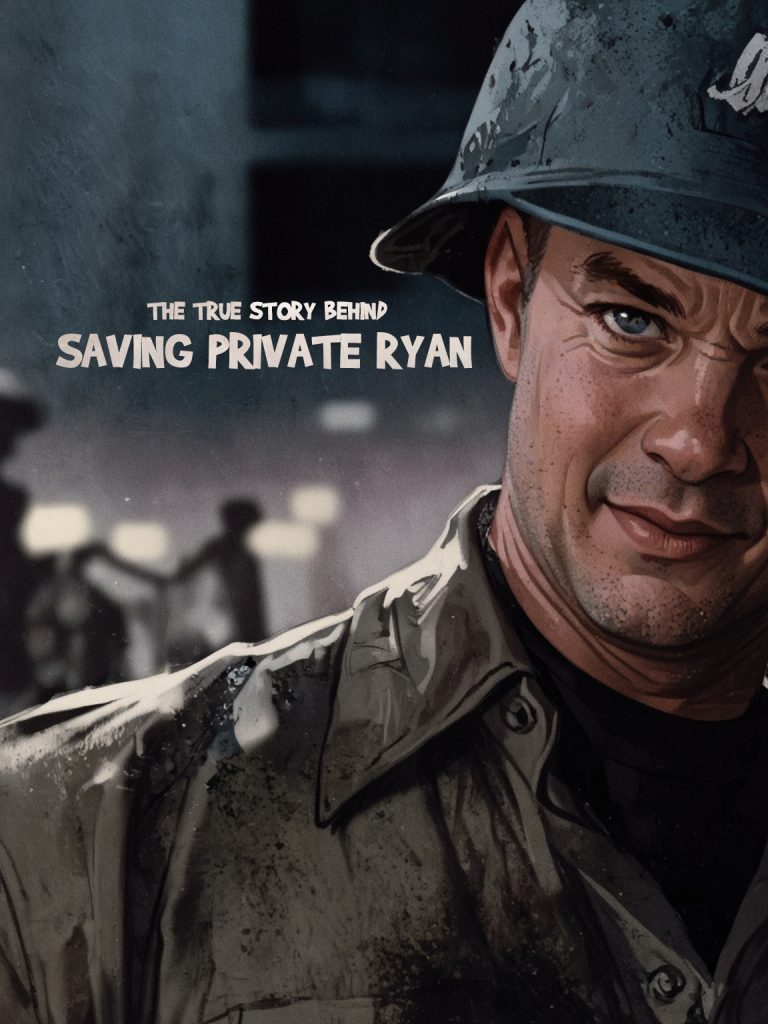
    The True Story Behind ‘Saving Private Ryan’: Fact vs. Fiction

    Is history a mirror or a malleable masterpiece? In the case of Saving Private Ryan, this question takes on a particularly poignant form. Like a skilled illusionist, Steven Spielberg conjured a cinematic spectacle that blurs the lines between truth and artifice. Did he simply hold up a reflection of wartime horrors, or did he paint a vivid, yet imagined portrait? This exploration delves into the shadowy realm where fact and fiction intertwine, seeking to discern if the film is a faithful echo of reality or a carefully orchestrated symphony of cinematic invention. Is it a rescue mission, a moral dilemma, or a poignant exploration of the human condition? The answers may surprise you, or perhaps, like the fog of war itself, remain elusive.

    TL;DR

    • Saving Private Ryan is a 1998 film directed by Steven Spielberg that portrays a fictional story inspired by the real-life experiences of the Niland brothers.
    • The film follows American soldiers on a mission to find and bring home Private James Francis Ryan, whose three brothers have been killed in action.
    • The true story involves Frederick “Fritz” Niland, who lost three brothers during WWII and was brought home after their deaths.
    • The film is praised for its realistic depiction of combat and has been recognized with numerous awards.
    • The Niland brothers’ story highlights the personal sacrifices and the human cost of war, serving as a poignant reminder of the price paid by families during the conflict.

    To this day, Steven Spielberg’s 1998 film Saving Private Ryan continues to move audiences with its gripping portrayal of D-Day and its aftermath. The film focuses on a group of American soldiers tasked with finding their titular comrade, whose three other brothers have been killed, so that he can be brought home.

    Saving Private Ryan received 11 Academy Award nominations and earned praise for its realistic portrayal of World War II combat. Yet what may be even more surprising than the shocking realism of the onscreen bloodshed is that the very story itself was loosely based on the true tale of four brothers who endured a fate heartbreakingly similar to the one portrayed in the film.

    AspectDetails
    TitleSaving Private Ryan
    Release Year1998
    DirectorSteven Spielberg
    ScreenplayRobert Rodat
    GenreWar, Drama
    Awards11 Academy Award nominations, won 5 including Best Director and Best Cinematography
    Plot SummaryA group of American soldiers is tasked with finding and bringing home Private James Francis Ryan, who is the last surviving brother of four. His siblings have been killed in action.
    Inspired ByThe true story of the Niland brothers, who lost three of their four brothers during World War II.
    Historical ContextThe film portrays the D-Day landings and the subsequent mission to save Private Ryan amidst World War II’s European Theater.
    Significant ThemesSacrifice, bravery, the human cost of war, brotherhood
    Notable CastTom Hanks, Matt Damon, Tom Sizemore, Edward Burns
    ImpactAcclaimed for its realistic portrayal of war and remains one of the most influential war films in cinema history.
    From the battlefield to the big screen—explore the truth behind the cinematic heroism.

    The True Story Behind Saving Private Ryan

    The true story of Saving Private Ryan is, believe it or not, just as dramatic as the onscreen version. Upon joining the military, brothers Fritz, Bob, Preston, and Edward Niland of Tonawanda, New York, were spread out amongst various units with Fritz and Bob in the 501st and 505th Parachute Infantries, respectively, Preston in the 22nd Infantry, and Edward in the Air Force.

    The Niland Brothers: The Real-Life Inspiration

    On May 16, 1944, less than a month shy of D-Day, Edward Niland was captured by the Japanese. He had parachuted into the jungles of Burma but had missed his mark. Though he managed to evade them for a while, he was captured by the Japanese and brought to a P.O.W. camp in Burma.

    After he jumped out of his B-25, the rest of his team never heard from him again and assumed he had been killed in action.

    On D-Day, Bob Niland was killed in Normandy while storming the beaches with the 505th Parachute Infantry Regiment, 82nd Airborne Division. He died a hero, volunteering to stay behind with two other men and hold off the German advance while the rest of his team escaped. Their plan managed to slow the Germans down, though Bob was ultimately killed while manning his machine gun.

    The next day, Preston Niland was killed after storming Utah Beach. He was able to survive the storming of the beach and made it farther inland but was mortally wounded while attempting to capture the Crisbecq battery, which had sunk a U.S. destroyer.

    Word of Bob and Preston’s deaths, as well as Edward’s presumed death, traveled fast, and the government set out to notify the family. Mrs. Niland received all three notifications on the same day. Her only consolation was a letter from Fritz bragging about the stories he would have after the war.

    When reality meets reel life: The Niland brothers’ story unfolds in the film you thought was just fiction.

    Fritz Niland’s Return Home

    When the War Department heard that three of the four brothers had perished, they decided that the remaining brother needed to be brought home — just like in the film.

    In the case of Fritz Niland, Father Francis Sampson, chaplain of the 501st Regiment, was tasked with finding Fritz and making sure he got home.

    After D-Day, Fritz had gone to the location of the 82nd Airborne in hopes of meeting up with Bob only to learn that his brother had been killed. But thanks to Sampson, who’d tracked him down, Fritz also learned that he’d now be going home.

    Fritz was shipped to England, then back home to New York, where he served as an M.P. for the remainder of the war. Back at home, Fritz and his family grieved over the loss of his brothers, but then they got one piece of good news.

    A Glimmer of Hope: Edward’s Survival

    In May 1945, the Nilands received word that Edward, presumed dead, had in fact been found alive after the camp where he’d been held in Burma was liberated. Now, a second Niland brother was on his way home.

    Though there were now only half as many Niland brothers as there had been at the start of the war, the two that were left spent many of their remaining decades together living back home in Tonawanda, New York. In this way, the true story of Saving Private Ryan had a somewhat happier ending than the cinematic version.

    Did The Sullivan Brothers Inspire Saving Private Ryan?

    As dramatic as the true story of Saving Private Ryan is on its own, it may not have unfolded as it did if not for the tragic tale of another group of American brothers who served in World War II (and who some mistakenly believe inspired Saving Private Ryan).

    The Sullivan brothers of Iowa were, like the Niland brothers, a family of soldiers. George, Frank, Joe, Matt, and Al Sullivan all joined the Navy on the same day in early 1942. As they signed up, they stated that they had just one stipulation: If they were going to serve, they were going to serve together.

    Despite the Navy’s unwritten policy of separating brothers, they allowed the Sullivans to stay together.

    But on the morning of Nov. 13, 1942, during the Battle of Guadalcanal, the cruiser that the Sullivans were stationed on was hit by a torpedo from a Japanese submarine. The ship exploded almost instantly and before long was at the bottom of the ocean.

    Following the deaths of the Sullivan brothers, the powers that be adopted an unofficial policy that would keep brothers separate and not act on requests made by brothers to serve alongside each other. And thus the Niland brothers were split up and their incredible story played out as it did.

    Behind every screen legend, there’s a story of genuine courage and loss.

    Separating Fact from Fiction

    Though Saving Private Ryan was inspired by the Niland brothers’ story (as well as a similar story about four brothers all killed during the Civil War), it’s safe to say that writer Robert Rodat and the filmmakers crafted a story that differed in a number of obvious ways.

    For starters, in the case of the Nilands, Edward was ultimately found to have been alive. In the film, of course, the titular Private Ryan has lost all three of his brothers.

    Moreover, the biggest difference between the true story of Saving Private Ryan and the film, still regarded as one of the best war movies of all time, is that the latter features a dramatic search and rescue mission conducted by a group of U.S. soldiers. In the case of Fritz Niland, no such group was ever organized and he was instead tracked down by a chaplain.

    Of course, an easy rescue mission does not a blockbuster make, so it makes sense that the filmmakers would get a little creative.

    Recent Events Related to the Story of ‘Saving Private Ryan’

    1. 75th Anniversary of D-Day Commemoration (2019)
      • Description: In 2019, numerous events and ceremonies marked the 75th anniversary of the D-Day landings, with world leaders and veterans gathering in Normandy to pay tribute to those who fought. This milestone anniversary brought renewed attention to the stories of World War II soldiers, including the real-life heroes who inspired films like Saving Private Ryan.
      • Reference: BBC News
    2. Steven Spielberg Receives Special Recognition for WWII Films (2022)
      • Description: Steven Spielberg was honored by various organizations for his contributions to war cinema, particularly highlighting Saving Private Ryan for its historical significance and impact on public memory of World War II events.
      • Reference: The Hollywood Reporter
    3. The Discovery of World War II Artifacts in Normandy (2023)
      • Description: Archaeologists in Normandy uncovered several World War II artifacts, including personal items belonging to American soldiers who participated in the D-Day landings. These findings provide tangible connections to the historical events depicted in Saving Private Ryan.
      • Reference: Smithsonian Magazine
    4. Release of New WWII Documentary Featuring the Niland Brothers (2022)
      • Description: A new documentary focusing on the Niland brothers and other families affected by World War II premiered, shedding light on the true stories that inspired Saving Private Ryan. The documentary provided a detailed look at the brothers’ experiences and their impact on military policies.
      • Reference: PBS
    5. Veteran Tributes and Memorial Services (2023)
      • Description: Throughout 2023, various memorial services and tributes for World War II veterans took place across the United States, often highlighting stories like those of the Niland and Sullivan brothers to emphasize the personal sacrifices made during the war.
      • Reference: National WWII Museum

    This section provides recent events that relate to the story behind Saving Private Ryan. The 75th anniversary of D-Day, commemorated in 2019, brought global attention to the sacrifices of World War II soldiers. Steven Spielberg’s recognition for his war films in 2022 further underscores the lasting impact of Saving Private Ryan on public memory. The discovery of World War II artifacts in Normandy in 2023 offers new physical evidence of the events depicted in the film. A new documentary released in 2022 sheds light on the real-life Niland brothers, offering deeper insights into their story. Lastly, various veteran tributes and memorial services in 2023 continue to honor the legacy of the soldiers who inspired Spielberg’s cinematic masterpiece. These events and references connect the historical and cultural significance of the Niland brothers’ story to contemporary moments of remembrance and recognition.

    My Point of View

    I can’t help but admire the heart-wrenching yet inspirational tale of the Niland brothers. It’s a story that, while soaked in the tragedy of war, also shines a light on the resilience of the human spirit. The real-life account underscores the stark reality of war – the pain, the loss, and the rare but precious moments of hope.

    Transitioning to the fictional adaptation, Spielberg’s artistic liberties with the Niland story, such as the dramatic rescue mission, serve to heighten the emotional impact. While some might argue that it dilutes the authenticity, it undeniably enhances the narrative’s engagement and emotional pull. The film doesn’t just depict war; it immerses the viewer in its chaotic, brutal, and profoundly human aspects.

    So, was Saving Private Ryan a valiant rescue mission or a cinematic mirage? Perhaps it’s both, a delicate dance between historical accuracy and artistic license. Like a skilled illusionist, Spielberg has crafted a film that is both a mirror reflecting the horrors of war and a prism refracting the complexities of human nature. The truth, it seems, is as elusive as the fog-shrouded Normandy beaches. Whether you’re a history buff or a casual moviegoer, the enduring power of this film lies in its ability to provoke thought and ignite debate. As we continue to explore the blurred lines between fact and fiction in other cinematic masterpieces, let us remember that every story, like every war, is a battle for truth.

    Want to uncover more cinematic illusions? Dive deeper into our world of film analysis!

    Sexting: Time to Help Your Kid

    The digital age, a promised land of connection and information, has morphed into a complex labyrinth, replete with hidden dangers. At its heart lies a particularly treacherous territory: the realm of sexting. This is where innocence collides with curiosity, and where parental guidance is the only compass.

    Once, the perils of adolescence were confined to the playground and the corner store. Now, the battlefield has shifted to the invisible, intangible world of ones and zeros. Sexting, a term once whispered in hushed tones, has become a commonplace, albeit perilous, rite of passage. It’s a minefield of potential consequences, emotional landmines, and legal pitfalls.

    This guide is not a moralistic diatribe, nor a technological how-to. It’s a survival manual for the uncharted territory of parenting in the digital age. It’s about equipping you with the knowledge to protect your children without alienating them, to foster open dialogue without overstepping boundaries. We’ll navigate the treacherous waters together, searching for safe passage through the digital storm.

    TL;DR

    1. Prevalence of Sexting: A significant number of teens are engaged in sexting, often unaware of the legal and psychological risks.
    2. Parental Guidance: Parents must have open, direct conversations about sexting to help their children navigate this complex issue.
    3. Legal and Social Consequences: Underage sexting can lead to serious legal repercussions and social harm, including sextortion and cyberbullying.
    4. Educational Approaches: Schools and parents should provide preventive education about the risks and laws surrounding sexting.
    5. Mental Health Impact: Non-consensual sexting is linked to increased anxiety and depression among adolescents.

    Around a third of young people engage in sexting. A 2022 meta-analysis in the Journal of Adolescent Health, which reviewed 28 studies from around the world, found that 19% of people between the ages of 11 and 21 had sent a sexual message or image, 35% had received one, and 15% had forwarded one without consent. Given that underage sexting is not only illegal in many states but also often threatening or abusive, parents need to help their kids navigate this tricky terrain.

    The talk that matters. Why discussing sexting is crucial for your child’s safety.

    The ubiquity of smartphones and the parade of cautionary tales in Senate hearings with tech CEOs have made parents increasingly adept at discussing screen time and social media. But chats about taking and sharing nude images—what adults often call “sexting” and teens call “sending nudes”—often get sidelined. In a 2022 survey published in the Journal of Online Trust and Safety, around six in ten parents of middle schoolers and seven in ten parents of high-schoolers said they had addressed sexting with their children. Yet many of these talks may have been too subtle. In a 2021 survey of 226 high-school students published in Sexuality & Culture, only 18% said their parent had discussed sexting with them.

    This reticence is not surprising, given the discomfort many parents feel when talking to their kids about sex. My college students often tell me that their parents’ version of a sex talk was simply, “don’t have sex” or “if you’re going to have sex, use a condom.” Such caginess typically ensures kids get their guidance about sex online or from their peers.

    The Reality Check: Teens and Sexting

    Many parents tend to see their children as, well, children, who are too young or too naive to even think about taking or sharing nudes. In interviewing parents for my research into teens and sex, I recall a mother who said her 12-year-old son had been spending hours in his bedroom with his new smartphone. When I asked if she or her husband had spoken with him about pornography or sexting, she looked down and quickly said “no,” adding, “he’s just really into watching baseball videos and texting with friends.”

    Time and again, I heard parents say some version of “they’re a good kid,” meaning they felt their child presumably knows better than to send or ask for nude photos. But teens, like adults, are complicated human beings, and it is certainly possible for them to like baseball or cats and still be curious about exploring their sexuality.

    Many parents learn this the hard way. Quite a few told me stories about their tween or teen being asked for nudes, either by peers or adults through social media, sometimes as part of a scam that targets teens. One parent shared that her daughter was 10 when a good friend’s older brother first asked her to send a nude photo of herself. Another described how her fifth-grade son had been pressured for nudes by adult men on gaming sites. Several shared that their teen had been offered hundreds of dollars for nude pictures, usually from adults who had messaged them through social media.

    Legal Consequences and Misconceptions

    It bears noting that these are incidents that parents knew about. Many tweens and teens are too embarrassed or ashamed to open up about their experiences with sexting, particularly if their parents are too embarrassed or ashamed to discuss it first.

    In my conversations with young people, it is clear that few are aware that taking, possessing, or sharing nudes of minors is often illegal, even when the exchange is consensual. There is little data on just how many sexting cases lead to legal action, but I’ve spoken with a few attorneys whose juvenile clients faced criminal charges of child pornography after willingly exchanging nude images. Many schools ban the practice, and school officials are often required to report sexting incidents to the police.

    There is some debate over whether these laws are appropriate. In a 2019 article in the journal Pediatrics, pediatricians and other adolescent experts argued that consensual, non-coerced teen sexting should be considered a “health and development issue, not a legal one.” Given growing evidence that sexting has become a common part of adolescent sexual development, 26 states treat consensual juvenile sexting as distinct from child pornography, often a misdemeanor punished with education and counseling. The remaining states classify underage sexting as a pornography problem, which is more serious. Coercive or nonconsensual sexting is far more problematic, and is associated with feelings of anxiety and depression, particularly among tweens.

    Prevention over punishment. Educating teens about the dangers of sexting.

    The Parent’s Role: Prevention and Education

    Regardless of the law, it is important that adolescents understand that once they send a nude photo, they have little control over where it ends up. Young people often fail to appreciate that photos they give willingly during a relationship can be weaponized during a breakup. It isn’t uncommon for these images to be used to shame, bully, or harass teens, especially girls. Some of my college students have expressed anxiety that their nude selfies may now be on display somewhere online, much like the photos of naked women discovered on a Pennsylvania State University fraternity Facebook page in 2015, which led to student expulsions and the suspension of the fraternity. This is why education programs about sexting shouldn’t be doled out as punishment but as prevention, before the harm is done.

    Parents of young children have time to build toward later conversations. This can be as simple as telling kids when they are taking photos, “Remember, we don’t take pictures of people’s naked bodies.” In a recent episode of the popular children’s show “Bluey,” for example, Bluey and Bingo’s mom tells them “don’t take pictures of people’s bottoms” when they photograph her practicing yoga.

    For parents of tweens and teens, discussions must be more direct. In my conversations with parents, far too many believed they had warned their kids about sexting without ever actually mentioning sexting. One dad explained, “We’ve told our kids: don’t text anything to your friends that you wouldn’t want your grandmother to see.”

    This is not enough. It is important to tell children that sharing nude images of themselves or of a peer can be both harmful and illegal. When discussing healthy relationships, make it clear that pressuring someone to behave sexually or send nudes is a red flag. In talks about online safety, parents should urge children to speak up if an adult or stranger asks for or sends sexual images of any kind.

    Recent Events and Supporting References

    1. 2023 Report on Teen Sexting Trends: A recent report by the National Center for Missing & Exploited Children (NCMEC) highlighted a rise in cases of sextortion among teenagers, indicating a 20% increase from the previous year. This aligns with the article’s emphasis on the prevalence and risks of sexting among youth.
    2. 2023 Legislative Update on Sexting Laws: Several states, including California and Texas, updated their sexting laws to differentiate between consensual and non-consensual sharing of nude images among minors. These updates reflect the growing recognition that adolescent sexting should be treated as a developmental issue rather than a purely legal one.
    3. Survey on Parental Discussions about Sexting: A 2023 survey published by Common Sense Media found that 65% of parents feel uncomfortable discussing sexting with their children, corroborating the article’s point about parental reticence and the need for more direct conversations.
    4. Incident of School Sexting Scandal: In 2023, a high school in New York was at the center of a sexting scandal involving multiple students. The incident led to police involvement and highlighted the legal and social consequences of sexting, supporting the article’s call for preventive education.
    5. Study on Sexting and Mental Health: A 2023 study published in the Journal of Adolescent Health linked non-consensual sexting to increased rates of anxiety and depression among teens, reinforcing the article’s discussion on the psychological impacts of sexting.
    6. Bluey Episode on Photo Etiquette: The popular children’s show “Bluey” aired an episode in 2023 where Bluey’s mom advises the characters not to take inappropriate photos, providing a relatable example for parents to initiate conversations about privacy and respectful behavior.

    This list includes recent events and studies that provide context and evidence supporting the claims made in the article about adolescent sexting. The increase in sextortion cases and updates to sexting laws highlight the importance of treating the issue as both a legal and developmental matter. Surveys and studies show the challenges parents face in discussing sexting and the mental health repercussions for teens involved in non-consensual sexting. Finally, a pop culture reference like the “Bluey” episode offers a practical tool for parents to engage young children in conversations about photo etiquette and privacy.

    References

    • National Center for Missing & Exploited Children (NCMEC). (2023). “Sextortion Cases Rise Among Teenagers”. Retrieved from NCMEC.
    • Common Sense Media. (2023). “Parental Attitudes and Discussions on Sexting”. Retrieved from Common Sense Media.
    • Journal of Adolescent Health. (2023). “Impact of Non-Consensual Sexting on Teen Mental Health”. Retrieved from Journal of Adolescent Health.
    • The New York Times. (2023). “High School Sexting Scandal Leads to Legal Consequences”. Retrieved from NYTimes.
    • “Bluey” Season 3, Episode 14. (2023). “Photo Etiquette for Kids”. ABC Kids.
    Heartbreak and harm. The aftermath of shared nudes in teen relationships

    My Point of View: Compassion Over Condemnation

    It is best to relay this information with compassion, not shame. When parents express their concerns with love and support, children are more likely to open up when something uncomfortable happens, either to themselves or their peers. When young people worry they have made an irredeemable mistake in sending nudes, they are more vulnerable to sextortion. This is when people use a sexual message or image as blackmail and demand some kind of payment to prevent its distribution. In a national survey of 5,568 U.S. middle and high-school students published in Sexual Abuse in 2020, about 5% reported having been the victim of sextortion, while about 3% admitted to threatening others.

    Parents and children might collaborate on rules for smartphones and other devices. Some will decide to ban phones from bedrooms, especially overnight, which helps with sleep; others will agree to let parents use apps that monitor phone usage or do occasional phone “spot checks.” Adolescent sexting may feel like a daunting topic, but kids find it easier to follow rules when they have a say in them.

    Complex Terrain

    The digital age is a double-edged sword. It’s a world of infinite possibilities, but also of potential pitfalls. Sexting is just one facet of this complex landscape. It’s a minefield of emotions, risks, and uncertainties. But remember, knowledge is power. By understanding the terrain, you can equip yourself and your children with the tools to navigate it safely.

    This guide is merely a starting point. The journey through the digital world is ongoing. It requires constant vigilance, open communication, and a willingness to adapt. Let’s continue the conversation. Share your experiences, questions, and insights. Together, we can create a safer online environment for our children.

    Explore our other articles on [Communication] for more tips and advice on navigating the digital age.