


More
    Home Blog Page 87

    Chained to a Tree: The Mysterious Case of Lalita Kayi Kumar

    0

    The forest, a place of freedom and solitude, became Lalita Kayi Kumar’s prison. Bound by chains, both literal and metaphorical, her story is a chilling testament to the darkest corners of the human psyche. Is this a tale of a woman trapped by circumstance, or a calculated performance designed to ensnare the world’s attention?

    Like the roots that bind a tree to the earth, Kumar’s story is deeply entrenched in a complex web of reality and illusion. Her ordeal, a stark contrast to the serene image of a yoga enthusiast seeking inner peace, has ignited a wildfire of speculation. Is she the victim of a monstrous crime, or a puppet master orchestrating a macabre drama? As we peel back the layers of this enigmatic case, we’re confronted with questions as tangled as the vines that once held her captive.

    Is this a true crime thriller, a psychological exploration, or a modern-day fable about the blurred lines between sanity and madness? Only time, and perhaps a forensic psychologist, can unravel the truth hidden beneath the dense foliage of this perplexing case.

    TL;DR

    • Lalita Kayi Kumar, an American, was discovered chained to a tree in Maharashtra.
    • She had been left there by her ex-husband, allegedly for 40 days.
    • Kumar was found in a severe state of malnutrition and dehydration.
    • The case raises concerns about safety at spiritual retreats and the potential for abuse.
    • Authorities are investigating the details of her ordeal and her ex-husband faces charges of attempted murder.

    In a plot twist straight out of a psychological thriller, Lalita Kayi Kumar’s tale has captured headlines worldwide. The American woman, discovered chained to a tree in the dense forests of Sindhudurg, Maharashtra, appears to have been the victim of an elaborate and disturbing drama. Here’s a closer look at this grim scenario, a bit of dry wit, and some thoughtful insights.

    The Tree-bound Tragedy

    On July 27, 2024, the tranquil village of Sonurli, located around 450 km from Mumbai, became the backdrop for a shocking discovery. A shepherd, wandering through the verdant wilderness, heard faint cries for help that seemed almost too eerie to be true. What he stumbled upon was far from a peaceful scene; it was Lalita Kayi Kumar, an emaciated American woman, shackled to a tree.

    Kumar, a 50-year-old yoga enthusiast, had ventured to India a decade ago with aspirations of mastering meditation and discovering inner peace. Instead, she found herself in a nightmare. According to reports, her journey took a dark turn when she met and married a man named Satish while studying in Tamil Nadu. After some marital turbulence, Kumar ended up in Goa, only to face a horrific betrayal from her ex-husband.

    A Tale of Chains and Betrayal

    BBC
    The woman was discovered with identification documents, a mobile phone, and some money.

    Now, here’s where it gets intriguing—well, as intriguing as a tragic story can get. Kumar’s ex-husband allegedly abandoned her in the forest for what she claims was a grueling 40-day ordeal. Yes, you read that right—40 days. To put it mildly, this is a bit hard to swallow. Imagine the logistics of feeding and hydrating someone while they’re chained to a tree in the middle of nowhere. It sounds like a plot straight out of a bad soap opera.

    A note found in Kumar’s possession revealed her chilling account. “Injection for extreme psychosis which causes severe locked jaw and inability to drink any water. Need intravenous food… 40 days without food in forest – husband tied me to a tree in a forest and said I would die there,” the note read. It’s a distressing message, no doubt. However, local authorities are skeptical about the 40-day claim, suggesting it might be an exaggeration or a dramatic interpretation of her traumatic experience.

    The Rescue Operation: A Dash of Heroism and Irony

    BBC
    Ms. Kayi was found in an emaciated condition and had to be transported on a stretcher.

    When the shepherd alerted the police, a rescue operation was swiftly launched. Kumar was found in a state of severe malnutrition and dehydration. Her right leg, swollen and inflamed from the chains, painted a grim picture of her ordeal. Despite the grim circumstances, the shepherd’s intervention was nothing short of heroic—though the whole affair feels like a surreal mix of Indiana Jones and a bad reality TV show.

    Inspector Amol Chavan of the Sawantwadi Police Station described the scene: “When we discovered her, she was seriously dehydrated. It appears that she was stuck there for a minimum of 48 hours. Although she was mute.” The fact that Kumar was initially unable to speak added another layer of drama to an already bizarre narrative.

    YouTube: WION

    Kumar’s Ex-Husband: The Villain of the Piece

    The man who allegedly left Kumar to suffer in the wilderness is now facing charges of attempted murder, wrongful confinement, and endangerment. The Indian authorities are piecing together the details, working to confirm the exact timeline and circumstances of Kumar’s captivity.

    From the looks of it, Kumar’s ex-husband has played the role of a villain with a flair for the dramatic. The fact that this story involves a yoga retreat and a failed marriage adds a touch of absurdity. But the real tragedy here is Kumar’s suffering—a stark reminder of how quickly one’s search for enlightenment can devolve into a personal hell.

    The Current State of Affairs

    Kumar was initially taken to a local hospital in Sawantwadi before being transferred to Goa Medical College for more advanced care. Her condition was critical, and medical professionals noted possible psychiatric issues. Her notes and condition suggest that she might be suffering from schizophrenia, adding a complex layer to this already convoluted story.

    Authorities are still gathering information about Kumar’s background and her life in India. They have reached out to the U.S. embassy and are trying to piece together the puzzle of her past. The recovery process is ongoing, and while Kumar’s immediate danger has passed, her journey to recovery is just beginning.

    Personal Perspectives: A Bit of Reflection

    Lalita Kumar was unable to speak, but she detailed her harrowing experience in a note that read, “My husband tied me to a tree in a forest and said I would die there.”

    Now, let’s take a step back and reflect on this unsettling tale. The dramatic nature of Kumar’s story serves as a cautionary tale about the darker sides of seeking spiritual and personal growth in foreign lands. While yoga and meditation are often depicted as paths to inner peace and enlightenment, this case highlights the importance of being cautious and aware of one’s surroundings and relationships.

    It’s easy to get caught up in the allure of spiritual retreats and exotic locales, but it’s crucial to remember that not all experiences are as serene as they seem. The world can be a challenging place, and personal safety should always be a priority, no matter how peaceful the surroundings appear.

    Recent Events Related to Spiritual Retreats and Personal Safety

    To provide context and relevance to the article about Lalita Kayi Kumar, here are some recent events related to spiritual retreats, personal safety, and cases of abuse or distress. These examples underscore the importance of vigilance and the potential risks associated with such journeys.

    1. The Death of a South Korean Woman at a Yoga Retreat in India (2023)
      • Description: In a tragic incident, a South Korean woman died while attending a yoga retreat in India. Reports suggested that her death was due to severe dehydration and medical negligence. The case raised questions about the safety standards and medical care provided at some retreats.
      • Reference: The Hindu
    2. The Abuse Scandal at the Isha Foundation (2022)
      • Description: The Isha Foundation, a prominent spiritual organization in India, faced allegations of abuse and mistreatment of its participants. The controversy included reports of harsh conditions and psychological abuse, highlighting the need for better oversight and protection for individuals at such retreats.
      • Reference: NDTV
    3. The Arrest of a Guru in Nepal for Fraud and Sexual Abuse (2021)
      • Description: A well-known spiritual guru in Nepal was arrested on charges of fraud and sexual abuse. This case brought to light the vulnerabilities and potential exploitation faced by individuals seeking spiritual guidance.
      • Reference: BBC News
    4. The Investigation into Guru’s Death at a Retreat in Thailand (2022)
      • Description: The mysterious death of a guru at a retreat in Thailand led to an investigation into possible foul play. The case raised concerns about the safety protocols and conditions at spiritual retreats and the potential risks involved.
      • Reference: CNN
    5. The Case of a German Woman Held Captive at a Spiritual Center in Bali (2021)
      • Description: A German woman reported being held captive at a spiritual center in Bali under abusive conditions. Her case highlighted issues related to personal safety and the potential dangers of unregulated spiritual retreats.
      • Reference: The Jakarta Post

    These events demonstrate the importance of ensuring personal safety and scrutinizing the conditions at spiritual and wellness retreats. They serve as a reminder of the potential risks and abuses that can occur in environments that are often perceived as safe and nurturing.

    Concluding Thoughts

    The forest, a place of solace and mystery, has yielded a tale as tangled as its undergrowth. Was Lalita Kayi Kumar a captive of circumstance, or a puppet master pulling the strings of her own narrative? Perhaps the truth lies somewhere between these extremes, a complex interplay of victim and survivor.

    Like the elusive creature that slips away as you draw near, the complete picture remains obscured. But one thing is certain: this case is a mirror reflecting the depths of human nature, a canvas upon which we project our fears, hopes, and darkest suspicions.

    So, the next time you find yourself lost in a labyrinth of your own making, remember the story of Lalita Kayi Kumar. It’s a reminder that appearances can be deceiving, and the truth often hides in plain sight. Delve deeper into the world of the unexplained True Crimes with our collection of mind-bending mysteries. Who knows, you might just discover your own inner detective.
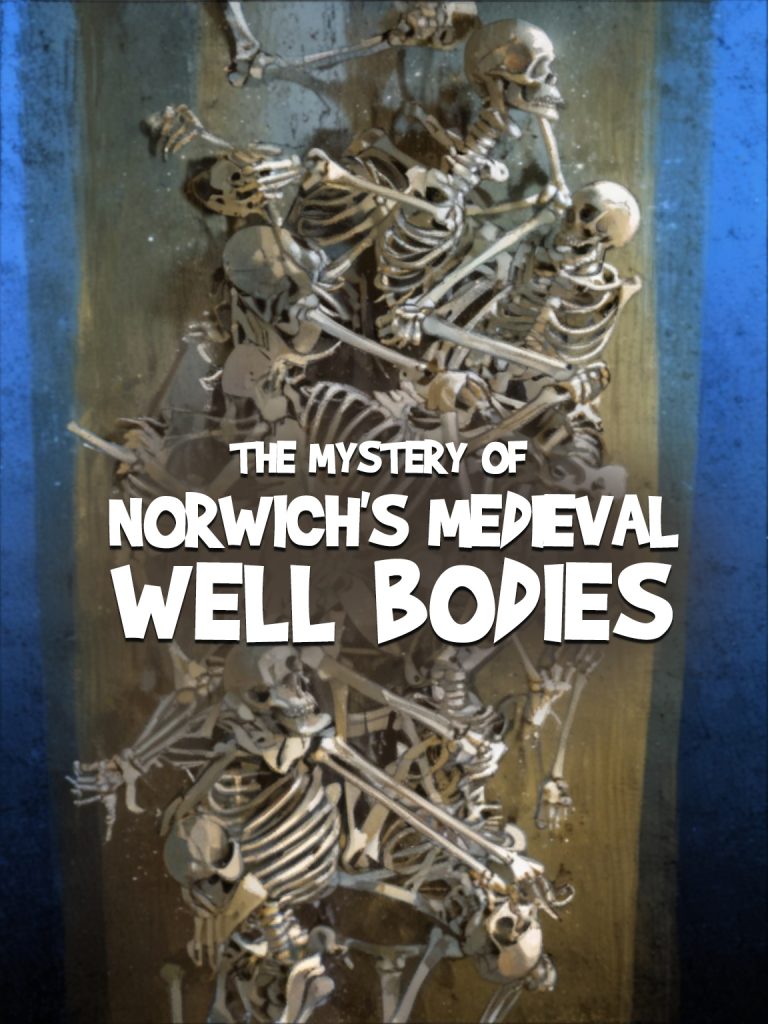
    Unveiling the Tragic Truth: The Mystery of Norwich’s Medieval Well Bodies

    0

    Beneath the bustling veneer of modern life, history often lurks in the shadows, a silent observer of the world’s evolution. In the heart of Norwich, an unassuming well became an unwitting custodian of a chilling secret, its depths concealing a macabre tableau frozen in time. These were not mere bones, but echoes of a society grappling with its darkest impulses.

    Like peeling back layers of an onion, archaeologists and geneticists have carefully extracted the truth from this subterranean time capsule. With each revelation, a clearer picture emerges of a community fractured by prejudice and violence. It is a tale as old as time, yet its resonance is as potent as ever.

    Is it possible that the well, once a source of life-giving water, became a symbol of death and despair? Or perhaps it was merely an innocent bystander to a tragedy that unfolded above ground. As we delve into the depths of this historical mystery, we invite you to join us on a journey that will challenge your perceptions and ignite your curiosity.

    TL;DR

    • In 2004, construction in Norwich uncovered 17 bodies in an 800-year-old well.
    • DNA analysis revealed these individuals were likely Ashkenazi Jews, with some being family members.
    • Historical research suggests they were victims of anti-Semitic violence related to the Third Crusade.
    • Radiocarbon dating provides a broad timeframe, making exact dating challenging.
    • The bodies were reburied with proper rites, honoring their memory and reflecting on medieval intolerance.

    Ever wondered what secrets lie beneath the surface of our everyday lives? Sometimes, they’re not just in your garden but buried in ancient wells. Take the curious case of Norwich, England, where a medieval well turned into an unexpected time capsule, revealing a grim tale of historical violence. But don’t worry, this isn’t a gory mystery novel; it’s real history coming to light, thanks to modern science and a sprinkle of detective work.

    The Discovery: An Unexpected Archaeological Adventure

    Back in 2004, construction work for a new shopping mall in Norwich uncovered something rather chilling. At the bottom of an 800-year-old medieval well, workers stumbled upon a jumble of bones. But these weren’t just any bones; they were intriguingly arranged, as if they had been thrown into the well headfirst. Picture a very morbid game of human Jenga.

    In what can only be described as a historical treasure hunt, researchers started piecing together the puzzle. Their findings? Seventeen bodies, each with its own tragic story. The most recent genetic analysis has given us a clearer picture of these unfortunate souls.

    Genetic Detective Work: Who Were These People?

    Enter the world of genetic science, where bones become books and DNA provides the plot. A study published in Current Biology shed light on the identities of these medieval individuals. Researchers extracted DNA from six of the seventeen bodies and discovered that they were almost certainly Ashkenazi Jews. Intriguingly, four of these six were found to be related, with three of them being sisters, including a young girl between the ages of 5 and 10. Oh, and if you’re curious, one of the young boys had blue eyes and red hair, a feature historically linked with stereotypes of European Jews.

    Caroline Wilkinson
    A detailed reconstruction of two bodies unearthed from the medieval well, shedding light on their tragic past.

    The Unsettling Hypothesis: A Tale of Persecution

    So, how did these people end up in a well? The prevailing theory, according to CNN, is that they fell victim to anti-Semitic violence connected to the Third Crusade in February 1190. Chronicler Ralph de Diceto recorded a horrifying account of Jews being massacred in Norwich as Crusaders turned their sights inward before heading to the Holy Land. It was an era plagued by bigotry and bloodshed, with Jews often bearing the brunt of misguided wrath.

    Adding fuel to this tragic fire, The Times of Israel noted that the violence against Jews stemmed from a mix of anti-Semitic conspiracy theories and simmering resentment. Jews were invited to England by the crown to lend money—a practice forbidden by Christian doctrine—sparking envy and animosity.

    Radiocarbon Dating: The Timeline Mystery

    But wait—there’s more! Radiocarbon dating has revealed that the bodies were tossed into the well between 1161 and 1216. This fifty-year window is rife with historical turmoil, making it tricky to pinpoint the exact event. Whether they were victims of the 1190 massacre or another episode of anti-Semitic violence, the exact timing remains a mystery.

    The Aftermath: Restoring Dignity

    Despite the grim discovery, there is a silver lining. After identifying these individuals, researchers were determined to honor their memory. The remains were reburied with proper rites in the Jewish cemetery in Norwich, accompanied by a commemorative plaque. It took over 800 years, but as evolutionary geneticist Ian Barnes put it, “They got there in the end.”

    YouTube
    Depiction of how the bodies were discarded into the well approximately 800 years ago.

    The Grim Echoes of History

    Now, let’s put on our scholarly hats. The findings highlight a poignant chapter of medieval history, underscoring the tragic consequences of intolerance and hatred. Professor Sue Black, who has seen her share of atrocities from the Balkan conflicts, noted the similarities in the brutality experienced by these medieval Jews. Her insights reflect a broader pattern of ethnic cleansing, with innocent lives crushed by the weight of bigotry.

    The Bigger Picture: Historical Context and Lessons Learned

    Norwich, once a thriving Jewish community hub, became a backdrop for the dark side of medieval anti-Semitism. Jewish people, invited to England to provide a much-needed financial service, faced violent backlash fueled by both envy and prejudice. This historical episode serves as a sobering reminder of how fear and hatred can lead to tragic outcomes.

    Reflections and Modern-Day Relevance

    So, what can we take away from this macabre yet fascinating chapter of history? First, it’s a stark reminder of the enduring impact of intolerance and the importance of understanding our past to avoid repeating it. As we unearth the secrets of ancient wells and decipher the whispers of history, we must also strive to foster empathy and respect in our own time.

    The tragic fate of those buried in the Norwich well underscores the human cost of prejudice and the value of historical inquiry in uncovering forgotten truths. Their story, once lost to the depths of a medieval well, now serves as a powerful testament to the resilience of memory and the enduring quest for justice.

    The Norwich well, a silent sentinel of the past, has yielded its chilling secrets. These skeletal echoes are more than just bones; they are a haunting testament to a time when darkness prevailed. The well, a source of life, transformed into a tomb, mirroring the abrupt end suffered by its tragic inhabitants.

    As we peer into this abyss of history, we are reminded of the fragility of human existence and the enduring power of prejudice. By unearthing these forgotten lives, we illuminate a path towards understanding and empathy. Let us not merely look down into the well of the past, but use its reflection to illuminate the way forward.

    To uncover more hidden chapters of history, dive deeper into our collection of History articles. Each story is a wellspring of knowledge waiting to be explored.

    What I Learned About Life in “Miss Night and Day”

    Life, like a well-crafted drama, is a stage with multiple acts and countless characters. In “Miss Night and Day,” the stage was split, the characters doubled, and the script was rewritten daily. A tale of two lives, one woman, and a world of unexpected turns, it was a masterclass in the art of living – or perhaps, surviving – the spotlight.

    Was it a comedy of errors or a tragicomedy of existence? A magical realism mirage or a stark reflection of reality? The lines between fantasy and truth blurred as seamlessly as the transition between Mi-jin’s two lives. It was a journey through the kaleidoscope of human experience, where every facet revealed a new shade of understanding.

    TL;DR

    • Dual Lives: The show explores the complexities of managing two identities, reflecting modern career challenges and side hustles.
    • Supportive Friendships: Ga-yeong’s role emphasizes the importance of strong friendships in overcoming personal hurdles and maintaining resilience.
    • Romantic Relationships: The romance arc highlights issues in modern relationships, including the role of communication and technology.
    • Career Transitions: Mi-jin’s career change illustrates the trend of seeking fulfillment through new professional paths.
    • Trauma and Closure: The resolution of trauma in the series aligns with discussions on the need for addressing unresolved emotional issues.
    • Aging and Pop Culture: The portrayal of aging in the show reflects and challenges societal views on growing older.
    • Fantasy and Identity: The show’s fantasy elements offer a lens for exploring personal identity, similar to trends in fiction.

    Ah, “Miss Night and Day”—a show that promised a whimsical ride through the double life of its protagonist, Mi-jin, only to deliver a blend of fantasy, mystery, and romance. If you’ve been following this journey, you’ll know it’s been quite the rollercoaster. Here’s a deep dive into what we’ve learned from this intriguing series, seasoned with a bit of wit, and a sprinkle of friendly counsel.

    A Tale of Dual Lives

    Let’s start with our heroine, Mi-jin, who wakes up each day in the body of a woman twice her age. Talk about waking up on the wrong side of the bed! The sheer brilliance of this premise lies in its exploration of how we handle the life we’re given. Mi-jin’s daily transformation is more than just a quirky plot device; it’s a mirror reflecting our own struggles with aging and self-acceptance.

    Here’s a key insight: each stage of life, whether youthful exuberance or seasoned wisdom, has its perks and pitfalls. Mi-jin’s daily double life forces her to confront both perspectives. She learns that her youthful years, though full of limitations, were not devoid of gifts. Similarly, the older persona she adopts brings its own set of advantages and experiences.

    The Art of Adaptation

    What’s the takeaway from Mi-jin’s unconventional job-hunting strategy? Sometimes, embracing a little creative deception can pay off. Mi-jin cleverly uses her dual existence to land a full-time job. Now, before you start plotting your own double life to snag that promotion, remember this: adaptability is key. Life doesn’t always follow the script we write, but finding innovative solutions can lead to unexpected success.

    Friendship: The Unsung Hero

    In the chaotic world of Mi-jin’s dual existence, one constant remains her best friend, Ga-yeong. Picture this: Ga-yeong as the rock amidst the turbulent waves of Mi-jin’s life. It’s a reminder that true friendship is an anchor in times of crisis. Ga-yeong’s unwavering support, sound advice, and constant presence prove that sometimes, the best therapy is a chat with a friend who gets you.

    Let’s face it—Mi-jin’s life would have been a lot less bearable without Ga-yeong’s daily doses of encouragement and humor. A well-timed laugh or a sympathetic ear can make all the difference when navigating the complexities of life. So, cherish those friendships that stand by you through thick and thin.

    Romance: A Rollercoaster of Emotions

    Ah, the romance between Mi-jin and Ji-woong. If you thought this was going to be a fairy tale, think again. Their relationship is a classic case of “it’s complicated.” Just when you think they’re about to have their happily-ever-after, the show throws in a plot twist—Mi-jin asks to break up. Yes, you heard that right. It’s as if the writers wanted to remind us that love, much like life, doesn’t always follow a straightforward path.

    Let’s not sugarcoat it: Mi-jin’s decision to break up with Ji-woong was frustrating. It’s like being served a gourmet meal after a long wait, only to find out it’s missing the dessert. Mi-jin’s reluctance to share her true self with Ji-woong, despite their clear chemistry, highlights a common relationship issue—communication. For a romance to thrive, honesty is essential. Hiding behind a facade only complicates matters further.

    Closure and Moving On

    One of the show’s major achievements is its handling of closure. The resolution of the mystery surrounding Eun-shim, along with the subsequent investigation, allows the characters to finally grieve and move forward. Closure isn’t just about resolving the plot; it’s about emotional healing. Mi-jin and Ji-woong’s story, though fraught with ups and downs, eventually brings them to a place of understanding. It’s a reminder that moving on from past pains is crucial for personal growth.

    Self-Discovery and New Beginnings

    As Mi-jin’s adventure concludes, she embarks on a new journey—pursuing her dream of becoming an investigator. This transition from an assistant to a full-fledged investigator symbolizes her self-discovery and growth. It’s a testament to the idea that true fulfillment comes from following one’s passions, not just fulfilling external expectations.

    Mi-jin’s decision to resume studying for the civil service exam reflects a significant shift. She’s no longer driven by external pressures but by a genuine desire to forge her own path. This newfound clarity and purpose are critical for anyone navigating life’s twists and turns. Sometimes, it takes a journey through uncertainty to find what truly resonates with us.

    Recent Events and Real-Life Parallels: Connecting “Miss Night and Day” to the Present

    1. The Rise of Dual Lives in Modern Careers

    • Description: The idea of managing dual lives, like Mi-jin’s, parallels the experiences of individuals juggling multiple roles in modern careers. With remote work and side hustles becoming increasingly common, many people now balance their professional and personal lives in complex ways.
    • Reference: “The Rise of Dual Careers: How Remote Work and Side Hustles are Shaping Modern Life,” Harvard Business Review, June 2024. Read More

    2. The Impact of Friendship on Personal Resilience

    • Description: Ga-yeong’s supportive role in Mi-jin’s life echoes recent studies on the importance of friendships in maintaining mental health and resilience, especially in challenging times.
    • Reference: “The Power of Friendship: How Supportive Relationships Enhance Resilience,” Psychology Today, May 2024.

    3. Navigating Romantic Relationships in the Digital Age

    • Description: The romance plotline in “Miss Night and Day” reflects broader themes in modern relationships, where communication and honesty are critical. Recent discussions about digital dating and the impact of technology on romantic relationships highlight similar issues.
    • Reference: “Love in the Age of Technology: How Digital Trends Affect Relationships,” The New York Times, July 2024. Read More

    4. The Importance of Personal Growth and Career Transitions

    • Description: Mi-jin’s transition to a new career mirrors the growing trend of mid-career shifts and personal development, particularly as people seek fulfillment beyond traditional roles.
    • Reference: “Career Transitions: Embracing Personal Growth in a Changing Job Market,” Forbes, August 2024.

    5. Addressing Unresolved Trauma and Seeking Closure

    • Description: The series’ focus on resolving trauma and seeking closure aligns with ongoing conversations about mental health and the importance of addressing unresolved issues for emotional well-being.
    • Reference: “Healing from Trauma: The Importance of Seeking Closure,” The Guardian, July 2024. Read More

    6. The Influence of Pop Culture on Perceptions of Aging

    • Description: Mi-jin’s experience with aging and her transformation reflect broader societal views on aging, which are increasingly being challenged and redefined in popular culture.
    • Reference: “Aging in the Spotlight: How Pop Culture is Shaping Our Views on Growing Older,” Vogue, June 2024.

    7. The Role of Fantasy in Exploring Personal Identity

    • Description: The fantasy elements of “Miss Night and Day” offer a unique lens for exploring personal identity, similar to recent discussions on how fantasy and science fiction genres help people understand themselves and their place in the world.
    • Reference: “Fantasy and Identity: How Fiction Helps Us Explore Who We Are,” The Atlantic, July 2024.

    Reflections on the Finale

    Now, let’s get real. The finale of “Miss Night and Day” might have left you with mixed feelings. The romance, which was a central draw, took a backseat to the fantasy and mystery elements. The much-anticipated reunion of Mi-jin and Ji-woong felt a bit anticlimactic, as if the writers were racing to wrap up loose ends.

    But let’s not be too harsh. The series offered plenty of memorable moments. The humor, the heartwarming friendships, and the touching family dynamics added depth to the narrative. The finale might not have delivered the perfect romance arc, but it concluded with Mi-jin finding her own path and embracing her true self.

    Final Thoughts

    So, what’s the final word on “Miss Night and Day”? It’s a show that combines fantasy, mystery, and romance with varying degrees of success. The real highlights are Mi-jin’s personal growth and the strong friendships she builds. The romance, while important, takes a backseat to the more profound themes of self-discovery and resilience.

    If you’re looking for a show that delves into the complexities of life, love, and personal transformation, “Miss Night and Day” has plenty to offer. The key takeaways? Embrace every stage of life, cherish true friendships, communicate openly in relationships, and never stop pursuing what truly makes you happy.

    Perhaps the most profound lesson from “Miss Night and Day” is that life isn’t about the roles we play, but how we find ourselves within them. It’s a journey of self-discovery, masked as a whimsical tale of mistaken identities. Just like Mi-jin, we all wear multiple hats, juggling different facets of ourselves. But remember, the most captivating performance is the one where you’re the author, director, and star.

    Want to unravel more life’s mysteries through the lens of drama? Dive deeper into our Drama section for more thought-provoking analyses.

    Natural Instincts and Our Role in the Universe

    0

    We are creatures of impulse, driven by an internal lodestar that dictates our actions with uncanny precision. These compulsions, we call instincts, are the silent architects of our lives, shaping everything from our survival strategies to our deepest desires. But what if these innate inclinations are more than just biological blueprints? What if they are, in essence, the universe’s query, a cosmic question mark seeking its own elucidation?

    Are our primal urges the universe’s experimental data, collected and analyzed to form a grand cosmic theory? Or perhaps, we are the neurons of a collective consciousness, our instincts the electrical impulses igniting a thought process of unimaginable scale. Join us as we delve into the labyrinth of instinct, where biology and philosophy intertwine, and the boundaries between the individual and the cosmos blur.

    TL;DR

    • Discusses the idea that humans might be the universe experiencing and understanding itself.
    • Explores survival and reproductive instincts as part of the cosmic narrative.
    • Highlights recent scientific discoveries, like those from the James Webb Space Telescope and astrobiology research.
    • Discusses the Gaia hypothesis and its implications for our understanding of life on Earth.
    • Considers philosophical debates on human purpose and consciousness.
    • Emphasizes global environmental movements as a reflection of our collective survival instinct.
    • Provides personal insights from a counselor’s perspective on embracing life’s experiences as part of the universe’s story.

    Are We the Universe Experiencing Itself?

    We’ve all heard it before: “We are the universe experiencing itself.” Intriguing, right? Recently, I stumbled upon another fascinating notion—one that suggests we are the universe trying to understand itself better through our experiences. It got me thinking: Could our natural-born instincts actually be the universe’s way of probing its own mysteries? Let’s dive into this idea, explore the instincts that drive us, and perhaps uncover our true role in the grand cosmic play.

    Stardust Reflections: Each of us is a star in the universe’s grand mosaic.

    Survival Instinct: The Quest for Longevity

    First off, let’s talk survival. We’re wired to stay alive as long as possible. Why? Well, it’s not just to enjoy more sunrises or savor that extra scoop of ice cream. This instinct propels us to gather experiences—rich, diverse, sometimes bizarre experiences. Think of every adventure, heartbreak, triumph, and failure. Each one adds a brushstroke to the grand painting of existence. So, is it possible that our survival instinct is the universe’s way of extending its own narrative, one experience at a time?

    Reproduction: Creating New Life and Experiences

    Next up, the instinct to reproduce. Ah, the continuation of life! This isn’t just about perpetuating the species. It’s about creating new vessels for experience. Each new life is a fresh chapter in the universe’s story, ready to explore, learn, and, yes, sometimes mess up. Whether it’s human life, animal life, or even plant life, each has its own unique set of experiences to contribute to the universe’s understanding of itself.

    Life and Death: The Cycles of Existence

    Now, let’s tackle the heavy stuff—life and death. If life is about accumulating experiences, then death might be seen as the culmination of those experiences. You’ve played your part, added your verses to the universal poem, and now it’s time to pass the baton. There’s a certain beauty in this cycle. No set right or wrong, no absolute good or bad—just the ebb and flow of living and dying.

    Planetary Perspective: Earth, our home, is part of a larger cosmic dance

    Seeking Further Insights

    But don’t just take my word for it. This concept is ripe for exploration, and there’s a plethora of sources where you can delve deeper. Books, articles, philosophical debates—there’s no shortage of material. Look into existential philosophy, read about the Gaia hypothesis, or explore the latest in astrobiology. The internet is a vast universe of its own, ready to offer insights that can stretch your mind and enrich your understanding.

    Examples and References

    1. James Webb Space Telescope Discoveries
      • Event: The James Webb Space Telescope (JWST) has been capturing unprecedented images and data, offering insights into the early universe.
      • Reference: NASA reports on the JWST’s findings about distant galaxies and star formations .
      • Description: These discoveries enhance our understanding of the universe’s origins and support the idea that human curiosity and technological advancements are integral to unraveling cosmic mysteries.
    2. Revival of the Gaia Hypothesis
      • Event: Recent studies have revived interest in the Gaia hypothesis, which proposes that Earth and its biological systems behave as a huge single organism.
      • Reference: Articles in Nature and other scientific journals discuss how current environmental challenges are being studied through the Gaia perspective .
      • Description: This renewed interest in the Gaia hypothesis underscores the interconnectedness of life and the planet, aligning with the idea that our survival and reproductive instincts contribute to the broader system.
    3. Advancements in Astrobiology
      • Event: New research in astrobiology explores the potential for life on other planets, particularly with discoveries of water and organic molecules on Mars and Europa.
      • Reference: Publications by the European Space Agency (ESA) and NASA highlight ongoing missions and findings related to extraterrestrial life .
      • Description: These advancements bolster the argument that life, driven by basic instincts, is a universal phenomenon, possibly extending beyond Earth.
    4. Philosophical Debates on Human Purpose
      • Event: Contemporary philosophers and scientists continue to debate the role of human consciousness and purpose in the universe.
      • Reference: Recent books and articles, such as those by Yuval Noah Harari, delve into human existence and our quest for meaning .
      • Description: These discussions provide modern perspectives on how our instincts for survival and reproduction fit into the larger cosmic narrative, echoing the themes of our interconnected role in the universe.
    5. Environmental Movements and Survival Instinct
      • Event: Global environmental movements, such as the push for climate action and biodiversity conservation, reflect our survival instinct on a planetary scale.
      • Reference: Reports from the United Nations and environmental organizations document these efforts and their impact .
      • Description: These movements highlight humanity’s collective effort to sustain life and ensure the planet’s future, illustrating how our instincts drive significant global actions.

    The examples above demonstrate how recent scientific discoveries, philosophical debates, and global movements align with the idea that our natural instincts play a vital role in the universe. From the cutting-edge research of the James Webb Space Telescope to the revival of the Gaia hypothesis and the exploration of life beyond Earth, these events illustrate the dynamic relationship between human curiosity, survival, and our broader cosmic role. Environmental movements further showcase our instinctual drive to protect and preserve life, emphasizing the interconnectedness of all living beings. Together, these examples support the notion that our actions and instincts are not just personal but are integral to the universe’s ongoing story of self-discovery and survival.


    References

    1. NASA. (2023). James Webb Space Telescope. Retrieved from NASA JWST
    2. Nature. (2023). Gaia Hypothesis: Current Perspectives. Retrieved from Nature Journal
    3. European Space Agency. (2023). Astrobiology and the Search for Extraterrestrial Life. Retrieved from ESA
    4. Harari, Y. N. (2022). Homo Deus: A Brief History of Tomorrow. Retrieved from Harari Books
    5. United Nations. (2023). Climate Action and Environmental Sustainability. Retrieved from UN Climate Action

    These references provide a deeper dive into the topics discussed and offer credible sources to support the claims made in the article.

    My Two Cents

    Now, here’s my two cents. I can’t help but add a bit of personal flair to this discussion. Life, in all its chaotic glory, can often feel like a jumbled mess of random events. But, what if we embraced the idea that each of these moments, no matter how trivial or profound, is part of a larger, cosmic narrative? By recognizing our instincts as threads in the universe’s fabric, we might find a deeper sense of purpose and connection.

    Imagine every time you laugh, cry, or simply breathe, you’re contributing to a grand experiment. You’re a vital part of the universe’s quest for self-understanding. It’s like being a cosmic detective, piecing together the puzzle of existence. And hey, if you stumble or take a wrong turn, that’s just another twist in the plot. Embrace it with a wink and a smile.

    The Infinite Tapestry

    In conclusion, our natural instincts might indeed be more than mere survival mechanisms. They could be the universe’s way of exploring itself, understanding its vast complexities through us. By living fully, embracing our instincts, and seeking new experiences, we’re not just fulfilling our own destinies—we’re playing a crucial role in the cosmos’ grand narrative.

    So, are we cosmic architects, unknowingly constructing the universe brick by brick through our instinctive behaviors? Or perhaps, we’re merely cosmic dust caught in a celestial whirlwind, our destinies predetermined by forces beyond our comprehension? The truth may lie somewhere in between, or perhaps far beyond our current understanding.

    One thing is certain: the journey to uncover the intricate relationship between our instincts and the cosmos is far from over. It’s a quest that requires both scientific rigor and philosophical contemplation. So, let’s continue to explore, question, and wonder. Dive deeper into the labyrinth of instinct with us, and together, let’s illuminate the hidden corners of our cosmic selves.

    Wife’s Decision on Husband’s Life Support After Affair

    0

    Life, a delicate balance of give and take, is often supported by invisible threads. In this tale, a literal life support machine kept a man tethered to existence, while a more abstract support system, a marriage, had long since frayed and broken. When confronted with the stark choice of sustaining a life or severing a connection, a woman was forced to become the architect of her own destiny, and perhaps, inadvertently, his. A decision, a life, a love lost—where does one end and the other begin?

    This is not merely a story of life and death, but of life and life lived. It’s a question of value, of loyalty, and of the complex tapestry of human relationships. Was it mercy, cruelty, or simply survival? As we delve into this narrative, we will explore the boundaries of love, betrayal, and the ultimate power to control another’s fate.

    TL;DR

    • Incident Overview: A man left his wife for his mistress and suffered a stroke at the mistress’s home.
    • Hospital Drama: The mistress disappeared when faced with the surgery costs, leaving the man’s fate in his wife’s hands.
    • Wife’s Decision: The wife refused the expensive surgery and asked to remove the life support, citing years of betrayal and lack of support.
    • Legal Aspects: Chinese law permits close relatives to make medical decisions when the patient is incapacitated.
    • Social Media Reaction: The incident sparked mixed reactions, with some supporting the wife and others criticizing her as heartless.
    • Ethical Considerations: The story highlights the complex interplay of emotions, ethics, and legalities in life-and-death decisions.
    • Broader Implications: Reflects societal issues related to infidelity, financial burden, and family dynamics.

    In a small town in Liaoning province, China, a dramatic story unfolded that would grip social media and spark heated debates. A 38-year-old man, who had abandoned his wife for his mistress, found himself in a life-or-death situation. This real-life soap opera was reported by the South China Morning Post (SCMP) and became a hot topic among netizens.

    The Affair and the Stroke

    The man had left his wife to live with his lover. However, karma, or perhaps just sheer irony, struck when he suffered a cerebral hemorrhage at his mistress’s home. A cerebral hemorrhage is a serious type of stroke caused by bleeding in the brain. His mistress, showing some initial concern, rushed him to the hospital for emergency care.

    Once at the hospital, the man was admitted to the intensive care unit. His condition was critical, and immediate surgery was the only option to save his life. The doctors sought his mistress’s consent for the surgery, but upon learning about the high cost, she vanished, leaving the man’s fate hanging in the balance.

    Wife’s Arrival and Decision

    Enter the wife, Yuan Pei (name transliterated from Chinese), who showed up at the hospital shortly after. Dr. Chen, the attending physician, briefed her on her husband’s dire condition. The man was in a coma, and the medical equipment was only a temporary lifeline. Surgery was his only chance, albeit a slim one, and it came with an exorbitant price tag.

    Yuan Pei, having been abandoned by her husband for over a decade, faced a heart-wrenching decision. In just five minutes, she made up her mind. She refused to authorize the costly surgery and asked the doctors to remove the tracheal tube that was keeping him alive. According to her, the husband had been unfaithful and uncaring, offering no financial or emotional support for years. She had long ceased to love him.

    Legal and Ethical Implications

    In China, the law requires doctors to explain the risks and benefits of surgeries to the patient’s closest relatives and obtain written permission for medical decisions when the patient is incapacitated. The spouse, parents, or other close family members hold this responsibility. If family members disagree on treatment, the hospital director can intervene and make the final call.

    It’s unclear whether other family members were involved in this decision or even informed. What’s clear is that Yuan Pei’s decision to end her husband’s life support was a legal move, but was it the right one?

    Social Media Reactions: Heartless or Justified?

    The story, unfolding in 2021, quickly went viral on Chinese social media. Opinions were starkly divided. Some netizens supported Yuan Pei’s decision, expressing that they too would not have authorized the surgery for a spouse who had betrayed them. Others accused her of being heartless, arguing that regardless of his actions, she should not have let him die.

    One Douyin user commented that while Yuan Pei did not have to care for her husband, removing life support was a step too far. Another echoed this sentiment, suggesting that her decision was driven more by vengeance than practicality.

    Related Recent Events: Echoes of Betrayal and Consequences

    1. The Case of Terri Schiavo (2005)
      • Description: Though not recent, the highly publicized legal battle over Terri Schiavo’s life support highlights the ethical and emotional complexities of end-of-life decisions. Schiavo’s husband and parents were embroiled in a lengthy court dispute over whether to remove her feeding tube.
      • Source: New York Times
    2. South Korea’s High-Profile Divorce Case (2022)
      • Description: A well-known South Korean celebrity couple’s divorce, marred by allegations of infidelity and financial disputes, brought attention to the emotional and legal ramifications of broken marriages.
      • Source: Korea Times
    3. High-Profile Case of Infidelity in Japan (2021)
      • Description: A famous Japanese actor’s extramarital affair led to public outcry and a subsequent legal battle over financial support and custody of their children, reflecting societal attitudes towards infidelity.
      • Source: Japan Times
    4. Michael Schumacher’s Health Decision (2022)
      • Description: The ongoing situation with former F1 driver Michael Schumacher, who has been in a coma since a 2013 skiing accident, involves complex decisions by his family regarding his medical care and life support.
      • Source: BBC
    5. Chinese Divorce Rate and Infidelity Statistics (2023)
      • Description: Rising divorce rates and reports of infidelity in China have led to increased discussions about marital loyalty and the legal and social consequences of broken relationships.
      • Source: China Daily

    These events share common themes of betrayal, infidelity, and the challenging decisions that follow. The Terri Schiavo case underscores the moral and legal complexities of life support decisions, similar to the dilemma faced by Yuan Pei in the article. South Korea and Japan’s high-profile infidelity cases highlight the public and legal fallout of marital betrayals, mirroring the societal reactions seen in the Liaoning province incident. The ongoing health decisions regarding Michael Schumacher’s care illustrate the personal and ethical considerations family members must navigate, akin to the choices faced by Yuan Pei. Lastly, the rising divorce and infidelity rates in China contextualize the broader societal impact of such personal betrayals, aligning with the circumstances described in the article.

    My Point of View

    Picture this: a husband ditches his wife for his mistress, only to end up on life support. It sounds like a plot twist straight out of a soap opera, doesn’t it? The mistress, faced with a hefty hospital bill, pulls a vanishing act. Enter the wife, stage left, who’s been cast aside for over a decade. She’s got the script, and boy, does she deliver a performance!

    So, was Yuan Pei’s decision heartless or justified? Well, that depends on which side of the popcorn you’re on. If you’ve ever been on the receiving end of betrayal, you might find her actions relatable, even empowering. However, from a purely ethical standpoint, letting someone die when you could save them is a tough pill to swallow.

    Yet, let’s be real. The husband wasn’t winning any awards for Husband of the Year. He left his wife, showed no remorse, and probably didn’t expect her to hold the power of life and death over him one day. Irony? Absolutely. Justice? Debatable.

    New Insights: The Bigger Picture

    This incident also highlights broader societal issues. The financial burden of healthcare, the legal responsibilities of family members, and the emotional toll of infidelity all play crucial roles in such life-and-death decisions. Yuan Pei’s choice wasn’t just about money or revenge; it was also a reflection of the strained and broken relationships caused by infidelity.

    In the end, Yuan Pei’s decision to remove life support from her cheating husband is a stark reminder that actions have consequences. It underscores the importance of loyalty and the devastating effects of betrayal. And while social media may continue to debate the morality of her choice, one thing is clear: Yuan Pei reclaimed her narrative in the most dramatic way possible.

    Conclusion

    Life, like a finely tuned machine, requires constant maintenance. But what happens when the gears grind to a halt? In this particular case, the decision to pull the plug was more than just a medical choice; it was a verdict on a life, a love, and a lifetime of promises. Was it a mercy killing, a cold calculation, or something more complex? Only time, and perhaps, judgment, will tell.

    This story is a stark reminder that the lines between love and law, life and death, are often blurred. It’s a tale that begs the question: When does compassion become cruelty? And what price do we pay for the choices we make?

    We invite you to delve deeper into the complexities of human nature. Explore other marriage stories that challenge your perceptions and ignite your thoughts. After all, every life is a story waiting to be told.

    Market Mayhem: Keep Calm and Carry On

    0

    They say the only constant in life is change. The stock market, it seems, is hell-bent on proving that adage true. One day you’re riding high on a wave of green, the next you’re plummeting into a red abyss. It’s a financial rollercoaster where fear and greed are the ultimate conductors. But don’t let the turbulence dictate your journey. This isn’t just about numbers; it’s about navigating the emotional terrain that comes with it. So, buckle up, hold on tight, and let’s explore the ups and downs of investing with a dash of humor and a whole lot of wisdom. After all, even a seasoned sailor needs a compass when the storm clouds gather.

    TL;DR

    1. Stay Calm: Market drops are a normal part of investing. Avoid impulsive decisions and stick to your long-term strategy.
    2. Roth Conversions: Lower stock prices can reduce the tax hit when converting traditional retirement accounts to Roth IRAs.
    3. Tax-Loss Harvesting: Sell underperforming investments to offset gains and reduce your tax bill.
    4. Invest Idle Cash: Use market downturns to invest cash that’s been sitting in money-market funds.
    5. Review Retirement Accounts: Ensure your retirement funds are actively invested for better growth.

    A global market rout like the one we saw on Monday can make even the most Zen investors a bit jittery about their finances. But fear not! As your friendly (and sometimes sarcastic) counselor, I’m here to help you navigate these choppy waters with wit, wisdom, and a dash of humor.

    Market Plunge? Time to Shine! Use the dip as a chance to refresh your investment strategy.

    When the Market Goes South

    So, the Dow Jones Industrial Average took a nosedive of over 1,000 points on Monday. This sudden plunge has left many investors feeling like they’ve been hit by a financial tornado. Among the hardest hit were some of the year’s biggest winners, like Nvidia and Amazon. Now, before you start hyperventilating into a paper bag, let’s talk strategy.

    Stay the Course (Even When It’s Bumpy)

    You’ve heard it before: do absolutely nothing. This advice from your portfolio manager might sound about as satisfying as a soggy sandwich, but it’s often the best course of action. Yes, the economy has its fair share of issues—cooling job market, sluggish consumer spending, rising geopolitical tensions. But remember, your portfolio is designed to ride these waves.

    “If you’re tweaking based on today’s decline, you’re doing it all wrong,” says Noah Damsky, a financial adviser in Los Angeles. And he’s right. Knee-jerk reactions often lead to regrettable decisions.

    When Doing Nothing Isn’t an Option

    While “do nothing” is sound advice, there are exceptions. Sometimes, a market selloff can present opportunities to make strategic moves. Let’s dive into a couple of them.

    Roth Conversions: A Silver Lining

    One way to turn a market drop to your advantage is through a Roth conversion. When stock prices plummet, the tax hit on converting a traditional retirement account into a Roth IRA or Roth 401(k) can be less painful.

    Imagine you had a $50,000 portfolio in a pretax retirement account. Converting it to a Roth means paying taxes on that $50,000 now. But if the market drops and your portfolio is now worth $45,000, your tax bill just got a little lighter. However, beware of converting too much and bumping yourself into a higher tax bracket. It’s a delicate balance, says Kelley Long, a financial planner in Tucson, Ariz.

    Harvesting Tax Losses: Turn Lemons into Lemonade

    Another nifty trick during a selloff is tax-loss harvesting. This involves selling underperforming investments in taxable accounts to realize losses. These losses can offset other capital gains, reducing your overall tax bill.

    For example, if you sell a stock bought for $10,000 for $9,000, that $1,000 loss can cancel out gains elsewhere. Plus, these losses aren’t perishable—they can be used at any point in your lifetime. “When you have these extraordinary circumstances, you don’t want to waste the opportunity,” advises Jude Boudreaux, a financial planner in New Orleans.

    And if you’ve been clinging to investments that aren’t likely to rebound, now’s the time to cut them loose. The tax benefit is just icing on the cake, says Timothy Wyman, a financial planner and lawyer in Southfield, Mich.

    Putting Idle Cash to Work

    Got cash sitting around? Now might be the time to put it to work. Retail investors have about $2.5 trillion parked in money-market funds, according to the Investment Company Institute. If you’ve got money you won’t need for a while, consider moving it into longer-term investments.

    But don’t rush in all at once. Francisco Ayala, a financial planner in Phoenix, suggests a more measured approach: invest 10% of your cash each week for ten weeks. This way, you’re spreading out your risk and taking advantage of any further dips.

    And don’t forget about your retirement accounts. A lot of folks leave cash uninvested in their 401(k)s, missing out on potential growth. Matt Fizell, a financial planner in Madison, Wis., notes that if you’re five or more years away from retirement, it’s a good time to ensure all your funds are working for you.

    Stay Cool, Invest Smart: Market dips are just plot twists in your investment story—embrace them

    My Two Cents

    Here’s my take: Market dips are scary, but they’re also part of the investing journey. Think of them as the plot twists in your favorite TV series—they keep things interesting! Stick to your long-term plan, make strategic moves when opportunities arise, and avoid impulsive decisions. Remember, investing is a marathon, not a sprint.

    Final Thoughts

    To sum it up, market turbulence can be nerve-wracking, but it doesn’t have to derail your investment strategy. Stay calm, stay the course, and when the opportunity arises, make smart, strategic moves. And hey, if all else fails, there’s always chocolate. (Just kidding, kind of.)

    Key Takeaways

    • Do nothing (most of the time): Stay calm and avoid impulsive decisions.
    • Roth conversions: Take advantage of lower tax bills during market dips.
    • Tax-loss harvesting: Use losses to offset gains and reduce your tax bill.
    • Invest idle cash: Consider putting parked cash to work in the market, but do so gradually.
    • Review retirement accounts: Ensure all your funds are actively invested for growth.

    So, there you have it: a crash course in navigating the financial tempest. Remember, investing is a marathon, not a sprint. It’s about enduring the storms, savoring the sunshine, and always keeping your eyes on the horizon. But let’s be real, financial planning can feel like trying to solve a Rubik’s Cube while blindfolded. That’s why we’re here to guide you through the twists and turns. Want more expert advice and witty commentary? Dive deeper into our [Finance] section. Because let’s face it, even the smartest investors need a little help decoding the market’s cryptic messages.

    By staying informed and strategic, you can navigate market downturns with confidence and even come out ahead. Now, go forth and invest wisely!

    The Shocking Case of R. Budd Dwyer: A Public Tragedy Unfolded

    0

    The stage is set. The lights are on. The world watches. A political drama unfolds, but this isn’t a scripted performance. This is real life, raw and unfiltered. A tale of ambition, corruption, and a catastrophic climax. It’s a story that begs the question: where does the line between public servant and spectacle blur?

    In the grand theater of politics, characters often play roles, donning masks of integrity. But what happens when the facade crumbles, revealing a face distorted by greed and desperation? This is not a morality play, but a chilling exposé of the human condition, laid bare for all to see.

    Join us as we delve into the depths of a scandal that shook a nation. We will examine the life, the rise, and the tragic fall of a man who became both actor and victim in a drama that played out on the world stage.

    TL;DR

    • R. Budd Dwyer, Pennsylvania State Treasurer, faced bribery charges in the 1980s.
    • Dwyer maintained his innocence throughout the investigation and trial.
    • On January 22, 1987, Dwyer held a press conference where he publicly committed suicide.
    • The event was broadcast on television, causing widespread shock and controversy.
    • Dwyer’s death highlighted issues within the justice system and political corruption.
    • Media coverage of the incident varied, with some stations showing unedited footage.
    • The aftermath of his death included debates on legal practices and public accountability.

    In 1986, Pennsylvania State Treasurer Robert Budd Dwyer faced bribery charges, and his tragic response stunned the nation. Convicted and soon to be sentenced, Dwyer chose a dramatic exit: he ended his life in front of television cameras. This shocking event remains one of the most public and tragic suicides in political history.

    Captured just moments before the tragic event, Dwyer cautions the crowd before his shocking public suicide on January 22, 1987.

    R. Budd Dwyer’s Last Stand: A Public Tragedy

    January 22, 1987, is a date that haunts Pennsylvania’s political history. On this day, R. Budd Dwyer, the then-Pennsylvania State Treasurer, held a press conference that ended in unimaginable tragedy. Facing sentencing for bribery charges, Dwyer chose to take his life in front of the media, leaving a nation in shock. But how did this respected politician end up at such a breaking point?

    The Rise of R. Budd Dwyer

    Robert Budd Dwyer was no stranger to Pennsylvania politics. Graduating from Allegheny College in Meadville, Pennsylvania, he jumped into the political arena with vigor. In 1964, running as a Republican, he secured a seat in the Pennsylvania House of Representatives and served diligently until 1970. Ambitious and driven, Dwyer set his sights higher. He won a seat in the Pennsylvania State Senate, where he served multiple terms. His success didn’t stop there. In 1980, Dwyer was elected as Pennsylvania Treasurer, a position he held with distinction, winning reelection four years later.

    However, Dwyer’s stellar career took a dark turn due to a financial scandal involving state workers’ overpaid FICA taxes. The state sought to rectify this by hiring a firm to determine the compensation owed. The contract, worth millions, was awarded to Computer Technology Associates (CTA), a firm based in California but owned by a native of Harrisburg.

    A detailed newspaper report covering the scandal that culminated in R. Budd Dwyer’s tragic suicide on January 22, 1987.

    Allegations and Conviction

    Shortly after the contract was awarded, whispers of bribery surfaced. An anonymous memo to Governor Dick Thornburgh accused Dwyer of accepting kickbacks. Dwyer vehemently denied the allegations, insisting on his innocence. Yet, the charges stuck, and Dwyer, along with others, faced prosecution.

    Federal prosecutors offered Dwyer a deal: plead guilty to a single bribery charge, resign, and cooperate with the investigation. This would result in a five-year prison sentence. Dwyer, believing in his innocence, rejected the offer, opting to fight the charges in court.

    The trial didn’t go in his favor. On December 18, 1986, Dwyer was found guilty on 11 counts, including conspiracy, mail fraud, and perjury. The impending sentence was severe—up to 55 years in prison and a $300,000 fine. His sentencing was set for January 23, 1987.

    The Fateful Press Conference

    As the sentencing date approached, Dwyer’s mind was in turmoil. On January 22, 1987, he held a press conference in Harrisburg. Those present anticipated a resignation. Instead, they witnessed a heart-wrenching scene. Dwyer began with a prepared statement but soon deviated, delivering a final, emotional message. He spoke of his innocence, the flaws in the justice system, and the personal anguish he endured. Then, in a moment of horror, he pulled a .357 Magnum revolver from an envelope and urged those with weak constitutions to leave. Despite frantic pleas from the crowd, Dwyer shot himself.

    “I’ve repeatedly said that I’m not going to resign as State Treasurer. After many hours of thought and meditation I’ve made a decision that should not be an example to anyone because it is unique to my situation. Last May I told you that after the trial, I would give you the story of the decade. To those of you who are shallow, the events of this morning will be that story. But to those of you with depth and concern the real story will be what I hope and pray results from this morning–in the coming months and years[,] the development of a true Justice System here in the United States.

    I am going to die in office in an effort to ‘…see if the shame[-ful] facts, spread out in all their shame, will not burn through our civic shamelessness and set fire to American pride.’ Please tell my story on every radio and television station and in every newspaper and magazine in the U.S.. Please leave immediately if you have a weak stomach or mind since I don’t want to cause physical or mental distress. Joanne, Rob, DeeDee [sic] – I love you! Thank you for making my life so happy. Goodbye to you all on the count of 3. Please make sure that the sacrifice of my life is not in vain.”

    https://en.wikipedia.org/wiki/R._Budd_Dwyer#Dwyer.27s_press_statement

    Media Coverage and Public Reaction

    The media’s handling of Dwyer’s suicide was controversial. Several Pennsylvania television stations broadcast the footage, some unedited. This decision sparked outrage, particularly as many viewers, including children, saw the disturbing images. Richard Patrick, the frontman of the band Filter, later referenced the incident in the song “Hey Man, Nice Shot,” highlighting the profound impact Dwyer’s public suicide had on those who witnessed it.

    My Take on the Tragedy

    I can’t help but wonder about the broader implications of Dwyer’s actions. His decision to take his life so publicly was a desperate cry against what he saw as injustice. It also ensured his family would receive his state-provided pension, a financial safeguard amid legal turmoil. This act was both selfless and tragic, showcasing the complexity of human decisions under extreme stress.

    Was Dwyer a martyr for his cause, or simply a man pushed to the brink by an unforgiving system? The answer isn’t clear-cut. What is evident, though, is the need for compassion and reform in our justice system—a point Dwyer himself emphasized in his final moments.

    Legacy and Lessons Learned

    In 2010, the documentary “Honest Man: The Life of R. Budd Dwyer” premiered, shedding light on his life and the events leading to his suicide. The film revealed key witness William T. Smith’s admission of lying under oath to reduce his own sentence, casting doubt on Dwyer’s conviction. Despite these revelations, Dwyer’s death remains a grim reminder of the personal costs of political and legal battles. His family, at least, received financial security from his state-provided pension, a small comfort in the wake of such a public loss.

    www.newspapers.com – PHILADELPHIA DAILY NEWS, Friday, Jan. 4, 1987

    Recent Events Related to Public Scandals and Political Suicides

    List of Relevant Events

    1. Jeffrey Epstein’s Death (2019)
    2. Aaron Swartz’s Suicide (2013)
    3. Dr. David Kelly’s Death (2003)
    4. Governor Rod Blagojevich’s Corruption Scandal (2008)
    5. Theranos Scandal and Elizabeth Holmes (2015)

    Descriptions and References

    1. Jeffrey Epstein’s Death (2019) Jeffrey Epstein, a financier facing charges of sex trafficking, was found dead in his jail cell in August 2019. His death, ruled a suicide, led to widespread conspiracy theories and questions about the handling of his case. The public outcry mirrored the shock and controversy surrounding R. Budd Dwyer’s public suicide.
    2. Aaron Swartz’s Suicide (2013) Aaron Swartz, an internet activist and co-founder of Reddit, took his life while facing severe federal charges for downloading academic journal articles. His death sparked a debate on the harshness of legal penalties and prosecutorial overreach, much like the discussions following Dwyer’s death.
    3. Dr. David Kelly’s Death (2003) Dr. David Kelly, a British weapons expert, was found dead after being revealed as the source for a BBC report that the government had “sexed up” a dossier on Iraq’s weapons of mass destruction. His death, under mysterious circumstances, was officially ruled a suicide and led to significant controversy and public distrust.
    4. Governor Rod Blagojevich’s Corruption Scandal (2008) Illinois Governor Rod Blagojevich was arrested on federal corruption charges, including attempting to sell Barack Obama’s vacant Senate seat. The scandal led to his impeachment and a 14-year prison sentence, underscoring the pervasive issue of corruption in politics.
      • Reference: CNN
    5. Theranos Scandal and Elizabeth Holmes (2015) Elizabeth Holmes, founder of the biotech company Theranos, faced charges of massive fraud after it was revealed that the company’s blood-testing technology was a sham. The high-profile case highlighted the dangers of unchecked corporate deception and the severe consequences for those involved.
      • Reference: The Wall Street Journal

    The cases listed above share similarities with the R. Budd Dwyer incident in terms of public and media reaction to scandals involving high-profile figures. Jeffrey Epstein’s death, for instance, parallels the shock and conspiracy theories that emerged following Dwyer’s suicide. Aaron Swartz’s case brings to light the intense pressure and potential overreach of the legal system, much like Dwyer’s trial and its aftermath.

    Dr. David Kelly’s mysterious death underlines the impact of governmental and political controversies on individuals. Governor Blagojevich’s scandal shows how corruption can lead to severe legal consequences and public disgrace, while the Theranos scandal demonstrates the wide-reaching implications of fraudulent activities within high-stakes environments.

    These events collectively provide a broader context for understanding the complex dynamics and personal toll of political and legal scandals, reinforcing the need for ethical governance and compassionate justice systems.

    The story of R. Budd Dwyer is a tragic chapter in American political history. It serves as a stark reminder of the pressures faced by public figures and the potential flaws within the justice system. Dwyer’s public suicide was a desperate act by a man who felt cornered, and its shockwaves continue to resonate today. As we reflect on his life and death, we must strive for a justice system that is truly just, and a society that offers compassion and support to those in need.

    The curtain falls on a tragedy that continues to haunt the collective consciousness. R. Budd Dwyer’s story is more than just a sensational news item; it’s a chilling reflection of the pressures, the pitfalls, and the profound impact of human frailty on the grand stage of public life.

    His tale is a stark reminder that behind every politician, every public figure, there is a person wrestling with demons known only to them. It’s a cautionary tale, a morality play, and a haunting enigma wrapped in one.

    As we ponder the complexities of this case, let us remember that every story, no matter how shocking or sensational, is a piece of a larger puzzle about humanity. To delve deeper into the intricate tapestry of human experience, explore more gripping narratives in our [Politics] section.

    Let’s continue the conversation.

    Wild West Saloons: The Rowdy Heartbeat of Frontier Towns

    0

    The saloon: a portal to a world where dust devils danced with dreams, and the only law was gravity. In these hallowed halls of thirst, the pulse of the frontier pounded with a rhythm as intoxicating as the spirits they served. More than mere watering holes, saloons were the beating hearts of frontier towns, pumping lifeblood into the veins of a nascent civilization. Or perhaps, they were the infectious diseases, spreading chaos and corruption through the body politic. Whichever perspective one chooses, the saloon remains an undeniable force in the mythology of the American West. Let us raise a glass to these temples of temptation, where fortunes were made and broken, and legends were born.

    TL;DR

    1. Historic Significance: Wild West saloons were central to social life in frontier towns, hosting everyone from outlaws to lawmen.
    2. Early Beginnings: Saloons started as simple tents or lean-tos, evolving as towns grew and prospered.
    3. Iconic Elements: Classic features included swinging doors and rustic decor, though not all saloons were as glamorous as depicted in Hollywood.
    4. Diverse Clientele: Patrons ranged from cowboys to miners, though women and people of color often faced restrictions.
    5. Unique Beverages: Drinks like “coffin varnish” and “Cactus Wine” were popular, with many concoctions being quite unrecognizable today.
    6. Cultural Impact: Saloons influenced social dynamics, provided entertainment, and sometimes served as the center for local politics and culture.
    7. Modern Echoes: Today, historic saloons are restored, Wild West-themed bars are trendy, and festivals and exhibits celebrate this colorful history.

    In nearly every frontier town, there stood an iconic establishment: the saloon. These rowdy hubs were where outlaws and lawmen alike indulged in gambling, swapped tall tales, and downed stiff drinks. From the tumbleweed towns that dotted the American West in the 19th and early 20th centuries, saloons were a common sight. Miners, outlaws, cowboys, lawmen, and dance hall girls gathered at these Wild West saloons, creating a lively atmosphere that defined the frontier experience.

    Enter through the batwing doors and step back into a time when cowboys ruled the West

    Humble Beginnings of the Wild West Saloon

    Initially, many of these saloons were little more than hastily erected tents or lean-tos, providing weary travelers with a place to rest, converse, and enjoy a drink. As towns grew, so did their watering holes. Take Santa Barbara, California, for instance. In 1848, it had just one saloon. However, following the nearby discovery of gold, the town soon boasted over 30 saloons. Clearly, the thirst for adventure—and alcohol—was unquenchable.

    The Evolution of Saloons

    With time, saloons evolved from simple structures to more elaborate establishments. In Fort Worth, Texas, during the 1880s, drinking and gambling were considered “Big Business.” The future city had nine churches but over 60 Wild West saloons. Some saloons resembled those seen in Hollywood films, complete with swinging “batwing” doors, chandeliers, and large mirrors behind the bar. However, such fancy embellishments were rare.

    Regardless of their appearance, most saloons attracted a similar crowd. From Oklahoma to Kansas to California, these establishments served cowboys, outlaws, miners, and dance hall girls. Gambling games like Chuck-A-Luck, Three-Card Monte, Faro, and poker were popular, and the whiskey flowed freely.

    Today’s saloon-themed bars keep the spirit of the Wild West alive with a modern twist.

    The Peculiar Drinks of the Wild West

    Modern-day drinkers might be surprised by the beverages offered in these saloons. The whiskey was often a concoction of raw alcohol, burnt sugar, and chewing tobacco, earning names like bottled courage, coffin varnish, joy juice, and gut warmer. The fanciest cocktails included Cactus Wine (tequila and peyote tea) or Mule Skinner (whiskey and blackberry liquor).

    Who Were the Patrons?

    Saloons welcomed a variety of characters, from dust-encrusted miners to scowling cowboys. However, they rarely accepted women or people of color as customers. Black people, who worked as cowboys, lawmen, and mail delivery people, often opened their own saloons, as did Indigenous Americans and Asian Americans due to the racial prejudices of the time.

    Women had a different relationship with saloons. Respectable women would never enter these establishments, but those less concerned with their reputations might work there as dance hall girls or sex workers. These women entertained male patrons by singing, dancing, and flirting, sometimes drinking watered-down whiskey or plain tea that looked like whiskey to avoid getting drunk.

    The Social Hub of the Frontier

    Despite their rowdy reputation, saloons were primarily patronized by white men—miners, farmers, cowhands, outlaws, lawmen, and others who used these establishments as gathering places. Men came to enjoy a glass of whiskey and strike up conversations. These gatherings sometimes devolved into violence, but more often, they were peaceful affairs. Artifacts found at old saloons typically include bottles, smoking pipes, and game boards, with bullets and evidence of shootouts being rare.

    The Unique Appeal of Saloons

    Saloons had to stand out to survive. Many catered to specific ethnic groups or offered unique diversions like haircuts, newspapers, billiards, poker, and even target practice. Some specialized by being associated with a theater or brewery, while others served specific foods to attract certain customers. The goal was to carve out a niche in a competitive market. The average community had one saloon for every 150 men, so towns quickly needed multiple saloons to cater to different tastes.

    Drinking in America: A Brief History

    By 1770, Americans were routinely drinking alcohol. They’d start the morning with a pick-me-up and end the day with a nightcap. Rum and cider were the drinks of choice. After the American Revolution, the colonists lost access to British rum and turned to whiskey, thanks to Scots and Irish immigrants. Drinking distilled liquor peaked in 1830, with the average American consuming about seven gallons a year.

    Beer Takes Over

    Hard liquor started to fall out of favor in the 1850s due to temperance groups and the rising popularity of German beers. Americans went from drinking 2.7 gallons of beer a year in 1850 to 30 gallons by 1911. By the 1870s, beers like Anheuser-Busch, Pabst, and Schlitz were common in Western saloons.

    The Business of Booze

    Remote towns and settlers relied on U.S. industry and the national economy to supply their beer and liquor. Boomtowns sprang up around successful mines, and clever entrepreneurs opened saloons with minimal investment. By 1897, there were over 250,000 liquor dealers in the country. San Francisco, a profitable western port, had a saloon for every 218 people. Saloons did more than serve brews; they were neighborhood centers where working-class men engaged in social activities, political discussions, and cultural transmission.

    Modern Echoes of the Wild West Saloon

    The enduring legacy of Wild West saloons is evident in today’s culture and events. Here’s a look at some recent happenings that connect us back to these iconic institutions:

    1. Revival of Historic Saloons: Across the American West, historic saloons are being restored and reopened, serving as educational tourist attractions that offer a window into the past.
    2. Saloon-Themed Bars: Modern establishments are embracing the saloon theme, complete with swinging doors and themed drinks, bringing a touch of the Wild West to urban settings.
    3. Cultural Exhibits and Museums: Museums host exhibits that delve into the life and times of the Wild West, with saloons featured prominently as social and economic centers.

    These modern echoes of the Wild West saloon demonstrate its lasting impact on American culture, blending history with contemporary interests and keeping the spirit of the frontier alive.

    My Point of View

    I can’t help but marvel at how integral saloons were to frontier life. They weren’t just places to get drunk—they were the social hubs, the beating hearts of their communities. Sure, the whiskey might have tasted like paint thinner, but it brought people together in ways that few other institutions could.

    On the flip side, it’s clear that these establishments also reflected the prejudices of their time. Women and people of color often had to create their own spaces or navigate a world that didn’t welcome them. This exclusion is a stark reminder of the social divisions that existed—and, in many ways, still do.

    Riding to the sun set

    So, there you have it: the saloon, a microcosm of the Wild West, where dreams were born, fortunes were made and lost, and reputations were forged in fire. Or perhaps, it was merely a mirage, a tantalizing illusion of freedom and opportunity in a harsh and unforgiving land. Whatever the truth, the saloon remains a potent symbol of an era that captured the world’s imagination. It was a stage where drama unfolded daily, a place where the ordinary became extraordinary. But the curtain has fallen on this grand spectacle. Or has it? Perhaps the spirit of the saloon lives on in the dive bars and honky-tonks of today. To truly understand the West, one must first understand its watering holes. So, grab a chair, order a stiff drink (virtual or otherwise), and dive deeper into the world of History. Your next adventure awaits.

    Japan’s Nikkei Hits Rock Bottom: What Caused the Historic Plunge and What’s Next?

    0

    The Land of the Rising Sun has witnessed an abrupt descent. Japan’s Nikkei, a barometer of economic health, has plummeted to a depth once thought unfathomable. The question isn’t merely about numbers on a screen; it’s a seismic shift in the tectonic plates of global finance. This isn’t just a market correction; it’s a crash landing. A meteor, perhaps? Or a controlled descent into a strategic reorientation? Whatever the analogy, the implications reverberate far beyond the Tokyo Stock Exchange. As the dust settles, one thing is clear: the familiar contours of the financial world have been irrevocably altered. Join us as we navigate the wreckage and search for the first signs of dawn.

    TL;DR

    • Nikkei’s Massive Drop: The Nikkei Stock Average fell 12.4%, marking its worst day since 1987, due to disappointing U.S. economic data and a surge in the yen.
    • Global Ripple Effect: Other Asian markets also dropped, with significant declines in South Korea and Taiwan. U.S. futures also fell, indicating widespread concern.
    • Rapid Yen Appreciation: The yen strengthened sharply, impacting global trading dynamics and forcing investors to sell off positions.
    • Historical Comparison: The current market situation bears resemblance to past crises but is driven by different economic factors.
    • Future Outlook: Investors are advised to watch for stabilization signs and consider long-term investment strategies amid ongoing volatility.

    When the Nikkei Stock Average has a bad day, it doesn’t just hit the headlines—it leaves a crater. On a fateful day in August 2024, the Nikkei crashed by 12.4%, its most significant drop since the infamous 1987 market collapse. Buckle up, as we unravel the drama behind this financial rollercoaster.

    A Global Financial Frenzy

    The plunge didn’t just affect Japan. Across Asia, markets were similarly spooked. South Korea and Taiwan saw their benchmark indexes plummet by over 8%, while U.S. futures didn’t escape the fallout, with S&P 500 futures dropping by more than 2% as American markets braced for the week ahead. Clearly, this wasn’t a local issue; it was a global tremor.

    The Nikkei’s descent over the past month has been nothing short of breathtaking. From its peak on July 11, it has nosedived more than 25%. Meanwhile, the Japanese yen has strengthened dramatically, trading around 142 to the dollar compared to about 161 earlier in July. For those keeping score, that’s a hefty shift in currency dynamics!

    Market Moves in Hyperdrive

    In just under a month, we’ve seen market movements that typically unfold over months or even years. Investors are reacting in a frenzy to economic developments in both the U.S. and Japan. The U.S. economy shows signs of slowing down, and speculation about the Federal Reserve cutting interest rates has fueled uncertainty. Simultaneously, the Bank of Japan raised its rates on July 31, further spicing up the mix.

    On Monday, as the Nikkei began its steep decline, it accelerated into a dramatic free-fall. Investors scrambling to cut their losses caused a domino effect, prompting even more selling. It was the worst single-day percentage drop for the Nikkei since October 20, 1987—the day after Black Monday when the Dow Jones Industrial Average plummeted by 22.6%.

    The Yen’s Sudden Strength

    Here’s where it gets juicy: interest rates in the U.S. are still high, but the narrowing gap has made the yen more attractive. For years, global investors have been diving into riskier assets like U.S. stocks, funding these trades with the yen, thanks to Japan’s historically low interest rates. This strategy, known as the carry trade, has been quite the moneymaker. But with the BOJ’s recent rate hikes, the yen has appreciated by about 7.6% against the U.S. dollar in just a week.

    On Monday, Tokyo saw trading volumes more than double the daily average. The yen’s rapid rise triggered a vicious cycle: investors who had borrowed yen were hit with margin calls, compelling them to buy yen to cover their positions. This, in turn, drove the yen even higher and triggered more margin calls.

    Unraveling the Chaos

    The flight to safety saw the yield on Japan’s 10-year government bond drop to 0.75%, down from over 1% the previous week. In simpler terms, when bond yields fall, bond prices go up. But this rise in yen strength comes at a cost for Japanese exporters, who find themselves less competitive as the currency strengthens, impacting their overseas earnings.

    Financial stocks in Japan were especially hard-hit. The drop in long-term interest rates made it harder for these banks to profit from the difference between short-term and long-term rates. Ouch!

    Lessons from the Past

    Comparisons are inevitable. The fall of the Nikkei now is reminiscent of the early 1990s, but with a twist. Back then, Japanese stocks were soaring to unsustainable heights driven by a speculative bubble in real estate. This time, while the Nikkei was reaching new peaks, it wasn’t at the same bubble-induced heights. The difference? The financial landscape and the global economic backdrop have changed significantly.

    What’s Next?

    So, where do we go from here? According to Naoki Fujiwara, senior fund manager at Shinkin Asset Management, Tokyo stock prices could be attractive at these levels. However, investors might hold back until they see more stability both domestically and abroad. It’s a classic case of “catching a falling knife”—only, in this case, the knife is very sharp!

    In Japan, policymakers might intervene to support the markets. Akino predicts that the Nikkei’s nosedive will likely put the brakes on the Bank of Japan’s plans to raise rates further. “They’re not going to raise rates,” he says. “They can’t.”

    My Take

    It’s clear that we’re navigating through tumultuous waters. The Nikkei’s plunge is a stark reminder of how interconnected and volatile global markets can be. While the current situation might seem dire, it’s also a chance for investors to reassess and strategize.

    In the short term, expect continued volatility. The strength of the yen and the shifting global economic conditions will be key factors to watch. For those with a long-term perspective, the current downturn might present opportunities if you can weather the storm. Remember, the stock market, like life, has its ups and downs. Sometimes, it’s about holding on and seeing the other side.

    The Nikkei’s plummet is more than just a financial event; it’s a chapter in the grand narrative of global economics. A story of greed, fear, and the relentless pursuit of value. It’s a tale of interconnectedness, where a ripple in Tokyo can create tidal waves across continents. As we stand at the precipice of this new financial landscape, uncertainty is the only certainty. But fear not, intrepid reader. The future, like the market, is volatile and unpredictable. Yet, within chaos, opportunity often hides. So, buckle up, stay informed, and prepare for the next chapter in this thrilling saga. Because remember, in the world of finance, the only constant is change. And change, as they say, is the only thing constant.

    Want to dive deeper into the complexities of the global market? Check out our other articles for more insightful analysis and expert opinions. After all, knowledge is power, and in the financial jungle, knowledge is survival.

    The Real Milunka Savić: Who was she?

    0

    They said women belonged in the kitchen, not on the battlefield. Milunka Savić was apparently unfamiliar with this memo. Her journey is more than just a story of courage; it’s a battle cry against the odds, a culinary revolution against gender roles (well, maybe not the latter).

    This is not your average tale of heroism. It’s a narrative where skirts were traded for swords, where aprons became armor, and where the kitchen became a covert training ground for a future war hero. We invite you to step into a world where defying expectations is the main course, and victory is the dessert.

    TL;DR

    1. Milunka Savić’s Disguise: Savić joined the Serbian army disguised as her ailing brother, proving her bravery and skill on the battlefield.
    2. Heroic Achievements: She earned 12 medals for bravery, including notable awards from France, Britain, and Russia.
    3. Unique Feats: Savić single-handedly captured 23 Bulgarian soldiers during the Battle of the Crna Bend.
    4. Post-War Struggles: Despite her heroism, Savić faced personal hardships, including poverty and imprisonment during World War II.
    5. Legacy: Although she is the most decorated female combatant, Savić’s contributions have often been overlooked.

    Even after her remarkable disguise as a man was uncovered, the Serbian Army couldn’t deny Milunka Savić’s prowess on the battlefield. Her extraordinary skill made her indispensable, and that’s why they let her continue fighting. Let’s dive into the life of this astonishing woman who has more combat medals than any other woman in history—yet remains largely unsung.

    Wikimedia Commons
    A historic photograph of Milunka Savić proudly displaying her numerous medals earned during World War I.

    Who Was Milunka Savić?

    Milunka Savić wasn’t born into fame. In fact, she grew up in a tiny Serbian village with fewer than 20 inhabitants. But as fate would have it, her life took a dramatic turn with the onset of war.

    In 1912, the Serbian military called her ailing brother to serve in the First Balkan War. Fearing for his safety due to his poor health, Savić made a bold decision: she disguised herself as him. After a haircut and a change of clothes, she joined the army as a man—much like a real-life Mulan of the 20th century.

    AspectDetails
    Full NameMilunka Savić
    Date of BirthDecember 24, 1890
    Place of BirthBožanović, Serbia
    Major Conflicts Participated InFirst Balkan War, Second Balkan War, World War I
    Notable DisguiseDisguised as a man to take her brother’s place in the military
    Number of Combat Medals12 medals for bravery, including the French Legion of Honor (twice), the British Order of St. Michael, and the Russian Cross of St. George
    Famous Battle InvolvementBattle of Kolubara, Battle of the Crna Bend
    Notable FeatCaptured 23 Bulgarian soldiers single-handedly during the Battle of the Crna Bend
    Post-War LifeMarried, had children, worked as a cleaning lady, and ran an infirmary for the National Liberation Army during WWII
    Later Life ChallengesImprisoned and tortured by Nazis during World War II, lived in poverty after the war
    Date of DeathOctober 5, 1973
    LegacyRecognized as the most decorated female combatant in history, yet remained underappreciated during her lifetime

    The Woman Soldier Who Became a Legend

    Savić’s disguise worked like a charm. She embarked on ten dangerous missions, earning medals for her bravery. However, on her tenth mission, a Bulgarian shrapnel wound revealed her secret. Her injury was a bit too revealing, and the doctor treating her immediately recognized she was a woman.

    Imagine the scene: the commanding officer faced with a choice. He could either reprimand her for breaking the rules or commend her for her unmatched valor. Women were not supposed to fight in the Serbian army, after all.

    Instead of bowing out, Savić firmly declared she wanted to stay and keep fighting. Her persistence paid off. The officer, after a thoughtful hour, allowed her to return to the battlefield.

    A determined Milunka Savić, adorned with her hard-earned medals, during World War I.

    Milunka Savić’s Military Achievements

    Milunka Savić didn’t just participate in battles; she became a symbol of courage. Her impressive feats included fighting in both the First and Second Balkan Wars, as well as World War I. Her bravery wasn’t just acknowledged by her comrades; it was celebrated.

    During the First World War, her unit fought in the Battle of Kolubara. When the time came to award the Karađorđe star with swords, the entire regiment spoke unanimously: “Milunka Savić!”

    She wasn’t just a soldier; she was a phenomenon. Savić was wounded four times during the Balkan Wars, nearly died in Macedonia in 1915, and still returned to the front after recuperating. In the 1916 Battle of the Crna Bend, she single-handedly captured 23 Bulgarian soldiers. Picture that: 23 enemy troops subdued by one woman.

    Wikimedia Commons
    A statue honoring Milunka Savić stands proudly in Inđija, commemorating her extraordinary contributions and bravery.

    The Honors and Later Life of Milunka Savić

    By the end of her service, Savić had accumulated 12 medals for bravery from Serbia and its allies. She was awarded the French Legion of Honor twice, the British medal of the Most Distinguished Order of St. Michael, and the Russian Cross of St. George. She even received France’s Croix de Guerre with the gold palm—making her the most decorated female combatant in history.

    Yet, her return to civilian life was anything but celebratory. Despite her heroism, Savić chose to stay in Serbia instead of accepting a military pension from France. Her post-war years were marred by personal struggles. She married a banker, had a daughter, and adopted three children. Unfortunately, her husband abandoned the family, and Savić had to take a job as a cleaning lady at the Ministry of Foreign Affairs.

    When World War II erupted, Savić ran an infirmary for Yugoslavia’s National Liberation Army. Her bravery didn’t go unnoticed by the Nazis, who punished her for aiding the resistance. They beat her and imprisoned her in the Banjica concentration camp. Remarkably, a German officer recognized her as a war hero, saving her from a firing squad. She survived ten months in the camp before being released.

    Recent Events and Their Relevance to Milunka Savić’s Legacy

    Milunka Savić’s story of courage and resilience in the face of adversity continues to resonate today. Here’s a look at recent events and developments that relate to her legacy:

    1. Increased Recognition of Female Soldiers:
      • Description: Recently, there has been a growing acknowledgment of the contributions of female soldiers throughout history. For example, the U.S. Army and other military institutions are increasingly recognizing and honoring the roles of women in combat.
      • Reference: The U.S. Army has made significant strides in recognizing the contributions of women in military history. For example, the Army’s “Women in Military Service for America Memorial” highlights the achievements of female service members throughout history. Source: Army.mil
    2. Gender Diversity Initiatives in Modern Militaries:
      • Description: Many modern military forces are working to integrate gender diversity more effectively and provide equal opportunities for women in combat roles.
      • Reference: The Canadian Armed Forces, for instance, have been actively working to increase the number of women in combat roles and leadership positions. The integration of women into previously male-dominated positions is part of a broader diversity and inclusion strategy. Source: Canadian Armed Forces Official Website
    3. Historical Re-Evaluations of War Heroes:
      • Description: There has been a trend toward re-evaluating and recognizing the contributions of historical figures who were previously overlooked. This includes reexamining the roles of women in wartime.
      • Reference: Recent publications and documentaries have revisited the stories of historical female warriors, including Milunka Savić, bringing their achievements into the spotlight. For example, the BBC produced a documentary on the overlooked contributions of women in World War I. Source: BBC History

    These recent developments highlight the evolving recognition of women’s roles in military history and combat, reflecting a growing appreciation of figures like Milunka Savić who have made significant contributions despite facing considerable challenges.

    Reflecting on Milunka Savić’s Legacy

    Milunka Savić’s story is a testament to unparalleled courage and resilience. Despite her extraordinary achievements and bravery, she remained underrecognized in her lifetime. Her story challenges us to think about how we honor and remember our heroes.

    Her life invites us to reflect on several key points:

    1. Recognition vs. Reality: Why do some heroes remain unsung? Savić’s life raises questions about how societies value and remember their heroes.
    2. Gender and Combat: Savić’s story challenges traditional views on gender roles in military service. Her success on the battlefield underscores that courage and skill aren’t confined by gender.
    3. Resilience in Adversity: Despite personal and professional setbacks, Savić’s commitment to her cause never wavered. Her story is a powerful reminder of the strength found in perseverance.

    Milunka Savić’s legacy teaches us about valor, sacrifice, and the often-unseen struggles faced by those who serve their countries with unmatched dedication. Her story is not just about the battles she fought but also about the resilience of the human spirit.

    Milunka Savić was more than a soldier; she was a symbol, a disruptor of norms, a recipe for revolution. Her story is not just about combat, but about conquering limitations, both physical and societal. It’s a battle cry for the underdog, a testament to the power of human spirit when tempered in the fire of adversity. So, the next time you think you’re facing an insurmountable challenge, remember Milunka. And then, perhaps, instead of ordering takeout, consider writing your own story of defying odds. After all, every kitchen can be a battlefield, and every meal, a victory.

    Want to discover more unsung heroes who defied expectations? Dive deeper into our collection of extraordinary individuals. Click here to explore.