
More
    Home Blog Page 86

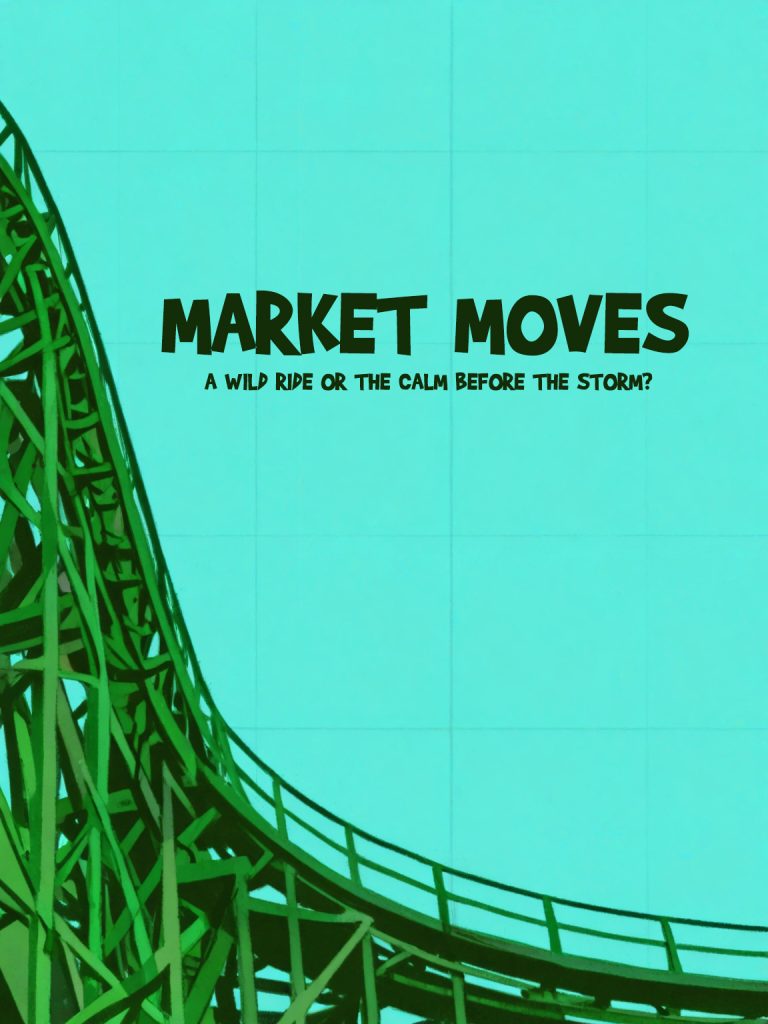
    Market Moves: A Wild Ride or the Calm Before the Storm?

    0

    Is the market a thrill-seeking daredevil, careening through loops and drops of volatility? Or is it a seasoned sailor, weathering the storm before setting sail on calmer waters? The financial world is a curious beast, capable of both exhilarating ascents and terrifying plunges. It’s a stage where drama unfolds daily, a rollercoaster of emotions where fortunes can be made or lost in the blink of an eye. Like a weather forecast, predicting the market is an art and a science, a blend of data, intuition, and a dash of courage. So, buckle up, dear reader, as we embark on this journey to decipher the market’s cryptic messages. Is it a tempestuous typhoon or a gentle breeze? Let’s find out.

    TL;DR

    • Recent Market Movements: Stocks surged, driven by lower-than-expected inflation data and the possibility of the Federal Reserve cutting interest rates.
    • Inflation Insights: Lower producer-price index numbers offered hope, reducing fears of stagflation.
    • Market Optimism: Investors are cautiously optimistic, betting on the Fed’s ability to manage inflation without derailing the economy.
    • Bond Market Buzz: Companies are rushing to issue debt, aiming to lock in borrowing costs before potential market shifts.
    • Volatility Returns: After a period of calm, the market is back to wild swings, with some bracing for more turbulence.
    • Investment Strategy: In volatile times, staying calm and watching for opportunities is key to long-term success.

    It’s been one of those weeks in the financial world where the stock market felt like it was auditioning for the next big rollercoaster ride. Investors have been holding on for dear life, hoping the next dip won’t be too steep. But, hey, isn’t that the fun of it all? Well, at least for those with nerves of steel. Let’s break it down, shall we?

    Hidden treasures in a turbulent market—are you ready to dig?

    The Calm Before the (Potential) Storm

    Stocks decided to put on their best performance Tuesday, bolstered by some fresh inflation data that gave everyone a glimmer of hope. The Federal Reserve, it seems, might just have a trick up its sleeve—cutting interest rates by half a point next month. If you’re wondering what that means for your portfolio, hang tight; we’ll get to that.

    The Nasdaq, which is like the flashy cousin at the family reunion, jumped a whopping 2.4%. All thanks to Nvidia and the rest of the Magnificent Seven tech stocks. The S&P 500 wasn’t far behind, climbing 1.7%, while the Dow Jones, always the more reserved one, managed a 1% rise, adding about 409 points. Not too shabby.

    So what sparked this rally? The producer-price index (PPI)—a fancy term for the prices businesses get for their goods and services—only went up by 0.1% in July. That’s less than what the economists had predicted, and less in this case means good news. Why? Because it eases fears of stagflation. For those not keeping score at home, that’s when growth slows, unemployment rises, and prices just won’t quit. It’s the economic equivalent of having a bad hair day—every single day.

    Inflation: The Unwelcome Guest That Won’t Leave

    Wednesday rolled around with inflation still hogging the spotlight. The consumer-price index (CPI) for July was expected to give traders more clues on what the Federal Reserve might do next with interest rates. Spoiler alert: Everyone’s watching closely because inflation, like an uninvited guest, has overstayed its welcome.

    Now, the big shots on Wall Street remain cautiously optimistic. They’re hopeful the Fed can bring inflation down without sending the economy into a nosedive. But let’s be real—hope only gets you so far. According to Bank of America’s latest global fund-manager survey, many now expect the Fed to aggressively cut rates to make sure they hit that sweet spot.

    On Tuesday, interest-rate futures were implying a 55% chance of a half-point cut in September, according to CME data. Just a day before, it was a toss-up between a quarter-point and a half-point cut. Talk about indecision!

    Markets have found a bit of balance after last week’s wild ride, which shattered the calm we’ve seen in recent months. The Cboe Volatility Index, lovingly known as Wall Street’s fear gauge, dipped below 20 for the first time since the month began. But don’t get too comfortable—some investors are still bracing for more volatility, especially with the economy slowing and the November presidential elections lurking around the corner.

    Balancing act: The market teeters between hope and uncertainty.

    Bond Market Buzz: Debt Issuers in a Hurry

    Over in the bond market, things are getting interesting. Companies are issuing more debt than usual for August, typically a quiet month. It’s like they’re trying to beat the clock, getting ahead of any expected volatility. Connor Fitzgerald, a portfolio manager at Wellington Management, believes these issuers are keen to lock in borrowing costs before the next storm hits.

    “Markets have become comfortable with the soft-landing narrative, but the recent move in the unemployment rate is starting to challenge that,” he remarked. In other words, just when we thought things were settling down, the unemployment rate decides to shake things up. Go figure.

    Market Movers: Who’s Up and Who’s Down

    On the individual stock front, it’s been a mixed bag. Starbucks saw its stock surge by about 25%, marking its largest one-day percentage gain on record. Why the caffeine boost? They swapped out their CEO for Chipotle’s boss, apparently a move investors liked. However, not everyone was smiling—Chipotle’s shares tumbled 7.5%. Guess you can’t win them all.

    Meanwhile, Trump Media & Technology Group, the parent company of Truth Social (you know, the social-media platform), took a 3.6% hit. This happened right after Donald Trump made his first post on X (formerly Twitter) in nearly a year and gave an interview. Seems like the social media world isn’t what it used to be, eh?

    Home Depot had a decent day, rising 1.2%, even after the company cut its outlook for comparable-store sales. High interest rates have been weighing on home-improvement spending—maybe folks are holding off on those DIY projects.

    As for bonds, the yield on the U.S. 10-year Treasury note edged lower to 3.853%. Meanwhile, benchmark U.S. crude fell 2% to $78.35 a barrel, as fears of a wider Middle East conflict faded. But don’t let your guard down; the stock market has proven it can flip in the blink of an eye.

    The Volatility Rollercoaster: Buckle Up!

    Now, let’s talk about volatility because, like it or not, it’s back with a vengeance. The stock market has been tossing and turning since mid-July, reaching a climax last week with the S&P 500 logging both its best and worst days since 2022. It’s been a seesaw, and not the fun kind.

    Traders, who’ve been riding high on calm conditions, are now starting to rethink their strategies. Some are pulling back, realizing that the market’s sideways action might be a thing of the past.

    The signs are everywhere: a once-in-a-generation rout in Japanese stocks, half-trillion-dollar daily swings in the value of the Magnificent 7 tech giants, and a streak of seesawing Nasdaq sessions last seen during the pandemic’s darkest days.

    So the million-dollar question is—will it continue? Eric Metz, the chief investment officer at SpiderRock Advisors, thinks so. “When you’re low for so long, you’re bound to have a pickup,” he said, referring to the wild daily swings in asset prices. “When it changes, it changes fast.” Buckle up, folks!

    The Bigger Picture: Where Do We Go From Here?

    The market’s recent jolt marks the start of a more anxious phase, but don’t hit the panic button just yet. This record-breaking market has been on a mission to boost Americans’ wealth and prop up consumer spending—the lifeblood of the U.S. economy. Yet, as investors comb through jobs reports and corporate earnings for clues about what’s next, they’re starting to question many of the factors that kept the market unusually calm in recent months.

    There’s growing skepticism on Wall Street about the promises of artificial intelligence. This could trigger a massive shift into other stocks, potentially throwing off indexes loaded with tech shares. The labor market’s wobbling, reigniting fears of economic trouble. And then there’s the Federal Reserve, expected to start cutting interest rates in September—a move that could change the global flow of capital.

    So, what’s the takeaway? While stocks have calmed a bit since last week’s whirlwind, new potential sources of market choppiness are just around the corner. An inflation report on Wednesday and retail-sales data on Thursday should offer hints about whether the Fed will make that quarter-point cut everyone’s talking about. But don’t be surprised if things don’t go as planned.

    If the data disappoints, speculation could swing toward a half-point cut, causing investors to ditch riskier assets in favor of safer bets like government bonds. Remember, it wasn’t too long ago that the Labor Department reported less hiring in July than expected. That news sent 10-year and 30-year Treasury yields tumbling to their steepest weekly declines since the pandemic-induced chaos.

    In this now-jittery market, even the smallest economic surprise could spark outsized moves. Last Thursday, the Nasdaq finished an eight-day stretch of wild volatility, with momentum sometimes flipping mid-session. According to Dow Jones Market Data, the index has faced longer streaks of such turbulence only three times in the past two decades—once in March 2020 and twice during the 2008 financial crisis.

    My Take

    Alright, let’s pause for a second, here’s where I weigh in. The market is like a giant game of Jenga right now—everything’s balanced, but one wrong move and the whole thing could come crashing down. But here’s the kicker: instead of panicking, this might just be the opportunity you didn’t know you were waiting for.

    See, when everyone else is running for the hills, that’s your cue to stay calm and keep your eyes peeled for bargains. If history has taught us anything, it’s that the markets always bounce back, often stronger than before. So while things might look a bit dicey right now, don’t lose sight of the bigger picture.

    The economy is in a state of flux, no doubt about it. The Federal Reserve’s next moves are critical, and the labor market could go either way. But with volatility comes opportunity. So, take a deep breath, stay informed, and be ready to make moves when the time is right.

    Market Close for Now

    The market is a capricious conductor, orchestrating a symphony of gains and losses. It’s a riddle wrapped in a mystery, a puzzle begging to be solved. Perhaps the key lies not in predicting the next move, but in understanding the rhythm. Like a seasoned dancer, the savvy investor learns to adapt to the music, finding harmony amidst the chaos.

    So, whether you’re a thrill-seeker or a risk-averse soul, the market offers a stage for everyone. But remember, every storm is followed by a rainbow, and every calm before the storm is a chance to prepare. Stay tuned for more market musings, and let’s navigate these waters together.

    Want to dive deeper into the market’s mysteries? Check out our other Finance articles for more financial insights and expert analysis.
    How to Finally Stop Spam Texts from Driving You Insane (Without Throwing Your Phone Out the Window)

    Our phones, once sanctuaries of connection, have morphed into digital battlegrounds. A relentless barrage of unsolicited messages, disguised as lucrative offers or urgent alerts, has transformed our devices into virtual spam traps. It’s as if every time we unlock our phones, we’re unwittingly inviting a horde of uninvited guests to crash the party. The question is, how do we evict these digital squatters without resorting to drastic measures? Perhaps it’s time to reclaim our personal space and restore order to our notifications. Let’s embark on a mission to silence the digital sirens and reclaim our sanity, one blocked number at a time.

    TL;DR

    • Block Unknown Senders: Use your phone’s settings to stop unknown numbers from contacting you.
    • Filter Messages: On Apple devices, enable ‘Filter Unknown Senders’ to keep spam texts out of your inbox.
    • Carrier Services: Utilize blocking services provided by your wireless carrier to reduce spam calls and texts.
    • Stay Vigilant: Avoid interacting with suspicious messages and report them to your carrier or the FTC.
    • Stay Informed: Keep up with the latest scam trends to protect yourself from new threats.

    Ah, spam texts—the unsolicited visitors that invade our phones, turning what should be a serene digital landscape into a chaotic minefield of “Hi, you’ve won $1,000,000!” and “Exciting job opportunity!” messages. If you’ve ever felt your blood pressure rise at the sight of another mysterious text from a random number, you’re not alone. We’re all in this digital nightmare together, and it’s high time we put an end to it. Let’s dive into the world of spam texts and learn how to slam the door in their annoying faces for good.

    Why You Keep Getting Spam Texts (And Why It’s Not Your Fault)

    First off, let’s clear something up: It’s not you, it’s them. Scammers are out there, lurking, just waiting for you to confirm that you’re indeed a living, breathing human. The moment you respond, you’ve essentially opened the floodgates for more spam. These texts can range from the cryptic “hi” to the oh-so-tempting job offer or the anxiety-inducing “package delivery” notification. Their goal? To trick you into engaging, confirming your number, and making you an easy target for more scams. Lovely, right?

    But you don’t have to play their game. There are ways to filter these pests out before they ever reach your inbox, and I’m here to walk you through the process.

    How to Block Spam Texts on Your Phone (Without Losing Your Sanity)

    Let’s get into the nitty-gritty. Blocking unknown messages on your phone isn’t rocket science, but it’s also not something everyone knows how to do. Lucky for you, it’s easier than you might think.

    For iPhone Users:

    1. Head to Settings: Open your phone’s settings and scroll down to find Messages.
    2. Find Message Filtering: Scroll until you see the option for message filtering.
    3. Filter Unknown Senders: Toggle on “Filter Unknown Senders.”

    Now, when you receive texts from numbers not in your contacts, they’ll be filed away under a separate “Unknown Senders” tab, keeping your main inbox clean and spam-free. Want to peek at what’s been filtered out? Just tap on “Filters” in the top-left corner of your Messages app and select “Unknown Senders.”

    For Android Users:

    1. Dive into Settings: Go to Settings and find the section labeled “Blocked numbers.”
    2. Toggle on the Unknown Option: Switch on the option to block private or unidentified numbers.

    Boom! You’ve just erected a virtual wall, keeping out unwanted texts from anonymous sources.

    Scam Texts: The Real Villains of Our Digital Lives

    Let’s be real—scammers are the villains in this story. They’re cunning, ruthless, and have zero moral compass. According to the Federal Trade Commission (FTC), Americans lost a staggering $330 million to texting scams in 2022 alone. That’s right—$330 million. The average victim was swindled out of about $1,000, which is enough to make anyone want to scream into a pillow.

    Why are scam texts so effective? It’s all about speed. Texts are quick, and scammers count on you not taking the time to think things through. A message might promise you a gift, alert you to a problem with your account, or offer you a once-in-a-lifetime job. But before you know it, you’re sucked into their web of lies, and your money or personal information is gone.

    The Digital Shield: Protecting Yourself from Texting Scams

    So, what’s a savvy phone user to do? Adding a text filter is a great start. This simple action creates a barrier between you and the scam, helping you avoid getting caught up in their emotionally manipulative mind games.

    But don’t stop there. Many wireless providers offer additional tools for blocking unwanted calls and texts. While some of these services might not be free, they’re worth considering if you’re serious about keeping scammers at bay.

    Some popular options include:

    • ScamShield: The ScamShield app blocks calls from numbers known to be used in illegal activities if you are residing in Singapore
    • AT&T ActiveArmor: A robust service that blocks unwanted calls and texts.
    • Verizon Call Filter: Another effective tool for filtering out spam.
    • T-Mobile Scam Shield: A feature designed to shield you from the flood of spam.

    The wireless industry’s trade association, CTIA, also keeps a handy list of call-blocking apps for various devices, including Android, BlackBerry, iOS, and Windows phones. A little research can go a long way in choosing the right tool for your needs.

    My Two Cents: Why You Should Care About Text Filtering

    Now, let’s get personal. Here’s why I think text filtering is a no-brainer: Your mental health is at stake. Yes, I said it. Constantly being bombarded by spam texts can wear you down, and the more you let it slide, the more it eats away at your peace of mind. By taking a few simple steps to block and filter out these unwanted messages, you’re taking control of your digital life. And trust me, it feels good.

    Plus, it’s not just about avoiding scams. It’s about decluttering your mind. Out of sight, out of mind, as they say. By filtering spam texts into a separate folder, you’re reducing the amount of unnecessary stress and frustration in your daily life. And let’s be honest—we all have enough stress as it is.

    Beyond Text Filters: How to Handle the Flood of Political Messages

    Now, if you thought spam texts were bad, let’s talk about political messages. With the November 2024 election approaching, it’s like the floodgates have opened, and our phones are drowning in campaign texts. The Supreme Court’s 2021 decision to loosen requirements for mass texting campaigns has only made things worse. Political parties, particularly the Republican National Convention, are bombarding voters with messages in hopes of driving them to the polls.

    But here’s the kicker: You don’t have to take it lying down. While you can always reply with “Stop” to remove yourself from the list, Apple has a nifty little hack that goes a step further. By filtering unknown senders, you can prevent these messages from ever reaching your main inbox. They’ll still show up in your filtered messages, but out of sight means out of mind.

    The Bigger Picture: Why You Shouldn’t Ignore the FCC’s Warnings

    While political messages are annoying, they’re not the only culprit. The Federal Communications Commission (FCC) has been sounding the alarm about illegal and spoofed robocalls for years. These calls are often disguised as urgent messages about your Social Security number, taxes, or Medicare, trying to scare you into handing over personal information. And if you don’t comply? They’ll threaten you with dire consequences or promise you’ll miss out on some government benefit.

    It’s all a scam, of course. The FCC urges everyone to avoid responding to these unknown senders and to work with their phone company to block such calls. It’s a simple step, but one that can save you a lot of headaches—and possibly a lot of money.

    Recent Events Related to Text and Call Scams

    1. 2023 Holiday Shopping Season Scam Surge: During the 2023 holiday shopping season, a significant increase in scam texts and calls was reported. These scams often posed as delivery notifications, taking advantage of the holiday shopping rush to trick people into clicking on malicious links or providing personal information.
      Reference: Federal Trade Commission
    2. Political Campaign Text Spam in 2024: As the 2024 U.S. elections approach, there has been a surge in political campaign texts, with both legitimate campaigns and scammers flooding phones with messages. The Supreme Court’s 2021 decision to loosen regulations on mass text messages has contributed to this increase, making it harder for individuals to avoid unwanted messages. Reference: Axios
    3. Rise of AI-Generated Scam Messages: In early 2024, cybersecurity experts warned about a new wave of AI-generated scam messages that are more convincing and harder to detect. These messages often impersonate trusted institutions or individuals, making it easier for scammers to trick recipients into revealing sensitive information. Reference: Wired
    4. FCC Actions Against Illegal Robocalls: In mid-2023, the Federal Communications Commission (FCC) stepped up efforts to combat illegal robocalls by issuing fines and shutting down companies responsible for a significant volume of scam calls. This includes a crackdown on call spoofing, where scammers disguise their phone numbers to appear legitimate. Reference: Federal Communications Commission
    5. Banking and Finance Scam Alerts: Throughout 2023 and into 2024, multiple banks issued alerts warning customers about a rise in text and call scams targeting their financial information. These scams often claimed to be from the bank itself, urging customers to verify their account details or report suspicious activity. Reference: American Bankers Association

    Final Thoughts: Taking Back Control of Your Digital Life

    The battle against spam is an ongoing war, but with the right arsenal, victory is within reach. By understanding the enemy, fortifying our digital defenses, and employing strategic countermeasures, we can reclaim our phones from the clutches of these unwanted intruders. Remember, silence is golden, and a spam-free existence is a treasure worth protecting. So, let’s unite in our quest to create a quieter, more peaceful digital world. Are you ready to join the resistance? Dive deeper into our Spam Prevention section for more tips and tricks to conquer the spam epidemic.

    Rachael Gunn’s Break Dancing Debacle: The Viral Olympic Misadventure

    They say every cloud has a silver lining, but in the case of Rachael Gunn’s Olympic performance, the cloud was as big as the Sydney Opera House and the lining, well, that’s up for debate. What began as a hopeful pursuit of Olympic glory transformed into a viral sensation of a different kind. This is not a tale of triumph, but of a spectacular collision of ambition, artistry, and, let’s be honest, gravity-defying levels of unexpected. Join us as we dissect this cultural phenomenon, where the lines between dance, drama, and digital spectacle blur into an unforgettable masterpiece of the absurd.

    TL;DR

    • RachaelGunn, an Australian break dancer, competed in the 2024 Paris Olympics.
    • Her performance was criticized for being unconventional and lacking the technical skills expected in the sport.
    • Social media reactions were harsh, with many mocking her routines.
    • Despite the criticism, some prominent figures defended her, praising her courage and unique approach.
    • The controversy raises questions about the balance between artistic expression and competitive standards in sports.
    • Break dancing’s future in the Olympics remains uncertain, with no plans for its inclusion in the 2028 and 2032 Games.

    If you’ve stumbled upon this article, you might be wondering why Rachael Gunn’s Olympic break dancing performance has caused such a stir. Spoiler alert: I’m not here to laugh at anyone or claim to have all the answers. Instead, we’re diving into a whirlwind of speculation and analysis. Let’s get into it.

    The Background: From Tap Shoes to Break Dancing

    Rachael Louise Gunn was born on September 2, 1987, in Hornsby, New South Wales, Australia. For those unfamiliar with Australian geography, Hornsby is about a 50-minute drive northwest of Sydney—an ideal spot for a budding dancer with big dreams.

    Rachael’s early years were filled with various dance forms, from tap and ballet to salsa and ballroom. Her passion for the arts didn’t stop there. In 2009, she earned a Bachelor’s degree in Contemporary Music from Macquarie University in Sydney. Not one to rest on her laurels, Rachael returned to the same university in 2017 to snag a PhD in Cultural Studies. Her thesis, a 355-page tome titled “Deterritorializing Gender and Sydney’s Break Dancing Scene: A B-Girl’s Experience of B-Boying,” explored gender norms within break dancing—a form of street dance often referred to as “breaking.”

    Rachael’s fascination with break dancing began in 2008 when she attended a session with her then-boyfriend’s crew, Sam Free. They married, and Rachael, adopting the stage name Ray Gunn, dove headfirst into the world of breaking. Her academic work dissected why women were underrepresented in the sport, a topic that was as intriguing as it was niche.

    When break dancing meets art: Rachel Gunn’s Olympic spin on creativity

    The Olympic Dream: From High Hopes to Epic Fails

    Rachael’s journey from academic to break dancing sensation was nothing short of remarkable. She resumed competing in 2018, and by 2020, she had climbed to the top of the Australian Breaking Association rankings. In 2021, she took her talents to the World Breaking Championships in France and followed up with a 2022 appearance in South Korea. Her crowning achievement came in October 2023 when she qualified for the 2024 Olympics at the Oceania Breaking Championships in Australia.

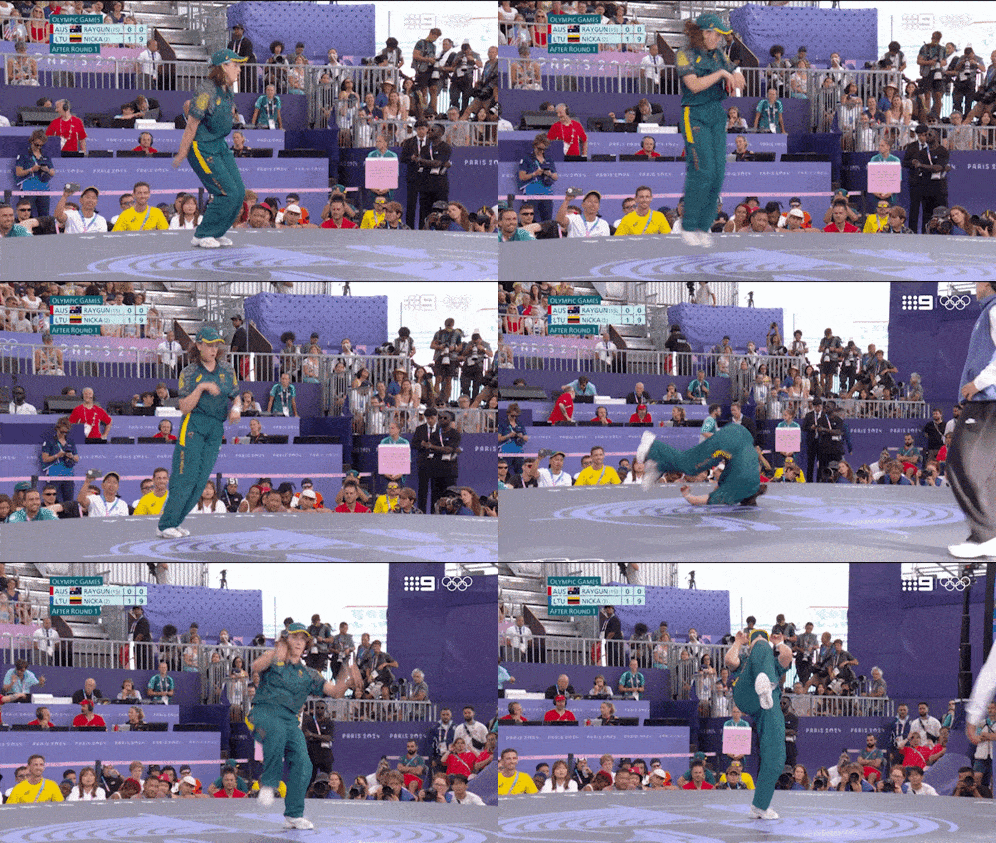
    Fast forward to August 9, 2024, and Rachael found herself in Paris for the Olympic Games. Her performance? Let’s just say it didn’t go as planned. Rachael competed in the round-robin stage and failed to score a single point across three routines. The aggregate score of 54-0 didn’t exactly reflect a gold medal-worthy effort. The response? It was as if someone had hit a button to enter negative numbers.

    Rachael, ever the optimist, defended her performance by stating, “I was never going to beat these girls on what they do best—the dynamic and the power moves. So, I wanted to move differently, be artistic and creative.” She continued, “All my moves are original. Creativity is really important to me. I go out there and show my artistry. Sometimes it speaks to the judges, and sometimes it doesn’t.”

    The Criticism: A Symphony of Sarcasm

    Not everyone shared Rachael’s artistic vision. Social media erupted with critiques that ranged from the harsh to the hilarious. Descriptions of her performance included “not serious,” “childlike,” and “zero talent.” Some compared her moves to those of a fish flopping around or Homer Simpson doing break dance. One observer even suggested she might have been secretly sent by anti-breaking forces to undermine the sport.

    Others speculated whether Rachael was performing a comedic routine. After all, humor can be a part of artistic expression, right? Still, the general consensus was that her performance missed the mark—by a lot.

    Support and Critique: The Mixed Bag of Reactions

    Despite the ridicule, Rachael had her defenders. Anna Mece, a two-time Olympic cycling gold medalist and head of the Australian team in Paris, defended her courage and character. She lamented the online trolls and keyboard warriors who pounced on Rachael’s performance, stating, “I absolutely love her courage. I feel very disappointed for her that she has to come under the attack that she has.”

    Rachael herself posted an image with the caption, “Don’t be afraid to be different. Go out there and represent yourself. You never know where that’s going to take you.” It’s a sentiment worth noting, even if her execution in Paris left something to be desired.

    When art and sport collide: Rachel Gunn’s controversial break dance.

    Analysis: The Good, The Bad, and The Ugly

    So, what’s the takeaway from Rachael Gunn’s Olympic escapade? Let’s break it down.

    1. The Future of Break Dancing in the Olympics

    Rachael’s performance might be a reflection of break dancing’s future—or lack thereof—in the Olympics. The sport isn’t on the program for the 2028 Summer Olympics in Los Angeles and might be absent from the 2032 Games in Brisbane. The best hope for break dancing fans is that the spotlight from the Olympics inspires a new generation of dancers. Maybe someone will combine artistry with technique to create the next big thing in break dancing.

    2. Scoring Criteria: What Judges Really Want

    Break dancing scores are based on five criteria: technique, vocabulary, execution, musicality, and originality. Rachael’s performance might have excelled in originality but fell short in the other areas. Technique involves physical control and athleticism, vocabulary is about the range and variation of moves, execution is smoothness without mistakes, musicality is about syncing with the music, and originality is about creativity and style.

    3. The Art vs. The Absurd

    Rachael’s performance was certainly unique, but was it too unique? Her routine diverged dramatically from traditional break dancing, to the point where it seemed she might have misunderstood the sport’s expectations. Was she overstepping the bounds of artistic freedom? The kangaroo-inspired moves, while imaginative, seemed more like a bad joke than a groundbreaking dance form.

    4. The Defenders vs. The Detractors

    Rachael’s defenders argue that she took a risk and should be celebrated for her courage. They also point out that she was the top female break dancer in Australia. But the critics are right in acknowledging that her performance didn’t meet Olympic standards. Defending Rachael’s effort is one thing; glossing over a less-than-stellar performance is another.

    5. Legacy and Impact

    What will Rachael’s legacy be in the world of break dancing? Her performance might be remembered as a stark reminder of what happens when artistic vision clashes with competitive expectations. However, it may also encourage others to step into the world of break dancing, aiming to achieve what Rachael did—minus the kangaroo antics.

    Final Thoughts

    Rachael Gunn’s Olympic journey was a spectacle—a mixture of ambition, artistry, and unfortunate execution. While her performance didn’t win her accolades, it certainly sparked conversation. The key takeaway? Break dancing is a complex art form that requires a delicate balance between innovation and adherence to established norms. Rachael’s case might be a cautionary tale or a call to action for future competitors.

    So, there you have it: the curious case of Rachael Gunn. A tale of ambition, artistry, and, well, something else entirely. Her performance was a cosmic collision of expectations and reality, a black hole of sorts that sucked in critics, fans, and the indifferent alike. Whether you found her performance a groundbreaking masterpiece or a catastrophic car crash, one thing’s for sure: it sparked a conversation. And isn’t that what art, or at least internet culture, is all about?

    The next time you think you’ve seen it all, remember Rachael Gunn. Because in the grand scheme of things, even the most unexpected performance can be a launchpad for endless debate, speculation, and, let’s face it, memes. Want more mind-boggling stories that’ll make you question everything? Dive deeper into our collection of trending articles that will leave you scratching your head and craving more.

    The Unseen Trap of Mind Loops

    We are all architects of our own reality, brick by brick and thought by thought. What if the plans we’re following are flawed? What if our brain systems are built on a labyrinthine trap constructed entirely by ourselves?

    Mind loops, the insidious architects of anxiety, are the invisible cords that bind us to the depths of our own brains. They are the quiet saboteurs, the phantom puppeteers who manipulate our emotions. They hide in the shadows, disguised as familiar ideas, trapping us in a never-ending loop of misery.

    It’s a paradox: we’re both the prisoner and the jailor. Captured by our own works, we become entangled in a web of our own design. But do not worry, liberty is within grasp. With the proper skills and knowledge, we can break free from these mental prisons and recover our lives.

    TL;DR

    • Definition of Mind Loops: Mind loops are repetitive negative thought patterns that can impact mental health.
    • Recent Influences: Events like the COVID-19 pandemic, increased internet usage, economic uncertainty, climate change anxiety, and celebrity influence highlight the prevalence of mind loops.
    • Impact on Mental Health: These mind loops contribute to heightened anxiety, depression, and overall stress.
    • Strategies for Improvement: Understanding and addressing these patterns can help individuals break free from detrimental thought cycles and improve mental well-being.
    “Breaking Free: How to Escape the Mental Maze” – Dive into the world of mind loops and learn how to navigate your way to mental clarity.

    Hello there! Today, let’s dive into a topic that’s probably been gnawing at you for a while: mind loops. Those insidious, self-reinforcing cycles of thoughts and feelings that just won’t quit. You know the ones I’m talking about—those mental hamster wheels that keep you up at night, replaying the same fears, anxieties, and regrets over and over again. Sound familiar? If so, buckle up because we’re about to take a deep dive into these loops, why they happen, and more importantly, how to break free from them.

    What Exactly Are Mind Loops?

    In simple terms, mind loops are repetitive cycles of thoughts and emotions that feed off each other, creating a vicious cycle that’s hard to escape. It’s like getting caught in a mental whirlpool—you think about something that makes you feel bad, and because you feel bad, you think about it more, which makes you feel even worse, and so on. Before you know it, you’re stuck in a loop of negative thoughts and feelings, spiraling downwards without a clear exit in sight.

    Now, I know what you’re thinking: “Can’t mind loops be positive too?” Sure, they can. But today, we’re focusing on the bad ones—the ones that drag you down and leave you feeling trapped in your own head.

    “The Unseen Chains: Confronting Mind Loops” – Uncover the invisible chains of repetitive thoughts and how to break them.

    The Mind Loop That Changed My Life

    Let me tell you a little story about my own battle with mind loops. Last week, I was practicing a technique to escape these mental mazes. But escape isn’t quite the right word—more like confronting them head-on until they collapse under their own weight. It’s a bit like facing your fears, only instead of a big, scary monster, you’re dealing with an endless cycle of anxiety, fear, and shame.

    It wasn’t just about the stress or the long hours—though those were definitely factors. No, a big part of why I left was because I was trapped in a mind loop of fear. Fear of the future, fear of collapse, fear of, well, everything.

    The Fear of Collapse: My Mind Loop’s Worst Enemy

    You see, I was obsessed with the idea of collapse—this notion that our civilization is teetering on the edge of disaster. Maybe it’s the endless stream of bad news, or maybe it’s just my overactive imagination, but I couldn’t shake the feeling that the future was bleak. I spent countless hours reading about climate change, overpopulation, environmental degradation—you name it. I was neck-deep in the collapse subreddit, a place where pessimism thrives and every new post seemed to reinforce my fears.

    At some point, I realized that I wasn’t just educating myself—I was feeding a fear cycle. I was already anxious and depressed, and reading about the end of the world wasn’t exactly helping my mental state. But here’s the kicker: I didn’t want to stop. I wanted to feel bad because, in a twisted way, it gave me an excuse. An excuse to avoid facing my real issues, to avoid the present, and to keep spiraling down the rabbit hole.

    “Beyond the Loop: Finding Freedom from Mental Traps” – Explore ways to step beyond the mental traps that hold you back.

    My Point of View: Life Beyond the Loops

    Here’s where I get personal. I’ve spent a lot of time trapped in my own mind, worrying about things I can’t control and letting those worries dictate my life. But what I’ve learned is that mind loops are just that—loops. They’re self-contained, self-reinforcing, and ultimately, they go nowhere. The only way to break free is to step outside of them, to see them for what they are, and to realize that you don’t have to let them control you.

    Change starts in the mind. Break the cycle of negative thoughts to find peace and clarity.

    Life is full of uncertainty—there’s no getting around that. But that doesn’t mean we have to live in fear. We have the power to choose how we respond to our thoughts and feelings. We can let them drag us down, or we can confront them, challenge them, and move forward.

    “Mind Loop Makeover: Transform Your Thoughts” – Transform your thought patterns with our guide to overcoming mind loops.

    Practical Tips for Escaping Mind Loops

    So, how do you break free from mind loops? Here are a few tips that have worked for me:

    1. Acknowledge the Loop: The first step is recognizing that you’re in a loop. Once you see it, you can start to unravel it.
    2. Change Your Focus: Shift your attention away from the negative thoughts and focus on something positive. It could be a hobby, a conversation, or just taking a walk outside.
    3. Challenge Your Thoughts: Ask yourself if your fears are based on reality or just speculation. Often, you’ll find that they’re not as grounded as they seem.
    4. Practice Mindfulness: Staying present can help you break free from the past and future worries that fuel mind loops. Mindfulness meditation is a great tool for this.
    5. Seek Support: Sometimes, you need an outside perspective to see things clearly. Don’t hesitate to talk to someone you trust, whether it’s a friend, family member, or counselor.

    Living Beyond the Loops

    Mind loops are the Houdini of the mental realm – they vanish into thin air, only to reappear when you least expect them. But remember, you’re not a helpless spectator in this grand illusion. With awareness as your magic wand, you can dispel the enchantment.

    By understanding the mechanics of these mental mazes, you’ve taken the first step towards liberation. Now, it’s time to practice the escape. Dive deeper into the world of mental well-being and explore strategies tailored to your unique challenges. Your journey to mental clarity starts here.

    Ready to break free from the chains of your mind? Check out Personal Growth for more tools and techniques to unlock your full potential.

    Asian Markets See Mixed Performance as Inflation Jitters

    0

    Asia’s financial landscape has always been a complex tapestry, woven with threads of tradition and modernity. Today, that intricate pattern is further complicated by the looming specter of inflation. It’s a financial rollercoaster where up is down and down is sideways, a market that’s as unpredictable as a monsoon.

    The region’s economies, once seen as bastions of stability, are now caught in a delicate balancing act. They’re juggling growth aspirations with the fear of overheating, a tightrope walk where one misstep could send them plummeting. It’s a game of economic Jenga, where removing the wrong block could topple the entire tower.

    So, while some Asian markets are riding high on a wave of optimism, others are bracing for impact. It’s a tale of two cities, or in this case, two continents. The East is meeting the West at a crossroads, and the direction we turn next could determine the fate of global finance.

    TL;DR

    1. Market Recovery: Tokyo’s Nikkei surged, driven by a weaker yen and a steady interest rate policy from the Bank of Japan.
    2. Investor Caution: Markets remain cautious ahead of US inflation data, which could impact Federal Reserve decisions.
    3. Geopolitical Risks: Middle East tensions, particularly involving Iran and Israel, continue to affect global market sentiment.
    4. Oil Price Volatility: Oil prices have fluctuated due to fears of a broader conflict in the Middle East.
    5. Fed’s Dilemma: The Federal Reserve faces a challenge in balancing economic growth with controlling inflation.
    6. Currency Movements: Key currencies like the dollar, yen, and euro showed slight changes, reflecting market caution.
    7. Final Advice: Stay informed, avoid rash decisions, and focus on long-term financial strategies.

    Ah, the rollercoaster of the stock market – one day you’re up, the next you’re plummeting faster than a lead balloon. Today’s headlines have us navigating through the usual turbulence of global financial markets, with Asian stocks largely brushing off last week’s gloom, but not without a bit of nervous side-eye toward the United States and the ever-volatile Middle East.

    It seems that the word “recession” might not be as scary as it was just a week ago. Investors, who’ve been gripping their wallets like they’re holding onto dear life, have managed to relax a bit. Why, you ask? Well, they’re awaiting the next batch of inflation data from the US with the kind of anticipation usually reserved for the latest iPhone release. But let’s not get ahead of ourselves.

    Tokyo’s Comeback – Fueled by a Weaker Yen and a Dovish Bank of Japan

    Leading the pack today was Tokyo’s Nikkei, which sprang back to life after a long weekend. Clearly, the Japanese traders enjoyed their break because the Nikkei surged more than two percent, briefly touching levels it hadn’t seen since earlier this month. The reason for this rally? A weaker yen and a promise from the Bank of Japan that it’s not in a rush to hike interest rates. In the world of finance, that’s practically a get-out-of-jail-free card for traders.

    Now, before you pop the champagne, let’s remember that while the trading floors are less jittery than last week, there’s still a lingering sense of caution. You see, a recent big miss on US job creation data has everyone whispering about the health of the world’s largest economy. You know things are dicey when investors are actually nervous about fewer jobs being created. And as if that weren’t enough to keep everyone on edge, there’s the little issue of geopolitical tensions, because apparently, the markets can never have too much drama.

    Inflation Data: The Sword of Damocles

    But let’s get back to that all-important inflation data. The US consumer and wholesale price figures are due out this week, and these numbers could very well dictate the Federal Reserve’s next moves. Observers (whoever they are) are warning that these inflation readings could send the markets swinging wildly in either direction. It’s like flipping a coin, but with a lot more at stake. If the numbers come in weaker than expected, we might see renewed fears about the economy’s health. On the other hand, if the data is too strong, those who were hoping for a rate cut might need to shelve their dreams for a little while longer.

    The Federal Reserve, bless their hearts, is walking a tightrope between fostering growth and reining in inflation. Some are starting to murmur that perhaps the Fed has waited a bit too long to start cutting rates. It’s like watching someone holding onto a hot potato for just a second too long – eventually, you’re going to get burned. According to Luca Santos from ACY Securities, “One of the major risks is the timing and magnitude of the Fed’s rate cuts.” Basically, if they don’t time it right, we could be looking at a deeper economic slowdown or, conversely, a resurgence in inflation. Either way, it’s a high-stakes game.

    Asian Markets: A Mixed Bag of Cautious Optimism

    So, how did the rest of Asia fare today? Well, it was a bit of a mixed bag. Tokyo was clearly the overachiever, but other markets weren’t quite as enthusiastic. Hong Kong managed to eke out a 0.2 percent gain, while Sydney, Singapore, Wellington, Manila, and Jakarta also saw modest rises. However, Shanghai, Seoul, and Taipei were not in the mood to join the party and dipped slightly.

    It’s worth noting that oil prices, which have been on a bit of a tear lately, took a breather today. They’re still up about eight percent for the week, though, as fears of a broader conflict in the Middle East keep investors on edge. The situation is far from stable, with the White House warning of a “significant set of attacks” by Iran and its proxies against Israel, potentially happening as soon as this week.

    My Perspective – What’s the Takeaway?

    Now, here’s where I put on my financial hat and give you the lowdown from my point of view. The markets, much like life, are unpredictable. The key is not to get swept away by the daily ups and downs. Yes, the Fed’s decisions are crucial, and yes, geopolitical tensions can send shockwaves through the market. But remember, these are just pieces of a much larger puzzle.

    The real question you should be asking is this: How does this affect your long-term goals? Are you making decisions based on short-term fluctuations or sticking to a strategy that aligns with your financial objectives? It’s easy to get caught up in the drama – the news, the data, the speculation – but at the end of the day, it’s about making informed decisions that serve you in the long run.

    Focus on the long game, not the daily swings.

    In my humble opinion, patience is the name of the game. While everyone else is reacting to the latest headlines, you could be calmly assessing your options, ready to make a move when the time is right. Don’t let the noise drown out your focus. Keep your eye on the prize, and remember, the markets may be a wild ride, but that doesn’t mean you have to lose your cool.

    Final Thoughts – A Balancing Act

    The Asian market is a complex organism, breathing in and out with the rhythms of global economy. Its pulse is quick, its mood mercurial. Today, it’s a symphony of mixed notes, a painting with strokes of green and red. Whether you’re a seasoned investor or a curious onlooker, the Asian market is a captivating spectacle. It’s a stage where drama unfolds daily, and the plot twists faster than a K-drama.

    So, buckle up and prepare for the ride. The Asian market is a rollercoaster that promises thrills, spills, and perhaps, even a few golden nuggets.

    Want to stay ahead of the market curve? Check out our other Finance articles for in-depth analysis and my thoughts.

    Rachael Lillis: The Voice Behind Pokémon’s Iconic Characters

    0

    Rachael Lillis: a name synonymous with the electric thrill of catching ’em all. Her voice, a Pokémon master in its own right, tamed the wild spirits of Misty, Jessie, and a universe of characters. But beyond the animated realm, her vocal prowess was a legendary capture. This tribute is a Pokédex of her extraordinary talent, an exploration of the voice that wasn’t just heard, but felt. It’s time to level up our appreciation for the woman who gave voice to our childhood adventures.

    TL;DR

    • Rachael Lillis’ Legacy: Rachael Lillis voiced beloved Pokémon characters like Misty and Jessie, becoming a key figure in the franchise’s success.
    • Tributes and Remembrance: Veronica Taylor, Lillis’ co-star, led tributes that highlighted Lillis’ talent and the joy she brought to fans worldwide.
    • Breast Cancer Awareness: Lillis’ battle with breast cancer has increased awareness within the entertainment industry.
    • Cultural Impact: The Pokémon franchise and its original cast remain influential, with Lillis’ work continuing to inspire new generations.
    • Personal Reflection: A reflection on Lillis’ contribution to voice acting, and how her work shaped many childhoods.

    It’s not every day that we lose a voice from our childhood, but when we do, it feels like a part of us goes with it. Rachael Lillis, the talent behind some of Pokémon’s most beloved characters, has left us. At the age of 46, after a brave fight with breast cancer, Lillis passed away, leaving behind a legacy that resonates with fans across generations. If you grew up with Pokémon—whether glued to the TV on Saturday mornings, battling it out in video games, or even catching the latest movie—you’ve heard her voice. And it wasn’t just any voice; it was the voice of Misty, Jessie, and many more, characters that shaped our childhoods and, let’s face it, our weekends.

    Now, before we dive into the story of Lillis and her remarkable career, let’s pause for a moment. Yes, it’s easy to focus on the loss, the sadness, and the grief, but as a friendly writer… I’m here to remind you that Lillis’ story is more about celebration than sorrow. So, grab your nostalgia glasses because we’re about to take a journey through time—right back to the late ’90s.

    The Golden Era of Pokémon

    Let’s travel back to 1997. The Spice Girls were dominating the charts, and the world was introduced to a new kind of fever—Pokémon fever. This phenomenon wasn’t just a TV show; it was a full-blown cultural explosion. And at the center of it was Rachael Lillis, lending her voice to characters like Misty, the fiery redhead with a heart of gold, and Jessie, the iconic member of Team Rocket whose motto we all knew by heart.

    For almost two decades, Lillis’ voice brought these characters to life in over 400 episodes. But her talent didn’t stop there. She also voiced the adorable Jigglypuff, the lullaby-singing Pokémon that could knock out an entire stadium. Whether it was on the TV series, in the Pokémon movies, or through video games, Lillis’ voice was everywhere, making her a cornerstone of the Pokémon universe.

    A Voice that Defined a Generation

    Not every voice actor becomes a household name, but Lillis was different. Her voice was synonymous with Pokémon’s early years, a time when the franchise was still finding its feet outside Japan. The roles she played were pivotal, shaping how audiences connected with the characters and, by extension, the Pokémon world.

    In 1999, she made her debut in “Pokémon: The First Movie,” a cinematic milestone for the franchise. This wasn’t just another Saturday morning cartoon—it was an event. Kids were dragging their parents to theaters, trading Pokémon cards in the lobby, and sobbing over the emotional rollercoaster that the movie turned out to be. And right there, in the thick of it, was Lillis, giving voice to Misty, Jessie, and others. Her performance was more than just reading lines; it was about infusing these characters with emotion, humor, and depth.

    Who knew an opera singer could make Jigglypuff’s lullabies legendary?

    The Multitalented Artist

    But Pokémon wasn’t the only feather in Lillis’ cap. Let’s not forget that she was a classically trained opera singer. That’s right, she wasn’t just any voice actress; she had chops—real ones. Lillis studied opera at university, which explains the control and range she brought to her roles. Imagine transitioning from belting out an aria to voicing a feisty Pokémon trainer. Talk about versatility!

    Beyond Pokémon, Lillis’ voice could be heard in other anime series like “Your Lie in April,” “Hunter x Hunter,” and “Berserk.” She even made her mark in video games, voicing characters in titles like “Valkyrie Profile” and “Ape Escape 2.” Each role she took on showcased her ability to adapt and breathe life into a diverse array of characters.

    A Personal Reflection

    As we reflect on Lillis’ life and career, it’s hard not to feel a mix of emotions. Yes, there’s sadness, but there’s also a deep appreciation for the joy she brought to millions. As a counselor, I often remind people that grief and gratitude can coexist. In Lillis’ case, the gratitude we feel for her contributions to our lives should shine brighter than the sorrow of her passing.

    Even in the darkest times, a bright voice can light up the world.

    But let’s also talk about the human side of things. It’s easy to put celebrities on a pedestal, to see them as untouchable icons. But Lillis was as human as the rest of us. She battled cancer, a fight that was undoubtedly tough and exhausting. Yet, even in the face of adversity, she continued to work, to create, and to connect with her fans. That’s the kind of resilience that’s worth celebrating.

    The Legacy She Leaves Behind

    Lillis’ passing has undoubtedly left a void in the world of voice acting, but her legacy is far from over. Her work continues to inspire new generations of Pokémon fans, many of whom are now introducing their own children to the world she helped create. And let’s not forget the impact she had on her peers. Veronica Taylor, who voiced Ash Ketchum, was one of the first to announce Lillis’ passing. Taylor’s words were a testament to the bond they shared, not just as co-stars, but as friends who navigated the ups and downs of the industry together.

    In her tribute, Taylor described Lillis as “a bright light that shone through her voice, whether speaking or singing.” And isn’t that the truth? Lillis had a way of bringing light into our lives, even if we didn’t realize it at the time. Her voice was a constant companion, a source of comfort and joy.

    Recent Events and References Related to Rachael Lillis and Voice Acting

    1. The Ongoing Impact of Pokémon’s Original Cast
      • The original Pokémon cast, including Rachael Lillis, continues to have a profound influence on new generations of fans. The nostalgic appeal of the original series has sparked discussions and tributes online, with many fans revisiting the early episodes.
      • Source: Polygon
    2. Veronica Taylor’s Tribute to Rachael Lillis
      • Veronica Taylor, who voiced Ash Ketchum, publicly announced Lillis’ passing and shared heartfelt tributes on social media. This has led to a wave of tributes from fans and colleagues alike, highlighting Lillis’ impact on the industry.
      • Source: X
    3. Increased Awareness and Support for Breast Cancer in the Entertainment Industry
      • Lillis’ battle with breast cancer has brought attention to the disease within the voice acting and broader entertainment community. Her story has been part of ongoing discussions about health challenges faced by industry professionals.
      • Source: Variety
    4. Legacy of Voice Actors in Anime and Video Games
      • The roles that Rachael Lillis played in Pokémon and other anime series have contributed to the broader appreciation of voice actors in the anime and video game industries. Discussions around her work have reignited interest in the importance of voice actors in bringing characters to life.
      • Source: IGN
    5. The Evolution of the Pokémon Franchise and Its Cultural Significance
      • The Pokémon franchise has seen significant developments recently, including the launch of new games, movies, and series. The original voice actors’ contributions, including those of Rachael Lillis, are frequently referenced in these new productions as a nod to the franchise’s roots.
      • Source: The Verge

    These recent events highlight the ongoing relevance of Rachael Lillis’ work and the broader impact of voice actors in the entertainment industry. The original Pokémon cast, including Lillis, continues to be celebrated by fans and colleagues alike, especially in the wake of her passing. The industry has also used her story to raise awareness about important health issues, like breast cancer, while also paying tribute to the lasting legacy that voice actors create through their work. Furthermore, the cultural significance of the Pokémon franchise remains strong, with new developments often referencing the contributions of the original cast. These references underscore how Lillis’ work continues to resonate, both within the industry and among fans worldwide.

    My Take on Rachael Lillis

    Now, here’s where I get to share my two cents. As someone who’s spent more time than I’d like to admit watching Pokémon, I can tell you that Rachael Lillis wasn’t just another voice actress. She was a storyteller, an artist, and a beacon of positivity in an industry that can often be harsh and unforgiving. The characters she brought to life weren’t just drawings on a screen; they were real, relatable, and, most importantly, memorable.

    And let’s not sugarcoat it—Lillis’ work was a big deal. She didn’t just play characters; she created icons. Misty and Jessie are as much a part of the Pokémon franchise as Pikachu or Ash, and that’s saying something. Her ability to switch between the sweet and the sassy, the tough and the tender, is what made her performances so captivating.

    Moving Forward

    Rachael Lillis’ voice was a Poké Ball that captured hearts and imaginations, a master ball of talent that redefined animation. Her legacy is a gym badge of honor, a testament to a voice that was truly one of a kind. But her story is just one chapter in the grand Pokémon adventure. There are countless other trainers, champions, and rivals waiting to be celebrated.

    In a world where entertainment is often disposable, Lillis’ work reminds us of the lasting impact a single voice can have. She may be gone, but her legacy will continue to echo in the hearts of fans for years to come. And who knows? Maybe the next time you hear Misty or Jessie, you’ll smile, knowing that a part of Rachael Lillis lives on in every Pokémon adventure.

    So, let’s raise a Poké Ball in her honor—because if there’s one thing Rachael Lillis taught us, it’s that the journey, not the destination, is what truly matters.

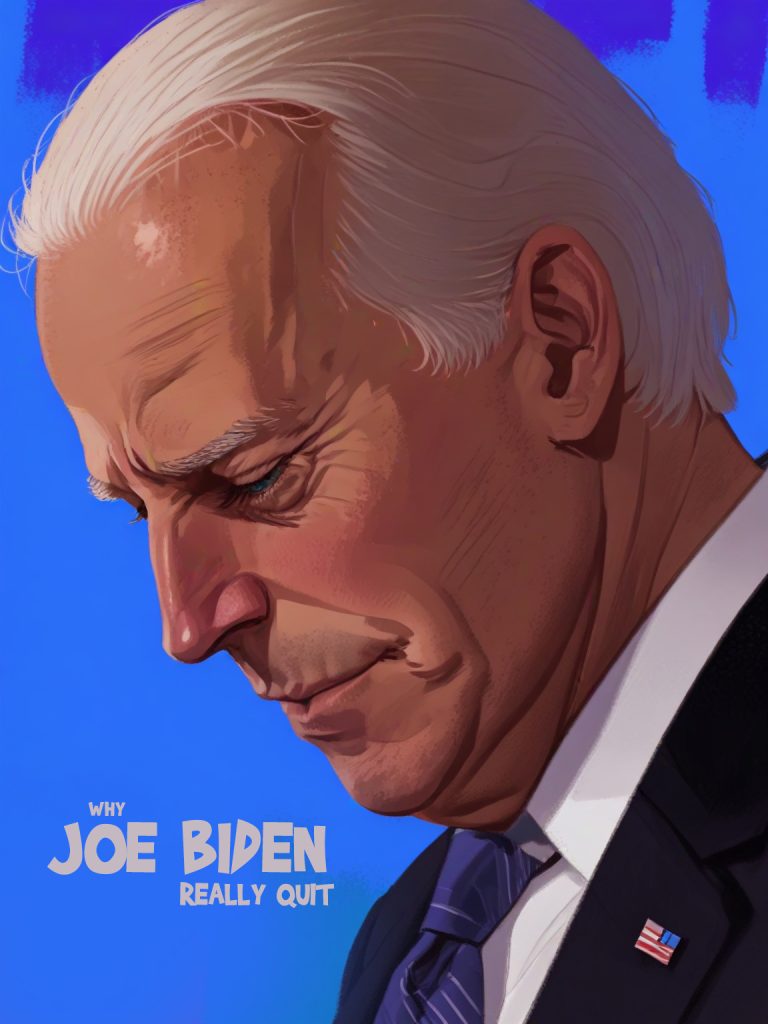
    Why Joe Biden Really Quit: A Tale of Pressure, Politics, and Pelosi

    0

    In the high-stakes game of politics, knowing when to hold ’em and when to fold ’em is the difference between legacy and infamy. Joe Biden’s recent decision to step out of the 2024 presidential race has left many scratching their heads, wondering if it was a masterstroke of wisdom or the inevitable surrender of a worn-out leader. Was this an act of selfless patriotism or a shrewd move in the never-ending chess match of power? Perhaps, it was a bit of both.

    Some say it was the gentle nudge of age, others claim it was the iron grip of Nancy Pelosi tightening around the party’s future. But what if Biden’s exit wasn’t just a retreat, but a strategic withdrawal—a calculated step back to protect not just his own dignity, but the very fabric of the Democratic Party? As we unravel this tale of pressure, politics, and Pelosi, you might find that the lines between wisdom and coercion, leadership and submission, are not as clear-cut as they seem. In the end, maybe Biden didn’t quit at all—maybe he just changed the game.

    TL;DR

    • Joe Biden’s exit from the 2024 presidential race raises questions about whether it was due to political pressure or a strategic move.
    • Nancy Pelosi and other top Democrats reportedly played a key role in encouraging Biden to step aside.
    • Biden claims his decision was driven by a desire to unite the Democratic Party and protect democracy.
    • Speculation surrounds whether Biden’s age and recent performance influenced his choice to leave the race.
    • The article explores the complex dynamics between Biden, Pelosi, and the Democratic Party, offering insights into the high-stakes world of political strategy.

    Joe Biden, the 46th President of the United States, recently made headlines by stepping down from the 2024 presidential race. But why would a sitting president, a man who’s held the highest office in the land, suddenly decide to call it quits? Well, according to Biden himself, it wasn’t a matter of health or lack of will. Instead, it was the mounting pressure from within his own party that finally tipped the scales.

    Now, let’s dig into the real story behind Biden’s exit. But fair warning—this isn’t your average political drama. It’s a mix of intrigue, backroom dealings, and a sprinkle of sarcasm for good measure. So, grab your popcorn because the plot twists are coming thick and fast.

    The Pressure Cooker:
    It all began with whispers in the corridors of power. Biden, 81, had been at the helm, steering the country through turbulent waters, when suddenly, it seemed his own crew was plotting a mutiny. Yes, that’s right—Nancy Pelosi and a few key Democrats thought it was high time for Biden to step aside.

    But why, you ask? Was it his age? His health? Nope. According to Biden, it was the fear that his continued candidacy would sink the chances of other Democrats in their respective races. Apparently, the Democratic ship was leaking, and Biden was seen as the anchor dragging it down.

    In an interview with CBS News, Biden explained, “What happened was a number of my Democratic colleagues in the House and the Senate thought that I was going to hurt them in the races.” So, rather than becoming the Titanic of his party, Biden chose to step aside—because, you know, nobody wants to be the guy who sunk the whole fleet.

    Chessboard of Politics: “In the game of power, every move counts. But sometimes, the smartest play is to leave the board.”

    Pelosi’s Grand Plan:
    Enter Nancy Pelosi, the former Speaker of the House, and a political force to be reckoned with. Pelosi reportedly led the charge to push Biden out, armed with polling data that apparently showed he couldn’t beat Donald Trump in a head-to-head match. Ouch.

    But let’s be honest here—Pelosi wasn’t acting out of malice. No, she was just playing her part in the grand theater of politics, where loyalty often takes a backseat to survival. In the public eye, she tried to distance herself from the whole affair, but the truth has a funny way of leaking out.

    Pelosi told the New Yorker, “I’ve never been that impressed with his political operation… The president has to make the decision for that to happen.” Translation: Joe, it’s time to go, whether you like it or not.

    The Official Story:
    When Biden officially announced his decision to step aside, he did so with the grace of a seasoned politician. He cited the need to “unite my party” and protect democracy, framing his exit as a selfless act for the greater good. “I needed to unite my party to protect democracy in the US,” Biden said, putting a patriotic spin on what was essentially a political ousting.

    He also made it clear that he had put aside “personal ambition” to ensure that the Democrats had the best shot at keeping Trump out of the White House. A noble gesture, no doubt, but one that still left many wondering what really happened behind closed doors.

    The Age Factor:
    Let’s address the elephant in the room—Biden’s age. At 81, he’s not exactly a spring chicken, and his performance in the presidential debates didn’t do much to quell concerns. There were moments when Biden froze, lost his train of thought, and generally appeared every bit his age. But Biden was quick to dismiss any “serious” health concerns, insisting that his decision to bow out wasn’t due to a medical issue.

    “When I ran the first time I thought of myself as being a transition president,” Biden said, perhaps acknowledging that his time in the spotlight was always meant to be temporary. But even he had to admit, “I can’t even say how old I am, it’s hard for me to get it out of my mouth.”

    Gaffes and Goofs:
    Biden’s struggle wasn’t just with his age—his mouth seemed to have a mind of its own, and it wasn’t always on the same page as his brain. Take, for example, his mix-up at the NATO 75th anniversary summit, where he referred to Ukrainian President Volodymyr Zelensky as “President Putin.” Then there was the time he called Kamala Harris “vice president Trump.” Yikes.

    These gaffes only fueled the fire for those within his party who believed that Biden was becoming a liability. The momentum to unseat him grew, and soon, it seemed like Biden was fighting a losing battle—against his own team.

    A Relaxing Break—Or Is It?
    The day before his CBS News interview aired, Biden was spotted lounging on Rehoboth Beach, Delaware, with his wife, First Lady Jill Biden, and his granddaughter, Naomi. It looked like a picture-perfect moment of relaxation, but let’s be real—there’s no such thing as a stress-free day in the life of a former president, especially one who’s just been shown the door.

    Biden may have been smiling on the beach, but the political storm brewing behind the scenes was anything but sunny. And while he might have been taking a break from the campaign trail, his mind was likely still racing with thoughts of what could have been.

    The Great Hand-Off: “Passing the torch or dropping the ball? Biden’s exit sparks more questions than answers—who’s really holding the flame?”

    The Kamala Factor:
    With Biden out of the race, the spotlight now turns to Vice President Kamala Harris. Biden has thrown his full support behind her, even going so far as to say he’ll be hitting the campaign trail in Pennsylvania—his original home state—to help her out. “I’m going to be doing whatever Kamala thinks I can do to help most,” Biden said.

    But Harris’s candidacy isn’t without its own set of challenges. There are concerns about her appeal in battleground states, and some within the party are already whispering about whether she’s the right person to take on Trump. But for now, Biden is all in on Team Kamala, and he’s ready to do whatever it takes to help her cross the finish line.

    My Point of View:
    Now, let me give you my two cents on this whole Biden affair. First off, let’s not pretend that Biden stepping down was entirely his decision. The pressure from Pelosi and other top Democrats was real, and it was intense. Politics is a ruthless game, and sometimes even the biggest players get benched when the team’s future is at stake.

    But here’s the kicker—Biden handled it with grace. Instead of clinging to power, he chose to step aside for the good of his party. That’s a rare move in today’s political climate, where egos often run the show. Biden knew that staying in the race could hurt the Democrats’ chances, so he did what he thought was best for the country.

    As for Pelosi, love her or hate her, you’ve got to respect her political instincts. She saw the writing on the wall and acted accordingly. It’s not about friendship in Washington—it’s about survival. And in this case, Pelosi was just doing her job, even if it meant nudging an old friend out the door.

    Shadow Politics: “In the shadows of the Democratic Party, who’s making the real decisions? Biden steps back, but the game continues.”

    The Final Word:
    So, what’s the takeaway from all this? Biden’s decision to quit the race wasn’t about health or age, though those factors certainly played a role. It was about political survival, both for him and for his party. The pressure from Pelosi and others was too much to ignore, and Biden made the call to step aside.

    But let’s not forget—this is politics. Nothing is ever as simple as it seems, and there are always more layers to the story. Biden may be out, but the game is far from over. Now, it’s up to Kamala Harris to carry the torch, and we’ll all be watching to see how she handles the heat.

    In the end, Joe Biden’s exit from the 2024 race is less about stepping down and more about stepping aside. It’s a move that raises more questions than it answers, blurring the lines between sacrifice and strategy, resignation and resilience. Did Biden truly bow out to save his party, or was he outmaneuvered by the very machine he once led? Perhaps, the real genius lies in knowing when to exit the stage, leaving the audience to wonder what might have been.

    As we close this chapter, it’s worth asking: was Biden’s decision a final act of leadership, or a reluctant surrender to the inevitable? The truth, as always in politics, is layered—filled with shades of gray that defy simple explanation. One thing’s for sure, though: the game continues, and the pieces are still moving.

    So, as you ponder the delicate dance of power and politics, don’t stop here. Dive into more stories of intrigue and strategy in our Politics category and see for yourself how the game is played. After all, in this arena, the more you watch, the more you learn—and the more you realize just how much is happening beneath the surface.

    Singapore Airlines Flight SQ638: Engine Smoke Incident at Narita Airport—What Really Happened?

    0

    A plane, a puff of white, and a world of questions. Singapore Airlines Flight SQ638, a sleek, silver bird meant to glide through the skies, instead found itself shrouded in a cloud of uncertainty. As it touched down at Narita, a familiar destination transformed into a scene straight out of a thriller. White smoke, an unwelcome guest, made a dramatic entrance.

    Was it a mechanical hiccup, a dramatic flair for the unexpected, or perhaps a cryptic message from the aviation gods? The incident, as enigmatic as it was unsettling, has ignited a blaze of curiosity. Did the plane merely have a case of the vapors, or is there a deeper, more sinister plot unfolding behind the smoke screen?

    TL;DR

    • A Singapore Airlines flight landed at Narita Airport with white smoke rising from its left engine, leading to a temporary runway closure.
    • No fire or injuries were reported, and the plane was safely towed away.
    • The incident raises questions about possible mechanical issues and highlights the importance of quick response and thorough safety protocols in aviation.
    • The article compares this incident to similar aviation events, stressing the significance of trust in air travel and continuous improvements in safety measures.

    A Close Call at Narita Airport: Smoke, Suspense, and a Boeing 787

    Imagine this: you’re comfortably settled in your airplane seat, eagerly anticipating your arrival in Tokyo. Suddenly, as the plane touches down, the left engine starts puffing out white smoke. If this were a Hollywood movie, you’d probably expect the next scene to be full of dramatic music and frantic announcements. But thankfully, reality is often much less theatrical—though no less nerve-wracking.

    On Monday, August 12th, passengers on Singapore Airlines Flight SQ638 had a front-row seat to what might have felt like a suspense thriller, minus the dramatics. The Boeing 787, carrying 276 passengers and crew, landed at Narita Airport near Tokyo when something peculiar happened. White smoke started rising from the left engine, turning what should have been a routine landing into a bit of a nail-biter.

    But before you start imagining flames and emergency evacuations, let’s add some perspective. There was no fire. There was no panic. And thankfully, there were no injuries. Just a lot of people wondering, “What’s going on with that engine?”

    Emergency vehicles encircle Singapore Airlines Flight SQ638 after its dramatic landing at Narita International Airport, where white smoke was seen rising from the engine on August 12.
    PHOTO: YouTube/ANNnewsCH

    A Temporary Runway Closure: The Scene Unfolds

    Now, let’s talk about what went down after that smoky revelation. Runway B at Narita Airport, where the plane landed, was temporarily closed. Not exactly what the airport planners had in mind for their Monday morning. For about 50 minutes, the runway was shut down as emergency responders hustled to the scene, ready for anything. Six fire engines and two ambulances were dispatched to deal with the situation, adding to the sense of urgency. The aircraft was eventually towed away, allowing Runway B to reopen around 7:30 a.m. SGT.

    The good news? No signs of fire. No injuries. Just a lot of smoke and a hefty dose of precaution. The Narita city fire official reported that the situation seemed to be under control, and after observing the plane for over an hour, the firefighters left the scene—probably relieved that it was a false alarm.

    The Mystery of the Smoke: What Really Happened?

    So, what caused this smoky spectacle? According to Japan’s Ministry of Land, Infrastructure, Transport, and Tourism, the aircraft might have experienced a problem as it was landing. Emphasis on the “might.” The official narrative was still a bit murky—pun intended.

    The spokesperson at Narita International Airport added to the speculation, noting that the smoke was reported after the flight had landed. It’s one of those situations where the timing raises more questions than answers. Why only after landing? Was it a mechanical issue? A hydraulic leak? Or something else entirely? The truth is, there wasn’t much concrete information available at the time, leaving room for plenty of theories and what-ifs.

    Adding to the mystery, tire debris was found on the runway. Coincidence? Possibly. Related? Maybe. But without further details, it’s all just guesswork. The officials were tight-lipped, offering no additional information about what might have gone wrong. For now, the incident remains a puzzle, with a few pieces missing.

    My Two Cents: Why We Should Care About This Incident

    Alright, let’s step back for a moment. Why does this incident matter? After all, no one was hurt, the plane landed safely, and the runway was only closed for a short while. It’s easy to brush it off as just another minor airport hiccup. But as someone who likes to dig a little deeper, I see this as a reminder of the complexities involved in modern air travel.

    Every time we board a plane, we place an immense amount of trust in the technology, the pilots, and the safety procedures. Incidents like this one—however minor—bring that trust into sharp focus. They remind us that even in an age where air travel is statistically safer than ever, things can still go wrong. It’s a testament to the rigorous safety measures in place that something as unsettling as smoke from an engine didn’t escalate into a full-blown emergency.

    From a broader perspective, it’s also a nod to the importance of transparency and communication. In situations like these, clear and timely information is crucial, not just for the passengers involved, but for everyone who flies. Knowing what went wrong, how it was handled, and what’s being done to prevent it from happening again helps maintain that all-important trust in air travel.

    The Aftermath: What’s Next for Flight SQ638?

    As for Flight SQ638, it’s back to business as usual—well, almost. The plane involved in the incident was probably grounded for a thorough inspection, as is standard procedure in these cases. Singapore Airlines, known for its impeccable safety record, would undoubtedly ensure that the root cause of the problem is identified and resolved before the aircraft is cleared to fly again. After all, in the airline industry, safety isn’t just a priority—it’s the priority.

    And what about the passengers? For most, it was likely an experience they’ll recount to friends and family as a “guess what happened on my flight” story, with varying degrees of embellishment. But beyond the anecdotes, it’s also a reminder of how even routine flights can take unexpected turns.

    In the grand scheme of things, this incident will probably fade into obscurity, overshadowed by more pressing news and bigger stories. But for those involved, and for the aviation industry, it’s a small chapter in the ongoing story of ensuring that every flight ends safely.

    Related Incidents in Aviation

    1. British Airways Flight BA269 – August 2024
      On a recent British Airways flight from London to Los Angeles, passengers experienced a tense situation when an engine failure occurred mid-flight, forcing the plane to make an emergency landing in Iceland. Fortunately, the skilled crew managed the situation, and no injuries were reported. This incident, like the one at Narita, underscores the importance of quick response and the robustness of modern aircraft safety protocols .
    2. Southwest Airlines Flight 1380 – April 2018
      Southwest Airlines Flight 1380 experienced an uncontained engine failure that led to the tragic death of a passenger. The flight was forced to make an emergency landing in Philadelphia. This incident highlights the risks associated with engine failures and the critical role of emergency preparedness and crew training in preventing further casualties .
    3. Singapore Airlines Flight SQ326 – November 2019
      In a somewhat similar incident to the one at Narita, a Singapore Airlines flight en route from Singapore to Frankfurt had to return to Changi Airport after pilots detected an engine issue. The aircraft landed safely, and all passengers disembarked without injury. The swift and effective response by the crew and ground staff was pivotal in ensuring passenger safety .
    4. Qantas Flight QF32 – November 2010
      This Qantas flight experienced a catastrophic engine failure shortly after taking off from Singapore. The Airbus A380 was able to return to the airport safely, thanks to the exceptional skills of the pilots. The incident is often cited as a textbook example of how proper training and composure can save lives even in the most dire circumstances .
    5. Delta Airlines Flight 89 – January 2020
      Delta Airlines Flight 89 made headlines when it was forced to return to Los Angeles International Airport due to engine trouble. During the emergency landing, the plane jettisoned fuel, which unfortunately landed on schoolchildren and residents in the Los Angeles area. This incident brought attention to the environmental and public health considerations of emergency procedures .

    These incidents reflect the inherent risks of air travel and highlight the critical role that airline crews, ground staff, and safety protocols play in managing emergencies. Each event serves as a reminder of the complexity of modern aviation and the importance of ongoing vigilance, training, and preparedness. By comparing these incidents to the Singapore Airlines Flight SQ638 event, we can better understand how the aviation industry continuously works to improve safety and respond to unexpected challenges. This context also reinforces the article’s discussion on the importance of trust in air travel and the efficacy of safety measures.

    Final Thoughts: The Bigger Picture

    Incidents like these are rare, but they serve as important reminders of the complexities of air travel. From the outside, flying seems simple—get on the plane, take off, land, and go about your day. But behind the scenes, there’s a whole world of engineering, safety protocols, and human expertise that makes it all possible.

    So, was it a mechanical malfunction, a dramatic overture, or perhaps a clandestine message in smoke signals? The truth, like the smoke itself, lingers in the air, a tantalizing enigma. As the investigation unfolds, one thing is certain: the world is watching.

    But this is just the beginning of the story. There are more flights to take, more mysteries to unravel. For those with a thirst for truth, a love for the extraordinary, or simply a penchant for the perplexing, there’s a world of aviation intrigue waiting to be explored.

    Want to know more about the curious cases that keep us grounded? Check out our other articles in News.

    Is God’s Power Bound by Logic? The Paradox of Creation Ex Nihilo

    0

    Logic, the bedrock of reason, is often hailed as the architect of reality. Yet, when confronted with the cosmic canvas of creation, its blueprints seem to falter. Did God, the ultimate Author, adhere to the same grammatical rules that govern our mortal minds? Or does Omnipotence transcend the syntax of logic, crafting existence from a void of reason? This exploration delves into the paradoxical interplay between divine power and human comprehension. Can a mind infinite conceive of a world without the scaffolding of logic? Or is even the Creator constrained by the laws of thought?

    Imagine this: you’re sitting in a cozy coffee shop, sipping on your favorite latte, pondering the mysteries of the universe. Suddenly, a wild philosophical question appears: “Can God create a rock so big He can’t lift it?” Ah, the classic conundrum. But let’s take it a step further. If God can’t do the logically impossible, how could He create something from nothing? Doesn’t that also seem, well, logically impossible? Buckle up, folks, because we’re about to dive into the deep waters of theology and logic.

    Defining the Logically Impossible

    Before we get lost in the cosmos, let’s define what philosophers mean by “logically impossible.” A state of affairs is logically impossible if it contains a contradiction. A contradiction occurs when two opposing propositions are affirmed at the same time, like saying P and not P. Simple, right? Let’s illustrate with a more concrete example.

    Logically Impossible Example:

    “There is a circle with four right angles.”

    Now, unless you’ve invented a new branch of geometry, you’ll know that a circle, by definition, has no right angles. So, claiming a circle with four right angles is as logically impossible as a square circle or a married bachelor.

    The ultimate hacker of reality or a cosmic rule-follower?

    The Divine Paradox: Creating Something from Nothing

    Now, onto the juicy part. The claim “God created something out of nothing” doesn’t immediately scream contradiction, does it? Yet, some philosophers argue that the very concept of “creation” is incompatible with “zero starting materials.” Let’s break this down.

    Creation Defined:

    • Creation is an action that rearranges existing materials into a new form.
    • You can only affect something that already exists.
    • If there are zero starting materials, there’s nothing to rearrange.

    Thus, spontaneous existence, where no prior material existed, might still be logically possible but wouldn’t count as “creation” because creation implies affecting pre-existing materials. It’s like trying to sculpt a statue out of thin air—good luck with that!

    Creation: A magical act or a cosmic equation?

    The Big Question: Is God Limited?

    Does this mean God can’t create ex nihilo (out of nothing)? Well, let’s not jump to conclusions. Consider the infamous paradox: Can God make a rock so big He can’t lift it? This question sets up a scenario where God’s attributes are in direct conflict. Similarly, saying God can’t create ex nihilo because creation and nothingness are incompatible is a bit like saying God can’t be both the ultimate Rock-Maker and Rock-Lifter. The two concepts just don’t mesh.

    Key Insight:

    God creating the universe out of nothing isn’t logically impossible. It simply means God created the universe without using pre-existing materials. Think of it as God being the ultimate artist, conjuring a masterpiece from pure imagination.

    A Philosophical Tangent

    Let’s take a quick detour into a more nuanced view. Some suggest that when we say God created the universe “from nothing,” we’re actually implying that He used His divine power, essence, or some immaterial substance. This isn’t “nothing” in the absolute sense but rather nothing in the material sense.

    Is God’s Power “Something”?

    • God’s power isn’t “nothing”; it’s a force or essence beyond our comprehension.
    • The term “nothing” here contrasts with physical materials, not with existence itself.

    So, when theologians claim God created from nothing, they mean He used His divine capabilities, not literal “nothingness.” It’s like saying an artist paints with inspiration—intangible but very real.

    Is the mind of God a blank canvas or a detailed blueprint?

    My Take on the Matter

    Now, let me share my humble opinion, served with a dash of wit. The entire debate about God creating something from nothing hinges on our limited understanding of divine power. We’re trying to fit an infinite being into our finite logical boxes, and it’s no surprise that things get messy.

    Here’s the Real Deal:

    God isn’t playing by our rules. If He wants to create a universe, He doesn’t need a cosmic Home Depot. He operates on a level we can barely fathom, and trying to pin Him down with our logic is like a goldfish trying to comprehend the internet. Sure, we can philosophize and debate, but at the end of the day, some mysteries are meant to remain just that—mysterious.

    Recent Events and Their Relation to the Divine Paradox of Creation

    1. The James Webb Space Telescope Discoveries: The recent launch and findings of the James Webb Space Telescope have sparked discussions about the origins of the universe, bringing the concept of creation ex nihilo back into public discourse. These discoveries challenge our understanding of the cosmos and fuel debates about whether a divine hand played a role in the creation of the universe.
    2. Stephen Hawking’s Final Book: In his final book, “Brief Answers to the Big Questions,” Stephen Hawking explores the origins of the universe and explicitly states that the universe can create itself from nothing, reigniting debates between atheistic and theistic interpretations of creation.
    3. Quantum Physics and the Concept of Nothingness: Recent advancements in quantum physics suggest that particles can spontaneously appear from a vacuum, leading to discussions about whether the universe could have originated from “nothing” in a scientific sense. This has parallels with theological debates about creation ex nihilo.
    4. Pope Francis’ Comments on Science and Faith: Pope Francis has made several statements encouraging the dialogue between science and faith, emphasizing that the Big Bang theory and evolution do not contradict the idea of divine creation. His comments have brought the topic of God’s role in creation to the forefront of religious and scientific discussions.
    5. Debates at the Intersection of Theology and Philosophy: Recent academic conferences and publications have continued to explore the philosophical implications of divine omnipotence and logical impossibilities, such as whether God can create a rock so big He can’t lift it. These debates often reference historical and contemporary theological arguments.

    In recent years, there have been numerous events and developments that relate to the philosophical and theological discussions about God’s ability to create the universe out of nothing. The James Webb Space Telescope’s discoveries push the boundaries of our understanding of the universe’s origins, while Stephen Hawking’s final book adds a scientific perspective to the debate. Quantum physics challenges our traditional notions of nothingness, and Pope Francis’ comments bridge the gap between science and faith. Additionally, ongoing academic debates continue to scrutinize the logical implications of divine omnipotence, making these topics highly relevant and continually evolving.

    References:

    1. James Webb Space Telescope Discoveries
      • NASA. “James Webb Space Telescope.” NASA, 2023. NASA JWST.
      • Overbye, Dennis. “NASA’s Webb Telescope Reveals Steamy Atmosphere of Distant Planet in Detail.” The New York Times, 2023. NYTimes JWST.
    2. Stephen Hawking’s Final Book
      • Hawking, Stephen. “Brief Answers to the Big Questions.” Bantam Books, 2018.
      • Rincon, Paul. “Stephen Hawking: ‘There is no God,’ says Hawking in final book.” BBC News, 2018. BBC Hawking.
    3. Quantum Physics and Nothingness
      • Heisenberg, Werner. “Physics and Philosophy: The Revolution in Modern Science.” Harper Perennial Modern Classics, 2007.
      • Cho, Adrian. “Physicists create a new type of light.” Science, 2023. Science Mag Quantum.
    4. Pope Francis’ Comments on Science and Faith
      • Francis, Pope. “Laudato Si’: On Care for Our Common Home.” Vatican Press, 2015.
      • Wooden, Cindy. “Pope Francis: The Big Bang theory does not contradict the role of God in creation.” Catholic News Service, 2014. CNS Pope Francis.
    5. Theology and Philosophy Debates
      • Plantinga, Alvin. “God, Freedom, and Evil.” Eerdmans, 1974.
      • Craig, William Lane. “The Kalam Cosmological Argument.” Macmillan, 1979.
      • Academic Conferences. “International Conference on Philosophy of Religion.” Various Institutions, 2023. Conference Schedule.

    So, is God creating the universe out of nothing logically impossible? Not quite. It’s a matter of redefining our terms and understanding that divine creation transcends our material limitations. The next time someone asks if God can create a rock so big He can’t lift it, just smile and say, “That’s above my pay grade.” Embrace the mystery, enjoy the debate, and remember: sometimes, the questions are more enlightening than the answers.

    Final Thoughts

    In the grand scheme of things, pondering these questions enriches our understanding of faith, logic, and the universe. Whether you’re a philosopher, a theologian, or just someone who enjoys a good mental workout, keep questioning, keep exploring, and never stop marveling at the wonder of it all. And remember, if you ever get stuck, a friendly counselor (with a hint of sarcasm) is just a thought away.

    Is God a cosmic mathematician, bound by the iron laws of logic? Or is the Creator a freewheeling artist, unbound by the constraints of reason? Perhaps the question itself is a product of our finite minds grappling with the infinite. Like a child trying to comprehend the ocean, we may be destined to forever paddle at the shore of understanding. But the journey itself is a thrilling adventure. To dive deeper into these uncharted waters, explore more thought-provoking articles in Philosophy. After all, questioning everything is the first step to discovering something truly profound.

    6th-century B.C.E. Terracotta Pipeline found in India

    0

    They say the past is another country, and in India, they’ve just unearthed a particularly intriguing passport. A terracotta pipeline, aged a staggering 2,600 years, has been unearthed in Keeladi. It’s more than just plumbing; it’s a conduit to a time when civilizations were carving their own paths, quite literally. This isn’t your average pipe dream. It’s a tangible echo of an era when innovation ran as deep as the riverbeds. It’s a question mark etched in clay, asking us to reconsider the blueprints of history. Was this a simple solution to a complex problem, or a testament to a level of urban planning we’ve underestimated? One thing’s for sure: this pipeline is more than just a relic; it’s a redefinition.

    TL;DR

    1. Keeladi Discoveries: The 10th phase of excavations has unearthed a 6th-century B.C.E. terracotta pipeline.
    2. Water Management: Findings include a sophisticated ancient water management system.
    3. Industrial Evidence: Artifacts reveal industrial activities like brickmaking and bead production.
    4. Early Literacy: Discoveries push the origins of Tamil script back to the 7th century B.C.E.
    5. Government Support: Increased funding and support from the Tamil Nadu government for ongoing research.
    6. International Attention: Keeladi’s findings have gained global recognition and led to international collaborations.
    7. Historical Relevance: These discoveries are helping to rewrite the history of India from the Tamil perspective.

    Oh, the wonders of ancient civilizations! Just when you think modern plumbing is the height of human achievement, along comes Keeladi, a 2,600-year-old city in southern India, to remind us that our ancestors had some pretty nifty tricks up their sleeves. In the latest news from this archaeological goldmine, the 10th phase of excavations has revealed a 6th-century B.C.E. terracotta pipeline. Yes, you heard that right—a pipeline!

    Ancient Keeladi: More Than Just Ruins

    The Keeladi archaeological site, nestled about seven miles southeast of Madurai, has been a treasure trove since its discovery in 2014 by K Amarnath Ramakrishna of the Archaeological Survey of India. Over the past decade, more than 20,000 artifacts and antiquities have been unearthed, each whispering tales of a sophisticated society that once thrived along the banks of the Vaigai River.

    Among the most fascinating discoveries is the ancient water management system. Previous digs uncovered an open drain, a closed channel, and a series of small tanks, all pointing to a highly organized system for managing water. But the latest find—a cylindrical terracotta pipeline—takes the cake. This ancient engineering marvel suggests that the people of Keeladi were not just fetching water from the river in clay pots. Oh no, they were channeling it through a meticulously crafted pipeline.

    Tamil Nadu Department of Archaeology
    Keeladi Excavation Site: “A bird’s-eye view of Keeladi—the heart of ancient Tamil civilization revealed.”

    The Ingenious Pipeline of Keeladi

    According to officials from the Tamil Nadu State Department of Archaeology, this recently unearthed pipeline consists of six cylindrical structures, each roughly 14 inches long and seven inches wide. These cylinders are neatly fitted together, forming a single, continuous pipeline about 174 cm in length. Imagine the ingenuity required to create such a system 2,600 years ago!

    “This has been fully unearthed now. This pipeline continues to the adjacent trench. This could have been used for carrying protected water,” a representative from the department said. Just picture it—a network of terracotta pipes carrying fresh water through an ancient city. It’s a bit like discovering your great-grandparents had Wi-Fi.

    Rewriting History: The Tamil Connection

    But wait, there’s more. The significance of Keeladi extends beyond its impressive waterworks. Various analyses of artifacts from the site have shown that Tamil society operated a thriving, industrialized settlement as far back as the 7th century B.C.E. This pushes the origins of the Tamil script and the Sangam era much further back than previously thought.

    “Archaeologists have established that an urban civilization existed on the banks of the River Vaigai through shreds of evidence of habitat, coexistence of different populations, literacy, brickmaking, various industries like beads, and terracotta, and efficient water management,” one official noted.

    Artifacts unearthed from Keeladi suggest that the Tamils were aware of iron technology as far back as 2172 B.C.E., a staggering 4,200 years ago. This isn’t just a case of a few old pots and pans—this is an entire civilization that thrived long before many others had even figured out the wheel.

    My Two Cents

    Let me say this: history is often stranger—and more impressive—than fiction. The discoveries at Keeladi are not just about ancient pipes and old pottery. They tell us about human ingenuity, the quest for knowledge, and the relentless drive to improve our living conditions. Imagine the brainstorming sessions those ancient engineers must have had!

    “Hey, what if we, like, connected these clay tubes together to make a pipeline?”
    “That’s crazy! Let’s do it!”

    And so, they did.

    The Bigger Picture: Why Keeladi Matters

    Keeladi’s findings are more than just historical footnotes. They challenge long-held assumptions about ancient India’s timeline, particularly the Tamil civilization’s contributions to the broader Indian subcontinent’s history. The Tamil Nadu State Department of Archaeology (TNSDA) and Indian Chief Minister M.K. Stalin have both emphasized the importance of rewriting history from the Tamil perspective.

    For centuries, the mainstream historical narrative has often sidelined regional histories in favor of a more homogenized view. However, sites like Keeladi are helping to paint a more nuanced picture. The sophisticated water management system, evidence of urban planning, and early literacy and industrial activities all point to a civilization that was ahead of its time.

    The Nitty-Gritty: Details of the Latest Find

    So, what exactly did the latest excavation unearth? The terracotta pipeline, made up of six neatly fitted cylindrical structures, is thought to have been used for transporting fresh water. Each cylinder measures about 14 inches in length and seven inches in diameter. When connected, they form a pipeline approximately 174 cm long.

    According to officials, “The six cylindrical structures are neatly fitted together. The entire pipeline is at a length of about 174 cm. This has been fully unearthed now. This pipeline continues to the adjacent trench. This could have been used for carrying protected water.”

    The discovery of such an intricate water management system indicates that the inhabitants of Keeladi were well-versed in engineering and urban planning. This isn’t just a random find; it’s a testament to the advanced state of Tamil society at the time.

    Excavations and Their Impact on Tamil History

    The ongoing excavations at Keeladi aim to “scientifically prove” that the history of India needs to be rewritten from the Tamil landscape. This isn’t merely about local pride; it’s about acknowledging and understanding the diverse and rich histories that make up the Indian subcontinent.

    Various analyses of artifacts have shown that Tamil society was industrialized, literate, and technologically advanced long before many other contemporary civilizations. The evidence from Keeladi suggests that the Sangam era dates back to 600 B.C.E., much earlier than the previously believed 300 B.C.E.

    Recent Events and Developments Related to Keeladi’s Discoveries

    List of Relevant Events:

    1. 10th Phase of Keeladi Excavations
      • Description: The latest excavation phase has revealed a 6th-century B.C.E. terracotta pipeline, providing further evidence of advanced water management systems.
      • Source: The Hindu
    2. Discoveries of Industrial Activity
      • Description: Ongoing excavations have uncovered evidence of brickmaking, bead production, and other industrial activities, highlighting the urbanized nature of ancient Tamil society.
      • Source: The New Indian Express
    3. Findings of Early Literacy and Tamil Script
      • Description: Artifacts from Keeladi have pushed back the origins of the Tamil script to the 7th century B.C.E., significantly earlier than previously thought.
      • Source: The Times of India
    4. Government Support for Keeladi Research
      • Description: The Tamil Nadu government has increased funding and support for Keeladi excavations to further uncover the region’s historical significance.
      • Source: The Hindu Business Line
    5. International Recognition of Keeladi Discoveries
      • Description: Keeladi’s findings have garnered international attention, leading to collaborations with global archaeologists and historians.
      • Source: BBC News

    These recent events related to Keeladi’s discoveries underscore the site’s importance in understanding ancient Tamil civilization. The 10th phase of excavations revealing a terracotta pipeline adds to the growing body of evidence that Keeladi had a sophisticated water management system. Discoveries of industrial activities such as brickmaking and bead production highlight the urbanized and industrial nature of the settlement. Findings that push back the origins of the Tamil script to the 7th century B.C.E. suggest that literacy and written communication were integral to this ancient society. Government support for further research indicates a recognition of the site’s historical value, while international recognition emphasizes the global significance of these discoveries. These events collectively contribute to a more nuanced and enriched understanding of India’s ancient history.

    The Legacy of Keeladi

    Keeladi is more than just an archaeological site; it’s a window into an ancient world that was remarkably sophisticated. From its advanced water management systems to its evidence of early urbanization, Keeladi challenges us to rethink our understanding of ancient civilizations.

    So, there you have it: a terracotta pipeline that’s more than just a pipe dream. It’s a conduit to a time when innovation was as essential as air. This discovery isn’t just about plumbing; it’s about plumbing the depths of human ingenuity. Keeladi is more than a site; it’s a springboard for endless questions. How many more secrets does this ancient city hold? And what other forgotten chapters of history await discovery? The thrill of the unknown is as intoxicating as the rush of water through those ancient pipes. So, quench your thirst for knowledge and dive deeper into the world of History. There’s a whole pipeline of discoveries waiting to be explored.