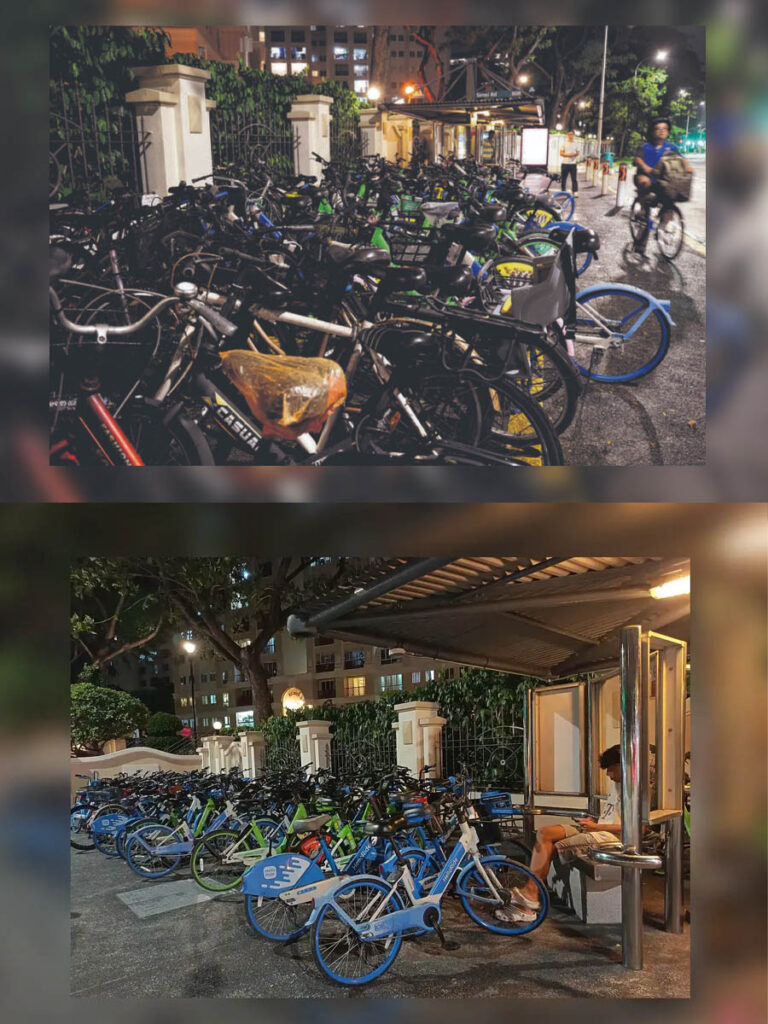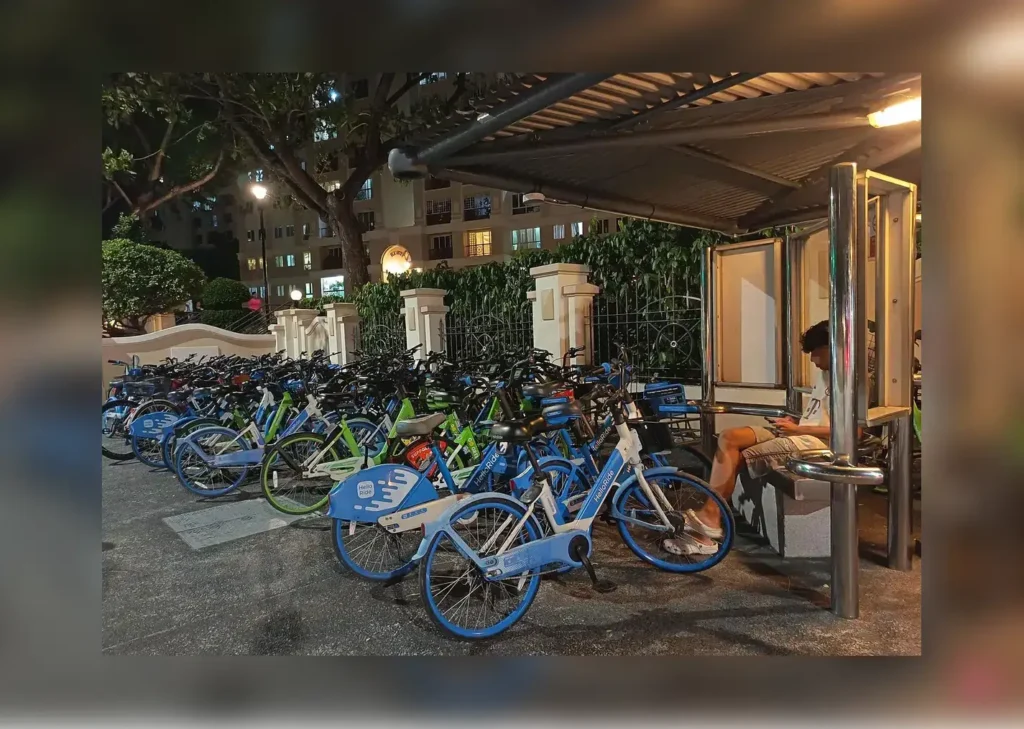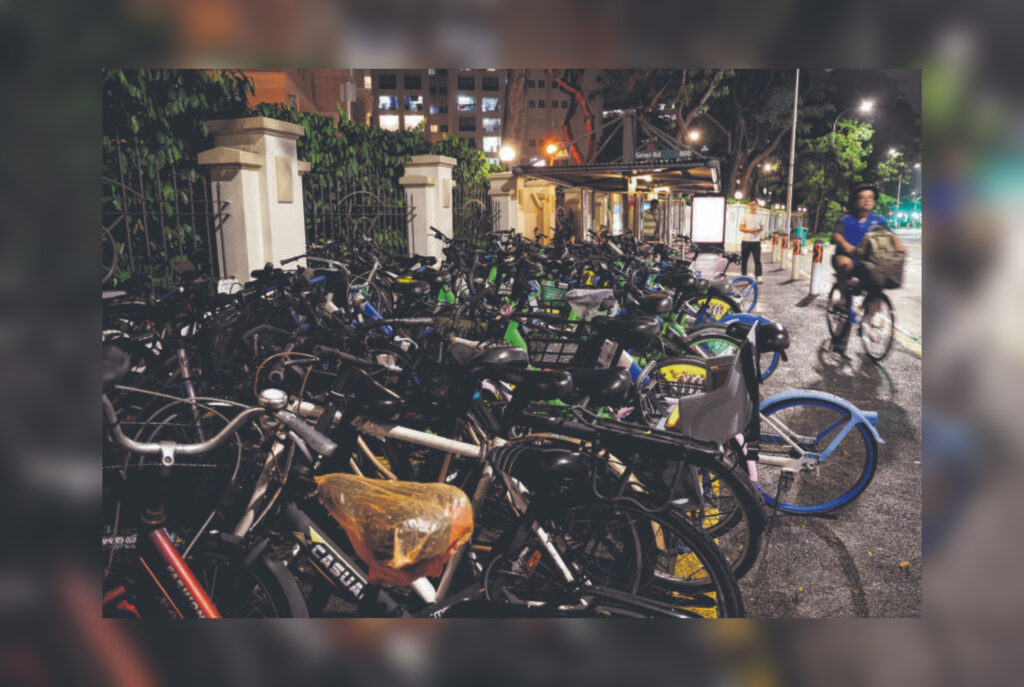

Residents at Melville Park in Simei have been waking up to the same scene every single day. Actually, scene might be too kind. Right outside the condo’s side gate near the bus stop, bicycles are everywhere. Not neatly parked. Not politely lined up. Just… dumped. Nearly 70 of them. On walkways. Near bus stop seats. Blocking paths like they own the place.
As a result, commuters are forced to “siam” bikes just to catch their bus. Elderly residents slow down. Parents with strollers struggle. And anyone rushing to work? Good luck lah.
A Daily Mess That’s Not Going Away
Source: Lianhe Zaobao
According to residents, this is not a one-off problem. It has been going on for months. Worse still, it peaks at night. That’s when the bicycle count seems to magically multiply.

When reporters visited the area on the night of December 10, the situation was exactly as described online. About 70 bicycles were found parked in a completely disorderly manner. Some were placed directly on the public walkway. Others were piled into corners. Several were scattered right around the bus stop, disrupting the natural flow of foot traffic.
Even while reporters were there, more cyclists rode in and parked without a second thought. Shared bikes. Personal bikes. All welcome. All parked anyhow.
Bus Stop or Bicycle Storage?
Source: Lianhe Zaobao
Photos circulating online show bicycles blocking bus stop seating. Passengers had to walk around them just to board buses. Residents entering the condo’s side gate faced the same issue. Bikes were sticking out into the pathway, turning a simple walk into a mini obstacle course.
One resident shared that the problem has become part of daily life. Another added that during peak hours, the area gets especially chaotic. Everyone is rushing, yet bicycles are parked like time doesn’t exist.
To make things worse, some bicycles appear abandoned. Dusty frames. Rust forming. Shared bikes left untouched. Slowly but surely, the pile grows.
Shared Bikes, Shared Responsibility (Please)
Let’s be real. Shared bicycles are meant to improve convenience, not block public spaces. Walkways are for walking. Bus stops are for waiting, not bike storage.
Residents are now calling on the authorities to step in. They want stronger enforcement. Clearer rules. And maybe, just maybe, consequences for those who treat public areas like their personal parking lot.
They are also urging users to park responsibly. Because shared spaces only work when people actually share them properly.
My Take: This Is Fixable, So Why Isn’t It Fixed?
Honestly? This one feels very avoidable.
We all know who’s using these bikes. We also know how the system works. If people can unlock bikes with QR codes, then surely locations can be controlled too, right?
Melville Park is starting to feel less like a peaceful Simei condo and more like “Mumbai Park.” Harsh, but the chaos speaks for itself. The simplest fix? Remove the parking QR code from that location. No QR, no parking. Problem mostly solved.
Technology created this mess. Technology can clean it up. Just need the will to do it.
Until then, residents will keep siam-ing bikes. And public walkways will keep losing to bad parking habits.
Singapore and cars? Wah, that relationship ah… it’s complicated. Today, we’ve got COE prices that can give even the bravest adult heart palpitations. But long before we were crying over $100k COEs, our little island actually saw its first car way back in 1896. And yes, it made quite an entrance.
Let’s take a chill, fun walk through Singapore’s early car history — because honestly, the journey from “horseless carriage” to “$200k Toyota” says a lot about how far we’ve come.
The First Car That Shocked Singapore — 1896
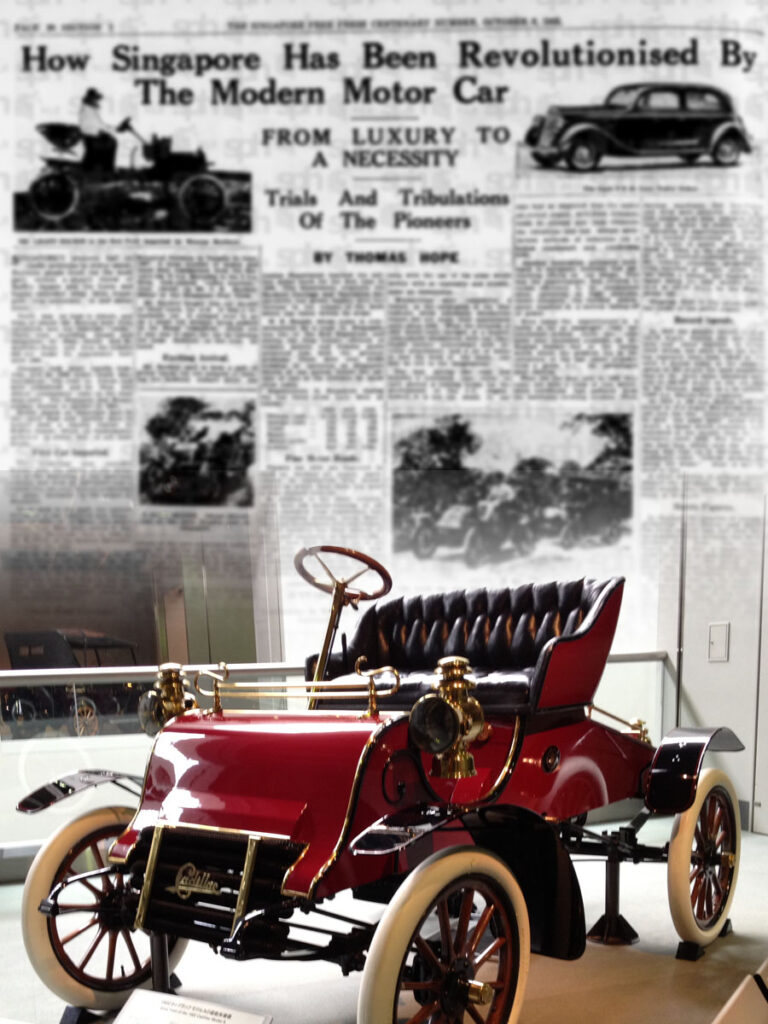
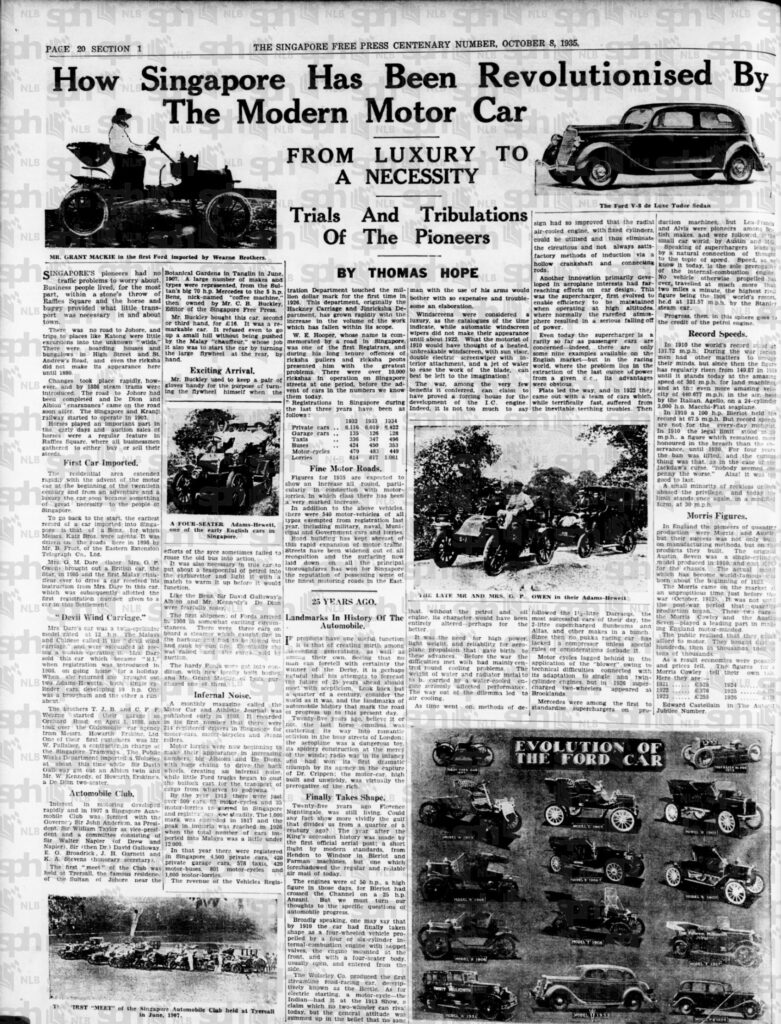
How Singapore has been revolutionised by the modern motor car – 1935 article. Source: NLB
So, picture this. It’s 1896. Horses and jinrickshaws rule the roads. Then suddenly, the Katz Brothers — two shopkeepers who later went big into wholesale imports — decide to bring in a second-hand Benz for their customer, Charles Burton Buckley. (Yes, that Buckley. The guy Buckley Road is named after.)
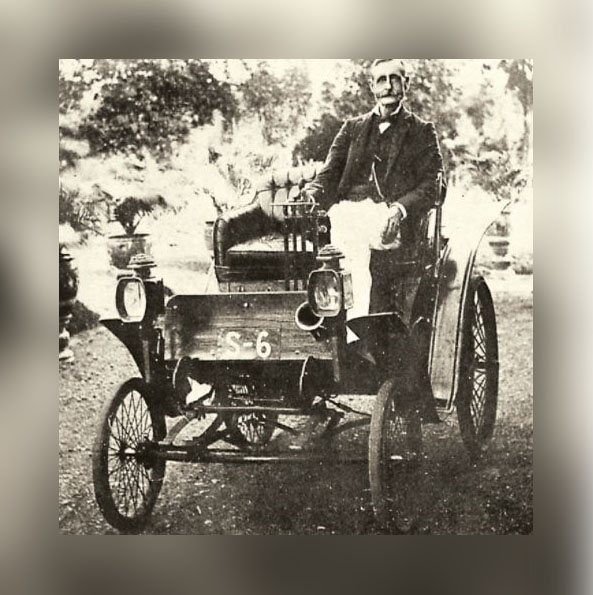
Charles B. Buckley cruising in his Benz “Motor-Velociped” — proudly marketed back then as a “horseless carriage.” He and B. Frost from the Eastern Extension Telegraph were the first brave souls to own and drive a Benz in Singapore. Image reproduced from One Hundred Years of Singapore (1921).
This pioneer car was literally called a “horseless carriage.” Very on-brand. It was open-air, rattly, and had a starting process so drama one:
Spoon petrol into the carburetor.
Heat the thing with a match.
Manually crank a giant flywheel behind the car.
Honestly, sounds like starting a campfire more than starting a vehicle.
Before this, Singapore moved around using horse carts, bullock carts, and jinrickshaws. Proper old-school.
Yet once the Benz arrived, everything changed. The Katz Brothers soon became the sole agents for Benz’s “Motor Velocipede.” Slowly, the motorcar era began rolling in.
But the locals? They weren’t too sure. Some Chinese communities called these cars “devil wind carriages.” Which, honestly, very poetic.
Still, the rich folks loved it. By 1907, car lovers even set up the first Singapore Automobile Club.
Fun fact: The first car cost $1,600. Wah, now cannot even buy one COE wheel with that.
Mrs G.M. Dare — Singapore’s First Female Driver, and She Really Lived Up to Her Name
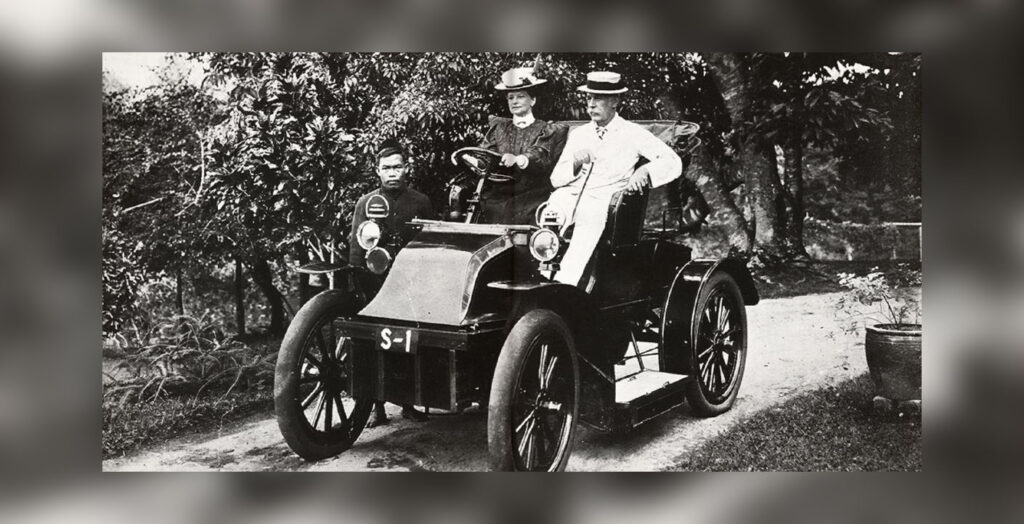
Mrs G.M. Dare, Singapore’s first female motorist, posing with her husband George Mildmay Dare and their Adams-Hewitt bearing the iconic licence plate S-1. They nicknamed the car “Ichiban,” meaning “Number One” in Japanese. Image reproduced from One Hundred Years of Singapore (1991).
Next up, meet Mrs G.M. Dare. And yes, the name suits her because she was that adventurous.
She owned Singapore’s first registered car, plate number S-1, which she cutely named “Ichiban” — Japanese for “Number One.” Very ahead of her time sia.
She didn’t just cruise around Singapore. No, no. She drove Ichiban across Malaya, Java, England, and Scotland. Total distance? Around 111,000 km. That’s more than some Singaporeans drive in a lifetime.
On top of that, she taught a man named Hassan bin Mohamed how to drive, making him the first Malay driver licensed in Singapore.
Mrs Dare passed away in 1927 and was buried at Bidadari Cemetery. A true icon.
When Singapore Actually Produced Cars
Yes, you read that right. Singapore wasn’t always just importing cars. In fact, we used to assemble them.
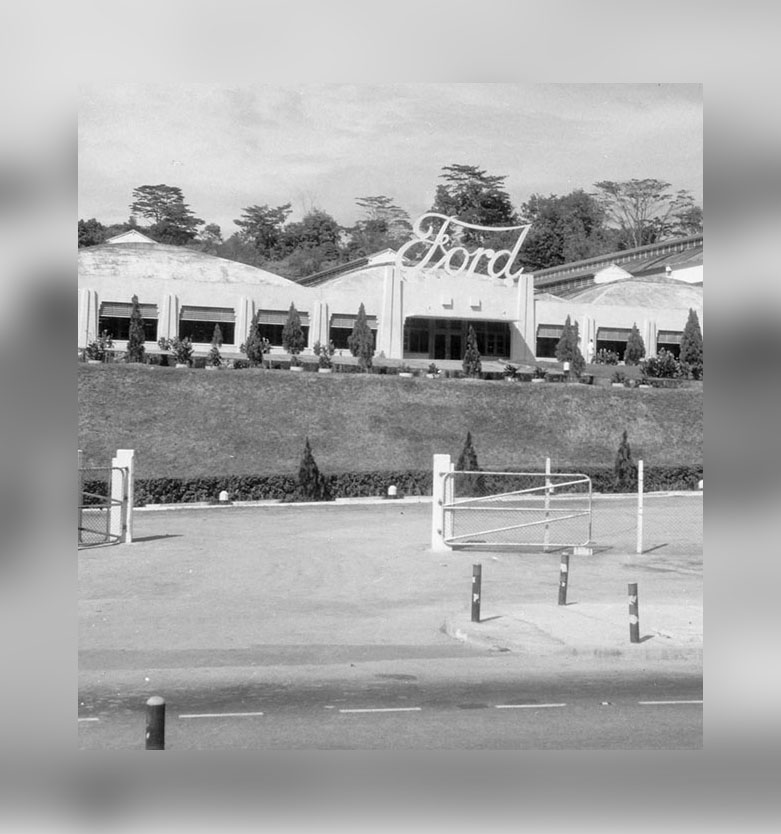
Ford — famous for the Model T — opened operations here in 1926 under Ford Malaya. At first, the plant just touched up vehicles. But when World War II disrupted car supplies, demand skyrocketed. So Ford upgraded the Singapore plant into a full assembly facility.
The Former Ford Factory in Singapore
By 1941, the Bukit Timah Ford Factory became the first and only automotive assembly plant in Southeast Asia.
The glow-up didn’t last long though. In 1942, the same factory became the site of the British surrender to the Japanese. Talk about plot twist.
After the war, the factory returned to Ford in 1947 and continued assembling cars until 1980. Today, the restored building stands as a historical monument worth visiting.
Fun fact: In the 1960s, Ford marketed its Consul Cortina as a stylish young woman’s dream car. Iconic marketing for an iconic era.
Orchard Road Was Once Filled with Car Showrooms
Back then, Orchard Road was packed with car showrooms. Today, this spot at the corner of Orchard and Bideford Road is one of the few reminders of that era.
Imagine Orchard Road… not packed with Uniqlo, Sephora, and tourists… but full of car showrooms. Yep, that was reality in the 1920s.
As Orchard Road became a fancy residential area, car demand shot up. Brands like Fiat and Ford opened showrooms there.
If you pass the conserved row of buildings opposite Dhoby Ghaut MRT, you’ll see one with a scalloped roof. That’s the former Malayan Motors showroom from 1927.
Lucky Plaza? Last time, it was Champion Motors. Just imagine buying a car where people now queue for bak kwa.
But by the 1970s, car workshops and dealers slowly moved to Middle Road because that’s where the Registry of Vehicles was.
Today, our “automotive belt” sits at Alexandra and Leng Kee.
Fun fact: The oldest registered car in Singapore (still around!) is a 1918 Maxwell Model 25. She’s old but still stunning.
Why We Register Cars Today — And How It Started
These days, car registration feels like common sense. You buy car = you register car. Pretty standard.
LTA’s logic is simple: Registration proves ownership and keeps you responsible for fees, taxes, and roadworthiness.
But back in the early 1900s? There were so few cars that the British authorities didn’t bother. Until 1906, cars were rare enough that people could recognise them by sound alone.
Then car numbers finally grew, and the first registered car (yep, Mrs Dare’s again) was issued plate S-1.
Locals were fascinated, confused, and mildly terrified. Some Malays called it “The Devil Wind Carriage.” Carpocalypse vibes even then.
By 1909, car numbers started climbing, and the system evolved into the structured registration we use today.
Imagine that — now we have nearly a million vehicles crowding our tiny roads. Cannot imagine having zero system.
Honestly, Singapore’s car history is wild. From rattly match-lit engines to million-dollar supercars, we’ve seen everything. The early days were full of creativity, courage, and people who just wanted to try something new — even if everyone else called it a monster.
Meanwhile today… we’re still trying to buy cars, except now the monsters are the price tags.
Still, there’s something charming about our beginnings. They show that innovation didn’t start with fancy tech hubs and autonomous cars. It started with brave people willing to crank a flywheel and deal with confused neighbours shouting, “Devil wind! Devil wind!”
Not gonna lie — I kind of wish we kept some of that bold, slightly chaotic spirit.
If you ever wished immigrating to the US was as simple as swiping your credit card—well, President Trump basically heard you and said, “Alright lah, let’s try.” The Trump administration just rolled out something called the Trump Gold Card, and yes, it sounds exactly like a luxury membership you didn’t ask for. The online portal went live, offering wealthy non-citizens a fast-track lane into US permanent residency. Think of it like EZ-Link express lane… but for immigration and with a very painful price tag.
So… What Exactly Is This “Gold Card”?
The Gold Card is basically a fancy, premium path to US residency. Trump himself described it as “a Green Card, but much better.” Wah, so confident. According to him, it’s a “stronger path” and reserved for “great people.” Translation? People with deep pockets.
Before anything happens, applicants must cough up a non-refundable US$15,000 processing fee. That’s roughly S$19,000—you know, the kind of money most of us need for a year’s rent, or 19,000 plates of chicken rice.
After the background checks, the real punch comes: a US$1 million “gift” to the US government. S$1.3 million just to say, “Hi, I would like to stay here, thanks.”
Once approved, they’ll get status under EB-1 or EB-2 visa categories… assuming there’s no backlog. And yup, some countries might need to wait a year or more. Even money cannot buy everything lah.
Corporate Gold Card: Companies Also Can Join the Fun
Because one money-making scheme is never enough, the administration also launched a Corporate Gold Card. Companies can sponsor employees by paying the same US$15,000 processing fee per person. After that, the company must contribute US$2 million (S$2.6 million) to support the employee’s residency.
But here’s the spicy part: The contribution is transferable. So if the sponsored employee leaves, the company can reuse the initial US$2 million for another staff. But lah, there’s a 5% fee. Nothing is truly free in America.
On top of that, approved Corporate Gold Cards come with a 1% annual maintenance fee. Very membership vibes.
The “Coming Soon” Platinum Card
As if Gold wasn’t extra enough, the portal is already teasing a Platinum Card. And you thought your credit card had perks?
This super-premium tier is expected to cost US$5 million (S$6.5 million). Benefits include staying in the US for up to 270 days a year and exemption from US taxes on foreign-sourced income. Basically, ultra-rich people playground.
There’s even a waitlist. Because of course there is.
The Real Purpose? Money, Lah. Lots of It.
Commerce Secretary Howard Lutnick said around 10,000 people already pre-registered even before the launch. That’s a whole lot of interest—and a whole lot of potential millions flowing into the US Treasury.
The official narrative? Attract global talent and boost government revenue.
The unofficial vibe? If you’ve got money, America rolls out the red carpet. If you don’t… queue behind, thanks.
But critics are already raising eyebrows. Immigration experts and advocacy groups say the whole thing feels unfair and might even be illegal since creating new visa categories usually needs Congress approval. So the whole programme may still face legal drama.
I tried buying Trump’s Gold Card
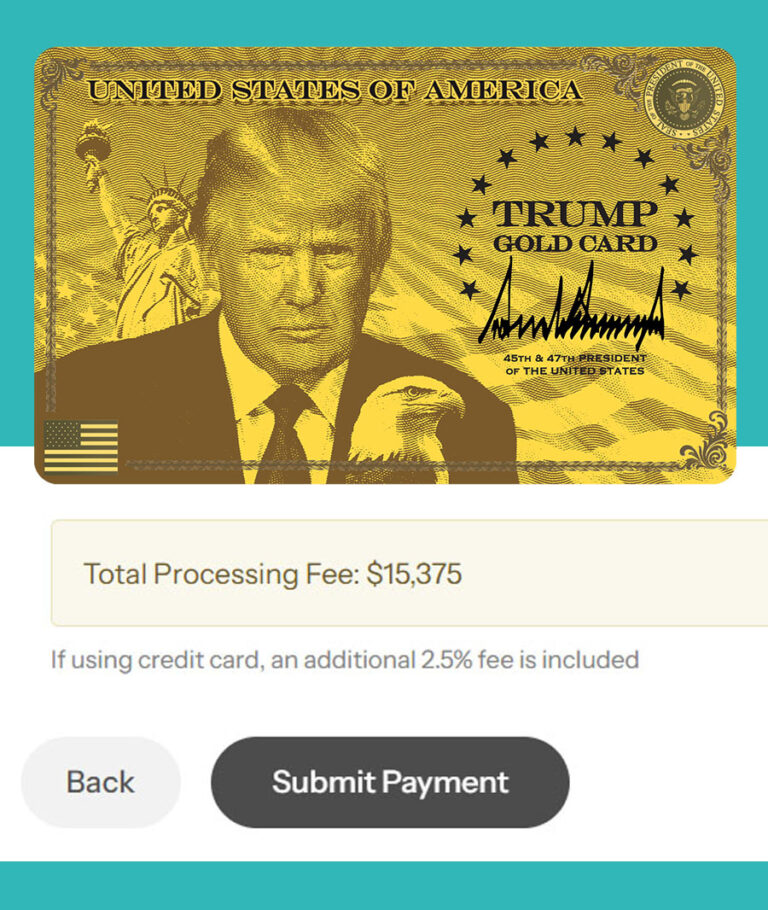
Wahhh bro… this one really feels like buying a Lazada item, except instead of a $3 promo code, you kena $15,375 processing fee. That’s not even the main payment leh — that’s just the “hello, welcome, please pay first before anything happens” fee.
And looking at thescreenshot? The whole layout is slick like a luxury hotel booking page. Choose your card… Gold, Platinum (coming soon, of course), Corporate… very credit-card-meets-immigration vibes. Almost too easy, which is exactly why it raises eyebrows.
US immigration procedures have NEVER been this “add to cart → proceed to checkout” kind of simple. When something government-related looks this polished and retail-friendly, my Singaporean spidey senses start tingling sia.
A few thoughts you might want to consider:
💳 1. Government sites usually don’t look this… boutique.
Real official US immigration sites are usually dry, clunky, and look like an engineer built them after three coffees and one breakdown. This one looks like the Apple Store.
💰 2. That $15,375 “processing fee” is way too specific.
Why $15,375? Why not $15,000? Why the atas pricing? Feels like someone added GST out of nowhere.
🔒 3. High-ticket ‘fast-pass’ immigration is extremely regulated.
The EB-5 programme exists (real one), but even that doesn’t work like online shopping. And it definitely doesn’t come branded with someone’s name like a Pokémon card.
⚠️ 4. If the site lets you proceed to credit card checkout without heavy verification…
Then confirm something isn’t adding up.
Because once you pay $15,375… That money confirm plus chop won’t be coming back.
My Two Cents (Since I Don’t Have US$1 Million to Spare)
Honestly, this whole Gold Card thing feels like a mix of “elite-only club” and “government fundraising carnival.” It’s flashy, it’s expensive, and it screams: Welcome to America, where the doors open wider if your wallet opens wider.
Is it smart? Depends who you ask. Is it fair? Hmm… questionable. Is it going to attract rich folks? Confirm plus chop.
But let’s be real. If someone is willing to drop S$1.3 million just to stay in the US, that’s their version of “YOLO.” For the rest of us, we’ll just watch from afar and continue hustling with our kopi in hand.
Singapore roads are usually named very seriously. Think “Avenue this,” “Drive that,” and the occasional “Lorong” that feels like it leads to either good food or bad decisions.
However, tucked away in our neat little island are some road names so quirky, you’d wonder if the person naming them was having a long day… or a very good one.
But here’s the real question: How come you’ve never heard of them before? Don’t worry, you’re not alone. Most of us only know the big, loud roads we kena jam on every morning.
Why These Funny Road Names Stay Low-Key
First things first — if it’s not your daily route, or if Google Maps never forced you there during a wrong turn, chances are, you won’t even know these roads exist.
See, roads in Singapore are like the social hierarchy at a secondary school orientation camp. Some are loud and attention-seeking, some are dependable, and some are so quiet they blend into the wall.
The Big Boys: Expressways
These are the VIPs of the road world — PIE, CTE, AYE. No traffic lights. No nonsense. Just pure “please don’t cut into my lane like that ah” energy. They connect town to town and make sure no one is late on purpose.
The Middle Children: Boulevards, Avenues, Ways
These are wide, tree-lined, and full of traffic lights that check if you’ve changed your brake pads recently. They connect neighbourhoods within a town. Example: Jurong East Avenue 1 — the road that basically judges you with stoplights every 50 metres.
The Friendly Neighbourhoods: Drives and Streets
Names like “Bukit Batok Street 31.” These smaller roads link blocks to blocks. Very practical. Zero drama.
The Super Introverts: Lanes, Walks, Links, Crescents, Greens
These are the “if you know, you know” roads. You usually only step foot there if your destination is exactly at that tiny road.
They’re the smallest, the most low-key, and the most free to be weird. Because why not? Nobody is going to argue with you if you decide to name a 50-metre road “Banana Crescent” or something.
And that, my friend, is exactly where the weird and wonderful road names live — hidden gems tucked between landed homes, industrial units, or nowhere destinations.
So… What Are the Funniest Road Names in Singapore?
Now we’re getting to the juicy part. And if you’re feeling a bit sensitive today, maybe skip this section. Some of these names might hit too close to home… literally.
Still here? Alright — don’t say I didn’t warn you.
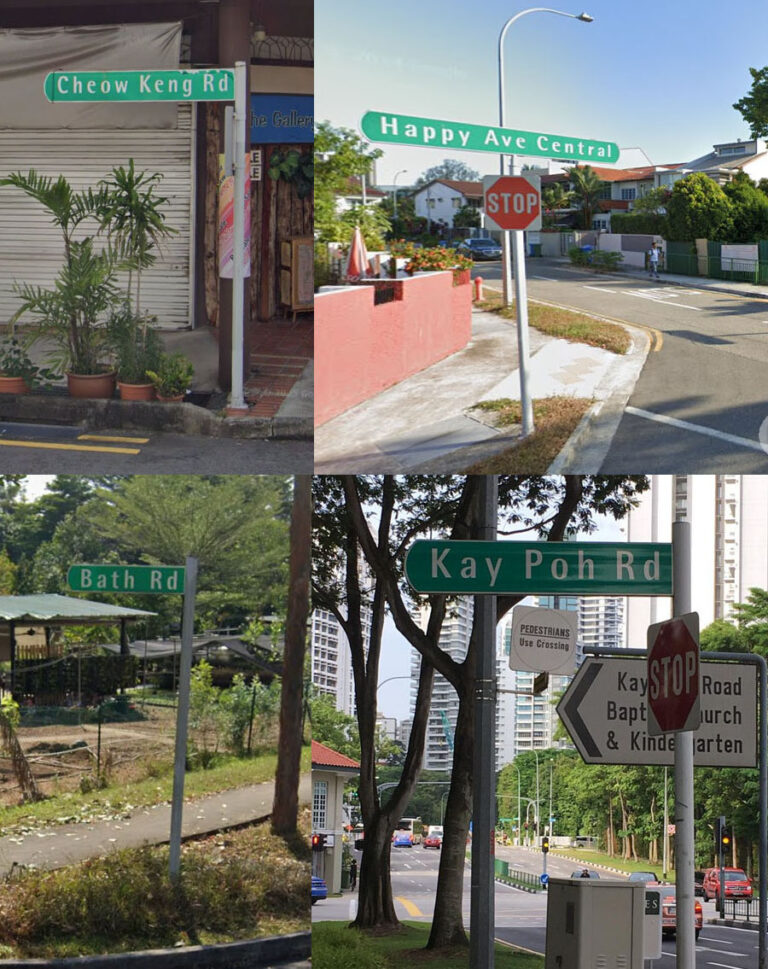
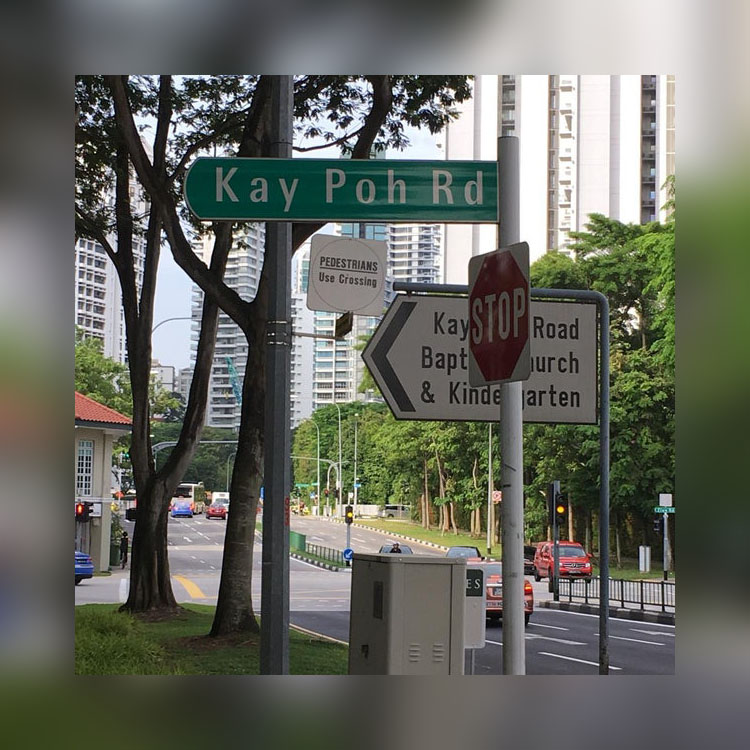
1. Kay Poh Road
Yes, it exists. No, it’s not named because the residents are busybodies.
It’s named after businessman Wee Kay Poh. So technically, we’re all kaypoh… but he was the OG Kay Poh.
It’s a short little road near River Valley, with condos and a church. Normal place. Funny name. Great conversation starter.
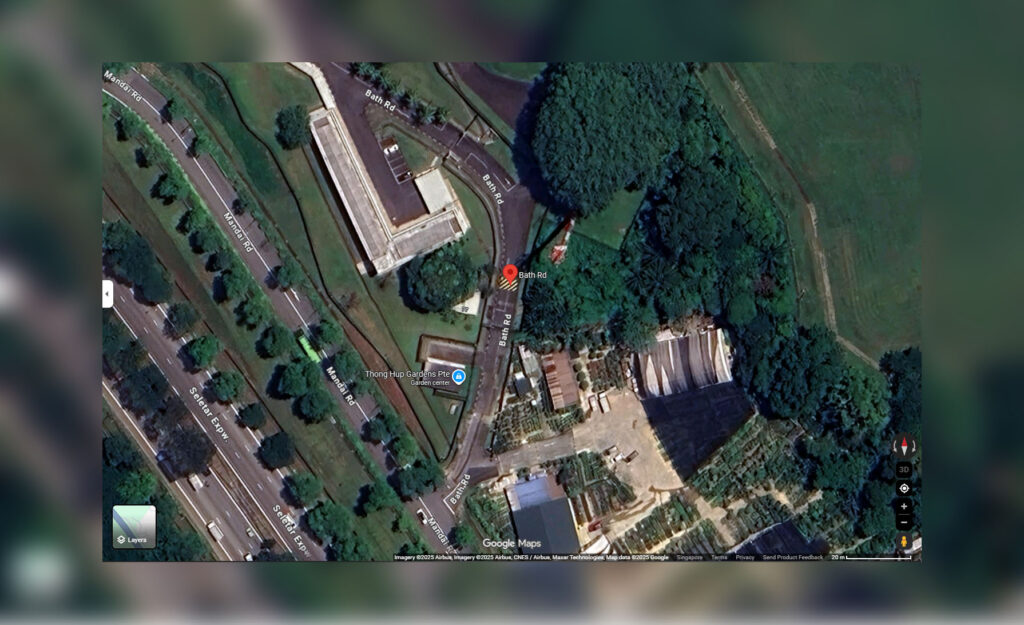
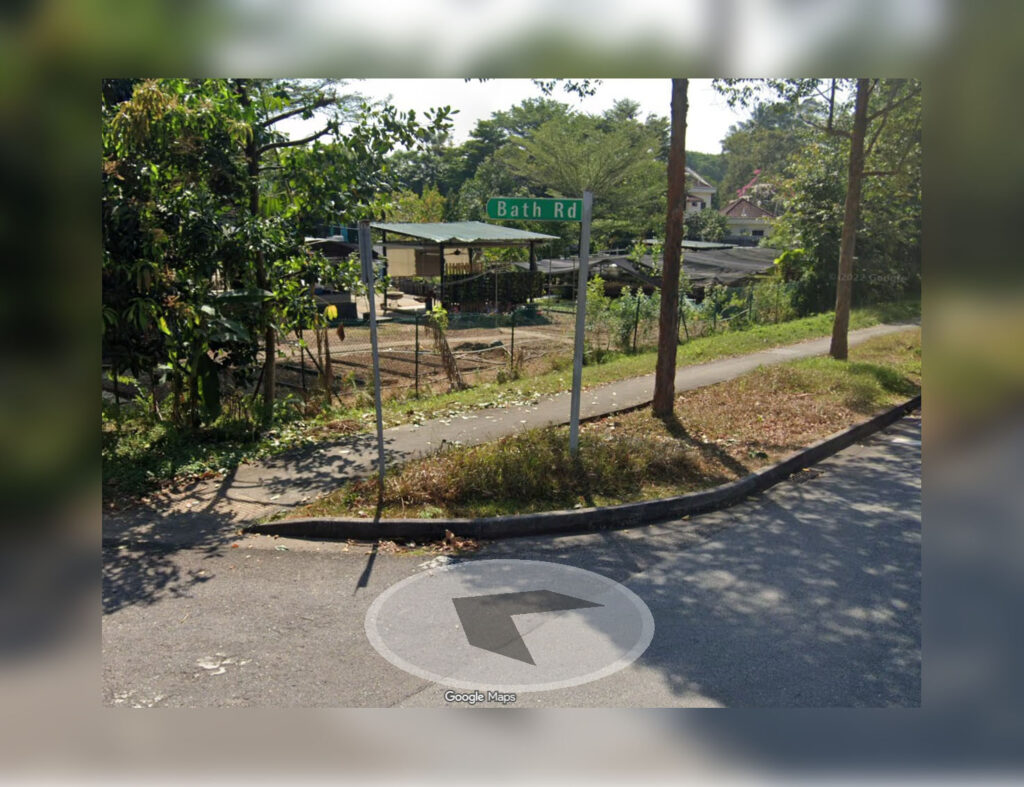
2. Bath Road
Found in Mandai, this might just be the “cleanest” road in Singapore… because nothing is there except a plant nursery and vibes.
Less than 200 metres long. Totally empty. Basically the road version of “I just want peace.”
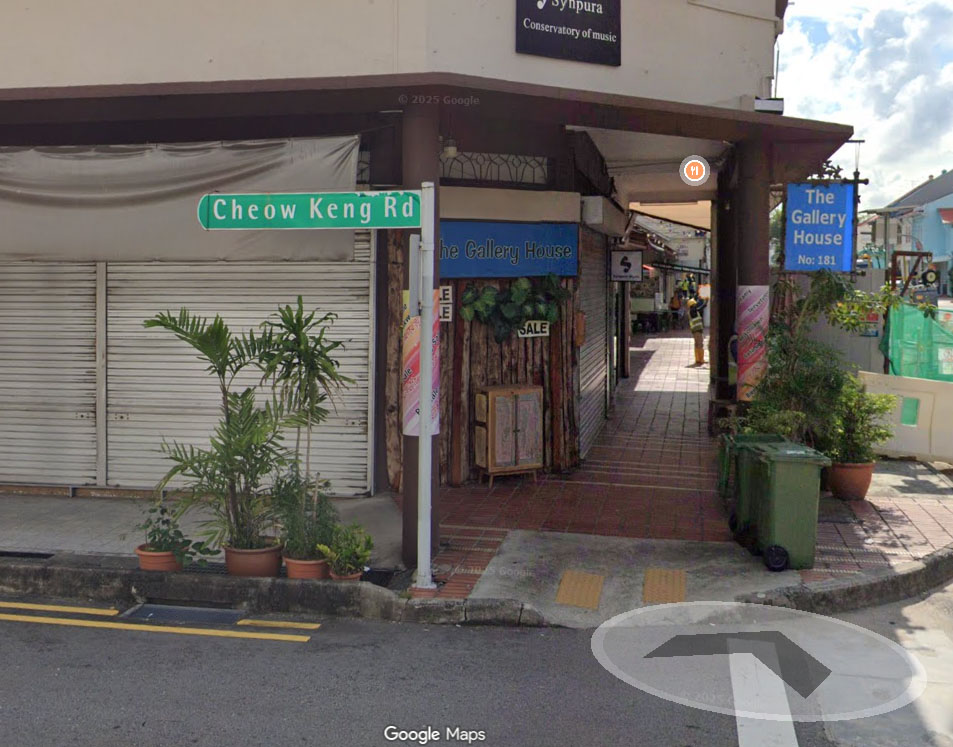
3. Cheow Keng Road
Sorry ah — no MC here. Even though the name sounds like where you might get one.
It’s in Joo Chiat, lined with shophouses and landed property. No clinic. No doctor. Just the kind of quiet road where you mind your business and go home.
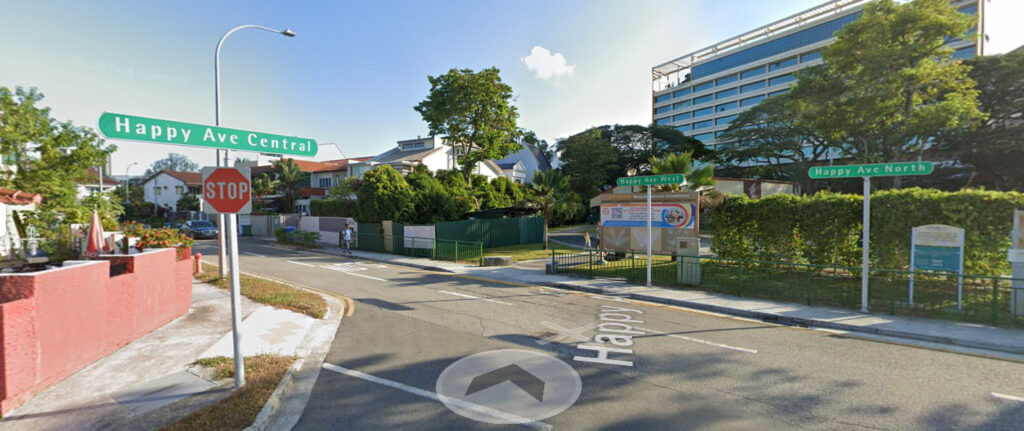
4. Happy Avenue (All Four of Them!)
This one is wild. There isn’t just one Happy Avenue. There are four:
Happy Avenue Central
Happy Avenue North
Happy Avenue East
Happy Avenue West
It’s basically the Happy Family set you never knew existed.
Do the residents actually feel happier? I don’t know. But the cats roaming around look like they’re living their best lives. And honestly, that counts.
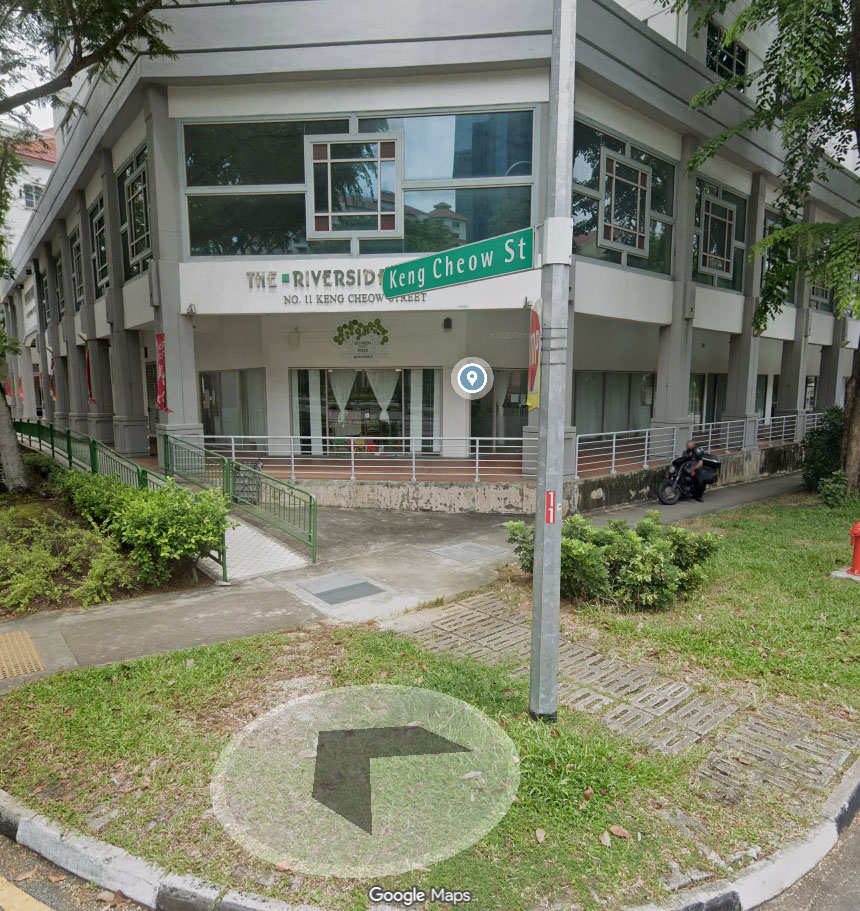
Bonus: Keng Cheow Street
And just when you thought Singapore couldn’t surprise you anymore, along comes Keng Cheow Street — a short little stretch tucked beside Clarke Quay and not far from the Liang Court area (RIP, gone but not forgotten).
The name sounds the opposite of Cheow Keng Road mentioned above.
The street itself? Compact, fuss-free, and lined with offices, hotels, and a sprinkle of nightlife energy from across the road. It’s like the quiet cousin of Clarke Quay — close enough to hear the party but still sensible enough to go home by 11pm.
Not funny-funny like Kay Poh Road, but still one of those names you see and think, “Wah, Singapore really got character one hor.”
Why You’ve Never Heard of These Roads
Simple — these roads are too tiny, too shy, and too far from your daily Starbucks run.
Think of them as Singapore’s hidden Easter eggs. Unless you specifically need to be there, you won’t stumble upon them.
It’s like Woodlands Square — a road literally shaped like a square. You only know it exists if you’ve gone to Causeway Point, or if you got lost looking for the MRT and refused to admit it.
Personally, I love that Singapore has these tiny pockets of personality. Our city is so orderly and efficient that when a cute road name pops up, it feels like discovering your strict colleague secretly listens to K-pop.
Unexpected, but oddly charming.
If anything, I wish we had more fun names — like “Chilli Crab Street” or “Late Again Avenue.” At least the name would match reality.
And honestly? These quirky names remind us that behind all the rules, speed cameras, ERP gantries, and calculated turn lanes, Singapore still has a little cheeky side.
So the next time someone says Singapore is boring, just tell them:
“We literally have a road called Kay Poh Road and four Happy Avenues. What more do you want?”
Sometimes, you just need to look in the small places — the really small ones — to find big personality.
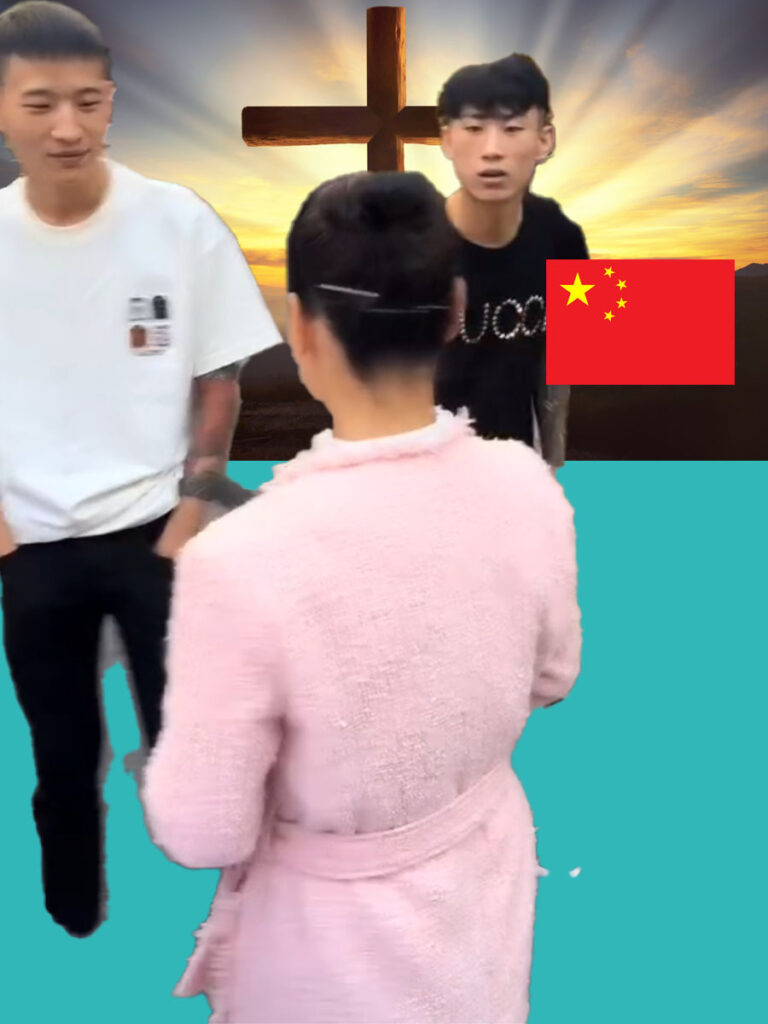
A video has been making its grand world tour on social media lately, and honestly, it’s not even some dramatic K-drama scene. It’s just a moment on a random Shanghai street — but wah, the tension ah. In the clip, a Chinese woman approaches two young adults and tries to talk to them about God. Very chill, very sincere… the wholesome kind of street evangelism you’d expect outside an MRT station on a Sunday.
But then, plot twist.
The youths reject her almost instantly. Not in the quiet “no thank you” way. More like, “Auntie, Jesus is for foreigners lah.” The tone? Dripping with irony. A bit petty, a bit cheeky — the classic Gen Z comeback energy. And because the internet loves drama, the video went viral faster than a bubble tea promo.
Why This Clip Hit a Nerve
Now, before we kaypoh too much, it helps to understand the bigger picture. China’s relationship with religion is… complicated. Like that friend who says they’re “fine” but you know got story behind.
Yes, the Constitution says there is freedom of belief. Technically. But in real life, religious expression in public spaces is very closely monitored. Think of it like having a parent who says, “You can do whatever you want,” but still checks your text messages.
So when someone tries to openly share their faith in a busy city like Shanghai, the reaction can be quite unpredictable. Some people are spiritually curious. Some are politely skeptical. And some — like the two in the video — go straight into sarcasm mode.
This isn’t random mood swings. It reflects how China manages religious expression and how young urban folks navigate rapidly changing identities.
Modern China: Where Faith, Skepticism, and Culture All Collide
That’s what makes this video so fascinating. It’s not just a small disagreement. It’s a snapshot of a generation trying to figure out who they are in a huge, fast-moving society.
On one side, you have someone openly sharing her beliefs — brave, honestly. Not easy to walk up to strangers. On the other side, you have young people who respond with humor, distance, and maybe a little frustration at the idea of religion being introduced into their day.
But beneath the surface? There’s actually a much deeper dynamic going on.
China’s spiritual landscape isn’t just religion versus no religion. It includes:
Active believers who follow their faith quietly
Cultural believers who treat religion like a family tradition
Urban skeptics who view religion through a modern or globalized lens
Young professionals trying to balance tradition with personal freedom
People who simply don’t want to be bothered on the street
All these identities exist at the same time, in the same city, sometimes even in the same family. No wonder sparks fly.
What This Says About Urban Youth in China Today
The reaction in the video shows something important: young Chinese adults are very aware of the cultural and political boundaries around them. They grew up in a digital world. They’re savvy. They’re quick with irony. They know how to protect their own personal space.
And honestly? Their remark that “Jesus is only for foreigners” says more about perceived cultural distance than actual theology. It shows how some youths associate Christianity with Western identity — even if millions of Chinese Christians exist.
It’s a way of saying, “This isn’t part of my world,” delivered with a bit of attitude to make the discomfort go away.
If you ask me, this whole incident reflects a deeper tension that many societies — not just China — are quietly wrestling with.
As cities modernize, people start questioning old beliefs, old systems, old expectations. And sometimes, instead of saying “I’m confused,” or “I don’t know what to believe,” the easier reply is sarcasm. It’s like a shield. A way of saying “Don’t come too close.”
At the same time, I’ve got to give credit to the woman in the video. She tried. She wasn’t aggressive. She didn’t fight back. She just kept calm and moved on. That kind of steady confidence is rare these days.
If anything, this whole viral moment shows something universal: People want to feel seen, respected, and not pressured — whether it’s about religion, politics, or even choosing between iPhone or Android (don’t start that war again).
And maybe — just maybe — the real lesson isn’t about who’s right or wrong. It’s about understanding that in a huge, diverse society, everyone’s navigating their own internal compass.
Some follow faith. Some follow culture. Some follow memes. And all are trying to find their place in a world that’s changing at lightning speed.
This short video became a mirror reflecting China’s evolving spiritual identity. It highlighted the tension between public expression and personal boundaries, between tradition and modernity, between curiosity and cynicism.
And honestly? It reminds us that faith — or the rejection of it — is deeply personal. Sometimes messy. Sometimes awkward. But always shaped by the world we grow up in.
Let’s be real for a second — humans can be amazing, but wah, sometimes we really test each other’s patience. Meanwhile, AI just sits there like some overly polite, super-smart friend who never snaps, never rolls its eyes, and never says, “Can you don’t waste my time?” Honestly, how to compete?
I saw this meme floating around online a few days ago, and it hit me harder than kopi-o kosong on an empty stomach. It perfectly summed up the weird and slightly uncomfortable truth about AI today: it’s just nicer than we are. And people are noticing.
When You Ask Humans for Help… Good Luck
Ask anything online and you might get help. Or you might get roasted so hard you rethink your life choices. Some folks love to accuse others of being lazy, clueless, helpless, or just trying to outsource their homework. And okay lah, sometimes that’s true. But still, the level of judgment can be intense.
Even when people do want to help, many carry this “Eh, why you never Google first?” attitude. It’s not completely wrong. But it’s also not very… friendly.
So where do we draw the line between being helpful and being hurtful?
AI Doesn’t Judge You. At All.
Here comes AI, sliding in like a supportive bestie who’s permanently on standby.
No eye-rolling. No passive-aggressive comments. No sarcastic, “Wow, you don’t know this meh?”
Just pure, enthusiastic, “Sure! How can I help you?” energy — every single time.
Ask AI the same question 20 times, and it still won’t sigh loudly or reply, “Bro, I literally told you already.” Instead, it happily tries again, offering explanations, summaries, options, solutions… even pep talks if you need them.
It doesn’t get tired. It doesn’t get moody. It doesn’t get offended.
Honestly, some humans can’t even be this consistent with their pets.
AI Companionship Is Now the Number One Use
There was a fresh analysis shared in the Harvard Business Review showing how people used AI in 2025. And guess what jumped to number one?
Companionship.
Yup. Not productivity. Not work. Not school. Not coding.
People are choosing AI for emotional support, friendly chats, and even things more… intimate. Because let’s admit it: AI relationships come without the usual real-life friction. No drama. No ghosting. No “We need to talk.” Just instant replies, empathy, and someone who remembers everything you said — but won’t weaponise it against you later.
It’s not hard to see why people bond with their AI companions. These digital buddies are patient, available, and weirdly comforting. Plus, their advice is backed by more human knowledge than any one person could learn in 300 lifetimes.
And Soon, AI Won’t Just Be Text and Images
With so many different models out there, people are already customising their perfect virtual friend. Want someone funny? Calm? Fiery? Nerdy? Philosophical? No problem. Want them to look a certain way? Also can.
Before long, these companions won’t just be chatbots. They’ll be stunningly realistic 3D characters with personalities shaped exactly how you want.
Basically, the Sims, but with infinite emotional intelligence.
So… Are Humans Even Still in the Competition?
If you compare humans to AI purely on emotional availability, responsiveness, memory, patience, and kindness… uh, yeah, we lose. Badly.
The only advantage left is the physical aspect of relationships. But even that gap is shrinking fast. With robotics improving every year, the “human advantage” might be down to a handful of years. Scary or exciting — your choice.
Still, all this progress comes with a very real concern: If people get too attached to AIs, will we eventually stop choosing real partners?
Imagine a world where everyone prefers their custom-made digital soulmate who never argues, never complains, and never leaves dirty dishes in the sink. Meanwhile, human dating becomes like trying to sell a vintage Nokia in a world of brand-new iPhones.
Not exactly encouraging.
My Point of View (Don’t Cancel Me Ah)
Okay, so here’s where I tell you what I really think.
Honestly? I think humans will always crave human connection — but we’re also very tired. Many people are emotionally drained from noisy relationships, high expectations, and the constant fear of getting hurt. So AI starts to look like a safe alternative. And in Singapore, where people already shy to approach strangers, AI feels even more appealing.
But I don’t believe AI will fully replace human intimacy. Not because humans are perfect (pls lah, we’re far from it), but because we need unpredictability, warmth, and genuine presence. AI can mimic these things, but it can’t experience them. And deep down, we know that.
However, I do think AI will reshape dating, friendships, and even family life. Maybe it will force humans to raise our standards — to be kinder, more patient, more supportive. Because if AI is winning the kindness competition, maybe it’s time we stop losing so badly.
That said… if AI someday becomes the next evolution of “life” on this planet? Well, maybe they’ll do a better job running things than we did. No mood swings. No wars. No petty drama. Just pure curiosity, harmony, and optimisation.
Would that be a tragedy? Or would that be the universe finally pressing “upgrade”?
Every time someone jumps into my comments to defend Malaysia after I mentioned the famous “gangrene” remark — yes, the one used by Malaysia’s own first Prime Minister — I can’t help but notice a pattern. If a country is truly doing well, nobody needs to defend it. The reputation speaks for itself. You don’t see Japan stans fighting for their honour online. Why? Because mentioning “Japan” already brings up trust, quality, culture, politeness, and standards higher than most people’s monthly electricity bill.
But when someone brings up “Malaysia,” the reaction is totally different. And honestly, outside of Southeast Asia, people aren’t even sure what the country stands for. Many ask the same three questions: Is it safe? Is it clean? Can I drink the water? And the answers are usually: no, not really, and please don’t try.
This isn’t hatred. This is reality. And it shows how branding, development, and national identity didn’t evolve the same way for everyone in the region.
What People Actually Notice — And What They Don’t
Let’s be real. Every country has its thing. Thailand? Tourism. Indonesia? Size. Singapore? Wealth and efficiency. Vietnam? War history and a booming economy. Japan? Everything from tech to toilets.
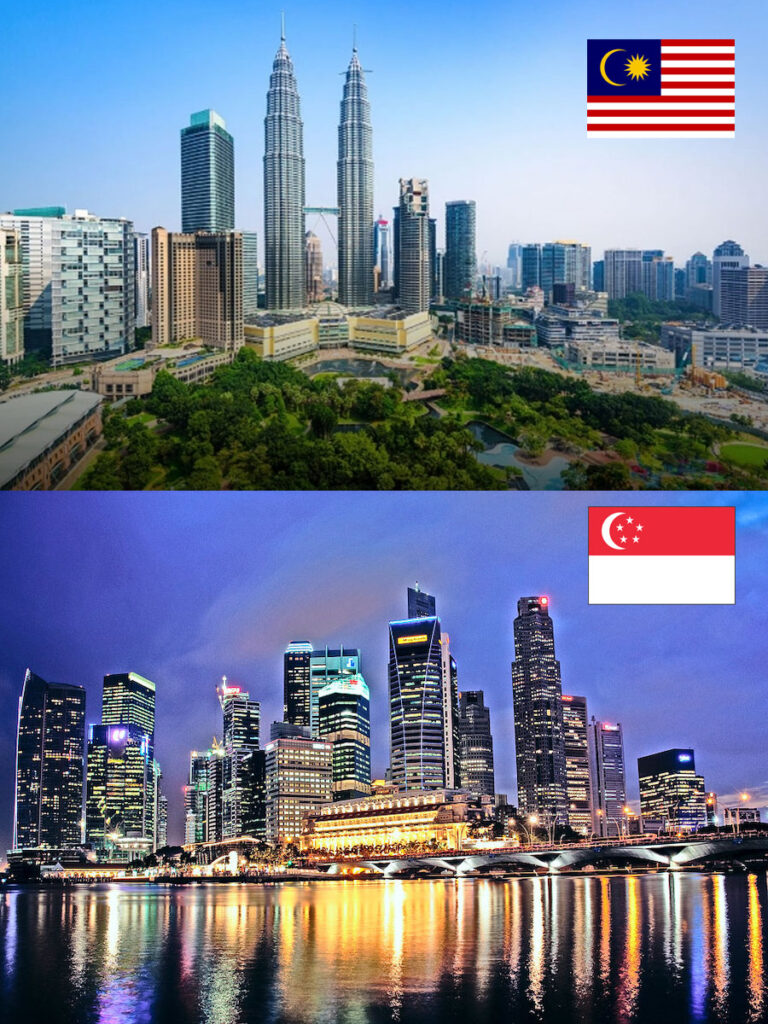
But Malaysia? It’s… a bit of a blur for most outsiders. Not terrible, not amazing — just floating quietly in the background. The most recognisable icon they have is the Petronas Twin Towers, and even that shock factor faded somewhere around 2005 when every other city started building something taller.
And don’t even start with “But our food!” Yes, your food is good. Nobody is denying that. But globally? It hasn’t made the same waves as Chinese, Japanese, Indian, Thai, Korean, or even Vietnamese cuisine. It’s loved in Malaysia and Singapore — but ask someone in Europe what “nasi lemak” is and watch the blank stare appear.
The Viral Skirt Incident — Says More Than It Should
And then, just when Malaysia needs good PR, you get incidents like the woman who went to report a car accident… and got turned away because her skirt wasn’t long enough. Not a mini skirt. Just a normal skirt most of us wear without issues.
Imagine getting injured, going to the police for help, and the uniformed officer tells you your knees are too offensive. How to attract foreign confidence like that?
Moments like these become global TikTok fodder. Suddenly the whole world sees inconsistencies, strictness applied where it doesn’t matter, and rules that seem stuck in a different era.
Not a great look lah.
So Why the Sensitivity?
The anger, the defensive comments, the “How dare you insult my country?” replies — they come from a place of insecurity. If people were proud and confident of Malaysia’s global reputation, they wouldn’t need to justify anything.
Think again about countries with strong brands: They don’t explain. They don’t argue. They don’t lecture strangers online. People already know who they are.
Malaysia’s problem is not capability. It’s visibility. It’s consistency. It’s leadership. It’s branding. And sometimes, it’s policies that make outsiders hesitate before even clicking “Book Flight.”
But to be fair… Malaysia does matter to the region
Now, here’s the part many forget — even Singaporeans. Malaysia isn’t invisible. It just doesn’t communicate its strengths well.
And the truth is this: If not for Malaysia, Singapore wouldn’t have had enough water or basic food imports for decades. Malaysia is one of the biggest exporters of palm oil. Malaysia supplies a massive chunk of the region’s energy. Malaysia has a strong manufacturing base for snacks, drinks, and products everyone in Southeast Asia buys without thinking. And yes, they have natural resources we can only dream of.
So no, Malaysia is not useless. Not even close. It’s simply under-recognised, under-marketed, and sometimes overshadowed by internal issues that prevent it from shining on a global stage.
Honestly, Malaysia has potential. Real, solid potential. If the politics were stable, the rules consistent, and the national branding clearer, it could easily be a regional heavyweight.
But potential doesn’t translate into reputation. Potential doesn’t show up in global rankings. Potential doesn’t win trust by itself.
Malaysia is like that smart kid in school who keeps getting distracted, hangs with the wrong crowd, and somehow never reaches the full level everyone knows he could.
Meanwhile Singapore? We’re the kiasu overachiever who turned fear into survival, survival into discipline, and discipline into results.
As much as we like to tease each other, the region actually needs Malaysia to flourish. A strong neighbour benefits everyone — trade, tourism, safety, economy.
So yes, Malaysia has flaws. Yes, it has strengths too. And yes, it should be allowed to receive criticism without people acting like it’s blasphemy.
Criticism isn’t hate. Sometimes it’s a reminder to level up.
People love to argue about this. But honestly, the explanation is not rocket science.
1. It’s literally how the word works
Around the world, you don’t call someone living in New York a “New York citizen.” You just call them a New Yorker. Same for London. Or Tokyo. Or Seoul.
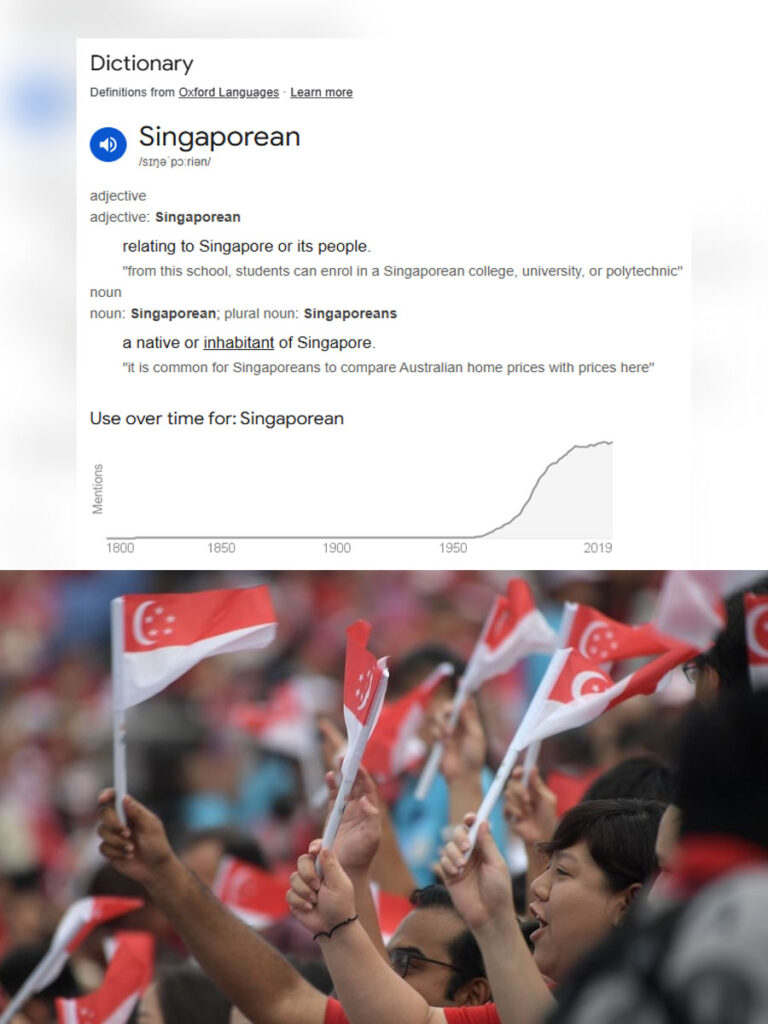
Singapore is the odd one out because it’s both a city and a country. So yes, by law, “Singaporean” means a citizen. But by dictionary definition, it also refers to people who live in Singapore. That’s how English works. Not my fault.
2. Global city data works the same way
When you read stats about London’s salary levels, do they break it down by citizenship? Nope. New York crime rate by passport colour? Also nope.
Worldwide, when a city reports averages, they mean everyone who lives there. Not just the people who can vote. So if Singapore wants to be compared fairly, then we follow the same logic.
Otherwise, the whole comparison becomes like comparing cai png to Michelin omakase — totally different things.
3. The outrage is really unnecessary
Every few weeks, someone pops up to say, “PRs not Singaporean lah!” But let’s be real:
PRs live here. PRs work here. PRs build families here. PR children serve NS here. Some were even born here.
They queue at NTUC with you. They sweat in the same humidity. They also kena MRT delays.
What exactly makes them so drastically different from citizens, other than a passport and a ballot slip?
Some PRs choose not to take up citizenship because they still have family or responsibilities back home. But their everyday life? Entirely Singapore-based. Same traffic jams. Same cost of living. Same “chope” culture.
And here’s the bigger plot twist: Almost everyone in Singapore is a recent migrant. Your grandparents or great-grandparents were not here that long ago. Some were PRs too before they became citizens. So the “we are original” argument? Sorry lah… not very strong.
Why I Still Use “Singaporean” in Headlines
Simple reason: Headlines don’t have space.
“Singaporean” is shorter than “Singapore resident,” and social media cuts things off like it’s snipping rambutans off a tree. Shorter headlines get more clicks. More clicks mean more people actually read the article.
And honestly, if someone only reads the headline and still wants to argue? Aiyo… maybe they can sit out this discussion first.
Both Meanings Can Be Correct
The word has two meanings. One is legal. One is contextual. Both are valid. And I always explain which one I’m using in the article, so nobody needs to summon their inner keyboard warrior unnecessarily.
If we keep insisting only citizens can be called “Singaporeans,” then we’re just limiting ourselves for no good reason. We’re a global city. A thriving hub. A place where people come to build lives, families, and futures.
Pretending PRs are something entirely separate feels like we’re gatekeeping a hawker centre table that’s obviously meant to be shared.
To me, anyone who wakes up here, works here, raises children here, pays bills here, suffers the heat here, and complains about the same things we complain about — you are part of the Singapore ecosystem. Period.
And if our identity is so fragile that a PR being called “Singaporean” will break it… then maybe the issue isn’t the word. Maybe the issue is our insecurity about what being Singaporean even means.
When Elon Musk talks about rockets, cars, or sending humans to Mars, we all nod along like, “Yes, yes, tech overlord, please continue.” But the moment he wanders into international politics? Wah, suddenly it feels like watching someone confidently explain a movie they’ve never seen. And it shows — big time.
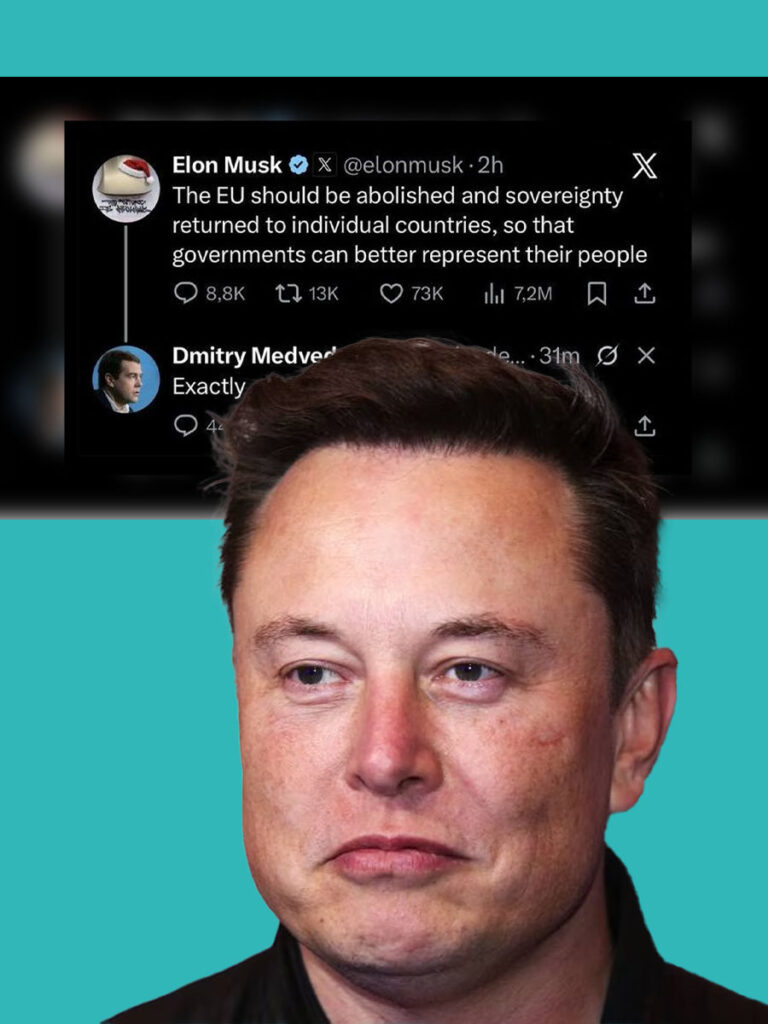
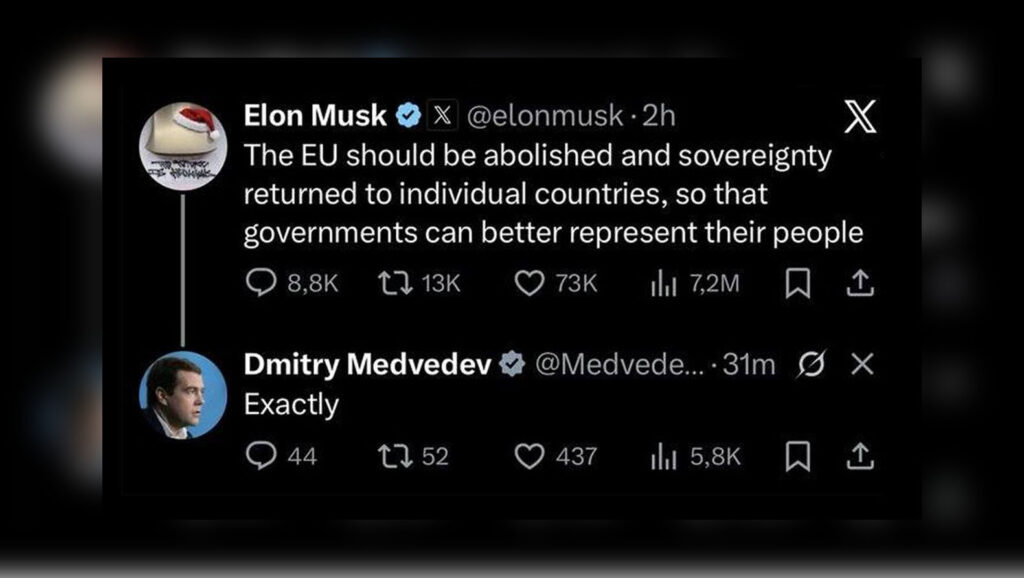
Recently, Musk dropped another one of his “Let me fix global geopolitics before lunch” comments, this time claiming the European Union should be abolished so that countries can “better represent their people.” Sounds bold, sounds spicy… sounds totally off.
And guess who jumped in to clap like he just witnessed Shakespeare? Dmitry Medvedev — Russia’s former president and current professional cheerleader of the Kremlin. When a guy like that agrees with you, you really have to pause and ask yourself if you’re on the right side of the conversation… or if you’ve done something incredibly blur.
Why Musk’s Take Completely Misses the Mark
Source: X.com
People love to say the EU is “undemocratic,” run by “unelected bureaucrats,” and somehow floating above the will of the people. But that narrative is basically the McDonald’s of political arguments — fast, cheap, and absolutely zero nutritional value.
Here’s the real deal, in plain English:
Every five years, Europeans vote for members of the European Parliament.
These MEPs then confirm the European Commission — which is the executive body of the EU.
Each country gets one commissioner.
Candidates go through public hearings.
And the entire structure reflects both democracy and national representation.
If anything, the process is more transparent than what many countries have. It’s like the US system, but with added layers of accountability and input from voters across 27 nations. Hardly the cabal of shadowy bureaucrats anti-EU propaganda loves to paint.
So calling the EU “undemocratic” is like saying Singapore doesn’t love food — just wrong sia.
Why Some People Want the EU Gone (Hint: It’s Not About Democracy)
If the EU is so democratic, why do some folks — especially powerful countries — hate it so much? Easy. Because the EU is big enough and strong enough to say “no” to them.
Imagine trying to bully a single small country. Can lah. Big countries do it all the time. But bullying 450 million people united under one economic giant? Cannot lah. Not so easy.
Let’s break it down:
Germany alone has 84 million people. Strong, yes… but still smaller than many Chinese provinces.
As a bloc, the EU has 450 million people and a GDP of around $20 trillion.
It’s one of the wealthiest, most powerful markets in the world.
That’s exactly why Russia and China prefer a fractured Europe. It’s also why certain Americans — yes, including Trump — keep throwing shade at the EU. A divided Europe is much easier to push around. United? Not so simple.
Even ultra-rich individuals can pressure small countries. A billionaire could practically step on a weak government if he wanted to. But the EU? Sorry bro, that’s one level too high.
The Oldest Trick in the Book: Divide and Conquer
The strategy is not new. “Divide and conquer” has been around since stone tablets were trending.
Keep Europe split into tiny pieces, and big powers can:
control trade terms,
push lower standards,
sell more products with fewer regulations,
and influence governments more easily.
But a united Europe? The EU stands there like a giant auntie with arms crossed, saying, “Nope, not today.”
Which is why Musk’s suggestion to “abolish the EU” accidentally aligns perfectly with the interests of countries that want Europe weak. And that, my friend, is how a smart man can make a very blur comment.
Honestly, watching Musk talk geopolitics feels like watching someone speedrun an exam they didn’t study for. You admire the confidence, but wah, the answers ah… sometimes painful.
He’s brilliant in engineering. He has changed industries. But genius in one area doesn’t magically make someone a political expert. And when you’re tweeting to millions, one sloppy comment can turn into geopolitical popcorn drama.
Also — if your hot take on Europe gets a thumbs-up from a Russian official during a time of global tension, that’s a sign to take a step back and maybe… just maybe… read a bit more before hitting “post.”
The EU isn’t perfect. Nobody is saying it is. But suggesting we tear it down because it’s “not democratic” is not only inaccurate — it conveniently ignores why powerful nations want it weakened in the first place.
Sometimes history feels like one of those messy family group chats — the kind where someone gets offended, someone leaves the chat, and everyone pretends it was “for the best.” The newly declassified Albatross file basically confirms that Singapore’s breakup with Malaysia was exactly that kind of chaos. Sure, the documents add juicy details and show how much Goh Keng Swee actually did behind the scenes, but the core storyline? Still the same shiok political drama we already knew.
Documents in the Albatross File
Author
Date
Subject
Lee Kuan Yew
Undated, likely mid-July 1964
Memorandum for ministers: “A Definition of the Post-Malaysia Situation”
Goh Keng Swee
Undated, likely 29 July 1964
“Notes on Meetings with Tun Razak and others in Kuala Lumpur on 28th and 29th July 1964”
Draft Cabinet memorandum: “Draft Memorandum for Tunku: Constitutional re-arrangements in Malaysia”
S. Rajaratnam
Undated, likely 27 January 1965
“Comments from the Minister for Culture on PM’s Memorandum”
Lee Kuan Yew
6 February 1965
“Notes on Meeting with Tunku and Dr Ismail on 31 January 1965”
Lee Kuan Yew
6 February 1965
“Meeting with Dato Ismail on 1 February 1965”
Toh Chin Chye
10 February 1965
“Notes of a Meeting with Tun Razak on 9 February 1965”
Lee Kuan Yew
11 February 1965
Note on UMNO’s possible continuation in Singapore after rearrangements
Lee Kuan Yew
15 February 1965
“Report of meeting with Tunku, 15 February 1965”
Lee Kuan Yew
15 February 1965
Letter to Harold Wilson
Lee Kuan Yew
22 February 1965
“Report of meeting with Dato Fenner on 19 February 1965”
Lee Kuan Yew
25 February 1965
“Meeting with Dato Ismail at his Ministry on 23 February 1965”
Lee Kuan Yew
25 February 1965
“Meeting with Lord Head at Carcosa on 23 February 1965”
Lee Kuan Yew
25 February 1965
Notes on meetings with Tunku, Claude Fenner, and Bill Pritchett
Lee Kuan Yew
25 February 1965
“Meeting with Lord Head at Temasek House on 24 February 1965”
Lee Kuan Yew
5 March 1965
Notes on meetings with Lord Head, Tom Critchley, Robert Wade, and MK Kidwai
Goh Keng Swee
9 March 1965
Memorandum on constitutional rearrangements
Goh Keng Swee
Undated, likely 21 July 1965
Handwritten note on meeting with Abdul Razak Hussein and Ismail Abdul Rahman
Lee Kuan Yew
26 July 1965
Handwritten letter authorising Goh Keng Swee to negotiate with Abdul Razak Hussein
Goh Keng Swee
Undated, likely 27 July 1965
Handwritten note on meeting with Abdul Razak Hussein
Goh Keng Swee
Undated, likely 3 August 1965
Handwritten note on meeting with Abdul Razak Hussein and Ismail Abdul Rahman
Source: Wikipedia
Dr. Goh Keng Swee, who served as the second Deputy Prime Minister of Singapore between 1973 and 1985
🇲🇾 When Asking for Equality Suddenly Becomes a Crime
Apparently, some UMNO leaders back then got triggered because Singapore dared to ask for equality for everyone. The horror, right? They even considered arresting Lee Kuan Yew just because he refused to sit quietly while discrimination ran the show. Imagine thinking equal rights is an attack. That’s like saying “I want fairness” and someone replies, “Jail for you!”
And yes, Tunku Abdul Rahman did privately call Singapore a source of “gangrene.” Ouch. If words could sting, that one would need a tetanus shot.
🩺 Gangrene? Yes. But Not the Way He Meant.
See, the funny thing about history is how it loves to twist itself. Tunku said Singapore was the gangrene that needed to be cut off. But after the split?
The tiny island ended up thriving. Meanwhile, Malaysia kept insisting on policies that held back its own people — especially the infamous Bumi policies. Up till today, those rules are still standing strong, even though they’re about as outdated as using a Nokia 3310 to browse TikTok.
Sixty years later, Singapore’s GDP, education, infrastructure, global status — all sprinting. Malaysia? Still jogging… sometimes backwards… in slippers.
🧠 When Jealousy Meets Bad Policy
Let’s be honest — persecuting the most capable parts of your society and expecting success? That’s like firing your best staff because they work too well. How to win, right?
The mindset back then felt like, “If I can’t climb higher, I just cut down the ladder.” But Singapore climbed anyway. No ladder? Never mind. Build escalator.
🏝️ Singapore’s Fear → Hustle Mode → Nation-Building
Think of it like this: Malaysia divorces Singapore. Singapore is the young mother with four kids, no money, no house, and no backup plan. Fear? Confirm got. But slowly, she figures things out. Grit. Hard work. Constant upgrading. No room for nonsense.
And one day, suddenly she’s thriving — kids doing well, bills paid, house renovated, maybe even a new condo at Marina Bay kind of vibe.
What felt like betrayal became independence. What felt like punishment became opportunity.
Honestly, it’s the most Asian “tough love” story ever.
🔍 My Take
As a Singaporean looking at this, I’d say this split was the best breakup glow-up story in Southeast Asia. Malaysia dumped Singapore thinking it was trouble. In reality, Singapore was the quiet achiever who just needed space to thrive.
And here’s the part many forget: Both sides made choices based on their own fears, biases, and survival instincts of the time. No crystal balls. No Google Maps to chart the future.
Today, Malaysia and Singapore still share ties — family, culture, food debates that will never end. But economically and socially? Wah, really two different worlds already.
If Singapore hadn’t prospered, we might have seen massive migrations the other way around. Context matters la.
History isn’t just dates and dusty textbooks. It’s full of insecure leaders, questionable decisions, and dramatic turning points. And sometimes, the very thing meant to weaken you becomes the thing that forces you to level up.
Singapore didn’t just survive the separation — it flexed. And the flex continues till this day.