

More
    Home Blog Page 43

    Hyper Knife Episodes 3-4 Recap

    0

    In this riveting installment of the Hyper Knife series, viewers are treated to a cascade of twists and turns that blur the lines between sanity and moral ambiguity. With every moment more jaw-dropping than the last, the narrative unravels a tangled web of secrets, manipulations, and unexpected alliances. As we dive deeper into the lives of our characters, the story challenges conventional notions of heroism and villainy, leaving us to wonder how far one would go in the name of survival and reputation.

    TL;DR

    • Mirrored Lives: Se-ok and Deok-hee share a dark obsession with neurosurgery, blurring the lines between rivalry and twisted loyalty.
    • Ethical Labyrinth: The series confronts viewers with tough moral choices in a high-stakes medical environment.
    • Unpredictable Twists: Flashbacks and unexpected alliances keep the narrative dynamic and suspenseful.
    • Ambition’s Cost: The characters’ relentless pursuit of excellence reveals the heavy price of unchecked ambition.
    • Moral Ambiguity: The show challenges traditional notions of hero and villain, showcasing characters operating in shades of gray.

    A Complex Web of Murder, Morality, and Manipulation

    The narrative wastes no time in thrusting us into an atmosphere of tension and moral conflict. At the heart of these episodes, Se-ok and Deok-hee—two figures as enigmatic as they are flawed—display an eerie resemblance in their relentless pursuit of mastery over the human brain. Their actions, though seemingly driven by a passion for surgery, are laced with moral compromises and an unsettling casualness toward the consequences of their choices.

    The Woods, the Grave, and an Unsettling Conversation

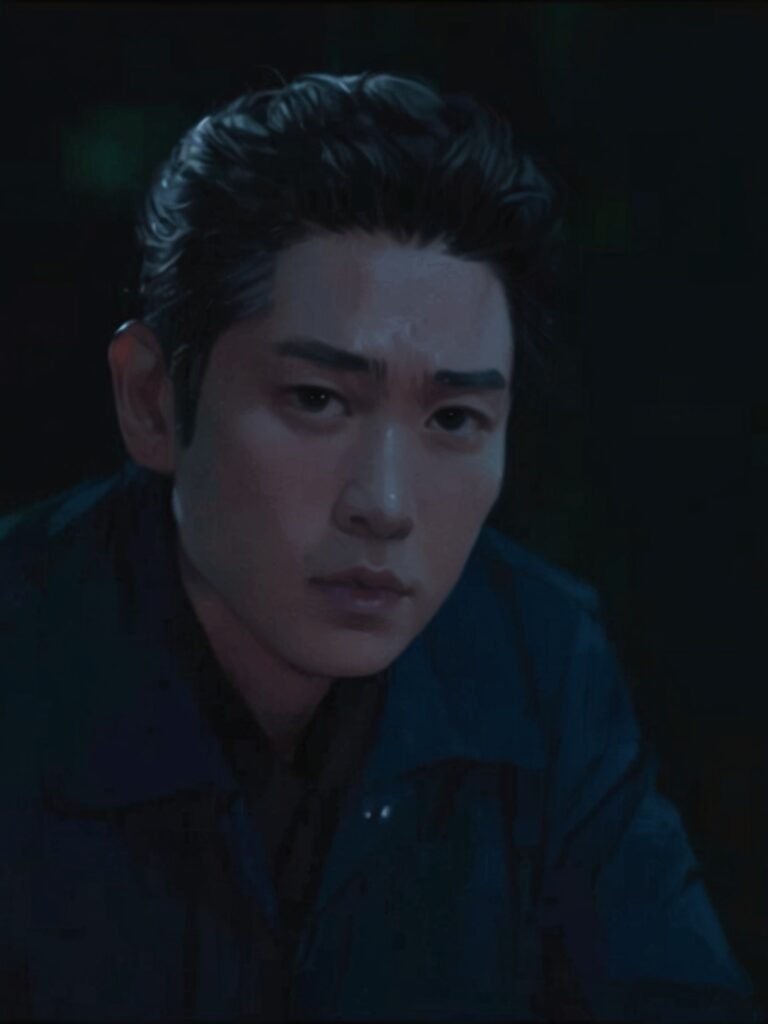
    Right from the start, the stakes are raised when Se-ok finds herself face-to-face with Deok-hee amidst the dark, foreboding woods. The tension is palpable as the two discuss a dead body—eerily, the corpse of the man with an ankle monitor. In a moment that defies conventional logic, Deok-hee nonchalantly suggests that Se-ok should expand the grave. His offhand remark about what would happen if the body were discovered only adds to the surreal atmosphere. Se-ok’s response, brimming with black-and-white conviction, is to admit that she would rather end her life than face the repercussions, a notion that sparks both horror and fascination in equal measure.

    This scene sets the tone for the unfolding drama. It introduces us to a world where the boundaries of life and death are distorted by the characters’ warped sense of duty and self-preservation. One cannot help but notice the unnerving calm with which both characters treat what would normally be an emotionally charged event.

    Bickering Neurosurgeons and Unexpected Interruptions

    As the plot thickens, we witness an unusual exchange between the two unhinged neurosurgeons. Their bickering over the macabre discovery is abruptly interrupted by a phone call from Mrs. Ra. In a desperate attempt to avoid detection, Deok-hee fabricates an excuse, claiming that Se-ok is busy burying her dog. This seemingly trivial lie belies the urgency of the situation and hints at deeper layers of secrecy.

    Moreover, the dynamic between Se-ok and Deok-hee grows more complex with each passing moment. Deok-hee’s continual attempts to shield Se-ok—even at the cost of his own integrity—indicate a bond forged from shared dark pasts and mutual dependencies. The audience is left to ponder whether this is genuine concern or merely another facet of their convoluted rivalry.


    Flashbacks and Hidden Truths: When the Past Meets the Present

    A series of flashbacks provide critical insights into the characters’ backstories and reveal how their paths converged. One such memory shows Se-ok taking an unusual day off from the hospital. However, her respite is short-lived; when Deok-hee visits her home, he finds a dead body stashed away in the shed. Although Se-ok initially attempts to cover up the incident, she eventually confesses that it was an act of self-defense.

    This revelation is as astonishing as it is disturbing. Deok-hee, rather than expressing outrage, seems to care more about the logistics than the morality of the act. He asks Se-ok what her next step will be, to which she coolly responds that she plans to bury the body in the woods. His reaction—or rather, lack thereof—raises numerous questions. How did he reconcile with Se-ok’s violent tendencies in the past? And why did he continue to shield her despite knowing the extent of her actions? These questions hint at a deep, underlying connection between the two that goes beyond mere professional association.


    Medical Malpractice, Suspicious Surgeries, and Ethical Dilemmas

    The series doesn’t shy away from depicting the darker side of medical practice. In a particularly striking sequence, Deok-hee is seen agreeing to perform surgery on Kim Myung-jin—a high-profile patient brought to the hospital by his affluent son, Kim Ki-young, who arrives in a sleek white Rolls Royce. This moment of luxury sharply contrasts with the grim realities of the procedures that follow.

    Se-ok, ever observant and quick to judge, quickly deduces that Deok-hee’s overly enthusiastic demeanor and forced smile conceal ulterior motives. Convinced that he harbors resentment toward Myung-jin, Se-ok takes matters into her own hands. In an audacious display of independence, she removes all other doctors from the operating room and performs the surgery herself. This not only saves Myung-jin’s life but also prevents any potential stain on Deok-hee’s reputation—an irony that does not go unnoticed by the audience.

    The aftermath of the surgery further complicates matters. Shortly after, Se-ok encounters Kim Ki-young, who reveals that his father mysteriously vanished following the operation. A chilling phone call from Myung-jin, instructing his son to “have a good life” without worrying about him, adds another layer of mystery. Se-ok confronts Deok-hee with her suspicions, directly asking if he was involved in Myung-jin’s disappearance. Deok-hee’s evasive response—marked by a swift exit—only deepens the intrigue and blurs the lines between right and wrong.


    Unlikely Alliances and Relentless Pursuits

    Desperation and a burning desire for justice (or perhaps revenge) drive Se-ok to align herself with Kim Ki-young. Their uneasy partnership is fueled by a mutual disdain for Deok-hee, whose actions have left both of them reeling. Ki-young’s quest to locate his missing father propels them into a dangerous investigation that unveils disturbing aspects of the hospital’s operations.

    The duo’s investigation leads them to a defunct hospital infamous for illegally admitting and drugging patients. Armed with a tip-off and a shaky lead from a local handyman, Se-ok and Ki-young embark on a perilous mission. However, what seems like a straightforward investigation quickly descends into chaos. A confrontation with the handyman—who is later revealed to be after a reward—spirals into a violent altercation. In the ensuing melee, the handyman’s life is tragically cut short, and Ki-young is left in critical condition.

    This sequence of events is a testament to the show’s ability to juggle suspense and emotion. The sudden shift from calculated investigation to raw, unbridled violence leaves viewers reeling. It is a reminder that in this world, even the pursuit of truth can have deadly consequences.


    A High-Stakes Showdown at the Annual Neurosurgeon Awards

    As if the mounting tensions weren’t enough, the annual neurosurgeon awards provide a perfect backdrop for yet another explosive conflict. Deok-hee has been the perennial winner for a decade, but this year, Se-ok has other plans. Her overhearing of a conversation about the sponsor’s sick son sparks an audacious idea—one that could potentially upend the established order.

    Determined to disrupt Deok-hee’s streak, Se-ok pays a visit to the sponsor at her hotel. In a surprising turn of events, she presents a compelling case for performing a high-risk surgery on the sponsor’s son, who suffers from hemophilia. Her pitch is simple yet audacious: perform the surgery quickly in exchange for ensuring that Deok-hee does not win the award. The sponsor, albeit wary of Se-ok’s true intentions, agrees to discuss the proposal with Deok-hee.

    When the matter is brought to Deok-hee’s attention, he is forced into a difficult position. On one hand, he must protect his reputation and maintain his winning streak; on the other, he cannot ignore Se-ok’s undeniable talent. In a moment of paradoxical admiration, Deok-hee acknowledges that Se-ok’s fearless approach and refusal to entertain the idea of failure make her invaluable—perhaps even more so than the other surgeons in the room. The ensuing tension is palpable as Se-ok, donning her trademark shades and exuding rockstar confidence, strides towards the plane to carry out the surgery in the dead of night.

    The night-time operation is a high-wire act where every second counts. Se-ok’s unshakeable composure is put to the test, yet she manages to pull off a flawless procedure. This victory, however, comes at a price—a price measured in the mounting distrust and animosity that further distances her from Deok-hee.


    Parallel Lives: The Mirror of Ambition and Obsession

    One of the most intriguing aspects of Hyper Knife lies in its exploration of the mirrored existences of Se-ok and Deok-hee. In a poignant flashback, Deok-hee confides that another student once hinted at Se-ok’s possible addiction to stimulants. Yet, he quickly dismisses this notion, stating that her true addiction is to surgery itself—a passion he shares. Their obsessive desire to uncover the secrets of the human brain binds them together, despite the moral chasm that separates their actions.

    At one point, Deok-hee even muses whether delving deep enough into the mysteries of the brain might unearth the very essence of humanity. This line of thought is as brilliant as it is chilling. It invites viewers to ponder whether the pursuit of knowledge, when taken to extremes, can strip away the very soul it seeks to understand. The notion that both characters might be driven by a similar, almost compulsive need to explore the dark recesses of the human mind is a recurring theme that adds layers of complexity to their relationship.

    Their similarities are not merely thematic; they extend to their actions as well. Despite the apparent rivalry, Deok-hee’s repeated acts of protection toward Se-ok suggest that he sees in her a reflection of his own inner turmoil. This ambiguous relationship is central to the narrative’s appeal, as it blurs the boundaries between friend and foe, mentor and adversary.


    A Tangle of Investigations and Unintended Consequences

    As the story continues to unfold, the plot delves into the murky realm of criminal investigations. A pivotal moment occurs when Deok-hee receives a call from Inspector Yang, an old detective friend. The call brings disturbing news: a tip from a notorious medical broker, now on the lam, has led the authorities to a derelict temple. This temple is not unfamiliar territory—it was the very site where Se-ok once performed an unauthorized surgery on a notorious gang boss.

    The investigation takes an unexpected twist when police discover the body of a nurse who was killed by Se-ok just a week earlier. Suddenly, what began as an attempt to track down a missing person spirals into a full-blown criminal case. In a bold move, Se-ok returns to the scene of the crime to observe the ongoing search. Her casual conversation with Detective Lee, during which she nonchalantly mentions owning Rottweilers, leaves everyone puzzled. This seemingly irrelevant detail turns out to be a crucial piece of evidence. Later, a forensic analysis reveals that Rottweiler hairs were found on the nurse’s clothing—a discovery that connects Se-ok directly to the murder.

    In a parallel sequence of events, the narrative shifts to Deok-hee’s peculiar nighttime escapades. After careening past a speed camera, he instructs his butler to prepare porridge—a prearranged alibi for his sudden departure. In a bizarre twist, Deok-hee then heads to a secluded garage and drives away in a pristine white Rolls Royce. This sequence is interwoven with a flashback showing him using a suspicious substance on a door handle, leading to a chilling reenactment of past events involving a man named Myung-jin. The juxtaposition of past and present actions creates an atmosphere of disorientation and suspense, leaving viewers with more questions than answers.


    A Closer Look at Character Motivations and Ethical Quandaries

    The layers of deception and moral ambiguity in Hyper Knife are best understood by examining the motivations of its central characters. Se-ok is portrayed as a force of nature—unpredictable, driven, and willing to push ethical boundaries to achieve her goals. Her actions, though often ruthless, are underpinned by a desire for justice—or perhaps a personal vendetta against those who have wronged her. Each decision she makes is a calculated risk, and her willingness to cross lines that others wouldn’t even dare approach makes her both fascinating and infuriating.

    Deok-hee, on the other hand, is the quintessential antihero. His actions are shrouded in a mixture of paternal concern, professional rivalry, and an unsettling detachment from the moral implications of his deeds. His repeated attempts to cover for Se-ok, despite knowing the extent of her misdeeds, suggest a complicated web of loyalties and perhaps even a twisted form of admiration. The fact that he remains strangely composed in the face of murder and mayhem only serves to underscore the blurred ethical lines that define his character.

    Moreover, the tension between these two characters is not merely a matter of personal rivalry—it also reflects a broader commentary on the nature of ambition within the high-stakes world of neurosurgery. Both Se-ok and Deok-hee are so driven by their passion for understanding the human brain that they are willing to sacrifice virtually everything else. This relentless pursuit of knowledge and perfection comes at a steep cost, not just to themselves but to those around them.


    New Insights: The Unintended Consequences of Ambition

    One cannot help but draw parallels between the high-octane drama unfolding on screen and the real-world consequences of unchecked ambition. The narrative of Hyper Knife serves as a cautionary tale about the dangers of prioritizing personal gain and professional accolades over ethical considerations. As the characters push themselves—and each other—to the limit, the ripple effects of their decisions create a domino effect of unforeseen consequences.

    For instance, Se-ok’s decision to perform a high-risk surgery on the sponsor’s son is not merely a bid for revenge against Deok-hee. It also highlights the precarious balance between competence and recklessness in a field where lives hang in the balance. The subsequent fallout—ranging from the suspension of crucial medical services to the unraveling of personal relationships—serves as a stark reminder that every action has a cost.

    Likewise, Deok-hee’s seemingly protective behavior toward Se-ok is laced with irony. His actions suggest that he recognizes a dangerous similarity between them—a similarity that could ultimately lead to their mutual downfall. This duality is one of the most compelling aspects of the series, as it forces viewers to confront the uncomfortable truth that brilliance and hubris often walk hand in hand.


    Personal Reflections on the Narrative Complexity

    Taking a step back, it is impossible not to be both impressed and disturbed by the intricate narrative of Hyper Knife. The series does not simply rely on shock value; it invites us to examine the very nature of ambition and the ethical dilemmas that come with it. In many ways, the show challenges the viewer to question the traditional dichotomy of right versus wrong. Instead, it presents a spectrum where every character operates in shades of gray.

    One of the standout features of these episodes is how they manage to keep the audience guessing at every turn. Every conversation, every flashback, and every unexpected twist is meticulously crafted to create a tapestry of intrigue and suspense. This is not just a medical drama; it is a deep dive into the human psyche, a journey into the dark corners of ambition, and an exploration of the sacrifices one is willing to make in the relentless pursuit of excellence.

    The moral complexity of the characters is particularly noteworthy. It is fascinating to observe how Se-ok, despite her morally questionable actions, exudes an air of determination and resilience that is almost admirable. Similarly, Deok-hee’s calm and calculated demeanor, even when faced with the repercussions of his actions, paints him as a character who is as enigmatic as he is conflicted.

    Moreover, the series cleverly employs a mix of flashbacks and present-day sequences to build a narrative that is both nonlinear and deeply engaging. This technique not only enriches the storytelling but also allows for a gradual unveiling of character backstories and motivations. In doing so, it creates a multi-dimensional portrayal of individuals who are, at their core, driven by the same insatiable curiosity and ambition.

    From a broader perspective, Hyper Knife serves as a commentary on the pressures inherent in high-stakes professions. It subtly critiques the societal obsession with success and the lengths to which individuals will go to secure their place at the top. The intense focus on career, reputation, and legacy—often at the expense of personal relationships and ethical considerations—is a recurring theme that resonates well beyond the confines of the screen.


    The Intersection of Science, Ethics, and Human Fallibility

    An intriguing aspect of the narrative is its exploration of the intersection between scientific advancement and ethical responsibility. Both Se-ok and Deok-hee are portrayed as geniuses whose unyielding dedication to their craft blinds them to the moral implications of their work. Their story is a poignant reminder that the pursuit of scientific excellence often comes with profound ethical dilemmas.

    For example, the tension surrounding the surgery on Kim Myung-jin is emblematic of the larger debate over medical responsibility. On one hand, the surgery is a life-saving procedure that demonstrates Se-ok’s remarkable skill. On the other hand, the circumstances leading up to it, coupled with the subsequent fallout, raise serious questions about accountability and integrity in the medical field. The series forces us to confront the idea that even those with the best intentions can fall prey to the temptations of power and ambition.

    Furthermore, the recurring motif of bodies—whether it’s the mysterious corpse in the woods or the dead nurse linked to Se-ok—serves as a grim reminder of the human cost of these high-stakes endeavors. Each body, each crime scene, is a silent testament to the collateral damage inflicted by a system that values achievement over empathy. It is a narrative that resonates with contemporary discussions about the ethical boundaries of professional ambition and the often-overlooked consequences of unchecked innovation.


    Exploring the Role of External Influences and Hidden Agendas

    As the investigation unfolds, external influences begin to shape the narrative in unexpected ways. The involvement of the Ministry of Health and Welfare, the mysterious tip from a medical broker, and the unexpected role of media scrutiny all add layers of complexity to the storyline. These elements serve as a reminder that in a world driven by ambition and secrecy, nothing operates in isolation.

    For instance, the suspension of Se-ok’s pharmacy and Doctor Han’s clinic—a consequence of a government investigation—illustrates how institutional pressures can exacerbate personal vendettas. This development forces Se-ok to make choices that are not solely driven by personal animosity but also by the broader ramifications on her professional life. The ripple effect of these actions is felt across multiple spheres, from individual lives to the entire healthcare system, highlighting the interconnected nature of personal ambition and public accountability.

    Moreover, the involvement of figures like Inspector Yang and Detective Lee introduces a detective narrative that underscores the challenges of unearthing the truth. Their investigation, marked by meticulous attention to detail and relentless pursuit of evidence, provides a counterbalance to the chaotic actions of Se-ok and Deok-hee. It is through these external lenses that the broader societal implications of the characters’ actions are brought to the forefront, prompting us to consider how far institutions are willing—or unwilling—to go in order to preserve a semblance of order and justice.


    My Perspective: Reflections on Ambition, Morality, and the Price of Genius

    Reflecting on the unfolding drama of Hyper Knife, it becomes evident that the narrative is much more than a series of isolated events. It is a deep, multifaceted exploration of ambition, morality, and the human condition. The characters’ relentless pursuit of excellence, despite the heavy toll it takes on their personal lives and ethical boundaries, mirrors the real-world challenges faced by many who dare to defy convention in their quest for greatness.

    One cannot help but marvel at the intricate portrayal of Se-ok. Her every action, no matter how ruthless, is driven by a compelling need to assert control in a chaotic world. Her defiance of conventional ethics is not presented as a mere villainous trait; rather, it is a reflection of the complex pressures that drive individuals to make impossible choices. In a similar vein, Deok-hee’s calm demeanor masks a turbulent internal conflict—a battle between professional pride and the haunting awareness of shared culpability. Their dynamic is a fascinating study of how the pursuit of knowledge and recognition can sometimes lead to the erosion of moral clarity.

    What is particularly striking is how the series manages to weave in themes that are both timeless and urgently relevant. In an era where technological advancements and professional accolades are often celebrated at the expense of ethical considerations, Hyper Knife serves as a stark reminder that every triumph comes with its own set of burdens. The intricate interplay between ambition and accountability is laid bare, inviting viewers to reflect on the true cost of brilliance.

    Moreover, the series does not shy away from exposing the vulnerabilities inherent in the human condition. Whether it is the devastating consequences of unchecked ambition or the personal sacrifices made in the name of progress, each narrative thread is a poignant reminder of the fine line that separates genius from folly. It challenges us to reconsider our own definitions of success and to ponder whether the pursuit of excellence is worth the inevitable fallout.
    My Dearest Nemesis: What we know in the finale

    0

    In this final act of “My Dearest Nemesis,” the drama takes us on an emotional rollercoaster where high-stakes negotiations, office politics, and deeply personal decisions collide. The narrative wraps up a saga of love, betrayal, and ambition while challenging the characters to confront their past, embrace change, and dare to dream beyond the confines of corporate expectations. In this detailed exploration, we delve into every twist and turn of Episodes 11-12, dissecting the intricate layers of the storyline and the characters’ growth, as well as offering fresh insights into what these final moments mean for our beloved cast.

    TL;DR

    • Family vs. Career: The final episodes highlight the struggle to balance personal relationships and professional ambitions.
    • Challenging Tradition: Characters break free from societal and familial expectations, choosing personal happiness.
    • Media Impact: The drama explores how public perception and media scrutiny affect personal lives.
    • Redemption and Forgiveness: Key characters seek and find reconciliation, emphasizing the importance of forgiveness.
    • Project Symbolism: The renewal project symbolizes personal and corporate transformation.
    • Love as Strength: The narrative shows how love drives resilience and positive change.
    • Personal Growth: The characters experience significant personal growth and self-discovery.

    A Tumultuous Negotiation: When Family Ties and Corporate Ambitions Collide

    At the outset of the final week, tensions run high. The story opens with a dramatic negotiation between Joo-yeon and his formidable grandmother—a scene that immediately sets the stage for both familial strife and corporate maneuvering. Joo-yeon finds himself in a precarious position. His replacement at work, embroiled in dubious dealings, threatens the prestigious image of Yongsung Group. However, Joo-yeon is willing to keep these unsavory details under wraps if his grandmother agrees to a simple favor: cease her relentless harassment of Soo-jung and restore him to his rightful directorship position.

    Yet, the negotiation is anything but straightforward. Grandma, a character known for her iron-willed determination, agrees only on one condition—the success of the Yongsung renewal project. This clause isn’t a mere formality; it carries with it the weight of legacy. Should the project falter, Grandma intends to strip Joo-yeon of his identity and assets, and banish him overseas. In a dramatic turn, the stakes are revealed to be as much about personal redemption as they are about corporate survival.

    The tension in this sequence is palpable. Joo-yeon’s confidence in his and Soo-jung’s abilities fuels his determination. The duo is set on proving that they can transform the project into a monumental success. In contrast, the looming threat of Grandma’s ultimatum adds a dark twist to what might have been a routine power struggle. With every passing moment, viewers are reminded that in the world of high-powered chaebols, love and ambition are two sides of the same coin.


    Romantic Dilemmas Amid Corporate Warfare

    As the drama unfolds, we witness Soo-jung stepping into a role that is equal parts fierce and vulnerable. Upon learning of her grandmother’s devious stipulation, she confronts Joo-yeon with the courage and grace of a modern-day heroine. In a scene reminiscent of a classic fairytale—yet with a distinctly urban twist—Soo-jung challenges the idea that her worth is solely defined by her connection to a corporate heir.

    This confrontation is not only about business; it is deeply personal. Soo-jung’s inner strength comes to the forefront as she demands acknowledgment for her contributions. It is a defining moment when she asserts that her talents should shine independent of the shadow cast by her boyfriend’s corporate legacy. This moment of truth is both empowering and heart-wrenching, revealing the underlying insecurities that often accompany love in a world where reputation and success are prized above all.

    Joo-yeon, on the other hand, is caught in a delicate balancing act. He is torn between the expectations imposed by his family legacy and the burning desire to be recognized for his own merits. His assurance that he will not abandon his career—even in the face of familial interference—demonstrates an unwavering commitment to both his professional aspirations and to Soo-jung. Their dialogue is laced with a subtle humor and bittersweet resolve that encapsulates the essence of their tumultuous journey.


    The Renewal Project: A Rollercoaster Ride of High Hopes and Unexpected Setbacks

    No corporate drama would be complete without a project that embodies the very spirit of reinvention and ambition. The renewal project in “My Dearest Nemesis” serves as the linchpin around which the entire narrative revolves. At the heart of this endeavor is the reopening of one of Yongsung’s iconic department stores—a symbol of both tradition and modernity. The project not only rejuvenates a venerable institution but also sets the stage for personal and professional transformations.

    The strategy team, in a display of creative flair, proposes a series of pop-up stores that aim to inject fresh life into the department store. One of the highlights is a tribute to the beloved animated series, Pirate King—a favorite of Joo-yeon. This nod to his personal passions is both a delightful Easter egg for fans and a clever marketing ploy that underscores the merger of corporate strategy with pop culture.

    However, as the story progresses, obstacles arise. A near-miss accident at the food court—a mishap involving a student carrying hot food and a small child—spirals out of control. Although Joo-yeon’s quick thinking averts a potential disaster, the incident is blown out of proportion by the overzealous parents of the child. In a classic case of miscommunication amplified by social media, a vlogger seizes the opportunity to cast Joo-yeon in a negative light, portraying him as a detached and elitist heir. The fallout is swift: the creator of Pirate King withdraws his support for the pop-up initiative.

    Undeterred by this setback, the narrative takes a sharp turn. Black Dragon—a key ally—arranges a crucial meeting with the animation’s creator. Here, sincerity and passion come to the forefront. Despite earlier misgivings, the creator is moved by Joo-yeon’s genuine love for the series and the positive impact he envisions for the community. With the backing of a trusted fan and an ally who believes in using influence for good, Joo-yeon manages to win the creator over. The pop-up project is revived, and the renewal project is once again on track.

    This sequence is a masterclass in conflict resolution. It demonstrates how even when circumstances appear bleak, a combination of integrity, persistence, and a willingness to collaborate can turn the tide. The episode serves as a reminder that in both business and life, the path to success is rarely linear, and setbacks often pave the way for more meaningful victories.


    Reopening Day: Celebration, Controversy, and Self-Affirmation

    As the renewal project reaches its climax, reopening day arrives with fanfare and mixed emotions. The event is a resounding success, and Joo-yeon makes a bold declaration of his personal passions. In an unprecedented moment, he openly proclaims his admiration for Pirate King. This act, meant to be a celebration of individuality and authenticity, does not sit well with everyone.

    In the background, his formidable grandmother casts a disapproving glance. She is quick to remind him of his responsibilities as the future successor of Yongsung Group. Her scolding is less about the animated series and more about the perceived erosion of tradition. Yet, Joo-yeon’s response is refreshingly defiant. He rejects the notion that his worth is defined solely by his corporate role. Instead, he embraces his identity as Ban Joo-yeon—a man who values both personal passion and professional integrity.

    This moment of self-affirmation is charged with irony. On one hand, it represents a break from the rigid expectations of a chaebol legacy. On the other, it underscores the complex interplay between personal desires and public duty. The reopening day is not just a celebration of the department store’s renaissance; it is a microcosm of the broader cultural and generational shifts at play within the narrative.

    Moreover, the episode masterfully highlights the clash between traditional values and modern aspirations. While the older generation clings to established norms, the younger characters embody a spirit of rebellion and innovation. This duality is at the core of the drama, resonating with audiences who find themselves straddling the line between respect for the past and the need for progress.


    Media Frenzy and the Price of Public Life

    No drama centered around a chaebol family would be complete without the intrusive glare of the media. As the renewal project unfolds, Soo-jung finds herself at the center of a relentless storm of paparazzi and gossip columnists. Reporters hound her with questions about her relationship with Joo-yeon and the perks of dating a high-profile successor. The barrage of media attention is overwhelming, and it forces Soo-jung to confront the reality of living under a relentless public microscope.

    Office gossip further complicates matters. Whispers suggest that Soo-jung should abandon her career and luxuriate in the benefits of her boyfriend’s wealth. These voices, however, ignore the harsh reality that her departure would result in a significant loss for Yongsung Group—a company that values talent as much as it does legacy. Amid this turmoil, an unexpected opportunity arises. Soo-jung is scouted by one of the largest department store chains in the United States. A former mentor advises her to consider leaving Yongsung for a brighter, more independent future.

    This turning point is fraught with emotional and professional dilemmas. On one hand, the prospect of an international career is exhilarating. On the other, the notion of being relegated to the role of a mere accessory to Joo-yeon’s legacy is deeply unappealing. Soo-jung is forced to weigh her personal ambitions against the expectations of a society that often reduces her identity to her relationship status. In a powerful moment of introspection, she decides that her future must be shaped by her own merits, not by the shadow of a chaebol dynasty.

    The media’s portrayal of events underscores a larger commentary on the intersection of personal identity and public perception. In today’s hyper-connected world, every action is scrutinized, and every mistake is amplified. The drama uses this dynamic to explore themes of authenticity, resilience, and the courage to forge one’s own path—even when the odds are stacked against you.


    A Secondary Love Story: Trust, Misunderstanding, and Reconciliation

    While the primary narrative focuses on Joo-yeon and Soo-jung, the secondary love story between Ha-jin and Shin-won offers its own unique flavor of angst and redemption. Ha-jin, still haunted by the scars of a past relationship, struggles to fully trust Shin-won. This lingering pain creates a chasm between them, one that threatens to undermine their budding romance.

    In a heartfelt sequence, Ha-jin finally musters the courage to apologize for her earlier misjudgments. She confesses that her inability to trust is not a reflection of Shin-won’s character, but rather a remnant of old wounds that have yet to heal. This admission is not only cathartic but also a testament to her willingness to confront her vulnerabilities head-on.

    Meanwhile, Shin-won, buoyed by a mix of liquid courage and genuine affection, makes a bold move to express his feelings. In a scene that is both humorous and awkward, his heartfelt confession is inadvertently broadcast to a restaurant full of unsuspecting patrons, thanks to a misbehaving Bluetooth speaker. While the moment is mortifying, it eventually paves the way for a renewed commitment between the two. The next day, with clarity restored, Shin-won reaffirms his promise to earn Ha-jin’s trust.

    However, not everyone is convinced that their union is built on stable ground. The haste with which Shin-won abandons his job to become Ha-jin’s business partner raises concerns about the long-term viability of their relationship. There is an air of uncertainty about whether their reconciliation is based on genuine compatibility or simply a reaction to the heat of the moment. Despite these doubts, the subplot adds depth to the overall narrative, reminding us that love is often messy, unpredictable, and beautifully imperfect.


    The Grand Finale: Family Reconciliations and New Beginnings

    As the final act approaches its climax, the storyline gradually shifts its focus to a series of reconciliations and personal victories. With the renewal project successfully behind them, the characters are finally given the space to address long-standing grievances and redefine their relationships.

    One of the most poignant moments comes when Joo-yeon’s formidable grandmother is forced to confront the consequences of her own actions. Having long regarded love as a weakness, she is astonished to learn that it has, in fact, been the source of Joo-yeon’s strength. Despite her cold exterior, the truth is undeniable—Joo-yeon endured immense hardship and even relinquished his claim to the successor title out of genuine care and love for Soo-jung. A trusted colleague, Secretary Kwon, boldly points out that it is precisely this capacity for love that has made Joo-yeon resilient. In a moment of vulnerability, Kwon advises Grandma to reconsider her stance and offer an apology before it is too late.

    True to form, Grandma eventually visits Joo-yeon at his home. Her initial shock at discovering his once-secret anime collection—now a permanent fixture in every corner of his living space—soon gives way to a heartfelt apology. Although her words are tentative and her emotions guarded, the moment is significant. It marks a tentative step toward mending a relationship that has long been fraught with tension and unspoken resentments. Yet, while some may see this as a well-earned redemption arc for the once-unyielding matriarch, others may remain unconvinced. The ambiguity of her transformation leaves viewers questioning whether her change of heart is genuine or merely a tactical retreat.

    As the family drama begins to settle, the ripple effects of the renewal project bring about a series of uplifting changes. Soo-bin, a character who has long faced obstacles of his own, triumphs by passing his exams and achieving his dream of becoming a firefighter. Simultaneously, Joo-yeon’s father, a savvy investor who had long supported Soo-jung’s burgeoning career by purchasing Yongsung stocks, experiences a windfall as the company’s fortunes rise. These successes are more than just personal victories—they symbolize the broader transformation of the Yongsung Group and the resilience of its people.

    Moreover, the narrative takes a decisive stand against the relentless barrage of tabloid gossip and public scrutiny. With the renewal project firmly behind them, the remaining characters find the courage to reject the stifling expectations imposed by both society and the media. Grandma, in a surprising twist, apologizes to Soo-jung for her earlier interference and reluctantly acknowledges the legitimacy of her relationship with Joo-yeon. This moment of concession underscores a central theme of the drama: that true progress requires the willingness to let go of outdated prejudices and embrace change.


    Unraveling the Complexities of Identity and Duty

    A key element that drives the narrative is the intricate interplay between personal identity and the weight of familial duty. Throughout the drama, characters are continually forced to choose between following their hearts and succumbing to the pressures of tradition. Joo-yeon’s transformation is perhaps the most striking example. Once seen as a prototypical successor, he evolves into a man who defies expectations by pursuing what truly makes him happy—even if it means defying a legacy that has defined him for so long.

    This conflict is mirrored in the experiences of other characters as well. Soo-jung, who has long been seen merely as a supplement to Joo-yeon’s identity, emerges as a formidable force in her own right. When offered a lucrative opportunity abroad, she carefully weighs the pros and cons of stepping away from Yongsung Group. Her decision to stay in Korea is not born out of fear, but rather a profound belief that her talents and efforts deserve recognition within her current environment. In doing so, she challenges the conventional narrative that one must leave to be truly valued.

    The drama also sheds light on the often-overlooked impact of public perception on personal choices. The relentless scrutiny from the media and the incessant chatter from office gossip create an atmosphere where every decision is fraught with risk. Yet, rather than buckling under this pressure, the characters learn to navigate these treacherous waters with grace and determination. Their journey is a powerful reminder that authenticity—though sometimes hard to come by—remains the most valuable currency in a world dominated by superficial judgments.


    A Closer Look: Reflections and Fresh Insights

    The Intersection of Tradition and Modernity

    One of the most compelling aspects of “My Dearest Nemesis” is its exploration of the clash between traditional values and modern aspirations. On one side, you have a generation steeped in the rigid protocols of chaebol culture. On the other, a younger cast that champions innovation, self-expression, and the pursuit of genuine happiness. This tension is not merely a narrative device; it reflects the broader cultural shifts occurring in society today. The series cleverly uses family drama and corporate intrigue to comment on these themes, inviting viewers to question long-held beliefs and consider alternative paths to fulfillment.

    The Role of Personal Sacrifice in Achieving Success

    Another notable theme is the concept of personal sacrifice. Throughout the final episodes, Joo-yeon is repeatedly faced with difficult choices—each one forcing him to weigh his personal desires against the obligations of his family legacy. His decision to prioritize love and authenticity over blind adherence to tradition is both daring and relatable. It suggests that sometimes, true success is measured not by wealth or status, but by the courage to stand by one’s convictions, even when the stakes are high.

    The Power of Resilience in the Face of Adversity

    Resilience is a recurring motif in this drama. Whether it’s the characters’ ability to bounce back from professional setbacks, overcome personal doubts, or challenge societal expectations, every arc is imbued with a sense of determination. The renewal project itself stands as a metaphor for transformation—a risky venture that ultimately leads to rebirth and renewed hope. The series conveys an empowering message: that setbacks are not the end of the road but rather the catalysts for growth and self-improvement.

    A Fresh Perspective on Love and Ambition

    In the midst of corporate battles and family feuds, “My Dearest Nemesis” delivers a heartfelt exploration of love’s transformative power. Both the primary and secondary relationships in the drama illustrate that love, despite its complexities, remains a driving force behind personal growth. Joo-yeon’s willingness to challenge his predetermined role and Soo-jung’s resolve to stand on her own merit are testaments to the idea that true love empowers individuals to become the best versions of themselves. Similarly, the rocky yet ultimately redemptive journey of Ha-jin and Shin-won offers a nuanced look at trust, vulnerability, and the importance of second chances.


    Personal Reflections on the Drama’s Climax

    Watching these final episodes unfold, I found myself oscillating between admiration and exasperation. On one hand, the narrative’s bold willingness to challenge entrenched hierarchies and outdated traditions is nothing short of inspiring. The characters are not simply pawns in a corporate game; they are individuals with dreams, insecurities, and a burning desire to break free from the constraints of their past.

    Yet, there are moments that evoke a strong sense of frustration. The constant meddling of well-meaning but ultimately overbearing family members, the relentless media circus, and the sometimes convoluted office politics all serve as a reminder of how external pressures can distort even the most genuine intentions. For instance, the misadventures surrounding the pop-up project and the chaotic media portrayal of Joo-yeon add a layer of absurdity to an already tense storyline. It is as if the drama is winking at its audience, acknowledging that in a world dominated by superficial judgments, even the noblest efforts can be misconstrued.

    Moreover, the secondary plotline involving Ha-jin and Shin-won offers a fascinating counterpoint to the main story. Their struggles, though less grandiose, are deeply resonant. Their journey underscores the notion that healing and trust are not instantaneous but are achieved through a series of small, significant steps. It is a reminder that love often arrives wrapped in layers of misunderstanding and vulnerability, and that true connection requires patience, forgiveness, and a willingness to embrace imperfection.

    From a broader perspective, the drama’s conclusion is both satisfying and thought-provoking. It does not offer a neatly wrapped-up ending but instead leaves us with lingering questions about identity, ambition, and the sacrifices we make in the name of love and duty. In many ways, “My Dearest Nemesis” is a mirror reflecting the complexities of modern life—where the pursuit of personal happiness is constantly at odds with societal expectations and familial obligations.


    The Ripple Effect: How the Finale Redefines the Future

    As the curtain falls on the final episodes, the repercussions of the characters’ decisions begin to ripple outwards. The success of the renewal project not only revitalizes a cherished institution but also sets the stage for a broader transformation within Yongsung Group. The promotion of talented individuals like Soo-jung, the newfound acknowledgment of personal passion in professional settings, and the gradual dismantling of archaic hierarchies all point to a future where merit and individuality are given their due.

    One of the most compelling aspects of the finale is the way it redefines the concept of legacy. For so long, the characters have been trapped by the weight of expectation—bound by the notion that their lives must adhere to a predetermined script dictated by family tradition and corporate necessity. However, as the final act reveals, legacy need not be a chain that restricts personal growth. Instead, it can be a platform from which one can leap into new possibilities. Joo-yeon’s decision to embrace his true self, even if it means rejecting a conventional successor role, symbolizes a radical reimagining of what it means to inherit a legacy.

    Furthermore, the ripple effect of these personal victories extends beyond the immediate circle of the main characters. The renewed energy at Yongsung Group hints at a cultural shift within the company itself. Younger employees, inspired by Soo-jung’s determination and Joo-yeon’s defiance of tradition, begin to challenge the status quo. This shift is palpable in the subtle changes in office dynamics and the gradual dismantling of long-held prejudices. As a result, the entire organization seems poised for a new era—one marked by innovation, inclusivity, and a celebration of individuality.

    In addition to the internal transformations, the external perception of the Yongsung Group also undergoes a significant metamorphosis. The media, once quick to pounce on any hint of scandal or controversy, is forced to reckon with the complexity of the company’s narrative. What was once portrayed as a simple tale of corporate drama now reveals itself as a multifaceted story of human ambition, vulnerability, and triumph. This evolution in public perception not only elevates the company’s brand but also underscores the broader theme that every setback is an opportunity for reinvention.


    Reflections on a Bold Narrative Journey

    Now that we’ve traversed the highs and lows of these final K-Drama episodes, it’s only fair to pause and reflect on the overall journey. The drama isn’t just about the inevitable clashes between personal desire and professional duty; it’s also a candid exploration of what it means to be human in an age defined by both tradition and rapid change.

    One of the standout aspects of this narrative is its refusal to present a sanitized version of reality. Instead, the drama revels in its contradictions. The characters are flawed, their motivations complex, and their decisions often steeped in irony. For example, Joo-yeon’s simultaneous rebellion against and adherence to his legacy encapsulates the paradox that many of us face in our own lives. How do we honor our past while still forging a new path forward? The answer, as the drama suggests, lies in embracing the tension between duty and desire, and in understanding that the journey is just as important as the destination.

    Furthermore, the show’s willingness to address the impact of external pressures—whether from the media, family, or societal expectations—is both refreshing and deeply relevant. In an era where personal narratives are constantly being reshaped by public opinion and social media, the characters’ struggles to maintain authenticity resonate on a profound level. Their stories serve as a powerful reminder that the most significant battles are often fought within, and that true strength comes from acknowledging one’s vulnerabilities while striving for personal growth.

    Another noteworthy aspect is the bold use of humor and irony. While the narrative tackles serious themes such as betrayal, ambition, and personal sacrifice, it never shies away from moments of levity. The inadvertent public confession in the restaurant, for example, is a perfect illustration of how humor can serve as a much-needed counterbalance to the drama’s heavier themes. These moments of comic relief are not mere distractions; they enrich the narrative by highlighting the absurdity of life’s complexities and the resilience of the human spirit.

    On a personal note, I find the finale of “My Dearest Nemesis” to be a masterful blend of emotion and intellect. It challenges us to rethink our own definitions of success, legacy, and love. The story invites us to consider that perhaps our most authentic selves are found not in conformity, but in the bold, sometimes messy, pursuit of what truly matters to us. It is this nuanced portrayal of human experience that makes the drama both relatable and thought-provoking.

    When Life Gives You Tangerines Episodes 9-12: What I learned so far…

    0

    Autumn is here, and as the leaves fall, so do old ways of life. In this season of transformation, we witness the characters of “When Life Gives You Tangerines” entering a new era filled with both heartache and hope. The latest episodes, spanning from 9 to 12, deliver a dramatic shift in focus from the overtly political to the subtler, yet equally powerful, realm of economic reality and personal growth. In this article, we dive deep into the twists and turns of these episodes, explore the evolving relationships, and uncover fresh insights on how change—both personal and societal—can reshape lives.

    TL;DR

    • The series shifts from politics to focus on everyday economic challenges.
    • Geum-myeong’s journey highlights the struggle for personal and financial independence.
    • Relationships are tested by class differences and family expectations.
    • Family gatherings reveal hidden tensions and generational conflicts.
    • Love and self-respect clash, leading to painful but necessary breakups.
    • Eun-myeong’s story portrays the impact of familial neglect.
    • Renewal and hope emerge from loss, emphasizing resilience.

    Shifting Gears: From Politics to Economics

    At the start of this new chapter, the narrative moves away from the explosive political headlines that defined the earlier volumes. Instead, the focus narrows on the economics of everyday life. While politics and economics often dance together in life’s grand ballroom, these episodes remind us that financial realities and the pursuit of progress are just as compelling.

    The story emphasizes economic growth and class mobility, offering viewers an exploration of how economic status can shape a person’s destiny. As characters navigate the murky waters of economic hardship and opportunity, we see a subtle yet striking portrayal of what it means to succeed in a changing world. The episodes ask provocative questions: Is personal success measured solely by upward mobility? Must one marry into wealth to be truly validated? These questions are not only reflective of internal dilemmas but also of a society where economic status remains a central theme.


    The Journey of Geum-myeong: Embracing Life’s Transitions

    Central to these episodes is Geum-myeong, whose life becomes the focal point as the narrative shifts its attention from the older generation to the experiences of youth. We see her evolve from a hopeful student headed to Japan into a determined young woman navigating the bustling streets of Seoul. When she returns in 1990, we find her renting a modest room in the city—a living arrangement that is far from ideal. The boarding house, with its cramped quarters and a motley crew of residents, paints a vivid picture of the sacrifices one must endure in the quest for a better life.

    Geum-myeong’s living conditions are far from glamorous. Her rented room is small, and the family she lives with is a mix of personalities who force her to confront challenges she never anticipated. A mischievous young child roams the space freely, while a patriarch insists that she should be grateful for even the slightest bit of shelter. Moreover, the presence of a grown-up daughter, secretly harboring a rebellious streak by inviting her boyfriend over, adds to the complexity of her environment. Despite these challenges, Geum-myeong remains a beacon of hope and resilience. Her story is one of personal progress—one that unfolds slowly but surely.


    An Unexpected Encounter: The Blossoming of New Romance

    In a surprising twist, Geum-myeong’s life takes an unexpected turn when she meets PARK CHUNG-SEOB, an aspiring artist with a flair for drama and creativity. Their first encounter is as peculiar as it is memorable: Chung-seob is found hiding in her closet to escape the wrath of his girlfriend’s father. This awkward yet endearing moment sets the stage for an evolving relationship that is both serendipitous and charged with unspoken tension.

    The connection between Geum-myeong and Chung-seob deepens gradually. Their paths cross again when she stumbles upon a job posting, and he casually hooks her up with a gig selling cinema tickets—a job that, while humble, opens the door to frequent interactions. Their shared moments during breaks and walks become small yet significant markers of a burgeoning romance that promises to offer both companionship and a spark of creativity amidst life’s chaos.

    These quiet exchanges, peppered with genuine glances and subtle smiles, provide a refreshing counterpoint to the heavy economic and familial themes. It is as though the universe has conspired to inject a dose of lightheartedness into an otherwise intense narrative. Their evolving relationship serves as a gentle reminder that new love can blossom even in the most unexpected of circumstances.


    Love on the Rocks: Geum-myeong and Yeong-beom’s Tumultuous Relationship

    Not all romantic developments in these episodes are filled with promise. Geum-myeong’s relationship with Yeong-beom takes center stage as a poignant exploration of love marred by family conflict and cultural expectations. Their reunion is bittersweet. When Yeong-beom re-enters her life, his gesture of dropping spare change along with a ring into her hand initially appears to be a tender reminder of a past filled with hope. However, the reunion quickly sours.

    As Geum-myeong eagerly shows Yeong-beom her life in Seoul, he reacts not with warmth, but with harsh criticism. He deems her neighborhood unsafe and outdated—a comment that, while perhaps rooted in genuine concern, comes off as condescending and dismissive. His criticism hits a nerve, especially because it underscores a class divide that has long been a silent barrier between them. Their exchange escalates into an argument, where each blames the other for their disconnect with the modern world. In this heated confrontation, Yeong-beom’s elitist viewpoint clashes with Geum-myeong’s determination to forge her own identity.

    This conflict extends beyond their personal relationship. It encapsulates the broader societal pressures that dictate one’s worth based on economic standing and social class. Yeong-beom’s inability to see beyond his privileged perspective serves as a microcosm of the challenges faced by many who dare to rise above their circumstances. Geum-myeong, for her part, is caught in the crossfire of expectations. She yearns for love and validation, yet she is forced to confront the harsh reality that sometimes, personal growth requires painful sacrifices.


    Family Gatherings: A Stage for Hidden Tensions

    One of the most striking aspects of these episodes is the way they use family gatherings to expose underlying tensions. At a seemingly ordinary lunch in Seoul, the collision of two families becomes a battleground for class prejudices and generational conflicts. Geum-myeong’s parents have traveled from Jeju with high hopes, only to find themselves dwarfed by the imposing presence of Yeong-beom’s family.

    From the outset, the disparity is evident. Ae-soon and Gwan-shik, with their polite yet reserved demeanor, contrast sharply with Bu-young and her husband, whose arrival is marked by an air of entitlement and dismissiveness. The lunch quickly devolves into a subtle yet brutal critique of Geum-myeong’s background. Ae-soon watches in dismay as Geum-myeong, overwhelmed by her responsibilities, barely manages to serve herself a sufficient portion of stew. This moment of quiet desperation does not go unnoticed by Bu-young, who wastes no time in demeaning Geum-myeong’s competence.

    What makes this scene so powerful is its layered complexity. It is not merely a display of generational conflict, but also a vivid commentary on how socioeconomic differences can seep into personal relationships. As Ae-soon silently contemplates her own past mistakes, she is reminded of how children often emulate the behaviors they have observed. The exchange of bowls—a seemingly insignificant act—symbolizes the transfer of burdens and expectations from one generation to the next. In this way, the family lunch serves as both a microcosm of societal dynamics and a reflection of personal histories.


    The Weight of Expectations: In-Law Dynamics and Social Class

    The tension at the family dinner extends well beyond the immediate quarrels. It lays bare the deep-seated issues of class disparity and parental expectations that have long haunted the characters. Bu-young, in her disdain for Geum-myeong’s humble origins, delivers a series of biting remarks that strip away any pretense of familial unity. Her disdain is not simply a personal vendetta; it is a manifestation of societal norms that value wealth and pedigree over genuine human connection.

    This conflict is heightened when Geum-myeong’s future is placed under scrutiny. The unspoken question looms large: Does success hinge on marrying into a higher social class? Throughout the episodes, we see this theme played out in various interactions. Yeong-beom’s reluctance to fully support Geum-myeong is partly rooted in his inability to break free from the expectations imposed by his mother and her peers. The resulting tension is palpable, as every conversation and every glance seems to underscore the divide between love and societal approval.

    Moreover, the struggle is not one-sided. Geum-myeong’s own insecurities come to the forefront as she grapples with her worth. The constant comparison between her upbringing and the refined expectations of Yeong-beom’s family leaves her questioning her identity. This internal battle is a poignant reminder that success is not solely defined by external validation. Instead, it is measured by the courage to stand up for oneself in the face of overwhelming pressure.


    The Legacy of Parental Influence: A Generational Tug-of-War

    A recurring theme in these episodes is the lingering influence of parental expectations. Both families are haunted by their own pasts, and these histories manifest in the form of rigid social roles and unyielding traditions. Ae-soon and Gwan-shik, who once dared to challenge societal norms by sharing family meals in a manner that defied convention, now find themselves caught in a struggle between tradition and progress.

    The tension is especially acute when Geum-myeong is forced to choose between pleasing her future in-laws and honoring her own sense of self-worth. This internal conflict is mirrored in the relationship dynamics between the parents. Ae-soon’s silent suffering and her inability to fully assert herself highlight the generational divide. It is a stark reminder that, while times may change, the scars of the past can continue to dictate present actions.

    This legacy of expectation also plays a crucial role in shaping the characters’ responses to their own hardships. For instance, when Geum-myeong is confronted with the bitter truth about her future, she finds herself forced to question not only her worth but also the values that have been instilled in her since childhood. The collision of past and present in these moments underscores the complexity of growth. It is a reminder that progress is not linear and that every step forward is often accompanied by a painful reckoning with one’s past.


    The Pain of Letting Go: A Bittersweet Farewell

    As the story unfolds, one of the most heart-wrenching developments is the dissolution of Geum-myeong’s relationship with Yeong-beom. Their breakup is portrayed not as a failure of love, but as an inevitable outcome of conflicting priorities and unbridgeable divides. After seven years together, punctuated by a period of separation, their relationship reaches an impasse. Both characters are caught in a tragic dance where love and self-respect collide.

    In a poignant scene, Geum-myeong makes the difficult decision to end their relationship. Her voice trembles with both sorrow and determination as she tells Yeong-beom to stop trying. It is a moment of painful clarity where she acknowledges that love alone cannot sustain a relationship mired in conflict and familial disapproval. Her declaration is not a repudiation of the love they once shared; rather, it is an affirmation of her own self-worth and a refusal to let societal pressures dictate her happiness.

    This farewell is laden with symbolism. Geum-myeong’s words—“In Seoul, where I had no one, you were my lover, my family, and my best friend”—capture the essence of what she has lost. It is not just a breakup; it is the end of an era. Yet, in this tragic moment, there is also the promise of rebirth. Her journey, marked by pain and loss, ultimately paves the way for personal reinvention. The breakup, though devastating, becomes a catalyst for her eventual transformation.


    Eun-myeong’s Subplot: The Neglected Son in a Changing World

    While Geum-myeong’s story takes center stage, the narrative also shines a light on another character—Eun-myeong, the often-overlooked son whose life serves as a commentary on shifting familial priorities. Unlike his sister, Eun-myeong never quite fits the mold of success in his parents’ eyes. His academic struggles, coupled with a penchant for getting into trouble, leave him feeling marginalized and undervalued.

    Eun-myeong’s rebellion is not a cry for attention; it is a manifestation of his belief that, regardless of his actions, he will always fall short in a family that favors his sister. This self-fulfilling prophecy is poignantly illustrated in a subplot that sees him entangled in a romantic affair with a girl whose family has its own unsavory reputation. His declaration that “Love is not misconduct!” is both defiant and tragically ironic, as it underscores his desire to be seen and understood, even if his efforts are met with disdain.

    The fallout from this relationship is swift and brutal. When the identity of the girl, BU HYEON-SUK, is revealed, the reactions from both families are severe. The ensuing conflict forces Eun-myeong to break off the relationship, yet his struggle leaves him scarred and further alienated. His journey through this episode is a somber reminder of the heavy toll that neglect and familial favoritism can take on a young person’s self-esteem. It is a subplot that echoes the broader themes of the series—how societal and familial pressures can sometimes lead to unintended consequences.


    Embracing the New: Transitioning Through Loss and Renewal

    Despite the heavy doses of sorrow and strife, these episodes also carry a message of renewal. Just as autumn leads to winter, and winter paves the way for spring, life, too, moves in cycles. In the wake of her breakup, Geum-myeong spirals into a state of desolation. She is overwhelmed by a sense of loss, feeling as though she has been stripped of every support system she once relied on. Yet, even in her darkest moments, there are glimmers of hope.

    After a particularly heart-wrenching scene, Geum-myeong finds herself returning to her familial roots in Jeju. Her parents, ever watchful and caring, welcome her back with open arms. The warmth of home and the unconditional love of her family provide the solace she so desperately needs. A simple act, like sharing a meal or embarking on a fishing trip with her father, becomes a profound moment of healing. In these quiet moments, Geum-myeong begins to appreciate not only the sacrifices of her parents but also her own resilience.

    This return to her origins is transformative. It is a period of introspection and growth, during which Geum-myeong learns to view her past—not as a chain holding her back—but as a foundation upon which she can build a better future. The time spent with her family is not just a respite from heartbreak; it is a reawakening of her inner strength. As she converses with her mother, she begins to understand that the path to healing often involves confronting one’s own history with compassion and resolve.

    Furthermore, this phase of renewal opens the door to new possibilities. When Geum-myeong eventually makes her way back to Seoul, fate has a delightful twist in store. At a bus stop, as if orchestrated by destiny, she narrowly misses a fleeting encounter with Chung-seob, who is just disembarking after his military service. Although their paths diverge momentarily, the spark in his eyes hints at a romance that is yet to fully unfold. This moment is not just a coincidence—it is a promise that even in the midst of heartbreak, life has a way of offering fresh starts and unexpected joys.


    A Personal Perspective on the Episodes

    Now, let’s pause and reflect on these intricate narratives. The episodes of “When Life Gives You Tangerines” are much more than a melodramatic saga. They are a mirror reflecting the harsh realities of economic disparity, family expectations, and the personal toll of societal change. In my view, these episodes capture something profoundly human—a struggle to find identity amid the pressures of modern life, while clinging to the hope of renewal.

    I find it refreshing how the series blends moments of tenderness with sharp social commentary. The characters are not simply pawns in a predetermined storyline; they are individuals grappling with the weight of their own histories. For instance, Geum-myeong’s inner conflict about self-worth and her desperate need for validation are themes that resonate on a universal level. Similarly, Eun-myeong’s storyline forces us to confront uncomfortable truths about favoritism and neglect in families. It is these raw, unfiltered moments that elevate the drama, making it relatable even to those of us who have experienced our own share of familial challenges.

    Moreover, the narrative’s transition from political discourse to economic reality strikes me as a particularly innovative move. It underscores a fundamental truth: while grand political narratives shape our world, it is the quiet, everyday battles over money, opportunity, and self-esteem that truly define our lives. The series does not shy away from showing how economic hardship can erode one’s sense of identity. Instead, it invites viewers to consider that true progress may well lie in embracing the vulnerabilities that come with change. In this way, the show becomes a commentary on resilience—on the ability to rebuild oneself from the rubble of shattered expectations.

    I also appreciate how the storytelling intertwines the characters’ personal struggles with broader societal themes. The scenes at the family lunch, for example, are not merely about food or etiquette. They are a microcosm of societal judgment and the often-painful legacy of class divide. Each gesture, each word exchanged, carries a weight of history and cultural expectation that many viewers will find all too familiar. In this light, the series becomes not just entertainment, but a subtle social critique—a call to question the rigid structures that continue to influence our lives.

    One of the most striking aspects of these episodes is how they balance heartache with the promise of renewal. Even as characters endure loss and bitterness, there is a palpable undercurrent of hope. The narrative suggests that every ending is also the start of a new chapter. This theme resonates deeply, especially in today’s fast-changing world where personal reinvention is often necessary for survival. The notion that one can emerge stronger from heartbreak is both comforting and inspiring—a reminder that resilience is not just a trait, but a journey.

    Is Chipotle Closing?

    0

    It’s a question that’s been tossed around social media like a hot tortilla, and honestly, the phrase itself is loaded. Are we talking about closing its doors, as in bankruptcy? Or are we just questioning if Chipotle is closing the gap between online hype and reality? Maybe we’re wondering if they’re closing in on some secret menu innovation that’ll blow our minds. Or, perhaps, we’re asking if they’re closing the distance between their current market share and total fast-casual domination. See, “closing” isn’t just about doors slamming shut. It’s about gaps, distances, and maybe even the closing of a chapter—but is that chapter a tragic tale of financial woe, or a triumphant saga of expanding empires? We’re here to peel back the layers, like a perfectly assembled burrito, and find out what’s really closing, and what’s just opening up new possibilities.

    For fast-food lovers, few things strike more fear than hearing their favorite restaurant is shutting down. Recently, a storm of social media posts claimed that Chipotle Mexican Grill was closing all locations and filing for bankruptcy in 2025. But is there any truth to these claims? Or is this just another case of internet-fueled misinformation? Let’s break it down and get to the bottom of this viral rumor.

    TL;DR

    • Don’t believe everything you read online. Verify information from reliable sources.
    • Check official company statements for accurate information.
    • Be mindful of misleading headlines and images that can spread misinformation.

    The Rumor That Took Over Social Media

    On March 20 and 21, several users on X (formerly known as Twitter) posted alarming messages claiming Chipotle was going under.

    source: X.com
    • “Chipotle is closing all restaurants & is declaring bankruptcy,” one user wrote, suggesting that the wave of businesses shutting down was reaching disturbing levels.
    • Another frustrated user posted, “Chipotle is closing. WTF.”
    • Others blamed the economy, with one post stating, “Trump economy: No eggs, now Iconic Chipotle bankruptcy closing.”

    The panic spread quickly, with thousands of engagements fueling the fire. But where did this rumor even start?

    The Truth: Chipotle Is Thriving, Not Closing

    The reality is far from what the viral posts suggest. Chipotle Mexican Grill, which operates over 3,700 restaurants worldwide as of March 2025, is not only staying in business but actively expanding.

    According to their latest financial reports, the company experienced a 14.6% increase in revenue year-over-year in 2024. Not exactly the sign of a struggling business, right?

    Chipotle’s media relations team confirmed that these rumors are entirely false. In fact, instead of closing locations, Chipotle plans to open 315 to 345 new restaurants in 2025, with the majority featuring the popular Chipotlane—a drive-thru option that has been a game-changer for the brand.

    Where Did the Rumor Start?

    The misinformation appears to have originated from a Spanish media aggregation site called Unión Rayo, based in Madrid. Their report mentioned the closure of Farmesa Fresh, a Chipotle-backed spinoff concept that never gained much traction. The article, however, featured a misleading image of the Chipotle logo, which likely contributed to the confusion.

    Chipotle had initially launched Farmesa Fresh as an experiment in ghost kitchens in 2023 but decided to abandon the concept in mid-2024. While Farmesa Fresh is closing, Chipotle itself remains financially strong.

    Chipotle’s Financial Strength: The Hard Facts

    For anyone still skeptical, here are the cold, hard numbers from Chipotle’s financial reports:

    • $2 billion+ in cash reserves
    • Zero debt
    • 14.6% revenue growth in 2024
    • 304 new company-owned locations opened in 2024
    • 8 locations relocated and 3 new licensed restaurants added

    If those numbers scream bankruptcy to you, then we need to redefine the word.

    Chipotle’s Future: Expansion, Not Closure

    With its current momentum, Chipotle is showing no signs of slowing down. The company has big plans for 2025 and beyond:

    • Over 300 new locations planned, keeping up with growing demand.
    • A focus on Chipotlane expansion, allowing more customers to grab their meals without waiting in long lines.
    • Continued investment in digital and mobile ordering, which has already transformed the brand’s service model.

    It’s clear that rather than shutting down, Chipotle is actually reinforcing its position as a fast-casual powerhouse.

    My Take: Why People Love a Good Panic

    The internet thrives on drama, and nothing grabs attention like a well-placed panic-inducing rumor. Whether it’s a favorite restaurant shutting down, a celebrity scandal, or the latest economic crisis, people love to share bad news—especially when it isn’t true.

    Chipotle’s “bankruptcy” rumor was a perfect storm:

    1. A misleading news article: Unión Rayo’s report on Farmesa Fresh made it seem like Chipotle itself was in trouble.
    2. A lack of fact-checking: Social media users ran with the headline instead of looking into the actual financial state of Chipotle.
    3. An economic climate of uncertainty: With real businesses struggling, it’s easy for false narratives to gain traction.

    But here’s the kicker: Chipotle isn’t some struggling fast-food chain trying to stay afloat. It’s one of the most successful and rapidly growing restaurant brands in the U.S. right now.

    Final Verdict: Chipotle Is Here to Stay

    If you were worried about losing your go-to spot for burritos and bowls, you can breathe easy. Chipotle isn’t closing, and it certainly isn’t filing for bankruptcy. The company is financially strong, expanding aggressively, and proving that digital innovation in the restaurant industry is the future.

    So, next time a wild rumor hits your social media feed, take a moment to fact-check before hitting the share button. And in the meantime, go ahead and order that extra guac—Chipotle isn’t going anywhere.

    The Potato Lab: Episodes 7-8 Recap

    0

    In the latest episodes of “The Potato Lab,” the storyline takes a turn that leaves you both laughing and blushing. Our potato duo enters a curious dating phase that is as unexpected as it is captivating. This article delves into the twists and turns of Episodes 7-8, providing a detailed breakdown of character motivations, dramatic flair, and moments of vulnerability—all while exploring themes of romance, workplace dynamics, and personal growth.

    TL;DR

    • Embrace Vulnerability: Acknowledge and embrace your vulnerabilities. They can lead to deeper connections and personal growth.
    • Set Boundaries: Define and maintain healthy boundaries in both your personal and professional life.
    • Communicate Openly: Honest and open communication is crucial for building strong and fulfilling relationships.
    • Find Balance: Strive for a balance between your personal and professional aspirations.
    • Appreciate the Mess: Life is messy, and relationships are no exception. Embrace the imperfections and learn to navigate the complexities.
    • Value Humor: Find humor in the everyday and use it as a coping mechanism to navigate life’s challenges.
    • Embrace the Unexpected: Be open to unexpected turns and detours. They often lead to the most rewarding experiences.

    A Quick Recap: Setting the Stage

    Before we jump into the new details, let’s revisit the previous events that set the scene. Mi-kyung, our determined protagonist, is still reeling from the chaos left behind by her former working relationship. Just moments before, she discovered that Baek-ho had taken drastic steps—submitting termination paperwork that rocked her world. In an impulsive move, she stormed to his doorstep, demanding clarity over his erratic behavior, which had left her puzzled for nearly 24 hours. Amidst the dim lighting and charged atmosphere, Baek-ho leaned in and cryptically declared that there was a “line” he was eager to cross.

    This mysterious statement left Mi-kyung both intrigued and bewildered. Unsure whether the “line” referred to something intimate or merely a metaphorical boundary, she sought advice. However, her confidante, Ong-ju, was more interested in dozing off than offering any meaningful guidance. As a result, Mi-kyung decided to confront Baek-ho directly, asking him if that “line” was indeed sexual or if it held another significance. This moment of vulnerability set the tone for the unfolding drama.


    Diving Deep: Baek-ho’s Emotional Backstory

    In a surprising twist, Baek-ho reveals a personal history that explains much of his current behavior. He explains that his cold, distant manner is a learned response—a coping mechanism born from the pain of childhood abandonment. This emotional outburst, however, feels less like a spontaneous moment of connection and more like a calculated piece of exposition. One can’t help but wonder if the timing is too convenient, as if the writers decided to drop a heavy backstory right in the middle of heated kitchen debates and intense road disputes.

    Baek-ho admits that his need for control and order was his way of coping with a lonely world. Yet, his emotions have begun to unravel, largely because of Mi-kyung’s unexpected impact on him. At one point, he confesses that he was so conflicted about her future at the company that he reverted to old habits—habits that made him appear both unpredictable and indecisive. Despite this, the revelation also humanizes him and adds layers to his character. We see a man who is wrestling with his past and his current desires, trying to balance professional boundaries with burgeoning personal feelings.


    The Blossoming Romance: A Deliciously Risky Affair

    In an ironic twist of fate, Mi-kyung appears unfazed by the looming termination. Despite acknowledging that falling for a coworker—especially one who recently fired her—is undoubtedly unconventional, she embraces the chemistry between them. It almost seems as if the spark of attraction overpowers all rational decisions. In an impulsive moment, Mi-kyung agrees to go on a date with Baek-ho, even though both have pledged to keep their professional and personal lives separate until she is no longer part of the Wohan Retail team.

    Interestingly, the storyline does not shy away from the inherent conflict of mixing business with pleasure. The couple’s interactions are layered with tension as they navigate both the professional ramifications and the undeniable allure between them. For instance, during a heated debate over the new Maroo potato variety at work, Baek-ho becomes visibly charmed by Mi-kyung’s passion. This leads him to invite her on a date—a decision that blurs the lines between duty and desire.

    As the night unfolds, Mi-kyung finds herself in the confines of Baek-ho’s car. Even then, work-related matters intrude on what should have been a serene escape from professional stress. She vents her frustrations over the rejection of the Maroo variety, revealing how deeply she feels about her work and the effort her team has poured into it. This moment of vulnerability is both endearing and exasperating. It is clear that despite the blossoming romance, their professional lives remain an ever-present undercurrent, threatening to disrupt their newfound connection.


    The Interplay of Professionalism and Passion

    Soon after their impromptu date, Mi-kyung feels the weight of her dual roles as a professional and a romantic partner. The constant intrusion of work topics during their personal moments highlights the struggle of keeping boundaries intact. The scenario becomes even more complicated when Baek-ho, ever the charmer, pulls the car over to give Mi-kyung his undivided attention. He invites her to discuss work matters—a subject that is both necessary and deeply personal for her.

    This scene underscores a pivotal theme of the series: the difficulty of compartmentalizing different aspects of life when emotions run high. Baek-ho is not simply a distant superior; he is a man whose feelings and vulnerabilities seep into every conversation. When he confesses that he had already decided to approve the use of Maroo potatoes, only delaying the announcement because of his emotional turmoil, it reveals a character torn between rationality and passion. His decision-making process, although seemingly unorthodox, is a testament to the deep emotional impact Mi-kyung has on him.


    Public Secrets: When Private Matters Become Public Spectacles

    No matter how discreet a relationship might start, secrets rarely stay hidden for long. The couple’s private rendezvous is short-lived as a nearby ajumma farmer overhears a conversation. This accidental disclosure sets off a chain reaction among the lab employees. By lunchtime, the rumor mill is in full swing. Mi-kyung initially tries to dispel the circulating “engagement” rumors, assuming that maintaining secrecy is in Baek-ho’s best interest. However, Baek-ho surprises her by choosing to openly confirm their relationship during lunch, sitting right across from her with a calm and assured demeanor.

    This public acknowledgment of their relationship injects a dose of reality into the unfolding drama. It serves as a reminder that even the most private matters eventually find their way into the spotlight. In this instance, the revelation is met with mixed reactions. Ki-se, a formidable presence in the company, is particularly rattled. His reaction is not merely born of jealousy; it hints at darker, unresolved issues from the past. A cryptic phone call with CEO Yoon Se-jin and the involvement of other key figures suggests that there may be deeper, more complicated reasons behind his intense response.


    Tangled Past and Intriguing Relationships

    As the drama continues to develop, we are introduced to more layers of the characters’ personal histories. The complex relationship between Mi-kyung and Ki-se looms in the background, with hints of previous conflicts and hidden secrets. The dynamic gets even more entangled when it becomes apparent that Hee-jin, another central character, is caught in a web of her own making. Despite the chaos, one cannot help but marvel at how effortlessly the narrative juggles multiple relationship dynamics—each more convoluted than the last.

    The tension escalates when it becomes clear that Hee-jin once harbored strong feelings for Ki-se. In a moment that seems both surreal and oddly touching, Hee-jin even proposes to him. This sudden twist adds another layer of complexity to the story. It forces viewers to reconsider their assumptions about each character’s motives and the hidden agendas that drive their actions. In a dramatic moment that feels straight out of a classic melodrama, the past collides with the present, leaving everyone questioning the true nature of loyalty, love, and ambition.


    Moments of Genuine Connection Amidst Chaos

    Despite the whirlwind of conflicts and secret agendas, the connection between Mi-kyung and Baek-ho remains the emotional core of the narrative. One of the most memorable scenes unfolds during a late-night walk, when Mi-kyung steps away from the escalating tension of their date. This spontaneous break serves as a much-needed reset for both of them. Baek-ho, ever attentive and caring, insists on joining her—even if it means risking the inconvenience of a towed car.

    In a heartfelt moment, Baek-ho reframes the evening. Instead of dwelling on the chaos of their first date, he humorously suggests that they should view it as if it were their 15th date. This subtle act of reassurance not only diffuses the tension but also reinforces the idea that conflicts are a natural part of any relationship. In his quiet, confident manner, Baek-ho demonstrates that he is fully committed to working through the issues—even if it means enduring a few bumpy roads along the way.

    Furthermore, the narrative takes a tender turn when Mi-kyung finally opens up about her conflicting feelings. She struggles to reconcile her personal emotions with the remnants of her professional identity. This inner conflict is portrayed with a sensitivity that invites the audience to empathize with her predicament. The balancing act between maintaining professionalism and embracing personal desires is a challenge many viewers will recognize. It is this authenticity that makes the characters’ struggles so relatable and the drama so compelling.


    The Role of External Influences and Workplace Dynamics

    In any workplace romance, external influences can often complicate matters. In “The Potato Lab,” the arrival of Ki-se at the guesthouse is a prime example. His sudden, uninvited appearance stirs up a fresh wave of anxiety for Mi-kyung. She is left wondering how much of her past should be laid bare for Baek-ho, further straining her already delicate emotional balance.

    This scenario reflects a broader commentary on how personal history and workplace politics intersect. When emotions are high and professional stakes are even higher, the line between personal and professional quickly blurs. Baek-ho’s calm yet assertive response to Ki-se’s meddling is noteworthy. He stands his ground, telling Ki-se to find a hobby instead of prying into his love life. This not only reinforces his commitment to Mi-kyung but also sets a clear boundary that defies conventional workplace norms.

    Moreover, this moment serves as a turning point for Mi-kyung. When she withdraws to process her feelings, it opens up a space for reflection and self-discovery. Her internal dialogue about the conflicts between her personal desires and professional responsibilities is both poignant and relatable. It is in these moments of introspection that the drama reveals its deeper layers—layers that speak to the universal struggle of finding balance in a chaotic world.


    A Shift in the Narrative: Redefining Relationship Roles

    As the episodes progress, a notable transformation takes place in the relationship dynamics between Mi-Kyung and Baek-ho. Initially, their romance is marred by professional conflicts and mixed signals. However, as time passes, it becomes evident that both are willing to adapt and compromise. Baek-ho, in particular, emerges as a proactive partner. His gestures—ranging from the surprising display of large teddy bears to the firm establishment of boundaries—reflect his earnest desire to protect their budding relationship.

    This evolution is not without its challenges. For instance, when Mi-kyung inadvertently discovers that Ong-ju and Hwan-kyung are dating, she is thrown into an emotional tailspin. Her reaction is intense and immediate, highlighting her deep-seated values and the blurred lines between family and friendship. Baek-ho’s response to this revelation is equally fascinating. Instead of dismissing her concerns, he listens carefully and validates her feelings, further strengthening their connection.

    Such moments underscore the importance of empathy and open communication in any relationship. By actively addressing their issues—rather than sweeping them under the rug—Mi-kyung and Baek-ho set a positive example for viewers. Their journey is a testament to the idea that love is not always neat or predictable. Instead, it is messy, complicated, and wonderfully imperfect.


    Personal Reflections: A Fresh Perspective on Unconventional Love

    Now, let’s take a moment to step back and reflect on these dramatic developments. In today’s fast-paced world, where career aspirations and personal relationships are often at odds, the narrative of “The Potato Lab” serves as a refreshing reminder that vulnerability is a strength, not a weakness. The story challenges traditional notions of romance by blending professional ambition with personal longing in a way that feels both innovative and true to life.

    From my perspective, the characters’ willingness to confront their emotional baggage head-on is both admirable and relatable. The intricate dance between Mi-kyung’s tenacity and Baek-ho’s guarded tenderness mirrors the real-life challenges many face when trying to balance the heart and the mind. Each scene is a microcosm of the larger struggle to find authenticity in a world that often demands compartmentalization.

    Moreover, the nuanced portrayal of workplace dynamics is particularly striking. The narrative does not shy away from the uncomfortable truth that professional relationships can quickly turn personal—and vice versa. In fact, this blurring of boundaries is what makes the storyline so compelling. It forces viewers to confront the often unspoken reality that love and ambition are not mutually exclusive. Instead, they can coexist, albeit with a few bumps along the way.

    Another point worth noting is the series’ masterful use of humor. Even in the midst of intense emotional confrontations, there are moments of levity that keep the narrative from becoming overly heavy. Whether it’s Baek-ho’s playful insistence that their chaotic evening should be considered their “15th date” or the absurdity of a missing calf subplot, the humor serves as a counterbalance to the drama. It reminds us that life, much like a well-crafted drama, is a mix of laughter and tears—a blend that ultimately enriches the human experience.

    In today’s era of hyper-curated content and social media facades, “The Potato Lab” offers something refreshingly raw. It dares to portray love in all its complexity, without resorting to clichés or oversimplifications. The characters are flawed, their motivations murky, and yet their journey toward understanding and acceptance is both captivating and inspiring.


    Exploring the Underlying Themes: More Than Just a Love Story

    At its core, “The Potato Lab” is more than just a tale of workplace romance. It is an exploration of the intricate interplay between personal history, emotional healing, and the relentless pursuit of professional success. Each character’s arc is meticulously crafted to highlight the challenges of overcoming past traumas while forging new connections in the present.

    For example, Baek-ho’s confession about his childhood abandonment is not merely a plot device; it serves as a critical lens through which we can understand his every action. His obsession with control and order is a direct reflection of a deeper need to reclaim stability in a world that once left him feeling lost and alone. On the other hand, Mi-kyung’s determination to prove herself—both as a professional and as a partner—speaks to the universal desire for recognition and belonging. Their relationship, with all its ups and downs, becomes a metaphor for the broader human struggle to find balance and meaning amidst chaos.

    Additionally, the drama does not shy away from questioning societal norms. The unconventional pairing of a former subordinate with her ex-boss challenges the traditional power dynamics that are often taken for granted in the workplace. By daring to mix the personal with the professional, “The Potato Lab” invites viewers to question the rigid boundaries that society imposes on relationships. It suggests that true connection can often be found in the most unexpected of places, even in the sterile corridors of corporate offices.

    The series also brings attention to the significance of boundaries—both personal and professional. Baek-ho’s efforts to maintain a semblance of order, despite the overwhelming pull of his emotions, highlight the delicate balance required to sustain any meaningful relationship. His decision to keep his personal struggles separate from his work is a reminder that while emotions are powerful, discipline and self-awareness are equally essential in navigating the complexities of modern life.


    The Impact of Supporting Characters and Workplace Intrigue

    No drama is complete without a cast of supporting characters who add their own flavor to the narrative. In “The Potato Lab,” characters like Ong-ju, Ki-se, and Hee-jin play pivotal roles in both escalating and resolving conflicts. For instance, Ong-ju’s unintentional involvement in the unfolding romance creates moments of comic relief that are as endearing as they are unpredictable. Meanwhile, Ki-se’s clandestine behavior and the mysterious phone call from CEO Yoon Se-jin hint at deeper, underlying tensions that add an air of mystery to the storyline.

    These supporting characters are not mere bystanders; they are integral to the narrative’s progression. Their interactions with the leads provide insight into the broader social and professional ecosystem in which the story unfolds. The way rumors spread through the lab, the unsolicited opinions during lunch, and the occasional meddling from higher-ups all contribute to a rich tapestry of interpersonal dynamics that mirror real-life office politics.

    Furthermore, the subplot involving the missing calf, though seemingly trivial at first glance, serves as a clever narrative device. It offers the characters—and by extension, the audience—a brief respite from the emotional rollercoaster of romance and intrigue. At the same time, it subtly underscores the theme that life is full of unexpected detours, and sometimes, the detours themselves are what make the journey worthwhile.


    New Insights: Lessons to Be Learned

    One of the most intriguing aspects of Episodes 7-8 is the myriad of lessons hidden within the drama. As we witness the unfolding romance and workplace conflicts, several key themes emerge that resonate on a personal level:

    1. Emotional Vulnerability is Not a Weakness
      Throughout the episodes, both Mi-kyung and Baek-ho expose parts of themselves that they typically keep hidden. Their willingness to confront past hurts and current insecurities is a reminder that vulnerability can lead to genuine connection. In our own lives, embracing vulnerability can pave the way for deeper, more meaningful relationships.
    2. Boundaries are Essential for Growth
      The struggle to balance personal and professional identities is a recurring theme. Baek-ho’s efforts to set clear boundaries—even when his emotions threaten to overwhelm him—highlight the importance of maintaining order in a chaotic world. In the end, it is these boundaries that allow him to grow and evolve as a person, despite the inevitable disruptions that come with passion.
    3. Communication is Key
      Misunderstandings and unspoken expectations can derail even the most promising relationships. Mi-kyung’s internal conflicts and her eventual decision to open up about her feelings underscore the importance of honest communication. When we communicate our needs and vulnerabilities, we not only foster better understanding but also create a space for mutual growth.
    4. Workplace Dynamics are Complex
      The drama shines a light on the often-overlooked complexities of workplace relationships. The blurred lines between professional obligations and personal desires remind us that human emotions do not adhere to neat, predefined boundaries. Instead, they ebb and flow, often challenging the status quo in the process.
    5. The Value of Humor in Difficult Times
      Even when emotions run high, humor serves as an essential coping mechanism. Whether it’s through Baek-ho’s playful reassurances or the absurdity of the missing calf subplot, moments of levity help to balance the intense emotional stakes. This blend of humor and drama reflects a realistic portrayal of life’s ups and downs.

    My Personal Take: An Unconventional Love Story for Modern Times

    Stepping back and reflecting on these episodes, I can’t help but appreciate how “The Potato Lab” redefines the archetype of a modern romance. In a world that often compartmentalizes our lives into neat boxes, this series challenges us to embrace the messy reality of love, work, and personal growth. The narrative is not afraid to confront the difficult questions—whether it’s dealing with unresolved past trauma or navigating the blurred lines of workplace dynamics.

    I find it refreshing that the drama does not offer easy answers. Instead, it invites us to explore the grey areas of human relationships. The characters are imperfect, and their struggles are real. There is no neatly tied-up resolution, which mirrors our own experiences in the real world. Each conflict, each moment of vulnerability, and each burst of humor contributes to a richer, more authentic portrayal of modern love.

    Moreover, the interplay between professional ambition and personal desire is a theme that resonates deeply with anyone who has ever felt torn between two worlds. It’s a reminder that our identities are multifaceted. We are professionals, partners, dreamers, and sometimes, rebels who refuse to conform to societal norms. “The Potato Lab” captures this complexity with a blend of raw emotion and thoughtful introspection, making it a must-watch for anyone who appreciates depth in storytelling.

    The dynamic between Mi-kyung and Baek-ho also highlights the importance of mutual respect and empathy. Despite their flaws and the inevitable miscommunications, both characters are committed to understanding each other. This commitment is the glue that holds their tumultuous relationship together, even when external pressures threaten to pull them apart.

    In today’s fast-paced digital era, where relationships are often reduced to fleeting moments on social media, this series serves as a powerful reminder that real connection takes time and effort. It challenges us to slow down, to truly listen to one another, and to appreciate the beauty in vulnerability. It is a call to embrace both the challenges and the triumphs that come with opening up to another person.

    The Art of Negotiation: Episodes 5-6 Recap

    0

    In today’s global business climate, negotiation is nothing short of a battlefield. In these riveting Korean drama episodes, we witness high-stakes corporate maneuvers that rival epic historical sagas. This story is not about swords and shields but boardroom tactics, strategic alliances, and a race against time where every decision could make or break an empire.

    TL;DR

    • High-Stakes Negotiations: The drama portrays intense corporate battles akin to warfare, but with wits and strategy as weapons.
    • International Deal Complexities: Cultural nuances and rivalries add layers to the M&A team’s overseas mission.
    • Internal Power Struggles: Back home, boardroom politics and shifting alliances create a volatile atmosphere.
    • Strategic Problem-Solving: The team uses innovative tactics, including emotional appeals and calculated risks, to overcome obstacles.
    • Human Element in Business: The show highlights the importance of emotional intelligence and personal relationships in negotiations.
    • Timing and Adaptability: The narrative emphasizes the need for quick thinking and flexibility in a fast-paced global economy.
    • Moral Dilemmas: Characters face tough choices between ambition and integrity, revealing the complexities of corporate life.

    A Global Deal with a Countdown

    This week, the M&A team embarks on a high-pressure international mission to seal yet another game-changing deal. With the deadline looming, they must confront the challenges that come with negotiating abroad. Cultural nuances, long-held rivalries, and the ghosts of previous business conflicts all add layers of complexity to the contract battle. Back at home, the political arena is simmering with tension, as powerful factions gear up to either defend or challenge their seats at the top of the corporate ladder.

    The team’s overseas journey sets the stage for an intense drama where every minute counts. Every move and every word is loaded with hidden meanings. As the clock ticks relentlessly, the question remains: Will they clinch the deal or watch an opportunity slip away?

    A War Without Weapons: The Battle of Wits

    The drama boldly compares the M&A skirmishes to a war without physical arms. Instead of clashing armies, we see political factions, cunning generals, and tactical confrontations that echo the intricate plots of traditional historical dramas. In this modern battlefield, the protagonists engage in a subtle yet fierce power struggle, where strategies and alliances are the only weapons. The script dives deep into the characters’ psyches, exposing vulnerabilities and ambitions that drive each decision.

    While some might argue that the writing does not reinvent the wheel, its understated brilliance lies in the quiet, measured delivery. It captivates audiences with nuanced dialogues and calculated pauses. The storytelling is reminiscent of a well-choreographed chess game where every piece—every character—is crucial to the unfolding drama.

    The Stock Plunge and the Chairman’s Wrath

    Last week’s explosive revelations saw Sanin’s stock price nosedive to 99,000 won. This dramatic drop sets off a chain reaction that shakes the entire corporate structure. Chairman Song, known for his relentless pursuit of perfection, is determined to right the ship. He summons key players—CCO Lee, who oversees investor relations, and CEO Oh, the head of the leisure department responsible for managing hotels, overseas resorts, and the flagship company Wind.

    The origin of this turmoil dates back to the tumultuous days of the Covid-19 crisis. CFO Ha had acquired a bicycle manufacturing company at a critical moment, missing a golden opportunity to list the firm during the market frenzy. This oversight by CCO Lee now comes back to haunt them. The chairman’s fury is palpable as he demands accountability from those responsible. With a risky put option looming if stocks do not rebound to 100,000 won within four weeks, the pressure is on. The decision is stark: either let go of Wind or list it amid uncertainty. Each option carries its own set of perils, and failure is not an option when the chairman’s position is on the line.

    The High-Stakes Gamble on the Bicycle Market

    Wind finds itself in a precarious position, caught in the crosshairs of an evolving market landscape. The government’s recent launch of a free ride-share program has disrupted the bicycle market, rendering traditional competition nearly obsolete. In response, Ju-no, the team’s resourceful strategist, pivots the approach to target a more exclusive, high-end segment. This shift leads him to forge an alliance with CEO Park of Wind, a company with a storied past. Originally known for crafting archery bows, Wind diversified into bicycle manufacturing using their expertise in carbon steel—a blend of tradition and modern innovation.

    Ju-no envisions a bold plan: lure the existing aluminum bike enthusiasts with a premium yet affordable carbon steel model. However, this strategy demands a significant reduction in production costs—a million won must be shaved off to make the model competitive. CEO Park, however, is skeptical. He believes that under current production conditions, such cost-cutting is unrealistic. Yet, there is a glimmer of hope: mass production might just turn the tide. The catch? Wind sources its gears exclusively from the Japanese supplier Shimiz, whose OEM contract allows only a narrow window of one week to renegotiate terms.

    A Race Against Time in Shizuoka

    Time is a luxury no one in this drama can afford. With the deadline breathing down their necks, Ju-no and his team fly to Shizuoka to engage with Shimiz. From the moment they land, tension is in the air. The seasoned negotiators on both sides employ a blend of subtle banter and calculated evasion to hide their true intentions. Yet, amid the professional façade, an unforeseen twist emerges: the youngest members of both teams find themselves stranded due to an unexpected limousine accident. Separated from their respective groups, they inadvertently alter the course of the negotiation.

    One such young negotiator, Jin-soo, inadvertently slips a critical piece of information during a casual conversation with his host, HIROSE HARUKA. Unaware of the high-stakes implications, he reveals the exact deadline—a detail that could potentially jeopardize the team’s bargaining position. This seemingly innocent misstep sets off a series of events that force the team to quickly adapt and rethink their strategy.

    A City Tour That Becomes a Tactical Delay

    Following a brief initial meeting, Shimiz proposes a zero percent discount on the additional order from Wind. The offer is as cold as it gets. Seizing the opportunity to regroup, Hirose takes the guests on a city tour. Although her intentions appear hospitable, the tour serves as a clever distraction, stealing precious minutes that the team could have used to recalibrate their approach. Amidst the tourist traps, rejuvenating foot baths, and elaborate multi-course meals, the team is forced to multitask—savoring local culture while frantically plotting their next move.

    The Pressure of a Critical Discount

    During a break in the negotiations, Min-jung calculates that the only viable path forward is to secure a minimum discount rate of 30%. Ju-no, always the optimist, believes this target is within reach. He argues that since the opposing side remains oblivious to their impending deadline, the negotiating table holds room for concessions. However, Jin-soo’s earlier slip of the deadline has cast a shadow over this plan. Feeling mortified, he apologizes to his team for the critical error. Even so, Ju-no quickly reframes the mistake as a potential advantage—a double-edged sword that, if leveraged correctly, could turn the tide in their favor.

    Espionage and Unexpected Alliances

    In a daring move that echoes classic espionage thrillers, team Sanin sends Jin-soo on a covert mission to gather intelligence from within the enemy’s camp. His charm and youthful candor work wonders as he strikes up a personal connection with Hirose. Their shared experiences—from the trials of young adulthood to mutual academic roots—create a bond that blurs professional boundaries. Hirose, feeling sympathy after witnessing Jin-soo being harshly reprimanded by his senior colleagues (Soon-young and Min-jung made a public spectacle, no less), confides in him. She reveals key insights into her company’s internal struggles and strategic imperatives, information that could prove invaluable.

    Armed with these new revelations, Ju-no requests a private meeting with Shimiz’s team. In this closed-door session, he presents a bold proposal. He offers a 20% deposit—double the usual rate—and insists on an expedited payment schedule. This offer is tailored to hit a sweet spot: it helps the Shimiz leader achieve his personal career goals by enabling him to reach his quota, potentially earning him a coveted transfer to Tokyo. This strategic incentive is not given freely; it is the result of meticulous planning and a deep understanding of both sides’ motivations.

    A Bold Counteroffer: The 10,001 Gear Gambit

    Not one to shy away from creative tactics, Ju-no introduces a radical counteroffer. He proposes canceling the original order in favor of placing a new order for 10,001 gears. This seemingly arbitrary number is no accident—it exceeds the threshold for a 50% discount by exactly one unit. In a typical negotiation, such a drastic change might have derailed talks entirely. However, Ju-no exploits the urgency of the looming deadline. With time running out, he pressures the Shimiz leader to accept this deal, knowing that hesitation could mean losing the offer altogether. Under immense time constraints and clear evidence of the deadline pressure, the opposing party finally agrees to the terms.

    The Boardroom Maneuver: Securing Funds Under Fire

    The new contract, while promising in theory, requires additional funds that Wind does not readily have. Recognizing the urgency, Ju-no turns to CEO Park for a financial lifeline. Instead of following the standard chain of command and approaching CFO Ha, the white-haired expert in the company, CEO Park opts for a more unorthodox strategy. He arranges a “chance” encounter with Chairman Song in the company lobby by deliberately positioning himself near a cluster of potted plants—a masterful display of calculated coincidence. This impromptu meeting allows him to directly request a short-term loan from the chairman. However, as is often the case in high-stakes corporate dramas, word of this breach of protocol reaches CFO Ha, who immediately launches his own counteroffensive.

    A Clash Among the Titans: Boardroom Intrigue

    In response to these dramatic developments, CFO Ha convenes an urgent meeting with his trusted allies and even invites CEO Oh to join. Initially, CEO Oh reacts with disdain at CFO Ha’s overt attempt to manipulate the situation. However, as the meeting progresses, even CEO Kim—previously aligned with CCO Lee—joins in, sharing drinks and exchanging wary glances across the table. In this volatile atmosphere, old loyalties blur, and every participant seems ready to switch sides if it means safeguarding their careers.

    CFO Ha boldly suggests convening a board meeting to assign blame. His target is clear: either CCO Lee or Ju-no must be held responsible for the failed listing of Wind. In a dramatic nod to past controversies, he brings up the infamous Jumbo Pharmaceutical incident. According to him, Ju-no had used his older brother’s name to secure a stock purchase—a claim that is quickly met with flashbacks and counterclaims. The narrative hints that it might have been his brother who attempted to manipulate the market, a twist that only deepens the intrigue.

    The Final Sale: A Tense Standoff in Japan

    Back in Japan, the climax of the negotiations reaches a fever pitch. With the final sale on the line, representatives from Sanin and Shimiz meet for what is intended to be the decisive moment. However, disaster nearly strikes at the last minute. The production manager, representing a crucial link in the chain, refuses to sign the contract. His reasoning is steeped in distrust; he is convinced that Wind, already notorious for a previous broken promise, will not honor its commitments this time either. Without his signature, the contract is rendered void, and the entire deal teeters on the brink of collapse.

    Refusing to accept defeat, Ju-no and his team immediately mobilize. They rush to the production manager’s factory to open a dialogue. Amid the tense atmosphere, Ju-no’s eyes are drawn to an unexpected sight: a piece of calligraphy hanging on the wall. This seemingly insignificant detail becomes the linchpin of his next move.

    The Emotional Appeal: A Journey Home for Reconciliation

    With only a single day remaining before the team must return home, Ju-no embarks on a solitary trip back to Korea. His objective is to secure a personal favor from CEO Park. The history of Wind adds a rich, emotional dimension to the story. Years ago, when Wind was solely known for manufacturing archery bows, it had bought out a competitor. The production manager is, in fact, the son of that rival’s CEO. The calligraphy on the factory wall was a gift from CEO Park, offered at the behest of the old CEO. To rekindle old ties, Ju-no sends a photo from the day of the sale to the production manager’s son.

    This gesture stirs a torrent of conflicting emotions. The production manager initially recoils, haunted by memories of how Wind supposedly destroyed his family’s business. However, Ju-no deftly explains that the calligraphy was never meant as a symbol of loss but rather as an emblem of renewal—a call to honor the family legacy while forging a new path. CEO Park’s accompanying letter confirms this interpretation, reassuring the son that his father’s legacy endures. The message is clear: sometimes, what appears to be an end is simply the beginning of a new chapter.

    A Change of Heart and the Signing of the Deal

    The production manager’s heart softens as he processes the meaning behind the calligraphy. In a dramatic turnaround, he agrees to sign the contract. Ju-no promptly informs CCO Lee of this breakthrough. However, timing proves to be yet another twist in this elaborate drama. Since the news breaks on a weekend, CCO Lee insists on delaying any public announcement, as he has his own strategic plans in motion. With all obstacles seemingly cleared, Hirose treats the team to one final celebratory meal. During this dinner, she confesses that she was well aware of their covert intelligence mission all along. Her reason? She was genuinely moved by Jin-soo’s unassuming sincerity and found his earnestness refreshing in an otherwise cutthroat environment.

    The Monday Morning Showdown: Boardroom Revelations

    When Monday morning dawns, all the corporate titans converge in a tense boardroom meeting. The mood is electric, charged with both anticipation and resentment. CFO Ha wastes no time and calls for a vote to hold CCO Lee accountable for the failed listing of Wind. The atmosphere becomes thick with unspoken accusations. CEO Oh’s loyalties waver visibly, while CEO Kim hesitates, caught in a moral and professional quandary. Then, in a surprising twist, Ju-no strides into the room. With the confidence of a seasoned negotiator, he announces the successful contract and teases news of an exciting new product launch. These revelations are perfectly timed—too perfect, one might suspect, to be mere coincidence.

    The boardroom buzzes with the realization that Wind’s future is secure. As the news sinks in, CCO Lee retreats silently, leaving behind a trail of whispered speculations. Meanwhile, CEO Oh scrambles to regain favor, chasing after the retreating CCO in a last-ditch effort to salvage his reputation. In a final, pointed remark, CCO Lee suggests that if CEO Oh is prepared to shift blame so easily, perhaps it is time to step down. The scene is as dramatic as it is telling—a clear display of true character under pressure.

    A Crisis Averted, But New Challenges on the Horizon

    Once again, the crisis appears to have been skillfully navigated by Ju-no and his adept team. Yet, as is often the case in the volatile world of high finance and corporate strategy, new challenges lurk just around the corner. Rumors begin to swirl that the chairman himself might have inadvertently stirred up further trouble. This development hints that Ju-no’s return may have been driven by reasons beyond the immediate negotiation—perhaps to address a larger, more intricate mess that Sanin has found itself in.

    The narrative leaves us with a tantalizing cliffhanger. Will Ju-no’s team manage to keep the delicate balance of power intact, or will a new crisis force them to adapt once more? The stakes are sky-high, and the art of negotiation, as portrayed in these episodes, is both an intellectual and emotional roller coaster.

    Personal Reflections on the Negotiation Saga

    Now, let’s step back and share some personal insights on this multifaceted narrative. What stands out most in these episodes is the ingenious blend of corporate maneuvering and human drama. It’s fascinating how the show strips away the glamour of high finance to reveal the raw, often messy human emotions that drive business decisions. The boardroom is transformed into a stage where every word, every gesture, and every pause carries monumental significance.

    One of the most striking aspects is the way the drama seamlessly interweaves strategic business tactics with deep-rooted personal histories. The tension isn’t merely about stock prices or market share—it’s about legacy, honor, and the struggle for power in a rapidly changing world. The inclusion of cultural elements, like the symbolic calligraphy, adds a poetic touch that elevates the narrative beyond typical corporate dramas.

    Moreover, the negotiation scenes are crafted with an almost cinematic precision. The directors employ long, lingering shots that allow viewers to absorb every subtle expression and hear every nuanced inflection. These moments of quiet intensity contrast sharply with the rapid-fire exchanges in the boardroom, creating a dynamic rhythm that keeps the audience on the edge of their seats.

    Another point of interest is the character development. Ju-no emerges as the archetypal hero—resourceful, calm under pressure, and innovative in his approach. In contrast, CFO Ha’s aggressive tactics and the shifting allegiances of CEO Oh and CCO Lee paint a vivid picture of a corporate landscape where trust is fragile and alliances are transient. This portrayal resonates on multiple levels, especially in today’s global business environment where power dynamics are in constant flux.

    What also deserves applause is the clever use of humor and irony throughout the drama. Even in the most intense moments, there’s a subtle wit that permeates the dialogues. The unexpected banter, the sharp retorts, and the understated sarcasm provide a much-needed counterbalance to the otherwise high-stakes narrative. It reminds us that, despite the cutthroat nature of business negotiations, human beings still find room for humor—even if it’s at their own expense.

    Furthermore, the international backdrop adds another layer of complexity and intrigue. The scenes set in Shizuoka not only serve as a battleground for the negotiation but also highlight the cultural differences that influence business practices. The blend of Eastern and Western negotiation styles, the clash of corporate values, and the impact of cultural heritage on modern business decisions make this drama a rich tapestry of both tradition and innovation.

    New Insights into Corporate Negotiations

    Looking at the narrative through a modern lens reveals several new insights. For one, the story illustrates how crucial timing and adaptability are in high-stakes negotiations. In today’s fast-paced global economy, a single slip-up—like an inadvertent disclosure of a deadline—can alter the course of a deal. This reinforces the importance of strategic communication and meticulous planning.

    The drama also underscores the significance of emotional intelligence. While technical knowledge and financial acumen are vital, understanding the human element behind every decision can be a game-changer. Whether it’s leveraging personal relationships, as seen with Jin-soo and Hirose, or using emotional appeals to break down longstanding barriers, the ability to connect on a human level often tips the scales in favor of success.

    Moreover, the narrative highlights the role of risk management. The precarious balance between taking bold risks and maintaining operational stability is a recurring theme. The chairman’s decision to hold everyone accountable for the stock’s performance exemplifies how even the smallest miscalculations can have wide-reaching consequences. In an era where business landscapes shift almost overnight, the capacity to manage risk is perhaps the most valuable asset a leader can possess.

    Another interesting aspect is the innovative approach to traditional business dilemmas. Ju-no’s counterintuitive proposal to order 10,001 gears—an idea born out of sheer necessity and creative thinking—challenges conventional wisdom. It’s a reminder that sometimes, the most effective solutions are those that break free from the norms. This kind of forward-thinking strategy is something modern businesses can learn from, especially when faced with unprecedented challenges.

    Furthermore, the series offers a nuanced look at power dynamics. The shifting alliances in the boardroom serve as a microcosm of larger societal trends. As trust erodes and loyalties are tested, the drama reveals that true leadership lies not in exerting authority but in fostering resilience and adaptability. It’s a subtle yet powerful commentary on the nature of power in our contemporary world—a world where information is currency and perception is reality.

    Reflections on the Storytelling Techniques

    The storytelling in these episodes deserves special mention for its inventive narrative techniques. The series balances exposition with action in a way that keeps viewers engaged without overwhelming them with details. The deliberate pacing—marked by quiet introspection followed by sudden bursts of tension—mirrors the unpredictable nature of corporate negotiations. It is in these moments of stillness that the underlying drama truly unfolds, allowing the audience to grasp the significance of each decision and its far-reaching implications.

    Notably, the script’s reliance on monologues to explain complex business strategies is a double-edged sword. On one hand, these monologues provide clarity and help viewers understand the intricate web of deals, alliances, and betrayals. On the other hand, they can sometimes slow down the pace, giving the narrative a somewhat theatrical quality. Yet, it is precisely this blend of realism and theatricality that sets the show apart. It offers viewers a rare glimpse into the inner workings of high-powered negotiations, where every word is carefully chosen and every pause carries meaning.

    The Human Element Behind the Corporate Facade

    Beyond the polished veneer of corporate strategies and high-level negotiations, what truly makes this drama compelling is its focus on the human element. Each character is not merely a cog in a vast corporate machine—they are individuals driven by personal ambitions, insecurities, and past experiences. This rich tapestry of human emotions adds depth to the narrative, making it relatable even to those who might be far removed from the world of business.

    Take, for example, the nuanced portrayal of CFO Ha. His aggressive tactics and unwavering determination to shift blame are balanced by subtle hints of vulnerability. His actions, while ruthless, reveal a man under immense pressure—a man whose professional identity is intertwined with the company’s fortunes. Similarly, CEO Oh’s internal struggle, caught between loyalty and self-preservation, is depicted with a realism that resonates deeply. It is this delicate interplay of ambition and fragility that elevates the drama from a mere tale of corporate maneuvering to a story about the human condition.

    A Glimpse into the Future of Corporate Negotiations

    As we ponder the unfolding events of these episodes, one can’t help but speculate about the future of corporate negotiations in an increasingly interconnected world. The drama hints at a paradigm shift—a move away from traditional, linear methods of decision-making towards a more agile, responsive approach. In this new landscape, success will depend not only on sound financial strategies but also on the ability to adapt quickly, embrace innovation, and forge genuine human connections.

    Modern corporations can take a leaf out of Ju-no’s playbook. His willingness to pivot strategies, his creative problem-solving skills, and his intuitive grasp of the importance of timing all serve as a blueprint for navigating today’s volatile business environment. As globalization continues to reshape markets and cultural boundaries blur, the lessons embedded in these episodes are more relevant than ever.

    Final Thoughts: Balancing Ambition and Integrity

    This gripping Korean drama serve as a masterclass in negotiation, strategy, and human resilience. They remind us that behind every high-stakes business deal lies a tapestry of ambitions, fears, and deeply personal motivations. The art of negotiation is not just about numbers or contracts—it is about balancing ambition with integrity, risk with reward, and cold calculation with heartfelt empathy.

    While the stakes are enormous and the challenges manifold, the characters in this drama demonstrate that success often comes to those who dare to think differently. Their journey is a testament to the power of creativity, adaptability, and the relentless pursuit of excellence. As viewers, we are not only entertained by the clever twists and dramatic confrontations but also inspired to approach our own challenges with a fresh perspective.

    My Point of View: A Celebration of Unconventional Brilliance

    From my perspective, these episodes of The Art of Negotiation capture the essence of what makes corporate drama both fascinating and instructive. I appreciate the way the narrative blends the clinical precision of business strategy with the raw emotions of personal conflict. The interplay between strategic genius and human frailty makes every scene unpredictable and refreshingly authentic.

    I am particularly drawn to how the series challenges traditional norms. The idea that a single piece of calligraphy can transform a seemingly doomed negotiation into a turning point is nothing short of ingenious. It underscores a timeless truth: that art and emotion have a role even in the most seemingly pragmatic fields. Furthermore, the way the characters navigate their moral dilemmas offers valuable lessons in leadership and integrity. In today’s fast-paced, ever-changing corporate world, these insights are not only relevant—they are essential.

    In my view, the drama succeeds because it refuses to be one-dimensional. It does not settle for simplistic narratives or clichéd character arcs. Instead, it dares to show that business is messy, unpredictable, and, above all, human. It encourages us to rethink what it means to succeed in an environment where every decision can have monumental consequences.

    The Real Anthony Gignac: Who is he?

    Imagine building a sandcastle so grand, people mistake it for a palace. That’s Anthony Gignac’s life, a towering illusion built on desert air, not oil wealth. He wasn’t just playing dress-up; he was playing royalty, and millions bought the ticket to his mirage. Some might say he was a ‘prince’ of deception, a master of ‘royal’ fraud, or just a plain old con artist with delusions of grandeur. But ‘prince’ also suggests a leading figure, a pioneer in a dark art. Gignac certainly led a generation in audacious scams. He ‘ruled’ a kingdom of lies, where every handshake was a deal, every dinner a feast, and every word, a carefully spun thread of deceit. He was a ‘prince’ of his own making, until reality, like a desert storm, swept it all away. This is the story of how a man, with nothing but a dream and a talent for falsehood, convinced the world he was a royal, and how that dream turned into a prison cell.

    TL;DR

    1. Don’t be fooled by appearances. Gignac’s success was built on creating an illusion of wealth and power.
    2. Be wary of unrealistic promises. If something seems too good to be true, it probably is.
    3. Do your research. Don’t invest in anything without thoroughly investigating the opportunity and the people behind it.
    4. Trust your gut. If something feels off, it probably is.
    5. Protect your personal information. Don’t share sensitive information with anyone you don’t know and trust.

    A Life of Lies, Luxury, and Larceny

    If there’s one thing history has taught us, it’s that people love a good scam—especially one that’s so ridiculous it’s almost impressive. Enter Anthony Enrique Gignac, a man who spent decades convincing the world that he was Saudi royalty, all while raking in millions of dollars. His story is one of deception, greed, and, ultimately, self-sabotage.

    CategoryDetails
    Full NameAnthony Enrique Gignac (born José Moreno)
    Born1970, Colombia
    NationalityColombian-American
    Known ForFraud, impersonation of Saudi royalty
    AliasPrince Khalid bin Al Saud
    Criminal ActivityIdentity theft, financial fraud, investment scams
    Notable ScamDefrauded investors of $8.1 million by pretending to be a Saudi prince
    Arrested2017
    Convicted2019
    Sentence18 years in prison

    The Making of a Con Artist

    Anthony Gignac wasn’t born into wealth. In fact, he wasn’t even born into the Saudi royal family. Born in Colombia in 1970 as José Moreno, he was adopted by an American family and raised in the U.S. But from an early age, Anthony had a taste for the finer things—just not the means to acquire them legitimately.

    By the late 1980s, as an 18-year-old, he had already begun testing the waters of fraud. His preferred method? Credit card theft. But swiping cards wasn’t enough—he wanted the prestige that came with power and wealth. So, he started telling people he was a Saudi prince. And the craziest part? They believed him.

    From Michigan to California: The Prince’s First Acts of Deception

    Anthony first started pulling his con in Michigan, where he racked up thousands of dollars in fraudulent charges. His obsession with the high life had him renting limousines and rolling around town like an untouchable VIP. People saw a young man in expensive cars, throwing money around, and they assumed he had the pedigree to back it up.

    When the heat got too much in Michigan, he packed up and took his act to California. But here’s the thing about fraud—it always catches up with you. It wasn’t long before authorities arrested him for credit card fraud, and he landed behind bars for the first time.

    Miami: Bigger Lies, Bigger Risks

    By the early 1990s, Anthony was back on the streets and living in Miami. With a fresh start, he doubled down on his deception. He stole someone’s identity and checked into a luxury hotel, claiming to be an important Saudi royal.

    This time, he went all in—throwing extravagant parties and surrounding himself with people who wanted a piece of the action. But the illusion came crashing down one night when he was robbed by two of his so-called “friends.” Like any concerned citizen, he called the police. But even when speaking to law enforcement, he refused to drop the act. The officers, suspicious, contacted the Saudi Embassy, which quickly responded: Prince who? Never heard of him. And just like that, Anthony was arrested again.

    The Audacity: $200 Million in Fake Credit

    One might think repeated arrests would deter him, but not Anthony. After securing bail in 1994, he walked into an American Express office and told them he was a Saudi prince. His story? His credit card had been stolen, and—oh, by the way—it had a $200 million credit limit. To add insult to injury, he berated the staff until, shockingly, they issued him a new card.

    This con, like the others, didn’t last long. Authorities soon caught up with him, and he found himself in and out of prison for the next decade and a half. But instead of changing his ways, he refined his craft.

    The Ultimate Con: A Fake Prince’s Rise to “Royalty”

    By 2015, Anthony decided it was time for a level-up. He met Carl, a British asset manager who believed in his ruse. Together, they concocted an even bigger scam: a fake investment firm allegedly backed by Saudi oil wealth.

    This time, Anthony went all out to make his identity believable. He:

    • Bought fake diplomatic license plates on eBay
    • Hired personal security to follow him around
    • Flooded social media with images of luxury, from yachts to diamond-studded dog harnesses
    • Dressed the part, wearing traditional Middle Eastern attire

    It worked. Investors lined up, and before long, they had swindled 26 people out of over $8 million. But the greed didn’t stop there. Anthony started selling fake shares in an actual Saudi royal oil company. It was a flawless scam—until he got too cocky.

    The Billionaire Who Saw Through the Lies

    In 2017, Anthony set his sights on an even bigger target: billionaire Jeffrey Soffer, owner of the Fontainebleau Hotel in Miami Beach. He convinced Soffer he was willing to invest $140 million in a deal, but then made an absurd demand: gifts. Lots of them.

    Soffer, eager to keep the “prince” happy, bought him expensive jewelry, artwork, and even flew him on private jets. Everything was going according to plan until a simple dinner changed everything.

    The Fatal Mistake: Pork on the Menu

    During a luxury trip to Aspen, Soffer and his team took Anthony to dinner. That’s when the self-proclaimed Saudi prince made a critical error—he ordered pork. Now, for anyone unfamiliar, devout Muslims (especially those in the Saudi royal family) strictly avoid pork. Soffer immediately became suspicious.

    The next morning, Soffer’s team started digging into Anthony’s background. A few phone calls later, the truth began unraveling. Anthony, sensing trouble, went into full meltdown mode, screaming accusations of disrespect and betrayal. But Soffer wasn’t buying it. Instead, he tipped off the FBI.

    The End of the Road: Caught at Last

    The FBI took one look at Anthony and knew something was off. A simple detail—his teeth—helped seal the deal. Saudi royals are known for pristine dental care, yet Anthony’s teeth were in poor shape.

    In 2019, after decades of scamming, Anthony was sentenced to 18 years in prison—the longest sentence he had ever received. His long run of deception had finally caught up with him.

    Lessons from a Master Manipulator

    Anthony Gignac’s story is fascinating, not just because of the sheer audacity of his scams, but because it highlights how easily people can be deceived. His success was built on a few simple principles:

    • People want to believe what they see—especially when luxury and wealth are involved.
    • Confidence is everything. The more sure of yourself you are, the more others will follow.
    • Social proof matters. If others believe a lie, it’s easier for new people to buy into it.

    My Take: A Scammer Who Never Knew When to Quit

    At some point, you have to wonder—did Anthony Gignac genuinely believe he was untouchable, or was he just addicted to the con? His story isn’t just about fraud; it’s about the illusion of power and the dangerous allure of wealth.

    In the end, his undoing was his own arrogance. If he had stuck to smaller scams, he might have flown under the radar. But when you start demanding gifts from billionaires and eating pork while claiming to be a devout Muslim prince? Well, that’s how you get caught.

    One thing is certain: the world of con artists lost one of its most entertaining figures. But with 18 years behind bars, Anthony Gignac won’t be scamming anyone anytime soon.

    Undercover High School: Episodes 9-10 Recap

    0

    An nyeong readers, because we’re diving into the tumultuous world of high school espionage where every twist and turn leaves you questioning what’s real and what’s simply a clever ruse. In these episodes, our determined hero finds himself locked in a high-stakes battle against a formidable chairwoman. Meanwhile, loyalty, betrayal, and hidden legacies mix into a potent cocktail of drama and suspense that redefines the meaning of high school politics.

    In this extensive review, we’ll unpack every detail of the riveting narrative, explore how the characters’ motivations intertwine, and examine the labyrinth of clues left behind in the quest for elusive treasure. So, grab a cup of coffee (or your favorite energy drink) as we break down the layers of mystery and moral ambiguity in these episodes, all while sprinkling in insights and a fresh perspective on what might be coming next.

    TL;DR

    • A high-stakes battle between a spy and a powerful chairwoman unfolds.
    • Loyalties are tested and alliances shift amidst danger and intrigue.
    • A hidden treasure hunt reveals deeper secrets and personal legacies.
    • Public scandals expose corruption within the school’s administration.
    • Emotional revelations and heartfelt confessions drive the narrative.
    • The search for truth becomes a journey of redemption and self-discovery.
    • The true treasure lies not in gold, but in the bonds and lessons learned.

    A Chaotic Start: When Danger and Determination Collide

    At the heart of these episodes is a clash between two seemingly irreconcilable forces: a relentless spy and a domineering chairwoman who stops at nothing to seize power. The conflict sets the stage for a wild ride as loyalties shift and alliances are tested at every turn.

    A Brush with Mortality

    First off, let’s address this thing—Soo-ah’s narrow escape from a potentially fatal encounter. In a shocking turn of events, an intruder armed with a knife nearly ends her life. The confrontation escalates quickly: during a desperate tussle, Soo-ah falls onto the blade, sustaining a gut wound. Yet, remarkably, she pulls through. This early moment of vulnerability underscores the unpredictable nature of the show, where every character’s fate hangs by a thread.

    Despite the chaos, it becomes clear that the attacker never intended to kill her. Instead, his actions appear to be driven by a desire for control. With intentions muddled and circumstances rapidly spiraling out of control, the incident leaves viewers questioning whether the true danger lies in the knife-wielding intruder or in the broader power struggle brewing behind the scenes.

    The Curious Case of the Accidental Injury

    Interestingly, the knife incident unravels further when it’s revealed that the assailant is shocked to discover a DNA match linking him to none other than teacher Lee Joon-ho. This twist not only adds complexity to his character but also hints at hidden relationships that complicate the narrative. Joon-ho, who appears to harbor a peculiar fondness for Soo-ah, inadvertently becomes entangled in a web of deceit that challenges his moral compass.


    The Web of Betrayal and Unexpected Alliances

    The story takes a wild turn when Joon-ho’s naïveté surfaces. In a moment that could only be described as textbook poor decision-making, he uses threats to ensure that Myung-joo, the enigmatic chairwoman, complies with his demands. His lack of foresight results in a plan gone terribly wrong, prompting a series of events that put everyone’s lives at risk.

    When Bargains Turn Deadly

    In an effort to retrieve a crucial notebook from Hae-sung’s office—a notebook that belongs to Myung-joo—the plot thickens. Joon-ho’s miscalculation quickly becomes evident as the stakes rise: instead of smoothly executing his plan, he inadvertently exposes a dangerous secret. His actions trigger a cascade of consequences, culminating in a shocking revelation that leaves the entire school reeling.

    Hae-sung’s team, comprised of the resourceful Mi-jung and the impulsive Young-hoon, tries to seize the moment to display their own heroics. Their plan, however, goes awry when they find themselves bound and trapped in a car en route to a crusher—a grim fate that seems almost cinematic in its absurdity. Just when it looks like all hope is lost, the real savior makes his entrance.

    A Timely Rescue and a Public Outcry

    Enter Hae-sung, the quintessential underdog with a knack for arriving just in the nick of time. On his way, he single-handedly disarms the gangsters and even takes down the corrupt principal before rescuing his captured teammates. This act of daring heroism, however, is just the tip of the iceberg.

    Soon after, Joon-ho’s confession about tampering with grades and his botched attempt at murder ignites a public scandal of epic proportions. As hard evidence surfaces on a USB drive, a wave of panic sweeps through the VIP parent community. The fallout is swift: the principal is arrested, and Myung-joo is summoned for questioning. Amid the chaos, the plot takes an even darker twist when the NIS director pays an unexpected visit, confirming his own role as a mole. With a terse declaration that Myung-joo’s educational empire is crumbling, the stage is set for an all-out war.


    The Hunt for Gold: A Labyrinth of Clues and Hidden Legacies

    Beneath the explosive power struggles and betrayals lies a more enigmatic subplot: the hunt for gold. But what exactly is the significance of this fabled treasure? As it turns out, it’s more than just a shiny prize—it’s a symbol of hope, legacy, and the elusive nature of truth.

    Clues and Riddles: A Treasure Hunt Amidst Turmoil

    Hae-sung stumbles upon a clue buried in the school’s historical records—a mysterious reference to a hidden bead that unlocks secrets of the past. This discovery leads him to unravel a riddle inscribed on an old piano: “When the founder faces the red sun, the gold is revealed.” As if scripted by a master storyteller, both Hae-sung and Myung-joo find themselves on a race against time. Each is determined to decipher the enigma and claim the treasure, even though Myung-joo is secretly hunting for an additional, elusive fourth legend that may not even exist.

    In a twist that would leave any puzzle enthusiast scratching their head, it is hinted that Hae-sung’s own father fabricated the fourth legend. This clever ploy was designed to throw off anyone pursuing the truth. Consequently, Hae-sung not only faces the ticking clock of his rival’s progress but also the challenge of navigating a labyrinth of clues without the advantage of being a registered student.

    The Price of Truth: Suspensions and Threats

    As the investigation deepens, the stakes are raised yet again when Hae-sung’s team finds themselves embroiled in a scandal of their own. Following an audit triggered by the NIS director’s orders, they discover what appears to be embezzled money—planted, it later turns out, as a warning. Seok-ho, one of the trusted figures, is suspended, further complicating the already convoluted narrative.

    Myung-joo wastes no time in leveraging this chaos to send a clear message: if Hae-sung dares continue his pursuit, dire consequences await his closest allies. With tensions mounting and the threat of retribution looming large, every decision Hae-sung makes carries the weight of his team’s fate.

    A Pivotal Conversation and a Bold Decision

    Amid the rising pressure, Hae-sung takes a moment to communicate openly with Soo-ah. Recognizing the dangers they face, he candidly reveals the threat against her, and their discussion becomes a turning point in the narrative. Rather than succumbing to fear, Soo-ah rallies behind the decision to persevere, underscoring the importance of trust and teamwork in the face of overwhelming odds. Their conversation serves as a powerful reminder that, even in the darkest moments, clear communication can be a beacon of hope.

    Together, they mobilize Hae-sung’s team, transforming a living room into a makeshift war room. With spirited brainstorming and relentless determination, they piece together the clues that point to a significant school relic: the founder’s bust statue. This discovery sets the stage for a daring infiltration into the heart of the school, cleverly disguised under the pretense of a Quiznos delivery—a humorous nod to the absurdity of everyday heroics.


    The Tipping Point: High School Hijinks and Unlikely Heroes

    Just when you think the suspense couldn’t get any thicker, the narrative flips the script. After successfully manipulating the bust and exposing a trapdoor that leads to a secret cavern, Hae-sung finds himself at a crossroads—a place where personal loss meets the pursuit of truth.

    An Unexpected Turn in the Secret Chamber

    In a dramatic twist, Hae-sung descends alone into the hidden cavern, only to be met by an empty space devoid of the expected treasure. The anticlimactic discovery leaves him disillusioned, forcing him to confront the possibility that the fabled gold might have been nothing more than an elaborate myth. Yet, amid the disappointment, a painful truth emerges: he finds the skeletal remains of his father. The sight of his father’s bones—identified by a familiar watch—sparks a torrent of emotions, transforming the quest from a simple treasure hunt into a deeply personal journey of loss and retribution.

    The Symbolism of the Missing Gold

    This discovery invites viewers to reflect on the real meaning behind the elusive gold. Was it ever meant to be tangible wealth, or was it simply a red herring, a diversion to mask darker secrets lurking within the institution? The narrative hints at a deliberate misdirection orchestrated by the school’s founders, perhaps even implicating the NIS in a broader conspiracy. With every riddle and every clue, the hunt for gold becomes a metaphor for the search for truth and the burdens of a legacy that is as treacherous as it is mysterious.


    The Crumbling Facade: Public Scandal and the Fallout

    In parallel with the treasure hunt, the public scandal that erupts following Joon-ho’s confession shakes the very foundation of the school community. As VIP parents and students grapple with the revelations of grade tampering and attempted murder, the social order within the institution is irrevocably disrupted.

    Unraveling the Tapestry of Corruption

    The scandal spreads like wildfire. With concrete evidence in hand, the arrest of the principal sends shockwaves throughout the school. Myung-joo, once the symbol of authority and control, is swiftly pulled into the center of the investigation. The arrival of the NIS director, who not only exposes Myung-joo’s complicity but also reveals his own betrayal, adds another layer of intrigue to the narrative.

    Amid this chaos, the true masterminds behind the manipulation of grades and the systemic corruption within the school are brought to light. It becomes apparent that the fight is not just between individual characters—it is a battle against an entrenched system of power that has exploited students, parents, and educators alike. The unfolding drama forces everyone to confront uncomfortable truths about trust, loyalty, and the sacrifices one must make to challenge an oppressive system.

    A Community in Turmoil

    The fallout is not limited to administrative figures. The students, who have long suffered under the weight of unjust policies and favoritism, find themselves in a state of shock and anger. In a heartfelt moment, Soo-ah steps up to address her class, offering a sincere apology and promising to restore fairness and integrity. Her pledge resonates with the students, who eagerly unite to prepare for an impending visit from the superintendent. This collective act of solidarity not only signals a turning point in the narrative but also underscores the power of unity in the face of injustice.

    However, just as hope begins to bloom, Myung-joo makes a dramatic reappearance. Instead of the anticipated intervention by the superintendent, it is Myung-joo who reenters the fray with renewed vigor. Her anger and resolve force Hae-sung to confront the harsh reality that, in this dangerous game, no one is truly on the side of righteousness.


    Emotions Run High: Heartfelt Revelations and Bittersweet Moments

    Beyond the adrenaline-fueled escapades and intricate schemes, these episodes are punctuated by moments of raw emotion and heartfelt confession. One of the most poignant scenes unfolds between Hae-sung and Seok-ho—a relationship forged over two decades that is now marred by suspicion and grief.

    The Weight of Doubt and Redemption

    For years, Hae-sung has looked up to Seok-ho as a father figure. When doubts begin to surface about Seok-ho’s loyalty, Hae-sung is torn between trust and the possibility of betrayal. In a moving sequence, he gathers the courage to confront Seok-ho and divulge his misgivings. To his relief, Seok-ho remains unfazed by the allegations, hinting that he too has long harbored suspicions about the elusive director. The ensuing exchange is raw and emotional, culminating in both men shedding tears as they come to terms with their shared pain and guilt.

    This scene is a powerful reminder that, in the midst of chaos, the bonds of trust and the search for redemption are what truly sustain us. The emotional resonance of this moment elevates the narrative beyond mere action, offering a glimpse into the complex interplay between duty, loyalty, and personal sacrifice.

    A Classroom Confession That Turns the Tide

    Later, Hae-sung takes center stage in an unexpected classroom drama. In a bold and unorthodox move, he crashes into a class session to reveal the truth about his double life. His attempt to proclaim his official status is comically interrupted by Yoo-jung, who promptly draws an X to silence him. Undeterred, Hae-sung shifts gears and shares a deeply personal story about his troubled childhood and the obstacles he faced in pursuing an education. In a moment that defies conventional expectations, he also confesses his heartfelt feelings for Soo-ah—an admission that wins the adoration of the entire class.

    This pivotal moment not only humanizes Hae-sung but also highlights the profound impact that vulnerability and honesty can have on a community. It is a testament to the idea that, sometimes, the most powerful act of rebellion is simply to speak one’s truth.


    The Final Gambit: A Race Against Time and Fate

    With every clue deciphered and every betrayal exposed, the narrative hurtles toward an electrifying climax. The final act centers on a daring assault on the founder’s bust statue—a relic that holds the key to unlocking the secret trapdoor and, ultimately, the mystery of the gold.

    An Audacious Infiltration

    In a scene reminiscent of classic heist thrillers, Hae-sung and Soo-ah execute a meticulously planned infiltration of the school’s inner sanctum. Disguised as a Quiznos delivery team (yes, even a sandwich delivery can be a cover for high-stakes espionage), they manage to gain access to the founder’s bust. Once inside, the duo manipulates the statue, causing it to pivot and reveal a hidden trapdoor.

    However, their triumph is short-lived. Before they can fully uncover the secrets beneath, they are intercepted by the vice principal. In a display of resourcefulness, Soo-ah springs into action by distracting the officer, allowing Hae-sung to slip away unnoticed. This high-energy sequence is a masterclass in tension and timing, blending humor with peril in a way that keeps viewers on the edge of their seats.

    The Unraveling of a Lifetime’s Mystery

    As Hae-sung descends into the dark cavern below the school, the anticipation reaches fever pitch. Yet, the revelation that awaits him is far from the glittering treasure he had envisioned. Instead of a cache of gold, he finds only an empty chamber—a stark, silent reminder that not all legends are built on truth.

    Then, in a heart-wrenching twist, he discovers the skeletal remains of his father. The bones, marked by a familiar watch, serve as a painful memento of a past that refuses to remain buried. This discovery forces Hae-sung to confront the possibility that the entire gold hunt was nothing more than an elaborate myth—a red herring designed to distract him from a more personal vendetta.


    New Insights: Reflections on Legacy, Truth, and Redemption

    At this juncture, it’s worth pausing to reflect on the broader themes that these episodes explore. What is the true meaning behind the relentless pursuit of gold? Is it merely a symbol of wealth, or does it represent something far more profound—the legacy of a man whose life was entwined with mystery, ambition, and the relentless pursuit of truth?

    The Myth of the Gold

    On one level, the gold stands as a metaphor for unattainable ideals. It represents the promise of reward and recognition that often drives people to risk everything, even when the true treasure might lie elsewhere—in the lessons learned, the relationships forged, and the inner strength discovered along the way. In this light, Hae-sung’s journey becomes a poignant exploration of what truly matters in life. Is it the material wealth we chase, or is it the legacy we leave behind?

    The Burden of Legacy

    The revelation of Hae-sung’s father’s remains is a pivotal moment that underscores the heavy burden of legacy. His father’s secret death and the ensuing mystery raise difficult questions about responsibility and the cost of uncovering long-hidden truths. Hae-sung’s discovery is not just about solving a riddle; it’s about reconciling with a past that has shaped his very identity. The narrative deftly weaves together themes of redemption, familial duty, and the often painful journey toward self-acceptance.

    The Cost of Truth

    The public scandal and ensuing investigations serve as a stark reminder that truth often comes at a steep price. When the façade of authority crumbles, and the underbelly of corruption is exposed, it is the ordinary students and unsung heroes who bear the brunt of the fallout. The emotional toll is evident not only in the personal losses experienced by the characters but also in the broader societal implications—trust in institutions is eroded, and the sense of security is shattered.


    Personal Reflections: Navigating the Maze of High School Espionage

    Now, if you’ll indulge me for a moment, I’d like to share some personal reflections on what these episodes reveal about human nature and the relentless pursuit of justice. At their core, these episodes are a microcosm of life itself—a series of challenges, betrayals, and unexpected alliances that force us to confront the complexities of our own existence.

    On Resilience and the Power of Community

    One of the most striking aspects of the narrative is the emphasis on resilience. Every character, from the beleaguered students to the embattled educators, is thrust into circumstances that demand courage and ingenuity. When the system seems rigged against them, they find strength in each other. It’s a reminder that no matter how insurmountable the odds may appear, the bonds of community and shared purpose can turn the tide in the face of overwhelming adversity.

    Lessons Learned in the Midst of Chaos

    There’s a certain beauty in the chaos that unfolds on screen—a beauty born from the raw, unfiltered portrayal of human emotion and determination. The characters’ struggles mirror our own battles, whether they be personal, professional, or otherwise. The journey of Hae-sung and his comrades is not just about uncovering secrets; it’s about learning to navigate the murky waters of trust and betrayal. It reminds us that, in the end, it is our willingness to confront our fears and embrace the unknown that defines us.

    The Irony of Fate

    In these episodes, irony is never in short supply. Just as Hae-sung finds himself on the brink of discovering a tangible reward, fate reveals that the true prize was the journey itself—a journey filled with moments of triumph, despair, and unexpected enlightenment. This twist of fate serves as a poignant commentary on the nature of ambition and the often unpredictable outcomes of our endeavors. While the search for gold might have been a ruse, the lessons gleaned along the way are real and invaluable.


    The Road Ahead: Speculations and Unanswered Questions

    As the dust begins to settle, many questions remain unanswered. What exactly happened to Hae-sung’s father? Was his death merely collateral damage in a larger conspiracy, or was it a calculated move by those who wished to see the truth remain buried? And perhaps most tantalizing of all: if the gold was nothing more than a fable, what does that say about the legacy of the school’s founders and the intricate power plays that continue to haunt its corridors?

    The Final Confrontation

    There is an undeniable sense that the final chapters of this saga will delve even deeper into the murky intersections of loyalty, revenge, and hidden agendas. Hae-sung’s discovery of his father’s remains is a harbinger of darker revelations yet to come. As alliances shift and long-held secrets come to light, we can only speculate about the nature of the final confrontation. Will it be a cathartic moment of retribution, or will it leave us with even more questions about the true cost of uncovering buried truths?

    The Unresolved Mysteries

    For now, the mystery of the gold remains unsolved. However, this ambiguity is perhaps the most compelling aspect of the narrative. In a world where every answer seems to give birth to a dozen more questions, the unresolved mysteries force us to engage in a deeper, more reflective dialogue about what it means to search for meaning in a seemingly chaotic world. The interplay between myth and reality, between the tangible and the ethereal, is a narrative device that challenges our perceptions and invites us to think critically about the nature of truth.


    Final Reflections and a Personal Perspective

    While I’ve taken you through every intricate detail and twist in these K-Drama episodes, I believe the real takeaway lies in the deeper themes that resonate with all of us. The struggle for truth against overwhelming odds, the price of loyalty, and the bittersweet nature of legacy are challenges we all face in one form or another. It’s a reminder that even when the golden promise of success seems to be nothing more than a myth, the journey itself is rich with lessons.

    In these episodes, the characters navigate not only the physical dangers of their environment but also the moral and emotional minefields that come with standing up for what is right. Their courage in the face of institutional corruption, their willingness to embrace vulnerability, and their relentless quest for justice inspire us to reflect on our own lives. After all, isn’t it often the battles we fight behind closed doors—the internal struggles and moments of quiet resolve—that define us?

    Moreover, the narrative’s ingenious use of misdirection—from the fake promise of gold to the heart-wrenching discovery of a lost legacy—serves as a metaphor for our own pursuit of meaning. It compels us to ask: What is the true treasure in life? Is it the wealth we accumulate, or is it the integrity we maintain and the bonds we forge along the way?

    As the story hurtles toward what promises to be a gripping finale, I find myself both excited and reflective. The high-octane action sequences, the clever disguises (yes, even a delivery guy can become a hero), and the raw emotional moments are all part of a larger tapestry that speaks to the resilience of the human spirit. The journey of Hae-sung and his companions is a reminder that sometimes, the greatest discoveries are found not in the gleam of gold but in the quiet moments of truth and reconciliation.

    Buried Hearts: Episodes 9-10 Recap

    0

    In tonight’s riveting chapters of Buried Hearts, secrets come to life in ways that keep us on the edge of our seats. As the tangled web of family ties, revenge plots, and mysterious pasts unfolds, every moment feels charged with suspense and unexpected twists. In these episodes, nothing is as it seems and every character’s hidden agenda is laid bare in a series of rapid-fire events. Let’s embark on an in-depth exploration of these dramatic episodes and untangle the intricate threads of the Daesan family saga.

    TL;DR

    • “Buried Hearts” intensifies with hidden secrets coming to light, impacting every character.
    • Life-and-death situations in the hospital reveal blurred lines between loyalty and betrayal.
    • Double murder plots and strategic countermoves highlight the high stakes of the Daesan family saga.
    • Chairman Cha’s comical misadventures provide levity amidst the intense drama.
    • The discovery of a polaroid reveals shocking familial connections, changing everything.
    • The “Dandelion” files offer a path to expose corruption, and change the power dynamic.
    • Dong-joo’s quest for revenge is complicated by his own past, and family connections.

    A Night of Secrets and Unexpected Rescues

    Secrets have a peculiar way of emerging from the shadows. In these episodes, almost every character harbors a hidden truth. Some use their secrets as bargaining chips while others become secrets themselves. It almost seems as though these clandestine truths have a gravitational pull, inevitably finding their way into the open.

    At the heart of this drama is the hospital scene. Il-do arrives only to discover that fate—and a cunning head mercenary—has already set events in motion against Dong-joo. Yet, nothing is black and white here. Instead, the unfolding events reveal the blurred lines between loyalty and betrayal. Il-do’s internal conflict intensifies as he watches his son, HEO TAE-YOON, question his actions. The young man wonders aloud why an ambulance wasn’t called immediately, implying that a slight delay might have jeopardized Dong-joo’s condition even further.

    These moments capture our attention with their raw emotion. Short, staccato sentences mirror the pulse-pounding urgency of the scene. The tension is palpable, and every whispered doubt and hastily made decision adds another layer to the mystery.


    The Hospital Conundrum: Life, Death, and Unexpected Alliances

    When you think about life-and-death situations, rarely does one expect the kind of moral dilemmas that play out in this hospital. After his son’s probing question, Il-do retreats into the sanctuary of the bathroom. There, in the solitude of cold tiles and dim lighting, he contemplates the unthinkable. For a fleeting moment, the weight of despair almost pushes him over the edge. Yet, in that dark hour, he finds a spark—a determination to seize control of the Daesan legacy, not just for himself but also for his son.

    The emotional roller coaster continues as Il-do returns to witness Dong-joo’s desperate battle for survival. Instead of remaining a passive observer, he steps in decisively. In one of the most startling scenes, Il-do hides in Dong-joo’s bed to ensure that the doctors remain oblivious to his true intentions. This move is not simply about saving a life; it is a calculated risk, a bid to wrest control from the unseen puppeteers orchestrating chaos in the background.

    The hospital scene is a masterclass in suspense. Short sentences pepper the narrative, creating a rapid rhythm that mirrors the heartbeat of every viewer. The interplay of duty and deception is artfully portrayed, keeping us guessing at every turn.


    The Twin Threats: Jang-sun’s Deadly Orders and a Double Murder Plot

    While the hospital drama simmers with emotional intensity, another dangerous subplot is unfolding. Jang-sun has issued orders for not one but two murders. The targets? Dong-joo and Eun-nam. Such high stakes send shockwaves through the narrative, with every decision taken in haste potentially altering the course of destiny.

    Eun-nam, however, proves to be a formidable player in this dangerous game. With cunning precision, she lures her would-be assassin into the light. By simply brandishing her phone as a lifeline, she creates an unexpected window of opportunity. Across the wire, Dong-joo seizes the moment. He manipulates the situation, commanding the head mercenary to call off the hit. This dual rescue operation is both audacious and emblematic of the delicate power struggles at play.

    Following this, Eun-nam bides her time inside a waiting vehicle. It is here, in the silent tension of the night, that Dong-joo makes his decisive move by eliminating the mercenary hiding in the car’s shadows. Such quick, decisive action not only averts one crisis but also hints at the complex network of loyalties and vendettas woven into the fabric of the Daesan family.

    Jang-sun, ever the schemer, receives word directly from Dong-joo. His message is delivered with a sinister satisfaction as Dong-joo takes a moment to relish the fact that he has neutralized several of Jang-sun’s henchmen. In response, Jang-sun plots a chilling retaliation. His plan is to eliminate Eun-nam immediately upon her return home. Yet, true to the unpredictable nature of this saga, Eun-nam comes prepared—this time accompanied by Hee-chul, who serves as a protective buffer against further treachery.


    Chairman Cha’s Comical Misadventure: A Journey Home Like No Other

    Amidst the swirling chaos of secret plots and murderous orders, another storyline offers a moment of unexpected levity. Chairman Cha, with his eccentric demeanor, embarks on a bizarre journey that blends both confusion and humor. While engrossed in a phone call, the absent-minded chairman finds himself wandering barefoot through the neighborhood. The result? A series of erratic turns that leave him hopelessly disoriented.

    Sun-woo, an observant and caring figure, eventually stumbles upon Chairman Cha. Unbeknownst to him, this quirky character is actually his long-lost father. The familiarity of the man, known from his visits to the local bakery, tugs at Sun-woo’s heartstrings. In a generous act, Sun-woo offers both a pair of shoes and a ride home. Yet, the journey is far from straightforward. The chairman’s persistent exclamations of “Turn right!” lead to a convoluted circuit around town, forcing Sun-woo to threaten a visit to the police station in a bid to force a direction home.

    This subplot is a delightful blend of humor and poignancy. The simplicity of the scene is countered by its underlying complexity—the emotional fallout of rediscovering lost family ties. The narrative, replete with short, punchy sentences and witty exchanges, keeps the tone light while hinting at deeper family dysfunctions.


    Family Ties and Turbulent Inheritances: The Bakery Encounter

    The reverberations of Chairman Cha’s misadventures extend into the realm of family dynamics. Upon returning home, his family is initially relieved. However, the atmosphere soon shifts from relief to shock when Chairman Cha boldly introduces Sun-woo as his son. This sudden revelation leaves everyone—especially those who were already on high alert—speechless.

    Sun-woo, caught in a maelstrom of emotions, is forced to navigate these unexpected familial revelations with grace and skepticism. Meanwhile, Eun-nam’s mother, CHA DEOK-HEE, is not about to let these new developments jeopardize what she believes is rightfully hers. Convinced that Sun-woo’s newfound connection might lead him to claim part of Tae-yoon’s inheritance, she wastes no time in storming over to the bakery. Her mission? To confront Sun-woo’s mother with a firm warning to keep Sun-woo away from the dangerous Daesan orbit.

    However, just as the confrontation seems imminent, Dong-joo makes a timely appearance. With his calm demeanor restored and memories intact, Dong-joo persuades Sun-woo’s mother that it is imperative to reintegrate Sun-woo into the family. His suggestion is as bold as it is unconventional: Sun-woo’s mother should step into the role of Chairman Cha’s wife. Though the idea is met with hesitation, the gravity of the situation leaves little room for prolonged debate. Dong-joo, with the confidence of someone who has weathered many storms, decides that it’s time for the truth to come to light. While we only witness the aftermath, Sun-woo’s struggle to process the revelations hints at the heavy burden of family secrets and the cost of hidden pasts.


    Confrontations, Flashbacks, and the True Cost of Revenge

    With every secret unveiled, the tension between Dong-joo and Il-do escalates to new heights. Their rivalry is laden with history and personal vendettas. In one particularly charged moment, Dong-joo vehemently denies having saved the man who once attempted to shoot him. However, a series of flashbacks quickly dismantles his denial. It turns out that, in a moment of hesitation, Dong-joo did indeed rescue Il-do. This act was not merely a gesture of compassion but a calculated move designed to set the stage for future revenge.

    The interplay between memory and regret is a recurring theme in these episodes. Every flashback serves as a reminder that past actions, no matter how hidden or impulsive, always come back to haunt the present. Dong-joo’s decision to spare Il-do is both an act of redemption and a precursor to the intricate power plays that follow. In a world where every action is a double-edged sword, the cost of revenge becomes an ever-present burden.


    The Dandelion Files and the Unraveling of Family Secrets

    In a twist that deepens the mystery, Dong-joo’s pursuit of revenge takes an unexpected turn. Alongside his trusted allies, Won-bae and the resourceful hacker MYUNG TAE-GEUM, Dong-joo has been meticulously gathering intelligence on Jang-sun and the influential Elder. Their research reveals the existence of the “Dandelion” team—a top-secret national security unit tasked with monitoring the corrupt practices of the powerful elite. Although the Dandelion team was officially disbanded, their files still contain invaluable evidence of Jang-sun’s misdeeds.

    These revelations are significant. The disbanded team once operated as the silent watchdog of the powerful. Their records now serve as the keystone to Dong-joo’s revenge plot. Yet, as fate would have it, the mercenary group hired by Jang-sun—the very same group we have seen earlier—claims ignorance about the whereabouts of these damning files. In a masterstroke of strategy, Dong-joo sows discord among the mercenaries and imprisons them, forcing a moment of introspection and chaos among his enemies.

    At the same time, Dong-joo stumbles upon a personal secret that shakes him to his core. While rummaging through his childhood belongings, he rediscovers a polaroid tucked away in the pocket of his old clothes. The photograph is a relic of a bygone era—a snapshot of his early life that carries more than just memories. Remarkably, the photo matches one that Il-do had stored on his phone. In a moment of shocking revelation, Dong-joo realizes that he is, in fact, the child captured in that very image.

    However, the plot thickens further. When Dong-joo shows the photograph to Eun-nam, her reaction is nothing short of startling. With a mix of disbelief and recognition, she identifies the man holding the young Dong-joo as her own birth father. The implications of this discovery ripple across the narrative. At first glance, one might jump to wild conclusions about forbidden relationships and incalculable mistakes. Yet, as the layers of the story peel away, it becomes clear that the truth is far more complex. The woman from Dong-joo’s flashback was not Deok-hee, and the subtle hints dropped by various characters suggest that the tangled roots of the Daesan family run deeper than anyone initially imagined.


    New Perspectives and In-Depth Analysis

    Taking a step back, these episodes offer much more than a series of dramatic confrontations. They invite us to consider the broader implications of a family steeped in secrets and betrayal. The Daesan family saga is, in many ways, a mirror reflecting the darkest recesses of power, loyalty, and ambition. Every secret unveiled, every calculated act of revenge, adds another brushstroke to a complex portrait of human nature.

    Power and Corruption:
    It’s hard to ignore the recurring theme of power dynamics in these episodes. The Daesan family is entangled in a web of greed, where every move is calculated to secure control over a vast, ill-gotten fortune. Whether it’s Jang-sun’s ruthless orders or Dong-joo’s intricate schemes, the pursuit of power often comes at the cost of personal relationships and moral integrity. In many scenes, the corridors of power are depicted as shadowy and treacherous, where betrayal lurks around every corner.

    Revenge and Redemption:
    Revenge is a double-edged sword. While it fuels the fire of passion and determination, it also exacts a heavy toll on those who wield it. Dong-joo’s calculated decision to save Il-do is a prime example of this paradox. His actions, while seemingly compassionate, are driven by a desire to set the stage for retribution. The delicate balance between seeking redemption and succumbing to the corrosive nature of vengeance is a recurring motif that enriches the narrative.

    The Weight of the Past:
    Memory is an unrelenting force in these episodes. Every flashback, every fragment of a long-forgotten moment, serves as a reminder that the past is never truly behind us. The discovery of the polaroid is symbolic—it encapsulates the idea that our origins, no matter how deeply buried, inevitably shape our destiny. The revelation that Dong-joo might have familial ties that defy conventional boundaries adds a layer of tragic complexity to his character. It forces us to ask: can one ever truly escape the shadow of their past?

    Family Ties and Identity:
    The intricate interplay of family relationships is at the core of the drama. Sun-woo’s reluctant acceptance of his newfound identity and the turbulent reunion with Chairman Cha underscore the profound impact of family secrets. These relationships are not defined solely by blood; they are also forged in the fires of shared experiences and emotional turmoil. The bakery confrontation, for example, is not just about inheritance—it is a microcosm of the larger battle for control over the Daesan legacy.


    The Role of Strategy and Cunning in the Daesan Saga

    Every plot twist in Buried Hearts feels like a chess move played in a game where the stakes are life and death. Dong-joo’s decision to manipulate both friend and foe alike is a testament to his strategic genius. By capitalizing on the discord among Jang-sun’s mercenaries, he not only safeguards his position but also weakens the enemy’s resolve.

    Furthermore, the revelation about the “Dandelion” team opens up new avenues of intrigue. This top-secret unit, once responsible for exposing corruption, now serves as a critical piece of the puzzle. Their disbandment did not erase their influence; instead, it allowed their secrets to fester, waiting to be unearthed at a moment of vulnerability. Dong-joo’s ability to extract leverage from this forgotten piece of history is both impressive and chilling.

    The interplay between strategy and emotion is what makes these episodes so compelling. While many of the characters are driven by raw emotion, their actions are tempered by calculated moves. This duality adds depth to the narrative, inviting us to ponder whether the true battle is fought on the streets of Daesan or within the hearts of those who inhabit it.


    Unpacking the Symbolism of Key Moments

    Every significant moment in these episodes carries symbolic weight. For instance, the act of Il-do hiding in the hospital bathroom is more than just a moment of solitude—it symbolizes the isolation and internal conflict that often accompany difficult choices. His decision to later intervene on Dong-joo’s behalf underscores the inherent tension between duty and personal desire.

    Similarly, Chairman Cha’s misadventures are laden with symbolism. His aimless wandering represents the disorientation of a man who has lost his way—not just physically but emotionally. Sun-woo’s compassionate yet exasperated attempts to guide him home mirror the struggle of reconciling past mistakes with the hope for a better future. These moments, though seemingly trivial, enrich the narrative with layers of meaning that reward careful observation.

    The discovery of the polaroid is perhaps the most potent symbol in these episodes. It is a tangible reminder that the past is never truly gone. The photograph, faded yet indelible, forces Dong-joo—and by extension, us—to confront the reality that every secret, no matter how well hidden, eventually leaves its mark. The shock of discovering potential familial ties that defy societal norms further complicates the narrative, adding a moral quandary that lingers long after the scene has ended.


    The Impact of Inheritance and the Quest for Identity

    Inheritance is a recurring theme in the Daesan saga, and it extends beyond the mere transfer of wealth. In these episodes, inheritance is portrayed as a burden as much as it is a blessing. The heated confrontation at the bakery, where Eun-nam’s mother warns Sun-woo’s family about potential claims on Tae-yoon’s inheritance, is a stark reminder that power and money often come with strings attached.

    This struggle for control over the family legacy is a microcosm of the broader battle for identity. Sun-woo, caught between conflicting loyalties and the weight of newfound revelations, finds himself in a crisis of identity. His journey is not just about accepting his role in the Daesan family; it is also about reconciling the disparate pieces of a fragmented past. The pressure of living up to a legacy steeped in secrecy and betrayal is immense, and every decision he makes carries significant consequences.

    The narrative challenges us to consider the true cost of inheritance. Is it worth sacrificing one’s identity for the sake of power and legacy? The answer, as these episodes suggest, is far from simple. The battle for control over the family’s fortunes mirrors the internal struggle to forge a path that is both independent and true to one’s roots.


    Analyzing the Ripple Effects of Hidden Agendas

    Hidden agendas are the lifeblood of Buried Hearts, and the ripple effects of these clandestine plans are felt across every subplot. Dong-joo’s manipulation of events—from the hospital rescue to the orchestrated chaos involving the Dandelion files—demonstrates how a single secret can set off a chain reaction. The repercussions of these actions extend far beyond the immediate moment, affecting the dynamics of power, loyalty, and personal relationships within the Daesan family.

    Every time a secret is exposed, it leaves behind a trail of consequences that challenge the very foundations of the family’s unity. Jang-sun’s orders for dual assassinations, for instance, are not isolated incidents; they are part of a broader strategy to eliminate any threat to his authority. Yet, in a dramatic twist, these orders are foiled by the quick thinking of Eun-nam and Dong-joo. This interplay of intentions and outcomes is a vivid reminder that in the world of Daesan, nothing is ever truly predictable.

    Furthermore, the dynamics of secrecy and revelation compel each character to constantly adapt. Whether it’s Il-do’s internal struggle, Sun-woo’s reluctant acceptance of his new identity, or Dong-joo’s calculated maneuvers, every decision is influenced by the delicate balance between what is known and what remains hidden. The constant tension between revelation and concealment keeps the audience engaged, urging us to question who is really in control.


    The Intersection of Love, Betrayal, and the Desire for Truth

    Amid the complex power plays and strategic battles, the personal lives of the characters add an emotional depth that resonates deeply. The evolving relationship between Dong-joo and Eun-nam is emblematic of the series’ exploration of love and betrayal. Their connection, shrouded in mystery and conflicting loyalties, is a microcosm of the broader familial tensions. The revelation of a possible shared past, hinted at by the polaroid, injects an unexpected layer of complexity into their relationship.

    While some viewers might be quick to jump to dramatic conclusions, the nuances in their interactions suggest that love in the Daesan family is never straightforward. It is a blend of passion, guilt, and the unyielding desire for truth. Even as Dong-joo navigates the treacherous waters of revenge and manipulation, there is an underlying current of vulnerability. The emotional stakes are high, and every decision is colored by the hope that love might yet triumph over betrayal.

    This intersection of love and deception forces us to ask tough questions. Can genuine connection survive in an environment where every relationship is tainted by hidden agendas? Is it possible for trust to be rebuilt once the foundation of secrecy is shattered? The answer is left tantalizingly ambiguous, inviting viewers to ponder the true nature of intimacy and loyalty in a world dominated by power struggles.


    My Perspective on the Daesan Family Saga

    Now, let me share some thoughts on these episodes. I find it fascinating how the story manages to blend intense family drama with sharp political maneuvering. The way each character’s past and present collide is nothing short of brilliant. Every revelation, from Il-do’s moral quandaries to Dong-joo’s calculated acts of rebellion, adds depth to a narrative that is as intricate as it is unpredictable.

    I also appreciate the careful construction of tension throughout the episodes. The use of short, crisp sentences during moments of high drama is a clever technique that mirrors the urgency of the characters’ predicaments. It forces the audience to pay close attention and leaves little room for complacency. Moreover, the way the series intertwines humor with tragedy—especially in scenes like Chairman Cha’s erratic journey—offers a refreshing contrast. It reminds us that even in the darkest moments, there can be a glimmer of levity.

    One of the standout elements for me is the thematic focus on the inescapable nature of one’s past. The polaroid discovery is a masterstroke in symbolism. It elegantly encapsulates the idea that no matter how far we run from our origins, the past is always a part of us. This motif, coupled with the relentless pursuit of revenge and power, makes the narrative deeply resonant. It’s a vivid reminder that secrets, no matter how well hidden, eventually have a way of resurfacing and demanding acknowledgment.

    I’m particularly intrigued by the dynamics between the characters who are forced to confront their inherited legacies. Sun-woo’s internal struggle, as he grapples with his identity in the midst of familial chaos, is both heartbreaking and inspiring. It offers a nuanced commentary on the price of power and the heavy burden of legacy. In a sense, each character’s journey is a quest for authenticity in a world dominated by pretense and manipulation.

    Furthermore, the political undertones—embodied by the Dandelion files and the disbanded national security team—add a layer of societal critique. They subtly question the very nature of power and accountability among the elite. The idea that corruption can be meticulously documented and, at the right moment, used as leverage is both fascinating and terrifying. It’s an invitation to the audience to look beyond the drama and reflect on the mechanisms of control in our own society.


    Looking Ahead: What Might the Future Hold?

    Given the explosive developments in these episodes of Buried Hearts, several questions arise about the future trajectory of the series. For starters, how will the revelation about Dong-joo’s past affect his relationships with those closest to him? The emerging complexity of his identity could either serve as a catalyst for redemption or further entrench him in a cycle of revenge. It is likely that as more secrets come to light, alliances will be tested and new power dynamics will emerge.

    Equally, the fate of the Daesan family legacy hangs in a precarious balance. With Eun-nam, Il-do, and Sun-woo each navigating their own crises of identity and loyalty, the stakes have never been higher. The potential marriage alliance—proposed as a solution to reintegrate Sun-woo into the fold—could set off a chain reaction that redefines the entire family structure. But will this move mend old wounds or simply create new ones? The answer remains tantalizingly uncertain.

    Another point of intrigue is the future of Jang-sun’s machinations. His decision to orchestrate simultaneous hits on Dong-joo and Eun-nam is a testament to his ruthless ambition. Yet, as Dong-joo continues to outmaneuver his adversaries, one must wonder if Jang-sun will eventually be forced to confront the consequences of his own relentless schemes. The interplay between these power players is likely to intensify, leading to more heart-stopping confrontations and unforeseen alliances.

    Moreover, the revelation concerning the “Dandelion” team opens up a rich vein of narrative possibilities. Even though the team has been officially disbanded, its remnants could re-emerge as pivotal players in the ongoing battle against corruption within the Daesan empire. Their hidden files are not just a tool for revenge; they represent the buried truths of a system built on secrecy and exploitation. As Dong-joo digs deeper, the potential for further explosive revelations looms large.

    Finally, the delicate balance between humor and tragedy, as seen in Chairman Cha’s comical yet poignant storyline, suggests that the series will continue to blend disparate tones to maintain its unique appeal. The light-hearted moments serve as necessary counterpoints to the intense drama, offering viewers brief respites while keeping the overarching tension intact.

    Hyper Knife: What we learned so far…

    0

    In this review, we explore the roller coaster that is Hyper Knife. The first two episodes are filled with twists, intense drama, and complicated relationships that keep you guessing at every turn. If you love medical thrillers with complex characters and unexpected plot developments, you’re in for a treat. Let’s dive into the detailed narrative, character dynamics, and the emotional roller coaster that defines this series.

    TL;DR

    • Past Rivalry: The show opens with a deep dive into the complicated history between Se-ok and Deok-hee, setting up a tense mentor-mentee relationship.
    • Present Conflict: Deok-hee faces a health crisis while trying to stop Se-ok’s illegal surgeries.
    • Se-ok’s Double Life: Se-ok juggles a normal pharmacy job with a dark world of illegal surgeries and murder.
    • Ethical Questions: The series explores the lines between genius and madness, and how ambition can corrupt.
    • High Stakes: The confrontation between Deok-hee and Se-ok is filled with emotional and career-ending risks.

    A Journey Through the Past: Setting the Stage

    To fully appreciate the chaos in the present, we need to travel back to the beginnings of the central conflict. The drama introduces us to the intricate past shared by JUNG SE-OK and CHOI DEOK-HEE. Their history unfolds like a well-kept secret, rich with ambition, rivalry, and personal demons.

    The Seeds of Rivalry

    Deok-hee’s journey begins when he relocates from Boston to Korea. Accepting a position as a professor at a university hospital, he finds himself in a world where talent and ambition collide. At this institution, he hears about a genius student named Se-OK. Her reputation as a “loose cannon” immediately piques his interest. Both characters began their medical careers at the tender age of seventeen. Their mutual obsession with medicine—and perhaps even with their own egos—forms the cornerstone of their relationship.

    Se-OK’s extraordinary abilities in the operating room soon translate into an air of arrogance. Her confidence borders on a god complex, particularly when she loses something she believes is rightfully hers. For instance, when Deok-hee first enters his new office, Se-OK storms in with a determination that is as impressive as it is demanding. Without hesitation, she insists that he marks her quiz paper. He does so—writing “perfect” in red ink—and this single moment cements her craving for validation. It is as if she has been waiting for him to return to Korea all along.

    The Birth of a Mentor-Mentee Relationship

    Following their explosive first encounter, a mentor-mentee dynamic takes shape. Deok-hee, recognizing Se-OK’s potential despite her uncontrollable behavior, agrees to take her under his wing. However, his decision to nurture her talent inadvertently sets the stage for a turbulent future. This mentorship is anything but typical. It is fraught with tension, fueled by Se-OK’s volatile emotions and Deok-hee’s rigid standards.

    Their first major conflict is both dramatic and revealing. When Se-OK misses the opportunity to advance her knowledge by going to Boston, her reaction is explosive. The betrayal she feels is palpable. After witnessing Deok-hee giving his attention to another resident’s wealthy mother, Se-OK’s fury boils over. She confronts him in his office, and the ensuing outburst escalates quickly. In an act of raw emotion, Deok-hee slaps her. This moment not only highlights Se-OK’s vulnerability but also hints at the deep-seated rivalry that would come to define their future interactions.

    A Bitter Fallout: The Cost of Ambition

    Following that infamous confrontation, the consequences for Se-OK are severe. Deok-hee, in a bid to discipline her, bans her from performing surgeries. Within the hospital’s neurology department, she soon becomes a ghost—a presence that is both powerful and tragically isolated. This ban is more than just a punishment; it is a symbolic severance from her passion. For someone who lives and breathes the operating room, this is nothing short of devastating.

    The fallout of this event is not immediate but simmering, setting the stage for further explosive interactions. Approximately a year later, a hospital emergency provides Se-OK with a rare chance to perform surgery again. With permission reluctantly granted by a department head, she seizes the moment. However, the reunion with Deok-hee is anything but warm. As he storms into the operating room and forcibly removes her, the tension explodes once more. Outside the operating room, in a heated exchange of blows, Deok-hee slaps Se-OK again. His vow to see her medical license revoked echoes like a death knell for her career. Given that surgery is her lifeblood, this punishment is perhaps the harshest possible consequence.

    Se-OK’s response is visceral. In a fit of desperation and anger, she follows Deok-hee down the corridor, attempting to strangle him with a tube. The scene is both shocking and darkly comic, as a growing crowd of witnesses looks on in disbelief. Deok-hee’s retaliatory slap and his promise to revoke her license deepen the chasm between them. This moment, captured vividly in the trailer with Se-OK on her knees in the rain, encapsulates the entire series’ essence—a raw portrayal of passion, power, and pain.


    The Current Timeline: Unraveling the Present

    Now that we’ve journeyed back to the origins of their relationship, let’s fast forward to the present. Here, Deok-hee and Se-OK continue to dance a dangerous tango, each step steeped in past betrayals and future uncertainties.

    Deok-hee’s Dilemma

    At the start of the current timeline, Deok-hee finds himself facing a new challenge. The police have contacted him regarding an illegal operation. They show him video footage of a complicated surgery that seems almost impossible to perform. It turns out that only one surgeon in Korea can pull off such a feat—and all eyes are on Se-OK. However, Deok-hee remains composed. Instead of fully divulging his suspicions to the authorities, he quietly requests a copy of the file. It is as though he is protecting someone—or perhaps himself—from the fallout of the situation.

    What makes Deok-hee’s actions even more intriguing is his personal struggle with a serious health condition. He suffers from a brainstem glioma, a condition that manifests in constant ringing in his ears, tremors, and even bouts of passing out. These symptoms are hidden from the hospital staff. Deok-hee’s determination to keep his health issues under wraps is driven by the realization that any hint of weakness could jeopardize his ability to operate. Even his doctor, who lives in the United States, is kept at a distance by these secrets.

    The Search for Clues

    Realizing that the police are on the hunt for the broker behind the illegal surgery, Deok-hee enlists the help of his friend, Mrs. Ra. Their investigation is a fascinating detour into the world of illicit medical transactions. The broker, however, is baffled. His line of work involves handling organs like livers and kidneys, and he is clueless about the actual performance of the surgery. This confusion adds another layer of absurdity to an already convoluted situation.

    As the investigation unfolds, Mrs. Ra eventually uncovers Se-OK’s residence. Her casual remark about the uncanny similarities between Deok-hee and Se-OK—that they both seem to long for the operating room as if it were their final stage—offers a glimpse into their twisted minds. In a moment that is equal parts humorous and tragic, Mrs. Ra points out that both are almost suicidal in their dedication to surgery. This observation is both insightful and disturbing, as it hints at the self-destructive tendencies that lie beneath their professional facades.

    The Confrontation: A Test of Wills

    Emboldened by his findings, Deok-hee boldly confronts Se-OK. He presents her with his medical scans, emphasizing that her next surgery must be flawless. The stakes could not be higher; any postoperative complications might trigger severe side effects like tremors that would end his career for good. In this charged moment, Se-OK’s reaction is as expected—she is uninterested in complying with his demands. In fact, she bluntly tells him to retire, dismissing his concerns as relics of an aging surgeon.

    Despite the rebuff, Deok-hee remains relentless. He promises to handle all logistical details, including securing the necessary equipment and an operating room. All Se-OK needs to do is perform the surgery. Her response is laced with derision and anger. A burst of maniacal laughter escapes her lips—a laugh that underscores the deep-seated fury and unresolved conflict between the two.

    The tension escalates when Deok-hee warns her: if she refuses to operate, he will expose her to the police for engaging in illegal procedures. This ultimatum is designed to corner Se-OK into compliance, but it only intensifies her rage. The dialogue between them becomes a verbal duel, each word heavy with years of frustration, resentment, and unspoken desires.


    A Glimpse into Se-OK’s Dual Life

    While Deok-hee is entangled in legal and personal dilemmas, Se-OK’s life is equally, if not more, complicated. The series reveals that she now leads a double life. By day, she manages a pharmacy—a seemingly mundane job that offers little hint of her true, darker nature. However, by night, she delves into a world of illegal surgeries and even murder. Yes, you read that correctly. Se-OK’s moral compass appears to have been shattered along with the remnants of her once-promising career.

    The Shadowy World of Illegal Operations

    One of the most jaw-dropping revelations in the early episodes is Se-OK’s involvement in illegal surgeries. The drama carefully peels back the layers of her secret life, showing us a woman who has completely abandoned conventional ethics in favor of a dangerous, adrenaline-fueled existence. In one particularly gripping sequence, Se-OK performs surgery on a mob boss. The scene is intense, filled with the tension of operating under illegal conditions and the ever-present threat of exposure.

    But the narrative doesn’t stop at the operating table. Alongside her surgical exploits, Se-OK engages in murder. The first victim is a nurse who dares to blackmail her. This nurse, once familiar with Se-OK’s previous life in the hospital, makes the fatal mistake of trying to extort money from her. In a chilling display of ruthlessness, Se-OK drugs and kills the nurse, punctuating the act with a laugh that sends shivers down your spine. The blend of casual brutality and nonchalance in this scene underscores the depth of her transformation—and the irreversible loss of her moral center.

    Neighborhood Intrigue and Unsettling Revelations

    Surprisingly, Se-OK’s notoriety seems to extend beyond the underbelly of illegal operations. In a bizarre twist, a local elderly woman at the pharmacy casually compliments Se-OK on her “work” in disposing of the nurse. This interaction is both unsettling and darkly humorous. It suggests that, in the world of Hyper Knife, criminal behavior has somehow become normalized—even celebrated—in the community. This normalization is a stark commentary on how far Se-OK has strayed from the ethical path.

    Further complicating her life is the presence of a man from a nearby diner. Known only as the “ankle monitor guy,” his life is as troubled as it is entangled with Se-OK’s. Constantly shadowing her, he brings a mix of creepy advances and uninvited attention that she finds both irritating and infuriating. His behavior worsens when he starts abusing his sister in a desperate bid for money. Se-OK, who frequents the diner daily, takes these transgressions personally. The diner, after all, has become an extension of her territory—a place she feels entitled to control.

    Young-joo, a pivotal character in the series, is caught between the extremes of Se-OK’s world. He works as her manager and bodyguard, a role he assumed after she once saved his life with her surgical skills. His character embodies the conflicted morality that pervades the show. While he is aware of Se-OK’s penchant for violence, he often plays the reluctant enforcer, cleaning up the aftermath of her actions. His inner conflict is palpable when he begs Se-OK not to escalate matters further, particularly when her actions threaten to cross a line that even he finds too dangerous.


    The Clash of Titans: Deok-hee Versus Se-OK

    As the narrative unfolds, the inevitable confrontation between Deok-hee and Se-OK looms large. Their relationship is a volatile mix of admiration, rivalry, and deep-seated hatred. This clash is not just personal—it is emblematic of the broader themes in Hyper Knife.

    The Ultimatum and the Fake Operation

    Determined to force Se-OK’s hand, Deok-hee devises a cunning plan. He arranges a fake illegal surgery, knowing full well that Se-OK will be unable to resist the lure of the operating room. His objective is clear: coax her into agreeing to perform a critical surgery. Alongside this ploy, he even dangles the prospect of reinstating her medical license and offering her a place in Boston—a chance for redemption that she vehemently rejects. Instead of gratitude, Se-OK’s reaction is one of defiance. Her sharp retort—that Deok-hee should retire—cuts deep. It is a moment that encapsulates the bitter rivalry between them.

    During the confrontation, emotions run high. Se-OK accuses Deok-hee of constantly trying to mold her into a version of himself. In a dramatic display of anger, she vents her frustration, warning him that his relentless attempts to control her will only lead to mutual destruction. In response, Deok-hee warns that he knows Se-OK will not risk killing him in the operating room. Even as she threatens to leave him paralyzed—a threat laden with both literal and metaphorical implications—Deok-hee’s determination remains unshaken.

    A Tense Standoff

    The tension reaches a boiling point in a visually and emotionally charged scene. As Deok-hee makes his way to the front yard, a sudden twist causes him to fumble with his medication. The scene is almost cinematic in its portrayal of chaos—a moment when time seems to slow down, emphasizing the precarious balance between life and death. Se-OK’s reaction is both dramatic and disturbingly joyful. Instead of offering help, she revels in the moment, smashing the medication ampule as if performing a twisted ritual. Her laughter, filled with manic energy, underscores the deep chasm between her and Deok-hee.

    The confrontation takes a chilling turn when SEO YOUNG-JOO, Se-OK’s trusted manager, notices Deok-hee collapsing. Despite the tension, he calls an ambulance, hinting at an undercurrent of care amid the chaos. Yet, even in this moment of potential redemption, Se-OK remains detached. Her cold demeanor, as she walks past Deok-hee in a manner reminiscent of a past moment of despair, leaves us questioning her true motivations.


    New Insights and Deeper Analysis

    Beyond the raw drama and intense conflicts, Hyper Knife offers a plethora of subtle themes and insights. Here are some fresh perspectives on what makes this series resonate with viewers:

    The Duality of Genius and Madness

    One of the standout themes is the razor-thin line between genius and madness. Both Deok-hee and Se-OK possess unparalleled medical skills, but their personal demons frequently cloud their judgment. Their brilliance in the operating room contrasts starkly with their unpredictable behavior outside of it. This duality invites viewers to consider the toll that obsessive perfectionism can take on an individual. It also poses a broader question: how far is too far when passion crosses into self-destruction?

    The High Cost of Ambition

    The series paints a vivid picture of ambition and the lengths one might go to achieve greatness. Se-OK’s relentless drive is both admirable and terrifying. Her ambition, fueled by years of perceived slights and institutional betrayal, leads her down a dark path where ethical boundaries blur. In contrast, Deok-hee’s ambition is marred by his own health struggles and the heavy burden of maintaining his reputation. Their parallel journeys serve as a cautionary tale about the dangers of unchecked ambition in high-stakes environments.

    Morality in a Corrupt System

    Another compelling aspect of Hyper Knife is its exploration of morality—or the lack thereof—in the medical field. The series forces us to confront uncomfortable questions about corruption, power, and the cost of survival in a system that often prioritizes results over ethics. Se-OK’s willingness to engage in illegal operations and even commit murder suggests a world where morality is optional. Conversely, Deok-hee’s internal struggles, exacerbated by his failing health, highlight the human desire to maintain dignity in the face of systemic corruption.

    A Portrait of Isolation and Redemption

    Isolation is a recurring motif throughout the series. Se-OK is isolated not only by her outlaw status but also by the sheer intensity of her internal battles. Her isolation is both a cause and effect of her actions, creating a self-perpetuating cycle of loneliness and defiance. Meanwhile, Deok-hee’s isolation is marked by his secretive health issues and the constant pressure to maintain an image of invincibility. Both characters, in their isolation, grapple with the possibility of redemption—a theme that keeps the audience riveted and invested in their fate.


    Personal Reflections and Perspectives

    From my viewpoint, Hyper Knife is more than just a medical thriller. It is an exploration of human ambition, the cost of genius, and the fine line between brilliance and insanity. The way the K-Drama series unfolds feels almost like watching a meticulously crafted chess game, where each move carries significant consequences. The interplay between the characters is masterful, drawing you into a world where every decision is fraught with peril.

    I found the portrayal of Se-OK particularly fascinating. Her character is a study in contradictions—a talented surgeon driven to extremes by her personal demons. The series does an excellent job of making you empathize with her, even as her actions grow increasingly dark. There are moments when you almost wish for her to redeem herself, even though every fiber of her being seems destined to rebel against any form of authority.

    Deok-hee’s character, on the other hand, embodies the tragic hero. His relentless pursuit of excellence, coupled with his deteriorating health, creates an aura of vulnerability beneath his stern exterior. It is hard not to feel a twinge of sympathy for him as he struggles to maintain control in a world that seems determined to push him to the edge. The tension between him and Se-OK is charged with history and personal loss, making every encounter between them a blend of confrontation and unspoken sorrow.

    The narrative’s pacing is another element that deserves praise. The series uses shorter, punchy sentences to enhance readability and maintain a brisk pace. Each scene transitions smoothly into the next, ensuring that you are never left waiting for the next twist. The dialogue is sharp and, at times, biting. It captures the intensity of the characters’ emotions and the high stakes of their professional lives.

    In my opinion, one of the most commendable aspects of Hyper Knife is its ability to make viewers think. While it is undeniably a thriller, the series also prompts us to reflect on deeper issues—such as the pressures of ambition, the impact of institutional betrayal, and the ultimate cost of personal isolation. It forces us to question the price of genius and whether the pursuit of excellence is worth the sacrifices it demands.

    There is also a broader commentary on the nature of power within professional hierarchies. Both Deok-hee and Se-OK are trapped by expectations—whether it is the relentless drive for perfection or the rigid rules of the medical establishment. Their conflict is not merely personal but symbolic of the broader struggle between individual aspiration and institutional control. This adds a rich layer of complexity to the narrative, making it resonate on multiple levels.