
More
    Home Blog Page 25

    The World’s First Gun

    0

    Guns have shaped history, revolutions, and society in ways few inventions can rival. From primitive fire spouts strapped to spears in 10th-century China to the iconic assault rifles of today, the story of firearms is one of relentless innovation—and, let’s be honest, occasional mayhem. Strap in. We’re about to barrel-roll through over a millennium of explosive progress, detours, and “Wait…that actually worked?” moments.

    TL;DR

    • The first firearms were 10th-century Chinese “fire lances,” bamboo tubes strapped to spears.
    • Gunpowder reached Europe by the 13th century, leading to cannons that made medieval castle walls obsolete.
    • The arquebus and later the flintlock made firearms more practical, dominating battlefields for centuries.
    • The 19th century brought major innovations like percussion caps, rifled barrels, and revolvers, dramatically increasing accuracy and rate of fire.
    • The 20th century saw the birth of the machine gun and the modern assault rifle, with the AK-47 becoming the most widely produced firearm in history.
    • Today’s firearms are increasingly modular, incorporating smart technology and advanced materials, raising new questions about ethics and regulation.

    Origins: When Spears Learned to Spit Flame

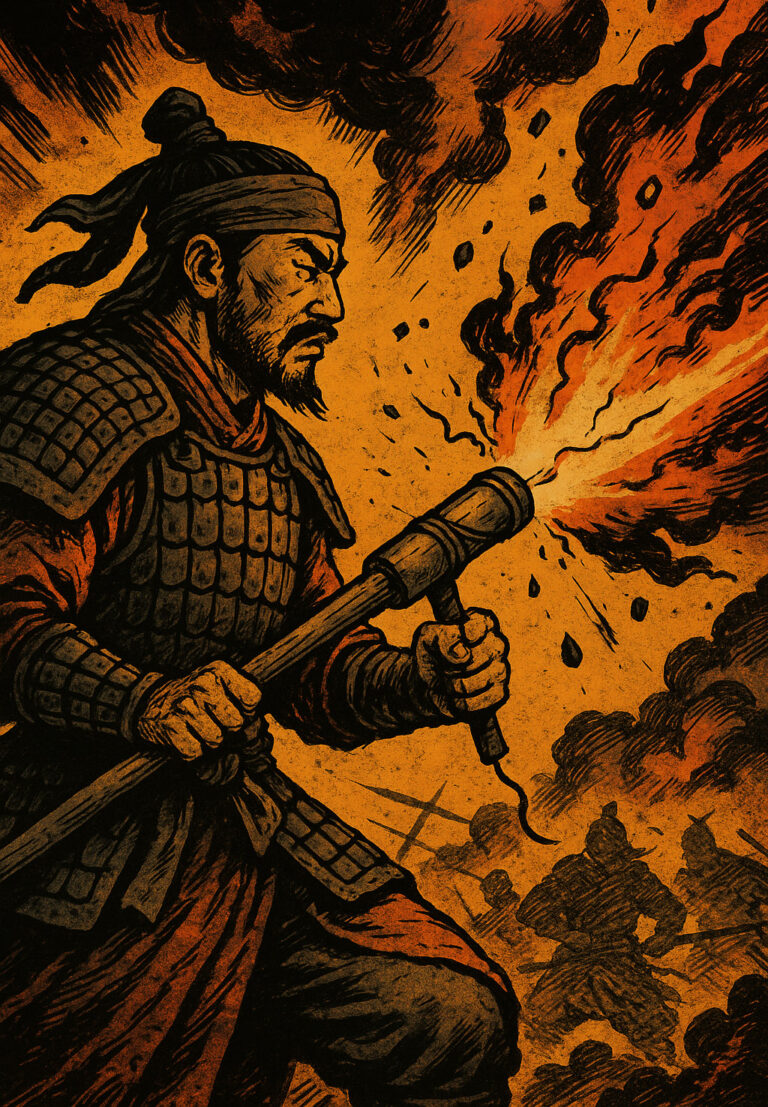
    The first flicker of what we’d recognize as a firearm emerged in 10th-century China. Imagine this: you’re a soldier at the frontier, and instead of just thrusting a spear, you’ve got a bamboo-and-paper tube filled with black powder strapped to its end. Light the fuse, and—boom—you’ve essentially become a walking flamethrower. These “fire lances” sometimes packed pellets or bits of shrapnel, turning them into the world’s earliest scatterguns. Though they lacked precision, they did have shock value: nothing says “retreat” like an unexpected gout of flame aimed your way.

    Credit: Wikipedia

    Over the next two centuries, the Chinese tinkered endlessly. They swapped paper for metal barrels, refined powder mixtures, and sized projectiles to fill the tube snugly. By the 12th century, these improvements gave birth to the hand cannon—a stout metal barrel you could hold and fire. It was still rudimentary: you needed a burning stick or slow match to ignite the charge, and recoil would rattle your bones. But hey, it beat tossing rocks.


    Medieval Mayhem Meets Gunpowder

    By the 13th century, gunpowder had scuttled its way along the Silk Road into the hands of Europeans. Traders and mercenaries carried the recipe—roughly 75% saltpeter, 15% charcoal, 10% sulfur—across central Asia. Out went the fire-lance theatrics; in came true cannons. Cast from iron or bronze, these hulking beasts launched stone balls with enough force to punch through castle walls. Suddenly, medieval fortifications looked about as effective as papier-mâché.

    England and France discovered this to their cost during the Hundred Years’ War. Fielding these explosive weapons wasn’t cheap, but it democratized battlefield power. You didn’t need lifelong sword training; a few weeks’ drilling with a cannon or basic firearm could turn a peasant into a credible threat against armored knights. Talk about leveling the playing field.


    A Shoulder-Fired Revolution: The Hand Cannon and Arquebus

    Imagine lugging a roasting spit to the shoulder, lighting it with a smoldering rope, and hoping the thing goes off. Welcome to early handheld firearms. The hand cannon evolved into the arquebus by the mid-1400s—with a crude lock mechanism that held the match cord, sparing one hand and slightly improving safety.

    Credits: iStock powerofforever

    These arquebuses were still awkward: long reload times, smoke that choked the shooter, and an uncanny ability to misfire when it rained. Yet during the Ottoman siege of Constantinople (1453), these proto-rifles helped topple the Byzantine defenses. The implications were seismic: medieval walls no longer meant invulnerability. Even a cookie-cutter fortress had to bow to concentrated gunfire.


    Lock, Stock, and Barrel: From Matchlock to Flintlock

    Matchlocks: Lighting Up the Battlefield

    The matchlock was the first internal ignition mechanism. A lever held a burning match cord over a powder pan; press the trigger, and—spark!—the main charge ignited. Armies in 16th-century Europe embraced matchlocks despite their drawbacks: vulnerability to weather, smoky battlefields, and the constant chore of keeping matches lit. Textbooks describe them as revolutionary. I call them “wet blanket firearms.”

    Wheellocks and Snaplocks: The Fancy Upgrades

    Fancy gunsmiths soon introduced wheellocks, which generated sparks via a spring-loaded wheel—much like an old cigarette lighter. Far more reliable in damp conditions, they also cost a king’s ransom to make. Snaplocks and snaphances followed, each tinkering with spring-and-trigger magic. Progress marched on, but mass adoption waited for the real game-changer.

    Flintlocks: The Golden Age of Simplicity

    By the 17th century, the flintlock became ubiquitous. A piece of flint struck steel in the hammer, producing sparks that leapt into the powder pan. No more handle-held fuses. No more soaking cords. Just pull the trigger. Flintlocks offered faster reloads, better accuracy, and—best of all—a significantly lower risk of accidentally immolating yourself before the enemy got a shot off. These sleek shoulder guns dominated battlefields for the next 150 years.


    The Nineteenth Century: Smoke Less, Fire More

    Once flintlocks matured, inventors turned to solving the problems of reload time, rate of fire, and portability. Changes came fast:

    1. Percussion Caps: Introduced in the 1820s, tiny copper caps containing shock-sensitive compounds replaced the flint mechanism. Tap the hammer, cap ignites, main charge goes off. Reliability skyrocketed, especially in moist climates.
    2. Metal Cartridges: No more loose powder, patches, and balls. All-you-can-eat paper or brass cartridges combined projectile, powder, and primer in one sealed package. Soldiers reloaded faster than ever and could even carry pre-loaded rounds.
    3. Rifled Barrels: Grooves cut into the barrel imparted spin, stabilizing bullets and dramatically improving range and accuracy. Suddenly, shrieking pinker balls were out; uniform lead bullets could strike targets hundreds of yards away.

    Revolvers Ride Into Town

    Credit: Time Magazine

    Samuel Colt’s 1835 patent on the revolving cylinder changed personal defense. Instead of reloading after every shot, a 5–6 round cylinder rotated, firing successive bullets. Colt’s use of interchangeable parts meant cheaper production and simpler repairs. His pistols saw action in the Mexican–American War and, later, all over the American West—think lawmen, outlaws, and accidental saloon fires aplenty.


    The Dawn of the Machine Gun: When ‘Automatic’ Became Literal

    Source: Time Magazine

    The idea of rapid-fire weapons fascinated militaries. During the U.S. Civil War, Richard Gatling devised a crank-operated Gatling gun in 1862. Multiple barrels rotated around a central shaft; turn the handle, and you unleashed a staccato hail of bullets. Impressive, but still manpower-intensive and heavy.

    Enter smokeless powder in the 1880s. Suddenly, battlefield smoke no longer cloaked the dead and confused friendlies with every volley. Hiram Maxim harnessed recoil energy to cycle rounds automatically, birthing the Maxim gun in 1884. Fully automatic, water-cooled, and terrifyingly efficient, these beasts slashed infantry numbers in colonial wars and, ominously, in World War I’s trenches. Industrialized slaughter was born.


    From Trenches to Assault Rifles: The 20th-Century Race

    World War I’s static lines showcased the deadliness of machine guns. Yet infantry still lugged heavy rifles with slow bolt actions—a problem. Interwar years saw experiments with light machine guns, semi-automatics, and submachine guns (think Tommy Gun). But the true breakthrough came with selective-fire rifles: weapons that could switch between semiautomatic and fully automatic modes.

    Sturmgewehr 44: The Prototype Assault Rifle

    In 1944, Germany fielded the Sturmgewehr 44 (“storm rifle”), marrying a short-barreled, intermediate-caliber round with selective fire. Its lighter ammunition permitted soldiers to carry more bullets; the compact design suited urban warfare. The concept: one rifle for every situation. Revolutionary.

    The Kalashnikov Legend

    Almost simultaneously, Soviet engineer Mikhail Kalashnikov tinkered with similar ideas. By 1947, the AK-47 emerged: rugged, cheap to produce, reliable in mud and sand, and frighteningly simple to maintain. No precision engineering required. The AK-47 (and its countless variants) would become the most widely produced firearm in history—seen everywhere from jungles to high-rise apartments.


    Modern Innovations: Smart, Modular, and Micro

    Today’s firearms aren’t just about bullets and barrels. Modular designs let users swap barrels, stocks, and handguards to suit specific missions. Polymer frames keep pistols light. Caseless ammunition, electronically fired primers, and “smart” sights hint at a future where guns integrate sensors, biometric locks, or programmable duds.

    • Personal Defense Weapons (PDWs): Compact, high-velocity, belt-fed weapons designed for non-frontline troops—think vehicle crews or support units.
    • Bullpup Configurations: Action and magazine sit behind the trigger, giving full barrel length in a shorter overall package. Great for close quarters.

    Even drones now mount miniature firearms, and concept rifles boast micro-cameras, smart scopes, and digital round counters. If you thought your phone was high-tech, consider a rifle that can record your shots, calculate drop, and beam data to command.


    Social Impact: Beyond Battles and Borders

    Firearms haven’t just altered warfare; they’ve shaped politics, culture, and individual freedoms:

    • Citizen Militias & Gun Rights: In places like the United States, firearms are woven into constitutions and identities. Debates over “shall-issue” versus strict regulation rage in legislatures, courts, and coffee shops alike.
    • Tactical Policing: Body armor, patrol rifles, and flash-bang grenades are now part of many police forces’ standard kits—sometimes with controversial results.
    • Wildlife Management & Sport: Hunting rifles, clay-target shotguns, and competition pistols fuel industries, hobbies, and even Olympic sports.

    Guns have fueled colonial conquests, defended revolutions, and sparked atrocities. They’re tools—shaped by and shaping the societies that wield them. Love them or loathe them, they’re inseparable from modern history.


    Why the Evolution Matters Today

    1. Innovation’s Unpredictable Paths
      From accidental gunpowder recipes to AI-enhanced marksmanship, firearm tech shows how inventions morph in unimagined directions. Those humble fire lances were more than medieval showmen; they foreshadowed a relentless chase for lethal efficiency.
    2. Accessibility vs. Expertise
      Early guns democratized combat, replacing elite archers and knights with relatively untrained operators. This trend continues: “smart” augmentations reduce training hurdles but raise ethical questions. If a beginner soldier can outshoot a veteran with computerized aim-assist, what does proficiency mean?
    3. Modularity as the Future Standard
      Much like smartphones with swappable mods, future firearms may become ecosystems—firms selling upgrades, apps, and customizations. Think RecoilByte™ attachments and firmware upgrades rather than new hardware.

    A Personal Take

    Here’s the deal: firearms are neither inherently noble nor evil—they’re catalysts. The story of guns mirrors humanity’s twin drives toward protection and destruction. As tech accelerates—3D printing, AI targeting, even personalized ammunition—so do the stakes.

    I’m torn. On one hand, innovation promises safer, more precise tools—law enforcement weapons that reduce bystander harm, hunter optics that spare non-target animals. On the other, democratization of manufacturing threatens to outpace regulation. A world where digital blueprints for undetectable pistols slip through encrypted channels? No thanks.

    Ultimately, we need nuanced conversations: not “guns good” or “guns bad,” but “How do we wield these tools responsibly?” The past millennium shows that technology doesn’t wait for ethics; we have to catch up—and fast.


    The Next Chapter

    From bamboo tubes spraying sparks to modular carbines networking with drones, firearms have covered astonishing ground. They’ve toppled empires and defended homesteads. They’re woven into constitutions and black-market underworlds alike. As we barrel into tomorrow, ask yourself: what comes after the smart rifle? Will it be microrobotic swarms, electronic disruptors, or something stranger still? If history’s taught us anything, it’s that the next leap will be as surprising as it is impactful.

    The story of guns is far from over—and the pages ahead will be written in steel, silicon, and maybe even sound itself.

    Head Over Heels: What we learned in the end

    0

    The curtain falls on Head Over Heels with a whirlwind finale that flips reality on its head (pun absolutely intended). In Episodes 11 and 12, our plucky shaman Sung-ah and her ghostly paramour Kyun-woo (and occasionally Bong-soo) are catapulted through dreamscapes, haunting memories, and more body-swaps than you can count. Despite a few head-scratching moments, the drama wraps up most threads with a sweet bow. Strap in for a deep dive into how these final chapters balance angst, noble sacrifice, and supernatural shenanigans—plus, a few thoughts on whether the ending truly delivers.

    TL;DR

    • The final episodes of “Head Over Heels” feature Sung-ah and Kyun-woo navigating dreamscapes, body-swaps, and ghostly conflicts to find a happy ending.
    • The finale uses themes of memory, identity, and sacrifice to bring the story to a close, with Kyun-woo’s unwavering love as the central driving force.
    • The antagonist, Bong-soo, is revealed to be a lonely warrior ghost named Jang Yoon-bo, whose story ends with forgiveness.
    • Despite some clichéd moments and a rushed pace, the drama sticks its landing with a heartfelt message about love and compassion.

    Episode 11: Guilt, Ghosts, and Graduation Woes

    1. Bong-soo’s 100th Victim & Instant Regret
      • Bong-soo accidentally kills General Dongcheon—his 100th spirit. Cue the “evil deity” label, instantly bestowed by celestial decree.
      • Sung-ah, heir to the spiritual baton, vows revenge on Bong-soo for slaying her mentor. Meanwhile, grieving bestie Sung-ah urges restraint: revenge only breeds more chaos.
    2. Date with Destiny (and Goodbye)
      • Quick-cut to Kyun-woo waking in his own flesh… on a date with Sung-ah. This meet-cute-turned-farewell leaks “the end” all over it.
      • A final kiss—and Kyun-woo blacks out. Sung-ah promises he’ll return in time for graduation. But, plot twist: she doesn’t. Utter heartbreak for our boy.
    3. A Year Without Sung-ah
      • Kyun-woo’s life becomes an all-night arrow-shooting vigil. He braves midnight mountains, police chases, and pissed-off archery officials, all to hunt ghosts and find Sung-ah.
      • His arsenal? Talisman-tipped arrows that pin specters like ethereal roadkill. Point: nothing will stop him from rescuing his shaman queen.
    4. Yeom Hwa’s Vendetta
      • Yeom Hwa, Sung-ah’s spiritual “sister,” hunts them too—though her aim is lethal. She believes killing Sung-ah will permanently evict Bong-soo.
      • Kyun-woo’s ghost network gives her the intel she needs. But after a dramatic showdown in a haunted forest, Kyun-woo reminds Yeom Hwa: there’s always another, less murderous option.

    Episode 12: Time Skips, Body-Snatches, and Final Exorcisms

    1. Two-Year Leap
      • Fast forward 730 days. Kyun-woo has channeled his grief into archery glory, securing a spot on the national team. Ji-ho, forever ride-or-die best friend, refuses to leave his side.
      • Yet Sung-ah remains AWOL. Occasional dreams haunt Kyun-woo—he visits her, but she hides, terrified of harming him with her dark deity energy.
    2. Bong-Sung’s Sweet (and Creepy) Return
      • A chance encounter at Flower Master’s place brings Kyun-woo face to face with… Bong-soo in Sung-ah’s body. “Bong-Sung,” if you will.
      • He greets Kyun-woo (and later Ji-ho) with kisses worthy of a psychological thriller. Hugs and handshakes won’t do; only smooches can coax him out.
    3. Cracking Vessel & Racing Memories
      • Sung-ah’s human shell is fracturing. Each memory she loses dims her spirit’s flame. If Bong-soo doesn’t exit soon, she’ll vanish.
      • Kyun-woo masquerades as Bong-soo in a dream to reach her. He fumbles at first—after all, it’s been three years since he’s seen her. But an earnest hug and update on the outside world bring her home at last.
    4. The Haunted House Showdown
      • A noble pact: Bong-soo will swap bodies with Kyun-woo if the latter sacrifices himself. Yeom Hwa intends to kill them both; Flower Master and Auntie race to intervene.
      • Sung-ah, having reclaimed her powers, bursts in. Instead of killing, she offers a simpler path: remember who you truly are, Bong-soo.
    5. Bong-soo’s True Story
      • Flashback: a lonely warrior’s deathbed wish to return a ring to his mother spawned the ghost’s ulterior motive. His imagined friend became Sung-ah, and that fiction kept him earthbound.
      • Realization dawns: he is Jang Yoon-bo, the boy soldier in his final memory. Freeing him means forgiving a mistake made decades ago.

    Thematic Analysis

    1. Dreams vs. Reality

    The finale blurs the line between sleeping visions and the waking world—mirroring how grief warps perception. Kyun-woo’s dream-quests show that healing often begins in the subconscious.

    2. Sacrifice & Selflessness

    From Sung-ah’s willingness to give up graduation dreams, to Kyun-woo’s readiness to die for Bong-soo, Head Over Heels doubles down on noble—if occasionally nonsensical—self-sacrifice. Yet the drama counsels: true power lies in compassion, not bloodshed.

    3. Identity & Memory

    Sung-ah’s vessel cracking and Bong-soo’s memory-born existence highlight: when you lose your story, you lose yourself. Recovering memories becomes an act of salvation.

    4. Second Leads & Found Family

    Ji-ho’s loyalty cements him as one of K-drama’s top second-male leads. His steady friendship underscores that sometimes your chosen family surpasses blood ties.


    Character Arcs in the Spotlight

    • Kyun-woo transforms from hapless ghost-hunter to national-team archer. His unwavering devotion to Sung-ah showcases growth from self-doubt to fierce determination.
    • Sung-ah matures from sheltered shaman-in-training to empowered spiritual leader. Losing—and regaining—her powers cements her journey toward self-actualization.
    • Bong-soo/Jang Yoon-bo wrestles with the legacy of his wartime actions. His arc goes from chaotic antagonist to sympathetic soul finally at rest.
    • Yeom Hwa navigates a redemption path twisted by grief. While her motives remain murky, her choice to spare Sung-ah hints at hope for true atonement.

    My Observations

    1. The Number 100
      Bong-soo’s “100 victims” feels intentionally Biblical (think plagues and tests). Perhaps the writers nodded to ancient motifs of trial and purification—culminating in his own absolution.
    2. Archery as Metaphor
      Arrows pierce ghosts, but archery also symbolizes focus, discipline, and aiming for one’s future—mirroring Kyun-woo’s journey from distraction to clarity.
    3. Butterfly Motif
      At the end, Yeom Hwa finds a butterfly. In many cultures, butterflies symbolize transformation and the soul. Could this signal her spirit’s genuine metamorphosis?
    4. Dream-Stage Staging
      The dream sequences feature shifting set pieces—mirrors, broken staircases, fading light—visual cues for fractured identity. This production design subtly deepens the theme of memory’s fragility.
    5. Found Family vs. Blood Family
      Kyun-woo never reclaims his birth family on-screen, but his bond with Ji-ho, Flower Master, and Auntie forms an unbreakable clan. The drama champions chosen connections over biological ones.

    Personal Point of View

    I’ll be honest: the finale occasionally felt like a conveyor belt of mystic clichés—kissing to exorcise ghosts? A two-year leap punctuated by spontaneous body-snatches? Yet beneath the surface, there’s genuine heart. Kyun-woo’s relentless search for Sung-ah and Ji-ho’s steadfast friendship crafted some of the most emotionally authentic moments in recent K-drama memory. Bong-soo’s metamorphosis surprised me; I went from disliking him to tearing up at his goodbye.

    What Head Over Heels nails is balance: it juggles horror-movie spooks, high-school romance, and philosophical questions about life after death. Sure, the pacing in the last stretch sped up—an extra episode would’ve smoothed out a few rough narrative seams. But the core message resonated: love and compassion have the power to heal even the deepest spiritual wounds.


    Final Thoughts & Verdict

    After two thrilling seasons, Head Over Heels sticks its landing despite a few wobbles. It may not dethrone genre classics, but it offers enough goosebump moments and quirky charm to earn its place in your watchlist.

    • Plot Execution: ★★★★☆
    • Character Development: ★★★★☆
    • Emotional Impact: ★★★★★
    • Supernatural Elements: ★★★★☆
    • Overall Satisfaction: ★★★★☆

    Final Rating: ⭐⭐⭐⭐½

    In short: dive into Head Over Heels for its heartfelt leads, mind-bending spirit lore, and the reminder that sometimes the greatest journey is the one that brings lost souls back home.

    The Untold Story of Bruce Lee’s Final Night in Betty Ting Pei’s Apartment

    0

    For more than fifty years, the sudden death of martial arts icon Bruce Lee has sparked whispers of conspiracy, scandal, and secrecy. Indeed, on July 20, 1973, the world lost its most electrifying action star at just 32 years old. Yet among the numerous angles—cerebral edema, deadly toxins, shadowy plots—the most enduring tale remains the night Bruce Lee collapsed in the Hong Kong apartment of Taiwanese actress Betty Ting Pei. Now 78, Betty finally breaks decades of silence with a candid retelling of that fateful evening, clearing the fog of rumors that have trailed Bruce’s name ever since.

    TL;DR

    • Bruce Lee died at Betty Ting Pei’s apartment in 1973 from cerebral edema.
    • Betty gave him an ordinary painkiller for a headache before he collapsed.
    • There was a delay in calling an ambulance, explained by the context of 1973 Hong Kong, Bruce’s previous fainting spells, and Raymond Chow’s preference for a private doctor.
    • Betty faced decades of public vilification and trauma due to conspiracy theories.
    • The official cause of death was an allergic reaction to Equagesic, possibly exacerbated by his intense lifestyle.
    • Betty’s aim is transparency, dispelling rumors and humanizing Bruce Lee’s legacy.

    A Secret Spark: How Bruce Lee and Betty Ting Pei Found Each Other

    From the outside looking in, Bruce Lee was invincible: an unmatched martial artist, a screen star, and a cultural phenomenon. Yet even legends have private lives. Around 1972, Bruce crossed paths with Betty Ting Pei at a Golden Harvest gathering hosted by Raymond Chow. At the time, Bruce was married to Linda Lee Cadwell and raising two young kids, Brandon (eight) and Shannon (four). Meanwhile, Betty—fresh-faced and ambitious—was an established actress in Taiwan making her mark in Hong Kong cinema.

    Initially, their connection seemed professional. However, as Betty recounts, Bruce pursued her with a surprising intensity. “He was charismatic in a way that made you forget the cameras,” she recalls. Moreover, he saw something in her that others overlooked. “Maybe it’s true that beauty lies in the beholder’s eyes,” Betty muses. Indeed, despite Hollywood’s usual standards, Bruce saw a confidante and a kindred spirit in Betty—someone who spoke his language of focus, discipline, and, oddly enough, humor.

    Yet they kept things under wraps. After all, Bruce’s career was skyrocketing, and Linda was back in Seattle with their children. Secrets, it seems, are standard operating procedure in Hollywood and Hong Kong alike. Consequently, they met in private. Frequently. Their clandestine rendezvous unfolded in dimly lit villas, on film sets, and ultimately in Betty’s apartment—where the legend’s life would unexpectedly come to an end.


    The Long-Awaited Revelation on Ctrl+F The Truth

    Fast-forward to July 2025. On TVB’s investigative program Ctrl+F The Truth, Betty Ting Pei stepped back into the spotlight. For viewers, it was nothing short of a revelation. At last, we had her side of the story. Instead of evasive soundbites, she delivered a step-by-step narrative, starting with the evening Bruce arrived at her doorstep.

    5:00 PM: Bruce drops by. They chat. He’s tired from rehearsals.

    7:00 PM: He complains of a splitting headache.

    7:05 PM: Betty offers him a painkiller—an ordinary anti-inflammatory she had used herself with no issues.

    7:10 PM: Bruce lies down to rest, apparently just for a few minutes before dinner.

    Dinner plans? They were set to meet Raymond Chow (Golden Harvest bigwig) and several overseas friends at a nearby restaurant. Everything seemed routine. Still, a headache for Bruce Lee? That was new. However, headaches aren’t unheard of for high-intensity performers. Thus, nobody suspected anything dire.


    The Fateful Hours: From Headache to Hospital

    Time raced forward with a cruel twist of irony. At 9:30 PM, Raymond called to confirm dinner details. Betty went to rouse Bruce. Unresponsive. Panic, understandably, ensued.

    Yet here’s where the story veers off the beaten path of instant-911 drama. Instead of dialing emergency services at once, Betty phoned Raymond, who rushed over. The rationale: Bruce had a personal physician on call, and Raymond preferred that doctor handle it. Moreover, Bruce had fainted once before during intense training. Nobody anticipated a fatal outcome.

    9:45 PM: Raymond arrives. They both try to wake Bruce.

    9:50 PM: No response. Sweat beads on Bruce’s forehead. His pulse is weak.

    Only then did they summon Betty’s personal doctor, stationed next door at the Baptist Hospital. Finally, at around 10:00 PM, they asked for an ambulance. By 10:15 PM, Bruce was en route to Queen Elizabeth Hospital.

    Despite the clock ticking relentlessly, there remained a sense of disbelief. “He’ll be fine,” Betty thought. However, inside the ER, doctors confronted a grave reality: Bruce had developed acute cerebral edema—brain swelling so severe that survival chances were slim even under the best circumstances.


    Why the Delay? Contextualizing the Critical Minutes

    Many accuse Betty Ting Pei of negligence for not calling an ambulance immediately. However, context matters. First, in 1973 Hong Kong, direct emergency hotlines weren’t as ingrained in public consciousness as they are today. Second, Bruce’s previous spells of fainting had led them to believe it was a benign issue. Third, Raymond Chow’s preferences held significant weight. Accordingly, they waited for Raymond’s private doctor—a decision motivated by loyalty, not malice.

    Betty explains, “My doctor was literally across the hall. So I called him. Who would have thought Bruce would slip away so fast? In hindsight, perhaps we should have done otherwise. But at that time? Nobody saw death coming.”


    The Media Maelstrom: Rumors, Blame, and Betrayal

    Word of Bruce Lee’s passing exploded across print and airwaves within hours. Yet the details were murky. Betty initially denied the collapse took place in her home. She claims she followed Raymond’s advice and honored Bruce’s family’s request for discretion. “What was I supposed to do—go against them?” she asks. Consequently, early news reports misattributed the location and circumstances, fueling public confusion.

    In the aftermath, Betty became the lightning rod for every conspiracy theory imaginable:

    • Poison: Some alleged she poisoned Bruce, driven by jealousy or greed.
    • Spanish Fly: Others insisted Bruce had taken a notorious aphrodisiac.
    • Organ Harvesting: Darker rumors hinted at sinister forces at work.

    Betty’s response? Equal parts exasperation and bemusement. “I never even heard of Spanish fly until reporters started asking,” she deadpans. Moreover, she points out that both she and her mother took the same painkiller without any reaction. “If that pill was lethal, wouldn’t we all be dead? These stories show the kind of nonsense people will believe.”


    The Medical Verdict: Cerebral Edema Explained

    Officially, Bruce Lee succumbed to cerebral edema, likely triggered by an allergic or idiosyncratic reaction to the painkiller Equagesic—a combination of meprobamate and aspirin. Brain swelling, as most doctors agree, can be stealthy. Within hours, pressure in the cranial cavity spikes, cutting off critical blood flow. Victims slip into coma-like states. Without immediate intervention—such as surgical decompression—the outcome is usually tragic.

    Moreover, Bruce’s regimen of intense workouts, martial arts practice, and movie stunts might have exacerbated his vulnerability. Repeated head trauma, though not publicly emphasized, could have primed his brain to react poorly to medication.

    Still, Betty insists no one plotted to kill Bruce Lee. “I didn’t invent that pill,” she points out. “It was prescribed. And if my story has any lesson, it’s that even heroes are human. Even legends can fall victim to tiny, unexpected flaws in the system.”


    Aftermath: Trauma, Threats, and a Life Reimagined

    For Betty, the night Bruce died is not just a historical anecdote—it’s a haunting memory. In the years that followed, she grappled with profound trauma:

    • Schizophrenia: Stress triggered mental health struggles, leading to periods of hospitalization.
    • Death Threats: Furious fans and conspiracy theorists sent her menacing letters.
    • Public Vilification: Tabloids portrayed her alternately as a seductress, a murderer, and a gold-digger.

    Yet through it all, Betty found resilience. “There were times I thought I’d rather be dead,” she admits. However, ending her life would have played into the worst rumors—suicide out of shame. Instead, she chose to live, to vindicate herself through honesty and integrity.

    Indeed, today she’s at peace—so much so that she jokingly checks on napping strangers. “Whenever I see someone sleeping, I still double-check they’re breathing,” she confesses. It’s a bittersweet ritual, born of a night when sleep was permanent for a man who seemed anything but mortal.


    Strong Opinions: Why the Legends Deserve Transparency

    Here’s my take. Legends shouldn’t be cloaked in endless mystique. Reverence is fine. But speculating about sex, poison, or espionage only cheapens real life’s complexity. Bruce Lee was a cultural pioneer. He broke down racial barriers, revolutionized martial arts in cinema, and embodied self-improvement. Yet people reduced him to gossip fodder the moment tragedy struck.

    Moreover, we owe it to ourselves—and to future generations—to learn the truth. Blind hero worship can be toxic. If a simple painkiller could kill the greatest martial artist of all time, imagine what everyday oversights might do to us. Accountability, transparency, and rapid medical response shouldn’t be reserved for celebrities.

    In that spirit, let’s remember Bruce Lee not only for his flying kicks and lightning speed but also for his human vulnerability. Let’s honor Betty Ting Pei for her candor—flaws and all. Because in the end, the most powerful story isn’t about a man who died too soon. It’s about how humanity grapples with grief, rumor, and the stubborn desire for closure.


    What Really Matters: Legacy Over Legend

    Above all, Bruce Lee’s legacy transcends the sensational. It lies in the philosophies he left behind: “Be water, my friend.” Flexible. Adaptable. Ever-flowing. Those words echo in dojos, film schools, and self-help seminars to this day. They remind us that perfection is a mirage and that true strength comes from embracing change—even the unwelcome kind.

    Betty Ting Pei’s revelations remind us of another truth: secrets have a way of surfacing, sooner or later. When they do, honesty becomes the most potent balm. Nobody emerges unscathed, yet empathy can heal the deepest wounds.

    So here’s to Bruce Lee—the man, the myth, the water. Here’s to Betty Ting Pei—flawed, courageous, and at last unburdened by decades of hearsay. And here’s to each of us, striving to balance our public personas with private realities. Because if there’s one lesson from this tale, it’s that life’s most extraordinary moments often unfold in quiet apartments, under harsh fluorescent lights, with the clock ticking far too fast.

    Bruce Lee’s final night was tragic. Yet it also offers hope—hope that even legends can act humbly, apologize for mistakes, and tell the full story. After all, what’s more human than that?

    Trump’s Epstein Files: Naming Names, Pardons on the Table, and What Comes Next

    0

    When Donald Trump stepped in front of the cameras to discuss Jeffrey Epstein’s network, he sounded more like a late-night talk-show guest than a sitting president. He promised, in that signature rapid-fire style, to hand over a roster of Epstein’s confidants—no holds barred. Then he casually left the door ajar for a Ghislaine Maxwell pardon. Talk about keeping everyone guessing.

    TL;DR

    • Trump’s “talk-show” style comments on Epstein’s network, promising a list of confidants and hinting at a Maxwell pardon.
    • Ghislaine Maxwell’s recent intense interrogations by the Deputy Attorney General, under a form of limited immunity.
    • Trump’s accusations directed at Bill Clinton, former Harvard presidents, and hedge fund figures regarding Epstein ties.
    • The controversial “naked woman letter” allegedly from Trump to Epstein, which Trump denies.
    • Maxwell’s mysterious “box of secrets” carried to her cell, sparking speculation.
    • The ongoing public demand for accountability in the Epstein case, despite official efforts to limit information.
    • The significant implications of a potential Maxwell pardon by Trump.

    Setting the Stage: Maxwell’s Second-Day Grill Session

    Last week in Tallahassee, Florida, Ghislaine Maxwell continued her run-in with Deputy Attorney General Todd Blanche. Now serving a 20-year stretch for sex trafficking, she faced a second day of questioning at the federal correctional institution there. Meanwhile, Trump was jetting off to Scotland, dropping soundbites that felt more like plot twists in a political thriller than presidential commentary.

    Maxwell’s interview isn’t just another legal hoop. It’s a potential treasure trove of names and rumors. And Trump’s griping about who should be under the microscope—Bill Clinton, ex-Harvard honchos, hedge-fund moguls—added fuel to the fire. He insisted he’d “give you a list,” as if summoning a shopping list. The suggestion: Epstein’s circle stretches far beyond the well-known names.


    Spotlight on Bill Clinton, Harvard Presidents, and Hedge Fund Titans

    “You should focus on (Bill) Clinton,” Trump quipped, pointing investigative fingers at the former president. Next on the target list: “the president of Harvard, the former president of Harvard, some of the hedge fund guys.” It was almost a cliffhanger moment—who exactly made the cut? And why hasn’t the media dug deeper?

    Transitioning from Trump’s rhetorical flourishes to hard facts, here’s what we know: Clinton flew on Epstein’s private jet multiple times. He’s acknowledged visits to Epstein’s Little Saint James island. Meanwhile, Harvard insiders and finance elites abound in Epstein’s rolodex. Trump’s implication: these connections deserve the spotlight.


    The Pardoning Possibility: Off the Table or Prime-Time Drama?

    In a move that surprised neither legal analysts nor conspiracy theorists, Trump reminded everyone that he holds pardon power. “I’m allowed to do it,” he said, “but it’s something I haven’t thought about.” Cue the collective gasp. Is it a genuine shrug or a strategic tease?

    Pardons are rare, and presidential mercy carries huge political weight. Granting Maxwell a get-out-of-jail-free card would inflame critics and thrill allies. The real question: does Trump view a pardon as a shield or a sword? Given his penchant for bold moves, it wouldn’t shock anyone—for better or worse.


    The Naked Woman Letter: Fiction, Forgery, or Fun?

    Another headline-grabber: a crude drawing of a naked woman allegedly penned by Trump for Epstein’s 50th birthday. Maxwell included it in a book of keepsakes. Trump dismissed the claim. “Somebody could have written a letter and used my name,” he offered, volunteering an alternate explanation. Short sentence. Sharp deflection.

    It raises two possibilities. One: it’s a forgery. Two: it’s minor theater in the grand Epstein saga. Either way, the story underscores how rumors can morph into “facts” when names like Epstein and Trump collide.


    Maxwell’s Box of Secrets

    CCTV cameras in Tallahassee caught Maxwell lugging a large box of materials back to her cell block. Khaki pants. Brown shirt. No spoiler on what was inside. Legal briefs? Personal notes? Scandalous correspondence? The mystery box moment felt like reality TV—cliffhanger included.

    Correctional officers cleared her to transport it. The lack of detail only ramps up the intrigue. Watch this space for any leaks—if they ever surface.


    America’s Collective Short Attention Span

    Here’s a truth bomb: Americans move on fast. Today’s scandal is tomorrow’s background noise. Recall the Ukraine drama or reports about Iran’s nuclear facility—heated topics then largely overshadowed. What keeps sticking around? Epstein’s fallout. It unites both sides of the aisle in demanding closure.

    Yet, despite public outcry, investigation threads remain loose. There’s always another headline. Another tweet. Another promise of transparency.


    Partisan Ping-Pong and the Epstein Lens

    On one side, critics slam Trump for downplaying his ties to Epstein. On the other, defenders call it partisan theater—just another attempt to undermine his presidency. Amid the noise, genuine questions get buried. Who financed Epstein’s network? Who flew on his jets? Who visited his island retreat?

    Both parties talk accountability. Few deliver on it. Meanwhile, Maxwell holds the keys to many locked doors. Her deposition might crack open decades of secrecy.


    The Obama-Era Counterpunch

    Some folks point back to the Obama administration’s investigations into Trump-related allegations. “Look up Katie Johnson testimony,” they say. “Jane Doe v. Donald J. Trump.” Courts saw civil suits. None turned criminal—save for E. Jean Carroll’s defamation victory in civil court. Political critics argue that liberal accusations often fizzle without evidence.

    The counterargument—that every major claim demands rigorous proof—rings true in the Epstein context. Even with high-profile denials, absent solid indictments, conspiracies thrive in the vacuum.


    Political Theater vs. Legal Reality

    Trump frames attacks against him as political warfare. His supporters nod. His detractors roll their eyes. The Epstein story, though, sits at the intersection of politics and crime. It’s not purely partisan. It’s a human tragedy. Victims deserve answers, not spin.

    Short sentences highlight urgency. The legal system’s pace—years of court filings, appeals, depositions—doesn’t match public impatience. Victims wait. Journalists probe. Politicians pontificate.


    The Pardon’s Wild Card Factor

    Back to pardons. Presidents rarely pardon individuals convicted of sex trafficking. And yet, here’s Trump, musing about his broad authority. If he did, consequences would cascade. Allies would cheer. Critics would cry foul. Global opinion would sharpen. Victims’ advocates would protest.

    Imagine the headlines: “Trump Pardons Maxwell—Justice Denied.” Or, “Mercy or Maneuver? The Maxwell Pardon Debate.” Pardoning Maxwell could be Trump’s equivalent of dropping a political dynamite. Does he crave that level of chaos? History shows he might.


    Fresh Insights: What Lies Beneath

    1. The Power of Silence. Trump’s refusal to fully denounce Epstein parallels past hesitations. He remains coy, neither fully embracing nor denouncing facets of the case. That silence speaks volumes.
    2. Legal vs. Political Strategies. Attorneys play by legal rules. Politicians play by narrative rules. Maxwell’s attorney, David Oscar Markus, said she “answered every single question” from Blanche. Whether that translates into new indictments or media sensation remains to be seen.
    3. Information As Currency. In the digital age, knowledge is power. Each new name released chips away at secrecy. Yet too much disclosure risks backfiring—imagine lawsuits, further scandals, reputational tornadoes.
    4. The Pardoning Precedent. A Maxwell pardon would set a landmark precedent. It would signal that certain crimes may be politically negotiable. Future administrations could cite it as justification.
    5. Media’s Role. News outlets thrive on cycles. They cover Epstein bits relentlessly. But sensational headlines often lack deep follow-up. Real accountability demands sustained investigative journalism.

    My Perspective

    Here’s where I break from reportage to raw honesty. On one hand, I appreciate Trump’s willingness to point fingers at powerful figures—Clinton, Harvard presidents, hedge fund managers. If guilt exists, names deserve naming. Transparency is non-negotiable. On the other hand, dangling a Maxwell pardon leaves a bitter taste. It suggests that wealth and connections could bend the rules.

    A pardon wouldn’t just erase Maxwell’s conviction. It would undermine victims. It would sow cynicism. It would tell survivors that even in the face of monstrous crimes, political calculus can trump justice.

    Yet, I also recognize politics’ brutal calculus. Trump operates in a world where loyalty is currency. If pardoning Maxwell secures allegiance or deflects attention, he’ll consider it. That reality chills me more than any scandalous box Maxwell hauled to her cell.

    Finally, America deserves better. Our leaders’ words and actions should prioritize victims’ voices. They should uphold the rule of law, not exploit it. And they should refrain from weaponizing pardon power for political theater.


    What’s Next?

    1. Keep an Eye on Maxwell’s Testimony. If she names new figures, prepare for seismic fallout.
    2. Watch for Official Lists. Will Trump deliver that promised roster? If so, expect a media frenzy and potential investigations.
    3. Monitor Pardoning Rumors. Every statement from the White House could signal shift. Follow Democratic and Republican reactions alike.
    4. Demand Accountability. Regardless of party, citizens must push for transparency. Sign petitions. Contact representatives. Support investigative journalism.
    5. Stay Informed. Scandals evolve. Facts trump rumors. Rely on reputable sources and avoid echo chambers.

    In the end, this saga isn’t just about salacious details or high-profile names. It’s about justice, power, and how a society holds its most influential figures accountable. As Maxwell sits behind bars and Trump tours overseas, the truth remains in limbo—until someone decides to finally pull back the curtain.

    Why Owning a Pet Is the Ultimate Investment in Your Happiness (and Your Wallet)

    0


    You might think climbing the corporate ladder, swiping right on romance apps or booking that spontaneous Bali trip is what brings true joy. Yet, a study from the London School of Economics drops a truth bomb: cuddling a furry friend quietly awaiting you at home delivers more lasting satisfaction than an extra  €84,000 in annual income.

    TL;DR

    • Pets provide more lasting happiness than a significant income increase (€84,000 annually).
    • They positively remodel daily routines, turning mundane tasks into mindful moments and expanding social circles.
    • Pets act as silent therapists, reducing stress and anxiety while combating loneliness.
    • They teach invaluable lessons in patience, acceptance, and unconditional love.
    • The benefits extend beyond common pets like cats and dogs to include rabbits, birds, and even reptiles.
    • Scientific studies confirm that pet interaction boosts oxytocin, lowers blood pressure, and enhances social support.

    1. The Unbeatable ROI of a Fur Baby

    Most of us tally our investments—stocks, property, retirement funds—yet we rarely consider the emotional dividend of a loyal pet. The London School of Economics measured pet ownership’s effect on subjective well‑being and found it equivalent to an extra €84,000 in annual salary. Think of it this way: if you were offered that kind of raise, you’d rearrange your life in a heartbeat. But that’s exactly what a cat, dog—or any affectionate creature—does. It whispers: “I’ve got your back (and your lap), so maybe dial down the work obsession.”

    Moreover, beyond the monetary “happiness equivalence,” pets demand far less maintenance than fancy holidays or luxury cars. You don’t need valet parking for your hamster, and your guinea pig won’t judge your parking skills. Their returns—loyalty, comfort, genuine companionship—are exponentially more valuable than any material possession.


    2. How Pets Remodel Your Daily Routine

    It’s astonishing how a soft nose can hijack your internal alarm clock. All of a sudden, you’re up at dawn, brushing your teeth while a furry cheerleader nudges your arm. At first, you wonder whether your newfound early‑bird lifestyle feels like an abduction from your own bed. But soon enough, you discover new rituals:

    • Morning Walks Turn Into Mindful Moments. Spurred by your dog’s eager tail‑wags, you find yourself exploring the same park path. You learn to notice the changing light under that old oak tree or how the dew sparkles on grass blades.
    • Coffee Dates with a Cat? Maybe your feline prefers perching near your French press. You sip slowly while she gently pats your notebook—reminding you that some deadlines can wait.
    • Weekend Adventures Get an Upgrade. Pet‑friendly cafes, dog parks, community events—your social calendar blossoms. You meet fellow pet parents, trade stories about squeaky toys, and realize your world has multiplied.

    Suddenly, life isn’t about chasing KPIs. It’s about savoring everyday moments. And that shift—from relentless productivity to present‑moment appreciation—yields long‑term happiness dividends.


    3. Silent Therapy: Fighting Stress, Anxiety, and Loneliness

    When your brain hits “panic,” a silent four‑legged friend often offers the best antidote. Research consistently shows that interacting with pets lowers cortisol (the stress hormone) and boosts oxytocin (the “cuddle” hormone). Even just stroking a purring cat for five minutes can reduce your heart rate by a noticeable margin.

    • No Small Talk, No Judgments. They don’t ask why you’re overwhelmed or expect you to have all the answers. They simply sit with you—quiet solidarity that’s rare in our fast‑paced world.
    • Loneliness? Hah—That’s Not in Their Vocabulary. A chirping budgie or a dozing rabbit at your feet reminds you that companionship doesn’t always need words.
    • Depression’s Kryptonite. According to multiple psychological studies, pet owners report fewer depressive symptoms. A dog’s unwavering excitement to see you, even on your worst days, is enough to spark a smile.

    When life hands you lemons—and paperwork, traffic jams, toxic emails—your pet hands back a slice of serenity. That unspoken bond helps you weather storms without a prescription.


    4. Lessons in Patience, Acceptance, and Unconditional Love

    Every scruffy pup and aloof kitty serves as a miniature life coach. They teach by example:

    • Patience Above All. A kitten will saunter toward you on their own schedule—never when you demand it. Learning to wait (and appreciate the reward) spills over into everyday challenges: traffic snarls, slow‑loading websites, or delayed gratification at work.
    • Letting Go of Control. Your dog may decide the mud puddle looks tastier than the expensive shampoo you paid for. Instead of chastising, you learn to adapt—embracing the mess and realizing that some of life’s best moments are unplanned.
    • The Beauty of Simplicity. Happiness doesn’t always come in grand gestures. It’s the soft rumble of a cat’s purr or the contented sigh of a bunny. You begin to celebrate small wins: a well‑executed trick, a hearty tail wag, a peaceful snuggle.

    In short, pets ground us. They strip away the need for constant achievement or perfection. Their love isn’t conditional on performance reviews or fancy titles. It’s given freely, day after day.


    5. When Cats and Dogs Aren’t Enough: Rabbits, Birds, and Beyond

    Sure, cats and dogs dominate the popularity charts. Yet, consider venturing off the beaten path:

    • Rabbits. Gentle, affectionate, and surprisingly social. A rabbit hopping around your living room feels like a tiny Zen master reminding you to savor stillness.
    • Birds. From melodious canaries to chatty parrots, feathered friends fill the silence with song. Their chirps can become your personal soundtrack—cheering you through long work hours.
    • Guinea Pigs and Hamsters. Perfect for apartment dwellers, they offer pocket‑size companionship. Watching them explore tunnels or nibble carrots is oddly therapeutic.
    • Reptiles and Fish. Even non‑cuddly critters can deliver calm. A well‑lit aquarium or the gentle gaze of a leopard gecko encourages mindful breathing and curiosity.

    Whatever species you choose, the key is the bond you build. Each animal—with its quirks and charms—offers a unique pathway to contentment.


    6. Behind the Data: Why Science Backs Up the Cuddles

    Let’s geek out for a moment. Multiple studies across psychology, neuroscience and even economics converge on one point: pets boost well‑being. Here’s a quick rundown:

    1. Oxytocin Release. Interacting with pets triggers the release of oxytocin in both human and animal brains. This neurochemical fosters trust and social bonding.
    2. Lower Blood Pressure. Stroking your dog for just 10 minutes can reduce systolic blood pressure, cutting stress on your heart.
    3. Enhanced Social Support. Pets often serve as social catalysts—helping you connect with neighbors or other pet lovers you’d never meet otherwise.
    4. Routine and Responsibility. Caring for another life creates structure—feeding times, walks, vet visits—which in turn combat feelings of aimlessness or depression.

    When science lines up with heart‑warming anecdotes, you realize this isn’t a placebo effect. Your brain and body truly respond to pet companionship.


    7. My Two Cents: Why You Should Consider a Four‑Legged Partner

    Now, let me get a little personal. After years of juggling deadlines and feeling like my brain was stuck in a permanent “loading” screen, I adopted a rescue dog named Cosmo. At first, I fretted: “Will this interruption destroy my productivity?” But two things happened:

    • I Became More Disciplined. Morning walks meant starting my day early but also meant priming my mind for focus.
    • I Relearned Empathy. Cosmo’s past traumas (he was rescued from neglect) taught me patience and forgiveness in ways no self‑help book could.

    A year in, he’s my daily muse. That moment he shoves a chew toy into my hand is better than any email notification for hitting a quarterly goal. He reminds me that life’s richness lies in connection, not accumulation.

    If you’re on the fence, ask yourself: when was the last time you invested in something purely for joy? If the answer involves hesitation, maybe it’s time for paw prints on your heart.


    8. Closing Thoughts: Small Paws, Big Impact

    Let’s circle back. You’ve probably spent sleepless nights pondering whether a side hustle, a new gadget or extravagant vacation will truly fulfill you. Data and personal stories converge on one simple truth: pets deliver an ROI that no market can match. They transform ordinary routines into meaningful rituals. They offer silent therapy when words fail. They instill lessons in patience and unconditional love.

    In the grand ledger of life, where we calculate every cost and benefit, never underestimate the value of fur, feathers or fins. Your next great investment may very well be a wagging tail, an exuberant chirp or the gentle nibble of a rabbit. After all, happiness isn’t just about piling up assets—it’s about cuddling up to the ones who love us back, no strings attached.

    So go ahead. Adopt, foster or befriend a creature that needs you just as much as you need them. Because the happiest portfolios aren’t the ones with the most zeros—they’re the ones with the warmest hearts.

    Head Over Heels Episodes 9–10 Recap

    0

    Welcome to your deep dive into the penultimate episodes of Head Over Heels. As we near the end of this Korean drama’s supernatural run, the plot thickens faster than you can say “spirit world.” With curses flying, possession lurking, and a major sacrifice that will bring tears to your eyes, Episodes 9 and 10 deliver on twists, emotional beats, and jaw‑dropping revelations.

    TL;DR

    • Kyun-woo can now see ghosts, making his archery competition a supernatural showdown.
    • Sung-ah selflessly absorbs Yeom Hwa’s curse to protect Kyun-woo.
    • A dark storyline tackles mental health with a “suicide ghost” possessing a bullied student.
    • Kyun-woo’s body is possessed by Bong-soo, a desperate teenage ghost from the past.
    • Sung-ah reluctantly allies with Bong-soo to save Kyun-woo’s soul.
    • The Grand Shaman Dongcheon makes the ultimate sacrifice to save Yeom Hwa.
    • Love, regret, and sacrifice are key themes driving the intense plot.

    From Archery Gold to Ghost Sight: A New Power Emerges

    In Episode 9, Yeom Hwa’s original curse takes Kyun‑woo to a new level—he not only hears ghosts but sees them too. As a result, the archery competition becomes an epic showdown between concentration and chaos. Arrows whiz by as unseen spirits whisper distractions in his ear. However, when Sung‑ah appears ringside, her calming presence works like a silent counterspell.

    1. Calm Amidst Chaos
      • Sung‑ah’s aura acts as a stabilizer. Her audience cheers, but it’s her energy that truly steadies Kyun‑woo’s trembling hands.
      • Meanwhile, the suppression technique—designed to keep Kyun‑woo’s spirit dominant—forces him to share energy with Sung‑ah. That link lets her sense Yeom Hwa’s curse immediately.
    2. Counterspell Goes Awry
      • Rather than simply nullifying Yeom Hwa’s magic, Sung‑ah absorbs the curse herself. Talk about self‑sacrifice!
      • Yet Kyun‑woo triumphs. He wins gold under paranormal pressure, dedicating the victory to his grandmother. Cue the collective “aww.”

    By the end of the match, Kyun‑woo’s vision extends beyond the physical target. He’s now caught between two worlds—one foot in the living, one in the spectral.


    Secrets in Plain Sight: Ghost Energy and Romantic Bonds

    Neither Kyun‑woo nor Sung‑ah confesses their supernatural wounds. He hides his new ability; she conceals her curse. Yet ghosts don’t lie.

    • Negative Energy Radius: Kyun‑woo spots the dark aura around Sung‑ah and rushes straight to the grand shaman for answers.
    • Divine Punishment: The grand shaman’s diagnosis? Sung‑ah’s energy is tainted by Yeom Hwa’s magic, and celestial forces demand retribution.

    Why can’t the grand shaman just reverse the suppression spell? It’s because the real magic binding them is their will to protect each other. Their shared determination outpowers every counter‑incantation. In a way, it’s the purest kind of magic—one forged by love and loyalty, not by words or rituals.


    Suicide Ghost: Mental Health, Metaphors, and Real‑World Resonance

    Episode 10 jumps straight into darker territory. The “suicide ghost” seizes a bullied classmate’s body, pushing him toward self‑harm. This storyline, while supernatural, mirrors real‑life struggles with depression and bullying. Here’s how it unfolds:

    1. Isolation and Fear
      • A notorious bully‑victim locks himself in the bathroom with a knife. The mood shifts from eerie thrills to gut‑wrenching anxiety.
      • Sung‑ah, in pure hero mode, barges in to talk him down. She risks her safety for a kid on the brink of tragedy.
    2. Kyun‑woo’s Flashback
      • Bong‑soo warns Kyun‑woo not to interfere—ghosts of suicidal intent are beyond a shaman’s control.
      • But Kyun‑woo confronts his own dark past. He once battled suicidal thoughts. Therefore, letting another teen die is unthinkable.
    3. Blood‑Triggered Abilities
      • In the struggle, Kyun‑woo bleeds. His scent and taste senses flick back on, activating his full ghost‑sense suite.
      • True to warning, the suicide ghost seizes control—his body becomes host again.

    This sequence earns high marks for tackling a sensitive subject without trivializing it. Bullying and mental health issues can feel just as haunting as any spirit, and the show doesn’t shy away.


    Body Snatchers: When Friendships Are Tested

    Now possessed by Bong‑soo, Kyun‑woo’s body becomes a battleground of memories and motives. Bong‑soo isn’t just any ghost—he’s a teenage spirit from a forgotten war, sitting in limbo for 70 years.

    • Impersonation Fails: Bong‑soo mimics Kyun‑woo’s daily rituals, but forgets one crucial archery gesture. That slip‑up exposes him to Sung‑ah, leading to a dramatic confession: he ate Kyun‑woo’s soul.
    • Betrayal or Liberation?: On one hand, Bong‑soo orchestrated the violent bloodshed to reawaken Kyun‑woo’s ghost‑sense. On the other, he craves a second chance at life. He’s not pure evil—just desperate.

    Romantic tension skyrockets as Sung‑ah nurses “Kyun‑woo” back to health. He maintains skinship to comfort her under divine punishment, but every hug feels stolen. Add Jin‑woong’s squad, who swoop in to defeat the suicide ghost under Bong‑soo’s initiative, and you’ve got a love triangle hotter than a summer’s day in Seoul.


    Dual Identities: The Battle for Kyun‑woo’s Life

    While Yeom Hwa schemes to reshape Bong‑soo into an evil deity, Dongcheon—the grand shaman—plans to smash the ring binding Bong‑soo’s spirit. That would summon the Grim Reaper and yank Kyun‑woo into the afterlife.

    • Forced Alliances: Sung‑ah reluctantly collaborates with Bong‑soo. Protecting him is the only way to save Kyun‑woo.
    • Bong‑soo’s Wish: After decades as a teenager, he yearns to adult—make friends, fall in love, live. He concedes it’s wrong, but he’s powerless against his own ghostly wish.

    It’s a study in moral complexity. Who’s the villain? Yeom Hwa, for manipulating souls? Bong‑soo, for hijacking a body? Or fate itself, for pitting protective love against self‑interest?


    Midnight Summons & Memory Quests

    Enter the mystical Hour of the Ox (1–3 AM), when the veil between worlds thins. Sung‑ah summons Kyun‑woo’s consciousness back for strategic planning. She instructs him to resolve Bong‑soo’s regret by befriending soldiers in his memories.

    • Memory Lane: Kyun‑woo roams Bong‑soo’s flashbacks—soldier camaraderie, wartime grief, unmet promises. Each scene unveils why Bong‑soo can’t move on.
    • Emotionally Charged: Seeing Sung‑ah’s care from Kyun‑woo’s perspective, Bong‑soo’s broken heart nearly shatters the screen.

    Yet Yeom Hwa learns her own baby spirit is trapped by divine punishment—because “it is more painful to watch your loved one suffer.” Unbeknownst to her, Dongcheon already foresaw Yeom Hwa’s rage and gave her a faux amulet to protect herself.


    Sacrifice in the Shrine: Dongcheon’s Final Farewell

    The climax of Episode 10 is nothing short of Shakespearean. After Ji‑ho’s botched ring retrieval and Yeom Hwa’s ill‑fated summoning of the Grim Reaper to Dongcheon, the grand shaman—spiritual mother to Sung‑ah and Yeom Hwa—takes her last breath.

    • Motherly Love: Dongcheon steps in, shielding Yeom Hwa from death’s scythe. Her sacrifice is an ultimate act of love, transcending bitterness and betrayal.
    • Tears for All: Weep for Sung‑ah, orphaned once more; cry for Yeom Hwa, haunted by her own sins; mourn for Kyun‑woo, trapped in memories that aren’t his.

    In six heart‑stopping minutes, Head Over Heels transforms from a quirky ghost‑romance into a meditation on grief, forgiveness, and the true meaning of protection.


    Thematic Analysis: Love, Regret, and the Afterlife

    1. Love as Magic
      • Across both episodes, love powers every spell—whether it’s Sung‑ah’s will to protect or Kyun‑woo’s drive to save. The writers cleverly equate emotional bonds with supernatural force.
    2. Regret and Redemption
      • Bong‑soo’s storyline humanizes the “enemy.” His endless loop of regret reflects the universal desire to correct past mistakes.
    3. Sacrifice and Legacy
      • Dongcheon’s sacrifice echoes a recurring theme: true power lies in selflessness. Her final act ensures that life‑and‑death stakes aren’t just plot devices but moral compasses.
    4. Mental Health Metaphors
      • The suicide ghost arc mirrors the real haunting nature of depression. By externalizing inner demons as spirits, the show offers viewers both literal and figurative catharsis.

    Through these layers, the drama blurs genre lines—melding romance, thriller, and tragedy into a cohesive narrative that feels both fresh and timeless.


    My Point of View

    I’ve binged countless K‑dramas, but rarely have I seen a series juggle humor, horror, and heartache so seamlessly. Head Over Heels isn’t afraid to let its characters bleed—literally and emotionally. When Kyun‑woo’s blood spilled, I flinched; when Dongcheon fell, I sobbed.

    • What Works:
      • The supernatural lore feels authentic without bogging down the story.
      • Character chemistry is electric—especially the dynamic between Sung‑ah and two versions of Kyun‑woo.
      • Themes of regret and redemption hit home, reminding us that ghosts aren’t just in the afterlife but in our regrets.
    • What I’d Tweak:
      • Yeom Hwa’s arc could use more nuance. Right now, her motives sometimes read as one‑note evil. A flashback to her younger self might lend more empathy.
      • The pacing in Episode 10 rushes from suicidal ghost to parental sacrifice. A brief beat to let viewers breathe before Dongcheon’s death might deepen the emotional impact.

    All said, the show sticks its landing—mostly. The writers plant enough seeds for a satisfying finale while preserving the mystery of the afterlife.


    Final Verdict

    ⭐️⭐️⭐️⭐️☆ (4/5 stars)

    Head Over Heels Episodes 9–10 offer a masterclass in blending romance, horror, and pathos. While a few narrative leaps feel abrupt, the core of the story—love’s unbreakable bond—shines through. Prepare tissues, prepare chills, and prepare for a finale that could very well redefine ghost stories in K‑drama.

    What happened to Coach Tyler Wall?

    0

    Tyler Wall had a knack for lighting up a room. He was the kind of fitness coach who cracked jokes mid‐squat, belted out motivational anthems on the treadmill, and somehow made losing weight look like the most exhilarating roller‑coaster ride you’d ever willingly queue for. So when the news broke that he’d been found dead on February 18, 2025, in Greenville, North Carolina—just days before the climactic finale of MrBeast’s “Lose 100 LBS, Win $250,000” challenge—it felt utterly surreal.

    In the days since his passing, thousands of dollars have poured into a GoFundMe campaign set up by his sister, Kaitlyn Lindsay, to cover funeral costs and secure educational futures for his adored niece and nephew. Yet beyond the numbers lie questions about what happened, why it happened, and how someone so full of life could disappear unexpectedly from it.

    Below, we take you through Wall’s journey, the shocking circumstances of his death, the outpouring of support that followed, and a personal reflection on a life cut tragically short.

    TL;DR

    • Beloved fitness coach Tyler Wall unexpectedly died during MrBeast’s “Lose 100 LBS, Win $250,000” challenge.
    • His cause of death was Mitragynine Toxicity (kratom poisoning).
    • A GoFundMe by his sister raised over $37,000 for funeral costs and his niece and nephew’s education.
    • MrBeast aired the video with family’s blessing, sparking debate.
    • Tyler’s legacy lives on through his inspiring coaching style and increased awareness of kratom risks.

    Who Was Tyler Wall?

    First things first: Tyler wasn’t your stereotypical drill‑sergeant coach. Sure, he could bark orders when the situation called for it, but more often he’d crack a pun about protein shakes or plant‑based diets mid‑session. He believed fitness should be fun. He believed in celebrating every small victory, whether it was someone finally mastering a burpee or fitting into jeans they hadn’t worn since high school.

    He started his coaching career in small, community gyms across North Carolina. Soon, his larger‑than‑life personality and genuine empathy earned him a following on social media. His Instagram bio simply read, “Here to make you sweat—and smile.” And boy, did it deliver. Clips of his unconventional workouts—think deadlifts set to power‑ballad karaoke or spin classes themed around ’80s synth—racked up millions of views.

    By late 2024, those views translated into real opportunities. Enter MrBeast’s ambitious weight‑loss challenge: help contestant Majd Khader lose 100 pounds in 100 days and pocket a quarter‑million dollars if successful. Tyler signed on as Majd’s coach. He invested himself fully: mapping out meal plans, customizing workouts, and, above all, forging a genuine friendship with Majd.

    “It’s not just about the pounds,” he’d often say. “It’s about the person underneath—and how they see themselves at the end.”


    The Weight‑Loss Challenge: A High‑Stakes Journey

    Day 1 kicked off with raw excitement. Majd—tense, hopeful, and ready for change—stood onstage. Tyler stood beside him, mic in one hand, clipboard in the other, offering that trademark grin. The rules were clear: 100 days, 100 pounds. If Majd succeeded, he’d secure $250,000. If not, nada.

    In the early weeks, the duo’s chemistry was undeniable. Tyler’s routines pushed Majd to new limits. They danced through warm‑ups to ABBA’s “Dancing Queen.” They grunted through squats timed to the beat of “Eye of the Tiger.” They high‑fived after every session. And they documented it all. Viewers watched their bond grow. They watched Majd drop pounds. They watched Tyler celebrate every milestone like it was his own.

    By Day 60, Majd had shed 60 pounds. His transformation was staggering, but Tyler kept him grounded. “Losing weight is one thing,” he reminded him. “Keeping it off—that’s the real test.” Majd nodded, buoyed by Tyler’s confidence.


    Day 85: The Shocking News

    Everything changed on Day 85. Majd arrived at the gym for a routine session—only to be met by somber faces. MrBeast’s production crew had grim news: Tyler Wall had been found dead in his apartment.

    The moment was frozen in disbelief. Majd’s jaw dropped. Crew members exchanged looks of shock. Fans around the world gasped at the live updates. How could someone so full of life just… be gone?

    The immediate reaction was grief. For Majd, it was personal. For the MrBeast team, it was a gut punch. For the millions of viewers, it was a bewildering tragedy unfolding in real time on YouTube.


    Unraveling the Cause: Mitragynine Toxicity

    When the official documents emerged, as found by Newsweek, the cause of death was listed as “Mitragynine Toxicity.” In plain English, that’s poisoning from mitragynine—the primary active compound in kratom, an herbal supplement derived from the Mitragyna speciosa tree.

    Kratom has a complicated reputation. In small doses, it acts like a stimulant. In larger doses, it’s a sedative with opioid‑like properties. Proponents tout its mood‑boosting benefits. Critics warn about addiction and potential toxicity. The U.S. Food and Drug Administration has flagged kratom for safety concerns, and some states have regulated or banned its sale.

    For Tyler, the death certificate’s “Accident” classification suggests an unintended overdose. But the why remains murky. Was he experimenting with dosages? Was there a contaminated batch? Did he use it to manage pain or stress? Those close to him have declined to speculate publicly, and the family’s focus—rightfully—has been on honoring his legacy.


    The GoFundMe Campaign: Family, Friends, Fans

    Within 48 hours of his death, Tyler’s sister Kaitlyn launched a GoFundMe. Her goal was modest: cover funeral expenses and celebrate his life in a fitting way. Yet within days, the total surpassed $37,000—well beyond the initial target. More than 200 donors chipped in.

    “Tyler was ASTONISHING. MAGNIFICENT,” Kaitlyn wrote. “He was a loyal friend, with true depth of love and passion for his people. You were his people.”

    Every donation told a story. An anonymous donor gave $10,000, writing simply, “He saved me in ways he didn’t know.” A veteran from Kansas shared how Tyler’s online workouts helped him cope with PTSD. A college student credited Tyler’s podcasts for inspiring a complete lifestyle overhaul.

    With funeral costs covered, the surplus began to accumulate. Kaitlyn announced that extra funds would go into education savings plans for Tyler’s niece and nephew—the children he doted on during every holiday get‑together, birthday party, and bedtime story session.


    The Controversy: Should the Video Have Aired?

    Amid the grief, a debate ignited: was it appropriate for MrBeast to release the weight‑loss video featuring Tyler after his death? Some fans complained that it felt exploitative—a bid for views at a sensitive time. Others argued that Tyler himself would have wanted the world to see the message: hope, transformation, perseverance.

    MrBeast addressed the criticism directly. He said he and his team consulted Tyler’s family before uploading. They received a blessing to proceed. In the video’s description, he wrote:

    “With grace and wisdom, they expressed that Tyler would have wanted his message of hope and positivity to continue reaching others.”

    Still, skepticism lingered in the comments. Emotions were raw. Some felt the timing could have been gentler. Others applauded the transparency and the tribute it represented.


    Legacy in Motion: Remembering Coach Wall

    Let’s be clear: Tyler’s influence didn’t end with his passing. If anything, it gained new momentum. Here’s why:

    1. Enduring Motivation
      • Clips of Tyler coaching went viral again. People who missed his early content discovered him for the first time. They marveled at his energy. They resonated with his authenticity.
    2. Awareness of Kratom Risks
      • Kratom flew under many radar screens. Now, medical professionals and regulatory bodies cited his death in discussions about kratom safety. Warnings about mitragynine toxicity reached a broader audience.
    3. Community Resilience
      • Fitness groups organized “Workouts for Wall” charity events. Runners in marathons wore shirts bearing his motto: “Sweat, Smile, Repeat.” Gym owners donated portions of membership fees to the GoFundMe.
    4. Digital Memorials
      • Fans created tribute playlists featuring his favorite pump‑up songs. Instagram accounts dedicated day by day to stories of lives he changed. A subreddit formed where people shared before‑and‑after photos crediting Tyler for their transformation.

    Each initiative underscored one thing: Tyler’s ethos—celebrate progress, uplift others, find joy in the struggle—still resonates.


    Beyond the Hype: A Personal Perspective

    Here’s my two cents: in an age when “influencer” often equals curated perfection, Tyler Wall was a breath of unfiltered air. He didn’t pretend to have all the answers. He didn’t script his reactions. He showed his own struggles alongside his triumphs.

    When anyone stumbles, it’s tempting to blame external forces—stress, temptation, bad luck. That’s part of Tyler’s cautionary tale. Kratom might promise relief, but it carries real dangers. If someone as knowledgeable about health as Tyler could fall victim, it’s a stark reminder that no supplement or shortcut is without risk.

    At the same time, let’s not reduce his story to just “cautionary.” That would be a disservice. Tyler thrived on connection. His classes weren’t just workouts; they were support groups in activewear. He cheered louder for the person who struggled more. He celebrated the tiny milestones no one else noticed. That’s rare. That’s precious.

    My take? Use this moment to honor both sides of the coin: the joy he spread and the lessons his death teaches. Keep sweating. Keep laughing. But also, stay informed. Scrutinize every supplement. Talk to professionals. Cherish every session as more than just calories burned—it’s community, accountability, purpose.


    What’s Next for Majd and the Challenge?

    Majd Khader faced a heartbreaking choice: quit or carry on without his mentor? He chose the latter. “I can’t let him down,” Majd said. And so he pressed forward, completing the 100‑pound journey in 178 days. He crossed that finish line—not just for the money, but for Tyler’s memory.

    In the final video messages, Majd dedicated his success to Tyler. He promised to pay forward the same encouragement he received. In doing so, he ensured that Tyler’s spirit lived on in every squat, every sprint, every student inspired.


    Final Thoughts: Turning Grief into Growth

    Tragedy has a way of jolting us from autopilot. We pause. We reflect. We ask, “What matters?” With Tyler Wall, the answer was simple: people matter. Progress matters—no matter how small. Authenticity matters. Connection matters.

    If you’re reading this and you’ve ever felt stuck—physically, mentally, emotionally—know that Tyler’s legacy isn’t just about weight loss. It’s about finding that spark inside you. It’s about sharing it with someone else. It’s about turning one more rep into one more reason to smile.

    Join a memorial workout online. Donate to the GoFundMe for the kids he loved. Look up reputable kratom safety resources if you’re curious. But above all, honor Tyler by living with the same gusto he did: with compassion, with humor, and with the unshakeable belief that every day is another chance to be astonishing.

    Rest in power, Coach Wall. Your guideposts live on—in every drop of sweat and every joyful grin you sparked.

    The Real Ann Hsu 許瑋甯: Who is She?

    0

    Recently, Taiwanese icon Ann Hsu 許瑋甯 lit up Instagram with a series of photos showcasing her personal lingerie label An.niversary’s new “Me Time” collection. From her near–no-makeup glow to figure-hugging intimates, every frame highlighted her porcelain-like skin and those sculpted washboard abs. In just one hour, she racked up over 100,000 likes and countless “Timeless beauty!” and “How is she 38?!” comments. So, how does this ageless star maintain such a youthful physique and radiant complexion? Let’s unpack her beauty playbook.


    1. An.niversary “Me Time”: Minimalism with a Purpose

    In these shots, Xu ditched heavy contouring for an almost–bare-faced look that harmonizes with the soft hues of her new collection. The clean lines and soft fabrics of “Me Time” accentuate her youthful luminosity and sculpted curves without distraction. Her message is clear: real beauty isn’t about layering on products—it comes from mindful habits and inner confidence.


    2. Workout Wisdom: Yoga + Pilates Synergy

    A. Warm-Up Ritual (10–15 minutes)

    To prevent injuries and prime her muscles, Xu begins each session with dynamic stretches focused on spinal mobility and joint activation.

    B. Core, Legs & Arms Circuit

    • Core Ignition: Three sets of 45-second planks to fire up the transverse abdominis.
    • Lower-Body Sculpt: Bridge poses, lifting one leg at a time for 12 reps per side, targeting glutes and hamstrings.
    • Arm Toning: Resistance-band tricep extensions and lateral raises—15 reps each—to define the arms.

    C. Cardio Finale (30 minutes)

    She maintains 60–70% of her max heart rate on the treadmill, elliptical, or jump rope, maximizing fat burn.

    D. Washboard Abs Focus: Three Boat-Pose Variations

    1. Classic Navasana: Hold for 30–45 seconds, legs extended.
    2. Single-Leg Boat: Alternate lifting one leg—20 reps each side—to engage the obliques.
    3. Dynamic Boat: Pulse legs up and down 30 times to fire every abdominal fiber.

    3. Diet Discipline: The 66 Rule

    The “66 Rule” centers on two principles:

    1. Stop at 60% Full: Keeps blood sugar stable and prevents overeating.
    2. Last Meal by 6 PM: Extends the overnight fast, triggering natural fat–burning “autophagy.”

    Despite the restraint, Xu ensures balanced macros: lean protein (chicken breast, fish, tofu), fiber-rich veggies and whole grains, and healthy fats (avocado, nuts). This approach torch calories without sacrificing nourishment.


    4. Sleep & Recovery: Non-Negotiable Essentials

    With unpredictable filming schedules, Xu prioritizes sleep quality and relaxation rituals:

    • Warm, Low-Blue Lighting: Switches to soft yellow bulbs before bed.
    • Aromatherapy: Lavender and neroli mist to calm the mind.
    • Foam-Roller Release: Ten minutes of myofascial release to ease tension from workouts and long days on set.

    5. Cleansing Ceremony: Splash & Steam

    Xu swears by gentle cleansing to preserve her skin’s moisture barrier:

    1. Cream–To–Oil Makeup Removal
      Dissolves even waterproof makeup without stripping the skin.
    2. Five-Splash Facial Rinse
      • Lather with a gentle cleanser into foam.
      • “Splash” lukewarm water over the face five times—forehead, both cheeks, chin—rather than scrubbing, to protect natural oils.
    3. Hot Towel Warmth
      A 60-second, 40 °C steamed towel opens pores for deeper product absorption.

    This three–step ritual balances cleanliness with hydration and preps skin for serums and creams.


    6. Intensive Brightening: Sheet Masks + Inner Glow

    Xu’s signature porcelain tone isn’t accidental—it’s a combo of after–sun care and internal hydration:

    1. Post–Sun Hydrating Sheet Mask
      Packed with vitamin C derivatives, tranexamic acid, and hyaluronic acid. Fifteen minutes of cooling calm.
    2. Daily Barley & Lemon Water
      • Barley Water: Flushes toxins, reduces puffiness.
      • Lemon Water: Vitamin C boost inhibits melanin production from the inside out.
    3. Dual Sunscreen Defense
      • SPF 50+ PA++++ every two hours.
      • UV–blocking mini desk fan to shield from window glare and laptop light.

    7. Mindset Matters: Beauty Begins with Joy

    Xu refuses to demonize indulgence. She blends her wellness routine with pleasure: fortnightly home deep–cleanses, monthly spa sessions, and regular meetups with friends over tea or art classes. Treating self–care as a celebration rather than a chore makes consistency effortless.


    8. Little-Known Hacks: Going the Extra Mile

    • Contrast Hydrotherapy: Alternate 3 minutes of 40 °C heat with 30 seconds of cold water to boost circulation.
    • Collagen Powder: A nightly scoop in juice or milk plus vitamin C for maximum absorption.
    • Stress–Relief Tools: A pocket massage ball for on–the–go tension relief.
    • Daily Probiotics: Keeping gut health in check for clearer skin and stronger immunity.

    9. Tackling Skepticism: Age Is Just a Number

    “Thirty‐eight and still youthful?” The secret lies in mindset and execution, not miracle cures. While genetics give her a head start, Xu’s real advantage is that she frames every habit—exercise, nutrition, skincare—as acts of self–kindness. When you enjoy the journey, anti‐aging becomes a byproduct, not a battle.


    10. Personal Take: Redefining “Forever Young”

    It’s easy to mistake her discipline for extremes. In reality, Xu Wei-ning champions sustainable rituals:

    • Rhythm: Find your three‑times‑a‑week workout groove and stick to it.
    • Balance: Reward yourself occasionally—cheat meals and wine pair as perfectly as quinoa and kale.
    • Self‑Talk: End each day with, “I did my best today.” Positive affirmation outperforms any serum.

    Ultimately, her routine isn’t about chasing eternal youth—it’s about honoring your body and mind day after day. When that reflection smiles back at you, you realize that aging gracefully isn’t about stopping time—it’s about loving every wrinkle and curve that comes with the ride.


    We might not replicate every detail of Xu Wei-ning’s regimen, but her ethos is universal: respect your body, enjoy the process, and let confidence shine brighter than any filter. Ready to embrace your own version of “Me Time”?

    iOS 26 Emoji Update: 9 Brand-New iPhone Emojis You Didn’t Know You Needed

    0

    Emojis. Tiny, colorful hieroglyphs that revolutionized the way we type. They transform bland text into mini-masterpieces of expression. Yet, behind every 🥳 or 😭 lies a rigorous process run by a very serious—if oddly named—organization: the Unicode Consortium. And guess what? They’ve just greenlit nine fresh additions for iOS 26. Ready to geek out over what’s coming to your iPhone?

    TL;DR

    • The Unicode Consortium, not Apple or Google, approves new emojis.
    • Nine new emojis are coming with iOS 26, including a Distorted Face, Trombone, and Orca.
    • New emojis usually arrive in point releases (e.g., iOS 26.1/26.2), not the initial OS launch.
    • Emojis are more than just pictures; they’re a living language that reflects cultural evolution and adds nuance to digital communication.

    Why Emoji Updates Matter

    First, let’s get one thing straight: you don’t need emojis to communicate. But let’s be honest—you totally want them. They enrich our texts. They save us from writing “I’m so sad I just can’t even” by simply dropping a 😢. Brands harness them in marketing. Celebrities lean on them for Instagram captions. Even your mom sends you the heart-eyes when she sees your selfie.

    Consequently, every emoji update is like Christmas morning for digital chatter. Whether you’re campaigning for global peace with a 🕊️ or bragging about brunch with 🥞, these tiny images shape culture. They influence memes, tweets, Slack convos, and group chats. More importantly, they help avoid awkward misunderstandings—no one’s mistaking a 💩 for a croissant anytime soon.


    The Gatekeeper: Unicode Consortium

    Surprise! Neither Apple nor Google decides which emojis you get. Instead, a nonprofit called the Unicode Consortium holds the keys. Their mission? Maintain the Unicode Standard. In plain English: ensure every character—letters, symbols, and emojis—renders the same across all devices and platforms.

    1. Nomination Period
      • Anyone can pitch an idea.
      • Proposals need a rationale, sample artwork, and evidence of demand.
    2. Review Process
      • Experts vet proposals for uniqueness, compatibility, and breadth of use.
      • They check if the symbol is visually distinct. They weigh its potential lifespan.
    3. Selection
      • Only a handful make the cut each year.
      • The chosen ones get official code points.
    4. Vendor Adoption
      • Apple, Google, Microsoft, Samsung—they each design their own renditions.
      • Then, they bundle them into major OS updates (hello, iOS 26!).

    This careful choreography ensures that when you send a 🦦 from your iPhone, your friend on Android doesn’t see an alien in its place.


    The 9 New Emojis Coming in iOS 26

    Without further ado, here are the nine fresh faces that will soon lurk in your emoji keyboard. Each entry includes Unicode’s working name, a brief description, and some cheeky commentary.

    1. Trombone
      • Description: A brass instrument with a sliding mechanism.
      • Use Cases: Announce a dramatic reveal (🥁 is so last year). Signal a jazz night invitation. Or mock a friend who’s totally flopping at karaoke.
    2. Treasure Chest
      • Description: A wooden chest overflowing with gold and jewels.
      • Use Cases: Share payday excitement. Tease a big secret. Post your loot after completing a dungeon crawl in your favorite RPG.
    3. Distorted Face
      • Description: A face melting, warping, or otherwise looking unhinged.
      • Use Cases: Perfect for “brain.exe has stopped working” moments. React to plot twists. Or capture that feeling when you realize you forgot your keys.
    4. Hairy Creature
      • Description: A fuzzy, brown, bipedal cryptid—think Bigfoot.
      • Use Cases: Joke about elusive coworkers who vanish at 4:59 PM. Signal something spooky. Or just finally send that Yeti joke to your friend.
    5. Fight Cloud
      • Description: A puffy cloud with motion lines—right out of a cartoon dust-up.
      • Use Cases: Depict an epic on-screen brawl. Chime into heated Twitter debates. Or caption your messy living room after your roommate’s “cleaning” spree.
    6. Apple Core
      • Description: The remains of a eaten apple.
      • Use Cases: Comment on zero-waste lifestyles. Tease a friend who’s too thrifty. Or signal that your snack break is over.
    7. Orca
      • Description: The black-and-white killer whale.
      • Use Cases: Celebrate ocean conservation wins. Brag about your aquarium trip. Or send a “bite me” to toxic exes—embracing the apex predator energy.
    8. Ballet Dancers
      • Description: Two dancers, mid-plié or pirouette.
      • Use Cases: Flaunt your attendance at the ballet. Congratulate someone on a graceful save—like catching a falling phone. Or invite your friend to a dance-off they can’t win.
    9. Landslide
      • Description: Rocks tumbling down a slope, dust billowing.
      • Use Cases: Describe a total emotional breakdown. Comment on election results. Or warn about messes in 3…2…1…

    Each of these symbols has layers of potential meaning. For example, the Hairy Creature isn’t just a nod to cryptozoology. It speaks to how we mythologize what we don’t understand. Similarly, the Distorted Face captures the modern condition of perpetual overwhelm—finally, we can text exactly how we feel.


    From Sketch to iOS 26

    Once the Unicode Consortium gives the thumbs-up, the baton passes to Apple’s designers. They spin up several mockups. Those get polished until they align with Apple’s sleek visual language. Expect:

    • Refined Lines: Smooth, minimalistic outlines.
    • Subtle Gradients: Depth without gaudiness.
    • Consistent Palette: That signature pastel rainbow.

    Then, Apple slots them into the Emoji & Symbols library. They test across interfaces—Messages, Mail, even third-party apps. Only when everything feels buttery smooth do they lock them in for release. Usually, that’s in a mid-cycle update like iOS 26.1 or 26.2, not day one.


    Why It’s Unlikely You’ll See Them on Day One

    Apple’s track record shows that brand-new emojis often debut in point releases rather than the initial launch. For instance:

    • iOS 18.0 shipped without the 2024 emoji set.
    • iOS 18.4 rolled in the fresh icons midway through the year.

    By staggering releases, Apple:

    • Reduces Bug Risk: Fewer last-minute changes.
    • Keeps Hype Alive: Another reason to tap “Update.”
    • Aligns with Marketing: More splashy announcements.

    So, while iOS 26 might drop this September or October, don’t be surprised if those fancy new emojis arrive closer to year-end in 26.1 or 26.2.


    Beyond the Hype: Why These Emojis Matter Culturally

    At face value, emojis are just images. But look closer, and you’ll see they map onto how we evolve digitally:

    1. Inclusion & Representation
      • Emojis have expanded to cover diverse skin tones, genders, and abilities.
      • While this batch isn’t about representation per se, it continues the trend of broadening expression.
    2. Emotional Range
      • The Distorted Face brings a fresh take on our fracturing mental states.
      • We’re beyond “happy” or “sad.” We need nuance.
    3. Environmental Awareness
      • The Orca and Apple Core subtly nod to conservation and sustainability.
      • We use 🍎 cores to joke, but what if we used them to spark composting chats?

    In short, each new glyph signals what we, as a digital society, find worth communicating. And that’s pretty powerful.


    My Two Cents: A Personal Take

    Alright, time for my unsolicited opinion. (You saw this coming, didn’t you?)

    • Trombone: Finally, a way to roast those overenthusiastic “ta-da” GIFs. I’m all in.
    • Treasure Chest: Perfect for those moments you hit a jackpot in Candy Crush or, you know, your 401(k) balance.
    • Distorted Face: This one’s peak “Monday morning” energy. You know you’ll use it more than you admit.
    • Hairy Creature: Look, Bigfoot memes are eternal. I can’t wait for that to be in my autocomplete.
    • Fight Cloud: Given my group chat’s tenor, this might replace our flame wars entirely.
    • Apple Core: Could be the next “green” icon for food waste; hoping influencers make it a hashtag.
    • Orca: Stunning, majestic—and slightly menacing. I’ll be sending this to my break-up group.
    • Ballet Dancers: Sweet, elegant, and a perfect foil for my usual clumsiness.
    • Landslide: Dramatic, over-the-top, and unavoidably me. I’ve got plans to spam that one.

    If you ask me, the Distorted Face and Landslide are the true stars here. They tap into collective angst like no 😂 ever could.


    What’s Next for Emoji Lovers?

    • Submit Ideas: Got a blazing 🔥 icon concept? Head to the Unicode website.
    • Stay Updated: Follow tech blogs, Apple’s developer site, and—of course—omgsogd.com for the latest scoop.
    • Experiment: Start crafting memes now with your own sketches. When the time comes, you’ll be ahead of the curve.

    Plus, keep an eye on cross-platform usage. Sometimes Apple’s riff inspires Google to tweak theirs in unexpected ways. A yellow-orange gradient today; a dark-purple shimmer tomorrow.


    Wrapping Up

    Emojis are more than just fun doodads. They’re a living language that evolves alongside us. This iOS 26 emoji update will inject fresh personality into our texts. From the playful Fight Cloud to the poignant Distorted Face, you’ll have a full palette to color your digital conversations.

    So, gear up. Practice your new emoji fluency. And when iOS 26.1 or 26.2 arrives, smugly flex those keyboard neurons. Because next time you want to express existential dread, a simple 🥺 won’t cut it—you’ll have the perfect, warped Distorted Face at your fingertips.


    Over to you: Which of these nine emojis are you most excited to use? Drop your thoughts below—just don’t forget the perfect symbol to capture your enthusiasm.

    Orange Trump-Head Ecstasy: What is it?

    0

    While you might think the world has enough drama already—especially with real-life politics—apparently someone decided to spice things up by stamping President Trump’s grinning visage onto ecstasy tablets. The result? A 35-year-old delivery rider in Bangkok found himself off his two wheels and on the wrong side of the law, clutching enough orange “Trump pills” to start a side hustle. Join me on this wild ride through traffic checkpoints, urine tests, transnational drug busts, festival harm-reduction programs, and why MDMA these days is less “dance all night” and more “ambulance sirens at dawn.”

    TL;DR

    • A delivery rider in Bangkok was arrested with Donald Trump-shaped ecstasy pills and tested positive for methamphetamine.
    • He faces multiple serious charges under Thailand’s strict drug laws.
    • “Trump pills” are a global phenomenon, first appearing in Germany in 2017.
    • The potency of MDMA is increasing, leading to more hospitalizations and risks.
    • Harm reduction programs, like The Loop, test drugs at festivals to prevent overdoses.
    • The novelty of designer drugs masks serious dangers including overdose and legal consequences.

    1. The Bangkok Bust: When Avoiding a Checkpoint Backfires

    On Monday, 21 July (yes, that’s this month), officers set up a routine traffic checkpoint in Wang Thonglang District, Bangkok. As they often do, they aimed to catch drunk drivers, dangerously overloaded trucks, or unruly motorists weaving through lanes like bumper cars on steroids.

    • Suspicious Evasion: At around mid-afternoon, they spotted 35‑year‑old Ekkarin (name transliterated) swerving slightly and braking hard when he spotted the police cones.
    • The Stop: Instead of meekly rolling to a halt, he tried to swerve around the barrier. That’s when the officers waved him in for a search.
    • What They Found: In a small pouch hidden under his delivery backpack were 59 ecstasy pills, each molded in the unmistakable likeness of Donald Trump’s face—hair and all. Alongside those novelty pills, they discovered paraphernalia suggesting recent consumption.

    Unsurprisingly, this comedic-design-turned-criminal evidence was all the police needed to haul him off to Chokchai Police Station for processing. They weren’t exactly fighting over who’d keep the souvenir pills.


    2. More Than Just Ecstasy: Methamphetamine in the Mix

    Also in blue

    It’s easy to assume this was a simple “possession with intent” case and call it a day. However, things got more layered when a preliminary urine test turned up methamphetamine metabolites in Ekkarin’s system.

    • Preliminary Test: Conducted roadside, this quick screening tool is notorious for false positives—yet experienced officers treat a positive as cause for further investigation.
    • Medical Confirmation: A follow‑up test at a medical clinic confirmed meth use. In Thailand, combining multiple stimulants is a red flag. It suggests a party‑hard mindset that can spiral into reckless behavior on public roads.

    Thankfully, no other vehicles were endangered during the arrest. But driving under the influence of any illegal substance is a serious offense here.


    3. Charges Filed: Why He’s Facing Multiple Counts

    By the end of the day, Ekkarin faced three main charges:

    1. Possession of Class‑1 Narcotics: Ecstasy is a serious controlled substance in Thailand.
    2. Driving Under the Influence: Riding a motorcycle while meth‑fueled is a recipe for calamity.
    3. Illegal Narcotic Consumption: Admitting personal use doesn’t absolve him—it cements wrongdoing.

    If convicted on all counts, he could face years behind bars. Thai drug laws remain among the strictest in Southeast Asia, with mandatory minimum sentences that can surprise anyone used to more lenient regimes.


    4. From Bangkok to Berlin: How Trump‑Headed Pills Conquered the Globe

    This isn’t a Bangkok‑only phenomenon. In fact, “Trump pills” have been turning up across continents since at least 2017. Why the Eiffel Tower couldn’t stop at being the world’s most‑visited monument is beyond me, but the world’s most‑captured politician now doubles as a tablet mold.

    Osnabruck police
    • Germany’s 2017 Seizure: Police in Osnabrück, north‑west Germany, confiscated roughly 5,000 carrot‑colored “Trump pills.” Authorities arrested an Austrian father and son duo who allegedly sourced the pills from the Netherlands. Their marketing slogan? “Trump makes partying great again.”
    • The Appeal: On one side sat Trump’s smug smile; on the other, his surname in bold caps. Whatever your politics, the novelty factor was off the charts. It didn’t matter if you despised or adored him—people wanted a pill that looked like him.
    • Internet Sales: Dark‑web listings boasted bulk quantities at bargain rates, promising “peak political buzz.” The irony did not escape buyers who found themselves literally ingesting a political slogan.
    Osnabruck police

    Clearly, any publicity is good publicity when you’re peddling Party Favors™. The face of one of the most polarizing figures on Earth now graces the tools that get people dancing, hallucinating, or, in worst‑case scenarios, hospitalized.


    5. The German Episode: Cash, Cones, and Criminals

    Let’s rewind to that German bust. In August 2017, Osnabrück police swooped on a rented van parked near a motorway rest stop. They found:

    • Five Bags of Trump‑Head Pills: About 5,000 tablets in total.
    • Nearly €40,000 in Cash: Clearly, the sellers expected a swift payday.
    • Father‑Son Duo: A 51‑year‑old Austrian driver and his 17‑year‑old son—traveling from the Netherlands, the alleged production hub.

    Authorities estimated a street value of over $47,000. While Germany’s recreational drug laws are more tolerant than Thailand’s, unlicensed trafficking landed the pair in custody. Their defense? “We thought they were limited‑edition collectibles.” Yeah, right.


    6. Festival Harm Reduction: The Loop Steps In

    Meanwhile, across the English Channel, festival organizers grapple with the rise of designer ecstasy. Enter The Loop, a UK‑based non‑profit that sets up on‑site drug‑testing booths at music festivals. Their mission: reveal pill strength before someone downing two pills at once ends up in the ER.

    • Bestival 2018 Report: Held from 2–5 August at Dorset’s Lulworth Estate, this year’s event saw roughly 440 tests on substances smuggled past security.
    • Trump Pills on Site: Some orange Trump‑stamped tablets contained over 250mg of MDMA—more than two recommended doses in a single hit.
    • Life‑Saving Stats: Out of 440 tests, 20% of attendees surrendered their pills after learning the potency. Another 40% halved their usual intake.

    This approach doesn’t condone drug use. Instead, it lets festival‑goers make more informed choices. By flagging unknown strength, The Loop reduces risks of panic attacks, dehydration, and hospital visits.


    7. U.K. Experts Sound the Alarm: MDMA Strength on the Rise

    In the U.K., public health professionals have noted a worrying trend: modern MDMA pills pack a far heavier punch than those of the early 2000s.

    • Hospital Admissions: Emergency departments report a year‑on‑year spike in MDMA‑related mental health crises—panic, paranoia, and psychotic episodes.
    • Stronger Synths: Laboratories detect purities above 80–90% in some batches. Compare that to an average of 30–50% purity a decade ago.
    • Unpredictable Adulterants: Some pills circulate with unexpected additives—methamphetamine, caffeine, or even rat poison. Without testing, you’re really playing Russian roulette with your synapses.

    “People think they know what they’re getting,” says Dr. Hannah Collins (not her real name), an emergency physician at a London hospital. “But in the past month alone, I’ve seen three young adults seize up after taking what they thought was ‘just MDMA.’ It’s a dangerous game.”


    8. Beyond the Laughs: The Dangers Lurk Beneath Novelty

    It’s easy to giggle at Trump’s face plastered on party drugs. Irony abounds. But novelty doesn’t equal harmlessness.

    1. Unintentional Overdose: A pill stamped as “limited edition” can carry double or triple the usual dose of MDMA.
    2. Polydrug Risks: When users mix stimulants—like meth and MDMA—they heighten risks of cardiovascular collapse.
    3. Legal Consequences: In jurisdictions like Thailand, a single pill can trigger multi‑year sentences. Even in more lenient countries, trafficking or distribution can mean serious prison time.

    Therefore, any casual buyer hoping for a chuckle—and a cheap high—may end up facing medical bills, fines, or worse.


    9. My Take: Why We Can’t Laugh Off Designer Drugs

    I get it. The comedy is irresistible. There’s something darkly hilarious about inhaling the coiffed hairdo of an orange‑complexioned president (I won’t mention who). Yet, as someone who’s seen too many emergency-room horror stories, I’m not here to applaud novelty.

    • Trends Follow Incentives: As long as there’s demand for “funny” pills, creative traffickers will comply. Expect more celebrity faces, cartoon characters, perhaps even streaming‑service logos soon.
    • Education Over Prohibition: Shaming users rarely works. Instead, we need robust education and readily available testing kits. Knowledge is the only antidote to ignorance.
    • Policy Evolution: Governments must acknowledge that blanket bans push everything underground. If we accept that people will experiment, harm‑reduction services—like The Loop—should be legal and supported.

    In short, the solution lies in truth, not taboo. If you’re curious about these “Trump pills,” do yourself a favor: Google “MDMA testing kit” before you risk your health or freedom.


    10. Novelty Pills, Real Consequences

    From the chaotic streets of Bangkok to quiet German highway rest stops, and from sun‑soaked music festivals to the glare of emergency‑room lights, Trump‑head ecstasy is no laughing matter. Behind every orange tablet lies a blend of illegal chemistry, public‑safety hazards, and potential prison sentences.

    Hopefully, our 35‑year‑old delivery rider learns this lesson the hard way. Maybe next time, he’ll stick to delivering pad thai instead of padded pills. And to everyone else tempted by novelty shapes and cheeky slogans, remember: if it looks like a joke, behaves like a drug, and carries a politician’s face, treat it with all the seriousness of a courtroom—and maybe, just maybe, skip the next traffic checkpoint altogether.

    Stay informed, stay safe, and keep your adrenaline for the dance floor—not the defense attorney’s office.