

More
    Home Blog Page 22

    Inside Malaysia’s “Geng Budak Sekolah” Porn Group

    0

    This story is short on heroes and long on alarm bells. In Malaysia, authorities recently dismantled a network — chillingly nicknamed Geng Budak Sekolah (School Kids Gang) — that traded images of children online. The operation, the police say, involved a 12-year-old who helped run a website and a large WhatsApp group to distribute explicit images. The case has pushed ministers and investigators to ask some unpleasant but necessary questions about how children are getting into these markets, why they stay, and what the state and families must do next.

    TL;DR

    • A 12-year-old girl in Malaysia allegedly ran an online network, “Geng Budak Sekolah,” selling explicit images of minors.
    • The case highlights how technology, economic hardship, and peer pressure converge to facilitate child exploitation.
    • The legal system faces challenges in balancing prosecution and rehabilitation for minor offenders who are also victims.
    • The article calls for a multi-pronged approach involving law enforcement, tech platforms, and a stronger social support system.
    • Prevention through digital literacy, improved platform accountability, and victim aftercare are crucial to addressing the root causes.

    What happened (plain facts, no drama)

    • Police investigations identified a group labelled Geng Budak Sekolah. Officers say the group was involved in the making and selling of sexually explicit images involving minors.
    • A 12-year-old girl is reported to be central to the operation. Authorities allege she ran a website and helped manage a WhatsApp group used to sell images. The WhatsApp group reportedly swelled to hundreds of members.
    • Officials told Parliament that each participant took and sold images of parts of their bodies. The same official briefing said the girl’s earnings from the activity outstripped what her parents made from regular employment, and that she had subsequently dropped out of school.
    • The case has been flagged to be handled under Malaysia’s Sexual Offences Against Children Act 2017 and involves coordination between police, ministries, and other agencies. Prosecutors and investigators are examining possible further actions against other minors involved.

    These are the core, verifiable points that matter for public understanding and for the direction of the official response.


    Why this isn’t just one bad group — it’s a symptom

    You can treat this as an isolated criminal bust. Or you can treat it as a symptom of converging problems:

    1. Technology lowers the cost of doing harm. Cameras are in every pocket. Messaging apps scale an image from zero to hundreds in seconds. That makes it far easier for exploitative markets to form — and to recruit. The platform isn’t innocent. It’s the infrastructure that allows harm to spread.
    2. Money is a powerful motivator. Officials say the girl earned more than her parents. That’s not an abstract sentence. It explains behavior. When the choice is between school and quick cash, the economics make perverse incentives. Poverty, parent income, or household stress can push kids into decisions adults should stop them from making.
    3. Peer dynamics and normalization. When a handful of kids start something and it spreads in their circle, judgment blurs. Sharing and trading images becomes normalized. Suddenly it’s “just how people make money,” rather than what it really is: exploitation and self-harm wrapped in immediate gratification.
    4. Legal fog and enforcement gaps. Laws exist, but technology moves faster than legal practice. Investigations can be complex: cross-platform, cross-jurisdictional, and requiring digital forensics that take time. That creates openings for illegal commerce to grow before police can step in. The government is, reportedly, using the Sexual Offences Against Children Act 2017 as part of the legal toolkit here.

    The tech angle: WhatsApp, websites, and the hidden economy

    Messaging apps and private chat groups are great for birthday plans and terrible for hiding criminal markets. In this case, investigators say the gang used a WhatsApp group that reportedly had over 700 members — a ready audience for paid content. That’s a perfect storm:

    • Private chat groups are encrypted or semi-private. That makes casual monitoring by moderators difficult.
    • Members feel anonymous or safe behind screens. That reduces moral friction.
    • Admins can monetize access by charging fees, sharing payment links, or directing people to paywall sites.

    The underlying point is simple: platforms enable scale. They make a local problem global. They also make victims invisible, which is the root of the harm.


    Legal framework (in short)

    Malaysia’s legal instruments used to handle such cases include the Penal Code, the Communications and Multimedia Act 1998, the Sexual Offences Against Children Act 2017, and other relevant statutes. These laws criminalize the creation, distribution, sale and possession of child sexual abuse material, and impose heavy penalties on offenders. Investigations in such cases typically involve specialized police units that handle sexual crimes and digital evidence.

    Important: enforcement can be complicated when alleged offenders are themselves minors. The justice system may have to balance prosecution, protection, and rehabilitation. That creates real policy dilemmas: do you treat underage coordinators as criminals, victims, or both? The law and practice must walk this tightrope carefully.


    Where the system often fails the kids

    Let’s be honest: systems meant to protect children frequently stumble at four points.

    1. Prevention — Schools and families aren’t always taught how to spot digital exploitation early. Digital literacy for parents lags behind kids’ tech-savviness.
    2. Detection — Platforms can and should do more to detect and report abuse. But reporting mechanisms don’t always work for children who are the creators of content.
    3. Response — Investigations require tech skills. They require victim-centred processes. They require speed so evidence isn’t scrubbed or spread.
    4. Aftercare — On arrest, what happens to the children? Do they get trauma-informed care? Legal counselling? Rehabilitation? Too often, the answer is “not enough.”

    This case highlights all four failings. The solution must be multi-layered.


    What experts and officials are debating now

    Officials have said they will consult across agencies to decide the next steps. That includes possible prosecution pathways and a review of how to better protect children online. There are a few core debates:

    • Prosecution vs. rehabilitation. When minors are both victims and offenders, should the system prioritise criminal charges or rehabilitation? International best practice leans toward victim-centred care and rehabilitation when possible. Yet public outrage and the severity of harm push for criminal accountability. Finding balance is brutal but necessary.
    • Platform responsibility. Should messaging platforms be legally liable for failing to prevent or remove exploitative chat groups? Many countries are exploring platform obligations to detect and report child sexual abuse material. The argument: when scale and tools enable harm, companies must deploy comparable tech to stop it.
    • Economic causes. If a child earns more from illegal activity than parents earn legally, you have economic drivers. Policymakers must think beyond law enforcement. Social safety nets, education funding, and viable income options for families matter here.

    Prevention: practical steps that actually help

    Here’s a non-fluffy checklist. These aren’t slogans — they work when applied.

    For parents

    • Have open conversations about money, online risks, and peer pressure. Don’t make it a one-off “lecture.”
    • Know the apps your child uses. Check settings together. Learn how groups work.
    • Watch for sudden changes: new devices, unexplained income, secrecy, withdrawal from school. Those are red flags.
    • Keep lines of support: a trusted adult, a school counsellor, a local NGO.

    For schools

    • Teach media literacy and online safety from primary levels up.
    • Set up anonymous reporting channels for students.
    • Partner with NGOs and police for workshops, not just powerpoint lectures.

    For platforms

    • Improve detection for paid CSAM networks and private channels.
    • Make reporting easier and faster — for minors, for parents, and for moderators.
    • Work with law enforcement and child protection agencies to ensure victims are identified and protected, not re-victimized.

    For government

    • Fund rapid-response digital forensics teams.
    • Provide statutory support for victim rehabilitation and social services.
    • Strengthen cross-border cooperation — these networks are rarely contained within one country.

    Similar patterns elsewhere — not just a Malaysian problem

    This isn’t isolated to Malaysia. Across Southeast Asia and beyond, investigators have uncovered groups where minors are exploited or where minors exploit others under economic or social pressure. For example, undercover investigations in Thailand have exposed cases where teenage traffickers brought victims to hotels, leading to arrests during sting operations — a reminder that the mechanisms of harm (private chats, quick money, meeting points) repeat across borders

    When such cases appear in different countries, it underlines the cross-border nature of the problem. Criminal networks and the hidden marketplaces they use don’t respect national borders.


    The human cost (what the headlines don’t show)

    News summaries give us facts. They don’t show the human fallout. Picture this, soberly:

    • A 12-year-old who is told — directly or indirectly — that money equals worth. She may have believed this was a legitimate way to survive or get ahead.
    • Parents who discover this and feel shock, shame, confusion, and anger — and who might also be financially vulnerable.
    • Peers who get pulled in, some as participants, some as recruiters, and some as customers.
    • Adults who may have been consumers of these images — and who contribute to the harm.

    The trauma is complex. It’s not just “I did a bad thing.” It’s fear, shame, and the risk of life-long psychological harm. The clinical term is often “complex trauma.” Recovery demands clinical, social, and economic support — not just criminal proceedings.


    Tough ethical & policy questions we can’t ignore

    This case exposes uncomfortable choices.

    1. How do we treat underage organizers? Some were clearly coerced or groomed. Others profit. The justice system must separate perpetrators from victims, but also recognise overlap.
    2. Is punishment or therapy more effective for minors who commit sexual offences? Evidence from juvenile justice shows rehabilitation is often more effective long term. But parents and the public may demand punishment. Emotional reactions will complicate policy.
    3. How much should we regulate platforms? Overbroad censorship threatens privacy and legitimate communication. Too little enforcement leaves children exposed. The middle path requires targeted rules, transparency, and independent audits.

    Concrete short-term actions authorities should take

    If you ask what should happen in the next 90 days, here’s a short prioritized plan:

    1. Secure and preserve evidence. Digital evidence degrades only in the metaphoric sense — screenshots spread. Fast forensics matter.
    2. Immediate victim protection. Remove children from harm and ensure trauma-informed health care. Assign social workers.
    3. Target the buyers and coordinators. Investigate payments and identify customers. Busting the demand reduces profitability.
    4. Engage platforms for takedowns and traceability. Work with messaging providers to preserve logs and block channels.
    5. Public guidance. Launch a public information campaign about online exploitation, aimed at parents and teens.

    All of those must be implemented with careful respect for the legal rights of minors and victims.


    My take — blunt and practical

    This story is a symptom of a marketplace built around anonymity, poverty, and poor adult oversight. The moment a child can make more than her parents by selling sexualised images, you’ve got three societal failures collapsing into one:

    1. Economic failure. Families need stability. Social safety nets matter.
    2. Cultural failure. We have to stop normalizing digital monetization for kids in ways that devalue their safety.
    3. Regulatory failure. Platforms must act faster. Laws must be adequate and enforceable.

    Prosecution alone is a bandage. We need systems: prevention, rapid response, and long-term rehabilitation. I don’t mean a feel-good promise. I mean funding for child protection units, training for teachers, legal requirement for platforms to cooperate, and real economic support for families in need.

    If policymakers only punish and don’t rebuild the environment that allowed this to happen, some other kid will be next month. If they only handwave about education without enforcement, the same will repeat.

    Fixing this is messy. It’s multi-agency, multi-sector, and not fun. But it’s necessary.
    Why Indians Cut Queues and Treat Public Space Like Their Personal Sandbox

    0

    You know that moment when a car squeezes into a half-empty gap and suddenly half the street is a parking stunt arena? Or when the plane hits the tarmac and everyone stands up like a spring has been released? Those little outrages add up. They’re small theater productions of an idea: “Me first. Everyone else, maybe later.”

    I’ve been traveling, watching, and asking gentle (and sometimes not-so-gentle) questions about why this kind of behavior shows up so often in India. I’m not here to dunk on anyone. I love the place. But I’m trying to understand why queue cutting, blatant disregard for shared space, and a shrugging-away of civic responsibility feel so commonplace to outsiders — and to many locals too.

    Below: stories, analysis, psychology, and practical fixes. Plus my point of view, because I promised one. Spoiler: it’s complicated, and solutions are as much about design and incentives as morals.

    TL;DR

    • Problem: “Bad” public behavior (like queue cutting and littering) is common in India and frustrating to locals and outsiders.
    • Cause: This isn’t a moral failing. It’s a rational response to systemic issues like high density, weak infrastructure, inconsistent enforcement, and psychological biases.
    • Solution: Focus on practical fixes over moral shaming. Change behavior by changing systems: improve urban design, enforce rules consistently, and use gentle nudges and incentives to make good choices easy.
    • Conclusion: The solution lies in engineering, incentives, and culture—not in finger-wagging.

    Anecdotes that explain everything (and also nothing)

    Let’s start with the classroom evidence. Anecdotes are messy, but they’re honest.

    • A car parks half on the road opposite a shop. Not because of a lack of parking. There’s a perfectly usable space 20 meters away. He parks as close as possible to avoid a “hard five-minute walk.” Result: traffic snarls, buses stuck, bikers swerving. Net happiness of the street: down.

    • On a plane, cabin crew politely ask one passenger to switch off his phone. He ignores them. Another passenger has to aggressively intervene. On landing, people swarm the aisle the second the wheels stop. Cabin crew beg them to sit back down. People ignore the request. Safety margins become mere suggestions.

    • Standing in line at a shop, goods in hand, two people ahead. Someone elbows in two feet away, as if proximity is invisible. Queue? What queue?

    • People toss wrappers on sidewalks, then later complain the municipality doesn’t collect trash. They blame “the government.” Classic.

    • In private conversations, some folks are ironclad in their views. Evidence or reasoned argument barely register. The conversation becomes a fortress of belief.

    These moments aren’t universal. They’re snapshots. But they’re frequent enough to feel like a pattern. So let’s ask: pattern of what?


    A short list of possible causes (so you don’t have to google sociology 101)

    I’m going to actually give you a framework. Not a sermon. Not a blaming exercise. A framework.

    1. Density + scarcity = survival-first behavior

    When a place is crowded and resources are tight — seats, jobs, parking, opportunities — people start playing a different game. The rules shift from “cooperate for mutual long-term benefit” to “grab what you can, when you can.” If you’ve grown up in that mode, it becomes habit. Habit becomes “this is normal.”

    Keywords: urban congestion, competition for resources.

    2. Infrastructure lag

    When public services, traffic systems, or waste management don’t keep up with growth, people adapt by making shortcuts. If trash piles up for weeks, individual littering becomes less obvious. If enforcement is sporadic, rules look optional. Design shapes behavior. Bad design + bad enforcement = bad behavior normalized.

    Keywords: waste management India, civic infrastructure.

    3. Weak enforcement, strong improvisation

    If laws exist but you rarely see them enforced, compliance becomes optional. People internalize a simple math: “If breaking a rule gets me ahead and costs me nothing, why not?” That’s not moral failure; that’s rational (if short-sighted) behavior.

    4. Psychological models: scarcity mindset and immediate utility

    Cognitive biases matter. People discount future benefits and overvalue immediate gains. Standing up early on a plane gives you a few seconds advantage. Snagging the closest parking spot saves effort now. The brain loves immediate utility.

    5. Social norms — what everyone else does

    If everyone else elbows, you learn to elbow. This is how norms evolve. In a system where lining up is seen as “optional” behavior, the line dissolves. People shift to strategies that maximize personal outcomes in a shared environment.

    Keywords: public behavior India, social norms.

    6. Historical and structural context

    India has a long history of colonial misgovernance, partition-displacement, rapid population growth, and uneven investment in public institutions. Those factors shape civic expectations. When institutions feel weak, trust erodes. When trust erodes, people stop believing that following the rules will benefit them.

    7. Victim-blaming and externalization

    Many people say “it’s the government’s fault” — and sometimes it is. But when blame becomes habitual, personal responsibility recedes. You can point to municipal agencies and say they should fix everything, but if you throw your cup on the street and then complain about lack of collection, the logic collapses.

    8. Authority vs autonomy

    Part of the plane/crew dynamic is a weird cultural attitude toward authority. Some people see instructions from uniformed staff as negotiable, especially if the authority figure is perceived as low-status or powerless. The result: feigned ignorance, defiance, or passive resistance.


    Practical fixes that actually work

    You want to stop cutting queues and reduce litter? Try these:

    1. Make the good choice the easy choice

    If bins are absent, people will litter. Add bins. But don’t just scatter them. Place bins at decision points: exits of markets, bus stops, and junctions. Make them visible and emptied regularly. That removes the “no bin” excuse.

    2. Use gentle social enforcement

    Staff at counters who gently say, “Back of the line, please,” reduce uncertainty. People follow a confident request more than a vague sign. It’s not policing; it’s consistent social cues.

    3. Create small, visible consequences

    A meaningful fine is a deterrent. But small, frequent enforcement (like fines for double-parking during rush hour) with visible issuance changes norms faster than the occasional mega-fine.

    4. Reward positive behavior

    Recognize shops that maintain order. Local recognition or “civic star” programs for streets that stay clean work because humans like status. Gamify it a bit.

    5. Better public design

    Curbside loading zones, pedestrian islands, dedicated bus bays, and clearer kerb design radically reduce the room for private improvisation. When you remove the space for damage, people can’t cause it.

    6. Education + storytelling

    Long-term cultural shifts come from story and sustained civic education. Schools matter. So do local campaigns showing the payoffs: cleaner streets = better health, smoother traffic = less time wasted, shared queuing = fewer fights.

    7. Local community stewardship

    Where municipal reach is limited, community groups, resident welfare associations, or market committees can adopt stretches of road. Local buy-in is powerful.

    8. Make enforcement consistent and fair

    People hate random enforcement more than even no enforcement. If rules are applied fairly and predictably, trust grows. Randomly harassing a demographic is a trust killer.


    How travellers and outsiders look at it — and how to keep your sanity

    If you’re visiting India and you get exasperated by queue-cutters, here’s a survival kit:

    • Don’t generalize. Not everyone elbows. Not every city is the same.
    • Assume adaptation over malice. People often act out of habit or stress, not conscious cruelty.
    • Breathe. Small things escalate when you lose your calm.
    • Pick your battles. Confrontation rarely solves anything. A firm, polite demand (“Please, back of the line”) often does more than anger.
    • If you want systemic change, join or support local initiatives rather than performative shaming.

    The “talking-heads” explanation vs. lived reality

    It’s tempting to reduce this to “Indians are rude” or “It’s their culture.” That’s lazy and false. Behavior is an output of systems. Individuals adapt to incentives. If you remove incentives to queue, people stop queuing.

    Contrast that with countries where lining up is ubiquitous: social trust, regular enforcement, reliable public systems, predictable penalties, and robust civic education combine to make queuing normal. It’s not mystical politeness; it’s stable institutions.

    So, if you care about “civic consciousness India,” don’t just wag a finger. Look at how the system delivers or fails to deliver.


    Why blame the government doesn’t fully land (but is not irrelevant)

    Yes, governments shape the rules and build infrastructure. But people also shape the government by voting with behavior. If many throw trash and expect someone else to pick it up, municipal services get stretched. That’s a loop.

    The blame game — “the government’s to blame” — can be both accurate and convenient. It’s accurate when services are absent. It’s convenient when people use it to avoid personal responsibility. The combination is toxic: weak services plus resigned citizenry equals stagnation.


    The stubbornness in conversation: why some people won’t budge

    Another thread: stubborn beliefs. Some conversations I had felt like trying to move a boulder with a spoon. People sometimes hold views tightly and reject evidence. That’s not unique to India. It’s human. But why does it show up strongly in some contexts?

    Possible reasons:

    • Identity and pride: beliefs are tied to community identity.
    • Lack of exposure to alternative narratives.
    • Low trust in outsiders or experts.
    • Social reinforcement for holding firm (social credit for being steadfast).

    If you want more open conversation, ask curious questions. Stories and small shared experiences undermine dogma more gracefully than argument.


    My point of view — blunt, unvarnished, and useful

    Okay, you wanted my point of view. Here it is, short and frank.

    I don’t buy the idea that “Indians inherently lack civic sense.” That’s lazy and unhelpful. What I do see is a pattern of incentives, design failures, and historical legacies that create a rough logics-of-life: grab what you can, when you can, because the system seldom rewards patience.

    Fixing it is not a moral crusade. It’s a project in three arenas:

    1. Design better public systems — bins where people pass, bus lanes that can’t be blocked, kerbs that prevent casual double-parking.
    2. Consistent enforcement — predictable, fair, and non-corrupt. Not once-a-year spectacles. Everyday standards.
    3. Cultural nudges — visible social rewards for civility; education that sticks; confident frontline staff who can guide behavior without drama.

    If you combine those three, behavior changes. If you don’t, you get ad-hoc improvisation masquerading as everyday life. People adapt. They’ll adapt to good systems too.

    Also: shame is a terrible long-term policy. Shaming individuals for behaving according to survival-of-the-fittest logic only produces resentment. Empathy plus accountability produces change.

    Final opinion: a lot of the “rudeness” is functional adaptation to dysfunction. Make the infrastructure and incentives better, and watch the culture follow.


    Final thoughts — a realistic, human conclusion

    India is messy, loud, brilliant, frustrating, astonishing, and full of people who will surprise you — kindly and not. The queue cutter, the person who ignores the cabin staff, the one who blames the municipality while tossing a wrapper — they are actors in a system that rewards short-term gain and punishes patience unpredictably.

    If you want to fix public behavior, start with design and incentives. Make good choices easy. Make bad choices consistently costly. Teach kids the habits. Recognize that millions of people have learned to survive under tight constraints. Empathy is not the same as surrender. It just stops us from being performatively outraged and starts us doing something actually useful.

    So next time you see that car wedged across the road, take a breath. Consider whether you can change the system or at least not add fuel to the fire. Tiny acts compound. The same way bad habits snowball into norm, so too do good ones.

    And if you’re in a queue and someone pokes in? A polite, firm “back of the line, please” works better than theatrical rage. People listen to confidence. Be the model. Be the small nudge toward a slightly better civic life.

    The World’s First Football Club

    0

    If you enjoy debates that blend Victorian eccentricity, faintly smug club officials, and a dash of archival detective work, then this is your playground. Here’s the long-form, unhurried tour through the tangled histories of Crystal Palace and Sheffield Football Club — two clubs that, for very different reasons, want the world to recognise them as football’s oldest living heirs. Spoiler: the answer depends on what you mean by “club,” “continuity,” and “professional.”

    TL;DR

    • Sheffield FC is widely recognized as the first football club (1857), having maintained continuous existence.
    • Crystal Palace’s claim is based on institutional continuity, arguing their modern professional club is a direct descendant of a team formed in 1861 by the Crystal Palace Company.
    • Notts County holds the title of the oldest professional league club still in existence (1862).
    • The debate highlights the difference between a founding date, continuous operation, and institutional lineage.

    A quick scoreboard before we get sentimental

    • Sheffield Football Club — Founded 24 October 1857. Widely recognised as the world’s first football club. Founder of the Sheffield Rules, pioneers of several rules now taken for granted. Still exists today as an amateur club. Famous for heritage, community mission, and being knighted by FIFA with a rare Order of Merit.
    • Crystal Palace (claim) — Commonly believed to have been founded in 1905. New research by Peter Manning traces a direct lineage back to a Crystal Palace football team formed in 1861, started by cricketers from the Crystal Palace Club. That team was active in the early days of the Football Association. Crystal Palace’s modern professional club argues it inherited institutional continuity from the 1861 team via the Crystal Palace Company.
    • Notts County — Founded November 1862. Traditionally counted as the world’s oldest league club still playing professional football. Important to keep this name in mind because “oldest” is slippery and needs context.
    DetailInformation
    Club NameSheffield Football Club
    Founded24 October 1857
    FoundersNathaniel Creswick and William Prest
    LocationSheffield, England
    Claim to FameRecognized as the world’s first football club
    RulesPlayed under “Sheffield Rules” before FA rules
    RecognitionFIFA and The FA officially recognize it
    Motto“You can’t buy history”
    Current StatusStill active and plays in English football leagues

    Why this even matters (and why people care more than they should)

    Source: Sheffield FC

    Heritage sells. It always has. For fans, history is identity. For clubs, history is a brand asset. For journalists and nerds, history is a delicious argument to chew on. When a team can reasonably claim a direct line to the earliest days of the sport, it gains cachet: from merchandising to anniversaries to emotional leverage in the eternal football marketing game.

    That said, “oldest club” is not a simple title. It has many moving parts:

    1. Founding date — When did an organised team first play under an identifiable name?
    2. Continuity — Is the modern entity the same organisation, or did it fold, reform, or get rebranded beyond recognition?
    3. Professional vs amateur — Some clubs began as amateur outfits, then shifted to professional status. That step changes how “oldest professional” is read.
    4. Legal ownership and institutional links — Did a company or institution that supported the original team later buy, control, or found the modern club?

    So when Crystal Palace says “we can trace a direct link to 1861,” they are playing by the continuity and institutional link rules. When Sheffield says “we’re the world’s first club, period,” they are right — but that does not automatically erase other claims that emphasise later professionalisation or legal continuity.


    Crystal Palace’s claim: the backstory

    The Crystal Palace story begins not with a pitch but with a glass palace. In brief:

    • The Crystal Palace Company was formed in 1852 to manage Joseph Paxton’s enormous cast-iron-and-glass structure. After the Great Exhibition, the building relocated from Hyde Park to Sydenham, where it became the centrepiece of an expansive park and leisure estate.
    • By June 1857, the company had installed a cricket pitch. A social-sporting club grew around it. The club’s first president was Thomas Farquhar, chairman of the Crystal Palace Company.
    • As was common in Victorian England, cricketers played football in winter to stay fit. Accordingly, Crystal Palace cricketers formed a football team in 1861. That team played its first recorded match in March 1862, wearing blue and white. Frank Day, a Palace cricketer, attended the inaugural meetings of the Football Association in 1863.
    • Crystal Palace delegates were active in the FA’s early meetings. They sent more delegates to the six inaugural gatherings than any other club. They also supplied three players for the first official game under FA rules in January 1864, and played matches under the new rules soon after.
    • In 1871, Crystal Palace’s captain, Douglas Allport, helped set up the FA Cup structure and was one of three FA members who bought the first trophy. Palace played in the first round of the FA Cup and reached the semi-finals in 1872.
    • However, by 1875, Crystal Palace seems to have stopped playing organised football — likely because the games damaged the cricket pitch. The club continued as a cricket institution, and the business around the Palace endured.
    • Then, crucially, in the late 19th century, the Crystal Palace Company itself reintroduced football at the site. Henry Gillman filled in fountains and built a stadium in 1894 for FA Cup finals. From 1895 to 1914, the Crystal Palace hosted 20 FA Cup finals.
    • A professional Crystal Palace football club was formed in 1905. The Crystal Palace Company purchased shares in the new limited company, thereby owning the professional club. The early handbooks of the professional club listed players and internationals from the 19th-century amateur Palace sides, implying they viewed themselves as a continuation of the earlier team.

    From this chain of events, Peter Manning argues there is direct institutional continuity: same club-name, same company, and the business that started football at the Palace later founded and controlled the professional club. Therefore, by one reasonable definition, Palace’s professional club connects back to 1861.


    Sheffield’s claim: the simpler, purer ancestor

    Sheffield’s story is more straightforward, and it comes with swagger:

    • Founded on 24 October 1857 by Nathaniel Creswick and William Prest, Sheffield FC came out of the local cricket club. Creswick and Prest formalised a set of written rules — initially the Sheffield Rules — that shaped early football.
    • Sheffield insisted on structure. At first, these rules differed from other local codes (notably Hallam FC and Nottingham Rules). Eventually, through negotiation and pragmatism, some Sheffield rules were absorbed into the national Football Association code. Others survive in the modern game: corners, throw-ins, free-kicks, and crossbars all bear a Sheffield imprint.
    • Sheffield’s place in history is not theoretical. They were literally inventing regulations and playing local derbies in the 1860s. They helped seed the sport’s basic mechanics.
    • Crucially, Sheffield maintained continuous existence as a club. They never folded into oblivion and were present during the late-19th century debates about professionalism. Unlike many northern clubs that embraced payments to players, Sheffield clung to amateurism as a principle. They even suggested the FA Amateur Cup, which they won in 1904.
    • Fast forward: FIFA recognised Sheffield with an Order of Merit, placing them in a distinguished pair alongside Real Madrid. They celebrated a 150th anniversary with matches against international opponents like Inter and Ajax, and still operate today with community goals and ambitions to rebuild their original ground at Olive Grove.

    Hence, by founding date and continuous amateur existence, Sheffield is comfortably the world’s first football club.


    So who’s “older”? The short answer

    Source: Sheffield FC

    It depends what you ask.

    • If you ask, “which club was founded first?”: Sheffield wins, hands down, with 1857.
    • If you ask, “which modern professional club can trace continuity to the earliest football activities at its site?”: Crystal Palace makes a plausible case — via corporate continuity and the Crystal Palace Company’s role — that the professional club in 1905 was not a wholly new enterprise but a reincarnation of earlier Palace sporting activity dating to 1861.
    • If you ask, “which is the oldest continuously operating club?”: Sheffield wins again. The Sheffield institution never really died.
    • If you ask, “which is the oldest league club?”: Historically, that label belongs to Notts County (1862) for the league context.

    Words matter. “Oldest club in existence” is not the same as “oldest professional club in existence,” which is not the same as “earliest football activity tied to a modern club entity.” It’s scholastic hair-splitting. But for fans, it is both precious and profitable.


    The legal and social anatomy of a “claim”

    Let’s walk slowly through what Crystal Palace’s claim actually requires us to accept:

    1. Institutional link counts. The Crystal Palace Company founded the amateur club, later built a stadium, and then financed the professional club in 1905. If the corporate owner is the same, continuity exists. It’s like saying a university that spun up a new department is still the same university; identity is corporate and institutional, not only a matter of roster or uninterrupted play.
    2. Name and place matter. The “Crystal Palace” name never died out. The Palace grounds remained a sporting venue. Continuity can be argued through the name and physical site, not just players’ lists.
    3. Self-recognition has weight. The 1906 Palace handbook referenced earlier internationals and past players. That is evidence the new club saw itself as inheriting a tradition.
    4. Interruptions are negotiable. Many clubs survive interruptions. Bankruptcy? Reformation? Mergers? Those things happen and don’t always negate a claim. The key is whether the institutional thread is recognisable and traceable.

    So, Palace’s argument is not a conspiracy or a footnote; it’s a historically informed reading of corporate and social continuity.


    Why historians (and pedants) will always squint

    There are technical objections. For instance:

    • Pause in organised football (1875 to 1895) — Palace stopped organised football for two decades. Critics say you can’t claim uninterrupted lineage if there’s a long silence. Proponents counter that the club continued as a cricket institution and as an entity, so the break is a change of sporting profile, not extinction.
    • Professionalisation as transformation — Switching from amateur to professional can be seen as founding a new kind of organisation. The 1905 professional club was a limited company, a different legal animal. Opponents argue that legal newness severs old links. Supporters point to the Crystal Palace Company’s controlling shares as proof the new club was more rebirth than reboot.
    • Common names vs corporate continuity — Many clubs share names over time or reuse them. Name reappearance alone isn’t proof of identity. That said, Palace’s ownership link strengthens the case beyond mere nomenclature.

    In short, the debate is less about ancient facts and more about interpretation of organisational continuity. And interpretation, in history as in life, is negotiable.


    The Sheffield narrative: innovation and stubbornness

    Sheffield’s narrative is cleaner in a romantic way. They:

    • Invented rules that seeded the modern game.
    • Stayed true to a set of principles that preferred amateurism to cash-for-goals.
    • Survived while staying local and community-minded.
    • Earned FIFA recognition and staged landmark celebratory fixtures a century and a half after founding.

    Yet their principled amateurism did curtail their competitive rise. While Sheffield preserved purity, others grabbed the cash and the trophies. That trade-off is moral drama in miniature: principle vs progress. Sheffield chose principle and paid a price in terms of competitive prominence. But prestige and legendary status? They got plenty of that instead.


    Point of view — my take

    History is a museum full of half-solved puzzles. When a club claims antiquity, we should reward careful evidence and penalise invention. On those terms, both Crystal Palace and Sheffield deserve respect, but for different reasons.

    • Sheffield is incontestable as the world’s first club in the clearest sense: founding date, continuous operation, and rule-making importance. That’s a clean beacon of historical primacy.
    • Crystal Palace offers a more nuanced, but still persuasive, case for being an ancient ancestor to a modern professional club. They have corporate and site continuity, artefacts, and documentary traces that connect 1861 amateur activity to a professional side formed in 1905. If your metric is “oldest modern professional club with direct institutional roots stretching into the 1860s,” Palace has a legitimate claim.

    It’s reasonable to grant both honours, but with different labels. For example:

    • “Oldest football club in continuous existence” → Sheffield.
    • “Earliest origins linked to a present-day professional club” → Crystal Palace (claim plausible).
    • “Oldest league club” → Notts County (older than Palace’s professional foundation, relevant to league history).

    That approach removes the binary zero-sum framing. History is rarely a single crown. Instead, it is a cluster of titles that reflect different aspects of longevity, continuity, and cultural importance.

    Also, let’s not forget the real victims here: historians who now need to write new plaques and PR teams deciding which dates to put on souvenir scarves. It’s a job no one envies, but someone’s got to do it.


    Final thoughts: why this debate is healthy

    Heritage debates are not just academic navel-gazing. They are a form of civic memory. They force us to think about continuity, identity, and community. They remind fans and citizens that football did not arrive fully formed. Rather, it grew out of local clubs, cricket fields, and glass palaces.

    Moreover, such conversations humanise the sport. They show that football’s roots are social, messy, and inventive. They remind us that rules we now take for granted — throw-ins, corners, even the idea of written rules — were once novel proposals argued about in smoky rooms and bright park terraces.

    So let Palace make their structural, evidence-based claim to an 1861 lineage. Let Sheffield keep their proud mantle as the first club. Let Notts County hold their league-based seniority. Each of these claims tells a different truth about how football changed and why it matters now.

    And let supporters everywhere continue to argue passionately, if sometimes absurdly, about which date looks better on a retro shirt. After all, football is built on emotion, identity, and the stories we tell about ourselves. If history is sometimes fuzzy, that fuzziness only makes the legends richer.

    Student Unearths Rare 9th-Century Gold Relic on Her First of Dig

    0

    Imagine showing up to your first-ever archaeological dig, still figuring out how to hold a trowel, and within an hour and a half you lift something from the soil that hasn’t seen daylight for roughly 1,100 years. That’s what happened to Newcastle University student Yara Souza, who was working on an excavation beside the once-famous Roman road Dere Street in Northumberland. Within 90 minutes she uncovered a small gold object: about four centimetres long, decorated with a curled swirl, topped with a handle (or finial) at one end and a bulb at the other. It’s not big. It’s not loud. Yet its material — gold — screams status. And the context — a major ancient thoroughfare that later tied together Christian centres — whispers possibility: religious, ceremonial, or high-status personal use.

    TL;DR

    • A student on her first dig found a 1,100-year-old gold object.
    • The object was found along Dere Street, a major Roman road that remained in use for centuries.
    • Its gold material and ornate design suggest a high-status or ceremonial use.
    • This find, along with a similar object, challenges what we know about early medieval Britain.
    • The object will be studied and displayed at the Great North Museum.

    Where the road goes: Dere Street and why location matters

    Source: Newcastle University

    Let’s get geography out of the way: Dere Street was a Roman artery that ran from York in the south to near Edinburgh in the north. Even after the Roman legions left the island, the route kept working. Roads do that: they outlive empires. In later centuries, Dere Street kept pulling people and ideas along its length. It linked not just towns, but sacred places — specifically, medieval religious centres like Jedburgh and Hexham. So, when something valuable turns up along its route, archaeologists take notice.

    Finding gold beside a major route is not random. People travelled: traders, pilgrims, clerics, and raiders. They stopped. They traded. They deposited. They lost. They buried things deliberately. Sometimes they did so with ritual intent; sometimes they hid valuables and never returned. The road’s ongoing importance after Rome increases the chance that such objects are connected to movement and exchange — whether economic, religious, or social.


    What was found — the object, described

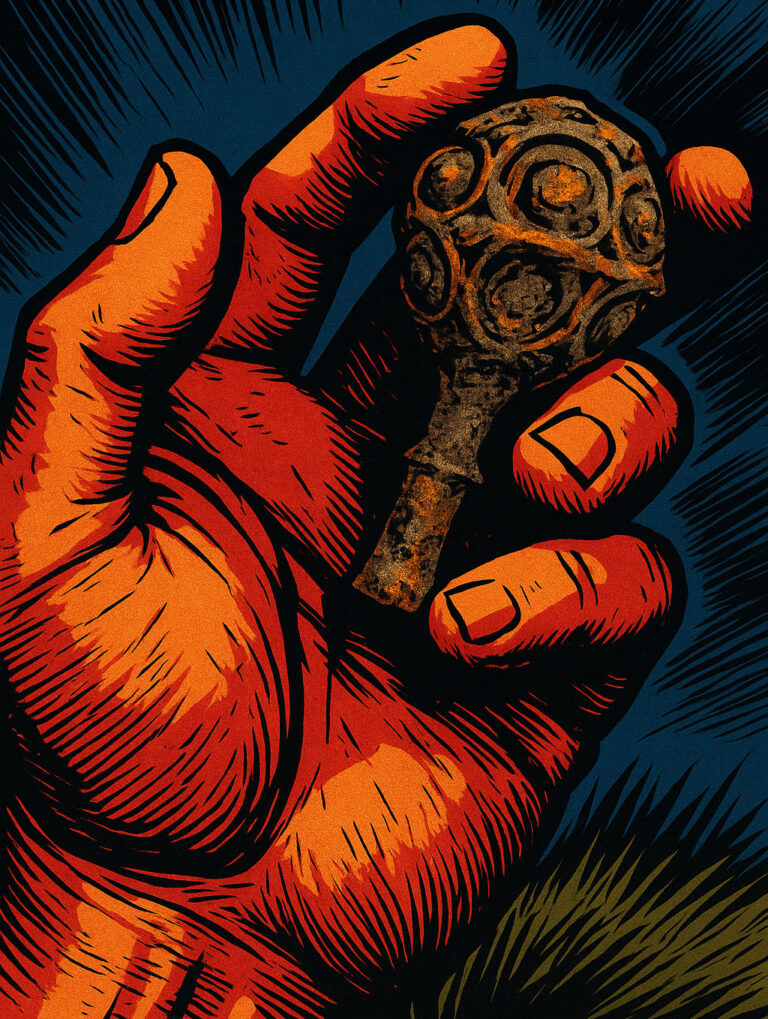
    From the excavation notes: the object is about four centimetres long. It’s gold. It has a decorative swirl pattern. One end features a handle or finial; the other ends in a bulb. If you squint, it might remind you of elaborate dress fittings, pins, or decorative finials that capped something — like the end of a pin or a ceremonial stick.

    Source: Newcastle University

    Gold, in the early medieval north, was not casual. It was the material of high status. You didn’t use gold on your everyday cloak. You reserved it for gavels, devotional objects, badge-like insignia, or the kind of decorative items that signaled power and rank. That alone pushes archaeologists to think: this belonged either to someone important, or it was used in a high-status setting — perhaps a church, a monastery, or the household of a local ruler.

    It’s also worth noting that a similar object — a bit smaller — was discovered at this same site in 2021 by a metal detectorist and was identified as a ball-headed pin dating from about 800–1000 C.E. The resemblance suggests we might be looking at a category of object. Alternatively, maybe someone dropped a cluster of related objects. Or perhaps these were used as pairable items in a ritual deposit. The options multiply, and the mystery deepens.


    Dating the piece: why “about 1,100 years” matters

    The find has been dated to roughly the ninth century. That period in northern Britain is, frankly, one of the juiciest and messiest in English history. It’s the era of shifting political power, religious consolidation, and a lot of travel and trade. Vikings are in the historical background. Local kings are busy asserting control. Monasteries are hubs of literacy and wealth. In short, it’s a time when high-status objects move around — as gifts, spoils, votive offerings, or personal possessions.

    This dating places the artefact in a world where gold still had symbolic punch. Even small gold objects could carry outsized meaning. They could be personal jewelry, religious fittings, or markers of affiliation. If the find really is connected to the nearby religious centres, then it could speak to the practices of those institutions — to how people showed piety, allegiance, or status.


    Why gold — social signifier, religious symbol, or both?

    Gold doesn’t circulate like copper. Historically, it’s far more controlled. So when archaeologists find gold, they ask: who controlled it? Churches? Elites? Merchants? The answer is rarely clean-cut. In the ninth century, monasteries and churches acted as repositories of wealth and networks of power. They acquired items through donations and gifts. People who wanted favour or remembrance donated precious objects. High-status laypeople used gold to demonstrate rank and to negotiate relationships with ecclesiastical authorities.

    The object’s size and ornate decoration make it plausible that it had a ritual or ceremonial function. It could have capped a liturgical staff, formed part of a religious ornament, or acted as an unsurprising but potent personal accoutrement for someone with clout. Alternatively, if it’s a ball-headed pin, then it might have been part of dress code — something that fastened suffering cloaks and fashion alike, but with symbolic weight.


    The metal-detectorist angle — why hobbyists matter (and why they can complicate things)

    Source: Newcastle University

    Before we get too romantic about slow, patient archaeologists, we need to acknowledge the metal detectorists. One such detectorist flagged a related object in 2021 at the same site. Today’s archaeology sits in a complicated relationship with hobbyists. Detectorists have upgraded the record. They find objects in landscapes that archaeologists can’t always resurvey. Many detectorists report finds, and some work with museums responsibly. Others do not. Ethics and law get involved.

    In this case, both the detectorist’s earlier recovery and Souza’s excavation add value. The first find suggested a pattern; the second confirmed it. Together the finds move the conversation from “random stray” to “patterned deposit.” That matters because patterned deposits are often deliberate. People may have buried items as votive offerings or concealed valuables during crises. If they were deliberate deposits, then we are looking at behavior — people actively shaping the landscape with symbolic acts.


    Conservation and the next steps: from soil to museum case

    Once a gold object leaves the ground, the next phase is careful, sometimes tedious work. Specialists will clean it. They will X-ray it. They will analyze its composition — does the gold have trace elements that link it to a particular source? Was it recycled from older objects? They will look at wear marks. They will compare it with typologies: where have similar items been found, and what do those contexts tell us?

    Both this find and the 2021 one are destined for the Great North Museum: Hancock, where they will undergo conservation and scholarly study. There they’ll be catalogued, photographed, analyzed, and compared. Over time, a more precise identification is likely: ornamental pin, finial, dress fitting, liturgical item — or something else entirely. Museums play a vital role here. They don’t just display objects. They ground them in scholarship.


    What this discovery opens up: archaeology as storytelling

    Small finds like this are analytic joints. They let us hinge together otherwise separate threads of history. Here’s what archaeologists might begin to say, tentatively and then more confidently as study progresses:

    1. Economic connections: Gold implies trade or gift networks. Who had access to gold? Where did the metal come from? Were items made locally, or imported in finished form?
    2. Religious practices: Objects found near routes that linked important churches might indicate devotional deposits — offerings, or even liturgical paraphernalia lost or deliberately interred.
    3. Social signaling: Personal items of gold say something about identity. Dress fittings or pins signal status and affiliation. They might mark a social rank, family identity, or clan affiliation.
    4. Landscape use: The fact that such items are near Dere Street suggests continuity in how people used roadside spaces — as places of travel, contest, and devotion.

    Each point opens further research paths. Archaeology rarely gives single answers. It provides plausible narratives supported by physical evidence and contextual reasoning. Then scholars test, revise, and refine.


    The human story: Yara Souza’s moment and why it matters

    Let’s zoom out from classifications and typologies and talk human: a student on her first dig, excited, perhaps a touch nervous, finds something that will later sit behind glass under museum lighting. That moment is both democratic and elite. Archaeology allows people with training, curiosity, and patience to touch — quite literally — the past. Souza’s discovery is a reminder that the discipline isn’t just for veteran professors or TV personalities. It’s for students. It’s for volunteers. It’s for people who show up.

    Her reaction — overwhelming joy, “geeking out” — captures why fieldwork still matters. It’s messy. It’s slow. But when the ground gives up a secret, the feeling is immediate and visceral. It also reminds museums and universities of an ethical obligation: to support and to train the next generation so discovery turns into conservation, and into public learning.


    Broader context: northern Britain in the ninth century

    We already hinted at the political and cultural ferment of the ninth century. Here’s a compact unpacking to make the scene feel a little less abstract:

    • Power networks were fluid. Local rulers were important. So were external pressures from Norse groups and from emerging kingdoms. This made wealth mobile; people might bury items deliberately in times of fear.
    • Religious life was central. Monasteries and churches anchored communities and carried wealth. They also forged identities. Religious objects could be ostentatious, but they also signified piety and patronage.
    • Trade mattered. While not the globalization of today, ninth-century Britain was porous. Objects — and the ideas attached to them — moved along roads, seas, and rivers.

    A gold object along Dere Street sits at the crossroads of all this.


    What archaeologists will be cautious about

    Good archaeology carries humility. Here are the things specialists will be cautious about:

    • Avoid overinterpretation. A gold object is tantalizing. But a single object rarely proves a sweeping claim. Context is king. Where exactly in the stratigraphy was it found? Was it in a pit, a burial, a layer of redeposited soil?
    • Typology pitfalls. Similar shapes do not always imply identical functions. A pin in one context might be a finial in another.
    • Dating precision. “About 1,100 years” is a useful shorthand. But refining that date might change interpretations by decades — and decades matter in medieval archaeology.

    Healthy scholarship balances excitement with methodical caution.


    Possible alternative identifications (because archaeology loves multiple hypotheses)

    Let’s play a quick Bayesian game — propose alternative identifications and what each would imply:

    • Ball-headed pin (dress pin): Implies personal adornment. Suggests a wealthy individual or a ritualized form of dress.
    • Finial or cap from a staff/ritual implement: Implies ecclesiastical or ceremonial use. Would strengthen links to religious centres along Dere Street.
    • Mounting from a chest or container: Suggests a decorated portable object — maybe a reliquary or treasure box.
    • Part of a composite decorative item (e.g., brooch element): Implies craftsmanship and possibly local or imported manufacture.

    Each hypothesis fits the data in different ways. Further study will prune these possibilities.


    The ethics of “treasure” and modern stewardship

    Gold objects still exert a magnetic pull — literally and politically. In the UK, legal frameworks govern finds: reporting requirements, processes for inquests, museum acquisition protocols, and potential compensation for finders. The modern ethical conversation is bigger than paperwork: it’s about how we involve local communities, how we balance the interests of amateur finders and professional archaeologists, and how we ensure that objects removed from the ground are studied responsibly.

    Yara’s find, recovered within an institutional dig, benefits from proper recording. The detectorist’s earlier find, depending on how it was reported, may or may not have gone through the same procedures. Whatever the administrative details, the outcome here seems responsible: conservation, analysis, and eventual museum display.


    Personal take — what I think this little object might be quietly shouting

    Right now, the most exciting thing about this find isn’t the object itself. It’s the narrative potential. A small gold piece like this is a thread that can be pulled to reveal networks of exchange, devotional practices, and expressions of status. If I had to stake a modest bet (and remember, archaeology prefers evidence over wagers), I’d lean toward a ritual or ceremonial association — perhaps a decorative finial or a cap from a small liturgical implement. Why? Because the find’s proximity to notable religious centres and its material (gold) fit the profile of items used in devotional contexts.

    That said, I’m also suspicious of tidy stories. A dress pin used by a wealthy pilgrim is just as plausible. Or it could be a hybrid: an item that served both devotional and social signalling roles. People in the past were practical and symbolic at the same time. They wore the faith and flaunted the wealth.

    Finally, I love the human angle: a student discovering something that will spend centuries behind glass. It’s poetic. It’s humbling. It reminds us that history is not only built by rulers in chronicles but by anonymous handcraft and by people who decided to fasten a cloak a certain way.

    Discovered: Peru’s Largest Mass Child Sacrifice

    0

    Archaeology sometimes reads like detective work. Other times it reads like a crime scene where the suspects are centuries dead and the motives are stubbornly mysterious. The sands north of Chan Chan — once the capital of the Chimu Empire — yielded one of those scenes: the skeletal remains of more than 140 children and about 200 llamas, deposited in a way that makes it clear this was not a cemetery or a mass grave after a single epidemic. This was a ritual. A planned event. A carefully performed atrocity, if you prefer the blunt modern language.

    The place is Huanchaquito–Las Llamas. The time is roughly the mid-15th century, perhaps around 1450 A.D. The people connected to this territory were part of the Chimu world, a major coastal polity that dominated hundreds of miles of Pacific shoreline before the Incas absorbed them later in the century. The scale of this single archaeological event makes it, so far as the evidence shows, the largest single incident of mass child sacrifice yet documented anywhere in the world.

    Before you read on, a caution: this is a story of real human lives reduced to bones and fragments. It invites clinical description because that’s what archaeological science provides. But behind the science are children who once lived, families who grieved (or whose grief we can only imagine), and a culture that—by the standards of its time—made choices we find appalling. Let’s go through what was found, why researchers think it was a single, deliberate ritual, and what it may hint at about the Chimu world and the pressures they faced.

    TL;DR

    • Mass Child Sacrifice: Archaeologists in Peru unearthed the remains of over 140 children and 200 llamas at a single site, dating to the mid-15th century.
    • Systematic Ritual: The evidence—including cut marks on ribs, red pigment on faces, and the simultaneous burial of all victims—points to a single, planned ritual event.
    • Possible Motives: The sacrifice may have been a desperate response to severe El Niño-driven climate disasters or a public display of power by the Chimu state.
    • Unique Find: The scale of the event makes it the largest documented mass child sacrifice in the world, offering new insights into Chimu ritual, politics, and responses to environmental stress.

    Where and how the dig began

    Source: National Geographic

    The site is less than a mile from the great adobe city of Chan Chan, the UNESCO-protected capital of the Chimu, and about 1,000 feet from the Pacific shore. Local people noticed bones eroding out of coastal dunes and told archaeologist Gabriel Prieto, who followed up. The first excavations began after those reports, and the initial season recovered dozens of bodies — 42 children and 76 llamas were found early on.

    Excavations continued. By the time the work finished in 2016, the total count had risen to more than 140 children and roughly 200 llamas laid down in the same area. The graves and partial burials were preserved by extremely dry, sandy conditions that kept bones, textiles, and other fragile remains intact enough for careful study.

    When archaeologists talk of “preservation” they mean this literally: the aridity of the sand helped protect skin remnants, woven ropes, and pigments that normally would have vanished long ago. Those fragile traces are what let researchers tentatively reconstruct how the event unfolded and who the victims may have been.


    The physical evidence: why researchers say this was ritual sacrifice

    Source: National Geographic

    The pile of bones alone is shocking. But it’s the patterning of those bones and associated artifacts that turns shock into interpretation.

    • Cut marks and chest openings: Many of the children’s rib bones showed cut marks. Sternums were found severed. Some skeletons displayed clear evidence of the chest having been opened. The pattern suggests deliberate dissection of the thoracic cavity—practices that in many ritual systems are consistent with heart removal or exposure of internal organs.
    • Red pigment on faces: Mineral-based red pigment was smeared on many of the children’s faces. Pigmentation in burial or ritual contexts often signals deliberate ritual marking—an applied identity or role in ceremony.
    • Animal victims aligned with human ones: About 200 llamas were found intermixed with the children. The llamas show controlled killing and placement. Llamas were an important domestic and ritual animal in Andean societies; their inclusion points to a large ceremonial program rather than ad hoc killings.
    • Three adults with distinct trauma: Near the children were three adult skeletons—one male and two females—with blunt-force trauma to the head. Their presence and the nature of their injuries suggest they were involved in the event and then killed or discarded afterward.
    • Spatial and stratigraphic context: The site shows a buried layer of mud that had dried at some point before excavators disturbed the least disturbed areas. That layer appears to have been continuous over the dune and then cut into to prepare pits. In short: the physical evidence points toward a single episode, not multiple dispersed events across decades.

    John Verano, one of the lead investigators on the project, has said plainly: “It is ritual killing, and it’s very systematic.” Those are measured words from forensic archaeologists who resist hyperbole. Systematic here means repeatable methods, a single cultural logic guiding how victims and animals were killed and deposited.


    Who were the victims?

    Source: National Geographic

    Osteological analysis estimates that most of the children were between about eight and twelve years old. The remains show a narrow age profile rather than a random spread. That narrow age range is another clue that the selection of victims followed an intentional logic—rituals often target a particular demographic.

    Ropes and textiles recovered with the bodies were carbon-dated to between roughly 1400 and 1450 A.D. That dating places the event late in the Chimu period, and perhaps at a time of climatic or social stress across the region.

    At present, researchers are doing isotopic tests and other analyses to learn where the children came from, what they ate, and whether they might have been local or brought in from distance. Early signals suggest not all victims shared identical childhood diets, which raises the possibility that some of the children were nonlocals—brought from inland valleys or other communities. The implications are big: were these children taken, purchased, or gifted? Were they volunteers in a culturally different sense, or were they coerced? Science can narrow questions; it rarely gives simple moral answers.


    Why would a community do this?

    Source: National Geographic

    If you’re reading this looking for an obvious explanation—there isn’t one. Archaeology produces data; it does not hand us the original intent. Still, scholars have plausible hypotheses grounded in context.

    One of the leading ideas connects sacrifice to environmental stress. The north coast of Peru is strongly affected by the El Niño–Southern Oscillation. Severe El Niño events bring catastrophic rains and floods to the arid coast, wash away agricultural infrastructure, and cause famine. When societies face repeated environmental shocks, rituals that aim to appease deities or redirect forces are often intensified. If adult offerings or other ceremonies failed to stop a climate disaster or a string of poor harvests, leaders might have adopted more extreme measures—bringing out a new kind of sacrificial victim believed to have greater spiritual potency.

    Haagen Klaus, an anthropologist who has worked in the region, put it bluntly: “People sacrifice that which is of most and greatest value to them.” If so, children—symbols of future and lineage—represent an extreme plea, the offering of future potential to secure present survival. It’s an awful calculus, but it fits certain ethnographic patterns where societies under stress escalate ritual costs.

    Other hypotheses emphasize political and social dynamics. A centralized ruler or elite might stage an enormous sacrifice to project power, to unite clamoring factions, or to legitimize a transition of authority. The Chimu state was hierarchical and capable of mobilizing labor on a massive scale. Organizing, rounding up, and killing hundreds of animals and over a hundred children would have required logistics—holding pens, ropes, butchers, and burial preparation. It’s the sort of public spectacle that can both frighten and awe populations into compliance.

    Finally, there’s the grim possibility that the victims were outsiders—children captured or transferred from other communities. If elites used foreigners for ritual purposes, the act could serve both spiritual and political functions. That said, isotopic and genetic work is needed to substantiate any claim about origins.


    The science behind the story

    Archaeologists and bioarchaeologists brought an array of methods to the dunes:

    • Stratigraphy and sediment analysis to determine the sequence of deposits and whether the burials were simultaneous.
    • Radiocarbon dating of ropes, textiles, and organic residues to place the event in time.
    • Osteological and forensic analysis to identify cut marks, healed lesions, perimortem trauma, and age-at-death estimations.
    • Pigment analysis to identify mineral composition of the red face paints.
    • Isotopic analysis (when available) of teeth and bones to infer diet and geographic origins.
    • Comparative zooarchaeology to study the llamas and their butchery patterns.

    Those methods let researchers say not only that something ritual happened, but also how it likely happened and roughly when. The finer questions—why, who ordered it, whether it stopped some disaster—remain interpretive. Still, the science is essential because it replaces rumor with measurable signals.


    How this find changes the archaeological landscape

    Child sacrifice is not unknown in pre-Columbian Andean archaeology. But the scale here is unprecedented in the public record. This matters for several reasons:

    1. Scale and state capacity: It underscores the Chimu polity’s organizational reach. Coordinating hundreds of animals and many human victims suggests centralized planning and the ability to mobilize people over long distances.
    2. Ritual logic and cosmology: The ritual pattern—children plus llamas, pigment use, targeted ages, and thoracic dissection—adds to our comparative knowledge of Andean ritual practice, including how communities might have tied human sacrifice to weather, fertility, and state ritual calendars.
    3. Human stories: The find forces us to reckon with the lives affected, not just abstract numbers. Each skeleton represents a child with a childhood diet, regional origins, and social context.
    4. Methodological implications: The preservation allowed detailed forensic study. Sites like Huanchaquito–Las Llamas become reference points for identifying similar events elsewhere, especially along the coast where sandy preservation can hold surprising detail.

    To put it bluntly: this site shifts how we think about late pre-Columbian ritual in coastal Peru. It offers a rare, damningly clear picture of ritual violence on a social scale.


    Ethical and interpretive cautions

    It’s tempting to let outrage do the interpretive work for us. The human response—shock, disgust, sorrow—is natural. But scholars urge restraint. Why? Because every cultural act has a context and because projecting modern taxonomy (religion vs. politics vs. desperation) onto ancient peoples risks flattening complex realities.

    Researchers also emphasize ethical treatment of the dead. These remains are not props for dramatic headlines. The scientific team has treated the skeletons with professional care, reporting results in academic venues and working to publish peer-reviewed papers. Public dissemination—National Geographic’s coverage introduced the discovery to general audiences—brings visibility. Visibility can help fund further science and protect sites. But it can also sensationalize trauma.

    As readers, we should balance curiosity with respect. That means listening to the data, acknowledging the limits of interpretation, and resisting temptation to moralize ancient people by modern standards without nuanced context.


    The broader cultural context: Chimu and their world

    The Chimu Empire—centered on Chan Chan—was one of the major political powers on the north coast before the Inca expansion. It commanded a vast coastal corridor and developed large-scale irrigation, adobe architecture, and a complex economy based on coastal fisheries and agriculture supported by river-fed canals.

    That infrastructure was vulnerable to climate shocks. El Niño events can overwhelm canal systems and farmland that are otherwise productive in the dry Pacific desert. When infrastructure collapses, elites must act to stabilize food systems, maintain authority, and manage social unrest. Rituals can be part of that management toolkit: they are symbolic acts with social consequences. Rituals can also be performative displays of elite power.

    So when we read that the event dated to around 1400–1450 A.D., we should note the coincidence: it’s late enough for the Chimu to have developed bureaucratic reach—and early enough that environmental shocks could have been destabilizing. Whether the sacrifice was a desperate environmental strategy, a political statement, or something else entirely, it happened inside an ordered society capable of mass mobilization.


    Comparison to other ritual practices (brief and careful)

    It’s important to avoid simplistic cross-cultural comparisons. Still, archaeologists study ritual violence not as isolated oddities but as phenomena that recur under understandable conditions. Across the world, extreme ritual practices sometimes correlate with environmental stress, political consolidation, or social transitions. Andean contexts are no exception: animal sacrifice, human offerings, and elaborate funerary rituals are documented across different Andean cultures. What makes Huanchaquito–Las Llamas distinct is the single-event scale and the specific combination of child victims with a large number of llamas.


    What scientists want to know next

    The immediate questions are straightforward and precise:

    • Where were these children from? Isotopic chemistry in teeth will tell whether some children grew up in coastal diets or in more inland, maize-heavy diets—information that hints at geographic origins.
    • Were the children related biologically or socially? Genetic tests may show kinship ties or genetic diversity consistent with capture or recruitment from distant groups.
    • Was the event tied to a known El Niño event? Correlating tree-ring, sediment, and climatic proxies with the burial date could strengthen the climate–ritual hypothesis.
    • Who organized it? Material culture (clothing styles, rope types, pigments) might point toward particular social actors: elite ritual specialists, state administrators, or local leaders acting under duress.
    • How was the ritual understood by contemporaries? That’s a much harder question because it requires interpreting symbolism from limited material remains. Ethnographic analogy helps, but it cannot supply direct answers.

    The investigators have submitted findings for peer-reviewed publication and continue analyzing the materials. Each new test adds granularity and sometimes shifts interpretation—science is iterative that way.


    An honest personal take

    Okay, here’s my point of view, straight up: discoveries like Huanchaquito–Las Llamas force a tension between two human instincts. One instinct is revulsion. The other is a scientist’s itch to understand cause, context, and consequence—because understanding is the only route to preventing similar horrors in our own time. I think both instincts are valid. The job of scholarship is not to exonerate or to excuse; it is to explain without forgetting the moral weight.

    If the Chimu people did this as a response to environmental collapse, it’s a tragic reminder that ecological crises can push societies toward desperate, violent solutions. If elites used children in public spectacle to shore up authority, it shows how power can normalize cruelty in the name of “order.” Either way, the find should prompt humility and vigilance. Humility because no culture holds a monopoly on moral clarity; vigilance because societies in crisis are vulnerable to leaders who promise security through coercive, sometimes catastrophic choices.

    I also want to flag one other practical point: archaeology matters for modern policy. Understanding how past societies responded to climate stress—what worked, what failed—gives a long-term record that modern planners ignore at their peril. Lessons from five centuries ago don’t transfer neatly to today, but they provide data points for outcomes when infrastructure fails, when inequalities tighten, and when elites choose spectacle over systemic investment.


    Final thoughts: grief, science, and responsibility

    The bones at Huanchaquito–Las Llamas are a ledger of grief. They are also a resource: a rare archive that allows us to ask hard questions about power, belief, and survival. The scientific work underway—carbon dates, isotopes, DNA, context analysis—will sharpen our understanding. Yet we must read the results with sober attention to human cost. These were bodies of children. They deserve careful handling in the scientific sense and dignified treatment in the human sense.

    Archaeology can be a bridge across time. It can also be a mirror. When we examine the past’s most terrible choices, we are inevitably asked about our own. What would we do when the hoses burst, when the canals fail, when the food runs out? Will we choose cooperation, investment, and equitable sacrifice? Or will we double down on displays of power and scapegoating? The sands in Peru are mute on the moral solution. Still, their quiet testimony is clear: social pressure and environmental crisis together can produce outcomes we find unbearable. Knowing that does not make us better by itself, but it does give us the chance to do the hard work now—before desperate people make desperate choices.

    Sitting May Raise Your Alzheimer’s Risk — Even If You “Crush” 150 Minutes a Week

    0

    You’ve heard the PSA a thousand times: get 150 minutes of exercise a week. Walk the dog. Hit the gym. Pretend you’re training for a triathlon. All true. Helpful, even. But a new long-term study suggests there’s a different villain in the room — one your smartwatch can’t fix by logging a single sweat session. It’s the hours you spend glued to a chair, stretched out on the sofa, or marinating on an office swivel. Turns out, how much you sit matters — and not in a “wellness influencer thinks standing desks are trendy” way. In older adults, more sedentary time was linked to worse cognition and brain shrinkage in areas tied to Alzheimer’s disease — even for people who met or exceeded the weekly exercise recommendation.

    If you want the nutshell version: exercise helps, but it doesn’t fully cancel out hours of sitting. Move more during the day. Break up long sitting stretches. And maybe stop pretending that a single 45-minute spin class absolves you of everything the rest of your 23-hour routine does to your brain.

    TL;DR:

    • A long-term study found that prolonged sitting is linked to worse cognitive function and brain shrinkage, regardless of how much you exercise.
    • The hippocampus, a key memory center, showed greater atrophy in people who sat more.
    • This risk is even higher for individuals with the APOE-ε4 gene, which is associated with increased Alzheimer’s risk.
    • The solution isn’t to stop exercising, but to incorporate more frequent movement breaks into your day.

    What the researchers actually did (and why the results aren’t clickbait)

    This wasn’t a quick online survey or a “how many movies did you watch last month?” questionnaire. The study followed more than 400 dementia-free adults aged 50 and up. Participants strapped on a wearable for a week so researchers could objectively measure activity and sedentary time. Then the scientists tracked cognitive test scores and brain scans — over seven years. That’s not an afternoon puff-piece. It’s longitudinal science with repeated measures.

    Key takeaway from the data: people who spent more time sitting or lying down performed worse on cognitive tests, and they showed greater shrinkage in brain regions tied to memory — notably the hippocampus. That pattern showed up regardless of how much formal exercise they logged that week. In other words: someone could be hitting their 150 minutes and still be at higher risk if they were sedentary the rest of the time.

    The authors were careful. They didn’t prove cause-and-effect. But they did provide strong evidence that sedentary behavior may be a separate, modifiable risk factor for neurodegeneration. Their suggestion? Don’t only look at your workouts. Look at how your whole day is structured.


    Why the hippocampus matters (and why “shrinking” sounds scarier than it is)

    The hippocampus is a star player when it comes to memory and learning. Everyone’s hippocampus shrinks a bit with age. That’s normal. But in Alzheimer’s disease, that shrinkage is faster and more severe. When researchers saw a bigger-than-expected reduction in hippocampal volume among people who sat more, alarm bells rang. Structural brain changes like these often precede symptoms. So if sitting is associated with measurable atrophy in memory-critical tissue, that’s not something to shrug off.


    The genetic wrinkle: APOE-ε4 makes sitting riskier for some people

    The study also dug into genetics. Specifically, it looked at APOE-ε4 — a gene variant known to increase Alzheimer’s risk. Carriers of APOE-ε4 showed a stronger link between sedentary time and worse cognitive outcomes. Translation: if you have a genetic predisposition, prolonged sitting may matter even more. It’s not deterministic (genes rarely are), but it raises the stakes and suggests some people might need to be extra vigilant about daytime movement.

    Yes, celebrities like Chris Hemsworth have been mentioned in media pieces as being APOE-ε4 carriers, but this is a technical detail about risk modulation — not a prediction of fate. Genes set the field; lifestyle plays the game.


    How sitting might harm the brain — the leading theories

    Researchers don’t yet have a single smoking-gun mechanism that connects sitting and Alzheimer’s. But there are plausible, biologically credible paths:

    • Vascular effects. Long stretches of immobility hamper blood flow. Less optimal cerebral blood flow might gradually starve brain tissue of oxygen and nutrients. Over years, that can promote structural changes.
    • Metabolic disruption. Prolonged sitting worsens insulin sensitivity and lipid metabolism. The brain depends on tight metabolic regulation. Metabolic dysregulation can be toxic over time.
    • Inflammation. Sedentary behavior has been tied to low-grade systemic inflammation. Chronic inflammation is bad news for neurons and synapses.
    • Reduced synaptic activity. The brain responds to use. If you’re passively sitting through days of low cognitive and physical stimulation, the neural networks that support memory and executive function may weaken.

    These aren’t mutually exclusive. They probably act together like a slow leak in brain resilience. The important part is that several of these pathways are modifiable. You don’t have to wait for a miracle drug to start making small, meaningful changes.


    So what does this mean for your exercise routine?

    Please don’t panic and cancel your gym membership. Exercise still matters. The study didn’t say exercise is useless. It showed that exercise alone may not erase the harms of prolonged sedentary time. Think of it like this: exercise is a deposit into your brain’s “health bank.” But then you might be emptying the account all day by sitting for hours without breaks. You need both deposits and sensible spending.

    Practical framing:

    • Keep exercising — cardio, strength training, balance work: continue. It’s crucial for vascular health, mood, sleep, and much more.
    • But also build movement moments into your day. Frequent breaks, light activity, and non-exercise movement (standing, pacing, household chores) add up. They are not optional extras.

    What “less sitting” actually looks like — practical tips that don’t require a zen monk lifestyle

    If “move more” sounds vague, here are actionable ideas you can start tomorrow:

    1. Use the 30-minute nudge. Stand up and move for 3–5 minutes every 30–45 minutes.
    2. Make meetings walking meetings. Not every meeting needs a PowerPoint. Walk and talk when appropriate.
    3. Stand for the phone. Take calls standing or pacing. You’ll sound more authoritative and your brain will like it.
    4. Micro-workouts. Ten squats, calf raises, wall push-ups. Circulation wins, not just muscles.
    5. Activity snacks. During TV time, use commercial breaks or set intervals to move.
    6. Redesign your environment. Place frequently used items far enough away that you need to stand.
    7. Make commuting count. Get off a stop earlier, or walk part of the way.

    Small, frequent movements beat one giant daily workout when it comes to counteracting long stretches of sitting.


    Workplace design: employers should care, not just for productivity

    This isn’t just a personal problem. An aging workforce and long sedentary workdays mean employers should take note. Simple workplace policies can promote movement without breaking the bank:

    • Standing or multi-use meeting rooms.
    • Regular “stretch” or movement reminders.
    • Walking routes or outdoor breaks.
    • Subsidized standing desks.
    • A culture that actually encourages breaks.

    A healthier brain in the workforce is good for everyone — productivity, healthcare costs, and morale.


    The bigger picture: why this matters at a societal level

    Alzheimer’s and other dementias are already a huge public-health and economic problem. In the UK alone, the annual cost of dementia was forecast around £42 billion for 2024, rising toward £90 billion by 2040 if prevalence and costs continue to climb. These figures include healthcare costs, social care, unpaid caregiving, and lost economic productivity. Meanwhile, dementia has been reported as the leading cause of death in the UK in recent years, with tens of thousands of deaths recorded in a single year.

    The takeaway is stark: small, scalable prevention strategies that reduce risk across the population could have major human and economic benefits. That’s why public-health guidance may need to shift from “exercise X minutes weekly” to “move throughout the day.”


    Limitations and why we should not treat this as gospel

    Before you blow up your treadmill in existential panic:

    • Correlation, not definitive causation. The study observed links over time.
    • Measurement window. Wearables tracked only a week.
    • Population specifics. The sample has limits.
    • Complex interplay. Sedentary behavior interacts with diet, sleep, social life, and more.

    That said, the findings are still meaningful — especially since the recommended changes are low-risk and high-reward.


    What to prioritize if you want to be strategic (not frantic)

    If you’re trying to be smart about brain health, here’s a checklist:

    1. Control vascular risk factors.
    2. Move throughout the day.
    3. Keep exercising intentionally.
    4. Prioritize sleep.
    5. Stay socially and mentally engaged.
    6. Eat brain-friendly food.

    These don’t guarantee prevention, but they move the odds in your favor.


    My point of view

    The idea that “exercise fixes everything” has always been oversold. Science likes simple slogans, and people like easy boxes to tick. But our bodies weren’t built for eight-hour desk shifts, two-hour commutes, and a couch marathon at night.

    This study is basically a reality check. Our brains thrive on constant movement and stimulation, not occasional gym bursts. To really protect ourselves, we need more cultural change: workplaces, cities, schools — they all should normalize movement.

    And if you’re feeling guilty while reading this, don’t. Shame doesn’t help. Small steps do. Three minutes every half hour is manageable. Don’t aim for perfect. Aim for persistent.


    Quick, realistic action plan

    • Today: Set a timer for 45 minutes. Stand and move.
    • This week: Add two “movement snacks” during downtime.
    • This month: Make one structural change like a sit–stand desk.
    • Long term: Make movement social. Habits stick with friends.

    Micro-habits beat heroic resolutions. Start small. Scale slowly. Your future hippocampus will thank you.


    Final thoughts

    The research doesn’t say “sitting causes Alzheimer’s” in an absolute way. But it does signal that sedentary behavior is a meaningful risk factor — one you can change.

    If you’ve been relying on weekend workouts, this is your nudge to rebalance. More movement, less sitting, same life — slightly rearranged. And when millions of people make small changes, society might actually blunt the future burden of dementia. That’s worth standing up for.

    SASAMANA: Turning Toast Into Art

    0

    When most of us roll out of bed in the morning, the best we can manage is shoving bread into a toaster and hoping it doesn’t burn. But for Japanese artist SASAMANA (Sasaki Manami), that same slice of toast becomes something else entirely: a blank canvas. With a little imagination and a lot of patience, she transforms the humble breakfast staple into edible art that balances taste, culture, and aesthetics.

    Her story is more than just quirky Instagram fodder. It’s about ritual, creativity, and finding beauty in the smallest corners of daily life—even at the breakfast table. So, grab a coffee, because this is not your typical “foodie art” tale. It’s the story of how an artist turned bread, butter, and berries into a global stage for storytelling.

    TL;DR

    • Japanese artist SASAMANA turns toast into intricate edible artworks.
    • She uses common ingredients to recreate famous art and cultural moments.
    • Her process is a mindful, three-hour ritual that balances art and flavor.
    • The work is a statement on finding beauty in the everyday and slowing down in a fast-paced world.

    From Ordinary Morning to Artistic Ritual

    Let’s rewind a little. During the quiet mornings of the pandemic, while the world pressed pause, SASAMANA began experimenting with food in her Tokyo kitchen. She wasn’t trying to become the next viral sensation. Instead, she was searching for a way to make mornings meaningful.

    She started with what she loved most: bread. Simple, everyday toast. But instead of just slathering on butter, she treated it as an empty canvas. Using food as her medium, she found herself merging flavors and visuals, taste and texture, until breakfast no longer felt like a necessity—it became an art ritual.

    This shift from “just another meal” to “something worth waking up for” is key. It wasn’t about extravagance or spectacle. Her work leaned on subtlety, precision, and restraint, inviting viewers to look closer. A slice of toast became a story—about culture, memory, even time itself.


    Why Toast, Of All Things?

    Here’s the obvious question: why toast? Out of all the potential food canvases in the world, why did she settle on this humble slice?

    The answer is surprisingly practical. She loves bread. It’s familiar, accessible, and forgiving enough to host an array of textures and colors. More importantly, breakfast is universal. Everyone, no matter where they live, knows the morning struggle. By using toast, she turns something mundane into something extraordinary.

    Think about it: toast is a daily habit, but in her hands, it becomes a reason to look forward to mornings. It’s not just about eating—it’s about creating.


    Art History Meets the Kitchen

    Here’s where it gets fascinating. SASAMANA doesn’t just make random pretty designs with fruit and cream. She reconstructs art history and cultural moments—on toast.

    Using ingredients like ham, purple cabbage, blueberries, sesame paste, and sour cream, she captures textures and color gradients with startling precision. She’s recreated everything from traditional Japanese ukiyo-e portraits to portraits of Frida Kahlo. She’s even added celebratory touches like the Japanese phrase “賀正” (Happy New Year) written in edible strokes.

    Each piece can take about three hours from concept to execution. First, she imagines the design. Then, she hunts down ingredients—choosing foods that hold shape and color even after toasting. Finally, she constructs the image with an obsessive eye for detail. Sometimes, she even reaches for a sewing needle or fine scissors to etch tiny lines in sauce or nori. The result? Creations that are both visually stunning and delicious.

    This balancing act—between visual accuracy and actual flavor—is what sets her apart from gimmicky “Instagram food trends.” It’s not just for show. Her work blurs the line between art and cuisine, pulling viewers into a dialogue about what breakfast can mean.


    Precision in Every Bite

    Now, let’s talk about her process. Unlike most artists, she can’t just grab a brush and a canvas from a studio. She has to juggle perishable ingredients, temperatures, and textures.

    Want to paint with sour cream? Be careful—it melts. Want to carve delicate lines in seaweed? Better have surgeon-like hands. Want those blueberries to pop as petals? Better choose the right batch.

    She experiments with unusual ingredients like squid ink and sour cream not for shock value, but because they offer depth in both visual contrast and flavor. That’s her philosophy: food art must not only look good but taste good. If it doesn’t make her happy as a meal, then it’s not worth creating.

    For example, one of her floral toast designs starts with a sesame paste base, then blueberries as accents, sour cream as petals, and honey for shine. It’s a painting you can eat.


    Beyond Instagram Fame

    Naturally, her art caught fire on Instagram. Under her handle @sasamana1204, she has gathered a massive following, particularly overseas. Her playful yet meticulous style speaks a universal language. Food is relatable. Beauty is universal. Together, they transcend borders.

    But here’s what’s refreshing: for her, social media numbers aren’t the ultimate goal. While many creators chase likes and followers, she’s more interested in sparking curiosity. She wants people to look at food differently, to see everyday objects with new eyes.

    Her edible art bridges culture, turning a slice of Japanese toast into a global conversation about aesthetics, creativity, and shared humanity. Even when travel wasn’t possible during the pandemic, her work let viewers abroad “experience” a piece of Japanese culture from their own kitchens.


    Breakfast as Self-Care

    There’s also something therapeutic in what she does. The ritual of slowly crafting these edible works makes mornings intentional. In a world where many people barely take the time to eat breakfast, she flips the script: the meal itself becomes the day’s creative anchor.

    And it’s contagious. Watching her work encourages others to slow down, to notice textures, colors, and patterns even in everyday life. In a way, it’s mindfulness—without calling it mindfulness.


    Why Her Work Matters

    Skeptics might roll their eyes and say, “It’s just toast.” Sure, technically it is. But think deeper. What SASAMANA is doing challenges the boundary between daily life and art. She’s making the point that you don’t need a museum, a stage, or a fortune in supplies to create something meaningful.

    Her work is proof that art doesn’t have to be locked behind glass. It can be in your kitchen, on your plate, and in your morning routine. She democratizes creativity by showing us that even the simplest ingredients—bread, fruit, spreads—can become something extraordinary when paired with imagination.


    My Take

    Now, here’s where I throw in my two cents. I love the irony of this whole thing. In a society obsessed with fast food, quick fixes, and microwave meals, here’s someone spending three hours crafting a single slice of toast. On the surface, that sounds absurd. But maybe that absurdity is the point.

    She’s reminding us that life isn’t just about efficiency. Sure, we could all wolf down cereal in five minutes and rush out the door, but what would we miss? We’d miss the chance to pause, to add a spark of beauty into something mundane.

    And honestly, I think her work is a subtle rebellion against modern burnout culture. It’s a quiet statement: art and beauty aren’t luxuries—they’re necessities. Even if they show up on bread.

    In fact, maybe that’s the lesson: if you can turn toast into art, you can turn anything in life into art.


    Final Thoughts

    At its core, SASAMANA’s story is about more than Instagrammable breakfasts. It’s about perspective, creativity, and finding ritual in the everyday. By reimagining toast, she invites us to rethink not only food but the role of beauty in our daily lives.

    Her edible art isn’t just a feast for the eyes or stomach. It’s a reminder that the ordinary can be extraordinary, that culture can live on a breakfast plate, and that mornings don’t have to feel like a chore.

    So, the next time you’re staring at your boring slice of toast, maybe grab some blueberries or honey and ask yourself: what story could I tell on this canvas?

    Law and the City: What we learned in the end…

    0

    If you like endings that don’t explode but still land, Law and the City gives you a finale that’s gentle, deliberate, and oddly satisfying. Episodes 11–12 don’t chase showy plot twists or melodramatic fireworks. Instead, they shove characters toward decisions they’ve been dodging all season. The result is tidy, thoughtful, and human — like watching a group of friends graduate and then awkwardly meet for brunch the next morning. If you came for courtroom theatrics, there’s some of that. If you came for emotional closure and career reckonings, this finale is essentially a slow-burn mic drop.

    Below: a full breakdown — scene by scene where it matters, character-by-character analysis, thematic notes, a few fresh takes you might not have considered, and a final verdict with stars. Let’s get into it.

    TL;DR:

    • The “Law and the City” finale is a slow-burn, character-driven ending focused on realistic, human decisions instead of typical legal-drama theatrics.
    • Protagonists Joo-hyung, Moon-jung, Sang-ki, Hee-ji, and Chang-won all make significant career changes driven by their moral compasses and personal growth.
    • The show explores themes of professional conscience, the real costs of bureaucracy, and care as public policy, all while treating career changes as moral experiments, not failures.
    • The ending is tidy and warm, but its lack of high-octane drama might not satisfy viewers looking for traditional spectacle.

    Quick recap (so we can argue about it later)

    The finale takes the momentum from the penultimate episode and channels it into decisions. No cliffhanger. No villainous reveal. Instead, the show asks: what do you do when you’ve spent years in a place that shaped you but also hurt you? The answers here are realistic, messy, and earned.

    • Joo-hyung wrestles with guilt after following orders that crushed a widow’s hopes. He takes on a lost-land case with Moon-jung, and the investigation drags at his conscience long after the facts are settled. He loses the chance to tell the client good news before the man dies, and that becomes the emotional fuel that finally pushes him out of the old firm and into starting his own practice.
    • Moon-jung is offered an in-house role with family-friendly benefits. Tempting. Practical. Easier. But she realizes mid-interview that the soul of her work lives in the courtroom and community advocacy. She stays put, insists on maternity rights, and refuses to be sidelined.
    • Sang-ki gets confronted with a case that mirrors his own past favors. Inspired to give back, he funds a scholarship, quits the firm, and signs up for a doctorate to become a professor.
    • Hee-ji finds the work she really wants in public defense after a gutting mercy case. It’s difficult but purposeful; she accepts the trade-offs.
    • Chang-won reaches a tipping point when a past acquaintance asks for his help. He refuses, quits impulsively, and ultimately becomes the kind of lawyer who no longer helps the rich get off easy.

    Everyone moves on, but they don’t vanish. They keep dinner plans. They keep the rituals that built their bond. The firm splits. Life continues.


    Joo-hyung: guilt, redemption, and the case that wouldn’t leave him alone

    Joo-hyung’s arc is the emotional axis of the finale. He starts the season as a competent lawyer with convenience-based concessions: he will follow orders, avoid unnecessary friction, and believe that compromise is a career lubricant. After the widow case — where he obeys, under orders, to screw someone over — that lubrication feels greasy.

    The stolen-land case with Moon-jung should have been a technical slog: an old map, mismatched coordinates, and paperwork that never quite lines up. But this case becomes a moral thesis for him. The client’s line — “if I don’t, who will?” — is the kind of conscience-poking sentence that will not be quieted. Joo-hyung’s late-night archival digging shows the show’s attention to legal detail. It’s a satisfying watch: the slow accrual of evidence, the tiny archival triumphs, the cinematic hush when discovery finally clicks in place.

    Then tragedy: the man dies before Joo-hyung gets to tell him the good news. That death is less about melodrama and more about the cost of delay and bureaucracy. Joo-hyung’s reaction — initial denial, then obsessive rectification — reads authentic. He realizes that professional obedience has human consequences. So he quits, apologizes in person to the widow, and uses his newfound evidence to help her. And then he opens his own firm.

    This arc is classic but well-executed: guilt to atonement to action. It’s a clear moral beat that also makes sense in practical terms. The only quibble is timing — his decision felt inevitable, but the show stretches it in a way that makes his eventual leap both poignant and a little overdue.


    Moon-jung: choice, motherhood, and legal ambition

    Moon-jung’s dilemma is the modern working-parent dilemma dressed in legalese. The in-house offer is tempting: flexibility, better parental benefits, and stability. It’s the sort of job that sounds reasonable until you realize it asks you to surrender the aspects of your identity you most love.

    Her mid-interview realization is the episode’s best small scene. She literally recognizes what she’d lose — the courtroom fight, the client interaction, the messy justice work. She declines, but she doesn’t retreat into martyrdom. Instead, she arms herself with practical tools: temp-worker information, resumes, and a firm—but reasonable—demand for maternity leave from the current boss. That combo of principle and practicality makes her victory feel earned.

    Moon-jung refusing to abandon the courtroom is refreshing. She doesn’t burn bridges with feminist martyrdom or melodramatic exit lines. She negotiates. She insists on being treated like a professional with rights. Ji-seok’s delight when she chooses passion over ease isn’t indulgent fan service; it’s honest, small-scale cheering that makes their relationship feel supportive rather than performative.

    Key takeaway: the show treats parental needs as structural policy issues, not just personal drama. That’s mature, and it’s rare.


    Sang-ki: paying the kindness forward and rewriting what success looks like

    Sang-ki’s plot is a lovely reversal. He’s the guy who benefited from charity, scholarships, and soft networks. Now he’s in a position to return the favor. When an orphaned student shows up, dreaming of law but held back by immediate economic needs, Sang-ki doesn’t just offer advice. He funds a scholarship from his own savings and then chooses a path that looks odd to everyone else: he resigns, goes after a doctorate, and aims to become a professor.

    That decision could have read as sentimental. Instead, it lands as mature. Sang-ki isn’t abandoning ambition; he’s redirecting it toward systemic impact. Training future lawyers, influencing policy, and teaching empathy — that’s the long-view version of activism. Hyung-min’s foundation plays nicely into the show’s sense of community: networks help, but individuals also choose how to circulate generosity.

    There’s also romance-awkwardness with his boss, which the writers handle with a weirdly human delicacy: an awkward night, a messy morning, and then — eventually — a quietly official relationship. It’s human and messy and believable.


    Hee-ji: public defense and the moral courage of the small mercy

    Hee-ji’s move to public defense is the show’s clearest moral statement. The case of the caretaker-turned-killer is heartbreaking in a way that refuses easy judgment. The woman is not a criminal archetype; she’s a failure of a social safety net. Hee-ji sees that, and she chooses the harder path: defending people who need defenders.

    The show doesn’t romanticize public defense. Joo-hyung’s warning — you will have to defend awful people — is an honest caveat. Hee-ji hears it. She then tests herself with an objectively despicable client and finds that her empathy can survive the test. The narrative here is straightforward but powerful: public defenders matter. They protect not the comfortable, but the system’s most vulnerable.

    One neat dramatic choice: the show fast-forwards to Hee-ji thriving. It avoids endless montage and trusts you to accept growth. That’s economical storytelling at its best.


    Chang-won: quitting as a moral stance

    Chang-won’s story is short and sharp. A past acquaintance asks for help. He refuses. He quits. The boss spirals through every stage of grief in five minutes of delicious catharsis. Chang-won’s quitting is less about drama and more about shedding complicity. In a firm that routinely defends the guilty and cushions the wealthy, walking out is a statement.

    Later, in court, Chang-won throws the book at a client he would previously have shielded. That flip is satisfying and believable: experience, disillusionment, and a changing moral compass all converge.


    Thematic through-lines: what this finale actually cares about

    Several themes run through these two episodes. They’re not deep in the philosophical sense, but they’re sharp and relevant.

    1. Professional conscience vs. structural pressure. People in institutions often act against their better judgment because institutions reward compliance. The finale shows what happens when individuals test those structures.
    2. The real cost of delay. The archival case and the dying man are a narrative way of saying: bureaucracy kills, or at least it harms. Small delays can have catastrophic moral consequences.
    3. Care as public policy. Moon-jung’s maternity-leave stand is framed as a legal and structural issue, not only private. The show treats workplace accommodation as law and not just niceness.
    4. Generosity as legacy. Sang-ki’s scholarship is the season’s most hopeful image: what you were given, give forward.
    5. Public defense as moral work. Hee-ji’s turn is an argument that justice isn’t glamorous; it’s gritty, and it matters.

    New takes you might not have thought of

    Here are a few fresh angles that bring a little extra texture to the finale.

    • The firm as a character. The law office isn’t just a backdrop. It’s an organism with moral habits. When the five leave, the firm will mutate. The show hints at that: un-merging the firm suggests that institutions can split and reconfigure in response to internal dissent. It’s less about the individuals leaving and more about the hollowness they expose.
    • Small rituals matter more than big resolutions. The repeated scenes of shared meals and elevators doing their last descent are the emotional anchors. They’re quieter than a courthouse victory but more human. The show is arguing that community rituals sustain careers, not only missions.
    • Career changes as moral restlessness, not failure. The show refuses the “career as ladder” metaphor. Instead, it treats career choices as moral experiments. People leave not because they fail but because their ethics demand different contexts.
    • Timing and grief as narrative mechanisms. The dead client is a brutal reminder that legal justice often moves too slow. The show uses death not for shock value but to underline how delay compounds moral regret.

    Strengths and flaws — an honest appraisal

    No show is perfect. Law and the City has strengths worth praising and weaknesses worth noting.

    Strengths

    • Character-driven, not plot-driven. The show invests in human choices rather than sensational twists.
    • Real legal texture. Archival research scenes, hallway negotiations, and workplace politics feel lived-in.
    • Sincere moral stakes. The writers don’t posture. They put the characters in situations where ethics matter materially.
    • Pacing that respects believability. Decisions aren’t instant; they gestate — which makes the exits credible.

    Flaws

    • The finale is tidy to a fault. If you wanted fireworks, you’ll be underwhelmed.
    • Joo-hyung’s delayed decision is effective, but it could have been tightened. It occasionally reads like the script needs to stretch emotional beats to fit runtime.
    • Moon-jung staying behind while most others leave felt mildly unsatisfying on first watch. It’s defensible narratively, and the show gives her a win of a different kind, but some viewers will want a dramatic, elevator-jamming exit from her too.

    Why this finale feels contemporary

    Two things make this finale resonate now.

    First: the show engages with labor and care politics without sermonizing. Whether it’s maternity leave, scholarship structures, or public defense workloads, the series frames legal practice as part of a social ecosystem. That’s a grown-up take; it doesn’t glamorize or villainize the system. It simply shows how policy and habit shape outcomes.

    Second: the finale respects adult feelings. People don’t undergo cathartic transformations in one scene. They ruminate, stall, and finally act. This slow-burn realism is emotionally satisfying because it mimics real life.


    A few craft notes for writers and critics

    If you write drama, pay attention to how Law and the City turns minor legal details into emotional levers. The stolen land map becomes an emotional anchor because the writers let it accumulate meaning. That’s smart. Invest in small, recurring props. Let them absorb symbolic weight.

    Also notice how exits are staged: they’re functional, not theatrical. People pack boxes, ride elevators, eat final meals. Those everyday actions communicate more than a sob scene because they’re more believable. Realistic gestures often make for bigger emotional impact than contrived melodrama.


    My point of view (yes, I have one)

    Look, I’m a sucker for endings that respect the characters enough to let them grow without violence. This finale did that. It didn’t have to dramatize every arc with a big scene. Instead, it trusted the viewer to care about small acts of courage: a resignation letter, a scholarship check, an honest conversation about maternity leave.

    My favorite beat? Sang-ki funding the scholarship and then choosing the slow path of academia. It’s quietly radical. Society often treats teaching as consolation work — a fallback for those who couldn’t ‘make it’ in practice. This show flips that script. It says: training lawyers and shaping minds is a higher-order way to change the system. That’s optimistic without being naive.

    Also, the decision to keep the core group intact socially (they still eat together) is emotionally wise. Television loves dramatic separations. Real life keeps friends because shared meals are the glue. The show honors that small truth.

    On the downside, I wanted Moon-jung to do something spectacularly defiant. She instead chooses a pragmatic path that still wins. That’s the more realistic option. Still, my inner drama nerd wanted an exit with more fanfare.

    And yes — the dead client scene is bleak. But sometimes realism needs a pang. Doing justice takes time. People die waiting. That sting matters. It gives Joo-hyung’s later courage texture.


    Final verdict (short and punchy)

    Law and the City didn’t reinvent the legal-drama wheel. But it polished the wheel until it ran smooth. These final episodes reward viewers who care about moral nuance, workplace realities, and the slow justice that often looks messy in practice. It’s not a show that will break the internet, but it will likely stay in your mind for being humane, honest, and quietly brave about what it means to choose.

    Verdict: A steady, warm finale that respects its characters and treats real-life workplace ethics with surprising subtlety.

    Rating: ★★★★☆ (4 out of 5 stars)

    Why not five? Because if you crave spectacle, this show is too humble. But if you want realism, ethical depth, and small-but-true emotional payoffs, this is very near-perfect.

    The World’s First Keyboard

    Short answer: the idea of a keyboard started centuries ago. But the device you punch, poke, or lovingly rage-quit today was born from a long chain of inventions — typewriters, teleprinters, keypunches, even mechanical adding machines. In other words: it took a village of clever tinkerers, a few furious jams, and a couple of stubborn business deals to make the keyboard the world’s most persistent input method.

    Below, we’ll walk through that history. We’ll untangle myths from mechanics. We’ll explain why QWERTY stuck. And we’ll peek at modern keyboards and where they might be headed. Expect short sentences. Expect clarity. Expect a few snarky winks. But most of all: expect to learn why a design made for preventing jams in 19th-century typewriters still determines how you text.
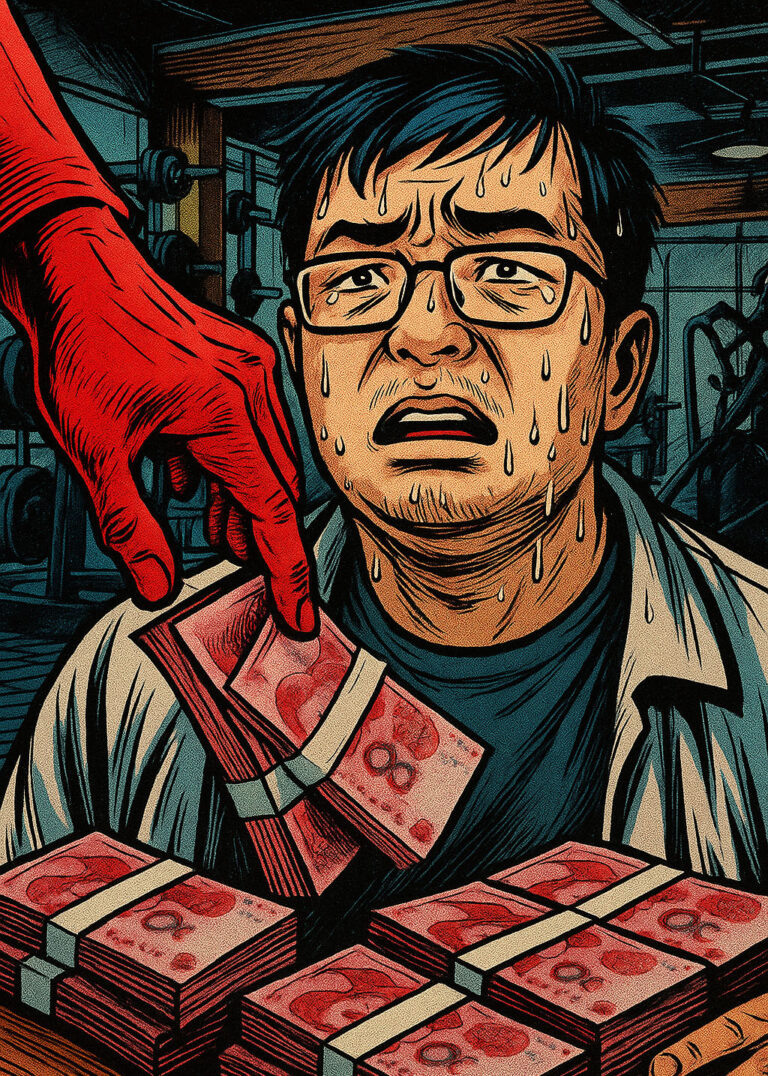

    TL;DR

    • The modern keyboard evolved from the typewriter, with the first patent dating back to 1714.
    • The QWERTY layout was created by Christopher Latham Sholes in the 1860s to prevent mechanical jams, not for typing speed.
    • Key innovations like the Shift key (1878) and the IBM Selectric’s typeball (1961) dramatically improved typing.
    • The Dvorak layout, while more efficient, failed to replace QWERTY due to the high cost of retraining and existing infrastructure.
    • Today’s keyboards are electronic switches, but their core design still reflects their mechanical past.

    The real firsts (and the one that counts)

    People invented machines to write long before computers showed up. In the 1700s, inventors dreamed up automated writing tools. The first known patent for a machine “to write” is often traced to Henry Mill, in London, in 1714. His patent described a machine “for the impressing or transcribing of letters singly or progressively one after another.” Ambitious. Vague. Revolutionary for its time.

    However, that device didn’t spring into the modern keyboard overnight. Between Mill and the keyboards we know today lies a parade of inventions: practical typewriters, teleprinters, keypunches, electric typewriters, and teletypes. Each one added a piece to the puzzle.


    The typewriter: the ancestor that matters

    The practical typewriter — the one that people could actually use — first crystallized in the 19th century. Christopher Latham Sholes and his collaborators (including Carlos Glidden and Samuel W. Soule) are the names most historians point to. Sholes’ work in the 1860s produced machines that were sold and marketed by Remington in the 1870s. That’s where typewriters went from quirky contraption to office staple.

    Crucially, the typewriter is also where the QWERTY pattern emerged. Sholes designed a keyboard layout that placed many common letter pairs apart from each other. Why? To reduce jams. Early typewriters had metal arms — little hammers — that rose and struck the ribbon and paper. If two nearby arms collided, the mechanism jammed. So layout decisions weren’t ergonomic or cognitive. They were mechanical. They were pragmatic. If your machine kept jamming, you weren’t typing faster — you were just stuck fixing it.


    The Shift key and Remington’s nudge toward modernity

    Another small but massive step came with the introduction of the Shift key. Originally typewriters had separate keys for uppercase and lowercase. Then the Remington No. 2, introduced in 1878, added a single Shift key (on the left). That gave typists access to two characters per typebar. It’s a tiny feature mechanically, but a huge change for how we type. Today we hold Shift for emphasis or to shout in caps lock. Back then, Shift was a literal shift in how machines encoded letters.


    Underwood and the moment typewriters became useful

    The Underwood typewriter is widely regarded as the “first successful modern typewriter.” Franz Xaver Wagner’s work led to patents in the 1890s and, with John Underwood’s backing, the Underwood company released machines that let typists see what they were typing as it happened. That was not a small convenience. It changed the user experience. No more transcribing blindly. Correction was easier. Typing became faster and less error-prone. By the early 20th century, many manufacturers’ designs converged on the familiar arrangement we still recognize.


    Teletypes, keypunches, and adding machines: the keyboard’s electronic cousins

    While typewriters evolved, parallel technologies sprouted that would later feed into computing. Teletype machines (sometimes called teleprinters) matured in the late 19th and early 20th centuries. Inventors such as Royal Earl House, Emile Baudot, and later Charles Krum and Edward Kleinschmidt contributed to systems that could send typed messages over wires. That mechanical-to-electrical crossover mattered.

    Keypunches also became important. Punch-cards drove early business computing and tabulating machines. Typewriters married with punch-card systems became keypunch machines, which could drive accounting systems and early calculators. By the 1930s and ’40s, these technologies were everywhere in offices that processed lots of data. In short: if you were an office in 1931, you could buy an adding machine — and IBM alone had registered huge sales in that arena.


    From typewriter to computer: the technical handoff

    So how did the keyboard move from ink and paper to magnetic tape and vacuum tubes? Gradually.

    Early computers often used punch-cards or paper tape as input. The Eniac — one of the first large-scale electronic computers, completed in 1946 — used punch-card readers. But there were also experiments that used typewriter mechanisms directly as input/output devices.

    By the late 1940s, a machine called the BINAC used an electro-mechanically controlled typewriter to put data onto magnetic tape. That prototype idea — use a keyboard to type into a storage device — paved the way for keyboards that talk to computers. Once electric typewriters and teletype interfaces improved, it became natural to adapt their key mechanisms for computing.


    IBM Selectric: the typeball that changed everything

    Fast-forward to 1961. IBM introduced the Selectric. It ditched typebars in favor of a small rotating “typeball.” That ball carried all the characters. It would rotate and tilt to the right position, then strike the ribbon. The Selectric design reduced jams and improved reliability. It also made it easier to change fonts — swap the typeball and voilà, different typeface.

    Why is Selectric important for keyboard history? Because it pushed the typewriter into a more modular, precision era. The machine felt modern. It sold millions of units. And it built engineering habits that would later influence electronic keyboards and mechanisms used in terminals and early word processors.


    QWERTY vs. alternatives: efficiency, habit, and inertia

    Over the decades, other layouts appeared. The most famous rival is the Dvorak Simplified Keyboard, patented in 1936. Dvorak claimed to be more efficient. It placed commonly used letters under the home row and aimed to reduce finger travel. Many experiments showed gains in speed for users trained solely on Dvorak. But adoption remained minuscule.

    Why? Because by the mid-20th century QWERTY had already spread across offices, schools, and factory training. People invested time training typists. Businesses bought equipment. Software and hardware assumed QWERTY. So even if Dvorak technically offered improvement, QWERTY’s familiarity — combined with “good enough” performance — made it commercially sticky. The same story repeats in product design again and again: the best pure solution doesn’t always win. The one that’s “efficient enough” and hard to replace does.


    The rise of electronic keyboards and terminals

    By the 1960s and 1970s, computers were moving away from purely mechanical input. Electronic terminals became popular. These were keyboards attached to video displays or printers. They emulated typewriters, but were purely electronic. The important shift here is signal processing. Keys stopped being mechanical levers that struck ink. They became switches that closed circuits. Those switches needed debouncing, encoding, and later mapping to characters through software.

    In computing, standards began to matter. Keyboards started reporting keycodes. Terminals like the Teletype Model 33 and later video terminals dictated how keyboards interact with computers. By the time personal computers arrived in the late 1970s and early 1980s, keyboards were already standardized in many ways.


    Keypunch → punch-card → early computer input: how businesses shaped design

    Business needs shaped early computer keyboards. Punch-card systems demanded certain character sets and encoding. Offices ran lots of batch processing. That influenced which keys were essential and how layouts were implemented.

    Then computers matured. Input devices had to become more robust, more programmable, and often cheaper. That pushed designs toward solid-state switches and matrix scanning circuits. Switch matrices are how most modern keyboards detect key presses: rows and columns wired so that closing a switch connects a unique row-column pair. Simple logic. Efficient scanning. Cheap to manufacture.


    Modern keyboards: mechanics, types, and expectations

    Today’s keyboards come in many styles. Mechanical switches vs. membrane switches. Wired vs. wireless. Full-size vs. tenkeyless vs. compact 60% layouts. Backlit RGB gaming keyboards sit next to minimalist office boards. Programmable macro keys live alongside ergonomic split keyboards designed to ease wrist strain.

    Mechanically, keyboards differ by switch type. Mechanical switches provide tactile or linear feedback and often high durability. Membrane keyboards use rubber domes. They’re quieter and cheaper, but can feel mushy. Then there are hybrid scissor switches common in laptops. Each has tradeoffs in feel, durability, and cost.

    On the software side, keycodes and the USB Human Interface Device (HID) standard mean keyboards present a consistent interface to modern systems. Today you can remap keys in software easily. You can program layers. You can even emulate alternative layouts without ripping out hardware.


    Why QWERTY still rules — and why that matters

    QWERTY’s dominance is partly historical convenience. But it’s also psychological. People resist relearning muscle memory. Businesses resist retraining entire workforces. Software and hardware ecosystems assume QWERTY. Thus, even better layouts face high switching costs. That inertia is a form of path dependence: initial design choices constrain future possibilities.

    That doesn’t mean QWERTY is optimal. It just means it’s stable. For anyone designing keyboards, or learning to type, this is key: ergonomics and efficiency matter, but so does context. If you’re the only one typing on your custom Dvorak layout, the world will adapt. If you run a fleet of data-entry clerks, you’ll likely keep QWERTY.


    Key milestones recap (short and sweet)

    • 1714 — Henry Mill files a patent for a machine “for the impressing or transcribing of letters.”
    • Mid-1800s → early 1900s — dozens of typing and telegraph-type technologies evolve.
    • 1868 — Christopher Latham Sholes patents the practical typewriter and the building blocks for the QWERTY layout.
    • 1878 — Remington No. 2 introduces the single Shift key.
    • 1890s — The Underwood design and company make typing more visible and user-friendly.
    • Early 1900s — Keypunches and teletypes enter offices, influencing data processing.
    • 1946–1948 — ENIAC, BINAC, and other early computers start to use punch-cards and typewriter-like input for computing.
    • 1961 — IBM Selectric introduces the typeball; a modern, reliable typewriter experience.
    • 1936 (interposed in timeline) — Dvorak layout is patented as an alternative to QWERTY.
    • Late 20th century — keyboards move from mechanical linkages to electronic switches, and then to USB HID standards.

    The keyboard’s hidden engineering: short tech primer

    Let’s demystify a few common terms you’ll see when shopping or tinkering:

    • Switch matrix: A wiring grid where rows and columns meet. When you press a key, a particular row-column pair closes. The controller scans rows and columns to find which key was pressed. It’s cheap and elegant.
    • Debouncing: Mechanical switches can toggle rapidly when pressed. Debouncing logic smooths that into a single clean signal.
    • Key rollover: How many simultaneous keys the keyboard can reliably register. “N-key rollover” is the gold standard for gaming keyboards.
    • Key scanning rate / polling rate: How often the computer checks the keyboard for input. Higher polling rates can reduce latency.
    • Keycaps and profiling: The shape and sculpt of keycaps affects typing comfort. Profiles like OEM, Cherry, SA differ in height and shape.
    • Switch types: Linear (smooth travel), tactile (bump at actuation), clicky (bump + click sound). Each feels different and suits different users.
    • Programmability: Many keyboards let you remap keys and create layers. Some even include on-board memory so settings travel with the keyboard.

    Keyboards beyond desktops: phones, tablets, and touch

    The modern keyboard isn’t only physical. Touchscreens changed input. Virtual keyboards adapt layouts dynamically. Predictive text and autocorrect rewire typing behavior. Swiping keyboards change the typing model further. Yet even mobile keyboards borrow rituals and layouts from physical ones. The QWERTY layout moved smoothly to touchscreens because people already knew it.

    Accessibility features, too, have reshaped input. Voice-to-text, on-screen keyboards with alternative layouts, and adaptive hardware all expanded who could type effectively.


    Where keyboards might go next

    If you like wild speculation (and let’s be honest, who doesn’t), here are plausible next steps for keyboards:

    • Adaptive surfaces: Displays built into keys that reconfigure dynamically. Imagine keys that change labels and symbols based on app context.
    • Haptic and tactile augmentation: Touchscreens with localized haptic feedback that mimic mechanical keys.
    • Context-aware layouts: Software that rearranges your keyboard based on the language or the task.
    • Neural and gesture interfaces: Not keyboards, per se, but things that might replace them for some tasks. Direct neural input is noisy today. But hybrid systems where gestures and small physical keyboards work together are realistic near-term options.
    • Sustainability and modularity: Hot-swappable switches, recyclable materials, and long-life designs may become default for premium boards.

    A practical note for learners and typists

    If you’re learning to type, two rules:

    1. Pick a layout and stick with it long enough to build muscle memory.
    2. Pay attention to ergonomics: posture, keyboard height, wrist angle, and breaks.

    If you’re a keyboard nerd: try different switch types. Try a split keyboard. Try QWERTY, then Dvorak, then go back and notice the differences. If you’re a manager buying keyboards for a team: stability often beats novelty. A reliable, well-built keyboard that your team can use without retraining often gives better productivity ROI than a “faster” but alien layout.


    My point of view (yes, you get my hot take)

    Keyboards are a brilliant example of technological path dependence. We keep using a design that solved a mechanical problem long ago because the social and economic costs of switching are huge. That’s neither good nor bad. It’s just how systems evolve.

    Personally? I like mechanical keyboards. The sound, the feel, the little rituals of typing — they matter. But I also appreciate how resilient the keyboard has become. From clacking metal arms to per-key RGB and programmable macros, the input device evolved without losing its soul: it still maps human thought into machine-readable symbols. That continuity is rare.

    Also: we’re overdue for a genuinely usable, widely adopted improvement to the standard keyboard for ergonomic health. People type a lot. Carpal problems are not “just part of the job.” Design should prioritize health, and manufacturers have the capability — and the market incentive — to push ergonomics forward. But profit and inertia slow that progress. So the future of typing will probably be an incremental shift rather than a flash revolution. Expect interesting peripherals, not a sudden end to QWERTY.

    Finally: don’t worship novelty. The “best” layout is the one that works for you. If you buy a keyboard because of marketing and it gives you tendon pain, you picked the wrong keyboard. If you switch to Dvorak and suddenly type faster and feel better, that was a smart move. We’re all just optimizing trade-offs.


    Quick FAQ

    When exactly was the first keyboard invented?
    It’s not a single date. Patent records show devices in the 1700s. But the practical, modern ancestor of today’s keyboard is the 19th-century typewriter — the Sholes design and Remington’s commercialization are the big turning points.

    Who invented QWERTY and why?
    Christopher Latham Sholes is credited with creating QWERTY. The layout was shaped to avoid mechanical jams by separating commonly paired letters. It wasn’t an ergonomic manifesto. It was mechanical triage.

    Was Dvorak actually faster?
    For some trained typists, yes. But adoption costs were high. So Dvorak remains a niche.

    What replaced typebars?
    IBM’s Selectric introduced the typeball in 1961. Later, electronics replaced mechanical linkages entirely. Modern keyboards use electronic switches and matrix scanning.

    Will keyboards die with voice and neural tech?
    Not soon. Voice is great for some tasks. Neural input is promising but immature. For precise, expressive text entry — especially in public, noisy, or sensitive settings — keyboards remain hard to beat.

    He Paid for a 300-Year Gym Membership — Then the Owners Vanished

    A man in Hangzhou spent roughly ¥871,000 on gym memberships and private lessons that—on paper—would last 300 years. Lured by a resale “profit” scheme, he waited for promised payouts that never arrived. When management disappeared, he filed a police report. This piece breaks down what happened, what the contracts actually said, and why the whole setup screams “too good to be true.”

    TL;DR

    • A long-time gym member in Hangzhou, China, spent over ¥871,000 on gym memberships and training.
    • The contracts were for 300 years and were bought under the premise of a “resell for profit” scheme.
    • The oral promises of profit and refunds were not included in the written contracts, which explicitly stated the memberships were non-transferable.
    • The gym’s sales and management teams disappeared, leaving the customer with invalid contracts and no returns on his money.
    • This case serves as a warning about the dangers of verbal agreements, attractive but suspicious offers, and the importance of reading contracts carefully.

    There are dumb ways to waste money and then there are headline-making, audaciously surreal ways. This is the latter.

    A man in Hangzhou, identified only as Jin, walked into Ranyan Gym as a regular. He left with contracts that, if you stacked their expiry dates end to end, would keep the great-grandchildren of his great-grandchildren’s grandchildren in Pilates until the year 2325. In money terms? He dished out roughly ¥871,000 — a figure that reads like luxury-car territory — for memberships and private coaching packages whose combined validity the paperwork cheekily called “300 years.”

    By late July, the sales team that sold him the dream had ghosted him. Management vanished. Promised payments never came. Jin filed a police report and the story has since been shared across social feeds like a cautionary meme. Before you laugh at the 300-year punchline, let’s walk through exactly how this unfolded and why it wasn’t simply bad luck but a setup with obvious fault lines.


    How it started: familiarity, trust, and then an irresistible “promotion”

    Jin had been a member of Ranyan Gym in Hangzhou for three years. That matters. People trust places they visit regularly. Sales teams know this and deploy it as effectively as scented candles in a boutique: it lowers resistance and greases the path to yes.

    Between 10 May and 9 July, Jin signed 26 separate contracts for memberships and private training sessions. Altogether, he bought approximately 1,200 lessons. The combined validity on the paperwork? That dizzying number: 300 years.

    There’s a human truth here: repeated exposure to an idea reduces skepticism. Hear the same pitch often enough from the right person, and your internal guard takes a nap. Add polished sales patter, a friendly rep, and the illusion of insider access, and wallets open.


    The pitch: buy one year for ¥8,888, resell for ¥16,666 — pocket the profit

    Here’s the magnet that pulled Jin in.

    A sales executive offered a “promotion for existing customers.” Buy a one-year membership for ¥8,888, then resell it to a new customer for ¥16,666. The gym would keep 10% of the markup and return the rest to the seller. On top of that, if a card didn’t sell within two months, the gym promised a full refund. It sounded like passive income tucked into a fitness expense. Tempted, Jin bought two cards to test the waters. Then he bought more. At one point he spent over ¥300,000 in a single day.

    If this sounds familiar in structure, that’s because it’s essentially retail arbitrage with the supplier acting as both vendor and purported buyer. If there isn’t a real, independent demand for resold cards, the whole model collapses. And the promise of a refund — if it exists only in conversation — is only as strong as the other party’s conscience.


    The contracts: what they said, and crucially, what they didn’t

    When Jin later inspected the paperwork, the reality hit him: the written contracts didn’t promise the returns the sales team had described. Worse, the contracts explicitly stated memberships were non-transferable. In plain terms: the salesperson’s “you can resell this” sales pitch had no legal backing in the documents Jin signed.

    This mismatch between oral promises and signed contracts is the critical failure point. Sales talk left the building the moment signatures hit the page. Contracts, not conversations, tend to rule in any formal dispute — unless you have extra documentary evidence showing the contrary.


    The collapse: no payouts, empty offices, and a police report

    Jin expected part of his principal back on 15 July — the two-month window for those first resell cards had passed. No money arrived. At first a salesperson told him finance was “still reviewing” the transaction. That’s a classic stall tactic. By the end of July, staff were disappearing. Management and salespeople were gone. The gym remained physically open, but only receptionists and administrative staff were on site when reporters checked.

    When Jin reviewed his contracts more closely, the unpleasant truth became clear: the promise of returns didn’t appear in writing, and the memberships were non-transferable. He filed a police report and took the story public. Social media’s reaction has been a mix of pity, mockery, and incredulous questions about how anyone could buy centuries of gym time — but the real issue is less the absurdity and more the exploitation.


    Why this wasn’t “just bad luck” — structural red flags

    This story isn’t an isolated fluke. It shows a pattern:

    1. Affinity + trust. Jin was a regular. That lowered his guard.
    2. Suspiciously attractive returns. Doubling the price of a one-year card in a private resell arrangement without showing a real market is a red flag.
    3. Verbal promises trumping written terms. The sales pitch and the contract contradicted one another; the contract won.
    4. Large up-front spending. High daily spends are an easy target for opportunistic schemes.
    5. No independent resale market. A reseller needs external buyers. If resales are supposed to be guaranteed, the program must be transparent and documented — which it wasn’t.

    Stack those factors and you get a business model that can be weaponized into a scam when the people running it decide to vanish.


    Legal and practical realities (not legal advice)

    Jin did the sensible next step: he filed a police report and went public. That’s how pressure builds on companies that go quiet.

    But here’s the practical truth: written contracts carry weight; oral assurances do not, unless you can corroborate them. If the sales rep made promises via recorded calls, written messages, internal emails, or witnesses, those are useful. Otherwise, enforcing an oral promise that contradicts a signed contract is difficult.

    Also, any legitimate resale or refund program should be formalised and transparent: public listings, documented buyer-seller transactions, and clear records. None of that was provided here. So while police and regulators may investigate, much of the immediate protection rests on how well a consumer documented the sale and the pitch.


    Why “membership arbitrage” invites trouble

    This is not merely a weird story because someone liked the number 300. It reflects modern monetisation tactics:

    • Subscriptions are opaque. Dates, transferability, and resale rules vary and are easy to obscure.
    • Salespeople can promise anything. An individual rep’s claims can be denied by the company later.
    • Fast payments enable fast disappearances. Instant transfers make it easier for operators to take large sums and vanish.
    • People conflate health spending with safe investing. That cognitive bias is exploitable.

    In other words, the Ranyan Gym episode uses ordinary commercial mechanisms and a little theatre to manufacture an opportunity for exploitation.


    Practical tips so you don’t become the next headline

    You can laugh at the headlines, or you can be smarter than the pitch. Here’s how:

    1. Always demand written terms up front. If someone promises refunds and resale profits, get it in writing and attached to the contract.
    2. Check transferability before you buy. If resale is your exit plan, make sure the contract allows it.
    3. Verify the resale market. Ask for evidence of recent resales and how the process works. No proof? Walk away.
    4. Avoid impulse bulk buys on the gym floor. Those environments are designed to make you sign quickly.
    5. Use traceable payment methods. Credit cards and bank transfers give you a paper trail; cash does not.
    6. Document everything. Save chats, recordings, screenshots, and receipts.
    7. Treat “resell for profit” pitches as get-rich-quick offers. They’re risky, especially when the operator is also the supplier.

    A blunt take — my point of view

    Alright, here’s the raw opinion: Jin’s loss is painful, but it’s not simple naiveté. It’s a mix of human trust, persuasive retail psychology, and a business model that allowed plausible deniability. Wanting to invest in your health is admirable; confusing that impulse with speculative investing was the misstep.

    The business deserves blame, too. If you sell memberships and verbally promise features the contract denies, that’s at minimum irresponsible and potentially fraudulent. If a company wants to run a resale program that guarantees returns, it should formalise it, publish audited records, and make terms airtight. Anything else is marketing fairy dust.

    Also, regulators should tighten rules around transferability, resale guarantees, and required disclosure for membership businesses. Without clearer rules, the onus remains largely on customers and investigative journalists to uncover bad behavior.


    Epilogue: the human detail

    There is something quietly sad in all of this: Jin said he didn’t actually expect to use a gym for 300 years. He bought the plan as a symbolic commitment to health. That’s not a punchline; it’s a motive that makes the loss sting more. Laugh at the absurdity if you must. But remember there’s a person who wanted to do something positive and got exploited for it.