
More
    Home Blog Page 68

    Devotees in India Mistake AC Condensation for Holy Water

    0

    In a realm where the sacred and the mundane often intertwine, a peculiar incident unfolded at the revered Banke Bihari Temple in India. Devotees, driven by a deep-rooted faith, mistook the mundane drip of air-conditioning condensation for a divine elixir. This comical yet thought-provoking event invites us to ponder the fine line between faith and fact, and how sometimes, even the most sacred places can be subject to the quirks of modern technology.

    TL;DR

    1. Faith can be powerful, but critical thinking is important.
    2. Sometimes, the most extraordinary miracles can be the most ordinary occurrences.
    3. A little humor can go a long way in understanding the human condition.

    In a world where we crave the divine, people sometimes find miracles in unexpected places—or, in this case, on an air-conditioning (AC) drip line! Yes, you read that right. Recently, at the famous Banke Bihari Temple in Uttar Pradesh, India, something rather unusual—and honestly, a little ironic—unfolded. Hundreds of devotees lined up to collect what they thought was sacred water, only to later discover it was merely condensation from an AC unit.

    What happened at Banke Bihari Temple has ignited quite the buzz, with some taking it as a humorous reminder of how quick we are to embrace a “miracle” and others calling for more transparency. But let’s walk through the story—and maybe learn a little something about the human heart along the way.

    A “Holy” Drip, or Just a Leak?

    It all started when worshippers noticed water dripping from an elephant-shaped sculpture in the temple. This sculpture was near a statue representing Lord Krishna, a deity revered by millions. For devotees, the water was quickly interpreted as sacred—possibly even a divine blessing flowing down from the feet of Lord Krishna himself. And who wouldn’t want to feel a part of such a miraculous experience?

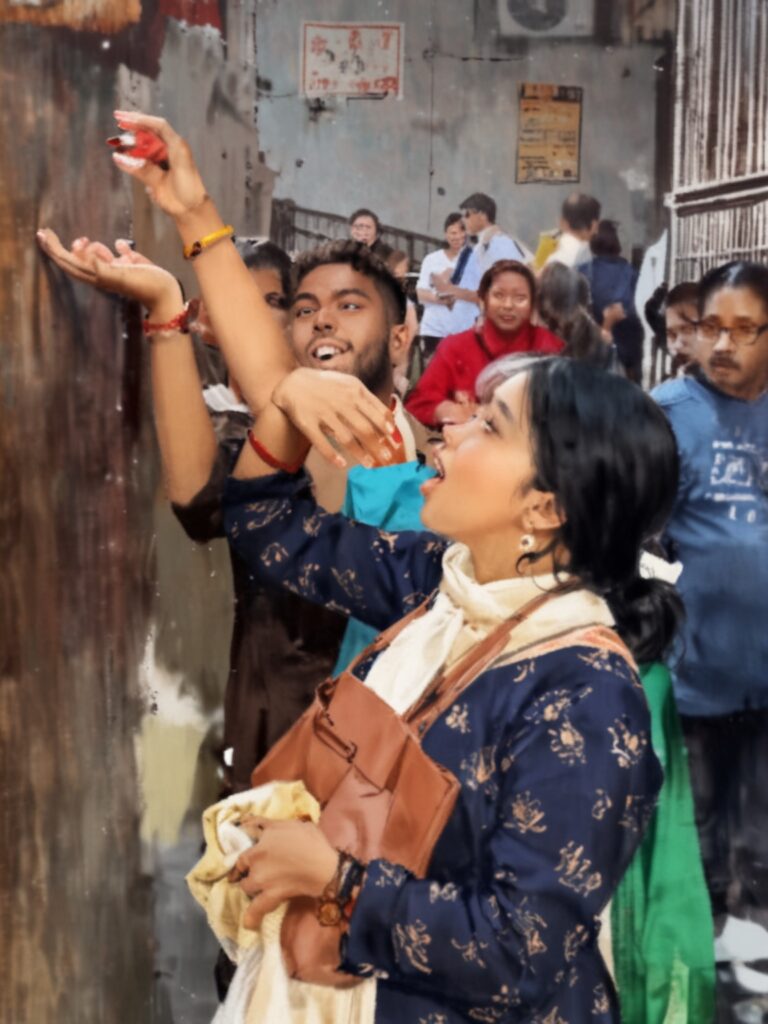
    Seeing this “holy water” (Charan Amrit) pouring down, devotees were inspired. Many began to collect the water, bringing small cups, containers, and even using their hands to scoop it up. Some sprinkled it over their heads, while others drank it directly, moved by what they believed to be a supernatural sign.

    As this story gained traction, images and videos quickly went viral on social media. People shared their excitement, calling the water holy, and showing the lines forming as more people heard about the “miracle.” But what seemed like a spiritual revelation soon became, well, a bit of a letdown.

    The Temple’s Clarification – It’s Just AC Condensation!

    Just as the enthusiasm peaked, temple authorities stepped in with a reality check. According to them, this wasn’t the blessing of the divine but rather the result of practical infrastructure. The temple clarified that the water devotees had been collecting was actually condensation from their air-conditioning units. The AC units, in place to keep the temple cool, were connected to a drainage system that discharged through the elephant-shaped spouts.

    Apparently, condensation from the AC units traveled through tubes built into the temple structure, only to emerge as droplets in the place devotees thought was a conduit for sacred water. And there it was—a miracle debunked by modern cooling technology!

    Devotees’ Reactions: Disappointment and Frustration

    After the clarification, some devotees were left feeling disillusioned, even a bit foolish. A few were understandably upset, feeling they had been misled, while others shrugged it off as an innocent misunderstanding. Yet, this incident has raised some interesting questions about belief, science, and the ways we interpret the world around us.

    Social media saw mixed reactions too. Some netizens found humor in the situation, sharing memes and quips about “holy air-conditioning.” Others sympathized with the devotees, suggesting that the temple should have posted more information about the water source to prevent misunderstandings.

    Why Do People Believe in Everyday Miracles?

    While the AC-drip revelation is amusing, it highlights a deeper question: Why are we so eager to see the miraculous in everyday events? For many people, life is challenging, and moments that offer even a hint of the divine can be comforting. This eagerness to believe may stem from a desire for connection, especially in sacred spaces where faith runs deep.

    Historically, places of worship have been associated with miraculous events, and temples like Banke Bihari hold a special place in people’s hearts. So when devotees saw water dripping in a holy setting, it was natural to interpret it through the lens of their faith and heritage.

    My Point of View on Miracles and AC Drips

    So, let’s be honest. This story might seem funny—and maybe a tad embarrassing—but it’s a genuine reminder of how we often look for signs and miracles in the simplest things. Belief can be incredibly powerful, but sometimes it’s a good idea to question a little. After all, not every drip is a holy blessing, just as not every challenge is a curse.

    My advice? Let’s embrace these moments for what they are: evidence of our collective desire for wonder and meaning. Maybe next time, we’ll do a little more investigating before lining up for a sip. And, temple authorities, a small sign noting “AC Condensation, Not Holy Water” could save a lot of confusion!

    A video making the rounds on social media shows Indian devotees drinking water that was used to wash the feet of a revered guru. In the footage, followers can be seen gathering close as the water flows down, collecting it in their hands or small vessels before drinking it as an act of devotion. This ritual, often rooted in cultural and religious reverence, reflects a deep spiritual connection for many, where drinking such water is believed to impart blessings, purification, and a closeness to the divine. The video has sparked various reactions online, with some praising the devotees’ faith and others questioning the health and hygiene aspects of the practice.

    Wrapping Up: Faith Meets Fact

    In the end, this incident at Banke Bihari Temple was a funny, endearing moment, one that sheds light on the universal search for miracles in the mundane. We see what we wish to see, often interpreting the unknown through a filter of faith. But sometimes, science has a straightforward answer.

    Belief and science don’t have to be at odds—they can coexist, adding both wonder and practicality to our lives. So, the next time you find yourself in front of an unexpected “miracle,” maybe pause, smile, and consider both possibilities. Who knows? You may be blessed with a little enlightenment—or at least, a refreshing spray from the AC.

    Johor Bahru Businessman’s Shocking Kidnapping by Wife

    0

    Behind every great fortune lies a great crime, they say. But what if the criminal mastermind isn’t a shadowy figure lurking in the night, but someone you’ve shared your life with?

    In a shocking turn of events that has sent mouths talking through the city of Johor Bahru, a seemingly ordinary businessman found himself entangled in a web of deceit and danger. The culprit? Not a ruthless gang of kidnappers, but a woman he trusted implicitly: his own wife.

    TL;DR

    • Trust can be broken, even by the closest of people.
    • Greed can lead to unimaginable actions.
    • Appearances can be deceiving.
    • Always be cautious, even with those you love.
    • Money can’t buy happiness, but it can certainly cause problems.

    A Bizarre Kidnapping Tale in Johor Bahru with a Shocking Twist

    Picture this: it’s early morning in Johor Bahru, Malaysia. A 59-year-old businessman, ready to catch a taxi to the airport, is suddenly ambushed outside his home. It sounds like something out of a movie, but for one man, it was a terrifying reality. Around 5 a.m. on October 13, armed kidnappers stormed the quiet street, threatening him with a gun, assaulting him with a wooden stick, and even covering his head with a cloth before dragging him away.

    And the ransom? A whopping 30 million ringgit (about $6.8 million USD). But wait, there’s more to this story. Sin Chew Daily News reported that the kidnappers left a mobile phone at the scene to communicate with the victim’s family—practical, if not oddly considerate.

    Let’s break down this shocking story, look at what went down behind the scenes, and explore the twist that caught everyone off guard.

    Negotiations and a Multi-Million Dollar Payout

    The victim’s family must have been horrified, but they immediately swung into action, trying to lower the ransom to a “bargain” of 20 million ringgit (about $4.5 million USD). Yes, you read that right—a discount on the ransom. After some tense negotiations, they managed to raise five million ringgit in cash, which they dropped off in a residential area in Taman Perling, Johor Bahru. The rest of the ransom was transferred to a bank account via a friend from Singapore.

    Hours later, after a nearly half-day ordeal, the businessman was released. When he spoke to the police, he reported that his kidnappers consisted of four people, including a woman, though he couldn’t identify their nationalities. And just like that, this strange saga seemed to be over—or so it seemed.

    The Plot Thickens: Was His Own Wife Behind It All?

    source: https://www.orientaldaily.com.my

    As if the kidnapping wasn’t bizarre enough, the story took an unexpected turn. A few weeks after the incident, a woman named Chen Wangui (a transliteration) was charged in Johor Bahru. Who was she? The businessman’s own wife. That’s right: the person who had been uploading pictures of their happy family life on Facebook and celebrating anniversaries with her husband was now accused of masterminding his abduction.

    Chen, 57, had recently celebrated 36 years of marriage with her husband in August. Yet, here she was in the center of a police investigation, suspected of planning his kidnapping. For many locals and followers of this shocking case, this was a jaw-dropping revelation.

    What Really Happened That Morning? Breaking Down the Events

    So, what exactly went down on October 13? Here’s a quick recap of the key details that make this case feel straight out of a crime novel:

    1. Early Morning Ambush: At 5 a.m., while preparing for his trip to Johor Bahru Senai International Airport, the businessman was attacked outside his home by three masked kidnappers, who forced him into their vehicle.
    2. Threats and Brutality: With a gun pointed at him and physical assault from wooden sticks, the kidnappers showed no mercy. This wasn’t just a quick snatch-and-grab; they made sure to inflict fear and pain.
    3. Ransom Demands and Negotiations: Soon after the kidnapping, the abductors contacted the businessman’s family, demanding a hefty ransom. The family managed to lower the demand from 30 million to 20 million ringgit and ultimately paid S$6 million to secure his release.
    4. Release and Police Report: By noon, the victim was safely released, with police notified of the crime later that evening. In his report, he mentioned the involvement of four kidnappers, including a woman.
    5. The Mastermind’s Arrest: After some investigation, police zeroed in on Chen, the businessman’s wife, as the suspected mastermind. She was detained and questioned twice, ultimately facing charges in early November.

    14 Arrests and a Maze of Suspects

    source: https://www.sinchew.com.my/

    If you think this story can’t get more convoluted, think again. Following the businessman’s release, the Royal Malaysian Police ramped up their investigation and soon arrested 14 suspects. Among them were 10 locals and four foreigners, including three women. While details were scarce, reports indicated that these individuals were part of an elaborate plot involving extensive planning and brutal execution.

    A Closer Look at Chen’s Motive: Why Would She Do It?

    Here’s where things get speculative—and intriguing. Why would Chen, a long-time wife with whom the businessman had built a life, orchestrate such a scheme? Was it financial gain? A personal vendetta? Or perhaps even a mixture of both? While we can’t dive into her mind, the accusations alone have left many speculating.

    If found guilty, Chen could face up to 40 years in prison. There’s also the possibility of caning, a punishment that’s rare for women but legally allowable in such severe cases in Malaysia. Was her marriage to the businessman merely a convenient cover for something more sinister?

    Perspective: A Tale of Betrayal or Desperation?

    From my point of view, this case highlights a reality stranger than fiction. Here we have a wealthy businessman, who presumably trusted his wife, only to face betrayal in the most dramatic way. If the allegations are true, Chen’s actions reflect a level of desperation or cunning that’s hard to understand. But what pushes someone to turn on their spouse so spectacularly?

    Cases like this often reveal deep-seated issues that may have been simmering for years, hidden from friends, family, and even social media. Perhaps financial stress, personal grievances, or even jealousy played a role. Or maybe there’s an entirely different explanation that we’ll never know.

    Final Thoughts: Money, Trust, and a Lesson in Relationships

    This story may sound like an action-packed thriller, but it’s a powerful reminder of the real-world consequences of broken trust, betrayal, and greed. While we may never fully understand Chen’s motives, her alleged involvement in orchestrating the abduction of her husband is a stark example of the complexities within relationships. Money, they say, is the root of all evil—and in this case, it certainly played a part in tearing apart a family.

    In any relationship, particularly those with financial or business interests, trust is everything. Stories like this leave us wondering: how well do we really know the people closest to us?

    Let’s take this story as a cautionary tale. Wealth and power can lead to dangerous dynamics, even among loved ones. And in today’s world, where public facades can be carefully curated, it’s essential to remember that appearances can be deceiving. This tragic event serves as a reminder of the lengths some may go to for personal gain, even at the expense of those they once vowed to protect.

    Chegg vs. ChatGPT: Can They Survive the AI Revolution?

    0

    In a world where artificial intelligence is rapidly evolving, a classic David vs. Goliath battle is unfolding. On one side, we have the seasoned giant, Chegg, a long-time academic ally. On the other, the nimble and cunning newcomer, ChatGPT, an AI-powered chatbot that’s quickly becoming the go-to study buddy.

    Is Chegg, the trusty textbook rental service turned homework helper, still relevant in an era where AI can effortlessly provide answers to complex questions? Or will it be relegated to the history books, a relic of the pre-AI age?

    As ChatGPT continues to learn and grow, can Chegg adapt and evolve to stay ahead of the curve? Or will it be forced to play catch-up, struggling to keep pace with the relentless march of technological progress?

    TL;DR

    • AI is rapidly changing the education landscape.
    • ChatGPT is a powerful AI tool that can provide instant answers to questions.
    • Chegg must adapt to stay relevant in the age of AI.
    • The future of education will be shaped by AI.

    In a world rapidly transforming under the influence of artificial intelligence (AI), businesses are scrambling to stay relevant. And as it turns out, Chegg—the once-thriving online education company—is facing one of the most disruptive shifts in its history. Chegg, which was once synonymous with online homework help, now finds itself caught in the storm stirred up by AI giants like ChatGPT. Will Chegg be able to adapt and reinvent itself, or is it bound to become a relic of the past?

    The Rise and Fall: Chegg’s Glory Days and the ChatGPT Effect

    For many years, Chegg was a lifesaver for students who needed quick answers or a bit of help with assignments. Its subscription model gave access to expert assistance and resources for up to $19.95 a month. With the transition to virtual learning during the pandemic, Chegg’s user base and stock value soared. But this success didn’t last long.

    Enter ChatGPT. Launched as a free, versatile AI chatbot by OpenAI, ChatGPT turned the tide almost overnight. Students could now ask ChatGPT their questions—no subscription needed, no hassle, just instant answers. Chegg’s model was suddenly outdated, and its value plummeted as subscribers fled for this faster, cheaper alternative. Since then, Chegg has lost over half a million subscribers, and its stock, which once reached a record high, has fallen by 99% from early 2021. In just a few years, the company saw nearly $14.5 billion of its market value erased.

    Chegg’s Response to the AI Revolution

    Seeing this massive shakeup, Chegg knew it had to act fast. Dan Rosensweig, Chegg’s CEO of over a decade, took action to try to recapture student loyalty. Unfortunately, Rosensweig’s leadership couldn’t withstand the blow from ChatGPT’s popularity. He retired, leaving the helm to Chegg veteran Nathan Schultz, who promptly made a series of big changes. Schultz laid off 441 employees (about a quarter of the workforce) and began exploring international markets and other services, hoping to expand Chegg’s reach beyond simple homework solutions.

    Schultz didn’t stop there. To win back students, he pivoted Chegg’s focus toward a specific group of “serious learners”—students who, ideally, wouldn’t be content with quick chatbot answers. Chegg began offering more extensive educational resources and even counseling services to distinguish itself from ChatGPT. Schultz emphasized Chegg’s unique position to provide reliable, in-depth answers and human support. But the looming question remains: Is this enough?

    Students Speak: Why ChatGPT Is a Favorite

    Students have clear reasons for preferring ChatGPT over Chegg. “It’s free, it’s instant, and you don’t have to worry about the availability of answers,” says Jonah Tang, an MBA student at Point Loma Nazarene University. ChatGPT provides quick responses without monthly fees, making it accessible to anyone with an internet connection.

    According to a recent survey by Needham, a significant 62% of students planned to use ChatGPT for their studies this semester, up from 43% in spring, while only 30% said they’d stick with Chegg. This shift has caught the attention of investors, analysts, and, naturally, Chegg’s competitors, who see these trends as a sign of structural changes in the online education space.

    Chegg’s AI Journey: Enter Cheggmate, Exit Cheggmate

    Chegg wasn’t going to let ChatGPT steal the show without a fight. In a twist of irony, Chegg joined forces with OpenAI, the very creators of ChatGPT, to develop a new service called Cheggmate. The goal was to leverage GPT-4, the backbone of ChatGPT, combined with Chegg’s database of millions of study answers to create a supercharged educational tool. The idea sounded promising: a hybrid of Chegg’s extensive educational content and AI’s speed and adaptability.

    However, as testing continued, Cheggmate didn’t perform as expected. In a shocking May earnings call, Rosensweig admitted that ChatGPT was eating into Chegg’s subscriber base faster than anticipated. The stock took a sharp nosedive, falling by 48% in a single day. Realizing that Cheggmate wasn’t the silver bullet, Chegg distanced itself from the project, announcing new plans to build AI solutions across different academic subjects in collaboration with Scale AI.

    Schultz even joked about tossing Cheggmate “off a building,” making it clear that Chegg’s future would no longer rest on a single AI product. Instead, the company shifted to creating AI-driven features that could be embedded throughout its entire platform.

    The Reality of AI Competition in Education

    Chegg isn’t the only company grappling with AI’s entrance into education. Other platforms, many of which were once dismissed as “plagiarism hubs,” have also faced scrutiny. A study from the University of Illinois found that students in introductory programming courses overwhelmingly turned to ChatGPT instead of services like Chegg for answers. AI chatbots are now handling academic questions with unprecedented efficiency, a reality that Chegg and others can’t ignore.

    Chegg has taken measures to combat cheating and misuse on its platform, stating that it works with universities to uphold academic integrity. However, the perception of Chegg as a tool for cheating has been hard to shake, particularly when faster and “smarter” AI tools are available.

    My Take: Chegg’s Dilemma and a Possible Path Forward

    Here’s my perspective: Chegg isn’t going down without a fight, but it certainly has its work cut out. The convenience, speed, and affordability of AI tools like ChatGPT have redefined what students expect from educational resources. Chegg’s attempts to innovate—while admirable—may still fall short without a distinct and valuable edge.

    To survive, Chegg should consider redefining itself in a way that even AI can’t touch. Why not offer niche, interactive tutoring sessions or tailor personalized learning paths based on individual needs? These would be services that a free chatbot can’t easily replace. By doubling down on personalization, in-depth guidance, and human interaction, Chegg might just carve out a new niche in a crowded AI-dominated field.

    Moreover, Chegg has an opportunity to become a platform known for accountability and quality. Chatbots, as fantastic as they are, can sometimes produce incorrect answers or oversimplify complex concepts. By setting a high standard of quality, Chegg could become a trusted partner for students who want more than just a quick answer.

    What’s Next for Chegg?

    Chegg still has a fighting chance, but it’s clear that the company needs to differentiate itself in ways that resonate with today’s students. Schultz’s pivot to target “serious learners” could be a step in the right direction, but Chegg will need to go beyond academic assistance to capture lasting loyalty. Perhaps it’s time to focus on unique value propositions—mentorship, mental health resources, or even exclusive educational content crafted by experts in various fields.

    Conclusion: Will Chegg Find Its Footing?

    In the grand scheme of things, Chegg’s struggle is symbolic of a broader shift in how technology reshapes traditional industries. As students rely more on AI for learning, companies that adapt to these changing demands will thrive, while those that don’t risk becoming obsolete.

    Chegg’s journey from a simple message board to a global education provider is impressive, but its future now hinges on bold innovation. If Chegg can redefine itself as a unique, high-value educational platform, it might just pull through. But one thing’s for sure—AI is here to stay, and Chegg’s next moves will determine whether it remains a leader in online education or fades into history.

    Johnny Somali Faces Possible 10-Year Jail Sentence in Korea

    0

    Johnny Somali, the internet’s enfant terrible, has found himself in a real pickle this time. Known for his outrageous stunts and boundary-pushing antics, the controversial streamer has landed himself in hot water in South Korea.

    His latest escapade could land him behind bars for a decade. That’s right, a whole ten years! It seems his penchant for provocation has finally caught up with him.

    TL;DR

    • Respect Local Cultures: Always be mindful of local customs and traditions when traveling abroad.
    • Think Before You Act: Consider the potential consequences of your actions, especially when in a foreign country.
    • Social Media Isn’t a Free Pass: Online platforms don’t shield you from legal repercussions.
    • Learn from Mistakes: Use this as a cautionary tale to avoid similar pitfalls.

    Johnny Somali, the controversial American live streamer whose real name is Ramsey Khalid Ismael, has landed himself in serious trouble during his stay in South Korea. With allegations ranging from obstructing business to potential drug use, Somali could face up to 10 years in prison under Korean law if found guilty. Korean authorities have also imposed a strict travel ban, preventing him from leaving the country while investigations continue.

    A Look Back: Streamer’s Trail of Controversies

    Let’s rewind a bit. This isn’t Somali’s first brush with infamy; he’s made quite a name for himself by testing the limits of decency on more than one occasion. Last year, he stirred up a storm in Japan, live-streaming public disturbances that garnered widespread criticism. Afterward, he made a teary-eyed promise to leave his offensive antics behind. However, actions speak louder than words, and Somali continued his controversial streak, most notably with a recent visit to Israel in April, where he harassed a female police officer.

    Fast forward to October, and he was at it again—this time in South Korea, where he took his behavior to a whole new level of insensitivity. His actions included disrespecting a highly symbolic statue honoring the Korean “comfort women” who suffered during World War II. Kissing the statue was one thing, but the next week, he reportedly took things further by applying baby oil to the statue and making inappropriate suggestions about performing lewd acts on it. Naturally, this behavior did not sit well with the public, to say the least.

    Backlash and Retaliation from the Public

    Somali’s disrespect didn’t go unnoticed by locals, and as expected, tensions flared. On October 24th, he was assaulted by locals in Seoul, receiving a blow to the face. Just days later, on the 27th, he was kicked during another incident, sending him to the hospital for treatment. But that wasn’t all. One Korean YouTuber even went as far as offering a two-million-won reward (approximately $2,000) for information on Somali’s whereabouts, illustrating just how serious the Korean public is about keeping this character in check.

    Current Legal Troubles and Drug Investigation

    Things took a darker turn when authorities received hotline reports accusing Somali of drug use. As a result, Korean law enforcement initiated a formal investigation into the drug allegations. If the accusations hold up, Somali could face severe consequences under Korean law. The potential punishment? Up to a decade behind bars or a hefty fine of 100 million won (about $95,000). Given the seriousness of these charges, the authorities aren’t taking any chances. Somali’s movements have been restricted under a travel ban to ensure he stays put for the duration of the investigation.

    What’s Really Going On Here? A Closer Look

    Now, let’s dig a bit deeper. From a broader perspective, Somali’s antics could be seen as emblematic of a larger trend among certain influencers who seek attention through reckless and provocative behavior, often disrespecting local customs and norms in the process. In his case, the “bad boy” image he’s tried to cultivate might now be backfiring in a big way. And it raises a crucial question: when does shock value go too far?

    For Somali, his journey from controversial online figure to potentially jailed foreigner serves as a cautionary tale. He seems to have a penchant for not just pushing boundaries but bulldozing through them, with little regard for the cultural significance of his surroundings. But in a place like South Korea, where respect for heritage and public decorum holds substantial value, his behavior was bound to attract repercussions.

    “The guy just doesn’t get it, does he? You can’t go around disrespecting another country’s history and culture like it’s some kind of game for views. He had it coming, honestly, and I think this is a much-needed reality check for these so-called influencers who think they’re above the rules. Ten years might seem harsh, but maybe it’ll make people think twice before pulling these stunts.” – Amanda Lee, 32, San Francisco

    Point of View: My Thoughts

    So, where do I stand on this? Honestly, it’s hard to muster much sympathy. In today’s hyperconnected world, anyone with a platform should understand that respect goes a long way, especially in foreign countries. When someone like Johnny Somali chooses to act out in such offensive ways, it’s not just a slap in the face to the local community—it’s a disgrace to the streaming profession itself.

    Yes, online entertainers need to attract viewers, but there’s a clear line between bold content and plain disrespect. If Somali’s goal was to make waves, well, mission accomplished, but at what cost? And to be frank, if he’s found guilty, his punishment could serve as a much-needed wake-up call for others looking to follow in his footsteps. Korea’s firm response highlights the fact that actions have consequences, particularly when they involve a blatant disregard for cultural sensitivities.

    In the end, there’s a lesson here. Perhaps Somali’s potential prison sentence will serve as a stark reminder for influencers and streamers everywhere: respect the cultures you visit, or risk facing the full weight of the law. And maybe, just maybe, that extra few thousand views aren’t worth spending ten years behind bars.

    Key Takeaways:

    • Increased Public Scrutiny: The Korean public has made it clear they won’t tolerate disrespectful behavior, especially against symbols of their painful history.
    • Cultural Sensitivity Matters: Somali’s antics didn’t just offend a few people; they crossed a line deeply rooted in cultural memory and respect.
    • Online Fame at What Cost?: Somali’s actions raise questions about the lengths some streamers will go for attention, disregarding the harm they might cause.
    • Legal and Financial Consequences: Facing a potential 10-year prison sentence and a hefty fine, Somali’s case underscores that countries like South Korea are taking a firm stance against disruptive behavior by foreigners.

    At the end of the day, one can only hope Somali and others like him will learn a valuable lesson or karma in respect and responsibility. Because while internet fame might be fleeting, the impact of one’s actions can last much longer—and sometimes, it’s just not worth it.

    Elon Musk Won Big Gamble on Trump

    0

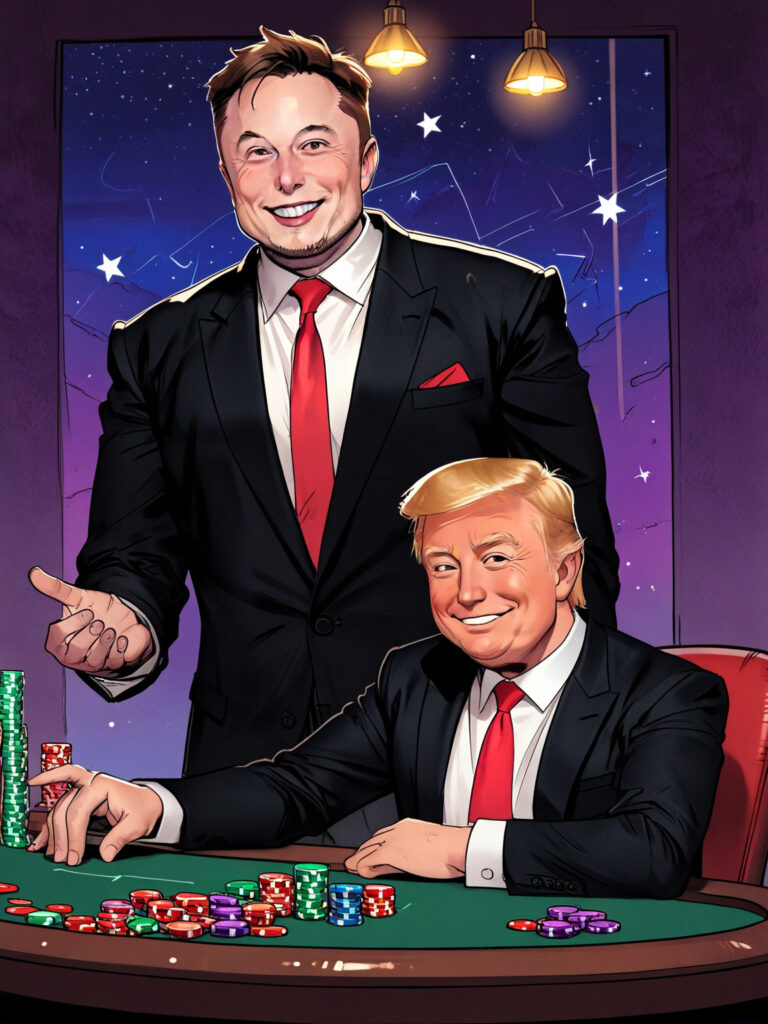
    As America watched Donald Trump celebrate his second presidential victory, Elon Musk was right by his side, basking in the glow of his latest political gamble. Musk had poured an eye-popping $130 million into supporting Trump, turning from tech titan to full-time campaigner in key battleground states like Pennsylvania. Trump didn’t miss the chance to applaud Musk onstage, declaring, “A star is born. Elon.” But what does this alliance mean for Musk’s businesses, and more importantly, for his ambitions?

    Let’s dive into Musk’s strategic moves, the potential upsides, and what could backfire in his quest for influence.

    Musk’s Investment in Trump: A Calculated Risk?

    Musk’s $130 million investment wasn’t just a friendly show of support. It was a business decision with a dash of political strategy. By supporting Trump, Musk appears to be positioning himself to benefit from Trump’s pro-business, anti-regulation policies. And Wall Street noticed.

    Tesla’s shares jumped 15% post-election, adding a cool $15 billion to Musk’s net worth overnight. For Musk, whose companies have faced mounting challenges from Chinese competitors, European market slowdowns, and even criticism over his political stances, this alliance might be the lifeline Tesla needs. It’s no secret that Musk isn’t a fan of red tape, and Trump’s promise to cut regulations could relieve Tesla and SpaceX of some pesky oversight.

    But, is Musk taking a safe bet, or is he rolling the dice with everything he’s built?

    The Benefits for Tesla: A Lift from Regulatory Easing

    With Trump at the helm, regulatory bodies could go a bit easier on Musk’s ventures. Currently, Tesla, SpaceX, and even Musk’s social media platform X (formerly Twitter) are embroiled in numerous federal investigations. These cover everything from alleged securities fraud to environmental law violations. So, having Trump in power could mean an end to some of these probes, giving Musk’s companies room to breathe.

    Here’s where it gets interesting. Under Trump, agencies like the Environmental Protection Agency and National Labor Relations Board might reduce their scrutiny, allowing Musk more freedom. In fact, Musk has made no secret of his disdain for these regulatory bodies, often calling them barriers to progress.

    For Tesla, reduced regulations could mean cheaper production and quicker rollout of technologies, especially autonomous driving. Imagine a federal-level approval process that Musk could help craft, bypassing the state-by-state red tape. It’s a dream scenario, but one that’s bound to raise eyebrows. Does the public really want Musk, a stakeholder, helping decide which rules apply to his own industry?

    SpaceX’s Boost: Federal Contracts and Government Partnerships

    SpaceX has been a favorite for federal contracts, securing billions from NASA and the U.S. military. With Trump’s return, Musk can expect more of the same. Trump has already praised Musk’s efforts to deploy Starlink terminals in disaster-hit areas, making SpaceX appear not just as a contractor but as a strategic partner.

    Federal spending could skyrocket, and Musk might secure even more lucrative deals. Yet, this close relationship with the government could raise ethical questions. Can SpaceX remain objective while receiving massive federal payouts? And what happens if a Musk-run Department of Government Efficiency decides on the budget cuts for competing agencies?

    Musk’s “Department of Government Efficiency”: Too Much Power?

    Here’s where Musk’s influence could reach unprecedented heights. During a recent rally, Musk joked with Cantor Fitzgerald CEO Howard Lutnick about creating a “Department of Government Efficiency.” Musk estimated that at least $2 trillion could be slashed from the federal budget, a figure that outpaces the government’s discretionary spending.

    If Musk’s idea takes off, it could mean sweeping cuts to agencies he considers problematic. But do we really want one man—especially one with his own corporate agenda—holding the reins of America’s budget? This ambition, though tantalizing for Musk’s supporters, may prove a slippery slope, concentrating too much power in a single, billionaire-funded agenda.

    The Possible Downside: A Mixed Bag of Risks

    No great power move comes without its risks, and Musk’s full-throttle support of Trump could backfire.

    1. Public Image: Musk’s increasingly political stance could alienate potential Tesla customers. Electric vehicle (EV) buyers often lean towards progressive ideals and could balk at Musk’s ties to Trump.
    2. Market Dependency: While Tesla could benefit from pro-American tariffs, these also threaten supply chains dependent on Chinese materials. A disruption could escalate costs, impacting Tesla’s pricing and production schedules.
    3. Labor Relations: Musk’s opposition to unions has landed him in hot water with the National Labor Relations Board. With Trump in charge, Musk may push for weakened labor protections, but will that trigger backlash from workers and consumers?

    It’s a balancing act, and one misstep could shatter Musk’s house of cards.

    My Take: Is Musk a Genius, or Just Gambling?

    As an observer, I see Musk as both visionary and risk-taker. His partnership with Trump isn’t just about profit—it’s a strategic power play to reshape the regulatory landscape. By backing Trump, Musk is betting big that government support will let his companies soar without interference.

    But this maneuver comes with high stakes. Musk’s focus on deregulation might lead to short-term gains but at the cost of consumer trust. How many Tesla owners will stick with him if they feel he’s aligned with Trump’s controversial policies? And let’s not forget, political alliances are fragile. If Musk’s bet fails, he could face regulatory wrath from a future administration eager to reverse Trump’s policies.

    In the end, Musk might be a pioneer willing to gamble his empire on a political figure’s goodwill. But as any seasoned gambler knows, you can’t win them all. Only time will tell if Musk’s grand strategy pays off—or if he’ll become just another cautionary tale of ambition unchecked.

    What’s Next for Musk’s Political Power Play?

    Musk’s game plan goes beyond the presidency. His super PAC, formed to influence everything from midterms to local elections, aims to reshape America’s justice system. Imagine Musk-backed district attorneys focused on prosecuting “repeat violent criminals.” This approach, while appealing to some, could spark debates over selective justice and a billionaire’s role in local governance.

    For Musk, this influence means more than just business. It’s about control, shaping policy from the ground up. But can a single person—however wealthy—balance corporate interests with public welfare?

    In Summary

    Elon Musk’s investment in Donald Trump is more than just a political move; it’s a bid for power that could redefine his empire. With Tesla and SpaceX poised to benefit from regulatory ease, Musk’s businesses stand to gain immensely. But this alliance could risk alienating customers and stoke resentment among regulators waiting for a chance to push back.

    As Musk continues to push boundaries, we’re left asking: Is he securing a future of innovation or setting himself up for a fall? Whatever the outcome, one thing’s clear—Musk is in the game for the long haul, and he’s not afraid to bet big.

    Brewing Love: What We Learned So Far…

    0

    Love, like a fine brew, is a delicate balance of ingredients, time, and a little bit of magic. As we’ve delved deeper into the world of “Brewing Love,” we’ve discovered that the recipe for love is far more complex than we initially thought.

    Just like a master brewer, the characters in this series are constantly experimenting, refining their techniques, and sometimes, even making a few mistakes along the way. Through their trials and tribulations, we’ve learned valuable lessons about the art of love, friendship, and self-discovery.

    TL;DR

    • Embrace your unique qualities: Be yourself and don’t be afraid to show your true colors.
    • Communicate openly and honestly: Talk about your feelings and be willing to listen to others.
    • Practice empathy and understanding: Put yourself in someone else’s shoes and try to see things from their perspective.
    • Nurture your relationships: Spend quality time with loved ones and show them you care.
    • Be patient and kind: Love takes time to grow and develop.

    Ever wondered if love could be brewed like a fine beer? Brewing Love is here to tell you it can—and it’s anything but straightforward. The story centers on two unlikely partners: Chae Yong-joo, an energetic beer saleswoman with the tenacity of a bulldog, and Yoon Min-joo, an introverted brewmaster whose hypersensitivity would give a seasoned empath a run for their money. Together, they serve us a mix of humor, drama, and surprising life lessons, all against the lively backdrop of the alcohol industry.

    Episodes 1-2: A Recipe for Chaos

    We first meet Chae Yong-joo (played by Kim Se-jung), a sales powerhouse at Jisang Liquor. She’s fierce, a former soldier turned beer peddler, and if there’s one thing she can’t stand, it’s a tab left unpaid. Despite her rough nickname “Dog Yong-joo” (thank you, shady wholesalers), she’s driven by loyalty and grit. Meanwhile, her counterpart Yoon Min-joo (played by Lee Jong-won), a sensitive soul with a keen nose for craft beer, runs a small brewery making his iconic “In My Name” beer. If Yong-joo is all fire, Min-joo is the cautious water, keeping his distance and hiding behind the shield of his sensitivity.

    Life Lessons in Brewing Love: More Than Just a Drink

    Here are some of the surprising life lessons the show sneaks in, often through clever dialogue, humorous character quirks, and well-timed action sequences.

    1. Passion Drives Success but Balance Is Key

    Yong-joo throws herself into her work, pouring energy into every sale. While her dedication is admirable, we can’t help but think of the toll it must be taking on her. Success is fantastic, but Brewing Love hints at the value of knowing when to slow down. A lesson to take home? Even the strongest brew needs time to rest and develop its flavor.

    2. Embrace Your Unique Qualities

    Min-joo’s hypersensitivity sets him apart, and not always in a good way—especially when his stoic ex-military dad is involved. The show emphasizes that being different doesn’t have to mean being lesser. In a world that loves conformity, Min-joo’s sensitivity is a reminder to embrace our quirks, as they often bring out the depth of our character.

    3. Family and Tradition vs. Personal Growth

    Yong-joo’s loyalty to her grandmother who raised her, and Min-joo’s strained relationship with his dad both highlight how family can deeply shape us, sometimes holding us back or propelling us forward. Life rarely offers clean breaks from family dynamics, but Brewing Love suggests that growth often means redefining these bonds rather than abandoning them.

    Scene Analysis: Showing Not Telling

    Instead of loading us with backstory dumps, Brewing Love skillfully reveals character through action and interaction. For example, when Yong-joo encounters Min-joo at an amusement park, it’s not just a meet-cute. Her frustration over her branch’s closing is simmering under the surface, and Min-joo’s empathic intuition allows him to sense her despair. But does he bombard her with questions or deliver a teary pep talk? Nope. He simply offers her comfort through small gestures, like gifting her a pair of slippers, turning this otherwise light scene into a moment that speaks volumes about their characters.

    Yong-joo’s Determination: When her branch is slated to close, Yong-joo doesn’t just give up; she goes into action mode. There’s no weepy resignation; instead, she strikes a deal to save her branch by agreeing to bring Min-joo’s prized beer to Jisang Liquor. This scene isn’t just about ambition; it’s about someone fighting for their team and what they believe in.

    Min-joo’s Struggle with Boundaries: Min-joo’s empathy is both a gift and a curse. While his sensitivity allows him to connect with Yong-joo’s struggles, it also keeps him guarded. His hesitancy to help is woven through subtle interactions rather than expository dialogue, making his growth feel organic rather than forced.

    Brewing Up Some Real-Life Takeaways

    Here’s where I see the real-life magic in Brewing Love:

    Lesson #1: Follow Your Passion, But Set Boundaries
    Yong-joo’s passion drives her to break down doors (and occasionally people’s patience) for her job, while Min-joo’s sensitivity makes him retreat from the world. The lesson? Passion is powerful, but we all need boundaries, especially with others’ emotions. Try blending passion with balance to avoid burnout—think of it like brewing the perfect beer, where every ingredient has its limit.

    Lesson #2: It’s Okay to Be Vulnerable
    Min-joo’s sensitivity often seems like a weakness, but his openness to feelings is what lets him connect with others on a deeper level. Vulnerability, especially in a hypercompetitive world, can feel risky, but it’s what makes relationships real. Min-joo shows us that emotional honesty isn’t just brave—it’s necessary.

    Lesson #3: Embrace Change, but Know Your Worth
    When Jisang Liquor decides to shut down Yong-joo’s branch, it feels like a betrayal of her hard work. Instead of succumbing to defeat, she seizes an opportunity to change the company’s future. Just like her, when life hands us an unfair shake, it’s up to us to prove our worth and turn it around.

    Brewing Love’s Unique Charm: A Taste of Something Fresh

    Brewing Love doesn’t just give us the regular rom-com tropes; it offers a blend of humor, heart, and depth. Watching Yong-joo’s relentless energy clash with Min-joo’s guarded demeanor is as refreshing as a well-poured pint. The show cleverly balances its scenes to keep things light, even as it addresses real issues. Instead of just “telling” viewers about the characters’ lives and struggles, it “shows” us through quirky interactions, heartfelt moments, and a bit of sarcasm.

    Final Thoughts: What Brewing Love Can Teach Us All

    As you immerse yourself in the charming world of Brewing Love, keep an eye on the subtle K-Drama life lessons it delivers through its vibrant characters and engaging storyline. Yong-joo and Min-joo are more than just romantic leads—they’re reminders that balancing ambition with compassion, sensitivity with strength, and passion with self-care is the true recipe for a fulfilling life.

    And for those of you looking for love, take note: sometimes, the best relationships are the ones that brew slowly, with a bit of friction, lots of understanding, and a healthy dash of laughter.

    Peruvian Footballer’s Life Cut Short by Lightning Strike

    0

    The beautiful game turned deadly as the sky unleashed its fury upon the Peruvian pitch. A flash of lightning, a crack of thunder, and a life extinguished. Hugo de la Cruz Meza, a defender with a heart of a lion, was struck down by nature’s wrath, leaving behind a legacy of skill and a void that can never be filled.

    TL;DR

    • Respect the Weather: If it’s stormy, it’s best to postpone or cancel outdoor activities.
    • Seek Shelter: If you’re caught in a storm, find a safe, enclosed shelter immediately.
    • Avoid Metal: Metal objects can attract lightning, so avoid wearing jewelry or carrying metal objects during a storm.

    On a stormy Sunday afternoon in Peru, tragedy struck the local league football field as 39-year-old Hugo de la Cruz Meza, a defender for Juventud Bellavista, lost his life to an unexpected lightning bolt. In a cruel twist of fate, a game that began with passion and excitement turned into a heartbreaking scene that left four other players injured and a local community in mourning.

    Source: El Chaski Deportivo on Facebook

    But what exactly happened on that fateful day, and why are incidents like these disturbingly common on the football field? And most importantly, what can we learn from it?

    “The moment I heard about Hugo’s passing, it hit close to home. Football is our escape, our joy. Seeing someone just like us—out there, living his passion—taken by something as unexpected as lightning? It’s terrifying. It makes you think twice about all those times we shrug off a storm. We forget nature doesn’t play by our rules. Rest in peace, Hugo. Your spirit will live on in every game.” – Carlos Mendez, 27, Lima, Peru

    When the Sky Attacks: The Shocking Incident

    Source: El Chaski Deportivo on Facebook

    The game, a matchup between Juventud Bellavista and Familia Chocca, was in full swing. The players were fired up, with de la Cruz’s team already leading 2-0. Then, at the 22nd minute, the sky delivered an unwelcome visitor—an intense lightning bolt that struck de la Cruz down and sent shockwaves through the stadium. CNN reports that just before the strike, players had started walking off the pitch, mindful of the approaching storm. But they weren’t fast enough. As the bolt hit, the field lit up, a trail of smoke followed, and players fell face-first, shocked and dazed by the impact.

    Four players were rushed to the hospital, two discharged by the next day, but others remained under medical care. One of them, the goalkeeper, was in critical condition, fighting to recover as de la Cruz’s family began to mourn his passing.

    A Sad Farewell and Community Condolences

    The local municipality expressed its condolences, offering words of support to de la Cruz’s family and the four injured players. “We extend our sincere condolences to the family of young Hugo De La Cruz,” they shared in an online statement, acknowledging the tragic loss. “We also express our support and wishes for a speedy recovery to the other players injured in this tragic accident.”

    In these words, the community showed its unity, its solidarity—a touching reminder that even in sorrow, the human spirit comes together. Still, as the shock of this incident ripples through fans and players alike, a sobering question arises: Could this tragedy have been avoided?

    The Role of Metal: Why de la Cruz Might Have Been Targeted

    One unsettling detail has come to light: de la Cruz was reportedly wearing a metal bracelet during the game, which might have acted as a lightning magnet. According to local officials, that bracelet could have made him a lightning target. And this isn’t just speculation; science backs it up. As the National Weather Service explains, metal conducts electricity and provides a path for lightning to follow. So, having a metal object on your body in a storm—whether you’re indoors or outdoors—is essentially inviting trouble.

    Imagine that. Something as seemingly innocent as a bracelet may have sealed Hugo’s fate.

    Not Just a Peruvian Problem: Lightning Strikes on the Field Worldwide

    Hugo’s tragedy, while heartbreaking, isn’t entirely unique. Lightning strikes on the football field have claimed lives around the world. But what can we do about it? If storms are as unpredictable as they are dangerous, how do players stay safe without canceling every match that hints at rain?

    Safety First: Practical Tips for Avoiding Lightning Strikes

    If de la Cruz’s tragic story is a lesson in anything, it’s this: safety must always come first. Here are a few practical tips for staying safe when the sky starts rumbling.

    1. Heed the Warning Signs: If dark clouds roll in and thunder starts echoing, it’s time to move. Don’t assume you’ll be the exception.
    2. Avoid Metal Accessories: Metal might be fashionable, but it’s also dangerous during storms. If you’re heading out for a game, leave the metal bracelets, necklaces, and earrings at home. They attract lightning like a magnet.
    3. Head Indoors or to a Sheltered Area: During a storm, being in an open field is one of the riskiest places to be. Make it a rule to seek shelter in a solid, enclosed structure when you hear thunder, even if you’re in the middle of an exciting game.
    4. Stay Off High Ground: Lightning often strikes the highest object in an area. So, find a lower, more protected area if you can’t reach an indoor shelter.
    5. Stay Aware of Weather Alerts: Check the weather forecast before heading out, especially if you’re planning to be in an open area. Many smartphones now offer severe weather alerts, and staying informed could be a lifesaver.
    6. Delay or Reschedule if Necessary: Coaches, organizers, and players sometimes have to make hard choices. But remember, no game is worth risking lives. Consider rescheduling if there’s a severe weather warning.

    My Thoughts on Tragedy, Football, and the Unpredictable Forces of Nature

    Now, here’s where I get personal. Hugo de la Cruz’s death feels especially tragic because, to put it bluntly, it might have been prevented. A lightning storm is nothing to mess with, yet we humans have a strange tendency to assume “it won’t happen to me.” Nature is both beautiful and fierce, and it doesn’t pick favorites. The idea that something as small as a bracelet could have attracted lightning and led to a fatal outcome—it’s almost too ironic to be real. But this is a lesson in respecting nature’s unpredictability.

    Would I have canceled the game? Maybe, maybe not. Hindsight makes everything look so clear. But the fact is, our choices matter. Sometimes, the best choice is the unpopular one—the one that keeps people safe, even if it’s not convenient.

    Wrapping Up: A Lesson for All Sports Enthusiasts

    Hugo de la Cruz’s story may be sad, but it’s also a call to action. For coaches, players, and fans worldwide, this tragedy serves as a reminder to respect the storm and take safety measures seriously. After all, life is precious, and football—or any other sport—can wait.

    So, to all my fellow sports lovers out there, let’s be cautious. Next time you see those dark clouds rolling in, think of Hugo and make the safer choice.

    The Ink Revolution: Are AI Tattoos the Future?

    0

    Ink. A substance as ancient as time itself, used to mark bodies, minds, and history. From cave paintings to modern masterpieces, ink has always been a tool of expression, a way to leave a lasting impression. But now, a new era of ink is dawning, one powered by artificial intelligence.

    AI, the digital overlord, is seeping into every facet of our lives. From self-driving cars to personalized medicine, AI is reshaping our world. And now, it’s setting its sights on our skin.

    Imagine a future where you don’t need a human artist to craft your next tattoo. Instead, you simply feed a few keywords into an AI, and voila! A unique, personalized design, tailored to your exact specifications. A future where tattoos aren’t just ink on skin, but a reflection of our digital age.

    Is this the future of body art? Or is it a dangerous step into the unknown, a blurring of the lines between human creativity and machine intelligence?

    TL;DR

    • AI-powered tattoo design is a new and exciting technology.
    • AI can generate unique and personalized tattoo designs.
    • There are ethical concerns about the use of AI in tattoo design.
    • AI-powered tattoo design is still in its early stages of development.
    • The future of tattoo design is uncertain, but AI is likely to play a role.

    The New Ink: How Generative AI Is Shaping Tattoos

    Generative AI tools like ChatGPT and Google Gemini are taking the world by storm. They’re making everything—from crafting speeches and composing songs to designing logos and producing videos—so much faster and easier. All you have to do is type a prompt, and voilà! Within seconds, you have a ready-made product. These AI marvels rely on enormous language models trained on vast swathes of internet data, bringing every user’s idea to life with incredible efficiency.

    But not everyone’s thrilled, especially when it comes to tattoo design. For some hardcore body-art fans, the idea of an AI-designed tattoo feels almost sacrilegious. They argue that the true beauty of a tattoo comes from the artist’s personal touch, an irreplaceable human connection between the artist and the client. For them, tattooing isn’t just about getting ink under the skin—it’s about the unique process of hand-drawing and personalizing that image from scratch.

    Why AI Tattoos Are Ruffling Feathers in the Inked Community

    Tattoo enthusiasts, especially those who hold a deep respect for the art form, have valid concerns. For one, they feel that tattooing is not just a mechanical process but a craft that’s rooted in skill, creativity, and trust. Imagine going into a tattoo parlor and, instead of discussing your ideas with a real person, inputting them into a screen. The thought is unsettling to some who see tattoos as a personal form of self-expression tied directly to human connection.

    On top of that, there’s the ethical debate. Many artists are worried that AI generators produce designs by drawing on the work of real, human artists—often without any form of permission or credit. Let’s face it: these tools don’t just come up with these designs in a vacuum. They’re trained on tons of online art, which often includes images created by tattoo artists who’ve spent years perfecting their craft. So, for artists, there’s an undeniable sense of being “ripped off.”

    So, Is AI a Friend or Foe to Traditional Tattoo Artists?

    From a practical standpoint, AI certainly has potential. Imagine a busy tattoo artist swamped with appointments; using AI to brainstorm ideas or quickly sketch concepts could help speed up the process. For clients who are unsure what they want, AI could generate hundreds of potential designs to spark inspiration.

    However, there’s a fine line. Artists worry that AI might encourage a factory-like approach to tattooing. Instead of personalized art, tattoo designs could become cookie-cutter creations with little thought or originality behind them. What’s next? Pop-up AI tattoo parlors where robots handle the needlework too?

    For an art form steeped in cultural significance and personal expression, this possibility feels like a betrayal. Artists worry that they could become mere “middlemen,” passing on AI-generated designs instead of using their own skills and instincts to create custom pieces.

    How AI-Generated Tattoos Could Impact Tattoo Culture

    Let’s look at the bigger picture. Tattoos are about more than the design itself. They’re about the journey—the hours spent in the artist’s chair, discussing ideas, building trust, and bonding over a shared vision. In traditional tattoo culture, artists often work closely with clients, taking their stories, emotions, and ideas and turning them into permanent artwork. AI threatens to strip away this unique experience, replacing it with a cold, mechanical process.

    Also, consider this: AI-based designs lack context. They don’t understand the cultural or personal meaning behind symbols, styles, or colors. Can an AI differentiate between traditional Maori symbols and trendy tribal designs? Probably not with the same depth as a human artist who’s familiar with the cultural implications. If AI tattoos become popular, we risk losing the rich cultural heritage embedded in tattoo art.

    My Point of View: Can We Have the Best of Both Worlds?

    As a fan of both technology and art, I think there’s room for AI in tattoo design, but only if it’s used responsibly. AI shouldn’t replace artists but rather serve as a tool to aid their creativity. Imagine if tattoo artists used AI to speed up the brainstorming phase. They could generate a range of ideas in seconds and then refine them, adding their own personal touch. AI could even serve as a teaching tool for new artists, offering suggestions they can adapt and learn from.

    At the same time, we have to respect the intellectual property of artists whose work has been scraped and used to train these tools. Platforms using AI should be more transparent about their data sources and consider offering fair compensation to artists whose work has contributed to AI training.

    It’s also crucial to remember that AI lacks the personal element. No AI can capture the emotional nuances of a conversation with a client or the spark of inspiration that strikes in the middle of sketching. These are things that make tattoos not just art, but a form of human connection.

    Can AI and Tattoo Artists Coexist?

    Ultimately, AI can help make the tattooing process more efficient, but it will never replace the human element that’s at the core of this ancient art. Maybe the real solution is a middle ground where AI and tattoo artists work together. AI could handle the “heavy lifting” of generating ideas, while artists keep the process grounded in creativity and connection.

    In the end, the choice will likely be up to the customers. Do they want a tattoo that was generated by a program, or one created by a human being with thought, care, and artistry? In a world that’s increasingly automated, it might just be the personal touch that keeps traditional tattoo artistry alive.

    Conclusion: The AI Ink Dilemma

    So, where do we stand? AI tattoos may be here to stay, but they’ll never fully replace human artists. Yes, AI can offer efficiency, inspiration, and options. But the true beauty of a tattoo lies in the personal connection between artist and client, a bond that AI will likely never replicate.

    As long as there are people who value artistry, skill, and human connection, tattoo artists can rest assured: the future of ink is in their hands, not a machine’s.

    Donald Trump is back

    0

    It’s official: Donald Trump is back, once again capturing the White House and proving his political staying power. In a race few expected to end so decisively, he defeated Kamala Harris, sending shockwaves across the nation. Leveraging the nation’s anxieties—think inflation, immigration, and, yes, the deep divisions of partisan politics—Trump has maneuvered himself into a historic second term, marking him as only the second president ever to win nonconsecutive terms. This electoral win, no doubt, will reshape America’s priorities on both a domestic and global scale.

    So, what does this mean for America? Let’s dive into Trump’s campaign strategy, the implications for Kamala Harris, and, of course, how this will impact the nation’s future.

    The Campaign That Rocked the Nation

    From the get-go, Trump tapped into the discontent of rural voters and working-class Americans who felt left behind under the Biden-Harris administration. Drawing on his reputation as a straight-talking businessman, Trump pushed a message of economic revival, promising a “Golden Age” that would cure America’s financial headaches and strengthen its borders. While Harris made strides toward a competitive race after taking over the Democratic ticket from Biden, it wasn’t enough to beat Trump’s relentless appeal to a public feeling the squeeze of inflation and rising living costs.

    Transitioning from Biden’s vice president to the presidential nominee, Harris struggled to escape the shadow of an unpopular administration. But her campaign found a spark when Biden, following a rocky debate with Trump, chose to step down. Unfortunately for Harris, her attempts to rally a diverse coalition similar to Biden’s 2020 support didn’t yield the same fervor.

    Key Moments and Insights on the Path to Victory

    Trump’s Battleground Success

    Surprisingly, Trump didn’t just squeak by with slim margins; he swept the battleground states that pundits predicted would be hotly contested. With decisive wins in Pennsylvania, North Carolina, Georgia, and the critical Rust Belt states, he achieved 292 electoral votes. His appeal to voters without a college degree jumped from 51% to 55% since 2020, reflecting his stronghold among working-class Americans.

    Rewriting Political History

    At 78, Trump now holds the distinction of being the oldest president elected, breaking records set by Biden himself. In many ways, Trump’s return has validated his influence within the GOP, proving that his previous win wasn’t just a stroke of luck. His rhetoric, though divisive, resonated deeply, and he mastered the art of stoking populist sentiments, amplifying concerns over security, economic hardship, and distrust in political elites.

    Harris’s Concession and Future Hopes for the Democrats

    On the other side, Kamala Harris conceded gracefully, even as her supporters grappled with the reality of defeat. During a speech at Howard University, she pledged her loyalty to the Constitution, insisting that her campaign’s values would live on, despite the outcome. Harris’s struggle to carry the Biden legacy speaks to the tough hand she was dealt: managing inflation woes, a divided base, and public frustration with Democratic governance.

    However, Harris leaves with her head high, offering Trump a peaceful transition, if not an endorsement of his agenda.

    Opinion: What This Means for the Future of American Politics

    I have been watching American politics like a hawk, here’s the million-dollar question: Is Trump’s win good or bad for America? Here’s my take:

    In terms of unity, Trump has a steep hill to climb. Sure, he promises to be a president “for all Americans,” but his track record often speaks otherwise. From rally stages to the campaign trail, his rhetoric hasn’t exactly been a unifying force—more often, it’s intensified divisions. Trump will need to find a way to bridge the deep political gaps if he’s serious about governing the whole nation.

    On the economy, Trump’s promises to cut government waste and reduce inflation might sound appealing. But will he really get it done? If his previous term is any indication, we could be in for more big speeches and bold claims but little concrete progress. And his vow to improve international trade relations? That’s a nice dream, but his trade war with China last term threw the global market into a frenzy. So, can we expect more of the same?

    In short, Trump’s comeback could be as unpredictable as his campaign. But one thing is for sure: he has the power to shape American politics—and possibly reshape it forever.

    Trump’s Vows and the Reality Check

    During his victory speech in West Palm Beach, Florida, Trump proudly declared this to be a “magnificent victory for the American people,” pledging to work for every citizen. His campaign promised strong economic growth, tighter immigration control, and a no-nonsense foreign policy. But does his track record support these promises?

    Critics argue that his previous term was more about big talk than big results. While his tough stance on China grabbed headlines, it also created waves of economic uncertainty. Now, with the world still recovering from a pandemic and tensions high in global conflicts, Trump’s tough talk might just stir the pot further.

    What Lies Ahead for the Democrats?

    The Democratic Party is likely doing some serious soul-searching after this loss. With neither Biden nor Harris clearly positioned to lead the party, the future is uncertain. The Democrats will need to recalibrate their message and perhaps even their platform if they hope to compete effectively in the next election. There’s speculation that Harris might take a step back from national politics, but who will rise to fill that vacuum?

    Divisions and Challenges Trump Faces

    When Trump takes the oath on January 20th, he’ll find himself leading a deeply divided country. His vow to fix everything with a few phone calls? Well, let’s just say that’s easier said than done. Overhauling trade policies, balancing the budget, and uniting a nation at odds—Trump’s promises require more than just political theatrics.

    The world is watching closely, and allies are just as anxious as opponents. Trump’s re-election is bound to stir diplomatic relations, especially with countries skeptical of his “America First” stance. Whether this shift will improve the U.S. economy or create further isolation remains to be seen.

    “The return of Donald Trump is like watching a sequel I thought I’d never see. The man was already polarizing, but now he’s back with even more gusto. Whether you’re a fan or not, it’s hard to deny he knows how to stir things up. Part of me is curious, part of me’s a bit worried, and all of me is just ready for what comes next.” — Ethan Walsh, 34, Denver, Colorado

    Trump’s Populist Revolution: Will It Continue?

    Trump’s impact on the GOP has been undeniable. His populist tone—favoring rural Americans, focusing on “forgotten” communities, and sidelining elite conservatism—has reshaped the party’s ideology. With supporters like Elon Musk (who invested significant resources into the campaign), Trump’s populist revolution is set to redefine Republican values.

    Yet, even with a party in his corner, Trump isn’t invincible. The GOP has concerns about his rhetoric and behavior, especially his tendency to alienate moderate voters. His challenge will be to reign in his more extreme instincts and build a coalition that goes beyond his base.

    Wrapping Up: The Next Four Years

    So, what’s next? Trump’s return to power is bound to bring both fireworks and friction. He’s poised to leave an indelible mark on U.S. politics, but the true test will be whether he can deliver on his promises or whether history will repeat itself. Can he truly be a president for “all Americans”?

    Stay tuned, because as with all things Trump, there’s never a dull moment.

    Why Does $ Look Like an ‘S’?

    0

    A simple question, a complex answer. Why does the symbol representing wealth and prosperity, the mighty dollar sign ($), sport a curvy ‘S’? Is it a sly smirk, a secret sign, or simply a scribbled shortcut?

    Perhaps it’s a nod to the Spanish silver dollar, a coin that once reigned supreme in global trade. Or maybe it’s a cryptic clue left by ancient alchemists, a symbol of transformation and value. Some even whisper that it’s a secret code, a silent signal to those in the know.

    TL;DR

    • The dollar sign’s shape likely evolved from the abbreviation for “peso.”
    • Spanish silver dollars were influential in the development of the U.S. dollar.
    • The symbol’s unique design has made it recognizable worldwide.

    The Curious History Behind the Dollar Sign: Unpacking the Origins and Mysteries

    Ever wondered why the dollar sign ($) looks like an “S”? It’s a question that catches you off guard. After all, there’s no “S” in the word “dollar,” so what’s up with that? And why did this symbol become so iconic in the world of currency? Let’s dive deep into the fascinating story behind the dollar sign, unravel some theories, and even touch on a few historical twists you might not expect. Plus, I’ll throw in a my perspective on why these little symbols hold such power over us. Ready? Let’s go!

    From Foreign Coins to a New American Symbol

    Back in the late 18th century, the United States didn’t yet have a national currency. Instead, people relied heavily on foreign coins, particularly the Spanish silver peso and the German thaler. These currencies were so widespread that they served as a sort of unofficial standard in the early American economy. The word “dollar” itself evolved from “thaler,” a common German coin, specifically the Maria Theresa Thaler, which was circulating widely in Europe in the 1700s.

    But if the word “dollar” came from the German “thaler,” why doesn’t the symbol look like a “T” instead of an “S”? Great question. It’s here that things get interesting, with several theories offering competing explanations.

    Theories Behind the Dollar Sign: A Symbol Born from History

    1. The “Ps” Theory: One of the more popular theories suggests that the dollar sign evolved from the abbreviation for the Spanish word “peso,” which was notated as “ps.” Over time, scribes began to overlap the “P” and “S,” which eventually simplified into the “$” symbol we know today. It’s not hard to imagine how handwriting styles or a need for faster notation could have led to this streamlined mark.
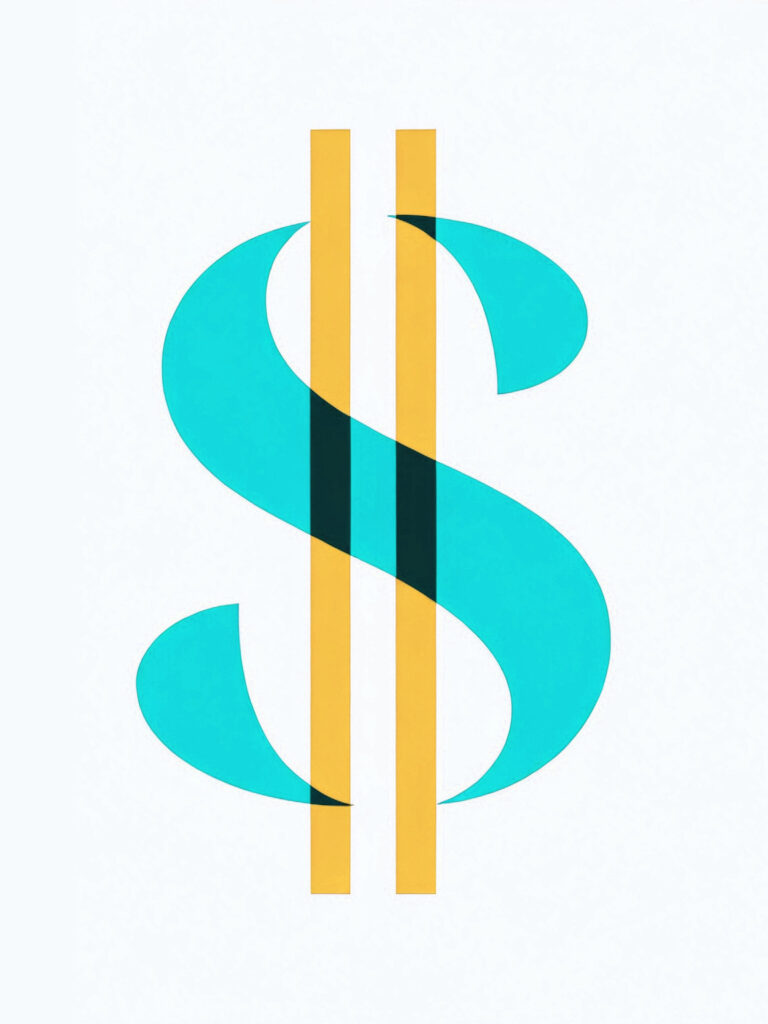
    2. The Pillars of Hercules: Another fascinating explanation connects the dollar sign to the Spanish royal crest, which featured the “Pillars of Hercules” with a banner twisting between them. This symbol, which looks something like “|S|,” appeared on many Spanish coins and was used as a kind of national branding. Since Spanish coins like the “peso de ocho” (piece of eight) were widely circulated in the Americas, the symbol might have caught on here as well.
    3. The Influence of the Spanish Silver Peso: By the time the U.S. was forming its own currency, Spanish pesos were already a common coin. The Coinage Act of 1792 helped standardize the U.S. dollar, making it equivalent in value to the Spanish silver peso, further linking American currency to Spanish influences. This continuity could have made it easy to adopt the familiar “$” symbol for the new American currency.
    4. The dollar sign’s “S” shape traces back to the Latin “S” glyph, specifically the long “S” used in Renaissance handwriting. This elongated “S” was a common way to write the letter in cursive scripts. Over time, the short “S” became more prevalent due to its clarity and readability.

    With these theories in mind, we can see how the dollar sign is not just a random invention but a product of historical influences, linguistic evolution, and the dominance of Spanish currency.

    The Global Silver Flood: How Spanish Silver Dominated the Market

    The dollar sign’s story is also tied to the global silver trade, which was deeply influenced by Spanish mining in the Americas. By the late 1700s, silver mined in places like Potosí (in modern-day Bolivia) was flooding the market, not just in Europe but as far as Asia. Imagine—these coins traveled thousands of miles, used in transactions from colonial America to the bustling markets of China.

    This massive silver output actually devalued silver globally, affecting not only Spain but everyone involved in international trade. Spanish silver coins became the world’s preferred currency, something you could call the “first global dollar.” So it’s no wonder the U.S. eventually adopted its value standard, along with the iconic dollar sign, based on Spanish silver.

    A Symbol of Influence and Trade Imbalance

    The symbol $ didn’t just represent currency; it represented Spanish imperial influence, which reached across continents. Ironically, Spain’s stronghold on silver meant it was constantly draining its own wealth to buy Asian goods, where countries like China preferred silver over European manufactured items. The Spanish silver dollar, and by extension the dollar sign, thus became a symbol of a global trade imbalance.

    Even further back, this dynamic of commodity currency driving exploration dates to Mansa Musa’s legendary hajj in the 14th century. His vast distribution of gold caused a temporary market disruption, which is similar to how the Spanish silver trade impacted economies worldwide. It’s a reminder that symbols like the dollar sign represent deeper currents in global history—currents of wealth, power, and competition.

    Why We’re So Obsessed with the Dollar Sign

    Let’s step back from history for a moment. I’d be remiss not to dig into why symbols like the dollar sign hold so much power over us. Think about it: the dollar sign represents more than money—it’s shorthand for freedom, success, opportunity, or stress, depending on your perspective.

    Our culture has a curious love-hate relationship with money. We chase it, save it, and sometimes even worship it. Yet, just like our need for success, our attachment to money can also bring anxiety, competition, and stress. Isn’t it interesting how a single symbol can carry all these different emotional weights?

    The dollar sign, then, becomes a mirror for our personal values. For some, it’s a tool; for others, a source of endless worry. And here’s the thing: whether we view money as good or bad, it’s only as powerful as the meaning we give it. Just like history has shaped the dollar sign, our beliefs shape how we interact with it.

    “The dollar sign looking like an ‘S’ always struck me as a mystery, like some hidden code only bankers understand. I used to think it was just a fancy letter that somehow got adopted everywhere. Then I learned it might come from Spanish coins, and now I can’t stop picturing a pirate with bags of silver, stamping coins with his own symbol. Funny how symbols stick around like that—even when most people have no idea where they came from!” – Erica, 34, Seattle

    Wrapping Up: Why the Dollar Sign Matters

    In the end, the dollar sign isn’t just a piece of shorthand or a quick notation. It’s a powerful symbol with centuries of history behind it—a history that links American currency to global silver flows, Spanish imperialism, and economic imbalances that resonate even today. It’s a symbol that reflects our collective values and the ways our societies have changed.

    The next time you see that dollar sign, remember that it’s more than just an “S” with a line through it. It’s a reminder of a world long past, of silver mines and global markets, and maybe even of our own personal relationship with wealth. From the Peso to the Pillars of Hercules to the powerful dollar bill, this tiny symbol has traveled a long way.

    So, why does the dollar sign look like an “S”? Because it’s not just a letter; it’s a story, one that’s still unfolding every time we see it.