

More
    Home Blog Page 65

    How K-Dramas Boost Your Mental Health

    Ever felt a pang of sadness, a surge of joy, or a rush of anger while watching a K-drama? You’re not alone. These captivating tales, filled with love, loss, and everything in between, have a surprising side effect: they can actually boost your mental health.

    Think of K-dramas as your personal therapist, minus the hefty fee. They offer a unique blend of escapism and emotional catharsis. As you immerse yourself in their intricate plots and endearing characters, you’re not just watching a show; you’re embarking on a journey of self-discovery.

    TL;DR

    • Emotional Catharsis: K-dramas offer a safe space to feel a wide range of emotions, promoting emotional release and healing.
    • Social Connection: Engaging with online communities and discussing K-dramas can foster social connections and reduce feelings of loneliness.
    • Stress Relief: Immersing yourself in a captivating storyline can distract from daily stressors, providing a much-needed mental break.
    • Cultural Understanding: K-dramas offer a window into Korean culture, promoting empathy and cross-cultural understanding.
    • Inspiration and Motivation: The characters’ resilience and determination can inspire viewers to overcome challenges and pursue their goals.

    Korean dramas, or K-dramas, are more than just addictive stories with beautiful people and heart-wrenching twists. They’ve become a global sensation, captivating audiences from Seoul to San Francisco. But here’s the kicker: binge-watching your favorite K-drama might actually be good for your mental health. Yes, you read that right. That emotional rollercoaster you ride while watching Crash Landing On You or Squid Game could be doing wonders for your psyche.

    Let’s dig into why K-dramas have more to offer than just eye candy and plot twists. Spoiler alert: it’s all about connection, emotions, and maybe even a little healing.

    Why K-Dramas Are So Addictive:

    First off, let’s address the obvious. K-dramas are gorgeous. The high production values, top-tier acting, and yes, those ridiculously attractive stars, draw you in. But there’s more under the surface. According to Korean-American therapist Jeanie Chang, K-dramas resonate deeply because they tap into universal emotions—grief, love, hope, trauma, and resilience.

    Watching these shows feels like therapy, except you’re on your couch, eating popcorn. They give us characters we root for, cry with, and sometimes yell at through the screen. More importantly, they show us how these characters face life’s challenges, which can inspire us to do the same.

    The Healing Power of K-Dramas:

    “Soap-like” plotlines in K-dramas aren’t just melodramatic for the sake of it. They often tackle complex emotions and real-life issues like family conflict, societal pressures, and mental health struggles.

    Take Squid Game, for instance. Sure, it’s about a horrifying game of survival, but at its core, it’s a commentary on debt, desperation, and the lengths people go to for their loved ones. Or consider Crash Landing On You, which beautifully portrays love triumphing over political and cultural barriers.

    These narratives give viewers a chance to reflect on their own struggles. Watching characters handle heavy topics can help us process our emotions or even gain new perspectives on our own challenges.

    K-Dramas and Mental Health:

    Let’s be real. Mental health often gets swept under the rug, especially in cultures that value stoicism or collective harmony over personal expression. K-dramas, however, bring these issues front and center.

    In essence, K-dramas provide a mirror for our emotions. When you see a character struggling with depression, family expectations, or self-doubt, it feels relatable. It’s a reminder that you’re not alone, and your struggles are valid.

    A Cultural Connection:

    For many viewers, K-dramas also serve as a bridge to their cultural roots. Growing up, some might have distanced themselves from their heritage to fit in, but K-dramas allow them to reconnect with their identity in a meaningful way.

    However, the magic of K-dramas isn’t limited to Korean viewers. The themes they explore—love, sacrifice, hope—are universal. It’s why someone in Texas can feel just as moved by Crash Landing On You as someone in Busan.

    My Take

    I can vouch for their therapeutic effects. Who needs a stress ball when you can ugly-cry or crazy-laugh through an episode of Queen Woo or Queen of Tears? Seriously, though, the way K-dramas tackle complex emotions is something we can all learn from.

    Here’s my advice: the next time life feels overwhelming, grab a cozy blanket and dive into a K-drama. It’s like emotional cardio—your heart will race, your tears will flow, and by the end, you might just feel a little lighter.

    But let’s not ignore the potential downsides. If you’re neglecting your responsibilities because you’re too invested in whether or not the main leads will finally confess their love, it might be time to hit pause. Moderation is key, people.

    The Pandemic and the K-Drama Boom:

    During the COVID-19 pandemic, K-dramas became a lifeline for many. Stuck at home, people turned to Netflix, and South Korean content exploded in popularity. Between 2019 and 2022, viewership of Korean shows and films increased sixfold. That’s no small feat.

    K-dramas provided comfort and escapism during an incredibly stressful time. They reminded us of the beauty of human connection, even when the world felt so isolating.

    The Bigger Picture:

    So, what’s the takeaway here? K-dramas are more than just entertainment. They’re a cultural phenomenon with the power to heal, inspire, and connect us. Whether you’re laughing through a romantic comedy or gripping your seat during a thriller, these shows offer something valuable: a chance to feel, reflect, and grow.

    If you’ve been dismissing K-dramas as “just another soap opera,” it might be time to think again. Who knows? Your next favorite therapist might just be streaming on Netflix.

    When life gets tough, take a page out of a K-drama script: cry when you need to, laugh when you can, and never underestimate the power of a well-timed slow-motion montage.

    Marriage Unmasked: The Realities You Need to Know Before Saying “I Do”

    0

    We’ve all seen the fairy tale. The prince and princess, the grand ceremony, the “happily ever after.” But let’s peel back the layers of this romantic facade. Marriage, like any relationship, is a complex tapestry woven with threads of love, compromise, and, yes, a bit of grit.

    This isn’t a cynical take on love; it’s a realistic one. It’s about shedding light on the often-overlooked truths that lurk beneath the surface of this beautiful institution. It’s about pulling back the curtain on the magic show and revealing the real work that goes into making a marriage last.

    TL;DR

    • Reality Check: Marriage is not always a bed of roses. It involves hard work, compromise, and understanding.
    • The 5:1 Ratio: A positive outlook and maintaining a balance of positive interactions are crucial.
    • Balancing Act: Juggling individual needs and couple needs is a continuous process.
    • Authenticity Over Perfection: Be real, be honest, and prioritize genuine connection.
    • Continuous Growth: Marriage is a journey of growth, both individually and as a couple.

    Ah, marriage—the age-old institution that has been both glorified in fairytales and vilified in stand-up comedy routines. Modern society, bless its heart, has painted this union with strokes of grandeur and romance, so much so that people often waltz into it wearing rose-colored glasses. Spoiler alert: those glasses might fog up—or crack—when faced with reality.

    Marriage is undoubtedly beautiful. It can bring out the best in you, make you feel secure, and provide companionship like no other. But let’s be honest: it’s not all moonlight and roses. The journey is riddled with challenges, some expected and others blindsiding. So, before you tie the knot or even while you’re knotted up, let’s dive into two unglamorous truths about marriage that no Pinterest board or rom-com is going to prepare you for.

    Reality Check #1: The “5:1 Ratio” Is a Guide, Not a Magic Spell

    Drs. John and Julie Gottman, renowned for their extensive research on marital stability, introduced the 5:1 ratio as the golden standard for healthy relationships. The premise? For every negative interaction you have with your partner, there should be at least five positive ones to maintain harmony. Sounds simple, right? Wrong.

    In theory, it makes perfect sense. Balance out the occasional snippy comment or passive-aggressive quip with a kind word, a thoughtful gesture, or an extra hug. But here’s where the trouble begins: when the ratio becomes a forced tally sheet.

    Imagine this: You argue about whose turn it is to unload the dishwasher. Frustrated, you then proceed to dole out five half-hearted compliments about your partner’s outfit, cooking, or (worse) their Netflix suggestions. Does this feel natural to you? No? That’s because it isn’t.

    True love and affection cannot—and should not—be reduced to a checklist. The magic of the 5:1 ratio lies not in its mathematical precision but in its authenticity. Positive interactions should stem from genuine goodwill and respect, not as countermeasures to arguments.

    Think about it this way: if every “I love you” or “You’re amazing” is uttered with an ulterior motive, it won’t strengthen your bond—it’ll feel contrived. The goal isn’t to fake it until you make it; it’s to cultivate a natural rhythm of kindness and care in your marriage. Conflict is inevitable, but the antidote is sincerity, not strategy.

    My Take:

    Here’s the kicker: the 5:1 ratio is a fantastic concept, but only if you’re not overthinking it. Use it as a compass, not a contract. Real connection isn’t about evening the score; it’s about building a foundation where positive moments outnumber the negatives simply because you enjoy being around each other. If you find yourself constantly keeping tabs, maybe it’s time to reevaluate the root of your conflicts rather than paper over them with perfunctory kindness.

    Reality Check #2: Balancing Contradictory Needs is a Marathon, Not a Sprint

    Marriage is a dance between opposing forces. Safety and excitement. Comfort and passion. Individuality and togetherness. It’s like juggling flaming torches and fragile eggs at the same time. Sounds fun, right?

    These dichotomies exist because, well, humans are complicated. On one hand, we crave stability—the knowledge that someone will always have our back. On the other, we yearn for adventure, the spark that keeps life from becoming monotonous. Unfortunately, you can’t have both at the same time.

    Let’s not forget the age-old tug-of-war between “me” and “we.” Western culture, with its hyperfocus on individuality, often complicates this further. You’re encouraged to “be yourself” while simultaneously striving to “be one” with your partner. No pressure or anything.

    The trick isn’t to choose one over the other but to strike a delicate balance. This requires conscious effort, compromise, and an openness to adapt as circumstances change. Maybe it’s planning a spontaneous weekend getaway without disrupting the financial stability you’ve worked so hard to build. Or perhaps it’s spending quality time together without compromising your personal hobbies and friendships.

    My Take:

    Balancing competing priorities is not about perfection; it’s about persistence. You’re going to stumble. You’ll have moments where you lean too far into safety and feel stuck or chase excitement and feel untethered. That’s okay. The key is to keep recalibrating. And for heaven’s sake, stop comparing your relationship to others’. No one’s posting their messy arguments or awkward compromises on Instagram.
    Why These Realities Matter

    The societal portrayal of marriage often skips over these gritty truths. We’re inundated with images of perfect couples who seem to have it all figured out, leaving the rest of us wondering why our relationships don’t measure up. Here’s the tea: they don’t have it figured out either.

    Marriage isn’t about avoiding challenges—it’s about facing them head-on with a willingness to learn and grow. Accepting these realities doesn’t mean resigning yourself to a life of struggle. Quite the opposite: it empowers you to build a relationship that’s rooted in honesty and resilience.

    Final Thoughts

    Marriage, like life, is a work in progress. It’s not always Instagrammable or romantic, but it’s real—and that’s what makes it worth it. Remember, the 5:1 ratio isn’t a scoreboard, and balancing priorities isn’t a one-time task. Both require ongoing effort and, most importantly, a commitment to authenticity.

    So, the next time you’re feeling disillusioned by the not-so-pretty side of marriage, take a step back. Reflect on the love that brought you together, embrace the messiness, and remember: the perfect marriage doesn’t exist, but a meaningful one does.

    Brewing Love Episodes 5-6: Passion and Promises

    0

    Love, like a fine brew, takes time to perfect. In the latest episodes of Brewing Love, we witness the delicate balance between passion and practicality. As our characters navigate the complexities of love, work, and personal growth, the tension in the air thickens, much like a well-aged beer.

    Min-joo and Yong-joo’s relationship is a brewing storm. Their feelings, once hidden beneath layers of denial, are now bubbling to the surface. Will they let their hearts guide them, or will they be held captive by societal expectations and professional obligations?

    As the plot thickens, we’re introduced to new challenges and unexpected twists. The brewery faces a critical deadline, testing the team’s resilience and camaraderie. Amidst the chaos, love blossoms, and friendships deepen.

    TL;DR

    • Love and Work: Balancing personal and professional life can be challenging.
    • Honesty is Key: Be honest with yourself and others to build strong relationships.
    • Perseverance Pays Off: Hard work and dedication can overcome obstacles.
    • Embrace Imperfections: Everyone makes mistakes, but it’s how we learn from them that matters.
    • Cherish True Friendships: Good friends are like family, always there to support you.

    The K-Drama Stirring Hearts and Hops

    This week in Brewing Love, the frothy tension bubbles over as Min-joo and Yong-joo wrestle with their emotions, personal promises, and professional pressures. Love is brewing, but so are deadlines, betrayals, and unexpected revelations. Let’s uncork the highlights of Episodes 5 and 6—where beer and feelings collide, and no heart is left unshaken.

    Min-joo’s Heart: Denial Meets Realization

    Min-joo, our brooding brewmaster, insists his feelings for Yong-joo are not his own. No, they must belong to someone else—specifically Kang Beom, Yong-joo’s younger admirer. But when Beom denies romantic feelings for Yong-joo, Min-joo is left spinning. Could these butterflies be his own? He tells himself no, but his actions scream otherwise.

    Cue the photography scene at the workshop, where Min-joo captures Yong-joo with his camera lens—a habit he claims doesn’t extend to people. The excuse? “I don’t hold back on things I’m sure about.” Smooth, right? Except when he backtracks, claiming he was talking about the photo, not the woman. Nice save, Min-joo.

    My Take: Denying feelings while practically shouting them with actions is a classic move. Min-joo might want to try being honest—for once.

    Yong-joo: The Badass in Denial

    Yong-joo, meanwhile, juggles her role as a kickass saleswoman and her secret vulnerability. Her “I’m fine” mantra crumbles under Min-joo’s intense stare. Still, she channels her energy into saving the brewery and her team, even as deadlines shorten and promises break.

    One poignant scene? Yong-joo rescues a drowning stranger at the workshop, reinforcing her image as a strong, fearless heroine. Yet, behind closed doors, she drowns herself in soju, unable to face her growing feelings for Min-joo.

    My Take: Girl, it’s okay to be tough and vulnerable. Min-joo is practically gift-wrapping his heart for you. Maybe accept it?

    Ah-reum’s Redemption and Budding Romance

    Ah-reum, initially a mole for the planning director, redeems herself when Yong-joo confronts her. After a heartfelt apology, she joins the TF team to make amends. Meanwhile, sparks fly between her and Chan-hwi, the ever-charming ex-special forces officer.

    In a touching moment, Chan-hwi uses a beer metaphor to console Ah-reum, encouraging her to embrace imperfection. And yes, he sneaks in a compliment, calling her “pretty.” Classic Chan-hwi.

    My Take: Ah-reum’s envy of Yong-joo adds depth to her character. But instead of comparing herself to others, she should lean into her strengths—and her budding romance.

    The Brewing Conflict: Deadlines and Deception

    The brewery faces chaos as Jisang’s competitor accelerates their beer launch. The six-month timeline shrinks to three, leaving the TF team scrambling. Yong-joo, caught between her promise to Min-joo and her obligation to her company, becomes the villain in the villagers’ eyes.

    But hold up—how did the CEO even know about the original timeline? Enter the weasel planning director, who tattled to steal credit. Yong-joo handles him like a boss, asserting her authority and protecting her team.

    My Take: Corporate sabotage? Check. Villagers throwing tantrums? Double check. Yong-joo is juggling more than she signed up for, but her resilience shines.

    The Moment of Truth: A Shared Past Revealed

    The final twist? Min-joo’s mysterious savior from a past accident turns out to be…you guessed it, Yong-joo! Neither realized their connection until now, and the revelation adds another layer to their already-complicated relationship.

    My Take: Talk about fate! If this doesn’t convince Yong-joo to stop denying her feelings, nothing will.

    Point of View: Brewing Love or Brewing Chaos?

    Let me say this: Brewing Love thrives on the will-they-won’t-they dynamic, but Min-joo and Yong-joo need to start communicating. Like, yesterday.

    Min-joo’s quiet, thoughtful approach is endearing, but his mixed signals could confuse anyone. Yong-joo, on the other hand, needs to drop the superhero act and let someone else be her strength. Relationships are about balance, not perfection.

    Ah-reum and Chan-hwi’s subplot offers a refreshing contrast, proving that vulnerability can lead to genuine connection. Meanwhile, the corporate drama adds stakes, but let’s not forget—at its core, this is a love story. And the love? Oh, it’s simmering.

    New Insights: What Makes This Drama Shine?

    1. Relatable Characters: Each character, from Min-joo to Ah-reum, embodies real struggles—whether it’s professional pressure, unspoken emotions, or self-doubt.
    2. Fate and Coincidence: The reveal of Yong-joo as Min-joo’s savior ties their storylines beautifully, adding depth to their bond.
    3. Love and Beer: The metaphor of brewing beer mirrors the slow, careful process of building trust and love. Genius, right?

    Final Thoughts: Raise a Toast to Love

    Episodes 5-6 of Brewing Love deliver on romance, humor, and heart. The characters’ vulnerabilities make them relatable, while the brewing backdrop adds a unique charm. As Min-joo and Yong-joo navigate their feelings, the question remains: will love finally pour over, or will it remain bottled up?

    Grab a cold one and stay tuned for next week’s K-Drama episode. If Yong-joo doesn’t admit her feelings soon, I might need to dive into that soju with her! Cheers!

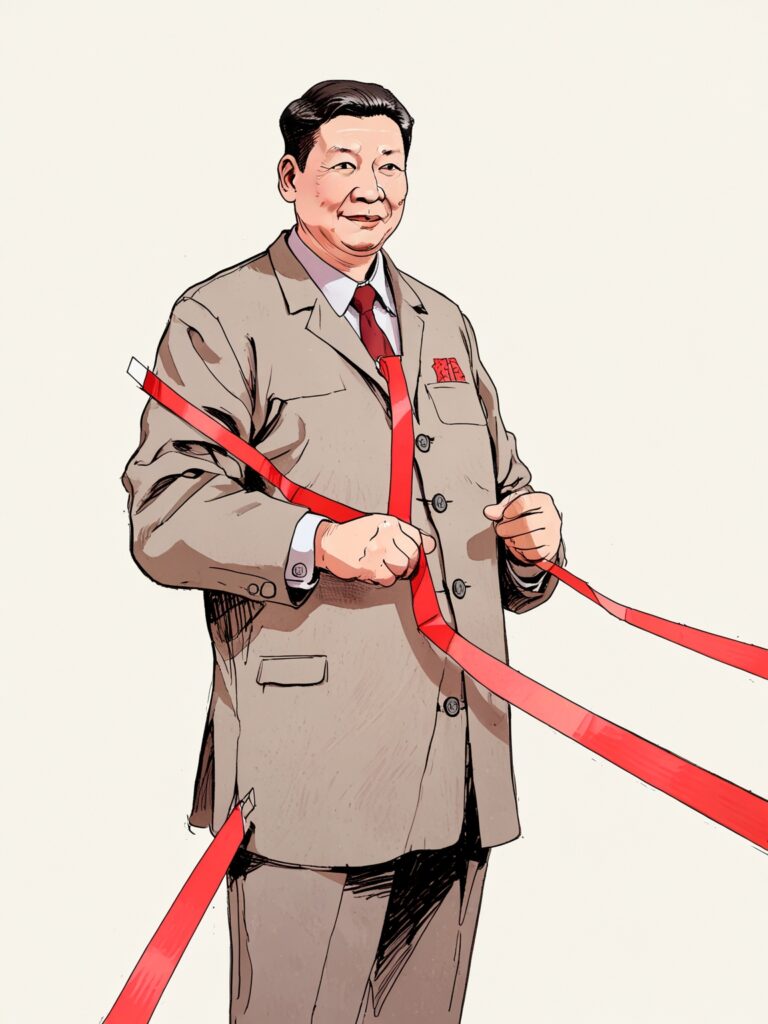
    China’s Red Tape Dilemma: Can Xi Jinping Succeed?

    0

    The Pledge to Slash Red Tape

    1. China’s economic push: Leaders aim to revitalize the economy by reducing red tape and burdensome bureaucracy.
    2. Streamlining operations: Measures include cutting meetings, reducing paperwork, and limiting excessive performance reviews.
    3. Grassroots empowerment: Focus on freeing local officials from unproductive tasks to improve efficiency and policy implementation.
    4. Punishments for excess: Officials face consequences for bureaucracy-related offenses, such as wasting resources on ineffective projects.
    5. Historical challenges: Excessive bureaucracy has long plagued communist systems, hindering decision-making and economic growth.
    6. New regulations: Emphasis on shorter, more practical meetings and reports to support decision-making.
    7. Leadership style: Xi Jinping’s centralized approach has both streamlined decision-making and stifled local-level experimentation.

    When China’s top brass vowed to revitalize the economy this summer, their battle cry wasn’t just about boosting income and lending; it was about eliminating red tape. Yes, the infamous paperwork and performance reviews that choke creativity and slow progress were called out by none other than the Communist Party’s elite Politburo.

    In their July declaration, they proposed fewer meetings (hallelujah!), shorter paperwork requirements, and freeing local government workers—because apparently, you can’t stimulate an economy when everyone’s glued to their phones filling out forms. But here’s the catch: while promises flew high, execution stumbled. Economists and investors were left disappointed by the lack of bold economic measures, and the whole campaign to cut red tape became a case study in irony.

    The Reality of Bureaucratic Burnout

    Let’s talk about those “front-line officials,” the unsung heroes buried in a mountain of weekly, monthly, and quarterly reports. According to Xinhua News Agency, one lamented, “The job must be done well, but more important, the reports must be written beautifully!” Imagine spending more time formatting documents than actually solving problems.

    And inspections? Oh, they’re not just routine; they’re a spectacle. Supervisors visit multiple locations daily, shake hands, snap a photo, and vanish—while demanding luxury accommodations and traffic clearances. It’s governance, red carpet-style.

    But the real kicker? The over-reliance on digital monitoring. Local officials, constantly glued to their phones, are busy logging hours and uploading daily activity reports instead of, you know, working.

    A History Lesson in Bureaucracy

    Excessive bureaucracy isn’t new to centralized regimes. Stalin, Mao, and now Xi Jinping all faced the same issue: when you micromanage too much, things fall apart. Xi, in particular, has declared “formalism and bureaucratism” the party’s nemesis, yet his leadership style—demanding loyalty and centralized decision-making—fuels the very problem.

    Officials are so afraid of punishment for missteps that they focus more on appearances than actual results. As economist Li Daokui aptly put it, “They spend too much energy pretending they are implementing policies.”

    Red Tape Gone Rogue

    Take the case of Shandong’s municipal tourism official. Tasked with rural development, they rushed a $332,000 grape cultivation project without testing the soil or groundwater. Predictably, the project flopped, and the official was demoted.

    This isn’t an isolated incident. Bureaucracy-related offenses have skyrocketed, with over 12,000 personnel disciplined in May alone—double the number from the previous month. Offenses range from wasting resources on vanity projects to shirking responsibilities.

    My Take: Bureaucratic Chaos and China’s Economy

    Let’s face it: a bit of chaos isn’t all bad. Economic growth often thrives in environments where experimentation is allowed, and risk-taking isn’t punished. Xi’s push for discipline and conformity might be admirable for political stability, but it’s suffocating for economic innovation.

    Imagine driving a car with the brakes on. That’s what these endless meetings, performance reviews, and rigid rules feel like. Sure, Xi wants a well-oiled machine, but if everyone’s too scared to turn the wheel, progress stalls.

    What China needs is a balance—clear goals from Beijing but enough autonomy for local officials to adapt policies to real-world conditions. Flexibility fosters creativity, and creativity drives growth.

    The Red Tape Crackdown: Will It Work?

    The new regulations introduced in August are a step forward. Meetings are now supposed to be short, practical, and attended only by relevant personnel. Duties can’t be improperly dumped on local officials, and excessive reporting is frowned upon.

    But here’s the irony: enforcing these rules has spawned seminars, training sessions, and, you guessed it, more meetings. State media proudly publishes photos of compliance sessions, proving once again that old habits die hard.

    Meanwhile, state-owned giants like China Oil and Gas Pipeline Network are still holding over 800 meetings a year. If this is “progress,” perhaps they missed the memo.

    Lessons from the Bureaucracy Battle

    1. Trust Your People: Micromanagement breeds mediocrity. Leaders need to trust their teams to make decisions without fear of reprisal.
    2. Simplify Processes: Cutting unnecessary steps doesn’t just save time—it empowers officials to focus on real work.
    3. Reward Initiative: Mistakes happen. Punishing well-meaning errors discourages innovation.
    4. Lead by Example: If top officials continue to prioritize form over substance, why would anyone else do differently?

    A Sarcastic Yet Sincere Word of Wisdom

    China’s battle with bureaucracy feels a bit like a diet that bans cake but still offers cookies. You can’t fix a bloated system by adding more layers of oversight. Instead, let’s hope the leadership remembers: a tree grows stronger when its roots are free to spread, not when they’re trapped in a bureaucratic straitjacket.

    Here’s to hoping they don’t hold a meeting to discuss this too.

    Pizza Hut China’s Frog Pizza: Will you try it?

    0

    Pizza Hut China has taken a leap into the unknown, launching a dish that’s as shocking as it is intriguing: the Frog Pizza. Yes, you read that right. A pizza topped with crispy frog legs and a fiery mala sauce.

    Is this a stroke of culinary genius or a frog-leap into absurdity? Will you take the plunge and give it a try? Or will you stick to your tried-and-true pepperoni?

    TL;DR

    1. Bold Food Choices: Be prepared for unconventional food combinations, especially in Asian markets.
    2. Marketing Matters: Sometimes, the buzz around a product is more important than its taste.
    3. Expectations vs. Reality: Don’t always believe the hype; real-world experiences can differ from marketing materials.
    4. Cultural Nuances: Understanding cultural preferences and culinary traditions is crucial for food innovation.
    5. Presentation is Key: Even the most innovative dish needs to be visually appealing.

    Pizza Hut China is not one to shy away from culinary experimentation, but its latest creation might leave even the boldest foodie raising an eyebrow. Enter Goblin Pizza—a deep-fried frog pizza that blends unconventional ingredients with a dash of gaming culture. Yes, you read that right. Frog legs are now the star ingredient on a pizza. Let’s dive into this… unique collaboration that’s as much a marketing move as it is a culinary gamble.

    The Goblin Pizza: A Gamer’s Delight or a Daredevil’s Dinner?

    Source: Weibo

    Launched on November 18th, this pizza is the product of a partnership between Pizza Hut and the popular video game Dungeon Fighter Online. Clearly aimed at adventurous eaters and fans of the game, the pizza boasts a mala-flavored base—a fiery and numbing spice blend loved in China—topped with fried bullfrog and a sprinkle of fresh coriander (delivered separately, oddly enough).

    To complete the “goblin-esque” aesthetic, the pizza is adorned with egg halves mimicking eyes, olives for pupils, and a dramatic drizzle of ketchup to resemble veins. Creative? Absolutely. Appetizing? That’s… up for debate.

    I can’t decide if it’s culinary genius or just a dare gone too far. I mean, I’ve tried frog legs before—they’re pretty good—but on a pizza? With mala sauce? It sounds like a fever dream. Part of me wants to try it just to say I survived the experience, but the other part is already ordering a plain cheese pizza to recover afterward.” – Jasmine, 28, Shanghai

    Expectation vs. Reality: A Familiar Tale

    As with many bold food promotions, the glossy advertisement of the Goblin Pizza sets high expectations. The promotional images show a vibrant, meticulously styled pizza. But reality tells a different story.

    One Weibo user, who forked out 171 yuan (approximately S$31) for the set meal, documented their experience. Their photo revealed a somewhat… chaotic presentation. The fried bullfrog did make an appearance, but it was more “what is this?” than “wow!”

    The user humorously questioned the minds behind the dish, commenting,

    “Can the Product Development and Innovation Department talk to me? I just want to know how you were feeling when you created this.”

    They also noted a curious detail: the coriander came in a separate bag and was only discovered after most of the pizza had been eaten. A missed opportunity or a secret ingredient to be added post-consumption?

    Chinese Netizens React: “What Were They Thinking?”

    Social media lit up with reactions, ranging from amused disbelief to outright fascination. While some marveled at the creativity, others couldn’t wrap their heads around the idea of putting a whole bullfrog on a pizza.

    Source: Weibo

    Comments included:

    • “I feel like I’m on an episode of a culinary prank show.”
    • “Pizza Hut is pushing boundaries—maybe too far!”
    • “Dungeon Fighter Online players are brave. Clearly, so are their taste buds.”

    Despite the mixed reactions, the Goblin Pizza has undeniably achieved one thing: everyone’s talking about it.

    My Two Cents: Is Pizza Hut a Culinary Genius or Just Trolling?

    Let’s address the elephant—or bullfrog—in the room. The Goblin Pizza isn’t about taste alone; it’s about buzz. Collaborating with Dungeon Fighter Online is a smart move to appeal to gamers, a demographic that loves novelty. But here’s the thing—there’s a fine line between innovation and absurdity.

    While fried bullfrog is a popular delicacy in some parts of China, pairing it with a pizza feels like a culinary identity crisis. Is it Italian? Is it Sichuan? Is it… edible?

    Personally, I admire the guts (pun intended) it takes to serve this up. However, I can’t help but think Pizza Hut might be pushing the limits of what customers want versus what they’ll talk about. And let’s not ignore the presentation. If you’re charging a premium price, the least you can do is make the dish look somewhat close to the ad.

    Lessons from the Goblin Pizza: When Marketing Meets Madness

    Source: PizzaHut China

    What can we learn from this bizarre experiment?

    1. Marketing over Taste: Sometimes, it’s not about creating something delicious but about creating a conversation. The Goblin Pizza excels in that regard.
    2. Cultural Nuances Matter: While frog legs are not unusual in Chinese cuisine, adding them to pizza might alienate traditional pizza lovers.
    3. Execution is Key: Even the most outlandish ideas can succeed if executed well. The mismatch between advertisement and reality here undermines the novelty.

    Will You Try It?

    Pizza Hut China has made one thing clear: they’re not afraid to take risks. Whether or not the Goblin Pizza becomes a hit, it’s already made its mark as one of the strangest pizza concepts in recent memory.

    So, would you dare to take a bite of bullfrog pizza? Or would you rather stick to the good old pepperoni? Let us know what you think—because let’s face it, everyone loves to talk about food experiments gone wild.

    Final Thoughts

    Food trends often walk a fine line between brilliant and bizarre, and Pizza Hut’s Goblin Pizza is no exception. While it might not win any culinary awards, it’s a bold reminder that sometimes, the craziest ideas spark the most attention. Whether you’re a gamer, a foodie, or just someone who loves a good laugh, this pizza is proof that in marketing (and in life), fortune favors the bold—and occasionally, the outrageous.

    A 6 Million-Dollar Banana?

    A banana, a fruit as common as the air we breathe, has recently taken the art world by storm. Not just any banana, but one that fetched a staggering $6.2 million at an auction. This isn’t a typo, nor a joke, but a testament to the peculiar power of art and the curious minds that appreciate it.

    Imagine a world where a simple, everyday object, a banana, can be transformed into a million-dollar masterpiece. A world where the value of an object isn’t determined by its utility, but by its symbolism, its context, and the story it tells. This is the world of art, where the ordinary becomes extraordinary.

    Let’s peel back the layers of this fruity enigma and explore why a banana, of all things, could command such a hefty price tag.

    TL;DR

    • Art is subjective: Beauty lies in the eye of the beholder.
    • Question everything: Challenge the norms and think outside the box.
    • Embrace the absurd: Sometimes, the most ridiculous ideas can be the most profound.
    • Don’t underestimate the power of simplicity: A simple idea can have a powerful impact.
    • The value of art is multifaceted: It’s not just about the physical object, but also the ideas and emotions it evokes.

    Why the Art World Went Bananas Over Cattelan’s “Comedian”

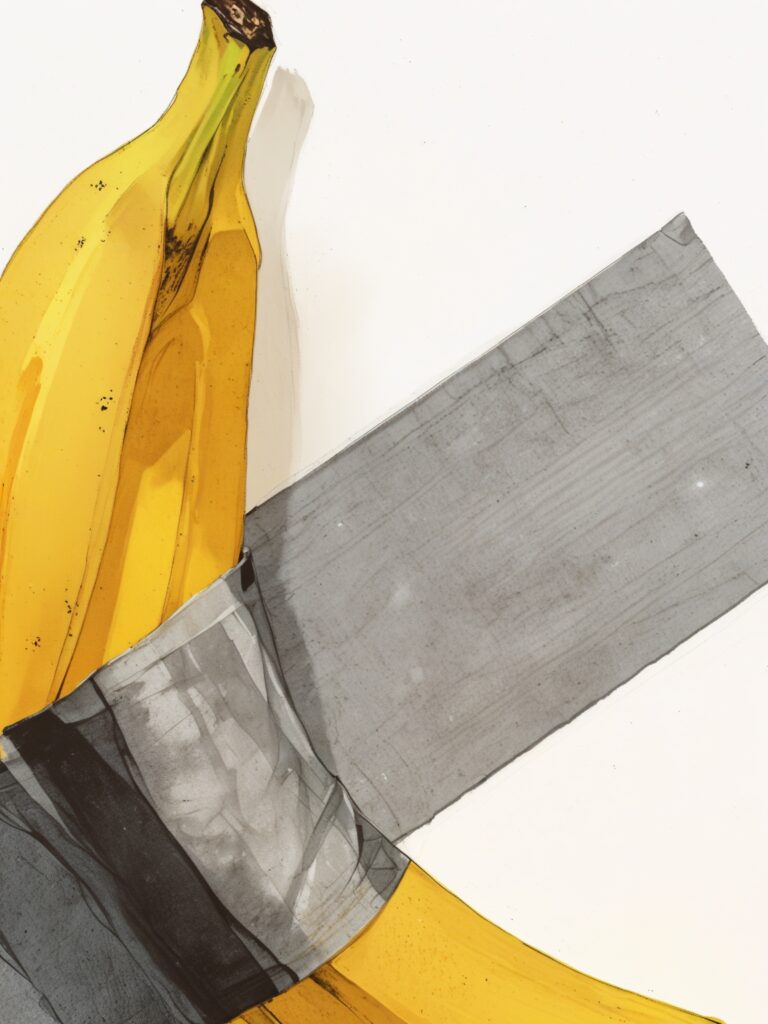
    The art world often blurs the line between genius and absurdity, but Italian artist Maurizio Cattelan’s infamous duct-taped banana, Comedian, has taken this to a whole new level. Selling for a jaw-dropping $6.2 million at Sotheby’s, this yellow fruit has left critics scratching their heads, collectors scrambling for bananas, and the rest of us wondering: “Did I miss my calling as a fruit vendor?”

    Let’s peel back the layers of this fruity fiasco to uncover why society is willing to spend millions on a banana destined for compost in a few days.

    Art or a Practical Joke? The Birth of the Banana

    Cattelan’s Comedian debuted at Art Basel Miami Beach in 2019, consisting of a simple yellow banana affixed to a wall with silver duct tape. According to the artist, he wanted to cut through the “noise” of over-the-top canvases dominating the art scene. His solution? A banana—a quintessentially mundane object.

    And what a statement it made! Crowds flocked to see this absurd installation, making it an overnight sensation. Yet, the true genius of Comedian lies not in the banana itself but in its ability to spark debates about the nature of art. Is it brilliant minimalism? Or just another overpriced gag?

    The Price Tag: From $120,000 to $6.2 Million

    When Comedian first hit the market, the Perrotin Gallery sold three editions for $120,000 to $150,000 each. Fast forward to 2024, and Sotheby’s auctioned another edition for $6.2 million, bought by Chinese cryptocurrency mogul Justin Sun. The twist? Sun plans to pay in crypto and—brace yourself—eat the banana.

    Why the astronomical price? Beyond the humor, Comedian challenges what we consider valuable. This banana, once worth cents, becomes priceless when an artist tapes it to a wall and calls it art. The irony? You’re not even buying the fruit itself but a 14-page instruction manual detailing how to maintain the artwork.

    “The art world has officially gone bananas—literally. Six million dollars for a piece of fruit and duct tape? Meanwhile, I’m over here rationing avocados like they’re gold. Maybe I should tape one to my wall and call it a day. What’s next, a million-dollar bagel?” – Lisa Harrington, 32, Brooklyn, New York

    Maintenance Guide: A Banana’s Life Is No Joke

    Owning Comedian isn’t as simple as it sounds. The new owner must regularly replace the banana while ensuring it meets specific criteria:

    • Curvature: Must point right, never left.
    • Orientation: Displayed vertically, not horizontally like a smile.
    • Height: Roughly at eye level.

    Sotheby’s was even prepared for any would-be pranksters who might try to snack on the banana mid-auction. (Yes, this has happened before.)

    The Viral Ripple Effect: Bananas and Blockchain

    What makes Comedian even more bizarre is its connection to the crypto world. A Sotheby’s employee recently launched $BAN, a cryptocurrency inspired by Cattelan’s banana. The token has already amassed 23,000 holders and reached a market cap of $330 million.

    Meanwhile, another meme coin, $BTW (Banana Tape Wall), is vying for attention, proving that even in the digital realm, people love a good banana drama.

    From Duchamp’s Urinal to Cattelan’s Banana: A History of Absurd Art

    This isn’t the first time the art world has elevated the ordinary. Marcel Duchamp’s 1913 Bicycle Wheel and his infamous urinal titled Fountain sparked similar debates over a century ago. Cattelan’s banana is just the latest in a long tradition of challenging conventions.

    The question remains: Is this art, or is society falling for an elaborate prank?

    Why I Think the Banana Is Brilliant

    Let’s face it—at first glance, a taped banana screams “joke.” But look closer, and it’s a masterstroke of satire. Cattelan forces us to confront our obsession with labels and value. A banana in a grocery store is worth pennies. A banana on a gallery wall? Millions.

    It’s not about the fruit; it’s about the conversation it sparks. Comedian is a mirror reflecting our collective gullibility, our craving for novelty, and the absurd lengths we’ll go to assign value where there might be none.

    But here’s the rub: Would I spend millions on a banana? Absolutely not. I’d rather splurge on lifetime banana supplies or invest in something with real staying power—like gold or, dare I say, avocados.

    Art Meets Pop Culture: Why Bananas Are Here to Stay

    What makes Comedian timeless is its adaptability. It’s a meme, a cryptocurrency, and an object of satire all rolled into one. Institutions like the Solomon R. Guggenheim Museum have even added it to their collections, ensuring its place in art history.

    Cattelan’s banana isn’t just an artwork—it’s a cultural phenomenon. It pokes fun at the art world while making an ironic statement about wealth, value, and consumerism.

    Final Thoughts: Going Bananas for Art

    Comedian has done more than generate headlines; it’s redefined the boundaries of art. Whether you find it absurd or ingenious, it’s undeniably thought-provoking. And in today’s world, where attention spans are shorter than ever, isn’t that what art is meant to do?

    So the next time you’re at the grocery store, staring at a banana, remember: You could be holding a million-dollar idea. Just don’t forget the duct tape.

    A Virtuous Business Finale

    0

    As the curtains fall on “A Virtuous Business,” we’re left with a bittersweet ending. Is it a triumph of morality or a mere business transaction? Does virtue pay dividends, or is it a costly endeavor?

    The finale offers a complex tapestry of emotions, from the heartwarming reunion of long-lost family to the heartbreaking sacrifices made for love and ambition. As our heroines navigate the treacherous waters of business and personal life, we’re forced to question the true meaning of success.

    TL;DR

    • Honesty is the Best Policy: Secrets can have far-reaching consequences.
    • Family is Where the Heart Is: Blood is not always thicker than water.
    • Perseverance Pays Off: Hard work and dedication can lead to great rewards.
    • Love Conquers All: True love can overcome any obstacle.

    We’ve arrived at the grand finale of A Virtuous Business! While it doesn’t deliver a textbook fairy-tale ending, it gives us something arguably better: a realistic, hard-won resolution for our resilient leading ladies. Their lives may not be picture-perfect, but they are filled with strength, hope, and unity.

    However, before we pop the champagne, there are still some hurdles left for our fearless saleswomen—both in business and in life. Let’s dive into the final episodes and uncover the layers of drama, humor, and heartfelt lessons they deliver.

    The Unveiling of Secrets: Do-hyun and Geum-hee’s Emotional Showdown

    After Jung-sook stumbles upon a baby outfit that ties Do-hyun to Geum-hee, she’s faced with a moral dilemma: to confront or not to confront? Opting for honesty, she shares her discovery with Do-hyun. And because subtlety is overrated, Do-hyun takes the embroidered baby clothing straight to Geum-hee for answers.

    Geum-hee, visibly shaken, denies any connection, but her trembling voice betrays her. Do-hyun, no longer willing to live in the shadows of half-truths, presses her for the truth. She finally confesses, admitting that she had Do-hyun out of wedlock and was forced to give him up due to dire financial circumstances.

    This revelation is as heartbreaking as it is enlightening. Geum-hee’s fear of rejection from her current family held her back, but when her husband overhears her secret, his reaction is unexpectedly kind. His support helps Geum-hee gather the courage to apologize to Do-hyun, leading to a tearful reconciliation.

    Ju-ri’s Struggles and Strengths: Love, Judgment, and Resilience

    Meanwhile, Ju-ri’s journey as a single mother becomes a mirror reflecting Geum-hee’s past choices. Facing societal judgment and familial disapproval, Ju-ri forges ahead with determination, raising her son and running her salon. Her budding romance with the lovable but immature Dae-geun adds a splash of sweetness—until his overbearing mother intervenes.

    Dae-geun, bless his awkward soul, surprises everyone by passionately defending Ju-ri. It’s a turning point for his character and their relationship. But life has a way of throwing curveballs: Ju-ri, ever the noble martyr, breaks up with him to protect him from his mother’s wrath. (Cue the audience groaning at yet another case of noble idiocy!)

    Thankfully, time—and a healthy dose of Young-ja’s introspection—brings resolution. Dae-geun gets permission to pursue both his photography dreams and Ju-ri, proving that love (and a bit of stubbornness) can conquer all.

    The Business Meltdown: A Plot Twist Nobody Saw Coming

    Just as things start looking up for our heroines, disaster strikes. Their office is trashed, their funds stolen, and their CEO ghosts them. Classic. Jung-sook, refusing to let setbacks define her, tracks down the fleeing CEO, who reveals her tragic backstory. Her advice? If you believe in something, don’t give up.

    Four years later, our women prove they’ve taken this advice to heart. With sleek new looks and even sharper business acumen, they launch their own adult products store. Facing protests with unflinching resolve, they embody the message that resilience and camaraderie are their strongest assets.

    A Personal Take: Lessons Beyond the Screen

    Watching A Virtuous Business, I couldn’t help but reflect on a few life lessons:

    1. Secrets Will Out: Geum-hee’s reluctance to face her past is a reminder that skeletons in the closet have a way of rattling at the worst times. Honesty, though painful, is almost always the better route.
    2. Poverty’s Cruel Grip: The drama paints a vivid picture of how financial struggles can rip families apart. From Geum-hee’s heartbreaking choice to Ju-ri’s relentless determination, the narrative underscores the systemic challenges that make “choice” a luxury for many.
    3. Support Systems Matter: Whether it’s friends like Geum-hee’s trio or the unshakable bond between our leading ladies, this show proves that having a strong support network can make all the difference.

    And can we talk about Do-hyun’s adoptive parents for a second? The drama barely acknowledges them, which feels like a missed opportunity to explore the complexities of adoptive versus biological ties. Just because someone shares your DNA doesn’t automatically make them more of a family. Let’s not pretend otherwise.

    Why This Drama Stands Out

    Sure, the plot had its flaws (cough Do-hyun’s unnecessary parentage arc cough), but it never lost sight of its core message: women are stronger together. The humor, the depth of the characters, and the balance of light and heavy themes made A Virtuous Business a compelling watch from start to finish.

    If there’s one takeaway from the finale, it’s this: life may not always be fair, but with grit, determination, and a little help from your friends, you can turn even the toughest situations into something meaningful.

    So, here’s to our leading ladies, who taught us that success isn’t just about business; it’s about finding your voice, owning your story, and never giving up. Bravo!

    Unconditional Love: A Myth or a Reality?

    Is love truly unconditional, or is it merely a fleeting illusion, a mirage in the desert of human emotion? We’ve all heard the tales, the songs, the poems—love that knows no bounds, love that conquers all. But is this idealistic notion a reality, or is it simply a comforting myth we cling to in the face of life’s inevitable hardships?

    Let’s dive into the depths of this age-old question, exploring the nuances of love, the complexities of human relationships, and the ever-evolving nature of our emotions. Can love truly be unconditional, or are there always strings attached, no matter how subtle?

    TL;DR

    • Unconditional Love: A concept often idealized but rarely achieved.
    • The Human Element: Our love is influenced by factors like personality, circumstances, and growth.
    • The Balance: True love may lie in a balance between unconditional acceptance and healthy boundaries.
    • The Myth and Reality: While pure, unconditional love might be a myth, deep, enduring love is certainly a reality.

    We all cherish the notion of unconditional love—a love so pure and unwavering that nothing could sever its bond. It sounds poetic, doesn’t it? But when we dig a little deeper, cracks start to appear in this romanticized concept. Let’s unpack this idea with a dash of humor, a sprinkle of philosophy, and just the right amount of sarcasm.

    What Happens When “You” Stop Being “You”?

    Imagine you’re the star of your own life’s drama. One day, you decide to change your name. Legally, you’re no longer the same person on paper. Does this alter who you are? Most people would say no. Now, what if you go full Hollywood or Korean Drama and get complete cosmetic surgery? A new face, new body—still you? Probably, according to popular consensus.

    But let’s raise the stakes. What if your personality does a 180-degree turn? Your attitudes, beliefs, and values—everything that defines “you”—are suddenly unrecognizable. Are you still you? At what point in this transformation does the essence of “you” dissolve?

    This isn’t just a fun hypothetical. It’s a philosophical dilemma rooted in the ancient “Ship of Theseus” paradox. Replace a ship’s planks one by one—eventually, is it still the same ship? And more importantly, what happens to love when the person being loved evolves into someone entirely different?

    Unconditional Love: A Beautiful Illusion?

    Let’s play devil’s advocate. If love were truly unconditional, it wouldn’t waver, no matter what changes occur. But let’s be honest—most of us don’t operate that way.

    Suppose you unconditionally love someone. If they morph into a drastically different person and your love fades, was it ever unconditional? On the flip side, if you continue to love them despite their transformation, was your love ever about them as an individual? Or was it about a vague, universal love detached from their unique identity?

    Here’s where Søren Kierkegaard, the OG philosopher of love, weighs in. In Works of Love, he argued that true love balances universality (loving everyone) with individuality (loving someone uniquely). It’s a tightrope walk. Love must respect the person’s autonomy and individuality while remaining steadfast through change. Easy, right? (Spoiler alert: It’s not.)

    Capital-L Love vs. Romantic Love

    Ah, the distinction between capital-L “Love” and lowercase-l “love.” Kierkegaard suggests that true, unconditional Love transcends romantic or preferential forms of affection. Romantic love and friendship? Those are built on preference, and while they can be wonderful, they’re conditional by nature.

    Unconditional Love, on the other hand, is about embracing the very essence of humanity. It’s about respecting someone’s individuality while remaining committed to their wellbeing, even as they evolve. Sounds noble, but let’s not sugarcoat it—it’s a monumental challenge.

    The Philosophy of Identity: When Do You Stop Being “You”?

    Now let’s shift gears to personal identity. What defines “you”? Philosophers argue that it’s not about static traits but psychological continuity—how your past and present selves are connected through memory, values, and experiences.

    For example, changing your name or getting cosmetic surgery doesn’t erase your memories or sever your psychological ties to your past. You’re still you. But if your beliefs, values, and behavior undergo radical transformation, that continuity becomes blurry.

    One popular theory suggests that as long as enough of these psychological threads remain intact, you persist as the same person. But if those threads are severed, the person you once were may cease to exist. Sobering thought, isn’t it?

    Is Unconditional Love Achievable?

    As a married person, I’m calling it like I see it. Unconditional love sounds nice on paper (or in poetry), but in reality, it’s a tall order. We’re humans, not deities. Our love is shaped by our experiences, preferences, and yes, conditions.

    And you know what? That’s okay. Conditional love doesn’t make your feelings any less valid. It just makes them… well, human. In fact, acknowledging the conditional nature of our relationships can help us love more authentically. Instead of chasing an unattainable ideal, we can focus on loving deeply and genuinely within the bounds of our humanity.

    “Unconditional love? It sounds poetic, but let’s be real—people change, and love has to adapt. I used to think I loved my ex unconditionally, but when his values took a nosedive into territory I couldn’t respect, my feelings followed suit. Does that mean my love wasn’t real? Not at all. It just means love isn’t about ignoring reality; it’s about finding someone you can grow with. Maybe that’s not ‘unconditional,’ but it feels a lot more honest.” – Sophia Carter, 34, Portland

    New Insights: The Case for Imperfect Love

    Here’s a wild idea: maybe love doesn’t have to be unconditional to be meaningful. Maybe the beauty of love lies in its imperfections. It’s the effort we put into understanding, forgiving, and growing with each other that makes love special—not some abstract ideal of unwavering devotion.

    Think about it. If love were truly unconditional, it might lose its depth and complexity. Loving someone despite their flaws, while setting healthy boundaries and respecting their individuality, is what makes love a dynamic, evolving force.

    Final Thoughts: Embrace the Messiness

    So, where does this leave us? Unconditional love may be more of a myth than a reality, but that’s not a bad thing. Love, in all its messy, conditional glory, is still one of the most profound experiences life has to offer.

    Instead of striving for an ideal that’s impossible to achieve, let’s focus on being present in our relationships. Love the people in your life for who they are, not who you want them to be. And when they change, as we all inevitably do, let your love evolve with them.

    Unconditional? Maybe not. But real? Absolutely. And that’s a kind of love worth celebrating.

    The Real Madison CEO’s Public Company

    0

    DisclaimerThe views and opinions found in this article are for entertainment purposes only, readers are encouraged to do their research.

    After last week’s deep dive into the enigma that is Madison Zhao, I’ve been flooded with tips, theories, and screenshots from eagle-eyed readers. It’s safe to say this rabbit hole keeps getting deeper—and much more intriguing. If you thought the first layer was wild, just wait.

    Today, we’ll dissect one tip-off that really caught my attention. It involves a photo, a gong, and a potential connection to the Hong Kong Stock Exchange (HKEX). Buckle up, because this is one ride filled with twists, turns, and maybe a touch of Photoshop wizardry.

    A Gong, a Gong Stick, and a Mystery

    Source: https://www.bilibili.com/opus/876391959410769941

    One of the tips led me to an intense investigation of Madison Zhao by @downanddirtyinvestigations on Substack. It referenced a piece titled “Seven Debuts in Hong Kong This Week” from Sohu and also Bilibili. The article featured a photograph of a woman wearing a crisp white top with black buttons and matching black bottoms, holding a Chinese gong stick wrapped in red cloth. Beside her stood a man in a dark-colored suit with a red boutonnière, also holding a gong stick, as they posed next to HKEX’s golden gong—a symbolic gesture for newly listed companies in Hong Kong.

    Source: madison_ceo TikTok “Here is what I did to go from dead broke to $100,000,000 at 24” https://www.tiktok.com/@madison_ceo/video/7368280427414506794

    Here’s where it gets juicy: Madison Zhao was spotted in a separate photo wearing an identical outfit, holding the same gong stick, and standing beside the same man. Curious? So was I. Naturally, I fired up Photoshop, overlaid the images, and the resemblance is uncanny.

    Coincidence? Maybe. Intentional? You tell me.

    Madison’s Silence: The Plot Thickens

    Despite her high-profile claims of being the CEO of a “public company,” Madison has been suspiciously tight-lipped about its identity. Whenever commenters ask her directly, she sidesteps the question with responses that sound more like excuses than explanations. Here’s her usual defense:

    1. Privacy concerns – She claims revealing the company would invite “unwanted attention.”
    2. Board approvals – Madison says any disclosure must go through the board first.
    3. Stock market impact – Apparently, naming the company could shake its stock price.
    4. Positive engagements – She might disclose it—but only if she gets enough “positive engagement” online.
    5. Unnecessary for success – According to Madison, knowing her company’s name isn’t essential for her students’ achievements.

    Does that sit well with you? Because, frankly, it doesn’t with me.

    What’s Really Going On?

    Source: https://www.madisonprofitacademy.com/

    Let’s pause for a moment and think about this rationally. Madison Zhao paints herself as a successful entrepreneur, running an empire built on “proven” strategies. Yet, the cornerstone of her credibility—her “public company”—remains a well-guarded secret.

    Here’s what I think:

    • If the company exists: Why hide it? CEOs of public companies often proudly display their achievements. Keeping it hidden just raises suspicions.
    • If the company doesn’t exist: This could explain the smoke-and-mirrors approach. By keeping it vague, she avoids scrutiny while maintaining an air of authority.
    • Why all the secrecy? Even if privacy and stock prices are valid concerns, shouldn’t her students—who invest time and money into her courses—deserve transparency?

    Madison’s “Reasons” vs. Reality

    Let’s break down Madison’s reasons and see how they stack up:

    1. “Maintaining Privacy”
      Privacy is a valid concern, but it’s an odd excuse for someone who thrives on public attention. If you’re the face of a company, privacy isn’t exactly a luxury you get to keep.
    2. “Avoiding Unwanted Attention”
      Attention is a double-edged sword, especially when you’re running online courses that depend on visibility. Isn’t this contradictory?
    3. “Board Approvals”
      Sure, board approvals are standard for major decisions, but naming the company? That’s basic public knowledge for any listed entity.
    4. “Affecting the Stock Price”
      Stock prices can fluctuate for many reasons, but withholding the company name is more likely to cause doubt than stability.
    5. “Positive Engagement”
      This sounds more like a ploy to boost her social media metrics than a legitimate reason.

    What’s the Real Goal Here?

    Screenshot of comments from https://www.tiktok.com/@madlson_ceo/video/7386288860935769352

    If Madison’s courses are as lucrative as she claims, why not let the numbers speak for themselves? Instead, there’s this narrative of secrecy and mystique that feels more like a marketing gimmick than genuine strategy.

    My theory? Madison Zhao may be aiming to cultivate a sense of exclusivity. By dangling the “public company” carrot, she keeps people curious and engaged. However, this tactic could backfire. Transparency builds trust, and the lack of it only fuels skepticism.

    The Real Madison CEO’s Public Company

    Everything points to a screaming “SCAM!!!”. It’s too soon to call it outright, but let’s weigh the evidence. The secrecy, combined with vague excuses, certainly raises red flags. If Madison’s lessons are built on a foundation of credibility tied to her CEO status, not revealing the company undermines her brand.

    Could the entire thing be smoke and mirrors? Maybe. Or perhaps there’s a legitimate explanation waiting to surface. Either way, Madison Zhao has some explaining to do.

    At this point, Madison Zhao’s “public company” is more of a mystery than a badge of honor. If she truly wants to inspire trust and confidence, she needs to address the elephant in the room. Otherwise, her claims risk being dismissed as empty marketing fluff.

    Left: Original Image from https://www.bilibili.com/opus/876391959410769941
    Right: Screengrab from Madison_CEO tiktok video

    What’s your take on Madison’s secretive approach? Is it part of a clever branding strategy, or is there something more suspicious at play?

    To Madison, I say this: if you’re the CEO you claim to be, own it. Stop hiding behind excuses and show the world what you’re really about.

    For everyone else? Stay curious, stay skeptical, and keep those tips coming.

    I’ll be writing shorter articles about this saga. I think it’s easier for me—and for you to read and digest… or maybe I’m just lazy…

    Why Is the Earth’s Magnetic North Pole Heading for Siberia?

    0

    Why is the Earth’s North Pole acting like a homesick traveler, yearning for the Siberian tundra? Is it planning a great escape, a magnetic migration, or simply lost its way?

    Our planet, a giant, spinning orb, has a secret superpower: a magnetic field. This invisible force shield protects us from harmful solar radiation, much like a knight’s armor. But lately, this magnetic knight seems to be off its guard. The North Pole, its guiding star, has started wandering, drifting towards Russia.

    TL;DR

    1. The magnetic North Pole has been moving for centuries but recently sped up toward Siberia, Russia.
    2. It’s crucial for navigation, impacting GPS, planes, boats, and submarines.
    3. The movement is driven by changes in the Earth’s molten iron core.
    4. While there’s no immediate cause for alarm, it’s a reminder of the planet’s dynamic nature.

    The Earth’s magnetic North Pole is on the move—and it’s not just a casual stroll. Scientists have been tracking its journey for centuries, but recently, it seems to have picked up speed, heading straight toward Siberia, Russia. This bizarre shift has left researchers scratching their heads and sparked more questions than answers. Let’s dive into this magnetic mystery, unravel what’s happening, and explore why it matters.

    The Great Magnetic Migration

    For centuries, the magnetic North Pole has been inching its way across the globe. Traditionally, it hung out near Canada’s northern coast. But in the 1990s, things took a dramatic turn. The pole began drifting faster, veering toward the Atlantic before zooming toward Russia. Today, it’s moving at an unprecedented pace that British scientists hadn’t seen before.

    To put it into perspective: between 1600 and 1900, the magnetic pole moved about six miles per year. By the early 2000s, it had accelerated to around 34 miles per year. However, in the last five years, it slowed to a still-impressive 22 miles per year. This is like your favorite celebrity switching to a private jet after decades of riding a bike.

    Magnetic vs. Geographic North: A Tale of Two Poles

    Here’s where things get tricky. The magnetic North Pole isn’t the same as the geographic North Pole. The latter is the point where all lines of longitude converge—a fixed location on the map. Meanwhile, the magnetic North Pole is more of a restless wanderer, shifting based on changes in the Earth’s magnetic field. Compass needles point to the magnetic North Pole, not the geographic one, making its movements critical for navigation.

    Why Should You Care About a Moving Pole?

    Now, you might be thinking, “Why does this matter to me? I’m not planning an Arctic expedition anytime soon.” Well, the magnetic North Pole’s movements affect more than just explorers and cartographers. Its location is vital for modern navigation systems, including the GPS in your smartphone, the compasses in planes, boats, and even submarines.

    These shifts are tracked meticulously by the British Geological Survey (BGS) and the U.S. National Oceanic and Atmospheric Administration (NOAA). Together, they create the World Magnetic Model—a tool that predicts the pole’s position at any given time. This model is a linchpin for global navigation, ensuring everything from your Google Maps app to advanced military systems operates accurately.

    The Science Behind the Shift

    What’s causing all this commotion? The culprit lies deep beneath our feet—in the Earth’s outer core. This layer, made mostly of molten iron, acts like a giant, swirling cauldron of liquid metal. The way this iron flows generates the Earth’s magnetic field, and unpredictable changes in its movement are what drive the magnetic pole’s wanderlust.

    Think of it as the Earth’s version of mood swings—only instead of affecting dinner plans, it impacts the magnetic field enveloping the planet.

    “The Earth’s magnetic North Pole moving toward Siberia? Sounds like the planet’s GPS is having a mid-life crisis. As a pilot, I rely on accurate navigation systems, so this shift is more than just trivia—it’s a serious game-changer. But hey, if the Earth needs to realign itself, who am I to judge? I just hope it doesn’t mess with my weekend flights!” – Sarah Mitchell, 34, Denver, Colorado

    My Perspective: Should We Be Worried?

    Should we panic about the North Pole’s movement? Not really. But should we pay attention? Absolutely.

    This isn’t just a quirky scientific phenomenon—it’s a wake-up call. The Earth’s magnetic field plays a crucial role in shielding us from harmful solar radiation. If the pole’s movements are a sign of greater instability in the magnetic field, it could have far-reaching consequences, from disrupted satellites to changes in climate patterns.

    Let’s also consider the bigger picture. Isn’t it fascinating how something so far removed from our daily lives—a shifting pole thousands of miles away—can directly affect the technology we use every day? It’s a humbling reminder of how interconnected our world is, even in ways we rarely think about.

    What’s Next for the Magnetic North Pole?

    Scientists are keeping a close eye on the situation. The magnetic pole’s current trajectory suggests it will continue its Siberian adventure for the foreseeable future. Meanwhile, researchers are refining the World Magnetic Model to keep pace with these changes.

    For us regular folks, this is a chance to marvel at the dynamic nature of our planet. The Earth is far from static; it’s alive, constantly changing and reminding us of its power.

    Final Thoughts: A Magnetic Bond

    The movement of the magnetic North Pole might seem like a niche topic, but it touches so many aspects of our lives. From navigation to scientific discovery, it’s a testament to the intricate systems that keep our planet running smoothly. So, the next time your GPS reroutes you, maybe thank the folks at BGS and NOAA for keeping track of this rogue magnetic wanderer.

    In the end, this isn’t just a story about a moving pole—it’s a story about human curiosity and our ability to adapt to a constantly changing world. And isn’t that the ultimate magnetic pull?