
More
    Home Blog Page 55

    A Fragile Cease-Fire: Israel, Hamas, and the Weight of Consequences

    0

    Imagine a tightrope walker, balancing precariously high above a chasm. Below, a sea of angry spectators hold their breath, hoping for a graceful landing but bracing for the inevitable fall. This is the delicate dance of the Israel-Hamas cease-fire – a fragile truce built on shifting sands, where every misstep could send the region spiraling back into chaos.

    This isn’t just about politics; it’s about the human cost of conflict. It’s about the weight of lost lives, shattered homes, and the lingering fear that peace, like a mirage, will vanish with the rising sun. It’s about the agonizing choices leaders face when faced with the impossible – balancing the demands of their people with the ever-present threat of all-out war.

    TL;DR

    • The recent cease-fire between Israel and Hamas is a fragile agreement reached after a year of intense conflict.
    • The deal involves an exchange of hostages for Palestinian prisoners and lays the groundwork for potential future peace negotiations.
    • Both Israel and Hamas are approaching the agreement with skepticism and face internal challenges in implementing it.
    • The Trump administration’s return to power is expected to significantly influence the trajectory of the peace process.
    • The success of the cease-fire hinges on various factors, including the ability of the Palestinian Authority to regain control of Gaza and the willingness of all parties to engage in meaningful dialogue.

    What happens when a year of diplomatic stalemates leads to a fragile agreement? That’s exactly where we find ourselves with the cease-fire deal between Israel and Hamas. Let’s dig into the details, the drama, and, of course, the layers of political intrigue that make this cease-fire both a relief and a ticking time bomb. Spoiler alert: this story has more twists than your favorite TV drama.

    The Cease-Fire Deal: Why Now?

    After a year of fruitless negotiations, the cease-fire agreement signed on Wednesday is eerily similar to proposals available eight months ago. So, why the sudden breakthrough? Let’s start with a game of geopolitical dominoes.

    Netanyahu’s Comeback Tour Israeli Prime Minister Benjamin Netanyahu, juggling a political circus, spent most of last year fending off rivals and clinging to his coalition like a cat on a slippery roof. Meanwhile, tensions with Hamas simmered, Hezbollah in Lebanon loomed, and Iran flexed its muscles.

    Fast forward a few months, and the tables turned dramatically. Israel eliminated Hamas leader Yahya Sinwar, blunted Hezbollah’s threat, and even took a swing at Iran’s air defenses. With political rivals silenced and his popularity bolstered, Netanyahu returned to the negotiating table, this time with a stronger hand.

    The Trump Factor Adding to the pressure cooker, President-elect Donald Trump’s impending return to the Oval Office brought its own brand of urgency. When Trump warned that “all hell will break loose” if the hostages weren’t released by his inauguration, both Israel and Hamas couldn’t afford to play chicken.

    What’s in the Deal?

    The agreement unfolds in phases. First, an exchange of hostages for Palestinian prisoners in Israeli jails. Then, thornier discussions about whether to transition the cease-fire into a permanent peace.

    But let’s not pop the champagne just yet. Both sides are skeptical—and with good reason. While the Israeli public broadly supports the deal, far-right members of Netanyahu’s government have publicly decried it. Their argument? It ends Israel’s war in Gaza without dismantling Hamas.

    Hamas, meanwhile, enters negotiations bruised and battered. Israeli military operations have decimated their infrastructure, leaving their leadership grappling with internal dissent and external pressures. In a rare show of unity, prominent Palestinians have even called for the Palestinian Authority to reclaim governance in Gaza.

    The Cost of War

    Since Hamas’s October 7, 2023, attack on southern Israel—which killed 1,200 and saw 250 hostages taken—the ensuing conflict has been catastrophic. Over 46,000 people have died in Gaza, with thousands more injured or displaced. For Hamas, the loss has been more than symbolic. Israel claims to have killed 17,000 fighters and destroyed the group’s military structure.

    For ordinary Gazans, the cease-fire is a lifeline. Celebrations erupted in the streets when the deal was announced. Social media lit up with cautious optimism. Yet, as one analyst put it, “the real test begins after the first 16 days.”

    Why the Cease-Fire Matters

    This isn’t just a regional issue; it’s a geopolitical chess game.

    U.S. Involvement With Trump’s Middle East team stacked with Israel’s longtime allies, Netanyahu has leverage he didn’t have under the Biden administration. Analysts say the new administration’s support will be crucial as Israel tackles bigger challenges—from Iran to normalization deals with Saudi Arabia.

    Palestinian Authority’s Role Could this be the moment the Palestinian Authority reclaims its place in Gaza? Community leaders and prominent families seem to think so. If they succeed, it would mark a significant shift in the region’s political dynamics.

    My Take on the Deal

    Here’s the thing about cease-fires: they’re like putting a bandage on a deep wound. Necessary, but not sufficient. Both sides have lost too much to continue the status quo, yet the road to lasting peace remains treacherous.

    Israel’s Perspective For Netanyahu, this deal is a gamble. On one hand, it bolsters his image as a leader who delivers results. On the other, it risks alienating his far-right base. But here’s the kicker: he’s counting on Trump’s return to make this gamble worth it.

    Hamas’s Dilemma Hamas’s leadership is on shaky ground. The loss of Yahya Sinwar, coupled with internal dissent, has left them vulnerable. Agreeing to a deal under these conditions isn’t just a concession; it’s survival.

    Trump’s Role Love him or hate him, Trump’s bombastic diplomacy could be the wildcard. His warning about “all hell breaking loose” may sound like typical bravado, but it clearly rattled both sides enough to act.

    What’s Next?

    The first 16 days will be critical. If the truce holds, the focus will shift to rebuilding Gaza and negotiating a permanent peace. That’s where things get tricky. Will Hamas agree to disarm? Can the Palestinian Authority regain control of Gaza? And what role will the U.S. play in brokering the next phase?

    Final Thoughts

    In the end, this cease-fire isn’t just about Israel and Hamas. It’s a test of whether diplomacy can succeed in one of the world’s most intractable conflicts. It’s also a reminder that while leaders play their political games, ordinary people bear the brunt of the consequences.

    So, let’s hope this fragile truce holds. Because if history has taught us anything, it’s that peace in the Middle East is never simple, but always worth pursuing.

    Can Seawater Extinguish Fires in Los Angeles?

    0

    Los Angeles, a city synonymous with sunshine, celebrities, and now, perhaps, a salty solution. Faced with increasingly ferocious wildfires and dwindling freshwater supplies, the city is grappling with a burning question: Can the ocean, the very source of its iconic beaches, also extinguish the flames that threaten to consume it? This isn’t just about putting out fires; it’s about quenching a thirst – a thirst for water, for innovation, and for a future where the city can rise above the ashes, even when faced with the fiercest of infernos.

    TL;DR

    • Seawater can be a viable option for firefighting: Despite concerns about corrosion and cooling efficiency, saltwater can effectively extinguish fires in emergencies.
    • Proper equipment maintenance is crucial: Regular flushing and maintenance of firefighting equipment are essential to minimize damage from saltwater use.
    • Environmental impact needs careful consideration: Saltwater can harm plant life and soil, but the damage can be mitigated with proper planning and remediation efforts.

    Wildfires in Los Angeles are nothing new, but with increasing intensity and water shortages, many are asking: Can we use seawater to fight these fires?

    We’ll tackle four big claims about using seawater in firefighting:

    1. Saltwater corrodes fire equipment and shouldn’t be used.
    2. Saltwater is less effective at cooling than freshwater.
    3. Using saltwater harms plant life and the environment.
    4. Drawing seawater is impractical for firefighting operations.

    But before diving in, let’s address the root of the problem: the critical shortage of water during wildfires.

    The Water Crisis in Los Angeles Wildfires

    Why do we run out of water during wildfires?
    The answer lies in infrastructure and human error. When homeowners evacuate, many forget two crucial steps:

    1. Shutting off their gas supply.
    2. Turning off their water valves.

    When homes burn, open pipes gush water, draining local supplies. Additionally, water systems rely on gravity-fed pressure from reservoirs and towers. During high demand, the water supply can’t keep up with the draw, causing pressure drops and dry hydrants.

    To make matters worse, infrastructure hasn’t kept pace with growth. Developers often opt for cheaper, smaller pipes, sacrificing resilience. Unlike San Francisco—which installed redundant systems after the 1906 earthquake—most cities, including Los Angeles, lack such backup plans.

    Let’s Talk Saltwater: Breaking Down the Myths

    1. Does Saltwater Destroy Fire Equipment?

    This myth needs extinguishing. Yes, saltwater is corrosive, but the idea that a fire truck will crumble into a rust heap after one use is nonsense. Here’s the reality:

    • Pumps and hoses are designed to handle much worse. Rural fire departments routinely draw water from muddy ponds and rivers. If they can manage sediment-filled water, they can handle saltwater.
    • After using saltwater, standard protocol involves flushing the equipment with freshwater. This minimizes long-term damage and ensures functionality.

    My Perspective:
    Fire equipment is like a well-trained athlete—it needs care and maintenance. Neglect it, and yes, it’ll break down. But with proper flushing and upkeep, saltwater is a viable option. Plus, let’s be real: equipment wear and tear is a small price to pay when lives and homes are at stake.

    2. Is Saltwater Less Effective at Cooling?

    Saltwater does have a slightly lower heat absorption rate than freshwater due to its mineral content. However, the difference is negligible in practical terms. The sheer volume of water being sprayed matters more than its heat absorption properties.

    When fighting fires, the goal isn’t just cooling; it’s also smothering the flames by depriving them of oxygen. Saltwater is perfectly capable of achieving this.

    My Perspective:
    If the fire’s big enough to need seawater, quibbling over cooling efficiency feels like debating sunscreen brands during a volcanic eruption. Use what’s available!

    3. Will Saltwater Damage the Environment?

    This concern holds more weight. Saltwater can harm plants and soil, leaving behind salt deposits that inhibit growth. However, the damage is localized and can be mitigated with rainfall or deliberate flushing with freshwater post-fire.

    Cities like San Francisco already use saltwater in emergencies without creating barren wastelands. It’s about balancing the immediate need to save lives and property with long-term environmental recovery.

    My Perspective:
    The environment takes a hit in any wildfire scenario. Using saltwater responsibly could save more than it harms, provided follow-up remediation is part of the plan.

    4. Is Drawing Seawater Impractical?

    Not at all! Coastal cities like Los Angeles are uniquely positioned to take advantage of this resource. Fireboats, portable pumps, and relay systems can transport seawater inland. In fact, the Los Angeles County Fire Department has trained for such scenarios using advanced fireboats capable of pumping tens of thousands of gallons per minute.

    My Perspective:
    If cities like San Francisco can create saltwater infrastructure, why not Los Angeles? It’s a matter of investment and prioritization.

    My Take: Why Isn’t This Happening Already?

    Let’s call it what it is: a funding issue. Building saltwater pumping systems, fireboats, and additional water towers requires money—lots of it. Public officials are often reluctant to allocate resources for systems that may only be used during rare, catastrophic events.

    But here’s the kicker: disasters aren’t rare anymore. Climate change is fueling longer, hotter fire seasons. Investing in solutions like saltwater systems isn’t just smart—it’s necessary.

    Solutions and the Path Forward

    1. Upgrade Infrastructure:
    Cities must build redundant water systems, including saltwater pipelines and reservoirs. San Francisco’s dual hydrant system is a model worth emulating.

    2. Public Education:
    Homeowners need to know how to shut off their gas and water before evacuating. Simple steps can save valuable resources.
    3. Embrace Innovation:
    From portable seawater pumps to firefighting drones, technology offers promising solutions. It’s time to think creatively.

    4. Political Will:
    Leaders must prioritize wildfire preparedness in budgets and policies. It’s cheaper to prevent destruction than to rebuild after it.

    Final Thoughts

    Wildfires are relentless, but our response doesn’t have to be. Using seawater to fight fires isn’t a silver bullet, but it’s a powerful tool in our arsenal. With proper planning, infrastructure, and education, we can harness this untapped resource without succumbing to myths and misinformation.

    So, Los Angeles, what are you waiting for? It’s time to get salty—literally.

    Check In Hanyang Episodes 7-8

    0

    Hanyang’s streets are slicker than oiled paper after a monsoon, and the intrigue is thicker than thieves in a gambling den. Episodes 7 and 8 of Check-In Hanyang are a whirlwind of betrayals, where friendships are tested sharper than a honed blade and secrets are buried deeper than a buried treasure. Deok-soo, our plucky heroine, navigates this treacherous landscape with the grace of a seasoned gambler, her every move a calculated risk, a daring check-in to the heart of Hanyang’s underbelly.

    TL;DR

    • Deok-soo escapes captivity and rallies her friends to open a gambling den.
    • Lady Seol’s betrayal intensifies, leading to a dramatic confrontation.
    • Eun-ho’s feelings for Deok-soo deepen as he supports her through trials.
    • The past haunts the present, revealing hidden connections and fueling the conflict.

    The latest episodes of Check In Hanyang are nothing short of an emotional rollercoaster. Packed with intrigue, betrayal, and moments that make you scream at the screen, episodes 7 and 8 pull the rug from under our feet yet again. With each plot twist sharper than Deok-soo’s sword, we’re left asking: What’s next? Let’s unpack the drama, shall we?

    The Crisis That Starts It All

    Picking up from last week’s nail-biting cliffhanger, Deok-soo’s world turns upside down as she’s apprehended during Yongcheonru’s appointment ceremony. The culprit behind this chaos? Lady Seol, of course, who tips off Minister Oh about Deok-soo, using her as bait to snag a bigger fish.

    Minister Oh, ever the opportunist, publicly interrogates Deok-soo. His goal? Force Eun-ho to come forward. To make matters worse, Eun-ho’s sword conveniently vanishes, framing him as the wielder of the murder weapon. Meanwhile, the brass key found earlier turns out to be a dud. Lord Cheon, in his infinite scheming, has hidden the real one, leaving Eun-ho scrambling for answers.

    If that’s not enough, the king’s lips are mysteriously sealed about the keys’ origin. Why so secretive, Your Majesty? Do you have something to hide? It’s like every step forward comes with a slap in the face, and honestly, we’re here for the drama.

    Friendship, Loyalty, and Backhanded Deals

    In times of trouble, true friends reveal themselves. While Deok-soo is held captive, her friends rally to her aid – or at least try. Soo-ra mans the fort at Yongcheonru, Jun-hwa tries to bribe Minister Oh (unsuccessfully), and Eun-ho takes a bold step, directly confronting the minister. Eun-ho’s gambit? Supporting the appointment of young Prince Seonyang to secure Deok-soo’s release.

    Jun-hwa’s attempt at offering himself as collateral backfires hilariously. Lord Cheon, ever the pragmatist, dismisses Jun-hwa’s self-sacrificing gesture with a brutal life lesson: Don’t waste resources on the useless. Ouch.

    Lady Seol, meanwhile, plays dirty. She visits Deok-soo’s adoptive family, dangling consolation money and wanted posters in their faces. Deok-soo, never one to back down, escapes her captors with a twisted ankle as her battle scar. Her resilience is inspiring, even if her escape plan lacked finesse.

    Deok-soo’s Gamble

    Released but not defeated, Deok-soo proves she’s always two steps ahead. She approaches Lord Cheon with a daring proposal: create a gambling den at Yongcheonru, the one thing the establishment lacks. Risky? Sure. Illegal? Definitely. Ingenious? Absolutely.

    Her friends are less convinced. Eun-ho, Jun-hwa, and Soo-ra all try to dissuade her. Soo-ra even walks out, but Deok-soo’s determination wins him over in the end. When Myung-ho sabotages Soo-ra into ruining an expensive silk garment, Deok-soo steps up and pays the debt with Jun-hwa’s newly acquired funds. Her loyalty finally earns Soo-ra’s respect.

    Together, the quartet works tirelessly to bring the gambling den – cleverly named Bulrakho (“Isn’t it fun?”) – to life. They clean out a dusty old annex, carve game pieces by hand, and even rope in Eun-ho’s bodyguard to pose as a wealthy investor. It’s teamwork at its finest, with Deok-soo leading the charge.

    A Bold Move

    In a stunning power play, Deok-soo invites Lady Seol to be Bulrakho’s head dealer. During a practice game, Deok-soo uses memories of their shared past to rattle Lady Seol. The tactic works, giving Deok-soo the upper hand. She wins the game and makes her intentions crystal clear: she’s here to take Lady Seol down.

    Lady Seol, clearly unnerved, retaliates by delivering a sword with Deok-soo’s wanted poster impaled on it. Classic villain move. But Deok-soo remains unshaken. She challenges Lady Seol to meet her at the old Hong residence if she wants her sword back. When they finally face off, Deok-soo delivers a poetic line that cuts as deep as her blade: “Today, I finally realized what your words meant.” The confrontation ends with Deok-soo avenging her father’s murder in dramatic fashion.

    My Take: When Revenge Is Bittersweet

    Now, let’s talk about this. Did Deok-soo go too far? On one hand, you can’t help but cheer for her reclaiming her power. On the other hand, stooping to revenge feels like a slippery slope. Could there have been another way? Perhaps, but in the world of Check-In Hanyang, mercy often gets you killed.

    Lady Seol’s complex relationship with Deok-soo adds layers to this drama. Was she really trying to protect Deok-soo by driving her away? Or was it all a long con that finally unraveled? Either way, her demise leaves a gaping hole in the show’s dynamic. Here’s hoping the fallout brings more depth to Deok-soo’s character arc.

    Flashbacks and Family Feuds

    The flashbacks in these episodes give us a closer look at Lord Cheon and Lord Hong’s history. Lord Hong, the epitome of righteousness, always gave generously, while Lord Cheon’s greed knew no bounds. It’s a classic tale of envy and betrayal.

    Now, Lord Cheon is raising his son Jun-hwa to follow in his manipulative footsteps. He even plants seeds of distrust by revealing Eun-ho’s royal identity to Jun-hwa. While Jun-hwa tries to give Eun-ho the benefit of the doubt, the tension is palpable. Will Jun-hwa rise above his father’s toxic influence? Only time will tell.

    Love, Loyalty, and Secrets

    Despite the chaos, the bonds between our main characters continue to grow. Jun-hwa and Soo-ra share a sweet moment of solidarity, agreeing to protect Deok-soo’s secret without making a fuss. Eun-ho, meanwhile, can’t hide his growing feelings for Deok-soo. From procuring high-quality ointment for her ankle to staying by her cell all night, his actions speak louder than words. Will he confess his feelings, or will the truth about Deok-soo’s identity come to light first?

    Final Thoughts

    Episodes 7 and 8 of Check-In Hanyang deliver everything we love about this show: high stakes, emotional depth, and characters that keep us guessing. Deok-soo’s journey from underdog to queen of the gambling den is nothing short of inspiring, but it’s her humanity that truly shines. She’s flawed, determined, and willing to fight for her place in the world.

    As the K-Drama plot thickens, we’re left with more questions than answers. What’s Eun-ho’s next move? Will Jun-hwa stay loyal to his friends or succumb to his father’s influence? And most importantly, how will Deok-soo handle the aftermath of her revenge? One thing’s for sure: we can’t wait to find out.

    When the Stars Gossip Episodes 3-4

    0

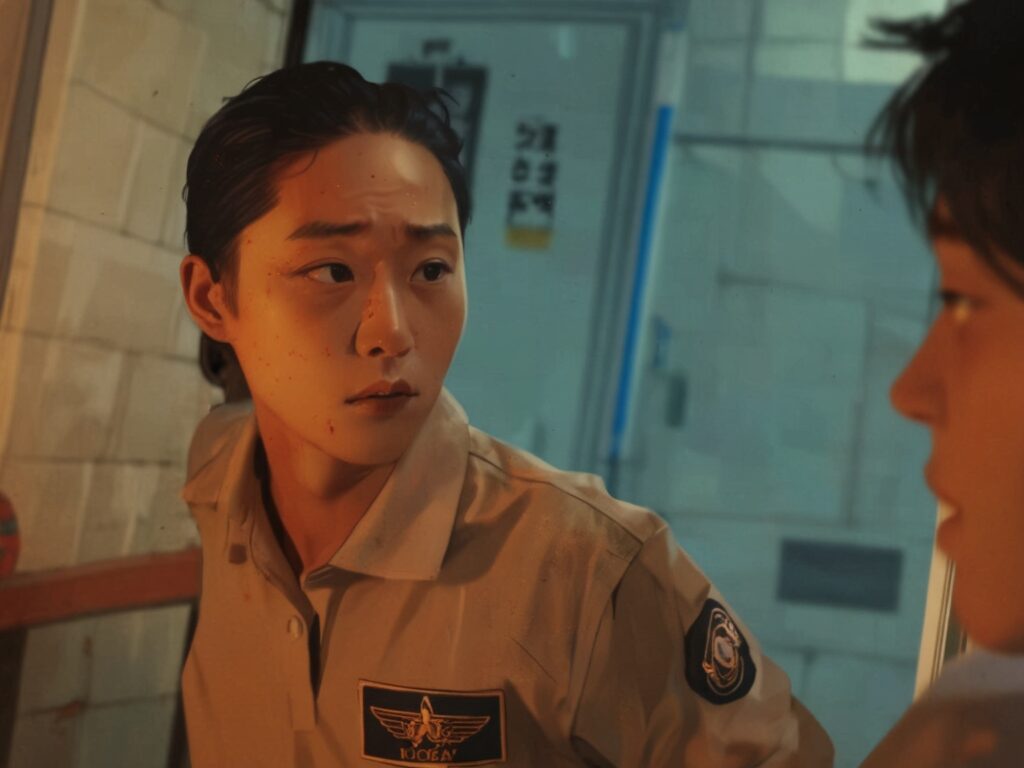
    When the Stars Gossip” blasts off into new territory with Episodes 3-4, leaving viewers breathless and questioning the nature of gravity – both celestial and emotional. As the drama unfolds amidst the cosmic backdrop, relationships orbit dangerously close to implosion, while secrets threaten to explode like a rogue supernova.

    TL;DR

    • Ryong’s Growing Attraction: Ryong’s feelings for Eve complicate matters, raising ethical questions about love in space.
    • Go-eun’s Fiery Return: Go-eun confronts her ex-boyfriend’s betrayal, showcasing her strength and resilience.
    • Spacewalk Shenanigans: Ryong’s impulsive heroics during Eve’s spacewalk highlight the risks and rewards of love and duty.
    • Chairman Choi’s Villainy: Chairman Choi’s manipulative schemes and unwavering pursuit of power drive the plot forward.

    Outer space: the final frontier for humans, dreams, and, apparently, drama that’s out of this world. As When the Stars Gossip propels us further into its galactic soap opera, Episodes 3-4 deliver a whirlwind of emotions, peril, and relationships tethered by both gravity and unresolved issues back on Earth. Buckle up as we break it all down with wit, wisdom, and a touch of sarcasm.

    Spacewalk Shenanigans and Tangled Emotions

    First, let’s address the giant asteroid in the room. Ryong, our reluctant leading man, finds himself grappling with emotions he’s long suppressed. After successfully performing mouse surgery (because space needs its melodrama), Ryong hides in his sleep pod, brooding over feelings for Eve, his fellow astronaut. Meanwhile, poor Go-eun, his Earth-bound partner, waits impatiently for his return. It’s complicated, messy, and oh-so-human.

    Ryong and Eve: The Chemistry Dilemma

    Ryong’s growing attraction to Eve is undeniable, but it’s problematic for two reasons:

    1. Both have significant others back on Earth.
    2. It’s happening way too fast for comfort.

    While it’s clear Ryong never loved Go-eun in the first place, the emotional whiplash leaves viewers skeptical. Falling for someone in zero gravity? Sure, why not? With modern dating apps being a minefield, maybe finding love in orbit is more plausible. Still, we can’t ignore the moral undertones: Does Ryong’s flawed character make him relatable, or is it just a convenient plot device?

    Go-eun’s Fiery Comeback

    If you thought Go-eun was going to stay quietly sidelined, think again. She’s furious—and rightly so. Kang-soo, her ex-boyfriend, has been scheming with Chairman Choi in ways that defy ethics and logic. The cherry on top? Kang-soo’s audacity to use Go-eun’s reproductive choices as leverage in their morally dubious plan.

    When Go-eun unleashes her anger, it’s a moment of raw power. Her passionate outburst reveals layers of her character that we haven’t seen before. And guess what? Kang-soo loves every second of it. But if he’s going to win her back, he’ll need a redemption arc of epic proportions. Right now, his actions scream “red flag,” not “end game.”

    Spacewalks and the Art of Poor Decisions

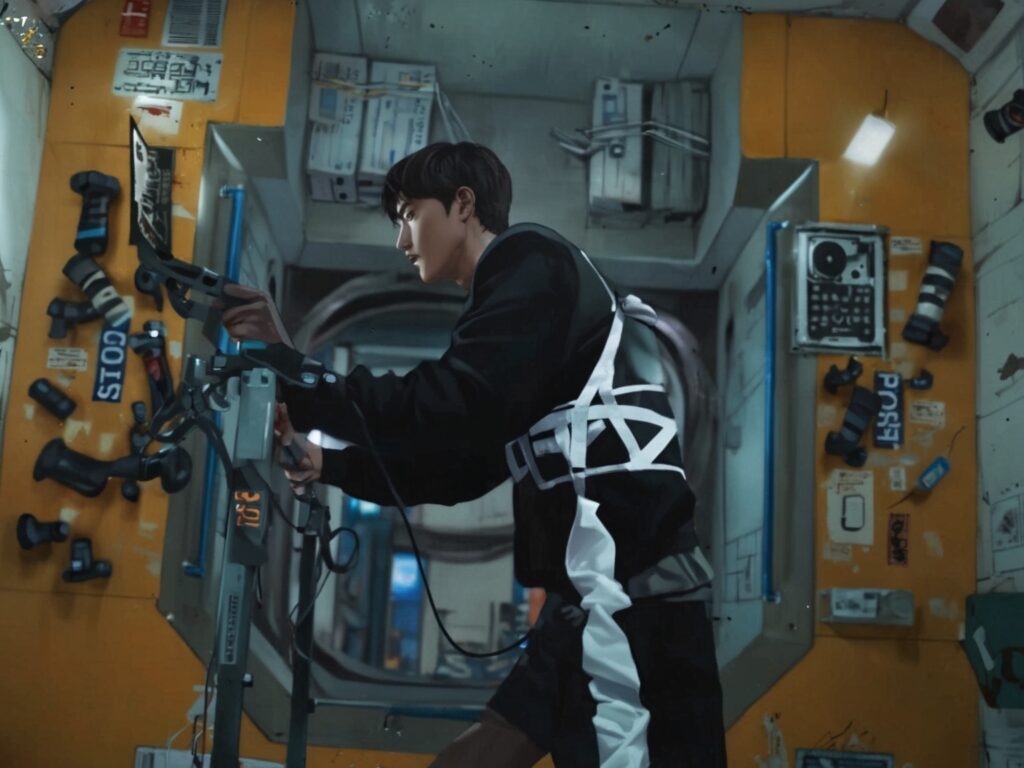
    Speaking of red flags, let’s talk about Ryong’s impulsive hero complex. When Eve embarks on a dangerous spacewalk to repair solar panels, disaster strikes. A tear in her glove leaves her vitals plummeting, and Ryong decides to save her despite zero training and the very real risk of dying in the attempt.

    Here’s where the writers lose me a bit. Ryong’s decision feels premature. Wouldn’t his self-preservation instincts override his budding feelings for Eve at this stage? It’s hard to buy into their connection when it’s built more on shared trauma than genuine emotional depth. But hey, at least the scene is suspenseful.

    Eve’s Will: A Touching Insight

    Before her spacewalk, Eve pens a will that reveals her vulnerabilities and worldview. Her father’s tragic death during a spacewalk shapes her perspective: Every life, no matter how small, is a miracle. It’s a poignant moment that adds emotional weight to the episode, contrasting beautifully with the chaos unfolding around her.

    Chairman Choi: The Villain We Love to Hate

    Back on Earth, Chairman Choi’s controlling nature hits new lows. When Min-jung collapses under the pressure of his schemes, he swoops in, not with compassion, but with a twisted sense of entitlement over her unborn child. Min-jung’s defiance is satisfying, but her bold declaration to raise the baby alone might’ve been better kept under wraps. Why provoke a man who’s proven he’ll go to any lengths to get what he wants?

    Trusting the Process (Reluctantly)

    Now, let’s get real. While I’m here for the drama, the pacing feels rushed. Ryong and Eve’s relationship lacks the depth needed to justify his life-risking actions. Go-eun’s arc, on the other hand, is shaping up nicely. Her fiery confrontation with Kang-soo is a highlight, and I’m rooting for her to find happiness—whether that’s with Kang-soo (post-redemption) or someone new.

    As for Chairman Choi, he’s the perfect antagonist. His manipulative tactics make my blood boil, but they also keep me glued to the screen. A great villain is one you love to hate, and Choi nails it.

    The Bigger Picture: Love, Ethics, and Survival

    Episodes 3-4 tackle big questions:

    1. Can love truly bloom in the harshest environments?
    2. Where do we draw the line between ambition and morality?
    3. How far would you go to protect someone you care about?

    These themes elevate the drama beyond its soapy roots, giving viewers plenty to ponder.

    Final Thoughts: A Rocky Orbit

    While When the Stars Gossip isn’t perfect, it’s undeniably entertaining. The mix of high-stakes K-drama and character-driven storytelling keeps things engaging, even when the plot stretches believability. Episodes 3-4 lay the groundwork for intriguing conflicts and relationships, and I’m cautiously optimistic about what’s to come.

    With its blend of romance, suspense, and ethical quandaries, When the Stars Gossip offers plenty to chew on. Sure, it’s flawed, but isn’t that what makes it fun? After all, perfection is overrated—just like dating apps.

    The Tale of Lady Ok: Recap of Episodes 11-12

    0

    Ah, the sweet spot in every drama where characters settle into their chaotic “normal” lives, only to be thrown into an even bigger whirlpool of emotions. That’s where we find ourselves in The Tale of Lady Ok, Episodes 11-12. This week, love takes center stage, with its trademark cutesy antics, unresolved tensions, and oh-so-predictable misunderstandings. But just when you think you’re settling in for a rom-com, the past barges in like an uninvited guest.

    TL;DR

    • Love is a Battlefield: Navigating love requires courage and communication.
    • The Past Never Truly Sleeps: Unresolved trauma can resurface and impact the present.
    • Forgiveness is a Journey: Healing requires facing your fears and finding a way to move forward.

    Main Plot Highlights: Love, Quarrels, and Uninvited Nightmares

    Our fake-marriage leads, Goodeok and Seung-hwi, are doing their best impression of domestic bliss. Except for one minor hiccup: the dreaded “first night” dilemma. Seung-hwi, ever the opportunist, tries to cozy up, but Goodeok reminds him of their “fake” status. He gets kicked out, only to be forced back into her room when his roof collapses. Drama, thy name is household calamity.

    This forced proximity brings intimacy, but not the kind you’re imagining. Instead, we learn that Goodeok is haunted by terrible nightmares and insomnia—a stark reminder of her traumatic past. Seung-hwi steps up as her personal storyteller, soothing her into rare moments of peace. It’s sweet, but don’t get too comfortable; the drama gods aren’t done with them yet.

    In a surprising twist, Seung-hwi decides to take the state exam. Goodeok, a seasoned tutor (and literal swordfighter, because why not?), takes him under her wing. Cue hilarious study sessions where our scholar-in-training learns the hard way that love doesn’t soften Goodeok’s teaching methods.

    A Side of Miscommunication and Melodrama: Do-gyum and Mi-ryeong

    Meanwhile, our secondary couple, Do-gyum and Mi-ryeong, are stuck in a loop of miscommunication. Do-gyum is still reeling from the idea that their relationship might have been a scam. Mi-ryeong, on the other hand, thinks he only cares about her because of the baby. Spoiler alert: There is no baby.

    Yes, Mi-ryeong believed she was pregnant, but alas, it was a false alarm. Fearing more accusations of trickery, she leaves the household and ends up working at a courtesan house (as a server, not what you’re thinking). Do-gyum eventually tracks her down and confesses his love. Finally, some clarity! The two decide to start fresh, moving to Hanyang to build a life together.

    Villains Lurking in the Shadows: The Return of So-hye

    As our leads navigate personal growth and budding romance, the past refuses to stay buried. Enter So-hye, the villainess with a grudge as eternal as her eyeliner. Her life fell apart when Seung-hwi left her for Goodeok, and now she’s back, fueled by revenge and her father’s newfound position as magistrate in Goodeok’s town.

    Things take a darker turn when Goodeok encounters So-hye and her father. Flashbacks of her traumatic escape resurface, leaving her visibly shaken. The tension is palpable, and we’re left wondering if Goodeok can hold her ground or if this is the beginning of her downfall.

    My Point of View: Why This Drama Hits Hard

    Here’s the thing about The Tale of Lady Ok: it knows how to toy with your emotions. One moment, you’re laughing at Seung-hwi’s hapless attempts to impress Goodeok, and the next, you’re biting your nails as she confronts her deepest fears. The balance between fluff and high-stakes drama is what keeps viewers hooked.

    But let’s talk about the real MVPs here: the writers. They’ve crafted characters that feel real despite the often fantastical setting. Goodeok’s struggle to accept love and Seung-hwi’s unwavering support make for a dynamic duo that’s both entertaining and heartwarming. And don’t even get me started on Do-gyum and Mi-ryeong. Their arc might be secondary, but it’s no less compelling.

    Key Takeaways: Lessons Wrapped in Drama

    1. Love is complicated but worth the effort. Whether it’s Goodeok learning to trust or Do-gyum finally opening up, love in this drama isn’t handed out on a silver platter. It’s messy, it’s real, and it’s relatable.
    2. The past has a funny way of catching up. Goodeok’s unresolved trauma and So-hye’s vendetta remind us that you can’t run forever. At some point, you have to face your demons.
    3. Communication is key. Seriously, half the drama in this series could be avoided if people just talked to each other. But then again, where’s the fun in that?

    What’s Next: Predictions for Chaos

    With So-hye and her father now firmly planted in the storyline, the stakes are higher than ever. Will Goodeok and Seung-hwi’s love survive the storm? Can Do-gyum and Mi-ryeong build a happy life in Hanyang? And most importantly, will So-hye ever let go of her grudge? One thing’s for sure: the drama is far from over.

    Why You Should Keep Watching

    If you’re not already glued to The Tale of Lady Ok, K-Drama Episodes 11-12 are a perfect example of why you should be. With its mix of romance, humor, and heart-pounding tension, this drama delivers on all fronts. So grab your popcorn and settle in; things are about to get even more intense.

    And let’s not forget: this story isn’t just about love and revenge. It’s about resilience, growth, and finding light even in the darkest of times. That’s a message we could all use a little more of these days, don’t you think?

    Banksy’s Art Exhibitions Without Permission

    0

    Imagine walking into an art gallery expecting to see masterpieces, only to find…copies. Not just any copies, mind you, but unauthorised copies of Banksy’s work! The enigmatic street artist, famous for his subversive art and disdain for the art world, would likely be rolling his eyes harder than a mime trying to catch a frisbee. Welcome to the strange world of unauthorized Banksy exhibitions, where art imitates art, and irony runs rampant.

    TL;DR

    • Banksy opposes the commercialization of his art.
    • Unauthorized exhibitions featuring Banksy’s work are common.
    • These exhibitions raise ethical and legal questions about art ownership and copyright.
    • The commercial nature of these exhibitions often contradicts Banksy’s artistic message.
    • While these exhibitions bring Banksy’s work to a wider audience, they may exploit his popularity for profit.

    When it comes to subversive street art, few names spark as much intrigue and debate as Banksy. The enigmatic artist has captured global attention with his provocative, anti-establishment pieces that challenge authority and capitalism. Yet, the irony is thick: exhibitions of Banksy’s art, like The Art of Banksy: Without Limits, continue to pop up around the world – often unauthorized and, unsurprisingly, denounced by the artist himself.

    What’s the deal with these exhibitions? And is it fair (or even legal) to profit from the work of an artist who’s staunchly against commercial exploitation? Let’s unpack this art-world drama and sprinkle in some witty commentary for good measure.

    Banksy: The Reluctant Museum Exhibit

    Banksy once described museums and galleries as places where “you are simply a tourist looking at the trophy cabinet of a few millionaires.” Ouch. The famously anti-capitalist artist has made it clear that he doesn’t support profiteering from his work. Case in point: in 2018, after Girl with Balloon sold for $1.9 million at auction, he shredded it mid-sale. Spoiler alert: it backfired spectacularly. The shredded piece is now worth 20 times more.

    So, when exhibitions like The Art of Banksy: Without Limits pop up, Banksy’s disdain is predictable. His website bluntly warns: “Members of the public should be aware there has been a recent spate of Banksy exhibitions, none of which are consensual. They’ve been organised entirely without the artist’s knowledge or involvement.” Translation? Buyer beware.

    The Exhibition: Without Limits, But Also Without Approval

    The latest iteration of The Art of Banksy: Without Limits has landed in Singapore, but its journey has spanned Europe, the Middle East, Australia, and the US. Behind it are Muse Marketing and Entertainment and Fever, companies specializing in staging and promoting events. The exhibit features over 200 pieces, including replicas of famous works, multimedia displays, and a few 3D interpretations, such as the iconic bouquet-throwing protester.

    Sounds impressive, right? Until you dig a little deeper. Many of the pieces come from “private collectors” or the “Banksyland private collection” – which feels like a fancy way of saying, “We made these ourselves.” The lack of verifiable provenance raises questions about authenticity and whether these exhibits honor Banksy’s intent or exploit his popularity for profit.

    A Sarcastic Stroll Through the Irony

    Let’s pause for a moment and marvel at the delicious irony here. Banksy’s art often critiques consumerism and corporate greed, yet here we are, paying premium ticket prices to see replicas of his work in what some might call a glorified gift shop.

    Consider this: Banksy’s website says, “You shouldn’t have to pay to look at graffiti. You should only pay if you want to get rid of it.” And yet, exhibitions like this one rake in rave reviews on Google, with 4.5-star ratings from starry-eyed visitors unaware they’re participating in what Banksy might label “a robbery.”

    One unimpressed reviewer nailed it: “Do not buy tickets! This is robbery. The works are exhibited without the artist’s permission, and they are profiting from it. Banksy himself has denounced previous iterations as ‘fake’ and ‘organised entirely without his knowledge or involvement.’”

    The Legal Gray Area: Who Owns Graffiti?

    Here’s the million-dollar question (pun intended): Is this legal? Graffiti often exists in a legal gray area. Technically, Banksy doesn’t own the walls he paints on, so can he claim ownership of the art itself? While moral arguments abound, the legal system is less clear-cut. Some argue that once the art is public, it’s fair game for replication or exhibition. Others believe that exhibiting art without permission – especially when it’s anti-commercial in nature – violates the artist’s intent and intellectual property rights.

    In 2022, Banksy publicly called out fashion giant Guess for using his motifs without permission. His accusation: they were “helping themselves” to his work. It’s a similar story with these exhibitions, which profit handsomely while the artist earns nothing. But as Banksy himself might quip, “Isn’t that capitalism in a nutshell?”

    On his website, he wrote: “Are you a company looking to licence Banksy art for commercial use? Then you’ve come to the right place – you can’t. Only Pest Control Office have permission to use or license my artwork. If someone else has granted you permission, you don’t have permission. I wrote ‘copyright is for losers’ in my (copyrighted) book and still encourage anybody to take and amend my art for their own personal amusement, but not for profit or making it look like I’ve endorsed something when I haven’t. Thanks.” and at the end of the page, he included an icon and link to Pest Control.

    My Two Sprays: Is It Worth the Hype?

    Here’s where I step onto my soapbox. While the unauthorized nature of these exhibits leaves a sour taste, there’s no denying they bring Banksy’s art to a broader audience. Not everyone can jet off to Bristol or Bethlehem to see his murals in their original context. For many, these exhibitions are the closest they’ll get to experiencing his work.

    That said, the commercialized presentation undermines the very ethos of Banksy’s art. It’s like selling protest signs as home decor: it misses the point entirely. If you’re going to charge people to see Banksy’s work, why not donate a portion of the proceeds to charity? Better yet, why not use the exhibit to highlight social issues – the way Banksy himself does?

    Final Thoughts: Art or Exploitation?

    At the end of the day, exhibitions like The Art of Banksy: Without Limits force us to grapple with complex questions about art, ownership, and commercialization. Is it right to profit from an artist’s work without their consent? Does bringing art to the masses justify the means? And what does it say about us as consumers when we’re willing to overlook these ethical dilemmas for a selfie-worthy experience?

    Banksy’s art challenges us to question authority, consumerism, and the status quo. Perhaps it’s fitting, then, that the exhibitions inspired by his work spark similar debates. Just don’t expect Banksy to show up and cut the ribbon at the opening ceremony. Something tells me he’s busy planning his next act of subversive genius.

    Key Takeaways:

    • Banksy’s art is a critique of consumerism and capitalism, making unauthorized exhibitions ironic.
    • The Art of Banksy: Without Limits showcases replicas and multimedia displays but lacks authenticity and artist approval.
    • Legal and ethical questions surround the commercialization of graffiti art.
    • While these exhibits make Banksy’s work accessible, they undermine his anti-commercial ethos.
    • A portion of proceeds to charity or a focus on social issues could align these exhibitions more closely with Banksy’s intent.

    Let me know your thoughts in the comments. Are these exhibitions a necessary evil or a blatant cash grab? Either way, Banksy himself would probably advise: “Don’t believe the hype.”

    To Tip or Not to Tip?

    0

    To Tip or Not to Tip?” – a question that has plagued humanity since the dawn of time (or at least since someone first handed a coin to a chariot driver). Is it a generous gesture of appreciation, a societal obligation, or a subtle form of extortion? This age-old dilemma, like a particularly stubborn wine stain, refuses to be easily removed from our cultural fabric. Whether you’re navigating the treacherous waters of a New York City restaurant or trying to decipher the tipping etiquette of a Parisian cafe, the question remains: do you tip the boat, or do you risk capsizing the entire dining experience?

    TL;DR

    • Research local tipping customs before traveling.
    • Carry small bills for easy tipping.
    • Don’t stress too much about small tipping mistakes.
    • Consider the broader implications of tipping culture.
    • Advocate for fair wages for service workers.

    Tipping. It’s the little extra on your bill that can make or break your dining experience, or even your exit strategy from a cab. Yet, this seemingly simple act is as culturally complex as it is divisive. From awkward calculations to full-blown ethical debates, tipping is a global quirk that refuses to be standardized. Let’s dive into its fascinating history, how it’s evolved, and, of course, whether we’ll ever agree on the dos and don’ts of gratuities.

    A Brief History: From Noble Generosity to Everyday Obligation

    The origins of tipping may date back to Roman times, but it’s most commonly associated with medieval Europe. Aristocrats, visiting each other’s estates, would offer small gifts known as “vails” to servants for their extra efforts. Over time, this act of generosity turned into an expectation. Meanwhile, across continental Europe, “drink money” became a ritual. The French term pourboire, the German trinkgeld, and the Swedish dricks all point to this practice of paying for a servant’s toast in honor of the guest.

    As the custom spread, taverns in London supposedly introduced “tip” boxes inscribed with “To Insure Promptitude.” While the authenticity of this tale is questionable, the concept caught on. Fast forward to the 19th century, when tipping crossed the Atlantic, carried by wealthy Americans returning from Europe. Ironically, many Americans viewed tipping as undemocratic, a relic of old-world classism. By 1916, William Rufus Scott’s book The Itching Palm condemned tipping as a form of bribery that clashed with the ideals of equality and freedom.

    Despite resistance, tipping took root in the U.S., largely due to its economic advantages for employers. Post-Civil War, newly freed African Americans often found themselves in low-paying service jobs, where tips became a lifeline. Employers saw tipping as a way to reduce wages while incentivizing excellent service. By the early 20th century, even anti-tipping laws in a handful of Southern states couldn’t hold back the tide. By 1926, those laws were repealed, and tipping became ingrained in American culture.

    Why Does Tipping Vary So Much Globally?

    Different countries have embraced or resisted tipping based on cultural norms, economic systems, and historical factors. Let’s take a closer look at how gratuities play out around the globe:

    United States: The Land of Tip-Creep

    Try leaving an American restaurant without tipping, and you might need to sprint to your car. Tipping here is less a courtesy and more a societal mandate. Traditionally, 15% of the bill was considered generous. Today, thanks to electronic payment systems, suggested tips of 22%, 25%, or even 30% are common. These systems also encourage “tip-creep,” where previously untipped services—like self-checkouts—now suggest gratuities.

    A 2024 survey found that three-quarters of Americans believe tipping is “out of control.” Yet, it remains essential for service workers, whose federal minimum wage can include tips. With such reliance on customer generosity, the tipping debate continues to simmer.

    Canada: A Polite Middle Ground

    Canada mirrors the U.S. in many ways but maintains a more restrained tipping culture. Most Canadians tip between 10-15%, with only a quarter going up to 20%. Regional differences also play a role. Quebec, for example, often sees tips as high as 25%. Interestingly, a recent study showed Canadians are among the world’s top advocates for eliminating tipping, with many citing inflation as a reason to cut back.

    United Kingdom: The Inventor of Tipping… Sort Of

    Despite its historical ties to tipping, the UK is surprisingly laid-back about it today. A 10-15% gratuity is typical for restaurant staff and drivers, but pub patrons rarely leave extra for bartenders. Recent laws ensure tips go directly to employees, but cynics might note that these taxable gratuities also benefit the government.

    France: Service Included

    In France, gratuities are baked into the bill. A 15% service charge, service compris, is standard, reflecting the professional status of waitstaff. Additional tips are optional but appreciated for exceptional service.

    Egypt: Baksheesh Culture

    Egypt’s baksheesh tradition involves discretionary payments to expedite service. This pre-tip culture extends to administrative and professional tasks. Given high unemployment and widespread poverty, gratuities are vital for many workers. Islamic principles of charity further encourage generosity.

    Argentina: Digital Tipping on the Rise

    In Argentina, tipping has gone digital, driven by inflation and the dwindling value of the Peso. Electronic payment systems like Mercado Pago now allow gratuities, with 10-15% being standard for restaurant staff. Cash tips in U.S. dollars remain common, especially in tourist areas.

    The COVID-19 Effect on Tipping

    The pandemic reshaped tipping behaviors worldwide. Hospitality workers faced unprecedented challenges, prompting many to tip more generously as a gesture of support. Digital payment systems also surged, making tipping more accessible but arguably more obligatory. Whether these trends will persist remains to be seen.

    My Take: Should We Abandon Tipping?

    Here’s the thing: tipping, at its core, is both a social and economic band-aid. It’s a way to reward good service but also an excuse for businesses to underpay employees. While it might feel good to leave a generous tip, the system often perpetuates inequality and economic instability.

    So, should we ditch tipping altogether? Maybe. But the solution isn’t as simple as banning gratuities. Countries like France, where service charges are mandatory, have shown that fair wages can coexist with optional tipping. If businesses paid livable wages and tipping became a true token of appreciation rather than an obligation, we might strike a better balance.

    Tipping Tips: Avoiding Faux Pas

    Navigating tipping customs can be tricky, especially when traveling. Here are a few guidelines to keep you out of hot water:

    • Research local norms: What’s generous in one country might be insulting in another.
    • Carry small bills: Many service workers lack change, and small denominations make tipping easier.
    • Don’t overthink it: While it’s good to be considerate, most people won’t hold a grudge over a slight tipping misstep.

    Final Thoughts

    Tipping culture is a patchwork of tradition, economics, and social expectations. Whether you’re tipping a bartender in New York or a porter in Cairo, understanding the context can save you from embarrassment and ensure your gratitude is well-received. Ultimately, though, it’s worth asking whether the world’s obsession with tipping does more harm than good. Perhaps it’s time for a global conversation about fair wages, where tips are a true bonus rather than a lifeline.

    What’s your take on tipping? Love it, hate it, or simply confused by it? Let’s discuss!

    The Shocking Story of Wang Xing and Scam Cities

    0

    Wang Xing, a rising star in the Chinese entertainment industry, thought he was about to reach new heights. Instead, he found himself plummeting into a different kind of stardom – the kind where the spotlight shines on human misery. His journey, from hopeful actor to captive of a ruthless criminal syndicate, is a chilling reminder that even the brightest stars can fall, and that the allure of quick success can mask a dangerous reality.

    TL;DR

    • Be wary of job offers that seem too good to be true.
    • Thoroughly research any company or individual offering employment abroad.
    • Never travel to unfamiliar locations without proper documentation and safety precautions.
    • Share your travel plans with trusted friends or family.
    • Be aware of your surroundings and trust your instincts.

    For Chinese planning a holiday to Thailand, hold onto your passports! A jaw-dropping story has rocked the news in China and serves as a chilling warning for Chinese, Malaysians, and anyone who fancies a trip to Thailand. Let’s dive in and unravel this tale of scams, kidnappings, and why you might want to rethink that tropical getaway.

    A Rising Star’s Nightmare

    Meet Wang Xing, a Chinese actor who’s not quite A-list but definitely recognizable. Jobless and desperate, he leapt at a seemingly golden opportunity for a gig in Thailand. Spoiler alert: it wasn’t golden, and it definitely wasn’t safe. Wang Xing’s business trip quickly turned into a nightmare as he was kidnapped and shipped off to one of the infamous scam cities along the Myanmar-Thailand border. Fortunately for him, his quick-thinking girlfriend and a social media frenzy ensured he was rescued—but not before experiencing a terrifying glimpse into this shadowy world.

    What Are Scam Cities?

    Here’s the context: the Myanmar-Thailand border has become a hotbed for criminal activity, particularly human trafficking and scam operations. Scam cities, or “fraud parks,” are massive complexes run by organized syndicates where kidnapped victims are forced into modern-day slavery as scammers. And we’re not talking about a small operation here. Think 300,000 victims—yes, you read that right—trapped in sprawling industrial parks the size of 150 football fields.

    Who Runs These Operations?

    Here’s the kicker: these operations aren’t controlled by the Myanmar government but by rebel armies and—brace yourself—Chinese businessmen who have set up shop in Myanmar. Victims, mostly Chinese nationals but also Malaysian Chinese, are lured with promises of lucrative jobs in Thailand. Once they arrive, they’re kidnapped, trafficked across the border, and locked in these scam hubs.

    The Ruthless Business Model

    Victims are treated as commodities. Syndicates pay kidnappers around 60,000 yuan (about SGD 12,000) per person. Once inside, the victims are given impossible Key Performance Indicators (KPIs) to meet—like scamming a certain number of people or stealing a specific amount of money. Failure to meet these KPIs leads to brutal punishments, including beatings, electrocution, and even death.

    In leaked footage, survivors recount harrowing tales of being shaved, handcuffed, and blindfolded, forced to endure “training” sessions on how to scam people over the phone. Their living conditions? Unsanitary, inhumane, and downright nightmarish.

    The Massive Scale

    Let’s put this into perspective. KK Park, one of the largest scam cities, spans 150 football fields. These cities operate like mini-nations, complete with their own economies, security forces, and even military-style structures. The sheer scale is mind-boggling, and the operation’s reach extends beyond Myanmar’s borders.

    How Did We Get Here?

    One word: desperation. China’s youth unemployment rate has soared to over 20%, with unofficial estimates suggesting it could be as high as 30-40%. With few job prospects, people are more likely to fall for scams promising high-paying roles abroad. Syndicates exploit this vulnerability, sometimes even buying legitimate companies in China to lure victims under the guise of corporate trips.

    Wang Xing’s Rescue

    Wang Xing’s story gained massive traction because of his celebrity status and his girlfriend’s swift actions. Sharing his GPS location every step of the way, she quickly alerted authorities when his signal disappeared into Myanmar. The Thai police, in an unusually efficient operation, rescued him within 24 hours. When Wang reappeared, his head was shaved—a grim indication of how close he came to becoming another nameless victim.

    But don’t be fooled. His rescue was an exception, not the rule. For the 300,000 others, help isn’t coming.

    Malaysian Victims

    It’s not just Chinese nationals falling prey. Malaysian Chinese are also being targeted. Recently, families of three Malaysian victims held a press conference, revealing how their loved ones were tricked into traveling to Thailand only to be abducted into scam cities. One victim was even told the airport was “closed due to a fire” and was taken by car to Myanmar.

    My Point of View

    Here’s where I get a little personal. First, why is this still happening? The scale of these operations suggests a failure—or unwillingness—on the part of regional governments to take decisive action. And while China managed to dismantle similar operations in northern Myanmar, the problem has simply shifted further south.

    Second, desperation is the real villain here. Economic hardships push people to take risks they wouldn’t otherwise consider. The fact that syndicates are exploiting this vulnerability is infuriating but not surprising.

    Lastly, the media frenzy around Wang Xing highlights a harsh truth: fame equals rescue. For the average victim, the chances of being saved are slim to none. This glaring inequality is a wake-up call for governments, NGOs, and individuals to take this issue seriously.

    What You Can Do

    1. Stay Informed: Knowledge is power. Share this story with your loved ones.
    2. Verify Job Offers: If something sounds too good to be true, it probably is.
    3. Advocate for Change: Support organizations working to combat human trafficking.
    4. Avoid High-Risk Areas: Until significant changes are made, reconsider travel to regions near the Myanmar-Thailand border.

    Final Thoughts

    This isn’t just about one actor or even 300,000 victims. It’s about shining a spotlight on the dark underbelly of human trafficking and scam operations. Let’s hope his harrowing experience inspires change, both in policy and in public awareness.

    So, for now, maybe skip that Thai holiday and opt for a safer destination. After all, no beach cocktail is worth risking a one-way trip to a scam city.

    Motel California: Episodes 1-2

    0

    Welcome to Motel California, where the drinks are cold, the memories are warm, and the check-out is optional. Episodes 1-2 of this cozy drama serve as a perfect blend of nostalgia and intrigue, leaving us all wondering if we’ve finally arrived at our destination, or if we’re forever trapped in a loop of longing and missed connections. Just like the iconic song, this motel holds a seductive allure, promising both escape and entrapment, leaving us craving more.

    TL;DR

    • Slow-burn romance: The drama focuses on character development and emotional connection rather than immediate romance.
    • Nostalgia and atmosphere: The show effectively captures the nostalgic feeling of a small town and the cozy wintery atmosphere.
    • Character-driven: The characters are well-developed and relatable, with Kang-hee being a particularly strong and independent female lead.
    • Social commentary: The drama touches upon social issues like prejudice and poverty, adding depth to the narrative.
    • Potential for growth: While the initial episodes may seem slow-paced, the show has the potential to evolve into a meaningful exploration of love and personal growth.

    Imagine a wintery small-town setting, a slow-burn romance, and childhood friends reconnecting after a decade—sounds like a recipe for emotional coziness, right? Motel California comes at us with a character-driven narrative that feels like a warm cup of cocoa on a chilly evening. The first two episodes lean into setup mode, introducing us to a quirky cast and sprinkling in just enough drama to keep things interesting. But let’s be honest, it’s not exactly reinventing the wheel just yet.

    Still, there’s potential. A lot of potential.

    First Impressions: Cozy Vibes and Nostalgia

    I’ll admit—I went in with zero expectations and came out pleasantly surprised. The unhurried pacing, chill soundtrack, and moody aesthetic scream sweater weather. If you’re looking for high-stakes drama, you might find yourself yawning. But if understated storytelling and character depth are your jam, you’ll likely settle right in.

    This drama doesn’t rush to win your heart; it’s more like the old friend who takes their time catching up over tea. And the setting? A rural town revolving around a dingy motel—what’s not to love?

    Meet Our Leads

    Say hello to JI KANG-HEE (Lee Se-young) and CHUN YEON-SOO (Na In-woo). These two grew up as best friends in a small town dominated by Motel California, owned by Kang-hee’s father, JI CHUN-PIL (Choi Min-soo). While the motel has seen better days, it’s more than just a business—it’s home, albeit one Kang-hee couldn’t wait to escape.

    Kang-hee is ambitious, confident, and fearless, while Yeon-soo is the softer, more introspective counterpart. They’re classic opposites who complement each other beautifully. And yes, there’s a romantic history. Kang-hee, in a move that’s refreshingly bold, once proposed they lose their virginity to each other before she left for college in Seoul. He hesitated but agreed. Flash forward ten years, and their lives couldn’t be more different.

    Ten Years Later: The Reunion

    Fast-forward to the present. Yeon-soo’s still carrying a torch for Kang-hee, playing the hopeless romantic who’s somehow convinced fate will bring them back together. And wouldn’t you know it? Fate obliges. He spots her in a random Seoul café but is too stunned to approach. Meanwhile, Kang-hee isn’t exactly living the dream. Once a bright-eyed interior designer, she’s now a struggling construction worker blacklisted from her industry for exposing workplace injustices. Her spunky resilience keeps her afloat, though, and a new mentor and eccentric clients might just turn things around.

    As for Yeon-soo? He’s thriving as a veterinarian, lovingly tending to farm animals while staying hopelessly single because, well, Kang-hee. Cue the beginnings of not one but two potential love triangles. Yeon-soo’s vet colleague, YOON NAN-WOO (Choi Hee-jin), has her eye on him, while Kang-hee’s wealthy new client, GEUM SEOK-KYUNG (Kim Tae-hyung), seems equally smitten with her. Let the games begin.

    Misunderstandings Galore

    Drama loves misunderstandings, and Motel California is no exception. Kang-hee’s annual birthday meeting with her father at a hotel spirals into chaos when she brings Seok-kyung as a fake boyfriend to ward off her dad’s nagging. Who walks in? Yeon-soo, of course, assuming the worst. The kicker? Yeon-soo recognizes Seok-kyung from a long-ago incident where he heroically defended Kang-hee from an abusive boss. Small world.

    Seok-kyung plays along, escalating the awkwardness by essentially asking for Kang-hee’s hand in marriage. Yikes. It’s messy, it’s complicated, and it’s exactly what keeps us watching.

    Social Commentary and Small-Town Realities

    Let’s not gloss over the social undertones. Kang-hee’s mixed heritage and fiery personality made her a target of small-town gossip and bullying. Her struggles with prejudice, poverty, and societal expectations ground the drama in real-world issues, adding depth to her character and the story. It’s not just about rekindling a romance; it’s about overcoming the scars left by a narrow-minded community.

    My Take: What Works and What Doesn’t

    What Works:

    • Authenticity: The characters feel raw and relatable. Kang-hee isn’t your cookie-cutter heroine; she’s messy, ambitious, and unapologetically herself.
    • Atmosphere: The cozy, contemplative vibe is a refreshing break from melodramatic chaos.
    • Themes: Exploring love, sacrifice, and personal growth gives the story emotional weight.

    What Doesn’t:

    • Pacing: It’s a little too slow for its own good. While I love a good setup, let’s pick up the pace, shall we?
    • Miscommunication Overload: Let’s not rely too heavily on misunderstandings. Kang-hee and Yeon-soo’s honesty is a strength; don’t squander it.
    • Predictability: Two love triangles? Seen it. Let’s hope the drama surprises us.

    Why You Should Watch

    If you’re in the mood for a character-driven drama that’s less about fireworks and more about warm embers, Motel California is worth a watch. It’s not perfect, but its heart is in the right place. And honestly? Sometimes we need a story that takes its time, letting us marinate in the nuances of love, loss, and second chances.

    Final Thoughts: Can Love Really Conquer All?

    Yeon-soo dreams of a future with Kang-hee, but how realistic is that? She’s made it clear she can’t return to their hometown, and he hasn’t exactly packed his bags for Seoul. Love alone isn’t always enough; compromise, growth, and mutual understanding are the real MVPs here. If the drama leans into this complexity, it could be something truly special.

    Word of Wisdom

    Sometimes, revisiting the past is less about finding what you lost and more about discovering what still matters. Love might be complicated, but it’s also what makes life worth living.

    Motel California may not have exploded out of the K-Drama gate, but it’s quietly building a story worth sticking around for. Here’s hoping it delivers on its promise of heartfelt exploration and meaningful resolutions. Stay tuned, and bring on Episode 3!

    Mind-Bending Facts About Snakes

    0

    Prepare to have your mind slither into new territory! We’re about to shed some light on the fascinating world of snakes, where truth is stranger than fiction. Get ready for jaw-dropping revelations that will leave you both amazed and a little bit chilled. You might even start seeing the world (and your to-do list) in a whole new, more serpentine way.

    TL;DR

    • Snakes don’t have eyelids, their eyes are protected by a transparent shield.
    • Some snakes can “fly” by gliding through the air.
    • Snake venom can have medicinal properties.
    • Not all snakes lay eggs; some give birth to live young.
    • Snakes use their forked tongues to smell.

    Snakes: nature’s ultimate enigma. Equal parts fascinating and fearsome, these creatures have been the stuff of legends, nightmares, and now, your new favorite fun facts. So, grab your metaphorical snake-handling gloves because we’re about to slither deep into a world of jaw-dropping truths that might just leave you hissing with delight.

    Blink and You’ll Miss It? Not with Snakes!

    Let’s start with one of the creepiest facts: snakes never blink. Ever. That’s because they don’t even have eyelids. Instead, their eyes are covered by a transparent membrane called a brille (fancy German for “glasses”). This protective shield keeps their eyes safe while ensuring they maintain that uncomfortably intense gaze. Can you imagine if humans had this? Forget sunglasses — we’d all be walking around looking permanently startled.

    Flying Snakes: Fact or Fiction?

    No wings, no problem. Some snakes have mastered the art of flight… well, sort of. The Chrysopelea, better known as the Ornate Flying Snake, can glide through the air like a living slinky. Found in Southeast Asia, these snakes flatten their bodies and use aerial undulation to stay stable while soaring up to 330 feet. It’s not exactly first-class travel, but it’s still a stunning evolutionary trick.

    The Sun’s Biggest Fans

    Unlike humans who can slap on sunscreen or hide in the shade, snakes are ectothermic, meaning their body temperature depends entirely on their environment. That’s why you’ll often catch them basking in the sun, soaking up those sweet, sweet rays. While we might call them “cold-blooded,” it’s really more like being solar-powered. Admit it, you’re a little jealous of their eco-friendliness.

    Prehistoric Predators with a Taste for Dino Hatchlings

    If you thought Jurassic Park was dramatic, wait until you hear about prehistoric snakes. Fossil evidence from India reveals that ancient snakes, like Sanejah indicus, hung around dinosaur nests waiting for hatchlings to emerge. With jaws too small to eat eggs, they’d bide their time for a sneaky snack. Talk about patience. Makes waiting for pizza delivery seem like a breeze, doesn’t it?

    Deadly Venom, Life-Saving Potential

    Here’s a plot twist for you: what can kill you might also save your life. Snake venom is being studied for its potential in treating strokes and cancer. Researchers are uncovering how venom toxins interact with blood platelets to prevent irregular clots and possibly inhibit the spread of cancer. Who knew snakes were accidental pharmacists?

    Snakes That Spit (and Hit Their Mark)

    Meet the sharpshooters of the snake world: spitting cobras. These venomous reptiles can eject venom with alarming precision, hitting targets up to six feet away. Usually a defense mechanism, their venom aims for the eyes, causing pain and temporary blindness. Imagine having that level of accuracy. You’d never miss the trash can again.

    Not All Snakes Lay Eggs

    Contrary to what most people believe, around 30% of snakes give birth to live young. Species like the Russell’s viper can have as many as 40 babies in one go. Talk about overachieving moms! Meanwhile, boa constrictors take things to a whole new level with parthenogenesis, a process where females reproduce without a mate. That’s right: they’re giving us all a masterclass in independence.

    Toxic Diet, Anyone?

    The Asian Rhabdophis tigrinus snake turns its diet into a weapon. After munching on toxic toads, it stores the toxins in neck glands to ward off predators. Even more incredible, pregnant females pass these toxins to their offspring, giving baby snakes a built-in defense system. It’s like handing your kids a starter pack for survival.

    Snakes That Smell with Their Tongues

    Who needs nostrils when you’ve got a forked tongue? Snakes use their tongues to pick up scent molecules in the air and analyze them using a special organ called Jacobson’s organ. This forked design allows them to detect scents from multiple directions at once. It’s basically nature’s GPS, and it makes them phenomenal hunters.

    Binocular Vision: A Predator’s Superpower

    Snakes like pit vipers and vine snakes have evolved binocular vision, allowing them to judge distance and depth with eerie precision. This ability makes them more efficient predators. Fun fact: certain species were rediscovered in India after more than a century. Talk about making a comeback!

    Eggs Over Fangs

    Meet the dasypeltis, a snake that’s traded venom and fangs for a specialized egg-only diet. These clever reptiles have flexible jaws and bony spines in their throats to crack eggshells, allowing them to swallow eggs whole. Once they’ve slurped up every drop, they spit out the crushed shells like pros. Forget breakfast chefs; this snake has efficiency down to an art form.

    My (Snake-Obsessed) Take

    Let’s be real: snakes don’t deserve the bad rap they often get. Sure, they can be creepy, but they’re also a testament to the wild ingenuity of nature. From gliding through trees to playing pharmacist with venom, these reptiles are endlessly fascinating. If anything, they remind us to look beyond fear and appreciate the complexity of the world around us.

    But here’s the kicker: if snakes can adapt and evolve to such incredible extremes, what’s stopping us? Maybe it’s time to channel our inner snake and embrace change, find creative solutions, and maybe even glide through life—figuratively, of course.

    Final Thoughts

    Snakes may not blink, but they’ve certainly opened our eyes to the wonders of evolution and survival. From venom’s surprising benefits to their jaw-dropping abilities (pun intended), there’s so much to admire about these mysterious creatures. So, the next time you see a snake, instead of recoiling in fear, take a moment to marvel at their sheer brilliance. Who knows? You might even learn a thing or two about resilience, creativity, and adaptability.

    Still feeling rattled? Share your thoughts in the comments below, and don’t forget to slither back here for more wild and wonderful stories!