
More
    Home Blog Page 53

    What is Fish Rain?

    0

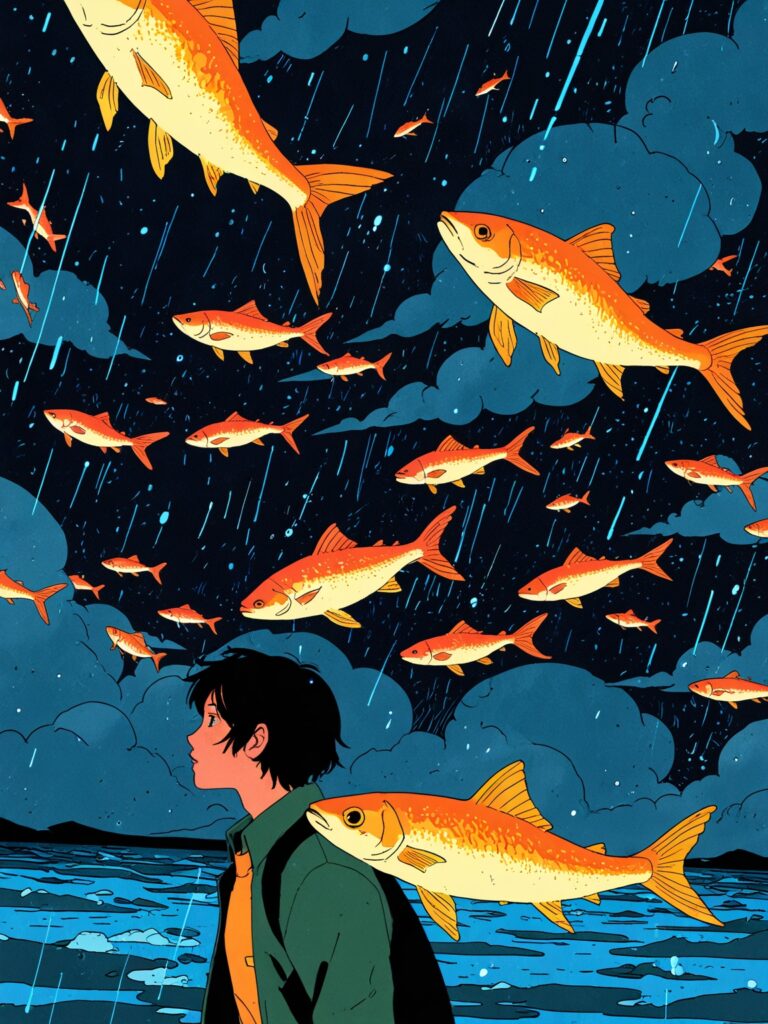
    Fish Rain – Not the metaphorical kind where you’re drowning in paperwork, but actual, slimy, scale-covered fish falling from the sky. Sounds like a scene from a surrealist painting, right? Well, believe it or not, ‘fish rain’ is a real phenomenon, though perhaps not as common as your average April showers. This peculiar weather event has puzzled and intrigued people for centuries, leaving them scratching their heads and wondering if the apocalypse is upon us.

    TL;DR

    1. Fish rain is caused by waterspouts. These powerful tornadoes can suck up water and anything in it, including fish.
    2. Historical accounts of animal rain date back centuries.
    3. The phenomenon is often linked to low-pressure systems and strong winds.
    4. While rare, fish rain can occur in various parts of the world.
    5. It’s a reminder of the unpredictable and awe-inspiring power of nature.

    Ever had a fish land on your head during a rainstorm? No, it’s not a scene from a bizarre sci-fi movie or the beginning of the apocalypse. This mind-boggling event, known as “fish rain,” is one of nature’s strangest weather phenomena. Over the centuries, it has left people scratching their heads—and ducking for cover. Let’s dive deep into the fascinating science, history, and mystery behind this odd spectacle, with a touch of wit and a friendly, counselor-like perspective.

    The Basics of Rain—And How Fish Get Involved

    To understand how fish end up raining down, we first need to revisit our elementary science lessons. Rain happens when water evaporates from lakes, rivers, or oceans, forms clouds in the sky, and eventually falls back to Earth as precipitation. Simple, right? But fish? That’s where things get weird.

    Fish typically live in their happy aquatic homes, far removed from the skies. So how do they get swept up into the clouds? The answer lies in an extraordinary weather phenomenon called a waterspout—essentially a watery tornado.

    What Is a Waterspout?

    Picture this: warm and cold air masses collide over a body of water, creating a swirling vortex. This mini-tornado begins spinning faster and faster, picking up momentum and creating what looks like a funnel stretching from the ocean surface to the sky. This is the birth of a waterspout, and it’s where the magic (or chaos) begins.

    Waterspouts are powerful enough to suck up water, and with it, small fish, frogs, and other lightweight aquatic creatures. Once these poor creatures are caught in the vortex, they’re at the mercy of the winds. The spout can carry them miles away, depositing them on land when the winds lose their strength.

    Think of it as nature’s version of a cruel carnival ride, except the participants are completely unwilling—and end up splashing onto your front porch.

    A Fishy History: Tales From the Sky

    Believe it or not, fish rain isn’t a modern phenomenon. Historical accounts of raining animals go back centuries. For instance:

    • 1st Century AD: Roman naturalist Pliny the Elder documented storms of frogs and fish. Yes, frogs and fish—double the drama!
    • 1680: A peculiar illustration from this period depicts snakes falling from the sky. Imagine needing a snake-proof umbrella.
    • 21st Century: In Telangana, India, and Honduras, people still witness these surreal events, reminding us that nature’s mysteries remain unsolved.

    Fish rain has even earned a special place in Honduran folklore. The town of Yoro celebrates the “Lluvia de Peces” (Rain of Fish) every year, with locals believing it’s a miraculous event.

    The Science Behind It All

    Now, let’s break it down scientifically—without putting you to sleep.

    When a waterspout connects with a cloud, it creates a low-pressure zone at the top and a high-pressure zone at the base. As per Bernoulli’s Principle, things from high-pressure areas move toward low-pressure zones. This “suction effect” pulls water—and anything in it—upward.

    Once inside the cloud, the unfortunate fish travel until strong winds deposit them far from their watery homes. When the wind dies down, gravity takes over, and voilà: fish rain!

    But Why Fish? Could It Be Frogs Next Time?

    Fish aren’t the only animals that fall victim to this phenomenon. Waterspouts have been known to scoop up frogs, snakes, and even insects. In rare cases, small objects like pebbles and debris have also been carried into the sky.

    So, the next time it rains in your area, don’t just grab an umbrella—grab a helmet, because who knows what nature has in store?

    Nature’s Unpredictable Charm

    Let me tell you—this whole fish rain scenario is equal parts fascinating and comical. Imagine walking outside, umbrella in hand, only to hear a splat and find a fish flopping at your feet. Romantic walks in the rain? More like dodging seafood missiles!

    This phenomenon reminds us that nature doesn’t always play by our rules. It’s unpredictable, quirky, and sometimes downright bizarre. But isn’t that what makes it so awe-inspiring? Whether it’s fish rain or a double rainbow, these events are a testament to the wild, untamed beauty of our planet.

    Why Is Fish Rain Important?

    Fish rain may sound like a trivial oddity, but it highlights some critical points:

    1. The Power of Atmospheric Forces: Waterspouts show how interconnected air pressure, wind, and weather patterns are.
    2. The Fragility of Ecosystems: Being swept away from their natural habitats, these fish (unfortunately) don’t survive long, showing the delicate balance of nature.
    3. The Wonder of the Unknown: Events like this keep scientists and laypeople alike curious about our world.

    Tips for Weathering a Fish Rainstorm

    If you ever find yourself in the middle of this aquatic downpour, here are some survival tips:

    • Carry a sturdy umbrella: A cheap one won’t cut it. Trust me.
    • Watch your step: Slippery fish can be a hazard.
    • Prepare for cleanup: Nobody wants fish guts in their yard.
    • Stay curious: Marvel at the weirdness of it all.

    Embracing the Quirkiness of Nature

    Fish rain might seem absurd, but it’s a stark reminder that our world is full of surprises. From waterspouts to flying fish, nature has a way of keeping us on our toes. So the next time the sky looks ominous, take a moment to wonder: is it just rain—or something fishier?

    For more fascinating insights into nature’s mysteries, stick around. And who knows, you might just learn how to dodge a flying trout!

    Embrace the quirks of our world—because when it rains, it just might pour fish! 🐟

    The Queen Who Crowns Episodes 5-6

    0

    Love and power: a dangerous game. In Episodes 5-6, the crown tightens its grip on our characters, twisting their loyalties and testing their resolve. Betrayal lurks around every corner, and the lines between love and ambition blur. Will our queen and king navigate the treacherous waters of courtly intrigue, or will their love and their kingdom both drown in the tide?

    TL;DR

    • Love and power are intertwined and often at odds.
    • Self-worth should not be defined by others’ approval.
    • Even the most powerful individuals have vulnerabilities.
    • Palace life is a constant struggle for power and influence.
    • Resilience and strategic thinking are crucial for survival.

    When love and politics clash, palace walls tremble. In Episodes 5-6 of The Queen Who Crowns, our queen and her king find themselves navigating the stormy waters of loyalty, betrayal, and personal sacrifice. While they manage to mend their tumultuous relationship, external forces seem hellbent on tearing them apart. What lies ahead is a tale of high-stakes intrigue, fragile alliances, and the ultimate test of love and power. Buckle up, because we’re diving into the heart of Joseon’s most dramatic saga yet.

    The Calm Before the Storm

    Let’s start with a brutal yet riveting twist. Hyosun’s life hangs by a thread after Bang-won’s calculated, almost Machiavellian, stabbing. Yes, you read that right—he stabbed her. Not to kill her, but to “save her.” If you’re confused, welcome to Joseon logic, where twisted love doubles as palace strategy. Hyosun survives, but not without scars—physical and emotional. She can no longer bear children and, in Bang-won’s eyes, is effectively dead to him. It’s a tragic end to her misguided attempts to find her worth in a man who never saw her as an equal.

    Enter Won-kyung, the queen who knows how to play the long game. She promises to help Hyosun find a new purpose, not tied to Bang-won or the palace’s cruel hierarchy. This subplot isn’t just filler; it’s a stark reminder of how women in Joseon were often pawns, their worth tied to their ability to bear sons. Hyosun’s journey from despair to purpose mirrors a universal struggle for identity and agency.

    A Brewing Harem Storm

    Just when you think things can’t get messier, the king decides to expand his harem. (Cue collective groan.) Following advice from Minister Lee Sook-beon, Bang-won sets up the Ministry of Royal Weddings to scout for a new concubine. Why? Because nothing says “I’m a strong king” like adding a politically strategic concubine to the mix. Won-kyung, of course, is livid. A grand wedding for a new concubine spells disaster—for her sons, her position, and the fragile peace of the court. The queen’s solution? Leave. Bang-won’s ultimatum is simple: if she walks out, she loses his love. Won-kyung’s response? “Your love isn’t worth losing myself over.” Mic drop.

    What follows is a masterclass in emotional warfare. Bang-won sulks, Won-kyung stands her ground, and palace intrigue intensifies. Even as Bang-won publicly casts aside his favorite concubine, Chae-ryeong, she’s quietly scheming. She’s determined to fill the queen’s shoes, but her plans hit a snag when a new contender, Princess Jeonghui, enters the scene. These rivalries highlight the complex dynamics of palace life, where alliances shift and ambitions clash in a relentless struggle for power.

    When Love Meets Strategy

    Despite their differences, Bang-won and Won-kyung remain tethered by something deeper. When Bang-won finally rides to her family home to bring her back, it’s less about political strategy and more about vulnerability. (Even tyrants have hearts, apparently.) Their reconciliation is bittersweet. Bang-won agrees to scrap the grand wedding, and for one night, they’re simply husband and wife, not king and queen. It’s a poignant moment that humanizes both characters, revealing the fragility beneath their powerful exteriors.

    But palace life waits for no one. As Won-kyung warns Princess Jeonghui to find her own purpose in the palace, Chae-ryeong escalates her ambitions. In a particularly intense moment, Won-kyung discovers that Chae-ryeong has been spying for Bang-won. Trust shattered, Won-kyung warns her: stay in line or get out. This confrontation underscores the high stakes of palace espionage, where a single betrayal can upend lives.

    My Point of View

    Won-kyung’s journey is a masterclass in self-respect. How often do we, like Hyosun, tie our worth to someone else’s approval? Bang-won’s love was conditional, but Won-kyung’s self-worth was not. She knew when to fight, when to stand her ground, and when to walk away. That’s a lesson we could all use, whether we’re battling palace politics or office drama.

    As for Bang-won? He’s proof that even the most powerful people are slaves to their insecurities. His obsession with control—over his court, his harem, even his own heart—is his greatest weakness. It’s a classic case of wanting it all and losing sight of what truly matters.

    The Return of the King

    When rebellion stirs, Bang-won’s mettle is tested yet again. His decision to personally bring his father, Seong-kye, back to the palace is a risky move. Let’s pause and appreciate the irony: the king who dethroned his brothers and caused chaos now wants to avoid war. Seong-kye’s distrust leads to a near-execution, but Won-kyung’s foresight saves the day. Her brother’s intervention prevents Bang-won’s demise, proving yet again that behind every powerful man is an even more strategic woman.

    Back in the palace, Bang-won’s promises to his father result in a significant shift. The capital is moved back to Hanyang, signaling a fresh start. This move, while politically astute, isolates Won-kyung. Seong-kye’s advice to cut ties with her is a dagger to the heart, and yet she remains steadfast. Her loyalty to Joseon, even at the cost of her happiness, is both inspiring and heartbreaking. Her resilience becomes a beacon of hope amid the storm.

    Five Years Later

    The time skip brings new life and new tensions. Won-kyung and Bang-won welcome a prince, while Chae-ryeong also gives birth to her own son. But peace is an illusion. Chae-ryeong’s alliance with Sook-beon signals trouble. Her evolution from a naive court lady to a calculated political player is both fascinating and terrifying. Meanwhile, Bang-won’s dream of a stable Joseon seems ever more elusive, as those around him prioritize personal gain over national welfare. This new phase of their lives sets the stage for future conflicts, with legacies hanging in the balance.

    The Power Couple’s Legacy

    Episodes 5-6 are a whirlwind of emotion, strategy, and high-stakes K-drama. Won-kyung and Bang-won’s relationship is the heart of the story, proving that love in a palace is anything but simple. Their journey is a poignant reminder of the sacrifices leaders make and the personal costs of power.

    But let’s not forget the bigger picture. In the end, this isn’t just a story about two people. It’s about a kingdom—its ambitions, its flaws, and its potential. As the storm clouds gather, one thing is clear: Joseon’s fate rests on the shoulders of those willing to fight not just for themselves, but for something greater. Their tale becomes a mirror, reflecting our struggles, our triumphs, and our enduring quest for meaning and purpose.

    Why Evening Workouts Could Be Ruining Your Sleep

    0

    Ever hit the gym after a long day, thinking ‘this will help me sleep like a baby’? Think again. Turns out, your post-work sweat session might be doing more harm than good. It’s like trying to put out a fire with gasoline – sure, it’s intense, but you might end up with more of a mess. We’re talking about adrenaline, cortisol, and a body that’s revved up like a race car when all you want is to coast into dreamland.

    TL;DR

    • Time it Right: Finish workouts at least 2 hours before bed.
    • Choose Low-Intensity Activities: Opt for yoga, stretching, or light cardio in the evenings.
    • Cool Down Properly: Lower your body temperature after exercise.
    • Avoid Caffeine: Skip coffee and energy drinks in the late afternoon/evening.
    • Create a Relaxing Routine: Wind down with reading, meditation, or a warm bath.

    Many of us find the evening to be the perfect time to slip on those sneakers and hit the gym. After all, the day’s responsibilities — whether it’s work, school, or endless errands — are finally behind us. But here’s the catch: While evening exercise may seem ideal, it could be sabotaging your sleep.

    Wait, isn’t exercise supposed to help us sleep better? Yes, regular physical activity has been linked to improved sleep quality. But the timing and intensity of your workout can make or break your nightly slumber. If you’ve ever tossed and turned after an evening sweat session, you’re not alone.

    So, why does this happen? Let’s unravel the mystery behind the post-workout insomnia that has left so many scratching their heads (and losing precious sleep).

    The Culprits Behind Poor Sleep After Evening Exercise

    1. Adrenaline and Cortisol: Your Body’s Unwanted Night Owls

    When you exercise, your body kicks into action by releasing stress hormones like adrenaline and cortisol. These hormones are fantastic for powering through a workout, making you feel alert, strong, and ready to tackle challenges. But here’s the problem: They don’t just switch off when you’re done.

    Adrenaline keeps your heart pumping faster than usual, while cortisol signals your body to stay on high alert. Essentially, your body is saying, “Let’s keep going!” when all you want is to hit the hay. To combat this, sleep experts recommend wrapping up your workout at least 1.5 to 2 hours before bedtime. If your workout is particularly intense (we’re looking at you, CrossFit fans), aim for a three-hour buffer.

    2. Overtraining: More Isn’t Always Better

    You know that saying, “Go hard or go home”? While motivational, it could backfire if taken too literally. Overtraining pushes your body into overdrive, leading to chronically elevated levels of stress hormones. This can throw off your sleep cycle, leaving you wired when you should be winding down.

    Instead of piling on back-to-back workouts, consider alternating between high-intensity and low-intensity days. A balanced approach ensures you’re not overloading your body with stress.

    3. Body Temperature: A Hot Topic for Sleep

    Sleep and body temperature share an intimate connection. As bedtime approaches, your body naturally cools down, signaling that it’s time to rest. Exercise, however, has the opposite effect, raising your core temperature by several degrees. This increase can delay the onset of melatonin, the hormone responsible for your “sleep attack.”

    Here’s a tip: After an evening workout, use a fan, take a lukewarm shower, or apply a cold compress to help your body cool down faster. The quicker you lower your temperature, the sooner you can drift off.

    4. Caffeine: The Double-Edged Sword

    Caffeine is a favorite pick-me-up for many athletes, offering a quick energy boost before a workout. But don’t forget, caffeine has a half-life of about 5-6 hours, meaning it stays in your system much longer than you’d expect. Consuming caffeine before an evening workout can disrupt your ability to fall asleep later.

    The solution? Skip the coffee and energy drinks in the late afternoon or evening. Instead, try a natural pre-workout snack like a banana or a handful of nuts for sustained energy without the sleepless side effects.

    How to Tweak Your Evening Workout Routine for Better Sleep

    1. Time It Right: Aim to finish your workout at least 2 hours before bedtime. This gives your body enough time to wind down.
    2. Opt for Low-Intensity Workouts: If evenings are your only available workout time, consider activities like yoga, stretching, or light jogging. These are less likely to spike adrenaline and cortisol levels.
    3. Cool Down Effectively: Incorporate a proper cooldown phase to bring your heart rate and temperature back to baseline.
    4. Create a Relaxing Post-Workout Routine: Follow your exercise with calming activities like reading, meditating, or taking a warm bath (but not too hot).
    5. Avoid Late-Night Snacks: Heavy meals or sugary treats close to bedtime can further disrupt your sleep.

    My Two Cents: Is Evening Exercise Worth It?

    Should you ditch evening workouts altogether? Not necessarily. The answer depends on your personal schedule, fitness goals, and how your body responds to evening activity.

    For many, evening workouts are a practical choice. They fit neatly into busy schedules and offer a much-needed stress release after a long day. But if you’re struggling with sleep, it’s worth experimenting with different workout times or scaling back the intensity of your evening sessions.

    From my perspective, exercise is a non-negotiable part of a healthy lifestyle. But like anything else, timing matters. If your workouts are leaving you tossing and turning, that’s your body’s way of saying something needs to change. Listen to it. After all, what’s the point of a killer workout if it leaves you exhausted the next day because you couldn’t sleep?

    Fun Facts and Additional Insights

    • Night Owls vs. Early Birds: Research shows that night owls may perform better during evening workouts compared to early birds, who tend to excel in the morning.
    • Sleep Trackers: If you’re unsure how your evening workouts are affecting your sleep, consider using a fitness tracker to monitor patterns.
    • Hydration Matters: Staying hydrated throughout the day (and not just during your workout) can improve recovery and reduce post-exercise restlessness.

    Balancing Fitness and Rest

    Evening workouts aren’t inherently bad, but they do come with challenges. Adrenaline, cortisol, body temperature, and caffeine are just a few factors that can disrupt your sleep. By making small adjustments — like timing your workout earlier or opting for low-intensity exercises — you can enjoy the benefits of fitness without sacrificing rest.

    Remember, both exercise and sleep are pillars of good health. Finding the right balance between the two is key. So, whether you’re a die-hard night owl or simply trying to squeeze in a quick sweat session after work, be mindful of how your routine impacts your sleep. Sweet dreams and happy workouts!

    Trump’s Executive Order on JFK, RFK, and MLK Assassination Files

    0

    When it comes to history’s unsolved mysteries, few have captivated the public’s imagination quite like the assassinations of John F. Kennedy, Robert F. Kennedy, and Martin Luther King Jr. These events have spawned decades of speculation, conspiracy theories, and demands for transparency. So, when former President Donald Trump signed an executive order to release files related to these high-profile cases, it felt like a long-awaited moment of reckoning—or did it?

    TL;DR

    • President Trump signed an order for the release of JFK, RFK, and MLK assassination files.
    • The files aim to provide transparency but face delays and redactions.
    • Only 99% of JFK records have been made public so far, with debates over national security persisting.
    • The executive order sets a 15-day timeline for planning the release of JFK files.
    • RFK and MLK files have a 45-day release timeline.
    • The release raises questions about the balance between transparency and protecting confidential sources.
    • Trump’s decision may serve both as a truth-seeking effort and a political strategy.

    A Presidential Pen Stroke for Transparency

    “That’s a big one,” Trump declared in his signature larger-than-life style as he signed the order in the Oval Office. “A lot of people have been waiting for this for years, for decades.”

    In true Trump fashion, he didn’t just sign and move on. He handed the pen used to sign the order to his pick for Secretary of Health and Human Services, Robert F. Kennedy Jr., making the moment feel both symbolic and theatrical. “Give that to RFK Jr.,” he said, adding a dramatic flair.

    Then came his tantalizing remark: “All will be revealed.” Really? All? Let’s not forget that political promises have a knack for being more “allusion” than “revelation.”

    The Fine Print: Transparency with a Timer

    The executive order didn’t mean an immediate data dump. According to the document, the release plan has a staggered timeline. Within 15 days, the Director of National Intelligence and the Attorney General must present a strategy for releasing JFK files. For RFK and MLK, the deadline extends to 45 days. In government speak, that’s practically a blink of an eye. But will these timelines hold?

    The White House order highlighted a noble sentiment: “Their families and the American people deserve transparency and truth. It is in the national interest to finally release all records related to these assassinations without delay.”

    Sounds promising, right? Except we’ve been here before.

    Déjà Vu: The Records That Refuse to Be Released

    Back in 2023, the National Archives wrapped up its review of JFK-related classified documents, revealing that 99% of the records had already been made public. President Joe Biden himself confirmed that any remaining documents authorized for declassification had been released. Yet, even with 99% transparency, the lingering 1% keeps conspiracy theories alive. What could be in those remaining files? Alien autopsies? The Colonel’s secret recipe? Okay, maybe not, but the public’s curiosity isn’t easily satisfied.

    And here’s the kicker: agencies like the CIA, Pentagon, and State Department still refuse to release certain documents. Their justification? Protecting the identities of confidential sources who might still be alive and safeguarding intelligence methods. While these are legitimate concerns, they’re also the kind of vague excuses that keep the rumor mill churning.

    Trump’s Past Promises and Present Push

    This isn’t the first time Trump has waded into the murky waters of these assassinations. As president, he initially promised to release all JFK files but later agreed to withhold some records at the request of national security agencies. Now, on the 2024 campaign trail, he’s making transparency a campaign promise. Will this time be different, or is it just another election-season soundbite?

    Truth, Trust, and Timing

    Let’s take a moment to break this down. First, it’s important to acknowledge that any step toward transparency is a step in the right direction. Families of the victims deserve closure, and the public has a right to understand the historical events that shaped modern America. However, let’s not ignore the elephant in the room: political motives.

    Trump’s executive order might seem like a gift to truth-seekers, but it also serves as a convenient distraction. With the 2024 elections looming, this move positions him as a champion of accountability and openness. Yet, the lingering question remains: is this about justice, or is it just another political play?

    And let’s talk about the logistics. Government bureaucracy doesn’t move quickly. Promising a full release of decades-old documents within a matter of weeks sounds ambitious at best, disingenuous at worst. The timelines set by this order are tight, but history has shown us that delays are inevitable. Even if some files are released, don’t be surprised if they’re heavily redacted. After all, a blacked-out page isn’t exactly the epitome of transparency.

    What Could the Remaining Files Reveal?

    Speculation about these files is endless. Could they confirm the involvement of more than one shooter in JFK’s assassination? Shed light on MLK’s FBI surveillance? Or unveil a deeper, more sinister government cover-up? While it’s tempting to think these files hold all the answers, history has taught us that the truth is rarely so simple.

    Why This Matters to All of Us

    These assassinations weren’t just personal tragedies; they were national traumas. They shook the foundations of trust between the American people and their government. The release of these files represents more than just historical curiosity; it’s about accountability. It’s about rebuilding a trust that was shattered decades ago and remains fractured today.

    But let’s not kid ourselves. No amount of document releases will satisfy everyone. For some, these files will validate long-held beliefs. For others, they’ll raise more questions than answers. And for the die-hard conspiracy theorists, nothing short of a full confession from a time-traveling assassin will suffice.

    Final Thoughts: A Step Forward, But Not the Final Destination

    Trump’s executive order is a bold move, but it’s just the beginning. Whether it’s a genuine effort for transparency or a strategic political campaign tactic, only time will tell. In the meantime, let’s temper our expectations. History is complex, and the truth, when it finally emerges, might be messier than we’d like.

    For now, let’s celebrate the progress. Even if it’s imperfect, every step toward clarity is a step worth taking. And who knows? Maybe one day, the full story will emerge, giving us the answers we’ve been seeking for over half a century. Until then, keep your skepticism handy and your popcorn ready. The truth may be stranger than fiction, but it’s rarely as satisfying.

    The Psychology Behind Squid Game

    Ever wondered why you can’t resist that extra slice of pizza, even though you know you’ll regret it later? Or why you keep hitting ‘refresh’ on your phone, hoping for that elusive ‘like’? Welcome to the human mind, where logic often takes a backseat to primal urges. In this exploration of ‘The Psychology Behind Squid Game,’ we’ll delve into the depths of our own desires and fears, uncovering the hidden motivations that drive us, just like the desperate contestants in this brutal game. We’ll dissect the allure of risk, the power of peer pressure, and the fragility of trust – all while trying to avoid getting ‘Squid Game’d’ by our own subconscious.

    TL;DR

    • Recognize the allure of risk: Understand how the brain’s reward system can lead to impulsive decisions, even when the stakes are high.
    • Beware of the sunk cost fallacy: Don’t let past investments cloud your judgment.
    • Prioritize human connection: Building trust and cooperation can be crucial for survival, even in the most challenging situations.
    • Question your values: The show forces us to examine our own moral compass and consider how we would react under extreme pressure.
    • Be mindful of your own mental health: Acknowledge the pressures of modern life and seek support when needed.

    Have you ever watched a show that felt like a punch to the gut, yet you couldn’t look away? Squid Game is precisely that kind of show. When it first aired in 2021, it didn’t just entertain us; it forced us to question our values, our society, and, frankly, ourselves. With its mix of moral dilemmas, life-threatening games, and biting social commentary, the series became a global phenomenon. But beneath the blood-soaked drama lies a treasure trove of psychological insights, which we’ll unpack today. Oh, and don’t worry—this isn’t another boring lecture. I’m your friendly, slightly sarcastic counselor, ready to navigate this dystopian maze together.

    A Worldwide Phenomenon

    First, let’s talk about the numbers—because they’re jaw-dropping. Squid Game became Netflix’s most-watched series within four weeks, captivating 142 million households globally. That’s not just impressive; it’s downright historic for a non-English production. South Korea, the birthplace of Squid Game, has been on a cultural roll with smash hits like Parasite and K-pop giants BTS. But why does South Korea consistently deliver stories that resonate universally? It’s because they’ve mastered the art of blending local flavors with universal emotions. Whether it’s survival or betrayal, these themes hit close to home for all of us.

    Why Risk Everything?

    Imagine this: you’re drowning in debt, your future looks bleaker than a rainy Monday, and someone offers you a shot at 45.6 billion won (roughly $38 million). The catch? You might die. That’s the setup for Squid Game. While it sounds extreme, the psychological pull behind such decisions is rooted in gambling addiction.

    Let’s break it down:

    1. The Thrill of Risk Humans love a good gamble. Why? Because our brains are hardwired to chase rewards. Dopamine, our trusty “reward chemical,” gets triggered with every small win, even if it’s a near-miss. This creates a euphoric rush, making us think, “Just one more try.” Spoiler alert: it rarely ends well.
    2. Intermittent Reinforcement Casinos thrive on this psychological trick. By offering unpredictable rewards, they make quitting almost impossible. The games in Squid Game are eerily similar—just unpredictable enough to keep players hooked but not enough to guarantee survival.
    3. The Sunk Cost Fallacy Why did players return even after escaping? Because they felt they’d invested too much to quit. Studies show that nearly 85% of problem gamblers keep gambling to recover losses, even when it’s a losing battle.

    South Korea’s Socioeconomic Backdrop

    Here’s where the show gets uncomfortably real. While Squid Game is fictional, its themes reflect South Korea’s socio-economic struggles. Did you know South Korean household debt is over 105% of its GDP? Translation: families owe more than the country produces annually. Add in job insecurity, skyrocketing education costs, and intense societal pressure, and you’ve got a recipe for despair.

    Consider this:

    • Youth Unemployment: Officially at 6%, but likely higher when you include underemployment.
    • The “Sampo Generation”: Young people are giving up on marriage, children, and homeownership because they simply can’t afford them.
    • Mental Health Crisis: South Korea has one of the highest suicide rates among developed countries. Financial stress, job insecurity, and academic pressure are major contributors.

    This isn’t just a show about survival; it’s a cry for help from a society grappling with immense pressure.

    Trust and Alliances

    One of the most fascinating aspects of Squid Game is the way players form alliances. It’s a textbook example of human behavior under pressure. Anthropologists argue that our “us versus them” mentality evolved for survival. Small, bonded groups had better odds of protecting themselves from predators and securing resources. In the game, trust becomes a currency. But here’s the kicker: trust is fragile. It’s built in drops and lost in buckets. Yet, even in the bleakest moments, the show reminds us that unity and collaboration can triumph over despair.

    Violence as Entertainment

    Let’s be honest: we’re drawn to violence in entertainment. From Roman gladiator games to modern action films, it’s a universal fascination. Why? Neuroscience gives us some clues:

    • The amygdala, our brain’s emotion center, lights up during violent scenes.
    • Reward pathways activate simultaneously, creating a cocktail of fear and excitement.

    This dual reaction explains why we’re captivated by the carnage in Squid Game. But it also forces us to confront our darker impulses. Are we any better than the VIPs betting on players’ lives?

    Point of View: What Would I Do?

    If I were in Squid Game, I’d like to think I’d prioritize alliances and morality. But let’s face it: self-preservation is a powerful instinct. The show forces us to ask tough questions. Would you betray someone to save yourself? Could you stay loyal when everything’s on the line? These aren’t hypothetical scenarios; they’re a mirror reflecting our values. And honestly, the answers might surprise us.

    Cultural Milestones and Comparisons

    Squid Game isn’t the first story to explore survival and morality. Here are a few comparable works:

    1. The Hunger Games: A dystopian society where survival hinges on alliances and strategy.
    2. Parasite: Another South Korean masterpiece highlighting class struggles.
    3. Black Mirror’s “15 Million Merits”: A chilling tale of exploitation and dehumanization.
    4. 1984 by George Orwell: A grim look at power and control.

    What sets Squid Game apart is its raw emotional resonance. It’s not just about survival; it’s about humanity.

    Breaking Free from Gambling Addiction

    The good news? Recovery is possible. Cognitive Behavioral Therapy (CBT) has a success rate of over 50% in treating gambling addiction. Support groups like Gamblers Anonymous and technology-based interventions are also making a difference. Apps that block gambling sites or track spending can provide much-needed accountability. If you or someone you know is struggling, remember: help is available.

    Final Thoughts

    Squid Game is a cultural phenomenon that holds up a mirror to our society. It challenges us to confront inequality, addiction, and the moral dilemmas we’d rather ignore. But it also reminds us of our resilience and capacity for unity. So, what lessons did you take from Squid Game? Would you survive its brutal games, or would you hold on to your humanity? Let’s discuss in the comments below. And remember, the choices we make define who we are. Choose wisely.

    Who was Anna May Wong?

    Who was Anna May Wong? The question itself is a bit of a trick.

    Was she the Chinese American actress who defied Hollywood’s limitations, blazing a trail for Asian representation on the silver screen?

    Or was she the woman who, despite her fame, was often typecast and marginalized, a victim of the very industry she helped shape?

    Perhaps she was both, a complex figure who challenged stereotypes while grappling with the limitations of her time.

    This is the story of Anna May Wong, a Hollywood enigma who continues to fascinate us today, prompting us to ask: who are we, and who do we allow ourselves to be?

    TL;DR

    • Anna May Wong was a pioneering Chinese American actress who faced significant racism in Hollywood.
    • Despite facing prejudice and limited roles, she achieved international success.
    • Her story highlights the importance of breaking barriers and finding support in unexpected places.
    • Anna May Wong’s legacy continues to inspire and challenge the entertainment industry.

    Anna May Wong defied convention as the first Chinese American film star, carving her path in an unforgiving industry. While her talent was undeniable, it was often underappreciated—and sometimes undermined by those closest to her. Yet, her story is one of resilience, rebellion, and remarkable achievements. Let’s unpack the tale of a woman who refused to let societal constraints define her.

    From Laundry Maid to Aspiring Star

    Born Wong Liu Tsong in January 1905, Anna May Wong grew up in Los Angeles as the daughter of Chinese American immigrants. Her family ran Sam Kee Laundry, and like many immigrant families, they hoped their children would uphold traditional values and contribute to the family business.

    But Anna had bigger dreams. From a young age, she was drawn to the world of movies, which were blossoming in her neighborhood. While her parents expected her to fold clothes, Anna envisioned herself in front of the camera.

    A Love Affair with the “Flickers”

    When her family moved to Figueroa Street, Anna’s fascination with the silver screen only grew. Nearby film studios churned out silent movies, and young Anna couldn’t resist sneaking off to watch them, even using her lunch money for tickets.

    Her father, a traditionalist, wasn’t thrilled about her growing obsession. Acting, in Chinese culture, was seen as a less-than-reputable profession. But Anna’s determination knew no bounds. By nine years old, she boldly declared her ambition: she would become an actress. Little did she know how steep the climb would be.

    From “Curious Chinese Child” to Anna May Wong

    Anna’s curiosity led her to linger around film sets so often that cast and crew nicknamed her “CCC” (“Curious Chinese Child”). Despite the playful teasing, she was learning. She would rush home to practice scenes in front of a mirror, mimicking everything she saw on set. From pleading mothers to vamps luring their victims, Anna was preparing for stardom.

    Her first break came at 14 when she landed an extra role in Red Lantern (1919), thanks to a connection of her father’s. It was a small step, but it sparked her journey to Hollywood.

    Health Scares and Healing Traditions

    Just as her career was taking off, Anna faced a health crisis. She developed symptoms of rheumatic chorea, also known as St. Vitus’ Dance, causing involuntary muscle spasms. Western medicine offered no solutions, but her family turned to traditional Chinese medicine. Miraculously, she recovered.

    Her father might have hoped this scare would dampen her Hollywood ambitions. Instead, it strengthened her resolve.

    Betting It All on Stardom

    Anna made a bold decision at 16: she dropped out of high school to pursue acting full-time. “I was so young when I began that I knew I still had youth if I failed,” she explained later. Her gamble paid off when she landed her first leading role in The Toll of the Sea (1922) at just 17.

    The film was a critical success, and reviewers praised her performance. The New York Times wrote, “She should be seen again and often on the screen.” However, Hollywood wasn’t ready to embrace a Chinese American leading lady.

    The Prejudice of Hollywood’s “Golden Age”

    Despite her talent, Anna faced systemic racism. Anti-miscegenation laws barred interracial relationships on-screen, which severely limited her opportunities. Studio executives, trapped by prejudice, didn’t know how to utilize her talents. David Schwartz, a film curator, summed it up: “She built up a level of stardom, but Hollywood didn’t know what to do with her.”

    Anna’s frustration grew. She took whatever roles came her way, including stereotypical parts like the “Mongol Slave” in The Thief of Bagdad (1924). Even as these roles brought her fame, they reinforced harmful stereotypes.

    Battling Gossip and Misconceptions

    Off-screen, Anna’s life fueled tabloid gossip. Rumors linked her to older Hollywood figures, including director Tod Browning and cinematographer Charles Rosher. The speculation often overshadowed her work.

    Additionally, she faced criticism from her own community. The Chinese government disapproved of her roles, accusing her of perpetuating negative stereotypes. Headlines read, “Anna May Again Loses Face for China,” a cruel irony given how hard she worked to break barriers.

    Finding Freedom in Europe

    Disillusioned with Hollywood, Anna moved to Europe in the late 1920s. There, she found audiences more receptive to her talent. German critics praised her “transcendent talent” and “great beauty.” In Berlin, she even performed in flawless German, earning standing ovations.

    Her time in Europe was transformative. She starred in five British films and dazzled audiences on Broadway. Yet, even as her star rose abroad, tragedy struck her family when her mother died in a car accident. Anna’s decision to stay in New York for her career rather than attend the funeral strained her relationship with her father.

    Hollywood’s Ultimate Betrayal

    When Anna returned to Hollywood, she sought the lead role in The Son-Daughter (1932). MGM’s rejection was devastating. They claimed she was “too Chinese to play a Chinese,” casting Helen Hayes in yellowface instead. This blatant prejudice underscored how little had changed.

    My Perspective

    Anna May Wong’s life is a case study in perseverance. I’d say her story offers both inspiration and a cautionary tale. She pursued her dreams against all odds but paid a steep price. Her resilience reminds us to keep pushing boundaries while demanding systemic change.

    At the same time, Anna’s story highlights the importance of finding spaces that value you. Europe gave her the respect Hollywood denied. Sometimes, success isn’t about changing the system; it’s about finding where you’re celebrated.

    Legacy of a Trailblazer

    Anna May Wong’s career paved the way for future generations of Asian actors. Her contributions were finally recognized in 2022 when she became the first Asian American featured on U.S. currency, appearing on the quarter.

    Though Hollywood failed her during her lifetime, her legacy shines brighter than ever. Anna May Wong is a reminder that true stars cannot be dimmed by the darkness of prejudice. Her life urges us to champion diversity and demand better from industries that shape culture.

    Key Takeaways:

    1. Breaking Barriers: Anna May Wong was Hollywood’s first Chinese American star, defying societal norms.
    2. Resilience in Adversity: Despite facing discrimination, she built a successful career.
    3. Finding Opportunities Abroad: Europe embraced her talent when Hollywood fell short.
    4. Legacy of Change: Her trailblazing efforts opened doors for future generations.

    Lady Ok Episodes 13-14

    0

    Lady Ok is heating up! Episodes 13-14 serve up a sizzling platter of secrets, schemes, and sizzling romance. Goodeok’s past is finally catching up to her, and the heat is on. So-hye is back, and she’s bringing the fire. Literally. This isn’t just a game of cat and mouse; it’s a full-blown kitchen fire, and Goodeok is the only one who can put it out before the whole house burns down. But can she keep her cool while everything around her is falling apart?

    TL;DR

    • Resilience is Key: Lady Ok demonstrates incredible strength in the face of adversity, showcasing that even in the darkest of times, hope and resilience can prevail.
    • The Power of Community: The story highlights the importance of community support and the strength that comes from uniting for a common goal.
    • Love and Sacrifice: The drama explores the complexities of love and the profound sacrifices people make for those they cherish.
    • The Importance of Truth: Ultimately, honesty and transparency, though difficult, are crucial for building genuine and lasting relationships.

    Introduction: Secrets Unveiled and Challenges Multiplied

    What happens when the truth finally catches up to you? For Lady Ok (Goodeok), the past is no longer a distant memory; it’s a storm knocking at her door. Secrets are out, enemies are closing in, and she’s fighting battles on all fronts. Yet, amid the chaos, she remains unnervingly calm. Why? Because this is Lady Ok, and if she’s going down, she’s not going without a fight—or a plan.

    These episodes take us deeper into Goodeok’s world of deception, resilience, and a surprising touch of romance. Hold on to your seats as we unravel episodes 13-14 in this captivating tale of courage and cunning.

    A Blast from the Past: When Secrets Refuse to Stay Hidden

    The drama kicks off with a gut-punch revelation: So-hye, Goodeok’s former master, is back in town. Recognizing Goodeok immediately, So-hye is ready to expose her. What’s worse? So-hye isn’t just anyone anymore; she’s married to Tax Minister Park, the mastermind behind the corruption and chaos plaguing the town.

    Goodeok plays it cool, pretending not to know So-hye, but her calm exterior barely hides her turmoil. So-hye, suspicious and vengeful, begins to spread rumors that Goodeok is a runaway serf. This sparks a chain reaction of doubt and danger for our heroine and her steadfast partner, Seung-hwi.

    Transitioning from one challenge to the next, the tension mounts as Goodeok’s carefully crafted identity as Legal Advocate Tae-young starts to crumble. But if there’s one thing we know about Goodeok, it’s that she doesn’t back down—even when the odds are stacked sky-high against her.

    Allies in Unexpected Places

    Amid the turmoil, Lady Kim emerges as an unexpected ally. When Goodeok finally confesses her true identity, it’s a tearful, raw moment. Lady Kim, initially hurt and betrayed, listens as Goodeok lays bare the horrors she’s endured. Her compassion outweighs her disappointment, and she chooses to stand by Goodeok, proving that loyalty isn’t just a noble concept—it’s a lifeline.

    Lady Kim’s unwavering support is a turning point. It’s a testament to how genuine relationships, built on trust and shared struggles, can withstand even the most shocking truths.

    The Game of Deception: Outsmarting the Enemy

    Seung-hwi, ever the strategist, concocts a clever scheme to send So-hye on a wild goose chase. Disguised servants deliver false news that Goodeok has been captured, luring So-hye back to Hanyang. While this buys the couple some time, it also sets the stage for their next big challenge: a face-off with Tax Minister Park.

    When Park confronts Goodeok, accusing her of being a runaway, she stands her ground. With no concrete proof, Park and his cronies are forced to leave, their frustration palpable. This moment showcases Goodeok’s unyielding spirit and razor-sharp wit—qualities that make her a formidable opponent.

    A Community United: The Power of Collective Action

    As the drama unfolds, Goodeok and Seung-hwi shift their focus to the town’s dire situation. With the magistrate’s corruption bankrupting the villagers, the couple devises a plan to turn things around. Their discovery of the aloe plants’ value becomes a beacon of hope. By striking a deal with a buyer, they secure the town’s financial future.

    However, the road to redemption is never smooth. Tax Minister Park claims ownership of the aloe fields, leading to a high-stakes court case. Goodeok, armed with legal documents, proves the land belongs to the townspeople. The victory is sweet, but the battle isn’t over. Seung-hwi takes it a step further, exposing the magistrate’s forgery and cruelty. Justice is served as the corrupt official faces punishment, bringing a sense of closure and vindication.

    Love Amid the Chaos

    Through it all, Goodeok and Seung-hwi’s bond deepens. Their love story provides moments of lightness and warmth, balancing the drama’s intensity. A particularly touching scene unfolds when they visit Goodeok’s mother’s grave. Their heartfelt exchange reveals the depth of their connection, solidifying their status as a power couple.

    Their journey isn’t without sacrifice. Seung-hwi’s reflection on his choices and the loss of his father adds a layer of poignancy. Yet, he finds solace in the joy they’ve brought to the townspeople. This balance of personal and communal fulfillment highlights the drama’s overarching theme: true happiness lies in selflessness and purpose.

    A Fiery Climax: Love, Sacrifice, and Uncertainty

    Just as hope begins to bloom, tragedy strikes. Goodeok discovers she’s pregnant, but their happiness is short-lived. Men arrive at their door, armed with knowledge of their true identities. In a heartbreaking act of love and sacrifice, Goodeok signals Seung-hwi to escape, ensuring his safety even as she’s taken away.

    This moment is a gut-wrenching culmination of the drama’s central conflict: the clash between love and duty. Watching Goodeok, a pregnant woman, dragged away while Seung-hwi looks on helplessly is a testament to the story’s emotional depth and complexity.

    My Take: The Resilience of the Human Spirit

    Life often throws us into impossible situations, doesn’t it? Yet, like Goodeok, we find ways to adapt, fight, and persevere. Her story is a reminder that resilience isn’t just about surviving; it’s about thriving in the face of adversity.

    What struck me most about these episodes is the nuanced portrayal of relationships. Goodeok and Seung-hwi’s love isn’t perfect, but it’s real. Their willingness to sacrifice for each other—and for the greater good—is both inspiring and heartbreaking.

    The drama also highlights the power of community. When people unite for a common cause, they can overcome even the most formidable challenges. It’s a lesson we can all take to heart.

    What’s Next? A Finale Worth Waiting For

    With just two episodes left, the stakes couldn’t be higher. Goodeok’s fate hangs in the balance, and the question remains: Can love and justice prevail against the forces of greed and corruption?

    One thing’s for sure: this isn’t just a story about good versus evil. It’s a tale of humanity—its flaws, its strengths, and its unyielding hope. So, grab your tissues and prepare for a finale that promises to be as unforgettable as the journey itself.

    Final Thoughts

    I think Lady Ok is a masterclass in K-Drama storytelling. It’s a reminder that even in our darkest moments, there’s light to be found—whether in the form of love, community, or the courage to stand up for what’s right.

    As we await the conclusion, let’s take a moment to appreciate the journey. Because, much like Goodeok and Seung-hwi, we’re all just doing our best to navigate the chaos of life—and maybe, just maybe, come out stronger on the other side.

    Habits That Secretly Fuel Anxiety

    We all have those pesky little habits that seem harmless, like a comforting blanket. But sometimes, that blanket suffocates us. These habits, often hidden in plain sight, can subtly feed our anxieties, turning our daily routines into a slow-burning fire. Think of them as ’emotional landmines’ – seemingly innocuous, yet capable of exploding into a whirlwind of worry.

    TL;DR

    1. Recognize the Triggers: Identify your specific anxiety-inducing habits, such as excessive social media use, perfectionism, or overthinking.
    2. Set Boundaries: Learn to say “no” to overcommitments and establish limits on activities that drain your energy.
    3. Mindful Moments: Practice mindfulness techniques like deep breathing and meditation to stay present and reduce overthinking.
    4. Prioritize Self-Care: Make time for activities that nourish your mind and body, such as exercise, healthy eating, and sufficient sleep.
    5. Challenge Perfectionism: Embrace imperfection and focus on progress over perfection.
    6. Limit Screen Time: Reduce your exposure to social media and news that triggers anxiety.
    7. Seek Support: Don’t hesitate to reach out to friends, family, or mental health professionals for support.

    Anxiety. That quiet, persistent companion we never invite but often find tagging along. It sneaks in during the most mundane moments, turning seemingly harmless habits into fuel for its fire. The tricky part? Many of these habits are so ingrained in our daily lives that we hardly notice them. But here’s the good news: recognizing these patterns is the first step to reclaiming your calm and creating a life of serenity.

    Let’s explore the habits feeding your anxiety and, more importantly, how to break free from them. Plus, I’ll throw in my personal take—because if there’s one thing anxiety hates, it’s a little dose of reality with a side of humor.

    1. Saying Yes to Everything: The People-Pleaser’s Dilemma

    Let’s start with the classic. If you’re the go-to person for everyone and everything, congratulations—you’re the unofficial superhero of your circle. But here’s the kicker: your cape is probably weighed down by anxiety. Constantly saying “yes” may make you feel indispensable, but it often leads to mental burnout and emotional exhaustion.

    Think about it. Every time you agree to one more task, favor, or outing, you’re adding to an invisible to-do list that’s already out of control. That mental overload doesn’t just disappear; it morphs into stress, tension, and—you guessed it—anxiety.

    Solution: Learn the power of “no.” It’s not selfish; it’s self-care. Setting boundaries doesn’t make you a bad friend, parent, or colleague. It makes you someone who values their own well-being. Trust me, the world will keep spinning even if you skip that one meeting or favor.

    2. Social Media: A Highlight Reel of Stress

    Oh, social media. The double-edged sword we can’t seem to put down. It’s great for memes and cat videos, but let’s face it: scrolling endlessly through curated perfection is a surefire way to feel like you’re falling short.

    Every filtered post and hashtag can make you question your own life choices. And don’t even get me started on doomscrolling—the habit of consuming negative news until your anxiety reaches DEFCON 1.

    Solution: Set boundaries for your screen time. Turn off notifications, unfollow accounts that don’t add value to your life, and schedule regular digital detoxes. And when you’re online, seek out content that inspires and uplifts rather than drags you down. Remember, comparison is the thief of joy—and your peace of mind.

    3. Checking Your Phone First Thing in the Morning

    Picture this: your alarm goes off, and before you even rub the sleep from your eyes, you’re diving into emails, texts, and social media. Sound familiar?

    Starting your day with an information overload sets the tone for stress. It’s like stepping onto a treadmill that’s already moving at full speed—you’re in for a bumpy ride.

    Solution: Give yourself a buffer zone in the morning. Take 10–15 minutes to just be. Whether that’s sipping water, stretching, or journaling, the goal is to ease into your day rather than catapulting into chaos.

    4. Wearing a Mask of Perfection

    Here’s the thing: perfection is an illusion. Yet, so many of us try to maintain a flawless exterior, hiding our true emotions behind a carefully crafted mask. While this might keep up appearances, it creates internal chaos.

    Bottling up emotions leads to tension, resentment, and—you guessed it—anxiety. Trying to be perfect all the time is like carrying a ticking time bomb.

    Solution: Ditch the mask. Vulnerability isn’t a weakness; it’s a strength. Share your struggles, lean on your support system, and embrace the messy, imperfect human that you are. Spoiler alert: nobody has it all together, and pretending otherwise isn’t worth the stress.

    5. Neglecting Your Bedtime Routine

    Sleep is nature’s reset button. But if you’re spending your evenings glued to screens or ruminating over the day’s events, you’re sabotaging your chances of restful sleep.

    Anxiety loves the late-night hours when your mind has nothing but time to wander. Pair that with poor sleep hygiene, and you’ve got a recipe for restless nights and frazzled days.

    Solution: Establish a calming bedtime ritual. Whether it’s reading, meditating, or listening to soothing music, find what works for you. And for the love of all things peaceful, keep screens out of the bedroom.

    6. Skipping Meals and Overloading on Caffeine

    Raise your hand if you’ve ever skipped lunch and compensated with a triple-shot latte. While caffeine might give you a temporary jolt of energy, it also ramps up your nervous system, leaving you jittery and anxious.

    Skipping meals only makes things worse. Low blood sugar triggers irritability, fatigue, and—you guessed it—anxiety.

    Solution: Prioritize balanced meals and stay hydrated. Swap that third cup of coffee for herbal tea or infused water. Your body (and mind) will thank you.

    7. Overthinking the Future

    Ever caught yourself spiraling into “what if” territory? Overthinking is like feeding anxiety a five-course meal. Sure, it’s natural to plan ahead, but living in the future robs you of the present.

    When your mind is stuck on worst-case scenarios, you’re essentially rehearsing stress for problems that may never happen.

    Solution: Practice mindfulness. Focus on the here and now by grounding yourself in the moment. Deep breathing, gratitude journaling, or simply paying attention to your surroundings can help you stay anchored.

    8. Ignoring Your Body’s Signals

    Tight shoulders, headaches, or stomach aches—these are all ways your body tells you it’s had enough. But how often do we brush off these signals as “just stress”?

    Ignoring these signs doesn’t make them go away. In fact, it often makes them worse.

    Solution: Listen to your body. Regular breaks, deep breathing exercises, and physical activity can help release built-up tension. Self-care isn’t a luxury; it’s a necessity.

    My Take on Anxiety and Habits

    Let’s get real for a moment. Anxiety isn’t some mythical beast lurking in the shadows. It’s a product of our choices, environment, and yes, our habits. But here’s the empowering part: habits can be changed.

    When I struggled with anxiety, I realized I was my own worst enemy. I said “yes” to everything, spent hours scrolling through social media, and ignored my body’s cries for help. Changing those habits wasn’t easy, but it was worth it.

    Start small. Don’t try to overhaul your entire life in one go. Pick one habit, focus on it, and celebrate your progress. And remember, perfection isn’t the goal—progress is.

    Final Thoughts: Reclaiming Your Calm

    Anxiety doesn’t have to run your life. By identifying and addressing these sneaky habits, you can take back control. Remember, small changes add up. Whether it’s saying “no” more often, setting boundaries with social media, or establishing a calming bedtime routine, every step you take is a step toward peace.

    And if you ever feel like anxiety is getting the best of you, know this: you’re not alone, and help is always available. Sometimes, the bravest thing you can do is ask for support.

    So go ahead—take that first step. Your future, less-anxious self will thank you for it.

    Squid Game Season 2: Is Player 388 a VIP?

    0

    Red light, green light… on uncovering the truth. Squid Game Season 2 has arrived, and the stakes are higher than ever. This time, we’re not just playing for survival; we’re playing detective. Whispers abound about Player 388, a figure shrouded in mystery. Is he a cunning wolf in sheep’s clothing, a VIP masquerading as a mere contestant? Or is he just another pawn in this deadly game?

    TL;DR

    • Player 388’s identity is shrouded in mystery. His backstory is inconsistent, and his behavior raises suspicions.
    • The “Great Tiger” connection and his absence during the first game hint at a possible VIP role.
    • Key evidence includes: suspicious behavior, strategic incompetence, and his reactions to Player 001’s comments.

    Ah, Squid Game. The series that’s equal parts thrilling and deeply unsettling. Season 2 has sparked countless theories, but one that stands out is the mystery surrounding Player 388, also known as Kang Dae-ho (강대호). Fans are buzzing with speculation: is Player 388 more than just another contestant? Could he be a VIP in disguise? Let’s unravel this tangled web, armed with evidence, theories, and a dash of good old sarcasm.

    Who Is Kang Dae-ho, a.k.a. Player 388?

    Kang Dae-ho is introduced as a former marine with a backstory that feels oddly… incomplete. Descriptions of him are laced with contradictions. Some say he’s a coward who struggles with weapons, while others argue he’s hiding something big. The intrigue grows when you consider how his actions—or lack thereof—raise more questions than answers.

    Here’s a simple table summarizing the key details about Player 388:

    AspectDetails
    NameKang Dae-ho (강대호)
    RolePlayer 388 in Squid Game 2024
    BackgroundClaimed to be a former marine, possibly with a complex or fabricated past.
    Marine ExperienceQuestioned due to his lack of combat skills, hesitation with firearms, and awkward demeanor during conversations about his military service.
    TheorySpeculated to be a VIP in disguise.
    Evidence for TheoryMissing during the first game (Red Light, Green Light).
    Possible replacement for the Tiger Mask VIP from Season 1.
    His name means “huge tiger,” potentially tying him to VIP animal masks.
    Displays suspicious behavior, such as acting scared yet calm during key moments.
    Notable BehaviorAvoids bringing ammunition to assist during the final shootout.
    Evasive when questioned about his family and military service.
    Possible MotivationsSabotaging the rebellion to maintain VIP control.
    Participating in the games as a covert VIP observer.

    The Theory: Is Player 388 a VIP in Disguise?

    This theory has gained traction for one simple reason: there are just too many breadcrumbs scattered across Season 2. Let’s break it down.

    1. Absent During the First Game

    The guards call his number during the vote after the doll game, but the person stepping forward isn’t Kang Dae-ho

    Remember the iconic Red Light, Green Light scene? While everyone else is sweating bullets (sometimes literally), Player 388 is conspicuously absent. The guards call his number during the vote after the doll game, but the person stepping forward isn’t Kang Dae-ho. Subtitles confirm it’s Player 388, yet the individual is completely different. Did the showrunners forget their own casting, or is this a deliberate clue?

    Here’s a theory: like the Front Man, Player 388 didn’t participate in the first game. Instead, he could have been observing from the sidelines—perhaps from the comfort of a VIP suite.

    2. The Name “Great Tiger”

    Kang Dae-ho’s name translates to “great tiger” in Korean. Coincidence? Unlikely. In Season 1, we saw VIPs sporting animal masks—lions, buffaloes, eagles, and more. But where was the tiger mask? Could Dae-ho be stepping into this role after the previous tiger-mask VIP met a tragic end? It would explain his sudden appearance and the subtle nod to his “true” identity.

    3. Marine Backstory: Truth or Fiction?

    Dae-ho’s marine credentials don’t add up. In one scene, he fumbles with an M5 rifle like someone who’s never held a gun before. Yet, he claims his father sent him to the marines to “man up” after growing up with only sisters. The irony? He seems more rattled by combat than most of the contestants. Is this just bad luck, or is his marine story a cover-up?

    Let’s be real: being in the military doesn’t always mean being a combat expert. Maybe Dae-ho held a non-combat role, or perhaps he never served at all. Could this be stolen valor, born out of insecurity about his masculinity? The plot thickens.

    Key Evidence That Screams “VIP”

    1. VIPs Have Private Rooms
      In Season 1, we saw how VIPs enjoyed luxurious private spaces. If Dae-ho truly is a VIP, it makes sense that he skipped the grueling Red Light, Green Light game and watched from his room instead.
    2. Awkward Interactions
      In Episode 5, Player 390 questions Dae-ho about his marine past. His responses are stilted, almost rehearsed. When pressed further, he changes the subject faster than you can say, “Suspicious much?”
    3. Strategic Incompetence
      During the final shootout, Dae-ho’s performance is laughable. He fires poorly and avoids taking real risks. Is this just bad aim, or is he sabotaging the rebellion on purpose?
    4. Player 001’s Connection
      Dae-ho’s reactions to Player 001’s cryptic comments are telling. He often looks visibly annoyed, as if silently begging Player 001 to stop dropping hints about their true identities.

    My Personal Take: Is Player 388 a VIP?

    Let’s address the elephant—or rather, the tiger—in the room. Is Kang Dae-ho a VIP? In my opinion, the evidence is compelling. The name, the suspicious behavior, and the unexplained absence during key moments all point to something bigger than a mere contestant.

    But why disguise himself as a player? Perhaps it’s a twisted form of entertainment, a way to experience the chaos firsthand. Or maybe he’s testing new strategies for the game. Either way, it’s a bold move—if not a downright reckless one.

    That said, the show thrives on misdirection. For all we know, this theory could be an elaborate red herring. But hey, isn’t that part of the fun?

    What Fans Are Saying

    Fans are divided. Some believe Dae-ho’s marine story is genuine, albeit exaggerated. Others think he’s a fraud, hiding behind a fabricated identity. Then there are those who argue he’s traumatized by past experiences. Here’s the thing: trauma doesn’t explain his oddly calculated incompetence.

    What Does This Mean for Season 2?

    If Dae-ho is indeed a VIP, this revelation could redefine the dynamics of the series. Imagine the tension if other players discover they’re competing against one of the masterminds. It would add a layer of betrayal and intrigue that Squid Game thrives on.

    Final Thoughts

    Kang Dae-ho, or Player 388, is an enigma wrapped in a riddle. Whether he’s a VIP in disguise, a traumatized ex-marine, or just a guy with terrible aim, one thing is clear: he’s got everyone talking. And isn’t that the hallmark of a great character?

    So, what do you think? Is Dae-ho a VIP, or are fans reading too much into the clues? Let me know your thoughts—because in the world of Squid Game, nothing is ever as it seems.

    Xi and Putin met online after Trump’s inauguration

    0

    As former President Donald Trump took the oath of office on a crisp Monday morning, two global heavyweights, Chinese President Xi Jinping and Russian President Vladimir Putin, held a video call to discuss their countries’ futures. While the world fixated on the pomp of Trump’s inauguration, Xi and Putin pledged to elevate their bilateral ties to “greater heights.” It’s a bold move, one that underscores the shifting alliances in a fractured world. But what does this mean for international relations?

    TL;DR

    • Strengthened Ties: Xi Jinping and Vladimir Putin reaffirm their friendship and strategic partnership during a key video call.
    • Ukraine Standoff: Putin emphasizes resolving the Ukraine conflict with respect to Russian interests, while China avoids specifics.
    • Economic Growth: Trade between China and Russia reaches a record high, showcasing their deepening economic ties.
    • Global Uncertainty: Both leaders commit to addressing external challenges amidst U.S. pressures.
    • U.S. Relations: Despite tensions, both leaders express a willingness to work with the U.S. if mutual respect is maintained.

    Friendship or a Strategic Partnership?

    Putin referred to Xi as a “dear friend,” highlighting the camaraderie between the two leaders. But let’s not kid ourselves—this isn’t just a bromance. This relationship is built on pragmatism, mutual trust, and a shared disdain for external interference. Putin’s words emphasized that Russia and China’s ties thrive “on the basis of friendship, mutual trust, and support,” even as both nations face mounting global pressure.

    Xi, in turn, urged for deeper strategic coordination and mutual support. While this sounds like the usual diplomatic jargon, the subtext here is clear: these two leaders are crafting a united front against Western influence. With Trump threatening tariffs and labeling Beijing “an abuser,” and warning Moscow of “big trouble” over Ukraine, Xi and Putin’s call feels like a preemptive strike.

    A Closer Look at Trade Ties

    Here’s where things get spicy. Trade between China and Russia hit a record $240 billion in 2023, a whopping 64% increase since 2021. Let’s put that into perspective. This trade boom isn’t just a happy accident; it’s a calculated strategy to circumvent Western sanctions and economic isolation. Critics have accused Beijing of bolstering Moscow’s war efforts by supplying critical components. While both nations deny such claims, their growing economic interdependence paints a different picture.

    Ukraine: The Elephant in the Room

    During the call, Putin reiterated that any resolution to the Ukraine conflict “must respect Russian interests.” This isn’t surprising, given Moscow’s insistence on framing the war as a defensive move against NATO encroachment. Xi, meanwhile, avoided specifics but expressed readiness to tackle “external uncertainties.” Ambiguous much? Sure. But that’s classic diplomacy—say a lot without saying much at all.

    This vague rhetoric contrasts sharply with Trump’s hardline stance. He’s already throwing punches, threatening tariffs on China and pushing Moscow to end the war. While the Trump team has yet to establish concrete policies, the early signs point to a more combative U.S. approach.

    A Broader Agenda

    The Xi-Putin call wasn’t limited to Ukraine. The leaders discussed the Middle East, South Korea, and Taiwan. While details remain scant, these topics underscore the breadth of their strategic interests. Taiwan, in particular, remains a flashpoint. Beijing’s stance on Taiwan is non-negotiable, and any U.S. support for the island could further escalate tensions.

    The Trump Factor

    Speaking of the U.S., Trump’s shadow looms large. Although Ushakov, Putin’s foreign affairs adviser, insisted that the call wasn’t connected to Trump’s inauguration, the timing is… curious. After all, both Xi and Putin have a vested interest in gauging Trump’s foreign policy.

    Xi’s earlier call with Trump was described as “very good,” covering trade, fentanyl, and TikTok. But let’s be real—“very good” is doing some heavy lifting here. Trump’s rhetoric suggests a rocky road ahead, with potential tariffs and geopolitical skirmishes on the horizon.

    Putin, on the other hand, hasn’t yet spoken directly with Trump but extended congratulations via state television. It’s a cautious approach, one that reflects Moscow’s wait-and-see strategy.

    My Take: What’s Really Happening?

    Here’s the thing: Xi and Putin aren’t just playing chess; they’re playing 4D chess. Their call signals a pivot away from Western-centric diplomacy towards a multipolar world order. By strengthening their alliance, they’re not just hedging against U.S. aggression but actively reshaping global power dynamics.

    Now, let’s talk about the U.S. response. Trump’s threats are bold, sure, but are they effective? History tells us that tariffs often backfire, hurting domestic consumers more than foreign competitors. And while pressuring Moscow over Ukraine might win headlines, it’s unlikely to sway Putin, who’s dug in for the long haul.

    The Bigger Picture: A World in Flux

    This isn’t just about Xi and Putin. It’s about the broader trends reshaping our world. The rise of China and Russia as a counterweight to Western dominance is no longer hypothetical—it’s happening in real-time. Their partnership, while fraught with challenges, represents a new axis of power.

    At the same time, the U.S. faces internal and external challenges. From political polarization to economic instability, America’s ability to project power is under strain. Trump’s policies, whether you love or loathe them, will need to navigate this complex landscape.

    Closing Thoughts: A Strategic Crossroads

    As Xi and Putin pledge to deepen their ties, the world stands at a strategic political crossroads. Will we see a new Cold War, with the U.S. squaring off against a Sino-Russian bloc? Or can diplomacy prevail, fostering a more balanced global order?

    One thing’s for sure: the stakes have never been higher. And as the drama unfolds, we’ll be here to dissect every twist and turn. So, buckle up, folks. This ride is just getting started.