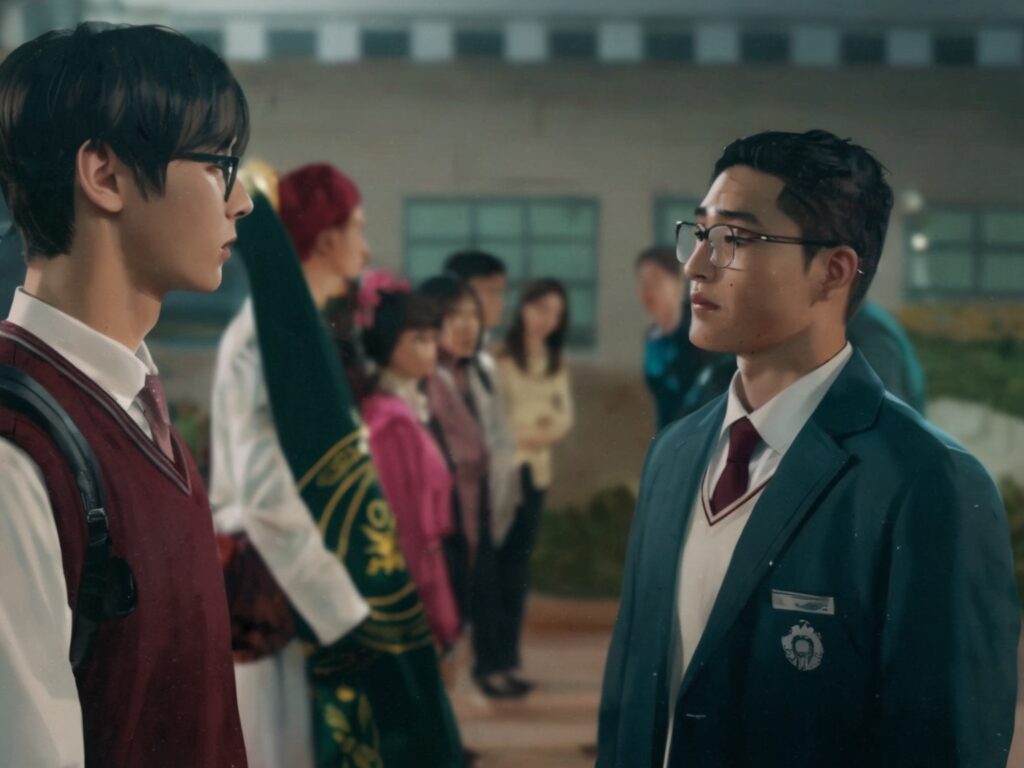
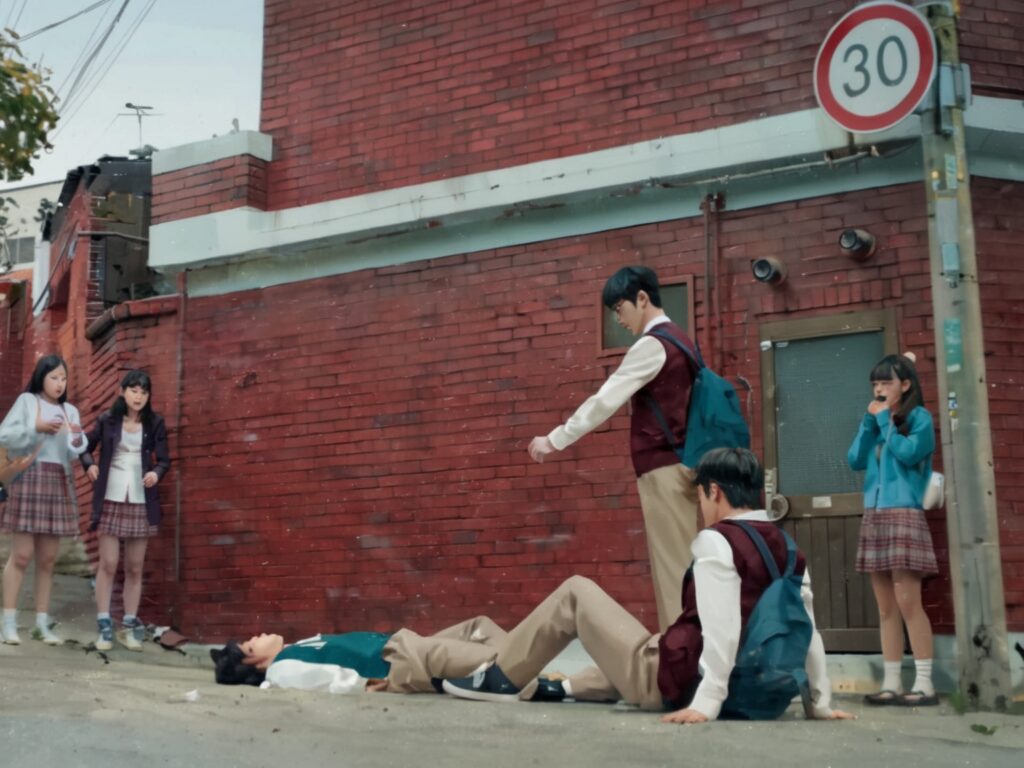
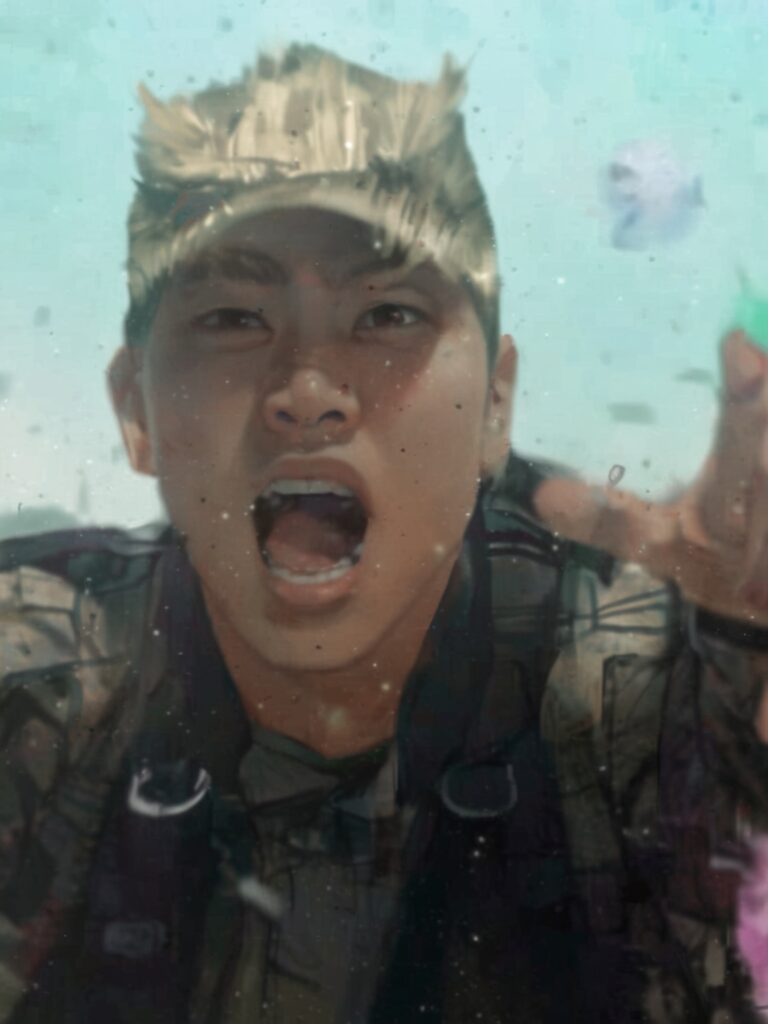
We’re not just checking into a guesthouse anymore, we’re checking into the heart of the drama. Think of it like this: are our characters checking out of their old lives and into a brighter future, or are they checking into a one-way ticket to trouble?
Secrets are about to be revealed, loyalties will be pushed to their limits, and the ghosts of the past are knocking on the door. Will our favorite crew finally find some peace and quiet, or will they be checking into a world of regret? Get ready for twists, turns, and maybe a few tears, because this is one check-in you won’t want to miss!
TL;DR
Deok-soo’s schemes reach a climax, but her plans have unforeseen consequences.
Lady Seol’s decade-long plan for an uprising is finally set in motion.
Jun-hwa faces a critical choice between loyalty and justice.
Eun-ho’s ambition leads him to a dangerous path.
The finale delivers shocking twists, sacrifices, and a bittersweet resolution.
The moment of reckoning has finally arrived! Every plot thread, every grudge, and every secret comes crashing together in the exhilarating final episodes of Check In Hanyang. Our beloved quartet faces their biggest challenges yet, where justice, betrayal, and redemption collide. Will they succeed, or will the ghosts of their pasts pull them under? Buckle up, because this is a finale you won’t forget.
Deception, Loyalty, and a Dangerous Proposal
Deok-soo’s forgery skills are sharper than ever, allowing her to deceive everyone with a counterfeit ledger. But her real victory? Gaining the trust of the ruthless Lord Cheon. Yet, just as she starts to think she has him where she wants, he throws a curveball—proposing that she marry Jun-hwa. Yes, that Jun-hwa, the once-idealistic son now tangled in a web of manipulation and self-loathing.
Desperate to hold onto whatever power he has left, Jun-hwa makes a bold offer: Deok-soo can use him however she wants in her pursuit of power. But here’s the twist—she doesn’t want a pawn; she wants the friend she once knew. The look of disappointment on her face says it all. Meanwhile, Lady Seol reveals her own master plan. She’s been secretly working alongside Prince Eunseong for over a decade, carefully laying the groundwork for an uprising. In return for funding, she promises the Uiju guild complete control over Yongcheonru. The pieces are in motion, and there’s no turning back now.
Poison, Betrayal, and a Race Against Time
Deok-soo is a woman on a mission, but even she has been warned not to let vengeance consume her. Ignoring the wisdom of both Eun-ho and Lady Seol, she unleashes a swarm of poisonous centipedes in Lord Cheon’s quarters. (Yes, centipedes! Talk about a nightmare.) Unfortunately, her plan misfires, and she soon realizes that her reckless actions have put Eun-ho in danger. Now, her priorities shift—revenge can wait. Saving Eun-ho must come first.
In a desperate bid to escape, she urges him to run away with her, offering half of a key as a symbol of their commitment. But fate has other plans. Before Eun-ho can reach safety, the royal swordsman intervenes, dragging Deok-soo straight into the lion’s den. In an act of pure defiance, Eun-ho risks everything to protect her, even taking a deep slash to his back as he carries her to safety. Love and sacrifice never looked so dramatic!
A Swordsman’s Dilemma and a Turning Point
Meanwhile, back in Yongcheonru, Lord Cheon hands Jun-hwa the very sword he used to kill Lord Hong, forcing him to choose between loyalty and justice. Jun-hwa, drowning in the lies he’s been fed for years, nearly loses himself to the darkness. But his old friend Soo-ra is not about to let him go down without a fight. In a powerful confrontation, Soo-ra reminds Jun-hwa that he still has the power to choose his own path.
Just when it seems like Jun-hwa might break, Eun-ho arrives with a challenge of his own. If they truly want to atone for their fathers’ sins, they must do so together. The internal battle rages within Jun-hwa, but the seeds of doubt have been planted. And then, in an act that changes everything, Jun-hwa walks into the banquet hall, ledger in hand, ready to expose his father’s sins to the world.
The Fall of a Tyrant and the Rise of a New Era
Eun-ho makes his move. In front of a room full of noble ministers and officials, he boldly announces his intention to become crown prince. Then, the real bombshell—he unveils Deok-soo’s true identity as Jae-on, the rightful owner of Yongcheonru. But just as the crowd gasps, another twist unfolds. An assassination attempt is underway, orchestrated by none other than Lord Cheon.
In a breathtaking turn of events, Soo-ra steps in, taking a near-fatal risk to protect Prince Eunseong. His only condition? That Lady Seol ensures the safety of his friends. And just when you think things can’t get any more intense, Jun-hwa delivers the final blow to his father’s empire—laying down his sword and rejecting his legacy once and for all. His redemption arc is complete, and honestly, we couldn’t be prouder.
A Fiery End and a Hopeful Future
Enraged by his downfall, Lord Cheon does what all villains do when they have nothing left to lose—he sets everything on fire. The once-glorious Yongcheonru becomes an inferno of destruction, mirroring the chaos within his soul. Deok-soo confronts him one last time, but unlike him, she refuses to let hatred define her. Instead, she walks away, leaving him to burn in the flames of his own making. As the fire rages, Jun-hwa’s anguished cries echo through the night, mourning the father he could never truly save.
The aftermath is bittersweet. Prince Eunseong, now ruler, erases Yongcheonru from history, giving Eun-ho the freedom he always longed for. Lady Seol embarks on her own journey, and the Uiju guild decides to start anew with an inn of their own. But the best part? One year later, a new inn stands in Namhae, run by none other than Soo-ra, with Jun-hwa by his side. And yes, our lovebirds, Eun-ho and Deok-soo (Jae-on), finally get their well-deserved happy ending.
Final Thoughts: A Tale of Growth, Redemption, and Missed Opportunities
Now, let’s get real. Check In Hanyang delivered an emotional rollercoaster, but was it perfect? Not quite. The finale packed a punch, but it also relied on a few convenient plot devices. Eun-ho’s dramatic escape scene? As much as we loved the moment, it was a little too easy. And Jun-hwa’s redemption arc? While satisfying, it could have been developed more organically throughout the series rather than crammed into the last episodes.
That said, the show excelled in one crucial area—character development. Watching our quartet evolve from lost souls to a true found family was a journey worth taking. The guesthouse antics, the scheming, the camaraderie—it all made for an entertaining, heartwarming ride. And let’s not forget the cinematography! Some of the visuals, like Jun-hwa laying down his father’s sword, were truly breathtaking.
So, was Check In Hanyang a must-watch? Absolutely, if you love K-drama, redemption arcs, and a bit of historical intrigue. It may not have been flawless, but it gave us a finale filled with emotion, action, and just the right amount of catharsis. And really, what more can we ask for?
With that, we bid farewell to Check In Hanyang. What did you think of the finale? Were you satisfied, or do you think the show missed an opportunity? Let’s discuss in the comments!
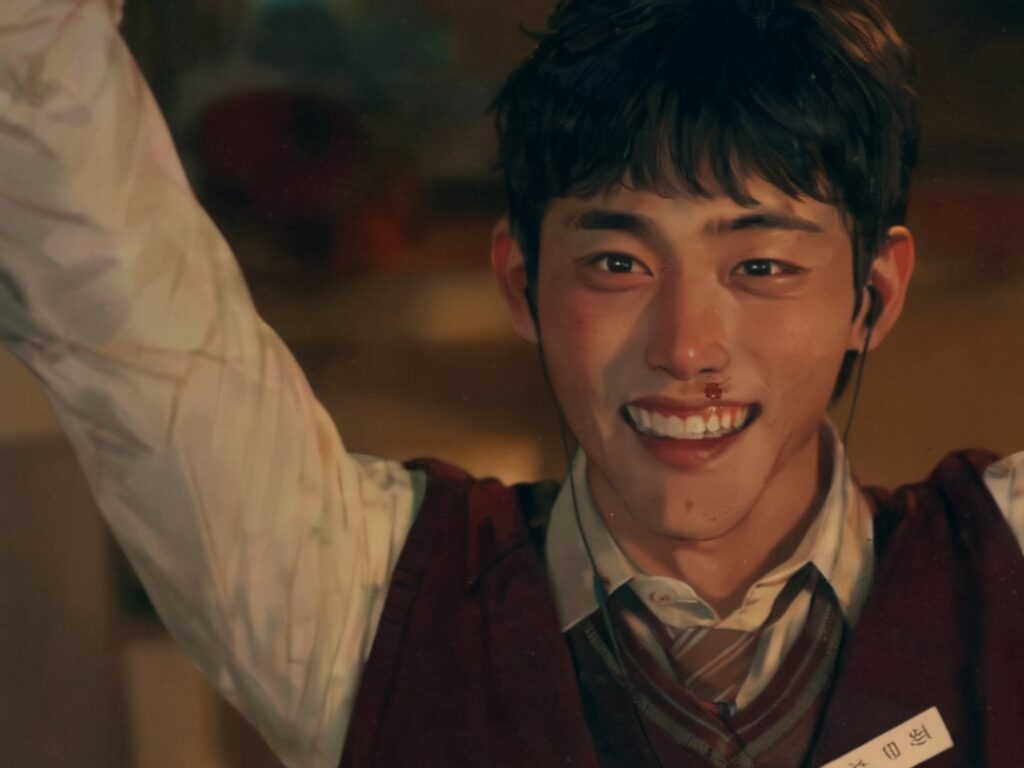
“When the Stars Gossip” – even the title itself is a double entendre. Is it about celestial bodies whispering secrets across the vast expanse of space? Or are we talking about the juicy whispers and rumors swirling around our earthbound astronauts? Spoiler alert: it’s definitely the latter, though the way this drama’s love life is exploding, you might think the constellations are meddling. This week, in episodes 11 and 12, the “gossip” isn’t just idle chatter; it’s the very fabric of the increasingly tangled relationships. We’ve gone beyond a simple love triangle; this is a full-blown love hexagon (at least!), and the angles are getting sharper than a comet’s tail. “Cosmic” doesn’t just refer to space anymore; it’s the sheer scale of the romantic mess. It’s a wild ride, folks, and we’re strapped in, ready to dissect every whispered word, every longing glance, and every questionable decision our characters make.
TL;DR
Eve and Ryong’s complicated feelings lead to a kiss, but Go-eun interrupts.
Kang-soo’s back, trying to win Go-eun’s heart.
Dong-ah’s public outburst causes drama at the restaurant.
Mina and Seung-joon’s relationship might be blossoming.
A potential pregnancy scare adds another layer to the chaos.
The love triangles in this drama have officially evolved into a full-blown love geometry set, complete with a protractor for measuring just how far off-track this story has gone. This week’s episodes are a cocktail of misplaced heroism, barroom brawls, and enough romantic tension to fuel a small spaceship. So, buckle up as we dissect the latest antics in When the Stars Gossip and try to make sense of the tangled mess our characters have found themselves in.
The Parental Mystery That’s Not Really a Mystery
We kick things off with Eve checking her mail like a regular civilian instead of a space-faring drama magnet. Among the bills and spam, there’s a letter about her search for her biological parents. And—shocker!—there’s no information. Apparently, she was found abandoned in a taxi as a baby. If you’ve been paying attention, this plotline isn’t exactly subtle, but for those skipping through the fluff, don’t worry—we’ll get back to it when the script inevitably makes a dramatic reveal later.
Oh, but the mail also brings a surprise: a magazine featuring an article about her and Ryong’s space rescue. Cue dramatic flashbacks. Ryong, still nursing a bruised ego from Eve’s rejection, believes she’s ashamed of him. And because Eve wants to avoid a dragged-out argument, she just goes along with it. Classic miscommunication, the foundation of all great K-drama angst.
Is There a Space Baby in Our Future?
Here’s where things get spicy—or at least heavily foreshadowed. Eve visits the gynecologist, complaining of pregnancy-like symptoms, and for a brief moment, we all brace ourselves for a space baby plot twist. But alas, it’s only been a few days since she and Ryong had their thermal sleeping bag moment. So, it’s medically impossible. Yet the scene lingers just long enough to plant the idea in our heads. Coincidence? Doubtful.
Meanwhile, across the clinic, Ryong is with Mina for her own check-up. Technically, he’s just there to thank Seung-joon for giving them the lottery ticket, but the tension in the room suggests their ship is about to set sail. And honestly, with the mess of relationships happening elsewhere, this might be the only pairing worth rooting for.
Love, Longing, and a Chaebol in a Bathrobe
Kang-soo is back on Earth and has fully embraced his “I-don’t-care” phase. He moves into MZ Group’s hotel, casually parading around in robes and pajamas. But let’s be real—he’s not here for the amenities. He’s here for Go-eun.
Flashback time! We learn that Kang-soo fell for Go-eun hard and fast after their blind date, which took place at—of all places—a Buddhist temple. Because nothing says romance like chanting monks. Their first conversation? A philosophical debate about whether her ringtone (“Stand by Me”) is offensive to Buddha. Kang-soo smoothly transitions from ringtone critiques to stargazing, pointing out a celestial “void” left by her deceased brother. Then he casually offers to fill that void. Bold move, my guy.
Dinner Drama: A Masterclass in Public Embarrassment
It’s celebration time! Our astronauts and MCC employees gather at Ryong’s mother’s restaurant, and for a fleeting moment, it’s all good vibes. But then Dong-ah enters the chat. Fresh off getting dumped by Eve, he drinks his feelings and launches into a public tirade against Ryong, accusing him of dishonoring Eve. Because nothing says “chivalry” like making a woman’s private life the subject of a restaurant spectacle.
Ryong, in a rare moment of self-awareness, admits he did fall for Eve but denies any mutual attraction during their hypothermia-induced cuddle session. Dong-ah, take notes—this is how you protect a woman’s reputation without throwing a tantrum.
Meanwhile, outside the restaurant, Santiago and Seung-joon are arguing about erasing the message on the lottery ticket. Unfortunately for them, Kang-soo overhears and snatches it away. This, of course, leads to Dona (MCC’s resident firecracker) giving Santiago and Seung-joon a purse-induced beatdown at the bus stop. A+ entertainment.
The Kiss, the Turtle, and the Drinking Duel
After the dinner debacle, Eve shows up at Ryong’s place under the guise of work. But let’s be honest—she’s weakening. Ryong’s relentless affection has worn her down, and in a moment of raw honesty, she admits she’s been fighting her attraction to him. They kiss.
Enter Go-eun, knocking on the door at the absolute worst moment. She’s holding Ryong’s turtle (convenient excuse) and challenges Eve to settle their love triangle the way all dignified women do: a drinking contest. Despite the premise, the conversation is surprisingly civil. Go-eun lays out her claim to Ryong, Eve counters, and the soju keeps flowing.
Final Thoughts: The Drama Is Officially Off the Rails, and We Love It
Alright, let’s be real. This drama started as a promising space-romance epic, but now? We’re fully in Messy Love Polygon: Earth Edition. The show seems to have forgotten its original plot in favor of romantic drama, and while I live for a good love triangle (or hexagon, at this point), the pacing feels off.
Eve and Ryong’s relationship? Complicated, but at least it has chemistry. Kang-soo and Go-eun? Surprisingly solid. Mina and Seung-joon? Potentially cute. Dong-ah? A walking red flag.
Would I keep watching? Absolutely. This K-drama might be a chaotic mess, but it’s entertaining. And at the end of the day, isn’t that what we signed up for?
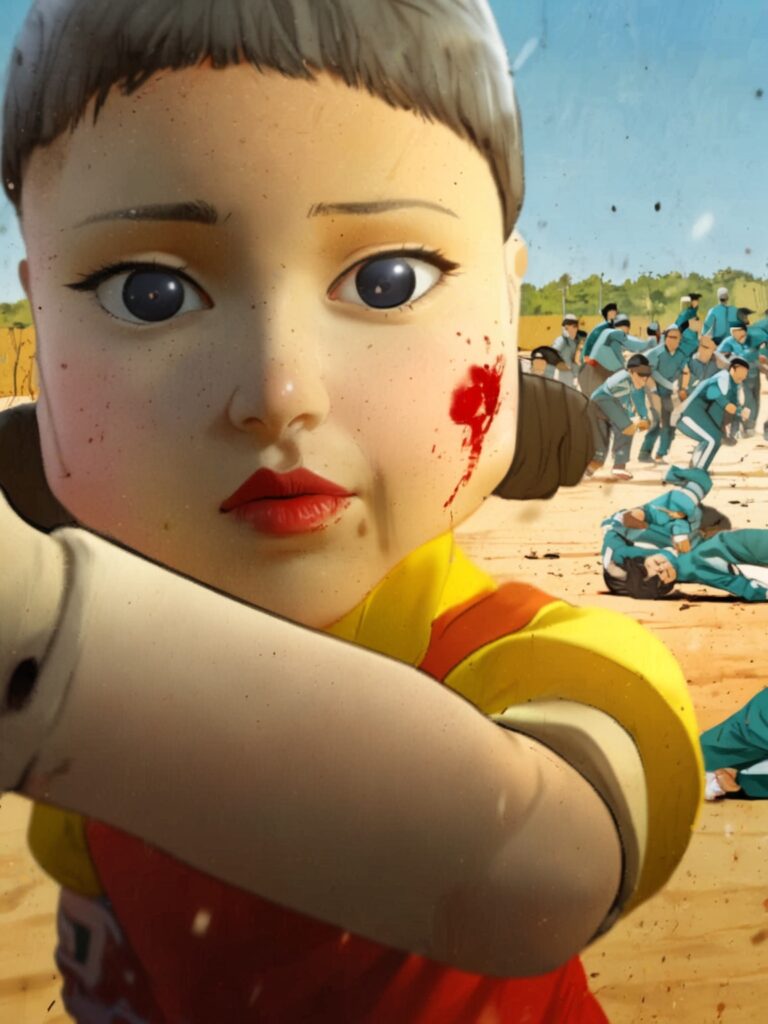
Hello there, dear reader! If you’re a fan of Squid Game—or even if you’re just curious about what all the fuss is about—then pull up a comfy chair. Today, we’re going to embark on an in-depth journey through the labyrinth of Easter eggs, symbolism, and hidden details in Squid Game Season 2. In our friendly and sometimes wry exploration, we’ll not only discuss how Season 2 connects to the iconic first season, but we’ll also uncover tantalizing hints about what might be in store for Season 3. So, let’s dive right in, shall we?
TL;DR
Gi-hun’s struggle between revenge and family continues, blurring the lines between hero and villain.
Thanos represents our obsession with image and the detached audience’s fascination with violence.
The show explores the illusion of free will and how we’re manipulated by unseen forces.
The Front Man’s role and his relationship with Guun are key to understanding the narrative.
Season 2 is packed with subtle symbols and references that hint at deeper meanings.
Fan theories suggest familial connections and new moral dilemmas in future seasons.
The show critiques social inequality and the cost of ambition.
A Quick Recap: The Squid Game Phenomenon
Firstly, let’s remember why Squid Game became a worldwide phenomenon in the first place. Season 1 captivated millions by blending brutal survival challenges with social commentary, leaving us questioning our own moral compasses as we sat on our couches. The series introduced us to characters whose motivations were as murky as the game itself. In Season 1, we saw Gi-hun—who, despite his evident flaws—revealed moments of genuine humanity. Consequently, the cliffhanger ending set the stage for Season 2, leaving us hungry for more answers, more twists, and, naturally, more Easter eggs.
The Intricate Web of Season 2 Easter Eggs
Undoubtedly, Season 2 is a treasure trove of hidden details and symbolic nods. Every frame, every dialogue, and every subtle glance seems to scream, “Look closer, there’s more here than meets the eye!” Let’s break down some of these gems and discuss how they weave together the narrative threads from Season 1 while hinting at future storylines.
1. Gi-hun’s Dilemma: The Father, The Gambler, and The Reluctant Hero
To begin with, we must focus on Gi-hun. At the end of Season 1, Gi-hun made a dramatic choice: he abandoned his planned trip to America to reunite with his daughter, instead opting to use his newfound fortune to dismantle the very games that had enticed him. However, while his intentions appear noble at first glance, there’s an undeniable irony—Gi-hun’s personal ambition remains tainted by his inability to truly reconcile with his familial responsibilities.
Family First? Despite his heroic vow to end the games, Gi-hun’s decision to remain away from his daughter for three long years raises serious questions about his priorities. His inability to balance the pursuit of justice with his duty as a father suggests that his obsession with the game’s intricate challenges might be a deeper manifestation of his character flaws.
The Gambler’s Addiction Moreover, Gi-hun’s compulsive gambling isn’t just a character quirk; it’s the catalyst for his participation in the games. In Season 1, he re-entered the games to secure funds to help his ailing mother. Consequently, his return to the deadly competition hints at a cyclic pattern—a self-destructive loop where personal demons collide with grand ambitions.
In Season 2, while Gi-hun uses his fortune to track down those behind the games, this act is not purely altruistic. It is, in many ways, another form of the game itself—a new bet in which he wagers his soul against his past. Thus, while his mission to save countless innocent lives might seem like a righteous crusade, it is also a manifestation of his own internal struggle and self-indulgence.
2. The Marvel Connection and the Curious Case of Thanos
Next, let’s talk about one of the most eyebrow-raising additions in Season 2: the introduction of Thanos, a character whose very name immediately evokes a Marvel villain. Yes, you read that correctly! Thanos, with his flamboyant style and narcissistic tendencies, is painted in all the colors of the Infinity Stones. But why is this significant?
Thanosas a Mirror for Modern Society Thanos is not just a parody of Thanos; he is a symbolic representation of our modern obsession with self-image and consumption. His incessant need to snap his fingers—both literally and metaphorically—mirrors our collective addiction to instant gratification. Furthermore, his actions in the games are a darkly humorous reflection of how entertainment today often glorifies violence and excess. In essence, Tanos is a sardonic critique of the influencer culture that prizes spectacle over substance.
The Audience’s Doppelgänger Interestingly, Thanos speaks in English—a choice that further underscores his role as a stand-in for the global audience. His detachment and willingness to play “one more game” echo the way we, as viewers, sometimes relish the thrill of watching others suffer. In doing so, Tanos challenges us to confront our own complicity in a system that thrives on exploitation and spectacle.
3. The Illusion of Free Will: More Than Just a Game
Now, let’s delve into one of the most profound themes of Squid Game Season 2—the illusion of free will. Although the players appear to make choices throughout the games, these decisions are heavily manipulated by unseen forces.
Manipulation at Every Turn For example, the players are given a so-called “democratic exit” option via a voting system. However, before they even cast their ballots, they are bombarded with money, making it nearly impossible to refuse the offer. Consequently, this illusory freedom serves as a scathing commentary on how our so-called free will is often an illusion—carefully manufactured by those in power.
Mirroring Our Democratic Systems Think about it: in many democratic nations, the average voter is similarly entangled in a web of manipulations. Mega-donations, misleading advertisements, and partisan tactics can all be seen as modern equivalents of the Squid Game’s deceptive choices. Therefore, the series not only entertains us but also holds up a mirror to our society, forcing us to question the true nature of freedom and control.
4. The Front Man and Gi-hun: A Battle of Wills
Another layer of complexity in Season 2 is the evolving relationship between Gi-hun and the enigmatic Front Man. While Gi-hun is determined to dismantle the games from within, the Front Man appears to have his own agenda—one that is deeply intertwined with Gi-hun’s fate.
Parallel to the Old Man’s Legacy In Season 1, we witnessed the fascinating dynamic between Gi-hun and the Old Man—the original mastermind behind the games. The Old Man’s manipulation of events set the tone for everything that followed. Now, in Season 2, the Front Man steps into a similar role, subtly guiding Gi-hun’s decisions and ensuring that he remains a key player in the game of life and death.
Free Will vs. Manufactured Decisions The Front Man’s influence over Gi-hun highlights a recurring theme: the conflict between the illusion of free will and the reality of manipulation. Although Gi-hun believes he is making his own choices, we are led to question whether these decisions are truly his own. The Front Man, much like the Old Man before him, orchestrates events from behind the scenes, ensuring that the narrative unfolds exactly as planned.
A Lesson in Responsibility and Hypocrisy Interestingly, while Gi-hun aspires to be the hero who dismantles the corrupt system, he inadvertently falls into the very trap he seeks to destroy. His willingness to sacrifice fellow players and even his own allies for the greater good underscores a fundamental hypocrisy. In attempting to bring down the games, Gi-hun becomes complicit in the same ruthless tactics that define the system he despises.
The Hidden Layers: Symbolism and Subtle References
Now that we’ve navigated the major character arcs and thematic elements, let’s take a closer look at some of the more subtle symbols and references scattered throughout Season 2. These little details might have easily slipped past even the most attentive viewer, but they serve as critical pieces of the Squid Game puzzle.
1. Color, Choice, and Conformity
One of the most striking visual motifs in Season 2 is the use of color to signify deeper societal divides. For instance, the red and blue patches that players wear are not mere fashion statements. They are emblematic of the political polarization seen in many parts of the world—think of them as a nod to the red and blue states in American politics. By enforcing this split, the games encourage internal conflict, ensuring that the players remain divided and, therefore, easier to control.
2. Fidgeting with Fate: The Spinning Top Game
In a particularly memorable scene, the Front Man is seen deliberately messing up a spinning top game—a moment that is as symbolic as it is tense. The choice of hand (right versus left) when spinning the top is not random. It is a carefully orchestrated detail that harks back to a similar scene in Season 1. Such minutiae serve as subtle hints to keen-eyed fans that the underlying mechanics of the game are far more intricate than they appear. They remind us that every gesture, every decision, and every moment in Squid Game is laden with meaning.
3. A Nod to the Classics: The Red Light, Green Light Revisited
Moreover, the allusion to the classic children’s game, Red Light, Green Light, is not lost on anyone. In Season 2, while the Front Man enjoys the game from the safety of his high perch, his absence from the field is a deliberate commentary on power dynamics. By choosing not to participate directly, the Front Man emphasizes the extent to which the games are designed to ensure his safety. This stark contrast between his calculated detachment and the raw vulnerability of the players underscores one of the series’ most chilling truths: the powerful manipulate the game while the powerless bear the consequences.
Analyzing the Themes: Society, Morality, and the Cost of Ambition
Let’s now shift gears and talk about the broader themes that make Squid Game Season 2 so compelling. At its core, this series is not just about deadly games—it’s a scathing critique of modern society, wrapped in an engaging narrative filled with moral ambiguity.
1. The Cost of Ambition and the Pursuit of Revenge
On one hand, Gi-hun’s journey is a tragic tale of a man driven by ambition and revenge. His quest to dismantle the games, while ostensibly noble, is tinged with personal vendetta. His relentless pursuit of the game’s masterminds, often at the cost of his own morality, paints him as a deeply conflicted character. This duality makes Gi-hun both a symbol of hope and a cautionary tale. His inner struggle is a reminder that, in our quest for justice, we must be wary of losing ourselves in the process.
2. Manipulation and the Illusion of Free Will
Furthermore, the series lays bare the harsh reality that our choices are often not as free as they seem. By presenting the players with a “democratic exit” that is, in reality, a carefully constructed trap, Squid Game forces us to confront a disturbing truth about modern society. This manipulation is not just limited to the game’s mechanics—it mirrors the very nature of political and social systems today. In many ways, the series challenges us to question whether true free will ever exists or if we are all, in some fashion, pawns in a larger, orchestrated game.
3. Corporate Exploitation and the Divide Between Classes
Additionally, Squid Game Season 2 draws a stark comparison between the opulence of the elites and the suffering of the masses. The games themselves become a metaphor for corporate exploitation—a system designed to keep the underprivileged trapped in a cycle of poverty and despair. The elaborate setups, the manipulative voting systems, and the gruesome consequences all serve as allegories for real-world economic disparities. By juxtaposing the suffering of the players with the detached amusement of the elite, the series forces us to reckon with uncomfortable truths about the nature of power and privilege.
A Closer Look at the Front Man’s Calculated Games
Let’s now revisit the enigmatic Front Man—a character who embodies the very essence of control and manipulation. His relationship with Gi-hun, and the way he orchestrates every twist and turn of the game, are central to understanding the broader narrative of Season 2.
1. The Front Man’s Role: Puppet Master Extraordinaire
Throughout the season, we witness the Front Man’s ability to influence outcomes without ever having to risk his own life. Whether he is subtly altering the rules or ensuring that certain players are sacrificed for the “greater good,” his presence looms large as a reminder that, in the world of Squid Game, free will is a carefully constructed illusion. His strategies echo the manipulations seen in high-stakes corporate boardrooms and political campaigns—areas where decisions are made not for the collective benefit, but to maintain a carefully curated status quo.
2. The Duality of Control and Vulnerability
Interestingly, while the Front Man exudes authority, he is not immune to vulnerability. His interactions with Gi-hun reveal cracks in his meticulously crafted persona. There are moments when the weight of his actions seems to bear down on him, suggesting that even those who manipulate the game may eventually be caught in its relentless tide. This duality is one of the most compelling aspects of his character—it reminds us that power, no matter how absolute it may appear, is always precariously balanced by the inherent unpredictability of human nature.
3. The Symbolism of Handedness: A Subtle Yet Powerful Motif
One particularly clever detail that fans have noted is the recurring reference to the Front Man’s handedness. In key moments—such as when he messes with the spinning top game—there is a deliberate focus on whether he uses his right or left hand. This is no mere coincidence; it serves as a subtle nod to past events in Season 1 and provides insight into his character. The consistency in these actions hints at a deeper symbolism, possibly linking his persona to longstanding patterns of behavior and fate. It is a reminder that, in Squid Game, every detail, no matter how seemingly trivial, is part of a larger, interconnected tapestry.
The Theories That Keep Us Guessing
For many fans, part of the allure of Squid Game lies in the myriad theories that swirl around its cryptic narrative. Season 2 not only confirms some of these speculations but also introduces new puzzles that hint at exciting developments in Season 3.
1. The Family Connection: A Twist in the Tale
One of the most intriguing theories is the potential familial link between the Old Man, the Front Man, and even the detective character. Some ardent fans have long speculated that these relationships run deeper than they initially appear. In Season 2, subtle hints—like a seemingly offhand remark by the Front Man—lend credence to the idea that the Old Man might have fathered the Front Man. If true, this revelation would add yet another layer of complexity to the narrative, transforming the dynamic from one of mere manipulation to a deeply personal vendetta.
2. Upcoming Challenges: Trolley Problems and Beyond
Moreover, the post-credit scene in Season 2 left us with tantalizing clues about what Season 3 might hold. The reappearance of the giant, creepy doll from Red Light, Green Light—this time accompanied by a mysterious “boyfriend”—suggests that future games will introduce moral dilemmas reminiscent of the classic trolley problem. Imagine being forced to choose between sacrificing one life to save five, or vice versa! This scenario not only tests the characters’ ethics but also challenges our own moral intuitions as viewers. The mere hint of such dilemmas promises that Season 3 will push the boundaries of both narrative and philosophical exploration.
3. The Shift from Individual Sacrifice to Systemic Change
Another prevailing theory is that Season 3 might focus on transforming the game from an individual contest into a larger, systemic revolution. Gi-hun’s ongoing mission to bring down the games could evolve into a broader critique of the societal structures that allow such exploitation to exist. With the introduction of new characters and more intricate power plays, we might finally see the culmination of the series’ long-standing themes: the battle between individual ambition and collective welfare, and the ultimate question of whether true change is possible in a corrupt system.
My Two Cents: A Personal Reflection on Squid Game Season 2
Now, if you’ll indulge me, I’d like to step out of the analytical realm for a moment and share my personal perspective. As someone who loves diving into the deeper meanings behind our favorite shows, Squid Game Season 2 has left me both impressed and profoundly unsettled. Here are a few thoughts I’d like to offer:
The Beauty of Complexity I genuinely appreciate how the creators have layered the narrative with symbolism that challenges us to think critically about power, free will, and societal manipulation. Every scene feels meticulously crafted, not only to entertain but also to provoke deeper reflections about our own lives.
The Emotional Toll of the Game Although it can be heavy at times, I find the moral dilemmas presented in the series refreshingly honest. It’s not just about survival; it’s about the cost of ambition and the sacrifices we make along the way. Gi-hun’s internal conflict, in particular, resonates with me. His struggles mirror the dilemmas many of us face when our personal ambitions collide with our responsibilities to our loved ones.
A Bit of Sarcasm to Lighten the Load And let’s be honest: the inclusion of characters like Thanos—a self-proclaimed modern-day Thanos—injects a much-needed dose of dark humor into the proceedings. His over-the-top antics and obsession with image serve as a tongue-in-cheek reminder that sometimes, our own cultural obsessions can be just as ludicrous as the games themselves.
The Inevitable Twist of Fate Perhaps what I find most compelling is the way the series refuses to offer simple answers. Just when you think you understand the dynamics at play, a new twist emerges, forcing you to reexamine everything you thought you knew. In that sense, Squid Game Season 2 is not just a show—it’s a conversation about the very nature of fate, free will, and the human condition.
Looking Ahead: What Could Season 3 Bring?
With all of the intricate details and layered symbolism we’ve explored, it’s natural to wonder: what’s next? Season 3 promises to expand on the themes introduced in its predecessors, and here are a few educated guesses based on the clues we’ve gathered:
1. The Trolley Dilemma Reimagined
The post-credit scene hints at a new game where characters might face a modern-day trolley problem. This game is likely to force characters to make excruciating choices between sacrificing one life or many—a scenario that will test their ethical limits. Given the series’ history of exploring moral gray areas, this could be one of the most philosophically engaging challenges yet.
2. A Broader Rebellion Against the System
We may also see Gi-hun’s personal vendetta evolve into a larger movement. As more characters become aware of the manipulation inherent in the games, the narrative might shift from individual struggles to a collective uprising against the corrupt elites who orchestrate these brutal contests. This would not only be a fitting climax to Gi-hun’s journey but also a powerful commentary on the potential for societal change.
3. Deeper Familial Connections and Revelations
Finally, if the theories about the Old Man and the Front Man’s familial ties prove true, Season 3 could delve into the origins of the Squid Games themselves. Imagine an in-depth exploration of how these games came to be and the personal vendettas that fueled their creation. This backstory could add a rich, emotional layer to the narrative, providing answers to questions that have lingered since Season 1.
Wrapping It Up: A Game of Hope, Despair, and Uncertain Futures
In conclusion, Squid Game Season 2 is much more than a continuation of a hit series. It is a complex tapestry woven with hidden Easter eggs, symbolic imagery, and themes that challenge our perceptions of freedom, power, and morality. From Gi-hun’s internal struggle as both hero and anti-hero to the enigmatic machinations of the Front Man, every element of this season compels us to look deeper and question the nature of our choices.
As we await Season 3, we are left with a sense of anticipation and curiosity. Will Gi-hun’s quest for redemption overcome his darker impulses? Can a movement against such a deeply entrenched system ever truly succeed? And most importantly, how much of our own reality is reflected in the game’s twisted rules?
For me, these questions are what make Squid Game an enduring masterpiece—a show that not only entertains but also invites us to reflect on the very essence of our society.
Final Thoughts and My Personal Verdict
Before we part ways, allow me to share a final piece of counsel from this friendly, sometimes sarcastic narrator. Life, much like Squid Game, is full of challenges that force us to make difficult choices. Yet, in the midst of chaos and manipulation, there remains a spark of hope—a reminder that even when the odds seem stacked against us, the human spirit persists.
I urge you, dear reader, to take a moment and consider the deeper messages embedded in every twist and turn of Squid Game. Whether you’re dissecting the symbolism of a spinning top or contemplating the ethical dilemmas of a modern trolley problem, remember that every choice you make is a part of your own personal game—a game in which you are both the player and the master of your fate.
So, next time you watch an episode, pay attention to the details. Notice the colors, the subtle gestures, and the carefully planted clues. And above all, don’t be afraid to question everything—even the very concept of free will. After all, it’s in these moments of reflection that we learn what truly matters: not the game itself, but the choices we make and the people we become along the way.
In Summary
To recap our journey today:
We started by exploring Gi-hun’s internal conflicts and his struggle between familial duty and heroic ambition.
We then delved into the Marvel-inspired Thanos, a character who mirrors our society’s obsession with image and instant gratification.
Next, we examined the illusion of free will, a recurring theme that challenges the integrity of our democratic systems.
We took a closer look at the symbolic use of colors, the significance of handedness, and the manipulation tactics that underpin the games.
Finally, we speculated about what Season 3 might hold—be it new ethical dilemmas, a broader rebellion, or deeper personal revelations.
Throughout this discussion, we have seen how Squid Game Season 2 masterfully blends thrilling narrative twists with a critique of modern society, leaving us with as many questions as answers. And while the games might seem ruthless and dehumanizing, they also remind us that hope, resilience, and the relentless pursuit of justice can shine even in the darkest of circumstances.
Thank you for joining me on this deep dive into the hidden Easter eggs and symbolic layers of Squid Game Season 2. I hope you found this exploration both enlightening and entertaining. As you reflect on these themes, remember that sometimes the most challenging games in life are the ones that force us to confront our own inner demons. And in doing so, we might just find the strength to change not only our destiny but also the world around us.
Until next time, keep questioning, keep exploring, and most importantly—never stop playing the game of life with both eyes wide open.
Disclaimer: This article is a friendly exploration of Squid Game Season 2’s themes and symbols, enriched with personal insights and a dash of sarcasm. All opinions expressed here are my own, and any resemblance to your own thoughts is purely coincidental. Enjoy the game, but remember, true freedom lies in knowing when to step off the board.
Happy viewing, and may your choices always lead to brighter outcomes!
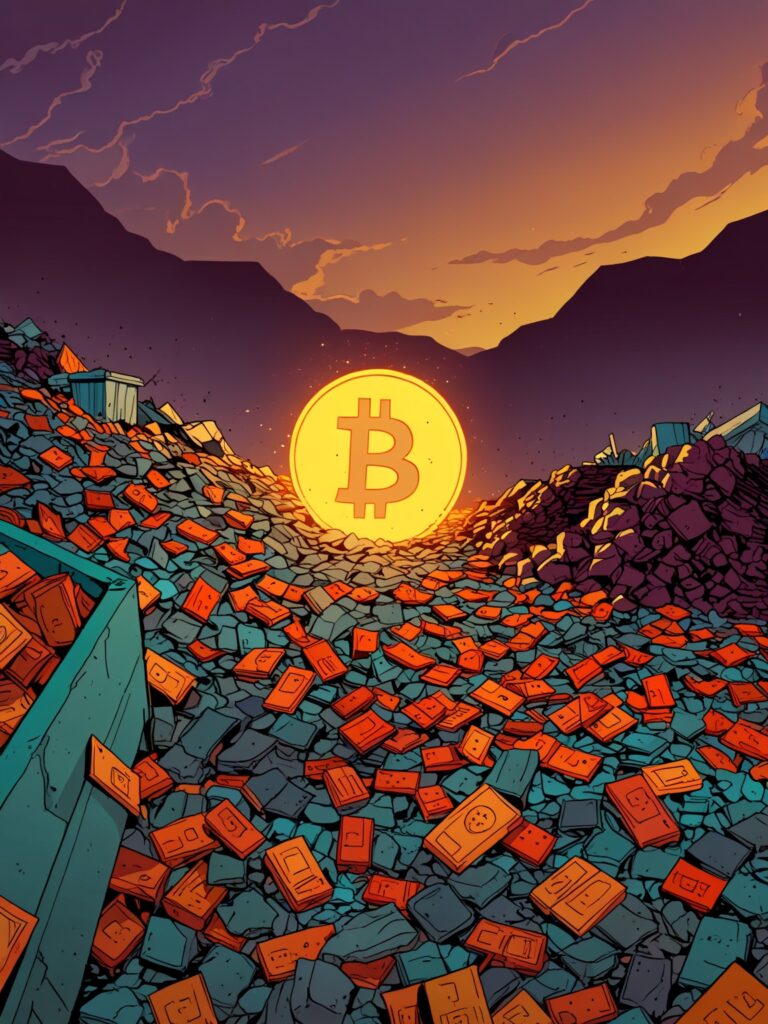
James Howells: I’ll Buy the Entire Landfill. It sounds like a desperate plea, the last gasp of a man clinging to a dream. Or maybe it’s the audacious gamble of a tech millionaire playing high-stakes poker with the local council. Perhaps it’s even a cunning business proposition, turning trash into treasure – literally. The truth, like the 8,000 bitcoins buried somewhere beneath tons of refuse, is a little more complicated. Howells, a Welsh IT worker, accidentally tossed out a hard drive containing a digital fortune. Now, that hard drive rests in a landfill, a monument to a momentary lapse of judgment. “I’ll Buy the Entire Landfill” isn’t just a statement; it’s a battle cry, a negotiation tactic, and a testament to the wild west of cryptocurrency. It’s a story where the everyday collides with the extraordinary, where a discarded hard drive can be worth more than a small town, and where one man’s trash might just become everyone’s treasure. So, is James Howells crazy? A genius? Or just incredibly, stubbornly determined? Let’s dig in (Pun intended).
TL;DR
James Howells lost a hard drive with 8,000 bitcoins.
The hard drive is in a landfill.
He’s fighting to search the landfill, even offering to buy it.
This highlights the importance of digital asset security.
The case raises questions about legal frameworks for crypto.
It’s a story of incredible loss and determination.
It shows the wild side of the cryptocurrency world.
In an astonishing turn of events that seems almost too surreal to believe, James Howells—a father-of-three and computer engineer—has found himself at the center of an international media storm after accidentally discarding a hard drive that contained his bitcoin wallet. That hard drive, which was thrown away during an office clear-out along with other computer parts, ended up in a council-owned landfill in Newport, Gwent. Today, that forgotten device is believed to hold 8,000 bitcoins valued at around £620 million. This article examines the series of events that led to this enormous loss, the legal battles that have ensued, the unexpected proposal to purchase the landfill, and the wider lessons this case offers for digital asset management and public policy.
1. The Accidental Loss: A Simple Mistake with Monumental Consequences
James Howells’ ordeal began on what seemed like an ordinary day. During a routine office clear-out, a bag filled with old computer parts was disposed of. Unfortunately, that bag also contained a hard drive holding the private keys to his bitcoin wallet. At the time of the mishap, the bitcoins held little value. However, as bitcoin’s popularity and value soared, the lost 8,000 coins eventually became worth an estimated £620 million.
This unfortunate incident highlights how a seemingly minor oversight can snowball into a catastrophic financial loss. What began as a simple error during a routine clean-up transformed into a decades-long struggle, drawing attention from legal authorities, financial experts, and the general public alike. The case underscores the importance of stringent data management practices, especially when dealing with digital assets that have the potential to become extraordinarily valuable.
2. The Landfill: A Storied Site of Hidden Treasure
The landfill in Newport, managed by Newport City Council, has unexpectedly become the focus of a high-stakes search. This site, once intended solely for the disposal of unwanted materials, now holds the potential key to unlocking a fortune that has grown far beyond anyone’s expectations. The hard drive is believed to be buried somewhere amidst layers of discarded waste—a challenge that has been aptly compared to searching for a needle in a haystack.
Recent developments have added another twist to the narrative. Newport City Council announced that the landfill is nearing the end of its operational life. With the site being approximately 80 to 90 percent full, plans are already in place to close it within the next two years. This impending closure has injected urgency into the quest for the lost hard drive, as any delay could result in the device being buried under even more debris, potentially complicating recovery efforts.
3. The Legal Battle: Courtroom Challenges and Contentious Claims
In an effort to reclaim his lost digital fortune, Howells initiated legal action against Newport City Council, seeking permission to search the landfill. His claim argued that he should be allowed to recover the hard drive, which might still be intact somewhere in the vast expanse of discarded material. However, the legal process soon revealed a host of complications.
A judge in the High Court ruled against Howells, stating that his claim had “no realistic prospect of succeeding.” The judge emphasized that the particulars of the case did not provide sufficient grounds for a successful trial, comparing the task of recovering the hard drive to the proverbial search for a needle in a haystack. Despite this setback, Howells has not abandoned his pursuit.
The case took another dramatic turn when Newport City Council announced its plans to close the landfill. Previously, the council had maintained that permitting a search would have a significantly negative impact on the local community. Now, with the site scheduled to be decommissioned, critics argue that those concerns may have been overstated. This inconsistency has further fueled Howells’ determination, and he now plans to appeal the decision, arguing that the council’s own actions contradict their earlier statements.
4. The Meteoric Rise of Bitcoin: From Niche Currency to Digital Gold
Bitcoin’s journey from a little-known digital experiment to a globally recognized asset has been nothing short of extraordinary. In its early days, bitcoin was embraced by a small group of enthusiasts and technology aficionados. As its adoption grew, so did its value, eventually reaching heights that transformed it into a digital form of gold. The 8,000 bitcoins stored on the lost hard drive are a striking example of this transformation.
When the hard drive was mistakenly discarded, the bitcoins it contained were worth only a fraction of their current value. The exponential increase in bitcoin’s worth has turned an apparently minor oversight into a financial disaster of epic proportions. This dramatic appreciation in value not only illustrates the volatile nature of digital currencies but also serves as a critical lesson in the importance of secure digital storage and rigorous asset management practices.
5. A Bold Proposal Emerges: The Plan to Purchase the Landfill
With legal recourse proving to be a challenging and slow process, Howells is now considering an unconventional but practical solution: purchasing the landfill. Owning the site would provide him with unrestricted access to search for the elusive hard drive without needing further permission from the local council. This option, while unusual, is rooted in a pragmatic desire to secure control over the area where his lost asset might be recovered.
The idea of buying a landfill is not something one hears every day. Traditionally, landfills are viewed solely as the final destination for waste materials rather than as potential sites for reclaiming lost fortunes. However, the extraordinary circumstances of this case have forced a rethinking of conventional wisdom. Backed by discussions with investment partners and financial support from an American hedge fund, Howells appears prepared to negotiate with Newport City Council at market rates if necessary.
This proposal highlights the lengths to which Howells is willing to go to retrieve what he believes rightfully belongs to him. In a world where digital assets can be lost in a fraction of a second yet gain immense value over time, his determination to explore every possible avenue—including the purchase of a landfill—is a testament to the shifting paradigms of asset recovery in the digital age.
6. Environmental and Community Considerations: The Future of the Landfill
Parallel to the personal saga of recovering a lost bitcoin wallet is the story of a landfill nearing the end of its usefulness. Newport City Council has been planning the decommissioning of the landfill for some time, citing environmental concerns and the site’s nearing capacity. The landfill, which has been in operation since the early 2000s, is now operating at 80 to 90 percent capacity, prompting plans for its closure within the next two years.
The council’s strategy for the site is both innovative and forward-thinking. In an effort to contribute to renewable energy initiatives, the landfill is slated to be transformed into a solar farm. The energy generated from this project is expected to power the council’s electric bin lorries, thereby reducing the environmental impact of waste management operations.
This dual narrative—one of environmental progress and one of personal recovery—creates a complex backdrop for Howells’ quest. On the one hand, the conversion of the landfill into a solar farm represents a positive development for sustainable energy and environmental responsibility. On the other hand, it introduces an additional layer of urgency to the search for the hard drive. As the site is reconfigured and eventually closed, the window for retrieving the lost device grows ever smaller.
The conflicting priorities between public environmental policy and individual financial recovery raise important questions about how public assets are managed when significant private interests are involved. In this case, the future of the landfill is being determined by considerations that may inadvertently hinder efforts to reclaim a potentially enormous digital fortune.
7. Broader Implications for Digital Asset Management
The story of James Howells and his lost bitcoin wallet offers far-reaching lessons for the realm of digital asset management. In an era when digital currencies and blockchain technologies are rapidly reshaping financial landscapes, the importance of robust data security measures cannot be overstated. The incident underscores the fact that even a minor lapse in managing digital assets can have devastating consequences, transforming what was once an ordinary mistake into a multi-million-pound crisis.
This case serves as a reminder to individuals and organizations alike that digital assets require the same level of care and protection as traditional physical assets. As digital currencies continue to grow in value and popularity, there is an increasing need for comprehensive strategies that address secure storage, effective backup solutions, and clear protocols for handling sensitive digital information.
Moreover, the case highlights the challenges that existing legal frameworks face in adapting to new technological realities. Courts and regulators are often required to interpret cases involving digital assets using legal precedents that were established long before the advent of cryptocurrency. As such, Howells’ battle with Newport City Council is emblematic of a broader struggle to update legal and regulatory systems to accommodate the unique characteristics of digital wealth.
8. Economic and Community Impacts: Weighing the Consequences
At its core, the loss of a bitcoin wallet containing 8,000 coins—a fortune now valued at around £620 million—has significant economic implications. For James Howells, the error represents not only a personal financial tragedy but also a public spectacle that has captured global attention. The enormity of the loss brings to light the potential risks associated with digital investments and serves as a cautionary tale for others in the digital asset space.
The case also calls into question the balance between individual property rights and the collective interests of the community. Newport City Council has long argued that granting permission to search the landfill would disrupt local activities and adversely affect the community. However, with the impending closure of the landfill, critics suggest that such concerns may no longer be valid. The council’s decision to decommission the site, regardless of a search, introduces a contradiction that could have broader ramifications for public policy and the management of community assets.
This situation highlights the need for a careful reevaluation of how public assets are allocated and repurposed when private financial interests are at stake. The interplay between individual loss and community benefit in this case illustrates the complex nature of modern asset management and the challenges that arise when traditional priorities intersect with the emerging world of digital finance.
9. Perspectives on the Case: Reflections and Lessons
The unfolding saga of the lost bitcoin wallet is more than just a headline-grabbing mishap—it offers valuable insights into several critical areas of modern life. For many observers, the case reinforces the importance of vigilance and care in the management of digital assets. It is a stark reminder that in today’s technology-driven world, even a minor mistake can lead to far-reaching and costly consequences.
This story also sheds light on the challenges faced by legal systems when confronted with disputes involving digital currencies. Traditional legal procedures and regulatory frameworks are often ill-suited to address the complexities inherent in digital asset management. As more cases of this nature emerge, there will be an increasing need for legal reforms that account for the unique challenges posed by cryptocurrencies and blockchain technology.
Furthermore, the case exemplifies how unconventional problems sometimes call for unconventional solutions. The proposal to purchase the landfill, while seemingly outlandish, represents a pragmatic response to a highly specific challenge. It is a vivid illustration of how new technologies and unprecedented financial instruments demand innovative approaches that may fall outside the realm of conventional wisdom.
Observers have noted that the intersection of technology, finance, and public policy in this case could serve as a catalyst for broader discussions on digital security, legal adaptation, and the management of public resources. Whether one views Howells’ plight as a tragic oversight or an example of modern-day ingenuity, the case undeniably prompts a reassessment of priorities in an era where digital and physical worlds are increasingly intertwined.
10. Future Outlook: The Road Ahead for Digital Asset Recovery
Looking forward, several key developments are likely to shape the future of digital asset recovery, particularly in cases similar to that of James Howells. As cryptocurrencies continue to establish themselves as viable and valuable financial instruments, the imperative for secure and reliable storage solutions will only grow stronger. Investors and individuals must learn from this incident, ensuring that proper safeguards and backup systems are in place to prevent similar losses.
Additionally, the legal landscape is expected to evolve in response to the growing prominence of digital assets. As courts encounter more cases involving cryptocurrencies, new legal precedents and regulatory measures may emerge. Such changes could provide clearer guidelines for resolving disputes over lost or inaccessible digital wealth, potentially offering more robust protection for digital asset owners.
Public policy, too, may undergo significant shifts. The confluence of digital finance and environmental considerations—exemplified by the planned closure of the Newport landfill—suggests that local governments might increasingly face situations where private interests and community initiatives intersect. Future policies may need to strike a delicate balance between promoting sustainable development and safeguarding individual rights, particularly when large sums of money are at stake.
Technological innovation will likely play a pivotal role in addressing the challenges posed by digital asset recovery. Advances in robotics, artificial intelligence, and data recovery techniques could one day make it possible to retrieve lost data from environments that currently seem nearly impossible to search. Although such breakthroughs may still be on the horizon, the impetus provided by high-profile cases like this one could accelerate research and development in the field.
11. Personal Insights and Reflections
The saga of the lost bitcoin wallet offers a multifaceted lesson in modern risk management and the unforeseen consequences of rapid technological change. At its heart, the case is a powerful illustration of how easily a small mistake can escalate into a financial crisis with global implications. It serves as a reminder that even in an age of digital innovation, fundamental practices—such as proper data management and backup procedures—remain crucial.
The incident also invites reflection on the adaptability of our legal and regulatory systems. Traditional legal frameworks, designed for a pre-digital era, are now being challenged by issues that were unimaginable just a few years ago. The difficulty of applying established legal principles to disputes over digital wealth underscores the need for ongoing reform and adaptation.
Moreover, the proposal to purchase the landfill—a site once considered nothing more than a dumping ground—forces a reconsideration of how we view and utilize public spaces. This unexpected twist in the narrative highlights the potential for creative solutions when faced with unprecedented challenges. It prompts a broader discussion about how public assets can be managed in a way that serves both community interests and individual rights.
For anyone involved in the world of digital finance, the case of James Howells is a sobering lesson. It underscores the importance of taking every precaution to safeguard valuable digital assets. Whether through enhanced security measures, redundant backup systems, or better awareness of the risks involved, the message is clear: the management of digital wealth is a responsibility that cannot be taken lightly.
At the same time, this story is a testament to human perseverance. Despite facing a seemingly insurmountable challenge, Howells continues to pursue every available option to reclaim his lost fortune. His determination, even in the face of legal setbacks and bureaucratic obstacles, serves as an inspiration to those who believe that no mistake is ever truly final if one is willing to explore every possible avenue for recovery.
12. Conclusion: A Modern Tale of Loss, Determination, and Innovation
The saga of James Howells and his lost bitcoin fortune is a striking example of how rapidly evolving technology can intersect with traditional systems in unexpected and dramatic ways. From a simple mistake during an office clear-out to a multi-million-pound legal battle and an unconventional proposal to purchase a landfill, this case encapsulates many of the challenges and opportunities of our digital age.
At its core, the story is about more than just a lost hard drive. It touches on the broader themes of digital security, the evolution of financial systems, and the need for legal and regulatory frameworks to adapt to new realities. It also highlights the tension between individual aspirations and community interests, illustrating how public policy decisions can sometimes inadvertently complicate personal pursuits.
As digital currencies and blockchain technology continue to reshape the financial landscape, the lessons learned from this case will undoubtedly influence future approaches to digital asset management. The dramatic rise in bitcoin’s value, combined with the challenges of securing and recovering digital wealth, serves as a wake-up call for investors, regulators, and technology professionals alike.
Ultimately, the journey to recover a lost bitcoin wallet—hidden away in a landfill scheduled for closure—reminds us that in our interconnected world, the smallest missteps can lead to enormous consequences. It also reinforces the idea that progress often requires innovative thinking and a willingness to challenge conventional boundaries.
13. Looking Forward: Lessons and Future Implications
The case of James Howells is likely to have lasting implications on several fronts. First, it emphasizes the need for robust digital asset management practices. In a landscape where fortunes can be made or lost in an instant, ensuring the security of digital keys and backup systems is paramount. Financial institutions, technology firms, and individual investors alike must learn from this incident and implement safeguards that prevent similar oversights.
Second, the legal challenges faced in this case may spur broader discussions about how digital assets are treated under the law. As more disputes arise involving cryptocurrencies and blockchain technology, there will be an increasing need for legal frameworks that are flexible enough to address these novel issues. The outcome of Howells’ appeals and similar cases could set important precedents for the future.
Third, the intersection of environmental policy and digital asset recovery—as illustrated by the planned repurposing of the landfill—may lead to new models of public-private collaboration. Local governments, recognizing the potential conflicts between community initiatives and private financial interests, might develop more nuanced policies that balance the needs of both parties.
Lastly, technological advancements in data recovery and search methodologies could be accelerated by the challenges highlighted in this case. As researchers and engineers work to develop more effective ways of retrieving lost data from complex environments, the lessons learned here may inspire innovative solutions that benefit a wide range of industries.
14. Final Thoughts
The extraordinary story of James Howells and his lost bitcoin wallet is a modern parable about the risks and rewards of the digital age. It is a narrative filled with unexpected twists—a lost hard drive turned multi-million-pound treasure, a legal battle against a local council, and the audacious idea of purchasing a landfill to reclaim what was lost.
This case offers an important reminder for everyone involved in digital finance: the management of digital assets demands meticulous attention and proactive measures. It is essential to understand that even a small lapse can lead to consequences that ripple across legal, financial, and environmental spheres.
As society continues to evolve and embrace new technologies, the challenges presented by cases like this will become more common. The key will be to develop systems—both legal and technical—that are capable of protecting digital wealth while also accommodating the rapid pace of innovation.
In the end, the story of the lost bitcoin wallet is not just about a mistake that turned into a monumental loss. It is about resilience, the willingness to explore unconventional solutions, and the ongoing need to adapt to a world where digital and physical realities are increasingly interwoven.
15. A Call for Caution and Innovation
For anyone managing digital assets or navigating the complex world of modern finance, this case serves as a powerful reminder of the importance of diligence, proper data management, and a readiness to adapt when faced with unexpected challenges. The loss of a bitcoin wallet containing 8,000 coins valued at around £620 million is a stark illustration of how fragile digital wealth can be in the absence of robust security measures.
At the same time, the unfolding saga demonstrates that even in the face of enormous setbacks, there is room for innovation. The proposal to purchase the landfill, as unorthodox as it may seem, is an example of how rethinking conventional approaches can sometimes lead to new opportunities for recovery and growth.
As the digital landscape continues to evolve, both individuals and institutions must remain vigilant. Investing in secure storage solutions, updating legal frameworks, and fostering collaboration between public authorities and private investors will be essential steps toward ensuring that such a costly mistake does not happen again.
16. In Summary
James Howells’ journey—from the accidental disposal of a hard drive during an office clear-out to the current quest to recover a lost bitcoin fortune—is a story that encapsulates the many challenges of the digital era. It is a tale of loss, legal battles, environmental shifts, and the relentless drive to recover what was lost. The saga highlights the dramatic rise of bitcoin from a niche currency to a multi-million-pound asset, and it serves as a cautionary tale for anyone who handles digital wealth.
The case brings into sharp focus the critical importance of proper data management and security. It underscores the need for legal and regulatory systems to keep pace with technological advancements, and it challenges us to rethink how public assets are managed when individual financial interests are at stake.
As we look to the future, the lessons from this saga will likely influence policies, inspire technological innovations, and encourage a more cautious approach to digital asset management. For investors, regulators, and technology enthusiasts alike, the story of the lost bitcoin wallet is a timely reminder of both the incredible potential and the inherent risks of our rapidly evolving digital world.
Ever feel like your imagination is running on dial-up in a 5G world? Like your creative spark is more of a flickering pilot light than a roaring bonfire? Then it’s time for a reboot. But what does that even mean? Well, think of it like this: maybe your imagination’s hard drive is cluttered with outdated ideas, those “glory days” daydreams that just don’t compute anymore. A reboot can clear the cache, delete the junk files, and get you back to factory settings – you know, the place where anything was possible.
Or maybe your imagination’s just been sleeping. Like your brain’s been on airplane mode for way too long. A reboot can jolt it awake, remind it that it’s still got superpowers. It’s like hitting the “on” switch after a long power outage. Suddenly, the lights are back on, the ideas are flowing, and you’re ready to create.
And then there’s the reboot that’s less about fixing and more about upgrading. Maybe your imagination’s fine, but it’s time for a new operating system. A reboot can be a chance to explore new perspectives, try different techniques, and discover a whole new world of creative possibilities. So, whether you’re looking to fix a problem, jumpstart your creativity, or simply upgrade your mental software, it’s time to reboot your imagination. Let’s see what happens when we hit “restart.”
TL;DR
Imagination is powerful but can be misleading if unchecked.
Modern life often promotes unrealistic ideals.
Balance idealism with realism for a healthy mindset.
Engage with quality content and real-life experiences.
Set realistic goals and value everyday moments.
Continuous learning and reflection are key.
True success is about progress, not perfection.
Imagination holds extraordinary power. It shapes our view of the world and influences every possibility we consider. Yet, there is a growing concern about what many call the romantic corruption of imagination. In other words, when our dreams become too idealized, they may distort our understanding of reality. This article explores the power and pitfalls of an unbalanced imagination, the role of modern education in fueling unrealistic expectations, and how we can recalibrate our inner vision to navigate life more effectively.
In the following sections, you will find an in-depth discussion of how imagination can both inspire and mislead. The journey will cover the positive and negative aspects of a vivid imagination, the impact of cultural narratives on our self-perception, and practical strategies to build a balanced outlook. Additionally, personal reflections and new insights on the topic will be shared to offer a well-rounded perspective on how to nurture dreams while remaining rooted in reality.
The Power and Pitfalls of Imagination
Imagination is a force that surpasses the limitations of pure logic and reason. It paints our lives with colors of possibility, allowing us to envision futures that are yet to be realized. This inner faculty has the potential to drive innovation, create beauty, and offer solace during difficult times.
The Dual Nature of Imagination
On the one hand, a well-adjusted imagination empowers us to tackle life’s challenges. When combined with a realistic perspective, it allows us to adapt to change, solve problems creatively, and appreciate the beauty in everyday moments. On the other hand, when the imagination is overly influenced by romanticized ideals, it can lead to unrealistic expectations and subsequent disappointment.
Many people grow up hearing stories of effortless greatness. From a young age, they are taught that each person is inherently special and destined to achieve extraordinary feats. This message, while uplifting, can also set the stage for later disillusionment. When reality does not match these grand expectations, a sense of failure and melancholy can take root.
The Impact of Unbridled Idealism
The problem intensifies when the romantic version of imagination overshadows practical considerations. Instead of recognizing the value of steady progress and everyday achievements, there is a tendency to chase after perfection. This pursuit often leads to a cycle of high hopes followed by deep disappointment. The lesson here is that while dreams are essential, they must be balanced with the acceptance of life’s inherent limitations.
Modern Education and the Seeds of Romantic Idealism
Educational systems play a significant role in shaping our perceptions. Schools and cultural institutions frequently emphasize that every individual is destined for greatness. This notion, deeply embedded in modern pedagogy, promotes the idea that all children will naturally become extraordinary without the need for significant personal effort.
The Promises and Pitfalls of Contemporary Learning
The message of boundless potential can be both inspiring and problematic. On the positive side, it encourages young minds to strive for excellence and believe in their abilities. However, this same message may also create unrealistic benchmarks. When the inevitable challenges of real life set in, the disparity between early expectations and actual experiences can lead to profound disappointment.
For instance, when students leave the comfortable confines of academic life, they may find that the real world does not validate their early dreams of effortless success. This dissonance between expectation and reality can result in a period of self-doubt and disillusionment. The grand narratives once cherished in youth may give way to a harsher, more nuanced understanding of human potential and limitations.
The Role of Cultural Narratives
Our cultural environment reinforces these idealized views. Stories in literature, cinema, and even popular media often celebrate the notion of the extraordinary individual. Characters who defy the odds and transform the world capture our imaginations. However, these narratives can also mask the importance of everyday struggles and the value of ordinary achievements.
When the stories we consume lack a realistic portrayal of the challenges and complexities of life, we are left with a skewed vision. Instead of learning from balanced examples of both success and failure, many individuals are left with an overly optimistic and ultimately unsustainable view of what is possible. This imbalance can create a sense of despair when life fails to live up to the fantastical promises of youth.
The Melancholy of Unrealized Expectations
The journey from youthful exuberance to the often sobering reality of adulthood can be disheartening. The once vibrant dreams, filled with promise and boundless potential, may gradually give way to a harsh awareness of limitations. This transition can trigger a deep sense of melancholy, as individuals struggle to reconcile their idealistic visions with the everyday challenges they face.
The Emotional Toll of Disillusionment
When expectations fall short, it is common to experience feelings of inadequacy and regret. The realization that not every dream can be realized—or that success often requires hard work and persistence—can be emotionally taxing. This gap between expectation and reality is not merely a personal setback; it reflects a broader cultural phenomenon where the allure of the extraordinary overshadows the beauty of the ordinary.
Without a solid foundation in traditions, enduring values, or historical context, many individuals find themselves adrift. The absence of reliable benchmarks makes it difficult to gauge what is truly possible. Instead of drawing inspiration from the balanced lives of those who have faced and overcome challenges, there is a tendency to become overwhelmed by the weight of unmet promises. This state of mind, marked by pervasive self-doubt and anxiety, can hinder personal growth and fulfillment.
The Modern Wasteland
Some thinkers have described modernity as a wasteland—a barren landscape devoid of lasting meaning or direction. This sentiment resonates with those who feel disconnected from a sense of purpose. In today’s fast-paced world, the rapid consumption of digital content often leaves little room for deep reflection. As a result, individuals may struggle to find genuine sources of inspiration and guidance.
The lack of exposure to art, literature, and historical narratives that convey real human experiences only exacerbates this disconnect. When the only available images are those of fleeting digital trends, it becomes increasingly challenging to maintain a grounded sense of self. The result is a pervasive anxiety about identity and a loss of faith in the possibility of lasting fulfillment.
The Need for an Imagination Detox
In response to the challenges posed by an unbalanced imagination, there is a growing call for what can be described as an imagination detox. This concept involves a deliberate effort to cleanse the mind of excessive romantic idealism and replace it with a more realistic, grounded perspective.
Replacing Idealism with Substance
The first step in this detox is to reexamine the sources of inspiration that shape our inner world. Instead of relying on romanticized myths and superficial digital content, individuals are encouraged to seek out works that offer concrete standards of value and beauty. These works can range from classic literature and historical narratives to visual art and music that reflect genuine human experiences.
By immersing oneself in art and culture that balance idealism with realism, it becomes possible to develop a more nuanced understanding of life. For example, the characters in novels like Anna Karenina and Madame Bovary provide powerful lessons. Their lives, marked by both passion and tragedy, serve as reminders that the pursuit of an unattainable ideal can lead to personal ruin. Such stories encourage a healthy respect for the boundaries of human experience and the importance of practical commitments like marriage and parenthood.
The Role of Cultural Engagement
Engaging with quality cultural material is not limited to reading or watching films. It also involves participating in activities that encourage real-life interactions and experiences. Community events, art exhibitions, and cultural festivals can all serve as opportunities to connect with the world in a meaningful way. These experiences help bridge the gap between lofty ideals and everyday realities.
Furthermore, it is essential to promote a culture of discussion and reflection. When families, schools, and communities come together to explore the complexities of life, they create a support network that reinforces a balanced perspective. This collaborative approach can counteract the isolating effects of modern technology and the relentless pursuit of perfection.
Practical Steps Toward a Detox
Implementing an imagination detox involves several practical measures. Here are a few actionable strategies:
Curate Meaningful Content: Take time to select books, films, and music that offer both inspiration and realistic portrayals of life. Prioritize works that encourage thoughtful reflection and provide a balanced view of success and failure.
Reduce Digital Distractions: Consider limiting time spent on social media and other digital platforms that propagate superficial narratives. Instead, invest that time in activities that require concentration and offer long-term benefits, such as reading or creative hobbies.
Encourage Reflective Dialogue: Create spaces where meaningful conversations can take place. Whether in educational settings, community groups, or family gatherings, discussions that explore both the promise and the challenges of life can foster a more balanced outlook.
Emphasize Real-Life Experiences: Seek out opportunities for hands-on learning and community involvement. Whether it is through volunteering, internships, or cultural events, engaging directly with the world can provide valuable insights that no digital experience can match.
Educate on History and Tradition: Familiarize yourself with the stories of those who have navigated life’s ups and downs before you. Understanding the struggles and triumphs of past generations can provide a strong foundation for developing a realistic sense of possibility.
Bridging the Gap Between Dreams and Reality
Achieving a balance between our dreams and the demands of everyday life is a challenge that many of us face. The key lies in recognizing the value of both imaginative vision and practical action.
Appreciating the Role of Art
Art has a unique ability to elevate our understanding while keeping us grounded. Whether it is through literature, music, or visual arts, the creative expression often reflects the dual nature of life. Great works of art do not merely offer escapism; they capture the complexity of the human experience, highlighting both the beauty and the struggle inherent in our journey.
By engaging with art that respects the full spectrum of human emotion, we learn to appreciate the importance of balance. Instead of expecting life to be a series of perfect moments, we come to recognize that growth often occurs in the midst of ordinary challenges.
Education as a Bridge
Modern education can serve as a bridge between the allure of dreams and the reality of daily responsibilities. When educational institutions integrate practical life skills with academic knowledge, they prepare students for the complexities of the world. Programs that incorporate internships, community projects, and mentorship initiatives help young people understand that success is the result of consistent effort rather than a stroke of effortless genius.
This integrated approach not only enriches academic learning but also instills resilience and adaptability. It prepares individuals to navigate a world where idealism and pragmatism must coexist.
Valuing Everyday Moments
Often, the most profound insights arise from simple, everyday experiences. The quiet moments of reflection during a morning coffee, the shared laughter with a friend, or the gentle rhythm of a walk in nature can all provide clarity and fulfillment. These moments remind us that life is not solely defined by grand achievements or dramatic turns of fate. Instead, true satisfaction comes from the small, meaningful interactions that shape our daily existence.
Recognizing the value of these ordinary experiences can help recalibrate our expectations. It reinforces the idea that while dreams are important, they do not have to be grandiose to be significant. Embracing the ordinary can be just as transformative as chasing after an idealized version of life.
Personal Perspectives on Imagination and Reality
It is useful to reflect on personal experiences and observations when considering the role of imagination in our lives. Many people find that their youthful dreams gradually evolve as they encounter the complexities of the real world. This evolution is not a failure but a natural progression toward a deeper understanding of what it means to live fully.
Embracing the Evolution of Dreams
Early in life, it is common to hold onto grand visions of what could be. As we mature, however, we often discover that reality requires more than just lofty dreams—it demands perseverance, hard work, and an acceptance of limitations. This evolution can be seen as a positive development, marking the transition from naive idealism to a more thoughtful and grounded approach.
In many cases, the most satisfying accomplishments are those that arise from a balance between imagination and reality. Achievements that are tempered by practical effort tend to be more enduring and fulfilling. The process of adjusting one’s dreams to fit real-world challenges can lead to personal growth and a deeper sense of self-worth.
Learning from Past Narratives
History offers countless examples of individuals who balanced their creative visions with practical realities. By studying the lives of figures who have navigated the tensions between idealism and pragmatism, we can glean valuable insights into how to live a balanced life. Their stories demonstrate that true greatness is often the result of combining passion with perseverance.
These narratives remind us that the path to success is rarely a straight line. Instead, it is a journey marked by setbacks, learning experiences, and gradual progress. Embracing this perspective can alleviate the pressure to achieve perfection and instead foster an appreciation for the ongoing process of personal development.
Practical Tips for Nurturing a Balanced Imagination
Developing a balanced approach to life does not happen overnight. It requires conscious effort and the willingness to reframe the way we view our dreams and our responsibilities. Here are several practical tips to help cultivate an imagination that is both inspiring and grounded:
1. Choose Quality Sources of Inspiration
Spend time selecting books, films, and music that offer deep, reflective insights. Opt for works that portray the complexity of human experience, including both the triumphs and the struggles. Engaging with such content encourages a more realistic perspective on what life can be.
2. Engage in Daily Reflection
Set aside a few moments each day for self-reflection. Whether through journaling, meditation, or simply sitting in quiet contemplation, consider what you have learned from your experiences. Reflect on how your dreams align with the practical aspects of your life and adjust your goals accordingly.
3. Participate in Community Activities
Connect with others through community events, cultural gatherings, or volunteer work. These activities not only provide a sense of belonging but also offer valuable lessons from real-life interactions. Experiencing the diverse challenges and successes of others can help ground your own ambitions.
4. Balance Screen Time with Real-Life Interactions
In our digital age, it is easy to fall into the trap of endless scrolling and passive consumption. Try to limit time on social media and instead engage in activities that promote direct, face-to-face interactions. Whether it is a conversation with a friend or a group activity, personal connections enrich your understanding of life.
5. Set Realistic and Incremental Goals
Break down your larger dreams into achievable, smaller steps. Each small success builds confidence and reinforces the idea that progress is a series of incremental improvements. Celebrating these achievements helps to maintain motivation and provides a realistic framework for future aspirations.
6. Embrace Lifelong Learning
Commit to learning new skills and expanding your knowledge throughout your life. Whether through formal education, self-study, or practical experience, continuous learning keeps your mind engaged and adaptable. The more you learn, the better you will understand the balance between idealism and reality.
New Insights on Romantic Idealism
Recent observations suggest that the influence of an overly romanticized imagination can lead to both extraordinary creativity and significant personal challenges. Recognizing the spectrum of idealism and realism is crucial for anyone seeking to navigate modern life.
The Spectrum of Imagination
At one end of the spectrum lies a form of idealism that envisions a flawless existence filled with endless possibilities. This perspective can inspire innovation and drive social progress. However, when taken to an extreme, it creates unrealistic expectations that can set one up for inevitable disappointment.
At the other end is a more pragmatic view that values steady progress and acknowledges the limitations inherent in life. This perspective may seem less exciting, but it provides a solid foundation for building a fulfilling life.
The goal is to find a balanced synthesis—a way to dream big while taking the necessary, practical steps to turn those dreams into reality. By appreciating both the imaginative spark and the grounding force of real-world experience, we can foster a healthier, more sustainable approach to personal growth.
Redefining Success
Success should not be measured solely by grand achievements or dramatic breakthroughs. True success is often found in the steady progress made every day. It is reflected in the ability to overcome obstacles, to learn from failures, and to appreciate the beauty in the everyday. By redefining success in these terms, we can lessen the burden of unrealistic expectations and celebrate the genuine victories in our lives.
The Importance of Role Models
Learning from those who have managed to balance ambition with practicality can be especially enlightening. History is full of individuals whose lives exemplified this balance. Their achievements were not the result of unbridled idealism alone, but rather of a continuous effort to adapt their dreams to the realities of their circumstances. Emulating their approach can help guide us toward a more grounded and resilient way of living.
Frequently Asked Questions
Q: Can one maintain a rich imagination without falling into unrealistic idealism? A: Yes. A rich imagination is best maintained by exposing oneself to a variety of cultural experiences, practical challenges, and reflective practices. The key is to nurture your dreams while also setting achievable goals and embracing the realities of life.
Q: What role does modern education play in shaping our expectations? A: Modern education often emphasizes the potential for greatness in every individual. While this message is inspiring, it can also set up unrealistic expectations if not balanced with practical life skills. Integrating hands-on learning and real-world experiences can help bridge this gap.
Q: How can communities help in balancing dreams with reality? A: Communities provide shared experiences and collective wisdom. Participating in local events, cultural activities, and group discussions can offer practical insights and support. These interactions help ground individual aspirations and create a network of shared values and realistic goals.
Q: What practical steps can I take to detox my imagination? A: Begin by curating quality content that reflects both the beauty and the challenges of life. Limit time on digital platforms and replace it with activities that require active engagement, such as reading, art, or community involvement. Finally, set realistic goals and take time for regular reflection.
Final Thoughts: Embracing a Life of Informed Dreams
The journey to balance dreams with reality is an ongoing process. It involves nurturing your imagination while keeping your feet firmly on the ground. Embracing both the wonders of creative vision and the practicalities of everyday life creates a pathway to genuine fulfillment.
The key takeaways from this discussion include:
Imagination’s Power: Our inner world shapes our perceptions and drives our aspirations. However, it can lead us astray when it becomes disconnected from reality.
Educational and Cultural Influences: Modern education and cultural narratives often promote idealized views that may not withstand the challenges of real life.
The Need for Balance: An imagination that is nourished by both idealism and realism is better equipped to navigate the complexities of modern existence.
Practical Strategies: Implementing daily practices such as curating meaningful content, engaging in community activities, and setting incremental goals can help ground your aspirations.
Redefining Success: Success is best understood as a continuous journey of progress, learning, and adaptation rather than a single moment of triumph.
Ultimately, the process of aligning dreams with reality is not about abandoning hope or the ability to imagine. It is about finding a sustainable way to pursue meaningful goals without losing sight of the practical steps needed to achieve them. By recalibrating our inner vision, we empower ourselves to face life’s challenges head-on and build a future that honors both our dreams and the realities we live.
Each day offers a new opportunity to bridge the gap between what we envision and what we experience. The small victories—the thoughtful conversations, the quiet moments of reflection, the steady progress toward personal goals—are the building blocks of a life that is both inspired and grounded.
May this journey inspire you to seek a balance that nurtures your inner aspirations while embracing the everyday beauty and challenges that life presents. In doing so, you not only enrich your own life but also contribute to a broader culture that values both the ideal and the attainable.
In Summary
The exploration of imagination reveals its dual nature. While it can serve as a source of boundless creativity and hope, unchecked idealism may also lead to disillusionment and despair. By recognizing the need for a balanced approach, we can learn to integrate our dreams with the demands of everyday life.
A healthy imagination draws nourishment from quality cultural experiences, practical learning, and genuine human interactions. It appreciates the wisdom found in history, the beauty of art, and the value of real-life challenges. In doing so, it transforms from a tool for escapism into a powerful force for personal growth and fulfillment.
By implementing the practical strategies discussed here—curating meaningful content, reducing digital distractions, engaging with community, and setting realistic goals—we can detox our minds from the overwhelming allure of idealized fantasies. Instead, we cultivate an inner vision that is both vibrant and realistic, capable of inspiring us to achieve our dreams while acknowledging the importance of everyday progress.
As you move forward, remember that the journey toward balance is continuous. Embrace each day as an opportunity to adjust your expectations, learn from your experiences, and celebrate the achievements that come with perseverance. This balanced approach not only builds resilience but also fosters a sense of fulfillment that endures through life’s inevitable ups and downs.
May you find strength in the understanding that the true beauty of life lies not in flawless perfection, but in the rich tapestry of dreams and reality woven together by your everyday efforts.
By recalibrating our understanding of imagination and embracing a balanced approach, we open the door to a more fulfilling and resilient life. Let this be a reminder that while our dreams may soar, it is our grounded, deliberate actions that build the future we aspire to create.
We’re talking dizzying highs of budding romance, stomach-dropping plummets of betrayal, and the kind of emotional loop-de-loops that leave you wondering which way is up. “Love”? Oh, it’s there, alright, but it’s tangled up in a web of secrets and lies thicker than a chaebol’s family tree. “Betrayal”? Honey, it’s not just backstabbing; it’s full-on character assassination with a side of financial ruin.
But don’t worry, it’s not all doom and gloom. Amidst the chaos, our characters actually, you know, grow. They learn, they evolve, they become better versions of themselves—or at least slightly less dysfunctional versions. So, grab your popcorn, your emotional support animal, and maybe a Dramamine, because this is one ride you won’t soon forget.
TL;DR
Eun-ho’s past connection to Ji-yoon’s father is revealed.
Byeol’s birthday party brings Ji-yoon and Eun-ho closer.
Peoplez wins a major client despite corporate espionage.
Hye-jin sabotages Peoplez, putting Ji-yoon’s career at risk.
Ji-yoon makes a difficult decision to step down as CEO.
Ji-yoon and Eun-ho’s relationship faces new challenges.
The finale promises more drama and surprises.
Romance and business never mix well—unless you’re Ji-yoon and Eun-ho, of course. Just when we thought their love story was settling into smooth waters, a storm brews, forcing them to confront their past, navigate corporate espionage, and ultimately, make life-altering decisions. If you thought episodes 10 and 11 were going to be just another stretch of cute office banter and slow-burn romance, think again. Buckle up, because this ride takes us through fiery revelations, business betrayals, and heartwarming growth.
The Bombshell Revelation: Eun-ho’s Past Comes to Light
The episode picks up right where we left off—Eun-ho revealing to Ji-yoon that he was the child her father saved from the fire all those years ago. Talk about a plot twist! Ji-yoon is shaken to her core. Her father’s sacrifice suddenly takes on a whole new meaning, and she struggles to process the connection between her past and her present love interest. Her first instinct? Distance. She needs time, and Eun-ho, being the understanding gentleman that he is, grants her space to think. But Mi-ae, Ji-yoon’s ever-wise friend, isn’t about to let her wallow in confusion for too long. She gently reminds Ji-yoon that her father’s heroism shouldn’t be a reason to push Eun-ho away.
This revelation isn’t just emotional fluff; it deepens the emotional stakes between our leads. Ji-yoon eventually visits her father’s columbarium, apologizing for resenting him all these years and thanking him for shaping her life in ways she never imagined. With that, her heart begins to thaw, and she finally acknowledges Eun-ho as someone worth holding onto. That’s one emotional hurdle down—many more to go.
Byeol’s Princess Moment: A Father-Daughter Fiasco
Meanwhile, Eun-ho has his own blunders to deal with—namely, failing to understand the importance of a princess dress. Byeol, his adorable daughter, is all set for a princess-themed birthday party, but her ever-clueless dad completely misses the memo. Enter Ji-yoon, Fairy Godmother extraordinaire, who saves the day with a swoosh of her credit card and a fabulous new dress. The party turns into a bonding moment between Ji-yoon and Byeol, reinforcing how seamlessly she fits into Eun-ho’s life.
Later, Byeol calls Eun-ho over to apologize for her earlier tantrum, leading to a touching moment that Ji-yoon witnesses. It’s in that moment that she realizes how much her father’s sacrifice has influenced every part of her life—including the presence of these two amazing people right in front of her.
Peoplez vs. Career Way: Corporate Warfare Gets Dirty
But this show isn’t all love and warm fuzzy feelings—oh no, we’ve got some intense business drama to deal with. Peoplez is competing against Career Way to place a new CEO for a major portal site, and let’s just say Career Way isn’t playing fair. They plant a spy within Peoplez to extract insider information, but our heroes are one step ahead. Instead of letting their plans be foiled, they turn the tables by feeding the spy fake information. Genius!
While Career Way is busy playing dirty, Peoplez actually does its homework and presents a rock-solid candidate. And guess what? They win! It’s a well-deserved victory that proves, once again, that hard work and integrity trump deception.
Corporate Sabotage: Ji-yoon’s Biggest Test Yet
Just when Ji-yoon thinks she can celebrate, disaster strikes. A client of Peoplez suddenly goes missing after swindling billions of won in investments. Even worse? The fraud links back to Ji-yoon because Peoplez had accepted company shares as payment. This is no accident—Hye-jin, her longtime rival, is pulling the strings, orchestrating a downfall that eerily mirrors a past scandal Ji-yoon barely survived five years ago.
The police raid Peoplez, investors flee, and contracts start getting canceled left and right. Ji-yoon is left vulnerable, questioning whether she has the strength to fight back. But here’s the difference between now and five years ago: she isn’t alone this time. Her staff stands by her, refusing to abandon ship. And Eun-ho? He takes protective mode to a whole new level, even bringing Ji-yoon to his home for safety. Byeol, of course, is over the moon at having Ji-yoon around.
As tensions rise, Ji-yoon finally confronts Hye-jin, who doesn’t even try to deny her role in the scheme. The sheer bitterness radiating from Hye-jin is almost pitiful—she just can’t stand that Ji-yoon keeps winning. But Ji-yoon has something Hye-jin will never have: loyalty, integrity, and people who truly believe in her.
Ji-yoon’s Ultimate Decision: Stay or Step Down?
Just when it seems like things might turn around, Chairman Woo throws another wrench in the gears. He tells Ji-yoon to take responsibility for the crisis and step down as CEO. If she does, Career Way will absorb Peoplez, ensuring that her employees keep their jobs. If she refuses, the company could crumble entirely.
It’s a brutal decision. Ji-yoon isn’t the type to back down from a fight, but this isn’t just about her anymore. After reflecting on everything, she makes the heart-wrenching choice to step down. It’s a moment of growth—she realizes that her value isn’t tied to her job title. And just like that, she walks away, leaving Peoplez in the hands of those who will fight for it just as hard as she did.
My Thoughts: A Lesson in Growth and Letting Go
Honestly? I love that Ji-yoon chose to step down. It would have been easy for the show to push her into a last-minute legal miracle, but instead, they gave her a moment of true character development. She learns that her worth isn’t defined by her career but by the people she has around her.
Eun-ho continues to be the perfect mix of charming, supportive, and protective. His relationship with Ji-yoon is built on mutual respect and understanding—something that’s refreshingly mature for a K-drama romance. And Byeol? The cutest little scene-stealer, as always.
As we approach the finale, one thing’s for sure: Ji-yoon and Eun-ho are stronger than ever, and whatever comes next, they’ll face it together.
Final Thoughts: What’s Next?
With one episode of the K-Drama left, all eyes are on Ji-yoon’s next move. Will she carve a new path for herself? Will Hye-jin finally face the consequences of her scheming? And what’s next for Eun-ho now that his secretary contract is almost up? One thing’s certain: Love Scout isn’t done surprising us yet. Stay tuned!
Forget everything you thought you knew about study groups. We’re not talking quiet libraries and color-coded notes here. “Study Group” is less about hitting the books and more about getting hit – repeatedly. This isn’t your average after-school club; it’s a battleground disguised as an academic haven. The “study” part is definitely happening, but it’s intertwined with a whole lot of punches, both literal and metaphorical. Our scrappy heroes are fighting for their futures, their friends, and sometimes, just for survival.
TL;DR
Ga-min’s mom is a Taekwondo master!
Se-hyun finds his inner strength.
Han-wool is a major antagonist.
The study group faces challenges both inside and outside the classroom.
Ga-min’s desire for revenge fuels the plot.
Life at Yusung Technical High is anything but simple. Our scrappy band of students isn’t chasing perfection; they’re just hoping to snatch small victories wherever they can. But even that proves to be a tall order when the world seems dead set against them. Yet, these aren’t kids who back down. They’ve got each other’s backs, and that makes all the difference.
Han-Wool: Beyond Redemption?
Last week, I wasn’t convinced that Han-wool was salvageable. This week? Even less so. The guy is a full-blown menace. Not only does he beat his potential underlings into submission, but he also openly states that his life’s goal isn’t to measure up to his father’s (who, by the way, sounds like a real piece of work). Instead, he wants to surpass him by stepping on everyone in his path. Talk about daddy issues.
And let’s not forget his delightful choice of friends. His right-hand man, Ma Min-hwan, is the same lunatic who tried to mow down Ga-min and Joon with a car. Oh, and did I mention he moonlights as a vigilante-for-hire under the oh-so-subtle alias, “No Reason”? With a pellet gun as his trusty sidekick, he’s practically a cartoon villain.
But we’ll circle back to these two later. For now, let’s talk about something even more chaotic—the study group exchange.
A Study Exchange… and a Brawl
The Seoul kids don’t exactly roll out the welcome mat when our protagonists arrive. Cold and snobbish, they act like they’ve never seen struggle before. But things take a turn when one of them finally cracks and confesses they’ve been bullied by students from the school next door—a place as violent and lawless as Yusung High.
Coincidentally, Ga-min, our ever-clueless yet incredibly strong lead, has just wandered into that very school. And what does he find? A member of the Seoul study group being actively tortured by these bullies. At first, he mistakes the blood on the floor for a nosebleed (a plus for his optimism, I suppose). But when reality sets in, he does what he does best: mops the floor with the bullies. One by one, they drop like rag dolls. Their leader? Defeated. The hostage? Rescued. Just another day in the life of Ga-min.
With the crisis averted, the Seoul kids finally drop the pretense and share their best study tips. One of them, the very guy Ga-min saved, hesitantly asks if he remembers him. Turns out, they were former classmates, and back in the day, he used to mock Ga-min for trying to join an elitist study group. But life has a way of humbling people. He apologizes and even expresses admiration for Ga-min’s determination. Ga-min, ever the tough guy, scurries off to hide his tears.
Enter Kim Ho-Min: A New Type of Nightmare
Back at Yusung High, our little study group finds their next challenge—converting an old storage room into their study sanctuary. Just as they tidy up, a new antagonist walks in: Kim Ho-min. Unlike Ga-min, who dominates the school’s fighting ranks, Ho-min rules the academic world as the top student. But don’t let his bookish demeanor fool you—he’s a menace in his own right. His favorite pastime? Tormenting Se-hyun, the school’s #2 student.
One afternoon, Ho-min and his goons corner Se-hyun and Hee-won, hurling insults about Se-hyun’s home life while shoving them around. Se-hyun, desperate to fight back, ultimately gets saved by Ga-min—again. This only deepens his feelings of inferiority. So when Ga-min offers him a place to stay (and even taxi fare), Se-hyun sees it as yet another reminder of how much weaker he is.
With his frustration boiling over, Se-hyun storms off. And guess who’s waiting in the shadows? Ho-min. Another ambush, another fight. But this time, Ga-min plays coach from the rooftop, guiding Se-hyun through the fight via phone call. Halfway through, Ga-min’s phone dies, forcing Se-hyun to rely on himself. And you know what? He lands the winning punch. A small victory, yes, but an important one.
Ga-min’s Mom Steps In—With a Knockout Blow
Despite their wins, trouble isn’t far behind. Ga-min’s mom cashes in on their prior agreement—he’s transferring schools. Immediately. No protest can change her mind, not even when his friends plead their case.
Determined not to lose their leader, the study group chases him down to Seoul. But before they can reach him, Min-hwan and his “No Reason” gang intercept them, aiming to punish Han-kyung for daring to push for an investigation into Han-wool’s school violence.
Ga-min steps in to protect her. But before he can act, his mom does. Turns out, she’s not just some overprotective parent—she’s the director of the Korean Taekwondo Association. A total powerhouse. Unfortunately, Min-hwan doesn’t fight fair. He pulls out his pellet gun and fires. Ga-min’s mom takes the hit while shielding Han-kyung and ends up in a coma.
A Reckoning: Ga-min’s Fierce Revenge
The next morning, Ga-min is up before sunrise. Fueled by rage and grief, he storms straight to Han-wool’s rooftop. His goal? Revenge. His uncle’s “Forbidden Techniques(TM)” come in handy as he takes on Han-wool’s bodyguards. One by one, they fall. Ga-min doesn’t stop—not until he’s staring Han-wool down in the school assembly. Then, without a word, he punches him square in the face.
My Take: Strength in Different Forms
Ga-min is an enigma—equal parts innocence and ruthless determination. But what makes Study Group so compelling isn’t just him. It’s the dynamic between him and Se-hyun. While Ga-min faces a world where his mother expects nothing of him, Se-hyun is drowning under impossible expectations from his abusive father. One has no dreams; the other is punished for daring to have any.
In a school filled with chaos, these kids aren’t just fighting bullies. They’re fighting for their own self-worth. And if they ever get a moment of peace, maybe—just maybe—they might actually get to study.
Final Thoughts
With every episode of K-Drama, Study Group proves that it’s not just about brawls; it’s about resilience. It’s about finding strength not just in fists but in knowledge, friendships, and small victories. And as Ga-min’s journey unfolds, one thing is certain—he’s not done fighting yet.
Ah, the Gulf of Mexico, or as some might cheekily say, the Gulf of America. It’s a body of water with an identity crisis, or perhaps, a case of mistaken identity. You see, the name itself is a bit of a geographical puzzle. Is it a gulf that belongs to Mexico? Or is it a gulf that’s a part of America?
Well, the truth is, it’s a bit of both, and neither, depending on how you look at it. It’s a shared space, a meeting point of cultures and coastlines. It’s a place where the waters of the Atlantic mingle with the shores of Mexico and the United States. It’s a region rich in history, teeming with life, and brimming with resources. So, is it the Gulf of Mexico, or the Gulf of America? Perhaps it’s simply the Gulf, a vast and vital expanse that connects us all.
TL;DR
The Gulf of Mexico’s name reflects its geographical location and shared importance between Mexico and the United States.
It’s a meeting point of cultures and coastlines, rich in history, life, and resources.
The name itself sparks a conversation about shared spaces and interconnectedness.
The Gulf is a vital part of the Atlantic Ocean, influencing weather and ecosystems.
Understanding the Gulf’s significance requires acknowledging its shared nature.
Hello, dear reader! Today, we’re going to embark on a rather fascinating journey through the maze of modern politics, international waterways, and tariff tactics—peppered with a dash of wit, a sprinkle of sarcasm, and plenty of friendly counsel. Yes, you read that right! We’re diving deep into the controversial move by President Trump to change the name of the Gulf of Mexico, an act that he claims will re-establish America’s grandeur on the world stage. Along the way, we’ll unpack the implications for U.S.-Mexico relations, discuss tariff threats, and even take a brief detour to the storied Panama Canal. So, sit back, relax, and let’s navigate these choppy political waters together.
A New Name for an Old Waterway
First and foremost, let’s address the elephant in the room—or should we say, the renaming of a massive body of water. In an inauguration speech that echoed with populist fervor, President Trump declared that the Gulf of Mexico would soon be rechristened as the “Gulf of America.” According to the president, this is not just a change of nomenclature but a symbolic reclamation of what he describes as America’s “rightful place as the greatest, most powerful, and most respected nation on Earth.”
The Rationale Behind the Rebranding
Why change the name of a region that has been internationally recognized since the early 1600s? Well, if you ask Trump and his supporters, it’s a matter of national pride. The underlying message is clear: America is reclaiming its heritage and asserting its dominance on the global stage. However, let’s be honest—this is more of a populist appeal than a geopolitical strategy. By proposing such a symbolic act, President Trump aims to rally his base under the familiar banner of “America First,” a slogan that has been central to his policy platform.
Moreover, the decision to rename the Gulf of Mexico can be seen as a reflection of broader sentiments regarding national identity and sovereignty. After all, names matter. They evoke images, memories, and a sense of belonging. By renaming this iconic body of water, Trump hopes to reinforce the narrative that America is destined for greatness and that every corner of its realm, even the seas, should bear testament to its glory.
But, Is It Really That Simple?
Of course, as with any grand declaration, the devil is in the details. Internationally, the Gulf of Mexico is a well-established name that has been used for centuries. In fact, experts like Claudia Shin Bomb (yes, that’s the name we’re going with) remind us that this name has been in use since the early 1600s. Hence, while the United States might decide to rebrand the Gulf as a symbolic gesture, rest assured that the rest of the world is unlikely to jump on board. After all, there is no international law mandating that such a change be recognized by other nations. Consequently, for most countries, the name will continue to be “Gulf of Mexico,” regardless of the U.S. proclamation.
Tariffs, Tensions, and Trade: The Other Side of the Coin
Now, let’s pivot from symbolic name changes to the more tangible—and arguably more impactful—realm of tariffs and trade policies. As President Trump outlined his ambitious rebranding of the Gulf, he also signaled that his administration is ready to impose tariffs on Mexico and even Canada. This is where things start to get interesting (and, dare we say, a bit contentious).
The Threat of Tariffs: A Familiar Playbook
For those of you who have been keeping score, the tariffs are not a new strategy in the Trump administration’s playbook. In fact, similar tactics were employed during his first term, when tariffs were used as a bargaining chip to pressure Mexico into tightening its border controls and curbing illegal migration. Fast forward to now, and we see history seemingly repeating itself. The plan is to impose a 25% tariff on Mexican exports to the United States—a move that is expected to have ripple effects on both economies.
Furthermore, this tariff threat is intended to serve as leverage for negotiating contentious issues such as migration policies and even the designation of certain Mexican cartels as “foreign terrorist organizations.” As the rhetoric intensifies, one thing is clear: both sides are preparing for a protracted negotiation process that will test the limits of U.S.-Mexico relations.
Migration and the ‘Remain in Mexico’ Policy
Another key component of this geopolitical drama is the proposed return of the “Remain in Mexico” policy. This policy would require asylum seekers to wait in Mexico while their claims are processed, rather than immediately entering the United States. The underlying assumption is that such a measure would curb the flow of migrants—a move that aligns neatly with the “America First” mantra.
However, critics argue that this policy is not only inhumane but also strategically flawed. After all, migration is a complex issue influenced by economic, social, and political factors on both sides of the border. Imposing tariffs while simultaneously restricting migration could lead to unforeseen economic consequences, potentially harming industries on both sides. Therefore, while the policy might serve as a rallying cry for certain segments of the American electorate, its practical implementation is fraught with challenges.
Mexico’s Response: Pragmatism Over Populism
Over in Mexico, the reaction to these threats has been one of measured pragmatism. According to insights gathered by ABC’s correspondent, Matt Rivers, there is a general consensus among Mexican officials that while the renaming of the Gulf might serve as a populist symbol in the United States, it is ultimately inconsequential to the broader issues at hand—namely, migration, tariffs, and national security.
Moreover, Mexican leaders are more focused on negotiating the practical aspects of these policies rather than engaging in symbolic disputes over names. As one insightful commentator put it, “The Gulf of Mexico has been our Gulf of Mexico for centuries. Changing a name does not change the reality on the ground—or in the water.” In essence, Mexico is more concerned with substantive issues that affect its citizens and economy rather than engaging in a battle of symbols.
A Closer Look at the Tariff Tactics
Now, let’s delve deeper into the mechanics of the tariff tactics being deployed by the Trump administration. It’s one thing to threaten tariffs, but it’s another to understand the strategic calculus behind such decisions.
Historical Context and Strategic Implications
Historically, tariffs have often been used as a tool to correct trade imbalances or as a form of economic coercion. In recent decades, however, globalization has rendered tariffs a double-edged sword. On the one hand, they can protect domestic industries and force negotiation on issues such as labor standards and migration policies. On the other hand, they can disrupt supply chains, increase consumer prices, and provoke retaliatory measures from trading partners.
In the current scenario, the 25% tariff on Mexican exports is intended to serve as a stark warning to the Mexican government: comply with U.S. demands, or face significant economic consequences. This approach, while not new, is reminiscent of earlier eras of protectionism. However, in today’s interconnected global economy, such moves have far-reaching implications that extend beyond the immediate trade partners.
The Domino Effect on North American Trade
It is essential to recognize that the tariff threat against Mexico does not occur in a vacuum. Given the integrated nature of the North American economy—especially under the umbrella of agreements like the United States-Mexico-Canada Agreement (USMCA)—tariff escalations could easily trigger a domino effect. For instance, if Mexico is forced to impose its own tariffs in retaliation, American consumers might soon notice higher prices for everyday goods ranging from automobiles to agricultural products.
Additionally, Canada, which is also on the tariff list, might feel the economic squeeze, potentially leading to disputes not only with the U.S. but also within the broader framework of international trade. Therefore, while tariffs might appear as a straightforward tool of economic pressure, they are, in reality, part of a much more complex tapestry of international relations and trade dynamics.
The Role of Populism in Trade Policy
Another interesting dimension to this narrative is the role of populism in shaping trade policy. President Trump’s rhetoric often draws on a deep sense of national pride and a desire to protect American jobs and industries. The tariffs are, in many ways, a physical manifestation of this sentiment. By threatening to impose steep tariffs, the administration aims to tap into the frustration of voters who feel left behind by globalization.
However, populist policies, while politically expedient, are not without their pitfalls. They tend to simplify complex issues into binary choices—either you’re for America or against it. Such black-and-white thinking can obscure the nuanced realities of international trade and diplomacy. For example, while it may be appealing to label Mexican cartels as “foreign terrorist organizations” in the name of national security, doing so without a comprehensive understanding of the underlying socio-political factors could lead to unintended consequences, including increased violence or destabilization in the region.
The Panama Canal: Another Frontier of American Ambition
Just when you thought the saga couldn’t get any more intriguing, let’s turn our attention to another focal point of President Trump’s expansionist rhetoric: the Panama Canal. Yes, you heard that right! Amidst the tariff threats and the renaming of the Gulf, there are murmurs of American ambitions directed toward one of the world’s most critical maritime passages.
Panamanian Patriotism and the Canal Conundrum
Panamanians, much like Americans, are fiercely proud of their national treasures. The Panama Canal is not just a passage for ships—it’s a symbol of Panamanian ingenuity and sovereignty. When asked about President Trump’s supposed interest in the canal, locals were quick to voice a clear message: “The Panama Canal is ours!” It seems that, much like the renaming of the Gulf, the canal is seen as an integral part of national identity that should remain firmly in Panamanian hands.
This sentiment is both understandable and deeply rooted in history. The canal has long been a focal point of international interest and has, over the decades, been the subject of contentious negotiations. Consequently, any notion that an external power might try to “mine” or exploit this strategic asset is met with immediate resistance. In other words, while Trump’s rhetoric may suggest bold ambitions, the reality on the ground—and in the minds of Panamanians—is that sovereignty and respect for national territory are non-negotiable.
Implications for International Maritime Policy
Moreover, the situation with the Panama Canal highlights a broader trend in international relations. It underscores the importance of respecting established boundaries and recognizing that symbols of national pride are not so easily rebranded or reappropriated. In today’s globalized world, where every move is scrutinized and every policy has international repercussions, such symbolic gestures can sometimes backfire. For instance, attempts to alter the status quo without genuine dialogue and negotiation may lead to increased tensions, not only with the immediate stakeholders but with the international community as a whole.
Thus, while the rhetoric surrounding the Panama Canal may be fueled by expansionist tendencies, it ultimately serves as a reminder of the delicate balance between national ambition and international respect.
Unpacking the Bigger Picture: Symbolism Versus Reality
At this point, you might be wondering: Is all of this just a theatrical performance—a symbolic gesture designed to rally the base? Or does it have deeper implications for global politics and international trade? Let’s unpack the bigger picture with a few key points.
The Power of Symbols in Political Discourse
Throughout history, symbols have played a critical role in shaping public opinion and influencing political narratives. From the iconic imagery of the Statue of Liberty to the national flags that flutter proudly at sporting events, symbols are a way for people to connect with a larger idea. In this context, the renaming of the Gulf of Mexico is more than a mere change of label—it is a statement of identity.
However, while symbols are potent, they are also inherently superficial. Changing the name of a body of water does not alter its geographical reality, nor does it address the underlying issues that plague international relations. In much the same way that rebranding a company does not magically solve its operational problems, renaming a centuries-old waterway does not resolve the complex challenges of trade, migration, and diplomacy.
Realpolitik in the Age of Populism
On the other hand, realpolitik—the pragmatic exercise of power in international affairs—requires more than just symbolic gestures. It involves careful negotiation, respect for established norms, and an understanding of the economic and social dynamics at play. Unfortunately, the current administration’s penchant for dramatic statements often overshadows these more measured approaches.
For example, while the idea of calling the Gulf the “Gulf of America” might generate a few hearty chuckles and enthusiastic nods among supporters, it does little to address the very real consequences of imposing harsh tariffs on our neighbors. Similarly, the rhetoric around the Panama Canal, while stirring nationalistic pride, does not provide a roadmap for resolving the practical issues of international maritime policy.
In essence, the tension between symbolism and reality is at the heart of this debate. While populist slogans and bold declarations may serve as rallying cries, they must eventually be reconciled with the hard, unyielding realities of international relations and economic policy.
My Point of View in a Tumultuous Time
Now that we’ve navigated through the main themes of this saga, allow me to step into the role of your friendly, witty counselor and offer some personal reflections. After all, what’s a good conversation without a bit of honest insight?
Balancing National Pride With Global Responsibility
Firstly, let me say this: national pride is important. It’s what binds people together and gives a nation its unique identity. However, when pride turns into isolationism or aggressive posturing, it risks alienating allies and undermining the very values it seeks to uphold. In the case of renaming the Gulf of Mexico, one cannot help but wonder if this move is more about bolstering domestic support than about any genuine desire to reassert American dominance on the world stage.
From my perspective, a nation’s greatness is measured not solely by its ability to project power but by its willingness to engage constructively with other nations. True leadership, in my humble opinion, involves fostering dialogue, seeking common ground, and understanding that cooperation often yields better long-term results than confrontation. Therefore, while the symbolic act of renaming a waterway might seem bold, it should ideally be accompanied by pragmatic policies that address the real challenges of trade, security, and migration.
The Perils of Populist Policy and the Importance of Nuance
Secondly, it’s worth noting that populist policies, though often popular, are rarely a panacea for complex international issues. The simplistic “us versus them” narrative can be dangerously misleading. Yes, imposing tariffs and rebranding geographical features can send a strong message, but they also risk oversimplifying problems that require nuanced solutions.
Take the “Remain in Mexico” policy, for instance. While it might appear to offer a straightforward solution to migration issues, it fails to consider the human cost and the broader socio-economic implications. As someone who values empathy and pragmatic problem-solving, I believe that policies must be grounded in a realistic assessment of their impacts on all stakeholders—not just in the name of national pride.
A Call for Constructive Engagement
Lastly, I would urge policymakers to remember that the world is interconnected in ways that transcend borders and slogans. Economic policies, especially those involving tariffs and trade, have a ripple effect that can influence lives far beyond the negotiating table. In a globalized economy, cooperation and mutual respect are not just ideals—they are necessities.
In conclusion, while President Trump’s bold declarations and tariff threats are sure to dominate headlines and spark debates, we must keep our eyes on the bigger picture. The challenges of international trade, migration, and diplomacy require careful, thoughtful solutions. Symbols and slogans may capture our imaginations, but they must eventually give way to policies that are both humane and pragmatic.
New Insights and Future Implications
Now, let’s step back and consider some fresh perspectives on this unfolding drama. What does the renaming of the Gulf of Mexico and the accompanying tariff threats reveal about the current state of global politics?
The Era of Symbolic Gestures
In recent years, we have witnessed a growing trend of symbolic gestures that serve to rally political bases and frame national identities. Whether it’s the rebranding of geographical features or the dramatic announcements of economic policies, these gestures are increasingly used as shorthand for complex ideologies. However, while they may succeed in the short term, they often mask the intricate realities beneath.
For example, renaming the Gulf of Mexico to the “Gulf of America” might resonate with a segment of the population that feels disenfranchised by globalization. Yet, without substantive policy changes, such gestures risk becoming nothing more than political theater. In the long run, history will judge these moves by their outcomes—whether they lead to improved international relations and stronger economies, or whether they exacerbate tensions and hinder progress.
The Ripple Effects of Tariff Policies
Similarly, the aggressive tariff policies being considered are a double-edged sword. On one side, they are intended to protect domestic industries and enforce stricter immigration controls. On the other, they risk initiating trade wars that could have deleterious effects on both the U.S. and its trading partners. Recent studies in international economics suggest that even well-intentioned tariff measures can backfire, leading to increased prices for consumers and reduced global cooperation.
Moreover, in an era where supply chains are more interdependent than ever, unilateral tariff actions could disrupt markets far beyond North America. For instance, a spike in tariffs on Mexican goods might not only impact American businesses but could also lead to shortages or price hikes in industries that rely on cross-border trade. Consequently, while tariffs might seem like a direct and decisive tool, their broader economic implications must be carefully weighed.
Shifting Diplomatic Landscapes
The current diplomatic landscape is marked by a tension between traditional alliances and emerging populist movements. As nations grapple with internal political pressures and external challenges, the balance between national sovereignty and global cooperation becomes increasingly precarious. President Trump’s actions, in many ways, exemplify this tension. His administration’s emphasis on “America First” policies has undoubtedly resonated with many voters, yet it also raises critical questions about America’s role on the world stage.
Looking forward, it is essential to consider how these policies might evolve. Will future administrations continue down the path of symbolic gestures and tariff threats, or will there be a shift toward more collaborative, multilateral approaches? Only time will tell. However, one thing is certain: in an interconnected world, policies that ignore the nuances of international relations are unlikely to yield sustainable benefits.
Practical Takeaways for the Curious Mind
To wrap up our extensive exploration of this multifaceted issue, here are some practical takeaways and reflective questions to consider:
Symbols vs. Substance:
Takeaway: Changing a name or imposing tariffs may capture headlines, but real progress requires policies that address underlying issues.
Reflective Question: How can national pride be balanced with the need for pragmatic, cooperative international policies?
Economic Interdependence:
Takeaway: Tariffs are a powerful tool, yet they carry risks that can reverberate through the global economy.
Reflective Question: What are the long-term economic consequences of protectionist policies in an increasingly globalized market?
Diplomatic Nuance:
Takeaway: While bold statements and dramatic policy moves may appeal to a political base, diplomacy often demands subtlety and cooperation.
Reflective Question: How can leaders reconcile populist rhetoric with the need for thoughtful, nuanced diplomatic engagement?
National Identity and Global Responsibility:
Takeaway: National symbols, such as the name of a waterway or a historic canal, carry deep emotional and cultural significance, but they must be respected by all nations.
Reflective Question: In what ways can nations assert their identity while also contributing positively to a global community?
Navigating the Future
In closing, the saga of renaming the Gulf of Mexico and the simultaneous threats of tariffs and repressive migration policies are emblematic of a broader trend in modern governance. They illustrate the tension between the allure of symbolic gestures and the need for substantive, effective policies. As a friendly counselor with a penchant for wit and a critical eye, I encourage you to look beyond the headlines and consider the deeper implications of these political maneuvers.
While the bold declarations of national pride and the imposition of economic penalties may stir passions and dominate news cycles, the true measure of leadership lies in the ability to address complex challenges with both heart and mind. In a world where every decision has far-reaching consequences, let us hope that future policies will be guided by reason, empathy, and a commitment to mutual respect.
As you reflect on these issues, remember that political discourse need not be a battleground of extremes. Instead, it can be a forum for constructive dialogue and thoughtful debate—one that values both the power of symbols and the necessity of practical solutions. After all, in the grand tapestry of international relations, every thread counts.
In Summary: A Journey Through Symbolism, Tariffs, and Diplomatic Realities
To summarize our discussion, we have traversed a landscape where a symbolic act—the renaming of the Gulf of Mexico to the “Gulf of America”—serves as a rallying cry for populist nationalism. We have seen how this gesture, while emotionally resonant for some, does little to alter the longstanding international recognition of the region’s historic name. Furthermore, we have examined the potential economic fallout from the proposed 25% tariffs on Mexican exports, a strategy reminiscent of previous tariff battles aimed at enforcing stricter migration policies.
We also took a detour to the Panama Canal, where fierce local patriotism underscores the importance of national sovereignty in the face of perceived external ambitions. Along the way, we discussed the broader implications of such policies, emphasizing that while symbolism can ignite passions, it is the substance of pragmatic, cooperative policies that will ultimately determine a nation’s success on the global stage.
In my humble opinion, the true challenge for any leader is to bridge the gap between inspiring rhetoric and the complex realities of governance. While bold actions may capture the public’s imagination, they must be matched by policies that promote economic stability, protect human rights, and foster international cooperation. Only then can a nation truly reclaim its place as a respected and influential global leader.
So, as you go about your day, keep in mind that the world of international politics is a delicate balance of symbols and substance. And while we may chuckle at a dramatic renaming or a provocative tariff threat, let’s not lose sight of the enduring need for thoughtful, humane, and effective policies that benefit everyone.
Thank you for joining me on this in-depth exploration. I hope you found this journey both enlightening and entertaining. Remember, in the ever-shifting sands of global politics, staying informed—and keeping a sense of humor—can go a long way.
A Final Word of Counsel
Before I sign off, let me leave you with a final piece of advice: always question, always reflect, and never be afraid to seek the truth behind the headlines. Whether it’s a controversial policy, a bold rebranding of a historic landmark, or the imposition of economic sanctions, the true story often lies beneath layers of rhetoric and symbolism. And as we navigate these challenging times, let us all strive to balance our national pride with a commitment to global understanding and cooperation.
Until next time, stay curious, stay critical, and above all, stay engaged in the conversation that shapes our world.
“Newtopia: What We Learned So Far…” It sounds like a school textbook, doesn’t it? Like we’ve all been enrolled in some post-apocalyptic correspondence course. But “Newtopia” isn’t about dusty diplomas; it’s about survival, strained relationships, and the occasional zombie craving a late-night snack. So, what have we learned so far in this chaotic crash course? Well, for starters, “new” doesn’t always mean “improved.” This Newtopia is less about fresh starts and more about fresh bites. We’ve also learned that long-distance relationships are tough, but they’re infinitely tougher when one of you is barricaded in a skyscraper with the undead banging on the windows. And speaking of learning, we’ve discovered that military training might prepare you for a lot of things, but it definitely doesn’t cover “how to tell your girlfriend you’re trapped in a zombie apocalypse via voicemail.”
TL;DR
“Newtopia” mixes romance, military life, and zombies.
The first episode introduces relatable characters facing relationship and career challenges.
A zombie outbreak disrupts their lives, adding a layer of horror.
The show explores themes of duty, sacrifice, and communication.
The setting, a Seoul skyscraper, adds a unique dimension.
If you’re searching for a show that dares to blend romance, military life, and a zombie apocalypse, Newtopia might just be your next binge-worthy obsession. Coupang Play’s latest offering, a unique fusion of genres, introduces us to a world where love is tested by duty and danger lurks around every corner. In this review, we’ll dive deep into the first episode of Newtopia, examining its characters, plot twists, and the fresh perspective it brings to both the zombie and romance genres.
A Fresh Start to a Zom-Com Journey
Newtopia wastes no time in establishing its distinctive tone. At first glance, the series appears to be a straightforward rom-com set against the backdrop of military life. However, as the episode unfolds, subtle hints reveal that a zombie outbreak is about to upend the already tumultuous lives of its characters. The story introduces us to a world where personal relationships are as fragile as the calm before a storm—and that storm is fast approaching.
In the opening moments, we meet Lee Jae-yoon (Park Jung-min), a soldier who is eagerly anticipating his discharge. He envisions a joyful reunion with his girlfriend, Kang Young-joo (Jisoo), imagining the blissful moments they’ll share once he’s free. However, this fantasy is abruptly shattered when he is forced to confront the reality that he still has a full year of military service ahead. This early twist sets the tone for the rest of the episode, hinting at the many obstacles that will challenge their relationship.
Meet the Characters: A Motley Crew in Crisis
Lee Jae-yoon: The Reluctant Soldier with Big Dreams
Jae-yoon is introduced as a character caught between the promise of freedom and the demands of duty. He longs for the day he can leave behind the structured life of the military and rejoin the civilian world—most notably to reunite with Young-joo. Despite his best-laid plans, the revelation of another year in service forces him to confront his current reality, full of humorous yet poignant setbacks. His internal struggle is palpable as he navigates moments of optimism and crushing disappointment.
Kang Young-joo: The Girlfriend in Limbo
Young-joo’s character is depicted with a perfect blend of strength and vulnerability. While she supports Jae-yoon from afar, her own life is far from simple. Between grappling with workplace politics and the ever-present pressure from her family to define her future, Young-joo is shown to be both determined and conflicted. Her personal challenges are as significant as the looming threat outside, making her a relatable figure for anyone facing uncertainty in love and life.
RA In-ho: The Loyal and Resourceful Friend
Every hero needs a trusted companion, and Jae-yoon’s best friend, RA In-ho (Im Sung-jae), fills that role seamlessly. In-ho often steps in to help his friend, whether by lending a phone when all communication is cut off or providing the much-needed comic relief that balances the otherwise tense atmosphere. His loyalty and quick thinking make him an indispensable part of the team, adding an extra layer of camaraderie and humor to the unfolding chaos.
Seo Jin-wook: The Overzealous Suitor
Adding to the complexity of Young-joo’s life is Seo Jin-wook (Kang Young-seok), whose persistent advances and uninvited closeness introduce an intriguing love triangle. Jin-wook’s behavior, bordering on overbearing, stands in stark contrast to Jae-yoon’s reserved and conflicted demeanor. His character injects additional tension into Young-joo’s life, challenging her loyalty and further complicating the already fragile balance of her personal relationships.
Plot Overview: From Mundane Missteps to Unforeseen Mayhem
The narrative of Newtopia is a rollercoaster ride that moves from seemingly mundane frustrations to moments of sheer pandemonium. Here’s a detailed breakdown of the key plot points:
The Illusion of Freedom
The episode begins on a hopeful note. Jae-yoon, picturing his imminent release from the army, is brimming with excitement at the prospect of reuniting with Young-joo. Unfortunately, this anticipation is cut short when he discovers that his discharge is still a year away. This stark revelation forces him—and the audience—to accept that his dreams of freedom will be delayed, setting a tone of bittersweet irony that resonates throughout the episode.
Communication Woes and Relationship Strain
After grappling with his new reality, Jae-yoon attempts to contact Young-joo. However, the conversation quickly unravels. He learns that Young-joo is not only distracted by a male co-worker but also too inebriated to have a meaningful exchange. These miscommunications are more than just plot devices; they highlight the inherent challenges of maintaining a relationship over long distances and in the midst of life’s unpredictability. The frustration on both sides is palpable, hinting that their bond is already under severe strain.
Military Life and Its Unintended Comedy
Back at the barracks, the realities of military discipline quickly come into play. Jae-yoon is caught using his phone, leading to its confiscation along with those of his squad members. This punishment, while strict, also serves as a source of levity. The military setting is not depicted solely as a place of hardship; it also provides moments of absurdity that remind us that even in rigid environments, humor can be found. Jae-yoon and In-ho’s status as the “clowns” of the squad—owing partly to their age and antics—adds a light-hearted touch to the otherwise tense scenario.
A Skyscraper of Surprises
One of the most intriguing settings of the episode is the Seoul skyscraper where Jae-yoon’s squad is stationed. This unusual backdrop serves as a microcosm of the impending chaos. The confined yet towering structure forces the characters to confront both physical and metaphorical obstacles. For example, the arduous task of ascending 75 floors—sometimes crawling rather than walking—illustrates the physical strain and comedic absurdity that permeates their daily lives. The skyscraper becomes a character in its own right, its many floors echoing the layers of tension and anticipation that build up throughout the episode.
The Slow-Burning Tension
As the narrative unfolds, the tension gradually builds. Jae-yoon’s distracted glances out the window reveal a scene of widespread panic below, though his companion dismisses it as nothing more than a minor disturbance. This slow build-up of suspense keeps the audience guessing, creating an atmosphere where something significant is bound to occur at any moment. The subtle hints of an approaching disaster work in tandem with the already simmering relationship drama, heightening the overall sense of impending chaos.
The Onset of the Apocalypse
Just when the story seems to be focusing solely on interpersonal drama, it takes a dramatic turn. The much-anticipated zombie outbreak finally makes its entrance in a scene that shocks both the characters and the viewers. In a startling moment, an infected person forcefully enters a car, with a grotesque display that leaves a lasting impression. The sight of the creature’s eyeball clinging to Young-joo is as horrifying as it is unexpected, marking the transition from personal misadventures to full-blown apocalyptic terror. This sudden injection of horror redefines the stakes, ensuring that the upcoming challenges will test every character in profound ways.
High-Flying Suspense
The chaos is not contained to a single location. As Jae-yoon and In-ho make their way down the building, another peril strikes—a plane hurtling towards them. In this moment, the audience is confronted with the stark realization that danger can come from the most unexpected directions. The scene, filled with tension and urgency, underscores the unpredictable nature of the unfolding events. The characters’ desperate attempts to brace for impact serve as a metaphor for the broader struggle against an onslaught of unforeseen disasters.
Relationships on the Brink
Amidst the escalating external threats, personal relationships reach a critical turning point. During a particularly charged phone conversation, Young-joo voices her deep-seated doubts about their future together. The emotional weight of waiting eighteen months for a reunion is too much for her to bear, and she begins to question the very foundation of their commitment. Jae-yoon’s inability to provide concrete assurances only deepens the divide between them. The decision to take a break, communicated in a poignant voicemail from Jae-yoon, is a turning point that reflects the profound impact of both personal and external turmoil on their relationship.
Flashbacks and Fading Memories
In an effort to add emotional depth, the episode intersperses tender flashbacks that offer a glimpse into happier times. One memorable scene shows Young-joo attempting to give Jae-yoon a haircut before he leaves for the army. The playful exchange and the resulting comical mishap—where Jae-yoon ends up with an uneven buzzcut—serve as a bittersweet reminder of their once-carefree days. These moments of nostalgia provide a stark contrast to the present-day chaos, highlighting what is at stake if their connection is lost forever.
The Perfect Storm: When Romance and Apocalypse Collide
An Unconventional Blend of Genres
Newtopia distinguishes itself by daring to mix genres that rarely go together. Rather than choosing between a lighthearted rom-com and a gripping zombie thriller, the series weaves the two together into a cohesive narrative. This blend creates a dynamic environment where moments of tenderness are interspersed with high-stakes action. The juxtaposition of everyday relationship challenges with the surreal terror of a zombie outbreak results in a viewing experience that is both unpredictable and emotionally engaging.
The Role of Military Life
The military setting is integral to the series’ unique identity. Unlike many zombie narratives that take place in deserted urban landscapes or isolated bunkers, Newtopia situates its characters in a bustling high-rise in Seoul. This choice not only provides a fresh visual aesthetic but also allows the show to explore themes of duty, sacrifice, and the unyielding bond of comradeship. The regimented world of the military, with its strict discipline and unexpected moments of levity, serves as the perfect counterbalance to the chaos of an imminent zombie apocalypse.
Workplace Dynamics and Social Commentary
Parallel to the unfolding military drama is the subplot involving Young-joo’s life outside the barracks. Her interactions at work, marked by intrusive co-workers and the persistent advances of Seo Jin-wook, offer a satirical glimpse into modern societal pressures. These scenes critique the expectations placed on relationships and career choices, emphasizing how external opinions can weigh heavily on personal decisions. This social commentary adds another layer of depth to the narrative, inviting viewers to reflect on the complexities of balancing professional ambitions with personal fulfillment.
Personal Reflections on Newtopia
Reflecting on the first episode of Newtopia, several key observations come to mind. The show’s willingness to challenge conventional genre boundaries is refreshing. By merging the drama of a long-distance relationship with the absurdity of a zombie outbreak, the series creates an atmosphere where every moment feels charged with both personal stakes and larger-than-life danger.
One of the standout aspects of the episode is its portrayal of relatable characters. Jae-yoon’s internal conflict about balancing duty and desire resonates deeply, while Young-joo’s struggle to maintain her independence amid mounting pressures speaks to many of us. Their relationship, marked by moments of frustration and fleeting tenderness, is portrayed with an authenticity that draws viewers in.
Moreover, the series benefits from its unique setting. The juxtaposition of military life in a towering Seoul skyscraper with the chaos of an emerging apocalypse creates an intriguing contrast. The physical challenges of navigating a high-rise under siege mirror the emotional and relational obstacles the characters face, adding a layer of metaphorical significance to their struggles.
The unexpected arrival of the zombie threat is handled with precision. Just when the audience grows accustomed to the everyday frustrations of military life and strained relationships, the narrative takes a sharp turn into the realm of horror. This shift not only amplifies the stakes but also injects a sense of urgency into the storyline. The visceral imagery—the infected person smashing into a car, the horrifying scene involving Young-joo—cements the idea that this is no ordinary romantic drama.
Furthermore, the episode excels at balancing moments of high tension with scenes of quiet reflection. The flashbacks to happier times serve as poignant reminders of what the characters are fighting for. These moments of nostalgia provide a necessary counterpoint to the relentless pace of the unfolding disaster, reinforcing the theme that even in the darkest times, there is beauty in the memories we hold dear.
New Insights and Deeper Reflections
As the narrative of Newtopia progresses, several new insights emerge that add further depth to the series:
Symbolism in the Zombie Outbreak
The sudden appearance of the undead can be interpreted as a metaphor for the unpredictable challenges of modern life. Just as the outbreak disrupts the characters’ lives in unexpected ways, so too can sudden crises upend our personal and professional worlds. This metaphor encourages viewers to consider how they respond to unforeseen challenges, whether in relationships or in their broader life journeys.
The Digital Disconnect
A recurring theme in the episode is the loss of communication—both literal and figurative. The confiscation of Jae-yoon’s phone is more than just a plot device; it symbolizes the breakdown of connection in a digital age. In a world where technology is supposed to bring us closer together, this moment serves as a stark reminder that sometimes, the absence of digital communication forces us to confront our vulnerabilities in real time.
Military Life as a Reflection of Society
The regimented life of the military in Newtopia mirrors many of the societal pressures we face daily. The strict hierarchy, the camaraderie among soldiers, and even the moments of levity all offer a microcosm of broader social dynamics. The series challenges us to reflect on how structure and order can sometimes both alleviate and exacerbate the chaos that exists in our personal lives.
Love and Sacrifice Amid Chaos
Perhaps the most poignant element of the episode is the exploration of love under extreme circumstances. Jae-yoon and Young-joo’s relationship is a study in sacrifice, resilience, and the painful uncertainties that come with waiting for a better future. Their struggles underscore a universal truth: that love often requires both courage and a willingness to endure hardship.
Practical Takeaways for Viewers
For those about to embark on the Newtopia journey, here are some key points to keep in mind:
Expect the Unexpected: The series seamlessly shifts between intimate personal dramas and large-scale apocalyptic chaos. Be prepared for sudden twists that keep you on your toes.
Observe the Nuances: Every scene, from the interactions in the military barracks to the subtle workplace dynamics, is filled with layers of meaning. Paying attention to these details can greatly enhance your viewing experience.
Embrace the Duality: Newtopia masterfully blends the tension of a zombie outbreak with the complexities of modern relationships. This duality is central to the show’s appeal, inviting viewers to appreciate both the humor and the heartache.
Reflect on Real-Life Parallels: Whether it’s the frustration of miscommunication or the struggle to maintain connections in a fast-paced world, the challenges faced by the characters often mirror our own. Allow these moments to serve as a reminder of the resilience required in everyday life.
Look for the Underlying Social Commentary: The series is not just about survival in a literal sense; it also offers insights into the pressures of societal expectations, the impact of technology on relationships, and the importance of community in times of crisis.
Looking Ahead: What to Expect from Newtopia
As the story of Newtopia unfolds, there are several elements that promise to keep the narrative engaging and thought-provoking:
Expanded Character Backstories: Future episodes are likely to delve deeper into the personal histories of Jae-yoon, Young-joo, In-ho, and even Seo Jin-wook. Understanding their pasts will add further emotional depth to their current struggles and choices.
More Innovative Zombie Encounters: The creative portrayal of the zombie outbreak in the first episode hints at more inventive and visually striking scenes in the future. Expect a mix of horror and dark humor as the series continues to push the boundaries of the genre.
Evolving Relationship Dynamics: The tension between Jae-yoon and Young-joo is only just beginning. As external threats intensify, their relationship will be tested in new and unexpected ways. Viewers can look forward to seeing how their bond evolves under pressure.
Deepening Social and Emotional Themes: Newtopia promises to offer more than just adrenaline-pumping action. The series is poised to explore themes such as duty versus desire, the impact of modern communication on relationships, and the resilience of the human spirit in the face of chaos.
Intertwined Personal and Global Crises: The narrative cleverly intertwines personal misfortunes with a larger-scale disaster, reflecting the unpredictable nature of life. As the series progresses, expect the lines between the personal and the apocalyptic to blur even further.
Final Thoughts
Newtopia Episode 1 serves as a robust foundation for a series that is as emotionally engaging as it is unpredictably thrilling. By merging the trials of modern relationships with the chaos of a zombie outbreak, the show carves out a niche that is both unique and refreshingly original.
The episode’s ability to balance humor with tension, personal strife with global calamity, makes it a standout in the crowded field of zombie narratives. Its setting—a towering Seoul skyscraper—and the nuanced portrayal of military life add layers of intrigue and authenticity to the storyline.
In essence, Newtopia is not merely a story about surviving an apocalypse; it is a reflection on the challenges of love, communication, and duty in a world where nothing is ever certain. The characters’ struggles, both internal and external, are portrayed with a sincerity that invites empathy and reflection. Each moment, from the quiet flashbacks to the sudden bursts of chaos, contributes to a larger narrative about resilience in the face of overwhelming odds.
For anyone intrigued by a show that offers more than the usual formula of zombie horror, Newtopia stands out as a must-watch. It is a series that challenges its audience to consider what it means to fight for love and survival simultaneously—an endeavor that is as daunting as it is inspiring.
This K-Drama is a bold experiment that redefines what a zombie series can be. It challenges genre conventions and invites viewers to experience a story that is as multifaceted as it is entertaining. As the characters confront both internal and external threats, the narrative reminds us that the struggle for connection and survival is a universal one.
So, if you’re ready for a series that offers a refreshing take on both love and chaos, give Newtopia a watch. Prepare to be drawn into a world where every moment is charged with emotion, where the stakes are as high as the skyscraper that houses the soldiers, and where the fight for survival is as much about preserving the heart as it is about battling the undead.
Enjoy the journey, and let Newtopia show you that even in the midst of an apocalypse, there is room for hope, redemption, and the enduring power of human connection.
Hello there, dear reader! Today, we’re diving into the deep, twisting waters of dialectics and duality. If you’ve ever wondered why life seems obsessed with extremes—or if you’ve found yourself questioning the limits of a simple “good versus evil” mindset—then buckle up. We’re about to embark on an intellectual adventure that not only explains the art of contradictions but also explores the tantalizing possibility of a “third side” that transcends our old-fashioned binary thinking.
In recent decades, dialectics has proved to be nothing short of a powerhouse for our conscious reasoning. It is, quite simply, the art of understanding contradictions and learning how to implement them in our everyday lives. You might imagine that the brilliant Hegel, with his famous dialectic pendulum swinging relentlessly between thesis and antithesis, had a clear blueprint for societal evolution. However, I can’t help but chuckle at the thought of him observing our modern-day obsession with extremes. Would he laugh, cry, or simply roll his eyes at how we often reduce complex ideas into mere opposites?
Today, we’re going to examine how duality has seeped into every aspect of our lives—from science to politics, morality to the existential question of life and death. Moreover, we’ll consider whether the world, in its infinite wisdom (or maybe just out of habit), prefers to slice everything neatly in half. And finally, we’ll ask: is it time to give a little love to that elusive “third side” of polarity?
TL;DR
Dialectics: Understanding how opposing ideas interact and create new understanding.
Duality: The tendency to see the world in black and white, often limiting our perspective.
Third Side: Exploring the space beyond binary thinking, embracing complexity and nuance.
Beyond Opposites: Moving past “either/or” thinking to find more creative and balanced solutions.
Practical Application: Cultivating a third-dimensional mindset through reflection, diverse perspectives, and curiosity.
Personal Growth: Embracing complexity leads to more balanced, fulfilling, and interesting lives.
Societal Impact: Moving beyond duality can foster tolerance, understanding, and innovation.
A Brief Journey into Dialectics
Stop swinging, start exploring: Ditch the binary pendulum and discover the spectrum.
Let’s begin our journey by understanding what dialectics really is. In essence, dialectics is a method of reasoning and argument that emphasizes the importance of contradiction and change. Historically, philosophers like Hegel have championed this method, suggesting that every idea (or thesis) inherently contains its opposite (antithesis). The friction between these opposing forces, they argue, eventually gives rise to a new, higher-level understanding known as synthesis.
For example, think about the age-old debate over nature versus nurture. At first glance, these seem like two mutually exclusive perspectives. Yet, through the dialectical process, we’ve arrived at a more nuanced view that both elements play crucial roles in shaping human behavior. Consequently, the interplay between opposing ideas often leads us to insights that are richer than the sum of their parts.
However, our world doesn’t always settle for neat, synthesized answers. Instead, we find ourselves stuck in cycles of extreme views, always swinging from one pole to the other. And let’s be honest, sometimes it feels like our pendulum has lost its balance entirely.
The Binary Bias: Why We Love to See Everything as Either/Or
Is it A or B? Trick question. It’s C…and D…and everything in between.
Now, let’s talk about duality. It seems that, in our modern society, many of us are hardwired to think in black and white—good versus evil, right versus wrong, hot versus cold. This binary thinking offers comfort and simplicity. After all, it’s easier to navigate life when you can clearly label things as one or the other, isn’t it?
Indeed, when you’re faced with a complicated decision, it’s tempting to break it down into two clear-cut options. For example, consider the age-old moral quandary of whether to help a friend in need. You might quickly weigh the “good” action of helping against the “bad” possibility of enabling dependency. But what about that awkward middle ground where the situation isn’t so clear? That’s where duality starts to feel, well, a little too binary for its own good.
Moreover, the prevalence of dualistic thinking isn’t just a quirk of human nature—it has historical and cultural roots. Many ancient philosophies and even modern political ideologies have embraced the idea of opposites. The sacred yin and yang, for instance, encapsulate the balance of opposites in a way that suggests that every extreme contains a seed of its counterpoint. However, even this elegant concept sometimes falls short in capturing the full spectrum of our experiences.
Beyond the Binary: Introducing the Third Side of Polarity
So, if the world seems content with a two-dimensional model of duality, is there room for something more? Absolutely. Lately, I’ve been mulling over the possibility of what I like to call a “third side of polarity.” Imagine transforming that flat, two-dimensional scale into a dynamic, three-dimensional model. Suddenly, instead of being trapped in the confines of good versus evil, we might find ourselves exploring a richer landscape where things are not just black or white but can also be intriguingly gray—or even a vibrant spectrum of colors!
Consider the common model of good/bad. Now, let’s upgrade that to a good/bad/ugly model. This isn’t merely a whimsical play on words; it’s a thoughtful effort to recognize that life’s dilemmas often don’t fit neatly into two boxes. Furthermore, introducing a third element could provide us with a more accurate framework for understanding the complexity of human experiences.
For instance, think about our political environment. Most debates are framed as a clash between two opposing sides. Yet, when you look closer, you’ll find that the issues at hand are rarely as simple as right versus left. Instead, many topics reveal a third dimension—often overlooked—that challenges the conventional wisdom of duality. This third side might not have a universally accepted label, but it represents the nuances and intricacies that fall between rigid binaries.
At this point, you might wonder if this “third side” is an original concept or just another way of synthesizing the traditional dualistic model. Well, that’s an excellent question. Some scholars suggest that what we’re witnessing is not the emergence of an entirely new perspective, but rather the ongoing process of synthesis—a blend of two previously opposing ideas that creates something altogether different. In other words, maybe my quest for a third perspective is just an elegant dance with the very process that Hegel described.
A Look at the Hermetic Principle of Polarity
To deepen our exploration, let’s shift our focus to the Hermetic principle of polarity. Historically, this principle posits that everything has an opposite, and that these opposites are, in essence, two extremes of the same thing. This idea resonates deeply with our inherent need to classify and categorize. However, while it provides a framework for understanding the nature of opposites, it also inadvertently reinforces the notion that we are forever bound to extremes.
For example, in many cultural narratives, the duality of light and darkness is not just a metaphor but a guiding principle. The day cannot exist without night, and joy is often defined in contrast to sorrow. Yet, if we limit ourselves to these binary distinctions, we risk oversimplifying the true nature of existence. Consequently, we might miss out on the beauty of complexity that lies in the spaces between extremes.
In essence, while the Hermetic principle of polarity serves as a useful starting point for understanding opposites, it doesn’t capture the full picture. Instead, it might be more accurate to consider it as one lens among many through which we can examine the world. And if we’re lucky, by tweaking our perspective and embracing a third dimension of thought, we might begin to see nuances that were previously hidden.
Everyday Examples: When Life Defies Binary Thinking
Beyond the binary: Where the magic of ‘maybe’ and ‘what if?’ happens.
Let’s bring this discussion a little closer to home with some everyday examples. Imagine you’re planning your weekend. You might typically decide between a “productive” weekend (cleaning, catching up on work) and a “lazy” weekend (binge-watching TV, sleeping in). But what if there’s a third option? Perhaps a weekend that blends relaxation with a dash of productivity—like a creative retreat where you both unwind and brainstorm new ideas. This hybrid approach can lead to a more fulfilling experience than either extreme.
Another instance might be found in our social interactions. Often, we label people as either “extroverted” or “introverted.” Yet, many of us exist in a delightful middle ground—ambiverts, who enjoy socializing but also crave solitude. Thus, rather than forcing ourselves into a binary classification, it’s far more realistic and enriching to acknowledge the spectrum of human behavior.
Similarly, consider the modern workplace. In the era of remote work, the old dichotomy of office-bound versus work-from-home is rapidly dissolving. Many employees now experience a hybrid work model that combines the structure of an office environment with the flexibility of working remotely. This evolving trend perfectly illustrates how embracing a third perspective can lead to more innovative and adaptable solutions.
The Philosophical Underpinnings: Hegel and Beyond
It’s impossible to discuss dialectics without tipping our hats to the great thinkers who paved the way—chief among them, Hegel. His dialectical method famously proposed that every idea evolves through a process of contradiction and resolution. Yet, even as we acknowledge the brilliance of Hegel’s framework, we can’t help but wonder: did he foresee the complex tapestry of modern thought, or would he be scratching his head at the oversimplification we so often embrace today?
In truth, Hegel’s dialectics was not a rigid prescription for understanding the world but rather a dynamic process that encourages constant reevaluation. Moreover, the notion of synthesis—that magical moment when two opposing ideas coalesce into a higher truth—remains one of the most compelling aspects of his philosophy. But here’s the twist: what if synthesis itself could be further subdivided? What if, by introducing a third dimension to our analysis, we could unlock even richer, more profound insights?
Furthermore, let’s consider the ideas of thinkers like Gilles Deleuze and Félix Guattari. Their concept of the rhizome—a model that emphasizes non-hierarchical, interconnected, and decentralized structures—offers a refreshing counterpoint to the traditional tree-like models of thought. Interestingly, the rhizomatic approach aligns closely with the notion of a third side in polarity. It suggests that instead of thinking in strict linear or binary terms, we might benefit from a more organic, networked understanding of reality.
Embracing Complexity: The Need for a Nuanced Perspective
If we take a step back, it becomes evident that our reliance on dualistic models is partly due to our innate desire for simplicity. After all, nothing beats the comfort of clearly defined categories. However, life—much like a well-crafted novel or an engaging conversation—thrives on complexity and nuance.
For instance, consider the way we view morality. The age-old debate of good versus evil has been a staple of storytelling and ethical reasoning for centuries. Yet, modern thinkers have argued that such a binary framework is not only reductive but also dangerously simplistic. In contrast, embracing a more nuanced spectrum of moral values could lead to a richer, more empathetic understanding of human behavior. This approach might even pave the way for more compassionate policies and societal norms.
Similarly, when it comes to politics, the polarization of opinions often leaves little room for the kind of middle-ground solutions that are desperately needed in today’s world. In reality, most issues are far too complex to be reduced to a simple choice between two extremes. By expanding our perspective to include a third, integrative viewpoint, we might just find innovative solutions that transcend the old left-right dichotomy.
Indeed, the challenge is to shift from seeing the world as a series of binary oppositions to appreciating it as a dynamic interplay of multiple forces. This shift requires us to question long-held assumptions and to welcome the discomfort that often accompanies genuine intellectual growth.
New Insights: Why a Third Side Might Be Just What We Need
Now, let’s get a bit more creative and speculative. Imagine a world where every issue is not just a tug-of-war between two opposing camps, but a vibrant canvas with multiple layers of meaning. In such a world, our traditional “good vs. evil” narrative would be enriched by an additional perspective—one that recognizes the gray areas, the interstitial spaces where life’s magic happens.
Moreover, consider how this third side could be applied to our personal lives. When faced with a challenging decision, we might benefit from asking ourselves not just, “What are the pros and cons?” but also, “Is there a creative compromise or a novel solution that transcends this dichotomy?” Such a mindset encourages us to look beyond black-and-white judgments and to embrace the colorful spectrum of human experience.
Furthermore, in the realm of creativity and innovation, the ability to synthesize multiple viewpoints is a powerful asset. Many groundbreaking ideas emerge not from rigid adherence to one perspective but from the interplay of seemingly contradictory concepts. Therefore, by nurturing a third dimension of thought, we open ourselves up to possibilities that might otherwise remain hidden.
Additionally, this broader approach to thinking can lead to a more sustainable way of solving problems. When we allow for multiple perspectives, we often find that the solutions we craft are more resilient and adaptable to change. This is especially relevant in our fast-paced, ever-evolving world where the issues we face are rarely static or simple.
Practical Applications: How to Cultivate a Third-Dimensional Mindset
So, how can you cultivate this more nuanced, three-dimensional mindset in your daily life? Well, here are a few practical tips that might help you navigate the complexities of modern existence without getting lost in a sea of extremes:
Practice Mindful Reflection: Take time each day to step back from the hustle and bustle. Reflect on your experiences and the decisions you make. Ask yourself whether you’re viewing things in overly simplistic, binary terms. Over time, this reflective practice can help you recognize the nuances in even the most challenging situations.
Embrace Diverse Perspectives: Actively seek out opinions and viewpoints that differ from your own. Whether through reading, conversations, or even watching documentaries, exposing yourself to a variety of perspectives can help you appreciate the rich tapestry of human thought. Remember, it’s not about changing your mind every day, but about expanding your mental horizons.
Engage in Creative Problem-Solving: When confronted with a dilemma, resist the urge to jump to a black-or-white conclusion. Instead, try to brainstorm creative alternatives. Often, the most effective solutions are those that incorporate elements from multiple viewpoints. This method not only leads to better outcomes but also fosters a sense of personal growth.
Cultivate Curiosity: Curiosity is the antidote to dogmatic thinking. Ask questions, challenge assumptions, and be willing to explore uncharted territory. Whether it’s diving into new fields of knowledge or simply asking “what if?” in your everyday life, curiosity can lead to discoveries that break down the barriers of binary thinking.
Practice Empathy: Try to see the world through the eyes of others. Understanding different emotional and intellectual perspectives can help you see the shades of gray in what might initially appear as black and white. Empathy is not just a moral virtue; it’s a tool for unlocking deeper insights into the human experience.
Experiment with Dialectical Thinking: Finally, don’t be afraid to experiment with dialectical thinking. Consciously challenge your own ideas by considering their opposites and the possibility of synthesis. This mental exercise can gradually train your mind to appreciate the complexity of issues and to see beyond the simplicity of binary labels.
My Personal Views and Take on Dialectics and Duality
Now that we’ve delved into the mechanics of dialectics and the allure of duality, let me share my own perspective—as your friendly, albeit witty, counselor. Honestly, I find the constant tug-of-war between extremes both fascinating and, at times, utterly maddening. It’s almost as if our brains are wired to seek out these dramatic dichotomies, even when the truth is far more intricate.
I recall many conversations with clients where the dilemma was always framed in terms of “this or that.” Whether it was a career choice, a relationship decision, or even the seemingly trivial matter of choosing a weekend plan, the expectation was always to pick a side. However, I gently encouraged them to consider the possibility that the answer might not be a simple either/or. Instead, I suggested that the best outcomes often emerge when you’re willing to explore the less obvious, the “third side” of the issue.
For example, one client was torn between taking a high-paying corporate job and pursuing their passion in a more creative field. Traditional advice might have pushed them to weigh the pros and cons in a rigid manner—corporate stability versus creative freedom. But what if the answer lay somewhere in between? What if there was a way to incorporate the stability of a corporate role while still nurturing creative passions on the side? Through thoughtful reflection and a willingness to break free from binary thinking, we eventually discovered opportunities that blended both worlds.
In my experience, the challenge is not just academic. It’s deeply personal. Every time we force ourselves into a strict dichotomy, we risk ignoring the richness of our true selves. Life isn’t just a series of neatly categorized moments; it’s a mosaic of experiences, emotions, and insights. And when we allow ourselves to embrace the full spectrum, including that elusive third dimension, we often find that our lives become more balanced, more fulfilling, and—dare I say—more interesting.
Furthermore, acknowledging a third side of polarity can be incredibly liberating. It frees us from the self-imposed pressure of having to always “choose a side.” Instead, it encourages us to explore, to experiment, and ultimately, to grow. As you navigate your own life, I encourage you to question the simplicity of dualistic thinking. Embrace complexity, and remember that sometimes the best answers are those that challenge conventional wisdom.
The Broader Implications: How a Third Dimension of Thought Can Change Society
Taking a step back, let’s consider the broader societal implications of moving beyond duality. In today’s polarized world, the tendency to split issues into two camps has only intensified. Political debates, social media discourse, and even family conversations often reduce complex matters to binary oppositions. Yet, if we could adopt a third-dimensional perspective, we might pave the way for a more tolerant, understanding, and innovative society.
For instance, consider the realm of public policy. When lawmakers view issues strictly through a binary lens, the solutions they propose often fail to address the underlying complexities. However, if we were to introduce a more nuanced framework—one that acknowledges the interplay of multiple factors—we might create policies that are not only more effective but also more equitable. This approach could foster collaboration across ideological lines, encouraging compromise and mutual respect.
Moreover, the cultural impact of embracing a third side of polarity cannot be overstated. In a society that increasingly values diversity and inclusion, rigid binary thinking can be a significant barrier to progress. By broadening our perspectives, we allow for more voices and experiences to be heard. This inclusivity can lead to richer cultural narratives and a deeper understanding of what it means to be human in a complex world.
Interestingly, businesses and organizations are already reaping the benefits of this more holistic approach. Companies that encourage creative problem-solving and embrace diverse perspectives often find themselves at the forefront of innovation. Thus, whether in the boardroom or the living room, the benefits of moving beyond simple duality are evident. It’s a mindset that not only enhances personal growth but also drives societal advancement.
The Journey Forward: Embracing the Complexity of Our Existence
As we approach the end of our discussion, I’d like to offer a final thought. Life is, by its very nature, a blend of contradictions and complexities. Certainly, the allure of duality is strong—after all, it simplifies the chaos and provides clear, digestible answers. However, when we confine ourselves to extremes, we risk missing out on the beauty that lies in the spaces between.
The journey toward embracing a third dimension of thought is not an easy one. It requires us to challenge deeply ingrained habits of thought, to question the binary narratives we’ve been taught from an early age. Yet, the rewards are manifold. By venturing beyond the familiar territory of dualistic thinking, we open ourselves up to a world of possibilities—a world where synthesis, innovation, and empathy reign supreme.
I encourage you to experiment with this approach. Next time you face a difficult decision or find yourself caught in a heated debate, pause for a moment and ask: “Is there a third perspective I haven’t considered?” Chances are, that extra layer of thought might just be the key to unlocking a solution that is both creative and balanced.
A Call to Think Differently
In closing, our exploration of dialectics and the search for a third side of polarity has led us down some fascinating intellectual avenues. We’ve examined the roots of binary thinking, recognized its limitations, and proposed that the world might be far richer and more nuanced than simple opposites can capture. Indeed, whether we call it synthesis, the middle path, or simply a more dynamic way of thinking, the potential benefits are clear.
By challenging the notion that everything must be split into neat, opposing categories, we can foster deeper understanding, more meaningful dialogue, and ultimately, a more creative approach to problem-solving. Moreover, in a world that often feels overwhelmed by polarization, embracing the complexity of our existence might just be the key to achieving lasting harmony and progress.
So, as you go about your day, remember this: life isn’t just about choosing between two extremes. It’s about exploring the vast, intricate spectrum that lies in between. And who knows? In doing so, you might just discover a new, unexpected path that leads to greater insight, fulfillment, and maybe even a little bit of humor along the way.
Thank you for joining me on this intellectual journey. I hope that our exploration today has inspired you to rethink the way you view contradictions, to question the limitations of dualistic thinking, and to dare to imagine a third dimension in a world that’s far too often painted in stark black and white.
Final Thoughts
I leave you with one final nugget of wisdom: the next time someone tells you that life is simple or that every issue can be boiled down to two sides, smile and nod—then confidently share your newfound passion for the third dimension. Whether in academic debates, casual conversations, or personal reflections, let’s all strive to see the world as it truly is—a complex, beautiful interplay of multiple forces that defy simplistic labels.
Remember, the art of dialectics isn’t just about swinging between extremes; it’s about embracing the full spectrum of possibilities. After all, life is far too interesting to be confined to just two dimensions. Embrace the gray, celebrate the in-between, and above all, keep questioning. Because sometimes, the most profound truths lie not in the certainty of opposites, but in the vibrant, uncharted territory that connects them.
Until next time, keep those minds open and those thoughts flowing!