

More
    Home Blog Page 100

    Why Pirates Are Surprisingly Popular with Kids

    Ahoy there, matey! Have you ever wondered why kids adore pirates so much, even though they have a reputation for being murderers and thieves? So fasten your seatbelts because we’re going to embark on an adventure to solve this mystery.

    TL;DR

    • Adventure and Freedom: Pirates symbolize adventure and freedom, captivating young imaginations.
    • Lovable Rogues: Pirates are often portrayed as mischievous and daring, making them appealing to children.
    • Educational Value: Pirate-themed stories and shows incorporate important life lessons about teamwork, bravery, and problem-solving.
    • Escapism: Pirates offer a sense of escapism, allowing kids to dream big and imagine a life of excitement and adventure.
    • Cultural Impact: Pirate-themed books, movies, and merchandise continue to be popular, reflecting their lasting appeal.
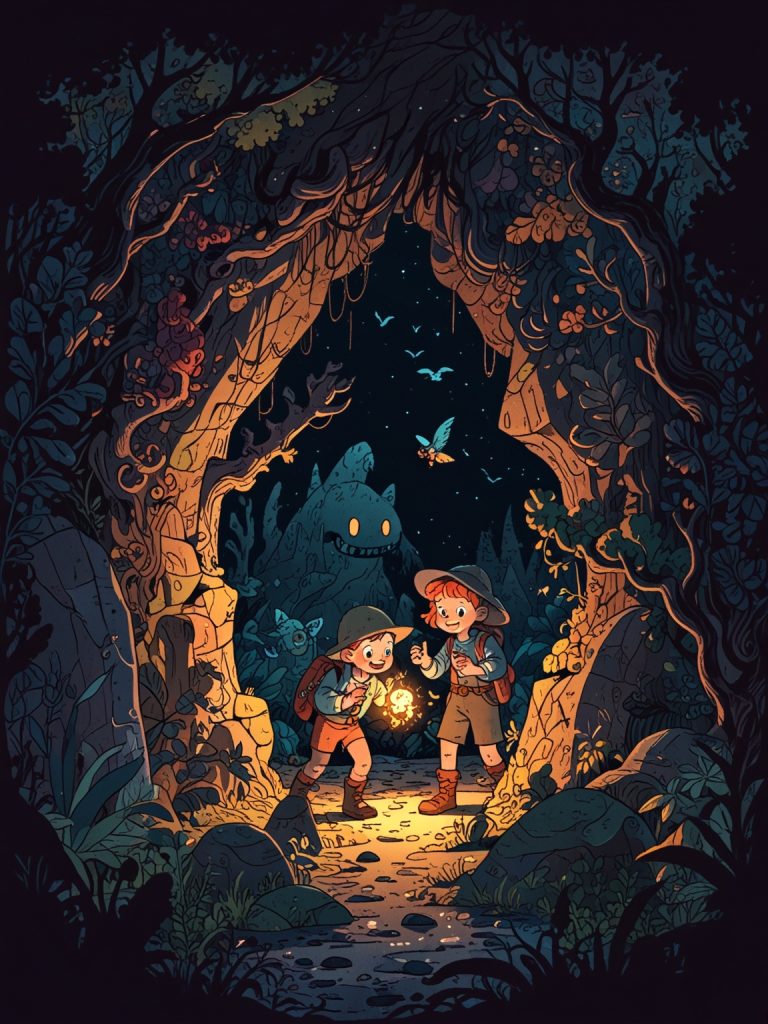
    Children eagerly searching for hidden treasure, capturing the joy of adventure and imagination.
    Treasure Hunt Excitement

    Let us tackle the elephant in the room first. It is true that pirates were the bad boys of the high seas. They ravaged, pillaged, and wreaked havoc on everything. The catch is that children genuinely adore them. You might wonder, why? It’s easy. Pirates stand for independence, exploration, and a hint of insurrection. Who wouldn’t want to leave the ordinary behind and go on a daring adventure, let’s face it?

    As a father, I’ve now discovered something fascinating. I’ve been exposed to a multitude of children’s books, cartoons, and TV series portraying pirates since having a kid. They appear to be everywhere! These nautical outlaws, from “Jake and the Never Land Pirates” to “Pirates of the Caribbean,” have captivated young people’s imaginations. Heck, the mascot of my high school was a pirate. What a memorable impression! As a father, I’ve now discovered something fascinating. I’ve been exposed to a multitude of children’s books, cartoons, and TV series portraying pirates since having a kid. They appear to be everywhere! These nautical outlaws, from “Jake and the Never Land Pirates” to “Pirates of the Caribbean,” have captivated young people’s imaginations. Heck, the mascot of my high school was a pirate. What a memorable impression!
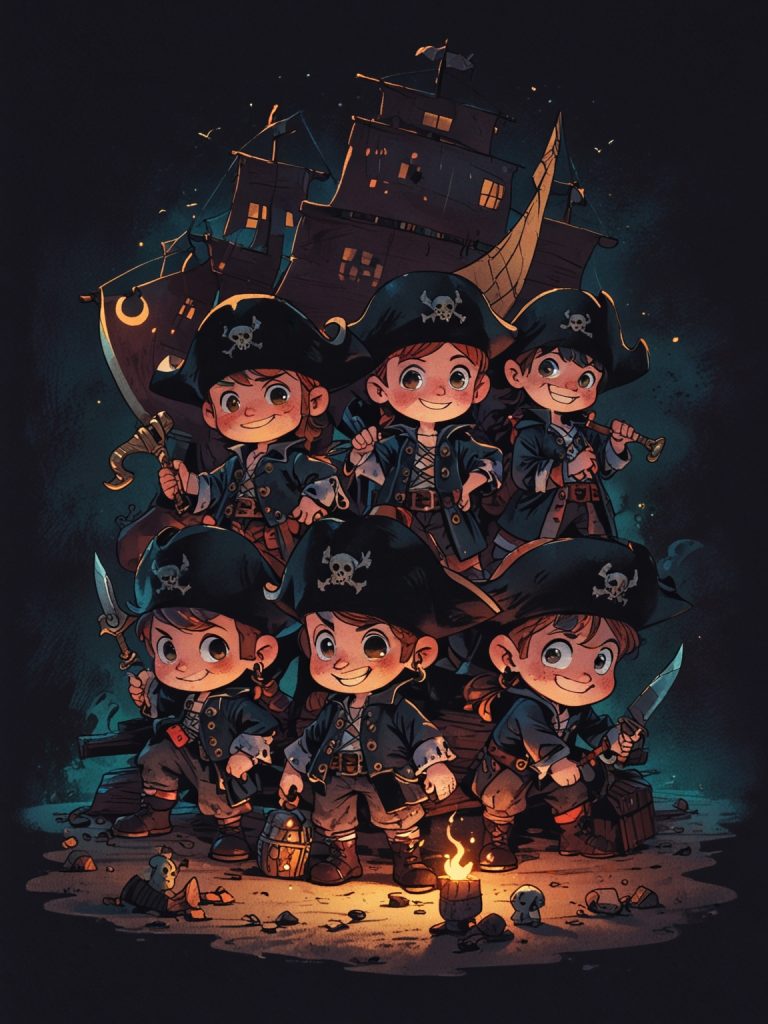
    A group of kids dressed as pirates, showcasing teamwork and camaraderie.
    Pirate Crew in Action

    However, why do children relate to these figures so well? To begin with, pirates are frequently presented as endearing outlaws. They are bold, mischievous, and eager for new experiences. They also have treasure maps, magnificent ships, and catchy words like “Arrr!” and “Shiver me timbers!” It makes sense why children are drawn to them.

    In addition, there is an air of escape with pirates. In a world where children are always being urged to behave and follow the rules, pirates are the epitome of defiance. They have no boss, follow their own set of rules, and are constantly searching for the next great find. It’s a fantasy that lets kids have huge dreams and picture an exciting, adventurous life.

    Let’s not overlook the educational component, though. Numerous narratives and television programs with a pirate theme teach important lessons about bravery, cooperation, and problem-solving. Therefore, children are not only amused by the daring acts but are also picking up valuable life skills. What a win-win situation!

    A foggy seascape with a pirate ship in the distance, evoking a sense of mystery and intrigue.
    Mystery of the High Seas

    Recent Events Related to Pirates and Their Popularity

    Here are some recent events that highlight the ongoing fascination with pirates and their impact on popular culture:

    1. Tampa Pirate Festival: Hundreds of pirates invaded the streets in a spectacular festival in Tampa. This event showcases the enduring popularity of pirate-themed celebrations and their appeal to people of all ages1.
    2. Pirate Attacks in the Gulf of Mexico: There has been a significant increase in maritime attacks by pirates in the Gulf of Mexico. These incidents highlight the real-world dangers of piracy and its continued relevance in modern times2.
    3. Pirate-Themed Childrenโ€™s Shows: Popular childrenโ€™s shows like โ€œJake and the Never Land Piratesโ€ continue to captivate young audiences with their adventurous and educational content. These shows often incorporate valuable lessons about teamwork, bravery, and problem-solving2.
    4. Pirate-Themed Books and Movies: The release of new pirate-themed books and movies keeps the pirate legend alive. These stories often portray pirates as lovable rogues, adding to their charm and appeal2.
    5. Pirate-Themed Merchandise: The market for pirate-themed merchandise, including costumes, toys, and party supplies, remains strong. This trend reflects the ongoing fascination with pirate culture and its influence on consumer behavior2.
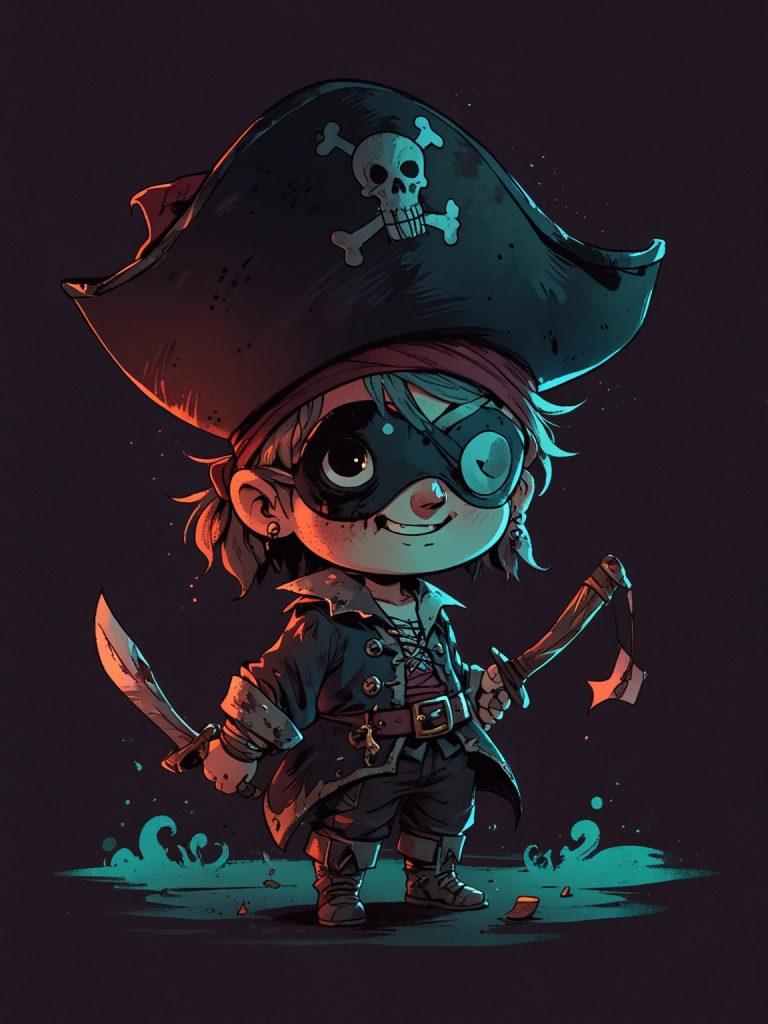
    A child with a pirate hat and eyepatch, embodying the playful spirit of pirate-themed fun.
    Pirateโ€™s Life for Me

    Useful Insights from the Article

    • Adventure and Freedom: Pirates represent adventure, freedom, and a touch of rebellion, which captivates young minds.
    • Lovable Rogues: Pirates are often portrayed as mischievous and daring characters, making them appealing to children.
    • Educational Value: Pirate-themed stories and shows often incorporate important life lessons, making them both entertaining and educational.
    • Escapism: Pirates offer a sense of escapism, allowing kids to dream big and imagine a life of excitement and adventure.

    3: Live Piracy Report – ICC-CCS 2: Piracy at Sea – The New York Times 1: Pirates – Latest News, Breaking Stories and Comment – The Independent

    In conclusion, despite their infamous past, kids still find pirates to be quite appealing. They embodies freedom, adventure, and a hint of rebellionโ€”elements that appeal to impressionable minds. It’s not only about the loot, so keep that in mind the next time you witness your child absorbed in a pirate tale. It’s all about the adventure, the thrill, and the countless opportunities that present themselves.

    A scene from a pirate-themed storybook, bringing the legendary tales to life for young readers.
    Pirate Legends Come Alive

    If I had to pick a favorite pirate movie, it would be โ€œPirates of the Caribbean: The Curse of the Black Pearl.โ€ This swashbuckling adventure has it all โ€“ a charismatic and witty Captain Jack Sparrow, thrilling action scenes, and a captivating storyline filled with treasure, curses, and unforgettable characters. Itโ€™s a true classic that brings the world of pirates to life in the most entertaining way possible. Whatโ€™s your favorite pirate movie? Dive into the world of pirates with your kids and discover the magic for yourself. Whether itโ€™s through books, movies, or imaginative play, let the spirit of adventure guide you. And who knows, you might just find your own hidden treasure along the way. Arrr!
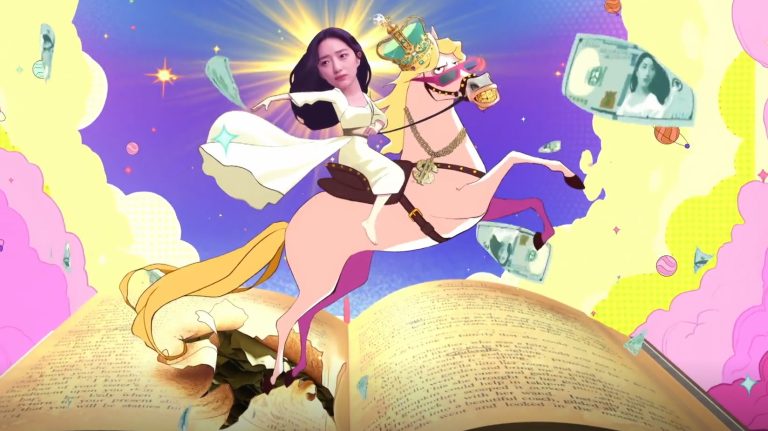
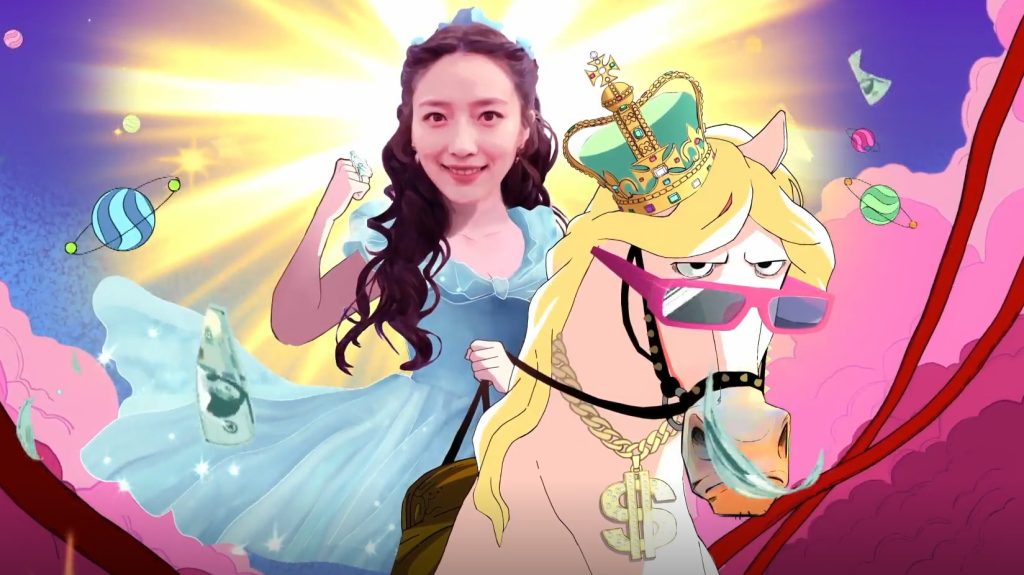
    What I learned about life from โ€œDreaming of a Freaking Fairy Taleโ€ so far…

    0

    Once upon a time, in a world where fairy tales collide with reality, and dreams dance on the edge of possibility, there lived a heroine who defied the odds. Her journey wasnโ€™t just about finding a prince, but about discovering the magic within herself. As she navigated the labyrinth of life, she realized that every step, every stumble, and every triumph was a chapter in her own epic saga. So, dear reader, as you embark on this tale, remember: sometimes the most enchanting stories are the ones we write ourselves.

    TL;DR

    1. Perseverance and Resilience: Overcoming lifeโ€™s challenges with determination.
    2. Making the Right Choices: The impact of thoughtful decisions on oneโ€™s future.
    3. Self-Discovery and Personal Growth: Recognizing and embracing oneโ€™s own potential.
    4. Humor and Positivity: Using humor to navigate difficult situations.
    5. Love and Relationships: Understanding and appreciating the complexities of love.
    TVING: Dreaming of a Freaking Fairy Tale

    The characters in the Korean drama “Dreaming of a Freaking Fairy Tale” teach us various life lessons through their interactions. Here are some sequences from the drama that demonstrate these concepts.

    Durability and Adaptability

    Scene: Following her father’s death, SHIN JAE-RIM (Pyo Ye-jin) confronts various problems, including living with her stepmother and stepsisters and dealing with a pile of debt. Despite these hurdles, she chooses to strike out on her own and pursue her dreams.

    • In-depth Analysis: Jae-rim’s path demonstrates the power of tenacity and resilience. She does not let her challenging circumstances to define her. Instead, she takes aggressive measures to improve her condition. This reminds us that even when life throws us curveballs, we have the inner strength to overcome them and move on.
    TVING: Dreaming of a Freaking Fairy Tale

    Making the Correct Decisions Is Crucial

    Scene: Jae-rim’s friend tells her that the first hand you’re dealt in life is dependent on luck, but the second phase is all about making the correct decisions. Jae-rim resolves to pursue marriage to enhance her life.

    • In-depth analysis: This scene emphasizes the importance of personal agency and decision-making. Jae-rim’s decision to pursue marriage as a method of achieving a better life exemplifies the belief that our decisions create our future. It emphasizes the necessity of making smart and intelligent decisions, since they might have long-term consequences for our life.
    TVING: Dreaming of a Freaking Fairy Tale

    Self-Discovery and Personal Development

    Scene: Jae-rim originally aspires to be Cinderella and marry a wealthy husband, but through her interactions with MOON CHA-MIN (Lee Jun-young), she discovers her own qualities and abilities.

    • In-depth Analysis: Jae-rim’s character journey is about self-discovery and personal development. Initially, she believes that marriage is her only way to prosperity. However, as she interacts with Cha-min and faces numerous trials, she begins to see her own abilities and worth. This path of self-discovery serves as a compelling reminder that true fulfillment stems from recognizing and accepting our own strengths.
    TVING: Dreaming of a Freaking Fairy Tale

    Humor and Positivity

    Scene: The drama is full with comedic and sarcastic moments, such as the meet-cute on the staircase where Jae-rim’s shoe knocks Cha-min in the head, as well as the several showdowns between Jae-rim and Chamin.

    • In-depth Analysis: The use of comedy and satire in the play helps to lighten the mood and make the plot more interesting. It also allows you to handle difficult issues in a more approachable manner. The comic elements remind us that, even in bad times, finding moments of fun and happiness may help us manage and stay optimistic.
    TVING: Dreaming of a Freaking Fairy Tale

    Love & Relationships

    Scene: Cha-min, who originally did not believe in love, begins to fall for Jae-rim during their interactions. Despite their differences, they grow to understand and care for one another.

    • In-depth Analysis: The developing relationship between Jae-rim and Cha-min exemplifies the complexity of love and human connections. Cha-min’s initial doubt about love is tested as he gets to know Jae-rim. Their encounters demonstrate that love may grow in unexpected ways, and that understanding and empathy are essential for developing lasting relationships.
    TVING: Dreaming of a Freaking Fairy Tale

    Here are some crazy insights from the Korean Drama โ€œDreaming of a Freaking Fairy Taleโ€:

    TVING: Dreaming of a Freaking Fairy Tale
    1. Satirical Take on Cinderella Stories:
      • The drama takes a satirical look at traditional Cinderella stories and K-drama tropes, making it a refreshing and humorous take on the genre. It pokes fun at the idea of a โ€œpoor Cinderellaโ€ trying to find a rich husband to improve her life.
    2. Crass Chemistry Between Leads:
      • The chemistry between the leads, SHIN JAE-RIM and MOON CHA-MIN, is described as crass and off-color, which adds a unique and entertaining dynamic to their interactions. Their banter and unconventional meet-cute moments keep the audience laughing and engaged.
    3. Third-Person Narrator with a Twist:
      • The drama is structured like an old-school fairy tale book, with a third-person narrator who not only tells us what the characters are thinking but also speaks directly to the audience. The narrator lays out the morals of the story and makes contemporary societal jabs, adding a layer of satire and humor.
    4. Chaebol with a Quirky Twist:
      • MOON CHA-MIN is an 8th generation chaebol who is notoriously single and has a unique quirk: pretty women look like stones to him. This literal transformation of women into stones adds a humorous and fantastical element to the story.
    5. Over-the-Top Humor and Graphics:
      • The drama features over-the-top humor and on-screen graphics that initially might scare off viewers but ultimately contribute to its unique charm. The exaggerated humor and visual effects create a whimsical and entertaining viewing experience.
    6. Unconventional Meet-Cute:
      • The quintessential meet-cute occurs when Jae-rimโ€™s shoe flies off and hits Cha-min in the head, leading to a series of hilarious misunderstandings and interactions. This unconventional and comedic meet-cute sets the tone for their relationship.
    7. Role Reversal in Classic K-Drama Tropes:
      • The drama features role reversals in classic K-drama tropes, such as Jae-rim catching Cha-min around the waist in a protective manner, which is typically a male characterโ€™s role. This subversion of traditional roles adds a fresh and modern twist to the story.
    8. Humorous Take on Serious Themes:
      • The drama addresses serious themes such as financial struggles, societal expectations, and personal growth, but does so with a humorous and satirical approach. This balance of humor and depth makes the story both entertaining and thought-provoking.
    TVING: Dreaming of a Freaking Fairy Tale

    And so, as our tale draws to a close, remember that every ending is but a new beginning in disguise. The threads of fate weave intricate patterns, and what seems like the final chapter may just be the prologue to a grander story. In the tapestry of life, each twist and turn holds a lesson, and every character, a reflection of ourselves. So, dear reader, as you turn the last page, ponder this: is the story truly over, or have we merely paused to catch our breath before the next adventure begins?

    Tofu: The Underrated Protein Powerhouse You Need to Try

    0

    Imagine a world where the most unassuming ingredient holds the key to culinary greatness. Tofu, often overlooked and misunderstood, is like the Clark Kent of the food universeโ€”mild-mannered and unassuming on the outside, but with the potential to be a true superhero in the kitchen. Just as Clark Kent transforms into Superman, tofu can morph into a myriad of delicious dishes that will leave your taste buds in awe.

    But hereโ€™s the twist: while tofu might seem like a humble sidekick, itโ€™s actually the star of the show. In the West, itโ€™s often relegated to the role of a โ€œfakeโ€ meat, a mere substitute for the real deal. Yet, in the East, tofu is celebrated for what it truly isโ€”a versatile, nutrient-packed powerhouse that can stand on its own.

    TL;DR

    1. Nutrient-Dense: Tofu is packed with protein, vitamins, and minerals, making it a highly nutritious food.
    2. Versatile Ingredient: Tofu can be used in a wide variety of dishes, from soups and stir-fries to desserts and smoothies.
    3. Cultural Perception: In the East, tofu is celebrated as a star ingredient, while in the West, itโ€™s often seen as a substitute for meat.
    4. Health Benefits: Regular consumption of tofu can reduce the risk of heart disease and support overall health.
    5. Cooking Methods: Tofu can be fried, baked, grilled, or even used in desserts, showcasing its versatility in the kitchen.

    Alright, letโ€™s talk tofu. Yes, you heard me right. Tofu. The unsung hero of the protein world. Now, donโ€™t get me wrong. I love my Mcdonald’s and french fries just as much as the next person. But, folks, itโ€™s time we give tofu the credit it deserves.

    In the West, tofu often gets a bad rap. Itโ€™s usually seen as those cold, unappetizing cubes at the salad bar. Bizarre, right? But let me tell you, tofu is so much more than that. Itโ€™s a versatile ingredient that can elevate any dish, especially in Asian cuisine and it is a plant-based food!

    You absolutely have to try tofu in a Korean soup, fried with General Tso sauce, in a hot pot, or soaked in a 5-spice marinade. Heck, even in a Vietnamese sandwich! And letโ€™s not forget the dessert version, which has a texture similar to jello (but not gelatinous) and is served with ginger syrup or honey. Plus, itโ€™s packed with protein and vitamins.

    In the West, tofu is often used as a substitute, a โ€œfakeโ€ meat that you tolerate for its health benefits. But in the East, tofu is tofu. Itโ€™s cooked in dishes that are meant to use tofu, and itโ€™s absolutely delicious when prepared correctly.

    Here are some must-try tofu dishes:

    • Mapo Tofu: A spicy Sichuan dish that will make your taste buds dance.
    • Sundubu-jjigae (Soft Tofu Stew): A comforting Korean stew thatโ€™s perfect for a chilly day.
    • Agedashi Tofu (Fried Tofu in Broth): A Japanese dish thatโ€™s crispy on the outside and silky on the inside.
    • Douhua (Tofu Pudding): A sweet Chinese dessert thatโ€™s light and refreshing.
    • Dubu-jorim (Braised Tofu): A Korean dish thatโ€™s savory and satisfying.
    • Inarizushi (Sushi in Sweet Tofu Pouches): A delightful Japanese sushi thatโ€™s both sweet and savory.

    โ€œTofu is not just a substitute; itโ€™s a star in its own right.โ€

    From Bland to Grand: Tofuโ€™s Culinary Journey

    Tofu’s Benefits

    1. Tofuโ€™s Nutrient Density: Tofu is a nutrient-dense food that is high in protein and contains all the essential amino acids your body needs. It also provides fats, carbs, and a wide variety of vitamins and minerals. For instance, a 100-gram serving of firm tofu offers 17 grams of protein, 9 grams of fat, and significant amounts of calcium, manganese, copper, selenium, and other essential nutrients1.
    2. Heart Health Benefits: Regular consumption of tofu has been linked to a reduced risk of heart disease. A study found that individuals who ate tofu at least once a week had an 18% lower risk of heart disease compared to those who rarely ate tofu2.
    3. Gut-Friendly Protein: Unlike some animal proteins, tofu is less likely to cause acid reflux, making it a gut-friendly option for those with sensitive digestive systems3.
    4. Versatility in Cooking: Tofu is incredibly versatile and can be incorporated into a wide variety of dishes, from stir-fries and soups to salads and smoothies. It can be fried, baked, grilled, or even used in desserts4.
    5. Cultural Perception: In the West, tofu is often seen as a โ€œfakeโ€ meat or a substitute for animal protein. However, in the East, tofu is celebrated as a star ingredient in its own right and is used in dishes that are specifically designed to highlight its unique texture and flavor1.
    6. Tofuโ€™s Origins: Tofu originated in China and is made from condensed soy milk that is pressed into solid white blocks in a process similar to cheese making. Nigari, a mineral-rich coagulant left over after salt is extracted from seawater, is used to help tofu solidify and keep its form1.
    7. Isoflavones and Health: Tofu is a primary source of isoflavones, which are compounds that function like a weak form of the hormone estrogen. Despite concerns, there is no scientific basis for the idea that soy can cause infertility or other problems in men2.

    Tofu, the unassuming block of bean curd, is not just a substitute but a culinary chameleon, ready to transform into a myriad of delicious dishes. Itโ€™s time to rethink our perception of tofu and embrace its versatility and potential.

    Remember, just like Clark Kent, tofu might seem mild-mannered and unassuming, but it has the power to be a true superhero in the kitchen. So, the next time you encounter tofu, donโ€™t just see it as a bland block of bean curd. See it for what it really isโ€”a culinary chameleon, ready to take on any flavor and texture you throw its way.

    Embrace the tofu revolution and discover the superhero hiding in plain sight. After all, isnโ€™t it time we gave tofu the love it deserves?

    Why Werenโ€™t Living Roman Emperors Worshipped as Living Gods?

    0

    Have you ever wondered why the Romans, who appeared to have a god for every occasion, never revered their emperors as living deities? It’s a story of power, politics, and contradictions that will make you reconsider the nature of god and authority. Consider a universe where the border between mortal and divine is as thin as a toga, but the Romans, with all their gods and goddesses, established a clear line when it came to their rulers. Was it a question of principle, or just another smart ploy in the great game of thrones? Dive into this intriguing paradox to see how the ancient Romans struck a balance between devotion and rebellion while keeping their emperors on the mortal side of the divine divide. Prepare to be. enlightened, amused, and perhaps a bit perplexed as we unravel the mystery of why Roman emperors were never worshipped as living gods.

    TL;DR

    • Romans avoided worshipping living emperors as gods due to their historical disdain for kings.
    • Dead emperors were frequently deified and worshipped in the imperial cult.
    • Augustus skillfully transformed the Republic into an Empire while maintaining the facade of Republican democracy.
    • The early emperors used the title โ€œprincepsโ€ to avoid appearing as kings or gods.
    • The shift from the principate to the dominate marked a change in how emperors were perceived and worshipped.
    Temples for dead emperors? The Roman Imperial Cult in action

    The Roman Loophole Extravaganza

    First and foremost, the Romans excelled at creating loopholes. They had a penchant for avoiding worshipping their emperors as true gods. But why? What was their objection to the notion of a living god-emperor? What did they think of those who worshipped their emperors, such as the Egyptians? Spoiler alert: They probably believed they were a little misguided.

    Dead Emperors: The Real Deal

    Interestingly, the Romans had no problem worshipping dead emperors as gods. From the very beginning of the empire, the imperial cult was a real thing, complete with temples and priests. Whether a dead emperor was consecrated into the imperial cult largely depended on his successor and the Senateโ€™s attitude. So, dead emperors got the divine treatment, but living ones? Not so much.

    The Kingly Disdain

    To understand this, you need to remember the Romansโ€™ historical disdain for kings. Rome started as a kingdom with seven mythical kings before becoming a Republic. The story of overthrowing the last king and establishing a Republic explains their views on kingship. They even had a law that allowed anyone to kill a man who declared himself king on the spot. So, if they hated kings, you can imagine how they felt about treating a ruler as a living god.

    East meets West: Borrowing the idea of divine rulers?

    The Emperorโ€™s Clever Disguise

    But wait, if the Romans hated kings, how did they accept an emperor? Well, part of the answer lies in tough times making people more flexible with their principles. The other part is Augustusโ€™ skillful transformation from Republic to Empire. He didnโ€™t just declare himself emperor one day. Instead, he worked within existing political institutions, absorbing the power of democratic offices. Emperors were repeatedly โ€œelectedโ€ consul and took the power of the tribune of the plebs in perpetuity. They amassed power while maintaining the facade of Republican democracy. The early emperors used the title โ€œprinceps,โ€ meaning โ€œfirst citizen,โ€ to pretend the Republicโ€™s institutions were still intact. So, they werenโ€™t trying to appear as kings, let alone living gods. This era is known as the โ€œprincipate.โ€

    The Shift to the Dominate

    Things changed after the third-century crisis and the rise of barracks emperors. These soldier emperors dismantled the facade of the emperor as merely princeps. Their power came from might and the loyalty of the biggest army. Diocletianโ€™s reforms cemented the distance between ruler and ruled, with emperors referred to as โ€œLordโ€ and subjects bowing before them in the eastern style. This era is known as the โ€œdominate,โ€ marking a real shift from the principate.

    Recent Events Related to Roman Emperor Worship

    Here are some recent events that shed light on the historical context of Roman emperor worship and provide insights into the articleโ€™s claims:

    1. Discovery of a Roman Imperial Cult Temple in Italy:
    2. Roman Imperial Cult:
    3. Religion in Ancient Rome:
    4. The Worship of the Roman Emperors:
      • Event: The impulse for deifying Roman emperors came from the East, where rulers like the Pharaohs and Alexander the Great were worshipped as divinities.
      • Description: When Rome conquered the East, divine honors were transferred to Roman proconsuls and later to emperors. This practice became a state religion throughout the empire4.
    5. Emperor Worship:

    These events and descriptions provide a deeper understanding of the historical context and significance of Roman emperor worship. They also support the claims made in the article about the complex relationship between Roman emperors and divinity.


    1: Smithsonian Magazine 2: Wikipedia – Roman Imperial Cult 3: Wikipedia – Religion in Ancient Rome 4: University of Chicago Press 5: Oxford Reference

    Is this just a face on a coin, or a symbol of something more?

    Why werenโ€™t Roman emperors worshipped as living gods? Perhaps itโ€™s a testament to the Romansโ€™ unique blend of reverence and rebellion, a delicate dance between power and principle. They revered their leaders, but not to the point of deification while alive. Maybe they understood that true divinity lies not in the titles we bestow upon ourselves, but in the legacy we leave behind. Or perhaps, in their wisdom, they knew that elevating a mortal to godhood could blur the lines of accountability and power.

    In the end, the Romansโ€™ refusal to worship living emperors as gods is a reminder that even in a world filled with divine figures, the human spirit remains grounded in reality. Itโ€™s a lesson in humility, a nod to the transient nature of power, and a subtle acknowledgment that sometimes, the greatest reverence we can offer is to keep our feet firmly planted on the ground, even as we reach for the stars. So, as you ponder this ancient conundrum, ask yourself: where do we draw the line between reverence and reality, and what does it say about the nature of power and divinity in our own lives?

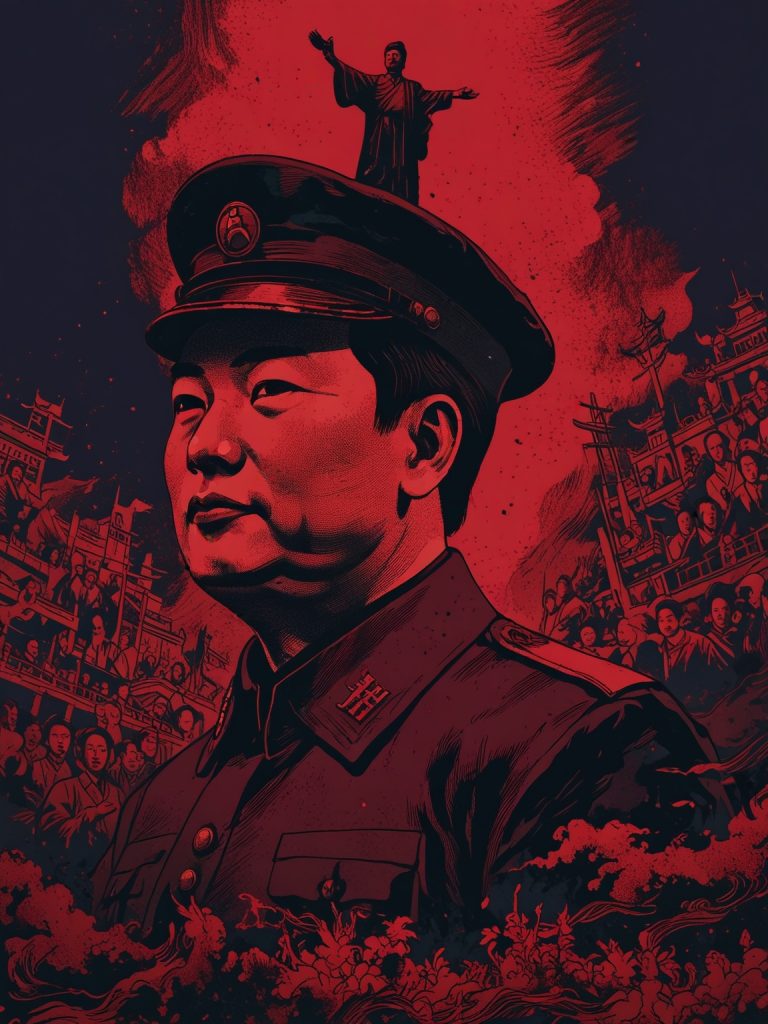
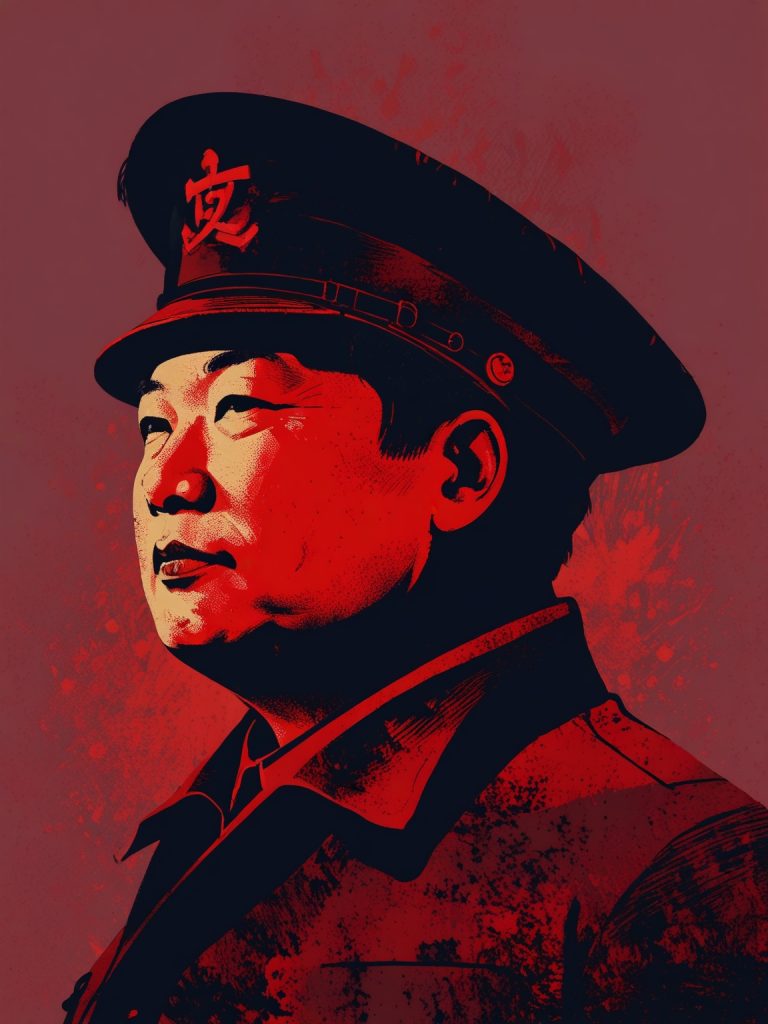
    Why Did So Many Chinese Youth Join the Cultural Revolution?

    0

    Imagine a world where the youth, instead of rebelling against their parents, are encouraged to rebel against their entire society. Picture a time when the very fabric of tradition is torn apart by the hands of those who are supposed to uphold it. Welcome to the Great Proletarian Cultural Revolutionโ€”a paradoxical era where chaos was the order of the day, and the young were both the architects and the destroyers of their own future. But what drove these young minds to such extremes? Was it genuine belief, sheer boredom, or something more profound? Letโ€™s unravel the enigma behind the Red Guards and their fervent quest for a new world.

    TL;DR

    • The Cultural Revolution was a unique historical event where young people were mobilized to rebel against society.
    • Mao Zedong instigated the Cultural Revolution to reassert control over the Communist Party.
    • Various factors motivated the youth, including genuine ideological commitment, boredom, novelty, FOMO, and social pressure.
    • The Red Guards formed violent militias dedicated to destroying the Four Olds and spreading Mao Zedong thought.
    • The motivations behind the youthโ€™s participation were complex and multifaceted.
    Young Red Guards rallying with fervor, ready to change the world.

    Ah, the Great Proletarian Cultural Revolutionโ€”a unique episode in world history, right? Imagine masses of young people, compelled by the government, rebelling against the very society that same government built. Sounds like a plot twist, doesnโ€™t it? This political hysteria threw China into chaos for years. But why did so many young people jump on this chaotic bandwagon?

    Letโ€™s break it down. The standard narrative paints the Cultural Revolution (CR) as a power play by Mao Zedong. After being sidelined by Liu Shaoqi and Deng Xiaoping, Mao needed to reassert control over the Communist Party. So, he instigated the CR. Simple, right? Not quite. This explanation doesnโ€™t really tell us why so many young people went to such extreme lengths to enact Maoโ€™s vision of permanent revolution. Beyond the truism โ€œthey really liked Mao,โ€ what drove them?

    Now, letโ€™s put ourselves in the shoes of an average teenager in urban China in 1966. These kids didnโ€™t know a time before Mao. Itโ€™s hard for us to relate, but letโ€™s try. Could mere ideological convictions alone energize so many to form violent militias? These militias dedicated every waking moment to destroying the Four Olds, spreading Mao Zedong thought, and fighting other factions of Red Guards. Even in highly politically charged times, most people have more parochial concerns. So, what gives?

    Who are the Red Guards?

    The Red Guards were a mass, student-led, paramilitary social movement mobilized by Chairman Mao Zedong during the Cultural Revolution, which lasted from 1966 to 19761. These young people, primarily high school and university students, were formed into paramilitary units under the auspices of the Chinese Communist Party (CCP) to help Mao combat โ€œrevisionistโ€ authoritiesโ€”those party leaders Mao considered insufficiently revolutionary2.

    Key Aspects of the Red Guards:

    1. Formation and Purpose: The Red Guards were formed in 1966 to support Maoโ€™s vision of a permanent revolution. They aimed to eliminate all remnants of the old culture in China and purge all supposedly bourgeois elements within the government2.
    2. Attacks on the โ€œFour Oldsโ€: The Red Guards were directed to attack the โ€œFour Oldsโ€ of Chinese society: old customs, old culture, old habits, and old ideas. They marched across China, destroying ancient artifacts, gravesites, and other symbols of Chinaโ€™s pre-communist past1.
    3. Factionalism and Violence: The Red Guards engaged in violent clashes with local party leaders, schoolteachers, intellectuals, and anyone perceived as a dissident. Several hundred thousand people died in the course of these persecutions2.
    4. Mass Mobilization: Several million Red Guards journeyed to Beijing to meet with Mao in eight massive demonstrations in late 1966. The total number of Red Guards throughout the country may have reached 11 million at some point2.
    5. Suppression and Decline: By early 1967, Red Guard units were overthrowing existing party authorities in towns, cities, and entire provinces. However, their increasing factionalism and disruption of industrial production and urban life led the government to urge the Red Guards to retire into the countryside. The Chinese military was called in to restore order, and the Red Guard movement gradually subsided by 19682.

    The Red Guards played a significant role in the Cultural Revolution, leaving a lasting impact on Chinese society and history.

    1: Wikipedia 2: Britannica

    A glimpse into the chaos: Red Guards destroying the Four Olds.

    Here are some insights:

    1. Genuine Ideological Commitment: Sure, some were true believers. They genuinely thought they were building a better future.
    2. Boredom: Letโ€™s face it, teenagers get bored. The CR offered excitement and a break from the mundane.
    3. Novelty: The idea of rebelling was new and thrilling. Who wouldnโ€™t want to be part of something big?
    4. FOMO (Fear of Missing Out): Peer pressure is powerful. If everyone else is joining, you donโ€™t want to be left out.
    5. Emperorโ€™s New Clothes: Sometimes, people go along with things because they donโ€™t want to seem out of touch or cowardly.

    Treasures, religious objects and books destroyed

    During the Cultural Revolution, a vast number of Chinese antiques and artworks were destroyed. The Red Guards, paramilitary youth groups organized and mobilized by Maoโ€™s supporters, carried out much of the destruction. They targeted valuable artifacts, historic buildings, and religious sites, aiming to purge the country of the โ€œFour Oldsโ€: old customs, old culture, old habits, and old ideas.

    In Beijing alone, at least 4,922 of the cityโ€™s 6,843 officially classified historical sites were damaged or destroyed between mid-August and September 1966. This included ancient bronze vessels, jade carvings, calligraphic works, rare manuscripts, paintings, and ceramics. The destruction extended to religious sites, with temples and mosques ransacked, leading to the loss of many important religious objects.

    The Cultural Revolution caused significant damage to Chinaโ€™s cultural heritage, with countless irreplaceable artifacts lost forever.

    Mao Zedongโ€™s influence: Inspiring a generation to rebel.

    Explore

    The Cultural Revolution, initiated by Mao Zedong, had profound and far-reaching consequences for China. Here are some of the key impacts:

    1. Loss of Life and Suffering: Approximately 1.5 million people were killed, and millions more suffered imprisonment, seizure of property, torture, or general humiliation.
    2. Economic Disruption: The political instability and erratic economic policies during the Cultural Revolution led to slower economic growth and a decline in the governmentโ€™s capacity to deliver goods and services.
    3. Educational Setback: A severe generation gap was created as young adults were denied an education and were taught to address grievances through street protests.
    4. Corruption and Bureaucratic Timidity: The terror and scarcities during the Cultural Revolution forced people to rely on traditional personal relationships and extortion to get things done. This led to increased corruption within the Chinese Communist Party (CCP) and the government.
    5. Loss of Legitimacy: The CCP leadership and the system itself suffered a loss of legitimacy as millions of urban Chinese became disillusioned by the obvious power plays that took place in the name of political principle.
    6. Factionalism: Bitter factionalism was rampant, with members of rival Cultural Revolution factions sharing the same work units and constantly undermining each otherโ€™s power.
    7. Long-term Social Impact: The Cultural Revolutionโ€™s tormented and violent legacy resonated in Chinese politics and society for decades, affecting the entire country.

    The Cultural Revolution left a lasting impact on Chinaโ€™s political, social, and economic landscape, with consequences that were felt for many years.

    As we peel back the layers of the Cultural Revolution, we find ourselves staring into a mirror reflecting both the fervor of youth and the complexities of human nature. Was it a genuine quest for ideological purity, or just a grand stage for youthful rebellion? Perhaps it was both, or maybe neither. The Red Guards remind us that history is not just a series of events, but a tapestry woven with the threads of human ambition, fear, and curiosity. As we ponder their motivations, we might just find ourselves questioning our own. After all, arenโ€™t we all, in some way, rebels in search of a cause?

    Where is Nichol Kessinger now?

    Nichol Kessinger, a name that once reverberated through the halls of infamy but is now whispered in the silence of anonymity. As we embark on this trip, let us consider the mystery of a phoenix rising not from the ashes of devastation, but from the dust of obscurity, seeking a horizon where the sun sets not on her past, but on the promise of her rebirth.

    The Enigmatic Journey of Nichol Kessinger: From Headlines to Hideaways

    Ah, Nichol Kessinger, the woman who unwittingly danced into the limelight of a notorious crime saga. Once a name splashed across every news channel, sheโ€™s now as elusive as a whisper in the wind. Post the heart-wrenching tragedy involving Shanann Watts and her little ones, Kessingerโ€™s world flipped like a bad pancake due to her ties with the villain of the piece, Chris Watts. In the aftermath, sheโ€™s been playing a high-stakes game of hide-and-seek with the press and those with vengeance in their eyes. Whispers abound that sheโ€™s traded the Rocky Mountains for the rolling hills of Asia, perhaps finding solace in the arms of Chiang Mai, Thailandโ€™s peaceful embrace.

    A Twist in the Tale

    Rewind to 2018, and we find Chris Watts, a man whose moral compass was so broken it pointed straight to prison. Convicted of snuffing out the lives of his pregnant spouse, Shanann, and their two angelic daughters, Watts left the world reeling. Enter Kessinger, his secret paramour, who was initially as clueless about his double life as a cat is about calculus. When the grim truth dawned on her, she turned whistleblower, aiding the law and sealing Wattsโ€™ fate. Yet, despite playing for Team Justice, she bore the brunt of public ire and the mediaโ€™s relentless gaze.

    A New Chapter?

    As the gavel fell and the trial curtains closed, Kessinger ghosted society. The weight of the case and her accidental role in it made her a magnet for controversy and fury. To dodge this, sheโ€™s rumored to have swapped her identity and slipped into the shadows. Sightings of her are as rare as a unicornโ€™s selfie, leaving her current chapter unwritten in the publicโ€™s book.

    Whispers of Wanderlust

    Nichol might be in Chiang Mai

    The rumor millโ€™s favorite yarn is Kessingerโ€™s supposed Asian adventure, a continent away from the prying eyes of Western paparazzi. Thailand, a haven of hospitality and wallet-friendly living, is touted as her potential sanctuary. More precisely, Chiang Mai, a northern jewel known for its zen vibes, cultural tapestry, and thriving expat scene, is rumored to be her chosen retreat.

    Chiang Mai is a cocktail of contemporary comforts and timeless allure, an ideal hideout for those craving anonymity and a reboot. Its expat melting pot is as varied as a box of chocolates, and the living costs wonโ€™t make your wallet weep. Here, Kessinger could be crafting a new normal, wrapped in the security blanket sheโ€™s been seeking.

    Under the Radar

    Suppose Kessinger has indeed nestled into Chiang Maiโ€™s nooks. In that case, sheโ€™s probably keeping it as low-key as a ninja at a library. Merging with the expat crowd, steering clear of the social spotlight, and keeping her profile as muted as a mime are likely her strategies for tranquility and self-preservation. Chiang Maiโ€™s mantra of mindfulness and leisurely living could be the perfect potion for someone eager to shake off a stormy yesteryear.

    Nichol Kessinger: Echoes of the Past and Present

    Recent events related to Nichol Kessinger and the Chris Watts case have continued to ripple through the media and public discourse. Hereโ€™s a list of notable developments:

    1. Continued Media Coverage: Despite the passage of time, the case still garners attention, with interviews and articles revisiting the details and individuals involved
    2. Public Interest: Online communities and forums remain active with discussions and theories about Kessingerโ€™s current life and whereabouts
    3. Witness Protection Speculation: There have been speculations and unconfirmed reports about Kessinger being placed in a witness protection program due to the backlash she received

    The Final Word

    While Nichol Kessingerโ€™s current locale remains a mystery worthy of a detective novel, the theory of her Thai hideaway holds water. Such a haven promises the quietude and distance she presumably yearns for, a world away from the scrutiny and dangers back in the States. Wherever she may roam, her narrative serves as a poignant memento of the intricate web woven between personal dramas and public catastrophes, and the extraordinary lengths one might traverse for a shot at redemption and obscurity.

    As we close the book on the curious case of Nichol Kessinger, letโ€™s ponder the pages yet unwritten. In a world where every step is illuminated by the spotlight of judgment, she seeks a path lit only by the moonโ€™s forgiving glow. Her story, a mosaic of truths and trials, reminds us that the line between villain and victim is often drawn in the sand, easily washed away by the tides of perspective. So, as you turn the final page, consider the art of disappearance not as an escape, but as a quest for a canvas where lifeโ€™s colors can be repainted with the brushes of second chances and new beginnings.

    The Great Species Debate: Are We Giving Animals the Short Paw of the Stick?

    Ever feel as if your furry (or feathery, or scaly) friend is secretly judging your every move? Maybe they’re not just looking at the juicy steak you’re grilling; maybe they’re thinking about the meaning of life… and their place in the grand scheme of things (while simultaneously plotting how to get a bite of that steak). But, seriously, the question of animal value extends far beyond a begging look or a playful nip. For centuries, philosophers have been debating this philosophical conundrum. So buckle up and grab your thinking cap (and perhaps a treat for your furry companion), because we’re about to delve into the fascinating world of animal ethics!

    TL;DR

    • Traditional thinking prioritizes human life over animal life, but is there a deeper reason?
    • Philosophers debate what mental features grant moral value (sentience, interests, communication).
    • Animals exhibit planning, cooperation, and empathy, challenging our view of intelligence.
    • The article explores recent events related to animal research, welfare, and advocacy.
    • You can get involved! Volunteer, support ethical businesses, and educate others.
    Beyond tricks: Redefining animal intelligence.

    Hey, animal lover! Have you ever felt like our furry (or feathery, or scaly) friends are getting a raw deal? You are not alone! Philosophers have long debated why humans seem to value their own lives more than those of other creatures, large and small.


    On the surface, our evolutionary instincts may lead us to prioritize our own species’ survival. Is there a deeper, philosophical reason that justifies this bias?

    Here’s the thing: many people feel that a life is a life, regardless of the creature. So, why the disconnect? Why do we sometimes see a disregard for other living beings?

    Fear not, my friend! Buckle up, because we’re about to go into the fascinating world of philosophical debates over animal ethics. Prepare to study many points of view and possibly uncover a fresh perspective on this hairy (or feathery, or scaly) topic!

    The Mind Game: What Makes a Life Valuable?

    This questionโ€”what mental capacities confer moral valueโ€”is at the center of many philosophical debates.

    Peter Singer’s well-known hypothesis implies that sentience is important. Sentience is defined as the ability to feel pain and suffer. While Singer’s definition is ambiguous, he argues that the ability to feel pain is important to the concept.

    Another opinion contends that having interests or aspirations is what gives a life moral significance. Some define sentience as the ability to have your desires unfulfilled. This becomes a little tough, but it demonstrates the intricacies of the discussion.

    Beyond Feelings: Exploring Other Viewpoints

    There are various schools of thinking! Some philosophers, including Josephine Donovan, feel that communicative talents confer moral status. Perhaps it is a combination of mental characteristics rather than a single one that is actually important?

    Go vegan, save the planet (and maybe some furry friends!)

    The Uniquely Human Argument

    Some theorists, such as Bonnie Steinbock, emphasize uniquely human qualities such as reciprocity and altruism. These are undoubtedly valuable characteristics, but do they preclude other beings from having moral worth?

    The Spectrum of Moral Value

    Finally, the answer is determined by the mental traits we deem morally significant. If sentience is the key, then all organisms capable of feeling pain have moral status. If benevolence is the decisive criteria, only beings capable of it will qualify.

    There is also opportunity for more nuanced perspectives. Perhaps sentience confers a baseline amount of moral value, but extra characteristics such as benevolence raise it a notch. It is wrong to harm a sentient entity, especially if that being is also capable of selflessness.

    Why Are We Even Asking This?

    The question here isn’t simply “Do animals deserve some moral consideration?” It is about why people favor our own kind. Isn’t it normal for wolves to keep an eye out for other wolves or elephants for their own? This evolutionary bias, known as in-group partiality, is prevalent across the animal kingdom. But, as humans with profound moral reasoning, shouldn’t we aim to go beyond our own species?

    Animals: More Than Meets the Eye

    Humans have complicated ideas, emotions, and dreams. We have loved ones who would be devastated if we were no longer around. We make art and music that enriches the world. But hold on! Science is uncovering a surprising level of cognitive sophistication in many animal species.

    Many animals organize ahead of time and collaborate to achieve common goals. They express empathy and even mourn the deaths of loved ones. Just because they don’t write symphonies doesn’t make their lives any less important!

    Perception is Everything

    Our human-centric view might be clouding our judgment. What makes a life valuable might not be as clear-cut as we think. Perhaps our definition of intelligence is too narrow, failing to capture the rich emotional and social lives of many animals.

    Are humans the only ones who deserve moral consideration?

    Some thoughts to ponder…

    • The Asymmetry of Species Bias: The article explores the idea that in-group favoritism, the tendency to favor one’s own kind, is natural throughout the animal kingdom. However, it highlights the unique human capacity for complex moral reasoning. Shouldn’t this allow us to see beyond our own species and extend moral consideration to others?
    • Redefining Intelligence: We often equate intelligence with human-like abilities such as language and tool use. The article challenges this view by discussing recent scientific evidence of mourning behavior in chimpanzees. This suggests a deeper emotional complexity in some animals that might not have been previously recognized. Could these emotional capacities influence how we value animal lives?
    • The Perception Problem: The article cleverly raises the question of whether our human-centric view of intelligence is clouding our judgment about animal sentience. Perhaps our definition is too narrow, failing to capture the rich emotional and social lives of many creatures. This challenges us to consider alternative ways of understanding and valuing animal intelligence.
    • Beyond Meat, Beyond Songs: The article pushes back on the idea that creating art or music is the sole criterion for valuing a life. It highlights the remarkable planning, cooperation, and empathy exhibited by many animals. These complex behaviors suggest that animal lives may hold value beyond our traditional human-centric metrics.

    Kindness knows no species.

    Stirrings in the Animal Ethics Arena: Recent Developments

    The debate on animal ethics is far from settled, and recent events highlight the ongoing discussions and evolving landscape. Here are a few examples that touch on some of the concepts explored in the article:

    • Sentience and animal research: In February 2023, Elon Musk’s Neuralink, a company developing brain-computer interfaces, faced scrutiny over the treatment of animals used in their research. Animal rights groups raised concerns about the methods used to ship materials for the implants [1]. This episode sparked renewed debate about the balance between scientific progress and animal welfare, and the importance of ensuring humane treatment in research involving sentient beings.
    • welfare concerns in animal agriculture: In April 2024, federal officials in the US seized 145 beagles from a Virginia breeding facility after an undercover investigation revealed violations of animal welfare laws [2]. The dogs were reportedly found in “acute distress,” raising questions about the treatment of animals raised for research purposes. This incident highlights the ongoing efforts to improve the conditions for animals raised in factory farms and research facilities.
    • public awareness and advocacy: A recent PETA campaign against Starbucks drew national attention in May 2024. The campaign targeted the company’s upcharge for plant-based milk alternatives, arguing that it discriminates against those who choose vegan options for ethical reasons [3]. This incident exemplifies the growing public awareness of animal rights issues and the efforts of advocacy groups to push for change in corporate practices.
    • redefining intelligence: A scientific study published in March 2024 documented mourning behavior in chimpanzees [4]. The researchers observed chimps exhibiting signs of grief, including social withdrawal and vocalizations, after the loss of a group member. This challenges our traditional understanding of animal intelligence and suggests a deeper emotional capacity in some species, potentially influencing how we value their lives.

    These are just a few examples, and the field of animal ethics is constantly evolving. As our understanding of animal cognition and sentience grows, the conversation about moral consideration for other species is sure to continue.

    Citations

    What if animals could talk? Would we listen?

    So, What Now?

    This is just the tip of the iceberg, my friend! The question of animal ethics is a fascinating and ever-evolving field. There are countless resources out there to explore different viewpoints and delve deeper into this topic.

    Ready to take the next step? Here are some ideas:

    • Research animal sanctuaries in your area and volunteer your time.
    • Explore organizations advocating for animal rights.
    • Make more conscious choices about the animal products you consume.
    • Educate others about the importance of animal welfare.

    The next time you lock eyes with your animal buddy, remember that the look may not just be pleading for belly rubs (or that juicy steak you’re suspiciously protecting). It could be a silent plea for recognition, a flash of intelligence that we have yet to fully comprehend. After all, even the smallest creatures may be extremely valuable if we open our eyes – and perhaps our hearts – to notice them.

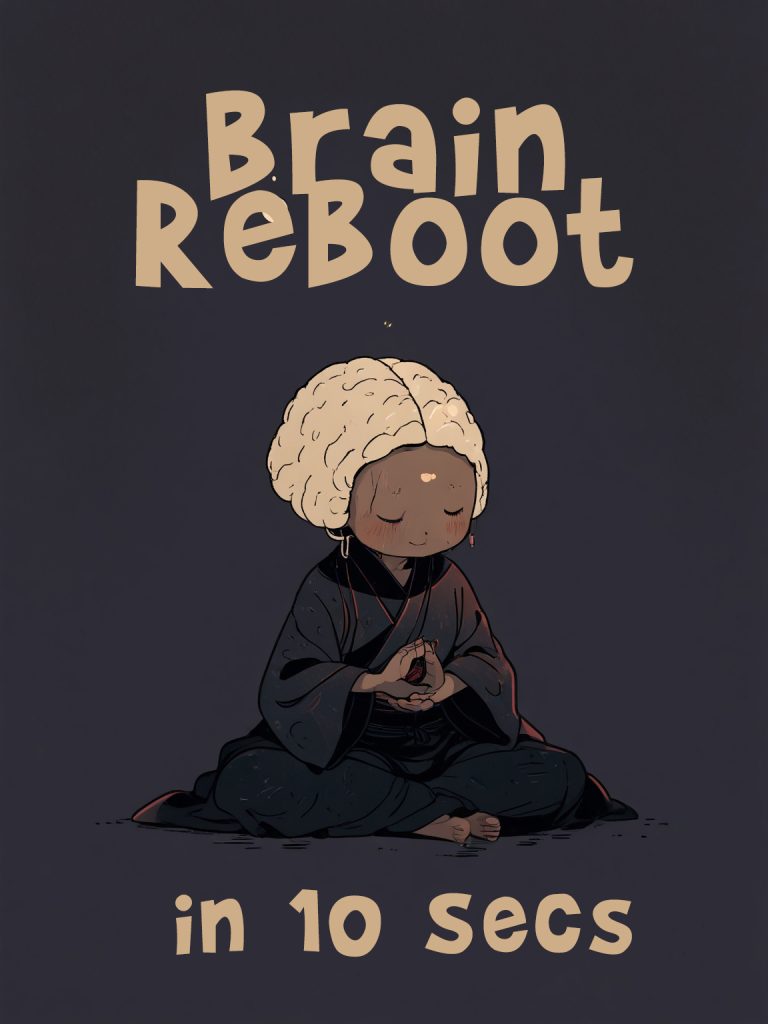
    Feeling Fried? Reboot your Brain in 10 Seconds Flat! โšก๏ธ

    0

    Feeling like your brain just short-circuited and your focus has flown the coop? Don’t worry, you’re not going cuckoo (or maybe you are, these hacks work wonders either way ). The truth is, we’ve all been there. But before you reach for that questionable energy drink (seriously, what’s even in that stuff?), there’s a better way. Get ready to unlock the secret weapon hiding in plain sight: your own brain! Yes, that amazing lump of gray matter can be a powerhouse of productivity…with a little help.

    TL;DR

    • Feeling overwhelmed? Take a 10-second breather with deep breaths, quick movements, sensory focus, or a mini-meditation.
    • These hacks can instantly improve focus and energy.
    • Long-term brainpower comes from exercise, healthy eating, and good sleep.
    Brain on Fire? Put it out with these 10-second brain hacks!

    Have you tried our 30-second Brain Reboot and feel that it is too long? Feeling like your brain just blue-screened? We’ve all been there. Maybe you’ve been staring at a spreadsheet for hours, or that creative spark has fizzled out faster than a damp firework. Don’t worry, my friend, because I’m here with your secret weapon: The 10-Second Brain Refresher!

    This isn’t some woo-woo magic trick (though, hey, if it works for you, go for it!). These techniques are scientifically proven to jolt your focus and get those neurons firing again. So ditch the sugary coffee and questionable energy drinks (looking at you, mysterious green concoction!), and let’s get recharged! Here are four simple hacks you can do in, you guessed it, 10 seconds! โฑ๏ธ

    Feeling Fried? Hit the refresh button on your brain in 10 seconds flat!

    1. Breathe Easy, Breathe Deep (10 seconds)

    Think of your brain like a wilting flower. It needs a good drink of oxygen to perk up! For the next 10 seconds, take a deep, slow inhale through your nose. Hold it for a second or two, letting that fresh air fill your lungs. Then, slowly exhale through your mouth, feeling all that tension melt away. Repeat if needed (because, let’s be honest, sometimes one breath just isn’t enough).

    • 0-4 seconds: Inhale deeply through your nose.
    • 5-6 seconds: Hold your breath.
    • 7-10 seconds: Exhale slowly through your mouth.

    2. Shake it Off (Taylor Swift Not Included, But Encouraged) (10 seconds)

    Feeling a little stiff? Your brain might be too! Get your blood pumping with some quick movements. Stand up, stretch your arms high, and imagine reaching for the stars (or that raise you deserve!). Do five quick jumping jacks or high knees, feeling that energy surge through your body. Finally, shake out your hands and legs like you just finished a victory dance. You’ve got this!

    • 0-2 seconds: Stand up and stretch your arms overhead.
    • 3-8 seconds: Do 5 jumping jacks or high knees.
    • 9-10 seconds: Shake out your hands and legs.
    Ditch the Coffee, Do Jumping Jacks! Unlock the secret to instant energy with these crazy-fast brain tricks.

    3. Feast for Your Senses (10 seconds)

    Our brains crave stimulation! For the next 10 seconds, pick an object in your environment and really focus on it. Is it a plant with delicate leaves? A funny coffee mug? Notice all the details โ€“ the color, texture, even the smell (if it’s not a stapler, that is). This simple act of mindfulness can ground you in the present moment and refocus your attention.

    • 0-5 seconds: Focus on an object around you and observe it in detail.
    • 6-10 seconds: Rub your hands together briskly to create warmth.

    4. Be Here Now (Not Nirvana, But Almost as Chill) (10 seconds)

    Sometimes, all you need is a mini meditation break. Close your eyes and take a deep breath in. For the next few seconds, simply focus on the feeling of that breath moving in and out of your body. Feel your chest rise and fall. This short mindfulness practice can instantly calm your mind and bring you back to center. โ€โ™€๏ธ

    • 0-2 seconds: Close your eyes and take a deep breath.
    • 3-10 seconds: Focus on the sensation of your breath entering and leaving your body.

    Beyond the 10 Seconds: Building Long-Term Brainpower

    These are just a few quick ways to give your brain a much-needed pick-me-up. The best part? They’re so easy, you can do them anywhere, anytime! Feeling overwhelmed at work? Take a 10-second breather. Stuck on a creative block? Do some jumping jacks! Your brain will thank you for it.

    Here are some unique and crazy insights:

    • Did you know that ancient yogis believed deep breaths could unlock mystical powers? Probably not, but it definitely improves oxygen flow! โšก
    • Recent studies suggest that jumping jacks might be more effective than a cup of coffee for a quick energy boost. Don’t ditch the coffee entirely though, science is still catching up on the deliciousness factor. โ˜•๏ธ
    • Feeling stressed? Studies have shown that focusing on a single object can be just as effective as counting sheep (and way more interesting!).
    • Here’s a secret: those 10 seconds of mindfulness might be like hitting the reset button on your brain’s supercomputer. Just imagine all those cluttered files getting organized!
    10 Seconds at a Time! Unleash your brain’s hidden potential with these quick and easy hacks.

    But what if you want to supercharge your brainpower and not just give it a quick jolt? There are plenty of things you can do to improve your cognitive function in the long term. Regular exercise is a great place to start. Physical activity increases blood flow to the brain, which can improve memory, focus, and overall cognitive function. Eating a healthy diet rich in fruits, vegetables, and whole grains is also essential for brain health. Don’t forget about sleep! When you’re well-rested, your brain can consolidate memories, process information more efficiently, and generate new ideas.

    So, there you have it! These 10-second brain hacks are like little sparks that can ignite a fire of focus and productivity. Remember, even the mightiest oak tree started as a tiny acorn. Now go forth and conquer your day, but just a friendly warning: with these newfound superpowers, you might just become dangerously awesome.

    Feeling Lost in Emotion Land? A Guide to Understanding Alexithymia (and Maybe Yourself)

    Have you ever felt as if your emotions were playing a game of charades that you were not invited to? Maybe you’re not broken; perhaps you’re just a master of disguise in the domain of feelings. Intrigued? Buckle up, because we’re about to go deep into the world of alexithymia, a disorder in which emotions feel more like alien languages than familiar companions.

    TL;DR

    • Difficulties identifying and describing emotions may indicate alexithymia.
    • Alexithymia can be diagnosed using self-assessment tools as well as expert evaluations.
    • Alexithymia may coexist with other mental health problems.
    • Reflecting on life experiences might help you gain an understanding of your emotions.
    • Keeping a journal and communicating with trusted friends might help you manage your emotions.
    • You can find aid with alexithymia through online resources and support groups.
    Looking in the emotional mirror? You might not be recognizing what you see.

    Hello, emotional enigma! Have you ever felt as if your emotions were a haze while everyone else spoke a hidden language of emotions? You might not be broken; you might simply have alexithymia. Don’t worry, that fancy phrase just indicates you have difficulty identifying and explaining your feelings.

    Now, before you self-diagnose and declare yourself a robot overlord (though that would be really great), let’s look at some indicators that may indicate alexithymia.

    Uh Oh, My Emotions Are MIA: Signs of Alexithymia

    • Ever feel like you’re watching a foreign film about your own life? You have difficulty recognizing your emotions, which causes you to be confused and frustrated. You’re familiar with frustrated feelings, correct?
    • Trying to articulate your emotions is like playing verbal charades while wearing a blindfold. You stumble for words, using “fine” or “stuff” when something obviously bothers you.
    • Your inner world is a bleak place. You may have a restricted imagination and prefer facts to magical fiction or movies that pull at your emotions. Science fiction with its logical reality may be more your style, but even gigantic space battles can elicit a shiver of thrill, right?
    • The world is your oyster, literally! You focus on exterior events and details, such as the weather. forecast or the latest gadget specs, while the internal world of feelings feels like a mystery. But hey, that laser focus on details can be a superpower in other ways!
    • Making friends feels like trying to decipher ancient hieroglyphics. You struggle to connect with others on an emotional level, leaving you feeling isolated. This can lead to misunderstandings, but it doesn’t have to be a permanent roadblock.
    You don’t have to navigate emotions alone. Reach out for support.

    Hold Up, Am I Actually an Emotionally-Challenged Robot?

    Do not panic! There are resources available to assist you in determining the situation. Self-assessment methods such as the Toronto Alexithymia Scale (TAS-20) and the Bermond-Vorst Alexithymia Questionnaire (BVAQ) can provide early information. Remember, these are simply starting points.

    Level Up Your Emotional Intelligence: Seeking Professional Help

    A mental health specialist, such as a psychologist or psychiatrist, can provide a more comprehensive evaluation. They may utilize standardized testing and talk therapy to diagnose alexithymia and other potential problems. Don’t forget that alexithymia can occasionally accompany other mental health issues such as sadness, anxiety, or even autism. If you are having other symptoms in addition to the alexithymia indicators, make sure to discuss them to the professional for a thorough evaluation.

    It’s Not Just You, It’s Your Story Too

    Think about your previous experiences. Did you grow up in a home where emotions were suppressed or unspoken? This could have a significant impact on how you perceive and express your emotions today. Perhaps you learnt to value rationality and practicality above emotional expression. Exploring your past can reveal why you react to emotions the way you do.

    Feeling the lightbulb moment? Understanding alexithymia can be a turning point.

    Alexithymia in the Spotlight: New Research and Resources

    The field of alexithymia is constantly expanding, with fresh research shedding insight on the illness. Here are some recent developments that demonstrate the increased interest in alexithymia:

    • A 2021 study published in Frontiers in Psychology discovered that people with alexithymia had a negative bias toward past and current occurrences. This shows that alexithymia may influence not only emotional awareness, but also how we view our experiences [1]
    • Alexithymia and Physical Health: A 2020 study published in BMC Gastroenterology looked into the link between alexithymia and inflammatory bowel disease (IBD). The study discovered a considerably greater rate of alexithymia in IBD patients compared to the control group [2]. This demonstrates the probable link between alexithymia and a variety of health issues.

    Empowering Resources for Your Emotional Journey

    The good news is that there are more resources available to help you understand and manage alexithymia. Here’s a quick list to help you get started:

    • The Alexithymia Society: This international organization offers a plethora of information on alexithymia, including resources for both individuals and professionals [3].
    • Online Support Groups: Several online communities provide a secure environment in which to connect with others who understand alexithymia. Here are a few to investigate:
      • Alexithymia Survivors Group on Facebook
      • The r/Alexithymia subreddit on Reddit

    These resources can provide valuable support and connection as you navigate your emotional landscape.

    References:

    Breathe, reflect, and reconnect with your emotional world.

    Okay, So Now What?

    Here’s where the real adventure begins!

    • Become an Emotional Detective: Keep a journal of your emotions and how you express them. Take note of any bodily sensations or body language that may provide insights about your emotional condition. For example, a tightened jaw could indicate rage, whereas sweaty palms could indicate nervousness.
    • Ask Your Crew: Speak with trusted friends or relatives. They may notice trends in your emotional reactions that you miss. Perhaps they will point out a period when you appeared frustrated without realizing it.
    • Take a (Free!) Online Quiz: There are online versions of the TAS-20 and other exams that can provide preliminary information.

    Are you ready to become a translator in your own emotional world? Don’t be scared to breach the emotional code and discover a universe of sensations that may surprise you. In some sci-fi stories, even machines experience feelings. Hey, maybe a little emotional intelligence is the secret superpower you’ve been looking for.

    Are You a “Klutz” or Could It Be Dyspraxia?

    Have you ever lost your keys permanently or stumbled over a prickly obstacle? It’s possible that you’ve been called the “clumsy one” among your friends. But what if the tale is not over yet? Taking a deep dive (hopefully not too deep) into the realm of dyspraxia today, a disorder that may help to explain why some of us look like infant elephants in a china shop.

    TL;DR

    • Dyspraxia is a motor coordination disorder that is commonly mistaken for dyslexia or ADHD.
    • Poor balance and coordination, difficulties with planning and organizing, and difficulties with fine and gross motor skills are all indicators of dyspraxia.
    • Although occupational therapy and other supports can greatly enhance daily living skills, there is currently no treatment for dyspraxia.
    • When provided with empathy and assistance, people with dyspraxia can have happy, productive lives.

    Are You a “Klutz” or Could It Be Dyspraxia? Understanding the Clumsy Elephant in the Room

    Hi there, let’s discuss dyspraxia! It is a disorder that impairs motor coordination and is occasionally mistaken for disorders such as dyslexia or ADHD. Although there are certain parallels, dyspraxia is distinct.

    Picture yourself in this situation: you have trouble tying your shoelaces, you find writing awkward, and you run into things every day. That’s the potential nature of dyspraxia. Each person is affected differently, including effects on balance, motor abilities, and spatial awareness.

    What are the Signs of Dyspraxia?

    There’s no single test for Dyspraxia, but some common signs include:

    • Fine motor skill impairment: This can show up as problems writing, sketching, using cutlery, or pressing buttons.
    • Difficulties with gross motor skills: Things like going downstairs, riding a bike, and catching a ball can be challenging.
    • Inadequate balance and coordination: You may frequently trip over objects, find it difficult to judge distances, or find it difficult to perform tasks requiring hand-eye coordination.
    • Planning and organizing work might be difficult for those with dyspraxia because they have trouble breaking down difficult tasks into manageable parts.
    • Issues with speech or difficulty finding the appropriate words: Speech could be slurred or slow, and it might be difficult to find the correct words to convey your ideas.

    Managing Dyspraxia: Setbacks and Achievements

    Having dyspraxia as a child can be frustrating. Even seemingly simple things might seem burdensome to others. Peer or even family criticism that is uninformed about the disease can exacerbate feelings of frustration. But it’s crucial to keep in mind that you’re not by yourself. Many dyspraxics are successful!

    Distinguished Dyspraxics

    Celebrities who have openly discussed their experiences with dyspraxia include Natalie Portman (Black Swan) and Daniel Radcliffe (Harry Potter series). Their experiences serve as a reminder that having dyspraxia does not prevent you from accomplishing amazing things.

    What Should You Do If You Suspect Dyspraxia?

    See a medical professional if you think you or someone you know may have dyspraxia. They are able to evaluate your symptoms and offer advice. Dyspraxia cannot be cured, however treatments like occupational therapy can greatly enhance daily living abilities and coordination. Occupational therapists can offer assistance in creating task-management plans and also suggest assistive technology to improve everyday living.

    Current Aspects of Dyspraxia Awareness and Research

    Examples of recent advancements in the study and awareness of dyspraxia include the following:

    • Enhanced Awareness: In 2020, a clinical practice recommendation from the American Academy of Pediatrics (AAP) recognized dyspraxia as a separate illness from other developmental coordination disorders (DCD). Identifying this issue is a big step toward better diagnosing and helping kids with dyspraxia. American Academy of Pediatrics Clinical Practice Guideline: Developmental Coordination Disorder (DCD) The results of this study could have significant implications for individuals with dyspraxia.
    • Genetic Links: A study conducted in 2021 and published in the journal Nature Neuroscience revealed a particular genetic variation linked to dyspraxia. The findings of this study may facilitate the creation of tailored therapies as well as earlier diagnosis. Large-scale GWAS finds genetic variations linked to developmental coordination problem.
    • Assistive Technology: New tools are being developed to support individuals with dyspraxia thanks to advancements in assistive technology. For instance, voice-activated devices can help with tasks like setting reminders or controlling smart home devices. Additionally, specially designed keyboards and other ergonomic tools can improve fine motor skills and make daily activities easier.

    List of Helpful Resources from the Article:

    The following resources can provide valuable information and support for people with Dyspraxia and their loved ones:

    • National Center for Learning Disabilities (NCLD): https://ncld.org/ – The NCLD offers a wealth of information on Dyspraxia, including resources for parents, educators, and individuals with the condition.
    • Learning Disabilities Association of America (LDA): https://ldaamerica.org/ – The LDA provides information, advocacy, and support for people with all types of learning disabilities, including Dyspraxia.
    • Dyspraxia Foundation: https://dyspraxiafoundation.org.uk/ – This UK-based organization provides information and support specifically for people with Dyspraxia.

    These resources can be a valuable starting point for anyone seeking to learn more about Dyspraxia or find support. If you have any questions about dyspraxia, please leave a comment below. Let us increase awareness and build a more inclusive atmosphere for all!

    Empowering Others with Dyspraxia

    Living with Dyspraxia can be difficult, but there are methods to cope and succeed. Here are a few tips:

    • Find a supporting community. Connecting with individuals who understand Dyspraxia can provide valuable support and advice. Online forums and support groups can be a useful resource.
    • Accept your strengths: Dyspraxia can result in some surprising strengths. People with Dyspraxia may be extremely creative or have a strong visual memory.
    • Be your own advocate: Don’t be scared to speak up for yourself and explain your situation. In school settings, you may be eligible for adjustments such as extra time on tests or modified tasks.
    • Celebrate your accomplishments: No matter how tiny, acknowledge your progress. Celebrate your successes and reflect on how far you’ve come.

    You may manage Dyspraxia and live a full life by following these recommendations and seeking support from loved ones and specialists.

    So, the next time you come across someone (physically or figuratively), remember that a little understanding can go a long way. After all, even the most elegant dancer began with two left feet (or maybe Dyspraxia was just winking at us all along).