

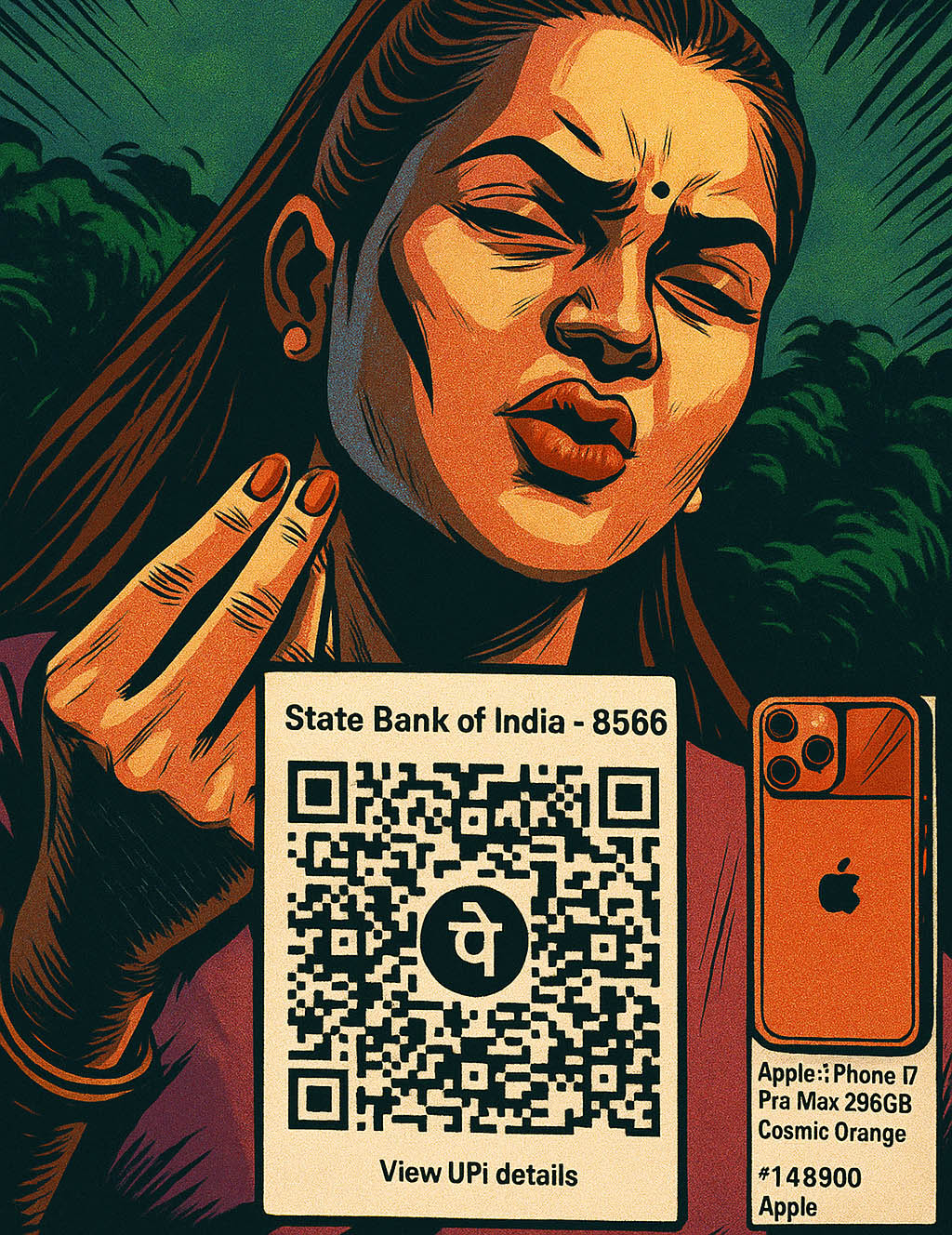

A short video from influencer Mahi Singh went viral after she asked followers to help her buy the newly launched iPhone 17 Pro Max. Her pitch was simple: if each follower donates ₹1 or ₹2, together they could cover the phone’s price — roughly ₹149,000. The clip has since pulled tens of thousands of views and a storm of reactions.
TL;DR
- The Ask: Influencer Mahi Singh requested ₹1 – ₹2 donations from her followers to crowdfund the newly launched, expensive iPhone 17 Pro Max (₹149,000).
- The Conflict: She made the request despite having been gifted an iPhone 16 just three months prior, leading to widespread backlash and accusations of entitlement.
- Scale Lesson: The incident is a viral lesson in scale, showing how tiny micro-donations can fund a luxury item when multiplied across a large follower count.
- Optics Fail: Asking for luxury funding, rather than for a meaningful cause, drew swift public scorn, blurring the line between genuine community support and exploitation.
- Core Tension: The incident highlights the struggle between creators monetizing attention and followers expecting value/stories, not shopping lists.
She said her father had already gifted her an iPhone 16 three months ago. Still, she wanted the new model for her birthday on October 21. In the video she smiled and said, “If each of you donates 1 or 4 rupees, I can buy this phone. I thank you all for making my dream come true.”
As the post spread, many netizens called her spoiled and entitled. Others poked holes in the logic: isn’t asking random followers to fund a luxury item a little… much? Meanwhile, some viewers pointed out how tiny micro-donations add up when you have a big follower count.
It’s not clear how much she actually got from the appeal. The video has stirred debate more than donations — at least publicly.
First, the ask was bold. Asking strangers to fund a luxury purchase flips the usual influencer script. Typically, followers expect content, giveaways, or exclusive access — not being told to pay for the creator’s gadgets.
Second, the idea of micro-donations is powerful. One rupee sounds harmless. Yet multiplied across millions of followers, that “harmless” rupee can pay for a luxury phone and then some. That’s a lesson in scale: small amounts become big when they reach the right audience.
Third, there’s optics. Most people sympathize with creators who ask for help for meaningful causes — medical bills, disaster relief, charity. Asking for a shiny new phone? That tends to draw scorn. Social media users often demand authenticity and value. When a creator’s ask appears frivolous, the backlash is swift.
Influencers live in a strange mix of personal branding and public expectation. Followers want access to a curated life, but they also expect boundaries and contribution-worthy content. This incident highlights a tension:
- Creators monetize attention.
- Followers want stories, not shopping lists.
- When the line blurs, trust drops — fast.
Also, social proof matters. An influencer’s perceived worth is shaped by engagement and reputation. If you constantly ask followers to bankroll lifestyle upgrades, you risk looking transactional rather than inspirational.
My take
Look, I get wanting the latest phone. The colors are probably gorgeous. But asking strangers to fund personal luxury crosses a social line. There’s a difference between crowdfunding for real need and crowdsourcing for wants. The former builds community. The latter can feel like exploitation.
That said, it’s also a teachable moment about how small amounts scale. If you have a million followers, even tiny asks become real money. So creators should use that power wisely. Ask for support when it matters. Offer value or reciprocity. Or at least be upfront about why the purchase benefits your audience — not just your selfie game.
Finally, followers should be choosy. Support creators whose content improves your life in some way: entertainment, education, community. If a request doesn’t sit right, scroll on.