

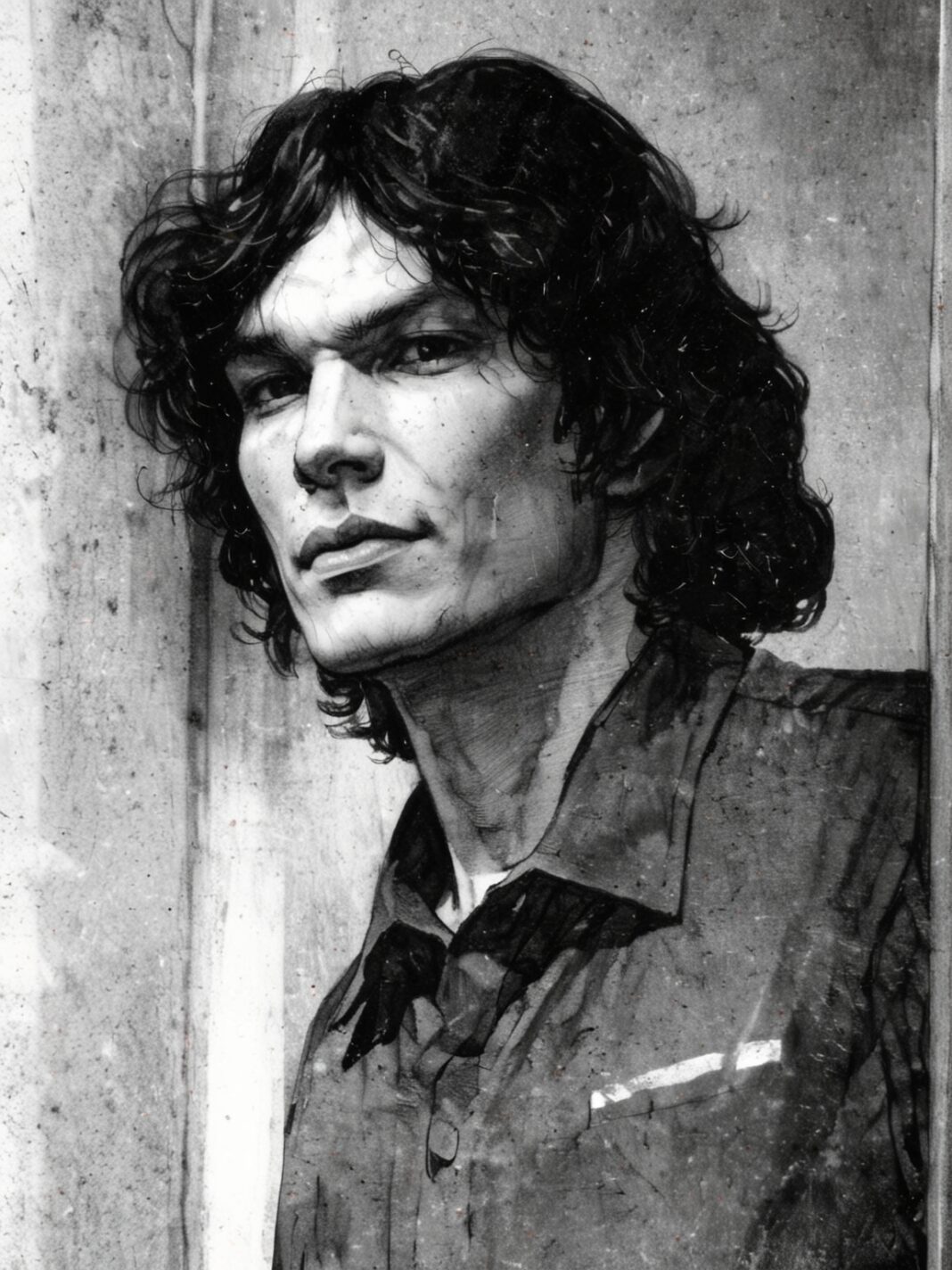

On a damp summer evening in 1985, a shadow slipped through the backyards of Southern California. Lights flickered off. Doors clicked locked. And yet someone—or something—remained inside. Over the next thirteen months, neighborhoods trembled under an unseen terror. Locking your doors became the least of your worries. This wasn’t your run-of-the-mill burglar. This was Richard Ramirez: the Night Stalker.
In this write-up, we’ll chronicle Ramirez’s chilling descent from disturbed youth to infamous serial predator.
TL;DR
- Richard Ramirez experienced a troubled childhood marked by abuse and exposure to violence.
- His teenage years involved drug use and escalating criminal activity.
- Moving to California, his crimes escalated from theft to brutal sexual assaults and murders.
- Distinctive clues like fingerprints and rare shoe prints were crucial to the investigation.
- Public recognition led to his capture by vigilant citizens.
- His trial was a media sensation, resulting in a guilty verdict.
- Ramirez’s case raises questions about trauma, evil, and society’s fascination with true crime.
Early Life: Seeds of Violence and Trauma
Ricardo Leyva Muñoz Ramirez—or just “Ramirez” to those who feared him—didn’t start out as a menacing figure stalking Los Angeles. Born on February 29, 1960, in El Paso, Texas, his childhood exposed him to two critical influences.
First was an abusive father whose fits of rage echoed through the Ramirez home. Second was Ramirez’s older cousin, Miguel, who returned from Vietnam with Polaroid snapshots of mutilated bodies and women in unspeakable distress. For a twelve-year-old Ricardo, these grisly photos became an unsettling guidebook to human suffering.
By age thirteen, Ramirez had endured enough trauma to warp any developing psyche. Yet this twisted fascination would later fuel the Night Stalker’s brutality.
Adolescence: Crime, Drugs, and Dropping Out
As Ramirez navigated his teenage years, horror followed him like a persistent shadow. He experimented with hallucinogens—LSD, angel dust—and petty crime became his thrill. Shoplifting turned into car theft. Car theft morphed into joyriding with loaded guns.
Why it matters: Early brushes with law enforcement can sometimes snap a troubled youth back on track. Not Ramirez. Instead, he doubled down. After dropping out of high school in 1978, he tangled with local authorities more than once—for burglary, auto theft, even assault.
| Detail | Information |
|---|---|
| Full Name | Ricardo Leyva Muñoz Ramirez |
| Alias | The Night Stalker |
| Date of Birth | February 29, 1960 |
| Place of Birth | El Paso, Texas, USA |
| Crimes Committed | Murder, attempted murder, sexual assault, burglary |
| Victims | 13+ murders, 5+ attempted murders, 11+ sexual assaults |
| Active Years | 1984 – 1985 |
| Signature Modus Operandi | Nighttime home invasions, use of weapons, satanic symbols |
| Apprehended | August 31, 1985 |
| Trial Outcome | Convicted on 43 charges; sentenced to death |
| Death | June 7, 2013 (from complications related to B-cell lymphoma) |
| Known For | Extreme brutality, satanic references, lack of remorse |
| Cultural Impact | Inspired books, documentaries, and the Netflix series Night Stalker |
The Move to California: From Petty Thief to Cold-Blooded Predator
San Francisco Stint
In 1983, Ramirez packed his bags for San Francisco. He sought anonymity but found decline. Abandoning personal hygiene and subsisting on junk food and soda, he drifted through SRO hotels in crime-ridden neighborhoods like the Tenderloin. Visits to remote rooms at night taught him that vulnerability existed everywhere.
With each theft, his confidence grew. Yet so did his appetite for cruelty.
From snatching wallets to snatching lives.
The First Kill
On April 10, 1984, Ramirez’s shackled innocence shattered. A nine-year-old girl searching for her lost dollar wandered into his room in the Geneva Hotel. He offered help. She followed. Darkness swallowed her screams. He brutalized her, leaving behind Polaroids—souvenirs of his crime.
Los Angeles Rampage: A Serial Killer Easel
After a brief lull, Ramirez resurfaced in Los Angeles. From June 1984 to August 1985, he penned a morbid gallery of crime scenes:
- Victim #2: A 79-year-old widow in Granada Hills, sexually assaulted and stabbed to death. Ramirez took her money and jewelry.
- Victim #3 & #4: A murderer’s duet in a South LA garage. First the homeowner, then his roommate fell to Ramirez’s bullets.
- Victim #5: A woman attacked in a parked car at East LA’s Montebello Park. He shot, stabbed, and mutilated.
- Victims #6 & #7: A married couple in Cypress Park. Ramirez shot the husband, stabbed the wife, then carved occult symbols into their bedroom wall.
Behind the Scenes: The killer’s trademark—Pentagram scrawls and inverted crosses—implied a dark spiritual fixation. This earned him not just terror but a morbid reputation in tabloids.
Investigation: Clues, CSI, and Shoe Prints
As victims piled up, LAPD detectives faced a labyrinth of leads. They cataloged:
- Fingerprints: Lifted from a stolen car—finally a match.
- Footprints: A rare pair of Avia sneakers, model number X90, size 8. Only one pair sold in LA in that range.
- Polaroids: Seized from Ramirez’s San Francisco hideouts.
Forensic Turning Point: Those Avias. Uncovered at multiple crime scenes, they provided a unique identifier. In May 1985, SF Police Chief Dianne Feinstein revealed these prints at a press conference, unveiling a composite sketch that brought the nightmare into sharper focus.
Flight and Capture: When the Net Closed In
Under pressure, Ramirez fled south—but the shadows trailed him. He torched his shoes into the San Francisco Bay from the Golden Gate Bridge. Yet, sneakers or no sneakers, fingerprints endure.
Final Crimes and Mistakes
Back in LA, Ramirez botched a break-in. A bullet grazed a woman who survived and identified him. His stolen Chevrolet Town Car, abandoned nearby, held a full palm print. Authorities seized it and ran it through the system. Ramirez’s juvenile arrest for auto theft in Texas provided the match.
D-Day: August 31, 1985. Richard Ramirez’s mugshot hit the newsstands. Bystanders recognized his face at a gas station. Citizens tackled him as he tried hijacking a car. Beaten and bloodied, he was handed to LAPD.
Trial and Conviction: A Nation on Edge
The trial of Richard Ramirez in State of California v. Ramirez was a spectacle:
- Length: 156 hearing days.
- Media Circus: Newspapers splashed grisly Polaroids.
- Jury Intimidation: Ramirez smirked confidently, wore pentagram necklaces, and flashed the “victory” gesture from the defense table.
Verdict: Eighty-one charges, including thirteen counts of murder, five counts of attempted murder, eleven counts of sexual assault, and fourteen counts of burglary. The jury deliberated for just four hours before returning a guilty verdict on all counts.
Sentence: Death by gas chamber—a sentence never carried out in California before Ramirez’s appeal drags on for years.
Aftermath and Legacy: The Ongoing Horror
Living and breathing in a small death row cell, Ramirez gained an eerie following. Admirers—mostly women—flooded him with fan mail. One even visited, and he married his groupie in 1996. From behind bars, he gave interviews and reveled in the infamy.
Reflection: How does a society process such darkness? Ramirez’s case inspired TV documentaries, true crime podcasts, and academic papers exploring the minds of serial predators
New Insights: Beyond the Headlines
- Trauma Loop Hypothesis: Ramirez’s cousin’s war souvenirs could have catalyzed a cycle of dehumanization. Viewing human suffering as entertainment might have eroded Ramirez’s empathy over time.
- Occult Fascination: The pentagrams and inverted crosses might not indicate true satanism but rather an identity performance. He weaponized religious imagery to amplify fear.
- Media Amplification: Tabloid sensationalism likely fueled Ramirez’s ego. By flaunting his crimes, he fed public fascination—a feedback loop between killer and press.
- Community Vigilance: His capture showed the power of civilian action. In an era before cellphones, bystanders played a crucial role in halting his spree.
My Point of View
Let’s get personal for a moment. It’s easy to demonize Ramirez, to chalk him up as pure evil. But that black-and-white view neglects the complexity of human nature.
- Nature vs. Nurture: Ramirez’s violent upbringing and early drug use likely primed his mind for atrocity. However, countless others endure trauma without ever picking up a weapon.
- The Victims’ Stories: We often fixate on the killer, yet each victim had dreams, families, and futures stolen. Remembering them restores some dignity stolen by Ramirez.
- Cultural Reflection: Our obsession with true crime raises ethical questions. Are we learning lessons, or are we too enthralled by darkness, risking desensitization?
In the end, Ramirez’s reign of terror reminds us that evil isn’t always born—it can be made. And it’s on society to break that cycle.
Conclusion
Richard Ramirez, the Night Stalker, left an indelible mark on California’s history. His crimes redefined law enforcement tactics, media coverage standards, and public consciousness around serial violence. Yet, beyond the gore and the headlines, his story offers crucial lessons about trauma, community, and the human psyche.
Stay vigilant. Cherish your loved ones. And never underestimate the power of unity in the face of darkness.
For further reading, explore documentaries like “Night Stalker: The Hunt for a Serial Killer” and academic works on criminal psychology. And above all, let the victims’ memories guide our efforts to build safer communities.