

More
    Home Blog Page 63

    Hunter Biden’s Pardon: A Father’s Love or Fraud?

    0

    When President Joe Biden pardoned his son Hunter Biden over Thanksgiving weekend, it was as if the political world was handed a double-shot espresso—hot, intense, and bound to spark debate. The decision to wipe away Hunter’s convictions on tax and gun charges shocked many, not least because Biden had earlier stated he wouldn’t grant such a reprieve. What changed? Was it love, politics, or a desperate attempt to shield his family from the relentless fire of public scrutiny? Let’s unpack this.

    TL;DR

    • President Joe Biden pardoned his son, Hunter Biden, for tax and gun charges.
    • The pardon covers offenses dating back to 2014, including his involvement with Burisma.
    • Republicans and some Democrats criticized the move as politically motivated.
    • Hunter Biden admitted mistakes but vowed to use his second chance to help others.
    • The pardon raises concerns about fairness and how justice is influenced by family ties.
    • Critics say the move undermines the Biden administration’s stance on an impartial justice system.
    • The pardon has fueled ongoing political debates about presidential authority.

    A Thanksgiving Surprise

    Imagine this: It’s Thanksgiving weekend in Nantucket. Amid turkey leftovers and family strolls, President Biden decided to pardon his son. Hunter, facing sentencing for charges in Delaware and California, had been staring down the barrel of some lengthy prison terms. With a signature stroke of the pen, those consequences vanished.

    Biden defended his decision passionately, stating, “Hunter has been treated differently by the Justice Department, singled out only because he is my son—and that is wrong.” As a father, one might empathize. As a president? Well, the jury’s still out—figuratively, of course.

    The Pardon’s Reach

    This wasn’t just any pardon; it was sweeping. It covered Hunter’s offenses dating back to 2014, when his controversial stint with Burisma Holdings, a Ukrainian energy company, began. Naturally, this adds fuel to the Republican fire, with cries of favoritism echoing across the Capitol.

    Hunter Biden Charges

    Charge TypeDetailsStatus
    Tax EvasionFailed to pay taxes and claimed false deductions, including escorts and luxury expenses.Pardoned
    Gun ChargeLied on a federal form about drug use while purchasing a firearm in 2018.Pardoned
    Burisma InvolvementAllegations of unethical conduct while serving on the board of the Ukrainian gas company Burisma.No charges filed
    Plea Agreement CollapseA plea deal in 2023 fell apart over immunity disagreements between defense and prosecutors.Resolved via pardon

    The White House, meanwhile, has spun the narrative differently. According to Press Secretary Karine Jean-Pierre, the pardon stemmed from fears that Hunter’s legal troubles would become an endless saga of Republican revenge, dragging on long after Biden leaves office. “It didn’t seem like they would move on,” she said. A fair concern? Maybe. A convenient excuse? Possibly.

    The Political Fallout

    Predictably, the backlash was swift. Republican Representative James Comer accused the Bidens of evading accountability, while even some Democrats raised eyebrows. Colorado Governor Jared Polis criticized the move, calling it a “bad precedent.” Rep. Greg Stanton wasn’t thrilled either, stating, “Hunter committed felonies. This wasn’t a politically motivated prosecution.”

    And let’s not forget former President Donald Trump, who gleefully seized the opportunity to call the pardon “an abuse and miscarriage of justice.” Ironic, considering Trump’s own history of controversial pardons—remember Steve Bannon, Roger Stone, and Michael Flynn? Ah, the sweet aroma of political hypocrisy.

    Hunter’s Side of the Story

    Hunter Biden has been a lightning rod for controversy. His struggles with addiction, extravagant spending, and dubious deductions (escorts as business expenses? Really?) have been tabloid fodder for years. Yet, he’s also a man who claims to have turned his life around.

    “I’ve admitted and taken responsibility for my mistakes during the darkest days of my addiction,” Hunter said after the pardon. He vowed to use his second chance to help others battling similar demons. Whether you see him as a victim of political persecution or the architect of his downfall, his story remains complex—and polarizing.

    A Non-Political Take

    Let’s pause for a moment. The optics of this pardon are, well, messy. On one hand, it’s a father standing by his son, a narrative as old as time and as relatable as your family’s Thanksgiving drama. On the other, it’s a president making a move that reeks of privilege and undermines the justice system he vowed to protect.

    Would an ordinary American receive such clemency? Highly doubtful. The message this sends is troubling: If you’re powerful enough, the rules don’t apply. And while Biden might hope the pardon draws a line under Hunter’s legal troubles, it has instead opened Pandora’s box of political consequences.

    “The pardon feels like a father’s desperate attempt to shield his child from a harsh world, but it also sets a dangerous precedent. If this were anyone else, would they receive such mercy? Probably not. As much as I understand the love of a parent, this decision raises questions about fairness and equality under the law. Are we supposed to just accept this as normal? It leaves a bitter taste, no matter which side of the aisle you’re on.” – Clara Reynolds, 34, Denver, Colorado

    My Perspective

    Let me offer this: Biden’s decision was equal parts heart and headache. It was a father’s instinct to protect his child colliding with the cold, hard reality of presidential responsibility. Could he have handled it differently? Absolutely. A public acknowledgment of Hunter’s mistakes paired with a refusal to interfere might have preserved his integrity. Instead, he’s left grappling with accusations of nepotism.

    But let’s also consider the bigger picture. Is Hunter Biden the first to benefit from family ties? Hardly. Politics has always been a family affair—look no further than the Kennedys, the Bushes, or, yes, the Trumps. The difference here is the blatant transparency of it all, leaving voters to decide whether this was an act of compassion or corruption.

    The Road Ahead

    This saga isn’t over. Republicans will milk this for every political advantage, while Democrats will scramble to manage the fallout. As for Hunter, his pledge to dedicate his life to helping others is commendable—but actions speak louder than words.

    In the end, the Hunter Biden pardon will go down as one of the more controversial moments of Joe Biden’s presidency. It’s a reminder that even the highest office in the land doesn’t shield you from family drama—or the consequences of your decisions.

    New Defense Against Porch Pirates: Insurance

    Package thieves, the scourge of modern shopping, have turned our front porches into crime scenes. As the holiday season approaches, fear grips our hearts, not for mistletoe, but for missing mail. But fear not, for a new defense has emerged: insurance.

    Yes, you read that right. Insurance. Not a guard dog, not a high-tech security system, but a simple policy. It’s like a shield for your shipments, a safety net for your stuff.

    TL;DR

    1. Know the Risk: Understand the prevalence of porch theft in your area.
    2. Consider Your Needs: Evaluate the value of your deliveries and your risk tolerance.
    3. Explore Your Options: Research different insurance providers and their coverage options.
    4. Take Preventive Measures: Use security cameras, delivery lockers, or signature required delivery options.
    5. Be Vigilant: Track your deliveries and be alert for suspicious activity.

    Online shopping has transformed how we buy just about everything—from groceries to gifts. It’s fast, it’s convenient, and let’s face it, it’s addictive. But lurking at the doorstep is a modern menace: porch pirates. These brazen thieves swipe packages faster than you can say “Amazon Prime.” And as we gear up for the holiday shopping season, the problem is only getting worse.

    According to a study by ValuePenguin, nearly half of all online shoppers will face at least one stolen delivery this holiday season. Yes, you read that right: half! So, what’s a savvy shopper to do? Let’s dive into the growing market of anti-theft solutions and explore whether insuring your packages is worth it.

    High-Tech Solutions vs. Old-School Woes

    Americans are opening their wallets wide to outsmart these petty thieves. From $400 lockboxes to self-service locker rentals, there’s no shortage of high-tech gadgets. Doorbell cameras have become a must-have for homeowners. (Bonus: You’ll finally know which neighbor keeps borrowing your garden hose.)

    But here’s the kicker: none of these gadgets are foolproof. Porch pirates don’t care if they’re starring in your grainy Ring footage. They’ll still snatch and dash.

    For the budget-conscious, there are simpler options:

    • Be home for deliveries. Sure, easy if you’re glued to your couch 24/7.
    • Pick up in-store. Practical, but who wants to brave crowded parking lots?
    • Have packages sent to your workplace. Just hope your boss doesn’t start asking what’s inside all those boxes.

    Enter PorchPals: The Insurance for Your Deliveries

    Enter PorchPals, a subscription-based service aimed at solving the package theft epidemic. For $120 a year, PorchPals will reimburse you for up to $2,000 worth of stolen deliveries (or three claims annually). The concept is simple: link your credit or debit card, and any delivery paid for with that card—yes, even your DoorDash order—is covered.

    Sounds like a dream, right? No deductible, no hassle, and claims paid out within 72 hours. PorchPals originally launched in California, but as of this week, it’s available nationwide.

    The Fine Print

    Here’s where things get tricky. Insurance expert Divya Sangameshwar from ValuePenguin points out a glaring flaw: the three-claims-per-year limit. Porch pirates are nothing if not repeat offenders. If you’re in a high-risk area, three claims might barely scratch the surface. In fact, 25% of victims report having three or more packages stolen in a single year. Ouch.

    And then there’s the price tag. Is $120 a year worth it? Let’s crunch some numbers:

    • If you lose an $800 smartphone to thieves, the math checks out.
    • But if you’re insuring $20 socks from Target, maybe not so much.

    Why Retailers and Credit Cards Aren’t Your Safety Net

    Many shoppers assume that retailers or credit card companies will swoop in to save the day. Think again.

    Retailers like Amazon might replace stolen items as a goodwill gesture, but they’re not obligated to. Shipping insurance typically ends the moment your package lands on your doorstep. And standard credit-card purchase protections? Most don’t cover items left “unreasonably safeguarded”—translation: anything sitting on your porch.

    The Cost of Living With Porch Pirates

    The rise of package theft isn’t just an inconvenience. For some, it’s altering their lifestyle—and their rent. Jeniffer Thomas, a 31-year-old dancer in New York City, moved to a doorman building after her old apartment became a hot spot for porch pirates. Her new place costs hundreds more each month, but the peace of mind? Priceless.

    Capital One Shopping Research estimates that nearly half of consumers have invested in home security systems to monitor deliveries. On average, these systems cost $143.45. But even the fanciest cameras can’t physically stop a thief.

    Is Porch Insurance the Right Fit?

    PorchPals might not be for everyone, but it’s a clever option for certain scenarios. Are you someone who…

    • Frequently orders high-value items like electronics?
    • Lives in an area notorious for package theft?
    • Prefers peace of mind over playing detective with blurry surveillance footage?

    Then yes, it might be worth considering. But if you’re more of a “get my books and socks online” kind of shopper, free or low-cost strategies could suffice.

    My Take: Should We All Be Insured?

    Personally, I see PorchPals as a Band-Aid for a bigger societal problem. Why are we living in a world where stealing from neighbors feels like a casual pastime? Maybe it’s time for communities to rally together and, dare I say it, look out for each other? Neighborhood watch, anyone?

    But while we’re dreaming of a utopia where porch pirates don’t exist, PorchPals offers a practical, albeit limited, safety net. Just don’t rely on it as your only line of defense. And hey, maybe start sending your most precious packages to Aunt Carol’s house. She’s retired, she’s home all day, and she’ll probably bake you cookies when you come to pick them up.

    Final Thoughts

    Package theft is more than an inconvenience; it’s a wake-up call. Whether you choose high-tech gadgets, a doorman apartment, or a subscription service like PorchPals, the goal is the same: protect what’s yours. But as we navigate this porch pirate era, let’s not forget the power of community and good old-fashioned vigilance. Because sometimes, the best solutions aren’t the most expensive—they’re the simplest.

    Intermittent Fasting for Longevity? Not So Fast

    0

    Intermittent fasting – the latest fad diet promising a longer, healthier life. But is it all it’s cracked up to be, or is it just a fast-paced trend that’s slowing down our progress towards true wellness?

    On the one hand, studies suggest that intermittent fasting might help with weight loss, improve insulin sensitivity, and even boost brain function. It’s like hitting the reset button on your body, giving it a chance to repair and rejuvenate.  

    On the other hand, some experts warn that fasting can lead to muscle loss, nutrient deficiencies, and negative impacts on mental health. It’s like trying to speed up a car by taking your foot off the gas pedal – it might work for a while, but eventually, you’ll run out of steam.  

    TL;DR

    • Intermittent fasting can lead to weight loss, but it’s not a guaranteed solution.
    • It may negatively impact muscle mass and mental health.
    • The quality of your diet is more important than the timing of your meals.
    • Consult with a healthcare professional before starting any new diet or lifestyle change.

    If you’ve ever scrolled through health and wellness hashtags, you’ve likely encountered the hype around intermittent fasting (IF). Touted as the ultimate hack for weight loss, longevity, and even reversing aging, this diet trend captured imaginations worldwide. But before you skip another meal in the name of self-improvement, let’s dive into what the science actually says—and spoiler alert: it’s not all sunshine and six-pack abs.

    What Is Intermittent Fasting, Anyway?

    Intermittent fasting is essentially a fancy term for skipping meals. The most popular form, time-restricted eating, involves limiting your food intake to a specific window each day. For example, eating all your meals between noon and 8 p.m. and fasting the rest of the time. Sounds easy enough, right?

    The allure lies in early animal studies, which hinted at benefits like reduced heart disease risk, cancer prevention, and even a longer life. But humans, being the complicated creatures we are, haven’t exactly seen the same level of success.

    Weight Loss: The Good, the Bad, and the “Meh”

    Yes, intermittent fasting can help you lose weight—but don’t expect miracles. Studies show time-restricted eaters consume 200 to 500 fewer calories daily, leading to modest weight loss of 1% to 8% over time.

    A six-month clinical trial found fasters lost about 8% of their body weight. However, aside from minor improvements in glucose processing, there were no dramatic changes in inflammation levels or longevity markers. Translation? Your body might get slimmer, but it won’t necessarily get healthier.

    And here’s the kicker: some fasters struggle to maintain muscle. In one study, intermittent fasters lost twice as much lean mass (think muscle, not fat) compared to their non-fasting counterparts. For those trying to keep their gains at the gym, this is bad news.

    When the Clock Doesn’t Fix the Plate

    Nutrition experts agree on one major point: what you eat matters more than when. You can’t out-fast a poor diet. Gobbling down a plate of fries and burgers in your eating window won’t magically transform your health.

    Some fasters even find themselves raiding the fridge with ravenous hunger when their fasting period ends. The result? Overeating snacks and undoing any caloric deficit.

    So, while IF might help you eat less, it’s not a free pass to ignore balanced meals or nutritional needs.

    Fasting for Longevity? Not So Fast

    The dream of extending your life through fasting took a hit when researchers couldn’t replicate the glowing animal results in human studies. While calorie-restricted mice lived longer, humans have yet to see the same longevity boost.

    Dr. Peter Attia, a respected physician and fasting enthusiast, once fasted for days at a time but abandoned the practice after noticing significant lean mass loss. Similarly, Dr. Brad Stanfield, a preventive medicine expert, gave up prolonged fasts due to concerns over muscle atrophy.

    The Human Cost of Fasting

    Let’s talk about real people. Take Jake Boone, a former competitive cyclist, who hopped on the fasting bandwagon. At first, things seemed great—he lost weight, and workouts felt easier. But then came the mood swings, injuries, and what he describes as borderline disordered eating. His wife finally intervened, and he returned to eating breakfast, crediting it with improving both his mood and relationships.

    Boone’s story is a cautionary tale. Fasting isn’t just a diet; it’s a lifestyle change, and it doesn’t work for everyone.

    Emerging Science: Hope or Hype?

    While most studies on intermittent fasting remain small and short-term, some researchers remain optimistic. A study by Courtney Peterson found that prediabetic men saw improvements in glucose processing and blood pressure despite no extra weight loss. However, these benefits were observed when meals were eaten earlier in the day—a far cry from the late-night binge many fasters prefer.

    Dr. Rafael de Cabo, a scientist at the National Institute on Aging, reminds us that animal results don’t always translate to humans. So, while fasting might help a mouse live longer, don’t bet your life on it.

    My Take: Is Intermittent Fasting Worth It?

    Here’s the bottom line: intermittent fasting isn’t a magic pill. Sure, it works for some people as a weight-loss tool, but it’s not the miracle cure influencers would have you believe.

    • Muscle Loss? Unless you want to trade fat for lost muscle, proceed with caution.
    • Mental Health? Constant hunger can make anyone cranky, and life is too short to snap at your loved ones over an empty stomach.
    • Longevity? The jury’s still out, and until human studies catch up, fasting for extra years on Earth is a gamble.

    For most of us, the good old-fashioned advice of “eat your veggies, move your body, and get enough sleep” is still the most reliable route to health.

    Should You Try It?

    If you’re curious about intermittent fasting, start small. Experiment with time-restricted eating, but don’t neglect balance. Protein, fiber, and healthy fats are still your best friends. And listen to your body—if fasting leaves you weak, moody, or injured, it’s not for you.

    Final Thoughts

    The hype around intermittent fasting may have peaked, but the conversation isn’t over. As research evolves, we’ll learn more about when—and if—it has a meaningful place in our lives.

    Until then, remember: there’s no “one-size-fits-all” approach to health. And sometimes, the best answer is the simplest: eat well, move often, and enjoy your meals without the clock breathing down your neck.

    Let’s Talk Tariffs Without the Headache

    0

    Tired of the tariff talk? It’s enough to make your head spin. From trade wars to economic impacts, the buzzwords can be downright dizzying. But fear not, dear reader, for we’re here to unravel the tangled web of tariffs and present it in a way that’s as clear as a sunny day.

    Let’s face it: Tariffs can be a real pain. They can make products more expensive, spark international disputes, and even lead to job losses. But why do we even have them? And how do they actually work?

    We’ll break it down, in understandable English. No more economic jargon or complex charts. Just plain English and simple explanations. We’ll explore the ups and downs of tariffs, the winners and losers, and the potential consequences for individuals and businesses alike.

    TL;DR

    • Tariffs are taxes on imported goods.
    • Tariffs can increase the price of goods.
    • Tariffs can lead to trade wars.
    • Tariffs can protect domestic industries.
    • Tariffs can be used as a political tool.

    Tariffs. They’re like the pop quiz of international trade—nobody asked for them, but here they are, causing chaos. If you’ve been wondering why the news can’t stop talking about them, don’t worry. You’re not alone in scratching your head and asking, What even is a tariff? Who pays for it? Why should you care? Sit back, relax, and let me break it down for you in plain, human language. No economics degree required—just a dash of humor and a splash of curiosity.

    “Tariffs always felt like some distant concept until I realized how much they impact the price of everyday things, like the phone in my pocket or even the coffee I drink. It’s like this invisible force shaping the way we spend and save, yet most of us have no clue about the details. It’s frustrating to think that decisions made in far-off boardrooms can ripple down to affect my grocery bill. I wish more people cared about how these policies really play out in our lives.” – Emma, 34, Seattle

    What Are Tariffs? The Basics Without the Jargon

    At their core, tariffs are taxes. But not the kind of taxes you deal with every April. These are special taxes slapped onto goods imported from other countries. Picture this: You’re eyeing a shiny new car—a BMW from Germany or a Chrysler made right here in the U.S. Both look great, but why is the BMW pricier? Surprise! A tariff may have added extra costs to that imported beauty.

    But tariffs aren’t just about cars. They affect countless products, from microchips to your favorite tropical fruits. If it’s coming from overseas, there’s a chance it’s been tariffed.

    Why Do Governments Love Tariffs?

    Governments impose tariffs for three main reasons, and none of them include making your life easier.

    1. Revenue Generation
      Tariffs bring in money, plain and simple. By taxing imported goods, the government gets extra cash to fund programs. Think of it as their version of a lemonade stand—but with fewer smiles and more paperwork.
    2. Protecting Local Businesses
      Tariffs can make imported goods pricier, nudging consumers to buy domestic products instead. It’s like waving a big foam finger that says, Go Team USA! But sometimes, this well-meaning plan backfires, leading to unintended consequences. More on that later.
    3. Flexing Political Muscles
      Tariffs can be a power move in the global game of chess. By imposing them, a country can address trade deficits or pressure other nations into negotiations. It’s the economic equivalent of saying, Do what we want, or we’ll hit you where it hurts—in the wallet.

    How Do Tariffs Work? A Quick Dive into Types

    Tariffs come in two flavors:

    • Specific Tariffs: A fixed fee added to an import. For example, if there’s a $2,000 tariff on German cars, you’ll pay that extra amount whether the car costs $40,000 or $120,000.
    • Ad Valorem Tariffs: A percentage-based fee. Say there’s a 10% tariff on imported oranges. The cost adjusts based on the value of the shipment.

    The Good, the Bad, and the Ugly of Tariffs

    At first glance, tariffs might seem like a great idea. They protect local industries, reduce dependency on foreign goods, and boost government revenue. But, like a questionable diet plan, the reality is often messier than the pitch.

    The Hidden Costs for Consumers

    When tariffs make imported goods more expensive, guess who foots the bill? You. That’s right. Companies pass those costs directly to consumers. Suddenly, your grocery bill goes up, and that new TV you’ve been saving for feels out of reach. Lower-income households feel the pinch even more, as they have fewer shopping options to begin with.

    Trouble for Small Businesses

    Think small businesses are immune? Think again. Many rely on imported parts to keep costs low. When tariffs raise prices, they either pass those costs on to customers, cut corners, or face financial strain.

    The Risk of Trade Wars

    Here’s where things get spicy. When one country imposes tariffs, the other often retaliates, leading to a tit-for-tat trade war. Remember the U.S.-China trade tensions from 2018 to 2020? Both sides slapped tariffs on everything from tech to whiskey, and nobody walked away a winner.

    My Take on Tariffs: Are They Worth It?

    I have a love-hate relationship with tariffs. On one hand, they can encourage domestic production and safeguard jobs. On the other, they often hurt the very people they aim to protect.

    Consider this: A 200% tariff on foreign cars sounds patriotic, but it doubles the cost for consumers. Meanwhile, domestic automakers face less competition, which could lead to stagnation in innovation.

    Tariffs might also strain international relationships. When countries retaliate, global trade suffers, and we end up paying for political posturing.

    The Real Impact on Your Wallet

    If proposed tariffs move forward, here’s what you can expect:

    • Higher Prices: From cars to gadgets, anything with imported parts will cost more.
    • Limited Choices: Less competition means fewer options for consumers.
    • Economic Ripple Effects: Industries reliant on global supply chains may face disruptions, leading to job losses or reduced product availability.

    What Could Be Done Instead?

    Tariffs aren’t the only tool in the economic toolbox. Governments could:

    1. Invest in Domestic Manufacturing: Offer incentives to companies that produce locally without punishing consumers.
    2. Negotiate Trade Agreements: Work with other countries to create fair, mutually beneficial terms.
    3. Educate Consumers: Encourage shopping local through awareness campaigns rather than punitive measures.

    The Bottom Line

    Tariffs are complicated, no doubt about it. While they might sound good on paper, their real-world impacts often tell a different story. As consumers, it’s essential to stay informed and understand how policies affect our wallets and lives.

    So, the next time you see “tariff” in the headlines, remember: it’s not just about taxes. It’s about choices, consequences, and the delicate balancing act of global trade. And hey, if all else fails, there’s always public transport—because affording a tariffed car might just be a pipe dream.

    Should You Wait for Stocks to Crash Before Investing?

    0

    The stock market is much the same. Many investors believe that waiting for a market crash is the key to maximizing returns. But is it really? Timing the market is a risky game that few have mastered. It’s like trying to predict the weather—you can make an educated guess, but there’s always a chance of being caught in a downpour.

    So, should you wait for the market to crash? Or should you simply invest consistently and let time work its magic?

    TL;DR

    • Timing the market is a risky gamble: Predicting market crashes is difficult and often futile.
    • Consistent investing is key: Regularly investing a fixed amount, regardless of market conditions, can yield better long-term returns.
    • Dollar-cost averaging: This strategy involves investing a fixed amount at regular intervals, reducing the impact of market volatility.
    • Focus on the long term: Don’t get caught up in short-term fluctuations. A long-term perspective can help you weather market storms.
    • Diversify your investments: Spreading your investments across various asset classes can reduce risk.

    Ah, the age-old dilemma: “Should I wait for the market to crash before I buy?” It’s like trying to time when to jump into a skipping rope without tripping—it’s tricky, often stressful, and honestly, unnecessary. Let me walk you through the finer points of this investment conundrum as your friendly (and occasionally sarcastic) financial counselor. I promise to keep it light, insightful, and full of tips you can actually use.

    Why Waiting for a Crash Can Be a Fool’s Game

    Let’s be real—waiting for a crash might sound like a solid strategy. After all, no one enjoys seeing their investments tank overnight. But here’s the thing: predicting a crash is like predicting the weather next month—it’s unreliable at best.

    Consider this: the market’s valuation is 117.5% over its historical fair value, which can be alarming. That means if the market corrected itself to its “normal” level, the S&P 500 could drop to 2,737—a jaw-dropping 50% decline. Scary, right? But here’s the catch: markets have been overvalued for ages, yet they continue to climb. The lesson? Timing the market is a gamble that few, if any, consistently win.

    Historical Trends: The Numbers Don’t Lie

    Let’s dip into history for a minute. Overvaluation and undervaluation have a strong influence on long-term returns. When the market is undervalued, future returns soar. Overvaluation, however, often leads to mediocre or even negative results.

    For example:

    • When markets are overvalued by 40-50%, the next 10 years’ average return is a measly 0.2%.
    • Conversely, undervalued markets tend to produce stellar results.

    The moral of the story? The more you pay for something, the less you make. Simple, right?

    Let’s Talk About the Magnificent Seven

    Now, let’s turn to everyone’s favorite tech giants—Tesla, Google, Microsoft, Meta, Amazon, Apple, and Nvidia. These darlings of the market are incredible businesses with enviable revenue and growth rates. But here’s a tough pill to swallow: even great companies can be terrible investments if you overpay for them.

    Currently, these seven companies are trading at 54 to 59 times earnings and free cash flow. For context, a reasonable valuation is under 22.5 times earnings. Overpaying for these stocks today is akin to buying a luxury sports car for double its sticker price—it might look good now, but you’re likely to regret it later.

    The Long Game vs. The Short Game

    Investors often lose sight of the bigger picture because they’re fixated on short-term gains. But here’s a sobering statistic:

    • From January 1, 2000, to December 31, 2016, the NASDAQ took 16 years to recover to its previous high after an 83% plunge.

    That’s not to say all is doom and gloom. A disciplined investor who dollar-cost-averaged during those turbulent years would have significantly outperformed someone who dumped their money in at the peak.

    My Point of View: What Should You Do?

    1. Stop Trying to Time the Market: You’re not a wizard, and neither am I. Focus on consistent investing rather than waiting for the stars (or the market) to align.
    2. Dollar-Cost Averaging is Your Best Friend: By investing a fixed amount regularly, you buy more shares when prices are low and fewer when prices are high. It’s the ultimate set-it-and-forget-it strategy.
    3. Look Beyond the Hype: The tech giants might be shiny, but don’t ignore undervalued sectors or index funds with lower valuations.
    4. Be Patient: Investing isn’t a sprint; it’s a marathon. The market’s ups and downs are just part of the journey.

    New Insight: Why Crashes Can Be Golden Opportunities

    Here’s a contrarian thought: market crashes can be a blessing in disguise. They provide the rare chance to buy excellent companies at a discount.

    Take Amazon, for example:

    • In the early 2000s, its stock plummeted by 95%.
    • Fast forward to today, and it’s a juggernaut worth hundreds of billions.

    The key takeaway? Stay calm, buy quality, and hold on.

    Wrapping It All Up

    So, should you wait for stocks to crash before you buy? In short, no. The best strategy is to invest consistently, stay disciplined, and avoid getting caught up in the market’s daily drama.

    Sure, the market might feel like it’s defying gravity right now, but history tells us that a sound, long-term strategy will always outshine trying to time the perfect entry. And remember, it’s not about being perfect—it’s about being persistent.

    Invest smart, stay calm, and keep your sense of humor intact. Because if there’s one thing the stock market will always guarantee, it’s a rollercoaster of emotions.

    When the Phone Rings Episodes 3-4: Secrets, Suspense, and a Splash of Sweetness

    0

    Think your phone’s ever had a mind of its own? Well, in the world of When the Phone Rings, it’s not just ringing, it’s rewiring lives. Episodes 3 and 4 dial up the drama, mystery, and a sprinkle of unexpected sweetness.

    We’re diving deep into a tangled web of secrets, where silent vows and spoken lies collide. The quiet storm between Hee-joo and Sa-eon is about to get louder, as the truth starts to ring out. From shocking revelations to heart-fluttering moments, these episodes are a rollercoaster ride you won’t want to miss.

    TL;DR

    • Silent but Deadly: Hee-joo’s silence is both a strength and a weakness.
    • A Game of Secrets: The characters are hiding more than they’re revealing.
    • Love in Translation: Sa-eon and Hee-joo’s communication struggles add to the drama.
    • Family Drama: The characters’ families play a significant role in their lives.
    • A Twist of Fate: Unexpected events keep the plot moving.

    A Dysfunctional Love Story Wrapped in Mystery

    Marriage is complicated, but for Hee-joo and Sa-eon, it’s an Olympic-level puzzle. She’s silent by circumstance, he’s cold by choice, and together, they’re experts at misunderstanding each other. Yet, beneath the mistrust and emotional misfires, there’s a connection neither fully comprehends. Episodes 3-4 of When the Phone Rings take this tangled relationship and drape it in layers of intrigue, family drama, and just a smidge of slow-burning romance. Let’s dive in.

    Unveiling Secrets (One Mole at a Time)

    This week, the drama wasted no time pulling us into the murky waters of manipulation and deception. Hee-joo’s kidnapper, identified as the mysterious office bomber, operates under orders from an unnamed superior. But his independent streak earns him a scolding — a curious twist that raises more questions than answers.

    Meanwhile, Sa-eon is left reeling. The kidnapper’s knowledge of Hee-joo’s private details (yes, including her leg mole) sends him spiraling into doubt. Is his wife hiding even more secrets? Torn between suspicion and denial, Sa-eon’s internal conflict simmers as he hesitates to uncover the truth.

    Oh, and if you thought things couldn’t get more awkward, think again. Sa-eon spies on Hee-joo’s psychiatrist friend, Ji Sang-woo, and orchestrates an accidental double date at a restaurant. Picture Sa-eon interrogating Sang-woo while simultaneously entertaining a longtime admirer, Na Yoo-ri. Subtle, right?

    Twenty Years of Toxic Ties

    Sa-eon and Hee-joo’s families are more intertwined than a soap opera plot. Sa-eon’s father, with presidential ambitions, pressures him to join the campaign trail. Sa-eon, predictably, wants no part of it. And then there’s the bombshell: Sa-eon’s identity might not be what it seems. Is he just another pawn in this high-stakes family chess game?

    On the flip side, Hee-joo’s backstory is a masterclass in dysfunction. Her stepfather, the chairman of a media empire, only tolerated her and her mother after they faked her selective mutism following a tragic accident. This revelation casts a dark shadow over Hee-joo’s silent existence.

    And yet, despite two decades of proximity, Sa-eon has never heard Hee-joo’s true voice — at least, not intentionally.

    Silent Calls, Loud Emotions

    Hee-joo’s silent facade takes a dramatic turn when she uses the kidnapper’s phone to call Sa-eon, urging him to divorce her. Her plan? About as well-thought-out as a dog chasing its tail. Sa-eon, fueled by both anger and determination, refuses to let some mystery caller dictate his marriage.

    But the real kidnapper isn’t amused. After abducting Hee-joo’s father, he sends a chilling warning: stick to the plan or face dire consequences. This time, Hee-joo isn’t spared the trauma. On her way to the police, she’s so rattled she has to pull over and vomit.

    Cue Sa-eon’s hero moment. Flanked by a police escort, he swoops in with all the dramatic flair of a K-drama protagonist. For the first time, Hee-joo sees a glimmer of genuine care beneath his icy exterior.

    A Job Interview with Feels

    In a surprising twist, Hee-joo applies for a sign language interpreter position at Sa-eon’s office. The interview? Nothing short of a Shakespearean drama. As she interprets one of Sa-eon’s old briefings, the room fades away, leaving just the two of them. The unspoken connection is palpable, and for a fleeting moment, it seems like they might finally understand each other.

    My Two Cents

    Let’s pause for a reality check. Sa-eon clearly cares for Hee-joo, but does that excuse his cold shoulder and emotional distance? Not quite. Relationships, even fictional ones, thrive on communication — and no, silent stares don’t count.

    Hee-joo, on the other hand, needs to ditch her martyr complex. Her strength is evident, but playing the victim won’t help her cause. They both need to sit down, stop plotting against each other, and start plotting with each other. Maybe then they can tackle those kidnappers and manipulative families with a united front.

    Sibling Drama and Rooftop Confessions

    Just when things seem to be settling, Hee-joo’s sister, Hong In-ah, reenters the picture, bringing a suitcase full of insecurity for Hee-joo. At a family event, Hee-joo sneaks away to call Sa-eon from the kidnapper’s phone. Her self-deprecating monologue is cut short when Sa-eon arrives, offering unexpected validation.

    “She’s not supplemental pages,” he says. “She’s a whole new language.” Cue collective swooning.

    The Verdict: Love in Translation

    Episodes 3-4 of When the Phone Rings deliver a rollercoaster of emotions, mysteries, and heartfelt moments. The chemistry between Sa-eon and Hee-joo is undeniable, but their journey to mutual understanding is far from over.

    Will they overcome their communication barriers? Can they outsmart their scheming families? And what’s the deal with Sang-woo and the orphanage? As we wait for the next episodes, one thing’s clear: this K-Drama story has us hooked.

    Nissan’s Make-or-Break Year

    0

    2025 is shaping up to be a pivotal year for Nissan, a year that could either solidify its position as a global automotive powerhouse or send it spiraling into obscurity. The company finds itself at a crossroads, facing a myriad of challenges that threaten to derail its ambitious plans.

    Like a tightrope walker, Nissan must navigate a delicate balance between innovation and tradition, between aggressive expansion and cautious retreat. The stakes are high, and every misstep could have far-reaching consequences.

    TL;DR

    • Nissan is facing significant challenges, including declining sales and missed opportunities in hybrid technology.
    • The company is actively seeking a strategic partner to bolster its financial position and future growth.
    • A potential partnership with Honda could offer significant benefits, but it also comes with risks and uncertainties.
    • Nissan must prioritize innovation, particularly in the areas of electric vehicles and hybrid technology.
    • The company needs to streamline operations, reduce costs, and focus on its core strengths.

    When your ship is sinking, you need a lifeboat—and fast. Nissan, one of Japan’s most renowned automakers, is in exactly that position. The company is scouring the global seas for an anchor investor as its long-time partner, Renault, reduces its stake. With challenges piling up, from declining sales in China and the U.S. to missed opportunities in hybrid technology, Nissan’s journey forward feels like a race against time. So, what’s the plan, and can it save the day?

    The Investor Hunt: A Desperate Call for Stability

    First, let’s address the elephant in the boardroom: Nissan is in dire need of a steady partner. Ideally, they’re looking for a long-term shareholder, like a bank or insurance group, to help balance the books and steer the company through stormy waters. And while rumors of Honda stepping in as a potential investor swirl, Nissan insists this would be a “last resort.”

    Renault, the French carmaker that rescued Nissan from bankruptcy back in 1999, has been reducing its stake in the company after years of friction over unequal voting rights and shareholding dynamics. Currently, Renault holds just under 36% of Nissan, with further reductions planned. Could Honda’s increased involvement provide the stability Nissan craves? Or will this be another chapter in the saga of car alliances gone wrong?

    Nissan’s CFO Stephen Ma to Step Down

    The winds of change are blowing through Nissan’s corporate headquarters, and they’re not exactly a gentle breeze. Stephen Ma, the company’s Chief Financial Officer, is reportedly set to step down, according to Bloomberg News. This comes on the heels of a grim profit warning and the announcement of thousands of job cuts globally.

    But here’s the twist: no one’s quite sure if Ma is bowing out voluntarily, being demoted, or pushed out altogether. It’s all speculation for now, with Ma’s office and Nissan staying tight-lipped when questioned by Reuters.

    A Partnership in Progress

    In August, Nissan and Honda announced a partnership to collaborate on electric vehicle (EV) and software technology. It sounds promising, right? But here’s the catch: both companies have downplayed the likelihood of a deeper financial relationship. The truth is, a closer tie-up with Honda might be Nissan’s best shot at survival.

    Yet, entering this partnership doesn’t come without its own drama. Honda’s advanced hybrid technology and Nissan’s geographic strength in the U.S. and China could complement each other nicely. But skeptics are already asking: Is bigger necessarily better, or will this be a case of too many cooks spoiling the EV broth?

    The Shadow of Activists and Industry Upheaval

    Meanwhile, activist investors like Effissimo Capital Management and Oasis Management have entered the fray. Known for shaking things up at companies like Toshiba, their presence signals one thing: change is coming, whether Nissan likes it or not.

    Globally, automakers are struggling to adapt to seismic industry shifts. Chinese brands are dominating the EV market, leaving companies like Nissan scrambling to catch up. In the U.S., where hybrids have exploded in popularity, Nissan lacks a competitive lineup. Rival Toyota, meanwhile, is laughing all the way to the bank with its hybrid success.

    My Take: The Road Ahead for Nissan

    Nissan’s situation feels like a therapy session gone wrong. Imagine trying to navigate a midlife crisis while dealing with nosy neighbors (activist investors) and exes (Renault) who can’t quite let go.

    But there’s hope. Nissan’s renewed focus on EVs and upcoming product launches could be the lifeline they desperately need. Their ability to strengthen ties with Honda and Mitsubishi could also offer strategic advantages. That said, Nissan must tread carefully. Relying too heavily on external partnerships without fixing internal issues—like its lack of innovation and failure to capture market trends—would be akin to putting a Band-Aid on a bullet wound.

    Here’s what Nissan needs to focus on:

    1. Innovation in Hybrids and EVs: The company must stop playing catch-up and start leading the charge in hybrid and electric vehicles.
    2. Strengthening Core Markets: China and the U.S. account for a significant chunk of Nissan’s sales. Regaining lost ground in these markets should be a top priority.
    3. Streamlining Operations: Cost-cutting measures, like reducing global manufacturing capacity and trimming stakes in Mitsubishi, are a good start. But efficiency gains must translate into improved product offerings.

    What’s at Stake?

    At the heart of this story lies a broader question: Can smaller players like Nissan survive against automotive giants like Stellantis, or will partnerships become the new norm? As the industry pivots to EVs, alliances might offer the flexibility needed to stay competitive.

    Yet, there’s also a case for caution. Bigger isn’t always better. Nissan must ensure its partnerships don’t dilute its brand identity or create inefficiencies. The outcome of Nissan and Honda’s evolving relationship will serve as a litmus test for the future of collaborative innovation in the auto industry.

    A Final Thought

    Nissan’s struggles aren’t unique, but they’re certainly magnified by the company’s storied history. From the highs of rescuing itself from bankruptcy to the lows of internal strife and missed opportunities, Nissan’s story is one of resilience. However, resilience without a clear strategy is just stubbornness.

    I’d tell Nissan this: Find your purpose, align with partners who share your vision, and stop making decisions out of desperation. Only then can you hope to thrive in this brave new world of electric and hybrid vehicles.

    Nissan’s journey is far from over, but the road ahead will demand more than just luck—it will require bold leadership and a willingness to adapt. Let’s see if they’re up for the challenge.

    Brewing Love Episodes 7-8: A Rollercoaster of Emotions

    0

    As the drama unfolds, Brewing Love dives deep into the complexities of romance, family, and self-discovery in Episodes 7 and 8. It’s a week full of laughter, tears, and revelations—served with a side of sarcasm and creative storytelling. Strap in as we navigate the tangled threads of Yong-joo, Min-joo, and their not-so-simple lives.

    • Love is Complex: Relationships are filled with ups and downs, and it’s important to be patient and understanding.
    • The Power of Forgiveness: Letting go of the past can be difficult, but it’s essential for moving forward.
    • Seize the Moment: Don’t let opportunities pass you by. Cherish the moments you have with loved ones.

    Min-joo Meets His Savior (and Crush)

    Min-joo finally discovers the identity of his life savior, and—surprise!—it’s the same woman he’s been crushing on. His enthusiasm? Palpable. Her reaction? Meh. Yong-joo’s blasé attitude hints at a secret she’s hiding, but when Min-joo probes, she deflects like a pro. Despite her cold front, Min-joo can’t stop gushing about their “fateful connection” to anyone who will listen. Oh, and his cat. Because, of course, his cat is the best audience.

    Cue a dramatic hospital scene where the Gen-Z intern’s father suffers a stroke. Yong-joo steps up with a crash course in caregiving, while Min-joo covers the bills. Their actions teach the intern—and viewers—a valuable lesson: it’s okay to accept help and pay it forward later.

    Raindrops, Drama, and a Dose of Sarcasm

    Leaving the hospital, Yong-joo reluctantly lets Min-joo drive her home. But before he can play the chivalrous hero and drape his jacket over her, she sprints off, leaving him muttering about her lack of drama-watching skills. Min-joo is handsome, sweet, and watches K-dramas—someone, please tell Yong-joo she’s living the dream!

    Dinner with Yong-joo’s grandmother seals the deal. Halmeoni adores Min-joo and invites him to stick around, much to Yong-joo’s chagrin. As Halmeoni confesses her worries about Yong-joo putting her life on hold for years, Min-joo promises to stay by her granddaughter’s side. Aww, cue the collective swoon.

    The Past Comes Crashing In

    We finally learn the heartbreaking truth about Yong-joo’s past. Six years ago, while jogging, she found Min-joo unconscious in his car—an apparent suicide attempt. She saved his life but missed a critical call from Halmeoni, who was home alone and suffered a stroke. Yong-joo gave up her military dreams to care for her grandmother, while Min-joo unknowingly thrived thanks to her sacrifice.

    When Min-joo pieces it all together, he’s devastated. The guilt is heavy, but instead of wallowing, he decides to make things right.

    My Two Cents

    Let’s pause for a moment. Life often forces us into impossible choices, and Yong-joo’s story is a testament to resilience and selflessness. Her decision to save Min-joo was both noble and tragic. It’s easy to say she should have been there for Halmeoni, but life rarely allows us perfect timing.

    As for Min-joo, his growth is commendable. Realizing the depth of someone’s sacrifice for you can be overwhelming, but his response—to stick by Yong-joo—shows maturity. Relationships aren’t just about love; they’re about understanding, forgiveness, and partnership.

    Landslides and Love Confessions

    Back to the drama. Min-joo goes off-grid after learning the truth, prompting a panic-stricken Yong-joo to search for him amidst a landslide scare. When she finds him, she unloads her pent-up frustration, declaring she’d save him again if given the chance. Her vulnerability cracks open, and Min-joo’s comforting hug turns into a kiss that leaves viewers cheering.

    Min-joo’s promise to stay by her side comes with a patient offer: he’ll wait until she’s ready. His persistence? Admirable. His ex showing up to stir the pot? Hilarious. The “JooJoo couple” banter is pure gold, and yes, we’re all rooting for the real JooJoo duo.

    Secondary Couple Goals

    Let’s not forget the secondary couple, Ah-reum and Chan-hwi. Their blossoming romance offers a sweet contrast to the heavy main storyline. Ah-reum, longing for the family love she never had, finds warmth in Chan-hwi’s chaotic yet loving family. Their makeshift cake moment? Adorable. Their official couple status before the main leads? Priceless.

    Tragedy Strikes

    Just when things seem to be looking up, Halmeoni’s time comes to an end. Her recorded goodbye message is a gut punch, reminding Yong-joo to live freely and without regrets. It’s a bittersweet farewell, but one that pushes Yong-joo to embrace her own happiness.

    Final Thoughts

    Episodes 7 and 8 of Brewing Love deliver an emotional rollercoaster, balancing heartbreak and humor with skill. Yong-joo and Min-joo’s journey is far from over, but their growth—individually and together—sets the stage for a satisfying conclusion.

    As viewers, we’re reminded that life is messy, love is complicated, and sometimes, the best way to honor the past is to embrace the future. Here’s hoping for more JooJoo moments, some well-deserved happiness, and maybe a takedown of that scheming planning director.

    Stay tuned for more heartfelt drama and witty commentary. Until next time!

    Mexico Overtakes China as Top U.S. Import Source

    0

    From Great Wall to Border Wall

    What if the goods you bought yesterday had a journey more dramatic than a Hollywood blockbuster? Picture this: for decades, China was the heavyweight champion of U.S. imports, feeding America’s insatiable appetite for everything from gadgets to furniture. But guess what? The tides have turned. Mexico has quietly, yet powerfully, taken center stage.

    This isn’t just a story about shipping containers and tariffs; it’s about shifting alliances, changing economies, and the surprising way global trade evolves. Think about it: how did China go from being the world’s factory to losing ground to its next-door neighbor? And what does it mean when Mexico, just a hop across the border, becomes America’s new best friend in trade?

    TL;DR

    1. Mexico’s Rise: Mexico has become the largest supplier of goods to the US, surpassing China.
    2. China’s Decline: Tariffs and geopolitical tensions have impacted China’s dominance in US trade.
    3. Diversification of Supply Chains: Countries like Vietnam, India, and Taiwan are emerging as key players.
    4. Consumer Impact: Changes in trade patterns may lead to higher prices and supply chain disruptions.
    5. Future Outlook: The future of global trade remains uncertain, with ongoing geopolitical tensions and evolving trade policies.

    For decades, China reigned supreme as America’s go-to source for imports. But in a surprising twist, Mexico has snatched the crown. As of last year, Mexico officially became the largest supplier of goods to the U.S., marking a seismic shift in global trade dynamics. What’s behind this transformation, and what does it mean for the future? Let’s dive in.

    How Did We Get Here?

    The story begins in 2018 when former President Donald Trump shook the trade world by slapping tariffs on Chinese imports. These tariffs targeted everything from semiconductors to leather bags, aiming to curb China’s dominance. Trump’s rhetoric wasn’t just a flash in the pan; he recently vowed to impose even more tariffs on China, Mexico, and Canada if re-elected.

    Despite these tariffs, America’s appetite for foreign goods remains insatiable. In fact, U.S. imports skyrocketed from $2.3 trillion in 2017 to a whopping $3.1 trillion in 2023. However, the route these goods take to American shores has changed dramatically.

    China’s Decline: A Closer Look

    China’s share of U.S. imports has dropped to 14%, its lowest in nearly two decades. Products like laptops, semiconductors, and leather bags—once staples of Chinese exports—have seen their import values plummet by 35% since 2017. For instance, kitchen cabinets from China fell from $1.3 billion in 2017 to a mere $26 million in 2023. Instead, Vietnam has stepped up as a major supplier in this category.

    Yet, not all industries are quick to pivot. Toys, sports equipment, and video game consoles still heavily rely on Chinese manufacturers due to their deeply entrenched supply chains. In 2023, these imports reached $32 billion, a 24% increase from 2017.

    The Rise of Mexico and Other Players

    Mexico’s ascent to the top spot isn’t just a story of proximity. Companies are looking for cost-effective alternatives to China, and Mexico fits the bill. With shorter shipping times and favorable trade agreements, it’s an obvious choice for businesses.

    But Mexico isn’t alone. Countries like Vietnam, Taiwan, India, and South Korea have also stepped up. For example:

    • Vietnam: A growing hub for laptops, tablets, and wooden cabinets.
    • Taiwan: Dominates in memory chips and advanced semiconductors.
    • India: Emerged as a player in smartphone manufacturing, contributing billions in imports to the U.S.

    Between 2017 and 2023, U.S. imports from Vietnam increased dramatically, while Ireland and Thailand also saw significant growth.

    The Bigger Picture: Global Trade Shifts

    What’s truly fascinating is that many products imported from Mexico or Vietnam still include components made in China. So, while the final assembly may shift to other countries, China’s role in the global supply chain remains pivotal.

    For instance, lithium-ion batteries and video game consoles are still largely sourced from China, with over 70% of these imports coming from Chinese factories. It’s a reminder that while trade routes may shift, China hasn’t disappeared from the equation entirely.

    The Trade Balancing Act

    Here’s the deal: America’s trade policies are like a game of chess, but with way more players and unpredictable moves. On one hand, reducing reliance on China could bolster national security and diversify supply chains. On the other, shifting to countries like Mexico and Vietnam doesn’t eliminate dependencies—it merely redistributes them.

    From a consumer perspective, these shifts may result in higher prices. Tariffs and rerouted supply chains aren’t free. Someone, somewhere, is footing the bill—and it’s often the end consumer.

    Then there’s the question of sustainability. Transporting goods from halfway across the world isn’t exactly eco-friendly. Perhaps this trade reshuffle is an opportunity for the U.S. to invest in domestic manufacturing.

    Looking Ahead: What’s Next?

    As Trump teases a second term with promises of fresh tariffs, businesses must brace for yet another potential shake-up. Will the U.S.-China trade relationship deteriorate further? And how will it impact countries like Mexico and Vietnam, which have benefited from China’s decline?

    One thing’s for sure: the global trade landscape is evolving. Companies must adapt to shifting policies and rising consumer expectations. Meanwhile, we, the buyers, may need to adjust to higher price tags on everything from smartphones to kitchen cabinets.

    In a world of ever-changing trade policies, it’s clear that global commerce is more complex than ever. Whether you’re a business owner or a curious consumer, one thing’s certain: the only constant is change.

    What is Black Friday? The Chaos, Myths, and Mania

    0

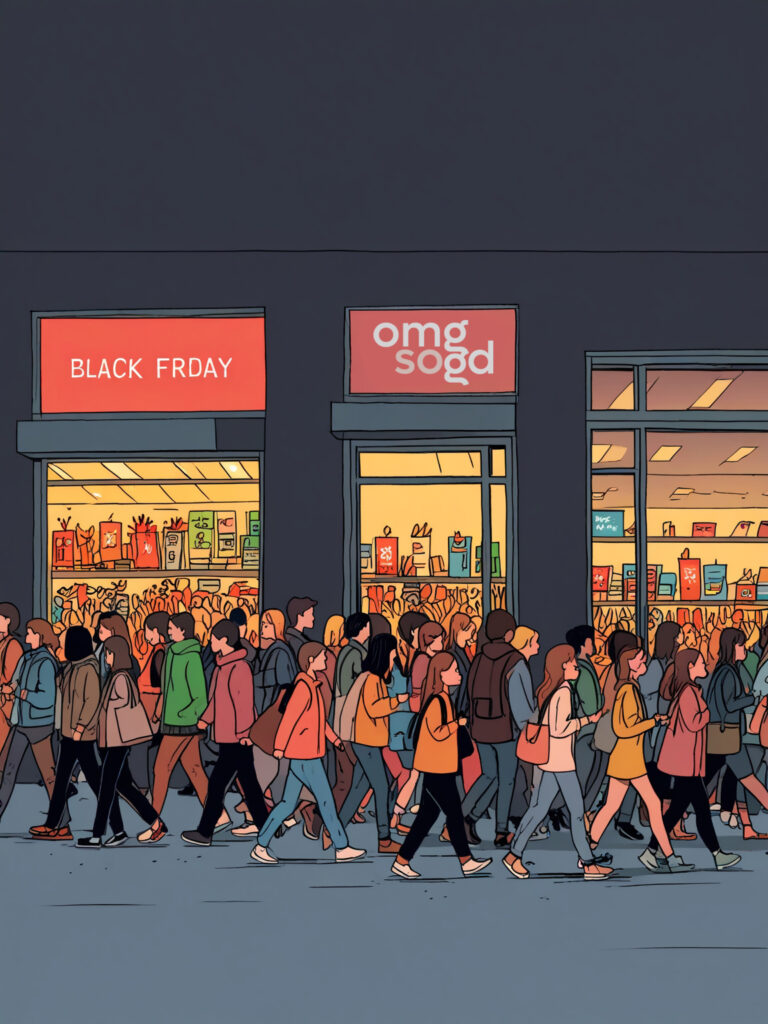
    Black Friday. A term that conjures images of frenzied shoppers, trampled crowds, and the desperate pursuit of discounted goods. It’s a day when the lines between sanity and madness blur, and the allure of a good deal can turn the mildest-mannered individual into a ravenous consumer. But what lies beneath the surface of this chaotic shopping extravaganza?

    Is it a day of darkness, a descent into consumerist excess? Or is it a beacon of hope, a chance to score incredible deals and save money? Perhaps it’s a bit of both. Like a black hole, it pulls us in with its gravitational force, promising rewards beyond our wildest dreams. Yet, like a black cat, it’s often misunderstood, shrouded in myths and misconceptions.

    TL;DR

    • Black Friday is not just a day, it’s a phenomenon. It’s a day of deals, discounts, and a dash of madness.
    • The origins of Black Friday are murky. It’s a tale of urban legends, historical events, and retail marketing strategies.
    • Don’t let the hype consume you. Be a smart shopper, set a budget, and avoid impulse purchases.

    Ah, Black Friday. The day when reason and restraint take a holiday, and shoppers dive headfirst into a whirlwind of deals, discounts, and dubious spending decisions. But where did this chaotic tradition originate? Spoiler alert: it’s not as cheerful as all those “50% Off!” signs might make you think.

    Let’s explore the murky waters of Black Friday, its tangled history, persistent myths, and modern reinvention, all while keeping things human, witty, and hopefully enlightening.

    A Brief History of Black Friday: From Mayhem to Marketing Gold

    You’ve probably heard the tale: Retailers spend the year “in the red,” then magically move “into the black” after a single day of frenzied shopping. Nice story. Completely false.

    The term “Black Friday” first emerged not in cozy retail boardrooms but on the gritty streets of 1960s Philadelphia. Back then, police officers coined the term to describe the pandemonium that descended upon the city after Thanksgiving. Suburban shoppers swarmed downtown stores, clogging traffic, sparking accidents, and keeping police working extra-long shifts. Oh, and let’s not forget the shoplifters who turned the chaos into a personal payday.

    City officials tried rebranding it to “Big Friday.” Unsurprisingly, it didn’t catch on. Apparently, there’s something irresistible about the darker, more dramatic “Black Friday.”

    But Wait, There’s More (Myths)

    Black Friday’s origins aren’t just a Philadelphia headache story; they’re also riddled with persistent myths. Here are some popular—but wildly inaccurate—claims:

    1. The “Red to Black” Narrative
      Retailers might love this feel-good financial tale, but it’s not historically accurate. Most stores, in reality, see their biggest sales closer to Christmas, not the day after Thanksgiving.
    2. The Ugly Slave Trade Rumor
      One particularly grim myth claims plantation owners bought enslaved workers at discounted rates the day after Thanksgiving. Rest assured, this baseless story has no factual backing.
    3. The 1869 Gold Scandal
      Here’s an actual Black Friday event: On September 24, 1869, Wall Street financiers Jay Gould and Jim Fisk tried cornering the gold market. Their scheme collapsed spectacularly, triggering a financial crisis. Memorable? Sure. But unrelated to your favorite 70% off electronics sale.

    How Retailers Flipped the Script

    Fast forward to the 1980s. Retailers, ever the opportunists, decided to transform Black Friday’s negative connotations into a positive, profit-driven narrative. Suddenly, “Black Friday” became a symbol of the moment businesses moved from financial losses to gains. A story designed to sell? Definitely. But effective.

    By the late 20th century, Black Friday had grown into a full-blown retail holiday, complete with doorbusters, early openings, and an unofficial competition among shoppers to claim the best deals.

    Black Friday in the Modern Era

    Today, Black Friday is more than a single day—it’s an entire season. Retailers have stretched it into a marathon of sales, including:
    • Small Business Saturday: Support your local mom-and-pop shops.
    • Cyber Monday: Shop from your couch—pajamas optional.
    • Giving Tuesday: A breath of fresh air, encouraging donations instead of consumerism.

    Thanks to globalization, the frenzy has even spread beyond U.S. borders. Countries worldwide have adopted their own versions of Black Friday. And let’s not forget the rise of online shopping, which has turned the day into an all-week event.

    My Point of View

    Let’s pause for a moment and reflect. Black Friday, at its core, highlights the best and worst of us. On one hand, it’s a celebration of ingenuity—retailers creating a frenzy out of thin air. On the other, it’s a grim reminder of consumerism at its peak.

    Do you really need that third flat-screen TV? Probably not. But who am I to judge? If you can dodge the stampedes and emerge with a killer deal, more power to you. Just don’t let the allure of a bargain convince you to buy things you don’t need. After all, no one wants to be that person explaining their maxed-out credit card in January.

    How to Survive Black Friday Without Losing Your Sanity

    Let’s be real: Black Friday shopping isn’t for the faint of heart. Here’s how to make it through unscathed:

    1. Set a Budget
      Nothing kills a holiday mood faster than realizing you overspent.
    2. Make a List
      Channel your inner Santa and check it twice.
    3. Avoid Impulse Buys
      That 10th scented candle? You’ll regret it.
    4. Shop Online
      Skip the crowds and snag deals from the comfort of your home.
    5. Support Local Businesses
      Big-box retailers don’t need all your money. Spread the love.

    Closing Thoughts: A Tale of Two Fridays

    Black Friday is a perfect storm of history, myth, and marketing genius. What started as a traffic nightmare for Philly cops has evolved into a global phenomenon, proving that we’ll do almost anything for a good deal.

    But as you wade through the sales and specials, remember: True savings come from thoughtful spending, not mindless consumerism. Happy shopping—just try not to lose your cool (or your wallet) in the process.