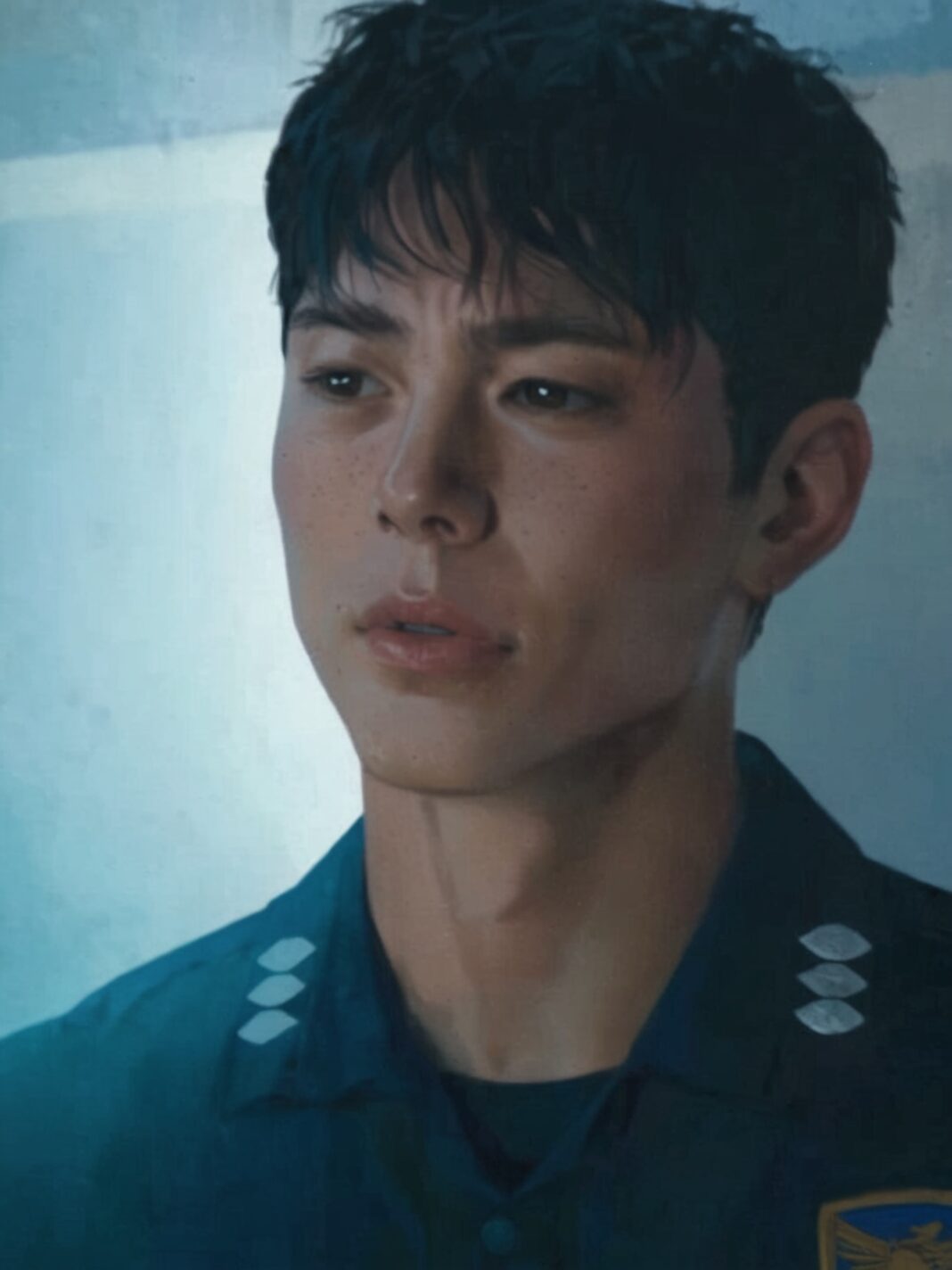



When a drama tosses identical twins into each other’s worlds, you expect chaos. Yet, Our Unwritten Seoul takes that familiar premise and spins it into something unexpectedly moving. By Episodes 3 and 4, we see both Mi-ji and Mi-rae struggling to stand in each other’s shoes—literally and figuratively. However, their journeys go beyond the typical identity swap tropes. They’re learning hard truths about who they are, what they’ve become, and the value of empathy.
In this extended review, we’ll unpack everything you need to know: the plot beats, emotional breakthroughs, lingering questions, and plenty of personal insights. We’ll also talk about thematic elements—family expectations, mental health, and career pressures—and why those make the episodes resonate. Finally, I’ll share my point of view on where the show is headed and what makes it stand out in the crowded K-drama landscape.
TL;DR:
- Twin sisters Mi-ji and Mi-rae are deeply struggling in each other’s lives, facing harsh truths about themselves and their families.
- Mi-ji confronts her past trauma and hidden talents in Mi-rae’s corporate world, learning empathy and negotiation.
- Mi-rae experiences the physical demands of farm life and the superficiality of her own family’s love in Mi-ji’s body.
- Ho-soo, the empathetic male lead, faces career setbacks due to his principles but finds new opportunities.
- The show expertly balances humor and heartbreak, with strong supporting character arcs that add depth.
- Key themes include identity, mental health, family expectations, and the often-costly but rewarding nature of empathy.
- Despite minor plot hiccups, the drama stands out for its sincerity and relatable exploration of human connection.
1. Twins in Turmoil: Facing Their Reflections
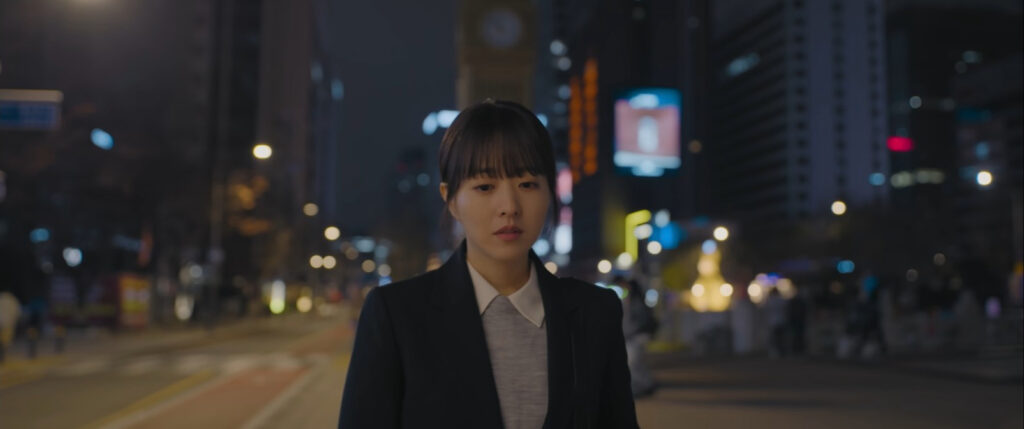
Right from the start of Episode 3, we can tell things are different. Both sisters—Mi-ji, the former athlete turned hospital aide, and Mi-rae, the no-nonsense provider running a strawberry farm—are in unfamiliar territory. Since swapping lives, they’ve had precious little time for introspection. Now, as the novelty wears off, both sisters find themselves looking in the mirror—and not liking what they see.
- Mi-ji’s Burdens
Mi-ji (formerly Mi-rae’s life) is grappling with a sense of invisibility. She’s always lived in Mi-rae’s shadow—mom, dad, everyone put the seemingly perfect twin first. Now, she faces the painful fact that she was her own worst enemy. As we see in Episode 3, Ho-soo’s offhand question—“What if I like Mi-ji better?”—throws her into a panic. She snaps at him, punishing him for even entertaining the idea that Mi-ji could deserve happiness. Yet, she doesn’t realize she’s repeating her own mistake: pushing people away before they can hurt her. Mi-ji’s backstory resurfaces: once a star athlete, she lost her chance when she saw Ho-soo hugging Mi-rae on the sidelines. Her insecurities morphed into self-imposed exile—agoraphobia that lasted three years and left everyone convinced she was “fine.” But she wasn’t. This mirror moment forces her to admit that her default response is retreat, not confrontation. - Mi-rae’s Realizations
Meanwhile, Mi-rae (in Mi-ji’s body) is bewildered by how effortlessly people dismiss her. In Episodes 1–2, she leveraged her business skills. Now, her soft side is finally visible—but so are her flaws. Family members mock her for being cold. Grandmother Ok-hee actually gushes about “Mi-ji,” praising her warm spirit. It stings Mi-rae to see how little her family values her work ethic. It’s ironic: she thought her stoicism was a strength. Yet, when she’s forced to pretend to be someone who naturally connects with others, she sees how her own rigid exterior has cost her genuine relationships. In the process, she realizes that her family doesn’t see her as “kind” or “embracing,” but as a paycheck. This revelation makes her question: Is hard work enough if it means losing yourself?
Together, these twin confrontations set the emotional stage. Because when you literally walk a mile in someone else’s shoes, you can’t help but rethink your own path.
2. Mi-ji in Mi-rae’s World: Hospital Hurdles and Legal Dramas
2.1 The Hospital Reality Check
Underneath all the identity games, we have a very real hospital setting. In Episodes 3–4, Mi-ji steps into the role of caregiver for her own grandmother. But this isn’t just a paycheck. It’s an emotional minefield. When she tries to pay medical fees, Ok-hee waves her off: “Save your money, dear. Use Mi-rae’s.” That offhand comment cuts deep. It’s a reminder that Mi-rae’s money—her income—is really what the family values. Mi-ji’s heart sinks. In Mi-ji’s own life, she was known for compassion, not bank account balances. Here, though, she’s trapped in a role where her only worth is economic.
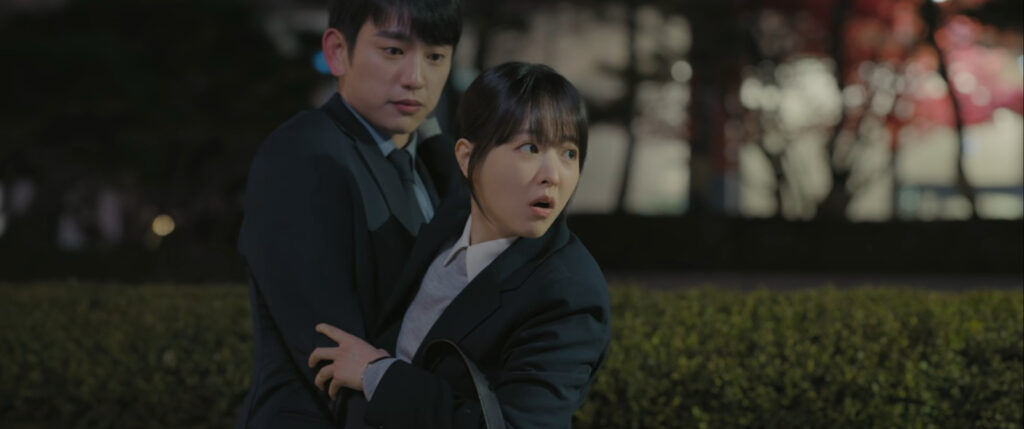
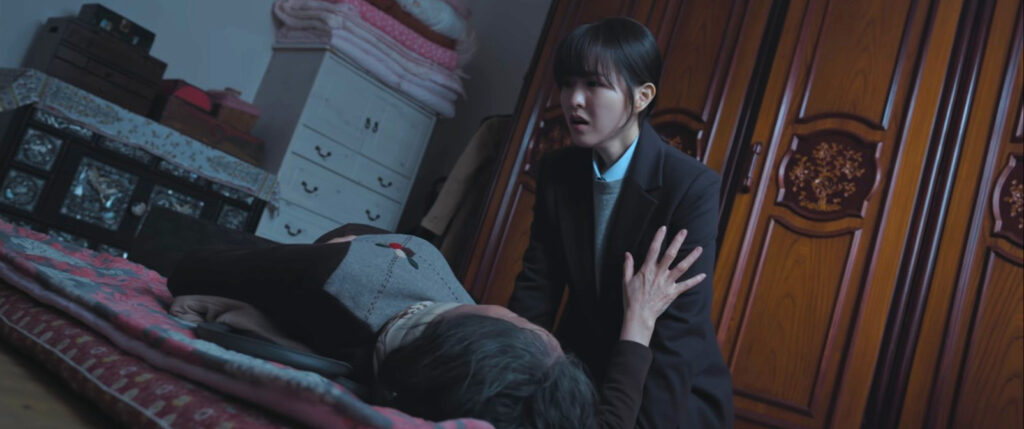
By Episode 4, we witness a terrifying flashback: the day Wol-soon had her stroke. Mi-ji finds herself face-to-face with Ro-sa, a restaurant owner and accidental poet, sprawled on the floor. Suddenly, past guilt—blaming herself for not getting Wol-soon to the hospital sooner—comes crashing back. She has a panic attack. Her breathing hitches. Ho-soo appears, the reluctant hero once again, and helps her and Ro-sa to safety.
It’s a beautifully shot sequence: crisp cuts, close-ups on Mi-ji’s quivering lips and haunted eyes. We feel the weight of her lingering trauma. When she wonders aloud, “If anyone else had been there, would Grandma still be alive?” Ho-soo’s refusal to entertain any blame reminds us of his own guilt—his father’s death—and how he has learned (the hard way) that collecting blame doesn’t bring anyone peace.
2.2 The Legal Battlefield
Simultaneously, Mi-ji is up against her company’s bulldog executives. They want to buy Ro-sa’s restaurant property. Mi-ji’s job: get Ro-sa to sign the dotted line. Yet, instead of just bulldozing the old woman, Mi-ji does something unexpected: she listens. She asks questions. She even apologizes—vulnerable behavior that wins Ro-sa’s respect.
Within a single meeting, our shy former athlete transforms into a negotiation boss. Ro-sa, who once treated Mi-ji like a nuisance (thinking she’s Mi-rae), now sees her sincerity. By Episode 4, Ro-sa agrees to meet with the corporate bigwigs—on her terms. She refuses to be a “shield” for Mi-ji. That moment of empowerment is so satisfying. It shows that empathy and honesty can trump brute force in any negotiation. Plus, it hints that Mi-ji’s hidden talent might be in mediation and people skills—something Mi-rae never saw in her.
3. Mi-rae in Mi-ji’s World: Farming, Family, and Rediscovery
3.1 Back to the Strawberry Fields
Note to future protagonist: running a strawberry farm is harder than it looks. In Episodes 3–4, Mi-rae steps into the role of a farmhand. At first, she thinks it’ll be a breeze—she’s practical and determined, after all. But the farm has its own rhythms. Crops don’t care about deadlines, cell reception, or investor pitches. You can almost see Mi-rae’s shoulders sag as she learns to prune vines, harvest at dawn, and handle temperamental weather.
Thankfully, Se-jin, the farm’s reluctant supervisor, eases her in. He starts off as a typical cold antagonist—judgmental, quick to criticize. Yet, in true K-drama fashion, he apologizes for his harshness. His grandfather’s legacy makes him sentimental. He never wanted the farm. But on his grandfather’s deathbed, he vowed to maintain it. His vulnerability catches Mi-rae off guard. He tells her, “I judge too fast. I’ll work on it.”
Suddenly, the stoic, corporate-minded Mi-rae sees a side of him that’s genuine. She softens, and together they develop an easy back-and-forth. In just two episodes, we sense a budding respect—or maybe something deeper—between them.
3.2 Facing Family Realities
On the family front, Mi-rae (as Mi-ji) tries to be the beloved granddaughter, arriving at the hospital with coffee and small talk. Yet, instead of warm hugs, she gets side-eyes. Family gossip spins: “Mi-ji used to be so talented. Now look at her.” Even Ok-hee scolds her: “Don’t spend money on me. Use Mi-rae’s.” That echo of financial bias stings. Mi-rae realizes her entire life, she has been valued for one thing only: her bank transfers.
Through this, we see that identity is more than who shows up. It’s how people see you. When Mi-rae (as Mi-ji) tries to be sincere, her family can’t hear her. They only see her paycheck. Meanwhile, in the real Mi-ji’s world, Mi-rae’s farm skills earn nods of respect. That contrast couldn’t be starker. It shows how environment shapes perception.
4. Ho-soo’s Struggles: When Empathy Costs You
Ho-soo is a refreshing male lead. He’s empathetic, principled, and, frankly, too good for his own career. A small-time lawyer, he can’t stomach injustice. In Episode 3, he’s reprimanded by his mentor, Choong-gu, for helping a legal aid client on the other side of the corporate case he’s working. Choong-gu is bitter. He thinks Ho-soo only sticks with him because he has a disability. So he decides to fire Ho-soo—right when Mi-ji is counting on him.
This forces Ho-soo into a job hunt. It’s heartbreaking to watch him slump through rejection after rejection—his hearing impairment (he’s deaf in one ear) making employers skittish. Yet Mi-ji refuses to let him drown in self-pity. She drags him off to a crochet class they both enrolled in (hauntingly cute: the former athlete teaching him how to make granny squares). By Team Mi-ji standards, this is peak communication: quiet, simple, and full of genuine care. “You’re not your job,” she reminds him. “Stop spiraling.”
Just when Ho-soo’s hope is dwindling, Ro-sa swoops in. Upon learning he once benefited from her scholarship, she asks him to be her lawyer for the showdown with the corporate big shots. It’s a perfect plot twist: the underdog gets a chance to shine. Plus, it cements Ro-sa as a quietly powerful force in Mi-ji’s life.
One small gripe: did anyone else notice how Ho-soo’s hearing vanished for these episodes? In Episodes 1–2, he communicated through lip-reading, avoided noisy rooms, and explicitly referenced his one-eared hearing. But now, he’s chatting on the phone without trouble. It’s a narrative hiccup that’s hard to ignore. A quick line or two of “I’m struggling with this call” could have fixed it. Instead, we’re left scratching our heads: is the screenwriter playing a prank, or did they just forget?
5. Rekindled Friendships: Park Ji-yoon’s Surprise
Whenever a high school friend re-enters the drama, sparks can fly. In Episode 3, Mi-ji runs into Park Ji-yoon—the same friend who drifted away when Mi-ji stopped competing. Ji-yoon asks, “Why’d you cut ties? We never heard from you after the accident.” That one line cuts deeper than any betrayal. Mi-ji realizes she assumed everyone abandoned her. In truth, she withdrew. She left her friends in the dark.
It’s a powerful emotional note: we often blame others for our loneliness, when sometimes we’re the ones who slammed the door. This brief scene adds nuance to Mi-ji’s character. She’s not just a victim; she can be the villain of her own story. That level of self-awareness is rare in K-drama protagonists, and it leaves us rooting for her journey toward self-acceptance.
6. My Point of View: Why These Episodes Resonate
6.1 Identity and Self-Worth
What’s unique about Our Unwritten Seoul is how it tackles identity beyond mere “twin-swap hijinks.” Our heroes aren’t playing dress-up. They’re forced to confront who they are when no one’s watching. In these episodes, both sisters learn that being “seen” requires vulnerability. For Mi-ji, that means letting people in instead of shoving them away. For Mi-rae, it means letting go of the “tough CEO” mask and admitting she craves genuine connections.
This is a universal struggle. We all play roles: the “perfect” child at home, the “strong” friend in crisis, the “successful” worker at the office. When we step out of those roles—when life forces us to wear someone else’s shoes—our weaknesses and blind spots become glaring. Our Unwritten Seoul understands that. The result is a show that feels grounded, even amid its melodrama.
6.2 Balancing Humor and Heartache
Episodes 3–4 strike an impressive tonal balance. There are laugh-out-loud moments—Mi-ji’s reaction to farm life, Ho-soo’s frustrated attempts at crochet, Mi-rae’s cluelessness in the hospital corridors. Yet, the show never undercuts its emotional stakes. When Mi-ji has her panic attack or Ma-mi (their grandmother) loses her spark, the mood shifts seamlessly. It’s a testament to strong writing and direction, refusing to let one note override the other.
6.3 Supporting Cast That Shines
Too often, side characters exist only to prop up drama or romance. Here, Se-jin, Ro-sa, and Ji-yoon each have fully realized arcs, no less critical than the sisters’. Se-jin’s regret over leaving the farm, Ro-sa’s secret poet identity and past generosity, and Ji-yoon’s honest confrontation about friendship—they all enrich the narrative.
Take Ro-sa, for instance. A tough-as-nails restaurant owner who also writes poetry and sponsors students? That’s a rare multi-dimensional character. She doesn’t fall into “rich benefactor” or “evil landowner” tropes. Instead, she’s pragmatic, wise, and surprisingly warm when you earn her respect. That’s why seeing her saved by Mi-ji (who once was just “that soccer-loving liar”) is so satisfying. It completes a circle of kindness, highlighting how small acts can ripple across years.
7. Themes and Takeaways
7.1 Mental Health and Guilt
Mi-ji’s agoraphobia isn’t a plot device; it’s a lived reality. The series doesn’t shy away from showing how guilt and trauma can imprison someone. Her panic attack in Episode 4 isn’t just “drama”; it’s a vivid reminder that healing isn’t linear. By tying that trauma to her grandmother’s stroke, the show stresses that personal pain is rarely isolated. One event can shatter many lives—unless someone stands up and speaks truth.
Similarly, Ho-soo’s father’s death and his subsequent guilt mirror Mi-ji’s burden. Both characters carry baggage that shapes their decisions. When Ho-soo tells Mi-ji, “If I’m not to blame for Dad’s death, then you’re not to blame for Grandma’s,” he articulates a critical truth: people carry guilt even when it’s not theirs to hold. Episodes 3–4 drive home that lesson gently but firmly.
7.2 Family Expectations vs. Authentic Connections
In these episodes, family feels more like a boxing ring than a safe haven. Mi-rae’s family only measures her worth by her wallet. Mi-ji’s family only praises her when she plays the “sweet” sister. The irony is rich: the twins swap roles but face the same toxicity. Doesn’t matter who you are—if you don’t fit the mold, you’re out of luck.
Beyond the twins, we see this in Se-jin’s relationship with his late grandfather (his motivation for staying on the farm) and Choong-gu’s relationship with Ho-soo (pity vs. respect). The series subtly critiques how familial love can be conditional. It asks: can we find genuine belonging, or are we doomed to chase others’ ideals forever?
7.3 The Price of Empathy
Ho-soo’s storyline reminds us that empathy can be costly. Instead of climbing the corporate ladder, he’s peddling compassion—defending the underdog, even if it means angering his mentor. In a world where success is often measured by wins and losses, Our Unwritten Seoul suggests another metric: kindness. Yet, the show doesn’t romanticize it. Ho-soo nearly loses everything: job, mentor, confidence. This dramatizes how society often punishes those who choose empathy over profit.
But when Ro-sa re-enters his life, it validates his path. It shows that compassion has its own rewards, often delayed but no less real. In a neat narrative twist, someone he helped (Ro-sa’s scholarship beneficiary) rescues him in return.
8. Anticipating Future Episodes
If Episodes 3–4 are any indication, here’s what I’m betting on for the rest of the season:
- Sisterly Solidarity
As the twins face their own demons, they’ll inevitably rely more on each other’s strengths. Expect more heart-to-heart moments: Mi-ji reminding Mi-rae that stoicism isn’t the only way to show love, and Mi-rae urging Mi-ji to embrace her talent for connection. - Ho-soo’s Growth
Now that he’s Ro-sa’s lawyer, Ho-soo might find purpose beyond his former mentor. Yet, his relationship with Choong-gu isn’t over. I suspect a reconciliation or at least an honest finale argument that cements Ho-soo’s independence. - Romantic Undercurrents
Se-jin and Mi-rae share meaningful glances, and Mi-ji and Ho-soo’s dynamic is undeniable. But will either pair cross the line? Given K-drama pacing, we’ll likely see subtle buildup—tiny gestures, lingering looks—before anything explicit. That’s fine; the slow burn is part of the appeal. - Family Confrontations
At some point, the truth about the swap has to come out. How will the twins’ parents and grandparents react? Will there be drama worthy of popcorn? Or will the family learn to see the twins as they truly are? My money’s on the latter—but not without a few storms. - Ro-sa’s Hidden Past
She’s a poet with pockets deep enough to fund scholarships. But why did she fall in love with words? Does she have her own backstory—perhaps a lost child or a love that slipped through her fingers? The show has dropped enough hints that I expect a later flashback or poignant confession.
9. Final Thoughts and Verdict
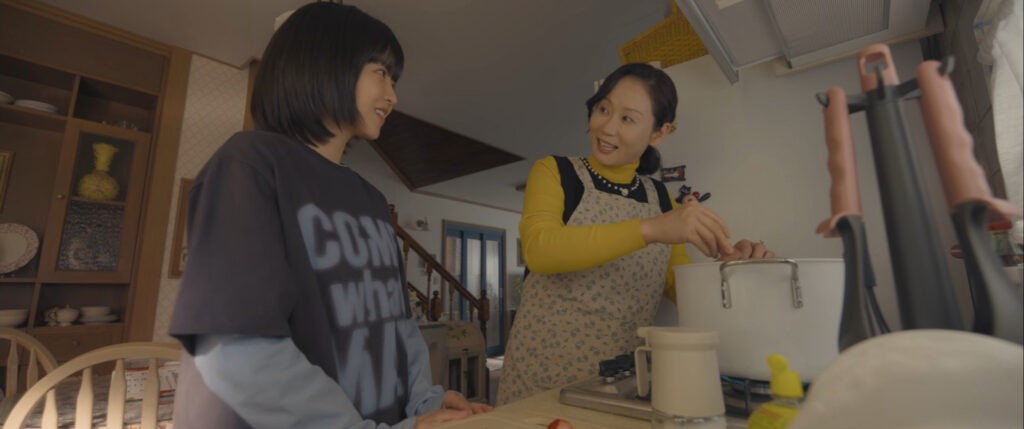
By Episodes 3–4, Our Unwritten Seoul cements itself as more than just a “body swap” drama. It’s a thoughtful exploration of identity, guilt, and the quest for genuine connection. The writing is sharp, balancing humor with heavy emotional stakes. The cast delivers layered performances: Lee Hye-won as Mi-ji conveys fragility and resolve in equal measure; Park Soo-min as Mi-rae nails the tension between vulnerability and stoicism; and Kim Jae-hyun’s Ho-soo shows us a man who wears empathy like a badge of honor, even when it hurts him.
If you’re looking for a K-drama that tackles mental health without melodrama, pokes fun at family dysfunction, and sprinkles in moments of quiet poetry, look no further. Episodes 3 and 4 are strong proof that Our Unwritten Seoul can juggle multiple storylines without losing its heart.
Final Verdict:
⭐⭐⭐⭐☆ (4 out of 5 stars)
These episodes deliver emotional heft, memorable character growth, and intriguing plot twists. They lose a half star only for a few continuity hiccups (cough, Ho-soo’s hearing, cough). Otherwise, this twin-switch saga is one of the most sincere and relatable Korean dramas in recent memory.
Pros:
- Deep character arcs for both sisters
- Balanced tone: humor and heartache in harmony
- Thoughtful portrayal of mental health and family expectations
- Supporting cast adds richness, not just comic relief
Cons:
- Minor continuity errors (e.g., Ho-soo’s hearing ability)
- A few plot threads feel rushed (e.g., Ji-yoon’s backstory)