


Singapore and cars? Wah, that relationship ah… it’s complicated. Today, we’ve got COE prices that can give even the bravest adult heart palpitations. But long before we were crying over $100k COEs, our little island actually saw its first car way back in 1896. And yes, it made quite an entrance.
Let’s take a chill, fun walk through Singapore’s early car history — because honestly, the journey from “horseless carriage” to “$200k Toyota” says a lot about how far we’ve come.
The First Car That Shocked Singapore — 1896
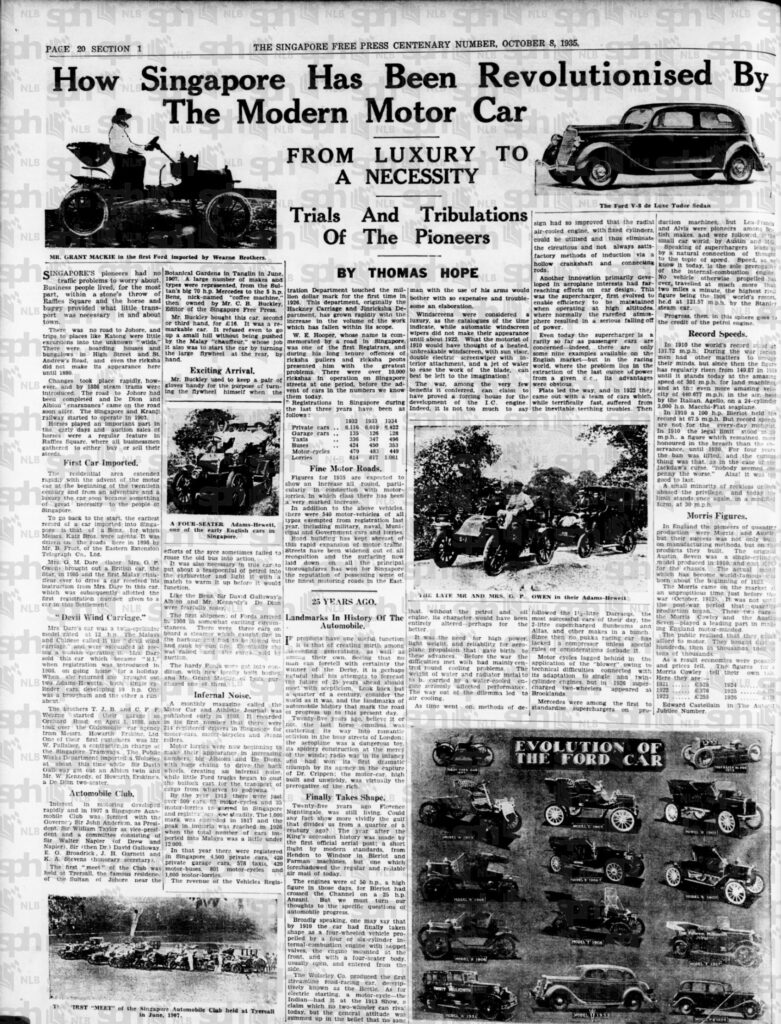
So, picture this. It’s 1896. Horses and jinrickshaws rule the roads. Then suddenly, the Katz Brothers — two shopkeepers who later went big into wholesale imports — decide to bring in a second-hand Benz for their customer, Charles Burton Buckley.
(Yes, that Buckley. The guy Buckley Road is named after.)
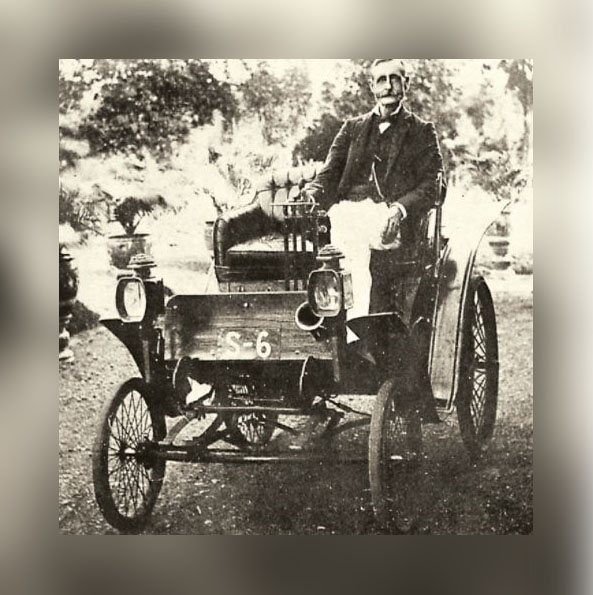
This pioneer car was literally called a “horseless carriage.” Very on-brand. It was open-air, rattly, and had a starting process so drama one:
- Spoon petrol into the carburetor.
- Heat the thing with a match.
- Manually crank a giant flywheel behind the car.
Honestly, sounds like starting a campfire more than starting a vehicle.
Before this, Singapore moved around using horse carts, bullock carts, and jinrickshaws. Proper old-school.
Yet once the Benz arrived, everything changed. The Katz Brothers soon became the sole agents for Benz’s “Motor Velocipede.” Slowly, the motorcar era began rolling in.
But the locals? They weren’t too sure. Some Chinese communities called these cars “devil wind carriages.” Which, honestly, very poetic.
Still, the rich folks loved it. By 1907, car lovers even set up the first Singapore Automobile Club.
Fun fact:
The first car cost $1,600. Wah, now cannot even buy one COE wheel with that.
Mrs G.M. Dare — Singapore’s First Female Driver, and She Really Lived Up to Her Name
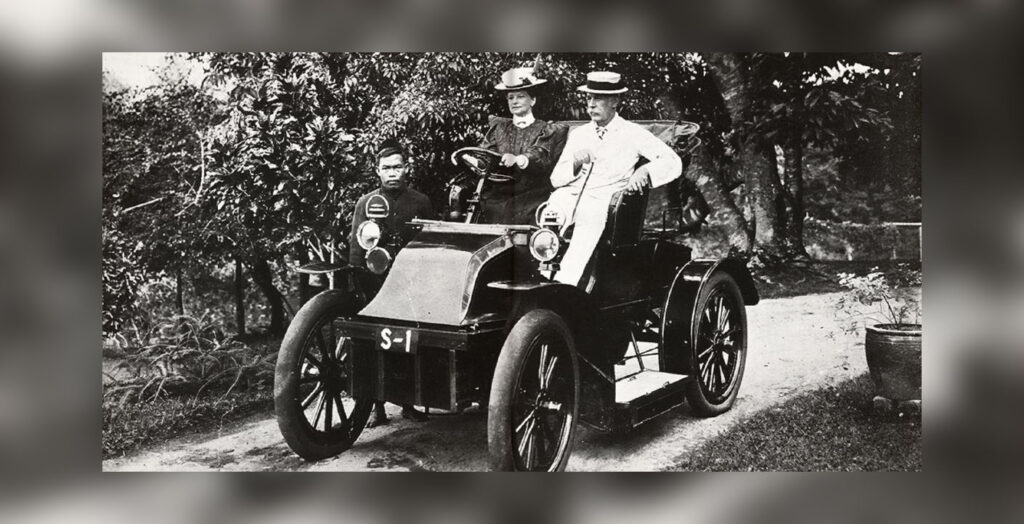
Next up, meet Mrs G.M. Dare. And yes, the name suits her because she was that adventurous.
She owned Singapore’s first registered car, plate number S-1, which she cutely named “Ichiban” — Japanese for “Number One.” Very ahead of her time sia.
She didn’t just cruise around Singapore. No, no. She drove Ichiban across Malaya, Java, England, and Scotland.
Total distance? Around 111,000 km. That’s more than some Singaporeans drive in a lifetime.
On top of that, she taught a man named Hassan bin Mohamed how to drive, making him the first Malay driver licensed in Singapore.
Mrs Dare passed away in 1927 and was buried at Bidadari Cemetery. A true icon.
When Singapore Actually Produced Cars
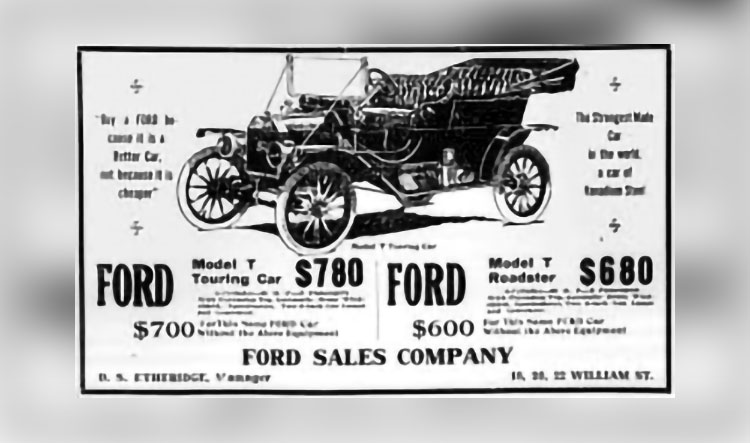
Yes, you read that right. Singapore wasn’t always just importing cars.
In fact, we used to assemble them.
Ford — famous for the Model T — opened operations here in 1926 under Ford Malaya. At first, the plant just touched up vehicles. But when World War II disrupted car supplies, demand skyrocketed. So Ford upgraded the Singapore plant into a full assembly facility.
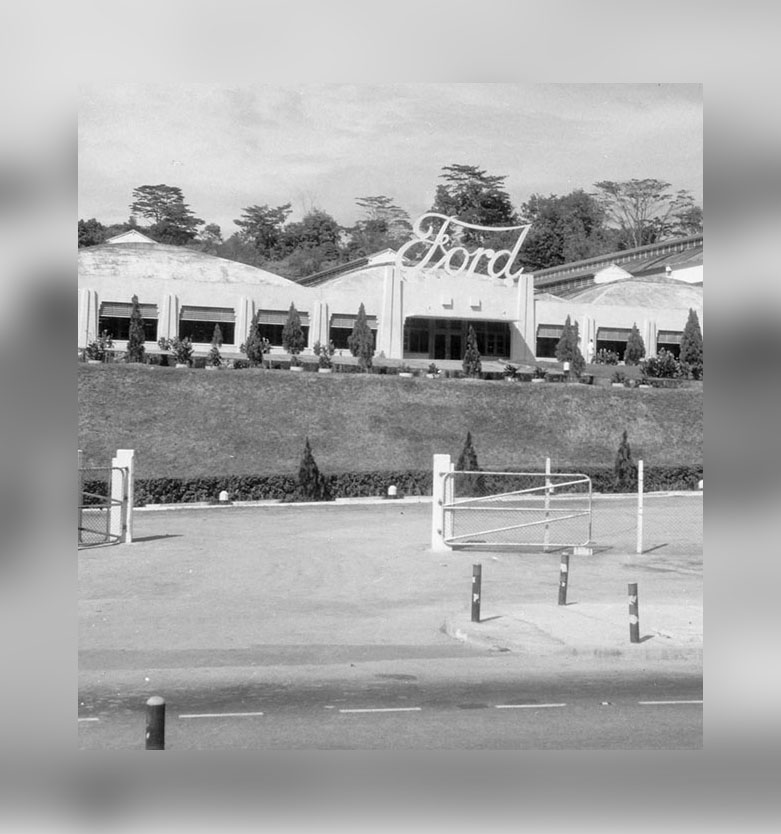
By 1941, the Bukit Timah Ford Factory became the first and only automotive assembly plant in Southeast Asia.
The glow-up didn’t last long though. In 1942, the same factory became the site of the British surrender to the Japanese. Talk about plot twist.
After the war, the factory returned to Ford in 1947 and continued assembling cars until 1980. Today, the restored building stands as a historical monument worth visiting.
Fun fact:
In the 1960s, Ford marketed its Consul Cortina as a stylish young woman’s dream car. Iconic marketing for an iconic era.
Orchard Road Was Once Filled with Car Showrooms

Imagine Orchard Road… not packed with Uniqlo, Sephora, and tourists… but full of car showrooms.
Yep, that was reality in the 1920s.
As Orchard Road became a fancy residential area, car demand shot up. Brands like Fiat and Ford opened showrooms there.
If you pass the conserved row of buildings opposite Dhoby Ghaut MRT, you’ll see one with a scalloped roof. That’s the former Malayan Motors showroom from 1927.
Lucky Plaza?
Last time, it was Champion Motors. Just imagine buying a car where people now queue for bak kwa.
But by the 1970s, car workshops and dealers slowly moved to Middle Road because that’s where the Registry of Vehicles was.
Today, our “automotive belt” sits at Alexandra and Leng Kee.
Fun fact:
The oldest registered car in Singapore (still around!) is a 1918 Maxwell Model 25. She’s old but still stunning.
Why We Register Cars Today — And How It Started
These days, car registration feels like common sense. You buy car = you register car. Pretty standard.
LTA’s logic is simple:
Registration proves ownership and keeps you responsible for fees, taxes, and roadworthiness.
But back in the early 1900s?
There were so few cars that the British authorities didn’t bother. Until 1906, cars were rare enough that people could recognise them by sound alone.
Then car numbers finally grew, and the first registered car (yep, Mrs Dare’s again) was issued plate S-1.
Locals were fascinated, confused, and mildly terrified. Some Malays called it “The Devil Wind Carriage.” Carpocalypse vibes even then.
By 1909, car numbers started climbing, and the system evolved into the structured registration we use today.
Imagine that — now we have nearly a million vehicles crowding our tiny roads. Cannot imagine having zero system.
Honestly, Singapore’s car history is wild. From rattly match-lit engines to million-dollar supercars, we’ve seen everything. The early days were full of creativity, courage, and people who just wanted to try something new — even if everyone else called it a monster.
Meanwhile today… we’re still trying to buy cars, except now the monsters are the price tags.
Still, there’s something charming about our beginnings. They show that innovation didn’t start with fancy tech hubs and autonomous cars. It started with brave people willing to crank a flywheel and deal with confused neighbours shouting, “Devil wind! Devil wind!”
Not gonna lie — I kind of wish we kept some of that bold, slightly chaotic spirit.